
Increase the Sufficiency of Present Danger






Description: Increase the Sufficiency of Present Danger Assessment Regional Operations Manager LaShawn Royal-Moore LASHAWN ROYAL-MOORE BIO Increase the Sufficiency of Present Danger Assessment This presentation explores how a manger identified and
Related Topics
Download Presentation
"Increase the Sufficiency of Present Danger" is the property of its rightful owner. Permission is granted to download and print the materials on this website for personal, non-commercial use only, and to display it on your personal computer provided you do not modify the materials and that you retain all copyright notices contained in the materials. By downloading content from our website, you accept the terms of this agreement.
Presentation Transcript
slide1. Increase the Sufficiency of Present Danger Assessment Regional Operations Manager
LaShawn Royal-Moore<br>
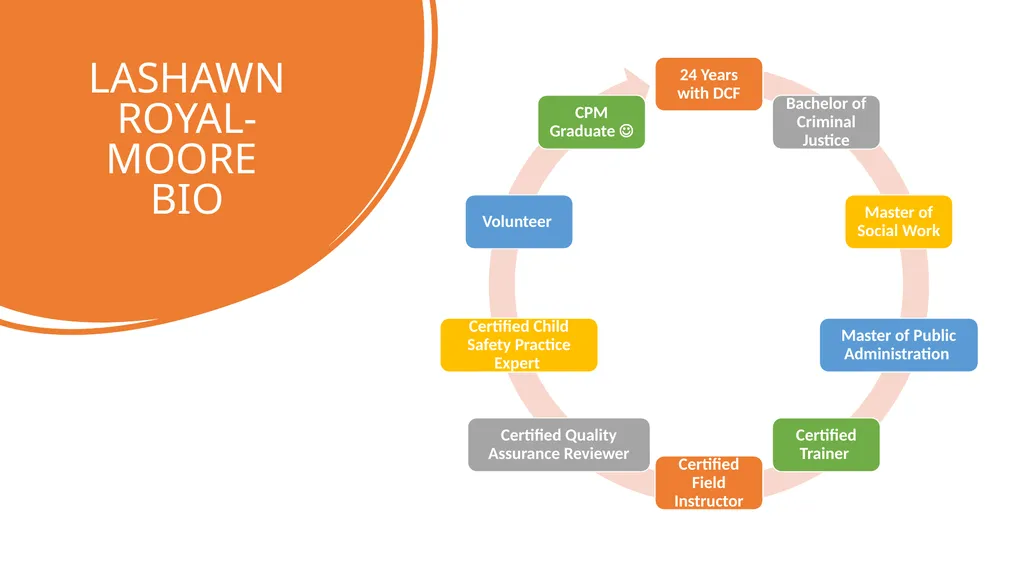
slide2. LASHAWN ROYAL-MOORE BIO<br>
slide3. Increase the Sufficiency of Present Danger Assessment This presentation explores how a manger identified and addressed the problem of inadequate documentation and timeliness in child welfare present danger assessments. It covers the creation of a shared vision and the use of various tools and techniques, including the DISC Assessment for improving communication, strategic planning, SWOT analysis, fishbone diagrams, random quality assurance reviews, and ongoing monitoring. By applying these strategies and resources, we successfully enhanced the sufficiency of present danger assessments ahead of our targeted goal date.<br>
slide4. Inspire a Shared Vision CPM LEVEL 1
We are innovative and strategic professionals who create impactful content, design, and development that directly supports our goals!<br>
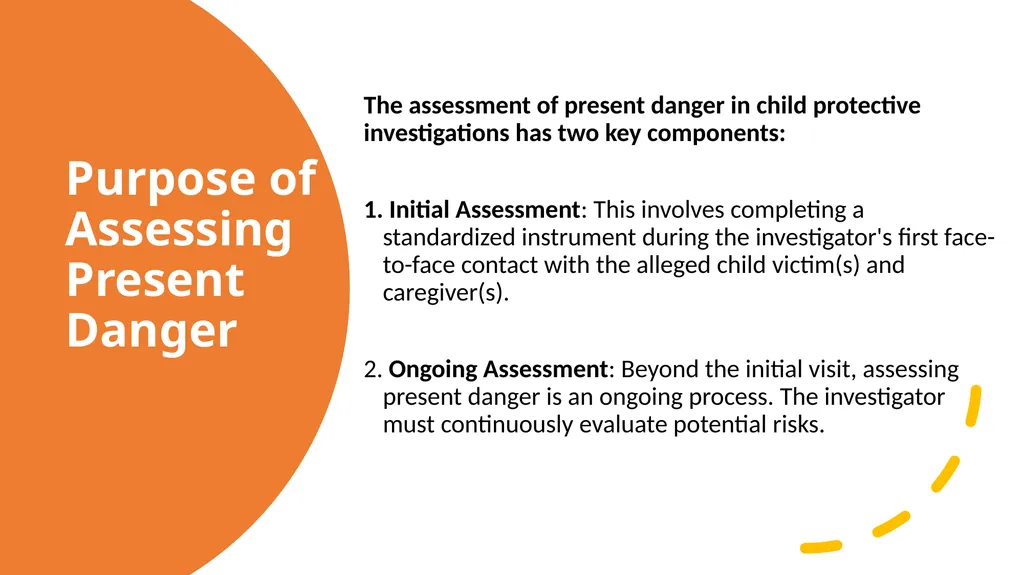
slide5. Purpose of Assessing Present Danger The assessment of present danger in child protective investigations has two key components:
Initial Assessment: This involves completing a standardized instrument during the investigator's first face-to-face contact with the alleged child victim(s) and caregiver(s).
Ongoing Assessment: Beyond the initial visit, assessing present danger is an ongoing process. The investigator must continuously evaluate potential risks.<br>
slide6. DISC ASSESSMENT<br>
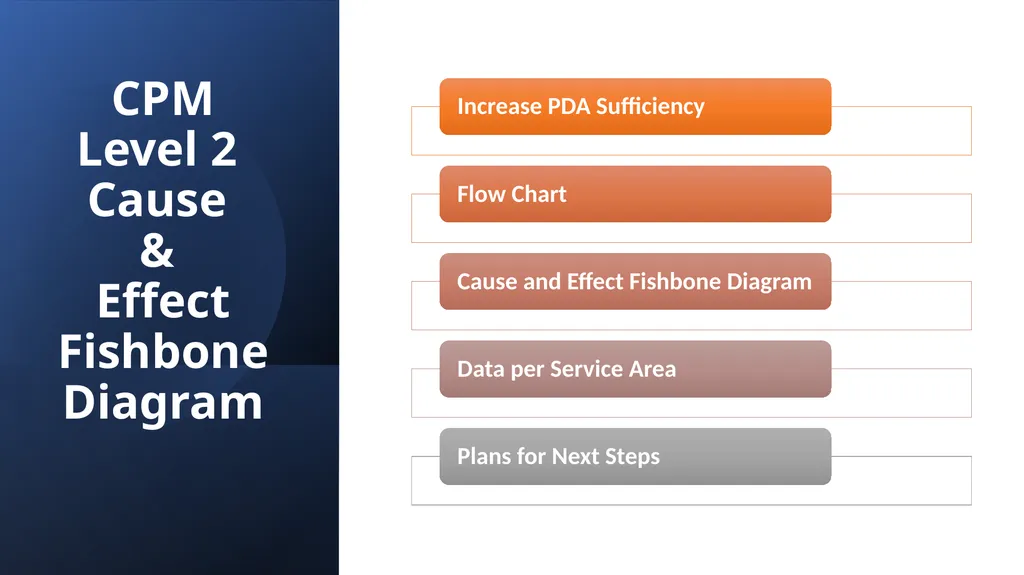
slide7. CPM Level 2 Cause & Effect Fishbone Diagram<br>
slide8. SWOT Analysis<br>
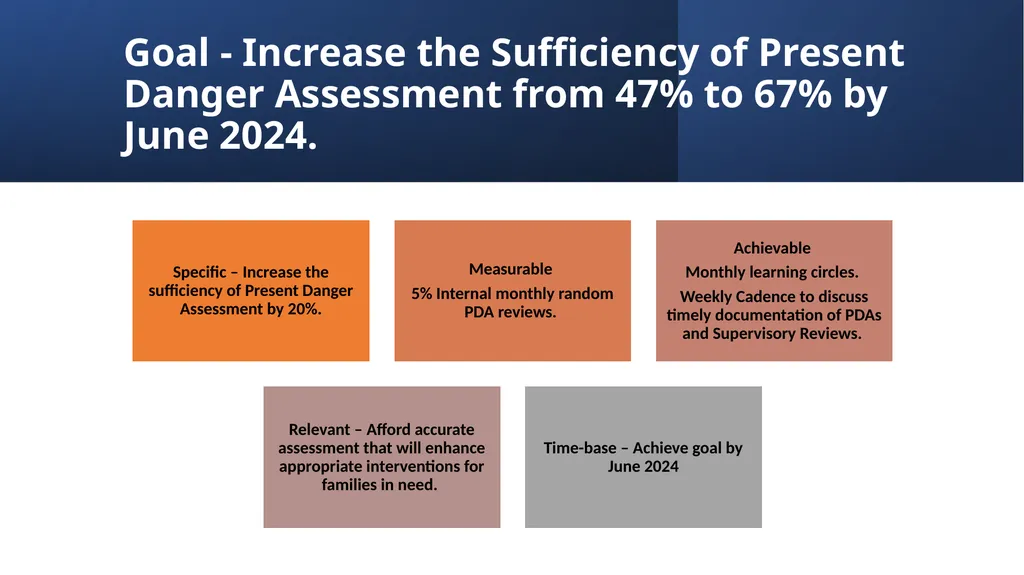
slide9. Goal - Increase the Sufficiency of Present Danger Assessment from 47% to 67% by June 2024.<br>
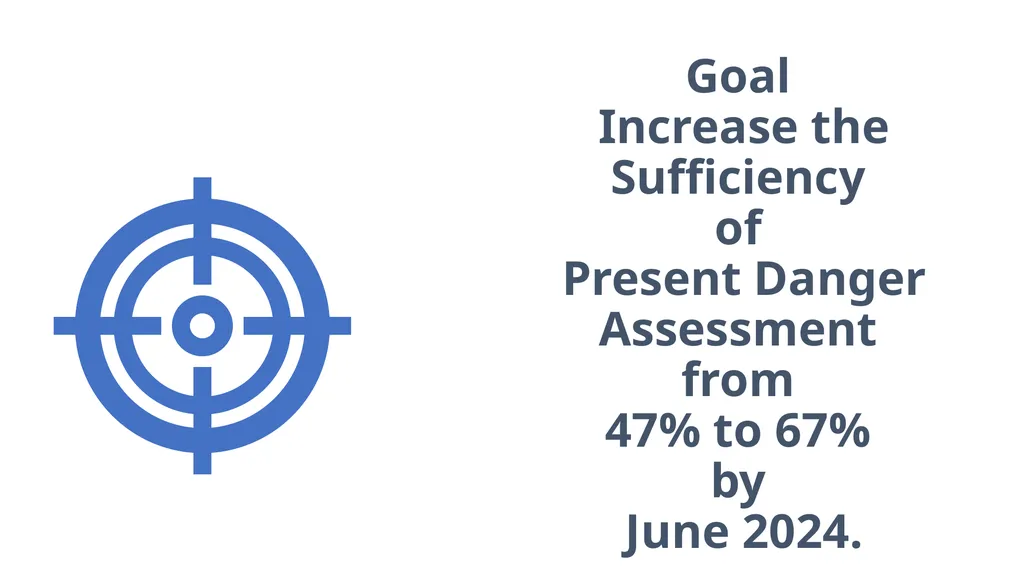
slide10. Goal Increase the Sufficiency of Present Danger Assessment from 47% to 67% by June 2024.<br>
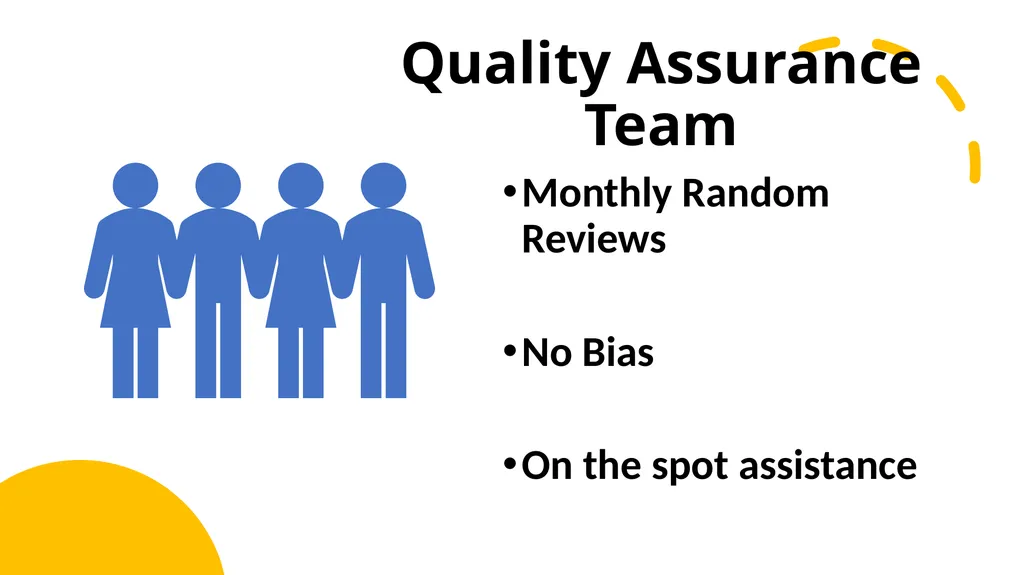
slide11. Quality Assurance Team Monthly Random Reviews
No Bias
On the spot assistance<br>
slide13. Fantastic news South Side! Congratulations on exceeding your goal ahead of schedule. The hard work, dedication, and perhaps a touch of strategic brilliance paid off.<br>
slide14. Manager Acknowledgement In-Person
Email
Presentation of Data
Announcement at Meetings
Announcement at Annual Award Ceremony<br>
slide15. QUESTIONS<br>
slide16. CONTACT INFORMATION LaShawn Royal-Moore, MSW, MPA, CPM
Regional Operations Manager
Florida Department of Children and Families
401 NW 2nd Avenue N526
Miami, FL 33128
Cell: 786-375-7784
Email: LaShawn.Royal-Moore@myflfamilies.com<br>
LaShawn Royal-Moore<br>
slide2. LASHAWN ROYAL-MOORE BIO<br>
slide3. Increase the Sufficiency of Present Danger Assessment This presentation explores how a manger identified and addressed the problem of inadequate documentation and timeliness in child welfare present danger assessments. It covers the creation of a shared vision and the use of various tools and techniques, including the DISC Assessment for improving communication, strategic planning, SWOT analysis, fishbone diagrams, random quality assurance reviews, and ongoing monitoring. By applying these strategies and resources, we successfully enhanced the sufficiency of present danger assessments ahead of our targeted goal date.<br>
slide4. Inspire a Shared Vision CPM LEVEL 1
We are innovative and strategic professionals who create impactful content, design, and development that directly supports our goals!<br>
slide5. Purpose of Assessing Present Danger The assessment of present danger in child protective investigations has two key components:
Initial Assessment: This involves completing a standardized instrument during the investigator's first face-to-face contact with the alleged child victim(s) and caregiver(s).
Ongoing Assessment: Beyond the initial visit, assessing present danger is an ongoing process. The investigator must continuously evaluate potential risks.<br>
slide6. DISC ASSESSMENT<br>
slide7. CPM Level 2 Cause & Effect Fishbone Diagram<br>
slide8. SWOT Analysis<br>
slide9. Goal - Increase the Sufficiency of Present Danger Assessment from 47% to 67% by June 2024.<br>
slide10. Goal Increase the Sufficiency of Present Danger Assessment from 47% to 67% by June 2024.<br>
slide11. Quality Assurance Team Monthly Random Reviews
No Bias
On the spot assistance<br>
slide13. Fantastic news South Side! Congratulations on exceeding your goal ahead of schedule. The hard work, dedication, and perhaps a touch of strategic brilliance paid off.<br>
slide14. Manager Acknowledgement In-Person
Presentation of Data
Announcement at Meetings
Announcement at Annual Award Ceremony<br>
slide15. QUESTIONS<br>
slide16. CONTACT INFORMATION LaShawn Royal-Moore, MSW, MPA, CPM
Regional Operations Manager
Florida Department of Children and Families
401 NW 2nd Avenue N526
Miami, FL 33128
Cell: 786-375-7784
Email: LaShawn.Royal-Moore@myflfamilies.com<br>