
Increasing Cardiac Arrest Survival through
Description: Increasing Cardiac Arrest Survival through Dispatcher Assisted Bystander CPR PSAP Review for identifying patients who are pulseless and not breathing Training Review Identifying patients who need dispatcher CPR Why are we doing this? Each
Related Topics
Download Presentation
"Increasing Cardiac Arrest Survival through" is the property of its rightful owner. Permission is granted to download and print the materials on this website for personal, non-commercial use only, and to display it on your personal computer provided you do not modify the materials and that you retain all copyright notices contained in the materials. By downloading content from our website, you accept the terms of this agreement.
Presentation Transcript
slide1. Increasing Cardiac Arrest Survival through Dispatcher Assisted Bystander CPR PSAP Review for identifying patients who are pulseless and not breathing<br>
slide2. Training Review Identifying patients who need dispatcher CPR<br>
slide3. Why are we doing this? Each year 800 people have an out-of-hospital cardiac arrest in Milwaukee County and 90% die
Less than 19% have the benefit of bystander CPR
Bringing dispatcher assisted CPR to your community will CHANGE:
Bystander CPR rates
Cardiac arrest survival rates<br>
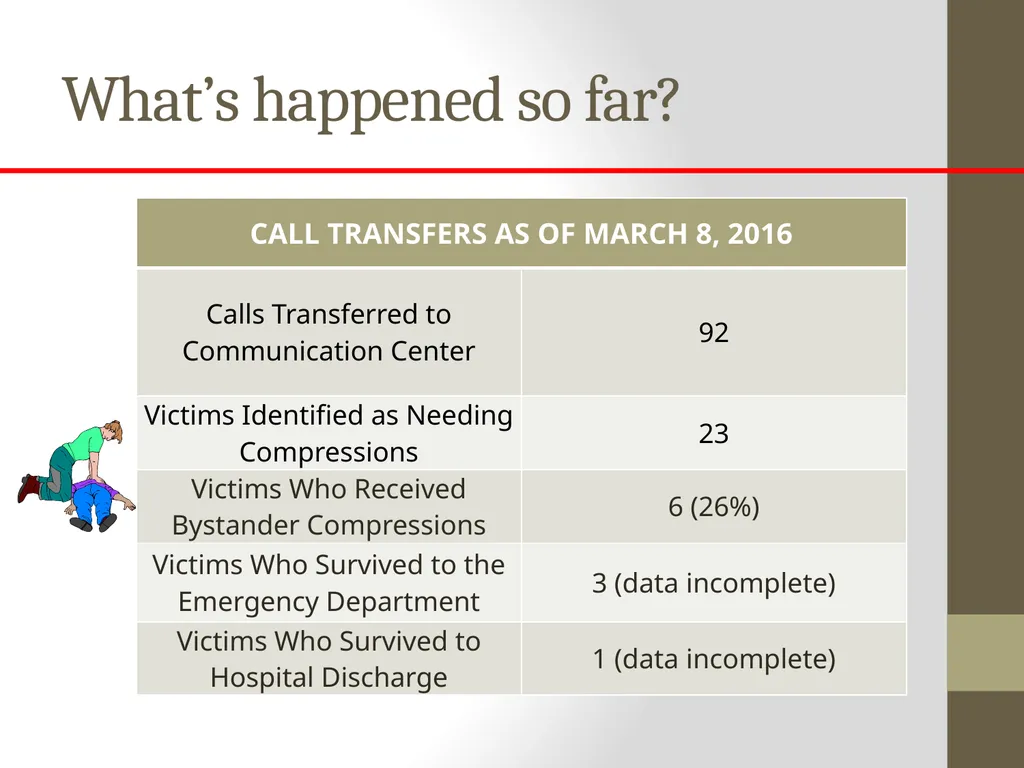
slide4. What’s happened so far?<br>
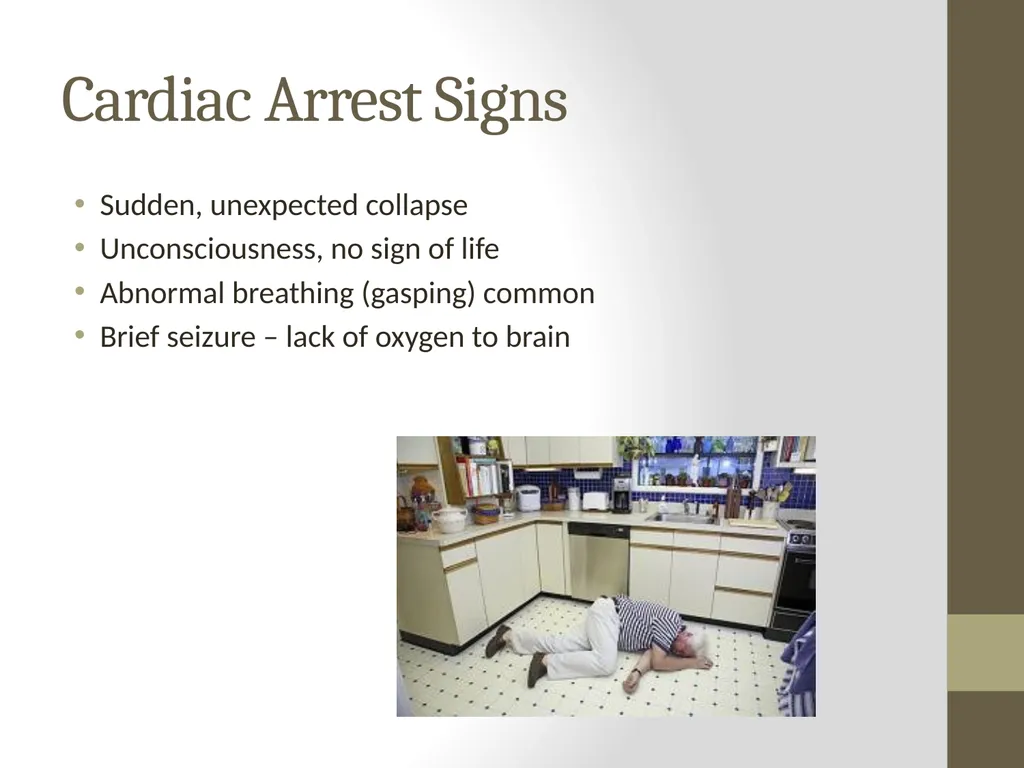
slide5. Cardiac Arrest Signs Sudden, unexpected collapse
Unconsciousness, no sign of life
Abnormal breathing (gasping) common
Brief seizure – lack of oxygen to brain<br>
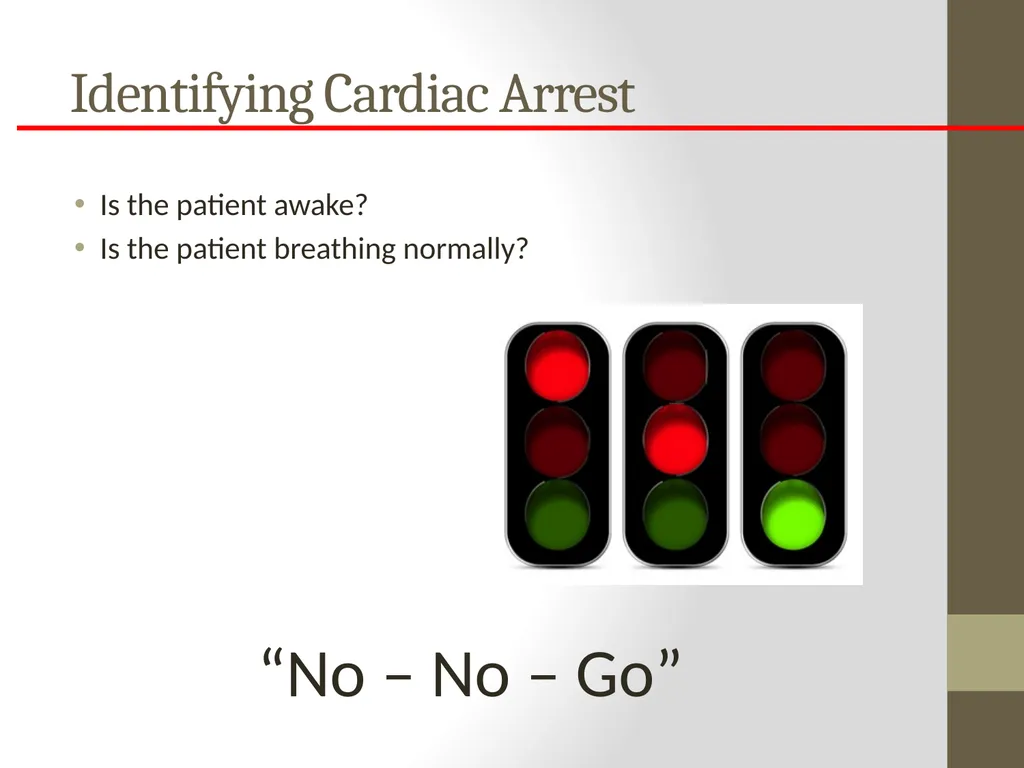
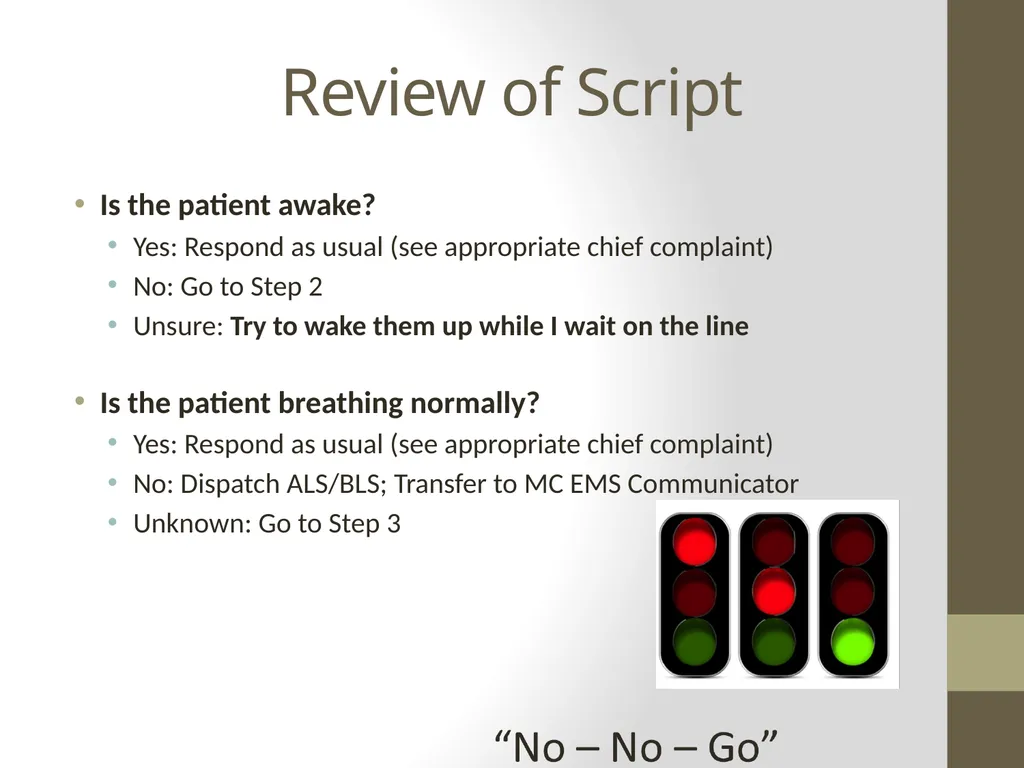
slide6. Identifying Cardiac Arrest Is the patient awake?
Is the patient breathing normally? “No – No – Go”<br>
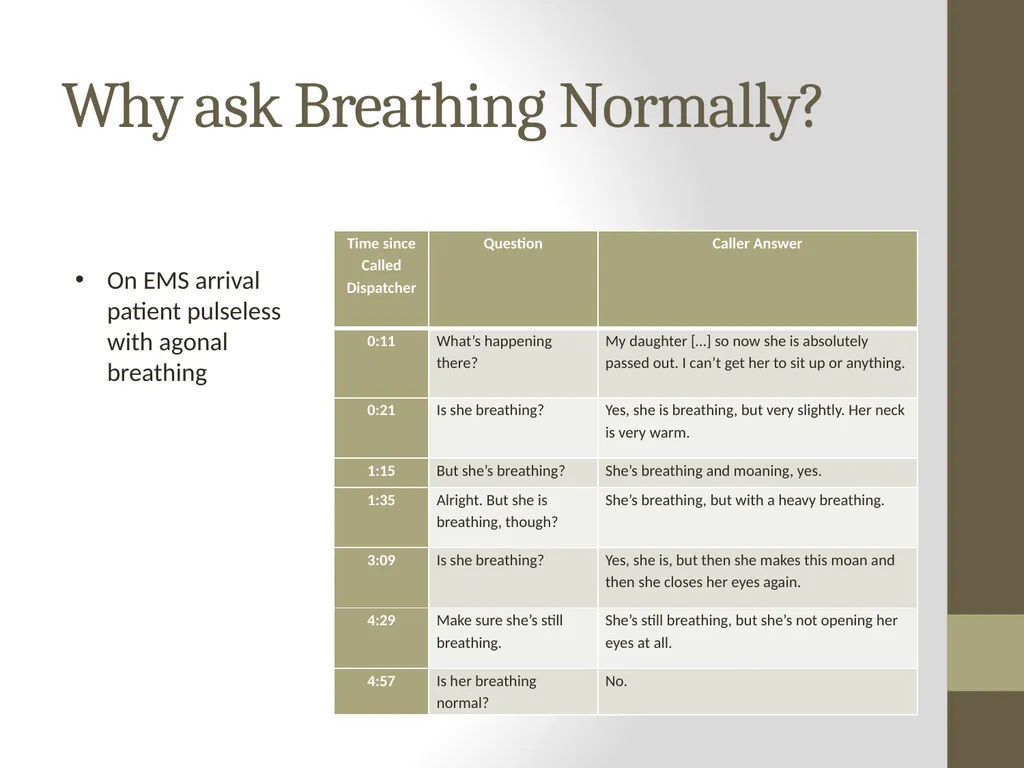
slide7. Why ask Breathing Normally? On EMS arrival patient pulseless with agonal breathing<br>
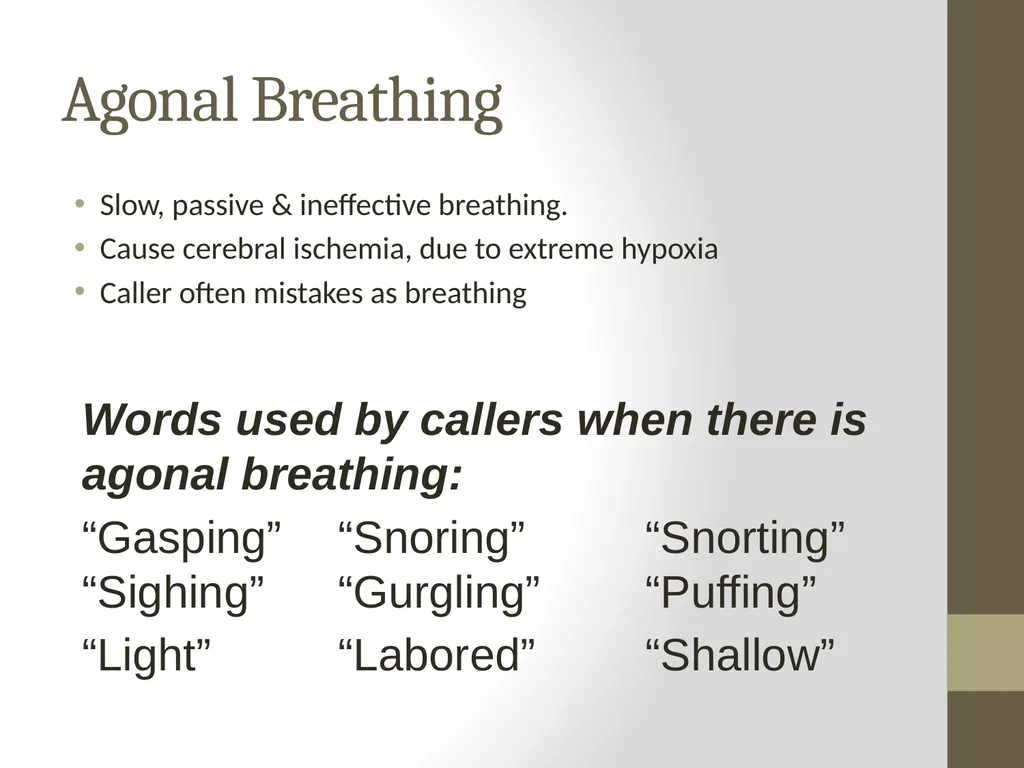
slide8. Agonal Breathing Slow, passive & ineffective breathing.
Cause cerebral ischemia, due to extreme hypoxia
Caller often mistakes as breathing Words used by callers when there is agonal breathing:
“Gasping” “Snoring” “Snorting” “Sighing” “Gurgling” “Puffing”
“Light” “Labored” “Shallow”<br>
slide9. Review of Script Is the patient awake?
Yes: Respond as usual (see appropriate chief complaint)
No: Go to Step 2
Unsure: Try to wake them up while I wait on the line
Is the patient breathing normally?
Yes: Respond as usual (see appropriate chief complaint)
No: Dispatch ALS/BLS; Transfer to MC EMS Communicator
Unknown: Go to Step 3<br>
slide10. Remember Studies have shown giving CPR to a person not in cardiac arrest does minimal harm
Not giving CPR when someone is in arrest significantly decreases survival
Decreasing TIME To CPR is Key!
Use the script!<br>
slide2. Training Review Identifying patients who need dispatcher CPR<br>
slide3. Why are we doing this? Each year 800 people have an out-of-hospital cardiac arrest in Milwaukee County and 90% die
Less than 19% have the benefit of bystander CPR
Bringing dispatcher assisted CPR to your community will CHANGE:
Bystander CPR rates
Cardiac arrest survival rates<br>
slide4. What’s happened so far?<br>
slide5. Cardiac Arrest Signs Sudden, unexpected collapse
Unconsciousness, no sign of life
Abnormal breathing (gasping) common
Brief seizure – lack of oxygen to brain<br>
slide6. Identifying Cardiac Arrest Is the patient awake?
Is the patient breathing normally? “No – No – Go”<br>
slide7. Why ask Breathing Normally? On EMS arrival patient pulseless with agonal breathing<br>
slide8. Agonal Breathing Slow, passive & ineffective breathing.
Cause cerebral ischemia, due to extreme hypoxia
Caller often mistakes as breathing Words used by callers when there is agonal breathing:
“Gasping” “Snoring” “Snorting” “Sighing” “Gurgling” “Puffing”
“Light” “Labored” “Shallow”<br>
slide9. Review of Script Is the patient awake?
Yes: Respond as usual (see appropriate chief complaint)
No: Go to Step 2
Unsure: Try to wake them up while I wait on the line
Is the patient breathing normally?
Yes: Respond as usual (see appropriate chief complaint)
No: Dispatch ALS/BLS; Transfer to MC EMS Communicator
Unknown: Go to Step 3<br>
slide10. Remember Studies have shown giving CPR to a person not in cardiac arrest does minimal harm
Not giving CPR when someone is in arrest significantly decreases survival
Decreasing TIME To CPR is Key!
Use the script!<br>