Indian Railways: Building a Permanent Legacy Tarun Khanna Aldo Musacchio Rachna Tahulyani Harvard Business School 9710-008 Rev : October 1, 2009 Prasad had led Indian Railways through one of the most impressive business turnarounds in
Related Topics
Share
Embed code
Download this presentation From Below
"Indian Railways: Building a Permanent Legacy Tarun" is the property of its rightful owner. Permission is granted to
download and print the materials on this website for personal, non-commercial use only, and to display it
on your personal computer provided you do not modify the materials and that you retain all copyright
notices contained in the materials. By downloading content from our website, you accept the terms of this
agreement.
Presentation Transcript
01
Indian Railways: Building a Permanent Legacy Tarun Khanna – Aldo Musacchio – Rachna Tahulyani Harvard Business School
9—710-008
Rev : October 1, 2009<br>
02
Prasad had led Indian Railways through one of the most impressive business turnarounds in recent history
In 2004, Prasad had given the railway board and Kumar the operational task of turning around the railways.
They had focused on getting everyone to improve the performance of Indian Railways organizations.
Implemented reforms with a “consensus-based approach” and made sure the “reforms had developed deep roots within the institutions”
By 2009 Prasad and his team felt that “policy reforms have been embedded in the institutionalized DNA by instating systemic and procedural reforms. These have become part of the organizational routine, manuals and to some extend norms.”<br>
03
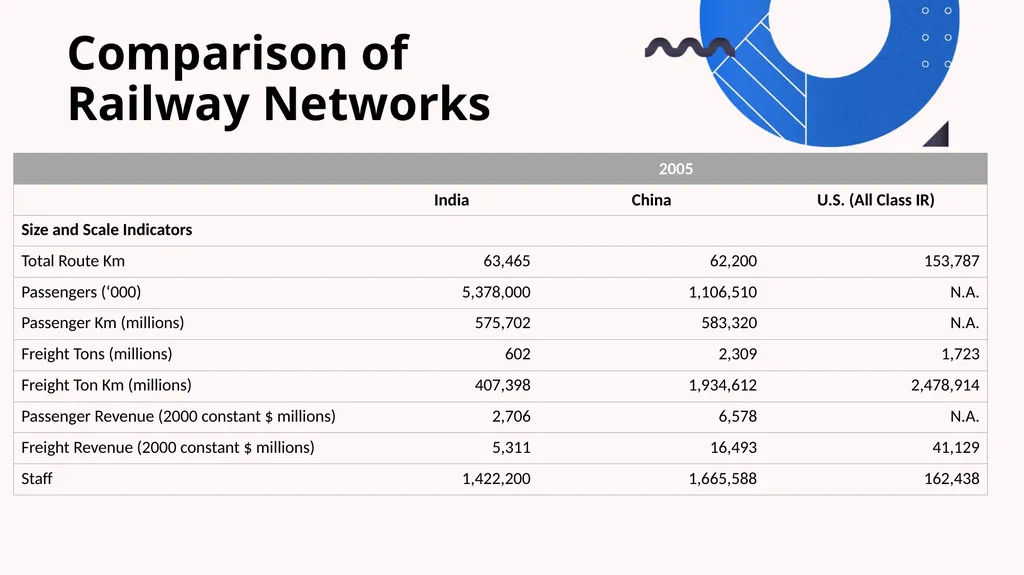
A Nation’s Lifeline Indian Railways was one of the largest and busiest rail networks in the world, carrying over 17 million passengers and 2 million tons of freight every day
Colonial Inheritance (1858 – 1947)
1853 – the first train ran on India soil from Mumbai (the commercial capital of the country) to Thane (suburb)
1870 – The governor general of India had initiated the construction of minor state lines on narrow-gauge tracks in order to develop traffic to the hinterland
1875 – British companies had invested about £95 million in Indian guaranteed railways
1880 – The route mileage of IR entire network was about 14500 kilometers
1905 – A railway board was formed under the Department of Commerce and Industry
1924 – the government took over the management of the railways and separated its financing and budget from that of other government departments
1947 – 40% of the railways became part of the newly created nation of Pakistan<br>
04
ORGANIZATIONAL HIERARCHY
The government of India’s ministry of railways operated IR who was assisted by two ministers of state for railways. Each of ministers has railway board (such as chairman railway board, a financial commissioner, and six functional members) with direct influence on the future
Members of the railway board were highly specialized in the functions they represented and had vast experience in each of their field.<br>
05
THE PUBLIC-SECTOR GIANT
At the end of twentieth century, IR had become “inward looking” organizations.
Over a span of 50 years after independence, IR's share of passenger traffic declined, lost most of its business to bus transportation and airlines); and its share of good increased because of trucking industry gains, which had been facilitated by more accessible roads and by IR's capacity limitations
The economic reforms of the 1990s had led to a lowering of trade and tariff barriers and exposed Indian firms to international competition.
Although progress in actual investment in these new lines is small, this activity does divert engineering and managerial resources to a significant extent, detracting from other serious tasks
Firing workers or changing their salaries was another costly political battle that no minister of railways wanted to fight, especially if it meant risking his own political career
IR’s financial crisis culminated in 2001 when IR was compelled to defer the dividend payable to the government<br>
06
A Break from the Past In 2004, IR was in dire financial straits
Freight Operations : “Faster and Heavier Trains”
The long-term strategy of increasing freight rates regularly to protect railway profitability had driven freight customers to other modes of transport
Faster trains referred to a reduction in turnaround time
Heavier trains meant that IR managers could increase profits without having to increase their rolling stock
“Simplify cumbersome procedure”
Raising tariffs to transport certain commodities required that IR’s management focus on the elasticity in demand for railway services
IR made significant investment in technology to enhance productivity<br>
07
PASSENGER BUSINESS
IR’s core problem in the passenger segment was that more 90% of the traffic was in the low-price segments
The key challenge : maintain its obligations on the lower price services, while at the same time increasing its capacity and utilization of upper-class services
Ministers had resisted fare hikes in politically sensitive segments – suburban, ordinary passenger, and second-class mail and express trains
A simple strategy “increase volumes, reduce unit costs”
IR enhanced the “Tatkal” (immediate) service
More trains qualified as superfast, which increased IR’s profitability because it could charge higher fares for superfast trains.
IR leveraged technology to enhance the customer experience<br>
08
LARGEST EMPLOYER IN THE WORLD
IR had 1.4 million employees who “politically … were untouchable”
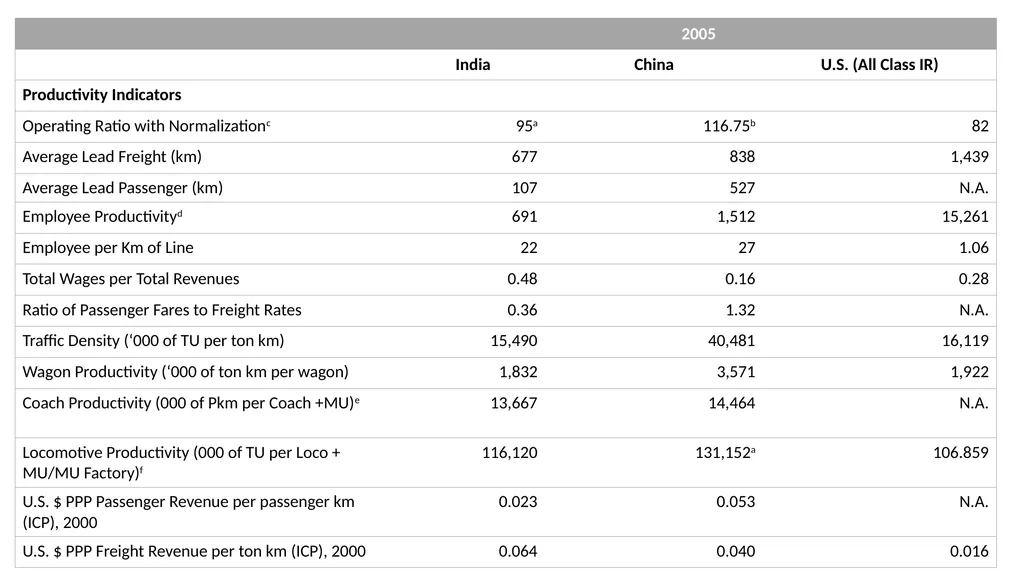
IR addressed the issue of downsizing by focusing on labor productivity, cross-functional work, and speedy execution.
An increase in IR’s volume of passenger and freight business led to enhanced productivity in the form of an increase in ton kilometers per employee and passenger kilometers per employee.<br>
09
IMPROVING THE INFRASTRUCTURE
In order to address the capacity constraint
One overall solutions to improve the infrastructure was to privatize some lines
Encouraged public-private partnerships in noncore areas
Cash incentives
Issuing debt<br>
10
Was It Organizational Change or Good Management? CIVIL SERVANT AS MANAGERS: THE EXAMPLE OF SUDHIR KUMAR
Implement the Prasad’s policy
As mediator between Prasad and the railways board
Help the Financial Commissioner improve IR’s fiscal health
Kumar is well-known as “the railway minister’s right-hand man” and “masterminding the financial turnaround of the IR”<br>
11
THE MOTIVATED MINISTER – LALU PRASAD YADAV
His reputation as a politician concerned with the welfare of the poor
When he was appointed as Minister of Railways, his initial drive to show good results gained him sympathy from the public and the international press
Prasad’s political approach was based on mass mobilization of the “poverty stricken lower-caste and Muslim” votes<br>
12
Permanent Legacy Serious challenges ware ahead, even though Prasad and Kumar had institutionalized some of their reforms (for instance, the change in axle load of the trains)
There were negative and positive pressures on the performance of IR
IR aspired to world-class benchmarks in train speeds, rolling stock, and passenger-traffic profitability Had Prasad and Kumar succeeded in embedding change into the minds of IR workers and staff?
Had they built a lasting legacy?<br>