
Infant Feeding Workshop Welcome Infant Feeding
AS
Published · 21 slides · 0 views

1 / 1

Description
Infant Feeding Workshop Welcome Infant Feeding Team West Suffolk Hospital June 2020 Welcome to our infant feeding information resource pack for you and your family. As you become a parent your behaviour is both instinctive and learned.
Related Topics
Share
Embed code
Download this presentation From Below
"Infant Feeding Workshop Welcome Infant Feeding" is the property of its rightful owner. Permission is granted to download and print the materials on this website for personal, non-commercial use only, and to display it on your personal computer provided you do not modify the materials and that you retain all copyright notices contained in the materials. By downloading content from our website, you accept the terms of this agreement.
Presentation Transcript
01
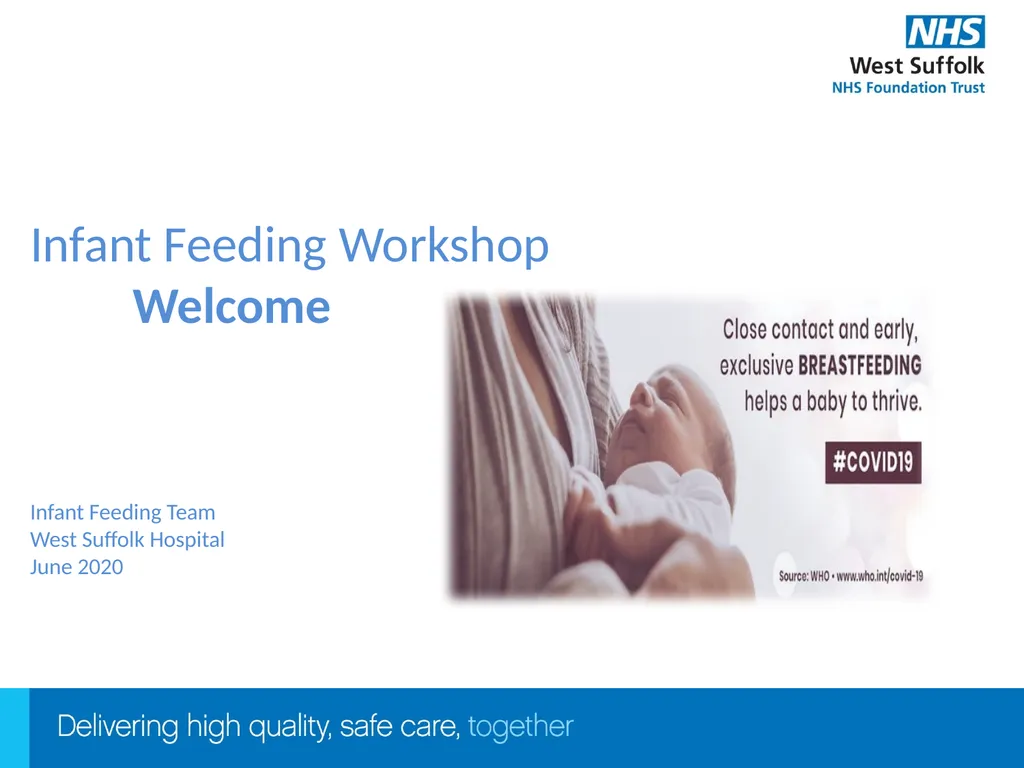
Infant Feeding Workshop
Welcome
Infant Feeding Team
West Suffolk Hospital
June 2020<br>
Welcome
Infant Feeding Team
West Suffolk Hospital
June 2020<br>
02
Welcome to our infant feeding information resource pack for you and your family. As you become a parent your behaviour is both instinctive and learned. Whilst some of you may have benefited from handling and caring for babies in the past, many will experience this for the first time when holding your baby following birth.
This resource is offered as one measure in supporting you to feed in a way that is both effective and responsive to the needs of your developing baby.
As you work through the following slides and video links please record any questions that you may wish to raise with your community midwife at your next discussion or meeting?<br>
This resource is offered as one measure in supporting you to feed in a way that is both effective and responsive to the needs of your developing baby.
As you work through the following slides and video links please record any questions that you may wish to raise with your community midwife at your next discussion or meeting?<br>
03
The aim of the package is to provide information to guide you in your choice and enhance your understanding of infant feeding. As you work through it you will have the opportunity to consider:
What are the benefits of breastfeeding and could it be for me?
What is responsive feeding and how do I prepare for this during pregnancy?
You and your baby immediately after birth and the use of skin to skin contact
How best to position your baby for a feed and ensure that attachment at your breast is effective
How to tell that feeding is going well
Expressing and storing colostrum and breastmilk
Challenges to breastfeeding<br>
What are the benefits of breastfeeding and could it be for me?
What is responsive feeding and how do I prepare for this during pregnancy?
You and your baby immediately after birth and the use of skin to skin contact
How best to position your baby for a feed and ensure that attachment at your breast is effective
How to tell that feeding is going well
Expressing and storing colostrum and breastmilk
Challenges to breastfeeding<br>
04
Why do health professionals recommend breastfeeding and breastmilk as the optimum choice for your baby?
The benefits of breastmilk are explained on the following NHS link
https://www.nhs.uk/conditions/pregnancy-and-baby/benefits-breastfeeding/
They include a reduced risk of infections and hospital admission for your child and for you the risk of breast/ovarian cancer and osteoporosis is lowered. For both of you, obesity and cardiovascular disease is less prevalent.
Follow this video for the thoughts of Tiny Human Productions: A creative collective of parents
https://vimeo.com/190696865<br>
The benefits of breastmilk are explained on the following NHS link
https://www.nhs.uk/conditions/pregnancy-and-baby/benefits-breastfeeding/
They include a reduced risk of infections and hospital admission for your child and for you the risk of breast/ovarian cancer and osteoporosis is lowered. For both of you, obesity and cardiovascular disease is less prevalent.
Follow this video for the thoughts of Tiny Human Productions: A creative collective of parents
https://vimeo.com/190696865<br>
05
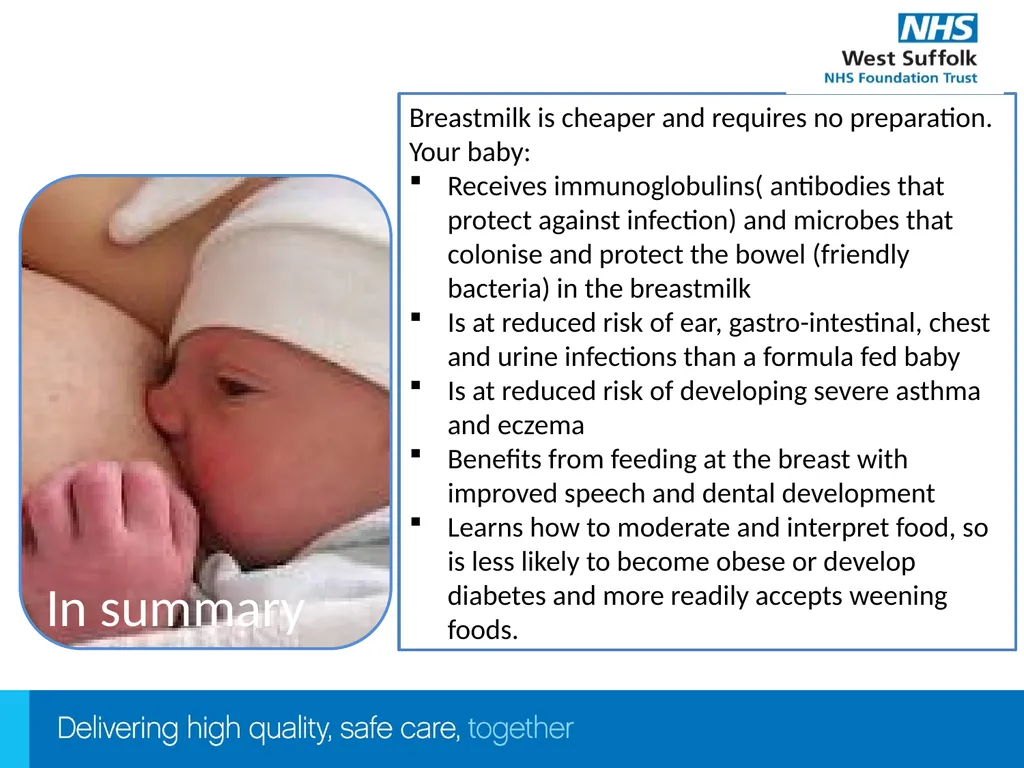
Breastmilk is cheaper and requires no preparation.
Your baby:
Receives immunoglobulins( antibodies that protect against infection) and microbes that colonise and protect the bowel (friendly bacteria) in the breastmilk
Is at reduced risk of ear, gastro-intestinal, chest and urine infections than a formula fed baby
Is at reduced risk of developing severe asthma and eczema
Benefits from feeding at the breast with improved speech and dental development
Learns how to moderate and interpret food, so is less likely to become obese or develop diabetes and more readily accepts weening foods.<br>
Your baby:
Receives immunoglobulins( antibodies that protect against infection) and microbes that colonise and protect the bowel (friendly bacteria) in the breastmilk
Is at reduced risk of ear, gastro-intestinal, chest and urine infections than a formula fed baby
Is at reduced risk of developing severe asthma and eczema
Benefits from feeding at the breast with improved speech and dental development
Learns how to moderate and interpret food, so is less likely to become obese or develop diabetes and more readily accepts weening foods.<br>
06
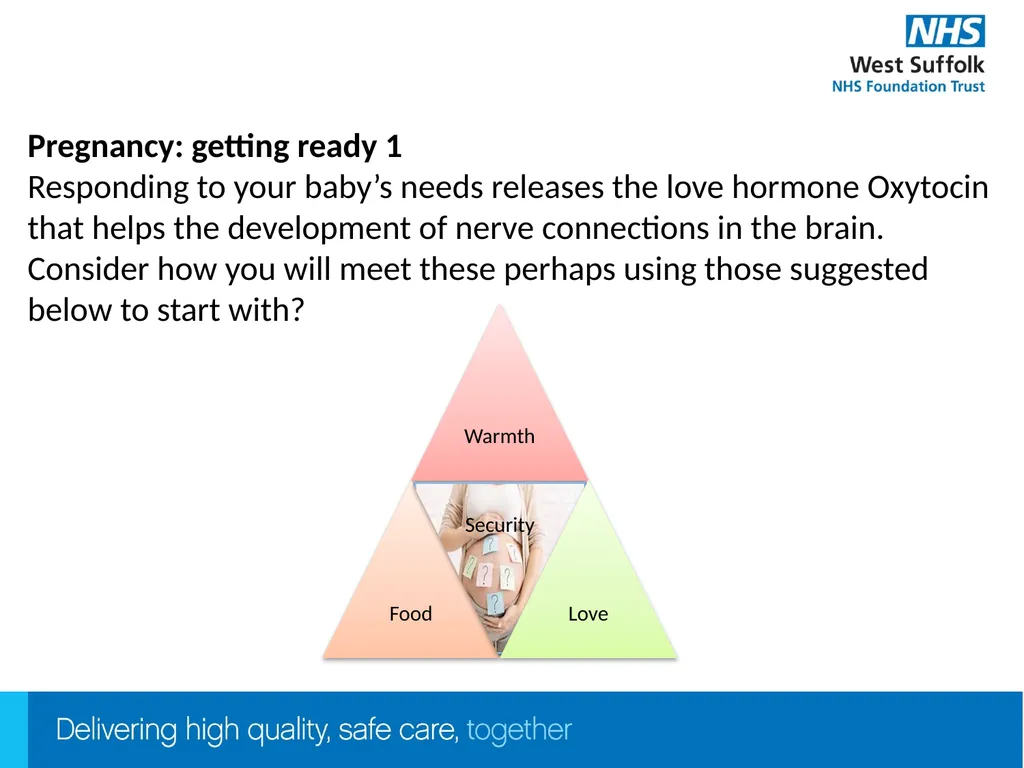
Pregnancy: getting ready 1
Responding to your baby’s needs releases the love hormone Oxytocin that helps the development of nerve connections in the brain. Consider how you will meet these perhaps using those suggested below to start with?<br>
Responding to your baby’s needs releases the love hormone Oxytocin that helps the development of nerve connections in the brain. Consider how you will meet these perhaps using those suggested below to start with?<br>
07
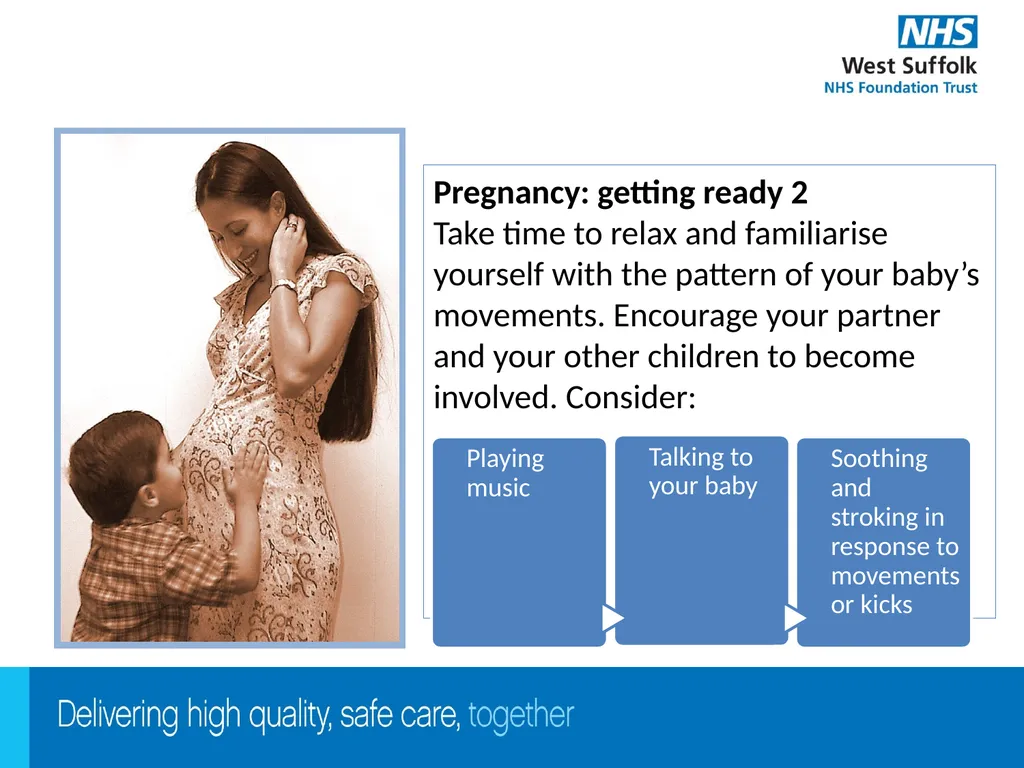
Pregnancy: getting ready 2
Take time to relax and familiarise yourself with the pattern of your baby’s movements. Encourage your partner and your other children to become involved. Consider:<br>
Take time to relax and familiarise yourself with the pattern of your baby’s movements. Encourage your partner and your other children to become involved. Consider:<br>
08
Getting feeding off to a good start
Skin to skin and first feed
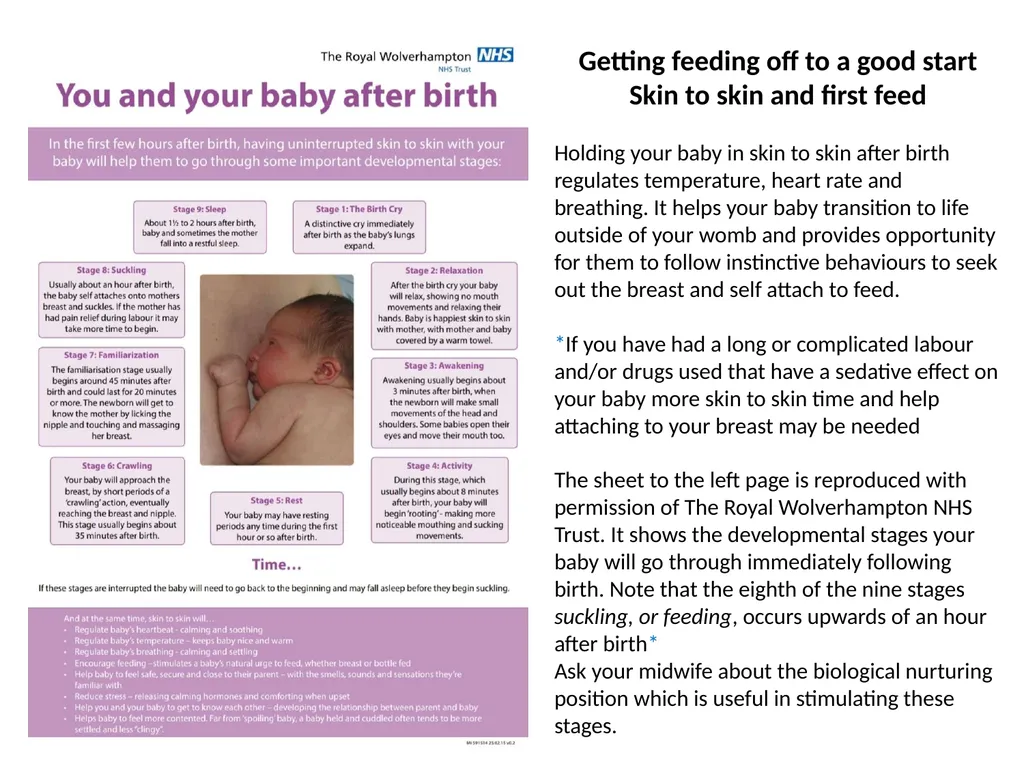
Holding your baby in skin to skin after birth regulates temperature, heart rate and breathing. It helps your baby transition to life outside of your womb and provides opportunity for them to follow instinctive behaviours to seek out the breast and self attach to feed.
*If you have had a long or complicated labour and/or drugs used that have a sedative effect on your baby more skin to skin time and help attaching to your breast may be needed
The sheet to the left page is reproduced with permission of The Royal Wolverhampton NHS Trust. It shows the developmental stages your baby will go through immediately following birth. Note that the eighth of the nine stages suckling, or feeding, occurs upwards of an hour after birth*
Ask your midwife about the biological nurturing position which is useful in stimulating these stages.<br>
Skin to skin and first feed
Holding your baby in skin to skin after birth regulates temperature, heart rate and breathing. It helps your baby transition to life outside of your womb and provides opportunity for them to follow instinctive behaviours to seek out the breast and self attach to feed.
*If you have had a long or complicated labour and/or drugs used that have a sedative effect on your baby more skin to skin time and help attaching to your breast may be needed
The sheet to the left page is reproduced with permission of The Royal Wolverhampton NHS Trust. It shows the developmental stages your baby will go through immediately following birth. Note that the eighth of the nine stages suckling, or feeding, occurs upwards of an hour after birth*
Ask your midwife about the biological nurturing position which is useful in stimulating these stages.<br>
09
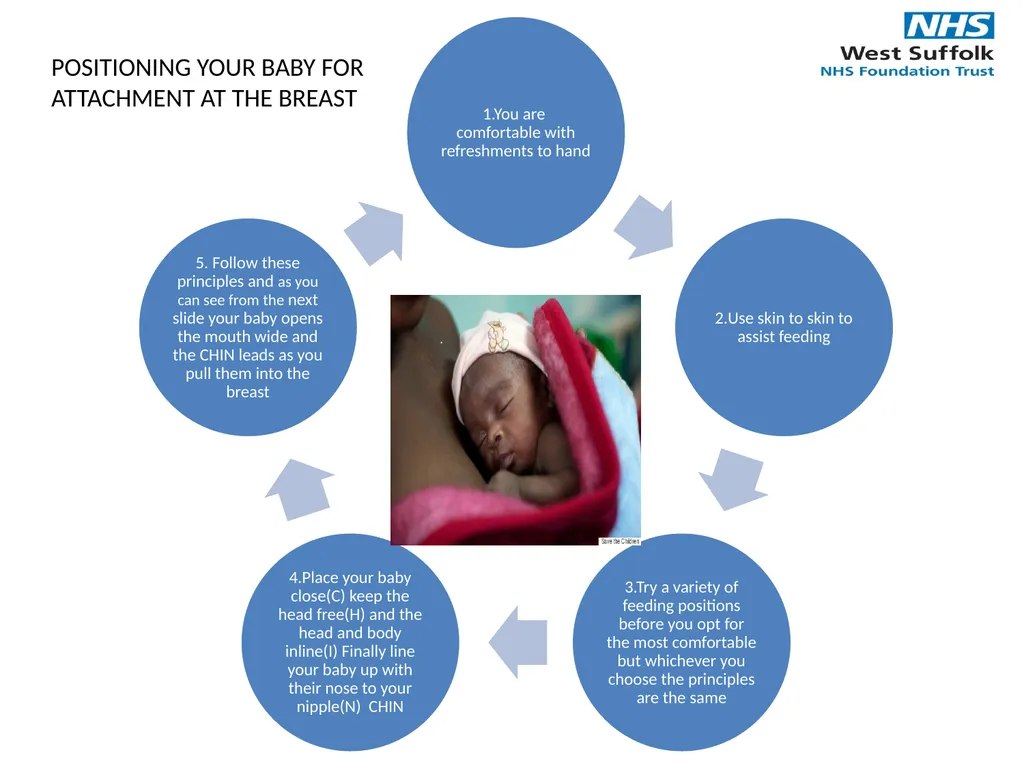
POSITIONING YOUR BABY FOR ATTACHMENT AT THE BREAST<br>
10
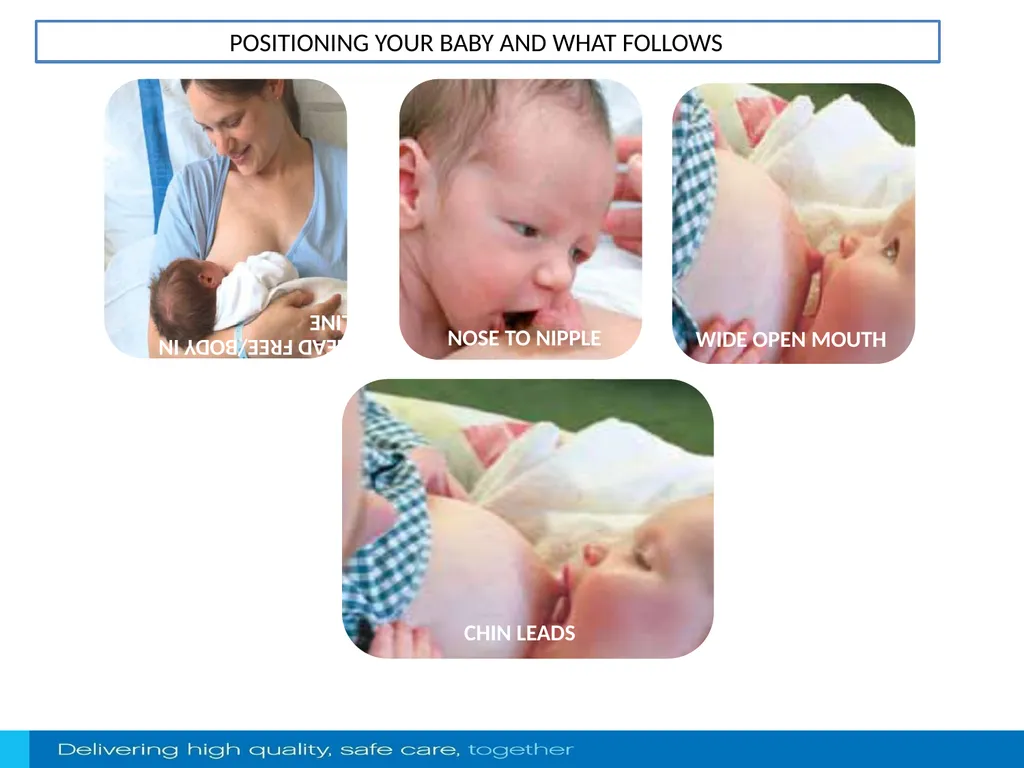
POSITIONING YOUR BABY AND WHAT FOLLOWS<br>
11
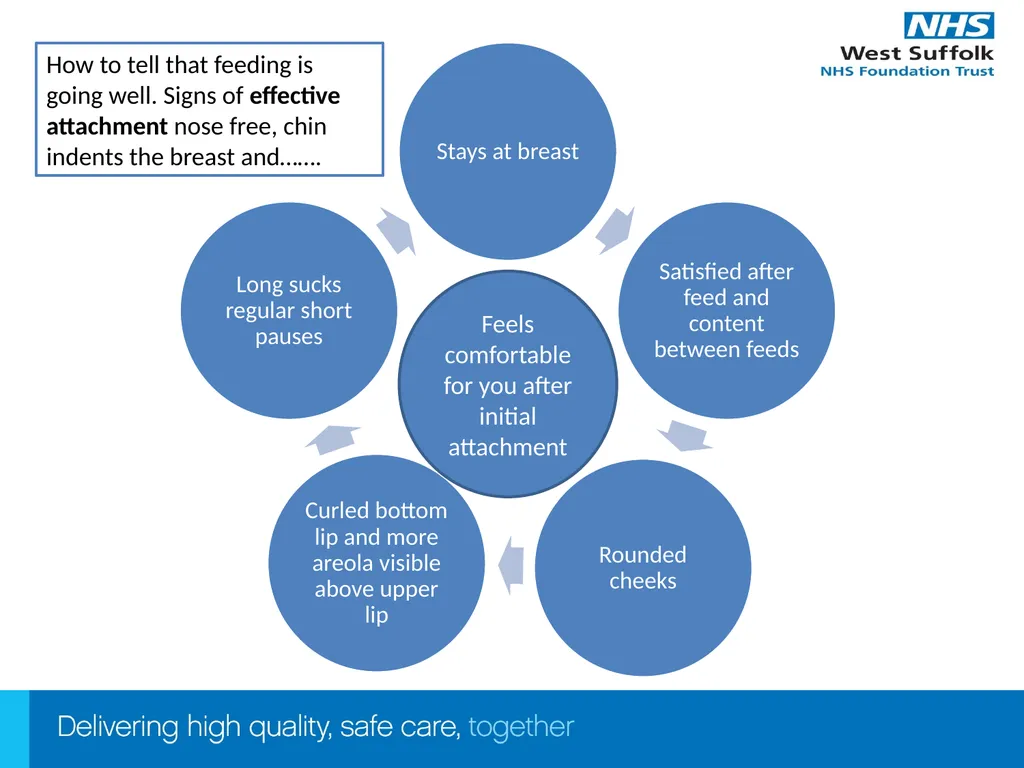
How to tell that feeding is going well. Signs of effective attachment nose free, chin indents the breast and……. Feels comfortable for you after initial attachment<br>
12
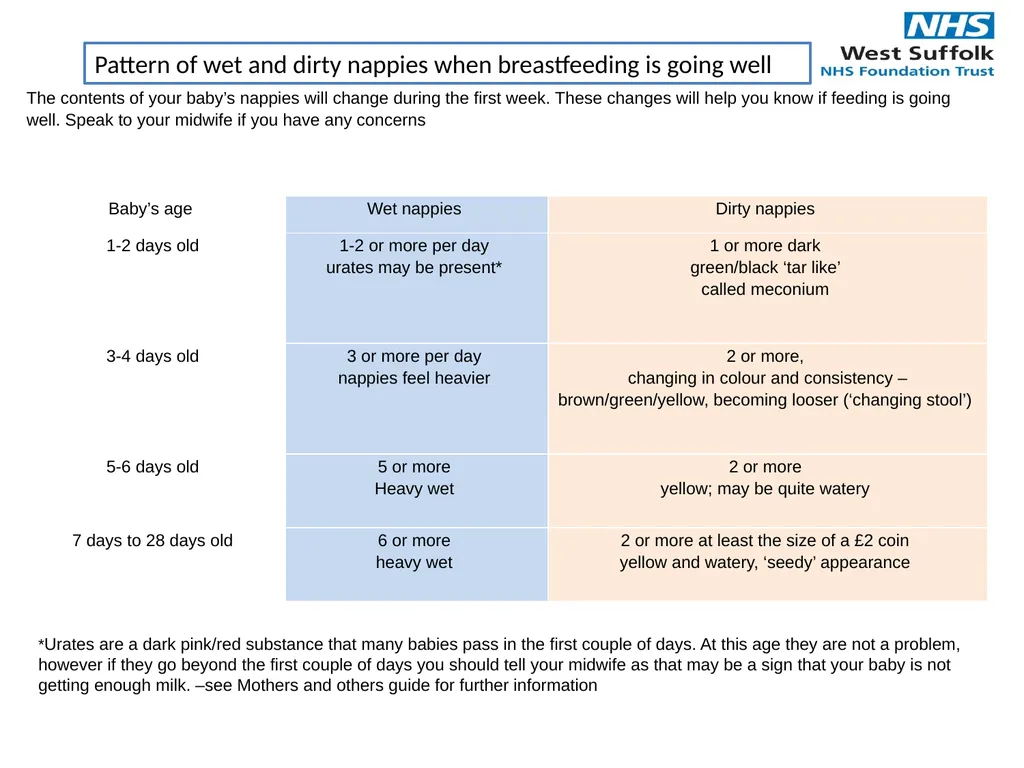
*Urates are a dark pink/red substance that many babies pass in the first couple of days. At this age they are not a problem, however if they go beyond the first couple of days you should tell your midwife as that may be a sign that your baby is not getting enough milk. –see Mothers and others guide for further information Pattern of wet and dirty nappies when breastfeeding is going well<br>
13
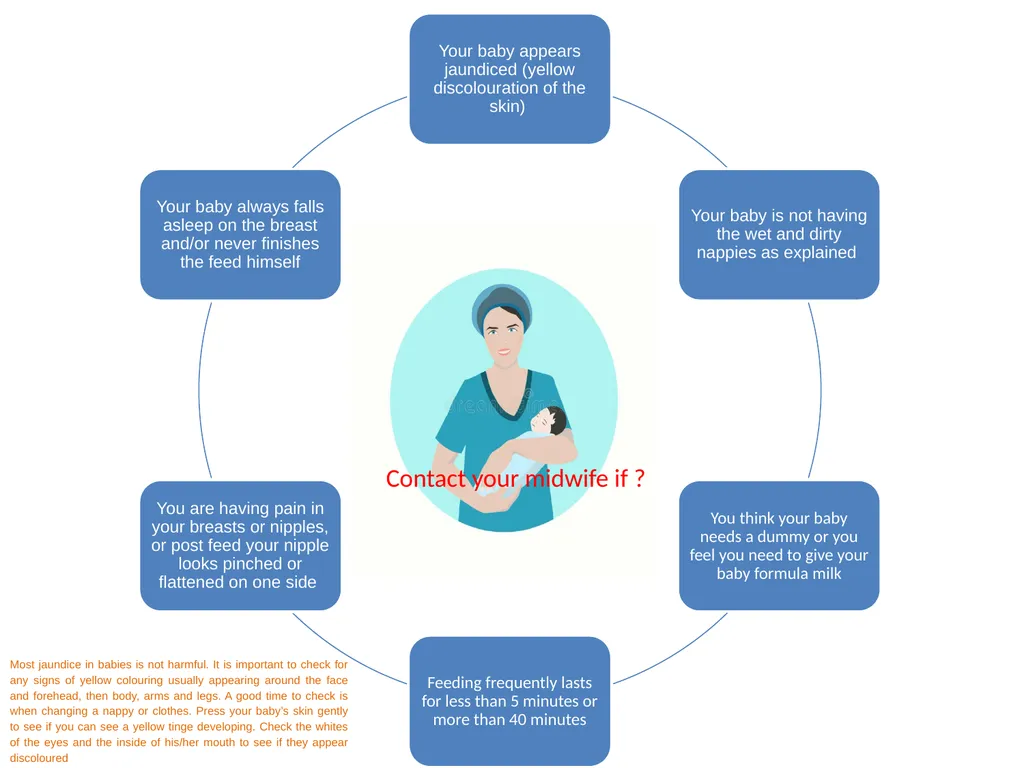
Most jaundice in babies is not harmful. It is important to check for any signs of yellow colouring usually appearing around the face and forehead, then body, arms and legs. A good time to check is when changing a nappy or clothes. Press your baby’s skin gently to see if you can see a yellow tinge developing. Check the whites of the eyes and the inside of his/her mouth to see if they appear discoloured Contact your midwife if ?<br>
14
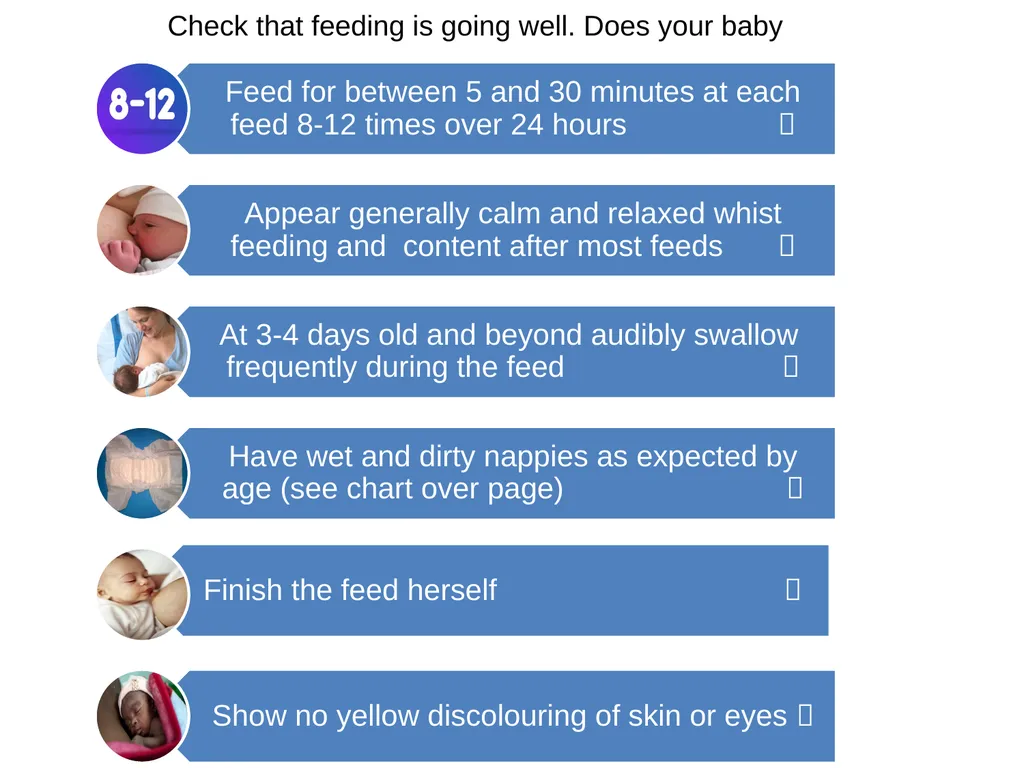
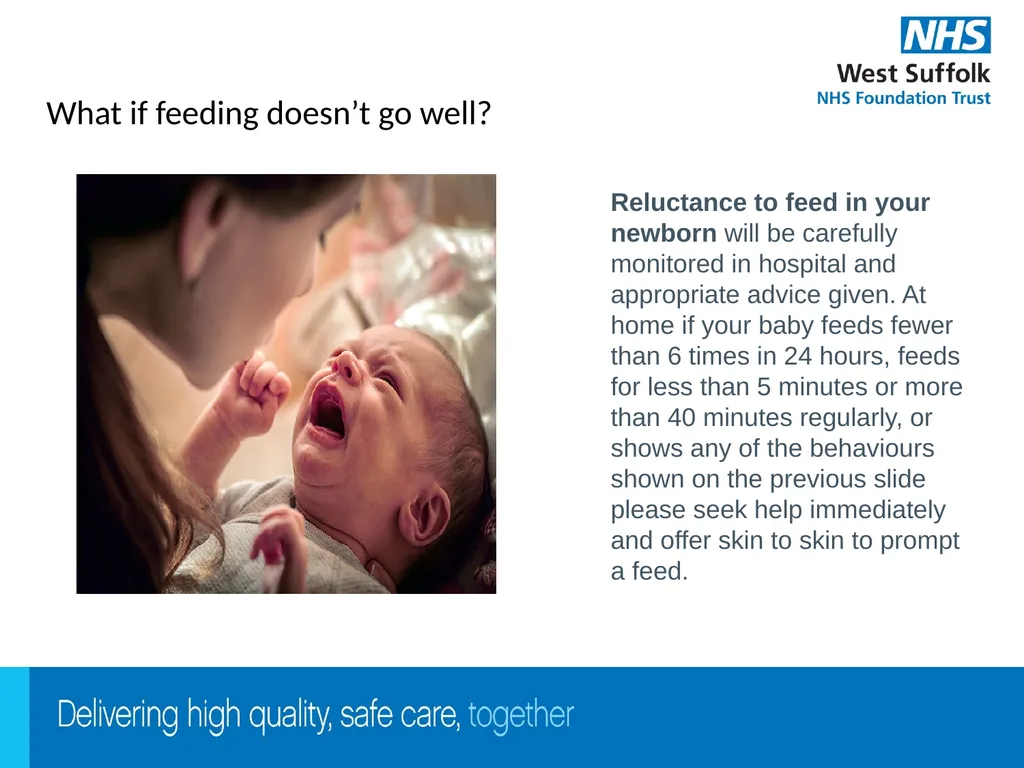
What if feeding doesn’t go well? Reluctance to feed in your newborn will be carefully monitored in hospital and appropriate advice given. At home if your baby feeds fewer than 6 times in 24 hours, feeds for less than 5 minutes or more than 40 minutes regularly, or shows any of the behaviours shown on the previous slide please seek help immediately and offer skin to skin to prompt a feed.<br>
15
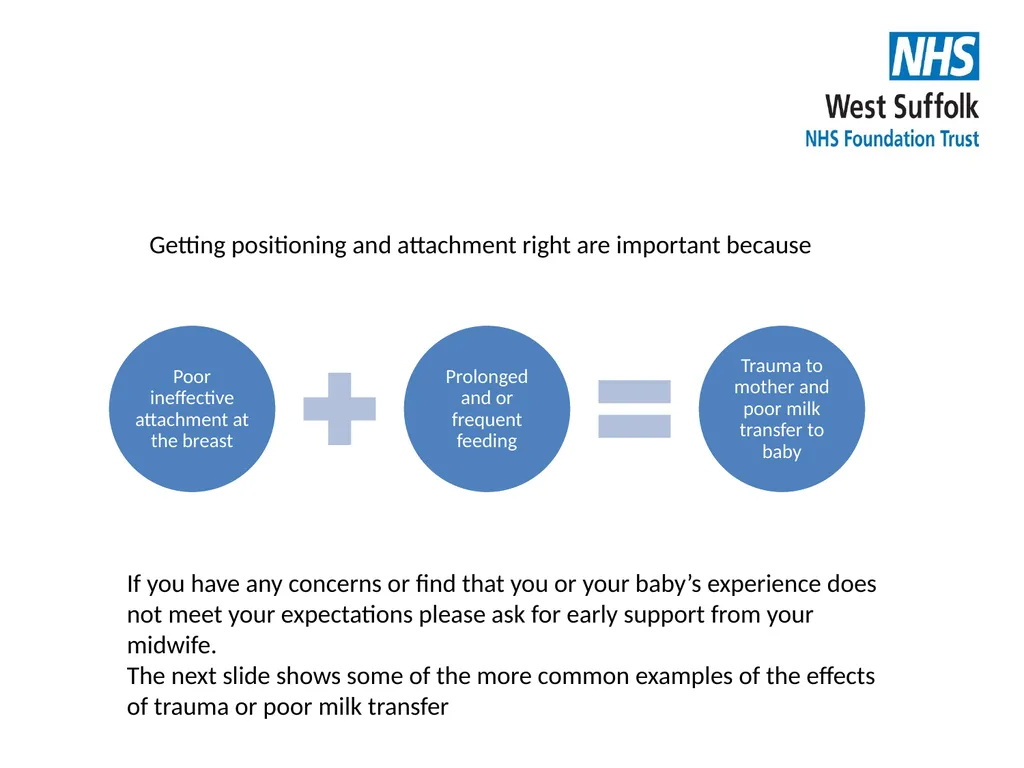
Getting positioning and attachment right are important because If you have any concerns or find that you or your baby’s experience does not meet your expectations please ask for early support from your midwife.
The next slide shows some of the more common examples of the effects of trauma or poor milk transfer<br>
The next slide shows some of the more common examples of the effects of trauma or poor milk transfer<br>
16
Link- NHS Your baby's weight and height
https://www.nhs.uk/conditions/pregnancy-and-baby/baby-weight-and-height/<br>
https://www.nhs.uk/conditions/pregnancy-and-baby/baby-weight-and-height/<br>
17
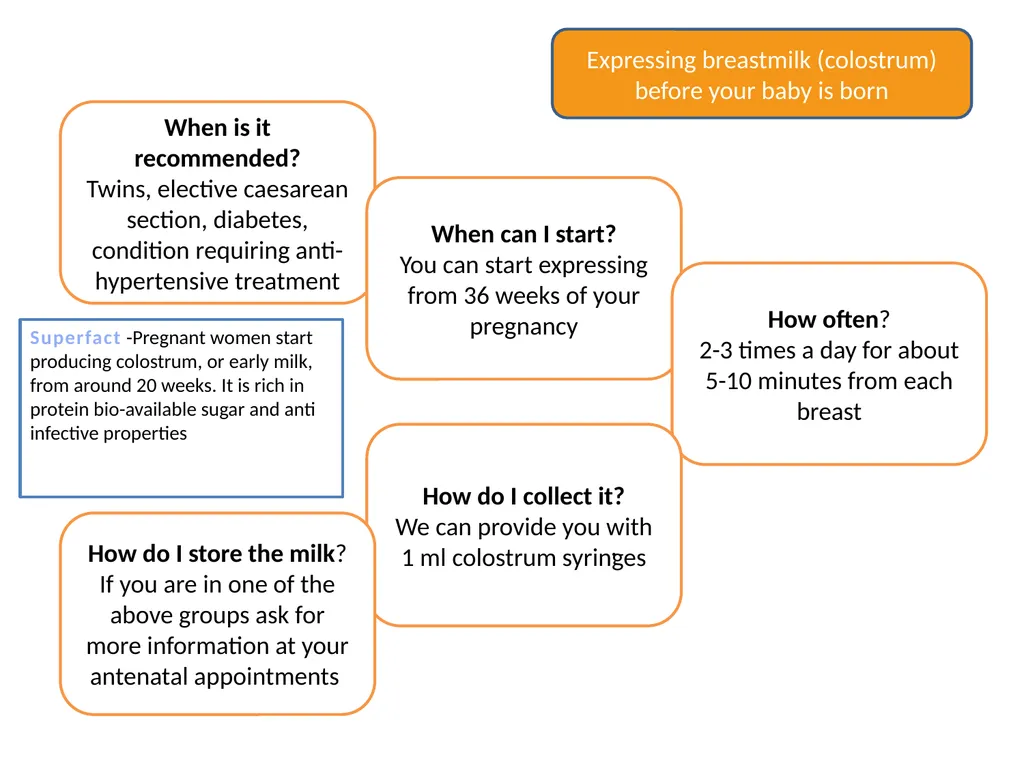
When is it recommended?
Twins, elective caesarean section, diabetes, condition requiring anti- hypertensive treatment When can I start?
You can start expressing from 36 weeks of your pregnancy How often?
2-3 times a day for about 5-10 minutes from each breast Expressing breastmilk (colostrum) before your baby is born How do I collect it?
We can provide you with 1 ml colostrum syringes How do I store the milk?
If you are in one of the above groups ask for more information at your antenatal appointments . Superfact -Pregnant women start producing colostrum, or early milk, from around 20 weeks. It is rich in protein bio-available sugar and anti infective properties<br>
Twins, elective caesarean section, diabetes, condition requiring anti- hypertensive treatment When can I start?
You can start expressing from 36 weeks of your pregnancy How often?
2-3 times a day for about 5-10 minutes from each breast Expressing breastmilk (colostrum) before your baby is born How do I collect it?
We can provide you with 1 ml colostrum syringes How do I store the milk?
If you are in one of the above groups ask for more information at your antenatal appointments . Superfact -Pregnant women start producing colostrum, or early milk, from around 20 weeks. It is rich in protein bio-available sugar and anti infective properties<br>
18
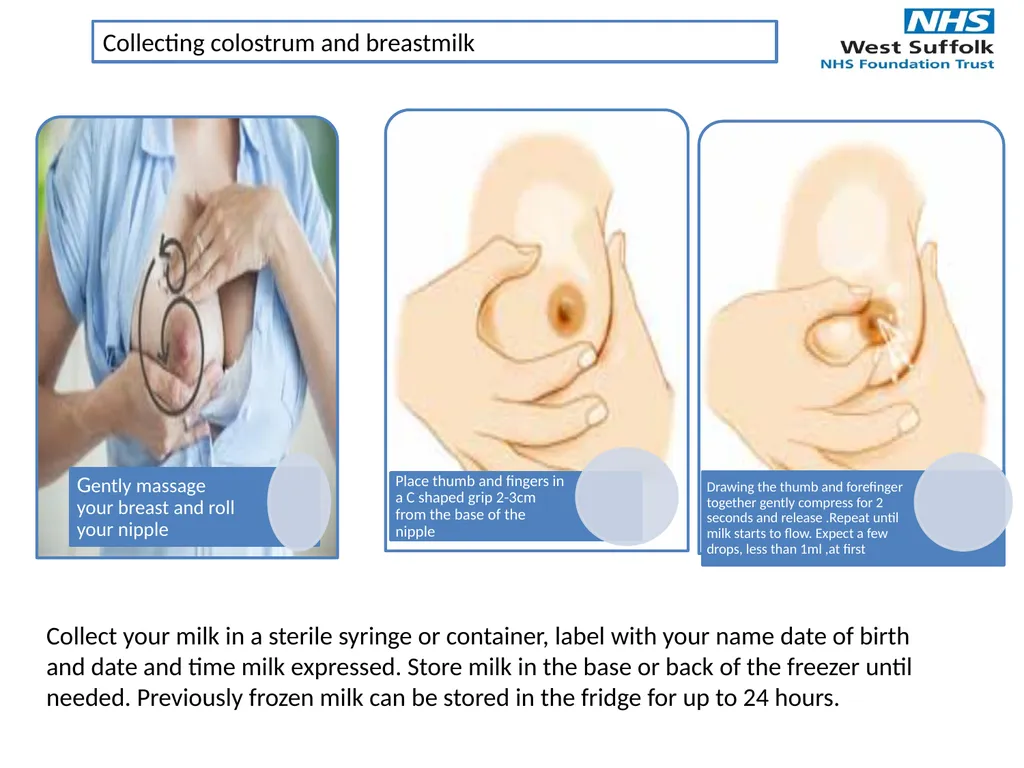
Collecting colostrum and breastmilk Collect your milk in a sterile syringe or container, label with your name date of birth and date and time milk expressed. Store milk in the base or back of the freezer until needed. Previously frozen milk can be stored in the fridge for up to 24 hours.<br>
19
Thank you for completing this pack. Please jot down any questions you have for your midwife for your next meeting or discussion.
If you and you baby are under the care of West Suffolk NHS Foundation Trust and you have a more urgent concern you can make contact as follows:
Monday– Friday 0900-1500
West Suffolk Hospital Community Midwives Hub
Phone 01284 713755 email-wsh-tr-communitymidwives@nhs.net
Out of Hours and Bank Holidays
F11 Phone 01284 712741
If you and your baby are under the postnatal care of a non WSH service contact please use the contact information given to you on discharge from hospital or by your community team midwife<br>
If you and you baby are under the care of West Suffolk NHS Foundation Trust and you have a more urgent concern you can make contact as follows:
Monday– Friday 0900-1500
West Suffolk Hospital Community Midwives Hub
Phone 01284 713755 email-wsh-tr-communitymidwives@nhs.net
Out of Hours and Bank Holidays
F11 Phone 01284 712741
If you and your baby are under the postnatal care of a non WSH service contact please use the contact information given to you on discharge from hospital or by your community team midwife<br>
20
Further Resources
MOTHERS & others GUIDE
NHS Breastfeeding: the first few days
https://www.nhs.uk/conditions/pregnancy-and-baby/breastfeeding-first-days/
Positioning and attachment Scottish Government
https://www.google.com/search?q=video+effective+positioning+and+attachment&rlz=1C1GCEA_enGB837GB853&oq=video+effective+positioning+and+attachment&aqs=chrome..69i57j33.9919j0j3&sourceid=chrome&ie=UTF-8
https://www.unicef.org.uk/babyfriendly/wp-content/uploads/sites/2/2020/04/Unicef-UK-Baby-Friendly-Initiative-statement-on-infant-feeding-during-the-Covid-19-outbreak.pdf
UNICEF UK BABY FRIENDLY INITIATIVE STATEMENT ON INFANT FEEDING DURING THE CORONAVIRUS (COVID-19) OUTBREAK Updated 14 May 2020
https://www.unicef.org.uk/babyfriendly/wp-content/uploads/sites/2/2020/04/Unicef-UK-Baby-Friendly-Initiative-statement-on-infant-feeding-during-the-Covid-19-outbreak.pdf<br>
MOTHERS & others GUIDE
NHS Breastfeeding: the first few days
https://www.nhs.uk/conditions/pregnancy-and-baby/breastfeeding-first-days/
Positioning and attachment Scottish Government
https://www.google.com/search?q=video+effective+positioning+and+attachment&rlz=1C1GCEA_enGB837GB853&oq=video+effective+positioning+and+attachment&aqs=chrome..69i57j33.9919j0j3&sourceid=chrome&ie=UTF-8
https://www.unicef.org.uk/babyfriendly/wp-content/uploads/sites/2/2020/04/Unicef-UK-Baby-Friendly-Initiative-statement-on-infant-feeding-during-the-Covid-19-outbreak.pdf
UNICEF UK BABY FRIENDLY INITIATIVE STATEMENT ON INFANT FEEDING DURING THE CORONAVIRUS (COVID-19) OUTBREAK Updated 14 May 2020
https://www.unicef.org.uk/babyfriendly/wp-content/uploads/sites/2/2020/04/Unicef-UK-Baby-Friendly-Initiative-statement-on-infant-feeding-during-the-Covid-19-outbreak.pdf<br>