
Initiating a Survivorship Program Megan Lanigan,
T
Published · 22 slides · 0 views

1 / 1



Description
Initiating a Survivorship Program Megan Lanigan, CRNP, AOCNP UPMC Womens Cancer Center Central PA I have no disclosures Defining Survivorship person without disease after completion of his or her treatment. process of living with,
Related Topics
Share
Embed code
Download this presentation From Below
"Initiating a Survivorship Program Megan Lanigan," is the property of its rightful owner. Permission is granted to download and print the materials on this website for personal, non-commercial use only, and to display it on your personal computer provided you do not modify the materials and that you retain all copyright notices contained in the materials. By downloading content from our website, you accept the terms of this agreement.
Presentation Transcript
01
Initiating a Survivorship Program Megan Lanigan, CRNP, AOCNP
UPMC Women’s Cancer Center Central PA<br>
UPMC Women’s Cancer Center Central PA<br>
02
I have no disclosures<br>
03
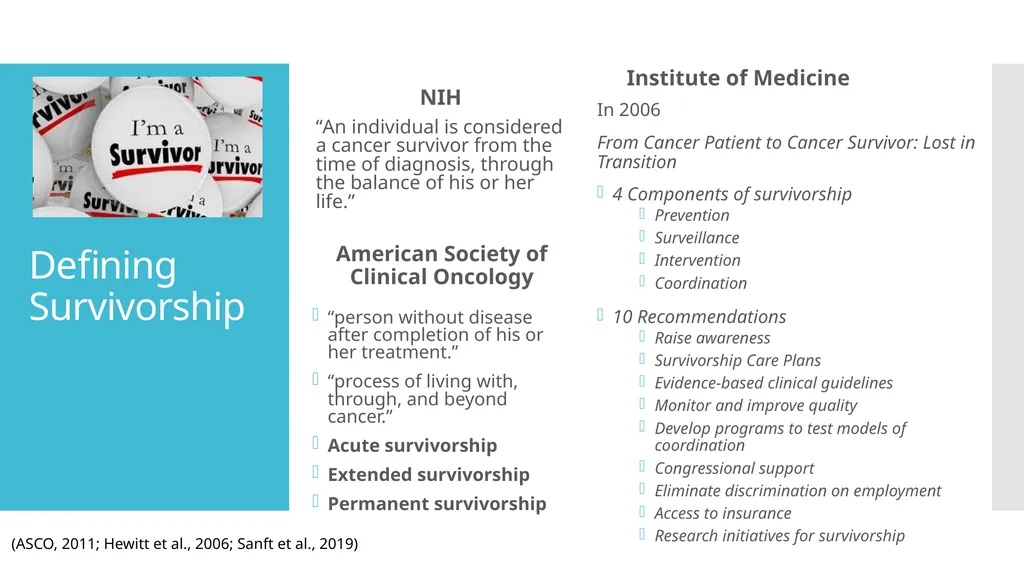
Defining Survivorship “person without disease after completion of his or her treatment.”
“process of living with, through, and beyond cancer.”
Acute survivorship
Extended survivorship
Permanent survivorship In 2006
From Cancer Patient to Cancer Survivor: Lost in Transition
4 Components of survivorship
Prevention
Surveillance
Intervention
Coordination
10 Recommendations
Raise awareness
Survivorship Care Plans
Evidence-based clinical guidelines
Monitor and improve quality
Develop programs to test models of coordination
Congressional support
Eliminate discrimination on employment
Access to insurance
Research initiatives for survivorship American Society of Clinical Oncology Institute of Medicine (ASCO, 2011; Hewitt et al., 2006; Sanft et al., 2019) NIH “An individual is considered a cancer survivor from the time of diagnosis, through the balance of his or her life.”<br>
“process of living with, through, and beyond cancer.”
Acute survivorship
Extended survivorship
Permanent survivorship In 2006
From Cancer Patient to Cancer Survivor: Lost in Transition
4 Components of survivorship
Prevention
Surveillance
Intervention
Coordination
10 Recommendations
Raise awareness
Survivorship Care Plans
Evidence-based clinical guidelines
Monitor and improve quality
Develop programs to test models of coordination
Congressional support
Eliminate discrimination on employment
Access to insurance
Research initiatives for survivorship American Society of Clinical Oncology Institute of Medicine (ASCO, 2011; Hewitt et al., 2006; Sanft et al., 2019) NIH “An individual is considered a cancer survivor from the time of diagnosis, through the balance of his or her life.”<br>
04
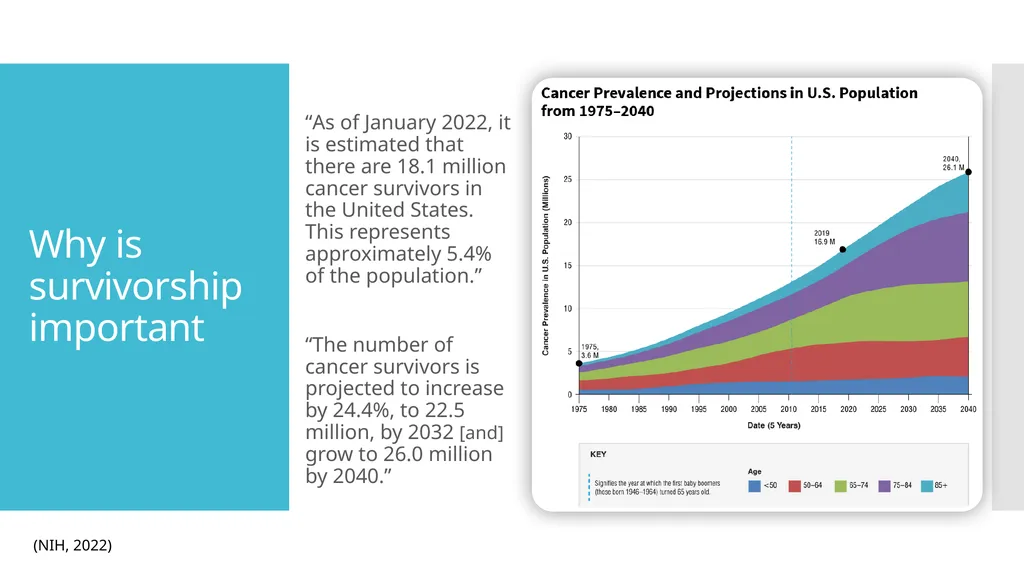
Why is survivorship important (NIH, 2022) “As of January 2022, it is estimated that there are 18.1 million cancer survivors in the United States. This represents approximately 5.4% of the population.”
“The number of cancer survivors is projected to increase by 24.4%, to 22.5 million, by 2032 [and] grow to 26.0 million by 2040.”<br>
“The number of cancer survivors is projected to increase by 24.4%, to 22.5 million, by 2032 [and] grow to 26.0 million by 2040.”<br>
05
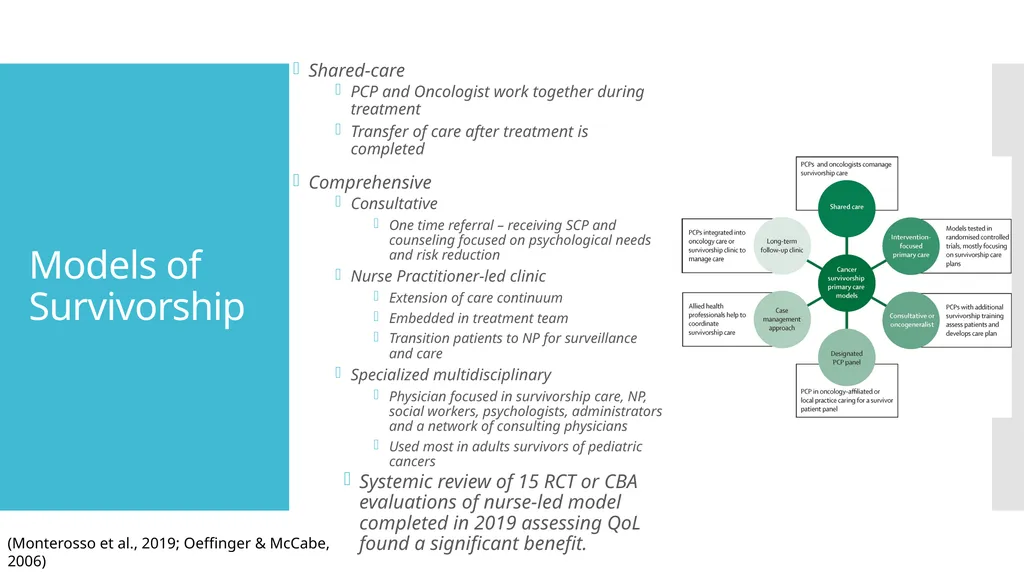
Models of Survivorship Shared-care
PCP and Oncologist work together during treatment
Transfer of care after treatment is completed
Comprehensive
Consultative
One time referral – receiving SCP and counseling focused on psychological needs and risk reduction
Nurse Practitioner-led clinic
Extension of care continuum
Embedded in treatment team
Transition patients to NP for surveillance and care
Specialized multidisciplinary
Physician focused in survivorship care, NP, social workers, psychologists, administrators and a network of consulting physicians
Used most in adults survivors of pediatric cancers (Monterosso et al., 2019; Oeffinger & McCabe, 2006) Systemic review of 15 RCT or CBA evaluations of nurse-led model completed in 2019 assessing QoL found a significant benefit.<br>
PCP and Oncologist work together during treatment
Transfer of care after treatment is completed
Comprehensive
Consultative
One time referral – receiving SCP and counseling focused on psychological needs and risk reduction
Nurse Practitioner-led clinic
Extension of care continuum
Embedded in treatment team
Transition patients to NP for surveillance and care
Specialized multidisciplinary
Physician focused in survivorship care, NP, social workers, psychologists, administrators and a network of consulting physicians
Used most in adults survivors of pediatric cancers (Monterosso et al., 2019; Oeffinger & McCabe, 2006) Systemic review of 15 RCT or CBA evaluations of nurse-led model completed in 2019 assessing QoL found a significant benefit.<br>
06
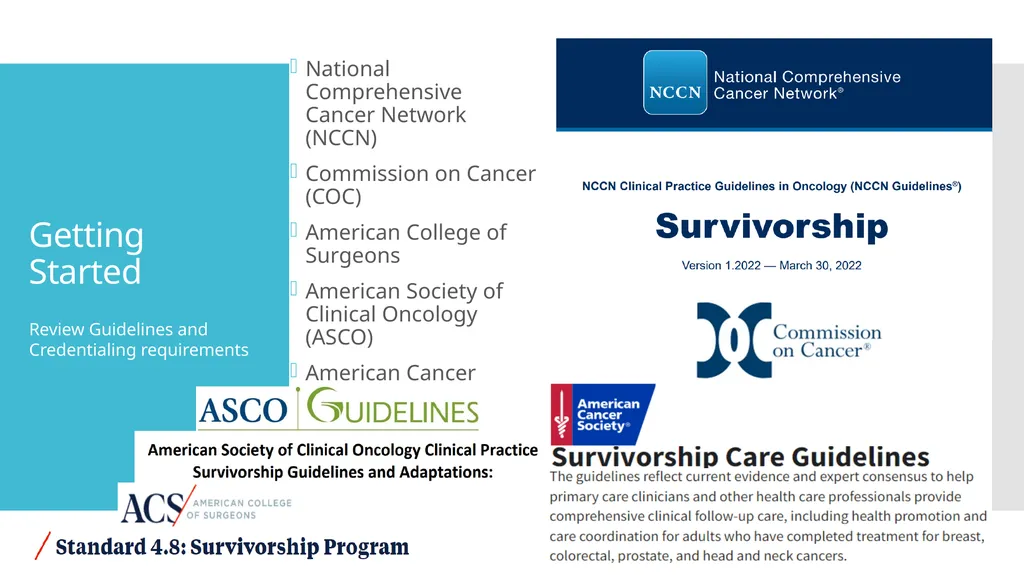
Getting Started National Comprehensive Cancer Network (NCCN)
Commission on Cancer (COC)
American College of Surgeons
American Society of Clinical Oncology (ASCO)
American Cancer Society (ACS) Review Guidelines and Credentialing requirements<br>
Commission on Cancer (COC)
American College of Surgeons
American Society of Clinical Oncology (ASCO)
American Cancer Society (ACS) Review Guidelines and Credentialing requirements<br>
07
COC Credentialing
Meeting the requirements (ACOS, 2022)<br>
08
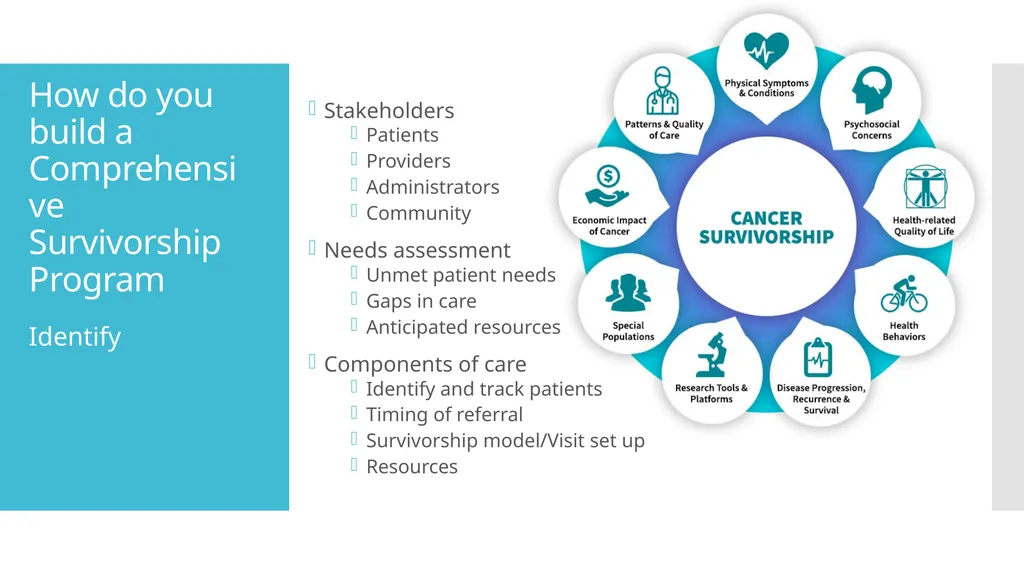
How do you build a Comprehensive Survivorship Program Stakeholders
Patients
Providers
Administrators
Community
Needs assessment
Unmet patient needs
Gaps in care
Anticipated resources
Components of care
Identify and track patients
Timing of referral
Survivorship model/Visit set up
Resources Identify<br>
Patients
Providers
Administrators
Community
Needs assessment
Unmet patient needs
Gaps in care
Anticipated resources
Components of care
Identify and track patients
Timing of referral
Survivorship model/Visit set up
Resources Identify<br>
09
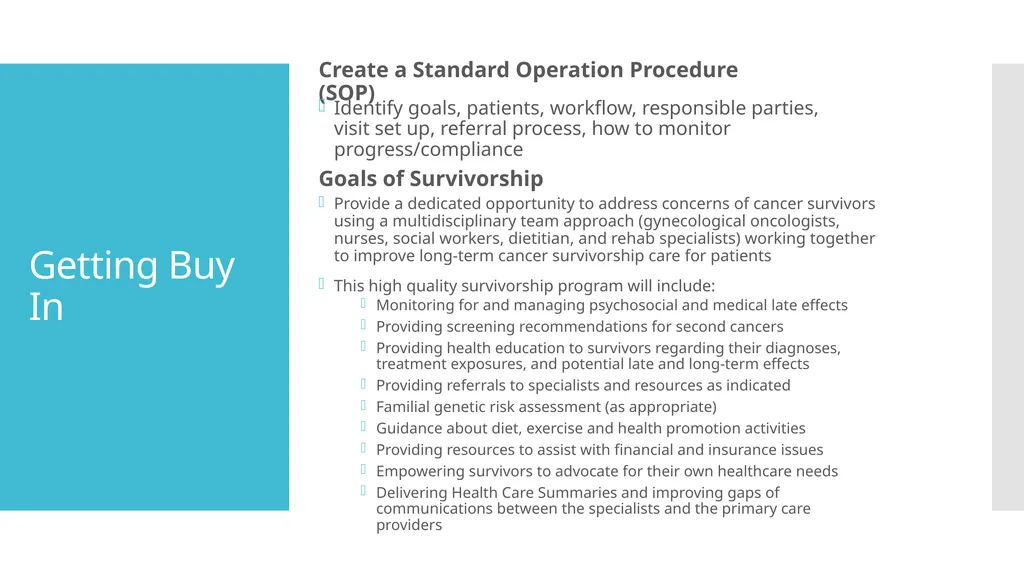
Getting Buy In Provide a dedicated opportunity to address concerns of cancer survivors using a multidisciplinary team approach (gynecological oncologists, nurses, social workers, dietitian, and rehab specialists) working together to improve long-term cancer survivorship care for patients
This high quality survivorship program will include:
Monitoring for and managing psychosocial and medical late effects
Providing screening recommendations for second cancers
Providing health education to survivors regarding their diagnoses, treatment exposures, and potential late and long-term effects
Providing referrals to specialists and resources as indicated
Familial genetic risk assessment (as appropriate)
Guidance about diet, exercise and health promotion activities
Providing resources to assist with financial and insurance issues
Empowering survivors to advocate for their own healthcare needs
Delivering Health Care Summaries and improving gaps of communications between the specialists and the primary care providers Goals of Survivorship Create a Standard Operation Procedure (SOP) Identify goals, patients, workflow, responsible parties, visit set up, referral process, how to monitor progress/compliance<br>
This high quality survivorship program will include:
Monitoring for and managing psychosocial and medical late effects
Providing screening recommendations for second cancers
Providing health education to survivors regarding their diagnoses, treatment exposures, and potential late and long-term effects
Providing referrals to specialists and resources as indicated
Familial genetic risk assessment (as appropriate)
Guidance about diet, exercise and health promotion activities
Providing resources to assist with financial and insurance issues
Empowering survivors to advocate for their own healthcare needs
Delivering Health Care Summaries and improving gaps of communications between the specialists and the primary care providers Goals of Survivorship Create a Standard Operation Procedure (SOP) Identify goals, patients, workflow, responsible parties, visit set up, referral process, how to monitor progress/compliance<br>
10
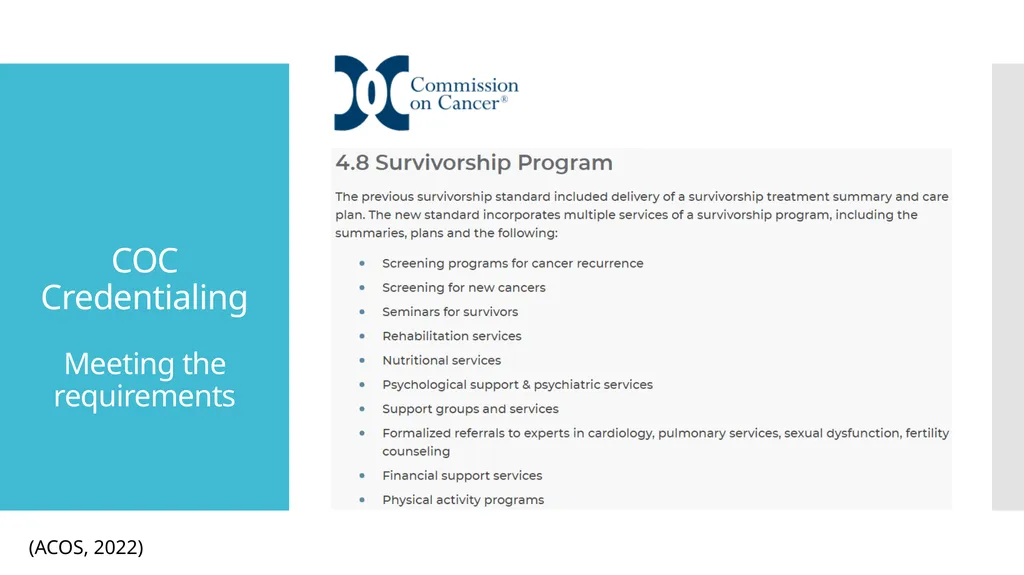
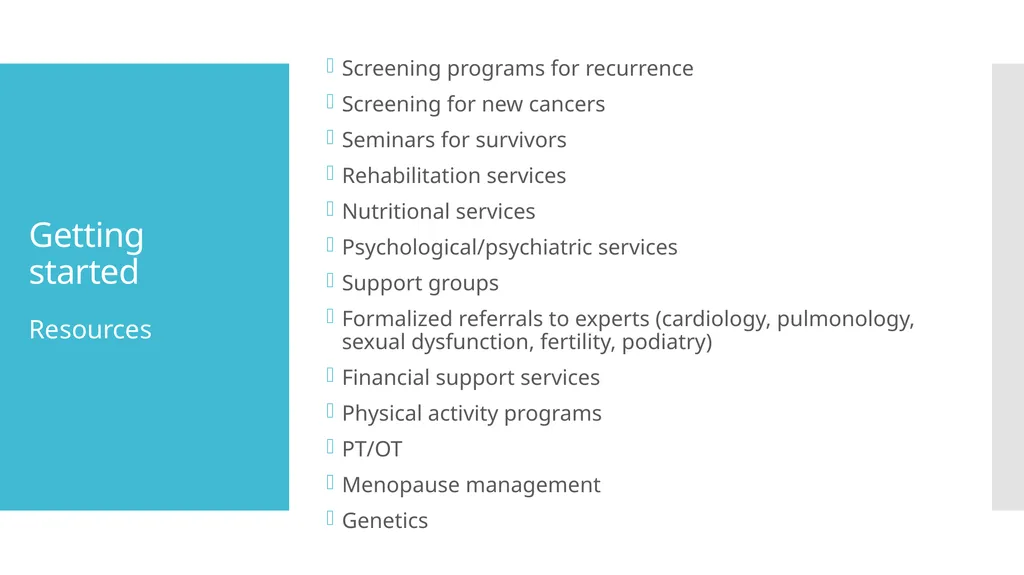
Getting started Screening programs for recurrence
Screening for new cancers
Seminars for survivors
Rehabilitation services
Nutritional services
Psychological/psychiatric services
Support groups
Formalized referrals to experts (cardiology, pulmonology, sexual dysfunction, fertility, podiatry)
Financial support services
Physical activity programs
PT/OT
Menopause management
Genetics Resources<br>
Screening for new cancers
Seminars for survivors
Rehabilitation services
Nutritional services
Psychological/psychiatric services
Support groups
Formalized referrals to experts (cardiology, pulmonology, sexual dysfunction, fertility, podiatry)
Financial support services
Physical activity programs
PT/OT
Menopause management
Genetics Resources<br>
11
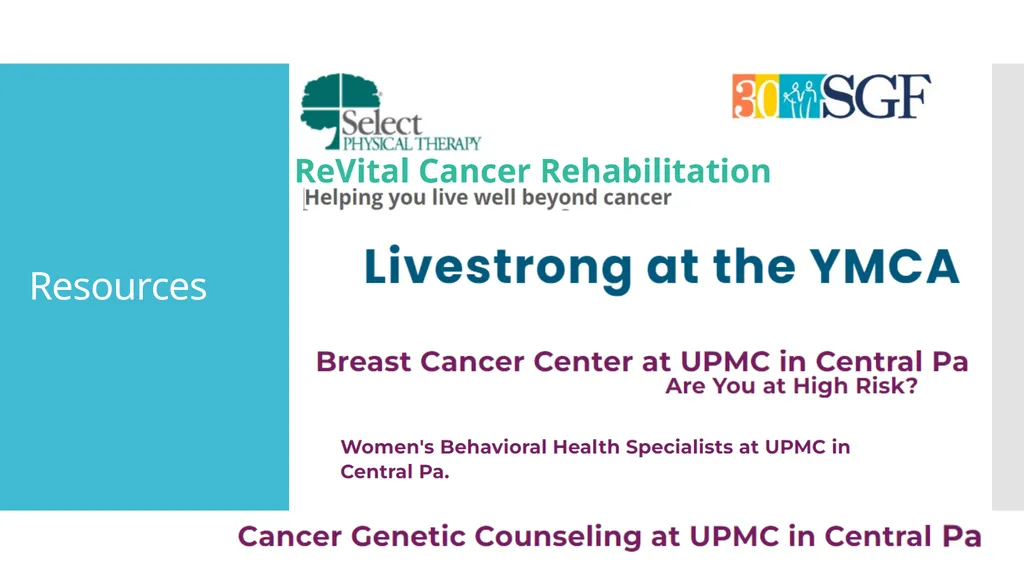
Resources<br>
12
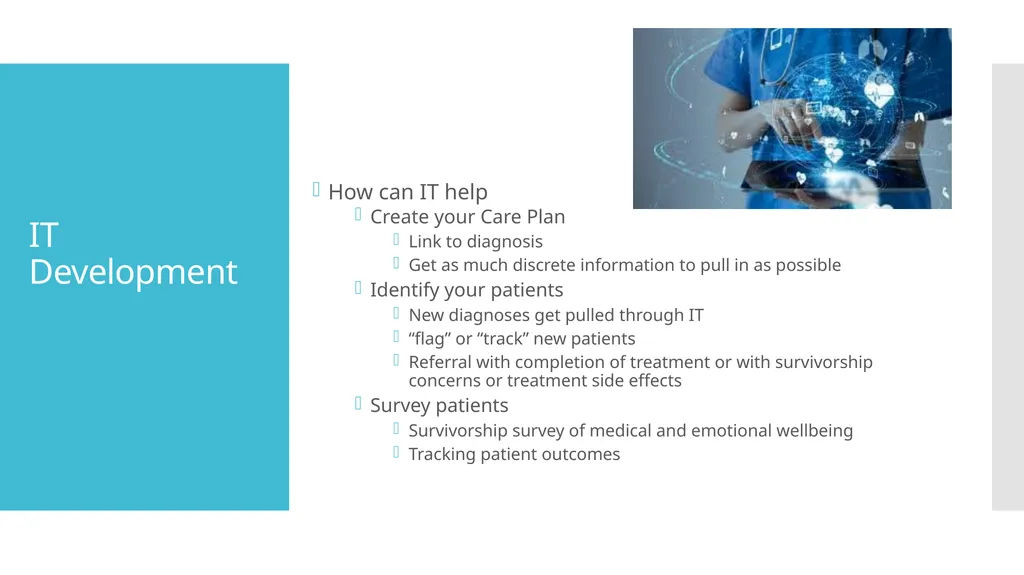
IT Development How can IT help
Create your Care Plan
Link to diagnosis
Get as much discrete information to pull in as possible
Identify your patients
New diagnoses get pulled through IT
“flag” or “track” new patients
Referral with completion of treatment or with survivorship concerns or treatment side effects
Survey patients
Survivorship survey of medical and emotional wellbeing
Tracking patient outcomes<br>
Create your Care Plan
Link to diagnosis
Get as much discrete information to pull in as possible
Identify your patients
New diagnoses get pulled through IT
“flag” or “track” new patients
Referral with completion of treatment or with survivorship concerns or treatment side effects
Survey patients
Survivorship survey of medical and emotional wellbeing
Tracking patient outcomes<br>
13
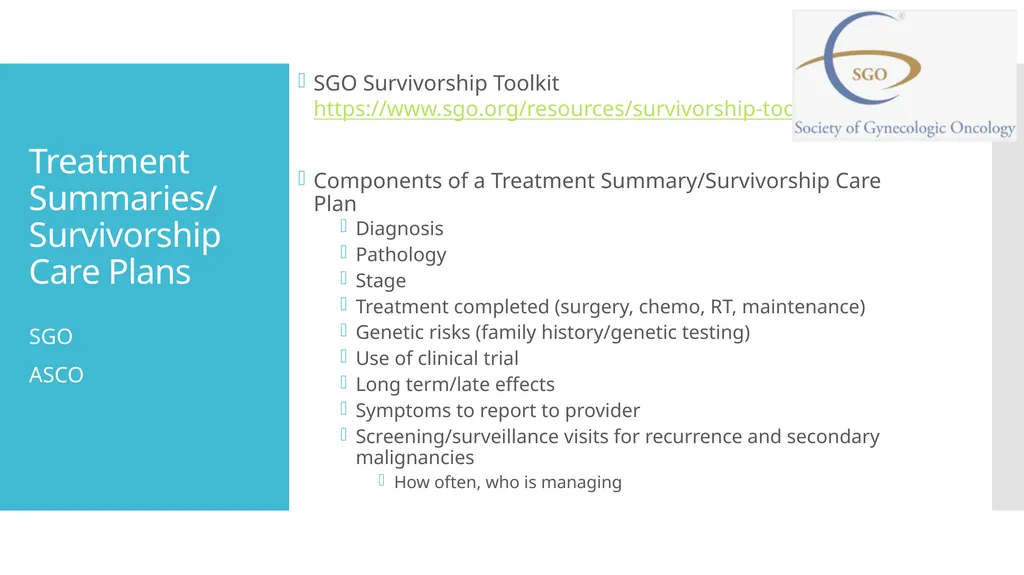
Treatment Summaries/ Survivorship Care Plans SGO Survivorship Toolkit https://www.sgo.org/resources/survivorship-toolkit/
Components of a Treatment Summary/Survivorship Care Plan
Diagnosis
Pathology
Stage
Treatment completed (surgery, chemo, RT, maintenance)
Genetic risks (family history/genetic testing)
Use of clinical trial
Long term/late effects
Symptoms to report to provider
Screening/surveillance visits for recurrence and secondary malignancies
How often, who is managing SGO
ASCO<br>
Components of a Treatment Summary/Survivorship Care Plan
Diagnosis
Pathology
Stage
Treatment completed (surgery, chemo, RT, maintenance)
Genetic risks (family history/genetic testing)
Use of clinical trial
Long term/late effects
Symptoms to report to provider
Screening/surveillance visits for recurrence and secondary malignancies
How often, who is managing SGO
ASCO<br>
14
Treatment Summaries/ Survivorship Care Plans SGO<br>
15
Treatment Summary/ Survivorship Care Plan SGO<br>
16
Patient population Identify your patients
Cancer registry
New patients
Tracking patients
Follow patients through treatment
Referral
Have primary physician enter survivorship referral
Scheduling appointment
Stand alone visit
Visit with exam and surveillance Excel for data collection and tracking
Designate staff to monitor and manage
EMR reporting
IT developed reports<br>
Cancer registry
New patients
Tracking patients
Follow patients through treatment
Referral
Have primary physician enter survivorship referral
Scheduling appointment
Stand alone visit
Visit with exam and surveillance Excel for data collection and tracking
Designate staff to monitor and manage
EMR reporting
IT developed reports<br>
17
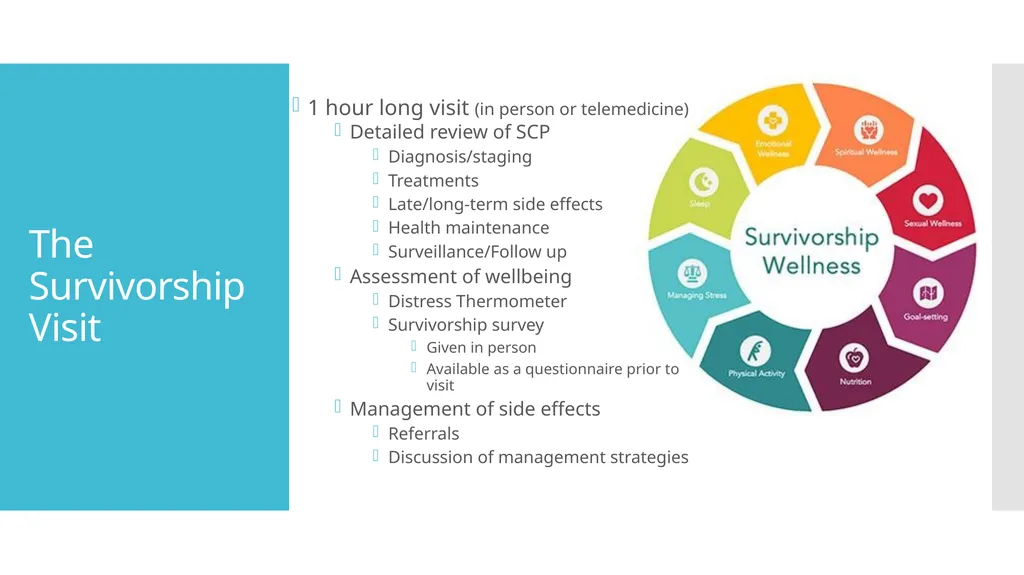
The Survivorship Visit 1 hour long visit (in person or telemedicine)
Detailed review of SCP
Diagnosis/staging
Treatments
Late/long-term side effects
Health maintenance
Surveillance/Follow up
Assessment of wellbeing
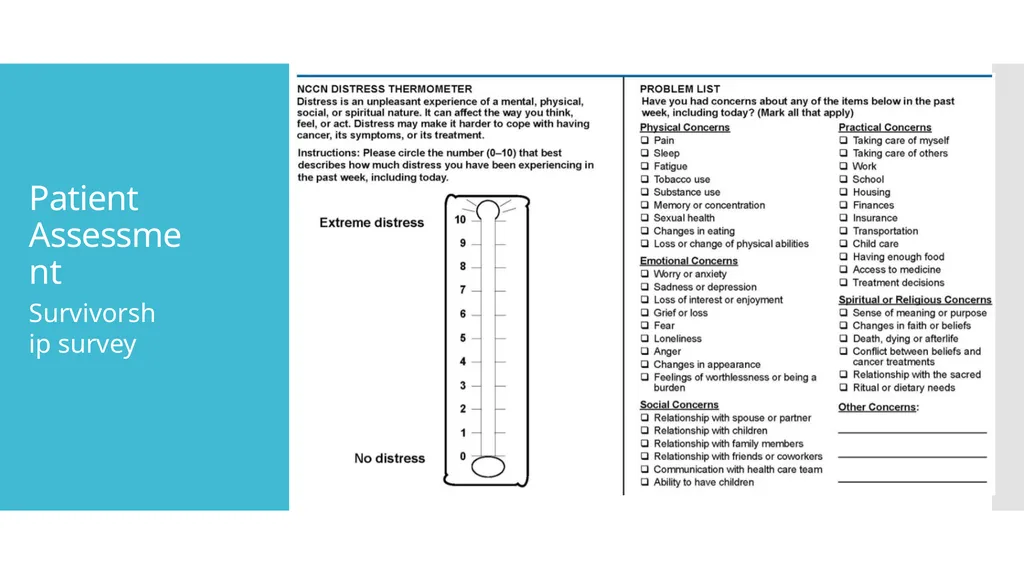
Distress Thermometer
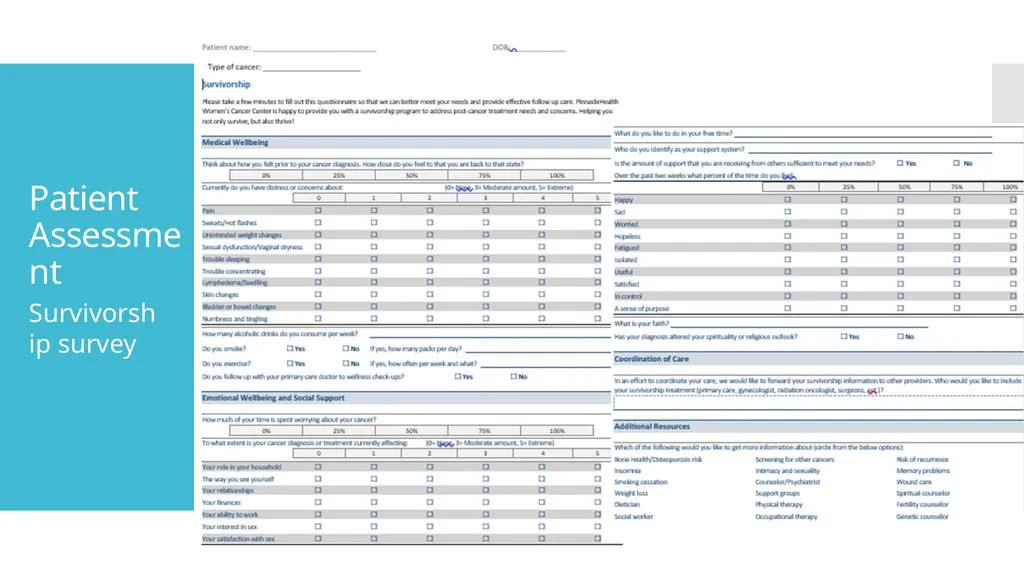
Survivorship survey
Given in person
Available as a questionnaire prior to visit
Management of side effects
Referrals
Discussion of management strategies<br>
Detailed review of SCP
Diagnosis/staging
Treatments
Late/long-term side effects
Health maintenance
Surveillance/Follow up
Assessment of wellbeing
Distress Thermometer
Survivorship survey
Given in person
Available as a questionnaire prior to visit
Management of side effects
Referrals
Discussion of management strategies<br>
18
Patient Assessment Survivorship survey<br>
19
Patient Assessment Survivorship survey<br>
20
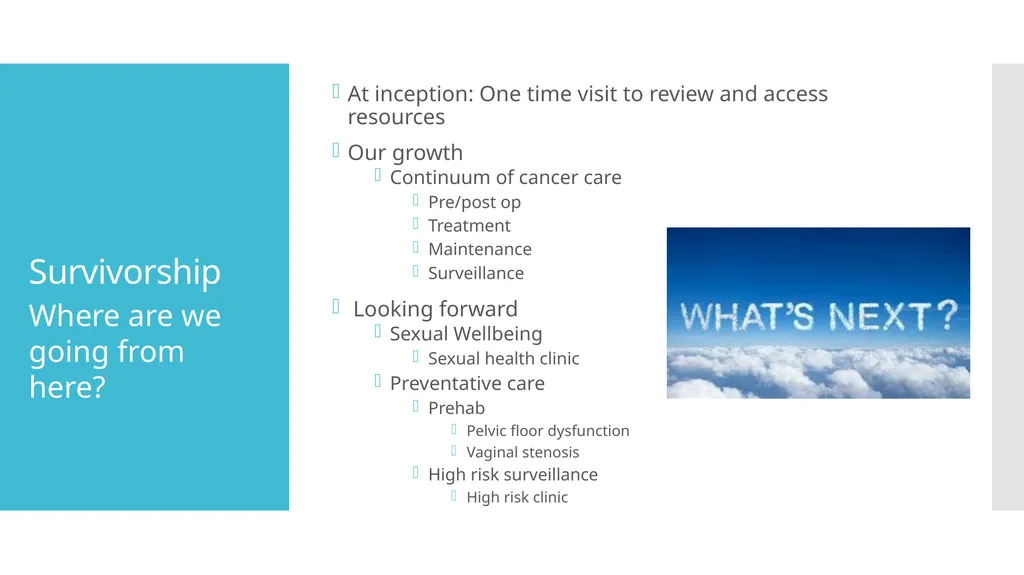
Survivorship At inception: One time visit to review and access resources
Our growth
Continuum of cancer care
Pre/post op
Treatment
Maintenance
Surveillance
Looking forward
Sexual Wellbeing
Sexual health clinic
Preventative care
Prehab
Pelvic floor dysfunction
Vaginal stenosis
High risk surveillance
High risk clinic Where are we going from here?<br>
Our growth
Continuum of cancer care
Pre/post op
Treatment
Maintenance
Surveillance
Looking forward
Sexual Wellbeing
Sexual health clinic
Preventative care
Prehab
Pelvic floor dysfunction
Vaginal stenosis
High risk surveillance
High risk clinic Where are we going from here?<br>
21
Megan Lanigan, CRNP
laniganme@upmc.edu<br>
laniganme@upmc.edu<br>
22
References American College of Surgeons (ACOS), Commission on Cancer (updated 4/2022). Optimal resources for cancer care: 2020 standards. Retrieved from https://www.facs.org/media/whmfnppx/2020_coc_standards.pdf
ASCO. (2011). Next steps for patients and their families - cancer.net. Cancer survivorship. Retrieved September 11, 2022, from https://www.cancer.net/sites/cancer.net/files/vignette/Cancer_Survivorship.pdf Monterosso, L., Platt, V., Bulsara, M., & Berg, M. (2019). Systematic Review and meta-analysis of patient reported outcomes for nurse-led models of survivorship care for adult cancer patients. Cancer Treatment Reviews, 73, 62–72. https://doi.org/10.1016/j.ctrv.2018.12.007
Hewitt, M. E., Greenfield, S., & Stovall, E. (2006). From cancer patient to cancer survivor: Lost in transition. National Academies Press.
Monterosso, L., Platt, V., Bulsara, M., & Berg, M. (2019). Systematic Review and meta-analysis of patient reported outcomes for nurse-led models of survivorship care for adult cancer patients. Cancer Treatment Reviews, 73, 62–72. https://doi.org/10.1016/j.ctrv.2018.12.007
National Institute of Health (NIH). (2022, September 8). Statistics and Graphs. Statistics and Graphs | Division of Cancer Control and Population Sciences (DCCPS). Retrieved September 11, 2022, from https://cancercontrol.cancer.gov/ocs/statistics#graphs
Oeffinger, K. C., & McCabe, M. S. (2006). Models for delivering survivorship care. Journal of Clinical Oncology, 24(32), 5117–5124. https://doi.org/10.1200/jco.2006.07.0474
Sanft, T., Denlinger, C. S., & Armenain, S. (2019). NCCN Guidelines Insights: Survivorship, Verson 2.2019. Journal of the National Comprehensive Cancer Network, 17(7). https://doi.org/https://doi.org/10.6004/jnccn.2019.0034<br>
ASCO. (2011). Next steps for patients and their families - cancer.net. Cancer survivorship. Retrieved September 11, 2022, from https://www.cancer.net/sites/cancer.net/files/vignette/Cancer_Survivorship.pdf Monterosso, L., Platt, V., Bulsara, M., & Berg, M. (2019). Systematic Review and meta-analysis of patient reported outcomes for nurse-led models of survivorship care for adult cancer patients. Cancer Treatment Reviews, 73, 62–72. https://doi.org/10.1016/j.ctrv.2018.12.007
Hewitt, M. E., Greenfield, S., & Stovall, E. (2006). From cancer patient to cancer survivor: Lost in transition. National Academies Press.
Monterosso, L., Platt, V., Bulsara, M., & Berg, M. (2019). Systematic Review and meta-analysis of patient reported outcomes for nurse-led models of survivorship care for adult cancer patients. Cancer Treatment Reviews, 73, 62–72. https://doi.org/10.1016/j.ctrv.2018.12.007
National Institute of Health (NIH). (2022, September 8). Statistics and Graphs. Statistics and Graphs | Division of Cancer Control and Population Sciences (DCCPS). Retrieved September 11, 2022, from https://cancercontrol.cancer.gov/ocs/statistics#graphs
Oeffinger, K. C., & McCabe, M. S. (2006). Models for delivering survivorship care. Journal of Clinical Oncology, 24(32), 5117–5124. https://doi.org/10.1200/jco.2006.07.0474
Sanft, T., Denlinger, C. S., & Armenain, S. (2019). NCCN Guidelines Insights: Survivorship, Verson 2.2019. Journal of the National Comprehensive Cancer Network, 17(7). https://doi.org/https://doi.org/10.6004/jnccn.2019.0034<br>