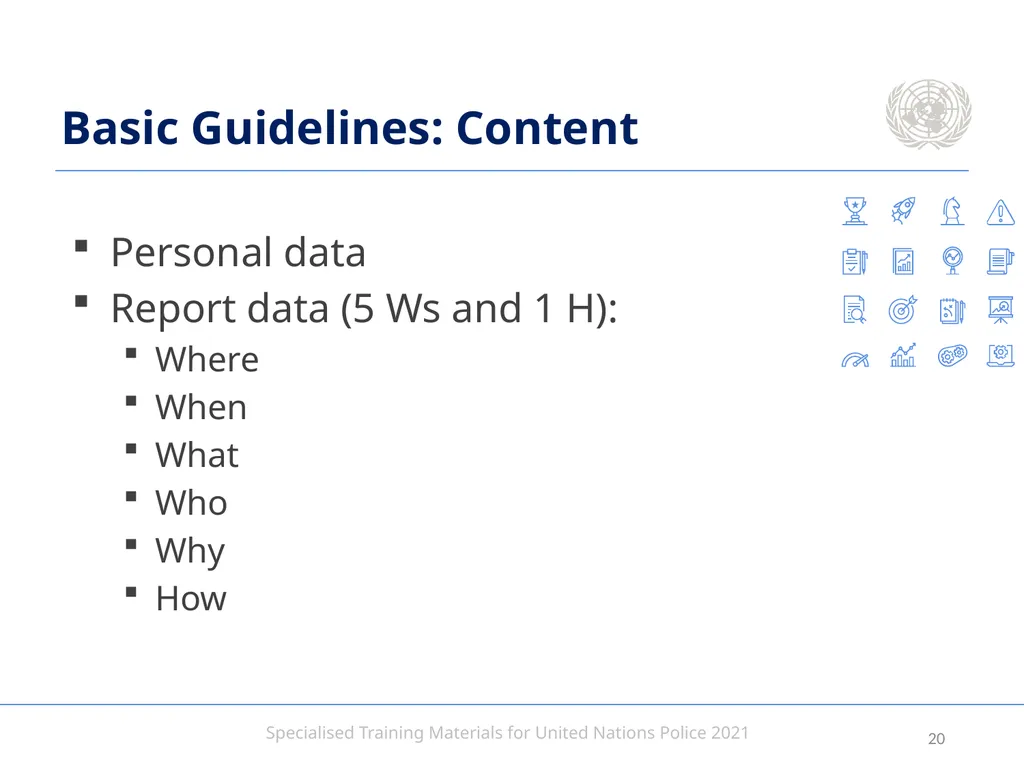
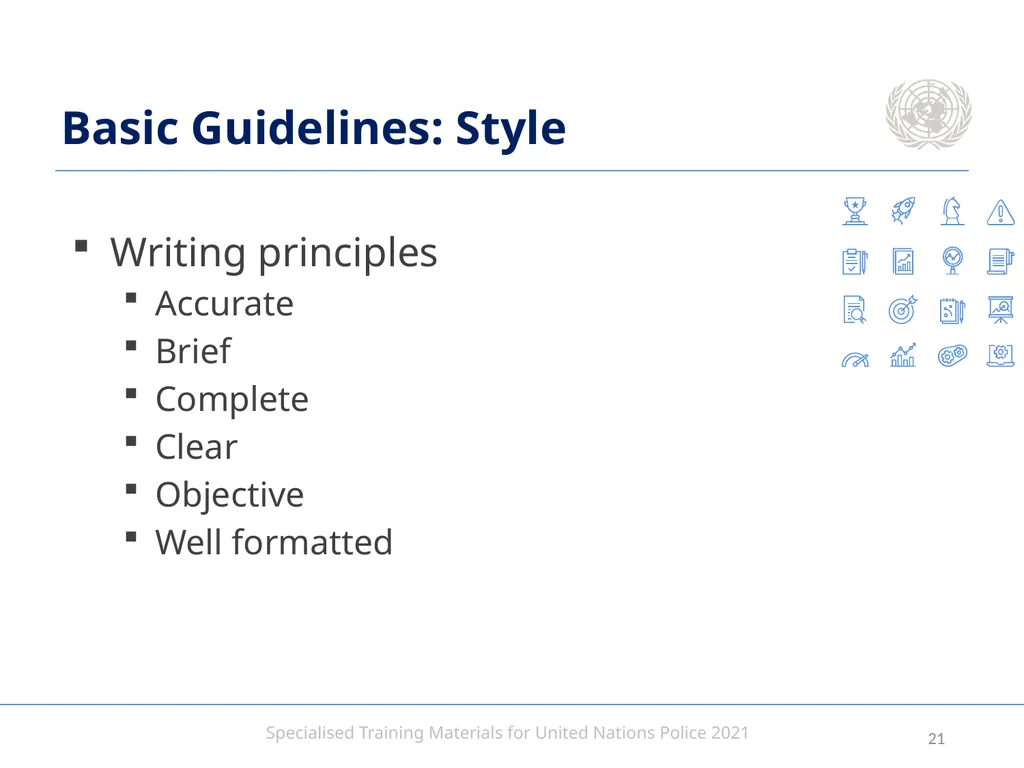
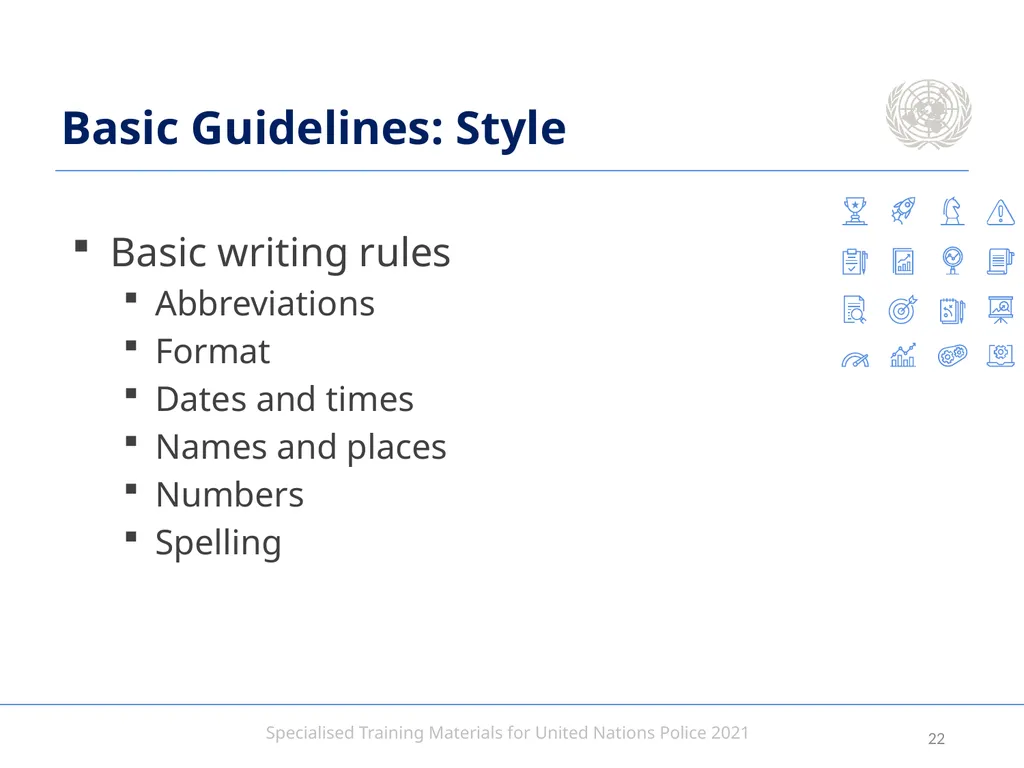
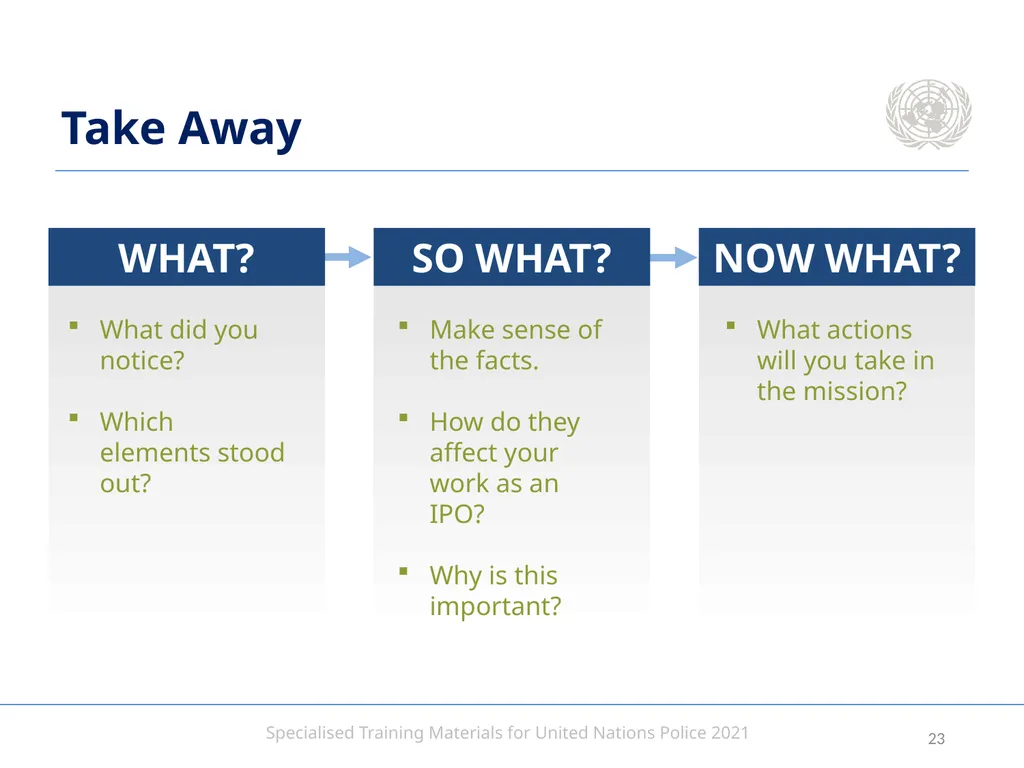
Intelligence-led Policing Aim To provide participants with a general understanding of the scope and basic concepts of Intelligence-led Policing (ILP) in Peace Operations and the implications for their daily work as IPOs. 1 2 Relevance The
"Intelligence-led Policing Aim To provide" is the property of its rightful owner. Permission is granted to
download and print the materials on this website for personal, non-commercial use only, and to display it
on your personal computer provided you do not modify the materials and that you retain all copyright
notices contained in the materials. By downloading content from our website, you accept the terms of this
agreement.
Presentation Transcript
01
Intelligence-led Policing<br>
02
Aim To provide participants with a general understanding of the scope and basic concepts of Intelligence-led Policing (ILP) in Peace Operations and the implications for their daily work as IPOs. 1<br>
03
2 Relevance The overarching approaches of Community-oriented Policing (CoP) and Intelligence-led Policing(ILP) shall guide all operational activities of the United Nations Police to support the host-State for restoring and nurturing the consent of the public in their own police.<br>
04
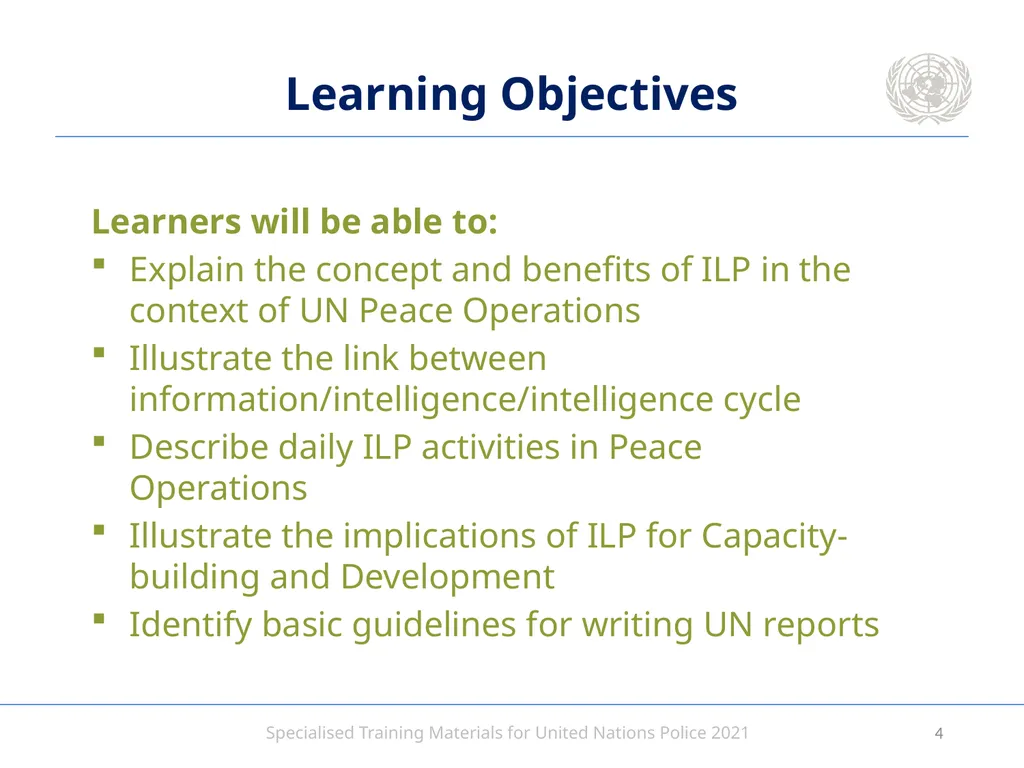
3 Learning Objectives Learners will be able to:
Explain the concept and benefits of ILP in the context of UN Peace Operations
Illustrate the link between information/intelligence/intelligence cycle
Describe daily ILP activities in Peace Operations
Illustrate the implications of ILP for Capacity-building and Development
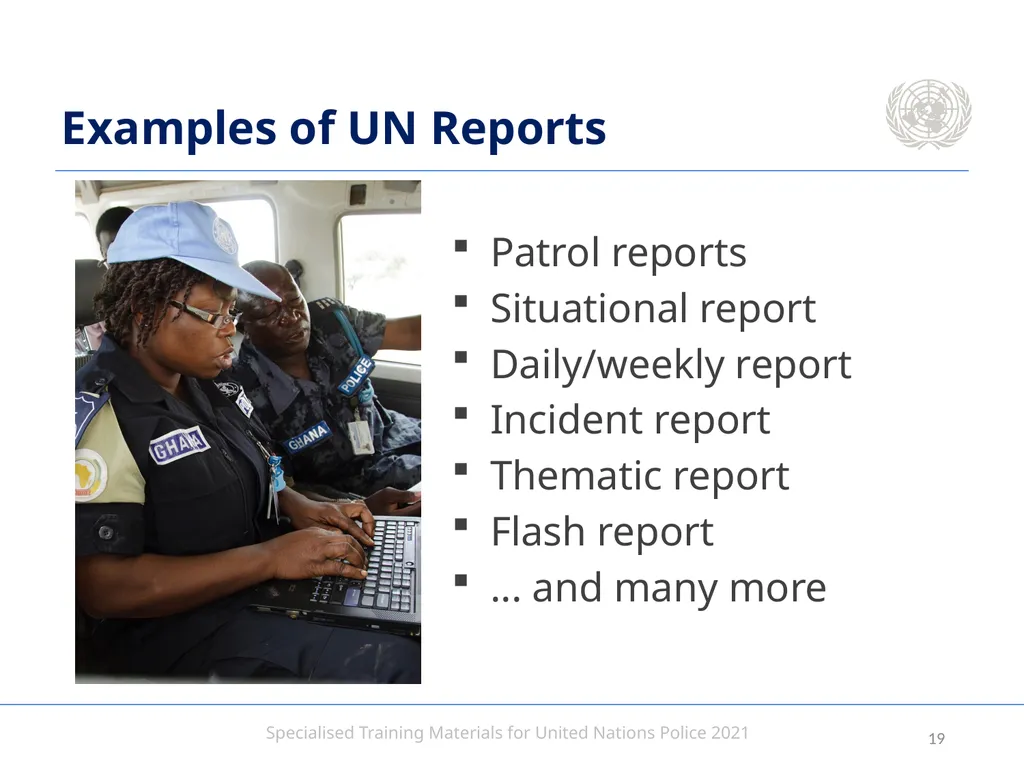
Identify basic guidelines for writing UN reports<br>
05
4 Lesson Overview Background and definitions
Purpose and concept within the Strategic Guidance Framework (SGF)
Information/Intelligence/Intelligence Cycle
ILP-related daily activities
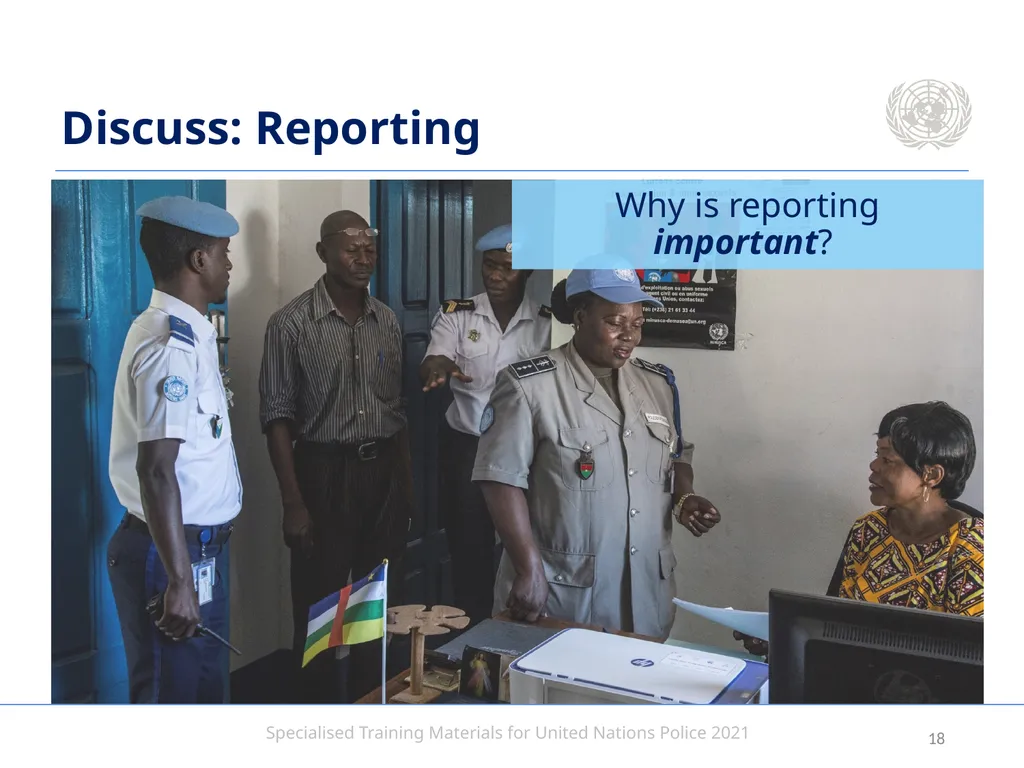
Reporting<br>
06
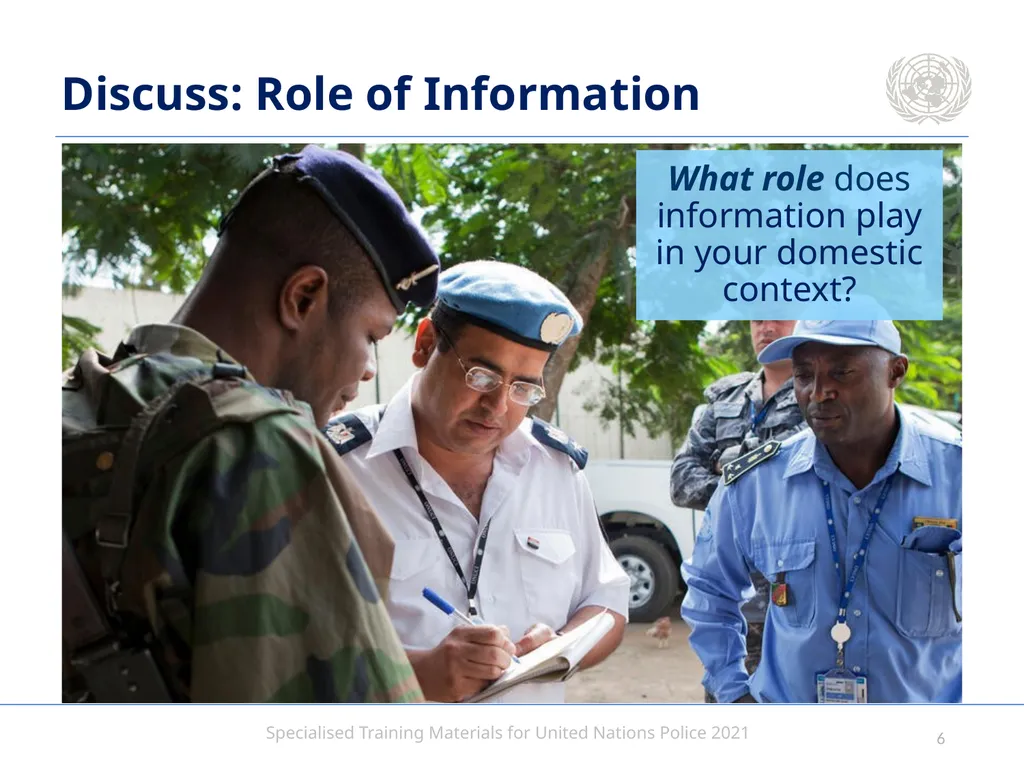
Discuss: Role of Information 5 What role does information play in your domestic context?<br>
07
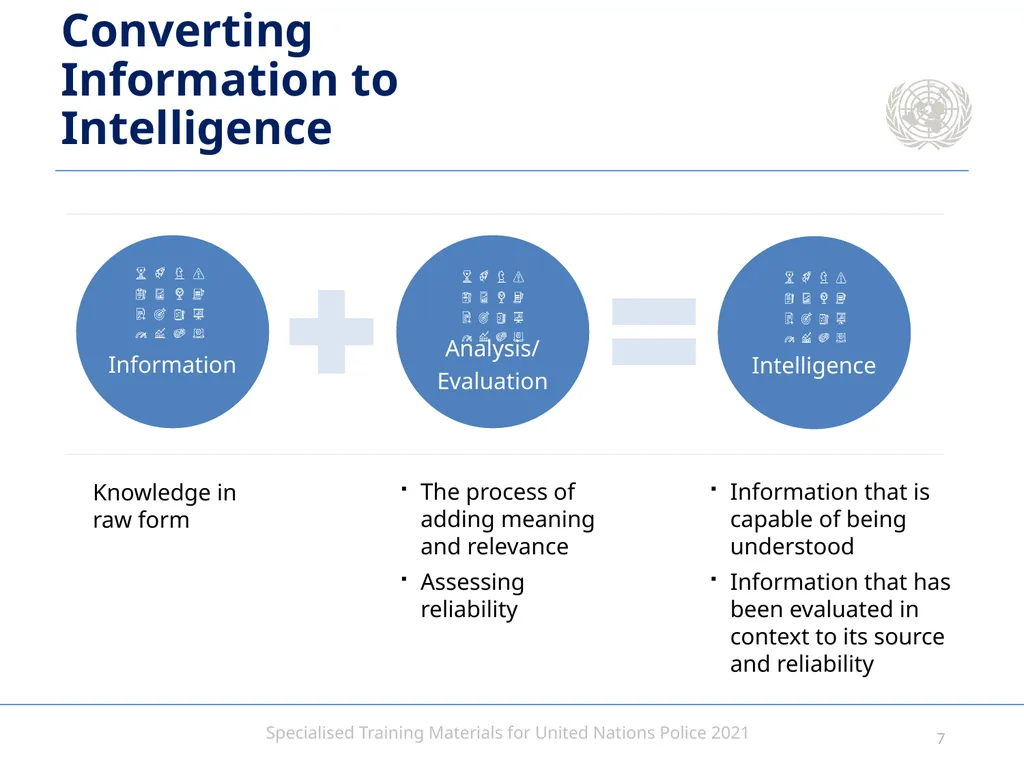
Converting Information to Intelligence 6<br>
08
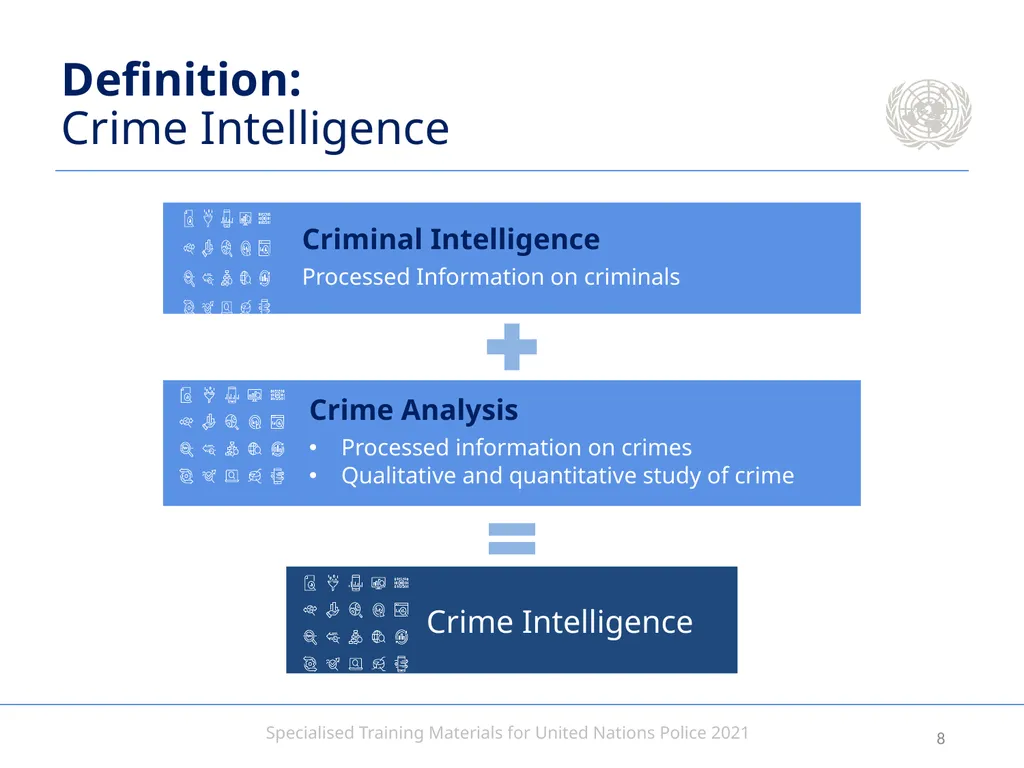
Definition: Crime Intelligence 7<br>
09
Definition: Intelligence-led Policing 8 The use of processed information as the fundamental basis for an objective, decision-making framework
to facilitate crime and problem prevention, reduction, disruption and dismantling
through both strategic management and effective enforcement strategies targeting serious crimes and/or prolific offenders<br>
10
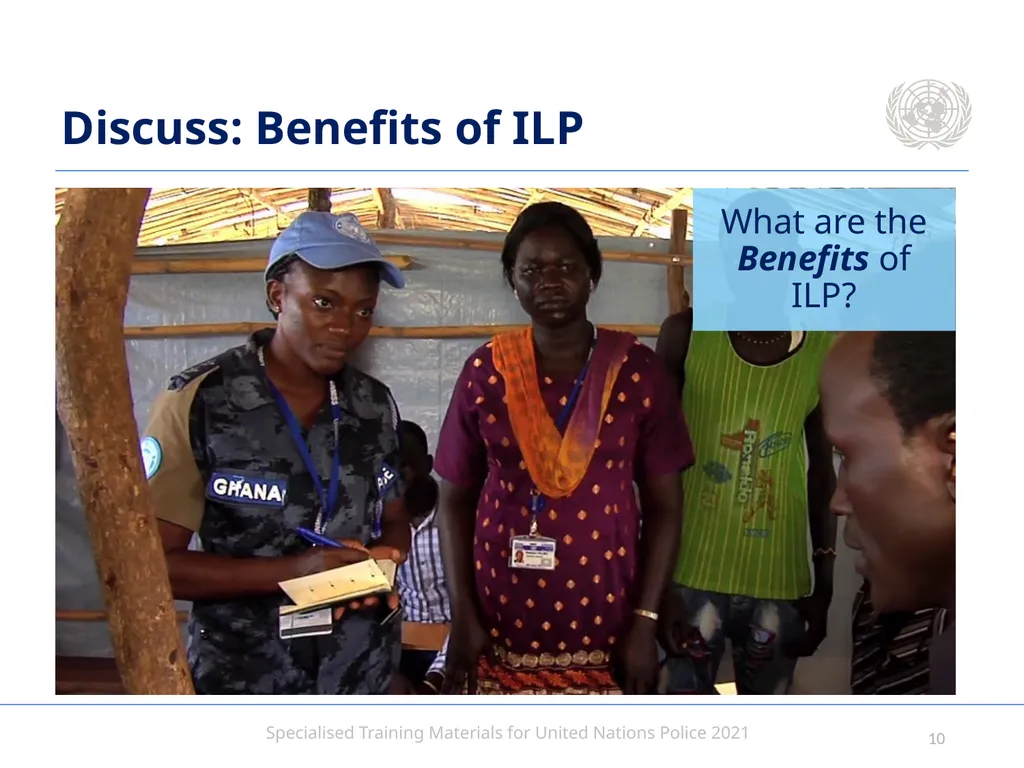
Discuss: Benefits of ILP 9 What are the Benefits of ILP?<br>
11
Peacekeeping-Intelligence 10 Non-clandestine collection, analysis and dissemination of information by a Mission
within a secure and directed mission intelligence cycle
in compliance with the United Nations Charter and Peacekeeping principles
to enhance situational awareness and the safety and security of UN personnel
to inform operations related to the protection of civilians’ tasks of Security Council mandates<br>
12
UN
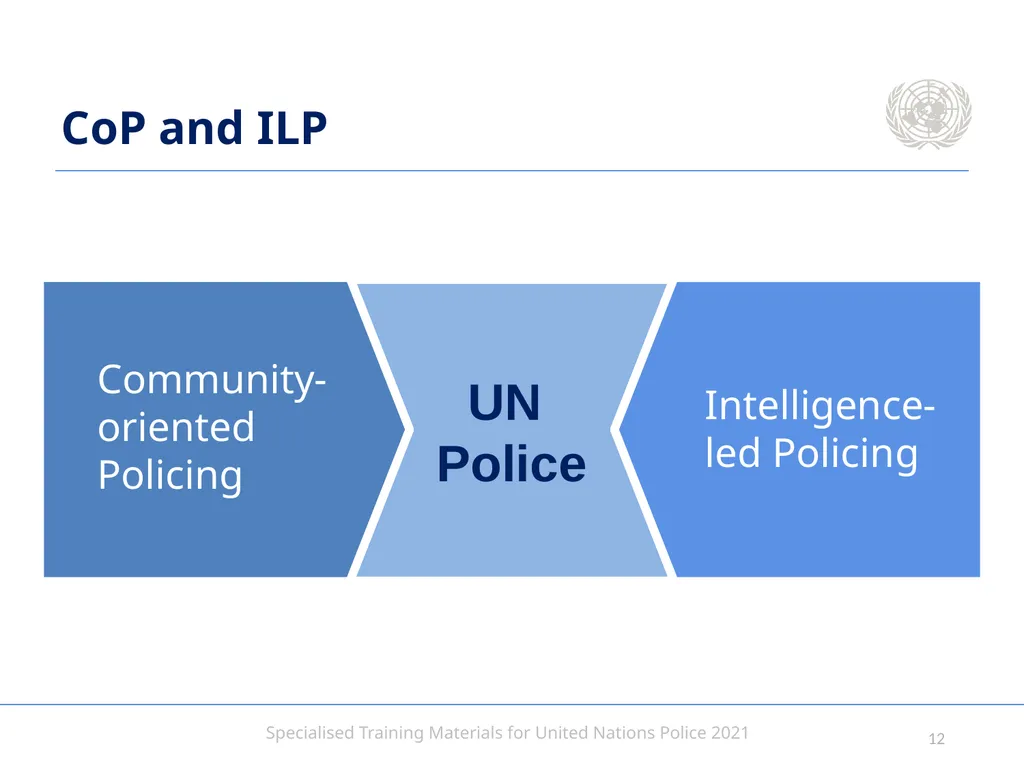
Police CoP and ILP 11 Community-oriented Policing Intelligence-led Policing<br>
13
Similarities CoP and ILP 12 Policing philosophy
Proactive
Preventive element
Depends on strong community relationships
Information from the public is highly sought
Two-way flow of information
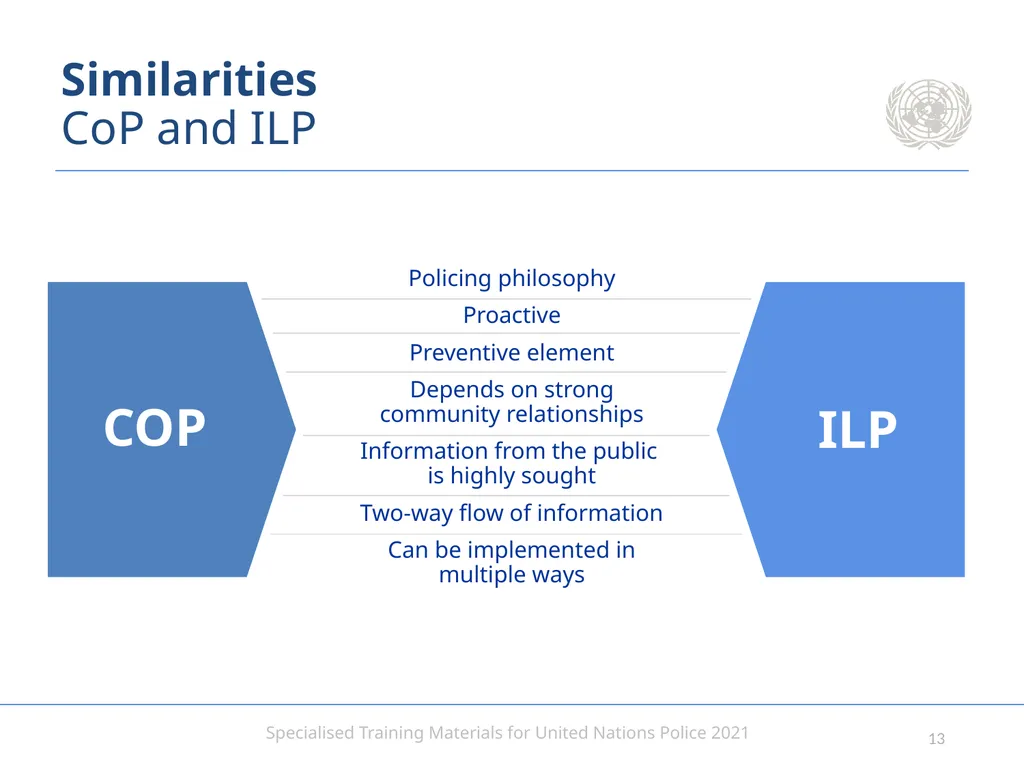
Can be implemented in multiple ways COP ILP<br>
14
Conceptual Differences CoP and ILP 13 Focus on community empowerment
Helps identify visible neighbourhood-level issues
Focuses on fear reduction Focuses on objective data and analysis to more effectively reduce, disrupt and prevent crime
Helps identify priorities/latent security problems
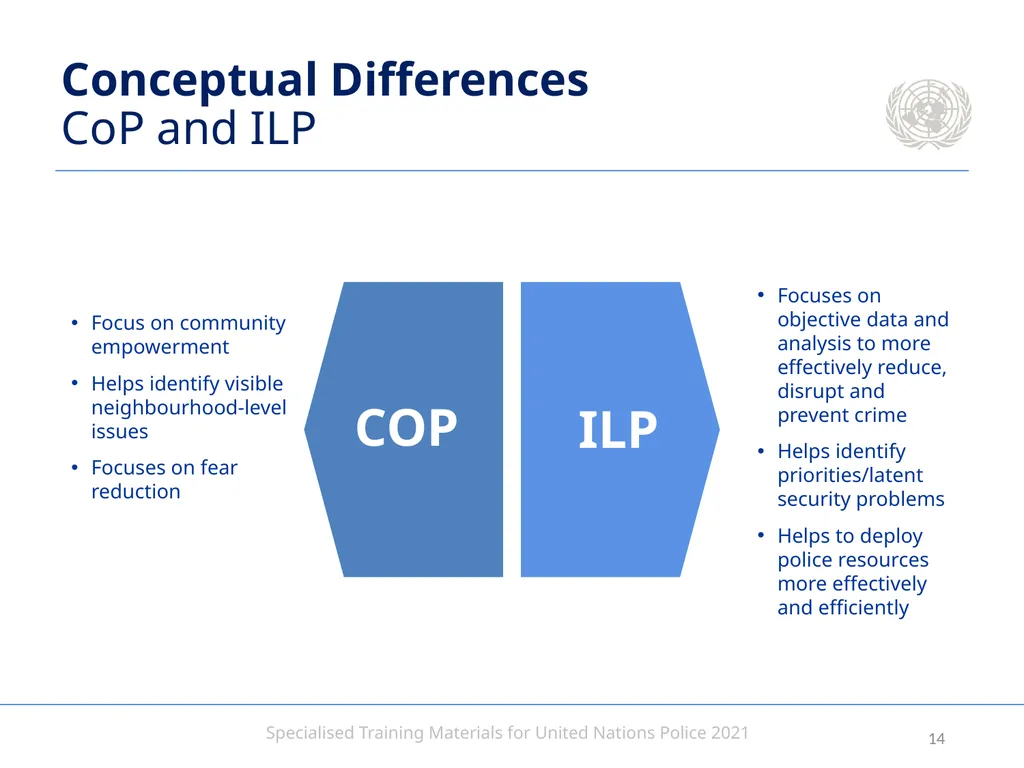
Helps to deploy police resources more effectively and efficiently COP ILP<br>
15
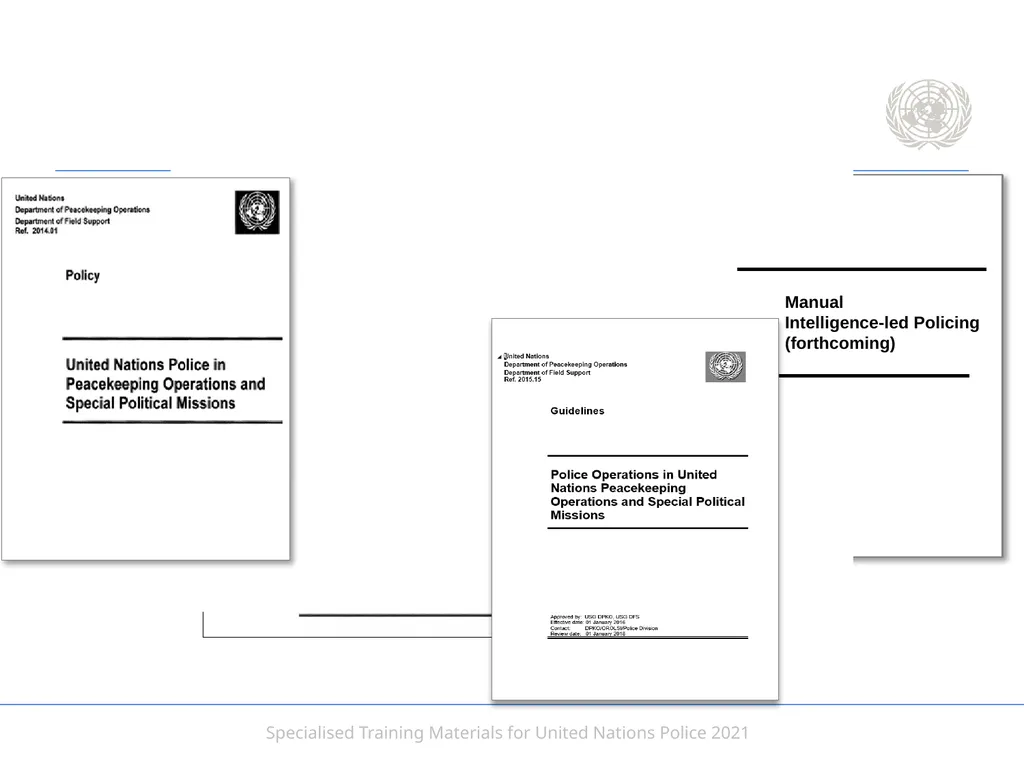
Main Guiding Documents Manual Intelligence-led Policing (forthcoming)<br>
16
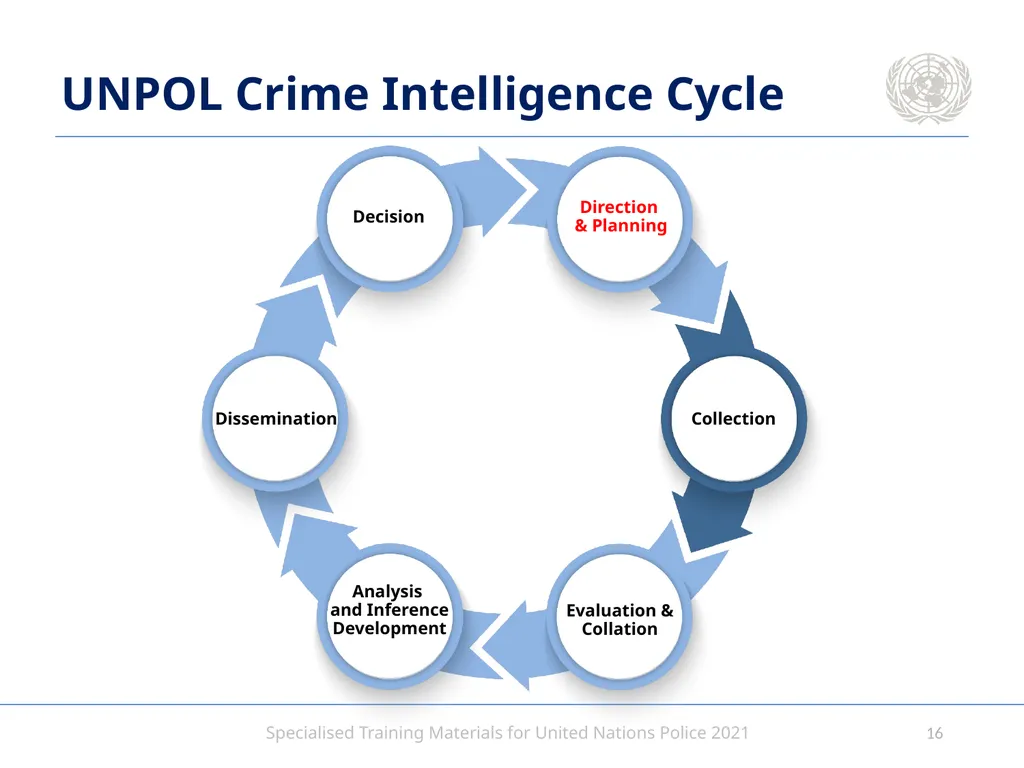
UNPOL Crime Intelligence Cycle 15<br>
17
Learning Activity 6.1 16 Instructions
Brainstorm: Building on your experience with information and intelligence, how can you use ILP in your daily activities as UNPOL?