
Internet of Things MODULE-1 (Introduction to the
TF
Published · 40 slides · 0 views

1 / 1


Description
Internet of Things MODULE-1 (Introduction to the Internet of Things ) By Dr. N. Ramana Associate Professor Kakatiya University Interpret the impact and challenges posed by IoT networks leading to new architectural models. Compare and
Related Topics
Share
Embed code
Download this presentation From Below
"Internet of Things MODULE-1 (Introduction to the" is the property of its rightful owner. Permission is granted to download and print the materials on this website for personal, non-commercial use only, and to display it on your personal computer provided you do not modify the materials and that you retain all copyright notices contained in the materials. By downloading content from our website, you accept the terms of this agreement.
Presentation Transcript
01
Internet of Things
MODULE-1
(Introduction to the Internet of Things ) By
Dr. N. Ramana
Associate Professor
Kakatiya University<br>
Dr. N. Ramana
Associate Professor
Kakatiya University<br>
02
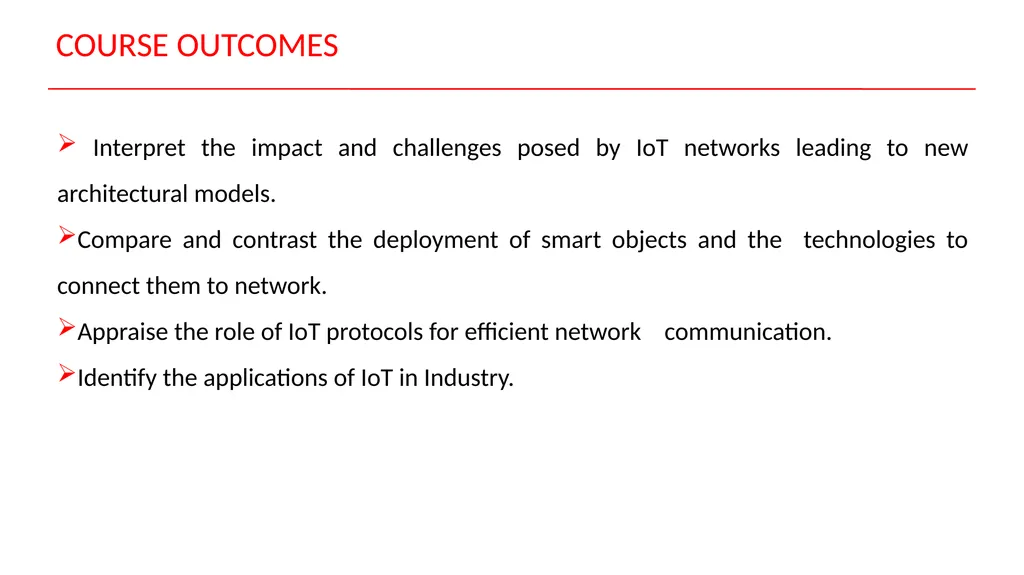
Interpret the impact and challenges posed by IoT networks leading to new architectural models.
Compare and contrast the deployment of smart objects and the technologies to connect them to network.
Appraise the role of IoT protocols for efficient network communication.
Identify the applications of IoT in Industry. COURSE OUTCOMES<br>
Compare and contrast the deployment of smart objects and the technologies to connect them to network.
Appraise the role of IoT protocols for efficient network communication.
Identify the applications of IoT in Industry. COURSE OUTCOMES<br>
03
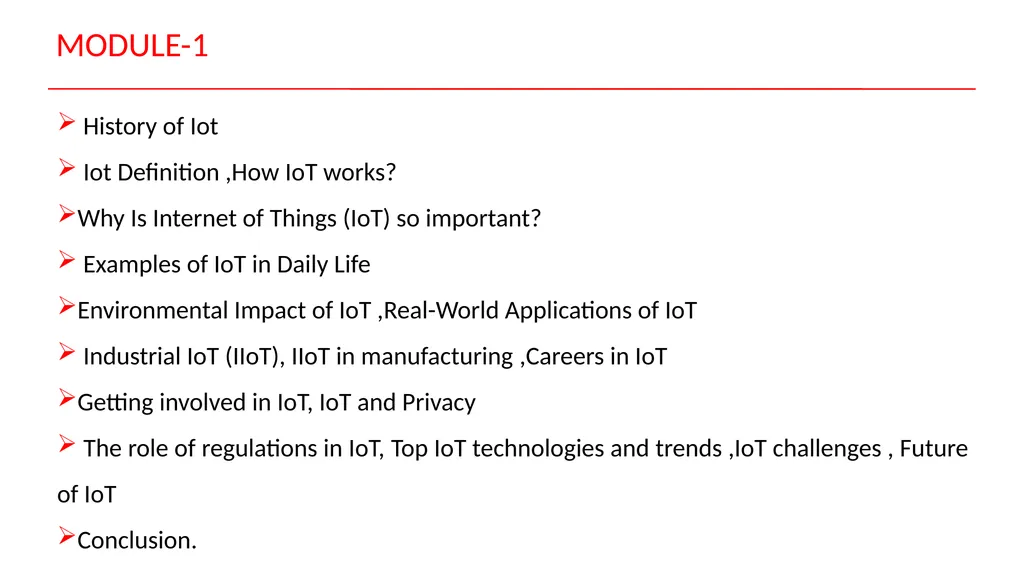
History of Iot
Iot Definition ,How IoT works?
Why Is Internet of Things (IoT) so important?
Examples of IoT in Daily Life
Environmental Impact of IoT ,Real-World Applications of IoT
Industrial IoT (IIoT), IIoT in manufacturing ,Careers in IoT
Getting involved in IoT, IoT and Privacy
The role of regulations in IoT, Top IoT technologies and trends ,IoT challenges , Future of IoT
Conclusion. MODULE-1<br>
Iot Definition ,How IoT works?
Why Is Internet of Things (IoT) so important?
Examples of IoT in Daily Life
Environmental Impact of IoT ,Real-World Applications of IoT
Industrial IoT (IIoT), IIoT in manufacturing ,Careers in IoT
Getting involved in IoT, IoT and Privacy
The role of regulations in IoT, Top IoT technologies and trends ,IoT challenges , Future of IoT
Conclusion. MODULE-1<br>
04
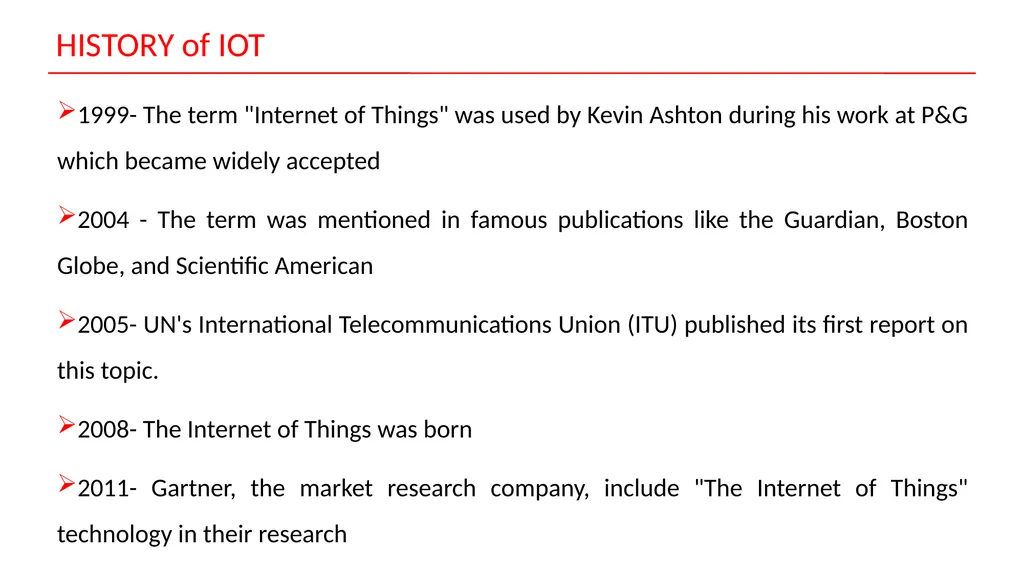
1999- The term "Internet of Things" was used by Kevin Ashton during his work at P&G which became widely accepted
2004 - The term was mentioned in famous publications like the Guardian, Boston Globe, and Scientific American
2005- UN's International Telecommunications Union (ITU) published its first report on this topic.
2008- The Internet of Things was born
2011- Gartner, the market research company, include "The Internet of Things" technology in their research HISTORY of IOT<br>
2004 - The term was mentioned in famous publications like the Guardian, Boston Globe, and Scientific American
2005- UN's International Telecommunications Union (ITU) published its first report on this topic.
2008- The Internet of Things was born
2011- Gartner, the market research company, include "The Internet of Things" technology in their research HISTORY of IOT<br>
05
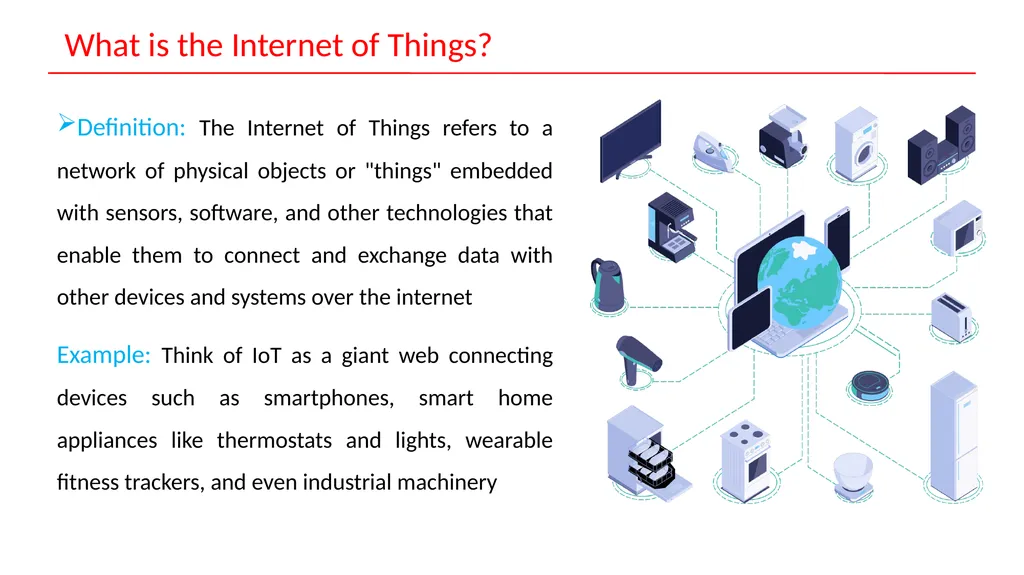
What is the Internet of Things? Definition: The Internet of Things refers to a network of physical objects or "things" embedded with sensors, software, and other technologies that enable them to connect and exchange data with other devices and systems over the internet
Example: Think of IoT as a giant web connecting devices such as smartphones, smart home appliances like thermostats and lights, wearable fitness trackers, and even industrial machinery<br>
Example: Think of IoT as a giant web connecting devices such as smartphones, smart home appliances like thermostats and lights, wearable fitness trackers, and even industrial machinery<br>
06
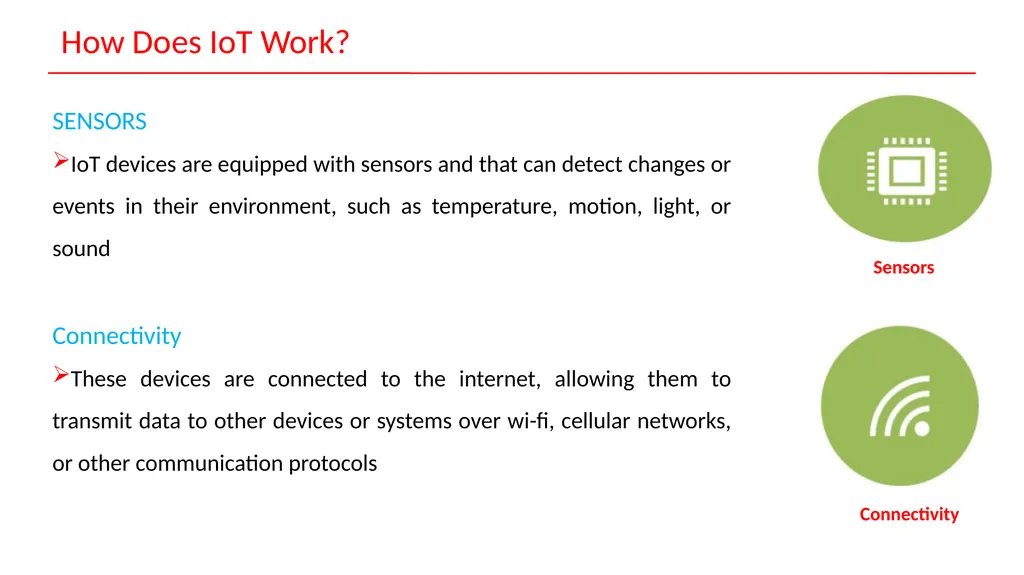
How Does IoT Work? Sensors
IoT devices are equipped with sensors and that can detect changes or events in their environment, such as temperature, motion, light, or sound
Connectivity
These devices are connected to the internet, allowing them to transmit data to other devices or systems over wi-fi, cellular networks, or other communication protocols Sensors Connectivity<br>
IoT devices are equipped with sensors and that can detect changes or events in their environment, such as temperature, motion, light, or sound
Connectivity
These devices are connected to the internet, allowing them to transmit data to other devices or systems over wi-fi, cellular networks, or other communication protocols Sensors Connectivity<br>
07
How Does IoT Work? Actions
Based on the data collected from sensors, IoT devices can perform various actions, such as adjusting settings, triggering alerts, or initiating automated processes, either locally or remotely through a central control system or smartphone app<br>
Based on the data collected from sensors, IoT devices can perform various actions, such as adjusting settings, triggering alerts, or initiating automated processes, either locally or remotely through a central control system or smartphone app<br>
08
Why is IoT Important? Convenience
IoT devices make our lives easier by automating tasks and providing remote access to control various aspects of our environment, such as adjusting the temperature in our homes or tracking our fitness goals
Efficiency
By collecting and analyzing data, IoT devices can optimize processes, reduce energy consumption, and minimize waste, leading to greater efficiency in industries like manufacturing, agriculture, and transportation
Safety
IoT enhances safety by monitoring environments in real-time and providing alerts or notifications in case of emergencies, such as detecting smoke in a smart home's fire alarm system or monitoring air quality in a smart city<br>
IoT devices make our lives easier by automating tasks and providing remote access to control various aspects of our environment, such as adjusting the temperature in our homes or tracking our fitness goals
Efficiency
By collecting and analyzing data, IoT devices can optimize processes, reduce energy consumption, and minimize waste, leading to greater efficiency in industries like manufacturing, agriculture, and transportation
Safety
IoT enhances safety by monitoring environments in real-time and providing alerts or notifications in case of emergencies, such as detecting smoke in a smart home's fire alarm system or monitoring air quality in a smart city<br>
09
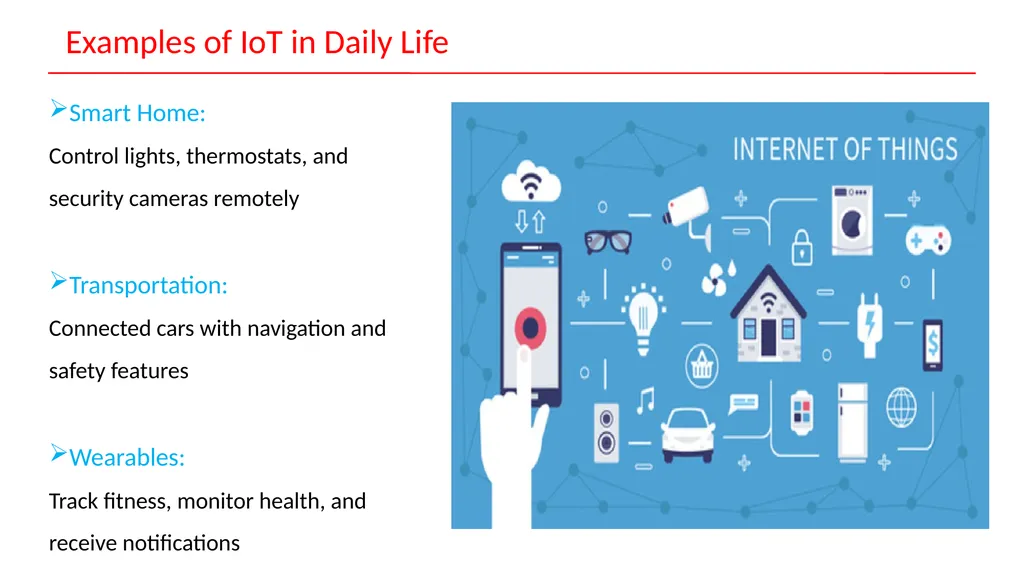
Examples of IoT in Daily Life Smart Home:
Control lights, thermostats, and security cameras remotely
Transportation:
Connected cars with navigation and safety features
Wearables:
Track fitness, monitor health, and receive notifications<br>
Control lights, thermostats, and security cameras remotely
Transportation:
Connected cars with navigation and safety features
Wearables:
Track fitness, monitor health, and receive notifications<br>
10
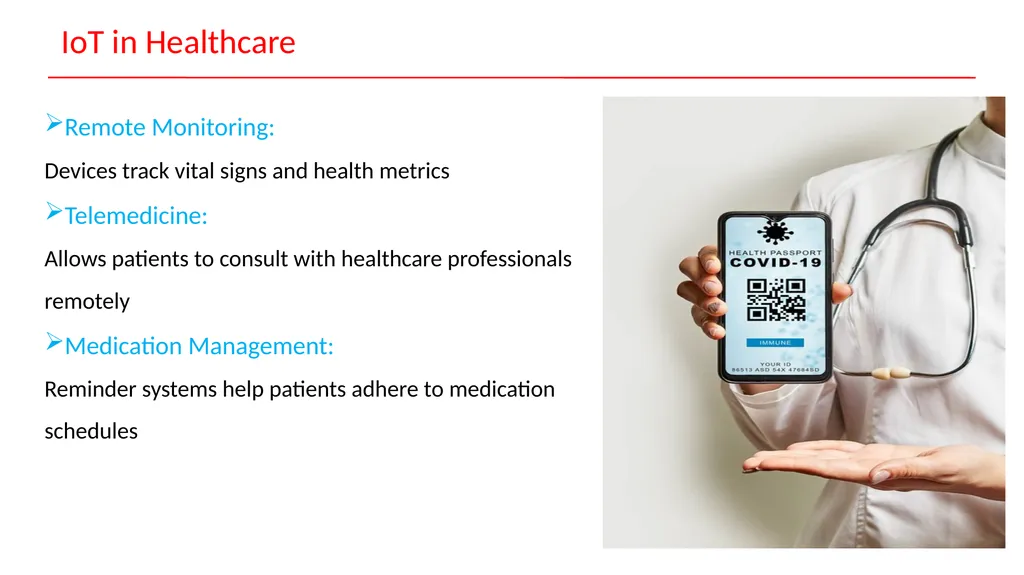
IoT in Healthcare Remote Monitoring:
Devices track vital signs and health metrics
Telemedicine:
Allows patients to consult with healthcare professionals remotely
Medication Management:
Reminder systems help patients adhere to medication schedules<br>
Devices track vital signs and health metrics
Telemedicine:
Allows patients to consult with healthcare professionals remotely
Medication Management:
Reminder systems help patients adhere to medication schedules<br>
11
IoT in Agriculture<br>
12
In IoT-based smart farming, a system is built for monitoring the crop field with the help of sensors (light,humidity,temperature, soil moisture, etc.) and automating the irrigation system. The farmers can monitor the field conditions from anywhere. This is highly efficient compared to the traditional or conventional approach. Smart farming: Use of IoT to improve agriculture In IoT-based smart farming, a system is built for monitoring the crop field with the help of sensors (light, humidity, temperature, soil moisture, etc.) and automating the irrigation system. The farmers can monitor the field conditions from anywhere. This is highly efficient compared to the traditional or conventional approach.
In terms of environmental issues, IoT-based smart farming provides great benefits including better and efficient water usage, and optimization of inputs and treatments.<br>
In terms of environmental issues, IoT-based smart farming provides great benefits including better and efficient water usage, and optimization of inputs and treatments.<br>
13
Smart farming: Use of IoT to improve agriculture Therefore, smart farming based on IoT technologies enables growers and farmers to reduce waste and enhance productivity
Some of the IoT applications in this area are:
Precision farming
Agricultural drones
Livestock monitoring
Smart greenhouses<br>
Some of the IoT applications in this area are:
Precision farming
Agricultural drones
Livestock monitoring
Smart greenhouses<br>
14
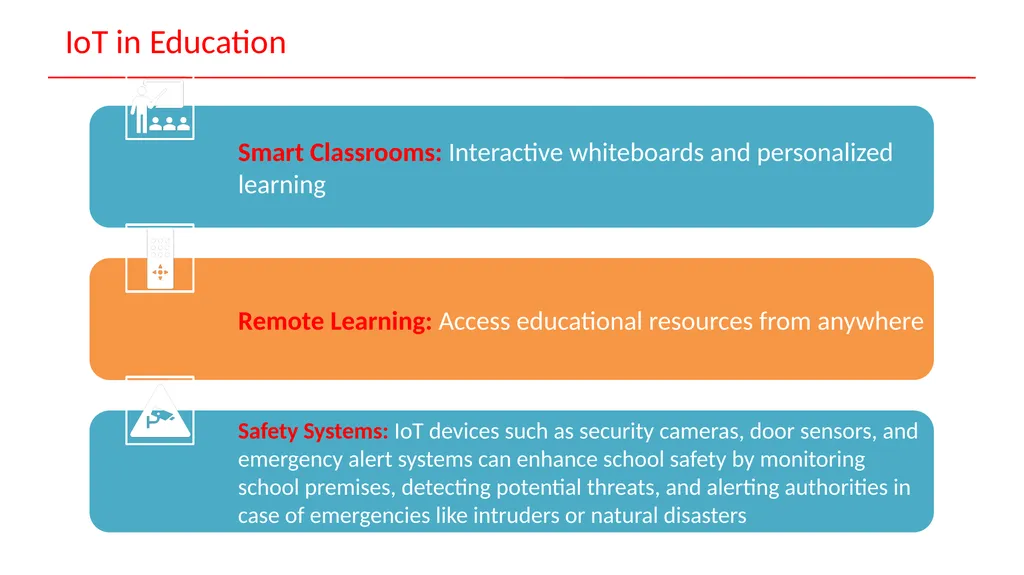
IoT in Education<br>
15
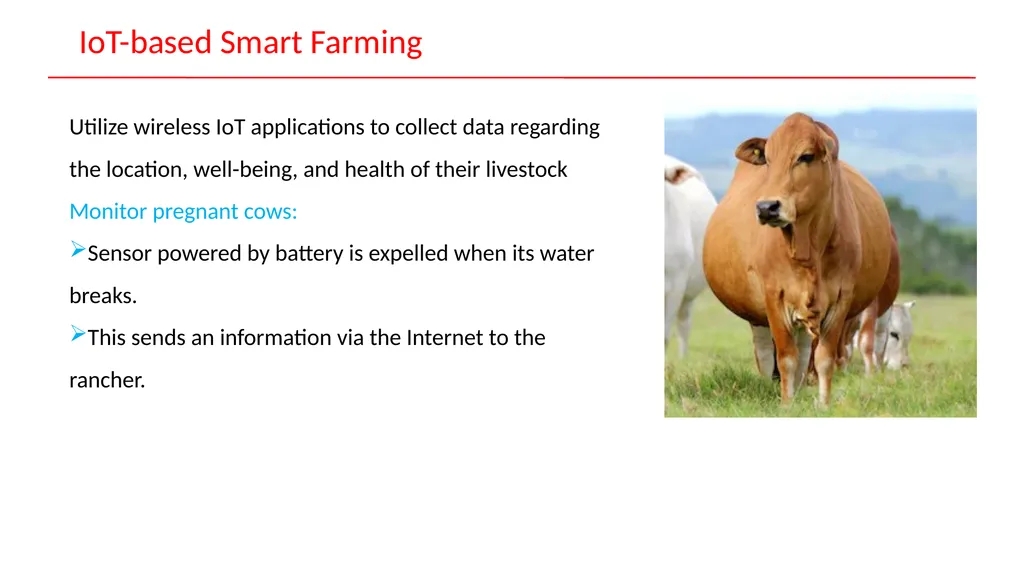
IoT-based Smart Farming Utilize wireless IoT applications to collect data regarding the location, well-being, and health of their livestock
Monitor pregnant cows:
Sensor powered by battery is expelled when its water breaks.
This sends an information via the Internet to the rancher.<br>
Monitor pregnant cows:
Sensor powered by battery is expelled when its water breaks.
This sends an information via the Internet to the rancher.<br>
16
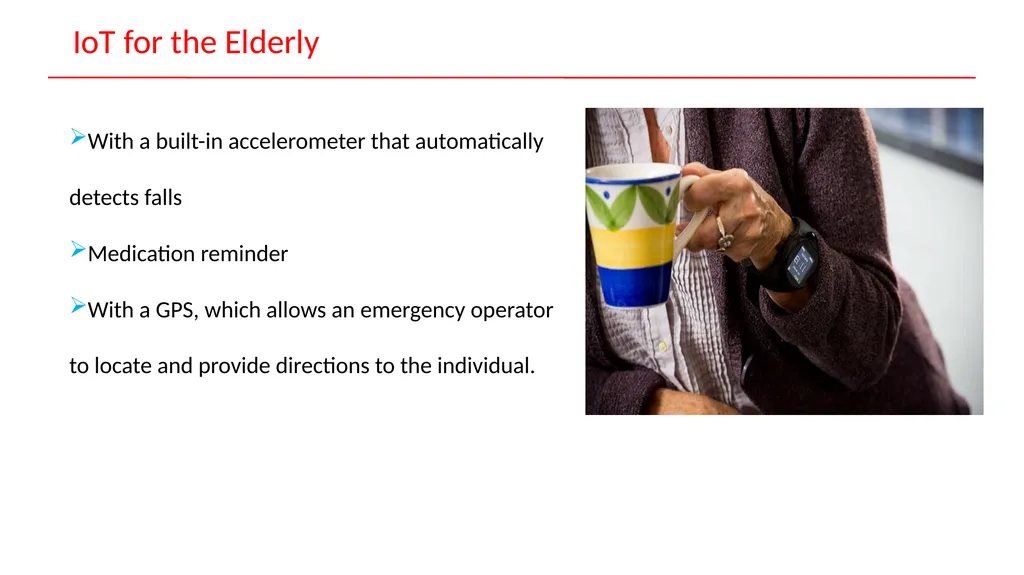
IoT for the Elderly With a built-in accelerometer that automatically detects falls
Medication reminder
With a GPS, which allows an emergency operator to locate and provide directions to the individual.<br>
Medication reminder
With a GPS, which allows an emergency operator to locate and provide directions to the individual.<br>
17
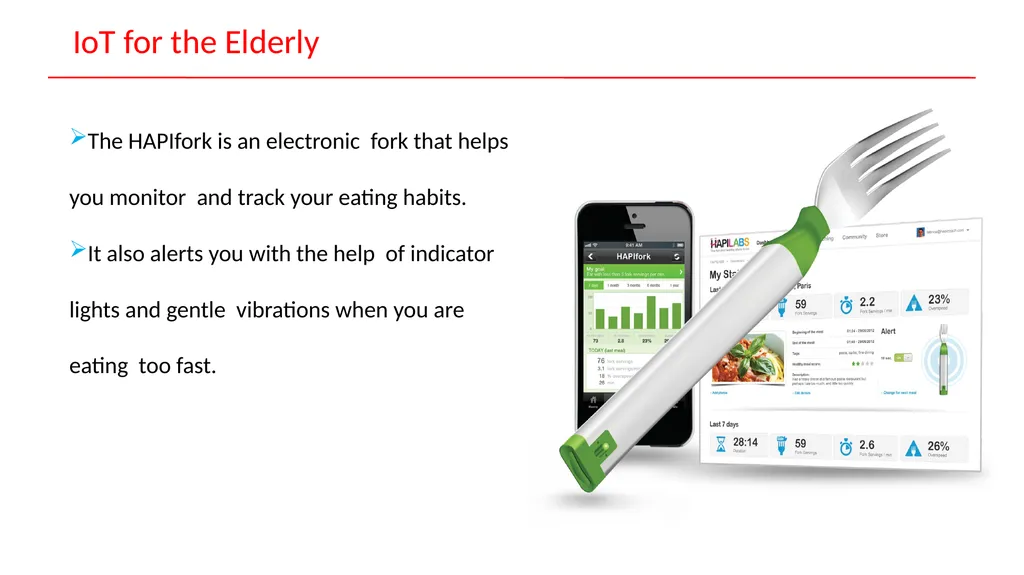
IoT for the Elderly The HAPIfork is an electronic fork that helps you monitor and track your eating habits.
It also alerts you with the help of indicator lights and gentle vibrations when you are eating too fast.<br>
It also alerts you with the help of indicator lights and gentle vibrations when you are eating too fast.<br>
18
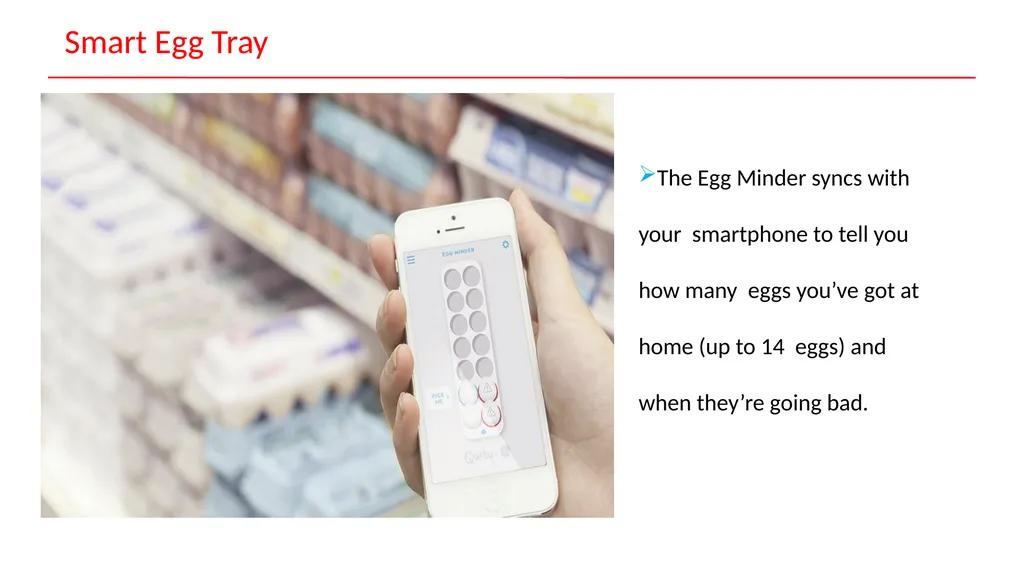
Smart Egg Tray The Egg Minder syncs with your smartphone to tell you how many eggs you’ve got at home (up to 14 eggs) and when they’re going bad.<br>
19
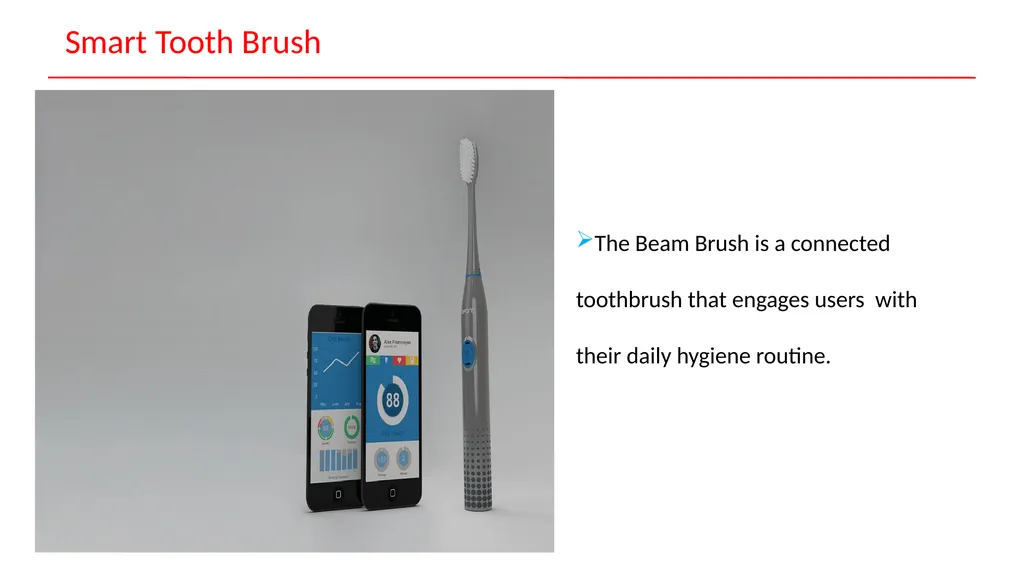
Smart Tooth Brush The Beam Brush is a connected toothbrush that engages users with their daily hygiene routine.<br>
20
IoT business opportunities<br>
21
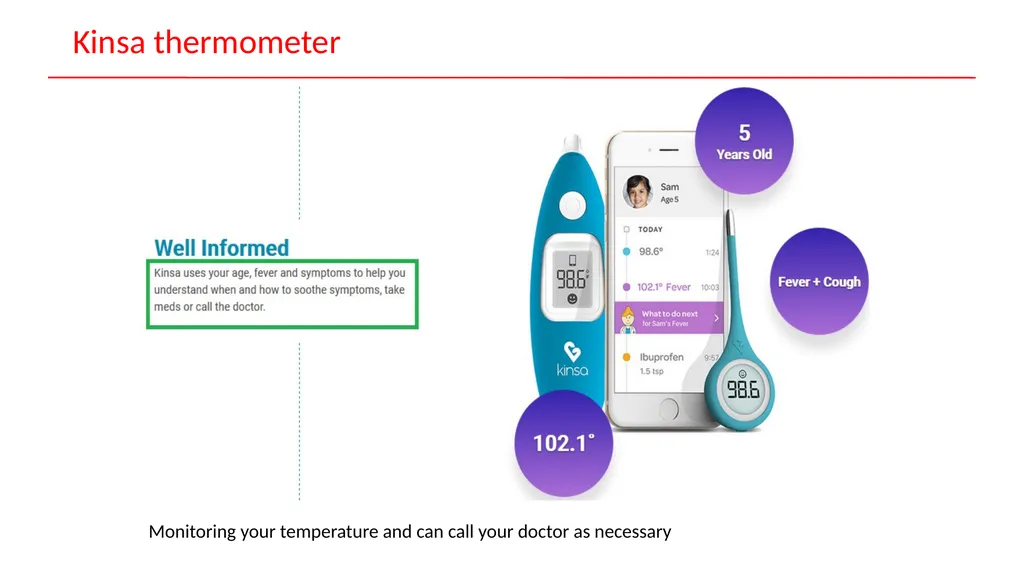
Kinsa thermometer Monitoring your temperature and can call your doctor as necessary<br>
22
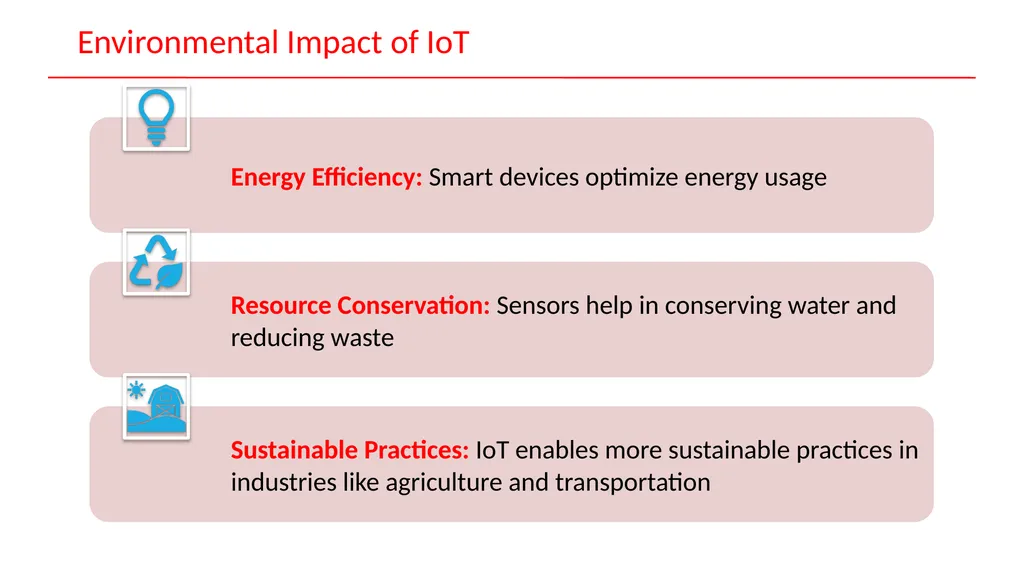
Environmental Impact of IoT<br>
23
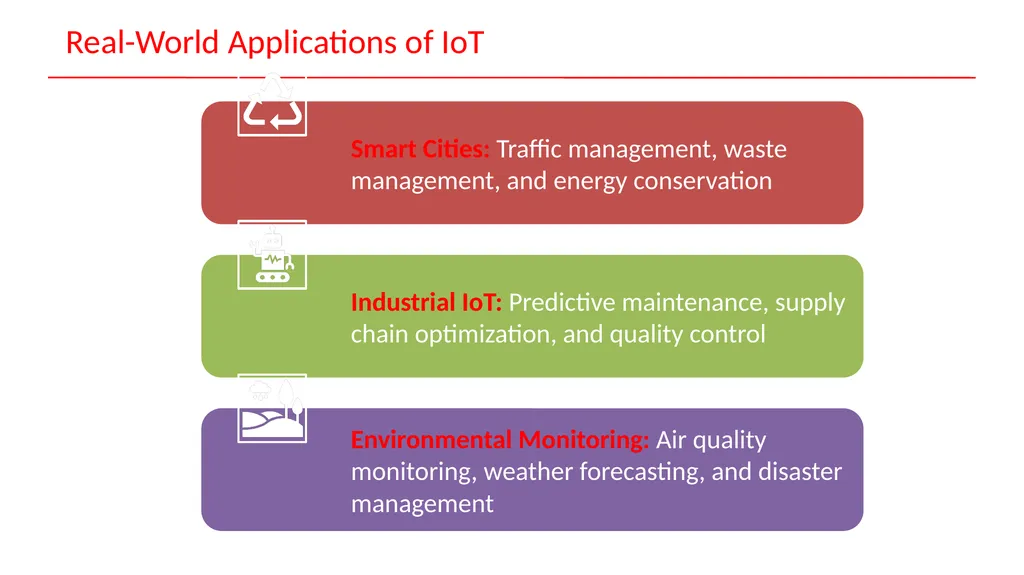
Real-World Applications of IoT<br>
24
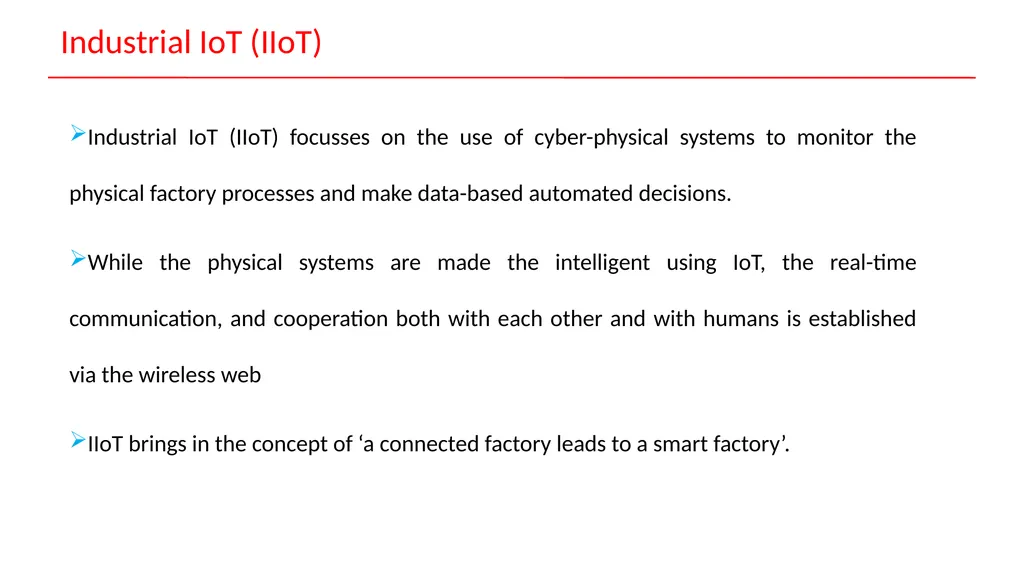
Industrial IoT (IIoT) Industrial IoT (IIoT) focusses on the use of cyber-physical systems to monitor the physical factory processes and make data-based automated decisions.
While the physical systems are made the intelligent using IoT, the real-time communication, and cooperation both with each other and with humans is established via the wireless web
IIoT brings in the concept of ‘a connected factory leads to a smart factory’.<br>
While the physical systems are made the intelligent using IoT, the real-time communication, and cooperation both with each other and with humans is established via the wireless web
IIoT brings in the concept of ‘a connected factory leads to a smart factory’.<br>
25
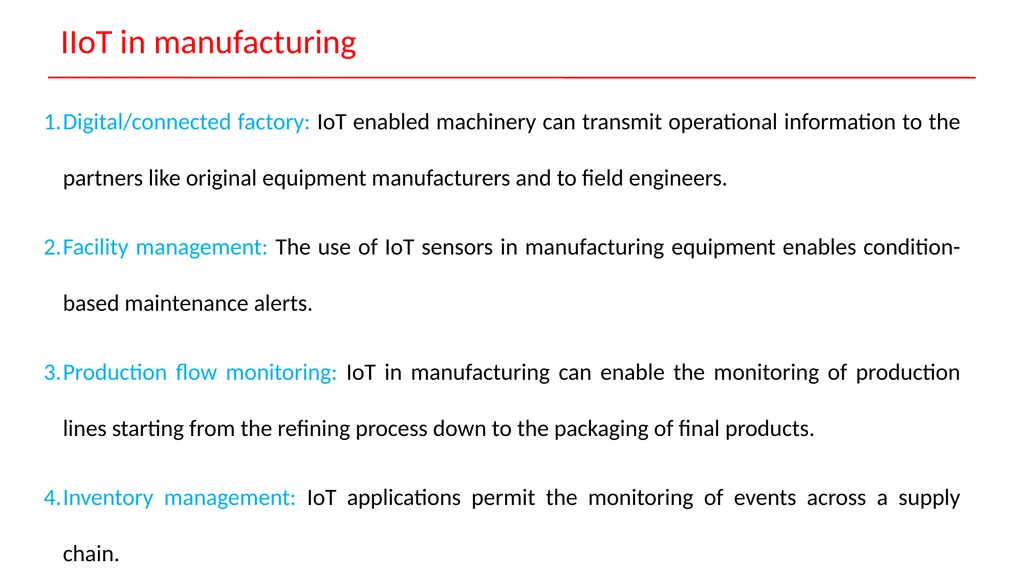
IIoT in manufacturing Digital/connected factory: IoT enabled machinery can transmit operational information to the partners like original equipment manufacturers and to field engineers.
Facility management: The use of IoT sensors in manufacturing equipment enables condition-based maintenance alerts.
Production flow monitoring: IoT in manufacturing can enable the monitoring of production lines starting from the refining process down to the packaging of final products.
Inventory management: IoT applications permit the monitoring of events across a supply chain.<br>
Facility management: The use of IoT sensors in manufacturing equipment enables condition-based maintenance alerts.
Production flow monitoring: IoT in manufacturing can enable the monitoring of production lines starting from the refining process down to the packaging of final products.
Inventory management: IoT applications permit the monitoring of events across a supply chain.<br>
26
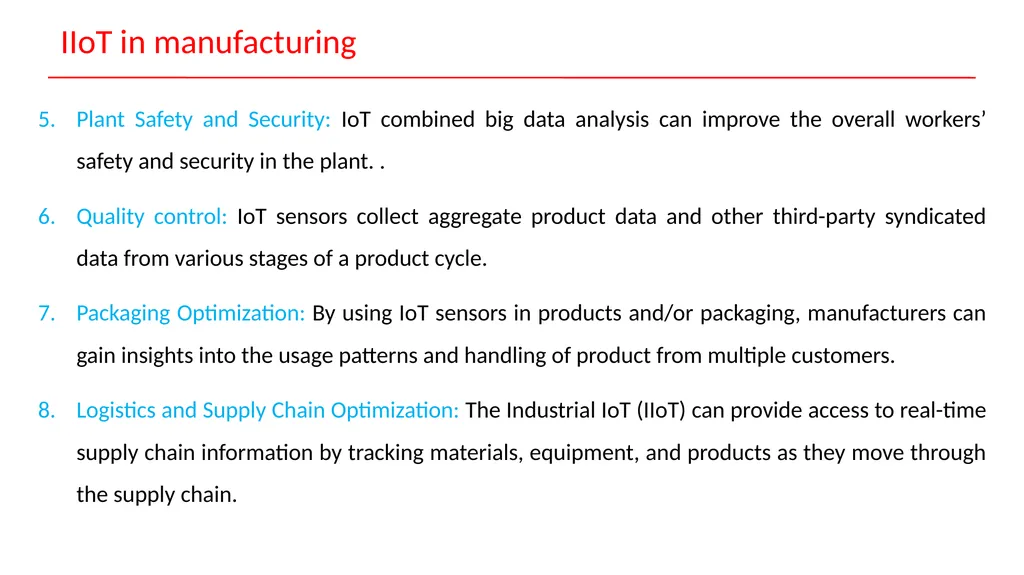
IIoT in manufacturing Plant Safety and Security: IoT combined big data analysis can improve the overall workers’ safety and security in the plant. .
Quality control: IoT sensors collect aggregate product data and other third-party syndicated data from various stages of a product cycle.
Packaging Optimization: By using IoT sensors in products and/or packaging, manufacturers can gain insights into the usage patterns and handling of product from multiple customers.
Logistics and Supply Chain Optimization: The Industrial IoT (IIoT) can provide access to real-time supply chain information by tracking materials, equipment, and products as they move through the supply chain.<br>
Quality control: IoT sensors collect aggregate product data and other third-party syndicated data from various stages of a product cycle.
Packaging Optimization: By using IoT sensors in products and/or packaging, manufacturers can gain insights into the usage patterns and handling of product from multiple customers.
Logistics and Supply Chain Optimization: The Industrial IoT (IIoT) can provide access to real-time supply chain information by tracking materials, equipment, and products as they move through the supply chain.<br>
27
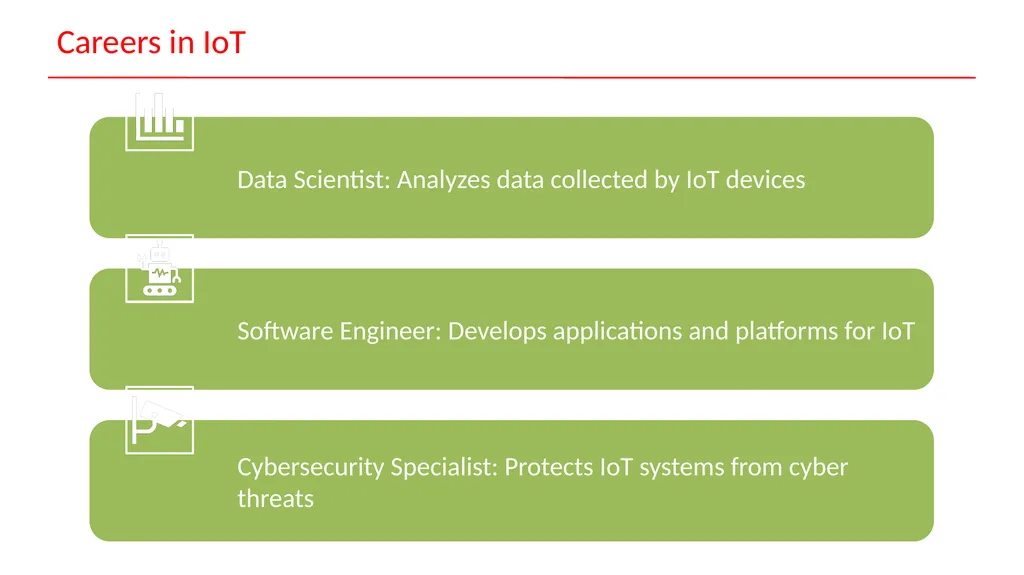
Careers in IoT<br>
28
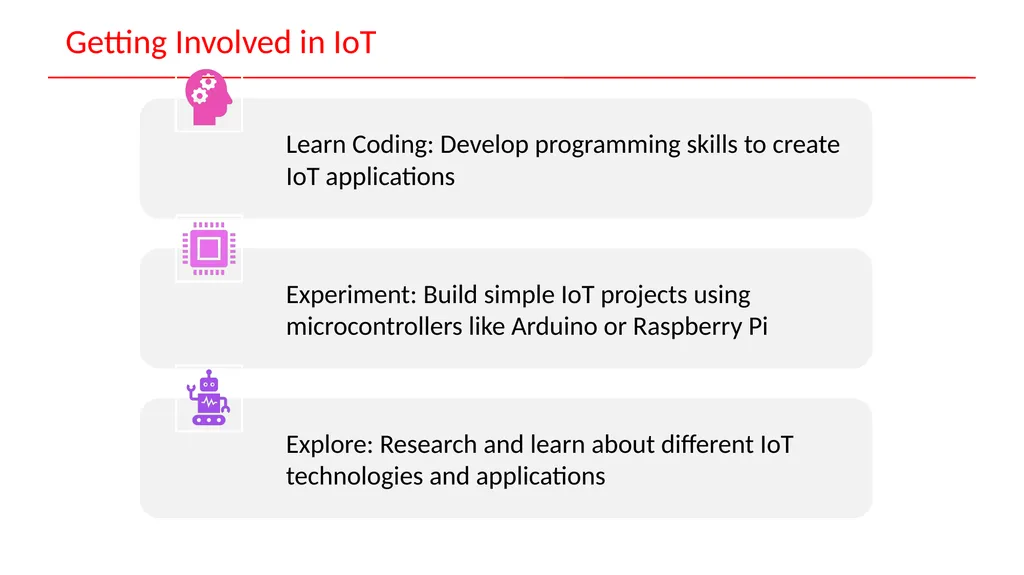
Getting Involved in IoT<br>
29
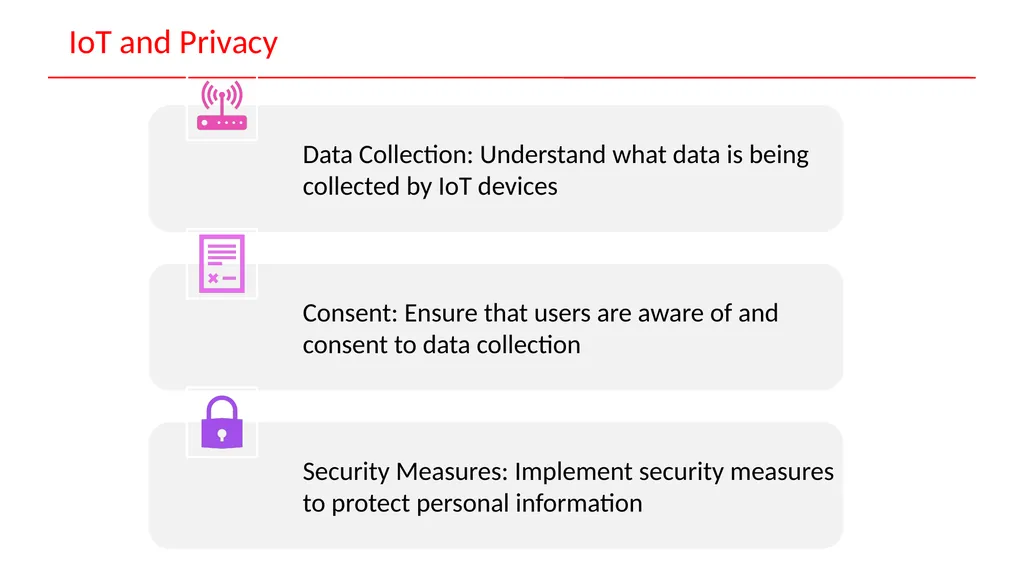
IoT and Privacy<br>
30
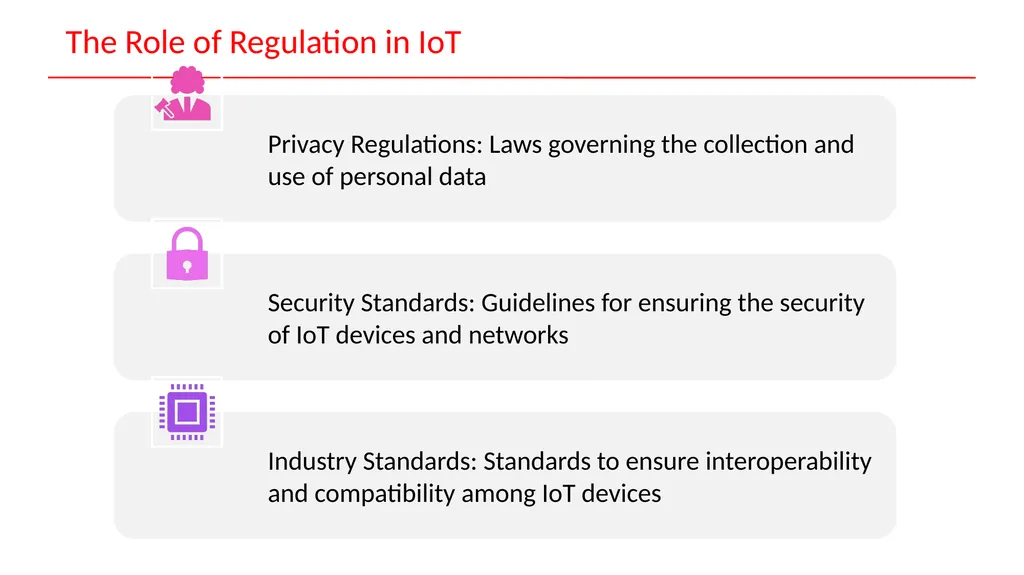
The Role of Regulation in IoT<br>
31
Top 10 Strategic IoT Technologies and Trends Trend No. 1: Artificial Intelligence (AI): “Data is the fuel that powers the IoT and the organization’s ability to derive meaning from it will define their long term success.”
Trend No. 2: Social, Legal and Ethical IoT: These include ownership of data and the deductions made from it, algorithmic bias, privacy and compliance with regulations such as the General Data Protection Regulation. “Successful deployment of an IoT solution demands that it’s not just technically effective but also socially acceptable.”
Trend No. 3: Infonomics and Data Broking: The theory of infonomics takes monetization of data further by seeing it as a strategic business asset to be recorded in the company accounts. By 2023, the buying and selling of IoT data will become an essential part of many IoT systems.<br>
Trend No. 2: Social, Legal and Ethical IoT: These include ownership of data and the deductions made from it, algorithmic bias, privacy and compliance with regulations such as the General Data Protection Regulation. “Successful deployment of an IoT solution demands that it’s not just technically effective but also socially acceptable.”
Trend No. 3: Infonomics and Data Broking: The theory of infonomics takes monetization of data further by seeing it as a strategic business asset to be recorded in the company accounts. By 2023, the buying and selling of IoT data will become an essential part of many IoT systems.<br>
32
Top 10 Strategic IoT Technologies and Trends 4. Trend No. 4: The Shift from Intelligent Edge to Intelligent Mesh: The shift from centralized and cloud to edge architectures is well under way in the IoT space. These mesh architectures will enable more flexible, intelligent and responsive IoT systems — although often at the cost of additional complexities.
5. Trend No. 5: IoT Governance: As the IoT continues to expand, the need for a governance framework that ensures appropriate behaviour in the creation, storage, use and deletion of information related to IoT projects will become increasingly important.
6. Trend No. 6: Sensor Innovation: The sensor market will evolve continuously through 2023. New sensors will enable a wider range of situations and events to be detected.<br>
5. Trend No. 5: IoT Governance: As the IoT continues to expand, the need for a governance framework that ensures appropriate behaviour in the creation, storage, use and deletion of information related to IoT projects will become increasingly important.
6. Trend No. 6: Sensor Innovation: The sensor market will evolve continuously through 2023. New sensors will enable a wider range of situations and events to be detected.<br>
33
Top 10 Strategic IoT Technologies and Trends Trend No. 7: Trusted Hardware and Operating System: ‘.. by 2023, we expect to see the deployment of hardware and software combinations that together create more trustworthy and secure IoT systems…’.
Trend 8: Novel IoT User Experiences: User experience driven by 4 factors: new sensors, new algorithms, new experience architectures and context, and socially aware experiences.
Trend No. 9: Silicon Chip Innovation: By 2023, it’s expected that new special-purpose chips will reduce the power consumption required to run IoT devices.
Trend No. 10: New Wireless Networking Technologies for IoT: IoT networking involves balancing a set of competing requirements. In particular they should explore 5G, the forthcoming generation of low earth orbit satellites, and backscatter networks.<br>
Trend 8: Novel IoT User Experiences: User experience driven by 4 factors: new sensors, new algorithms, new experience architectures and context, and socially aware experiences.
Trend No. 9: Silicon Chip Innovation: By 2023, it’s expected that new special-purpose chips will reduce the power consumption required to run IoT devices.
Trend No. 10: New Wireless Networking Technologies for IoT: IoT networking involves balancing a set of competing requirements. In particular they should explore 5G, the forthcoming generation of low earth orbit satellites, and backscatter networks.<br>
34
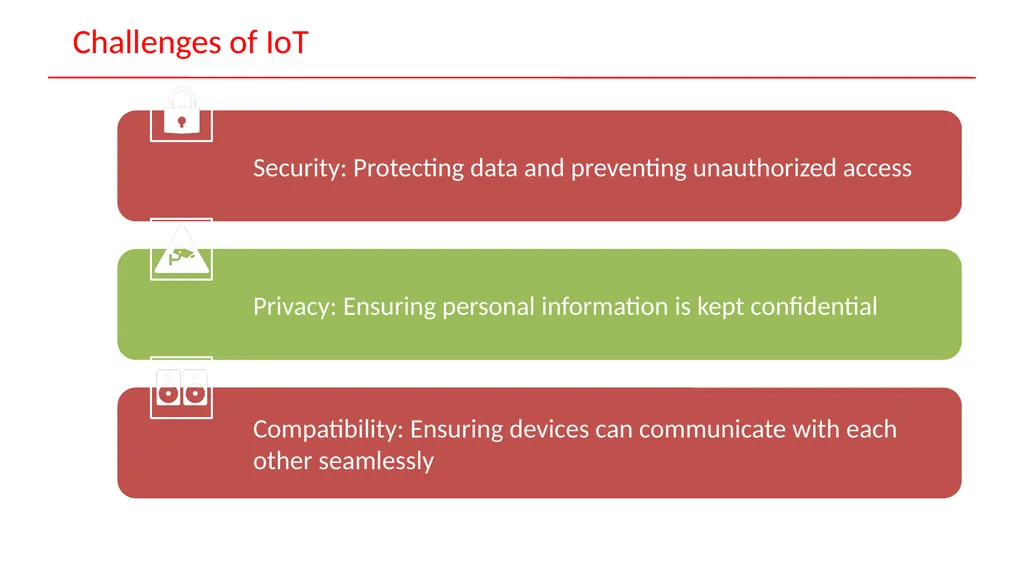
Challenges of IoT<br>
35
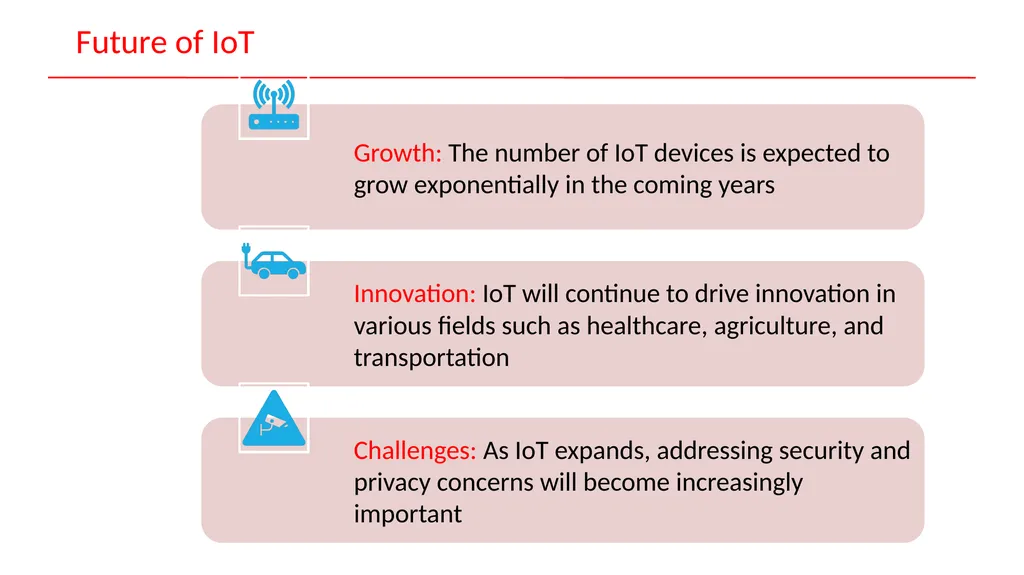
Future of IoT<br>
36
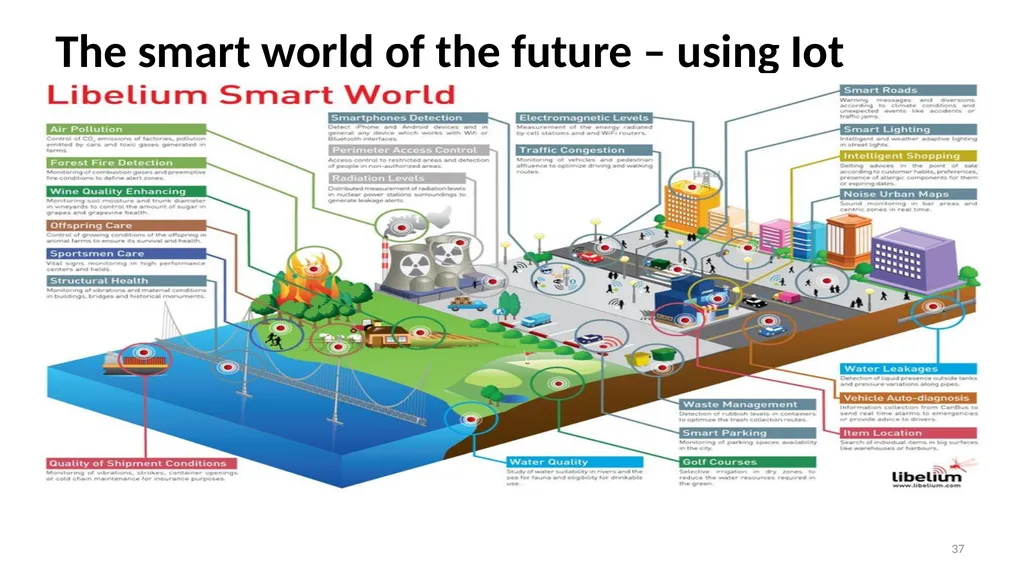
The smart world of the future – using Iot 37<br>
37
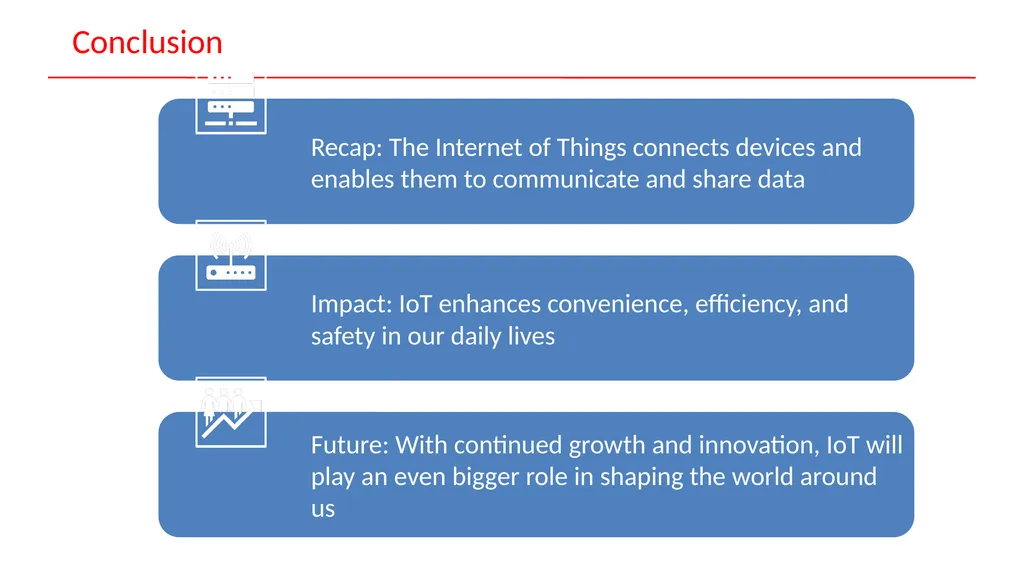
Conclusion<br>
38
Questions 1) define IoT
2) why is IoT important
3) what are IoT applications
4) What are the different components of IoT?
5) Explain the characteristics of IoT.
6) Explain the term ‘smart city’ in IoT
7) What are the challenges or risks associated with IoT?
8) Write some different types of sensors in IoT?
9) Why Internet of Things(IoT) will be successful in the coming years?
10) what are technologies in IoT?<br>
2) why is IoT important
3) what are IoT applications
4) What are the different components of IoT?
5) Explain the characteristics of IoT.
6) Explain the term ‘smart city’ in IoT
7) What are the challenges or risks associated with IoT?
8) Write some different types of sensors in IoT?
9) Why Internet of Things(IoT) will be successful in the coming years?
10) what are technologies in IoT?<br>
39
Questions 1) define IoT
2) why is IoT important
3) what are IoT applications
4) What are the different components of IoT?
5) Explain the characteristics of IoT.
6) Explain the term ‘smart city’ in IoT
7) What are the challenges or risks associated with IoT?
8) Write some different types of sensors in IoT?
9) Why Internet of Things(IoT) will be successful in the coming years?
10) what are technologies in IoT? 40<br>
2) why is IoT important
3) what are IoT applications
4) What are the different components of IoT?
5) Explain the characteristics of IoT.
6) Explain the term ‘smart city’ in IoT
7) What are the challenges or risks associated with IoT?
8) Write some different types of sensors in IoT?
9) Why Internet of Things(IoT) will be successful in the coming years?
10) what are technologies in IoT? 40<br>