Interoperability Between Modern Clouds using DevOps Probing Presentation Sean Bird and Mike Corley CSE 775 (Spring 2017) Project Goal (refresher) Establish a Hybrid Cloud (environment) composed of cutting edge technologies to enable DevOps.
"Interoperability Between Modern Clouds using" is the property of its rightful owner. Permission is granted to
download and print the materials on this website for personal, non-commercial use only, and to display it
on your personal computer provided you do not modify the materials and that you retain all copyright
notices contained in the materials. By downloading content from our website, you accept the terms of this
agreement.
Presentation Transcript
01
Interoperability Between Modern Clouds using DevOps Probing Presentation
Sean Bird and Mike Corley
CSE 775 (Spring 2017)<br>
02
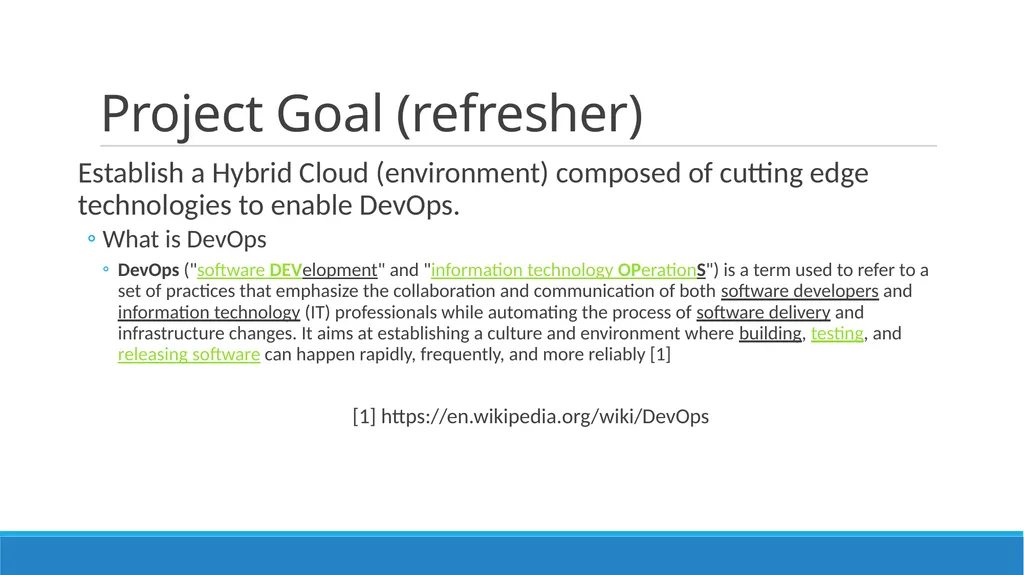
Project Goal (refresher) Establish a Hybrid Cloud (environment) composed of cutting edge technologies to enable DevOps.
What is DevOps
DevOps ("software DEVelopment" and "information technology OPerationS") is a term used to refer to a set of practices that emphasize the collaboration and communication of both software developers and information technology (IT) professionals while automating the process of software delivery and infrastructure changes. It aims at establishing a culture and environment where building, testing, and releasing software can happen rapidly, frequently, and more reliably [1]
[1] https://en.wikipedia.org/wiki/DevOps<br>
03
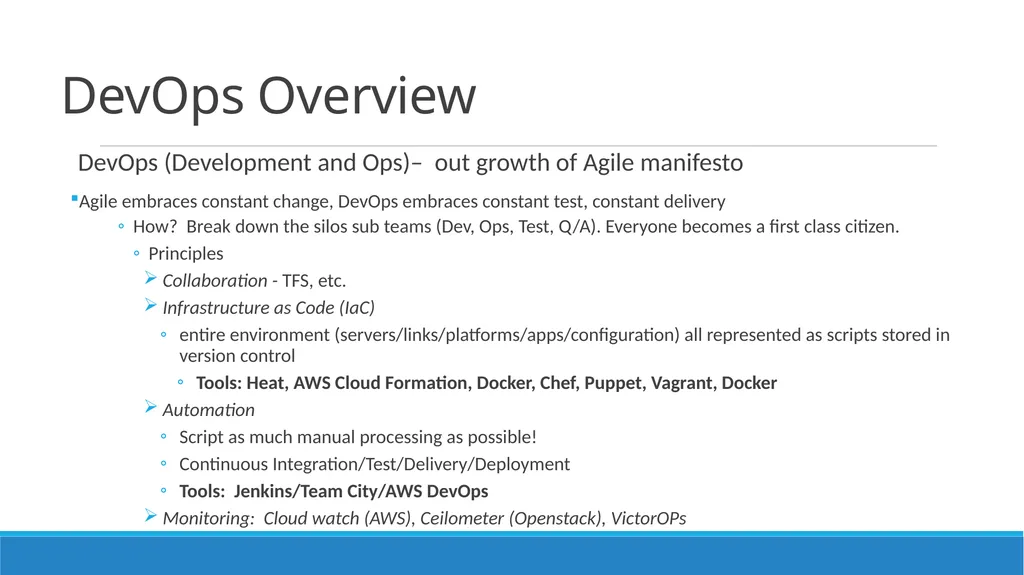
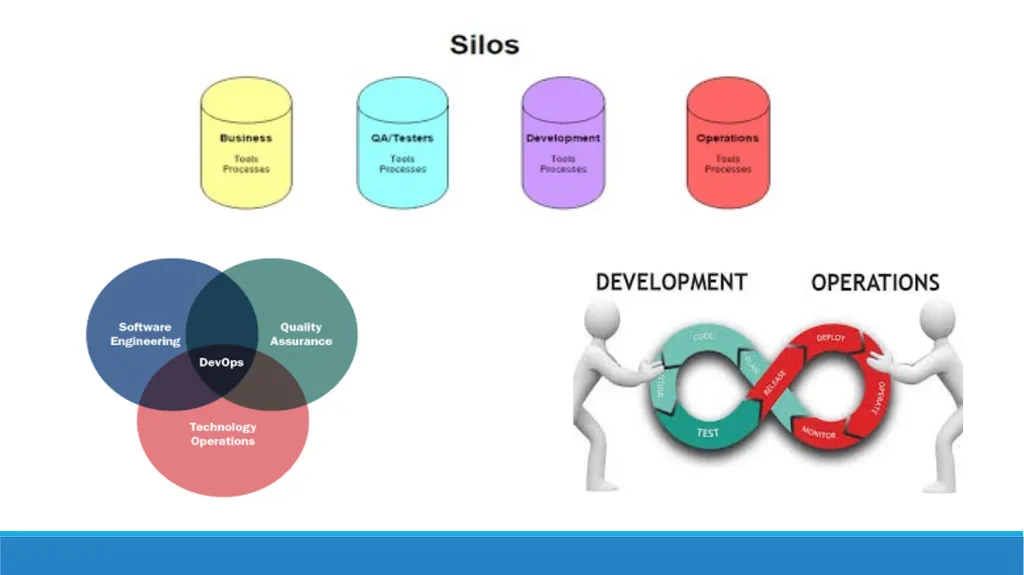
DevOps Overview DevOps (Development and Ops)– out growth of Agile manifesto
Agile embraces constant change, DevOps embraces constant test, constant delivery
How? Break down the silos sub teams (Dev, Ops, Test, Q/A). Everyone becomes a first class citizen.
Principles
Collaboration - TFS, etc.
Infrastructure as Code (IaC)
entire environment (servers/links/platforms/apps/configuration) all represented as scripts stored in version control
Tools: Heat, AWS Cloud Formation, Docker, Chef, Puppet, Vagrant, Docker
Automation
Script as much manual processing as possible!
Continuous Integration/Test/Delivery/Deployment
Tools: Jenkins/Team City/AWS DevOps
Monitoring: Cloud watch (AWS), Ceilometer (Openstack), VictorOPs<br>
04
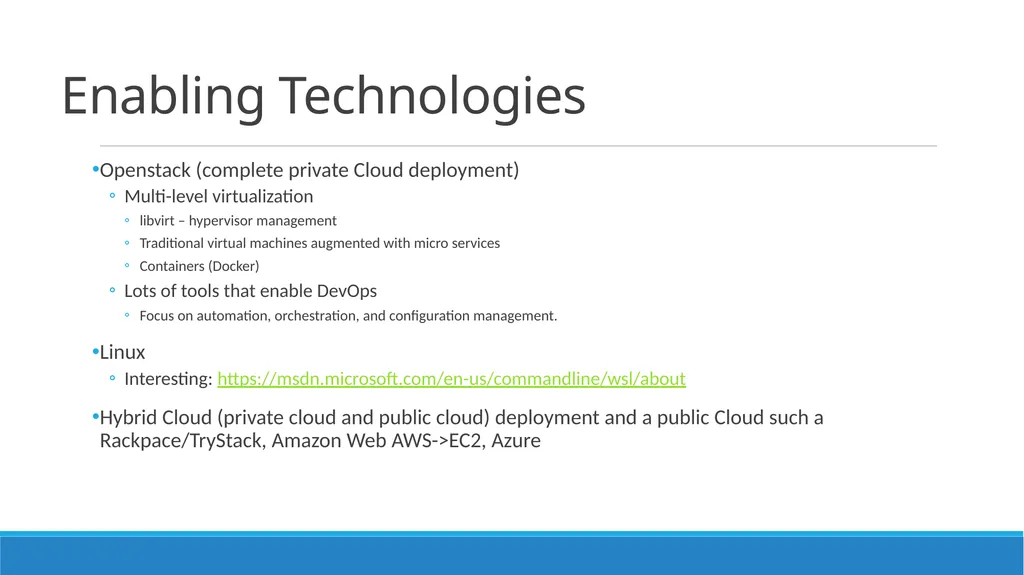
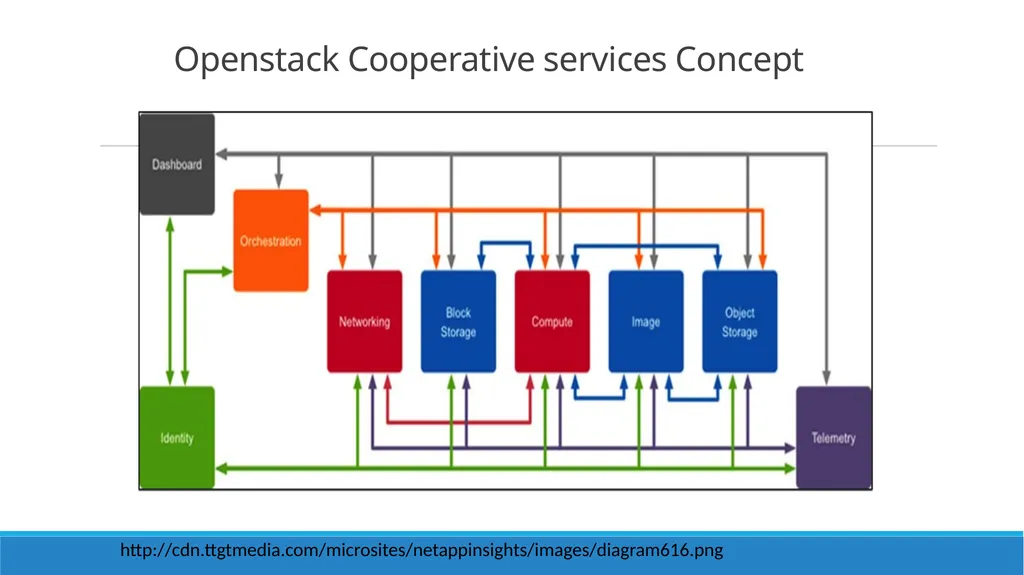
Enabling Technologies Openstack (complete private Cloud deployment)
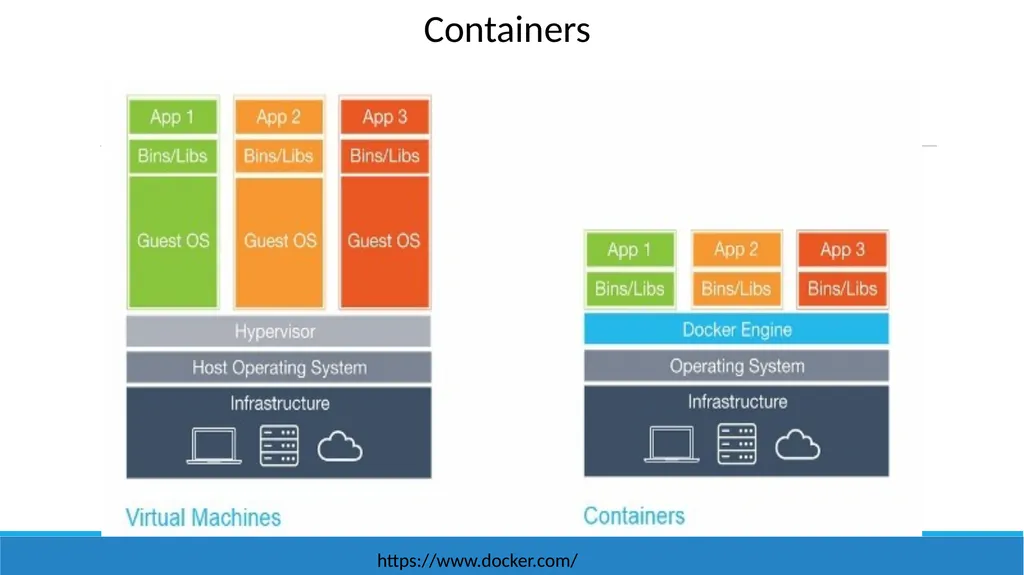
Multi-level virtualization
libvirt – hypervisor management
Traditional virtual machines augmented with micro services
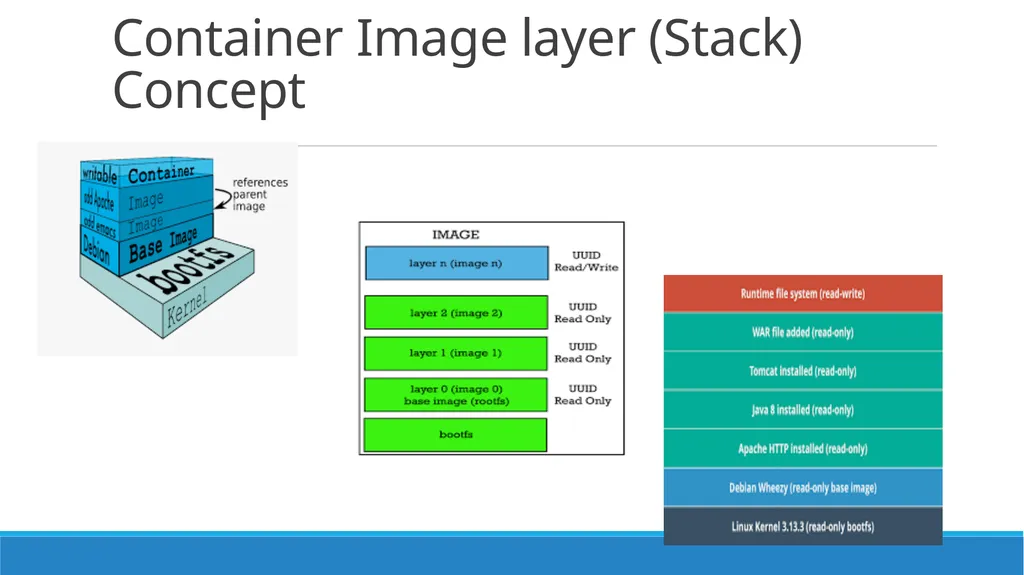
Containers (Docker)
Lots of tools that enable DevOps
Focus on automation, orchestration, and configuration management.
Linux
Interesting: https://msdn.microsoft.com/en-us/commandline/wsl/about
Hybrid Cloud (private cloud and public cloud) deployment and a public Cloud such a Rackpace/TryStack, Amazon Web AWS->EC2, Azure<br>
05
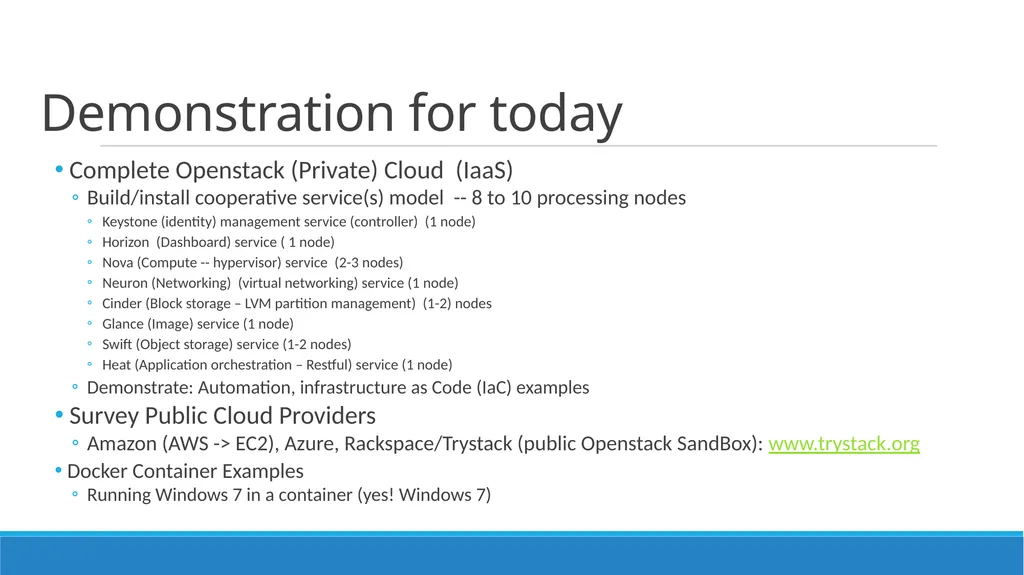
Demonstration for today Complete Openstack (Private) Cloud (IaaS)
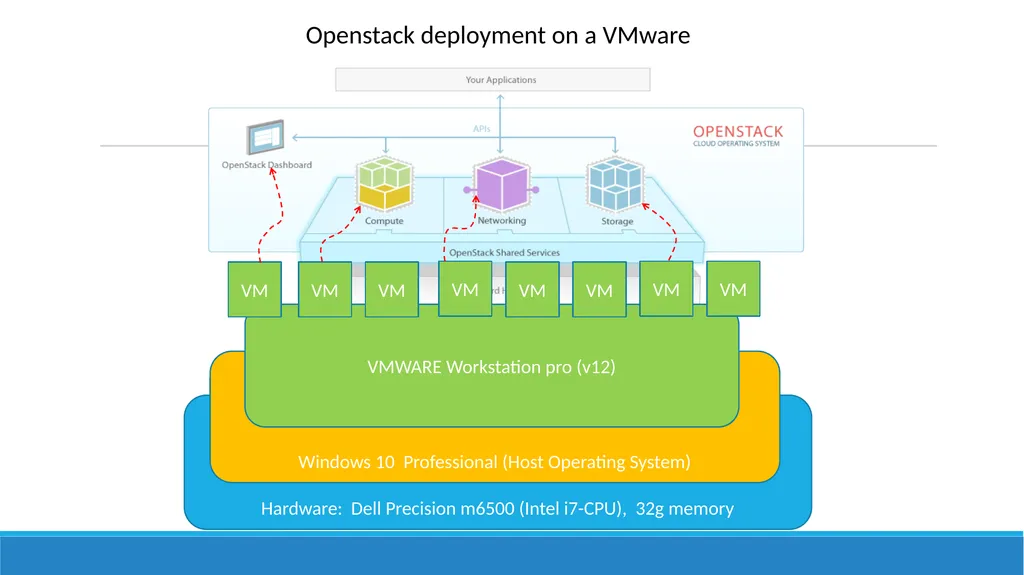
Build/install cooperative service(s) model -- 8 to 10 processing nodes
Keystone (identity) management service (controller) (1 node)
Horizon (Dashboard) service ( 1 node)
Nova (Compute -- hypervisor) service (2-3 nodes)
Neuron (Networking) (virtual networking) service (1 node)
Cinder (Block storage – LVM partition management) (1-2) nodes
Glance (Image) service (1 node)
Swift (Object storage) service (1-2 nodes)
Heat (Application orchestration – Restful) service (1 node)
Demonstrate: Automation, infrastructure as Code (IaC) examples
Survey Public Cloud Providers
Amazon (AWS -> EC2), Azure, Rackspace/Trystack (public Openstack SandBox): www.trystack.org
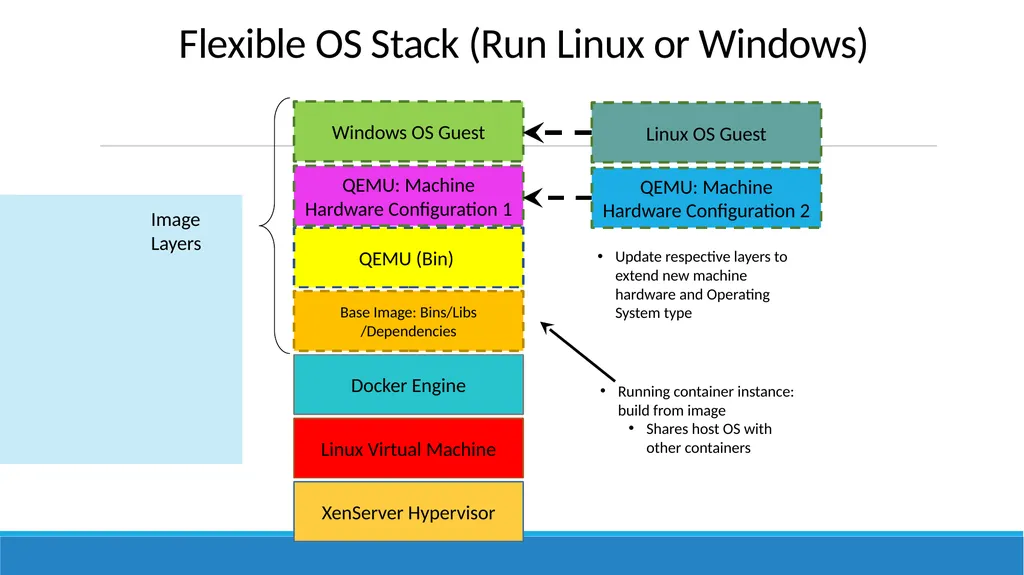
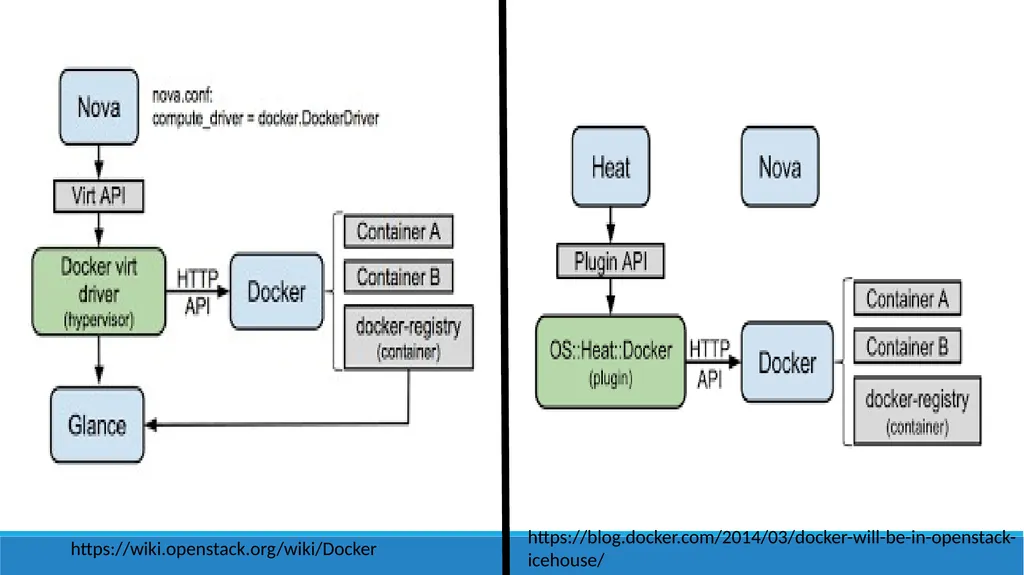
Docker Container Examples
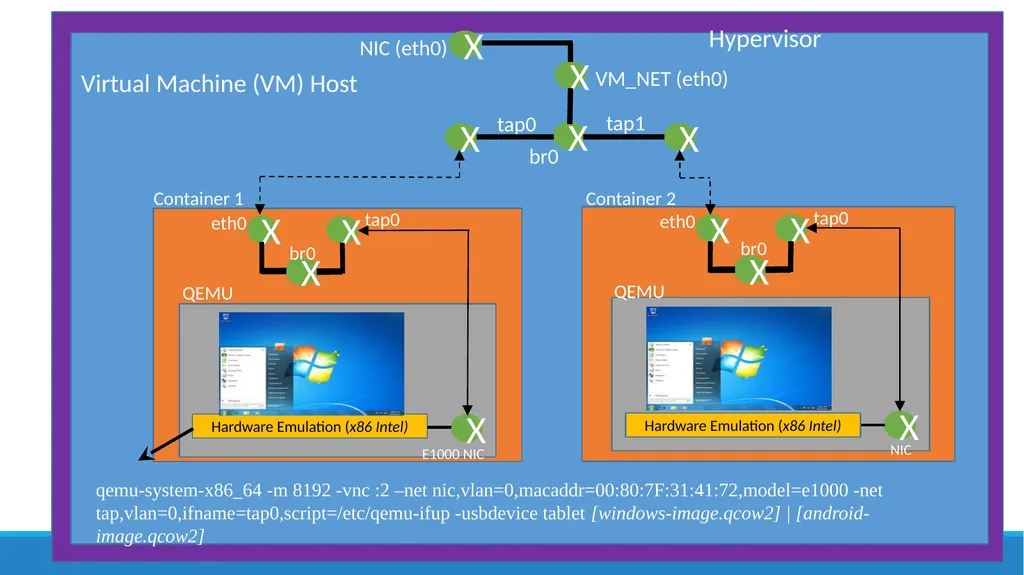
Running Windows 7 in a container (yes! Windows 7)<br>
Next Steps: Finishing Surveying Tools and standup DevOps environment
Openstack, and (AWS or Azure)
Chef, Heat,
Develop, deploy ZeroMQ application in the Public cloud and consume expose/share data in private (on premises) cloud<br>