Intra-Abdominal Candidiasis, Candida peritonitis Paschalis Vergidis, MD, MSc Infectious Diseases Consultant Manchester University NHS Foundation Trust Learning Objectives To understand the different forms of intra-abdominal candidiasis To
"Intra-Abdominal Candidiasis, Candida peritonitis" is the property of its rightful owner. Permission is granted to
download and print the materials on this website for personal, non-commercial use only, and to display it
on your personal computer provided you do not modify the materials and that you retain all copyright
notices contained in the materials. By downloading content from our website, you accept the terms of this
agreement.
Presentation Transcript
01
Intra-Abdominal Candidiasis, Candida peritonitis Paschalis Vergidis, MD, MSc
Infectious Diseases Consultant
Manchester University NHS Foundation Trust<br>
02
Learning Objectives To understand the different forms of intra-abdominal candidiasis To discuss the risk factors for intra-abdominal candidiasis To review the management and outcomes of intra-abdominal candidiasis<br>
03
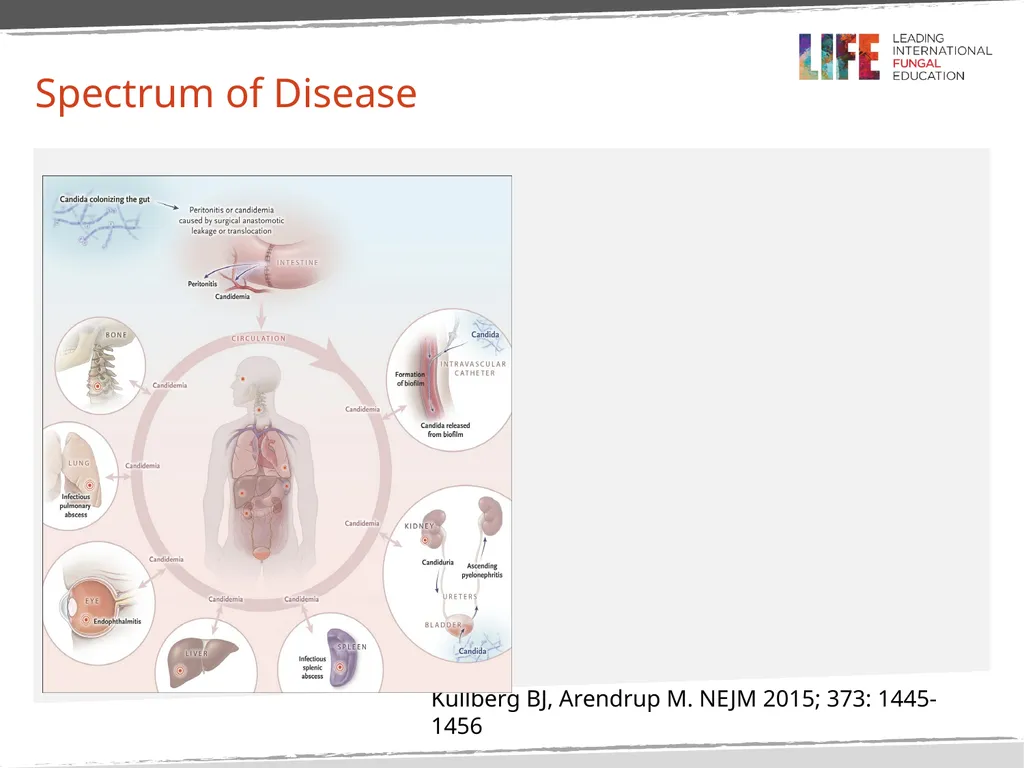
Kullberg BJ, Arendrup M. NEJM 2015; 373: 1445-1456 Spectrum of Disease<br>
04
Intra-Abdominal Candidiasis Common form of deep-seated candidiasis
Poorly studied compared to candidaemia
Accounts for ~10% of all cases of peritonitis
Bacterial co-infection is common<br>
05
Classification Primary peritonitis
No apparent breach of the GI tract
Secondary Peritonitis
Follows perforations, surgical leaks, trauma or other pathological process
Tertiary Peritonitis
Persistence or recurrence of intra-abdominal infection following treatment
Intra-Abdominal Abscess
Localized infection resulting from pathological process or breach of the GI tract
Infected Pancreatic Necrosis
Infection of the non-vitalized pancreatic tissue
Cholecystitis, cholangitis Vergidis et al. PLoS ONE. 2016; 11(4). e0153247<br>
06
Risk factors Recurrent GI surgery
GI tract perforations
GI anastomosis leakage
Prolonged broad-spectrum antibiotics
Acute renal failure
Total parenteral nutrition
ICU stay
Diabetes mellitus
Immunosuppression Acquisition can be:
Community-acquired
Hospital-acquired
Healthcare-associated Bassetti et al. Intensive Care Med. 2013; 39(12): 2092-106<br>
07
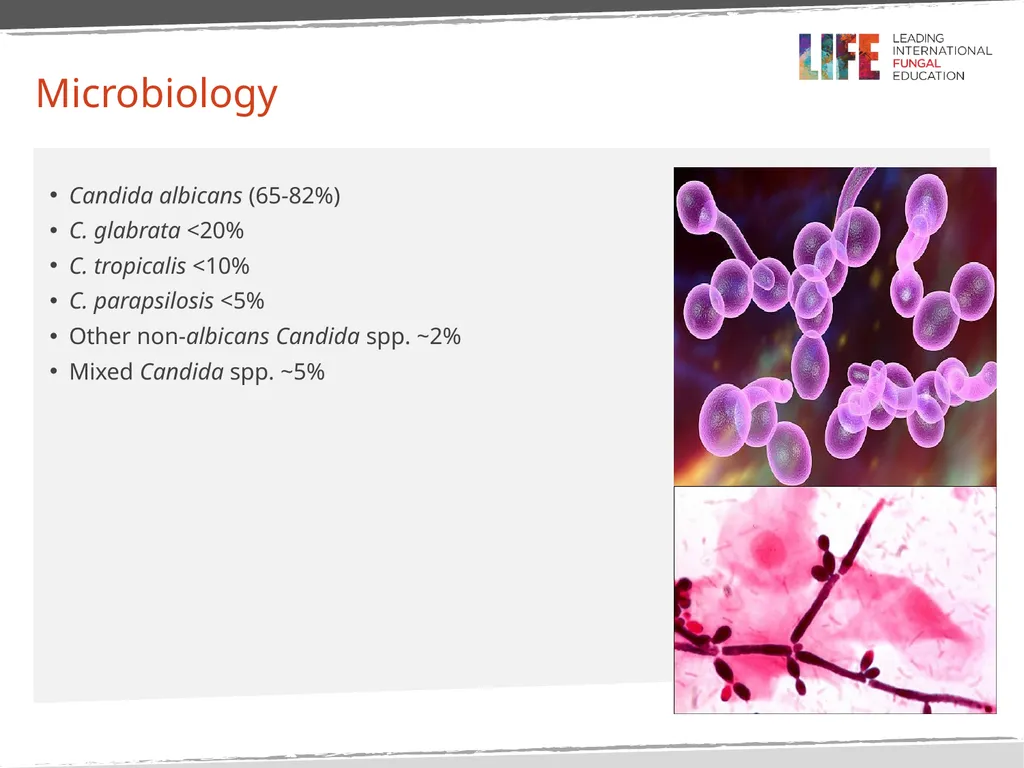
Microbiology Candida albicans (65-82%)
C. glabrata <20%
C. tropicalis <10%
C. parapsilosis <5%
Other non-albicans Candida spp. ~2%
Mixed Candida spp. ~5%<br>
08
Clinical manifestations Fever
Abdominal pain (+/- guarding/rebound tenderness)
Nausea, vomiting
Purulent discharge from abdominal drains Leucocytosis
Electrolyte abnormalities
Hypokalaemia, hypernatremia
Acidosis
Raised inflammatory markers Clinical presentation is similar to bacterial peritonitis
Bacterial co-infection is common<br>
09
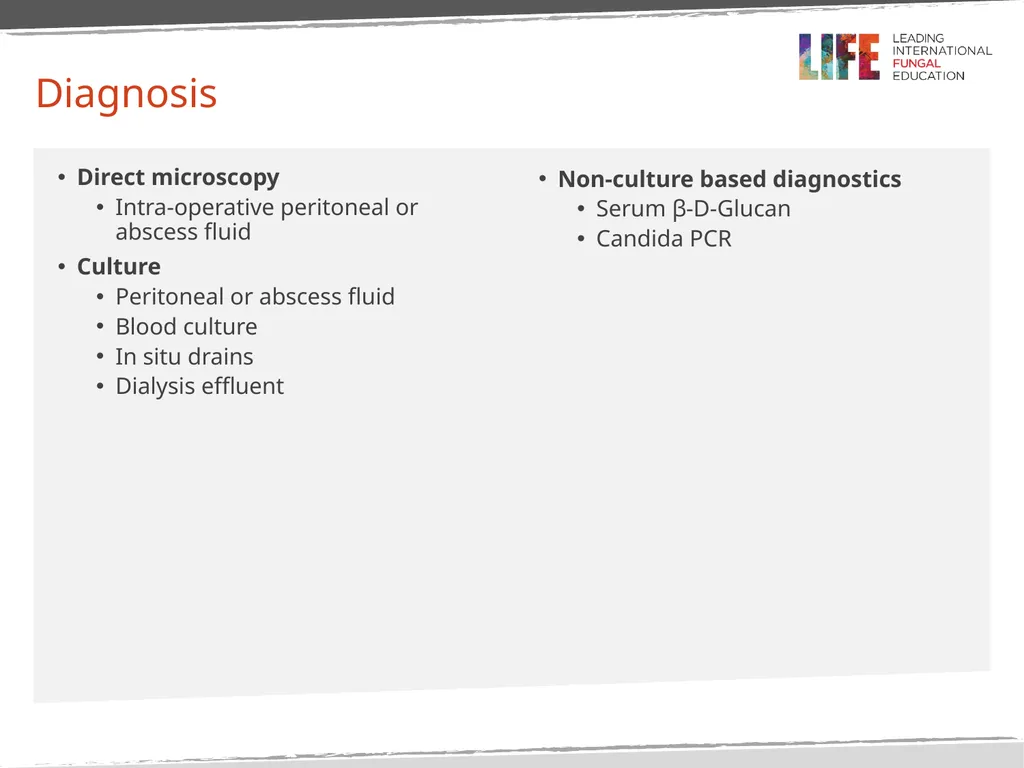
Diagnosis Direct microscopy
Intra-operative peritoneal or abscess fluid
Culture
Peritoneal or abscess fluid
Blood culture
In situ drains
Dialysis effluent Non-culture based diagnostics
Serum β-D-Glucan
Candida PCR<br>
10
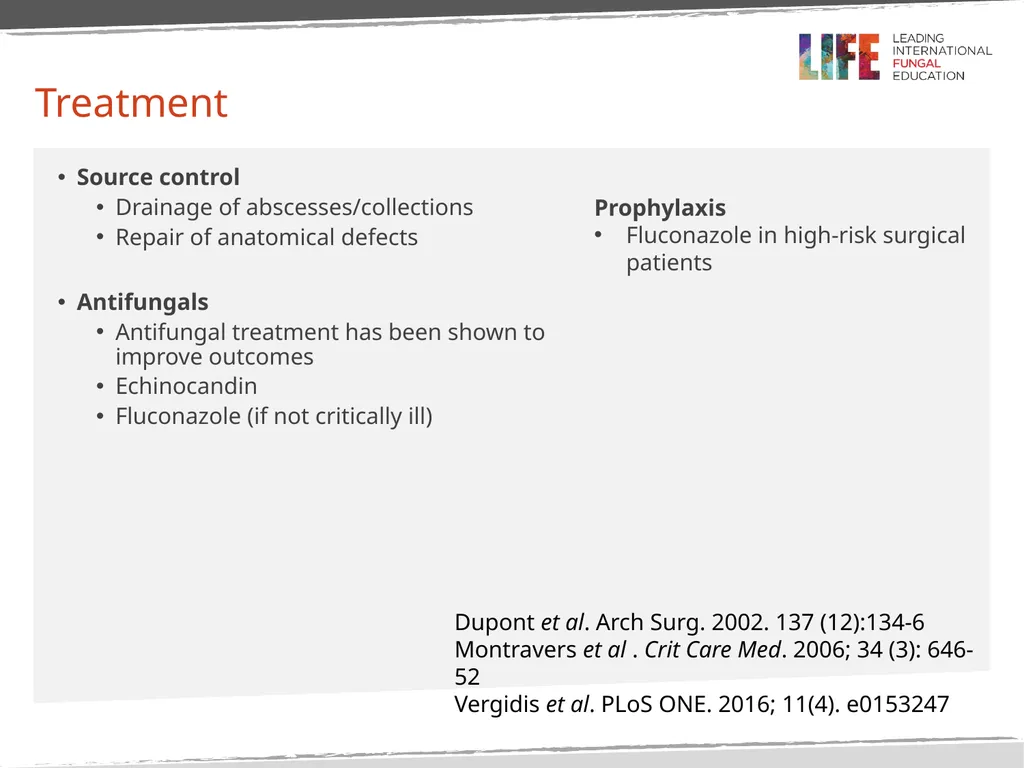
Treatment Source control
Drainage of abscesses/collections
Repair of anatomical defects
Antifungals
Antifungal treatment has been shown to improve outcomes
Echinocandin
Fluconazole (if not critically ill) Prophylaxis
Fluconazole in high-risk surgical patients Dupont et al. Arch Surg. 2002. 137 (12):134-6
Montravers et al . Crit Care Med. 2006; 34 (3): 646-52
Vergidis et al. PLoS ONE. 2016; 11(4). e0153247<br>
11
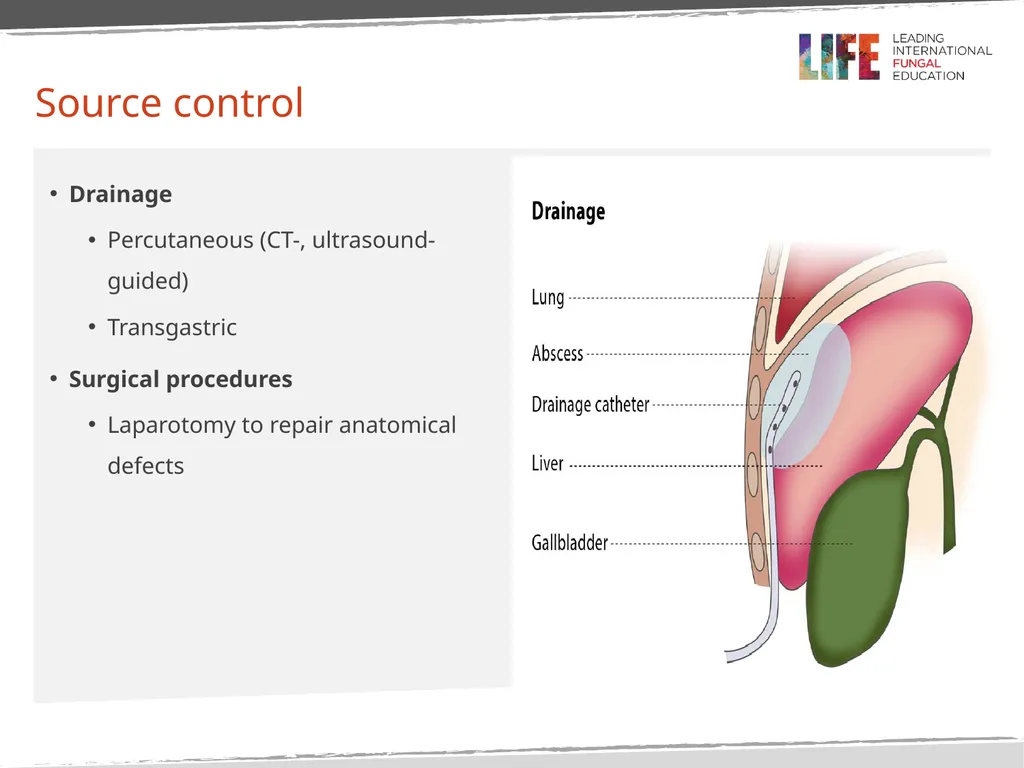
Source control Drainage
Percutaneous (CT-, ultrasound-guided)
Transgastric
Surgical procedures
Laparotomy to repair anatomical defects<br>
12
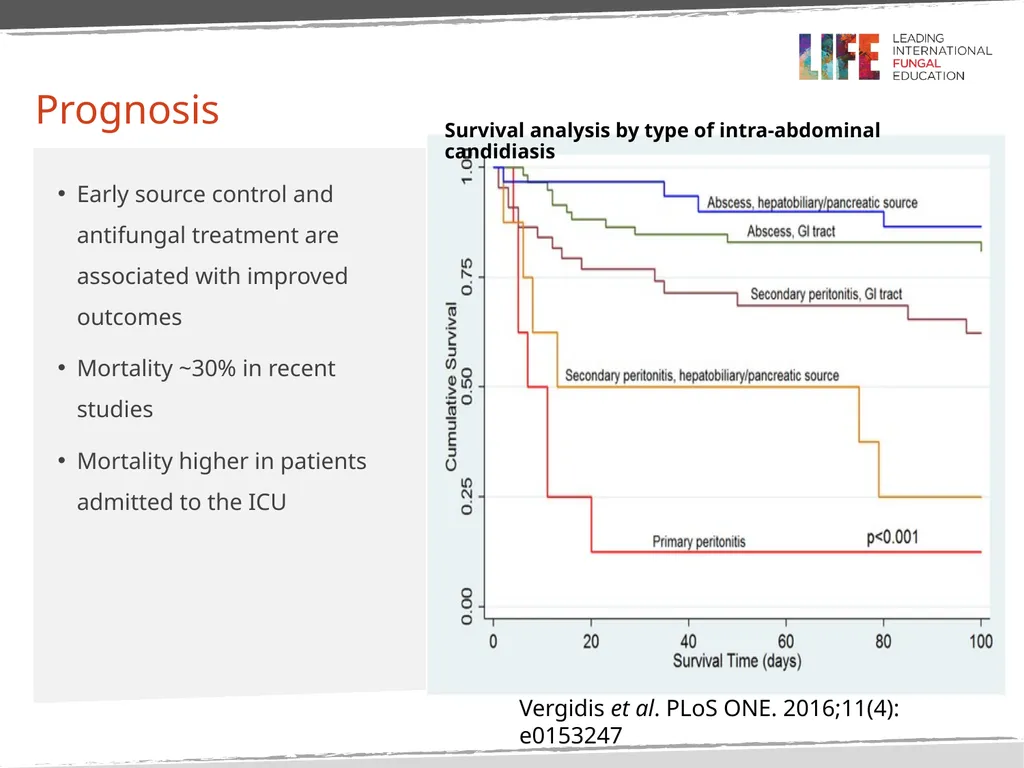
Prognosis Early source control and antifungal treatment are associated with improved outcomes
Mortality ~30% in recent studies
Mortality higher in patients admitted to the ICU Vergidis et al. PLoS ONE. 2016;11(4): e0153247 Survival analysis by type of intra-abdominal candidiasis<br>
13
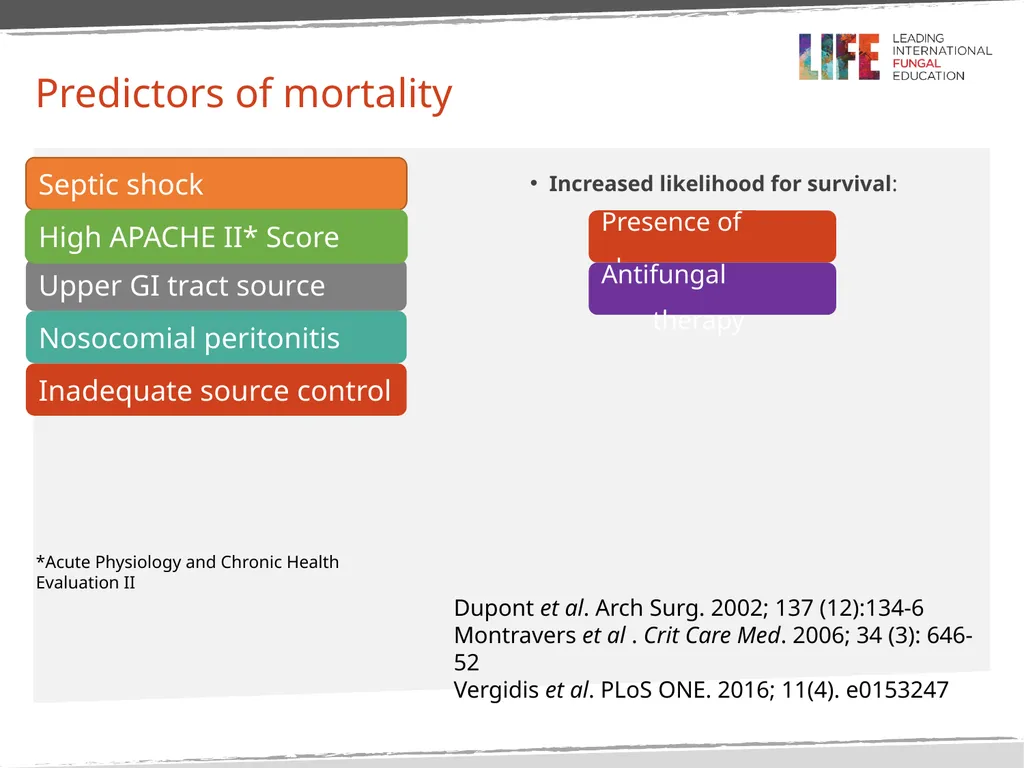
Predictors of mortality *Acute Physiology and Chronic Health Evaluation II Dupont et al. Arch Surg. 2002; 137 (12):134-6
Montravers et al . Crit Care Med. 2006; 34 (3): 646-52
Vergidis et al. PLoS ONE. 2016; 11(4). e0153247 Increased likelihood for survival: Upper GI tract source Nosocomial peritonitis Inadequate source control Septic shock High APACHE II* Score Presence of abscess Antifungal therapy<br>
14
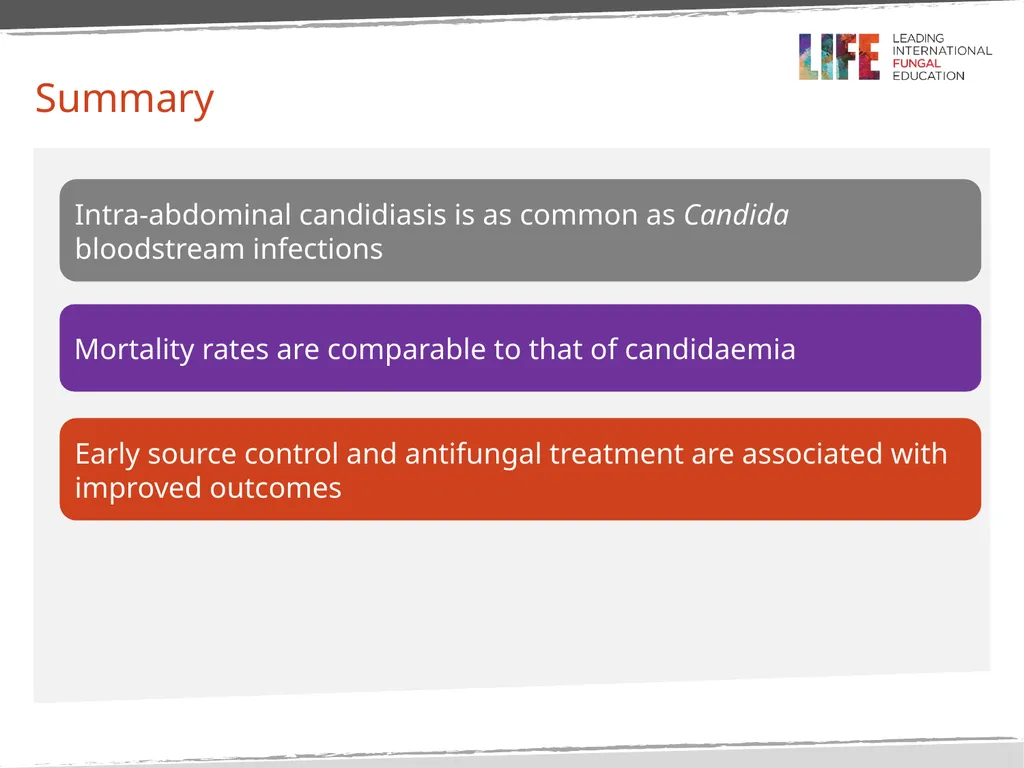
Summary Intra-abdominal candidiasis is as common as Candida bloodstream infections Mortality rates are comparable to that of candidaemia Early source control and antifungal treatment are associated with improved outcomes<br>