
Introducing Hospitality Chapter 1 John R. Walker
MT
Published · 40 slides · 0 views
1 / 1
Description
Introducing Hospitality Chapter 1 John R. Walker Introduction to Hospitality, 6e and Introduction to Hospitality Management, 4e Hospitality through the ages The word hospitality comes from the French term hospice, meaning to provide
Related Topics
Share
Embed code
Download this presentation From Below
"Introducing Hospitality Chapter 1 John R. Walker" is the property of its rightful owner. Permission is granted to download and print the materials on this website for personal, non-commercial use only, and to display it on your personal computer provided you do not modify the materials and that you retain all copyright notices contained in the materials. By downloading content from our website, you accept the terms of this agreement.
Presentation Transcript
01
Introducing Hospitality Chapter 1 John R. Walker Introduction to Hospitality, 6e
and
Introduction to Hospitality Management, 4e<br>
and
Introduction to Hospitality Management, 4e<br>
02
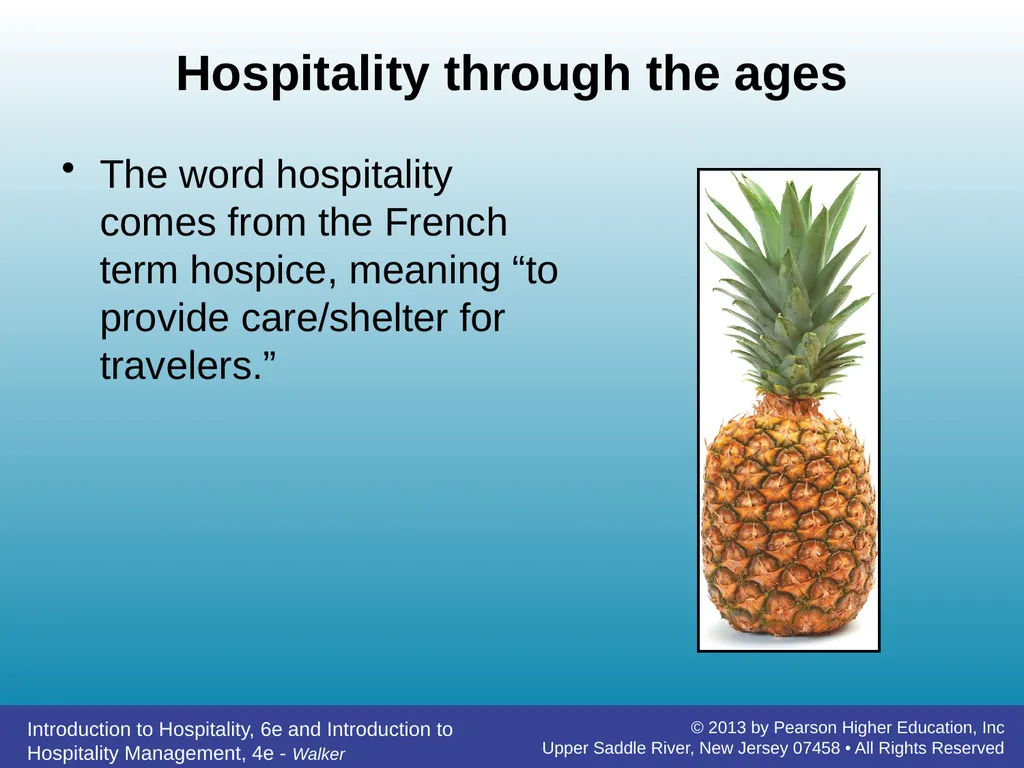
Hospitality through the ages The word hospitality comes from the French term hospice, meaning “to provide care/shelter for travelers.”<br>
03
Ancient Times The Summarians, after becoming successful farmers, began other activities such as
Writing
Inventing money
Creating pottery
Making tools
Producing beer
Taverns provided a place for locals to relax and enjoy each other’s company
Taverns and Inns began springing up all over Europe, China, Egypt and India<br>
Writing
Inventing money
Creating pottery
Making tools
Producing beer
Taverns provided a place for locals to relax and enjoy each other’s company
Taverns and Inns began springing up all over Europe, China, Egypt and India<br>
04
Greece and Rome The Code of Hammurabi (1700 B.C.E.) was one of the first written documents imposing penalties for plotting crimes in Taverns.
The Code also imposed the death penalty for watering down the beer!
The Romans built Inns about 25 miles apart on all the main roads throughout the country.
The first ‘business lunch’ was the idea of a Roman tavern owner in 40 B.C.E.<br>
The Code also imposed the death penalty for watering down the beer!
The Romans built Inns about 25 miles apart on all the main roads throughout the country.
The first ‘business lunch’ was the idea of a Roman tavern owner in 40 B.C.E.<br>
05
Medieval Times Charlemagne established rest houses for pilgrims in the 8th century
The stagecoach was popular in England with Inns and taverns located on the trail called ‘post houses.’
In the late 16th century eating places called an ‘ordinary’ were taverns serving a fixed-price meal.<br>
The stagecoach was popular in England with Inns and taverns located on the trail called ‘post houses.’
In the late 16th century eating places called an ‘ordinary’ were taverns serving a fixed-price meal.<br>
06
Coffee Houses Coffee houses began to spring up all over Europe during the 17th century
The most famous was Café Florian on the Piazza San Marco which still operate today
Coffee houses were the social and literary centers of their day<br>
The most famous was Café Florian on the Piazza San Marco which still operate today
Coffee houses were the social and literary centers of their day<br>
07
The New World Ordinary’s were common in the New World during the 1600’s
Cole’s Ordinary, 1663
Hudson’s House, 1640
The Stadt House, 1642
Frauncis Tavern, where George Washington maintained his Revolutionary headquarters is still operating today.
John Adams, the 2nd President of the United States owned a tavern from 1783 to 1789<br>
Cole’s Ordinary, 1663
Hudson’s House, 1640
The Stadt House, 1642
Frauncis Tavern, where George Washington maintained his Revolutionary headquarters is still operating today.
John Adams, the 2nd President of the United States owned a tavern from 1783 to 1789<br>
08
The French Revolution The French Revolution changed the course of Culinary history as nearly all French chefs worked for the nobility. As the nobility lost their titles and their property, the chefs lost their jobs.
Many immigrated to the New World and found themselves in New Orleans, a French enclave.
There, they introduced sauces and other flavorful dishes that supplanted the primitive cooking originating with the British.<br>
Many immigrated to the New World and found themselves in New Orleans, a French enclave.
There, they introduced sauces and other flavorful dishes that supplanted the primitive cooking originating with the British.<br>
09
The Nineteenth Century One of the first great cook books was Antoine Carême 's La Cuisine Classique detailing numerous dishes and their sauces. This was the beginning of the a la carte menu
Auguste Escoffier published the classic recipe book Le Guide Culinaire and installed the brigade system in the kitchen
Thirty five restaurants in New York City have celebrated their 100th anniversary<br>
Auguste Escoffier published the classic recipe book Le Guide Culinaire and installed the brigade system in the kitchen
Thirty five restaurants in New York City have celebrated their 100th anniversary<br>
10
The Twentieth Century There was a rapid development of hotels, motels, fast food, and coffee shops after World War II.
The 1980’s saw hospitality, travel, and tourism expand as baby boomers influenced the industry through their buying power.
After 9/11 the economic recovery proved very strong as hospitality businesses expanded in North America and abroad.<br>
The 1980’s saw hospitality, travel, and tourism expand as baby boomers influenced the industry through their buying power.
After 9/11 the economic recovery proved very strong as hospitality businesses expanded in North America and abroad.<br>
11
Welcome to You, the Future
Hospitality Industry leaders Hospitality industry is an exciting place to be:
It’s fascinating
It’s fun
It offers competitive pay
It offers advancement opportunities<br>
It’s fascinating
It’s fun
It offers competitive pay
It offers advancement opportunities<br>
12
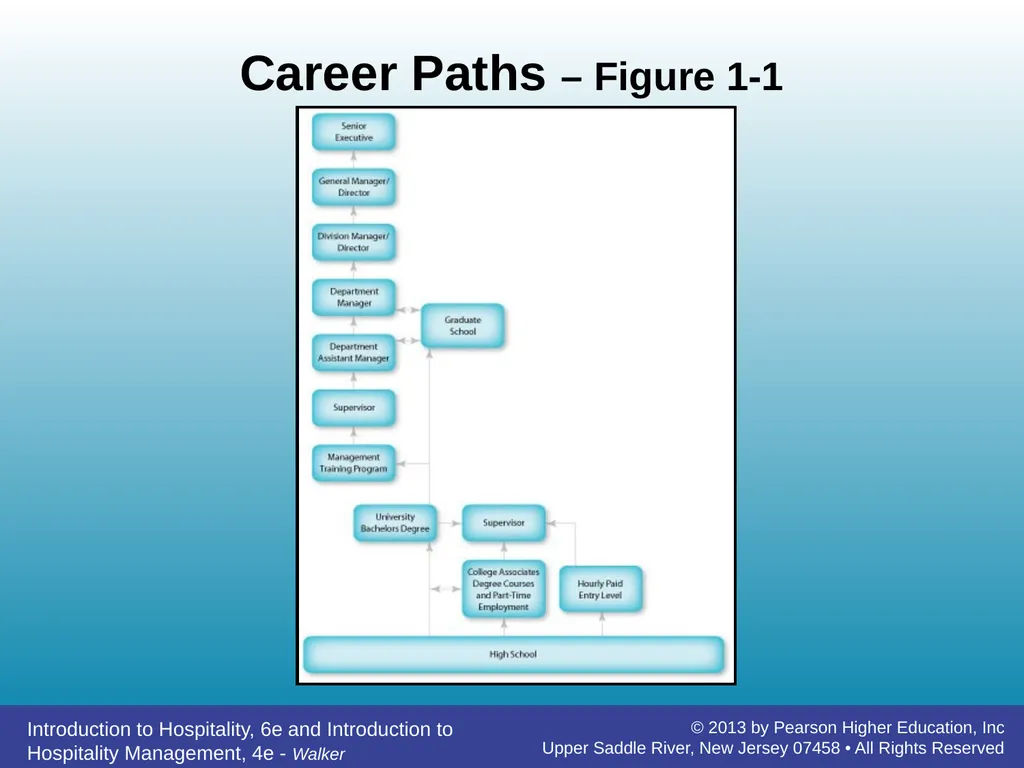
Career Paths – Figure 1-1<br>
13
Welcome to You, the Future
Hospitality Industry leaders Works to create memories
Everyday guests rely on us for service
Passion is in the service element
People with a service spirit are happy to do something extra to make the guest’s experience memorable
The WOW factor!<br>
Everyday guests rely on us for service
Passion is in the service element
People with a service spirit are happy to do something extra to make the guest’s experience memorable
The WOW factor!<br>
14
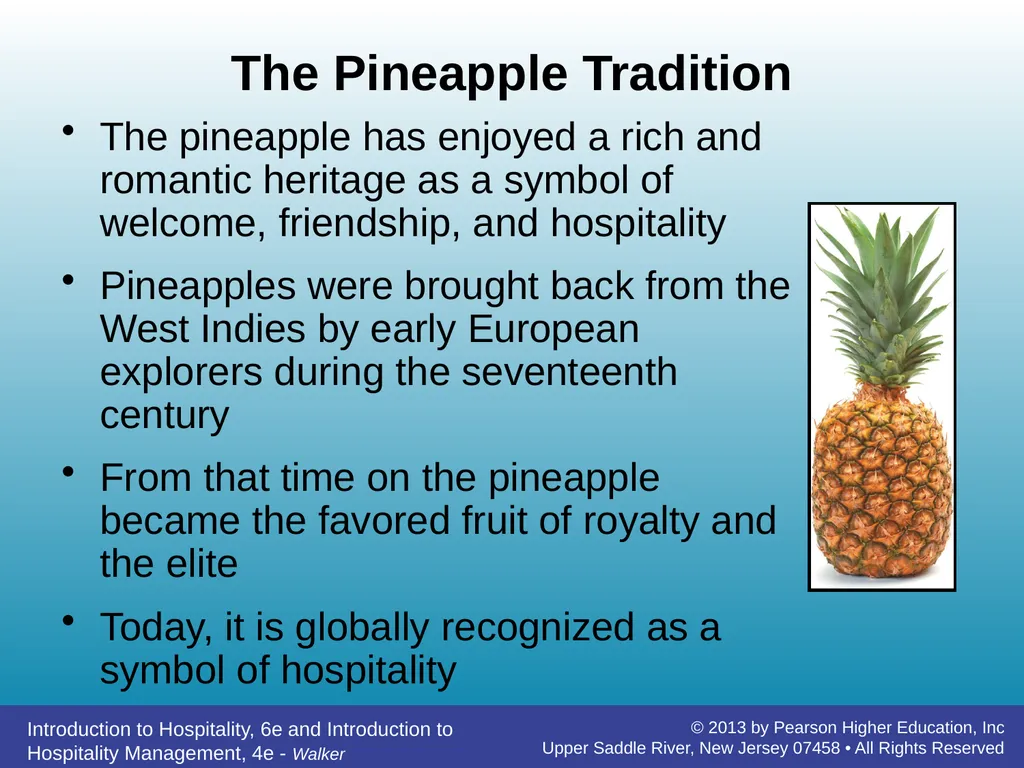
The Pineapple Tradition The pineapple has enjoyed a rich and romantic heritage as a symbol of welcome, friendship, and hospitality
Pineapples were brought back from the West Indies by early European explorers during the seventeenth century
From that time on the pineapple became the favored fruit of royalty and the elite
Today, it is globally recognized as a symbol of hospitality<br>
Pineapples were brought back from the West Indies by early European explorers during the seventeenth century
From that time on the pineapple became the favored fruit of royalty and the elite
Today, it is globally recognized as a symbol of hospitality<br>
15
The Interrelated Nature of
Hospitality and Tourism The hospitality and tourism industry is the largest and fastest-growing industry in the world
Under the umbrella of travel and tourism, countless professions are necessary to meet the needs and wants of people away from home
All of these scopes have an effect on each other<br>
Under the umbrella of travel and tourism, countless professions are necessary to meet the needs and wants of people away from home
All of these scopes have an effect on each other<br>
16
The Interrelated Nature of
Hospitality and Tourism Hospitality employees have the ability to affect the human experience by creating powerful impressions—even brief moments of truth—that may last a lifetime
A moment of truth is an expression used to describe a guest and an associate meeting—as when a guest walks into a restaurant<br>
A moment of truth is an expression used to describe a guest and an associate meeting—as when a guest walks into a restaurant<br>
17
The Interrelated Nature of
Hospitality and Tourism In managed services, foodservices are provided for airlines, military facilities, schools, health care operations, business and industry
These foodservice operations have the dual challenge of meeting the needs and wants of both the guests and the client (i.e., the institution itself)<br>
These foodservice operations have the dual challenge of meeting the needs and wants of both the guests and the client (i.e., the institution itself)<br>
18
The Interrelated Nature of
Hospitality and Tourism The hotel business provides career opportunities to associates who help make reservations, greet, assist, and serve guests
The restaurant business fulfills guests’ diverse needs and wants
Eating is a biological need that restaurants accommodate
Restaurants also fulfill other human desires (i.e., the need for socialization and to be entertained)<br>
The restaurant business fulfills guests’ diverse needs and wants
Eating is a biological need that restaurants accommodate
Restaurants also fulfill other human desires (i.e., the need for socialization and to be entertained)<br>
19
Characteristics of the Hospitality Industry Our services are mostly intangible—the guest cannot “test-drive” a night’s stay or “taste the steak” before dining
The products are for use, not possession
There is inseparability of production and consumption of the service product, due to each guest’s unique demands
There is also the perishability of our product
For example, we have 1,400 rooms in inventory, but we sell only 1,200 rooms. What do we do with the 200 unsold rooms? Nothing—we lose 200 room nights and the revenue.<br>
The products are for use, not possession
There is inseparability of production and consumption of the service product, due to each guest’s unique demands
There is also the perishability of our product
For example, we have 1,400 rooms in inventory, but we sell only 1,200 rooms. What do we do with the 200 unsold rooms? Nothing—we lose 200 room nights and the revenue.<br>
20
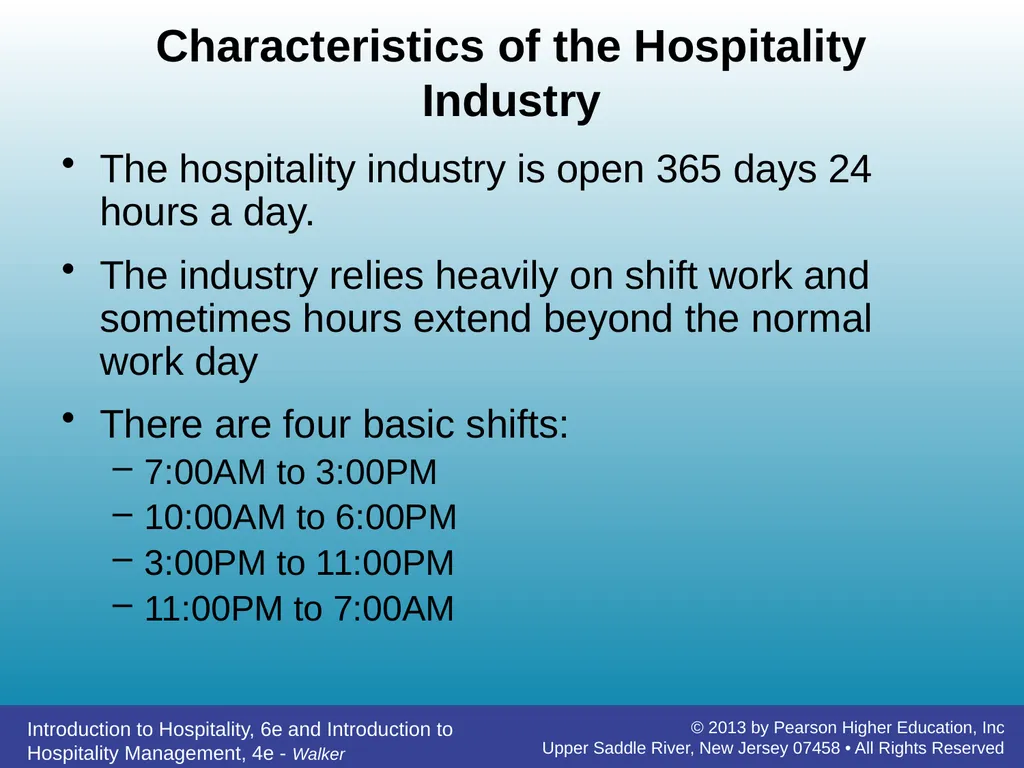
Characteristics of the Hospitality Industry The hospitality industry is open 365 days 24 hours a day.
The industry relies heavily on shift work and sometimes hours extend beyond the normal work day
There are four basic shifts:
7:00AM to 3:00PM
10:00AM to 6:00PM
3:00PM to 11:00PM
11:00PM to 7:00AM<br>
The industry relies heavily on shift work and sometimes hours extend beyond the normal work day
There are four basic shifts:
7:00AM to 3:00PM
10:00AM to 6:00PM
3:00PM to 11:00PM
11:00PM to 7:00AM<br>
21
Hospitality Industry Philosophy Changed from one manager planning, organizing, implementing, and measuring to managers counseling associates, giving them resources, and helping them think for themselves
A participative management style which results in associate empowerment, increased productivity, and guest and employee satisfaction<br>
A participative management style which results in associate empowerment, increased productivity, and guest and employee satisfaction<br>
22
Hospitality Industry Philosophy Corporate philosophy embraces the values of the organization—including ethics, morals, fairness, and equality
Shifts emphasis from the production aspect of business to the focus on guest-related services<br>
Shifts emphasis from the production aspect of business to the focus on guest-related services<br>
23
Sustainable Hospitality The concept of sustainability involves “development that meets the needs of the present without compromising the ability of future generations to meet their own needs.”
Sustainability is the ability to achieve continuing economic prosperity while protecting the natural resources of the planet and providing a high quality of life for its people and future generations.<br>
Sustainability is the ability to achieve continuing economic prosperity while protecting the natural resources of the planet and providing a high quality of life for its people and future generations.<br>
24
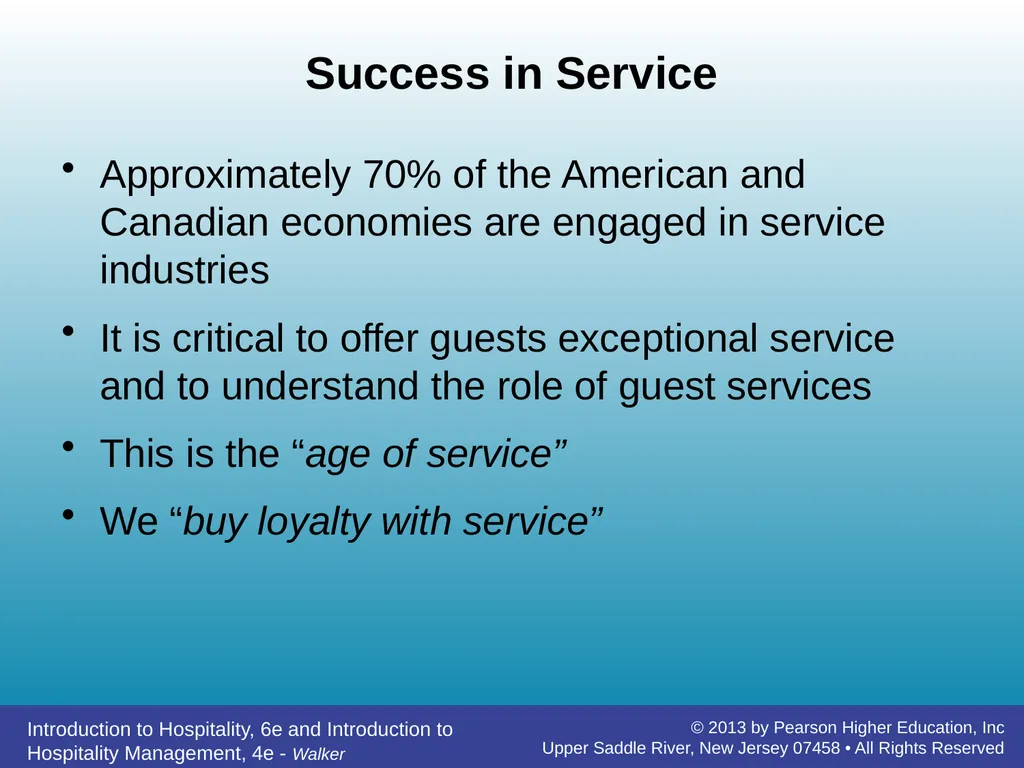
Success in Service Approximately 70% of the American and Canadian economies are engaged in service industries
It is critical to offer guests exceptional service and to understand the role of guest services
This is the “age of service”
We “buy loyalty with service”<br>
It is critical to offer guests exceptional service and to understand the role of guest services
This is the “age of service”
We “buy loyalty with service”<br>
25
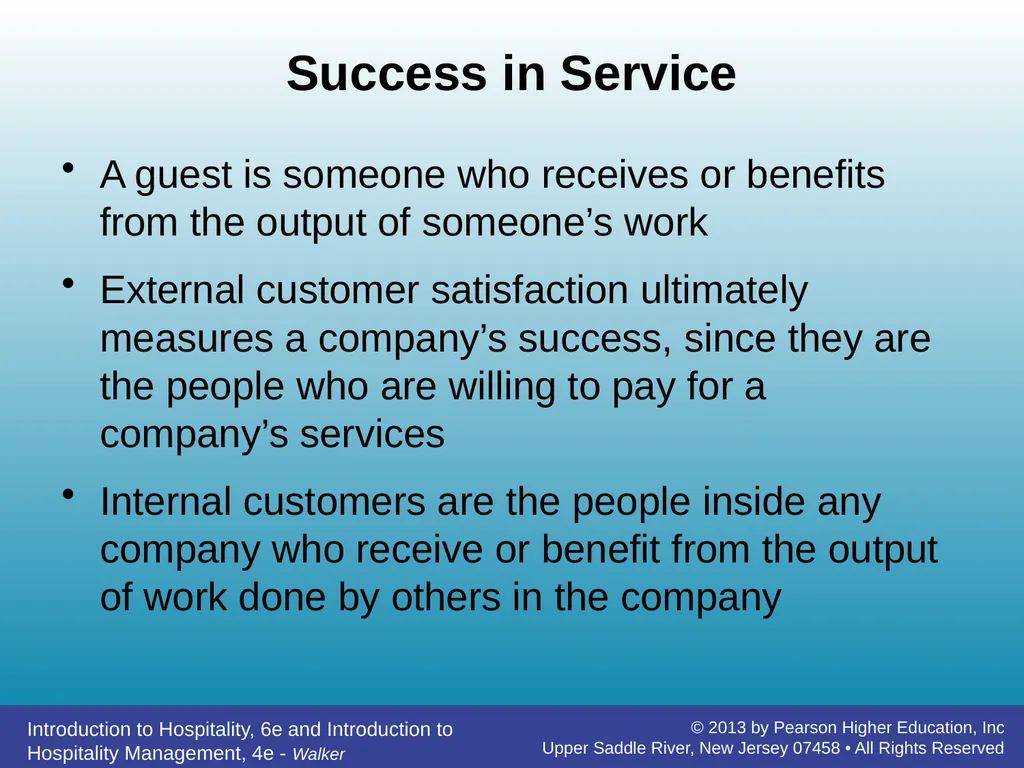
Success in Service A guest is someone who receives or benefits from the output of someone’s work
External customer satisfaction ultimately measures a company’s success, since they are the people who are willing to pay for a company’s services
Internal customers are the people inside any company who receive or benefit from the output of work done by others in the company<br>
External customer satisfaction ultimately measures a company’s success, since they are the people who are willing to pay for a company’s services
Internal customers are the people inside any company who receive or benefit from the output of work done by others in the company<br>
26
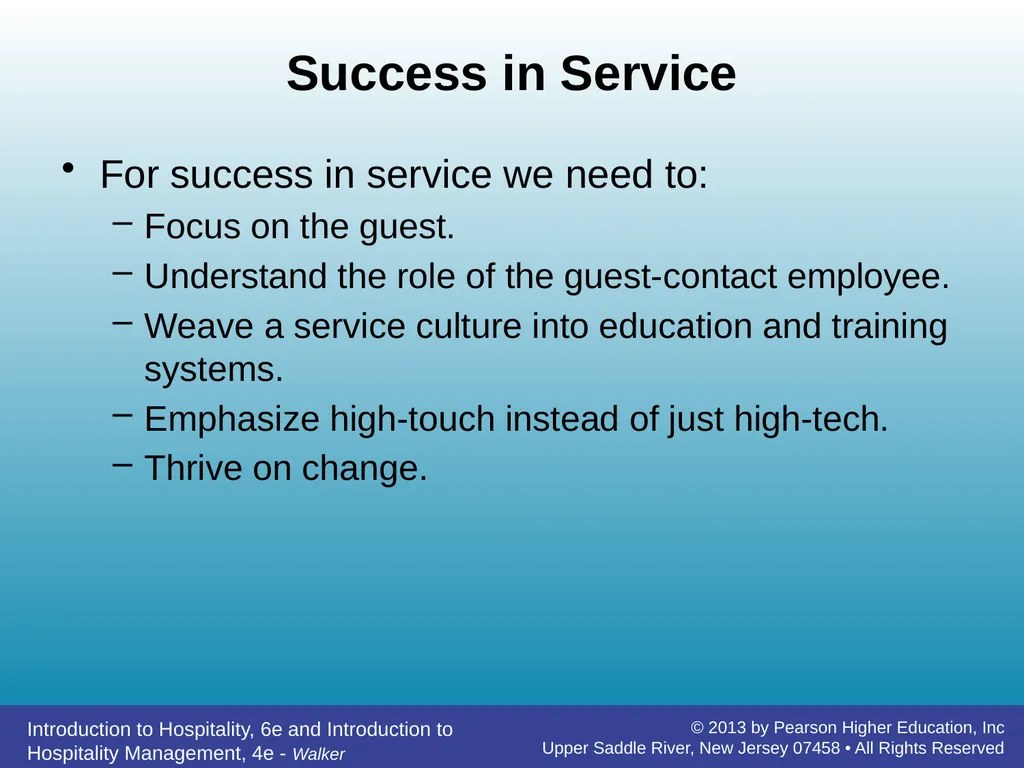
Success in Service For success in service we need to:
Focus on the guest.
Understand the role of the guest-contact employee.
Weave a service culture into education and training systems.
Emphasize high-touch instead of just high-tech.
Thrive on change.<br>
Focus on the guest.
Understand the role of the guest-contact employee.
Weave a service culture into education and training systems.
Emphasize high-touch instead of just high-tech.
Thrive on change.<br>
27
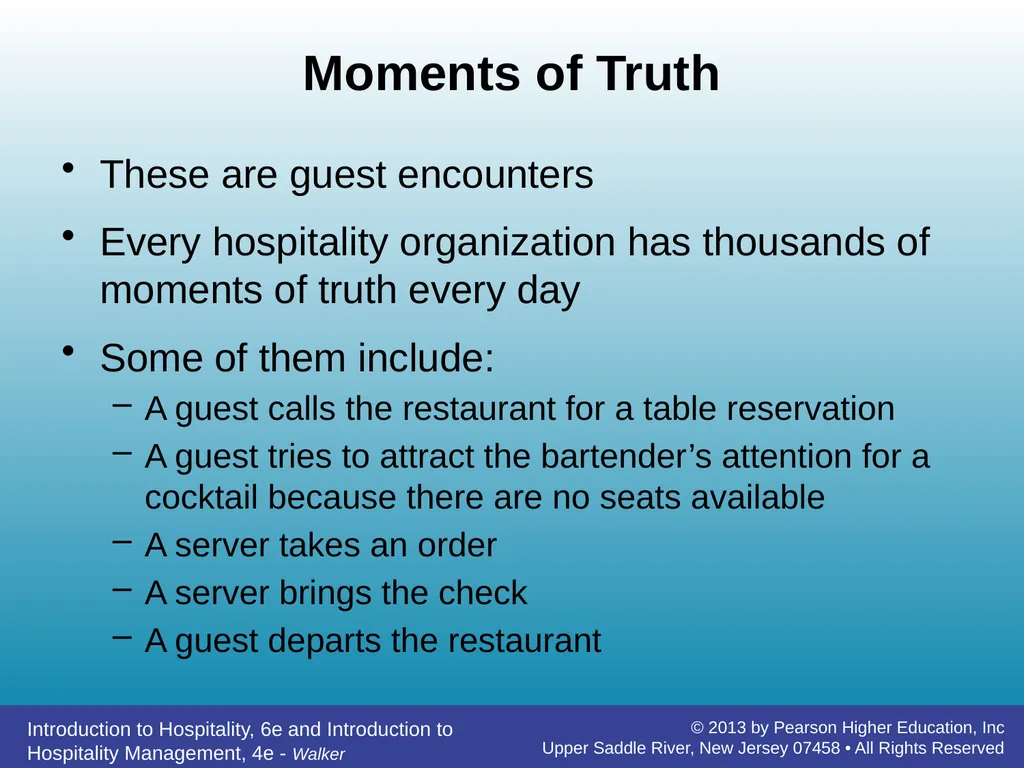
Moments of Truth These are guest encounters
Every hospitality organization has thousands of moments of truth every day
Some of them include:
A guest calls the restaurant for a table reservation
A guest tries to attract the bartender’s attention for a cocktail because there are no seats available
A server takes an order
A server brings the check
A guest departs the restaurant<br>
Every hospitality organization has thousands of moments of truth every day
Some of them include:
A guest calls the restaurant for a table reservation
A guest tries to attract the bartender’s attention for a cocktail because there are no seats available
A server takes an order
A server brings the check
A guest departs the restaurant<br>
28
The Focus on Service We suffer from an overreliance on technology
Effective leaders make things happen because they have developed the knowledge, skills, and attitude to get the most out of their staff.
Leadership involves managing change
Our guests are constantly changing<br>
Effective leaders make things happen because they have developed the knowledge, skills, and attitude to get the most out of their staff.
Leadership involves managing change
Our guests are constantly changing<br>
29
Service and Total Quality Management Total quality management (TQM) is a continuous process that works best when managers are also good leaders
TQM is a participatory process that empowers all levels of employees to work in groups to establish guest service expectations and determine the best way to meet or exceed those expectations
The difference between TQM and quality control (QC) is that QC focuses on error detection, whereas TQM focuses on error prevention<br>
TQM is a participatory process that empowers all levels of employees to work in groups to establish guest service expectations and determine the best way to meet or exceed those expectations
The difference between TQM and quality control (QC) is that QC focuses on error detection, whereas TQM focuses on error prevention<br>
30
The Disney Approach to Guest Service The Disney mission statement is simple: “We create happiness.”
The key elements of Disneyland guest services include:
Hiring, developing, and retaining the right people
Understanding their product and the meaning of the brand
Communicating the traditions and standards of service to all cast members
Training leaders to be service coaches
Measuring guest satisfaction
Recognizing and rewarding performance<br>
The key elements of Disneyland guest services include:
Hiring, developing, and retaining the right people
Understanding their product and the meaning of the brand
Communicating the traditions and standards of service to all cast members
Training leaders to be service coaches
Measuring guest satisfaction
Recognizing and rewarding performance<br>
31
Disney Service Model It begins with a smile
Make eye contact and use body language
Respect and welcome all guests
Value the magic
Initiate guest contact
Creative service solutions<br>
Make eye contact and use body language
Respect and welcome all guests
Value the magic
Initiate guest contact
Creative service solutions<br>
32
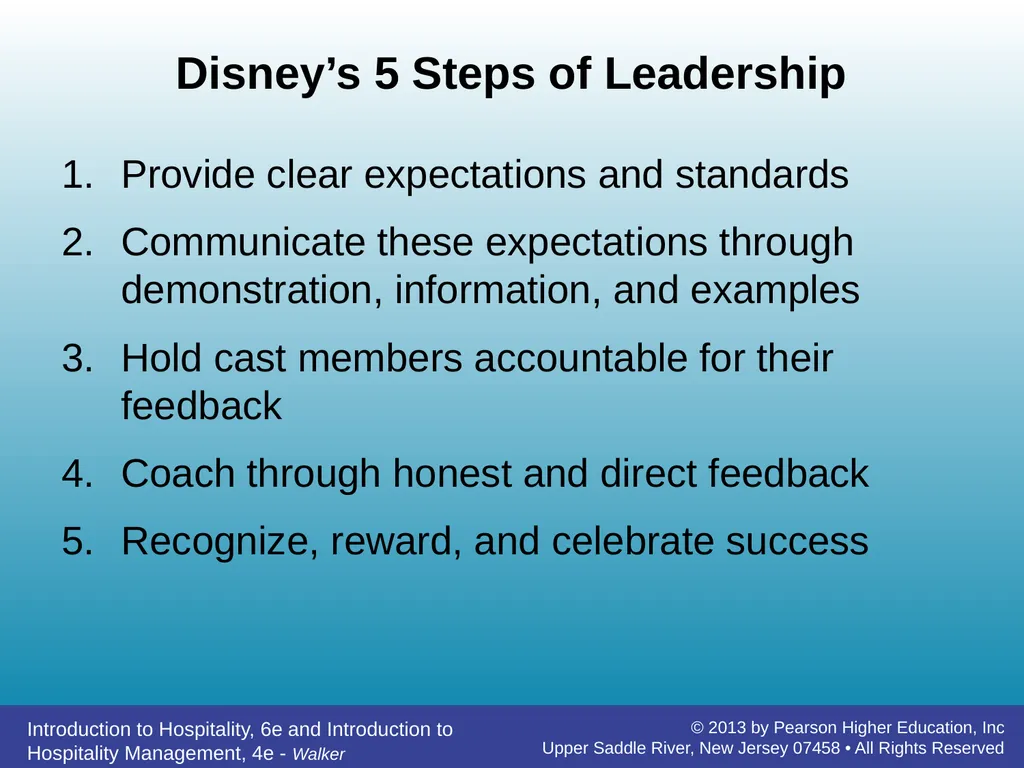
Disney’s 5 Steps of Leadership Provide clear expectations and standards
Communicate these expectations through demonstration, information, and examples
Hold cast members accountable for their feedback
Coach through honest and direct feedback
Recognize, reward, and celebrate success<br>
Communicate these expectations through demonstration, information, and examples
Hold cast members accountable for their feedback
Coach through honest and direct feedback
Recognize, reward, and celebrate success<br>
33
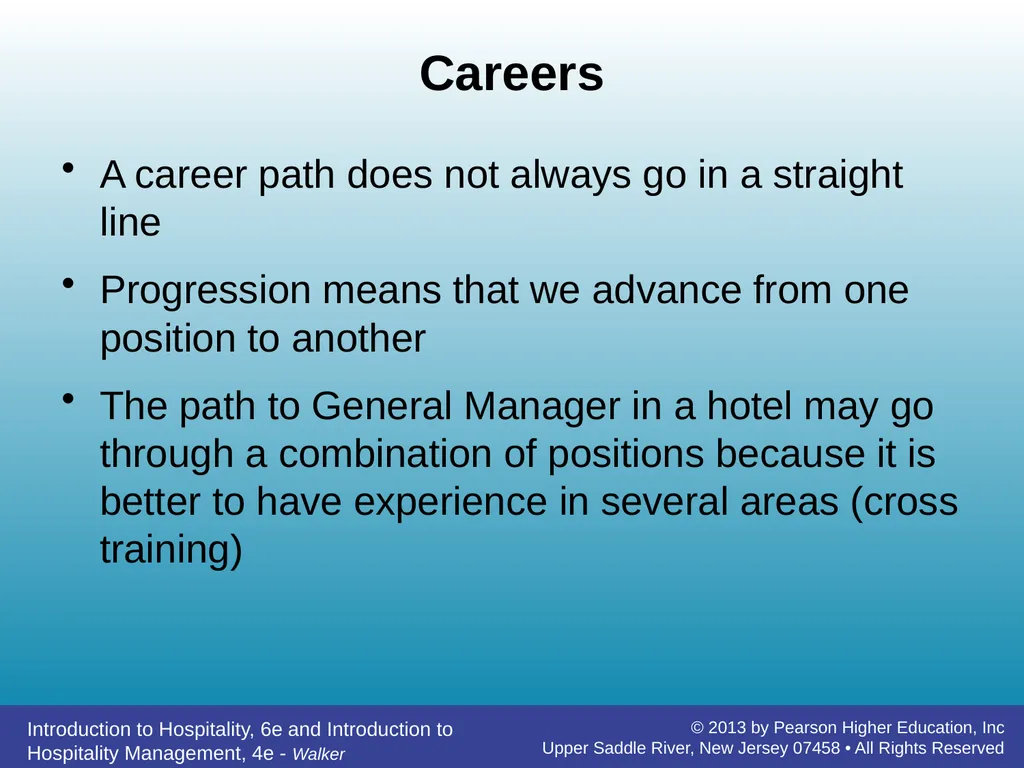
Careers A career path does not always go in a straight line
Progression means that we advance from one position to another
The path to General Manager in a hotel may go through a combination of positions because it is better to have experience in several areas (cross training)<br>
Progression means that we advance from one position to another
The path to General Manager in a hotel may go through a combination of positions because it is better to have experience in several areas (cross training)<br>
34
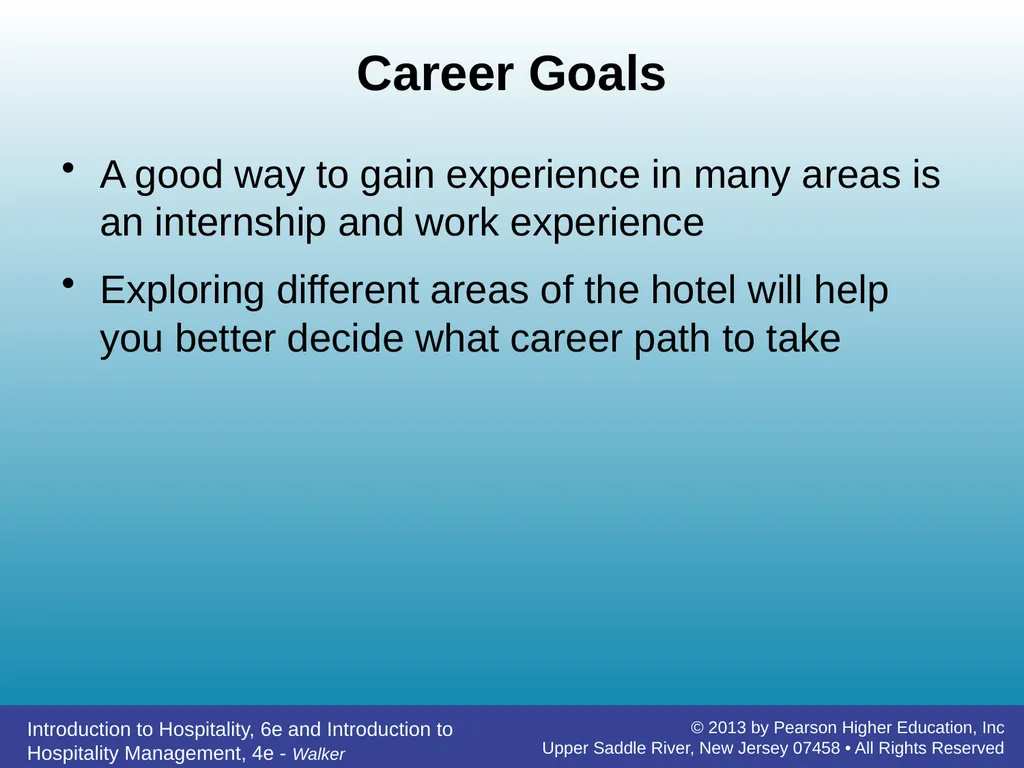
Career Goals A good way to gain experience in many areas is an internship and work experience
Exploring different areas of the hotel will help you better decide what career path to take<br>
Exploring different areas of the hotel will help you better decide what career path to take<br>
35
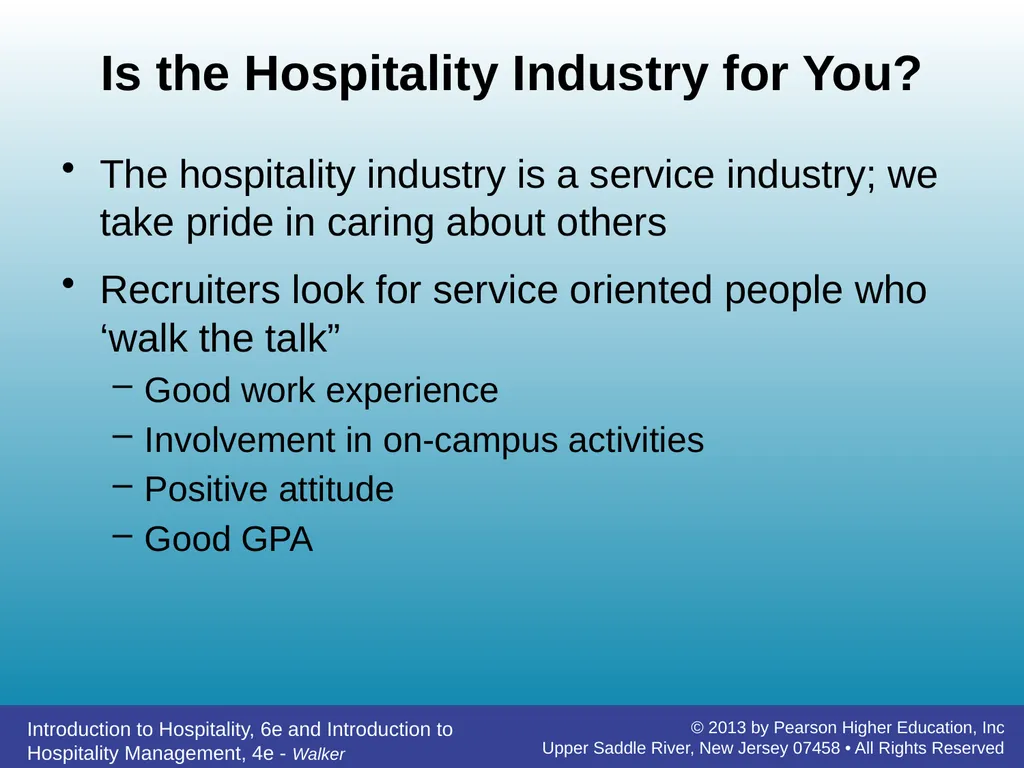
Is the Hospitality Industry for You? The hospitality industry is a service industry; we take pride in caring about others
Recruiters look for service oriented people who ‘walk the talk”
Good work experience
Involvement in on-campus activities
Positive attitude
Good GPA<br>
Recruiters look for service oriented people who ‘walk the talk”
Good work experience
Involvement in on-campus activities
Positive attitude
Good GPA<br>
36
Self-Assessment
and Personal Philosophy The purpose of a self-assessment is to measure our current strengths and weaknesses and determine what we need to improve in order to reach our goals
Self-assessment helps establish where we are now and shows links to where we want to go
Make a list of areas to make improvements<br>
Self-assessment helps establish where we are now and shows links to where we want to go
Make a list of areas to make improvements<br>
37
Now is the Time to Get Involved Very important to be involved in on-campus activities
Professional hospitality and tourism organizations
Participate in organizational events
Participating shows your commitment to the industry<br>
Professional hospitality and tourism organizations
Participate in organizational events
Participating shows your commitment to the industry<br>
38
Professional Organizations CHRIE – the global advocate of hospitality and tourism education
NRA – National Restaurant Association
AH&LA – American Hotel & Lodging Assn.
ISES – International Special Events Society
PCMA – Professional Convention Management Assn.
NSMH – National Society of Minorities in Hospitality<br>
NRA – National Restaurant Association
AH&LA – American Hotel & Lodging Assn.
ISES – International Special Events Society
PCMA – Professional Convention Management Assn.
NSMH – National Society of Minorities in Hospitality<br>
39
Trends Globalization
Safety and security
Diversity
Service
Technology
Legal issues
Changing demographics
Price value
Social Media
Sanitation<br>
Safety and security
Diversity
Service
Technology
Legal issues
Changing demographics
Price value
Social Media
Sanitation<br>
40
The End<br>