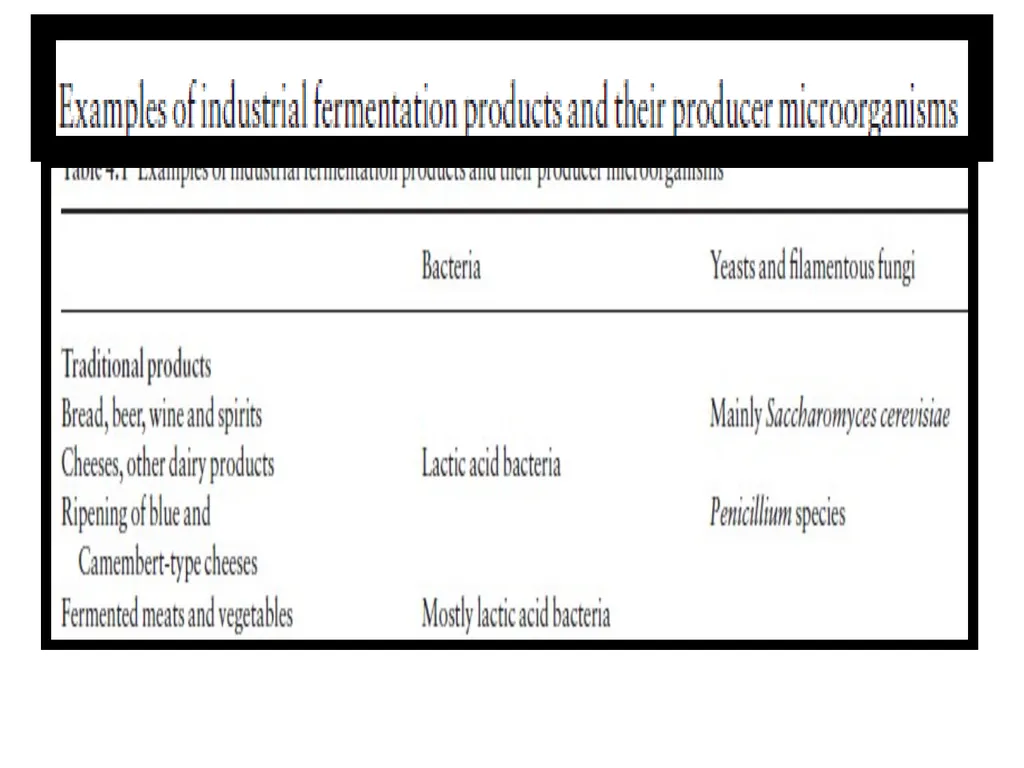
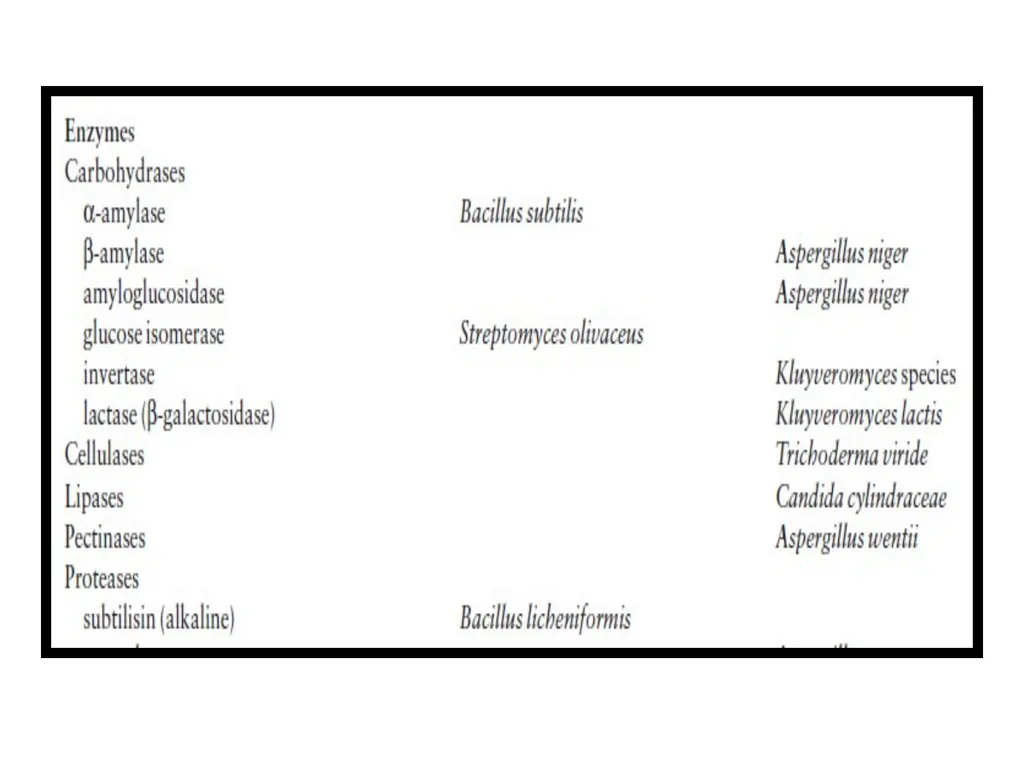
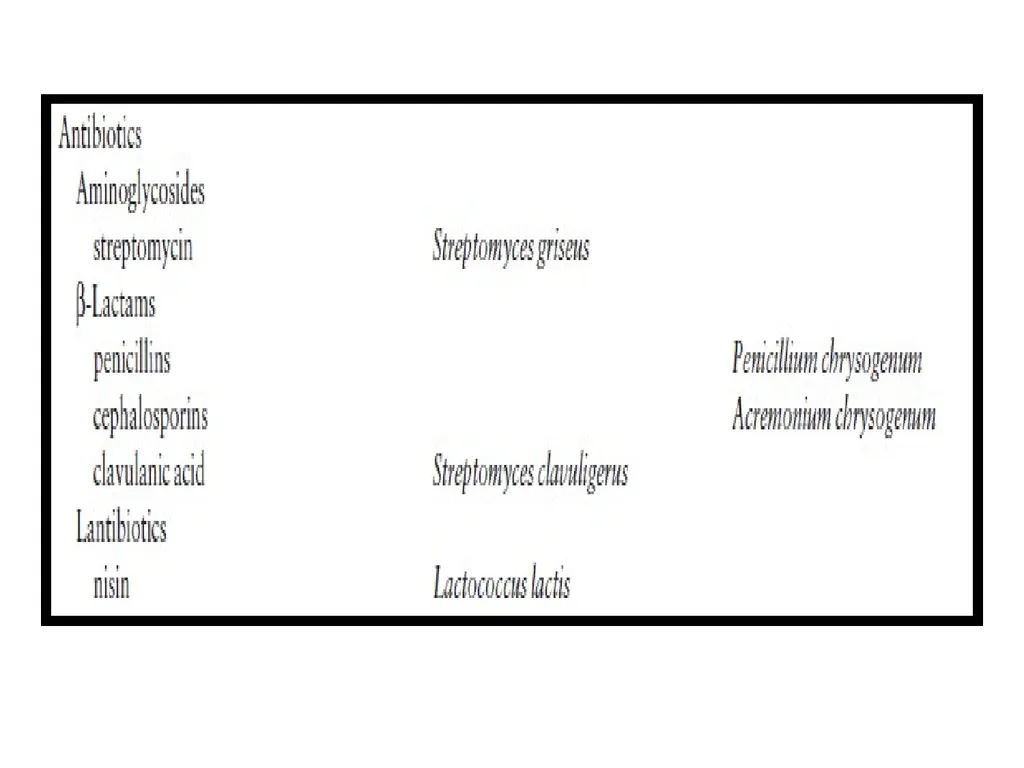
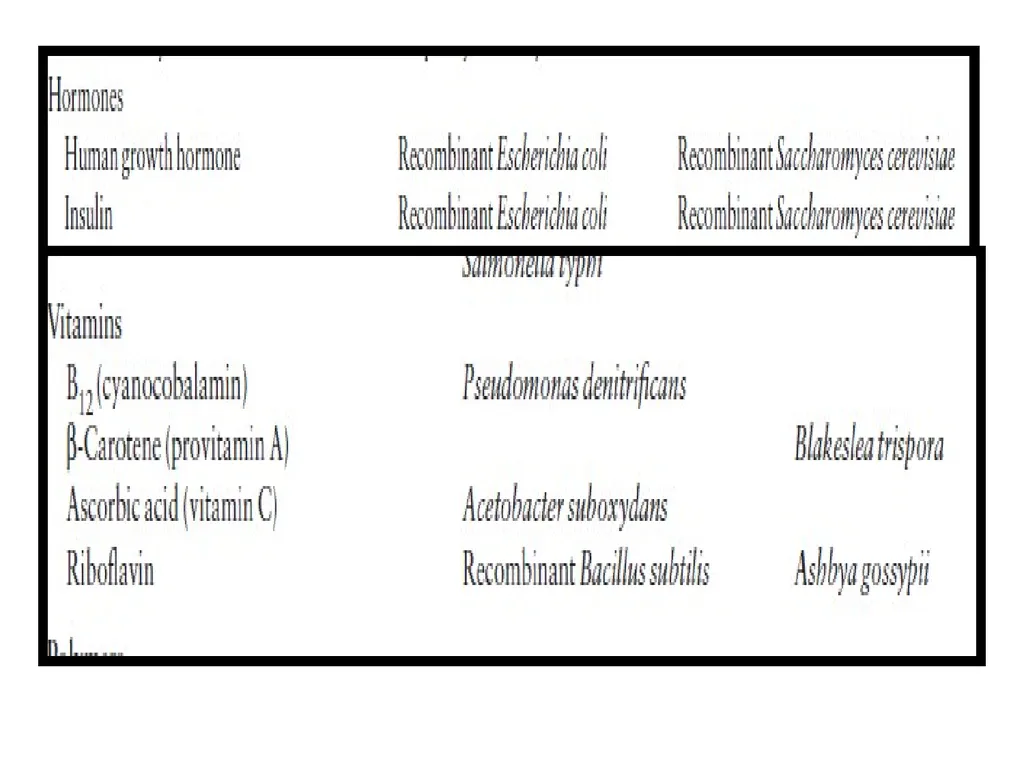
Introduction: Industrial microbiology may be defined as the study of the large-scale and profitmotivated production of microorganisms or their products for direct use, or as inputs in the manufacture of other goods. Thus yeasts may be
"Introduction: Industrial microbiology may be" is the property of its rightful owner. Permission is granted to
download and print the materials on this website for personal, non-commercial use only, and to display it
on your personal computer provided you do not modify the materials and that you retain all copyright
notices contained in the materials. By downloading content from our website, you accept the terms of this
agreement.
Presentation Transcript
01
Introduction: Industrial microbiology may be defined as the study of the large-scale and profitmotivated production of microorganisms or their products for direct use, or as inputs in the manufacture of other goods. Thus yeasts may be produced for direct consumption as food for humans or as animal feed, or for use in bread-making; their product, ethanol, may also be consumed in the form of alcoholic beverages, or used in the manufacture of perfumes, pharmaceuticals, etc. Industrial microbiology is clearly a branch of biotechnology and includes the traditional and nucleic acid aspects.<br>
02
CHARACTERISTICS OF INDUSTRIAL MICROBIOLOGY The discipline of microbiology is often divided into sub-disciplines such as medical microbiology, environmental microbiology, food microbiology and industrial microbiology. The boundaries between these sub-divisions are often blurred and are made only for convenience.<br>
03
THE USE OF THE WORD ‘FERMENTATION’ IN INDUSTRIAL MICROBIOLOGY The word fermentation comes from the Latin verb fevere, which means to boil.
It originated from the fact that early at the start of wine fermentation gas bubbles are
released continuously to the surface giving the impression of boiling.
It has three different meanings which might be confusing.<br>
04
The first meaning relates to microbial physiology. In strict physiological terms, fermentation is defined in microbiology as the type of metabolism of a carbon source in which energy is generated by substrate level phosphorylation and in which organic molecules function as the final electron acceptor (or as acceptors of the reducing equivalents) generated during the break-down of carbon-containing compounds or catabolism.
As is well-known, when the final acceptor is an inorganic compound the process is called respiration. Respiration is referred to as aerobic if the final acceptor is
oxygen and anaerobic when it is some other inorganic compound outside oxygen e.g sulphate or nitrate.<br>
05
The second usage of the word is in industrial microbiology, where the term ‘fermentation’ is any process in which micro-organisms are grown on a large scale, even if the final electron acceptor is not an organic compound (i.e. even if the growth is carried out under aerobic conditions). Thus, the production of penicillin, and the growth of yeast cells which are both highly aerobic, and the production of ethanol or alcoholic beverages which are fermentations in the physiological sense, are all referred to as fermentations.<br>
06
The third usage concerns food. A fermented food is one, the processing of which microorganisms play a major part. Microorganisms determine the nature of the food through producing the flavor components as well deciding the general character of the food, but microorganisms form only a small portion of the finished product by weight. Foods such as cheese, bread, and yoghurt are fermented foods.<br>
07
Plants and animals as well as their cell cultures are also used in biotechnology.
Microorganisms have the following advantages over plants or animals as inputs in biotechnology:
i. Microorganisms grow rapidly in comparison with plants and animals. The generation time (the time for an organism to mature and reproduce) is about
12 years in man, about 24 months in cattle, 18 months in pigs, 6 months in chicken, but only 15 minutes in the bacterium, E coli. The consequence is that
biotechnological products which can be obtained from microorganisms in a matter of days may take many months in animals or plants.<br>
08
ii. The space requirement for growth microorganisms is small. A 100,000 litre fermentor can be housed in about 100 square yards of space, whereas the plants or
animals needed to generate the equivalent of products in the 100,000 fermentor would require many acres of land.
iii. Microorganisms are not subject to the problems of the vicissitudes of weather which may affect agricultural production especially among plants.
iv. Microorganisms are not affected by diseases of plants and animals, although they do have their peculiar scourges in the form phages and contaminants, but there are procedure to contain them.<br>
09
CHARACTERISTICS IMPORTANT IN MICROBES USED IN INDUSTRIAL MICROBIOLOGY AND BIOTECHNOLGY Microorganisms which are used for industrial production must meet certain requirements including those to be discussed below:
i. The organism must be able to grow in a simple medium and should preferably not require growth factors (i.e. pre-formed vitamins, nucleotides, and acids) It is obvious that extraneous additional growth factors may increase the cost of the fermentation and hence that of the finished product.
ii. The organism should be able to grow vigorously and rapidly in the medium in use.
iii. Not only should the organism grow rapidly, but it should also produce the desired materials, whether they be cells or metabolic products, in as short a time as possible.<br>
10
iv. Its end products should not include toxic and other undesirable materials, especially if these end products are for internal consumption.
v. The organism should have a reasonable genetic, and hence physiological stability.
An organism which mutates easily is an expensive risk. It could produce undesired products if a mutation occurred unobserved. The result could be reduced yield of the expected material, production of an entirely different product or indeed a toxic material.
vi. The organism should lend itself to a suitable method of product harvest at the end of the fermentation. If for example a yeast and a bacterium were equally suitable for manufacturing a certain product, it would be better to use the yeast if the most appropriate recovery method was centrifugation.<br>
11
vii. Wherever possible, organisms which have physiological requirements which protect them against competition from contaminants should be used. An organism with optimum productivity at high temperatures, low pH values or which is able to elaborate agents inhibitory to competitors has a decided advantage over others. Thus a thermophilic efficient producer would be preferred to a mesophilic one.
viii. The organism should be reasonably resistant to predators such as bacteriophages.
ix. Where practicable the organism should not be too highly demanding of oxygen as aeration (through greater power demand for agitation of the fermentor impellers, forced air injection etc) contributes about 20% of the cost of the finished product.
x. Lastly, the organism should be fairly easily amenable to genetic manipulation to enable the establishment of strains with more acceptable properties.<br>