04
Immunological disorders Immunological Disorders
1. allergens - antigens that cause allergic reactions
C. Most allergic reactions fall into one of four major types:
1. Type I: Immediate IgE-mediated
2. Type lI: Cytotoxic
3. Type III: Immune complex-mediated
4. Type IV: Delayed cell-mediated<br>
05
Allergy ‘ Allergy ‘ is a broad term used generally to encompass the hypersensitive state acquired by exposure to a specific material ,and the altered capacity of the living organisms to react upon re-exposure to it .<br>
06
Allergy There are two general types of allergic reactions ;
One type of reaction is the so called IMMEDIATE REACTION .
It is associated with antibodies circulating in the ser of the allergic person and includes anaphylaxis,hay fever and asthma ,serum sickness ,angioedema .
The second category of reaction or DELAYED REACTION,
It is generally not associated with circulating antibodies since the causative agents are not strictly antigens they attain antigenic properties by combining with tissues of the individual<br>
07
Recurrent aphthous stomatitis RECURRENT APHTHOUS
STOMATITIS
(RAS/ aphthae/canker sores)
• It is a common condition which is characterized by multiple recurrent small, round or ovoid ulcers with circumscribed margin,
erythematous halos and yellow or grey floors, appearing first in childhood or adolescence.<br>
08
Recurrent aphthous stomatitis Clinical features
• RAS may affect 5-60yrs.
• Female predominance.
• Seen more predominantly in children.
• RAS consist of recurrent bouts of one or several rounded, shallow, painful oral ulcers at intervals of a few days to few months.<br>
09
Recurrent aphthous stomatitis RAS shows 3 main presentations-
Minor (MiRAS), Major (MaRAS),
Herpetiform ulcers (HU)<br>
10
Minor �Recurrent aphthous stomatitis Minor recurrent aphthous stomatitis
(MiRAS)
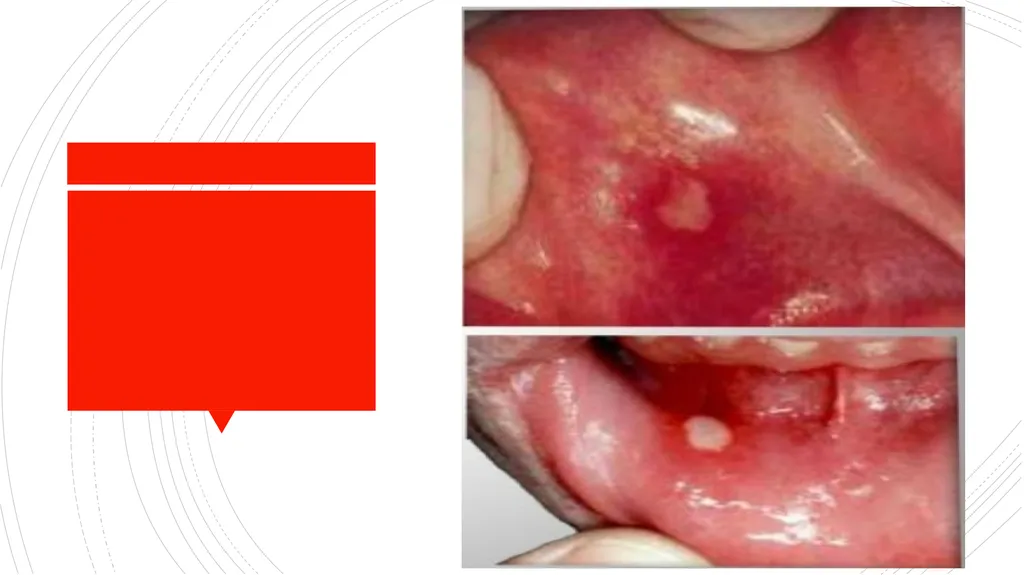
• Most common affecting about 80% of RAS patients,
• Characterized by:
Round or oval shallow ulcers, 1-5 in no.
• Common sites:
Nonkeratinized mucosa, labial and buccal mucosa and floor of the mouth<br>
11
Minor recurrent aphthous stomatitis Shortest duration, Heal within 10-14 days without scarring.
• Size: < 5 mm, with a grey-white pseudomembrane enveloped by a thin erythematous halo.
• Burning, itching, or stinging, development of erythematous macule
• Most common form of childhood RAS<br>
12
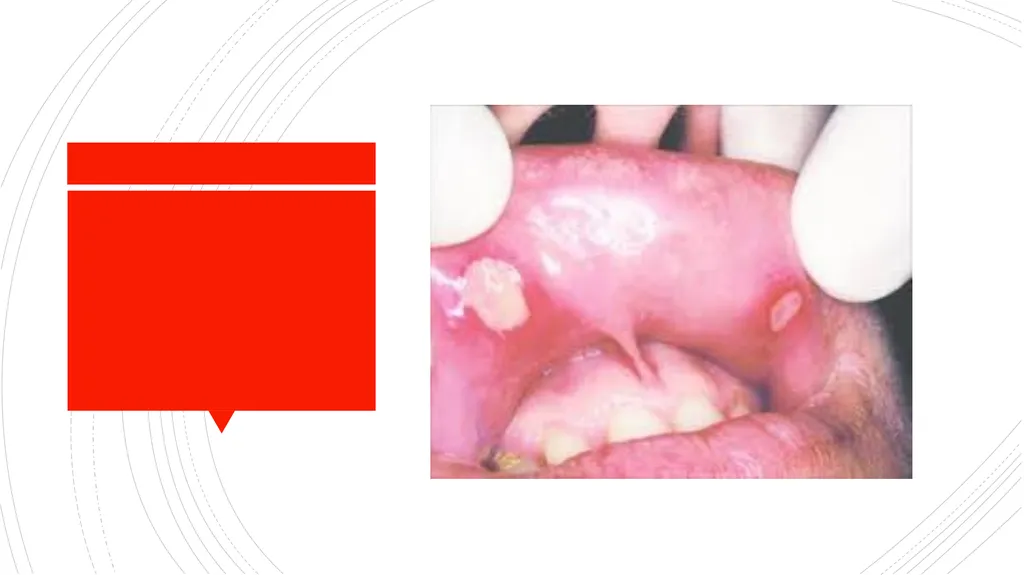
Major recurrent aphthous stomatitis Major recurrent aphthous stomatitis (MaRAS)
• Rare, severe form of RAS, also known as periadenitis mucosa necrotica recurrens.
Lesions are oval.
Size: 1 cm -3cm
Sites: lips, soft palate, and fauces
1-10 in no.<br>
13
Major recurrent aphthous stomatitis Persist for up to 6 weeks.
• Heal with scarring.
• Onset: after puberty and is chronic, persisting for up to 20 or more years.
• Most frequent
recurrences
• Coalesce into larger irregular ulcerations<br>
14
Herpitiform ulcers Herpetiform ulcers (HU)
• Least common variety of RAS.
• Characterized by:
Multiple recurrent crops of small, painful ulcers.
• Sites: May be distributed throughout the oral cavity.
• No.: 100
• Size: 2-3 mm in diameter.
• Late onset<br>
15
Recurrent aphthous stomatitis Etiology
• Genetic - (Human Leukocyte Antigen)
(present on cell membrane)
• HLA- DR2, HLA-B12
• Local factors:
- Trauma (self inflicted bites ,oral surgical procedure etc..)
• Systemic factors:
- Drugs such as NSAIDS
- Stress<br>
16
Recurrent aphthous stomatitis - Hematinic (iron, folic acid, or vitamin
B12) deficiencies
- Zinc deficiency
-Bechet’s syndrome
- Celiac disease
- Cyclic neutropenia
- Some immunodeficiencies, HIV
- MAGIC syndrome (mouth and genital ulcers with inflamed cartilage)
- PAPA syndrome (periodic fever, aphthous stomatitis, pharyngitis, cervical adenitis)<br>
17
Microbial aspect of RAS Microbial Aspects of RAS
(Streptococcus )
• Recently, cross-reactivity between a streptococcal heat shock protein (hsp) and the oral mucosa has been demonstrated and significantly elevated levels of serum antibodies to hsp are also observed in RAS. (Lehner et al., 1991).
• Association of RAS with adenoviruses & herpesviruses 1-6 is also seen.
• IgM and IgG antibodies to varicella zoster virus
(VZV) and cytomegalovirus (CMV) may be elevated in some RAS patients, suggesting association between them and RAS.<br>
18
Microscopic changes in RAS microscopic changes in RAS:-
• Pre ulcerative stage:
lymphocytes infiltrate the epithelium and
edema develops.
• Ulcerative stage:
Increase of pain.
*Development of localized papular swelling (because of keratinocyte vacuolization) surrounded by a reactive erythematous halo representing localized vasculitis with a dense mononuclear cell infiltrate<br>
19
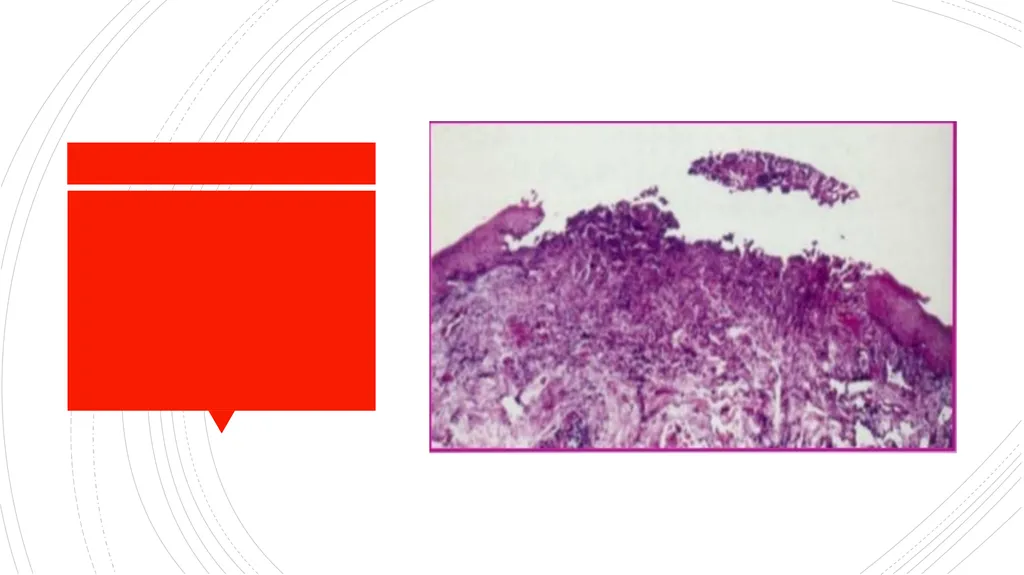
Histopathological features Histopathologic Features
• Central zone of ulceration covered by fibrinopurulent membrane
• Increased vascularity, mixed inflammatory cellular infiltrate
• Numerous mononuclear cells in basilar one third
• Band of lymphocytes intermixed with histiocytes in superficial connective tissue and surrounding deeper blood vessels<br>
20
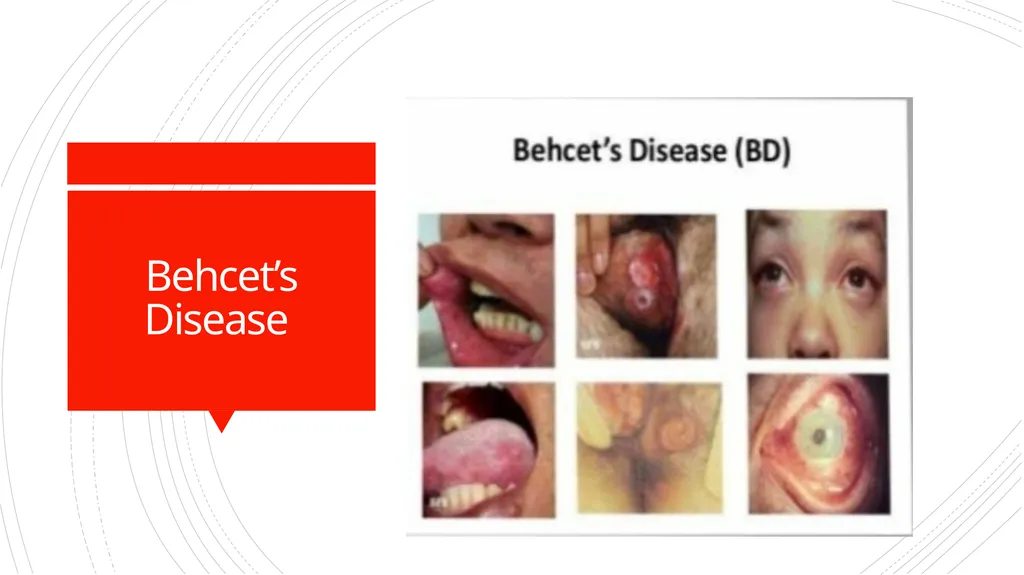
Behcet’s Disease Behcet’s Disease (BD)
• Also called Behçet’s syndrome, Morbus Behçet, or
Silk Road disease, is a rare immune-mediated systemic vasculitis.
• Behçet’s disease (BD) was named in 1937 after the Turkish dermatologist Hulusi Behçet, who first described the triple-symptom complex of
-recurrent oral aphthous ulcers, genital ulcers, and
-uveitis (eye )
Behcet’s Disease (BD)<br>
22
Behcet’s syndrome Behçet’s syndrome is a multisystem disorder presenting with-
• • Recurrent oral and
• genital ulcerations and
• • Ocular involvement
• • Diagnosis is clinical, based on internationally agreed diagnostic criteria<br>
23
Clinical features Clinical Features
• Males and females affected equally
• • Males often have more severe diseas
• • Blacks are rarely affected
• Diagnostic Criteria of Behçet’s Disease
• • Recurrent oral ulceration plus two of the following:-
• Recurrent genital ulceration
• -Eye lesions
• Skin lesions
• -Pathergy test (lesion resistent to healing )<br>
24
Clinical features Orogenital ulceration
• Recurrent aphthous ulcers
• Painful, shallow /deep with central necrotic base
• Singly or in crops
• Variable size
• Located anywhere in the oral cavity
• Persist X 1-2 weeks, subside without scars
• The genital ulcers –
• less common, but more specific
• Painful
glans penis and urethra, and
• produce scrotal scars<br>
25
Clinical features • 2. Skin involvement -80%
• • Folliculitis
• • Erythema nodosum
• • An acne-like exanthem
• • Vasculitis (infrequent)
• • Sweet's syndrome
• • Pyoderma gangrenosum
• • Nonspecific skin inflammatory reactivity to any scratches or intradermal saline injection (pathergy test) is a common and specific manifestation.<br>
26
Clinical features 3. Eye involvement in 50%
• • Scarring and bilateral pan-uveitis
• • Iritis, posterior uveitis,
• • Retinal vessel occlusions, and
• • Optic neuritis<br>
27
Clinical features 4. Joints- 50%
• • Non-deforming arthritis or arthralgias
• • Knees and ankles<br>
28
Clinical features Vascular Venous: 50%
• • Superficial/ deep peripheral vein thrombosis –in 30%
• • Pulmonary emboli –rare
• peripheral arterial aneurysm
• • Arterial thrombosis<br>
29
Clinical features • 6. Neurologic involvement (5-10%)
• • Brainstem involvement of serious prognosis (CNS-Behçet's syndrome).
• • Dural sinus thrombi (20%) (headache and increased ICP).<br>
30
Clinical features • 6. Others
• • Gastrointestinal more in Japanese, resembles Crohn’s
• • Epididymitis
• • Amyloidosis & glomerulonephritis – uncommon.<br>
31
TREATMENT There is no specific treatment for behcet’s disease other than symptomatic or supportive measure
TREATMENT
• Mucous membrane involvement :
• • topical glucocorticoids
• • Serious cases- thalidomide
• Mucocutaneous manifestations and arthritis:
• • Colchicine Thrombophlebitis
• • Aspirin<br>
32
Uveitis and CNS-Behçet’s
• • Systemic steroids
• • Azathioprine
• • Cyclosporin Pulmonary or peripheral arterial aneurysms
• • Cyclophosphamide<br>