Introduction slide About the National Trading Standards Scams Team Team set up in 2012 to tackle mass marketing fraud A national team, Government funded Works with key partner agencies such as Local Authorities, banks, international and
"Introduction slide About the National Trading" is the property of its rightful owner. Permission is granted to
download and print the materials on this website for personal, non-commercial use only, and to display it
on your personal computer provided you do not modify the materials and that you retain all copyright
notices contained in the materials. By downloading content from our website, you accept the terms of this
agreement.
Presentation Transcript
01
Introduction slide<br>
02
About the National Trading Standards Scams Team Team set up in 2012 to tackle mass marketing fraud
A national team, Government funded
Works with key partner agencies such as Local Authorities, banks, international and domestic enforcement agencies and postal services
The team created Friends Against Scams, a national awareness campaign that aims to educate and raise awareness for everyone in the country about scams<br>
03
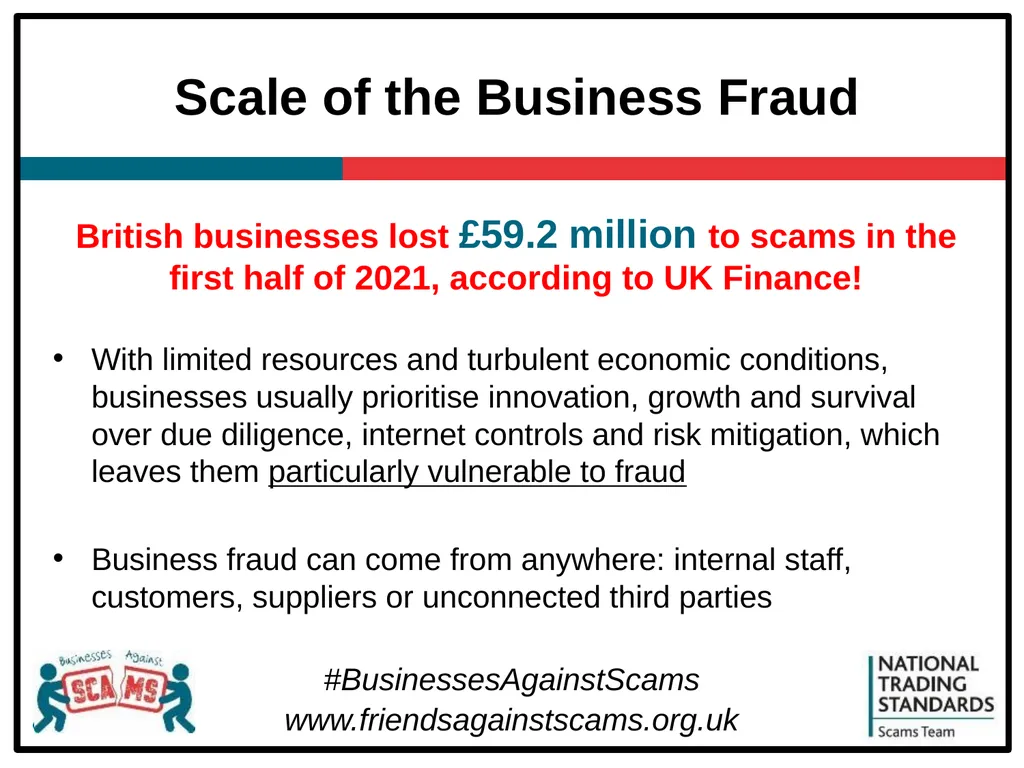
Scale of the Business Fraud British businesses lost £59.2 million to scams in the first half of 2021, according to UK Finance!
With limited resources and turbulent economic conditions, businesses usually prioritise innovation, growth and survival over due diligence, internet controls and risk mitigation, which leaves them particularly vulnerable to fraud
Business fraud can come from anywhere: internal staff, customers, suppliers or unconnected third parties<br>
04
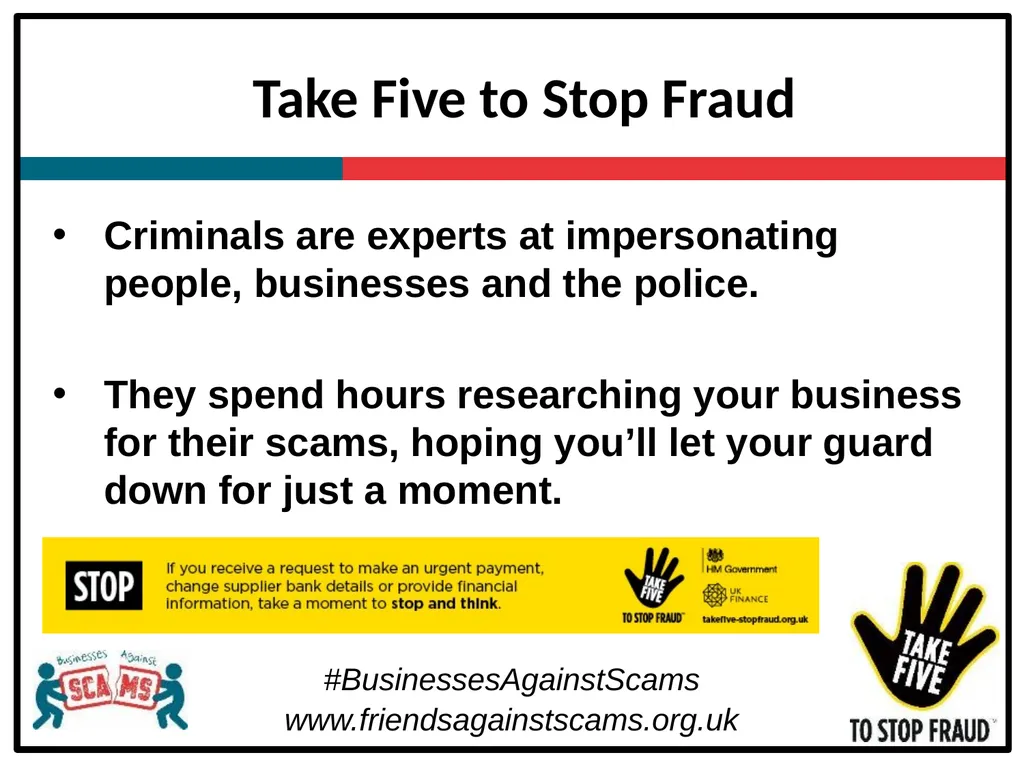
Take Five to Stop Fraud Criminals are experts at impersonating people, businesses and the police.
They spend hours researching your business for their scams, hoping you’ll let your guard down for just a moment.<br>
05
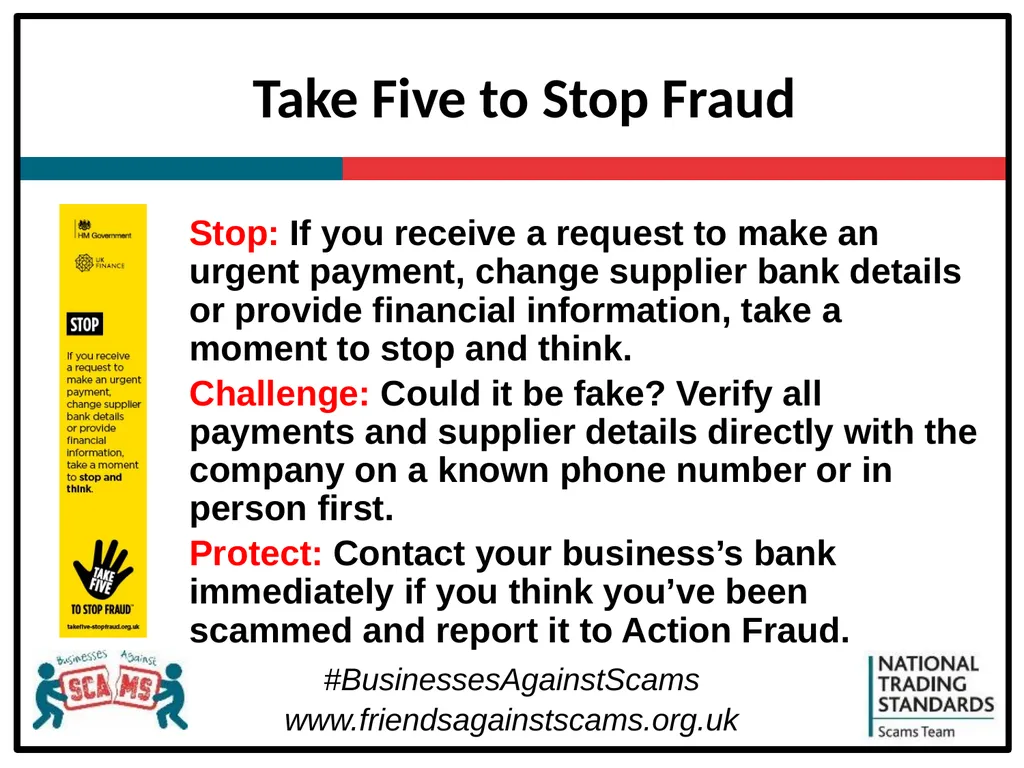
Take Five to Stop Fraud Stop: If you receive a request to make an urgent payment, change supplier bank details or provide financial information, take a moment to stop and think.
Challenge: Could it be fake? Verify all payments and supplier details directly with the company on a known phone number or in person first.
Protect: Contact your business’s bank immediately if you think you’ve been scammed and report it to Action Fraud.<br>
06
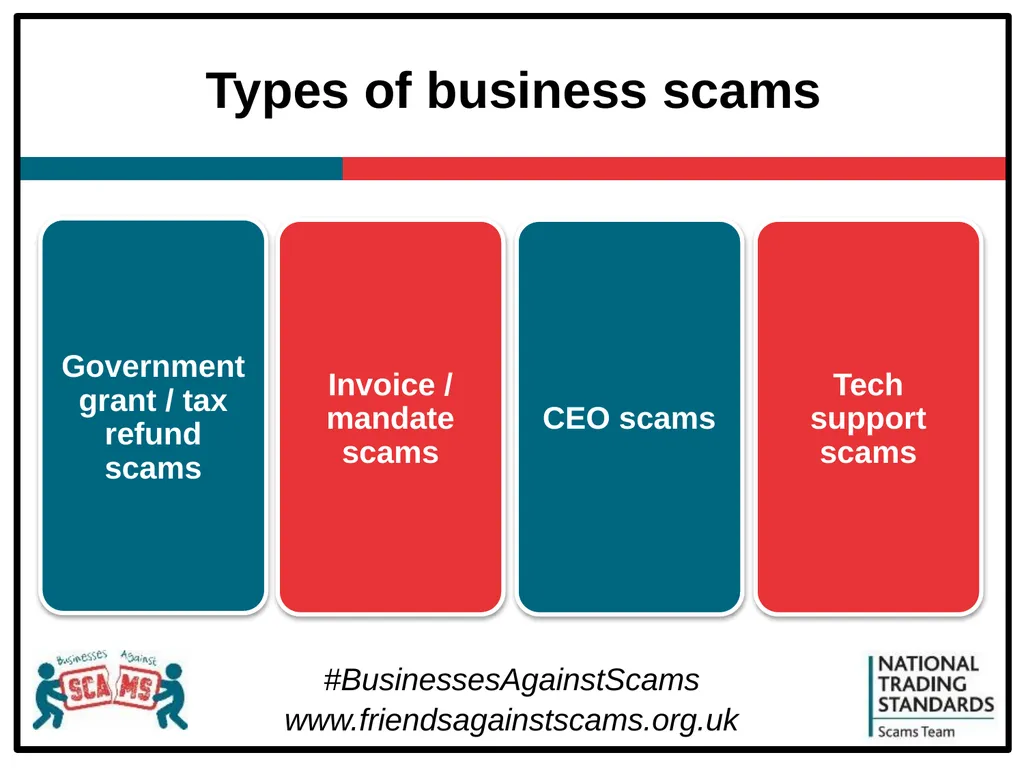
Types of business scams<br>
07
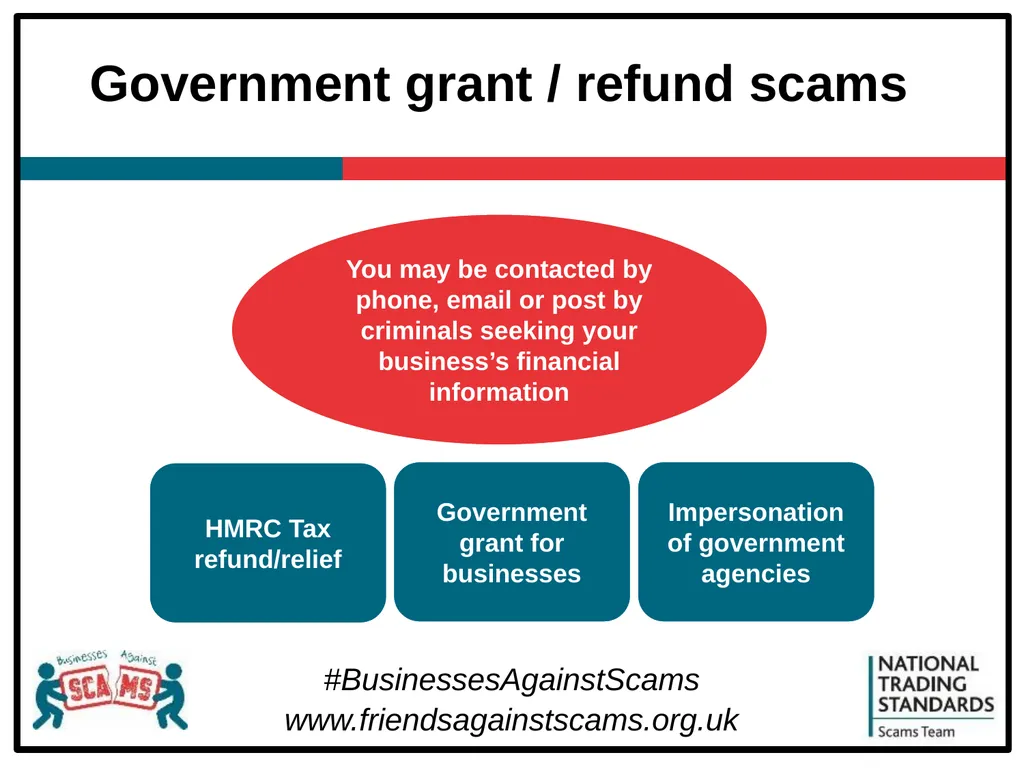
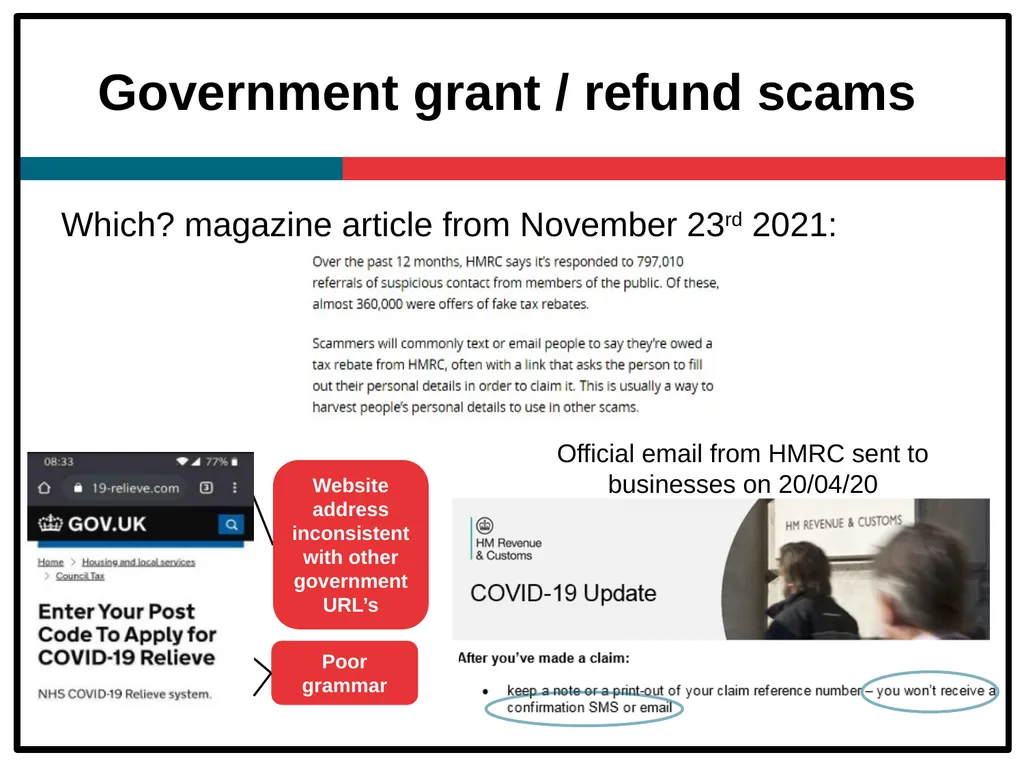
Government grant / refund scams You may be contacted by phone, email or post by criminals seeking your business’s financial information HMRC Tax refund/relief Government grant for businesses Impersonation of government agencies<br>
08
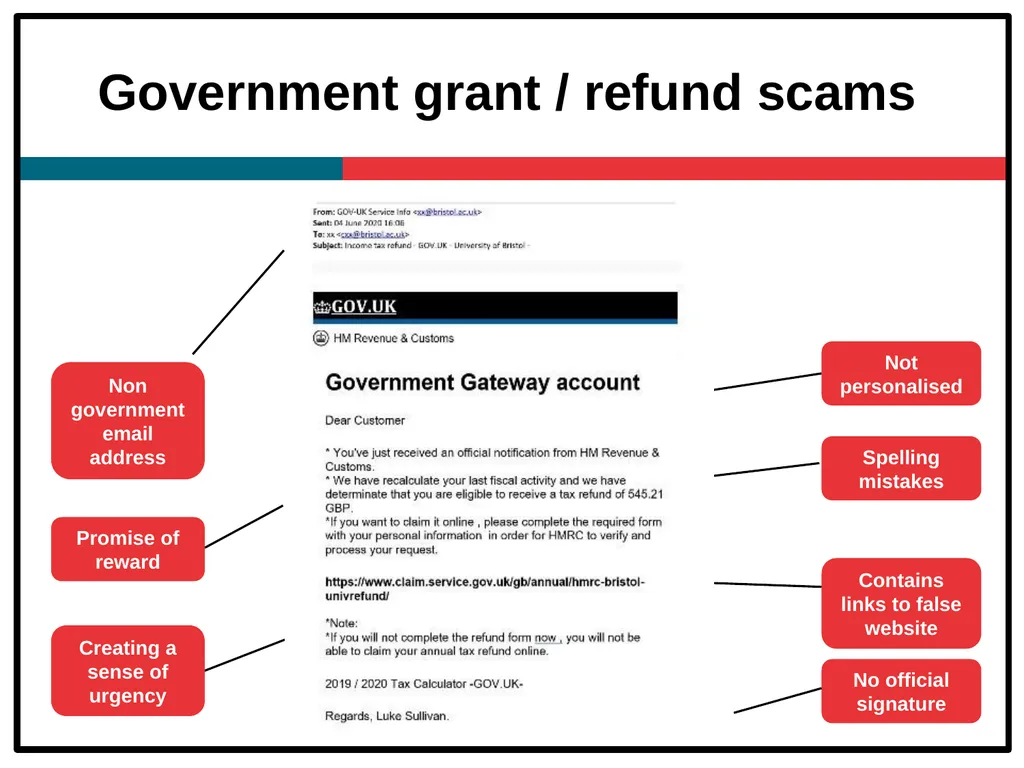
Government grant / refund scams Non government email address Promise of reward Creating a sense of urgency Not personalised Spelling mistakes Contains links to false website No official signature<br>
09
Government grant / refund scams Which? magazine article from November 23rd 2021: Official email from HMRC sent to businesses on 20/04/20<br>
10
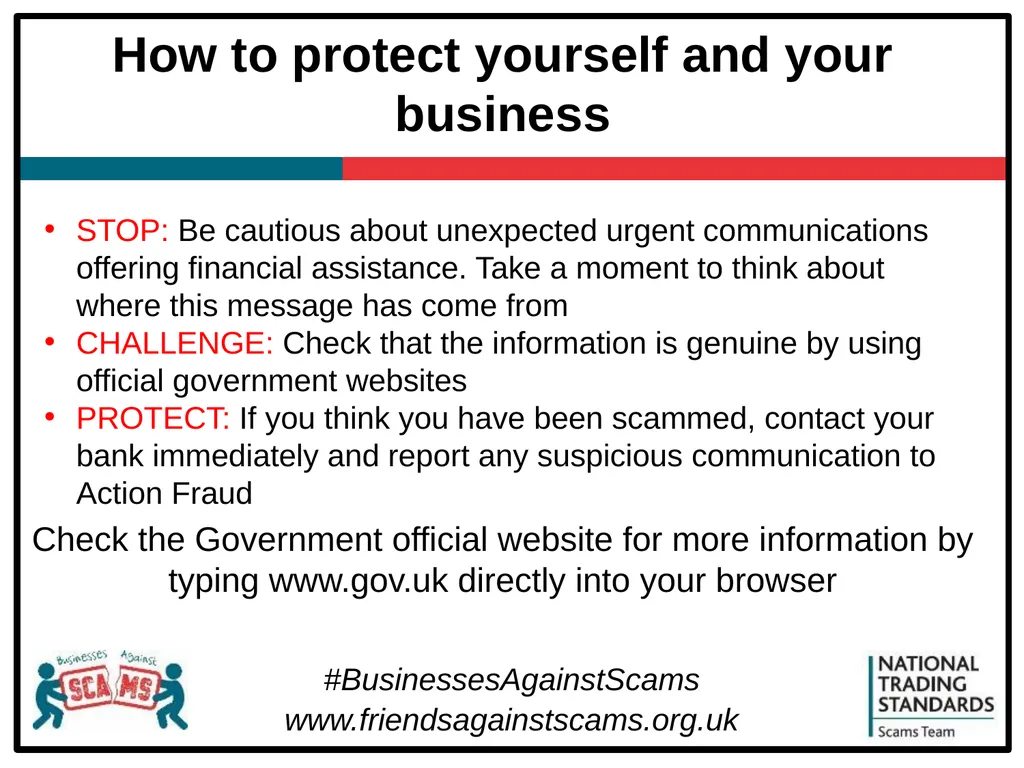
How to protect yourself and your business STOP: Be cautious about unexpected urgent communications offering financial assistance. Take a moment to think about where this message has come from
CHALLENGE: Check that the information is genuine by using official government websites
PROTECT: If you think you have been scammed, contact your bank immediately and report any suspicious communication to Action Fraud Check the Government official website for more information by typing www.gov.uk directly into your browser<br>
11
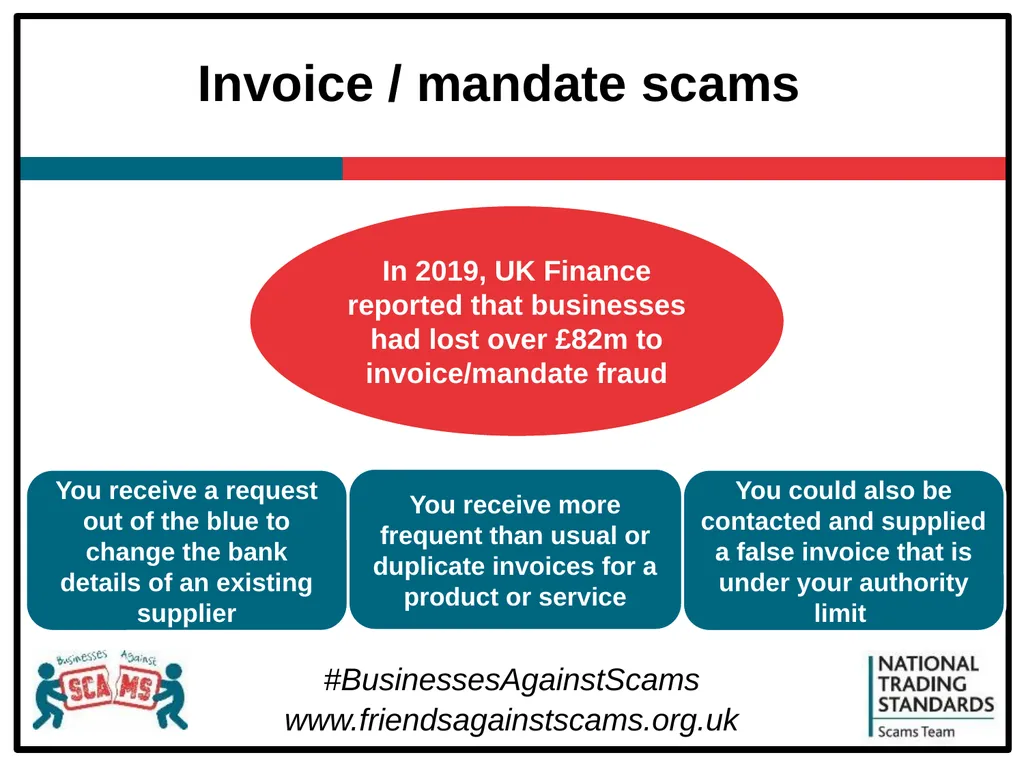
Invoice / mandate scams In 2019, UK Finance reported that businesses had lost over £82m to invoice/mandate fraud You receive a request out of the blue to change the bank details of an existing supplier You receive more frequent than usual or duplicate invoices for a product or service You could also be contacted and supplied a false invoice that is under your authority limit<br>
12
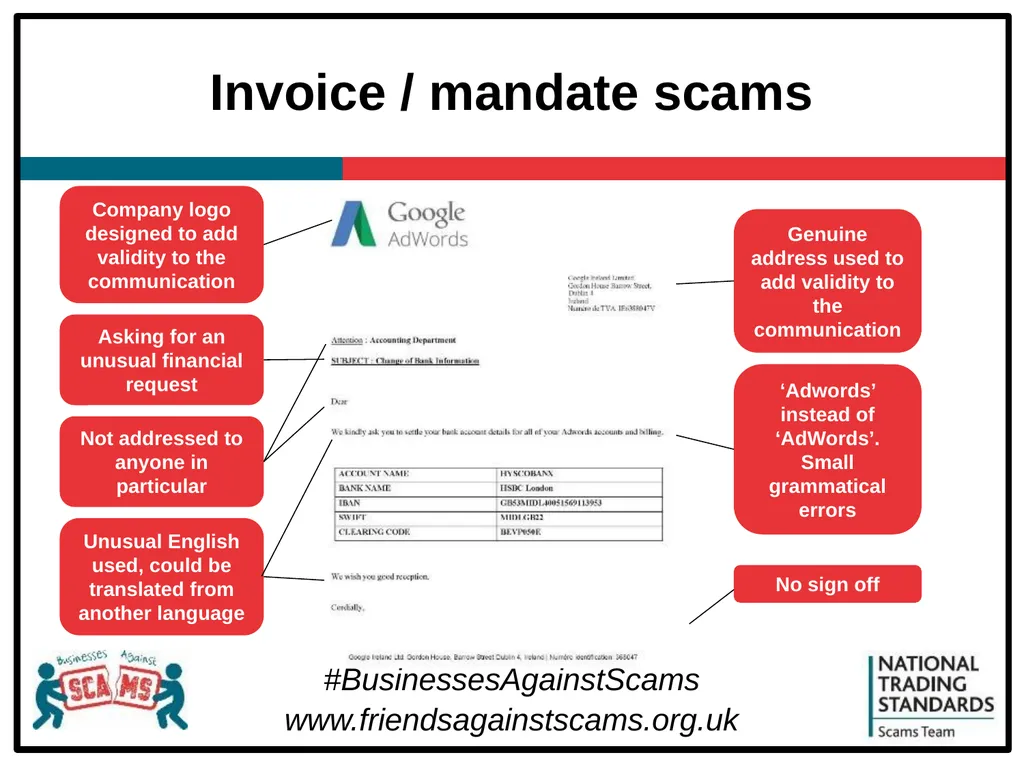
Invoice / mandate scams Company logo designed to add validity to the communication Genuine address used to add validity to the communication Asking for an unusual financial request ‘Adwords’ instead of ‘AdWords’. Small grammatical errors Unusual English used, could be translated from another language No sign off Not addressed to anyone in particular<br>
13
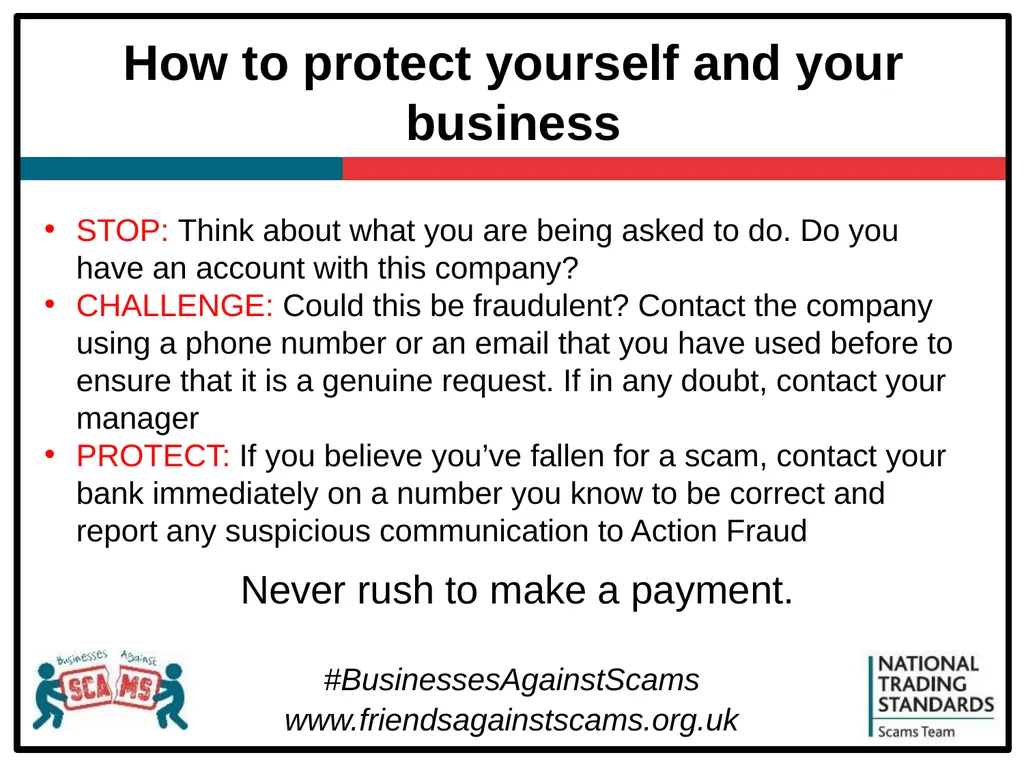
How to protect yourself and your business STOP: Think about what you are being asked to do. Do you have an account with this company?
CHALLENGE: Could this be fraudulent? Contact the company using a phone number or an email that you have used before to ensure that it is a genuine request. If in any doubt, contact your manager
PROTECT: If you believe you’ve fallen for a scam, contact your bank immediately on a number you know to be correct and report any suspicious communication to Action Fraud Never rush to make a payment.<br>
14
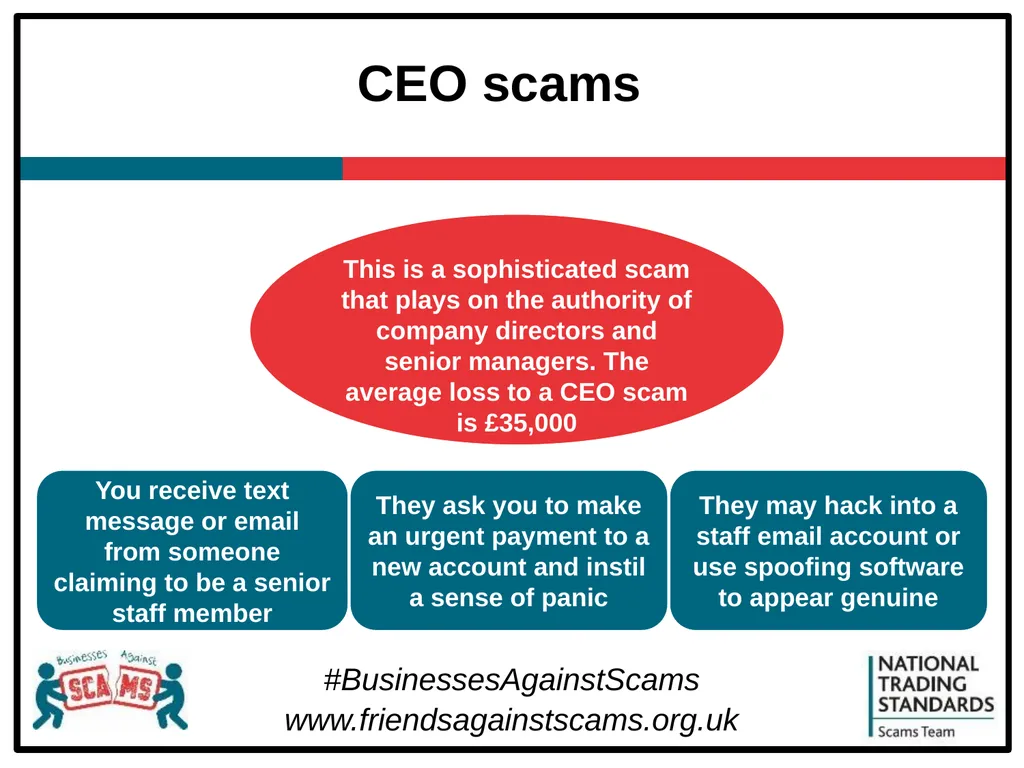
CEO scams You receive text message or email from someone claiming to be a senior staff member They ask you to make an urgent payment to a new account and instil a sense of panic They may hack into a staff email account or use spoofing software to appear genuine<br>
15
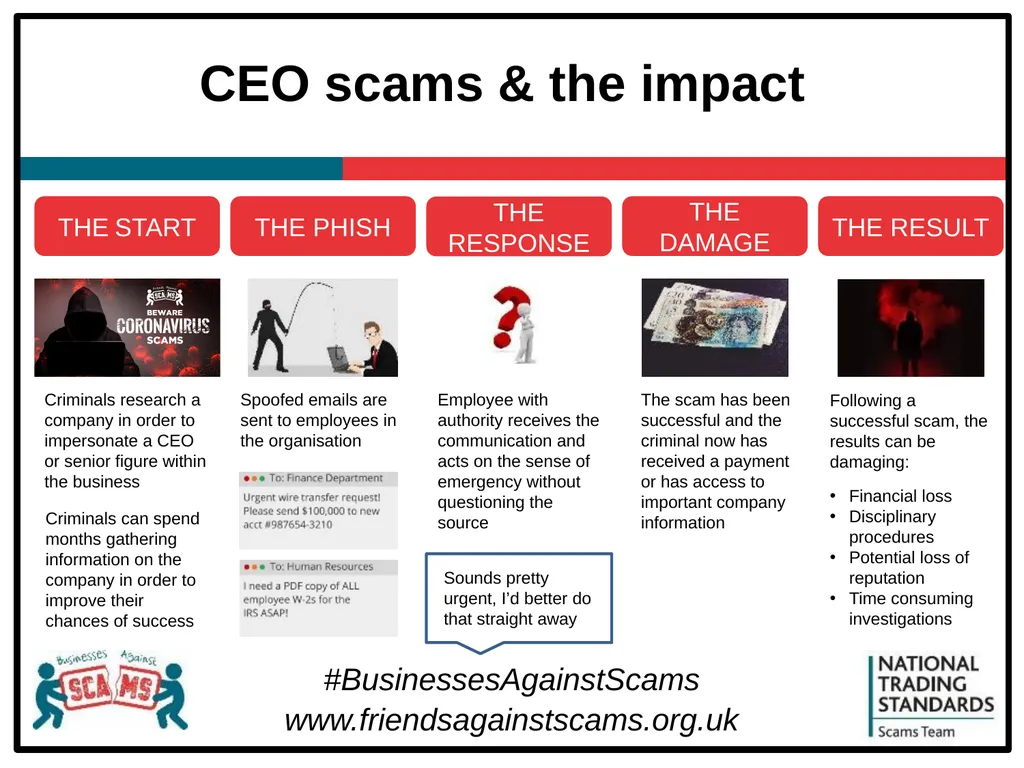
CEO scams & the impact THE START Criminals research a company in order to impersonate a CEO or senior figure within the business Criminals can spend months gathering information on the company in order to improve their chances of success THE PHISH Spoofed emails are sent to employees in the organisation THE RESPONSE Employee with authority receives the communication and acts on the sense of emergency without questioning the source THE DAMAGE The scam has been successful and the criminal now has received a payment or has access to important company information THE RESULT Following a successful scam, the results can be damaging: Financial loss
Disciplinary procedures
Potential loss of reputation
Time consuming investigations<br>
16
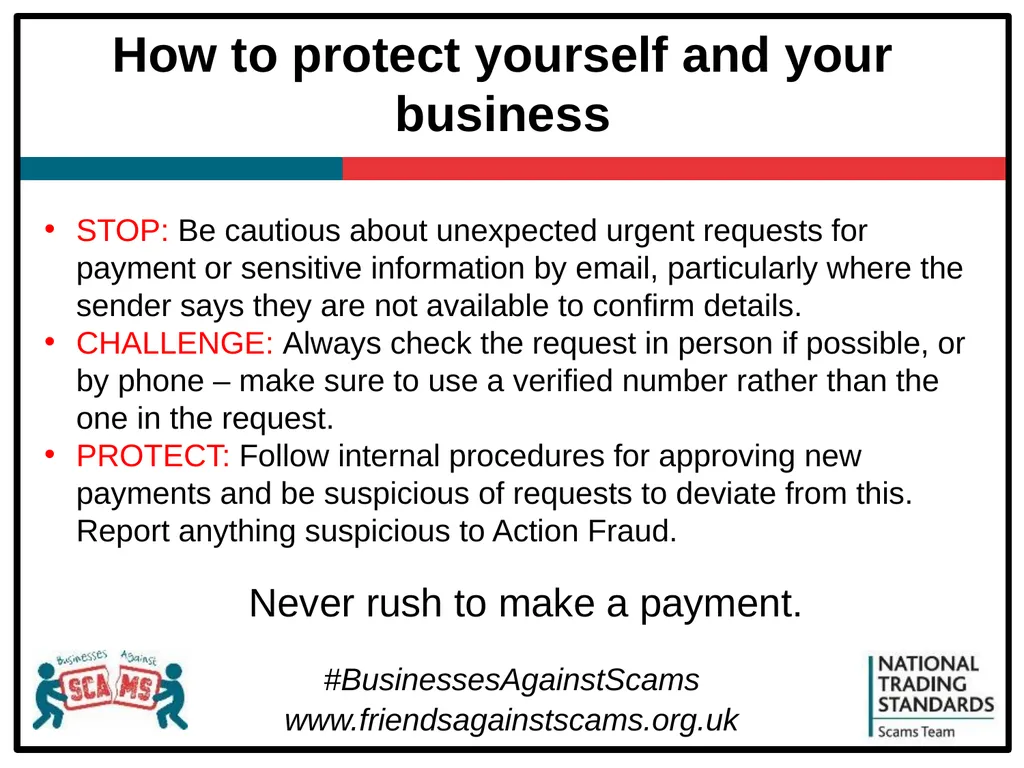
How to protect yourself and your business STOP: Be cautious about unexpected urgent requests for payment or sensitive information by email, particularly where the sender says they are not available to confirm details.
CHALLENGE: Always check the request in person if possible, or by phone – make sure to use a verified number rather than the one in the request.
PROTECT: Follow internal procedures for approving new payments and be suspicious of requests to deviate from this. Report anything suspicious to Action Fraud. Never rush to make a payment.<br>
17
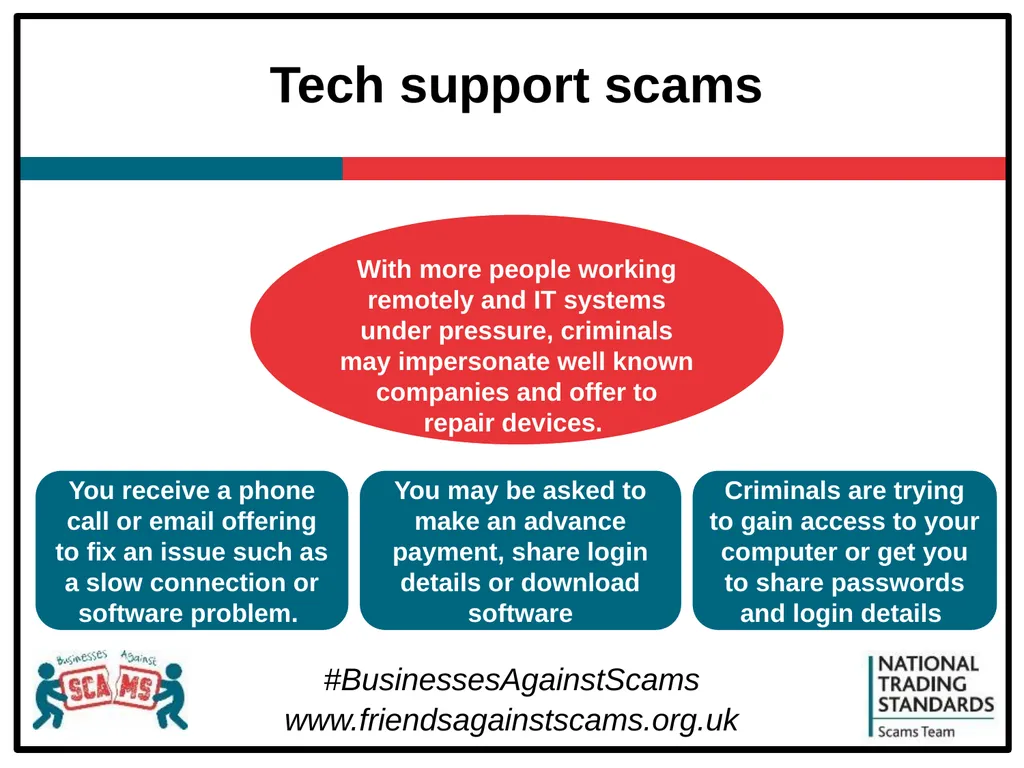
Tech support scams You receive a phone call or email offering to fix an issue such as a slow connection or software problem. You may be asked to make an advance payment, share login details or download software Criminals are trying to gain access to your computer or get you to share passwords and login details<br>
18
Tech support scams Caller will try and instil a sense of panic and demand payments to fix issues that don’t exist
They may ask you to give them access to your PC via a piece of software
Once you have given them access, they can search your hard drive for valuable information
They may ask you to login to your bank account and could obtain your banking details through remote access Recording from the Federal Trade Commission (FTC) in the USA<br>
19
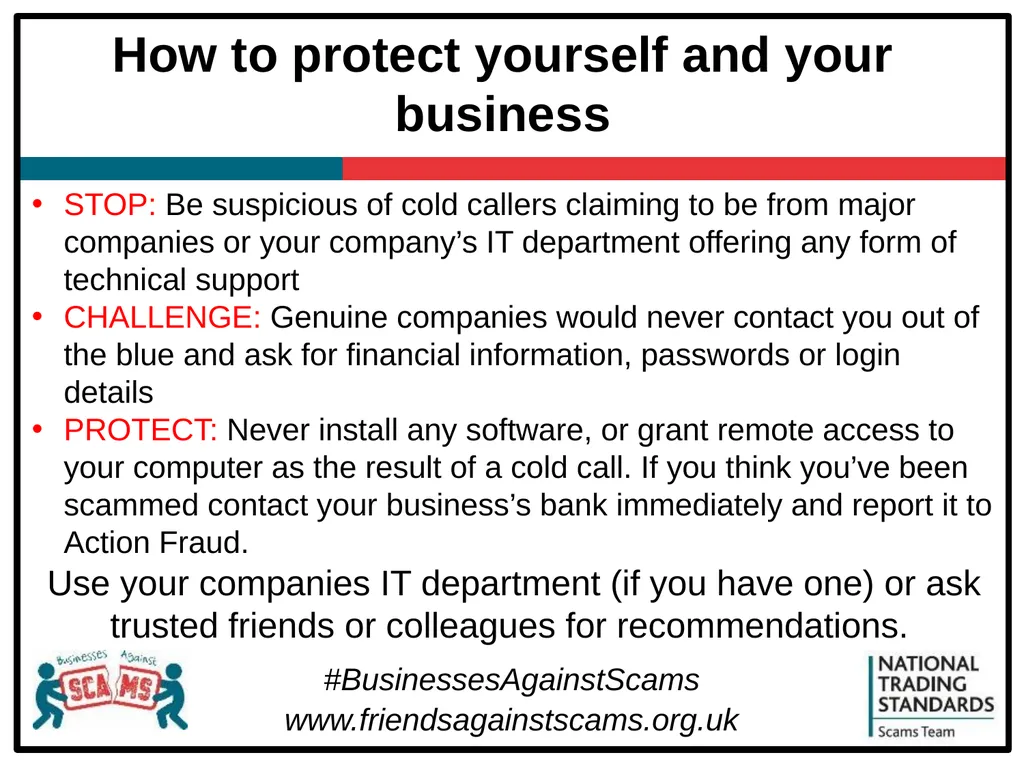
How to protect yourself and your business STOP: Be suspicious of cold callers claiming to be from major companies or your company’s IT department offering any form of technical support
CHALLENGE: Genuine companies would never contact you out of the blue and ask for financial information, passwords or login details
PROTECT: Never install any software, or grant remote access to your computer as the result of a cold call. If you think you’ve been scammed contact your business’s bank immediately and report it to Action Fraud. Use your companies IT department (if you have one) or ask trusted friends or colleagues for recommendations.<br>
20
How to protect your company from cyber attacks A short video from the National Cyber Security Centre (NCSC) on how to protect your computers.<br>
21
Scams are the product of organised, predatory criminals… …who gain trust to exploit and steal money.<br>
22
Report<br>
23
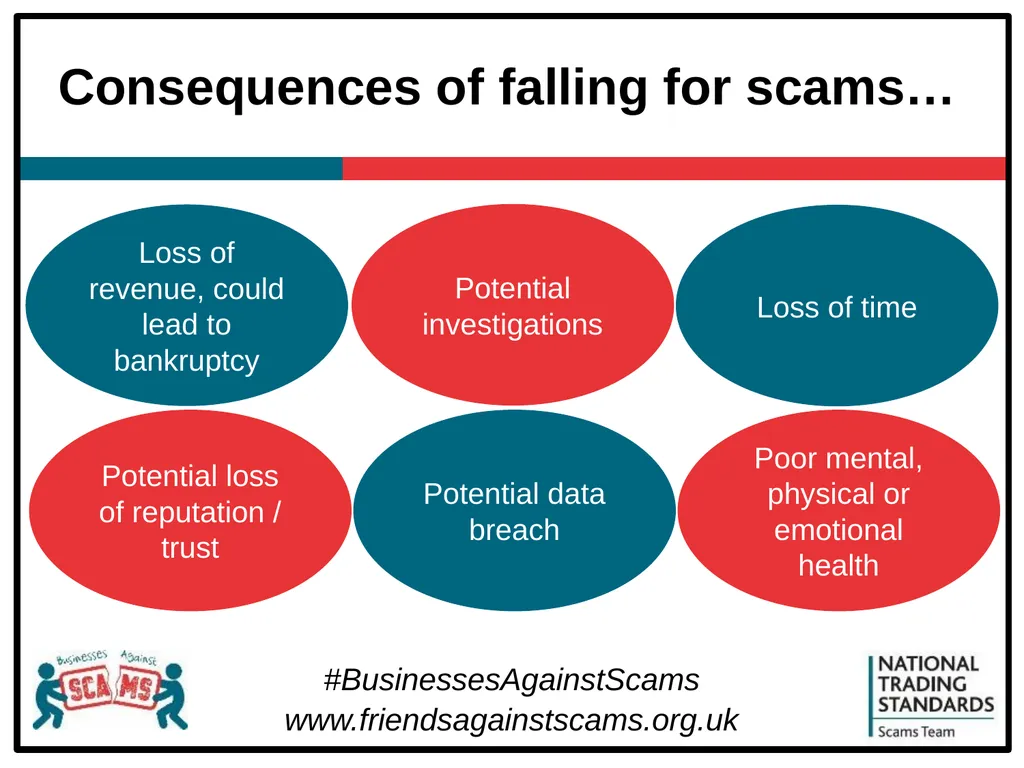
Consequences of falling for scams… Loss of time Loss of revenue, could lead to bankruptcy Potential loss of reputation / trust Potential data breach Potential investigations Poor mental, physical or emotional health<br>
24
Further reading… Cyber security advice from the National Cyber Security Centre for small to medium sized organisations – click here Advice from the NCSC on working from home - click here Take Five is a fraud awareness campaign from UK Finance. For their business toolkit – click here Action Fraud’s advice on impersonation and mandate fraud– click here<br>
25
Thank you Thank you for completing the Businesses Against Scams Training!
To find out about general scams that you could be seeing at home and to help protect your friends and family please become a Friend at:
www.friendsagainstscams.org.uk<br>