
Introduction to breastfeeding Babies should be




Description: Introduction to breastfeeding Babies should be breastfed andor receive expressed human milk exclusively for the first six months of life. Breastfeeding should continue with the addition of complementary foods throughout the second half of
Related Topics
Download Presentation
"Introduction to breastfeeding Babies should be" is the property of its rightful owner. Permission is granted to download and print the materials on this website for personal, non-commercial use only, and to display it on your personal computer provided you do not modify the materials and that you retain all copyright notices contained in the materials. By downloading content from our website, you accept the terms of this agreement.
Presentation Transcript
slide1. Introduction to breastfeeding<br>
slide2. Babies should be breastfed and/or receive expressed human milk exclusively for the first six months of life. Breastfeeding should continue with the addition of complementary foods throughout the second half of the first year.
- The American Academy of Pediatrics<br>
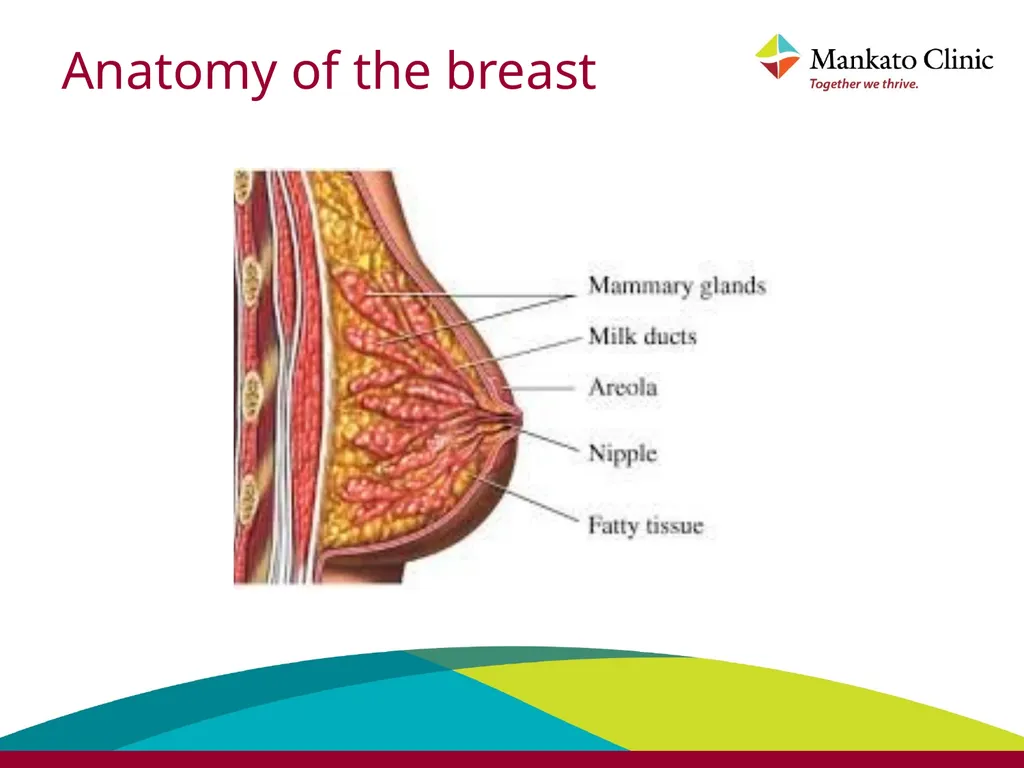
slide3. Anatomy of the breast<br>
slide4. Your body is getting ready Darkening of the areola
Growth of the breast
Increased circulation<br>
slide5. Baby is Getting Ready Sucks thumb
Prefers circles to squares
Sees contrast, light vs. dark
Knows mother’s smell<br>
slide6. Colostrum Thick, yellowish liquid
First 48-72 hours
Gives baby antibodies to protect your baby from infections<br>
slide7. Amazing Milk Your milk is made perfectly for your child
Always clean
Caregiver friendly stools
Always the right temperature
Natural tranquilizers<br>
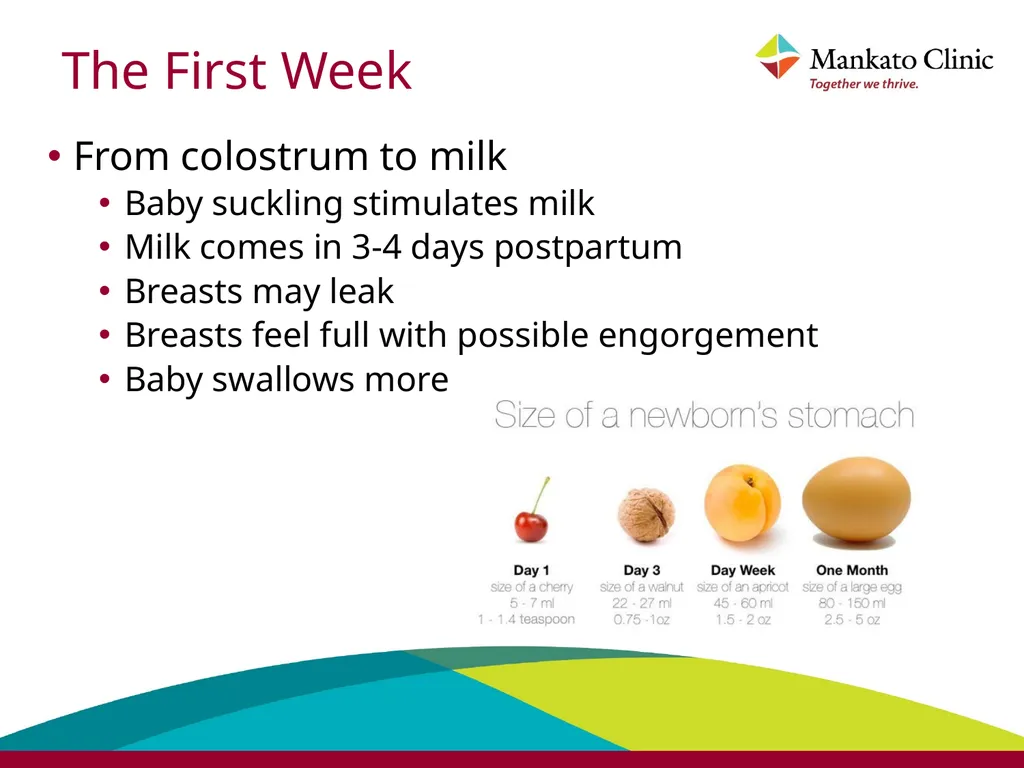
slide8. The First Week From colostrum to milk
Baby suckling stimulates milk
Milk comes in 3-4 days postpartum
Breasts may leak
Breasts feel full with possible engorgement
Baby swallows more<br>
slide9. Breastfeeding Benefits for Baby Less spit up, gas, diarrhea, and constipation
Healthier from the start
Stronger immune system
Better vision
Lowers the risk of Sudden Infant Death Syndrome (SIDS)<br>
slide10. Breastfed Babies are Fit for Life Fewer allergies, eczema, and asthma
Lowers the risks of leukemia, diabetes, and heart disease
Less likely to become obese as adults<br>
slide11. Breastfeeding Benefits for Mom Less postpartum bleeding
Lowers the risk of anemia
Increased caloric intake
Produces naturally soothing hormones
Lessens the risk of osteoporosis
Lowers the risk of breast, ovarian, and uterine cancers
Delays menstruation<br>
slide12. Partners are Nurturing Too Take care of mom
Help with the breastfeeding routine
Help with household responsibilities
Develop unique and special bond with baby
Introduce a bottle after nursing is well established, at least 3-4 weeks<br>
slide13. Happy Birthday Baby! Imagine the baby’s birth from the baby’s point of view
Cold
Bright
Noisy
Bring the baby back to mom to help the baby with transition to the outside world
The less separation of mom and baby, the better<br>
slide14. Get Off to a Good Start Right after birth baby is most alert
Early and frequent skin-to-skin contact
Allow the baby to:
Touch the breast
Taste the colostrum
Attempt to latch<br>
slide15. Benefits of Skin to Skin Allows mom to see feeding cues
Increases milk production
Decreases crying and provides comfort
Regulates baby’s heart rate, temperature, and blood sugar
Increases baby/caregiver bonding<br>
slide16. Nursery nest Pillows or boppy
Water/snacks
Reading material
Remote and phone
Nursing pads
Diapering supplies
Nail file
Burp cloth
Receiving blanket<br>
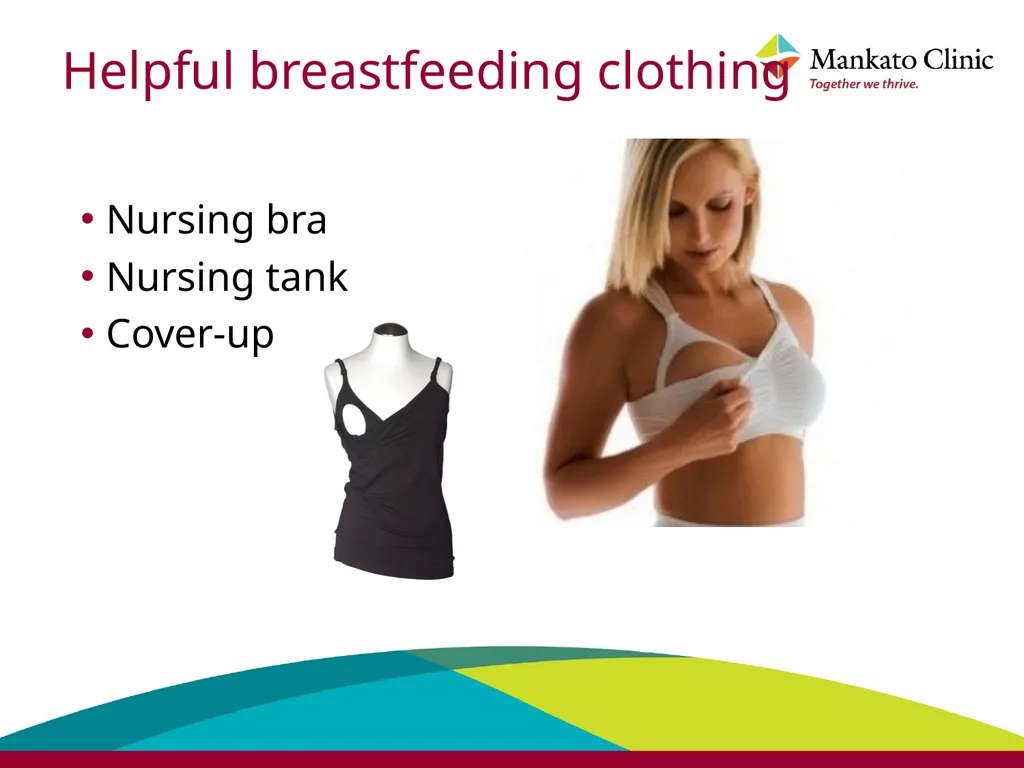
slide17. Helpful breastfeeding clothing Nursing bra
Nursing tank
Cover-up<br>
slide18. Hunger Cues Rooting, turning head toward the breast
Sucking on hand or thumb
Smacking lips
Tongue movements
Restlessness
Crying<br>
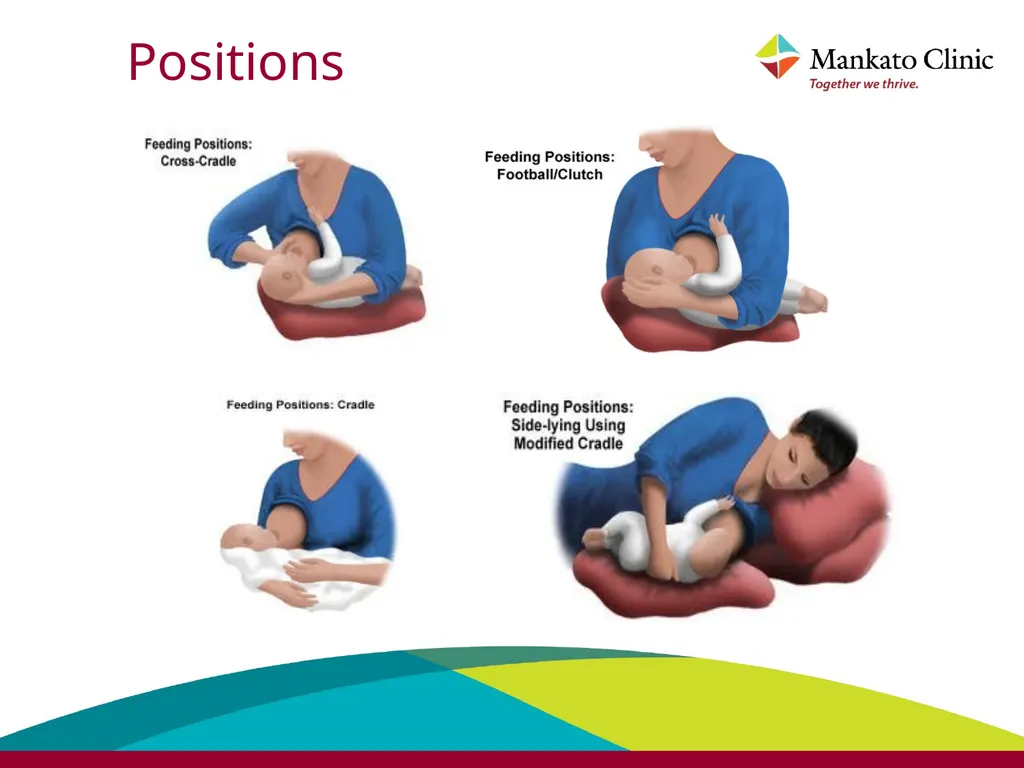
slide19. Positions<br>
slide20. Latching Baby Important for mom’s comfort
Important for milk supply
Use pillows to position baby
Check lips and tongue position
Avoid pulling on nipple
Break latch when painful<br>
slide22. A Typical Feeding Look for hunger cues
Latch baby on fullest side
Burp baby, offer second side
Baby will nurse for 10-45 minutes
Feed on demand<br>
slide23. Milk Production Tips Supply and demand
The more the baby nurses, or the more you pump, the more milk you will make
Stay hydrated
Supplemental or bottle feedings will decrease your milk supply, especially in the early weeks
Watch the baby not the clock
Go everywhere with your baby<br>
slide24. Signs Baby is Getting Enough Baby will:
Nurse 10-45 minutes per feeding
Nurse 8-12 times in 24 hours
Have 6-8 wet diapers and 3-4 stools in 24 hours Mom will
Hear swallowing
Breasts will feel softer
Change a lot of diapers
Have the baby weighed if there are concerns<br>
slide25. What Can be Done if it Hurts? Home cures
Lanolin
Soothies
Breast milk
Check latch and position<br>
slide26. Call Lactation or your Doctor if you Experience: Pain
Bleeding
Flu-like symptoms
Fever
Frustration<br>
slide27. Nighttime Feedings Parents need sleep, too!
Baby will nurse at night
Utilize a co-sleeper or bassinette
Nap when baby naps
Feeding more during the day means feeding less at night
Have partner give baby a bottle once nursing is established
Establish an overnight routine utilizing both partners<br>
slide28. Utilizing a Breast Pump Not everyone will need a pump
Great if you are going back to work
Several different kinds of pumps
Educate yourself prior to purchase
Read the manual to use the pump efficiently<br>
slide29. Pumping Always feed your baby first and then pump
There is the most milk in the morning
Pump/express as many times as you would breastfeed baby while you are away from baby
Breastfeed once you are with baby again
Silicone milk collector<br>
slide30. Storing Breastmilk Avoid adding freshly pumped milk to already cooled milk
Freeze milk in small portions
Label containers with the date and baby’s name
Use oldest milk first<br>
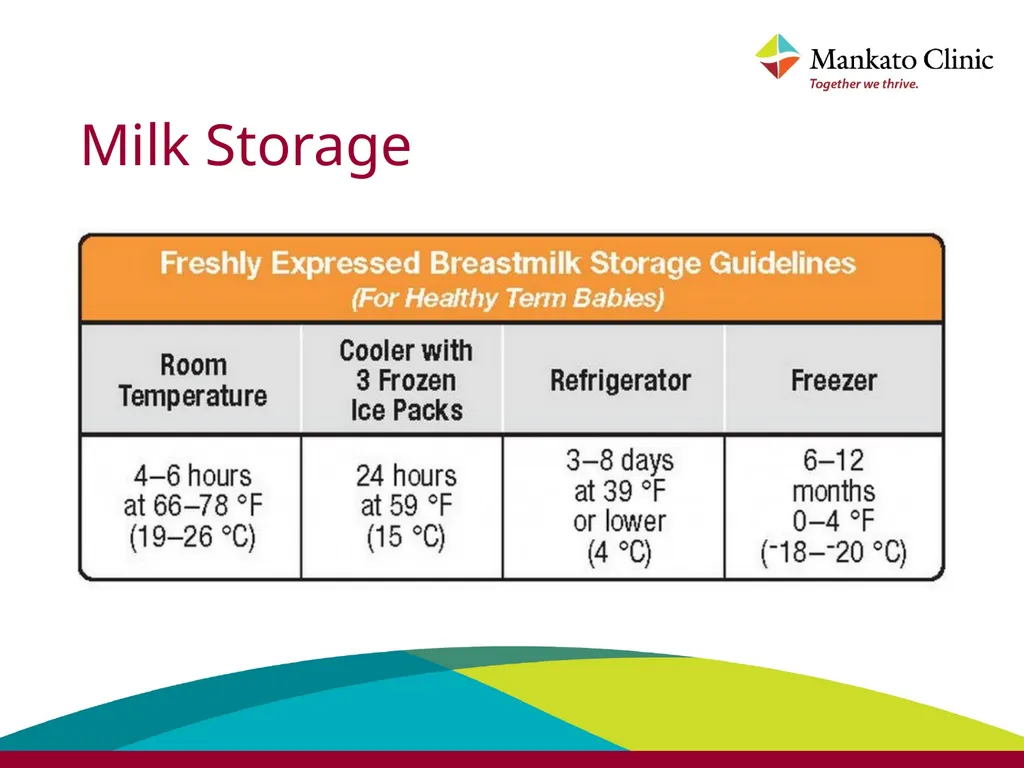
slide31. Milk Storage<br>
slide32. Thawing Breastmilk Thaw breastmilk in the container it has been stored in
Thaw overnight in the refrigerator or hold under/in warm water
Never use a microwave or hot water
Use thawed milk within 24 hours
Never refreeze thawed milk<br>
slide33. Bottle Feeding Paced bottle feeding
Hold baby upright so baby has control of flow
Alternate sides halfway through a feeding or with every other feeding
Use a slow flow nipple to mimic the breast
Burp after each feeding
Watch for feeding cues
Use this time to bond with baby<br>
slide34. Medication and Foods Avoid caffeine and alcohol
Eat a variety of foods to introduce the baby to new flavors
Acetaminophen, Ibuprofen, and Sudafed are all safe
Consult your doctor, pharmacist, or lactation consultant with questions<br>
slide35. Common Problems in the First 6 Weeks Not nursing enough
Feeding time is too short
Overuse of bottles and pacifiers
Poor latch
Associating normal newborn behaviors with breastfeeding problems<br>
slide36. Find Support Friends and family
Lactation consultants
Le Leche League
Online resources<br>
slide37. Trust your Body, Trust your Baby It can take up to six weeks to master breastfeeding
Be patient with yourself, trust yourself and your baby
Support is key
Every feeding is a gift of love
Relax<br>
slide38. “A newborn baby has only three demands. They are warmth in the arms of its mother, food from her breasts and security in the knowledge of her presence. Breastfeeding satisfies all three.”
-Grantly Dick-Read<br>
slide2. Babies should be breastfed and/or receive expressed human milk exclusively for the first six months of life. Breastfeeding should continue with the addition of complementary foods throughout the second half of the first year.
- The American Academy of Pediatrics<br>
slide3. Anatomy of the breast<br>
slide4. Your body is getting ready Darkening of the areola
Growth of the breast
Increased circulation<br>
slide5. Baby is Getting Ready Sucks thumb
Prefers circles to squares
Sees contrast, light vs. dark
Knows mother’s smell<br>
slide6. Colostrum Thick, yellowish liquid
First 48-72 hours
Gives baby antibodies to protect your baby from infections<br>
slide7. Amazing Milk Your milk is made perfectly for your child
Always clean
Caregiver friendly stools
Always the right temperature
Natural tranquilizers<br>
slide8. The First Week From colostrum to milk
Baby suckling stimulates milk
Milk comes in 3-4 days postpartum
Breasts may leak
Breasts feel full with possible engorgement
Baby swallows more<br>
slide9. Breastfeeding Benefits for Baby Less spit up, gas, diarrhea, and constipation
Healthier from the start
Stronger immune system
Better vision
Lowers the risk of Sudden Infant Death Syndrome (SIDS)<br>
slide10. Breastfed Babies are Fit for Life Fewer allergies, eczema, and asthma
Lowers the risks of leukemia, diabetes, and heart disease
Less likely to become obese as adults<br>
slide11. Breastfeeding Benefits for Mom Less postpartum bleeding
Lowers the risk of anemia
Increased caloric intake
Produces naturally soothing hormones
Lessens the risk of osteoporosis
Lowers the risk of breast, ovarian, and uterine cancers
Delays menstruation<br>
slide12. Partners are Nurturing Too Take care of mom
Help with the breastfeeding routine
Help with household responsibilities
Develop unique and special bond with baby
Introduce a bottle after nursing is well established, at least 3-4 weeks<br>
slide13. Happy Birthday Baby! Imagine the baby’s birth from the baby’s point of view
Cold
Bright
Noisy
Bring the baby back to mom to help the baby with transition to the outside world
The less separation of mom and baby, the better<br>
slide14. Get Off to a Good Start Right after birth baby is most alert
Early and frequent skin-to-skin contact
Allow the baby to:
Touch the breast
Taste the colostrum
Attempt to latch<br>
slide15. Benefits of Skin to Skin Allows mom to see feeding cues
Increases milk production
Decreases crying and provides comfort
Regulates baby’s heart rate, temperature, and blood sugar
Increases baby/caregiver bonding<br>
slide16. Nursery nest Pillows or boppy
Water/snacks
Reading material
Remote and phone
Nursing pads
Diapering supplies
Nail file
Burp cloth
Receiving blanket<br>
slide17. Helpful breastfeeding clothing Nursing bra
Nursing tank
Cover-up<br>
slide18. Hunger Cues Rooting, turning head toward the breast
Sucking on hand or thumb
Smacking lips
Tongue movements
Restlessness
Crying<br>
slide19. Positions<br>
slide20. Latching Baby Important for mom’s comfort
Important for milk supply
Use pillows to position baby
Check lips and tongue position
Avoid pulling on nipple
Break latch when painful<br>
slide22. A Typical Feeding Look for hunger cues
Latch baby on fullest side
Burp baby, offer second side
Baby will nurse for 10-45 minutes
Feed on demand<br>
slide23. Milk Production Tips Supply and demand
The more the baby nurses, or the more you pump, the more milk you will make
Stay hydrated
Supplemental or bottle feedings will decrease your milk supply, especially in the early weeks
Watch the baby not the clock
Go everywhere with your baby<br>
slide24. Signs Baby is Getting Enough Baby will:
Nurse 10-45 minutes per feeding
Nurse 8-12 times in 24 hours
Have 6-8 wet diapers and 3-4 stools in 24 hours Mom will
Hear swallowing
Breasts will feel softer
Change a lot of diapers
Have the baby weighed if there are concerns<br>
slide25. What Can be Done if it Hurts? Home cures
Lanolin
Soothies
Breast milk
Check latch and position<br>
slide26. Call Lactation or your Doctor if you Experience: Pain
Bleeding
Flu-like symptoms
Fever
Frustration<br>
slide27. Nighttime Feedings Parents need sleep, too!
Baby will nurse at night
Utilize a co-sleeper or bassinette
Nap when baby naps
Feeding more during the day means feeding less at night
Have partner give baby a bottle once nursing is established
Establish an overnight routine utilizing both partners<br>
slide28. Utilizing a Breast Pump Not everyone will need a pump
Great if you are going back to work
Several different kinds of pumps
Educate yourself prior to purchase
Read the manual to use the pump efficiently<br>
slide29. Pumping Always feed your baby first and then pump
There is the most milk in the morning
Pump/express as many times as you would breastfeed baby while you are away from baby
Breastfeed once you are with baby again
Silicone milk collector<br>
slide30. Storing Breastmilk Avoid adding freshly pumped milk to already cooled milk
Freeze milk in small portions
Label containers with the date and baby’s name
Use oldest milk first<br>
slide31. Milk Storage<br>
slide32. Thawing Breastmilk Thaw breastmilk in the container it has been stored in
Thaw overnight in the refrigerator or hold under/in warm water
Never use a microwave or hot water
Use thawed milk within 24 hours
Never refreeze thawed milk<br>
slide33. Bottle Feeding Paced bottle feeding
Hold baby upright so baby has control of flow
Alternate sides halfway through a feeding or with every other feeding
Use a slow flow nipple to mimic the breast
Burp after each feeding
Watch for feeding cues
Use this time to bond with baby<br>
slide34. Medication and Foods Avoid caffeine and alcohol
Eat a variety of foods to introduce the baby to new flavors
Acetaminophen, Ibuprofen, and Sudafed are all safe
Consult your doctor, pharmacist, or lactation consultant with questions<br>
slide35. Common Problems in the First 6 Weeks Not nursing enough
Feeding time is too short
Overuse of bottles and pacifiers
Poor latch
Associating normal newborn behaviors with breastfeeding problems<br>
slide36. Find Support Friends and family
Lactation consultants
Le Leche League
Online resources<br>
slide37. Trust your Body, Trust your Baby It can take up to six weeks to master breastfeeding
Be patient with yourself, trust yourself and your baby
Support is key
Every feeding is a gift of love
Relax<br>
slide38. “A newborn baby has only three demands. They are warmth in the arms of its mother, food from her breasts and security in the knowledge of her presence. Breastfeeding satisfies all three.”
-Grantly Dick-Read<br>