
Introduction to Clinical Pharmacology Chapter 19
PC
Published · 29 slides · 0 views

1 / 1





Description
Introduction to Clinical Pharmacology Chapter 19 Antianxiety Drugs Learning Objectives Explain the uses, general drug actions, general adverse reactions, contraindications, precautions, and interactions associated with the administration of
Related Topics
Share
Embed code
Download this presentation From Below
"Introduction to Clinical Pharmacology Chapter 19" is the property of its rightful owner. Permission is granted to download and print the materials on this website for personal, non-commercial use only, and to display it on your personal computer provided you do not modify the materials and that you retain all copyright notices contained in the materials. By downloading content from our website, you accept the terms of this agreement.
Presentation Transcript
01
Introduction to Clinical Pharmacology
Chapter 19
Antianxiety Drugs<br>
02
Learning Objectives Explain the uses, general drug actions, general adverse reactions, contraindications, precautions, and interactions associated with the administration of antianxiety drugs.
Distinguish important preadministration and ongoing assessment activities the nurse should perform on the client taking an antianxiety drug.
List nursing diagnoses particular to a client taking an antianxiety drug.
Examine ways to promote an optimal response to therapy, how to manage common adverse reactions, and important points to keep in mind when educating clients about the use of antianxiety drugs.<br>
03
What Is Anxiety? Anxiety—feeling of apprehension, worry, or uneasiness; can be normal; sometimes needs to be treated when it interferes with activities of daily living
Antianxiety medications or “anxiolytics” are used to treat anxiety<br>
Antianxiety medications or “anxiolytics” are used to treat anxiety<br>
04
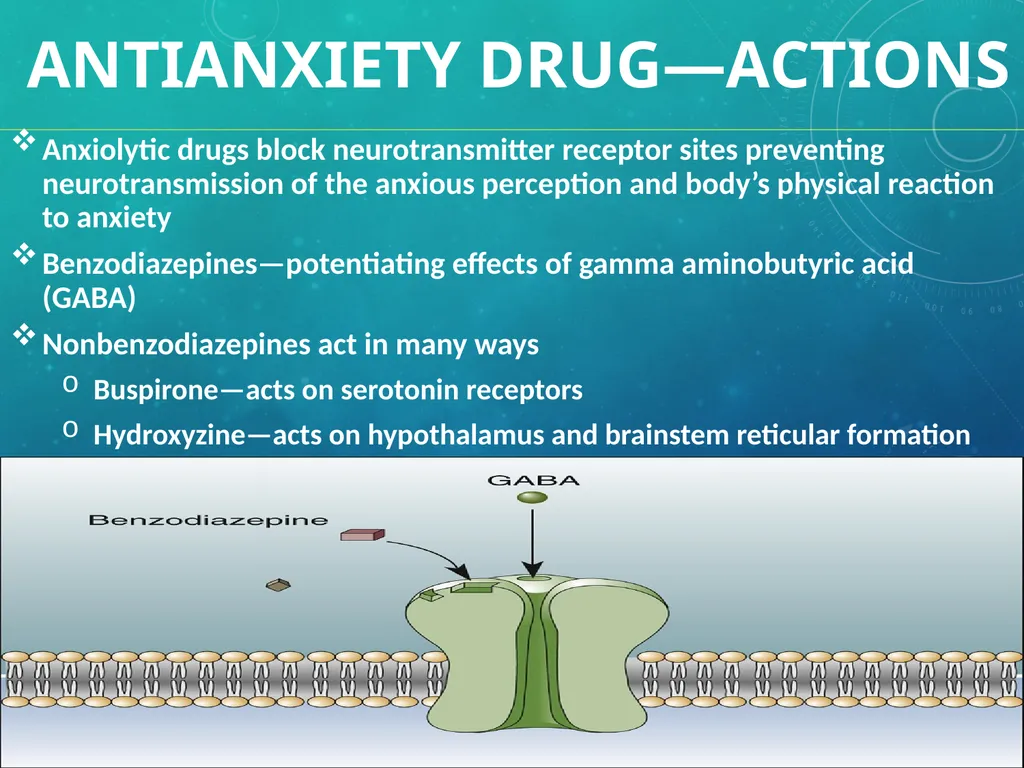
Antianxiety Drug—Actions Anxiolytic drugs block neurotransmitter receptor sites preventing neurotransmission of the anxious perception and body’s physical reaction to anxiety
Benzodiazepines—potentiating effects of gamma aminobutyric acid (GABA)
Nonbenzodiazepines act in many ways
Buspirone—acts on serotonin receptors
Hydroxyzine—acts on hypothalamus and brainstem reticular formation<br>
Benzodiazepines—potentiating effects of gamma aminobutyric acid (GABA)
Nonbenzodiazepines act in many ways
Buspirone—acts on serotonin receptors
Hydroxyzine—acts on hypothalamus and brainstem reticular formation<br>
05
Antianxiety Drug—Uses Isolated episodes of intense anxiety
Temporary use with severe functional impairment
Preanesthetic sedation and muscle relaxation
Convulsions or seizures
Alcohol withdrawal<br>
Temporary use with severe functional impairment
Preanesthetic sedation and muscle relaxation
Convulsions or seizures
Alcohol withdrawal<br>
06
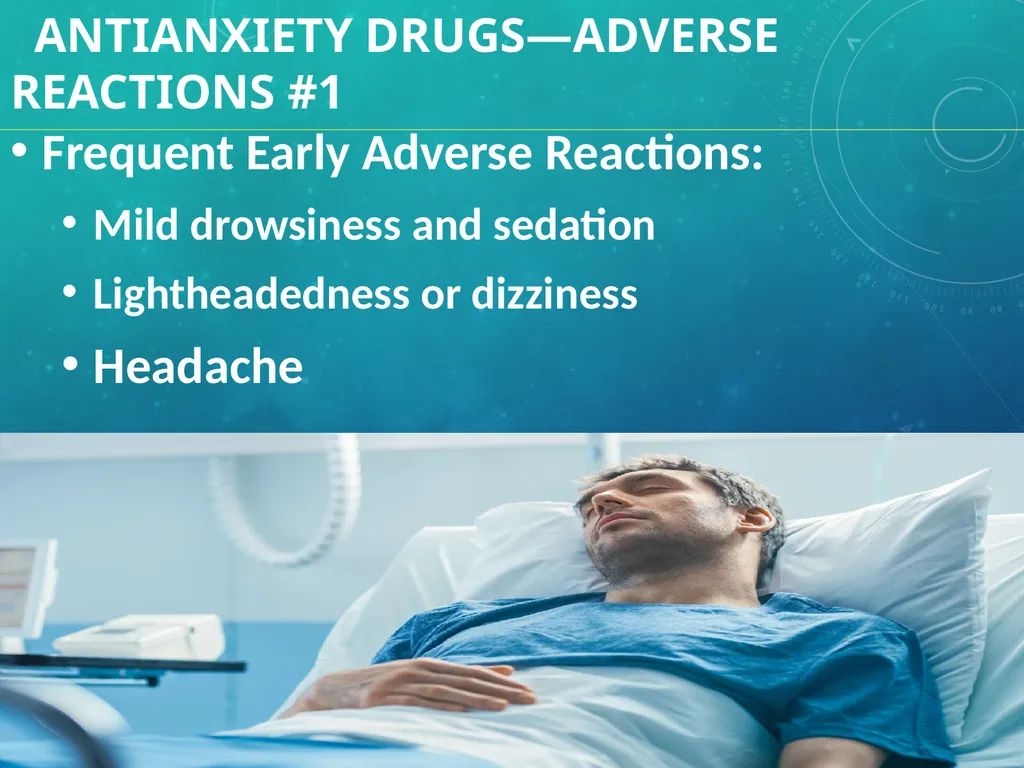
Antianxiety Drugs—Adverse Reactions #1 Frequent Early Adverse Reactions:
Mild drowsiness and sedation
Lightheadedness or dizziness
Headache<br>
Mild drowsiness and sedation
Lightheadedness or dizziness
Headache<br>
07
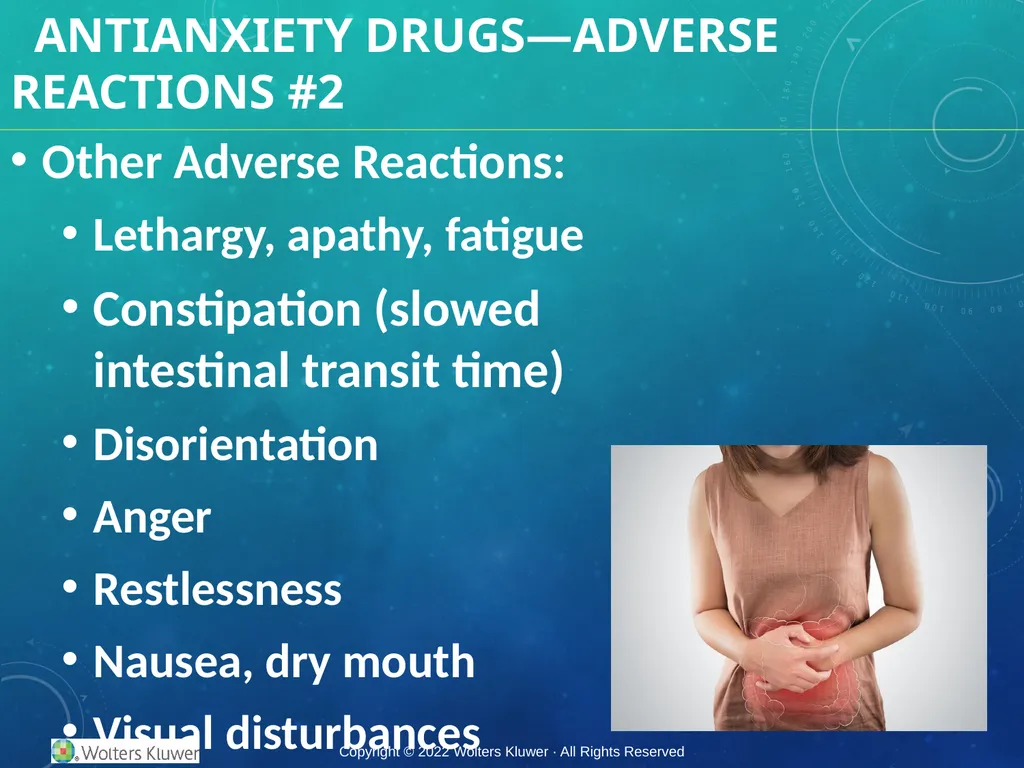
Antianxiety Drugs—Adverse Reactions #2 Other Adverse Reactions:
Lethargy, apathy, fatigue
Constipation (slowed intestinal transit time)
Disorientation
Anger
Restlessness
Nausea, dry mouth
Visual disturbances<br>
Lethargy, apathy, fatigue
Constipation (slowed intestinal transit time)
Disorientation
Anger
Restlessness
Nausea, dry mouth
Visual disturbances<br>
08
Antianxiety Drugs—Dependence Long-term use of benzodiazepines can result in physical dependence and tolerance
Should never be discontinued abruptly
Withdrawal symptoms can occur
Tapering—gradually decreasing dosage when stopping a benzodiazepine<br>
Should never be discontinued abruptly
Withdrawal symptoms can occur
Tapering—gradually decreasing dosage when stopping a benzodiazepine<br>
09
Antianxiety Drugs—Symptoms of Benzodiazepine Withdrawal<br>
10
Antianxiety Drugs-Contraindications Contraindicated in clients with:
known hypersensitivity to the drugs, psychosis, and acute narrow-angle glaucoma
pregnancy and labor due to floppy infant syndrome
lactation
coma or shock
acute alcoholic intoxication with abnormally low vital signs<br>
known hypersensitivity to the drugs, psychosis, and acute narrow-angle glaucoma
pregnancy and labor due to floppy infant syndrome
lactation
coma or shock
acute alcoholic intoxication with abnormally low vital signs<br>
11
Antianxiety Drugs—Contraindications and Precautions Use cautiously in:
elderly clients
clients with impaired liver or kidney function
clients with debilitation<br>
elderly clients
clients with impaired liver or kidney function
clients with debilitation<br>
12
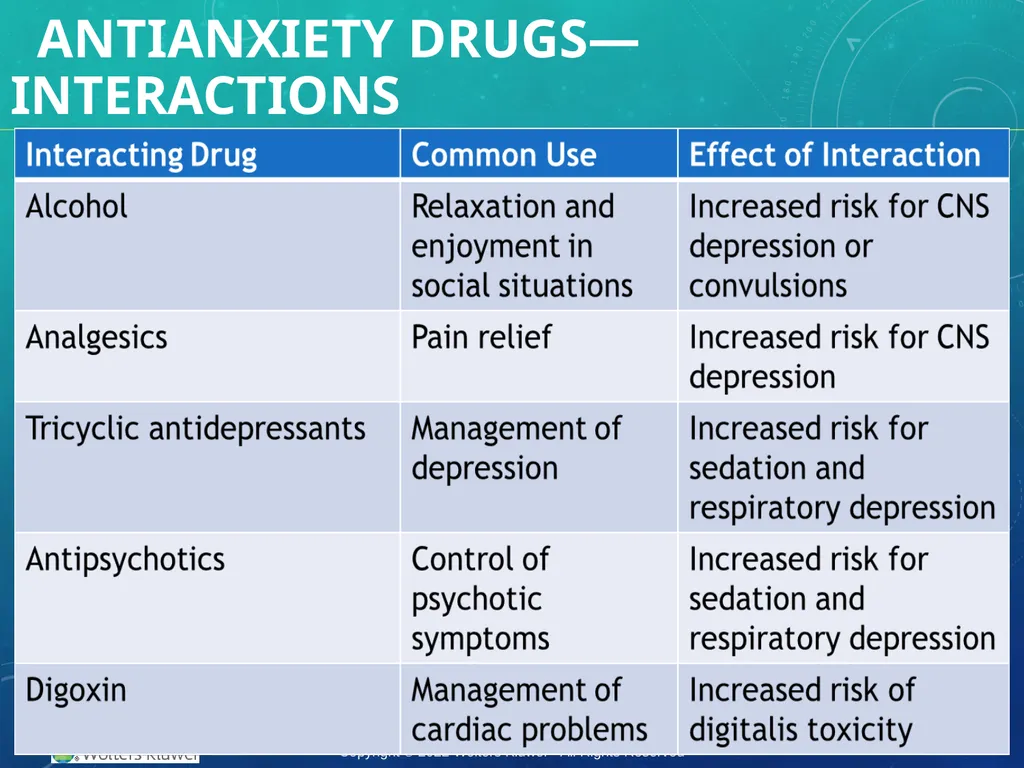
Antianxiety Drugs—Interactions<br>
13
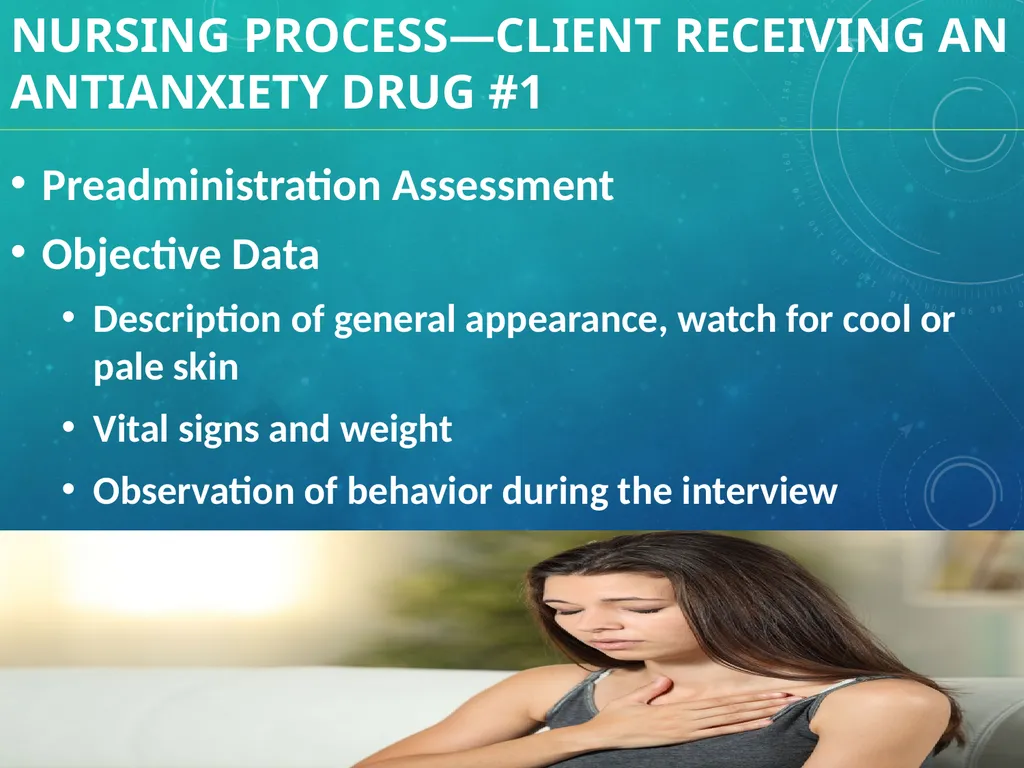
Nursing Process—Client Receiving an Antianxiety Drug #1 Preadministration Assessment
Objective Data
Description of general appearance, watch for cool or pale skin
Vital signs and weight
Observation of behavior during the interview<br>
Objective Data
Description of general appearance, watch for cool or pale skin
Vital signs and weight
Observation of behavior during the interview<br>
14
Nursing Process—Client Receiving an Antianxiety Drug #2 Pre-administration Assessment
Subjective Data
Rating of anxiety level
Current history of symptoms, description of how the client reacts to stress
Self-report compared to family members for episodes of behavioral change or escalation of symptoms
Coping mechanisms used to deal with anxiety
Medical, social, and health history
Review chart for drugs that may cause changes in mental health
Ask client about drug/alcohol use
Inquire if breastfeeding mother is taking any antianxiety medications<br>
15
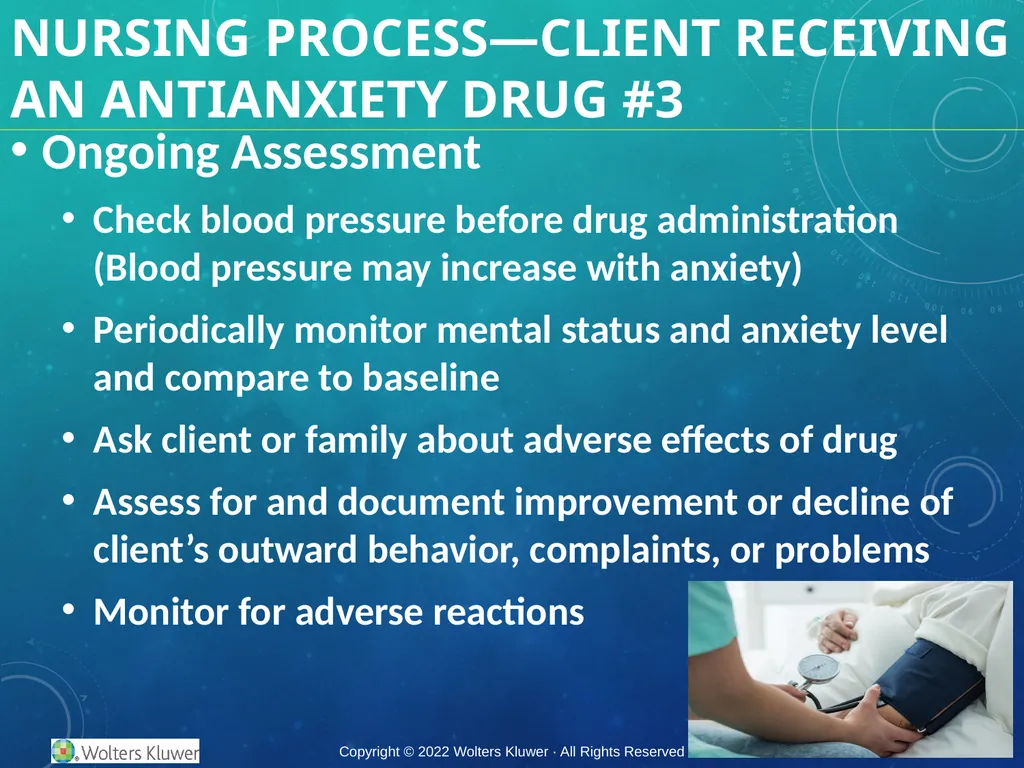
Nursing Process—Client Receiving an Antianxiety Drug #3 Ongoing Assessment
Check blood pressure before drug administration (Blood pressure may increase with anxiety)
Periodically monitor mental status and anxiety level and compare to baseline
Ask client or family about adverse effects of drug
Assess for and document improvement or decline of client’s outward behavior, complaints, or problems
Monitor for adverse reactions<br>
16
Nursing Process—Client Receiving an Antianxiety Drug #4 Nursing Diagnoses
Injury Risk related to dizziness, hypotension, and gait problems
Impaired Comfort related to dryness of gastrointestinal tract from medication
Coping Impairment related to situation causing anxiety<br>
Injury Risk related to dizziness, hypotension, and gait problems
Impaired Comfort related to dryness of gastrointestinal tract from medication
Coping Impairment related to situation causing anxiety<br>
17
Nursing Process—Client Receiving an Antianxiety Drug #5 Planning
Expected client outcomes may include:
Optimal response to therapy
Management of adverse drug reactions
Confidence in an understanding of the prescribed medication regimen<br>
Expected client outcomes may include:
Optimal response to therapy
Management of adverse drug reactions
Confidence in an understanding of the prescribed medication regimen<br>
18
Nursing Process—Client Receiving an Antianxiety Drug #6 Implementation
Promoting Optimal Response to Therapy
During initial therapy, the nurse observes for adverse drug reactions
The antianxiety drugs are not recommended for long-term use
If used for short periods (1 to 2 weeks), tolerance, withdrawal, and dependence do not usually develop
Report the client needing larger doses or complaints of increased anxiety or agitation to the primary health care provider<br>
19
Nursing Process—Client Receiving an Antianxiety Drug #7 Implementation
Monitoring and Managing Client Needs
Injury Risk
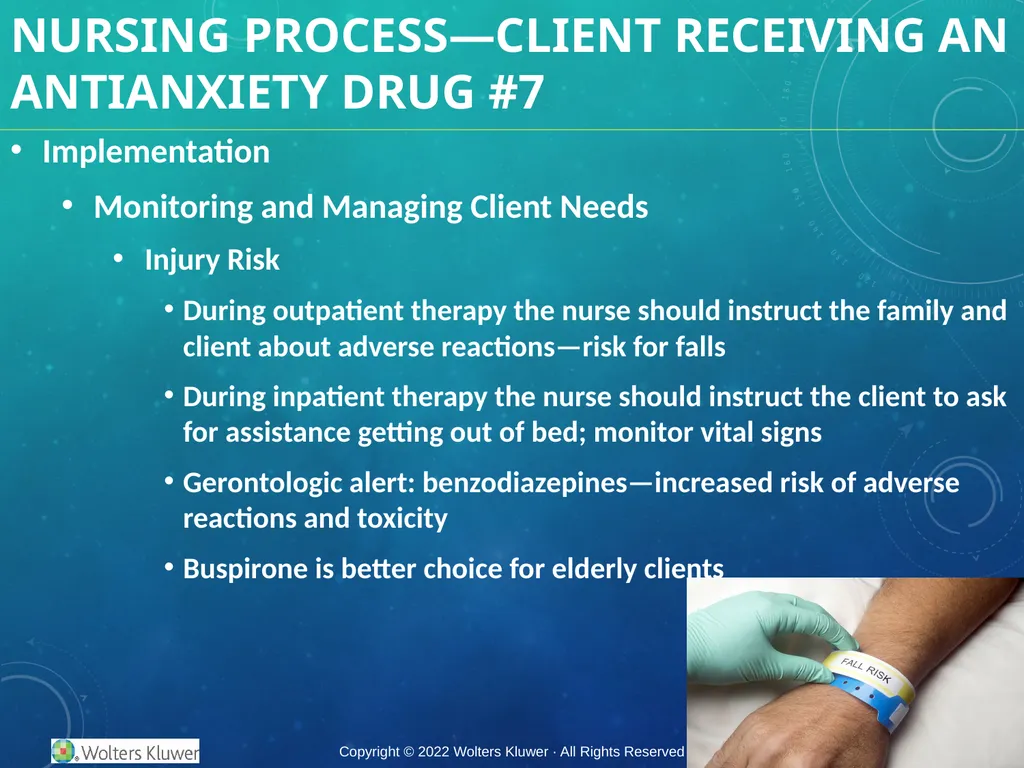
During outpatient therapy the nurse should instruct the family and client about adverse reactions—risk for falls
During inpatient therapy the nurse should instruct the client to ask for assistance getting out of bed; monitor vital signs
Gerontologic alert: benzodiazepines—increased risk of adverse reactions and toxicity
Buspirone is better choice for elderly clients<br>
20
Nursing Process—Client Receiving an Antianxiety Drug #8 Implementation
Monitoring and Managing Client Needs
Injury Risk
After parenteral administration of an antianxiety drug, the client should be kept lying down 30 minutes to 3 hours
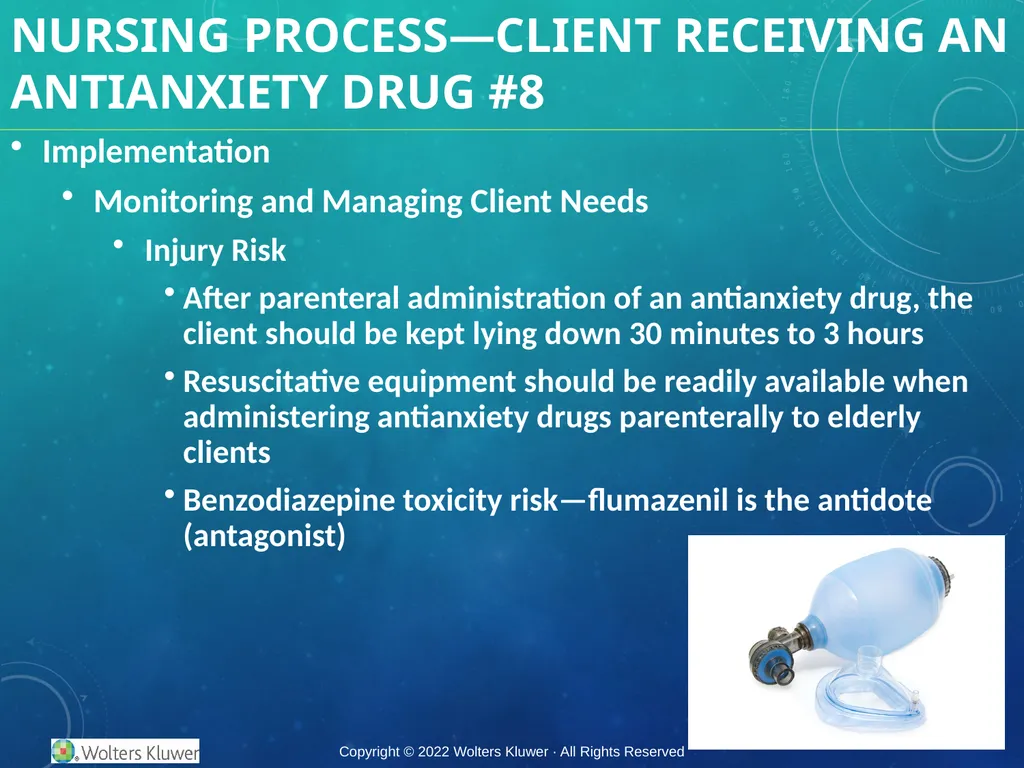
Resuscitative equipment should be readily available when administering antianxiety drugs parenterally to elderly clients
Benzodiazepine toxicity risk—flumazenil is the antidote (antagonist)<br>
21
Nursing Process—Client Receiving an Antianxiety Drug #9 Implementation
Monitoring and Managing Client Needs
Impaired Comfort
Assess swallowing and encourage fluids especially in older/institutionalized clients
Offer client sugarless gum or hard candy (decrease dry mouth)
Administer antianxiety drugs with food or meals (decrease GI upset)
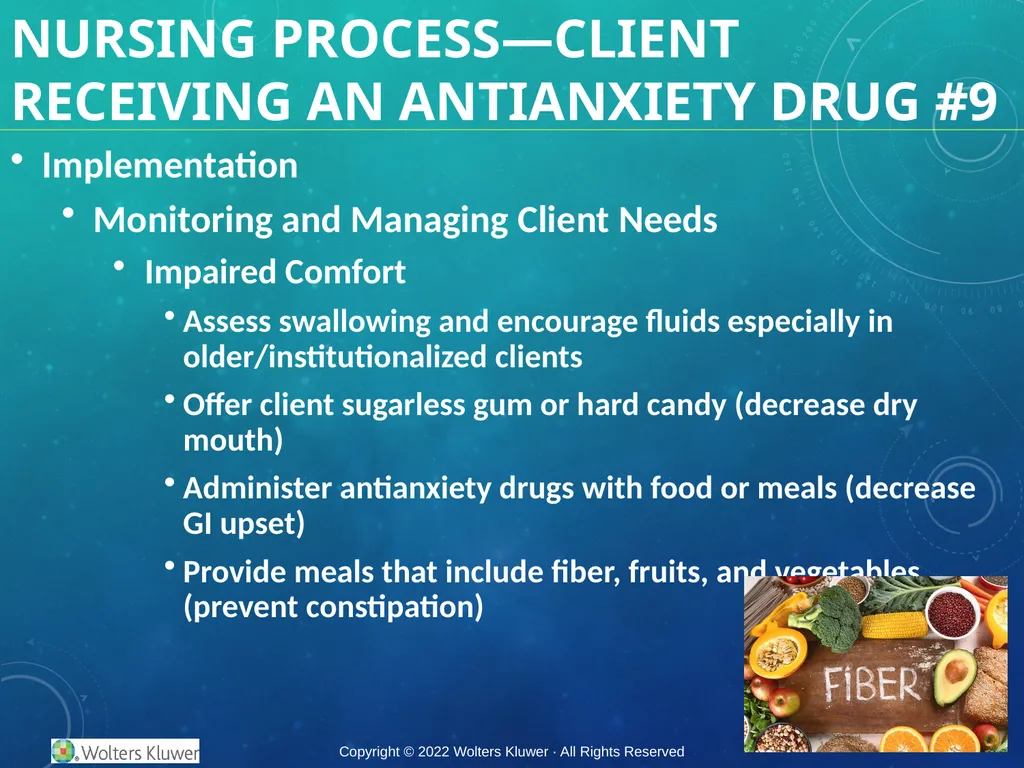
Provide meals that include fiber, fruits, and vegetables (prevent constipation)<br>
22
Nursing Process—Client Receiving an Antianxiety Drug #10 Implementation
Monitoring and Managing Client Needs
Coping Impairment
Outpatient: the nurse observes the client for response to therapy at time of each clinic visit
Question about response to therapy; use open-ended questions
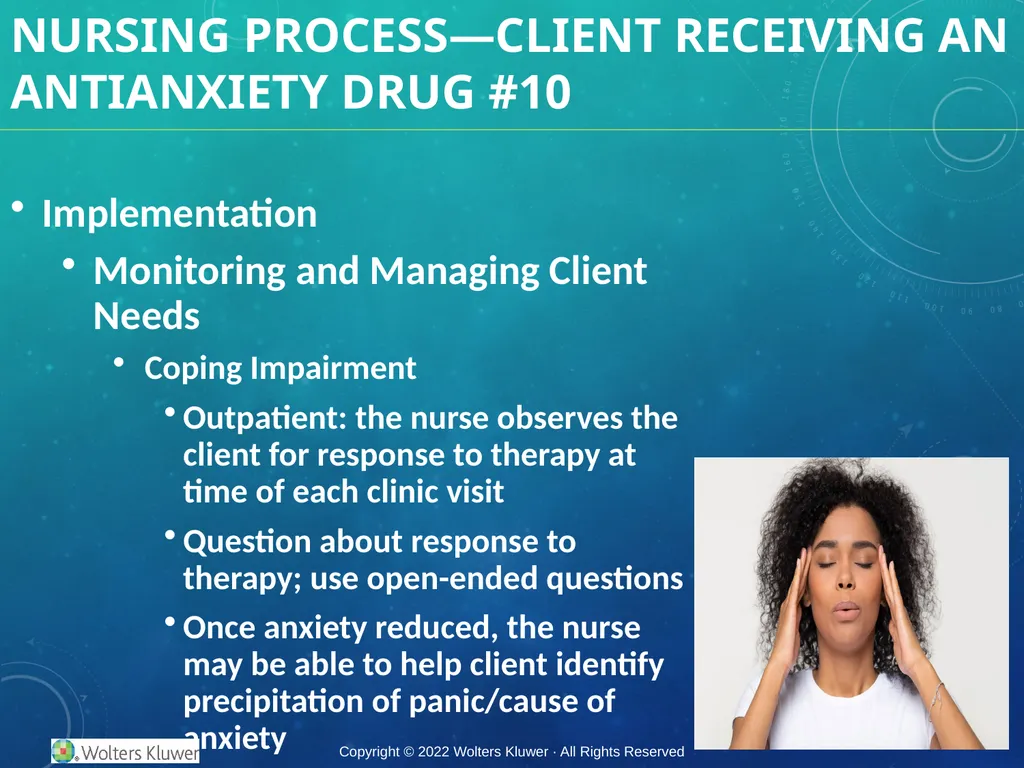
Once anxiety reduced, the nurse may be able to help client identify precipitation of panic/cause of anxiety<br>
23
Nursing Process—Client Receiving an Antianxiety Drug #11 Implementation—Educating the Client and Family
Develop a teaching plan for the client and family to include:
Evaluation of the client’s ability to assume responsibility for taking the drugs at home
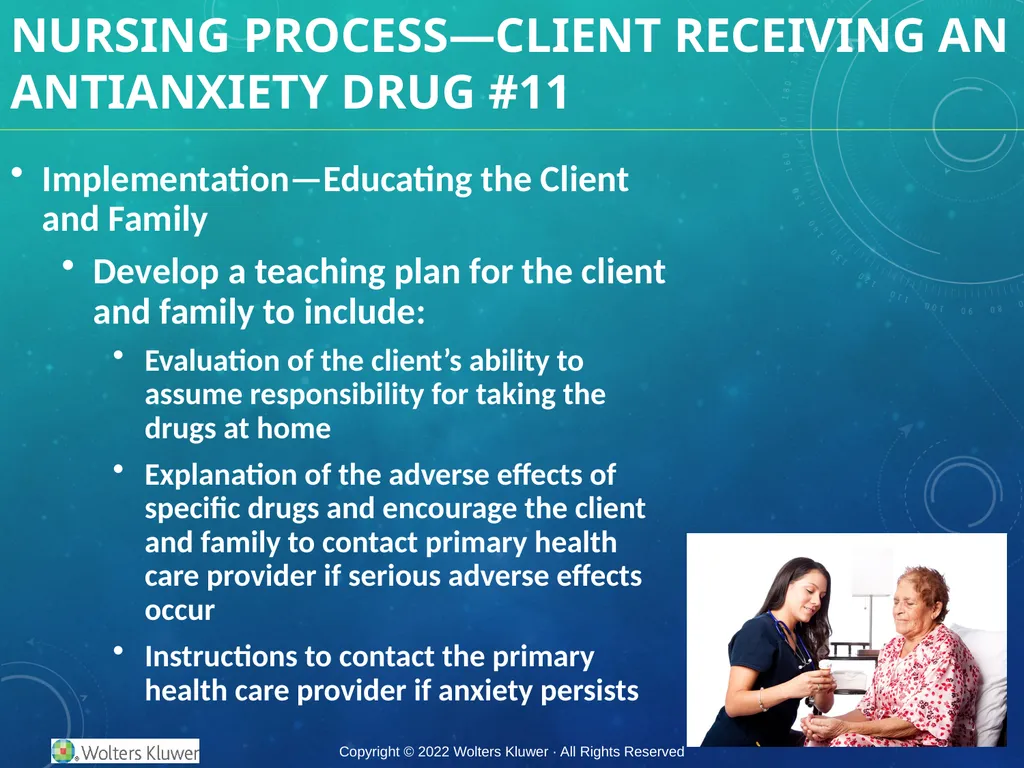
Explanation of the adverse effects of specific drugs and encourage the client and family to contact primary health care provider if serious adverse effects occur
Instructions to contact the primary health care provider if anxiety persists<br>
24
Nursing Process—Client Receiving an Antianxiety Drug #12 Implementation—Educating the Client and Family
Develop a teaching plan for the client and family to include:
Take drug as directed
Avoid performing hazardous tasks, drinking alcohol
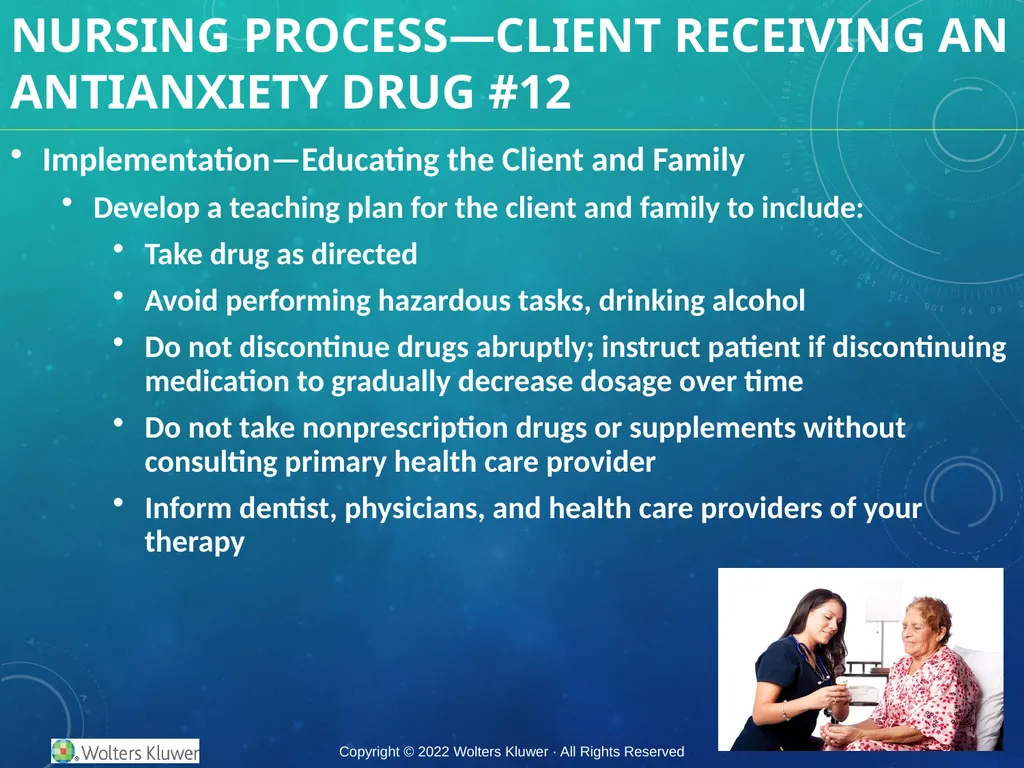
Do not discontinue drugs abruptly; instruct patient if discontinuing medication to gradually decrease dosage over time
Do not take nonprescription drugs or supplements without consulting primary health care provider
Inform dentist, physicians, and health care providers of your therapy<br>
25
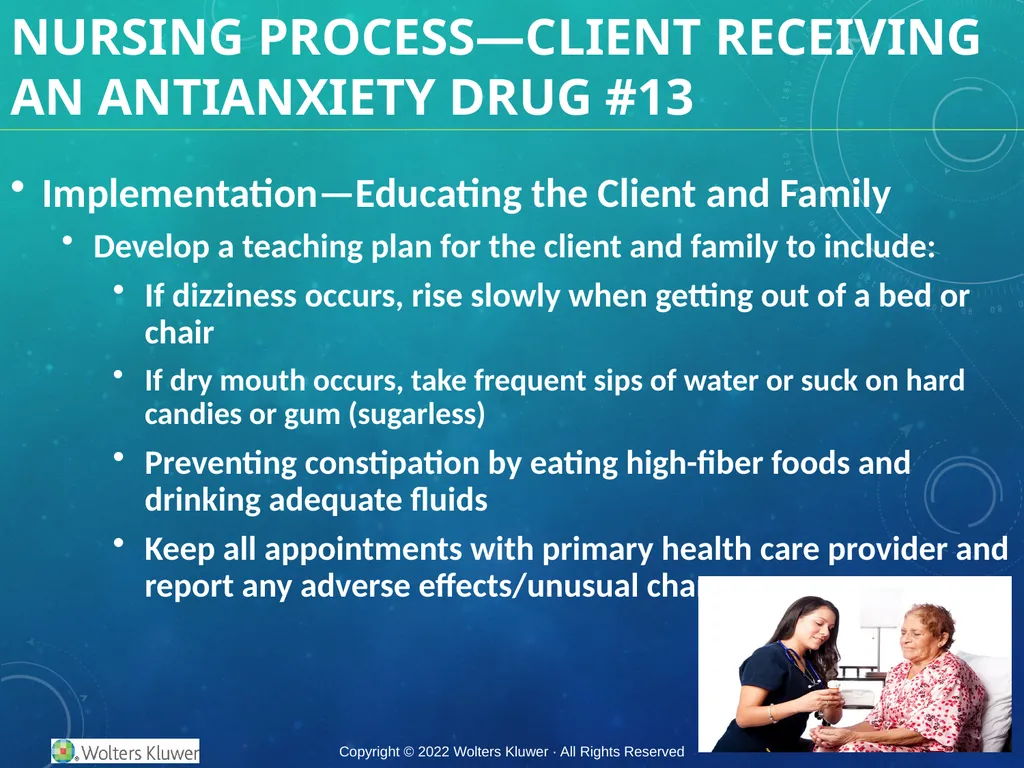
Nursing Process—Client Receiving an Antianxiety Drug #13 Implementation—Educating the Client and Family
Develop a teaching plan for the client and family to include:
If dizziness occurs, rise slowly when getting out of a bed or chair
If dry mouth occurs, take frequent sips of water or suck on hard candies or gum (sugarless)
Preventing constipation by eating high-fiber foods and drinking adequate fluids
Keep all appointments with primary health care provider and report any adverse effects/unusual changes<br>
26
Nursing Process—Client Receiving an Antianxiety Drug #14 Evaluation
Was the therapeutic effect achieved? Does the client report a decrease in feelings of anxiety?
Were adverse reactions: identified, reported, and managed?
No injury is evident
Client reports comfort without increased GI distress
Client manages coping effectively
Did client and family express confidence and demonstrate understanding of drug regimen?<br>
27
Pharmacology in Practice Exercise #1 A client on benzodiazepine therapy for 4 weeks comes to an adult day health facility. The EHR indicates the drug was stopped abruptly. The nurse should monitor for which of the following?
Increased RBC count
Decreased pulse rate
Increased anxiety
Increased appetite<br>
Increased RBC count
Decreased pulse rate
Increased anxiety
Increased appetite<br>
28
Pharmacology in Practice Exercise #2 A client visits a neighborhood clinic with symptoms of anxiety. The primary health care provider has prescribed hydroxyzine. Which of the following conditions should the nurse flag for possible contraindication or complications when administering hydroxyzine? Select all that apply.
Impaired liver function
Impaired pancreas function
Bone marrow depression
Clients with debilitation<br>
Impaired liver function
Impaired pancreas function
Bone marrow depression
Clients with debilitation<br>
29
Pharmacology in Practice Exercise #3 An adult family home client is prescribed chlordiazepoxide for anxiety. Which of the following dietary changes should the nurse instruct the caregivers to perform to prevent the occurrence of constipation in the client?
Provide vitamin supplements
Restrict the client’s diet to fluids only
Provide the client with a fiber-rich diet and plenty of fluids
Restrict client to a strict vegetarian diet<br>
Provide vitamin supplements
Restrict the client’s diet to fluids only
Provide the client with a fiber-rich diet and plenty of fluids
Restrict client to a strict vegetarian diet<br>