
Introduction to Composting Nancy Allred UME Master




Description: Introduction to Composting Nancy Allred UME Master Gardener, Anne Arundel County What is Compost? Compost is dark, crumbly, earthy-smelling material that results from the decomposition of leaves, kitchen scraps, and other organic materials.
Related Topics
Download Presentation
"Introduction to Composting Nancy Allred UME Master" is the property of its rightful owner. Permission is granted to download and print the materials on this website for personal, non-commercial use only, and to display it on your personal computer provided you do not modify the materials and that you retain all copyright notices contained in the materials. By downloading content from our website, you accept the terms of this agreement.
Presentation Transcript
slide1. Introduction to Composting Nancy Allred
UME Master Gardener, Anne Arundel County<br>
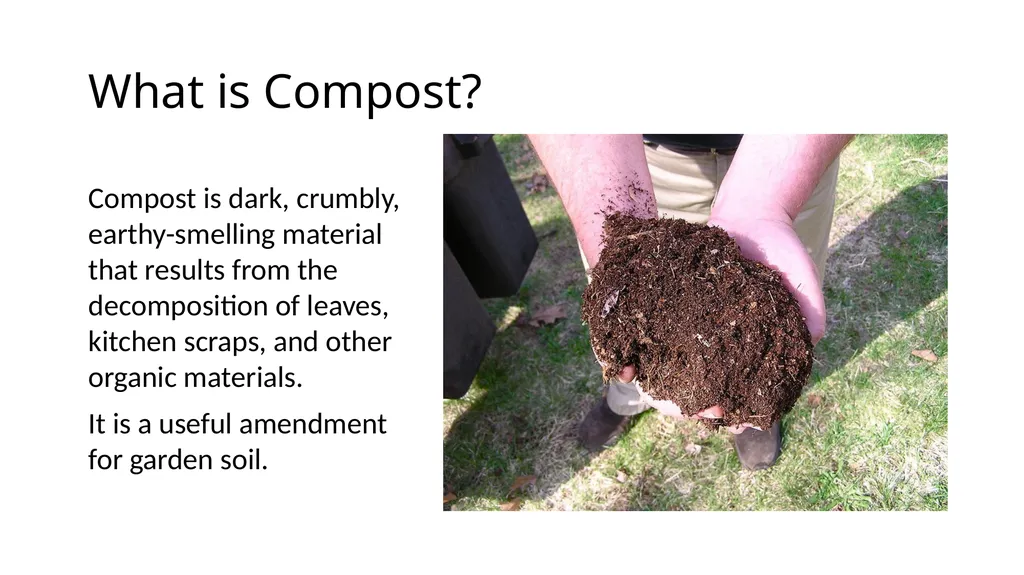
slide4. What is Compost? Compost is dark, crumbly, earthy-smelling material that results from the decomposition of leaves, kitchen scraps, and other organic materials.
It is a useful amendment for garden soil.<br>
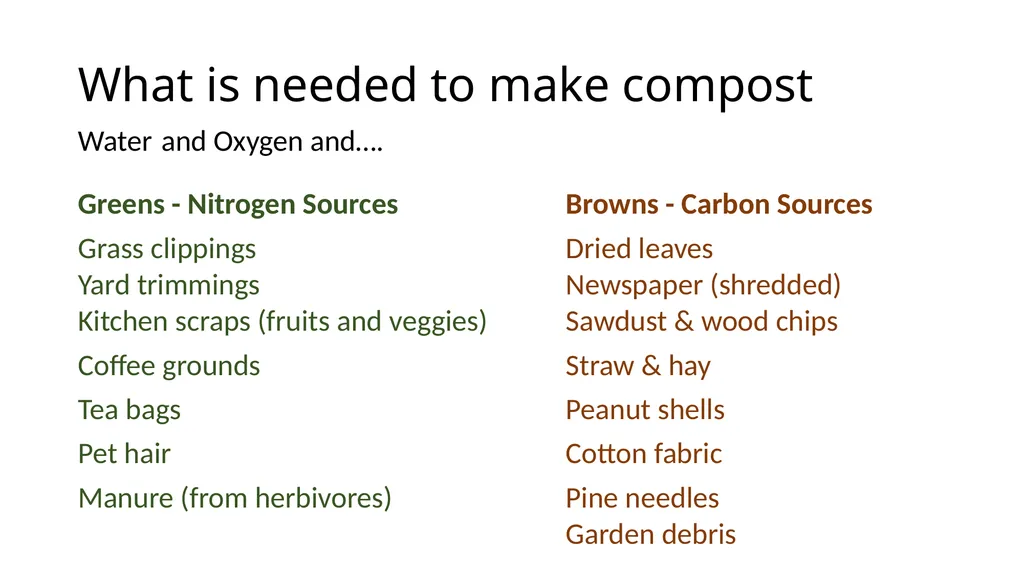
slide5. What is needed to make compost Water and Oxygen and….<br>
slide6. Carbon-to-nitrogen ratio (C:N) The Ideal carbon to nitrogen ratio is 30 parts carbon to 1 part nitrogen
Ratios vary: volume vs weight, size vs type of material<br>
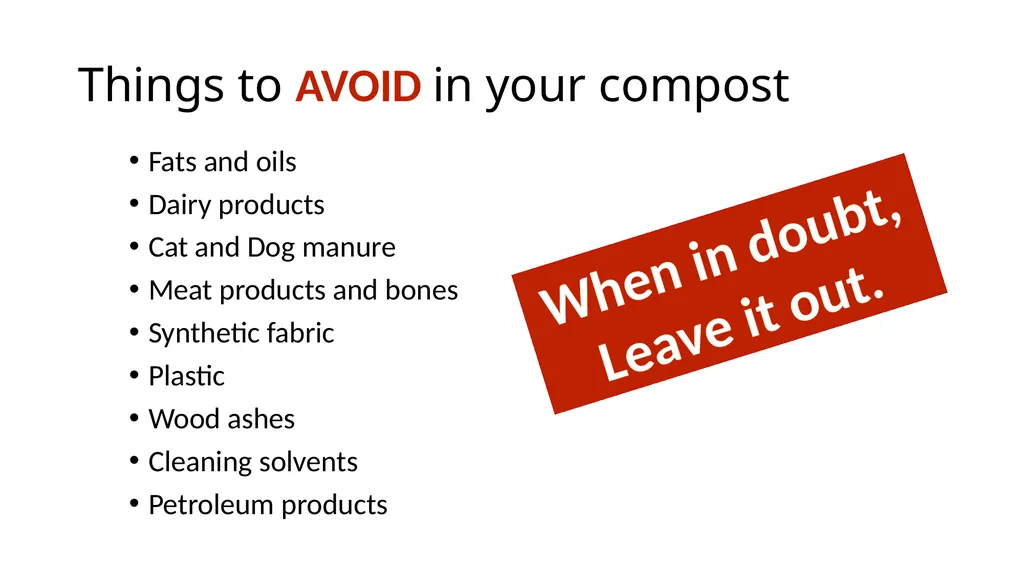
slide7. Things to AVOID in your compost Fats and oils
Dairy products
Cat and Dog manure
Meat products and bones
Synthetic fabric
Plastic
Wood ashes
Cleaning solvents
Petroleum products When in doubt,
Leave it out.<br>
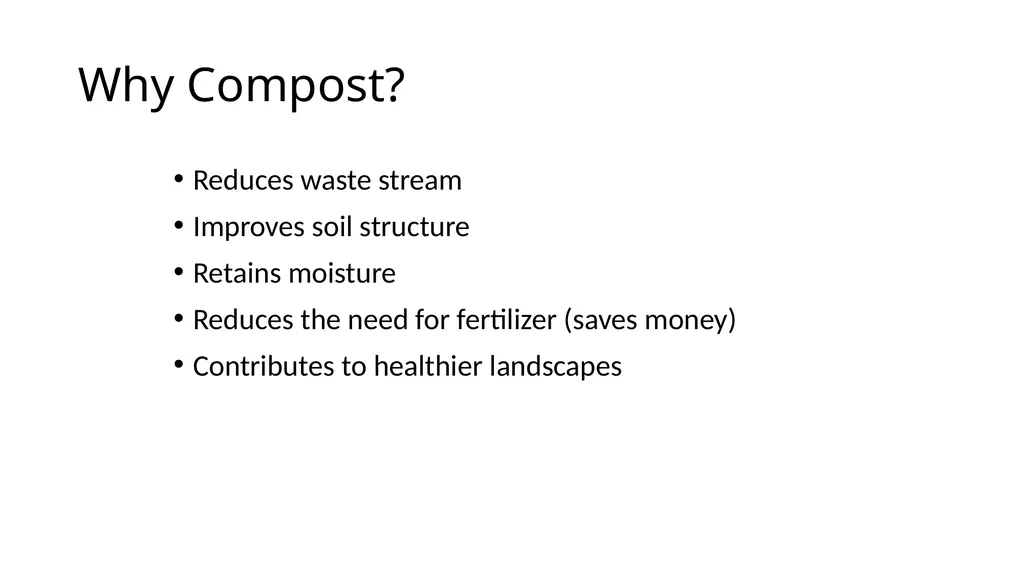
slide8. Why Compost? Reduces waste stream
Improves soil structure
Retains moisture
Reduces the need for fertilizer (saves money)
Contributes to healthier landscapes<br>
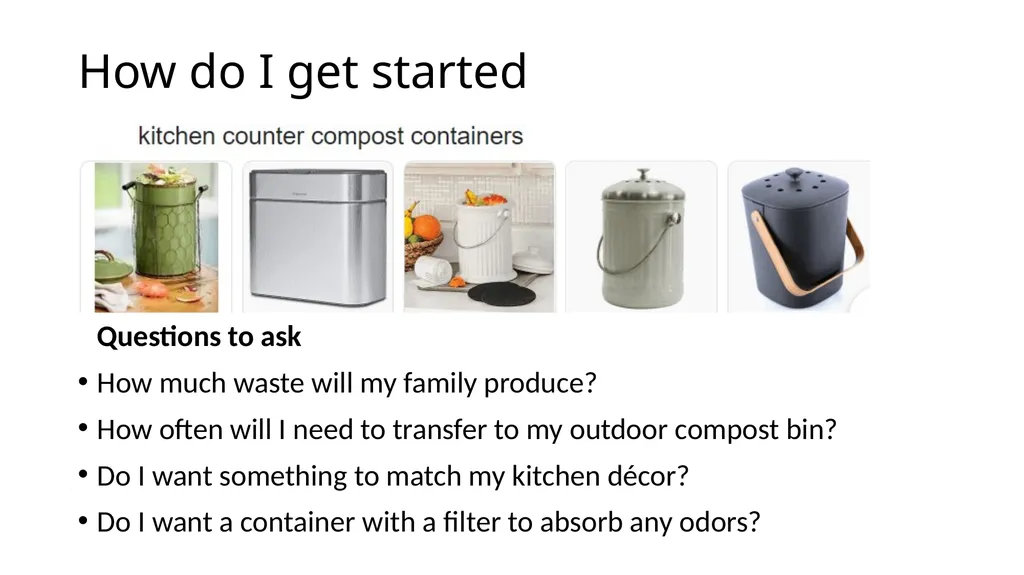
slide9. How do I get started Questions to ask
How much waste will my family produce?
How often will I need to transfer to my outdoor compost bin?
Do I want something to match my kitchen décor?
Do I want a container with a filter to absorb any odors?<br>
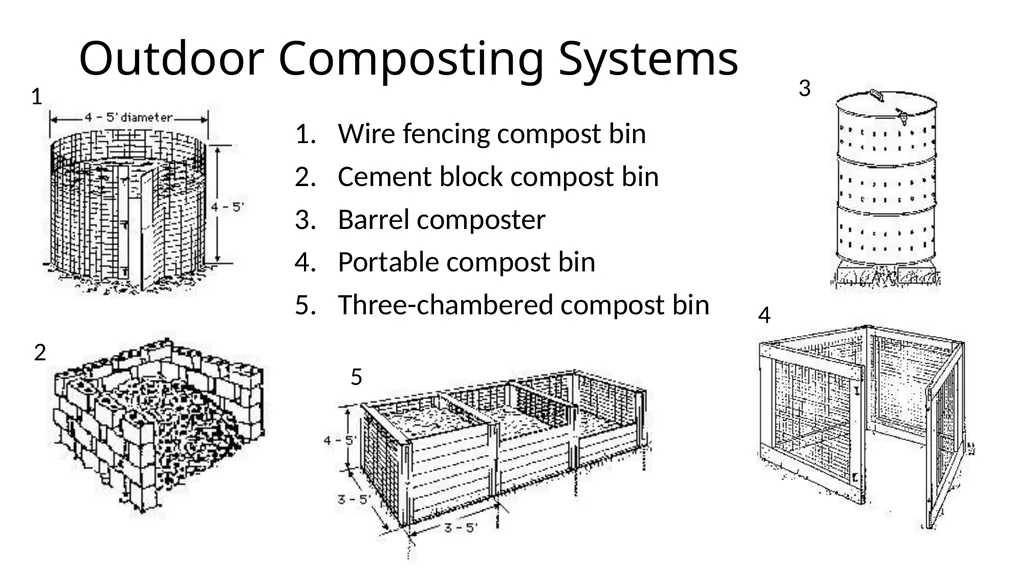
slide10. Outdoor Composting Systems Wire fencing compost bin
Cement block compost bin
Barrel composter
Portable compost bin
Three-chambered compost bin 1 2 3 4 5<br>
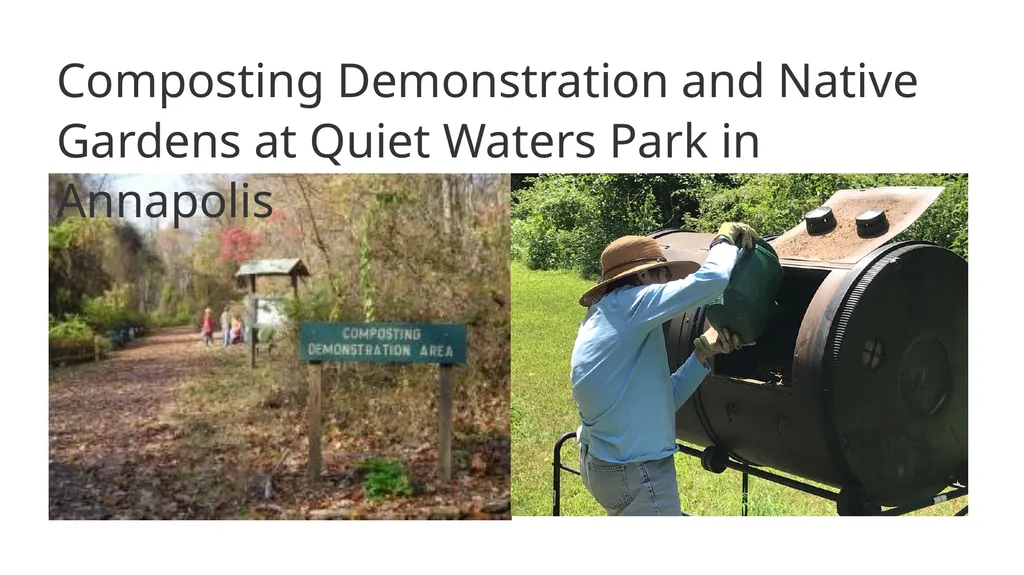
slide11. Composting Demonstration and Native Gardens at Quiet Waters Park in Annapolis<br>
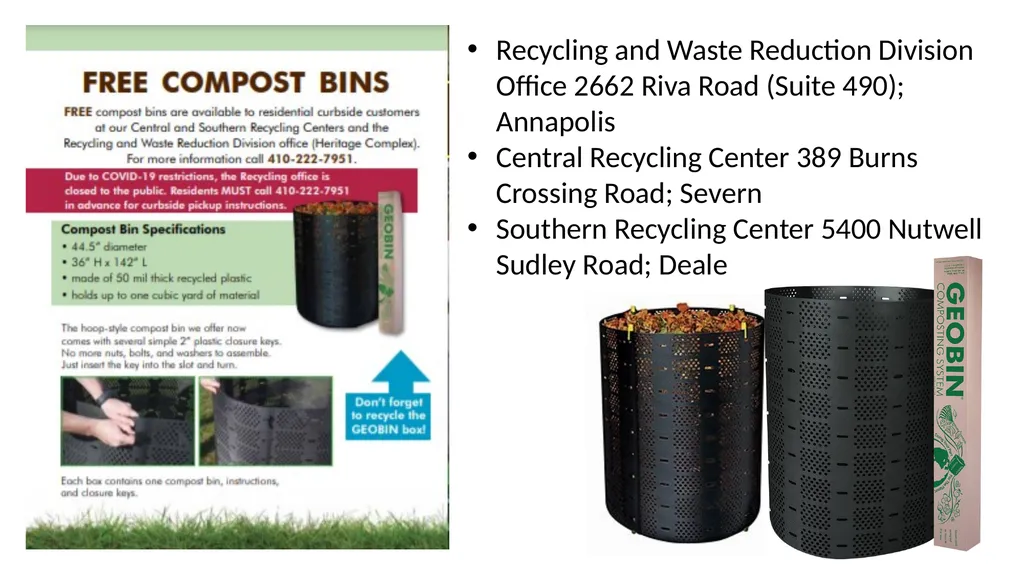
slide12. Recycling and Waste Reduction Division Office 2662 Riva Road (Suite 490); Annapolis
Central Recycling Center 389 Burns Crossing Road; Severn
Southern Recycling Center 5400 Nutwell Sudley Road; Deale<br>
slide13. Locate your compost pile near where you will use it and it will not interfere with yard activities
The pile will work best in a location that is away from drying winds, yet receives partial sunlight to help heat the pile
Place away from wooden structures
Locate in an area to avoid offending your neighbors Locating Your Compost Pile?<br>
slide14. Begin with eight to ten inches of leaves, grass or plant trimmings. Strive for C:N ratio of 30:1.
Water it to the point of being moist, but not soggy.
You may choose to add a one-inch layer of soil or completed compost to increase the number of decomposing microbes in the pile.
Repeat these layers until the pile reaches a height of five feet, watering each time you add new layers. “Build” Your Compost Pile?<br>
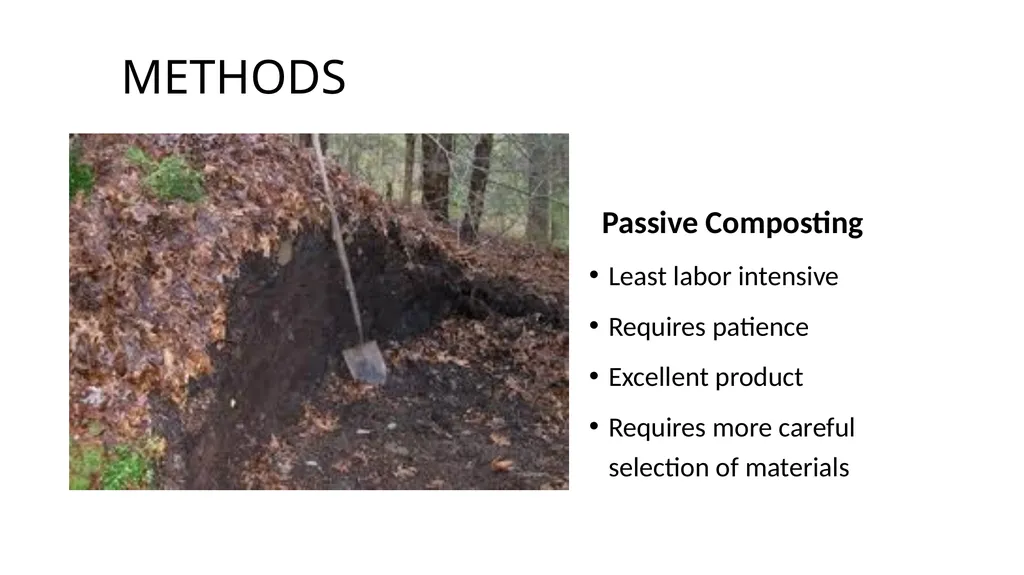
slide15. METHODS Passive Composting
Least labor intensive
Requires patience
Excellent product
Requires more careful selection of materials<br>
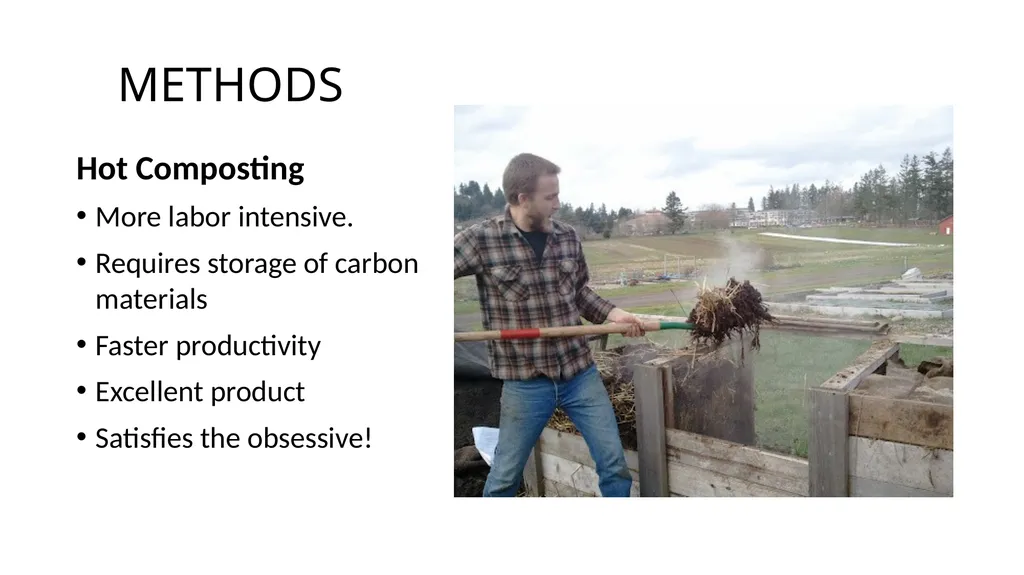
slide16. METHODS Hot Composting
More labor intensive.
Requires storage of carbon materials
Faster productivity
Excellent product
Satisfies the obsessive!<br>
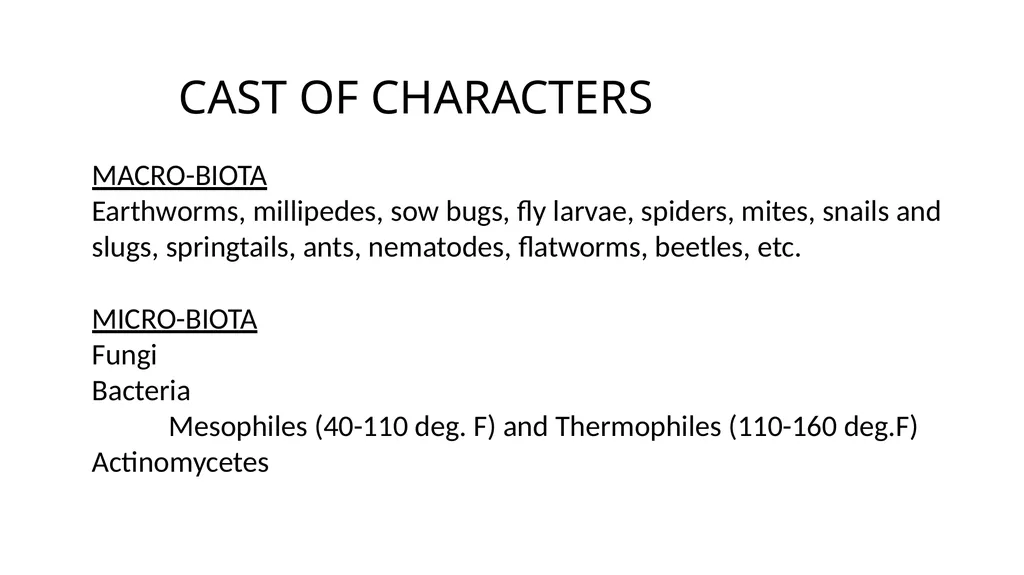
slide17. CAST OF CHARACTERS MACRO-BIOTA
Earthworms, millipedes, sow bugs, fly larvae, spiders, mites, snails and slugs, springtails, ants, nematodes, flatworms, beetles, etc.
MICRO-BIOTA
Fungi
Bacteria
Mesophiles (40-110 deg. F) and Thermophiles (110-160 deg.F)
Actinomycetes<br>
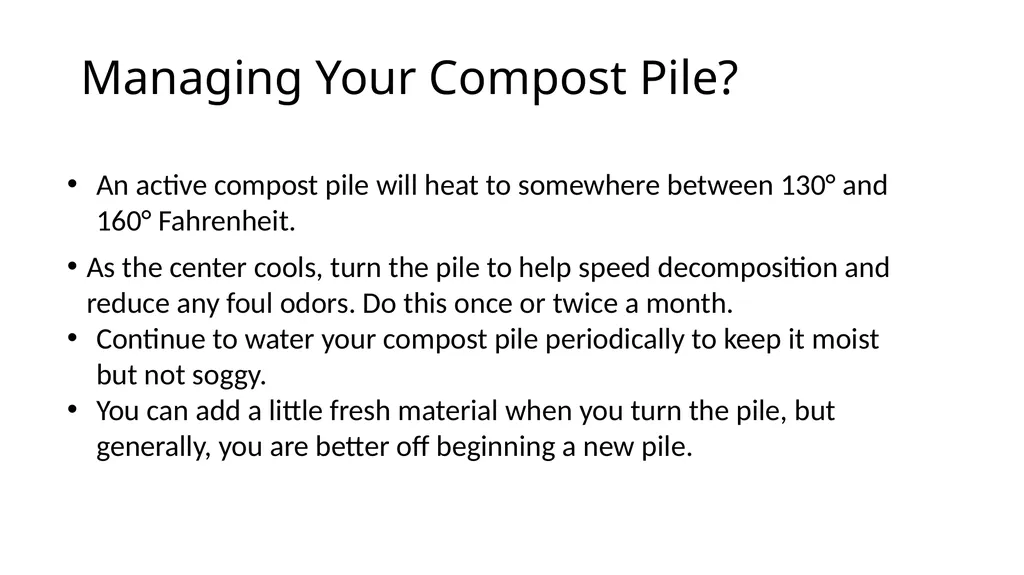
slide18. An active compost pile will heat to somewhere between 130° and 160° Fahrenheit.
As the center cools, turn the pile to help speed decomposition and reduce any foul odors. Do this once or twice a month.
Continue to water your compost pile periodically to keep it moist but not soggy.
You can add a little fresh material when you turn the pile, but generally, you are better off beginning a new pile. Managing Your Compost Pile?<br>
slide19. When is the compost ready? A well-managed compost pile will be ready in two to four months in the warm season, whereas an untended pile will take a year or more to decompose.
When it is finished it will no longer resemble ingredients
The compost pile will be about half its original height, and will have a pleasant, earthy smell.<br>
slide20. Want to Learn More Vermicomposting - indoor method using red worms
Sheet composting - start by layering newspaper, followed by leaves, grass clippings and compost, then water. Typically this method is done in the fall for spring planting
Trench composting- dig a trench 12” deep to bury your scraps, then cover with soil<br>
slide21. USES OF FINISHED COMPOST Mulch - Especially around fruit trees
Top Dressing - Around flowering plants
Compost Tea – With some caveats…. REGARDLESS OF THE HORTICULTURAL PROBLEM…THE SOLUTION IS USUALLY COMPOST!!<br>
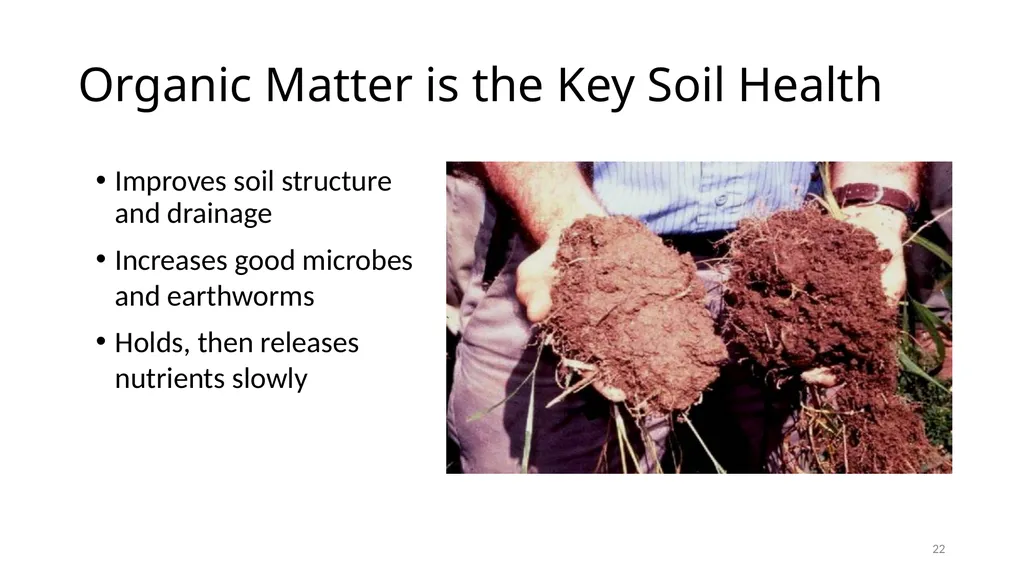
slide22. Organic Matter is the Key Soil Health Improves soil structure and drainage
Increases good microbes and earthworms
Holds, then releases nutrients slowly 22<br>
slide25. Resources extension.umd.edu/hgic extension.umd.edu/learn/ask-gardening marylandgrows.umd.edu extension.umd.edu/mg extension.umd.edu/growit Take a food gardening class
Find local community gardens
Learn about youth/school gardens<br>
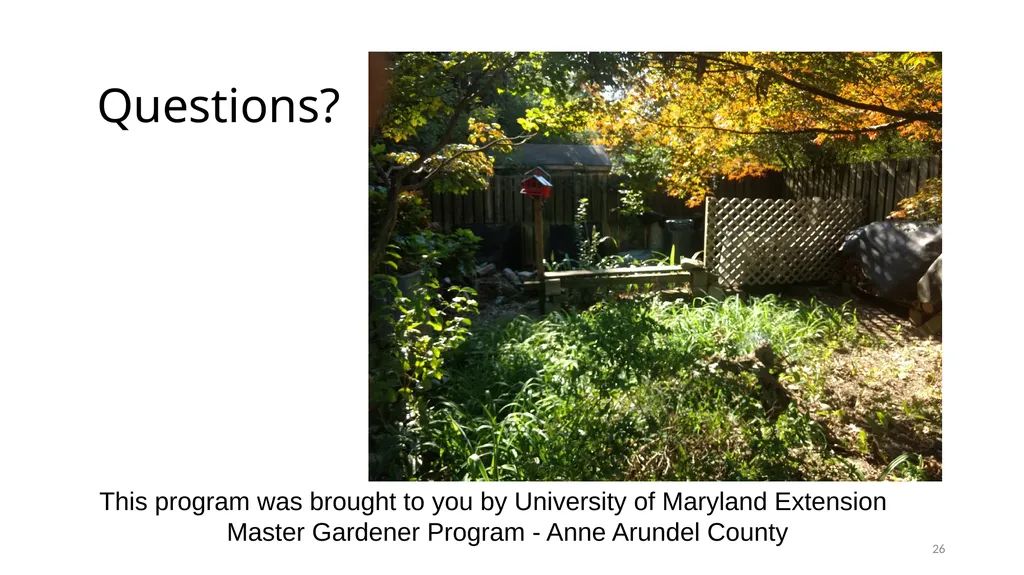
slide26. 26 Questions? This program was brought to you by University of Maryland Extension Master Gardener Program - Anne Arundel County<br>
UME Master Gardener, Anne Arundel County<br>
slide4. What is Compost? Compost is dark, crumbly, earthy-smelling material that results from the decomposition of leaves, kitchen scraps, and other organic materials.
It is a useful amendment for garden soil.<br>
slide5. What is needed to make compost Water and Oxygen and….<br>
slide6. Carbon-to-nitrogen ratio (C:N) The Ideal carbon to nitrogen ratio is 30 parts carbon to 1 part nitrogen
Ratios vary: volume vs weight, size vs type of material<br>
slide7. Things to AVOID in your compost Fats and oils
Dairy products
Cat and Dog manure
Meat products and bones
Synthetic fabric
Plastic
Wood ashes
Cleaning solvents
Petroleum products When in doubt,
Leave it out.<br>
slide8. Why Compost? Reduces waste stream
Improves soil structure
Retains moisture
Reduces the need for fertilizer (saves money)
Contributes to healthier landscapes<br>
slide9. How do I get started Questions to ask
How much waste will my family produce?
How often will I need to transfer to my outdoor compost bin?
Do I want something to match my kitchen décor?
Do I want a container with a filter to absorb any odors?<br>
slide10. Outdoor Composting Systems Wire fencing compost bin
Cement block compost bin
Barrel composter
Portable compost bin
Three-chambered compost bin 1 2 3 4 5<br>
slide11. Composting Demonstration and Native Gardens at Quiet Waters Park in Annapolis<br>
slide12. Recycling and Waste Reduction Division Office 2662 Riva Road (Suite 490); Annapolis
Central Recycling Center 389 Burns Crossing Road; Severn
Southern Recycling Center 5400 Nutwell Sudley Road; Deale<br>
slide13. Locate your compost pile near where you will use it and it will not interfere with yard activities
The pile will work best in a location that is away from drying winds, yet receives partial sunlight to help heat the pile
Place away from wooden structures
Locate in an area to avoid offending your neighbors Locating Your Compost Pile?<br>
slide14. Begin with eight to ten inches of leaves, grass or plant trimmings. Strive for C:N ratio of 30:1.
Water it to the point of being moist, but not soggy.
You may choose to add a one-inch layer of soil or completed compost to increase the number of decomposing microbes in the pile.
Repeat these layers until the pile reaches a height of five feet, watering each time you add new layers. “Build” Your Compost Pile?<br>
slide15. METHODS Passive Composting
Least labor intensive
Requires patience
Excellent product
Requires more careful selection of materials<br>
slide16. METHODS Hot Composting
More labor intensive.
Requires storage of carbon materials
Faster productivity
Excellent product
Satisfies the obsessive!<br>
slide17. CAST OF CHARACTERS MACRO-BIOTA
Earthworms, millipedes, sow bugs, fly larvae, spiders, mites, snails and slugs, springtails, ants, nematodes, flatworms, beetles, etc.
MICRO-BIOTA
Fungi
Bacteria
Mesophiles (40-110 deg. F) and Thermophiles (110-160 deg.F)
Actinomycetes<br>
slide18. An active compost pile will heat to somewhere between 130° and 160° Fahrenheit.
As the center cools, turn the pile to help speed decomposition and reduce any foul odors. Do this once or twice a month.
Continue to water your compost pile periodically to keep it moist but not soggy.
You can add a little fresh material when you turn the pile, but generally, you are better off beginning a new pile. Managing Your Compost Pile?<br>
slide19. When is the compost ready? A well-managed compost pile will be ready in two to four months in the warm season, whereas an untended pile will take a year or more to decompose.
When it is finished it will no longer resemble ingredients
The compost pile will be about half its original height, and will have a pleasant, earthy smell.<br>
slide20. Want to Learn More Vermicomposting - indoor method using red worms
Sheet composting - start by layering newspaper, followed by leaves, grass clippings and compost, then water. Typically this method is done in the fall for spring planting
Trench composting- dig a trench 12” deep to bury your scraps, then cover with soil<br>
slide21. USES OF FINISHED COMPOST Mulch - Especially around fruit trees
Top Dressing - Around flowering plants
Compost Tea – With some caveats…. REGARDLESS OF THE HORTICULTURAL PROBLEM…THE SOLUTION IS USUALLY COMPOST!!<br>
slide22. Organic Matter is the Key Soil Health Improves soil structure and drainage
Increases good microbes and earthworms
Holds, then releases nutrients slowly 22<br>
slide25. Resources extension.umd.edu/hgic extension.umd.edu/learn/ask-gardening marylandgrows.umd.edu extension.umd.edu/mg extension.umd.edu/growit Take a food gardening class
Find local community gardens
Learn about youth/school gardens<br>
slide26. 26 Questions? This program was brought to you by University of Maryland Extension Master Gardener Program - Anne Arundel County<br>