Introduction to Data Science Dr. Kalpakis, Fall 2017 1 What is Data Science? Data scientists, The Sexiest Job of the 21st Century (Davenport and Patil, Harvard Business Review, 2012) Much of the data science explosion is coming from the
"Introduction to Data Science Dr. Kalpakis, Fall" is the property of its rightful owner. Permission is granted to
download and print the materials on this website for personal, non-commercial use only, and to display it
on your personal computer provided you do not modify the materials and that you retain all copyright
notices contained in the materials. By downloading content from our website, you accept the terms of this
agreement.
Presentation Transcript
01
Introduction to Data Science Dr. Kalpakis, Fall 2017 1<br>
02
What is Data Science? Data scientists, "The Sexiest Job of the 21st Century" (Davenport and Patil, Harvard Business Review, 2012)
Much of the data science explosion is coming from the tech-world
What does Data Science mean?
Is it the science of Big Data?
What is Big Data anyway?
Who does Data Science and where?
What existed before Data Science came along?
Is it simply a rebranding of statistics and machine learning?
“Anything that has to call itself a science isn’t.”
Hype increases noise-to-signal ratio in perceiving reality and makes it harder to focus on the gems
Why and how to hire a data scientist? http://goo.gl/F4K4hE 2<br>
03
Why now? massive amounts of data about many aspects of our lives, both online and offline activities, real-time as well as past-time
Datafication=“taking all aspects of life and turning them into data”
“Once we datafy things, we can transform their purpose and turn the information into new forms of value.”
abundance of inexpensive computing power, communication capacity
proliferation of small footprint low-power sensors (IoT)
feedback loop between our behavior, environment, and data products 3<br>
04
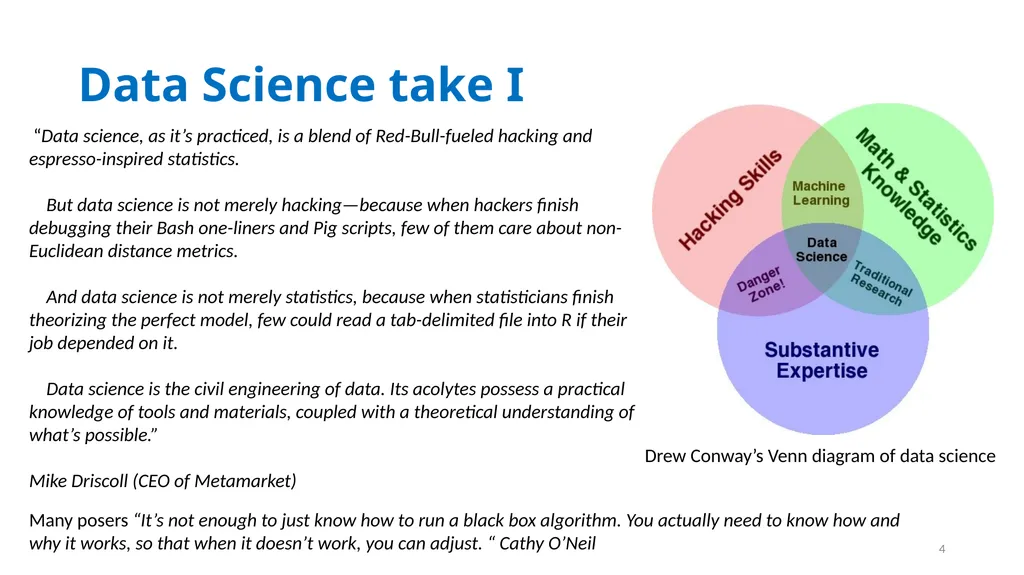
Data Science take I Drew Conway’s Venn diagram of data science “Data science, as it’s practiced, is a blend of Red-Bull-fueled hacking and espresso-inspired statistics.
But data science is not merely hacking—because when hackers finish debugging their Bash one-liners and Pig scripts, few of them care about non-Euclidean distance metrics.
And data science is not merely statistics, because when statisticians finish theorizing the perfect model, few could read a tab-delimited file into R if their job depended on it.
Data science is the civil engineering of data. Its acolytes possess a practical knowledge of tools and materials, coupled with a theoretical understanding of what’s possible.”
Mike Driscoll (CEO of Metamarket) Many posers “It’s not enough to just know how to run a black box algorithm. You actually need to know how and why it works, so that when it doesn’t work, you can adjust. “ Cathy O’Neil 4<br>
05
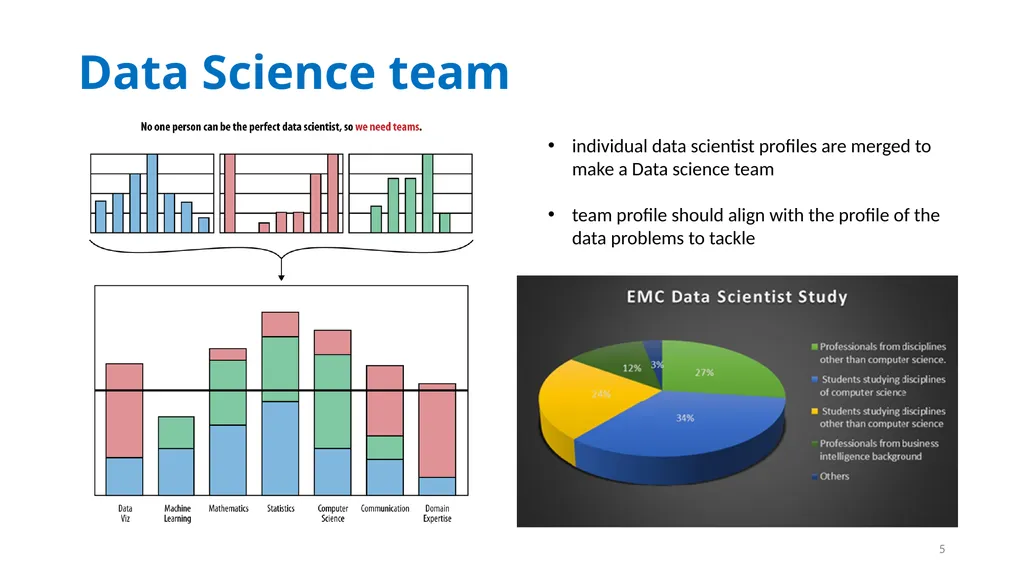
Data Science team individual data scientist profiles are merged to make a Data science team
team profile should align with the profile of the data problems to tackle 5<br>
06
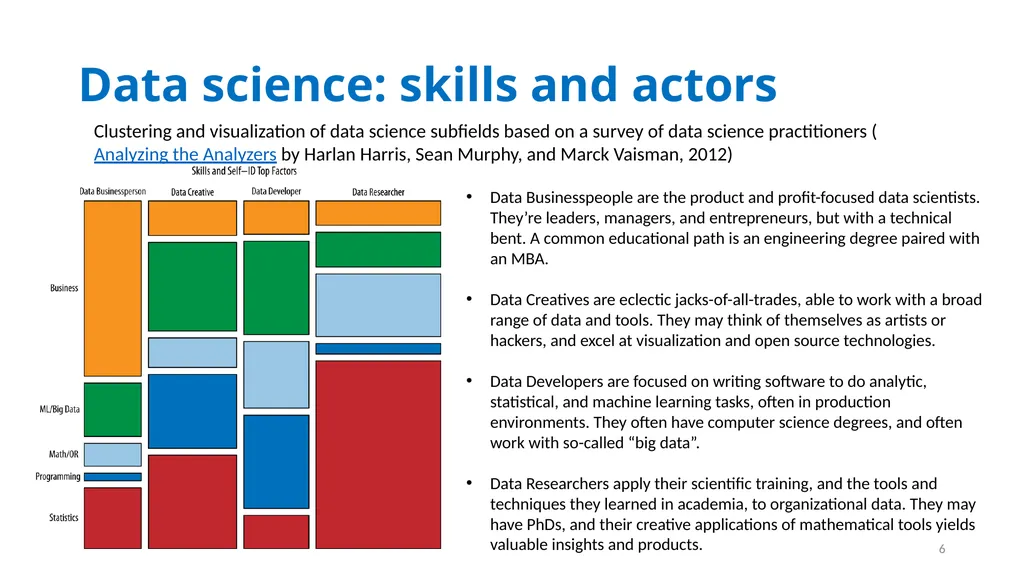
Data science: skills and actors Clustering and visualization of data science subfields based on a survey of data science practitioners (Analyzing the Analyzers by Harlan Harris, Sean Murphy, and Marck Vaisman, 2012) Data Businesspeople are the product and profit-focused data scientists. They’re leaders, managers, and entrepreneurs, but with a technical bent. A common educational path is an engineering degree paired with an MBA.
Data Creatives are eclectic jacks-of-all-trades, able to work with a broad range of data and tools. They may think of themselves as artists or hackers, and excel at visualization and open source technologies.
Data Developers are focused on writing software to do analytic, statistical, and machine learning tasks, often in production environments. They often have computer science degrees, and often work with so-called “big data”.
Data Researchers apply their scientific training, and the tools and techniques they learned in academia, to organizational data. They may have PhDs, and their creative applications of mathematical tools yields valuable insights and products. 6<br>
07
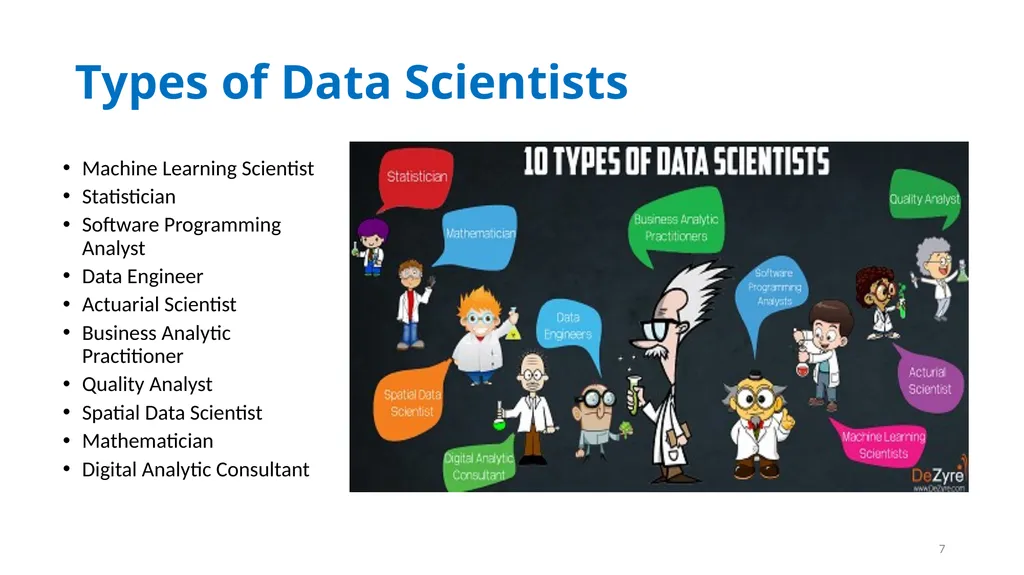
Machine Learning Scientist
Statistician
Software Programming Analyst
Data Engineer
Actuarial Scientist
Business Analytic Practitioner
Quality Analyst
Spatial Data Scientist
Mathematician
Digital Analytic Consultant Types of Data Scientists 7<br>
08
What do data scientists do? “define what data science is by what data scientists get paid to do” (O’Neil and Schutt)
In academia, a data scientist is trained in some discipline, works with large amounts of data, grapples with computational problems posed by the structure, size, messiness, and the complexity and nature of the data, and solves real-world problems.
In industry, a data scientist
knows how to extract meaning from and interpret data, which requires both tools and methods from statistics and machine learning, as well as being human.
spends a lots of effort in collecting, cleaning, and munging data utilizing statistics and software engineering skills.
performs exploratory data analysis, finds patterns, builds models, and algorithms.
communicates the findings in clear language and with data visualizations so that even if her/his colleagues unfamiliar with the data can understand the implications 8<br>
09
Data Science take II “Data science, also known as data-driven science, is an interdisciplinary field about scientific methods, processes, and systems to extract knowledge or insights from data in various forms, either structured or unstructured, similar to data mining.” (Wikipedia)
The 4th paradigm of science (theoretical, empirical, computational, and data-driven) (Jim Gray) 9<br>
10
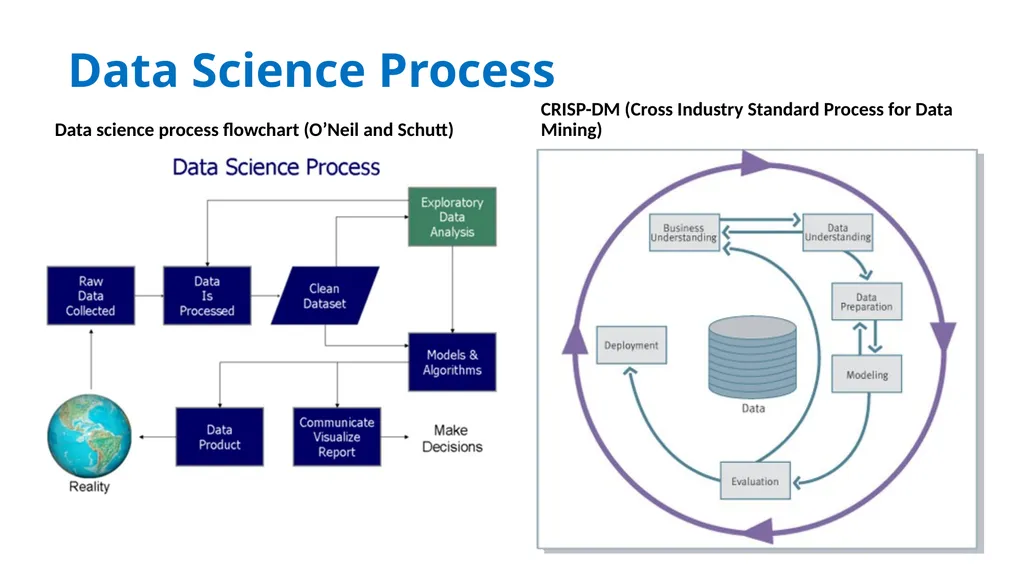
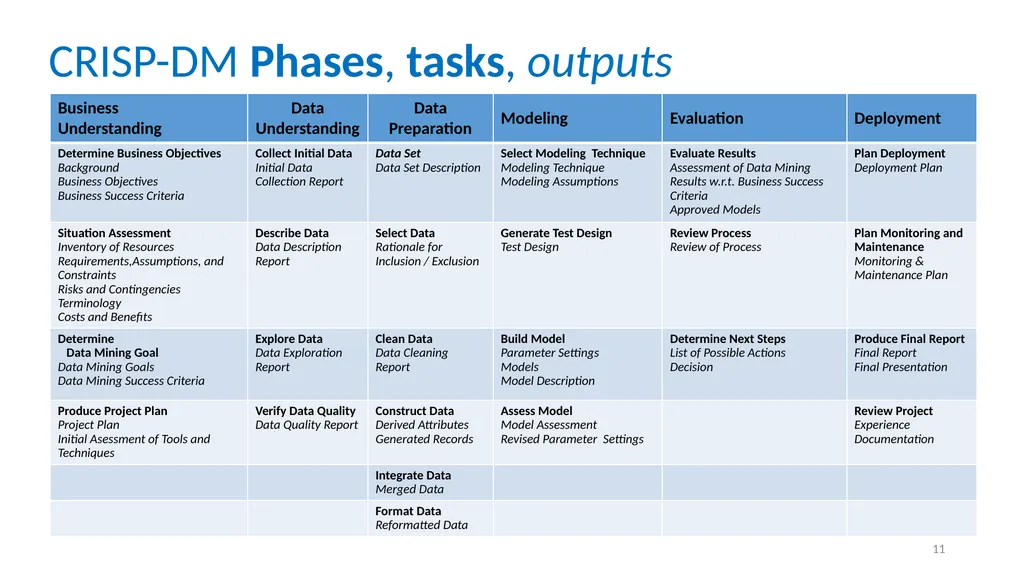
Data Science Process Data science process flowchart (O’Neil and Schutt) CRISP-DM (Cross Industry Standard Process for Data Mining) 10<br>