
Introduction to Mutual Funds Disclaimer 2


Description: Introduction to Mutual Funds Disclaimer 2 Information contained in this presentation is as on September 30, 2022. The information contained in this presentation is only for Educational and Awareness Purposes related to securities market .
Related Topics
Download Presentation
"Introduction to Mutual Funds Disclaimer 2" is the property of its rightful owner. Permission is granted to download and print the materials on this website for personal, non-commercial use only, and to display it on your personal computer provided you do not modify the materials and that you retain all copyright notices contained in the materials. By downloading content from our website, you accept the terms of this agreement.
Presentation Transcript
slide1. Introduction to Mutual Funds<br>
slide2. Disclaimer 2 Information contained in this presentation is as on September 30, 2022.
The information contained in this presentation is only for Educational and Awareness Purposes related to securities market .
This presentation is only for Educational and Investor Awareness Programs and shall not be used for any legal interpretations.
SEBI or Stock Exchanges or Depositories shall not be responsible for any damage or loss to any one of any manner from use of this material.
Suggestions or feedbacks, if any, may please be sent by mail to visitsebi@sebi.gov.in.<br>
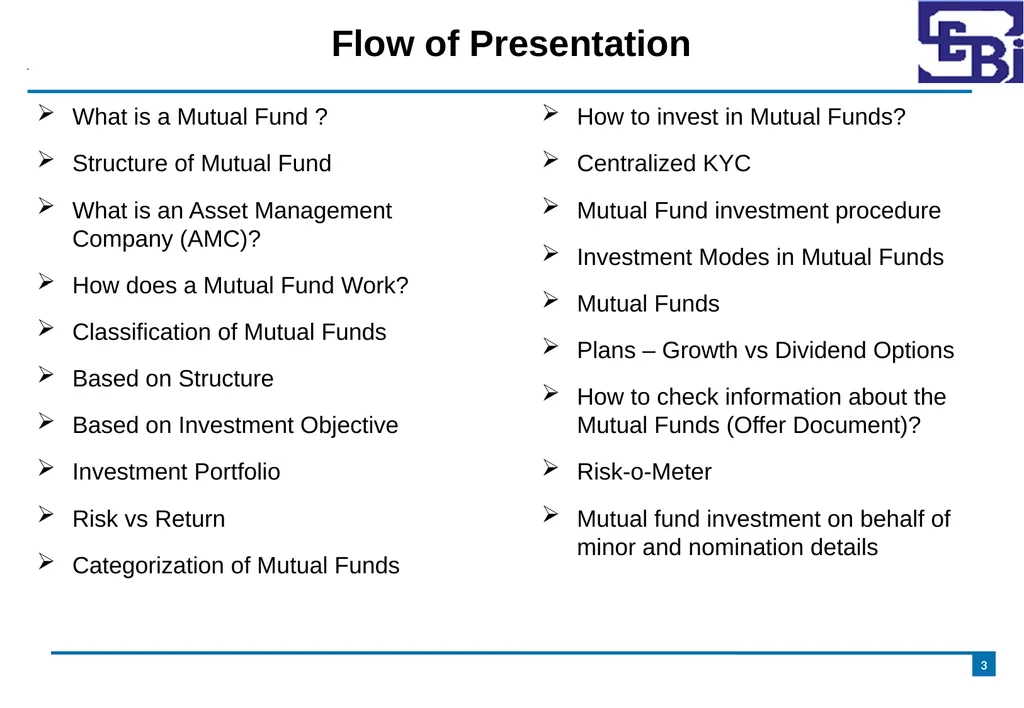
slide3. Flow of Presentation What is a Mutual Fund ?
Structure of Mutual Fund
What is an Asset Management Company (AMC)?
How does a Mutual Fund Work?
Classification of Mutual Funds
Based on Structure
Based on Investment Objective
Investment Portfolio
Risk vs Return
Categorization of Mutual Funds 3 How to invest in Mutual Funds?
Centralized KYC
Mutual Fund investment procedure
Investment Modes in Mutual Funds
Mutual Funds
Plans – Growth vs Dividend Options
How to check information about the Mutual Funds (Offer Document)?
Risk-o-Meter
Mutual fund investment on behalf of minor and nomination details<br>
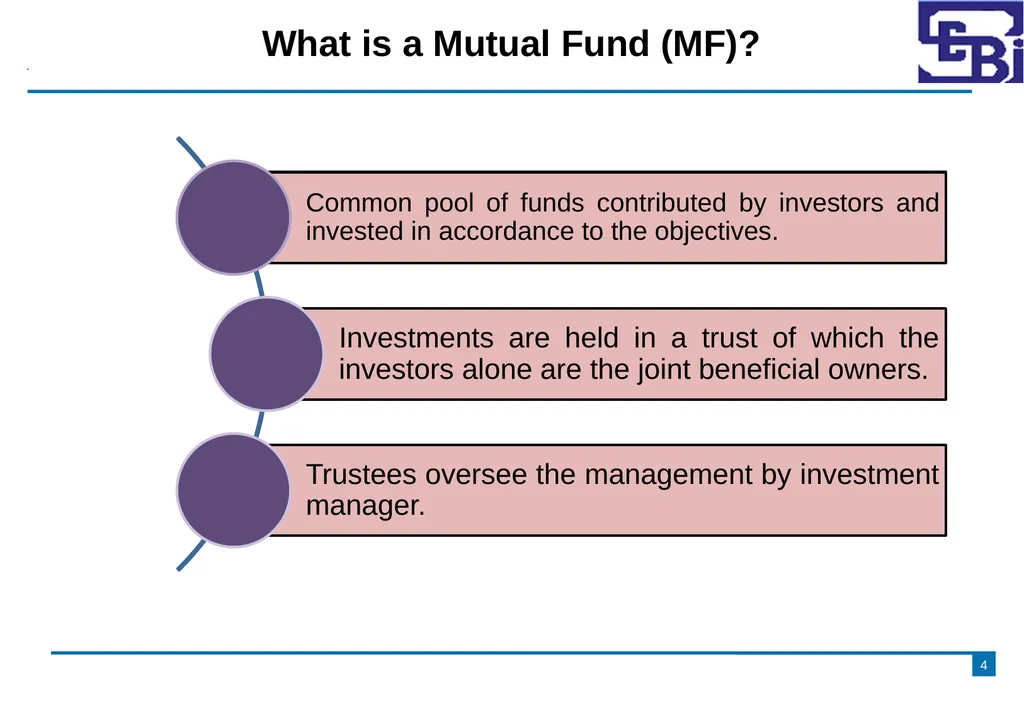
slide4. What is a Mutual Fund (MF)? 4<br>
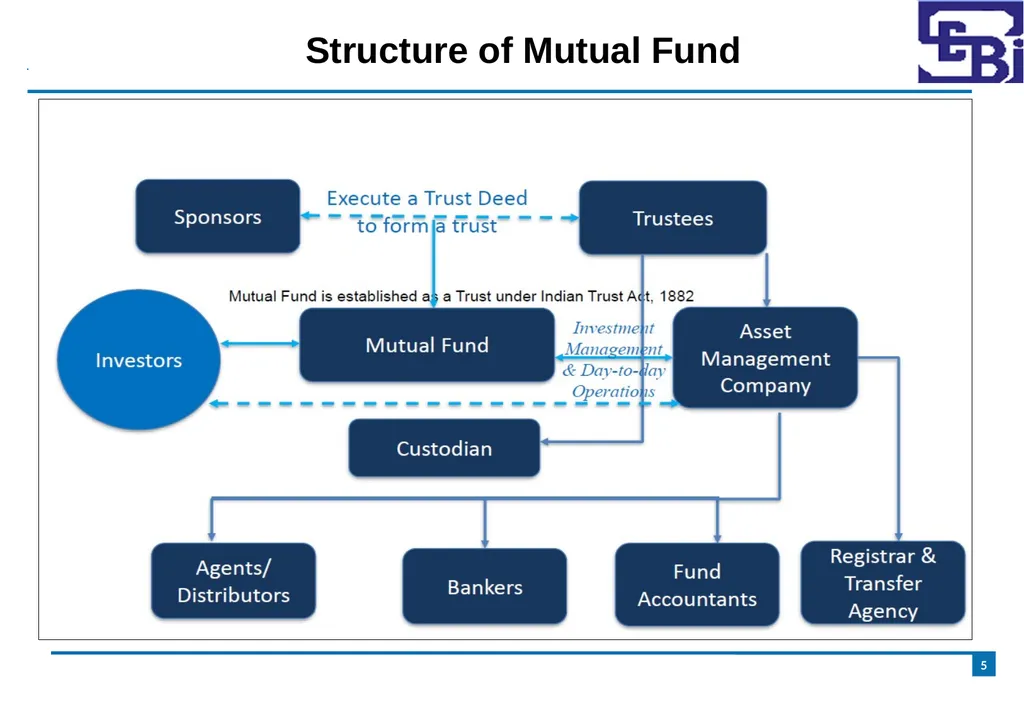
slide5. Structure of Mutual Fund 5<br>
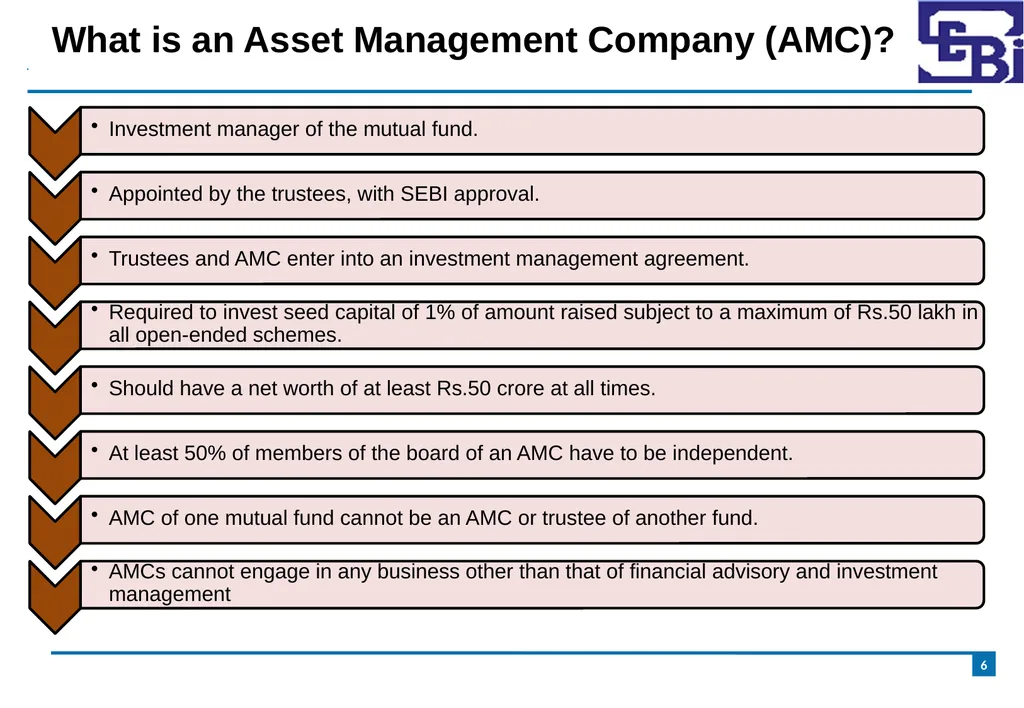
slide6. What is an Asset Management Company (AMC)? 6<br>
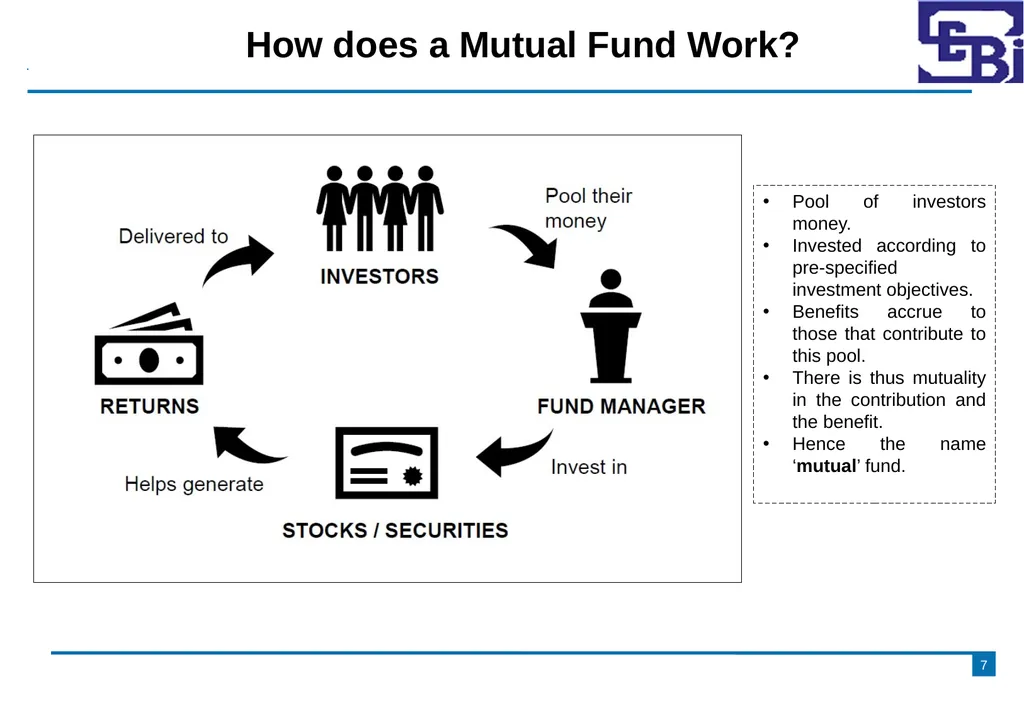
slide7. How does a Mutual Fund Work? 7 Pool of investors money.
Invested according to pre-specified investment objectives.
Benefits accrue to those that contribute to this pool.
There is thus mutuality in the contribution and the benefit.
Hence the name ‘mutual’ fund.<br>
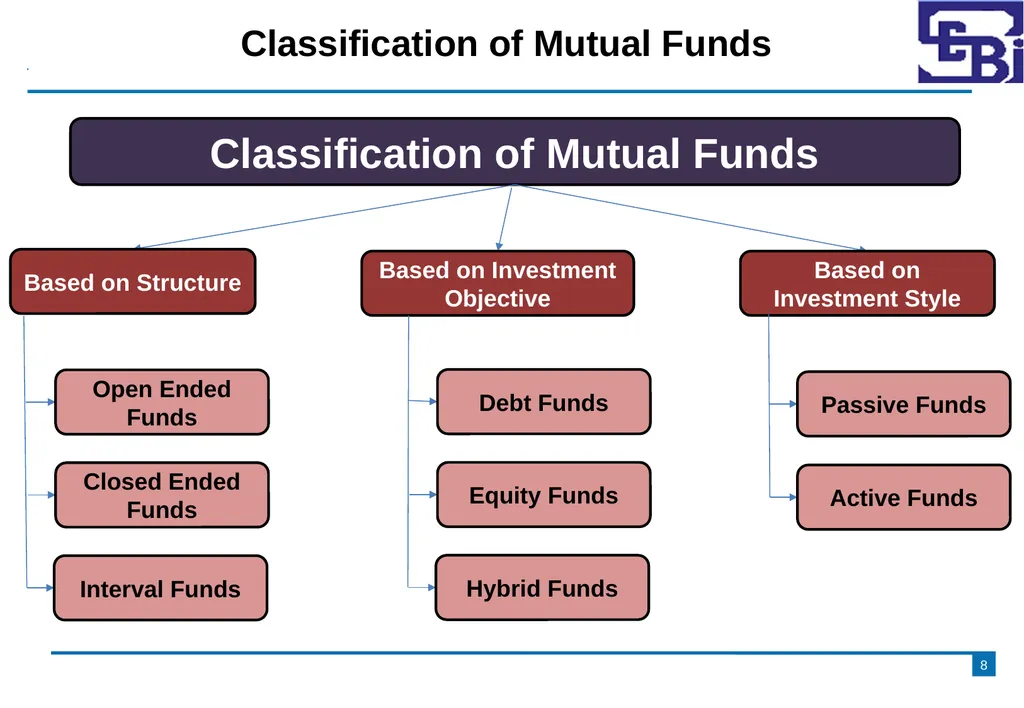
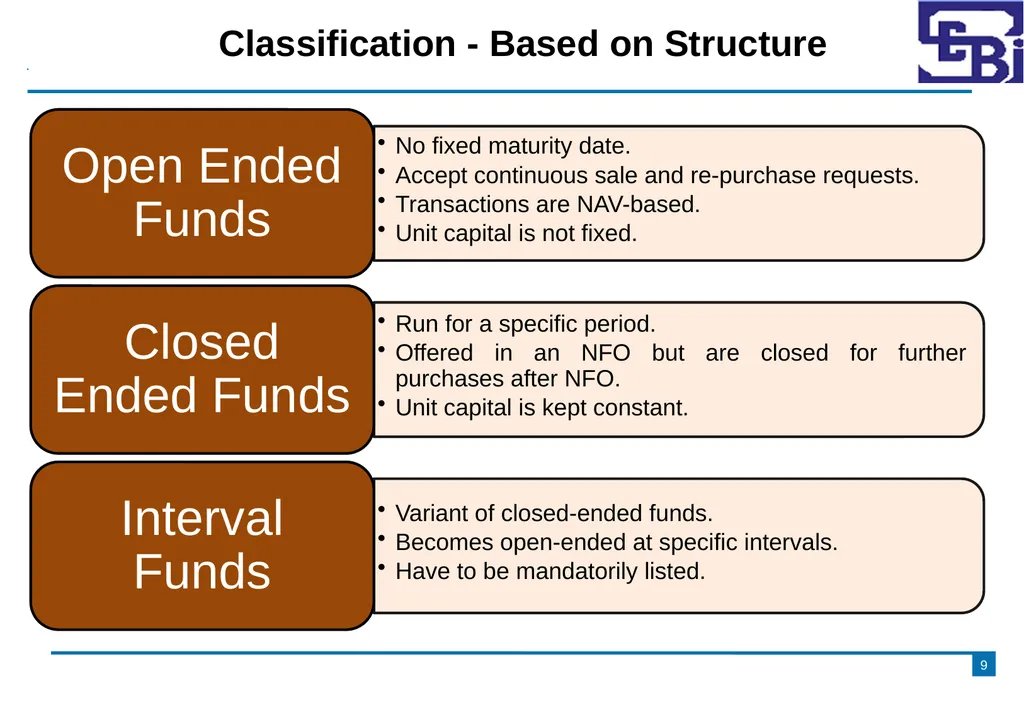
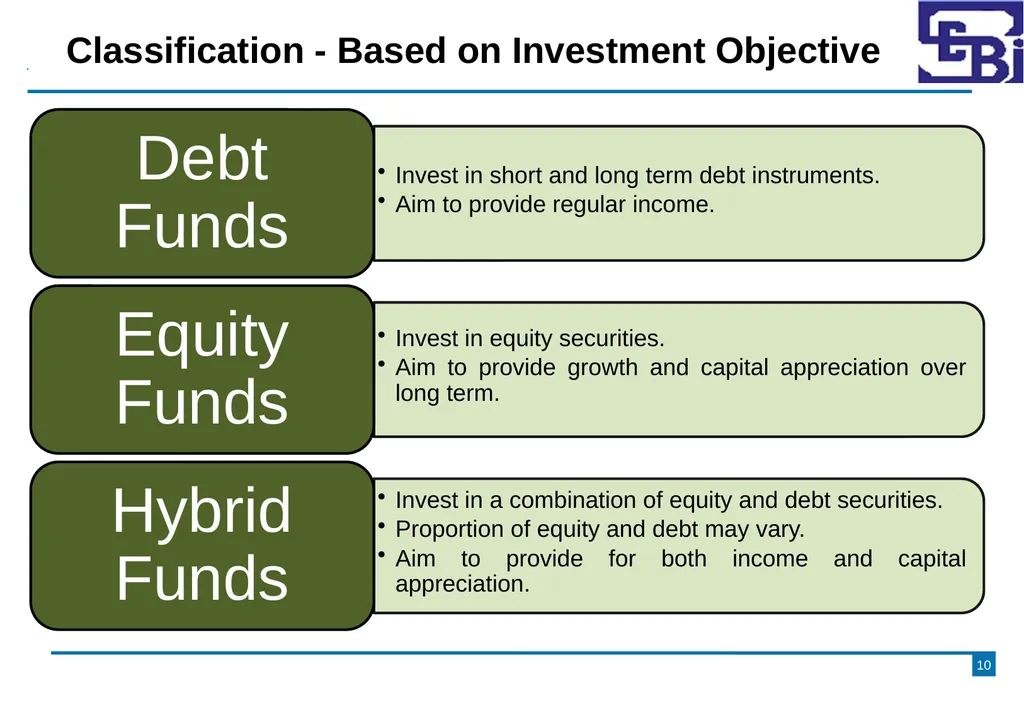
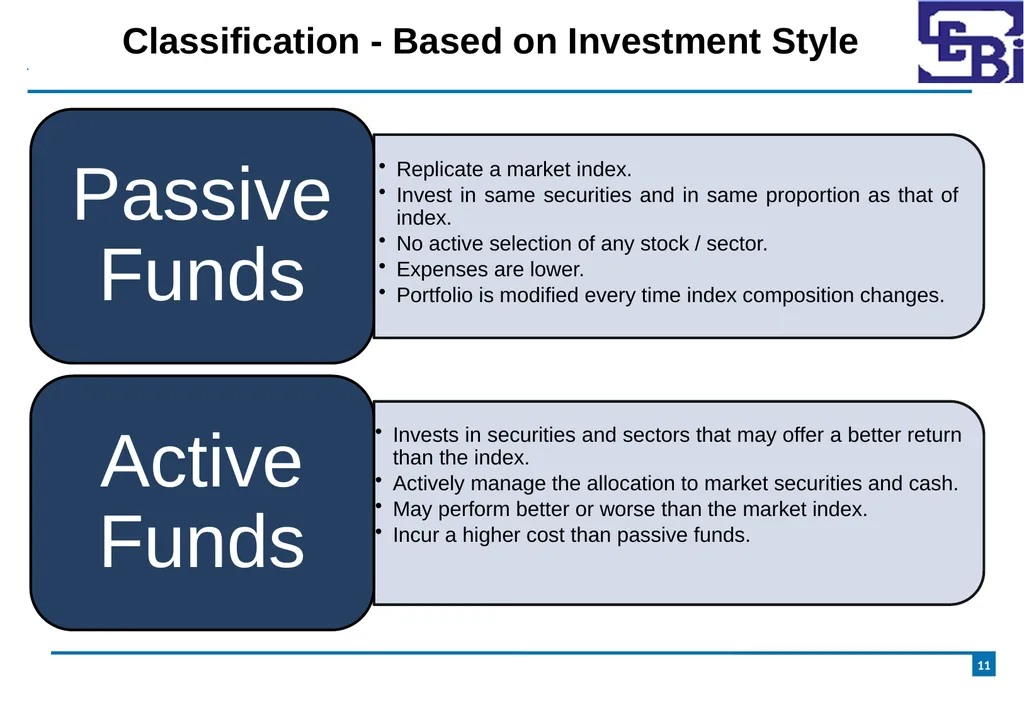
slide8. Classification of Mutual Funds 8 Classification of Mutual Funds Based on Structure Based on Investment Objective Based on Investment Style Open Ended Funds Closed Ended Funds Interval Funds Debt Funds Equity Funds Hybrid Funds Passive Funds Active Funds<br>
slide9. Classification - Based on Structure 9<br>
slide10. Classification - Based on Investment Objective 10<br>
slide11. Classification - Based on Investment Style 11<br>
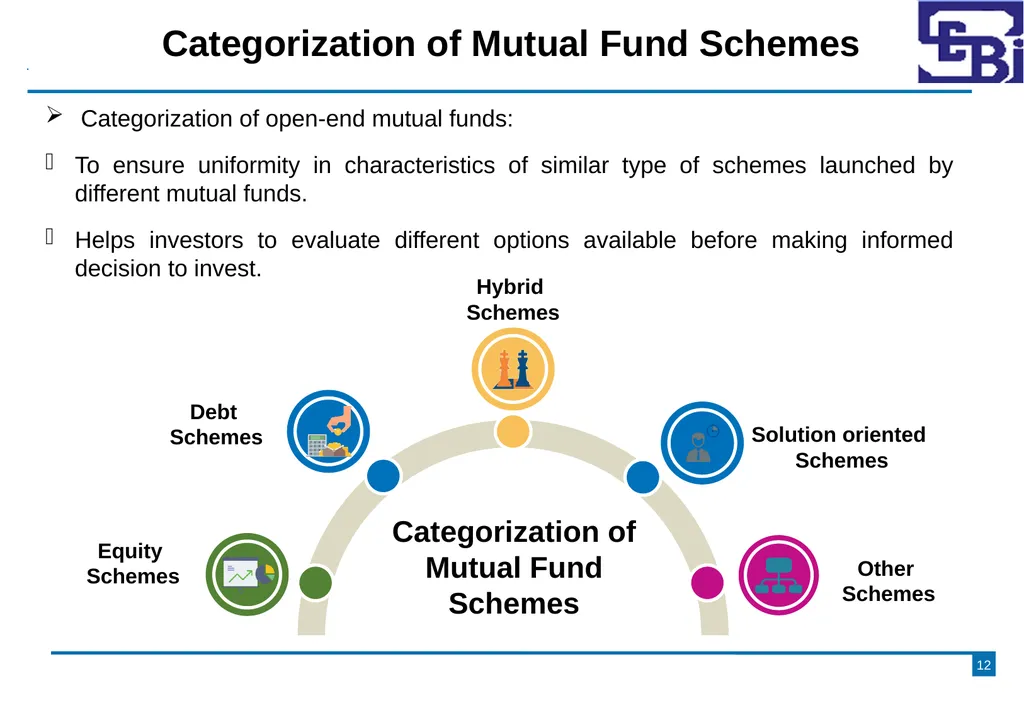
slide12. Categorization of open-end mutual funds:
To ensure uniformity in characteristics of similar type of schemes launched by different mutual funds.
Helps investors to evaluate different options available before making informed decision to invest. Categorization of Mutual Fund Schemes Categorization of Mutual Fund Schemes 12<br>
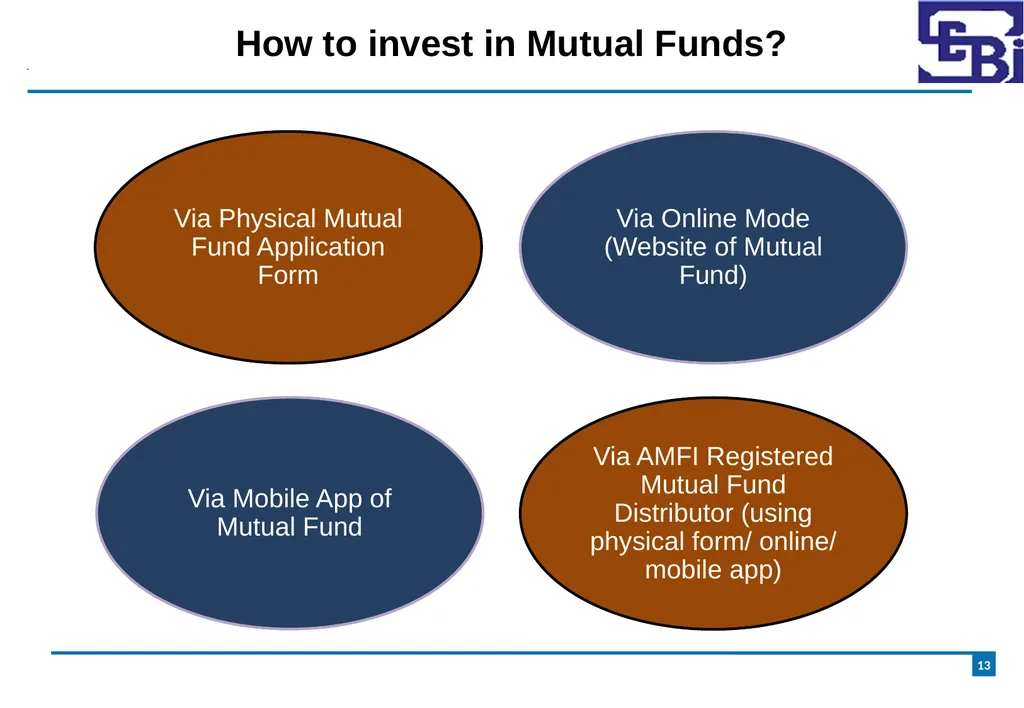
slide13. How to invest in Mutual Funds? 13<br>
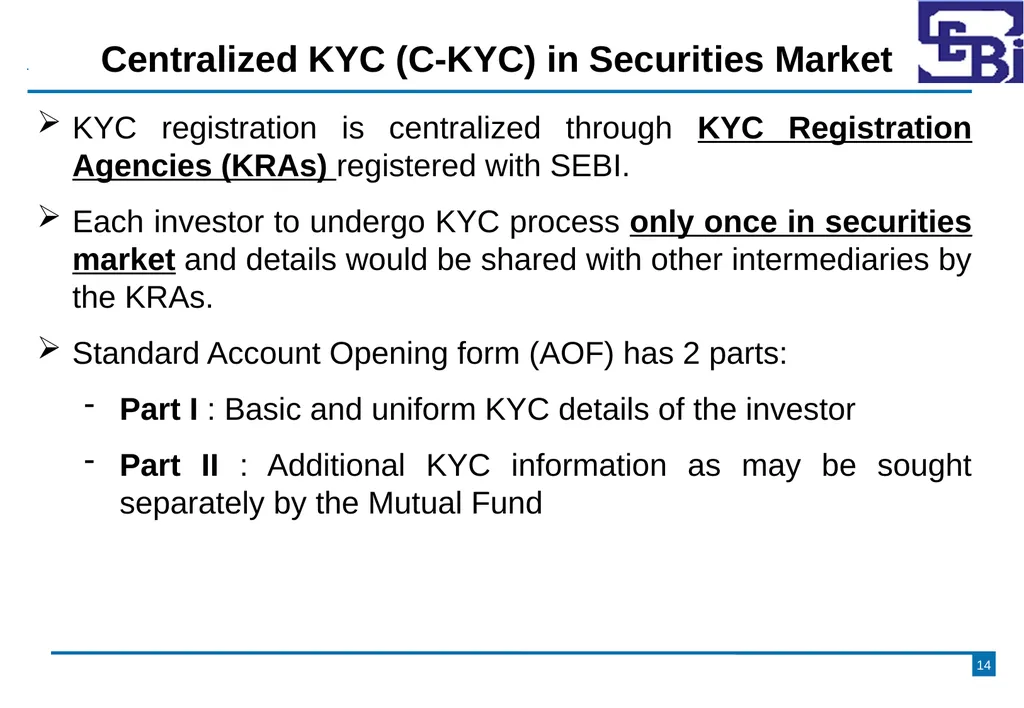
slide14. Centralized KYC (C-KYC) in Securities Market KYC registration is centralized through KYC Registration Agencies (KRAs) registered with SEBI.
Each investor to undergo KYC process only once in securities market and details would be shared with other intermediaries by the KRAs.
Standard Account Opening form (AOF) has 2 parts:
Part I : Basic and uniform KYC details of the investor
Part II : Additional KYC information as may be sought separately by the Mutual Fund 14<br>
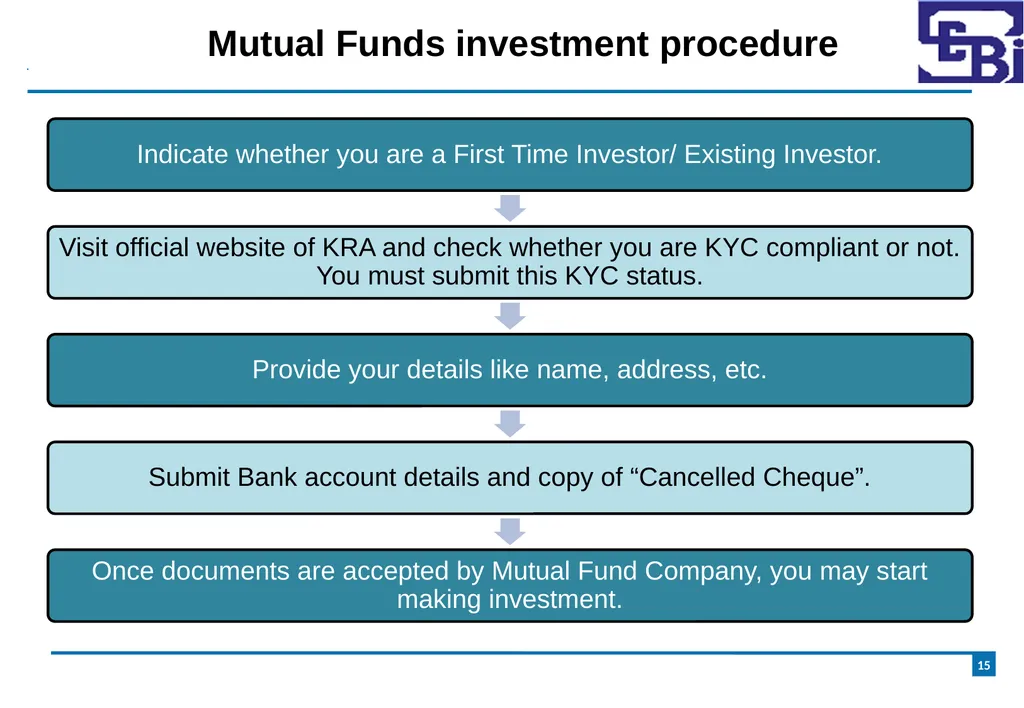
slide15. Mutual Funds investment procedure 15<br>
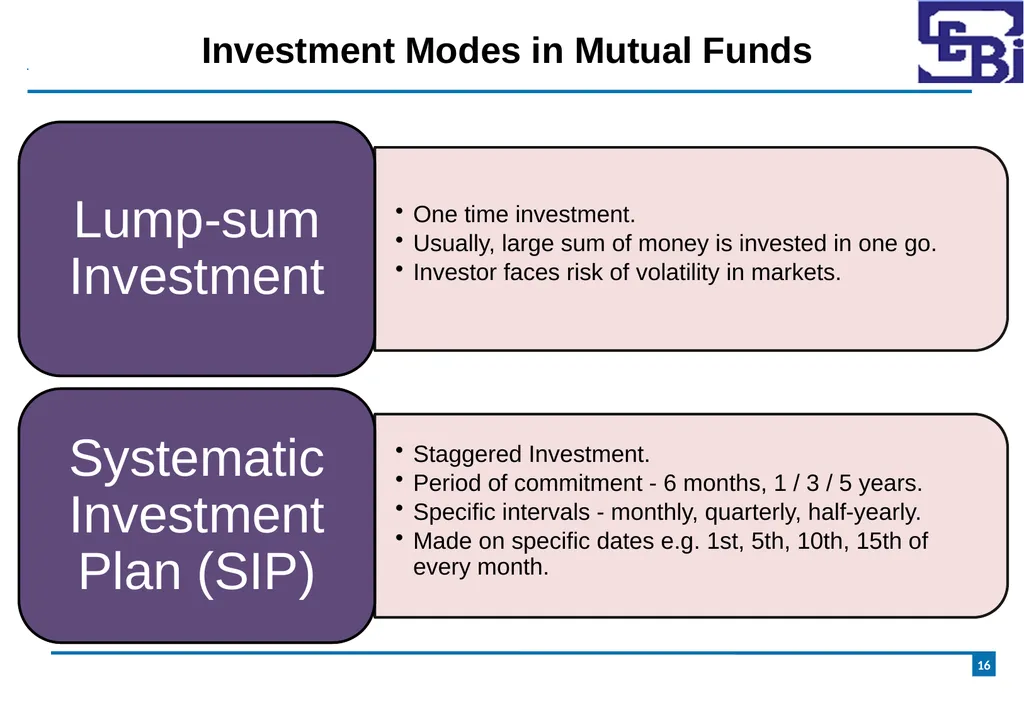
slide16. Investment Modes in Mutual Funds 16<br>
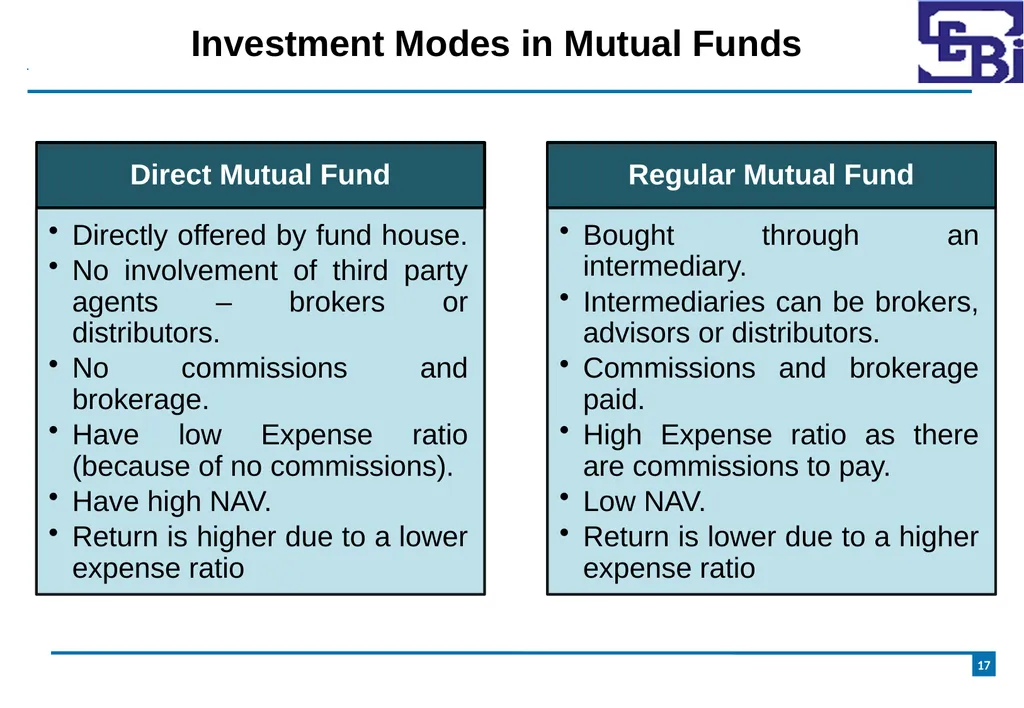
slide17. Investment Modes in Mutual Funds 17<br>
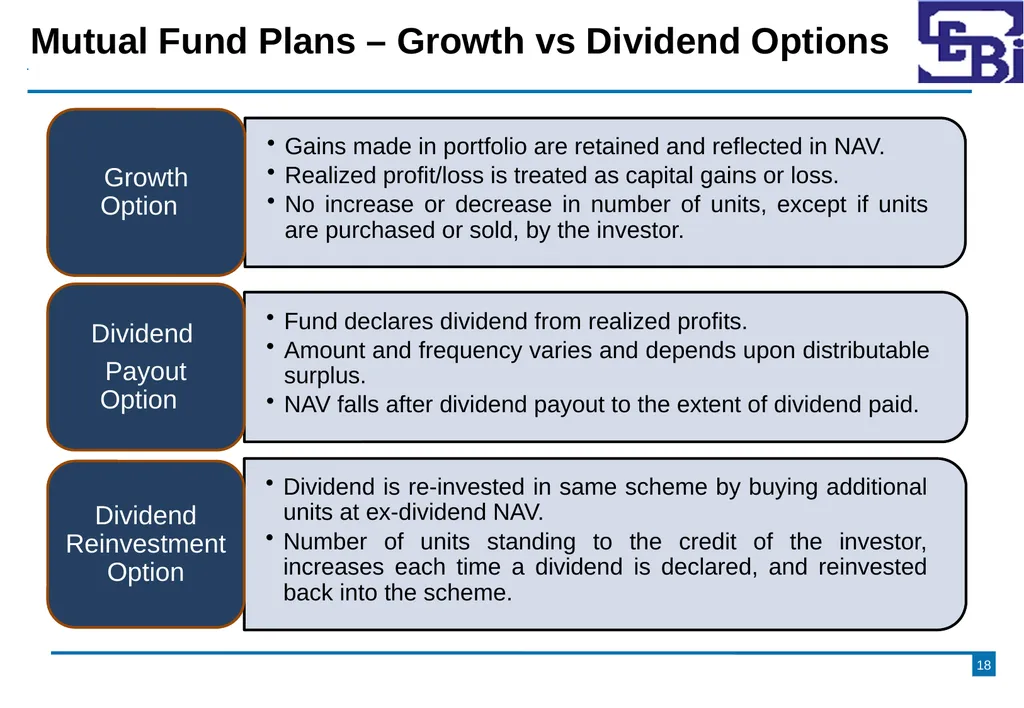
slide18. Mutual Fund Plans – Growth vs Dividend Options 18<br>
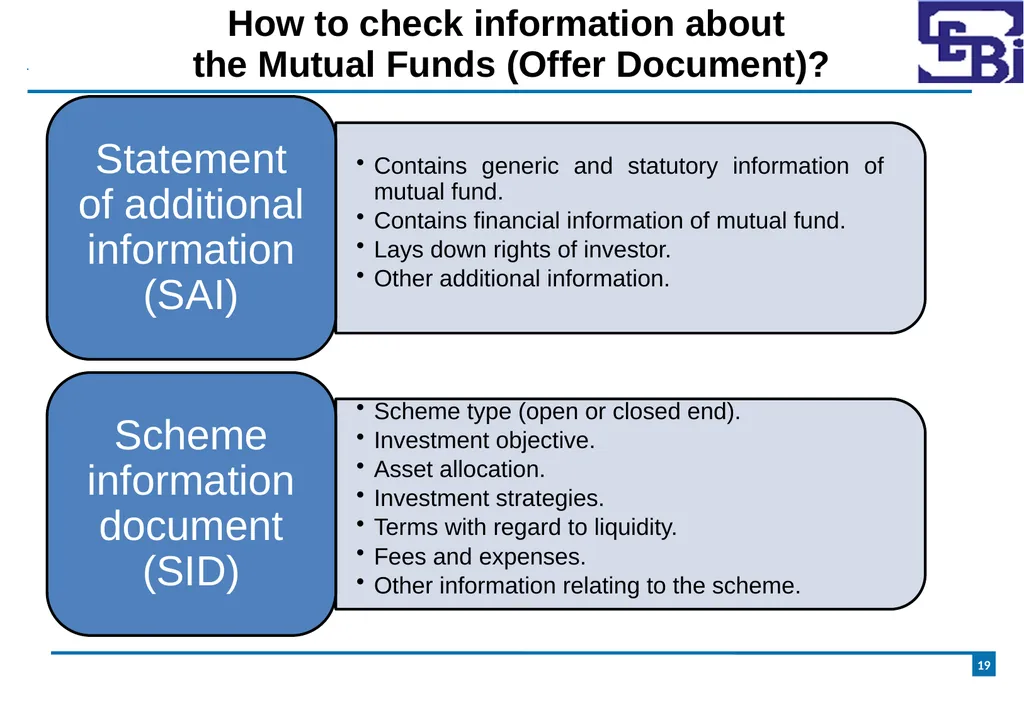
slide19. How to check information about
the Mutual Funds (Offer Document)? 19<br>
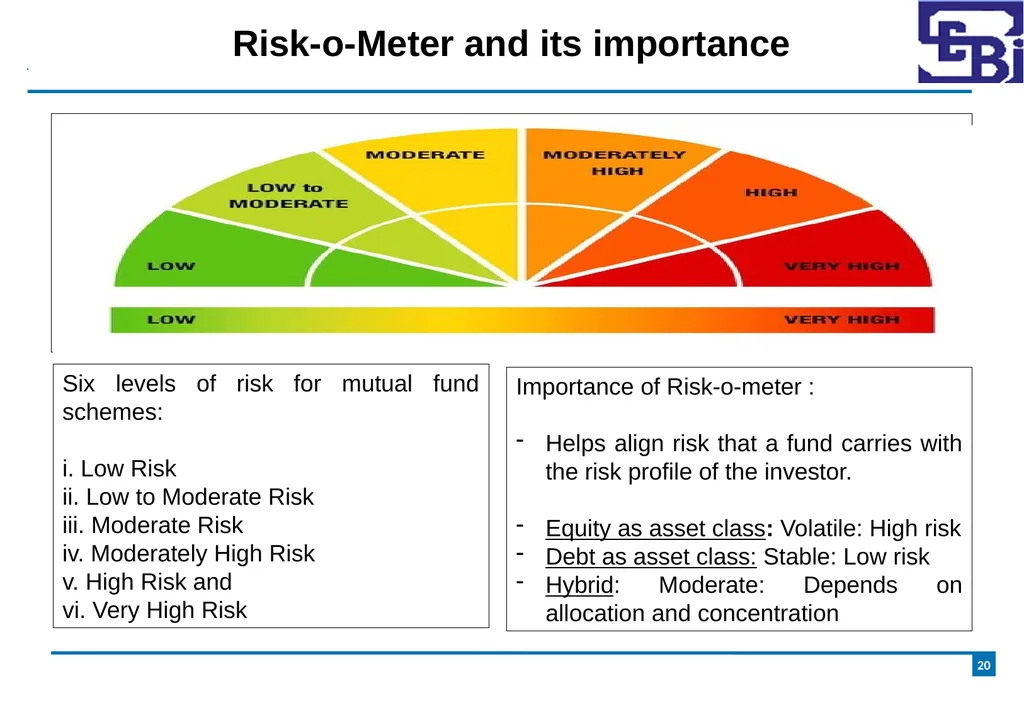
slide20. Risk-o-Meter and its importance 20 Six levels of risk for mutual fund schemes:
i. Low Risk
ii. Low to Moderate Risk
iii. Moderate Risk
iv. Moderately High Risk
v. High Risk and
vi. Very High Risk Importance of Risk-o-meter :
Helps align risk that a fund carries with the risk profile of the investor.
Equity as asset class: Volatile: High risk
Debt as asset class: Stable: Low risk
Hybrid: Moderate: Depends on allocation and concentration<br>
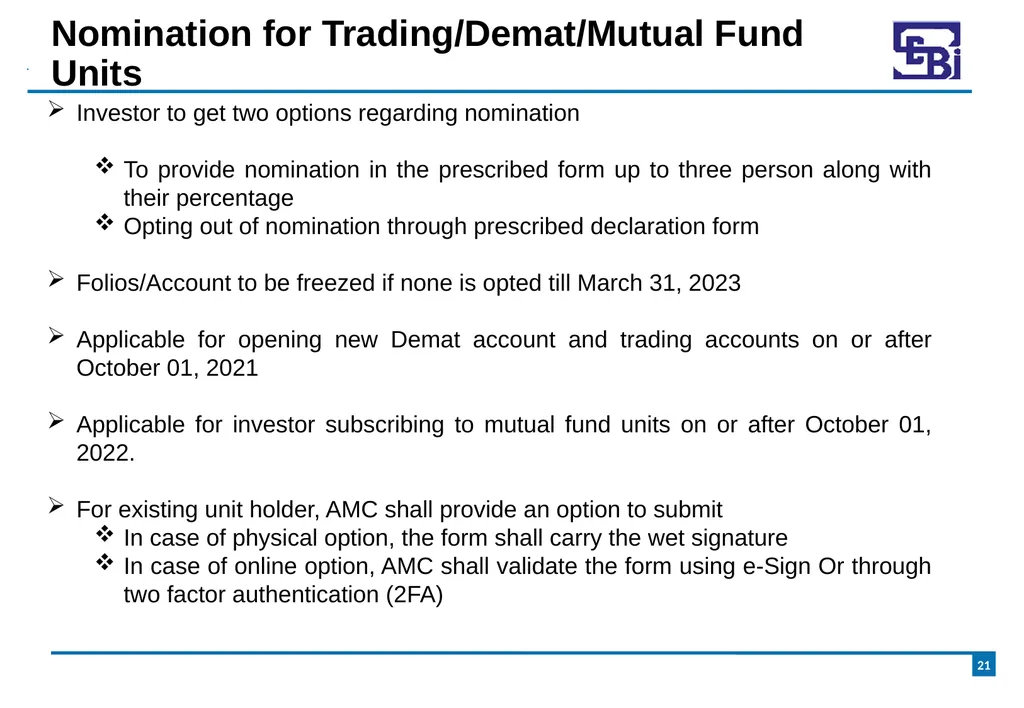
slide21. Nomination for Trading/Demat/Mutual Fund Units Investor to get two options regarding nomination
To provide nomination in the prescribed form up to three person along with their percentage
Opting out of nomination through prescribed declaration form
Folios/Account to be freezed if none is opted till March 31, 2023
Applicable for opening new Demat account and trading accounts on or after October 01, 2021
Applicable for investor subscribing to mutual fund units on or after October 01, 2022.
For existing unit holder, AMC shall provide an option to submit
In case of physical option, the form shall carry the wet signature
In case of online option, AMC shall validate the form using e-Sign Or through two factor authentication (2FA) 21<br>
slide22. Mutual Fund investment by Minor Payment on behalf of minor shall be from
Bank Account of the minor
Joint account of the minor with the guardian
KYC process to be completed upon attaining the status of major 22<br>
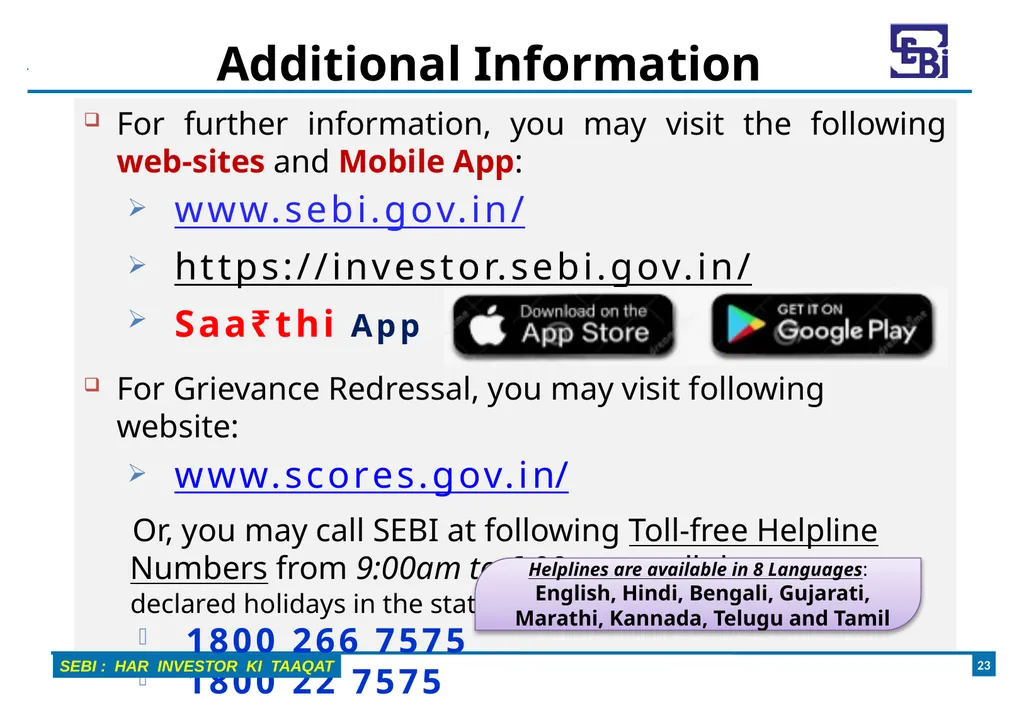
slide23. For further information, you may visit the following web-sites and Mobile App:
www.sebi.gov.in/
https://investor.sebi.gov.in/
Saa₹thi App
For Grievance Redressal, you may visit following website:
www.scores.gov.in/
Or, you may call SEBI at following Toll-free Helpline Numbers from 9:00am to 6:00pm on all days (excluding declared holidays in the state of Maharashtra):
1800 266 7575
1800 22 7575 Additional Information 23 Helplines are available in 8 Languages:
English, Hindi, Bengali, Gujarati, Marathi, Kannada, Telugu and Tamil 23 SEBI : HAR INVESTOR KI TAAQAT<br>
slide24. Thank You 24<br>
slide2. Disclaimer 2 Information contained in this presentation is as on September 30, 2022.
The information contained in this presentation is only for Educational and Awareness Purposes related to securities market .
This presentation is only for Educational and Investor Awareness Programs and shall not be used for any legal interpretations.
SEBI or Stock Exchanges or Depositories shall not be responsible for any damage or loss to any one of any manner from use of this material.
Suggestions or feedbacks, if any, may please be sent by mail to visitsebi@sebi.gov.in.<br>
slide3. Flow of Presentation What is a Mutual Fund ?
Structure of Mutual Fund
What is an Asset Management Company (AMC)?
How does a Mutual Fund Work?
Classification of Mutual Funds
Based on Structure
Based on Investment Objective
Investment Portfolio
Risk vs Return
Categorization of Mutual Funds 3 How to invest in Mutual Funds?
Centralized KYC
Mutual Fund investment procedure
Investment Modes in Mutual Funds
Mutual Funds
Plans – Growth vs Dividend Options
How to check information about the Mutual Funds (Offer Document)?
Risk-o-Meter
Mutual fund investment on behalf of minor and nomination details<br>
slide4. What is a Mutual Fund (MF)? 4<br>
slide5. Structure of Mutual Fund 5<br>
slide6. What is an Asset Management Company (AMC)? 6<br>
slide7. How does a Mutual Fund Work? 7 Pool of investors money.
Invested according to pre-specified investment objectives.
Benefits accrue to those that contribute to this pool.
There is thus mutuality in the contribution and the benefit.
Hence the name ‘mutual’ fund.<br>
slide8. Classification of Mutual Funds 8 Classification of Mutual Funds Based on Structure Based on Investment Objective Based on Investment Style Open Ended Funds Closed Ended Funds Interval Funds Debt Funds Equity Funds Hybrid Funds Passive Funds Active Funds<br>
slide9. Classification - Based on Structure 9<br>
slide10. Classification - Based on Investment Objective 10<br>
slide11. Classification - Based on Investment Style 11<br>
slide12. Categorization of open-end mutual funds:
To ensure uniformity in characteristics of similar type of schemes launched by different mutual funds.
Helps investors to evaluate different options available before making informed decision to invest. Categorization of Mutual Fund Schemes Categorization of Mutual Fund Schemes 12<br>
slide13. How to invest in Mutual Funds? 13<br>
slide14. Centralized KYC (C-KYC) in Securities Market KYC registration is centralized through KYC Registration Agencies (KRAs) registered with SEBI.
Each investor to undergo KYC process only once in securities market and details would be shared with other intermediaries by the KRAs.
Standard Account Opening form (AOF) has 2 parts:
Part I : Basic and uniform KYC details of the investor
Part II : Additional KYC information as may be sought separately by the Mutual Fund 14<br>
slide15. Mutual Funds investment procedure 15<br>
slide16. Investment Modes in Mutual Funds 16<br>
slide17. Investment Modes in Mutual Funds 17<br>
slide18. Mutual Fund Plans – Growth vs Dividend Options 18<br>
slide19. How to check information about
the Mutual Funds (Offer Document)? 19<br>
slide20. Risk-o-Meter and its importance 20 Six levels of risk for mutual fund schemes:
i. Low Risk
ii. Low to Moderate Risk
iii. Moderate Risk
iv. Moderately High Risk
v. High Risk and
vi. Very High Risk Importance of Risk-o-meter :
Helps align risk that a fund carries with the risk profile of the investor.
Equity as asset class: Volatile: High risk
Debt as asset class: Stable: Low risk
Hybrid: Moderate: Depends on allocation and concentration<br>
slide21. Nomination for Trading/Demat/Mutual Fund Units Investor to get two options regarding nomination
To provide nomination in the prescribed form up to three person along with their percentage
Opting out of nomination through prescribed declaration form
Folios/Account to be freezed if none is opted till March 31, 2023
Applicable for opening new Demat account and trading accounts on or after October 01, 2021
Applicable for investor subscribing to mutual fund units on or after October 01, 2022.
For existing unit holder, AMC shall provide an option to submit
In case of physical option, the form shall carry the wet signature
In case of online option, AMC shall validate the form using e-Sign Or through two factor authentication (2FA) 21<br>
slide22. Mutual Fund investment by Minor Payment on behalf of minor shall be from
Bank Account of the minor
Joint account of the minor with the guardian
KYC process to be completed upon attaining the status of major 22<br>
slide23. For further information, you may visit the following web-sites and Mobile App:
www.sebi.gov.in/
https://investor.sebi.gov.in/
Saa₹thi App
For Grievance Redressal, you may visit following website:
www.scores.gov.in/
Or, you may call SEBI at following Toll-free Helpline Numbers from 9:00am to 6:00pm on all days (excluding declared holidays in the state of Maharashtra):
1800 266 7575
1800 22 7575 Additional Information 23 Helplines are available in 8 Languages:
English, Hindi, Bengali, Gujarati, Marathi, Kannada, Telugu and Tamil 23 SEBI : HAR INVESTOR KI TAAQAT<br>
slide24. Thank You 24<br>