Introduction to SystematicsPlant Taxonomy Dr Habibur Rahman, Associate Professor, J. N. College, Boko Aims of Taxonomy To provide a convenient method of identification and communication. To provide classification which is based on natural
"Introduction to Systematics/Plant Taxonomy Dr" is the property of its rightful owner. Permission is granted to
download and print the materials on this website for personal, non-commercial use only, and to display it
on your personal computer provided you do not modify the materials and that you retain all copyright
notices contained in the materials. By downloading content from our website, you accept the terms of this
agreement.
Presentation Transcript
01
Introduction to Systematics/Plant Taxonomy Dr Habibur Rahman, Associate Professor, J. N. College, Boko<br>
02
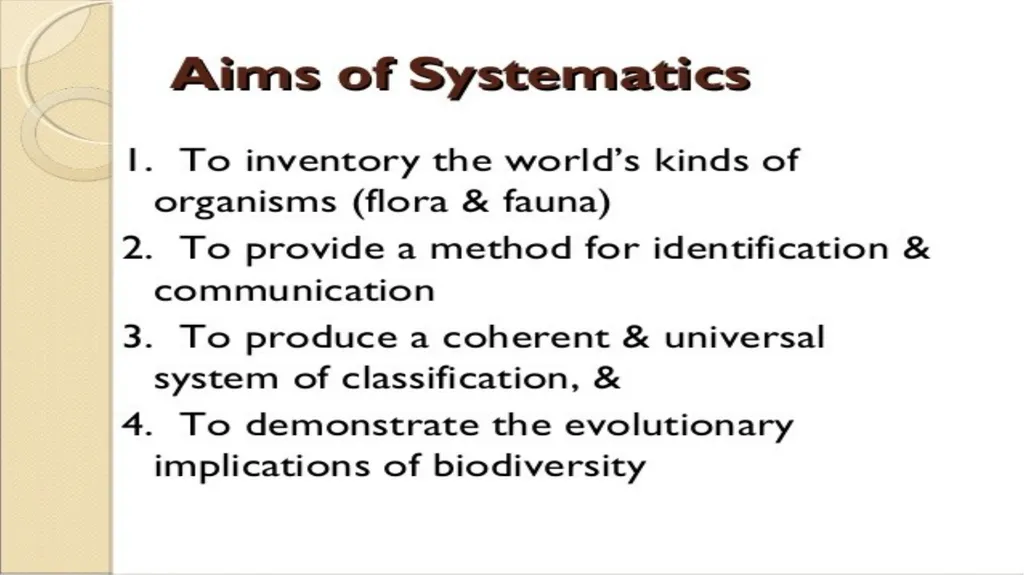
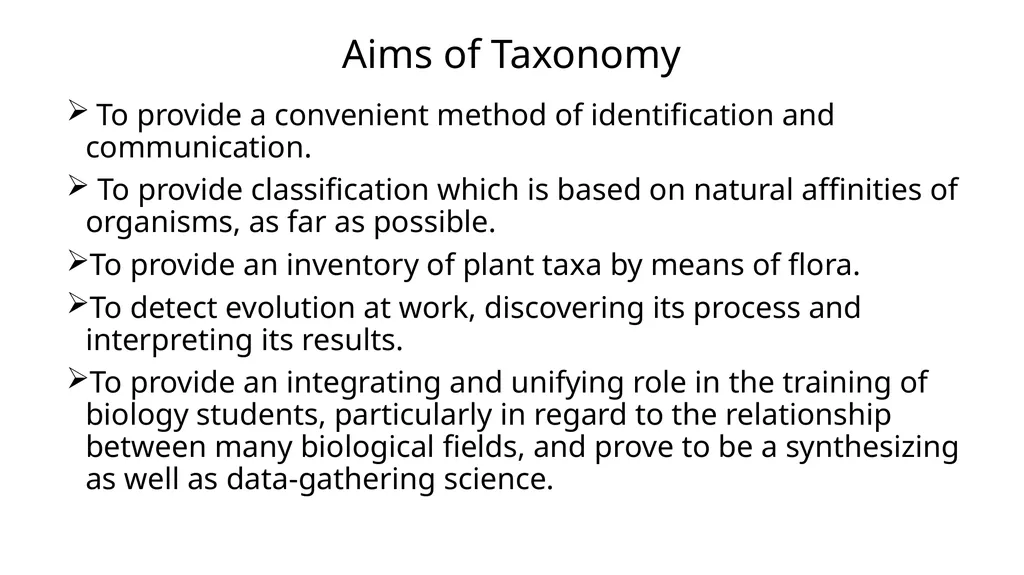
Aims of Taxonomy To provide a convenient method of identification and communication.
To provide classification which is based on natural affinities of organisms, as far as possible.
To provide an inventory of plant taxa by means of flora.
To detect evolution at work, discovering its process and interpreting its results.
To provide an integrating and unifying role in the training of biology students, particularly in regard to the relationship between many biological fields, and prove to be a synthesizing as well as data-gathering science.<br>
03
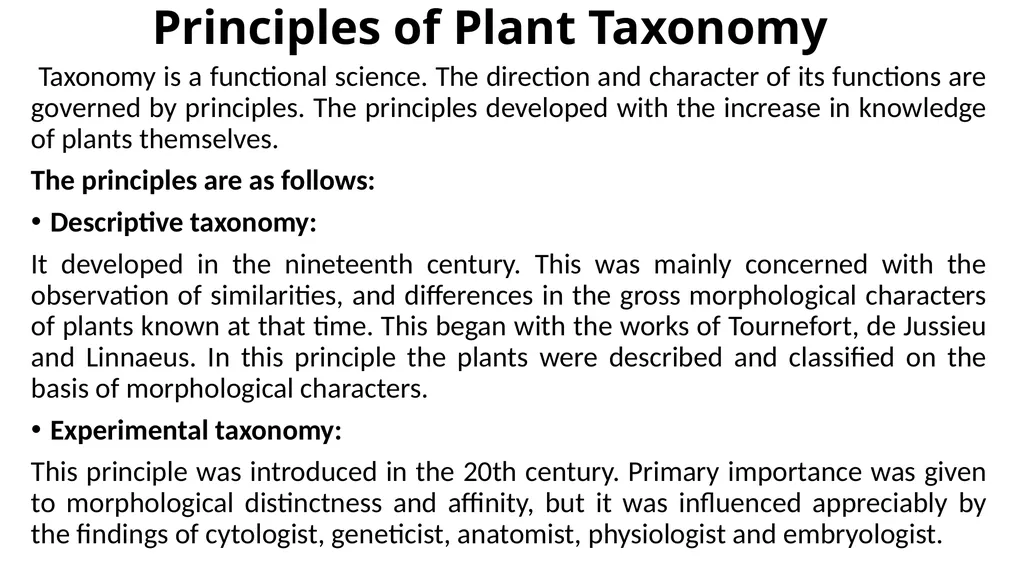
Principles of Plant Taxonomy Taxonomy is a functional science. The direction and character of its functions are governed by principles. The principles developed with the increase in knowledge of plants themselves.
The principles are as follows:
Descriptive taxonomy:
It developed in the nineteenth century. This was mainly concerned with the observation of similarities, and differences in the gross morphological characters of plants known at that time. This began with the works of Tournefort, de Jussieu and Linnaeus. In this principle the plants were described and classified on the basis of morphological characters.
Experimental taxonomy:
This principle was introduced in the 20th century. Primary importance was given to morphological distinctness and affinity, but it was influenced appreciably by the findings of cytologist, geneticist, anatomist, physiologist and embryologist.<br>
04
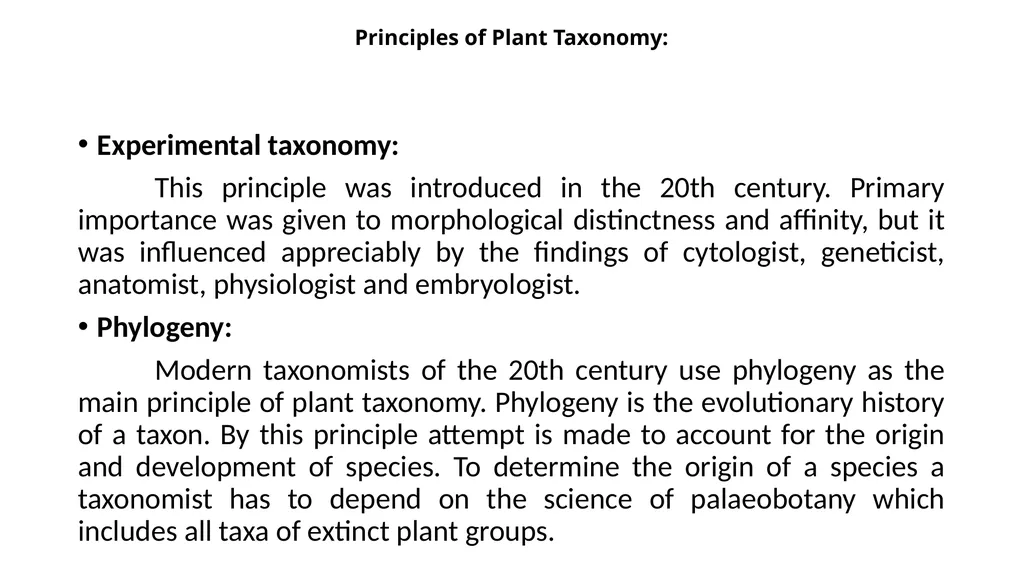
Principles of Plant Taxonomy: Experimental taxonomy:
This principle was introduced in the 20th century. Primary importance was given to morphological distinctness and affinity, but it was influenced appreciably by the findings of cytologist, geneticist, anatomist, physiologist and embryologist.
Phylogeny:
Modern taxonomists of the 20th century use phylogeny as the main principle of plant taxonomy. Phylogeny is the evolutionary history of a taxon. By this principle attempt is made to account for the origin and development of species. To determine the origin of a species a taxonomist has to depend on the science of palaeobotany which includes all taxa of extinct plant groups.<br>
05
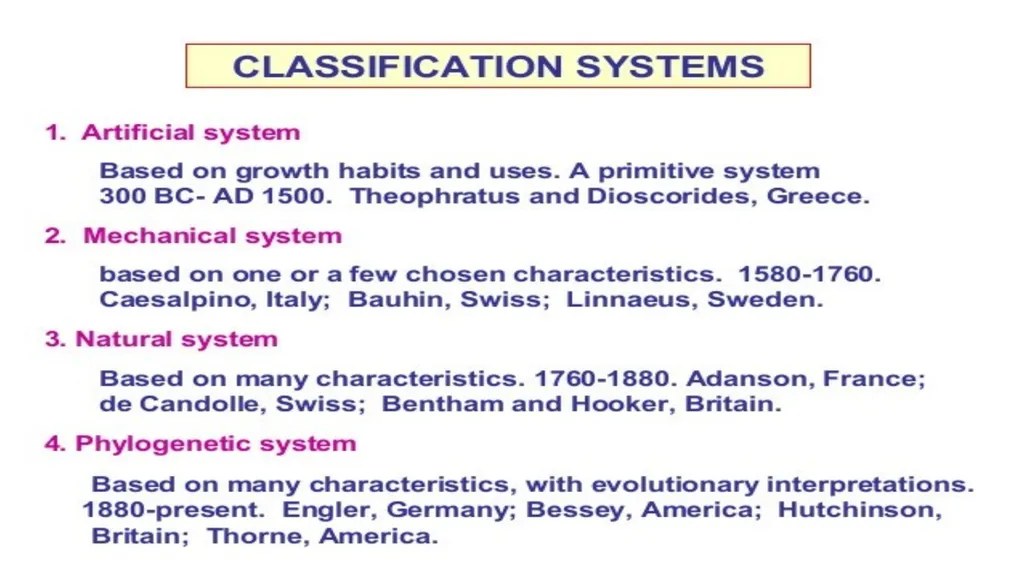
Classification Systems Phenetic Classification:
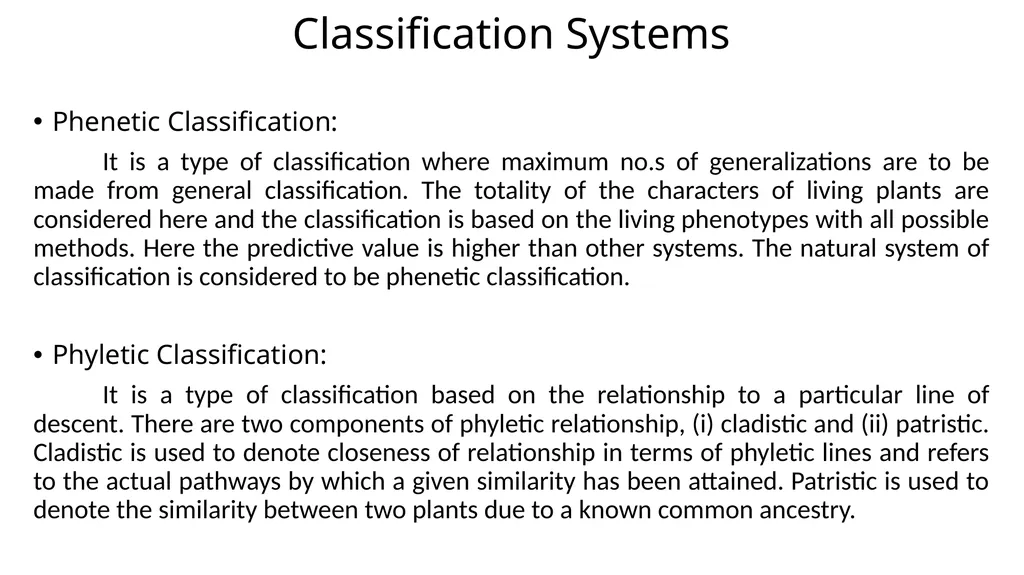
It is a type of classification where maximum no.s of generalizations are to be made from general classification. The totality of the characters of living plants are considered here and the classification is based on the living phenotypes with all possible methods. Here the predictive value is higher than other systems. The natural system of classification is considered to be phenetic classification.
Phyletic Classification:
It is a type of classification based on the relationship to a particular line of descent. There are two components of phyletic relationship, (i) cladistic and (ii) patristic. Cladistic is used to denote closeness of relationship in terms of phyletic lines and refers to the actual pathways by which a given similarity has been attained. Patristic is used to denote the similarity between two plants due to a known common ancestry.<br>