
© Ipsos | March 2022 | Version 1 | Public
CB
Published · 26 slides · 0 views
1 / 1

Description
Ipsos March 2022 Version 1 Public Attitudes towards immigration Survey conducted in collaboration with British Future Fieldwork 28 January 10 February 2022 2022 Ipsos. All rights reserved. Contains Ipsos Confidential and
Related Topics
Share
Embed code
Download this presentation From Below
"© Ipsos | March 2022 | Version 1 | Public" is the property of its rightful owner. Permission is granted to download and print the materials on this website for personal, non-commercial use only, and to display it on your personal computer provided you do not modify the materials and that you retain all copyright notices contained in the materials. By downloading content from our website, you accept the terms of this agreement.
Presentation Transcript
01
© Ipsos | March 2022 | Version 1 | Public Attitudes towards immigration Survey conducted in collaboration with British Future Fieldwork 28 January – 10 February 2022 © 2022 Ipsos. All rights reserved. Contains Ipsos' Confidential and Proprietary information and may not be disclosed or reproduced without the prior written consent of Ipsos.<br>
02
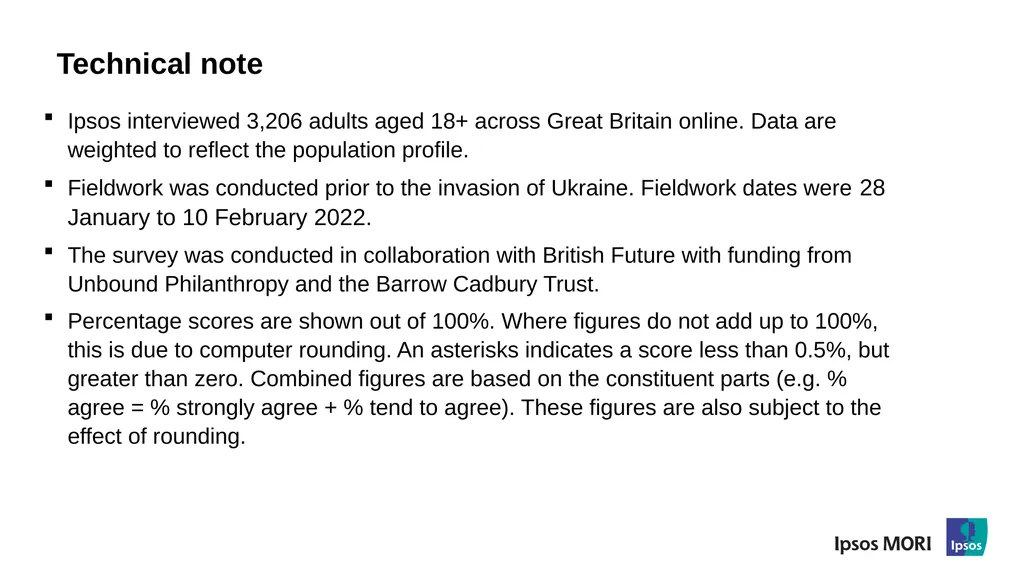
Technical note Ipsos interviewed 3,206 adults aged 18+ across Great Britain online. Data are weighted to reflect the population profile.
Fieldwork was conducted prior to the invasion of Ukraine. Fieldwork dates were 28 January to 10 February 2022.
The survey was conducted in collaboration with British Future with funding from Unbound Philanthropy and the Barrow Cadbury Trust.
Percentage scores are shown out of 100%. Where figures do not add up to 100%, this is due to computer rounding. An asterisks indicates a score less than 0.5%, but greater than zero. Combined figures are based on the constituent parts (e.g. % agree = % strongly agree + % tend to agree). These figures are also subject to the effect of rounding.<br>
Fieldwork was conducted prior to the invasion of Ukraine. Fieldwork dates were 28 January to 10 February 2022.
The survey was conducted in collaboration with British Future with funding from Unbound Philanthropy and the Barrow Cadbury Trust.
Percentage scores are shown out of 100%. Where figures do not add up to 100%, this is due to computer rounding. An asterisks indicates a score less than 0.5%, but greater than zero. Combined figures are based on the constituent parts (e.g. % agree = % strongly agree + % tend to agree). These figures are also subject to the effect of rounding.<br>
03
Immigration<br>
04
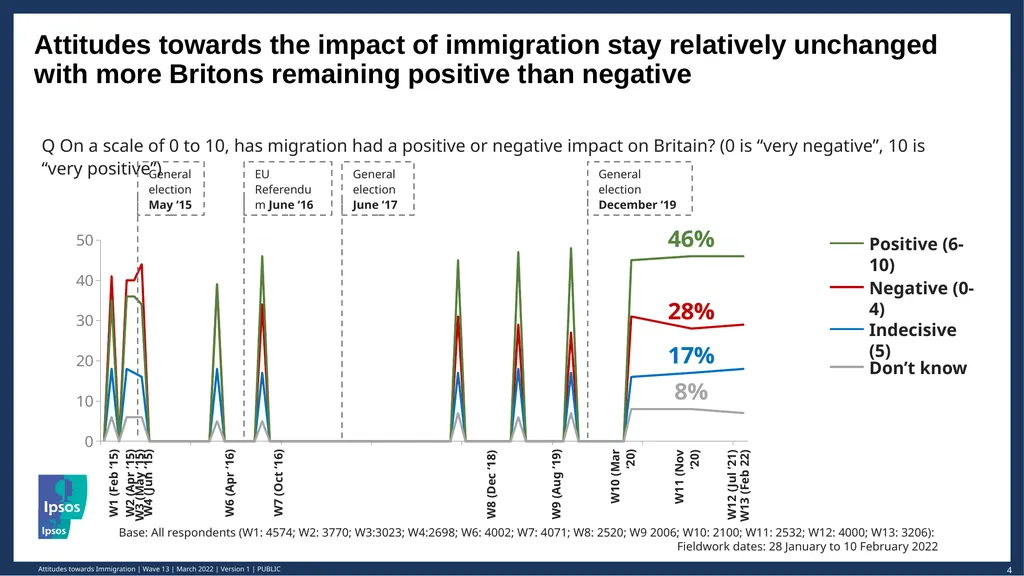
Q On a scale of 0 to 10, has migration had a positive or negative impact on Britain? (0 is “very negative”, 10 is “very positive”) Base: All respondents (W1: 4574; W2: 3770; W3:3023; W4:2698; W6: 4002; W7: 4071; W8: 2520; W9 2006; W10: 2100; W11: 2532; W12: 4000; W13: 3206):
Fieldwork dates: 28 January to 10 February 2022 W1 (Feb ‘15) W2 (Apr ‘15) W3 (May ‘15) W4 (Jun ‘15) W6 (Apr ‘16) W7 (Oct ‘16) W9 (Aug ‘19) W8 (Dec ‘18) W10 (Mar ‘20) W11 (Nov ‘20) Attitudes towards the impact of immigration stay relatively unchanged with more Britons remaining positive than negative W12 (Jul ‘21) W13 (Feb 22)<br>
05
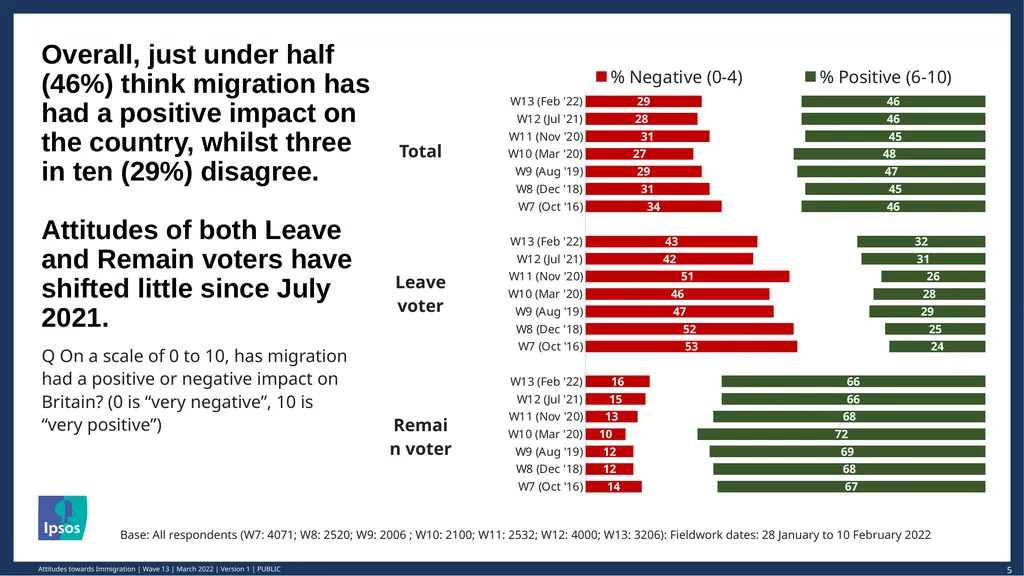
Base: All respondents (W7: 4071; W8: 2520; W9: 2006 ; W10: 2100; W11: 2532; W12: 4000; W13: 3206): Fieldwork dates: 28 January to 10 February 2022 Q On a scale of 0 to 10, has migration had a positive or negative impact on Britain? (0 is “very negative”, 10 is “very positive”) Overall, just under half (46%) think migration has had a positive impact on the country, whilst three in ten (29%) disagree.
Attitudes of both Leave and Remain voters have shifted little since July 2021.<br>
Attitudes of both Leave and Remain voters have shifted little since July 2021.<br>
06
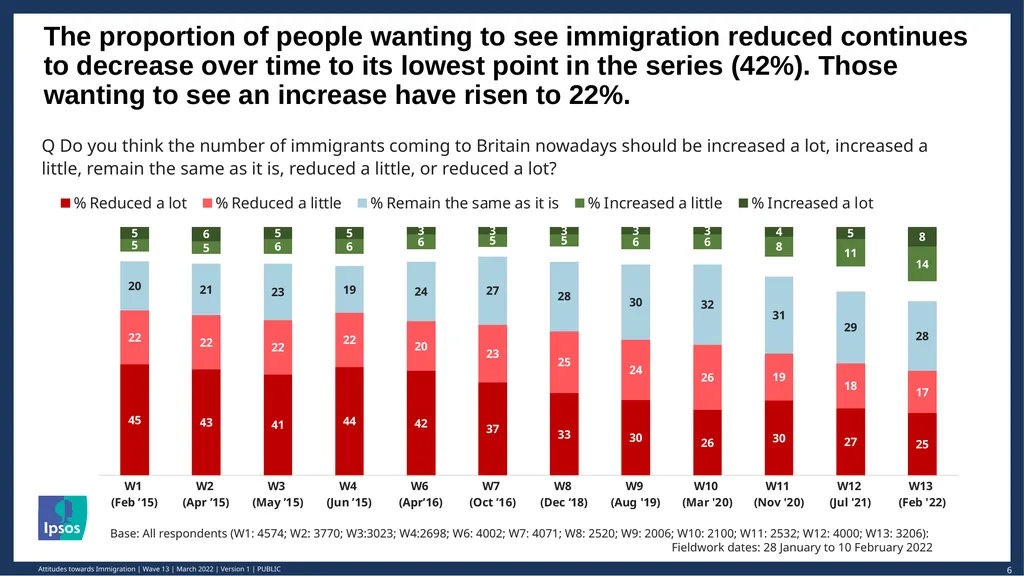
Base: All respondents (W1: 4574; W2: 3770; W3:3023; W4:2698; W6: 4002; W7: 4071; W8: 2520; W9: 2006; W10: 2100; W11: 2532; W12: 4000; W13: 3206):
Fieldwork dates: 28 January to 10 February 2022 Q Do you think the number of immigrants coming to Britain nowadays should be increased a lot, increased a little, remain the same as it is, reduced a little, or reduced a lot? The proportion of people wanting to see immigration reduced continues to decrease over time to its lowest point in the series (42%). Those wanting to see an increase have risen to 22%.<br>
07
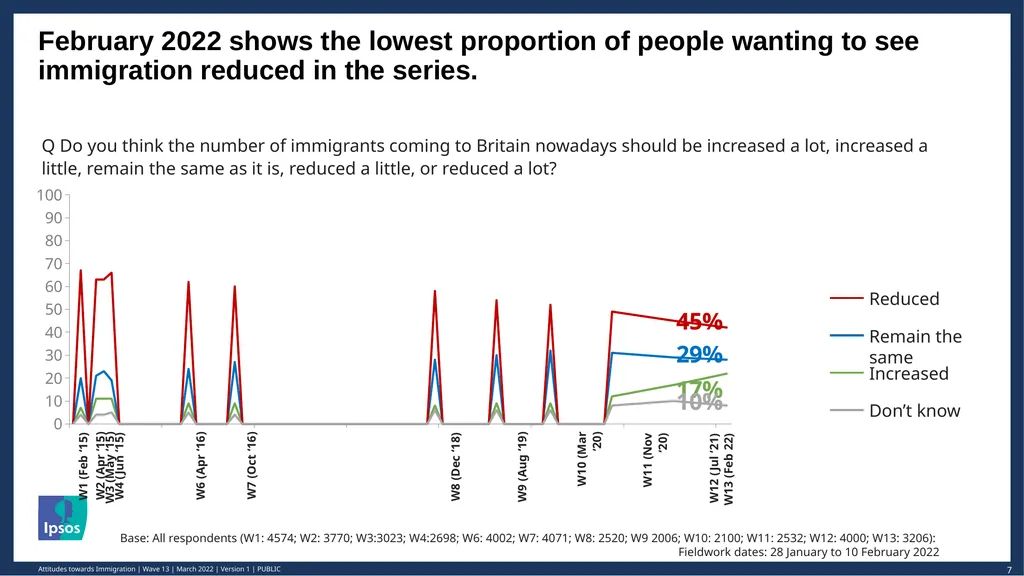
Base: All respondents (W1: 4574; W2: 3770; W3:3023; W4:2698; W6: 4002; W7: 4071; W8: 2520; W9 2006; W10: 2100; W11: 2532; W12: 4000; W13: 3206):
Fieldwork dates: 28 January to 10 February 2022 W1 (Feb ‘15) W2 (Apr ‘15) W3 (May ‘15) W4 (Jun ‘15) W6 (Apr ‘16) W7 (Oct ‘16) W9 (Aug ‘19) W8 (Dec ‘18) Q Do you think the number of immigrants coming to Britain nowadays should be increased a lot, increased a little, remain the same as it is, reduced a little, or reduced a lot? W10 (Mar ‘20) W11 (Nov ‘20) February 2022 shows the lowest proportion of people wanting to see immigration reduced in the series. W12 (Jul ‘21) W13 (Feb 22)<br>
08
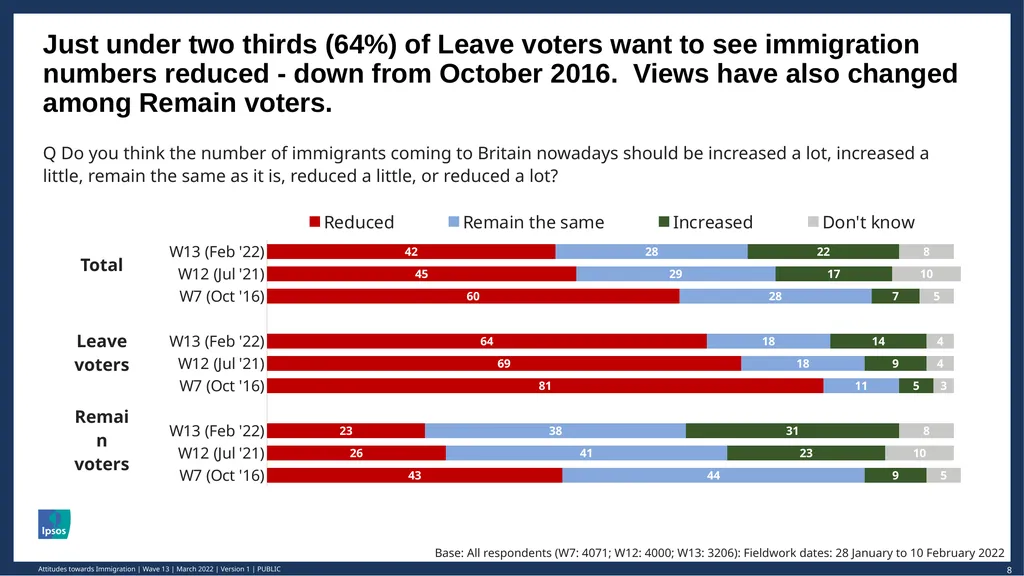
Q Do you think the number of immigrants coming to Britain nowadays should be increased a lot, increased a little, remain the same as it is, reduced a little, or reduced a lot? Base: All respondents (W7: 4071; W12: 4000; W13: 3206): Fieldwork dates: 28 January to 10 February 2022 Just under two thirds (64%) of Leave voters want to see immigration numbers reduced - down from October 2016. Views have also changed among Remain voters.<br>
09
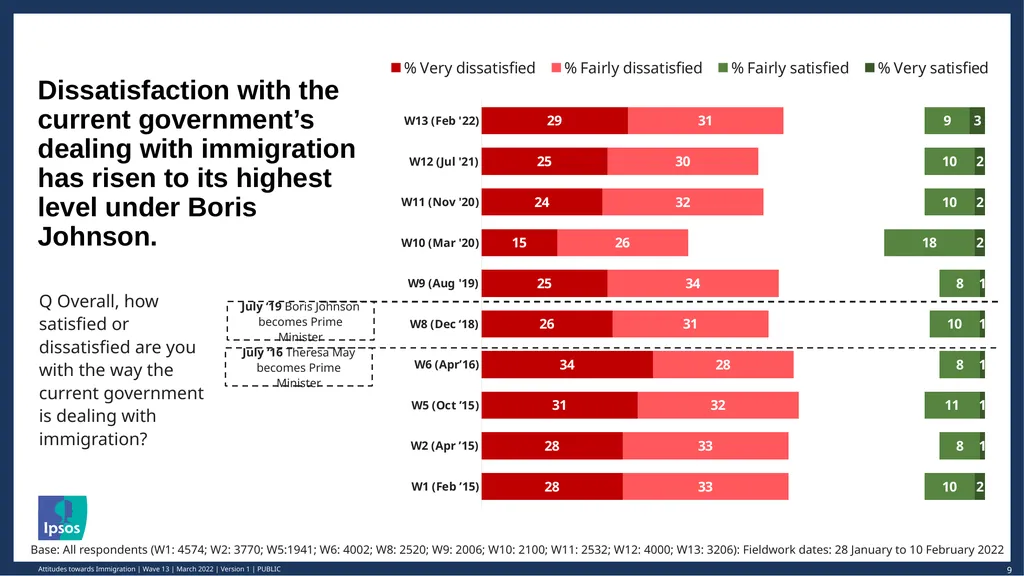
Base: All respondents (W1: 4574; W2: 3770; W5:1941; W6: 4002; W8: 2520; W9: 2006; W10: 2100; W11: 2532; W12: 4000; W13: 3206): Fieldwork dates: 28 January to 10 February 2022 Q Overall, how satisfied or dissatisfied are you with the way the current government is dealing with immigration? Dissatisfaction with the current government’s dealing with immigration has risen to its highest level under Boris Johnson.<br>
10
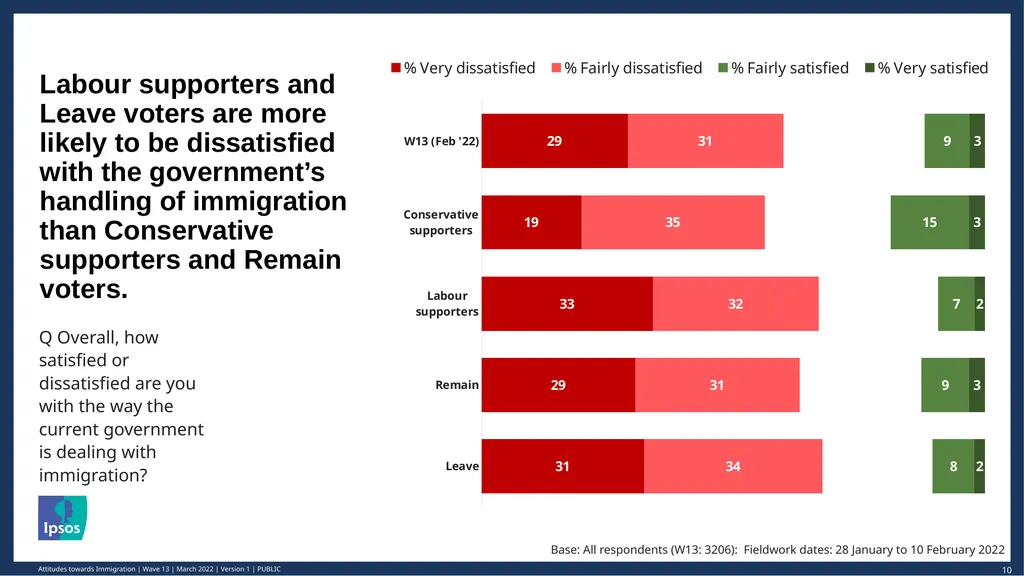
Base: All respondents (W13: 3206): Fieldwork dates: 28 January to 10 February 2022 Q Overall, how satisfied or dissatisfied are you with the way the current government is dealing with immigration? Labour supporters and Leave voters are more likely to be dissatisfied with the government’s handling of immigration than Conservative supporters and Remain voters.<br>
11
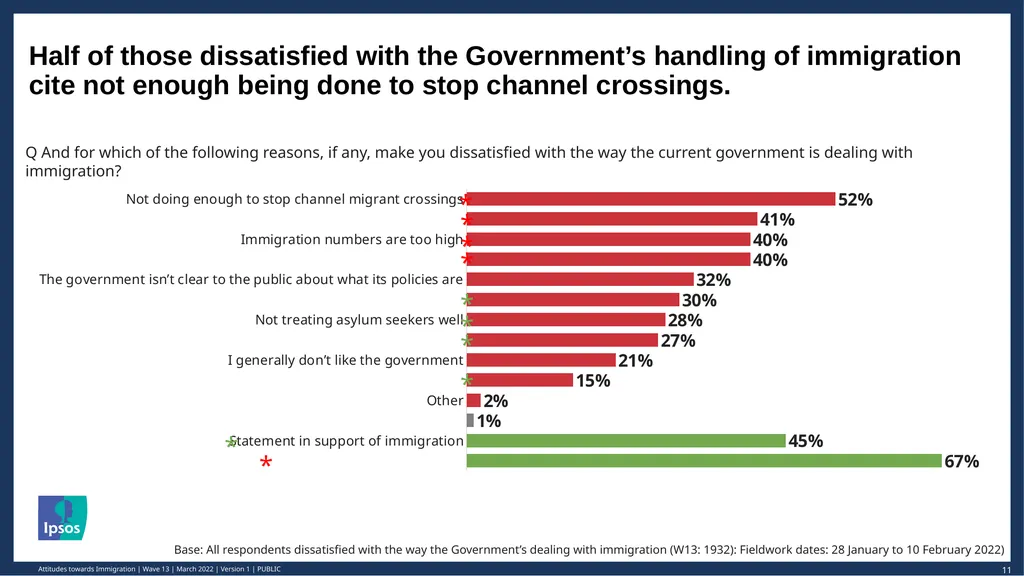
Base: All respondents dissatisfied with the way the Government’s dealing with immigration (W13: 1932): Fieldwork dates: 28 January to 10 February 2022) Q And for which of the following reasons, if any, make you dissatisfied with the way the current government is dealing with immigration? Half of those dissatisfied with the Government’s handling of immigration cite not enough being done to stop channel crossings. * * * * * * * * * *<br>
12
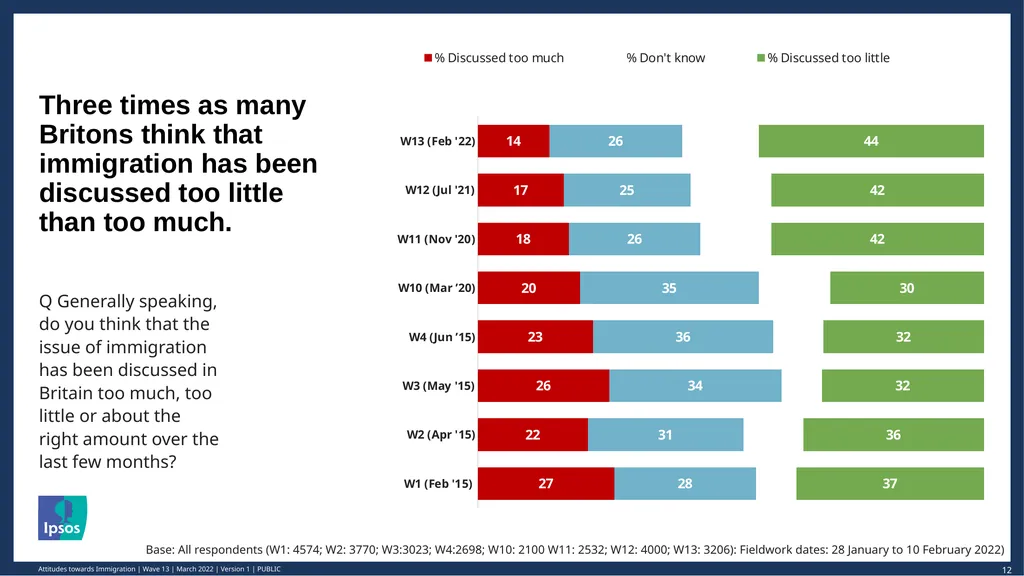
Base: All respondents (W1: 4574; W2: 3770; W3:3023; W4:2698; W10: 2100 W11: 2532; W12: 4000; W13: 3206): Fieldwork dates: 28 January to 10 February 2022) Q Generally speaking, do you think that the issue of immigration has been discussed in Britain too much, too little or about the right amount over the last few months? Three times as many Britons think that immigration has been discussed too little than too much.<br>
13
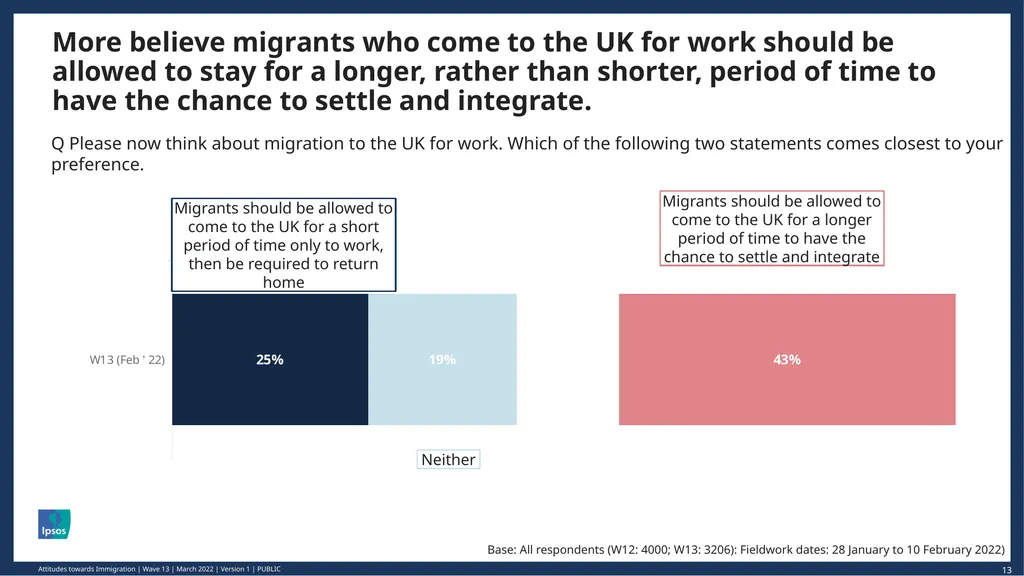
Base: All respondents (W12: 4000; W13: 3206): Fieldwork dates: 28 January to 10 February 2022) Migrants should be allowed to come to the UK for a short period of time only to work, then be required to return home Migrants should be allowed to come to the UK for a longer period of time to have the chance to settle and integrate Neither More believe migrants who come to the UK for work should be allowed to stay for a longer, rather than shorter, period of time to have the chance to settle and integrate. Q Please now think about migration to the UK for work. Which of the following two statements comes closest to your preference.<br>
14
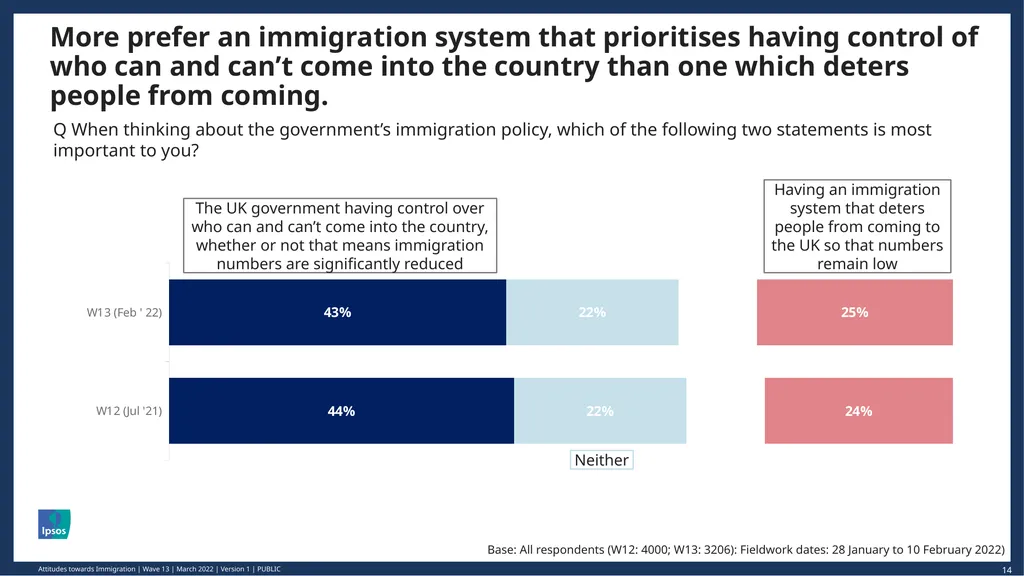
Base: All respondents (W12: 4000; W13: 3206): Fieldwork dates: 28 January to 10 February 2022) Q When thinking about the government’s immigration policy, which of the following two statements is most important to you? The UK government having control over who can and can’t come into the country, whether or not that means immigration numbers are significantly reduced Having an immigration system that deters people from coming to the UK so that numbers remain low Neither More prefer an immigration system that prioritises having control of who can and can’t come into the country than one which deters people from coming.<br>
15
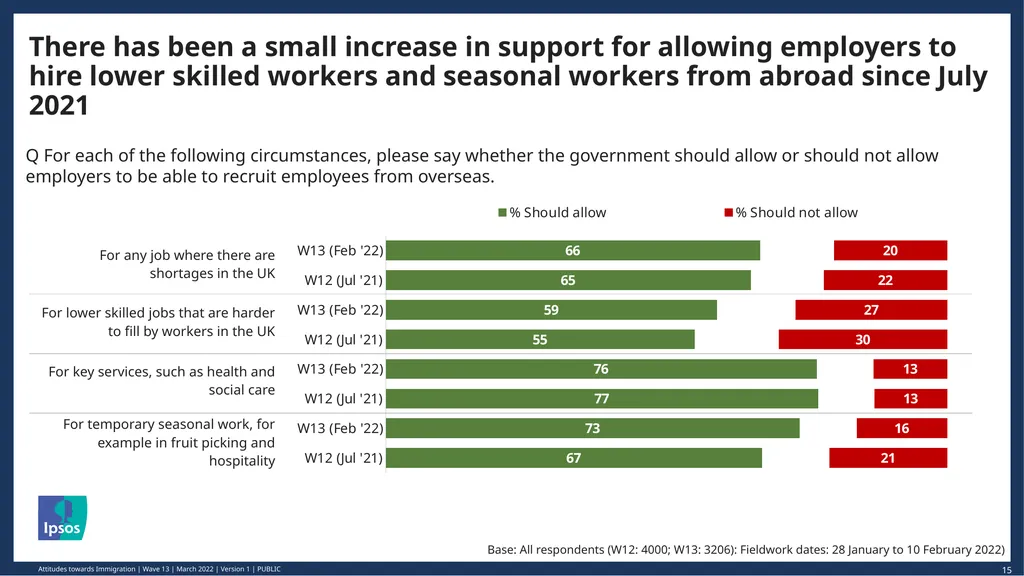
Base: All respondents (W12: 4000; W13: 3206): Fieldwork dates: 28 January to 10 February 2022) Q For each of the following circumstances, please say whether the government should allow or should not allow employers to be able to recruit employees from overseas. There has been a small increase in support for allowing employers to hire lower skilled workers and seasonal workers from abroad since July 2021<br>
16
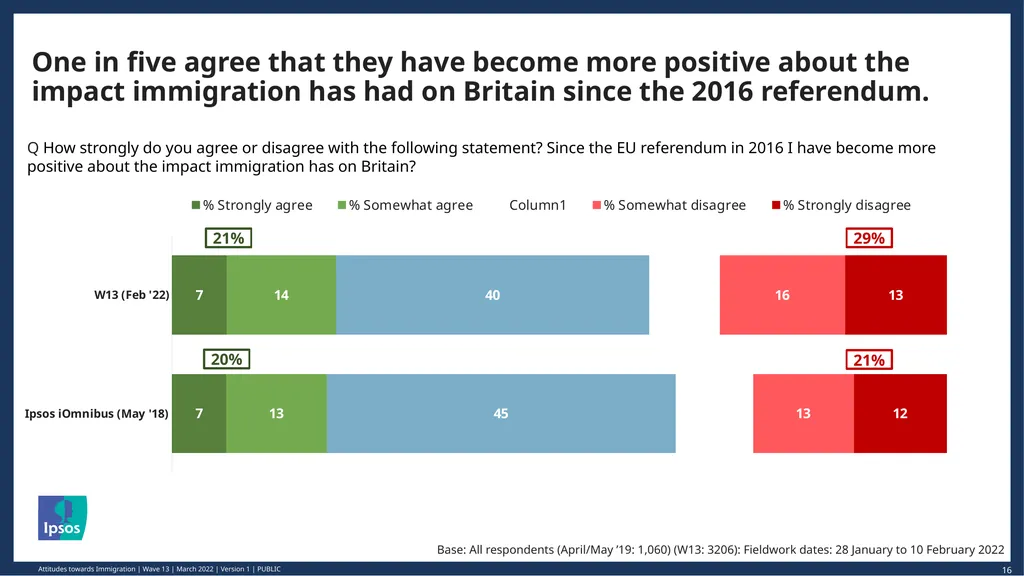
Base: All respondents (April/May ’19: 1,060) (W13: 3206): Fieldwork dates: 28 January to 10 February 2022 Q How strongly do you agree or disagree with the following statement? Since the EU referendum in 2016 I have become more positive about the impact immigration has on Britain? One in five agree that they have become more positive about the impact immigration has had on Britain since the 2016 referendum. 29% 21% 21% 20%<br>
17
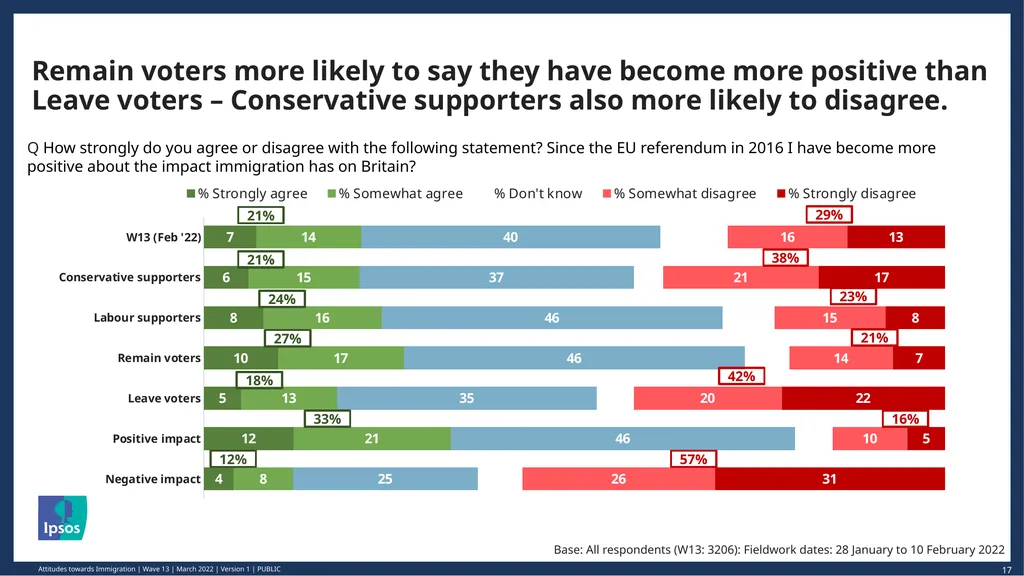
Base: All respondents (W13: 3206): Fieldwork dates: 28 January to 10 February 2022 Q How strongly do you agree or disagree with the following statement? Since the EU referendum in 2016 I have become more positive about the impact immigration has on Britain? Remain voters more likely to say they have become more positive than Leave voters – Conservative supporters also more likely to disagree. 21% 21% 24% 27% 18% 29% 42% 38% 23% 21% 16% 57% 33% 12%<br>
18
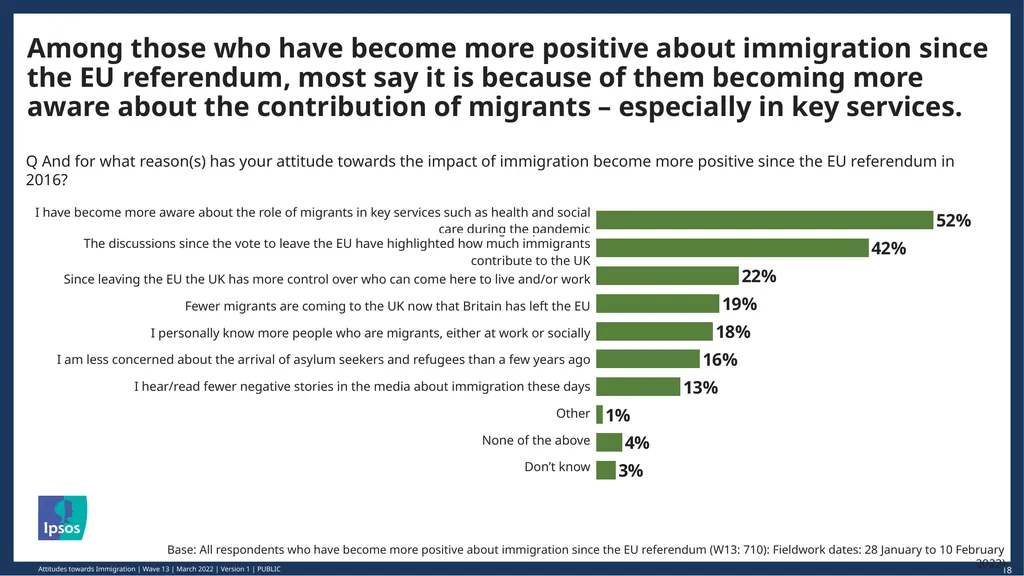
Base: All respondents who have become more positive about immigration since the EU referendum (W13: 710): Fieldwork dates: 28 January to 10 February 2022) Q And for what reason(s) has your attitude towards the impact of immigration become more positive since the EU referendum in 2016? Among those who have become more positive about immigration since the EU referendum, most say it is because of them becoming more aware about the contribution of migrants – especially in key services.<br>
19
Refugees and asylum NB: Fieldwork conducted prior to invasion of Ukraine<br>
20
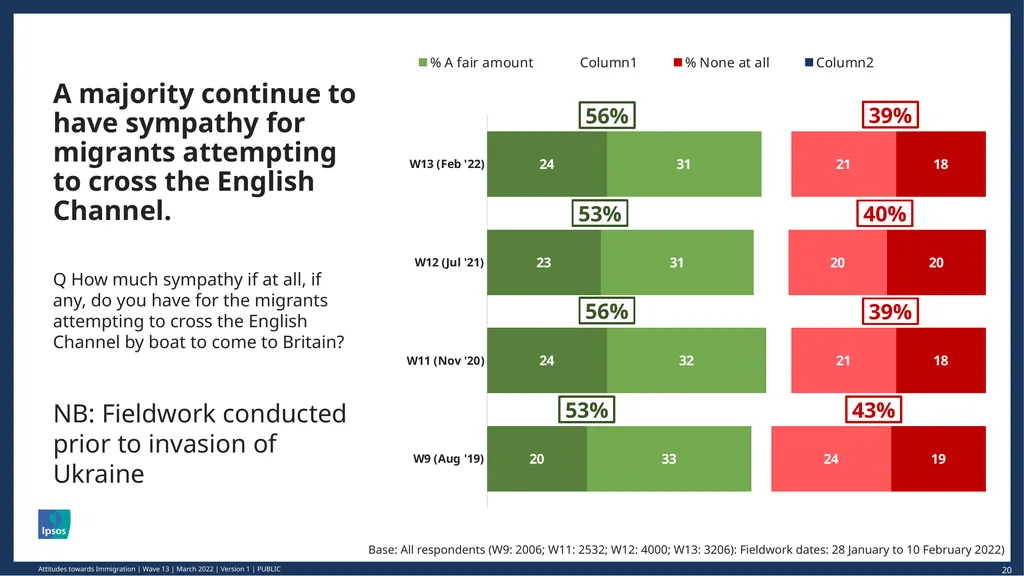
Base: All respondents (W9: 2006; W11: 2532; W12: 4000; W13: 3206): Fieldwork dates: 28 January to 10 February 2022) Q How much sympathy if at all, if any, do you have for the migrants attempting to cross the English Channel by boat to come to Britain? 43% 53% 39% 56% A majority continue to have sympathy for migrants attempting to cross the English Channel. 40% 53% 39% 56% NB: Fieldwork conducted prior to invasion of Ukraine<br>
21
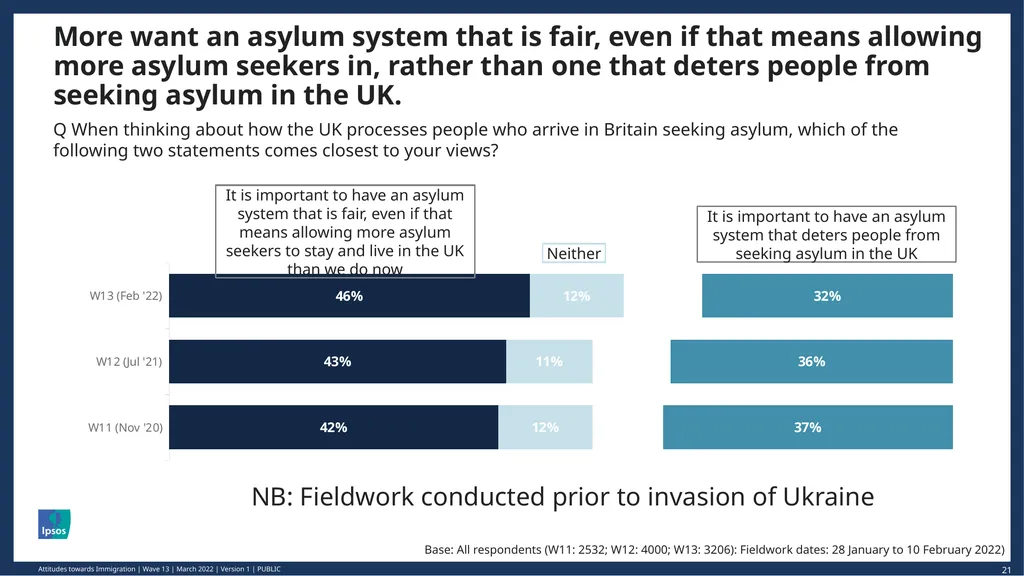
Base: All respondents (W11: 2532; W12: 4000; W13: 3206): Fieldwork dates: 28 January to 10 February 2022) Q When thinking about how the UK processes people who arrive in Britain seeking asylum, which of the following two statements comes closest to your views? It is important to have an asylum system that is fair, even if that means allowing more asylum seekers to stay and live in the UK than we do now It is important to have an asylum system that deters people from seeking asylum in the UK Neither More want an asylum system that is fair, even if that means allowing more asylum seekers in, rather than one that deters people from seeking asylum in the UK. NB: Fieldwork conducted prior to invasion of Ukraine<br>
22
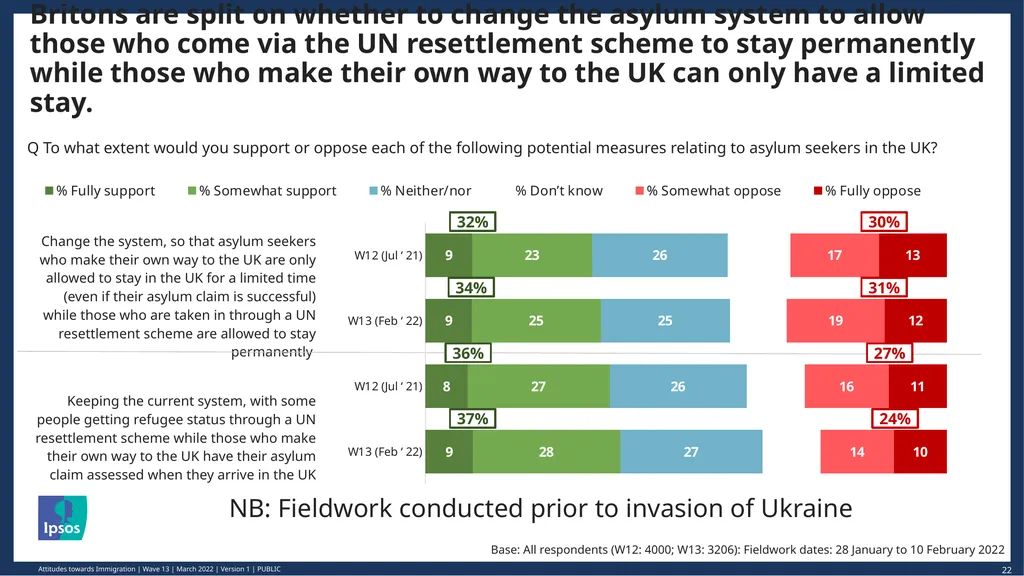
Base: All respondents (W12: 4000; W13: 3206): Fieldwork dates: 28 January to 10 February 2022 Q To what extent would you support or oppose each of the following potential measures relating to asylum seekers in the UK? Britons are split on whether to change the asylum system to allow those who come via the UN resettlement scheme to stay permanently while those who make their own way to the UK can only have a limited stay. 24% 37% 27% 36% 31% 34% 30% 32% NB: Fieldwork conducted prior to invasion of Ukraine<br>
23
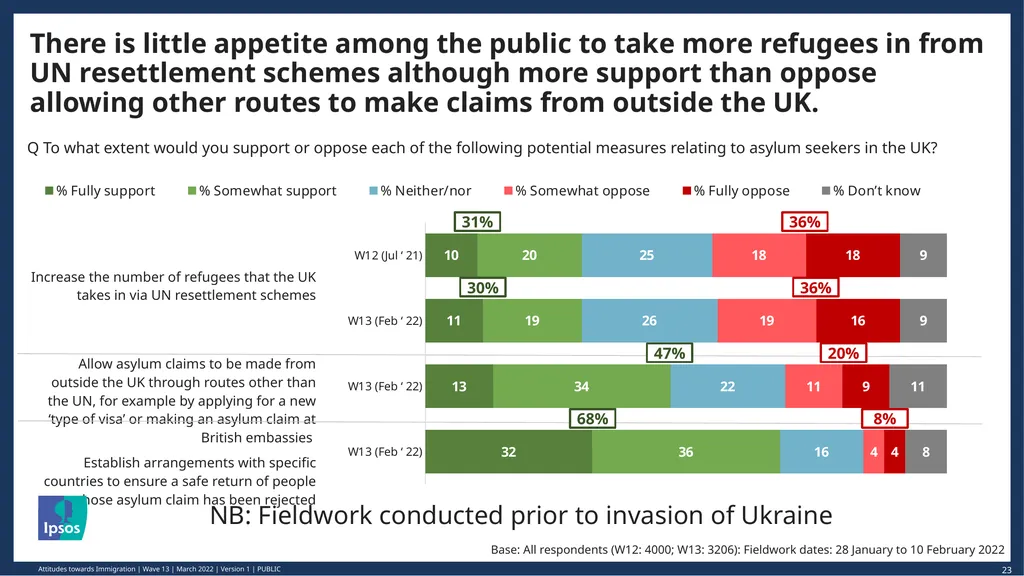
Base: All respondents (W12: 4000; W13: 3206): Fieldwork dates: 28 January to 10 February 2022 Q To what extent would you support or oppose each of the following potential measures relating to asylum seekers in the UK? There is little appetite among the public to take more refugees in from UN resettlement schemes although more support than oppose allowing other routes to make claims from outside the UK. 8% 68% 20% 47% 36% 30% 36% 31% NB: Fieldwork conducted prior to invasion of Ukraine<br>
24
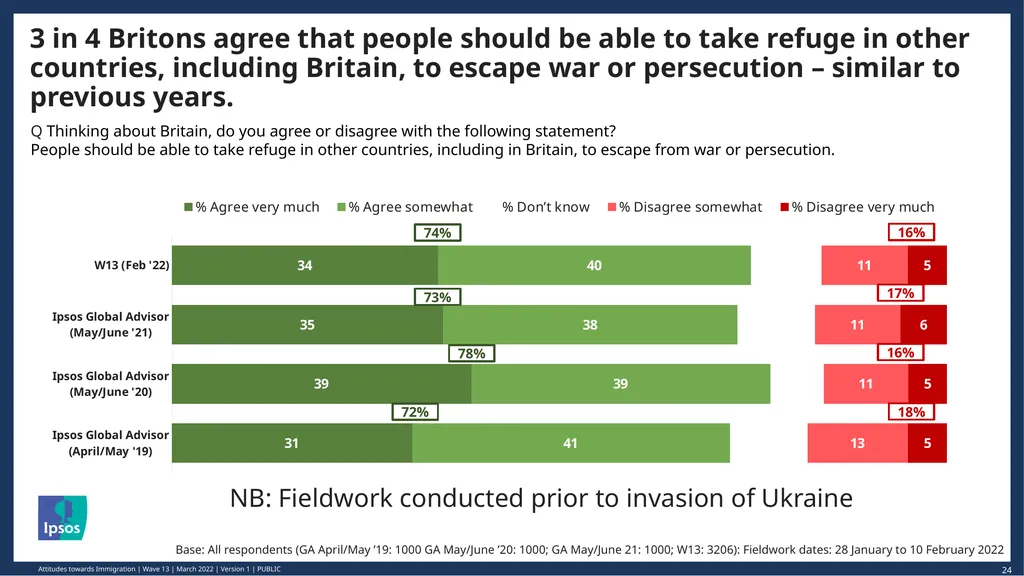
Base: All respondents (GA April/May ’19: 1000 GA May/June ’20: 1000; GA May/June 21: 1000; W13: 3206): Fieldwork dates: 28 January to 10 February 2022 Q Thinking about Britain, do you agree or disagree with the following statement?
People should be able to take refuge in other countries, including in Britain, to escape from war or persecution. 3 in 4 Britons agree that people should be able to take refuge in other countries, including Britain, to escape war or persecution – similar to previous years. 16% 74% 17% 73% 16% 78% 18% 72% NB: Fieldwork conducted prior to invasion of Ukraine<br>
25
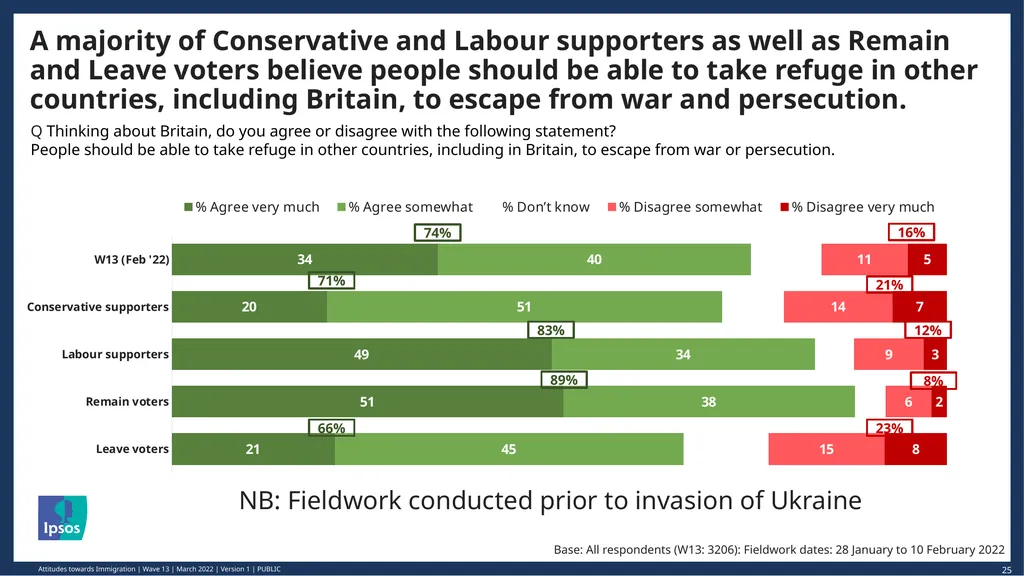
Base: All respondents (W13: 3206): Fieldwork dates: 28 January to 10 February 2022 Q Thinking about Britain, do you agree or disagree with the following statement?
People should be able to take refuge in other countries, including in Britain, to escape from war or persecution. A majority of Conservative and Labour supporters as well as Remain and Leave voters believe people should be able to take refuge in other countries, including Britain, to escape from war and persecution. 16% 74% 21% 71% 12% 83% 8% 89% 66% 23% NB: Fieldwork conducted prior to invasion of Ukraine<br>
26
Ipsos | 3 Thomas More Square | London E1W 1YW | t: +44 (0)20 7347 3000 | www.ipsos-mori.com/ FURTHER INFORMATION
For more information please contact:
Gideon Skinner
Gideon.skinner@ipsos.com
Glenn Gottfried
Glenn.Gottfried@ipsos.com
Holly Day
Holly.Day@ipsos.com<br>
For more information please contact:
Gideon Skinner
Gideon.skinner@ipsos.com
Glenn Gottfried
Glenn.Gottfried@ipsos.com
Holly Day
Holly.Day@ipsos.com<br>