IPTV Technology What is IPTV IPTV Services IPTV Requirements Network Architecture IPTV Components Key IPTV Technologies IPTV Security Future of IPTV Outline IPTV is defined as multimedia services such as
"IPTV Technology What is IPTV IPTV Services IPTV" is the property of its rightful owner. Permission is granted to
download and print the materials on this website for personal, non-commercial use only, and to display it
on your personal computer provided you do not modify the materials and that you retain all copyright
notices contained in the materials. By downloading content from our website, you accept the terms of this
agreement.
Presentation Transcript
01
IPTV Technology<br>
02
What is IPTV
IPTV Services
IPTV Requirements
Network Architecture
IPTV Components
Key IPTV Technologies
IPTV Security
Future of IPTV Outline<br>
03
“IPTV is defined as multimedia services such as television/video/audio/text/graphics/data delivered over IP based networks managed to provide the required level of quality of service and experience, security, interactivity and reliability.”
ITU focus group on IPTV
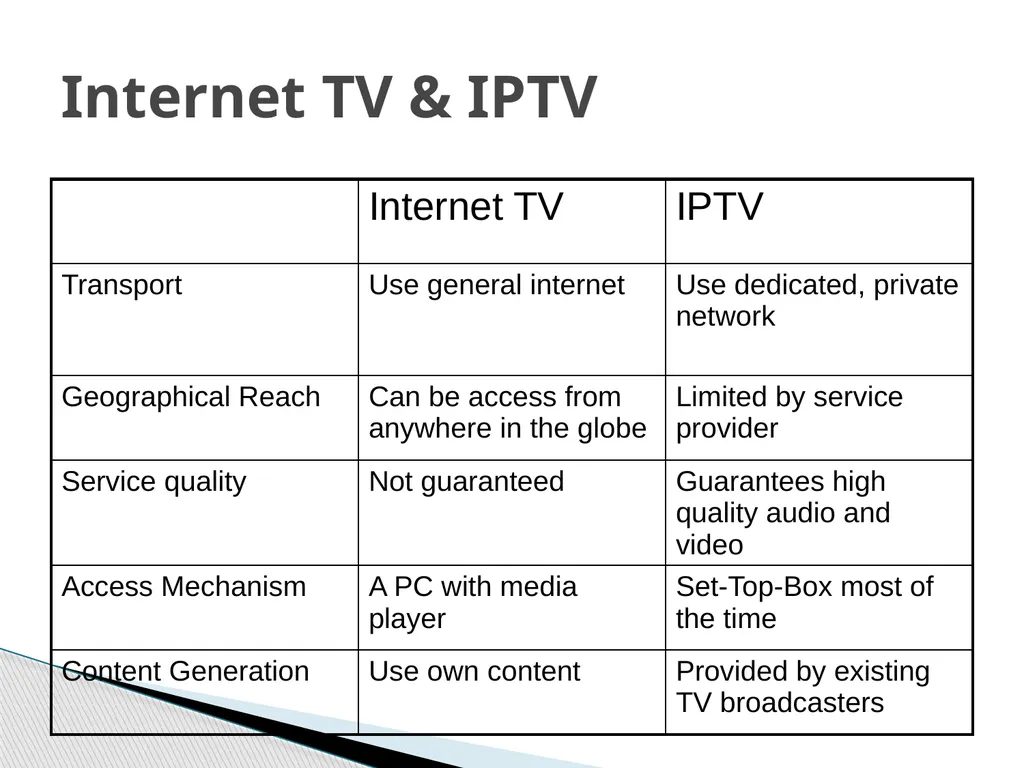
Use Access Networks to reach clients, not general internet links
IPTV is not audio/video through the internet What is IPTV?<br>
04
Internet TV & IPTV<br>
05
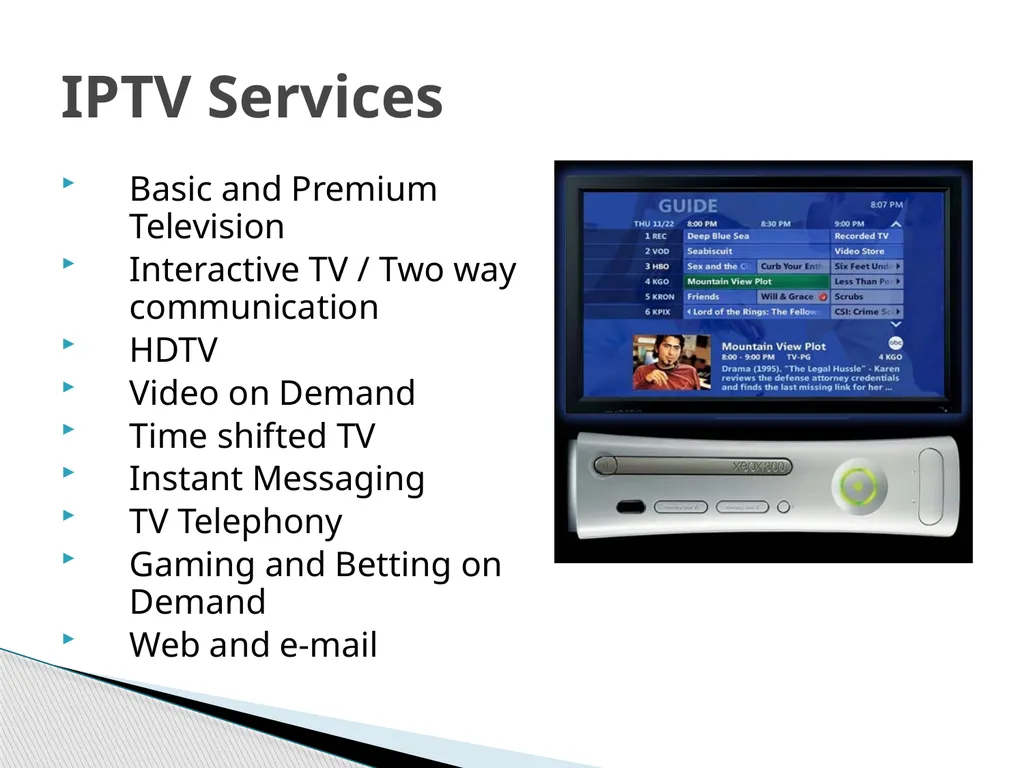
Basic and Premium Television
Interactive TV / Two way communication
HDTV
Video on Demand
Time shifted TV
Instant Messaging
TV Telephony
Gaming and Betting on Demand
Web and e-mail IPTV Services<br>
06
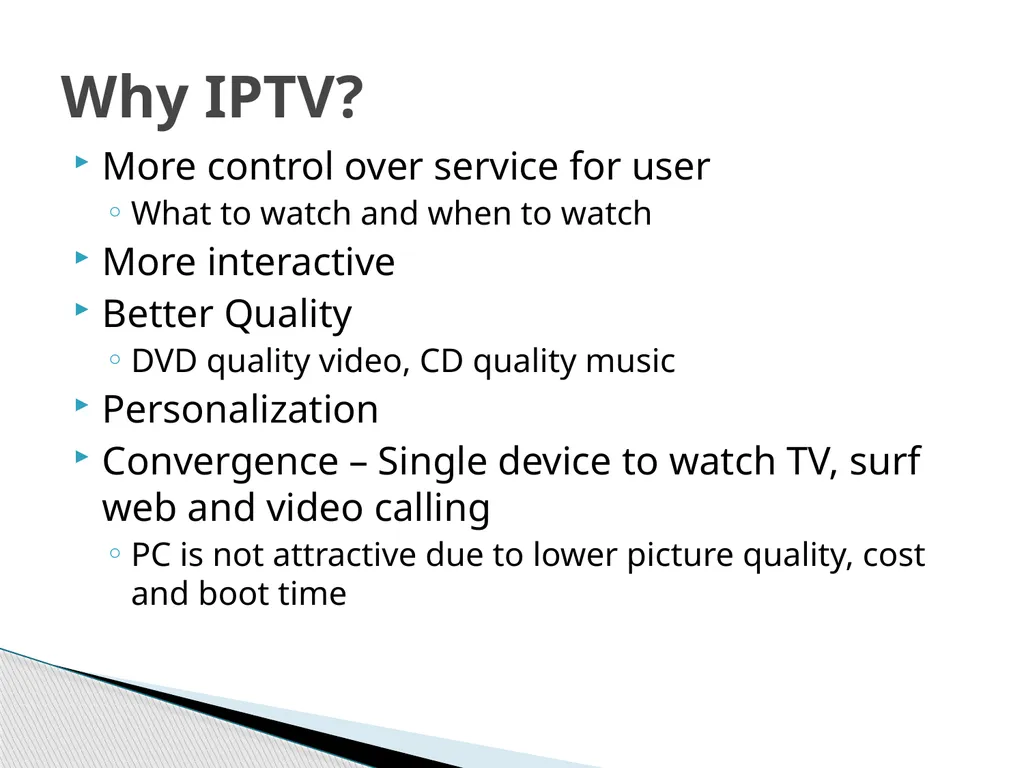
More control over service for user
What to watch and when to watch
More interactive
Better Quality
DVD quality video, CD quality music
Personalization
Convergence – Single device to watch TV, surf web and video calling
PC is not attractive due to lower picture quality, cost and boot time Why IPTV?<br>
07
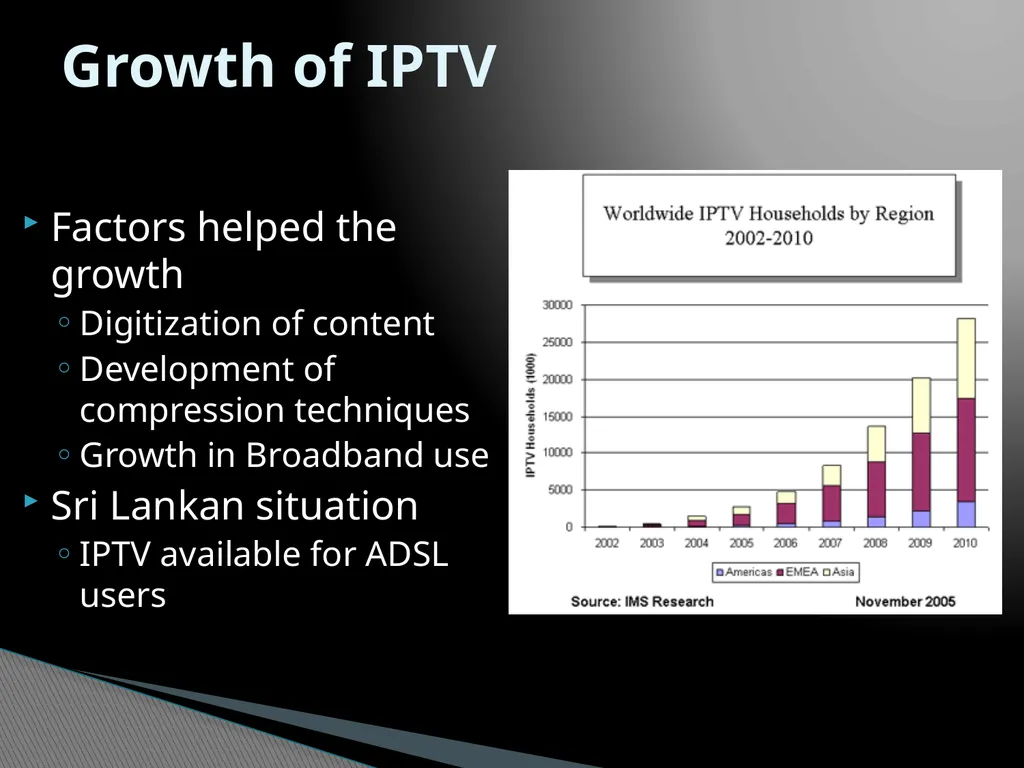
Factors helped the growth
Digitization of content
Development of compression techniques
Growth in Broadband use
Sri Lankan situation
IPTV available for ADSL users Growth of IPTV<br>
08
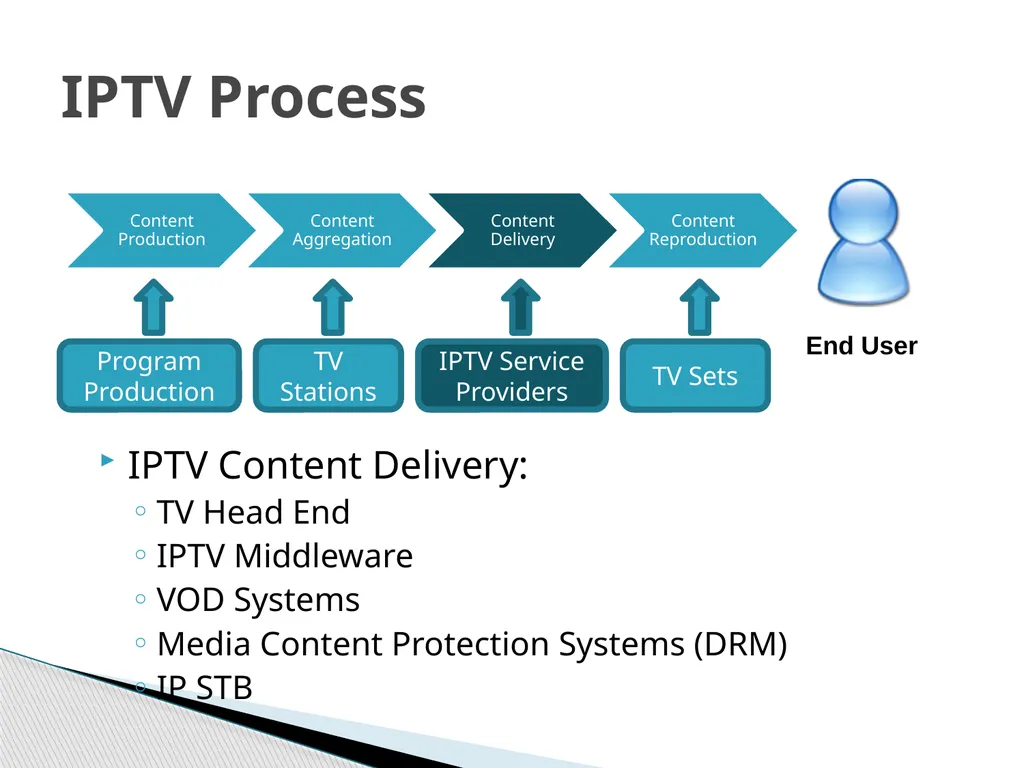
IPTV Content Delivery:
TV Head End
IPTV Middleware
VOD Systems
Media Content Protection Systems (DRM)
IP STB IPTV Process Program Production End User<br>
09
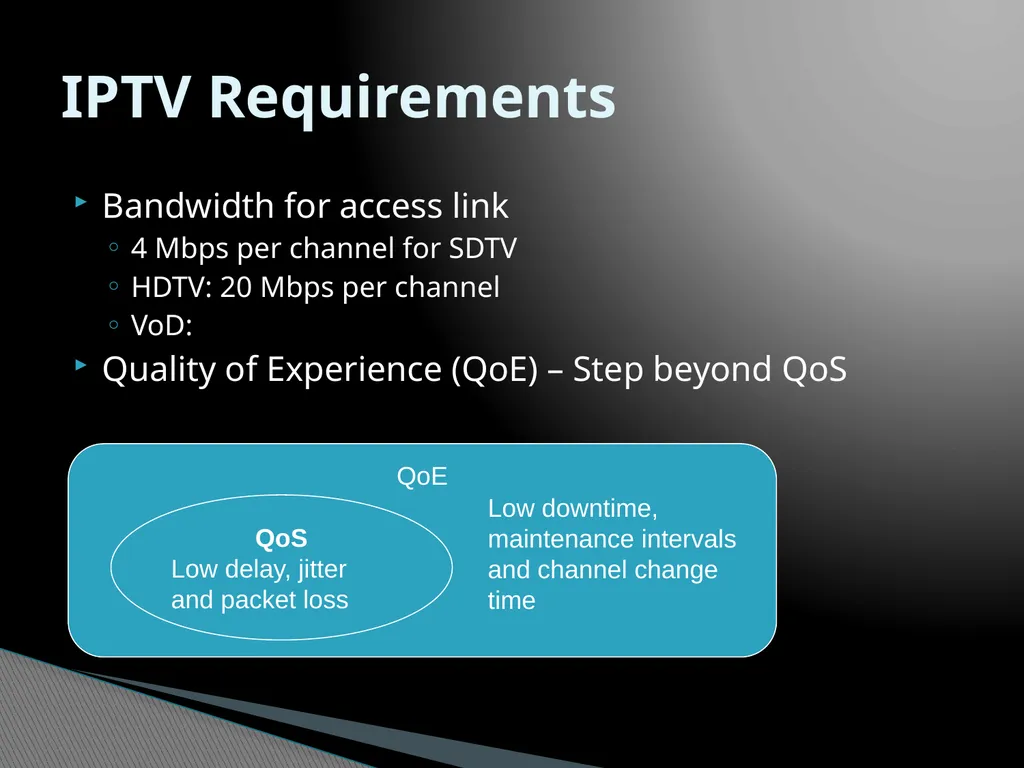
Bandwidth for access link
4 Mbps per channel for SDTV
HDTV: 20 Mbps per channel
VoD:
Quality of Experience (QoE) – Step beyond QoS IPTV Requirements QoE QoS
Low delay, jitter and packet loss Low downtime, maintenance intervals and channel change time<br>
10
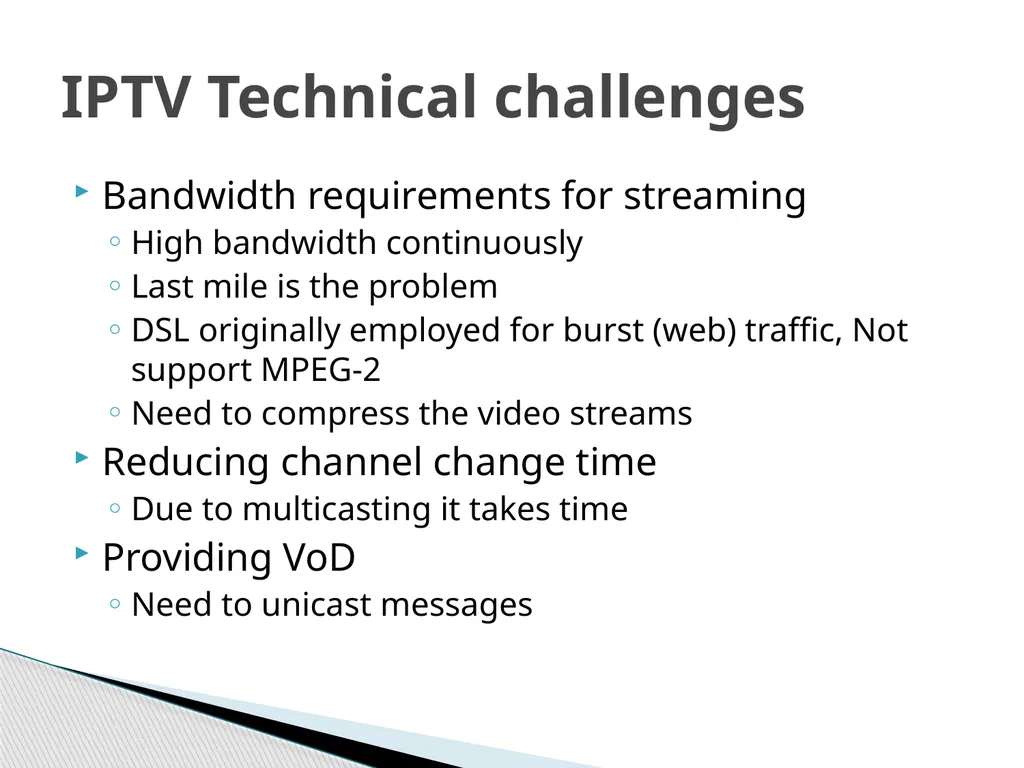
Bandwidth requirements for streaming
High bandwidth continuously
Last mile is the problem
DSL originally employed for burst (web) traffic, Not support MPEG-2
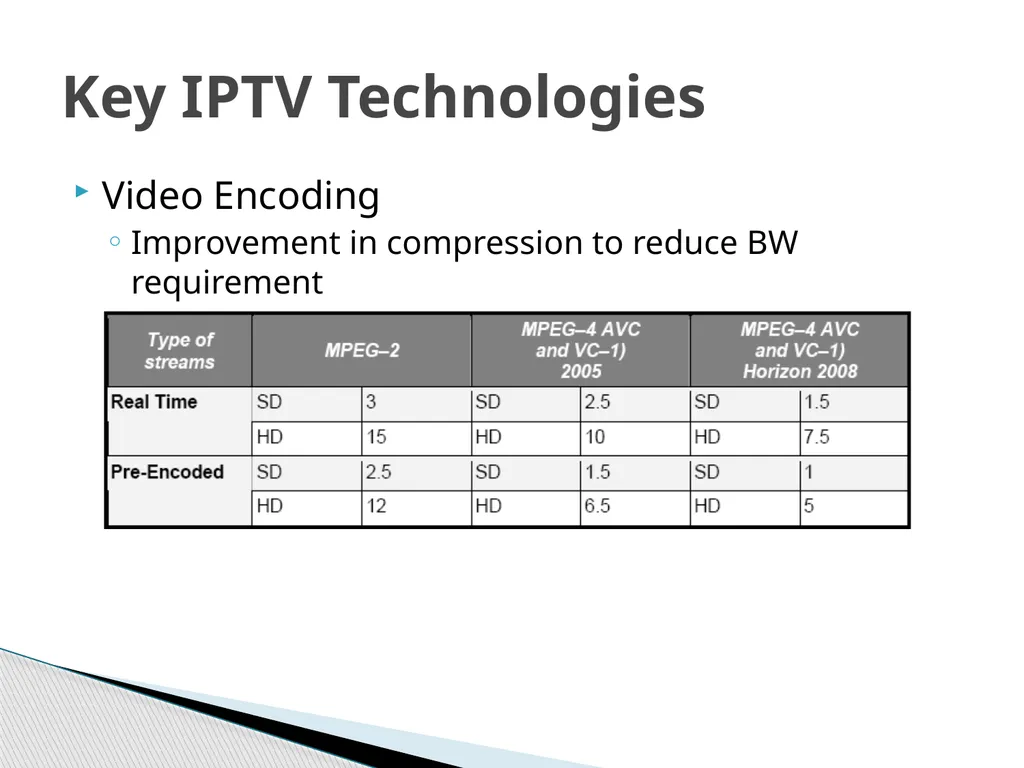
Need to compress the video streams
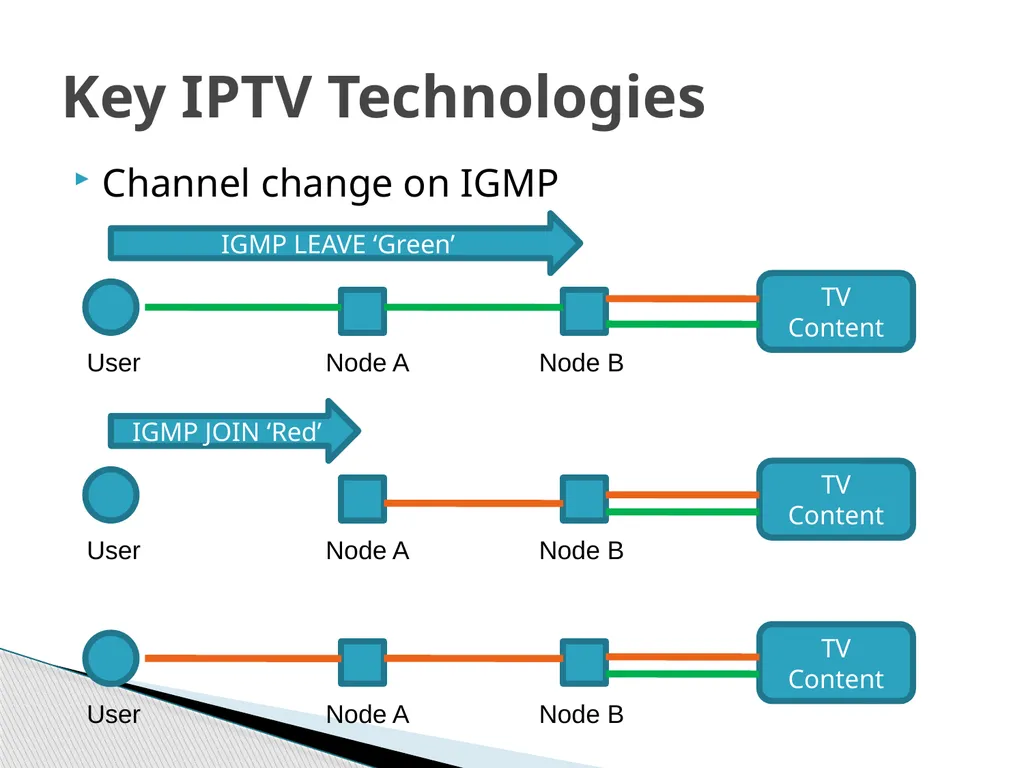
Reducing channel change time
Due to multicasting it takes time
Providing VoD
Need to unicast messages IPTV Technical challenges<br>
11
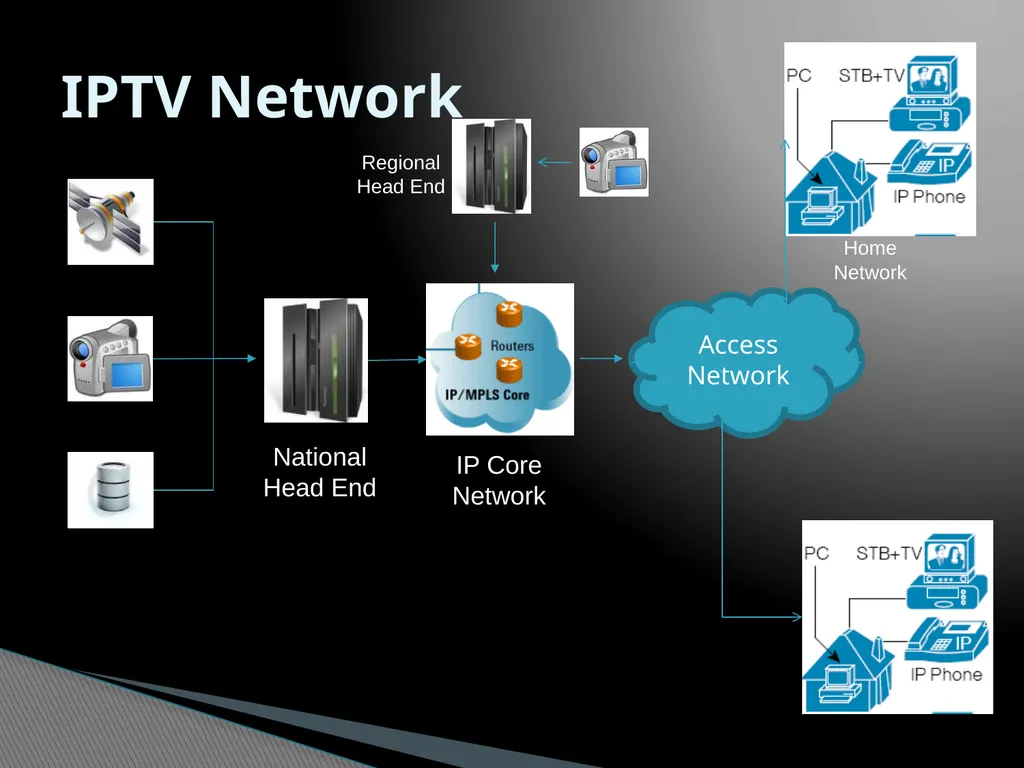
IPTV Network Access Network National Head End Regional Head End Home Network IP Core Network<br>
12
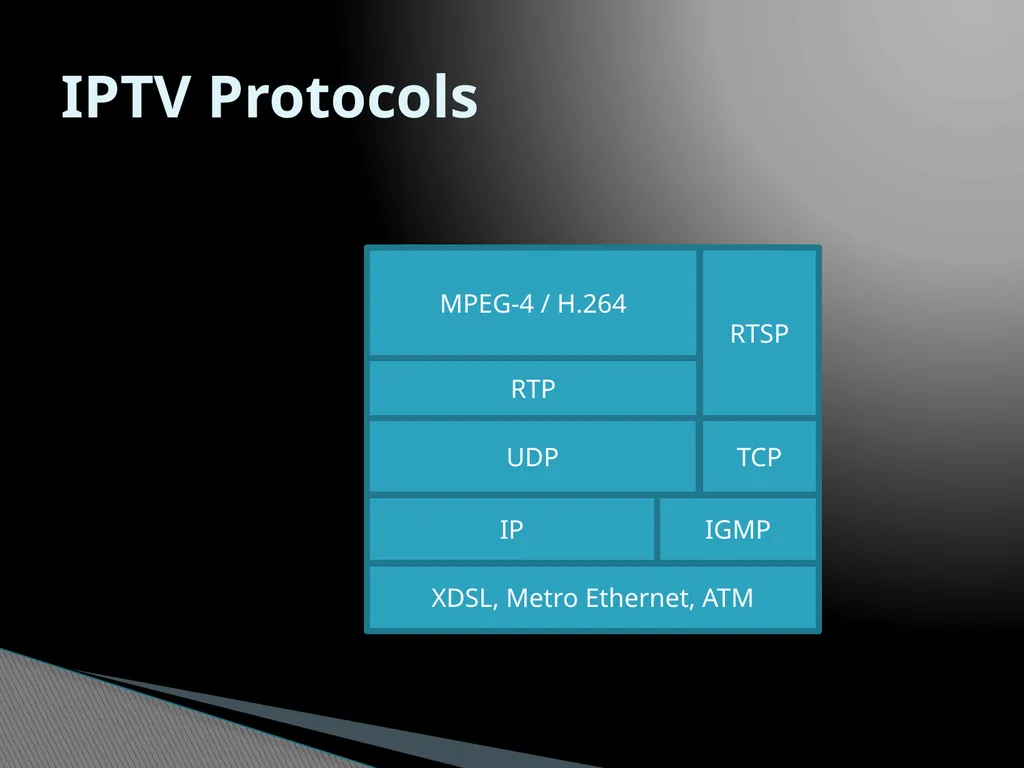
IPTV Protocols MPEG-4 / H.264 RTP UDP IP XDSL, Metro Ethernet, ATM TCP RTSP IGMP<br>
13
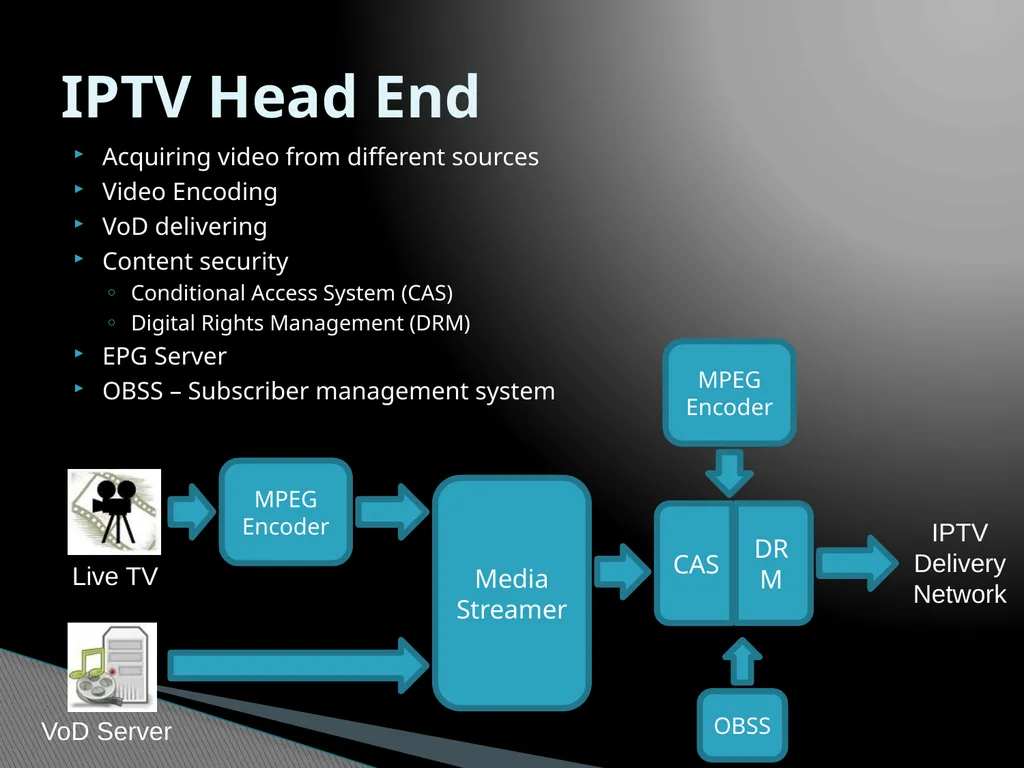
Acquiring video from different sources
Video Encoding
VoD delivering
Content security
Conditional Access System (CAS)
Digital Rights Management (DRM)
EPG Server
OBSS – Subscriber management system IPTV Head End MPEG Encoder Media Streamer MPEG Encoder IPTV Delivery Network Live TV VoD Server OBSS<br>
14
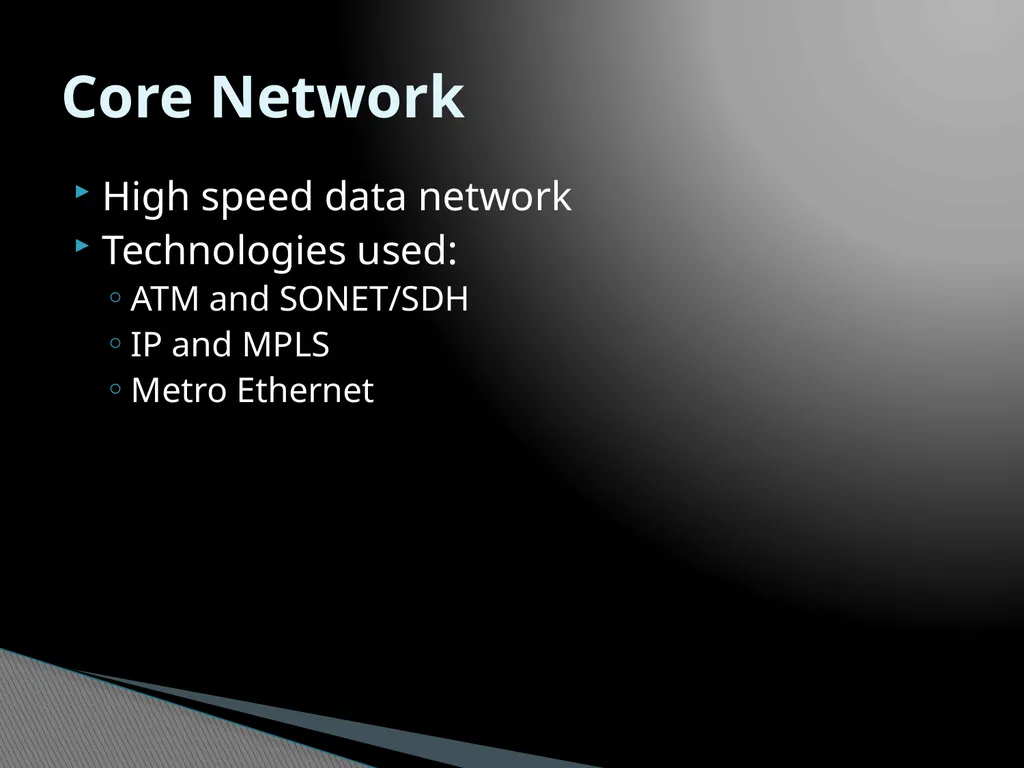
High speed data network
Technologies used:
ATM and SONET/SDH
IP and MPLS
Metro Ethernet Core Network<br>
15
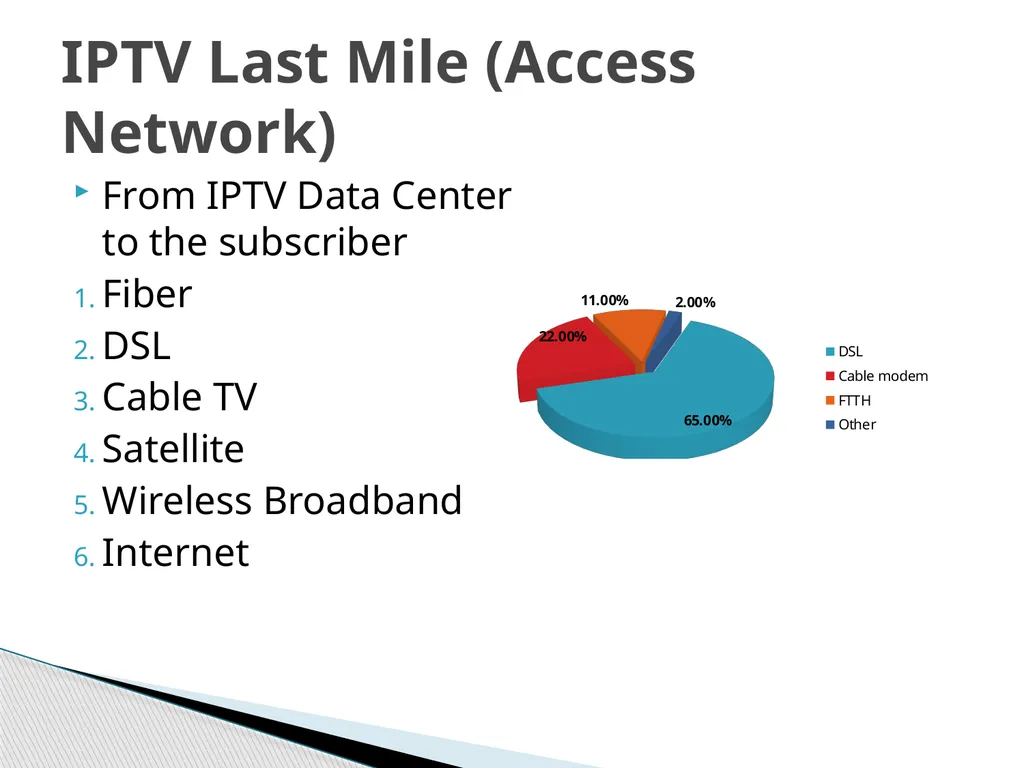
From IPTV Data Center to the subscriber
Fiber
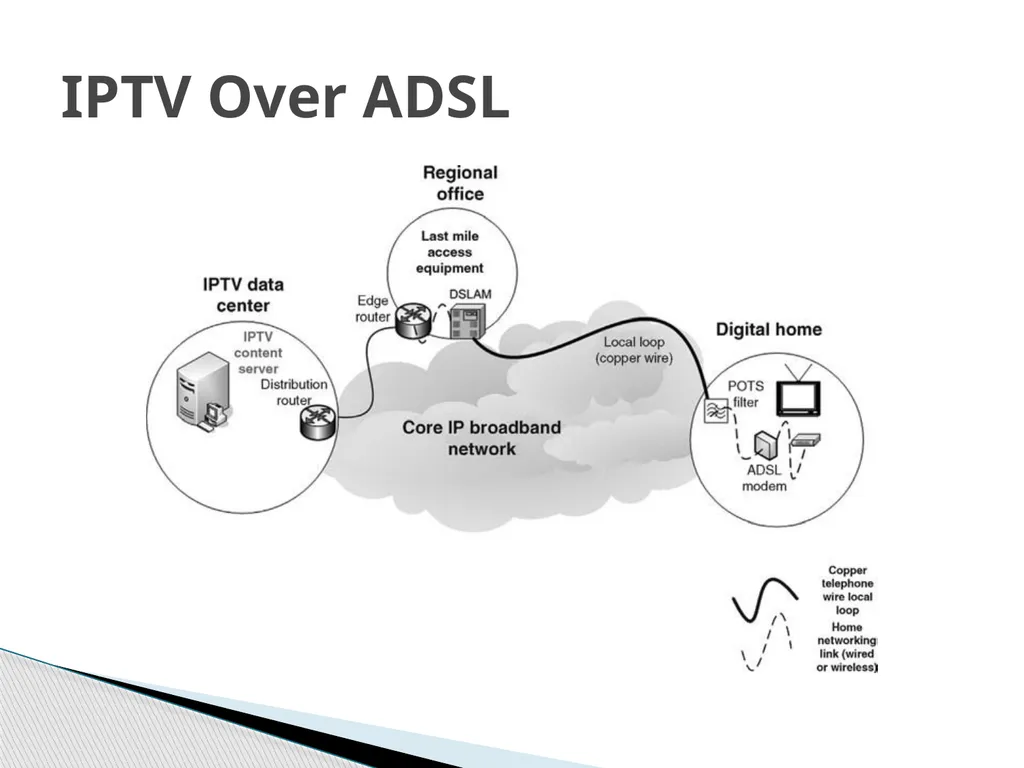
DSL
Cable TV
Satellite
Wireless Broadband
Internet IPTV Last Mile (Access Network)<br>
16
IPTV Over ADSL<br>
17
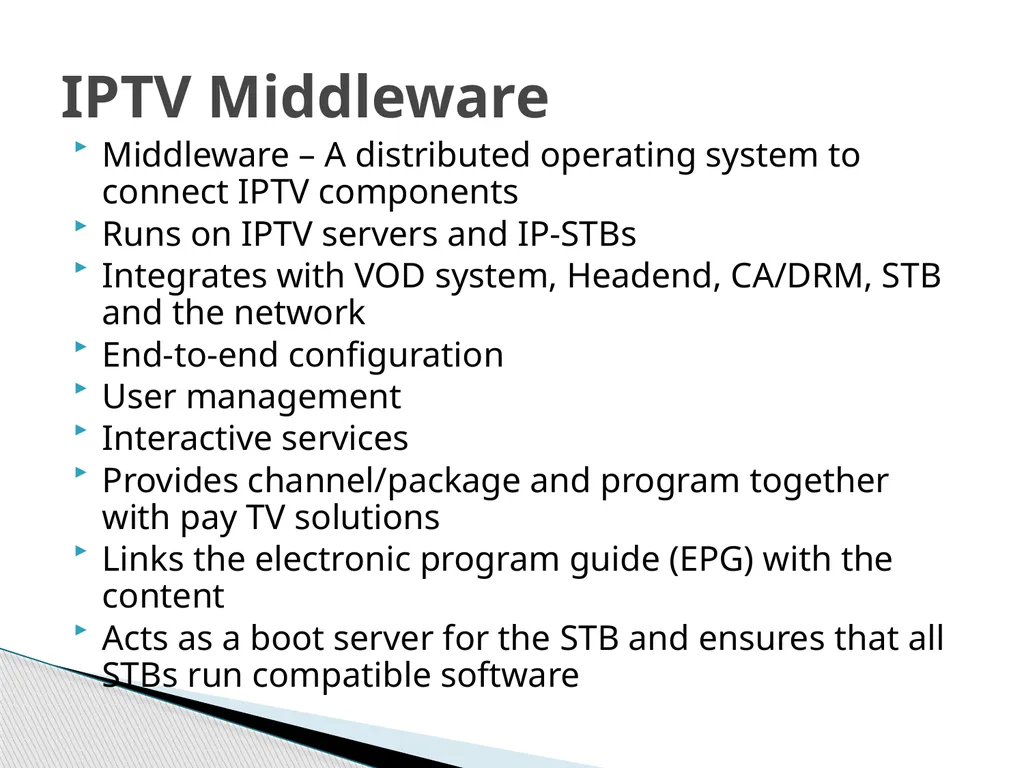
Middleware – A distributed operating system to connect IPTV components
Runs on IPTV servers and IP-STBs
Integrates with VOD system, Headend, CA/DRM, STB and the network
End-to-end configuration
User management
Interactive services
Provides channel/package and program together with pay TV solutions
Links the electronic program guide (EPG) with the content
Acts as a boot server for the STB and ensures that all STBs run compatible software IPTV Middleware<br>
18
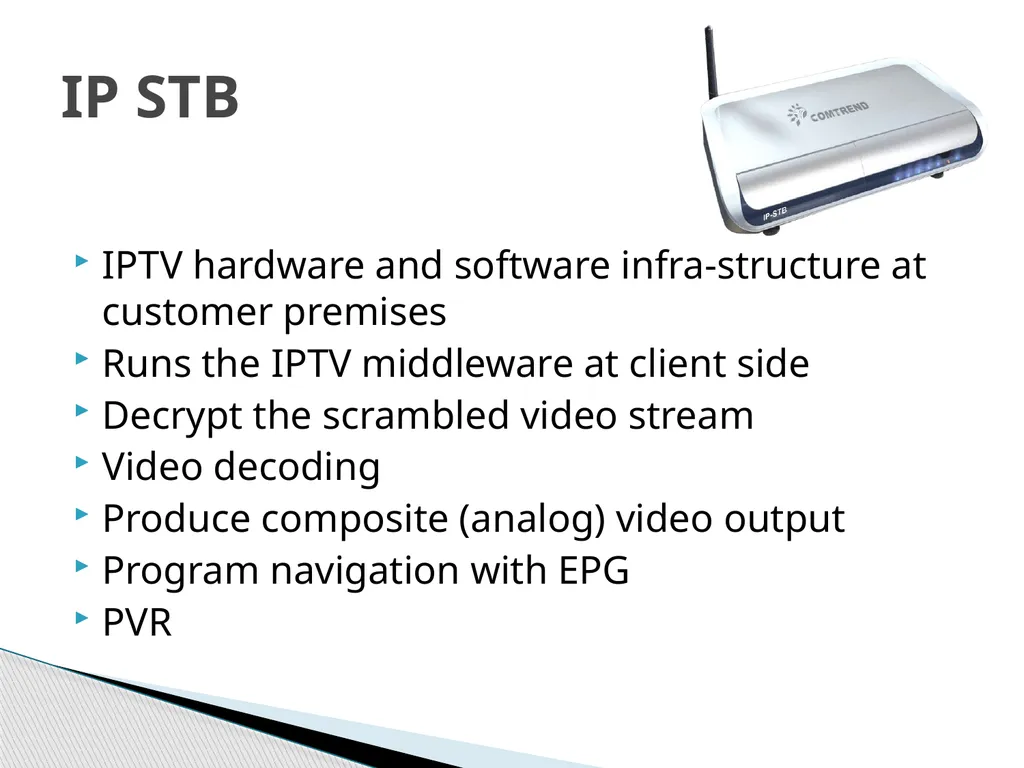
IPTV hardware and software infra-structure at customer premises
Runs the IPTV middleware at client side
Decrypt the scrambled video stream
Video decoding
Produce composite (analog) video output
Program navigation with EPG
PVR IP STB<br>
19
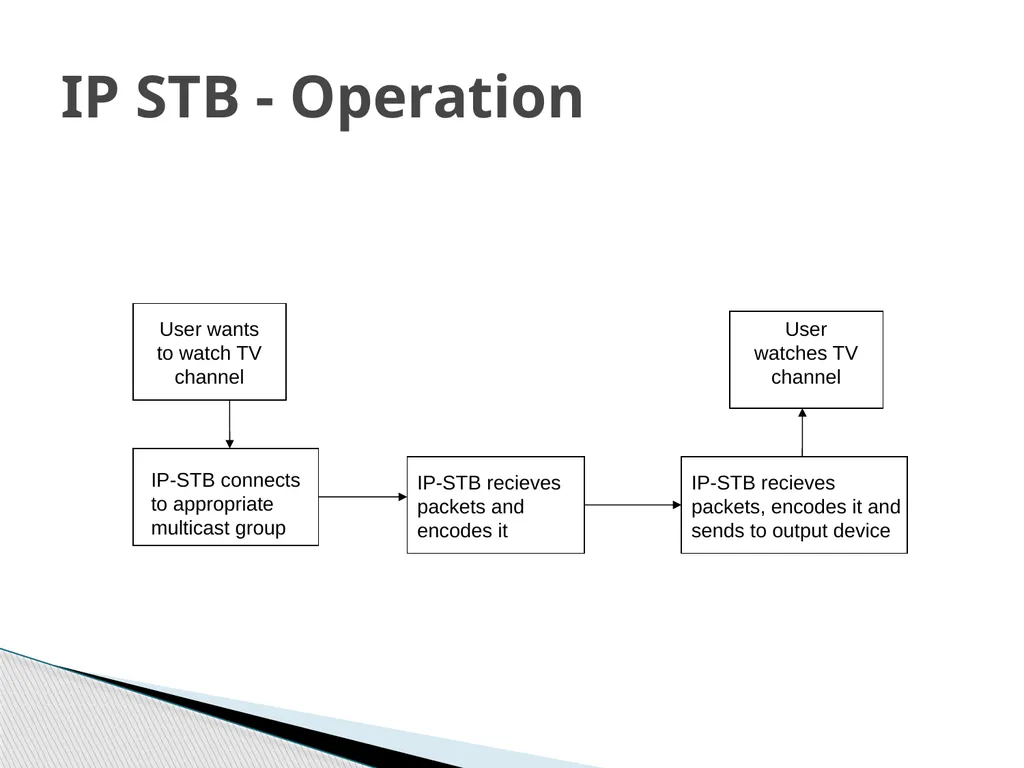
IP STB - Operation User wants to watch TV channel IP-STB connects to appropriate multicast group IP-STB recieves packets and encodes it IP-STB recieves packets, encodes it and sends to output device User watches TV channel<br>
20
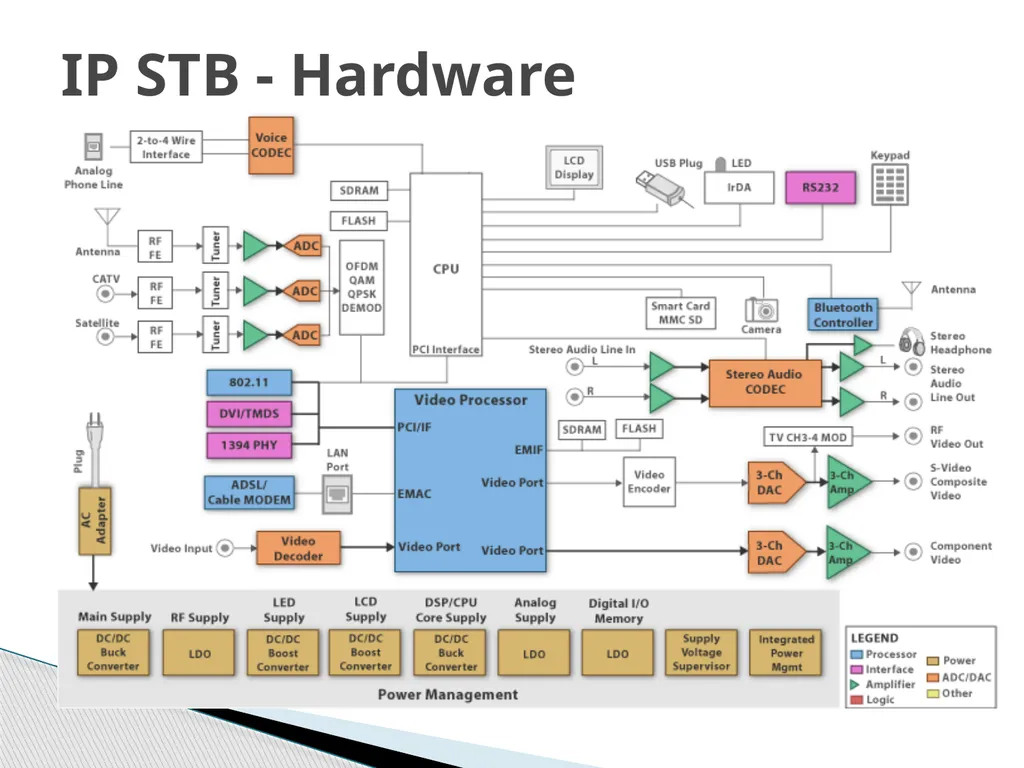
IP STB - Hardware<br>
21
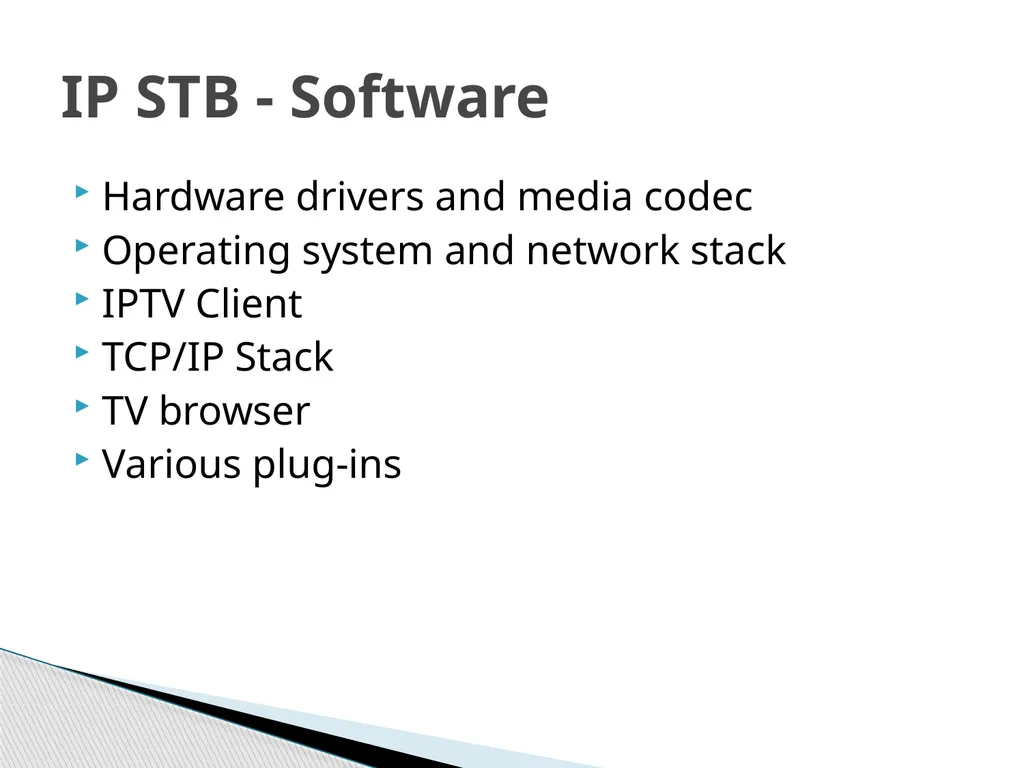
Hardware drivers and media codec
Operating system and network stack
IPTV Client
TCP/IP Stack
TV browser
Various plug-ins IP STB - Software<br>
22
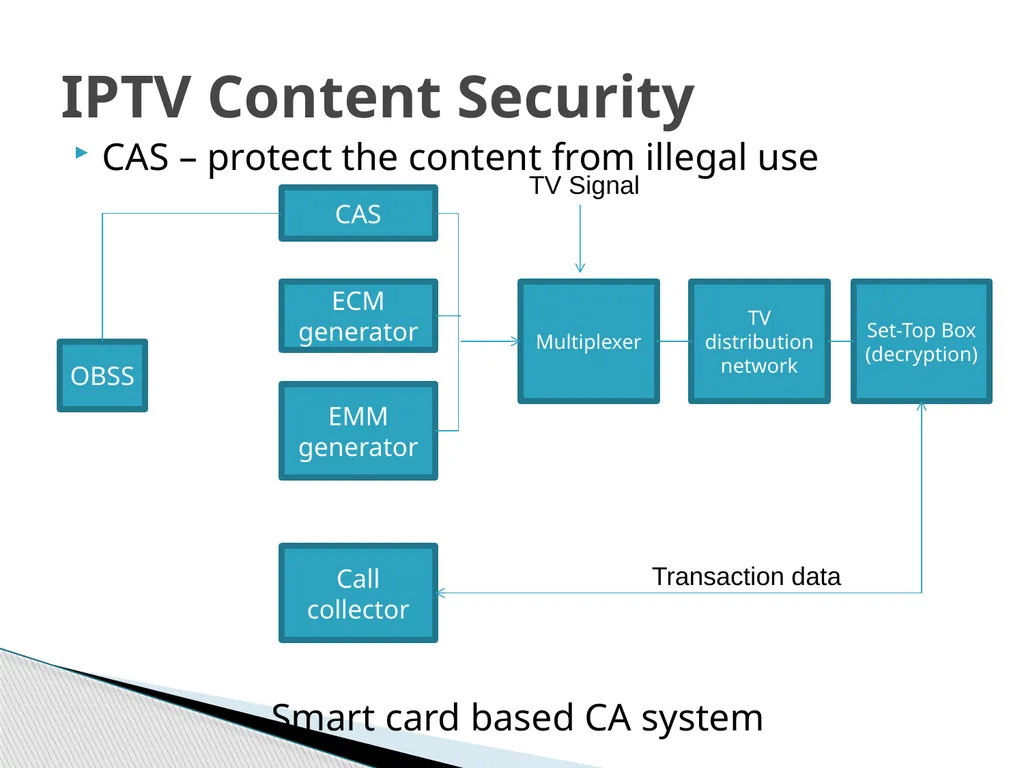
CAS – protect the content from illegal use
Smart card based CA system IPTV Content Security OBSS CAS ECM generator EMM generator Multiplexer TV Signal TV distribution network Set-Top Box
(decryption) Call collector Transaction data<br>
23
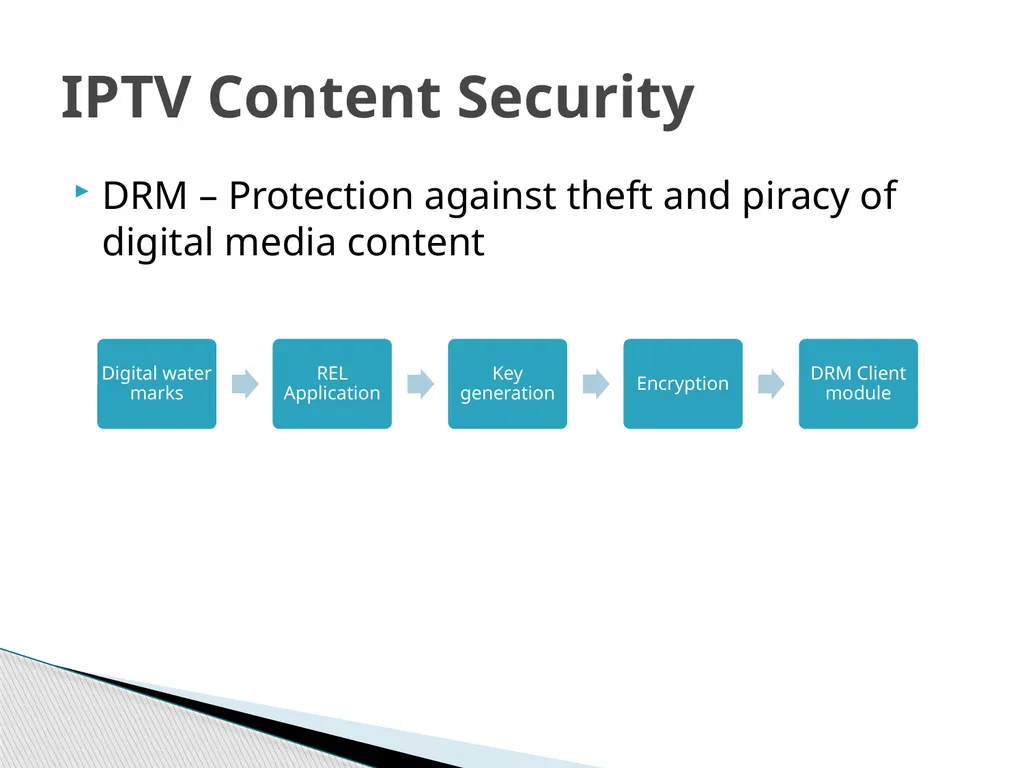
DRM – Protection against theft and piracy of digital media content IPTV Content Security<br>
Video Encoding
Improvement in compression to reduce BW requirement Key IPTV Technologies<br>
26
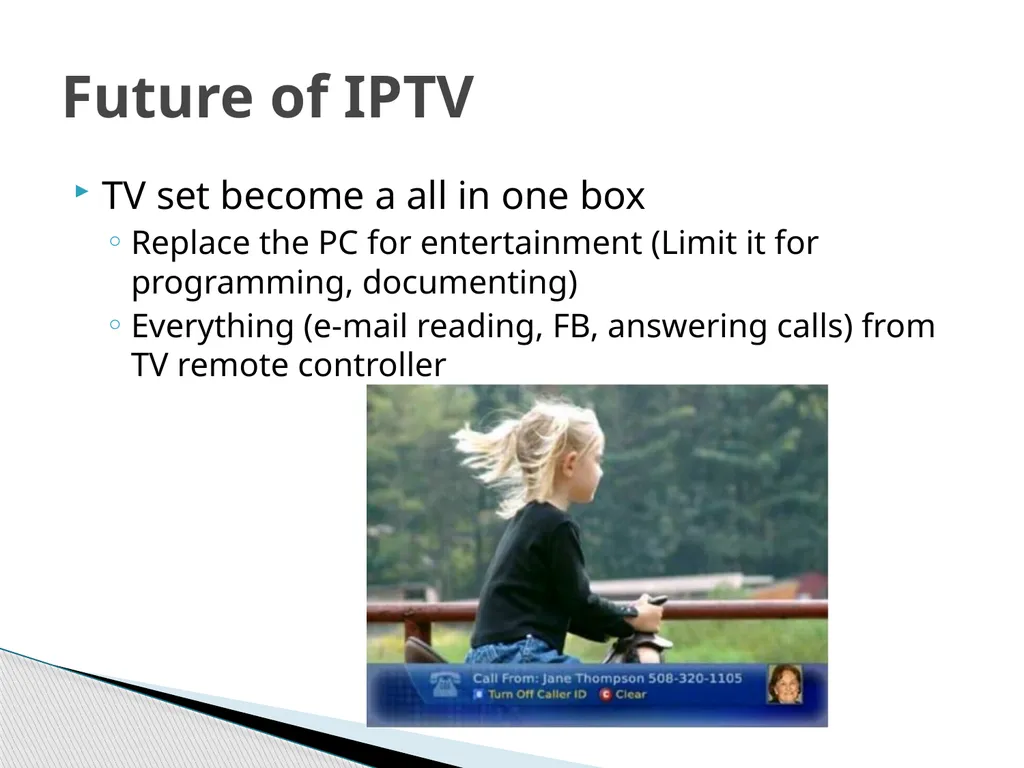
TV set become a all in one box
Replace the PC for entertainment (Limit it for programming, documenting)
Everything (e-mail reading, FB, answering calls) from TV remote controller Future of IPTV<br>