
Iran – A MINING COUNTRY? IRAN A COMMODITY RICH

Description: Iran A MINING COUNTRY? IRAN A COMMODITY RICH COUNTRY Finity Asset Farzad Moshfeghi After a 10 year absence, Western investors can re-invest in Iran. Iranian government has created a number of investor friendly schemes : free trade zones,
Related Topics
Download Presentation
"Iran – A MINING COUNTRY? IRAN A COMMODITY RICH" is the property of its rightful owner. Permission is granted to download and print the materials on this website for personal, non-commercial use only, and to display it on your personal computer provided you do not modify the materials and that you retain all copyright notices contained in the materials. By downloading content from our website, you accept the terms of this agreement.
Presentation Transcript
slide1. Iran – A MINING COUNTRY? IRAN
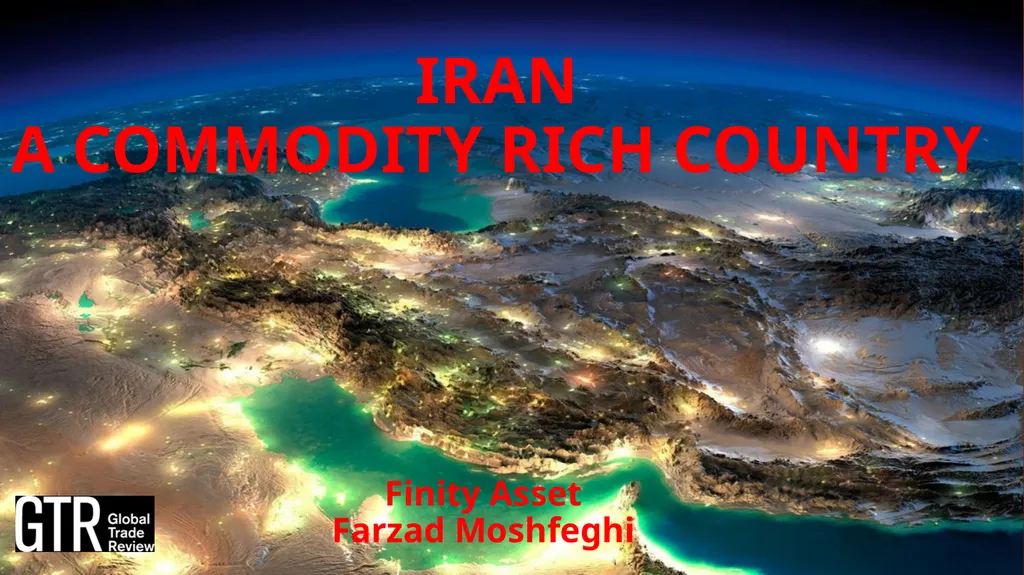
A COMMODITY RICH COUNTRY Finity Asset Farzad Moshfeghi<br>
slide2. After a 10 year absence, Western investors can re-invest in Iran.
Iranian government has created a number of investor friendly schemes :
free trade zones,
favourable investment terms for foreigners
regulatory schemes such as FIPPA and 100% ownership rights
Below ground the value of assets has not disappeared.
Iran needs to attract foreign investment and western partners to deliver an ambitious program of economic growth
4th largest Oil reserves (150B bbl) & 2nd largest Gas reserves (over 1000 Tcf)
Iran accounts for roughly 1% of the world's population yet holds more than 18% of global gas reserves, 10% of global oil reserves and 7% of global mining reserves. Background<br>
slide3. What is Iran Famous for ? OIL & GAS – Of course Iran has the 4th largest Oil reserves – approx. 150B bbls with hydro carbon fiels both in the south, west and north of the country. Most prominent field is the Ahvaz field with nearly 1M bbl/day.
Iran has the second largest gas reserves in the world with approx. 1000 Tcf of proven reserves – most famous is the South Pars field
Over 140 oil and gas fields and nearly 300 reservoirse discovered so far.<br>
slide4. What is Iran Famous for ? 37 billion tonnes of proven reserves and more than 57billion tonnes of potential reserves worth $770 billion - 2014.
Iran holds more than 7% of the world's total mineral reserves
Large deposits which mostly remain underdeveloped are :
zinc (No 1 globally)
copper (9th globally - 2011)
iron (12th globally - 2013)
uranium (10th globally)
lead (11th globally).
Approximately 5,000 operational mines producing 12 types of metals and 36 non-metal ores
90% of the mines belong to state owned companies (predominantly via IMIDRO)
IMIDRO is openly looking for investors and partners to increase production and develop its assets - in particular copper, iron ore and aluminium MINERALS<br>
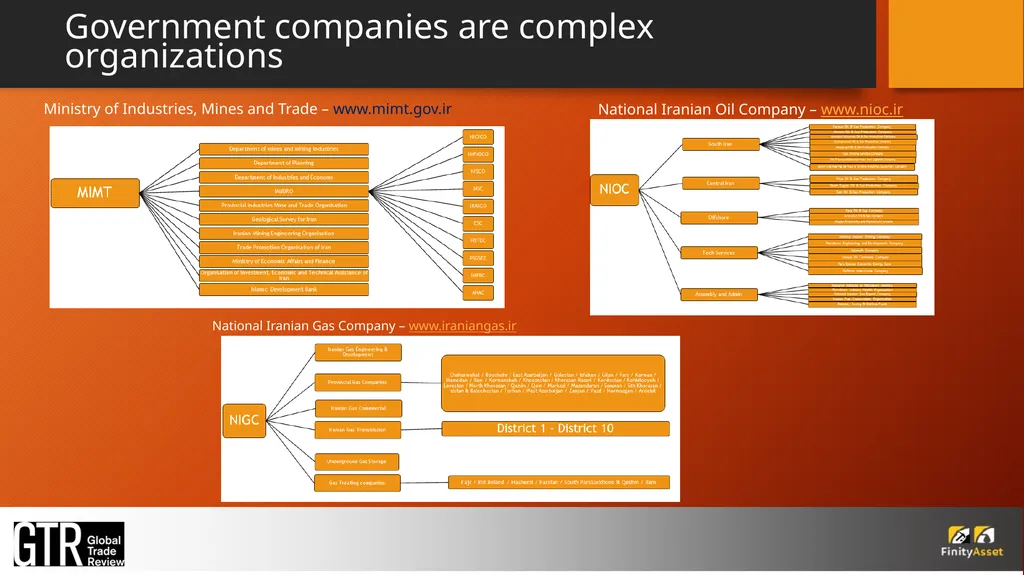
slide5. Government companies are complex organizations<br>
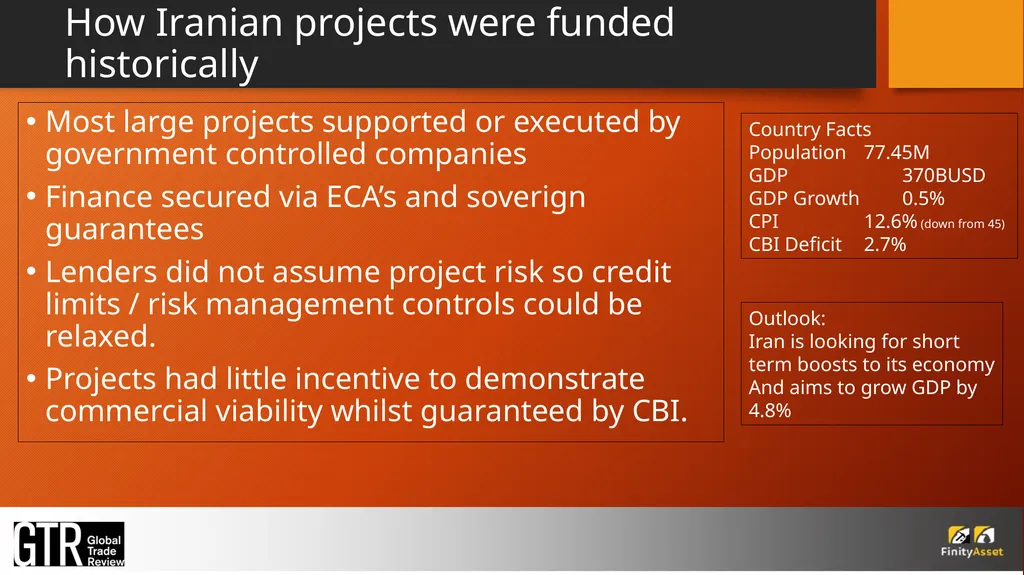
slide6. Most large projects supported or executed by government controlled companies
Finance secured via ECA’s and soverign guarantees
Lenders did not assume project risk so credit limits / risk management controls could be relaxed.
Projects had little incentive to demonstrate commercial viability whilst guaranteed by CBI. How Iranian projects were funded historically Country Facts
Population 77.45M
GDP 370BUSD
GDP Growth 0.5%
CPI 12.6% (down from 45)
CBI Deficit 2.7% Outlook:
Iran is looking for short term boosts to its economy
And aims to grow GDP by 4.8%<br>
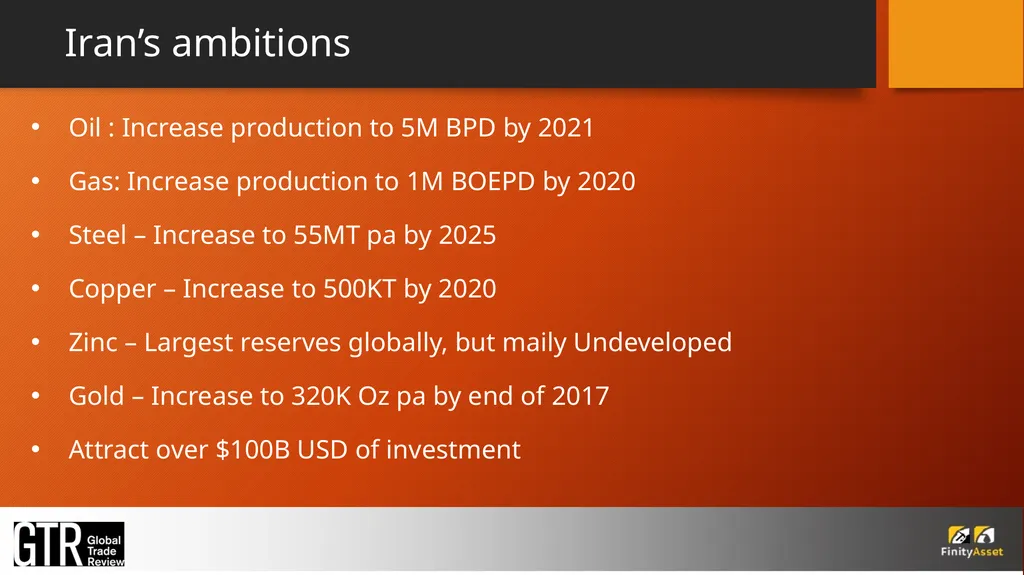
slide7. Oil : Increase production to 5M BPD by 2021
Gas: Increase production to 1M BOEPD by 2020
Steel – Increase to 55MT pa by 2025
Copper – Increase to 500KT by 2020
Zinc – Largest reserves globally, but maily Undeveloped
Gold – Increase to 320K Oz pa by end of 2017
Attract over $100B USD of investment Iran’s ambitions<br>
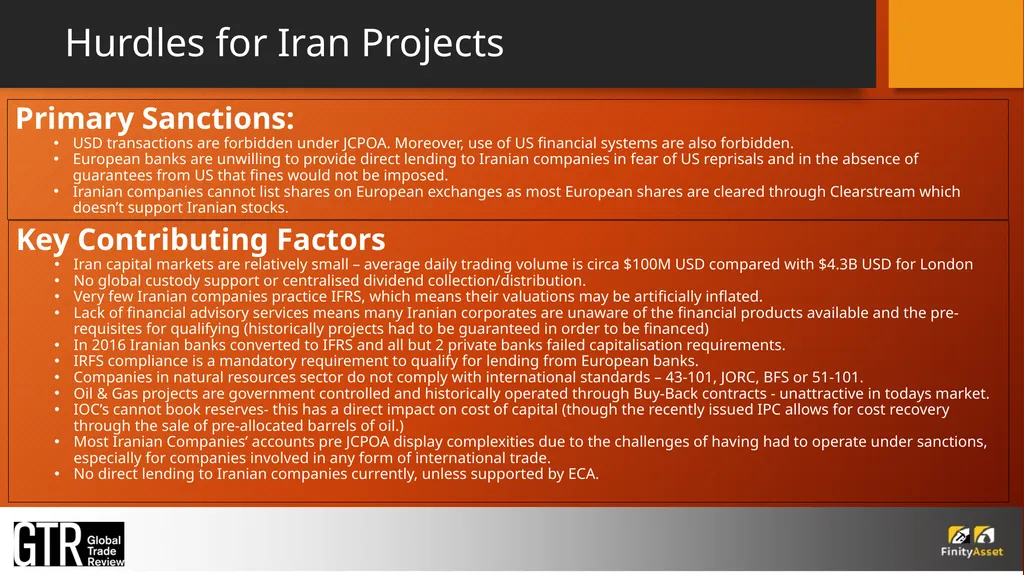
slide8. Hurdles for Iran Projects Primary Sanctions:
USD transactions are forbidden under JCPOA. Moreover, use of US financial systems are also forbidden.
European banks are unwilling to provide direct lending to Iranian companies in fear of US reprisals and in the absence of guarantees from US that fines would not be imposed.
Iranian companies cannot list shares on European exchanges as most European shares are cleared through Clearstream which doesn’t support Iranian stocks. Key Contributing Factors
Iran capital markets are relatively small – average daily trading volume is circa $100M USD compared with $4.3B USD for London
No global custody support or centralised dividend collection/distribution.
Very few Iranian companies practice IFRS, which means their valuations may be artificially inflated.
Lack of financial advisory services means many Iranian corporates are unaware of the financial products available and the pre-requisites for qualifying (historically projects had to be guaranteed in order to be financed)
In 2016 Iranian banks converted to IFRS and all but 2 private banks failed capitalisation requirements.
IRFS compliance is a mandatory requirement to qualify for lending from European banks.
Companies in natural resources sector do not comply with international standards – 43-101, JORC, BFS or 51-101.
Oil & Gas projects are government controlled and historically operated through Buy-Back contracts - unattractive in todays market.
IOC’s cannot book reserves- this has a direct impact on cost of capital (though the recently issued IPC allows for cost recovery through the sale of pre-allocated barrels of oil.)
Most Iranian Companies’ accounts pre JCPOA display complexities due to the challenges of having had to operate under sanctions, especially for companies involved in any form of international trade.
No direct lending to Iranian companies currently, unless supported by ECA.<br>
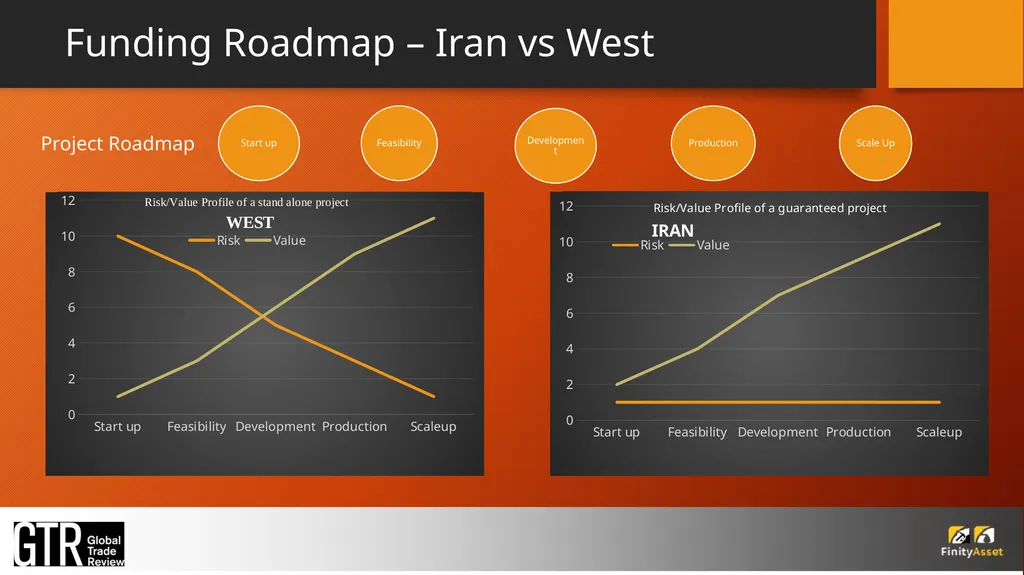
slide9. Funding Roadmap – Iran vs West Project Roadmap<br>
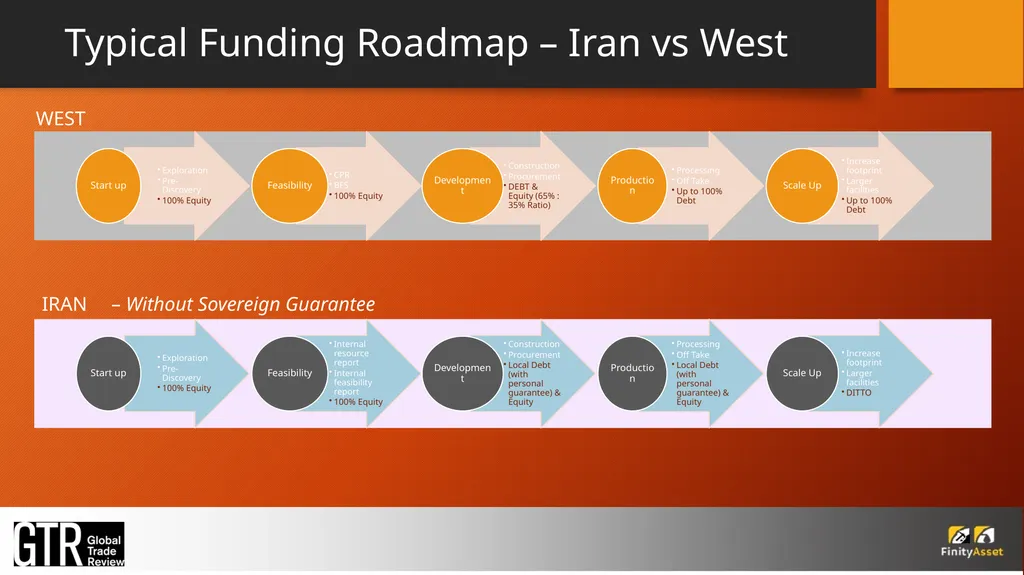
slide10. Typical Funding Roadmap – Iran vs West WEST IRAN – Without Sovereign Guarantee<br>
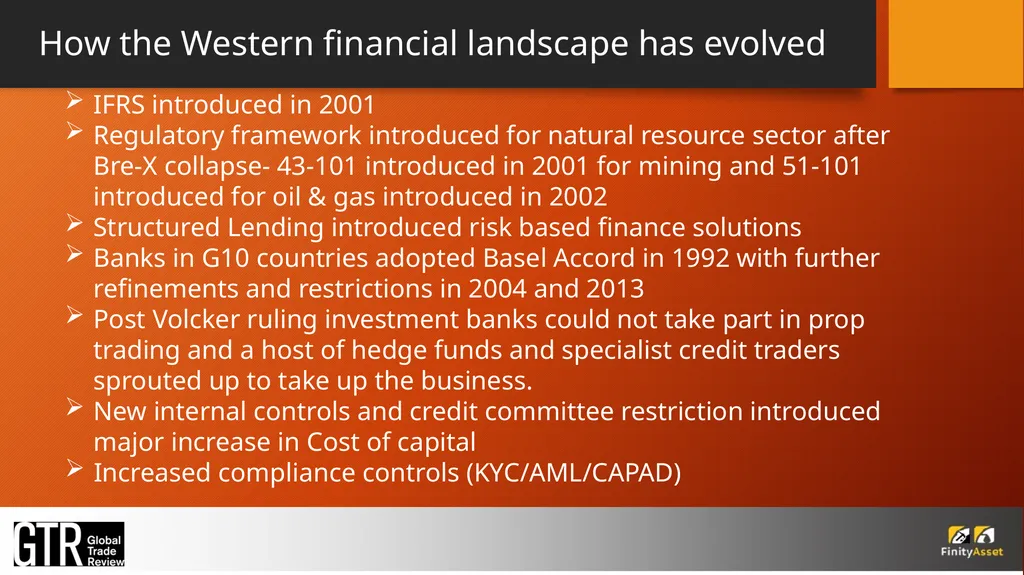
slide11. How the Western financial landscape has evolved IFRS introduced in 2001
Regulatory framework introduced for natural resource sector after Bre-X collapse- 43-101 introduced in 2001 for mining and 51-101 introduced for oil & gas introduced in 2002
Structured Lending introduced risk based finance solutions
Banks in G10 countries adopted Basel Accord in 1992 with further refinements and restrictions in 2004 and 2013
Post Volcker ruling investment banks could not take part in prop trading and a host of hedge funds and specialist credit traders sprouted up to take up the business.
New internal controls and credit committee restriction introduced major increase in Cost of capital
Increased compliance controls (KYC/AML/CAPAD)<br>
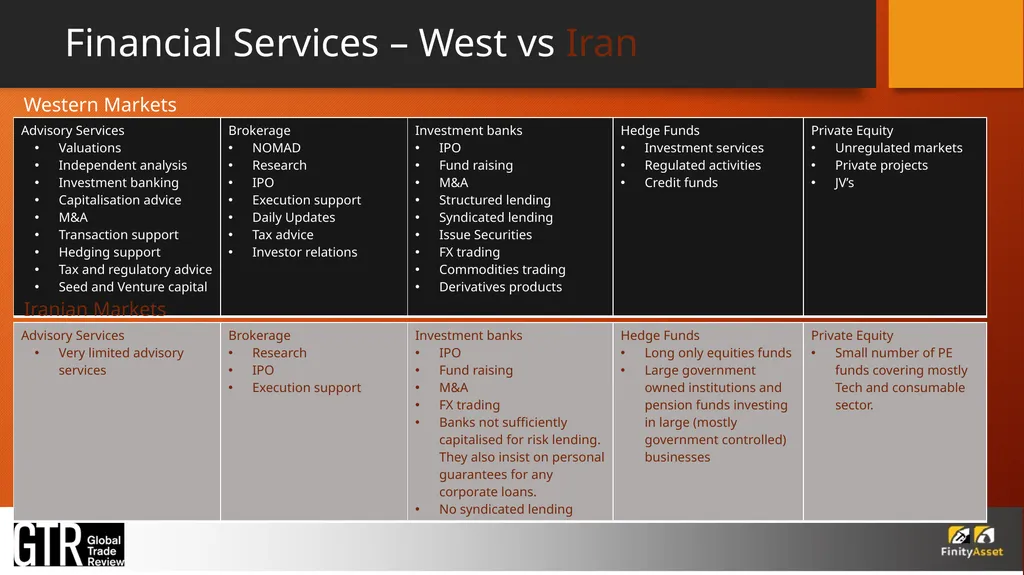
slide12. Financial Services – West vs Iran Western Markets Iranian Markets<br>
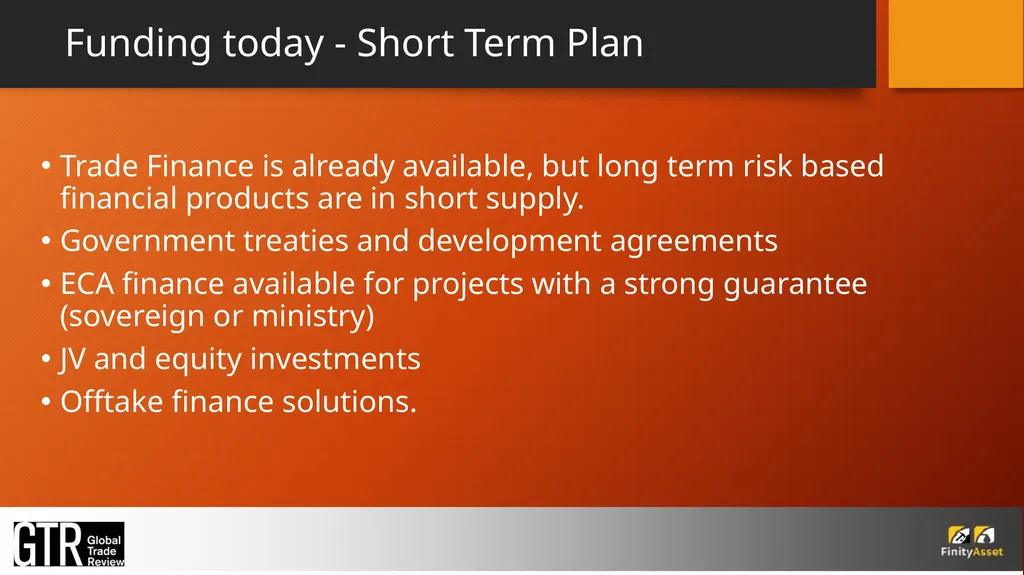
slide13. Trade Finance is already available, but long term risk based financial products are in short supply.
Government treaties and development agreements
ECA finance available for projects with a strong guarantee (sovereign or ministry)
JV and equity investments
Offtake finance solutions. Funding today - Short Term Plan<br>
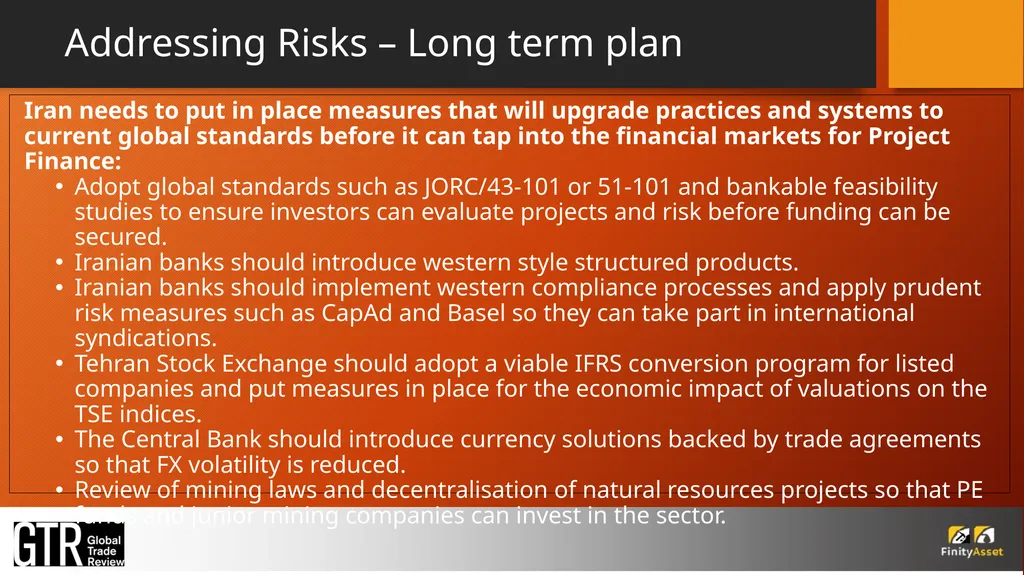
slide14. Addressing Risks – Long term plan Iran needs to put in place measures that will upgrade practices and systems to current global standards before it can tap into the financial markets for Project Finance:
Adopt global standards such as JORC/43-101 or 51-101 and bankable feasibility studies to ensure investors can evaluate projects and risk before funding can be secured.
Iranian banks should introduce western style structured products.
Iranian banks should implement western compliance processes and apply prudent risk measures such as CapAd and Basel so they can take part in international syndications.
Tehran Stock Exchange should adopt a viable IFRS conversion program for listed companies and put measures in place for the economic impact of valuations on the TSE indices.
The Central Bank should introduce currency solutions backed by trade agreements so that FX volatility is reduced.
Review of mining laws and decentralisation of natural resources projects so that PE funds and junior mining companies can invest in the sector.<br>
slide15. Thank you and Q&A Operating since 2012 from its London headquarters, Finity Asset focus on funding solutions for the natural resources and energy sectors.
For any further queries please contact us on
Land Line: +44 207 486 6183
Email: info@finityasset.com<br>
A COMMODITY RICH COUNTRY Finity Asset Farzad Moshfeghi<br>
slide2. After a 10 year absence, Western investors can re-invest in Iran.
Iranian government has created a number of investor friendly schemes :
free trade zones,
favourable investment terms for foreigners
regulatory schemes such as FIPPA and 100% ownership rights
Below ground the value of assets has not disappeared.
Iran needs to attract foreign investment and western partners to deliver an ambitious program of economic growth
4th largest Oil reserves (150B bbl) & 2nd largest Gas reserves (over 1000 Tcf)
Iran accounts for roughly 1% of the world's population yet holds more than 18% of global gas reserves, 10% of global oil reserves and 7% of global mining reserves. Background<br>
slide3. What is Iran Famous for ? OIL & GAS – Of course Iran has the 4th largest Oil reserves – approx. 150B bbls with hydro carbon fiels both in the south, west and north of the country. Most prominent field is the Ahvaz field with nearly 1M bbl/day.
Iran has the second largest gas reserves in the world with approx. 1000 Tcf of proven reserves – most famous is the South Pars field
Over 140 oil and gas fields and nearly 300 reservoirse discovered so far.<br>
slide4. What is Iran Famous for ? 37 billion tonnes of proven reserves and more than 57billion tonnes of potential reserves worth $770 billion - 2014.
Iran holds more than 7% of the world's total mineral reserves
Large deposits which mostly remain underdeveloped are :
zinc (No 1 globally)
copper (9th globally - 2011)
iron (12th globally - 2013)
uranium (10th globally)
lead (11th globally).
Approximately 5,000 operational mines producing 12 types of metals and 36 non-metal ores
90% of the mines belong to state owned companies (predominantly via IMIDRO)
IMIDRO is openly looking for investors and partners to increase production and develop its assets - in particular copper, iron ore and aluminium MINERALS<br>
slide5. Government companies are complex organizations<br>
slide6. Most large projects supported or executed by government controlled companies
Finance secured via ECA’s and soverign guarantees
Lenders did not assume project risk so credit limits / risk management controls could be relaxed.
Projects had little incentive to demonstrate commercial viability whilst guaranteed by CBI. How Iranian projects were funded historically Country Facts
Population 77.45M
GDP 370BUSD
GDP Growth 0.5%
CPI 12.6% (down from 45)
CBI Deficit 2.7% Outlook:
Iran is looking for short term boosts to its economy
And aims to grow GDP by 4.8%<br>
slide7. Oil : Increase production to 5M BPD by 2021
Gas: Increase production to 1M BOEPD by 2020
Steel – Increase to 55MT pa by 2025
Copper – Increase to 500KT by 2020
Zinc – Largest reserves globally, but maily Undeveloped
Gold – Increase to 320K Oz pa by end of 2017
Attract over $100B USD of investment Iran’s ambitions<br>
slide8. Hurdles for Iran Projects Primary Sanctions:
USD transactions are forbidden under JCPOA. Moreover, use of US financial systems are also forbidden.
European banks are unwilling to provide direct lending to Iranian companies in fear of US reprisals and in the absence of guarantees from US that fines would not be imposed.
Iranian companies cannot list shares on European exchanges as most European shares are cleared through Clearstream which doesn’t support Iranian stocks. Key Contributing Factors
Iran capital markets are relatively small – average daily trading volume is circa $100M USD compared with $4.3B USD for London
No global custody support or centralised dividend collection/distribution.
Very few Iranian companies practice IFRS, which means their valuations may be artificially inflated.
Lack of financial advisory services means many Iranian corporates are unaware of the financial products available and the pre-requisites for qualifying (historically projects had to be guaranteed in order to be financed)
In 2016 Iranian banks converted to IFRS and all but 2 private banks failed capitalisation requirements.
IRFS compliance is a mandatory requirement to qualify for lending from European banks.
Companies in natural resources sector do not comply with international standards – 43-101, JORC, BFS or 51-101.
Oil & Gas projects are government controlled and historically operated through Buy-Back contracts - unattractive in todays market.
IOC’s cannot book reserves- this has a direct impact on cost of capital (though the recently issued IPC allows for cost recovery through the sale of pre-allocated barrels of oil.)
Most Iranian Companies’ accounts pre JCPOA display complexities due to the challenges of having had to operate under sanctions, especially for companies involved in any form of international trade.
No direct lending to Iranian companies currently, unless supported by ECA.<br>
slide9. Funding Roadmap – Iran vs West Project Roadmap<br>
slide10. Typical Funding Roadmap – Iran vs West WEST IRAN – Without Sovereign Guarantee<br>
slide11. How the Western financial landscape has evolved IFRS introduced in 2001
Regulatory framework introduced for natural resource sector after Bre-X collapse- 43-101 introduced in 2001 for mining and 51-101 introduced for oil & gas introduced in 2002
Structured Lending introduced risk based finance solutions
Banks in G10 countries adopted Basel Accord in 1992 with further refinements and restrictions in 2004 and 2013
Post Volcker ruling investment banks could not take part in prop trading and a host of hedge funds and specialist credit traders sprouted up to take up the business.
New internal controls and credit committee restriction introduced major increase in Cost of capital
Increased compliance controls (KYC/AML/CAPAD)<br>
slide12. Financial Services – West vs Iran Western Markets Iranian Markets<br>
slide13. Trade Finance is already available, but long term risk based financial products are in short supply.
Government treaties and development agreements
ECA finance available for projects with a strong guarantee (sovereign or ministry)
JV and equity investments
Offtake finance solutions. Funding today - Short Term Plan<br>
slide14. Addressing Risks – Long term plan Iran needs to put in place measures that will upgrade practices and systems to current global standards before it can tap into the financial markets for Project Finance:
Adopt global standards such as JORC/43-101 or 51-101 and bankable feasibility studies to ensure investors can evaluate projects and risk before funding can be secured.
Iranian banks should introduce western style structured products.
Iranian banks should implement western compliance processes and apply prudent risk measures such as CapAd and Basel so they can take part in international syndications.
Tehran Stock Exchange should adopt a viable IFRS conversion program for listed companies and put measures in place for the economic impact of valuations on the TSE indices.
The Central Bank should introduce currency solutions backed by trade agreements so that FX volatility is reduced.
Review of mining laws and decentralisation of natural resources projects so that PE funds and junior mining companies can invest in the sector.<br>
slide15. Thank you and Q&A Operating since 2012 from its London headquarters, Finity Asset focus on funding solutions for the natural resources and energy sectors.
For any further queries please contact us on
Land Line: +44 207 486 6183
Email: info@finityasset.com<br>