"ISIS Target Station 2 Update on Target Evolution" is the property of its rightful owner. Permission is granted to
download and print the materials on this website for personal, non-commercial use only, and to display it
on your personal computer provided you do not modify the materials and that you retain all copyright
notices contained in the materials. By downloading content from our website, you accept the terms of this
agreement.
Presentation Transcript
01
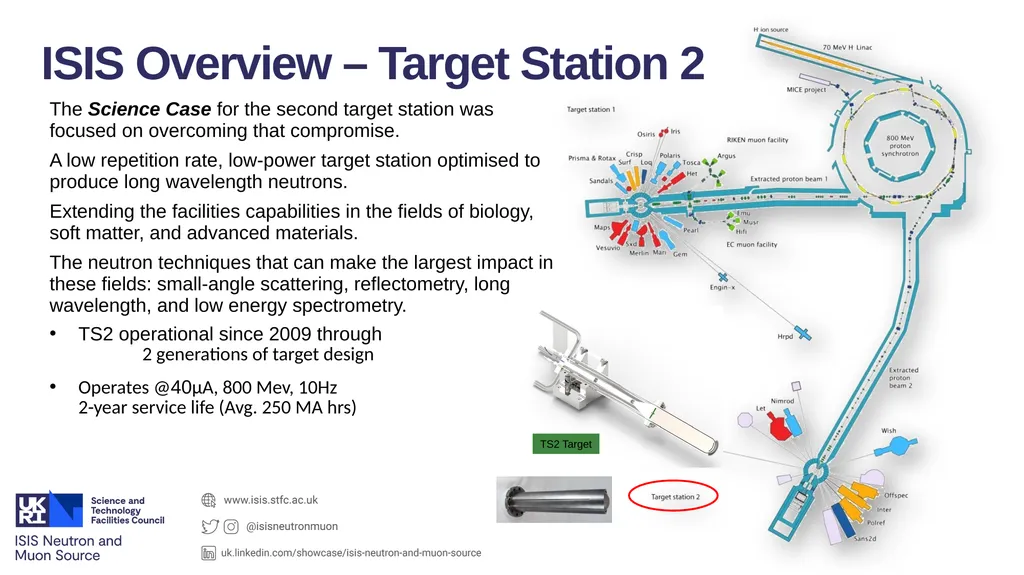
ISIS Target Station 2 Update on Target Evolution Leslie Jones – ISIS Target Design Group HPTW2023 – RIKEN, Japan November 2023<br>
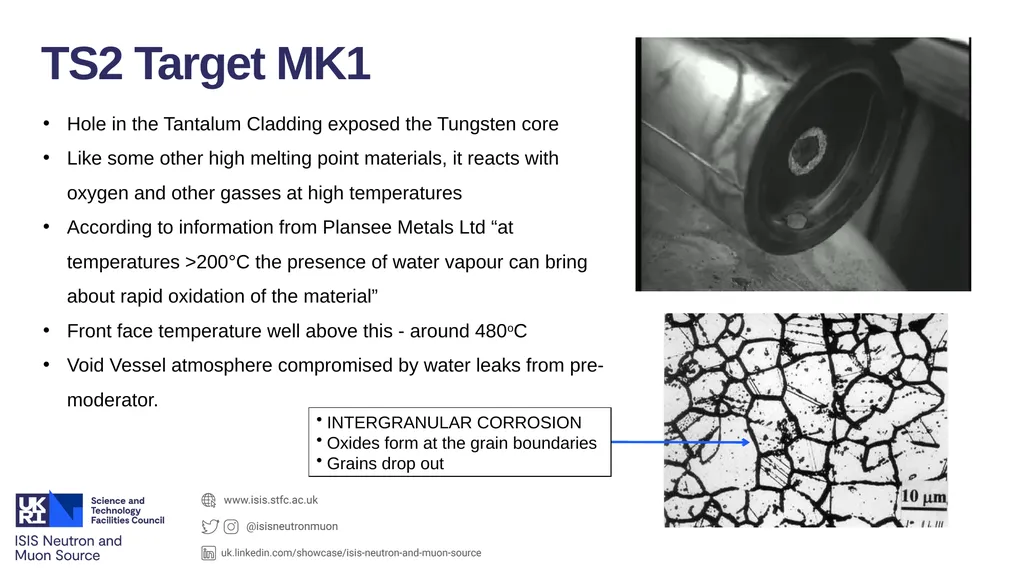
TS2 Target MK1 Hole in the Tantalum Cladding exposed the Tungsten core
Like some other high melting point materials, it reacts with oxygen and other gasses at high temperatures
According to information from Plansee Metals Ltd “at temperatures >200°C the presence of water vapour can bring about rapid oxidation of the material”
Front face temperature well above this - around 480oC
Void Vessel atmosphere compromised by water leaks from pre-moderator. INTERGRANULAR CORROSION
Oxides form at the grain boundaries
Grains drop out<br>
05
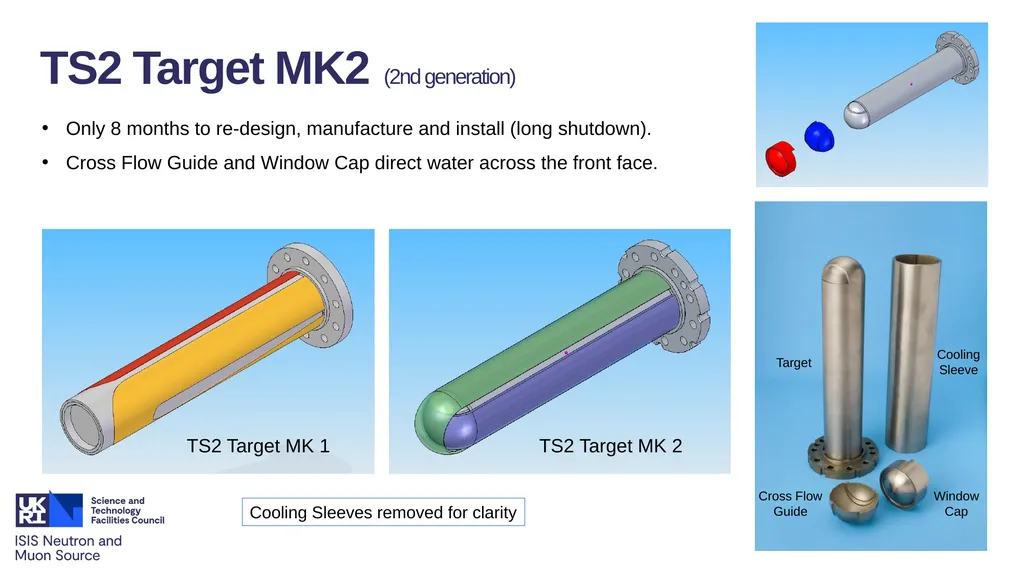
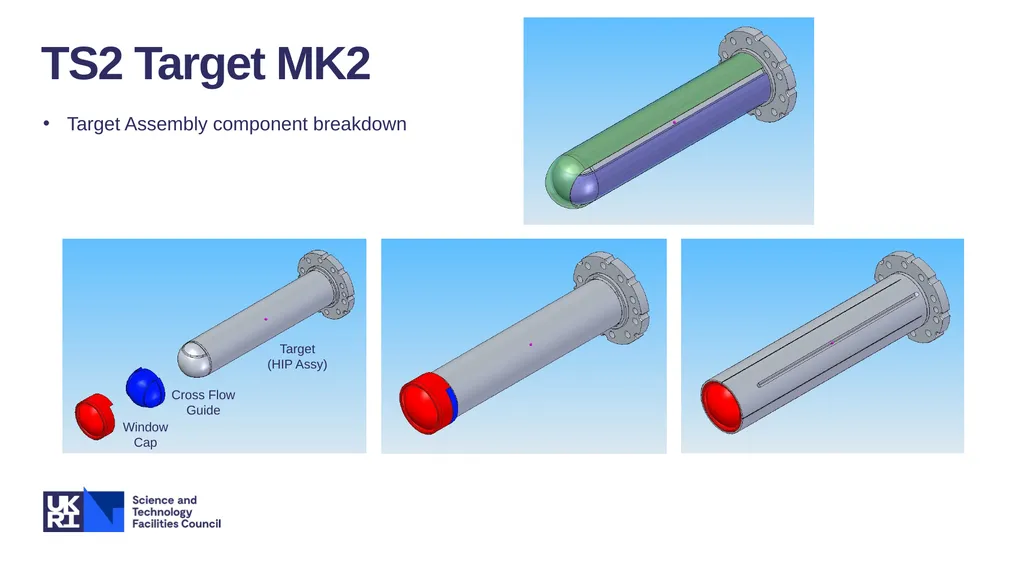
TS2 Target MK2 (2nd generation) Only 8 months to re-design, manufacture and install (long shutdown).
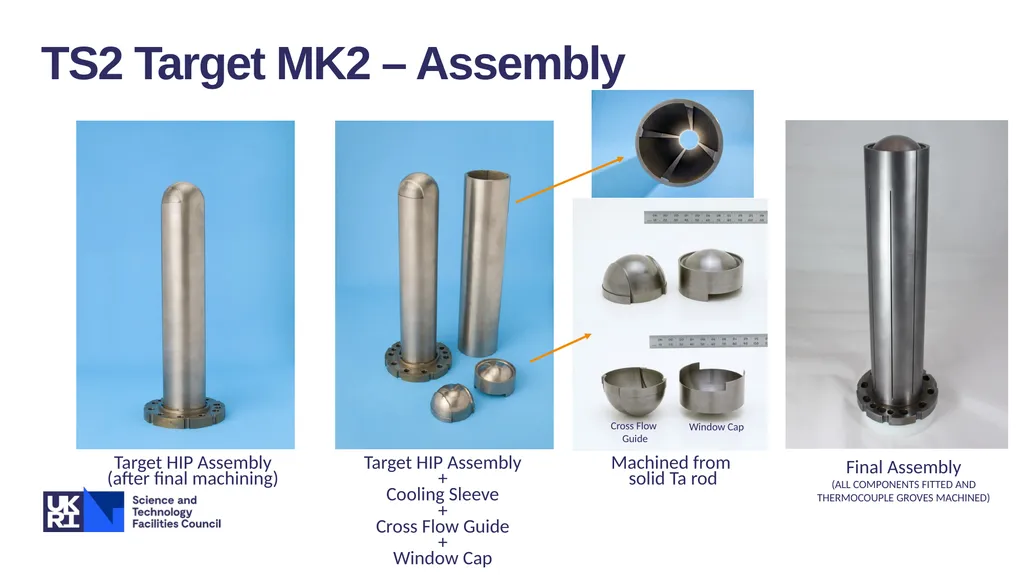
Cross Flow Guide and Window Cap direct water across the front face.<br>
06
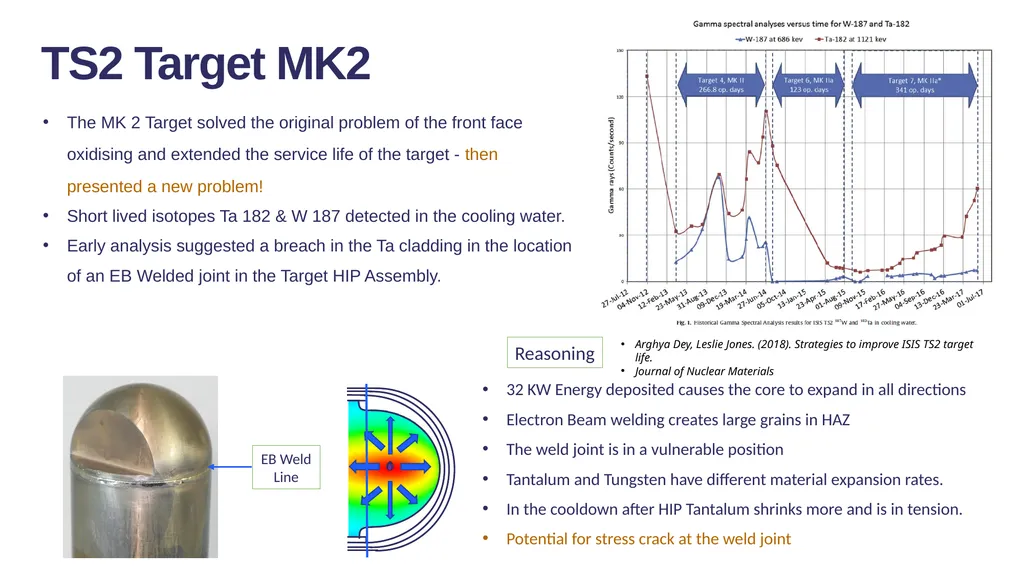
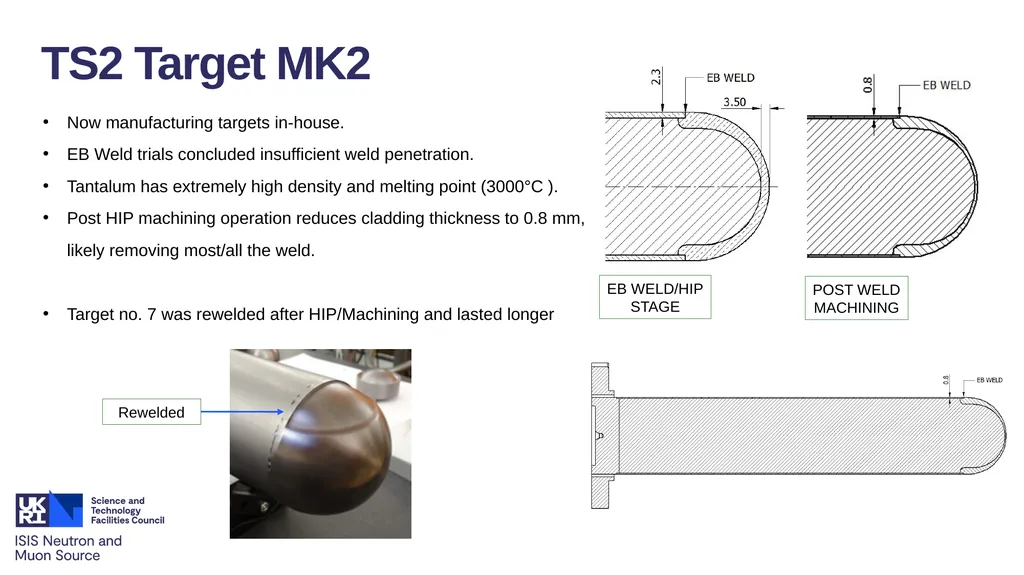
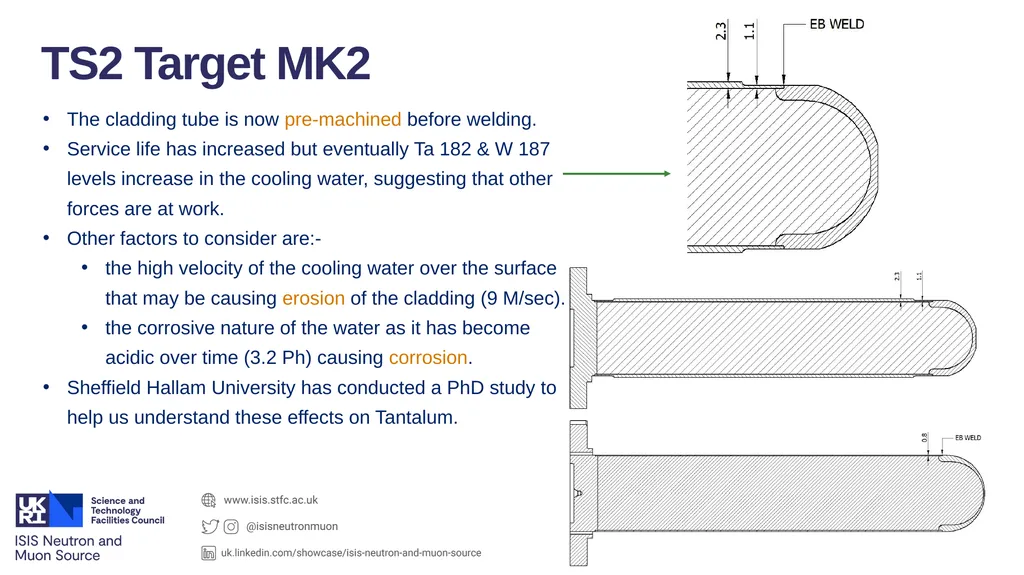
TS2 Target MK2 The MK 2 Target solved the original problem of the front face oxidising and extended the service life of the target - then presented a new problem!
Short lived isotopes Ta 182 & W 187 detected in the cooling water.
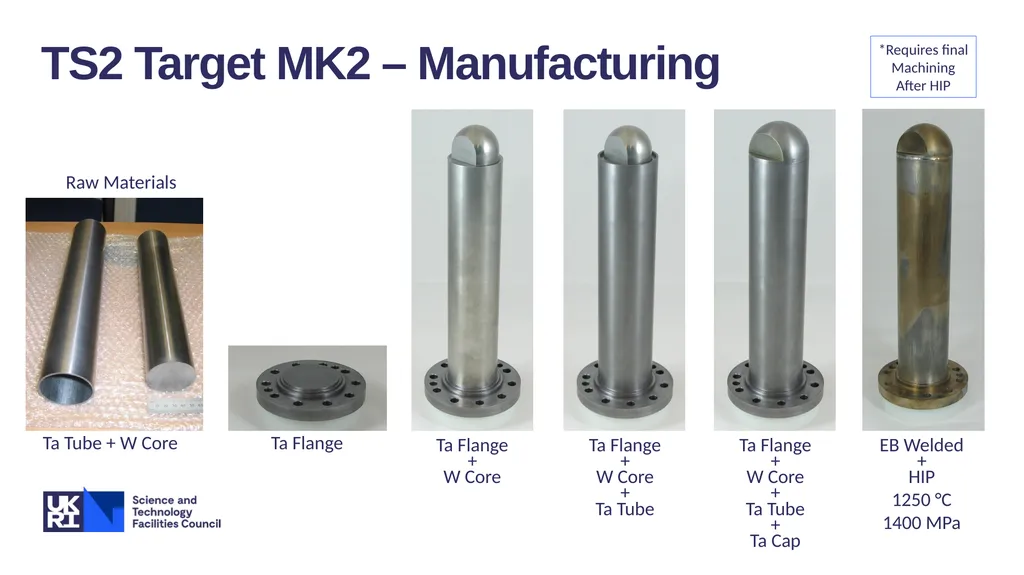
Early analysis suggested a breach in the Ta cladding in the location of an EB Welded joint in the Target HIP Assembly. EB Weld Line 32 KW Energy deposited causes the core to expand in all directions
Electron Beam welding creates large grains in HAZ
The weld joint is in a vulnerable position
Tantalum and Tungsten have different material expansion rates.
In the cooldown after HIP Tantalum shrinks more and is in tension.
Potential for stress crack at the weld joint Reasoning<br>
07
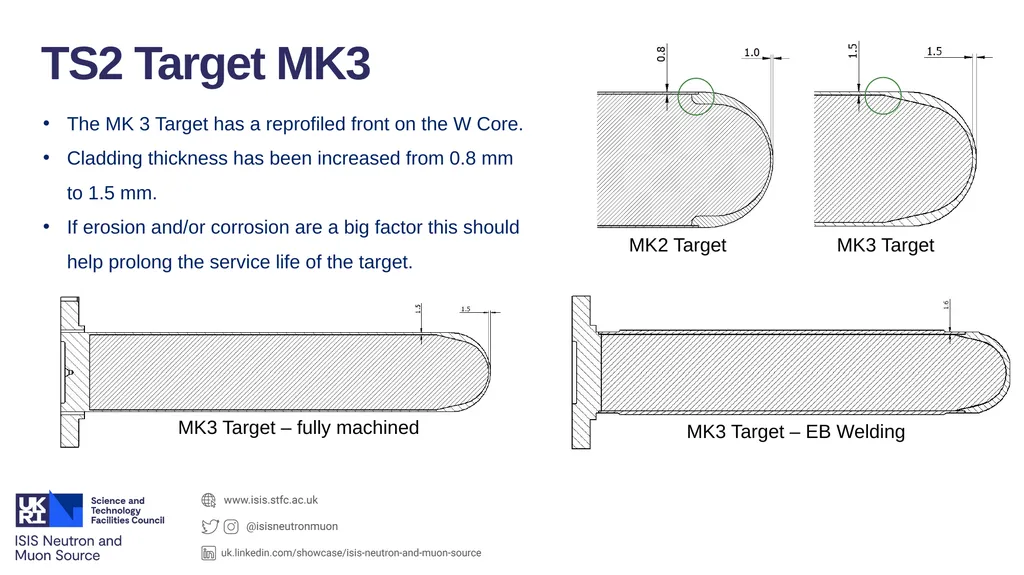
TS2 Target MK3 The MK 3 Target has a reprofiled front on the W Core.
Cladding thickness has been increased from 0.8 mm to 1.5 mm.
If erosion and/or corrosion are a big factor this should help prolong the service life of the target. MK2 Target MK3 Target<br>
08
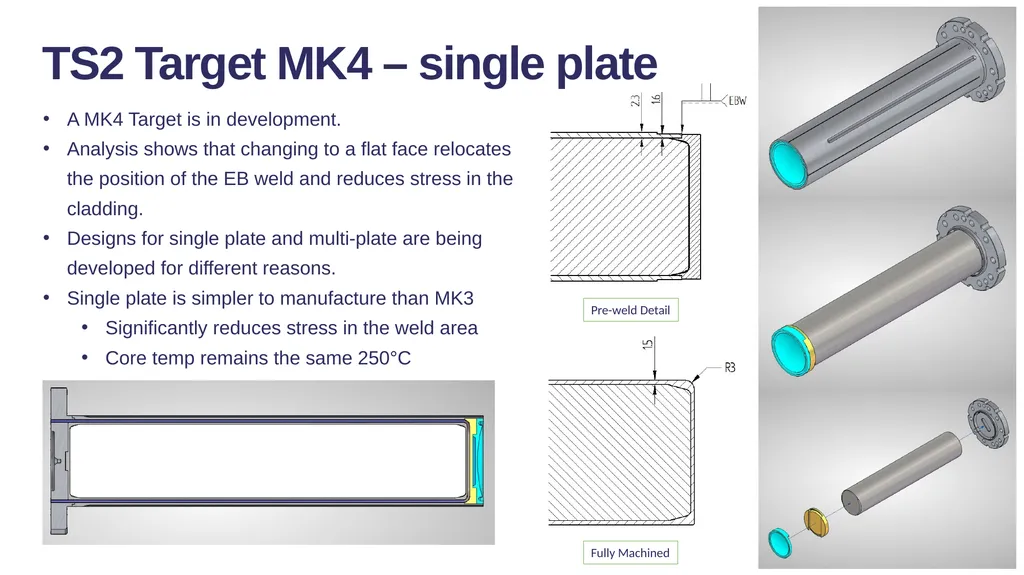
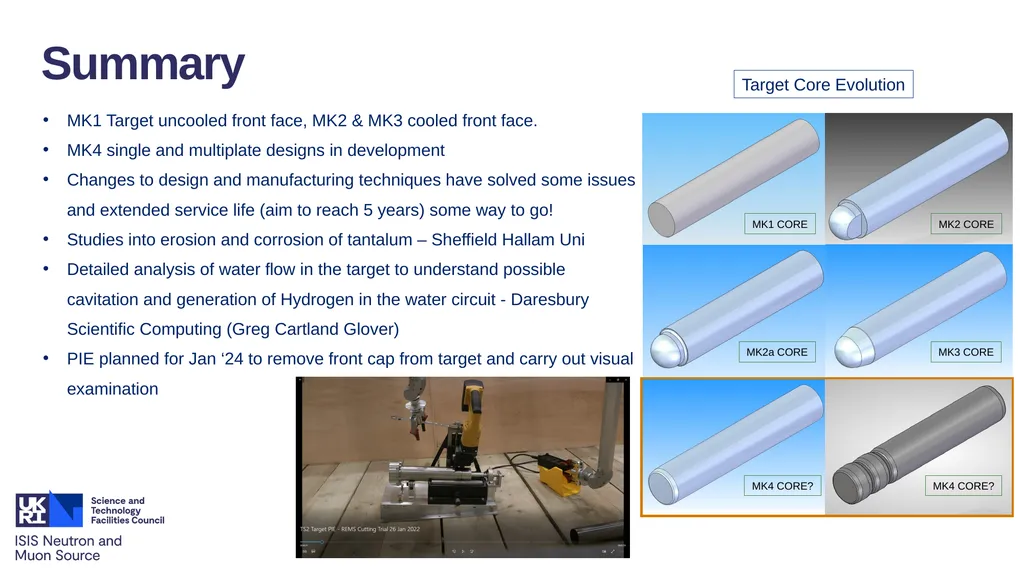
A MK4 Target is in development.
Analysis shows that changing to a flat face relocates the position of the EB weld and reduces stress in the cladding.
Designs for single plate and multi-plate are being developed for different reasons.
Single plate is simpler to manufacture than MK3
Significantly reduces stress in the weld area
Core temp remains the same 250°C TS2 Target MK4 – single plate<br>
09
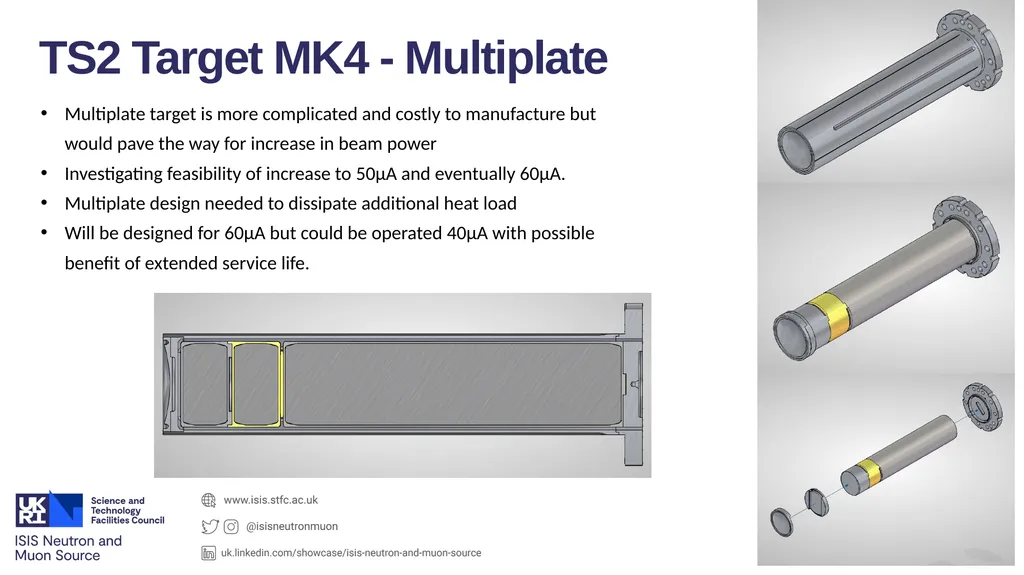
TS2 Target MK4 - Multiplate Multiplate target is more complicated and costly to manufacture but would pave the way for increase in beam power
Investigating feasibility of increase to 50µA and eventually 60µA.
Multiplate design needed to dissipate additional heat load
Will be designed for 60µA but could be operated 40µA with possible benefit of extended service life.<br>
10
Questions ?<br>
11
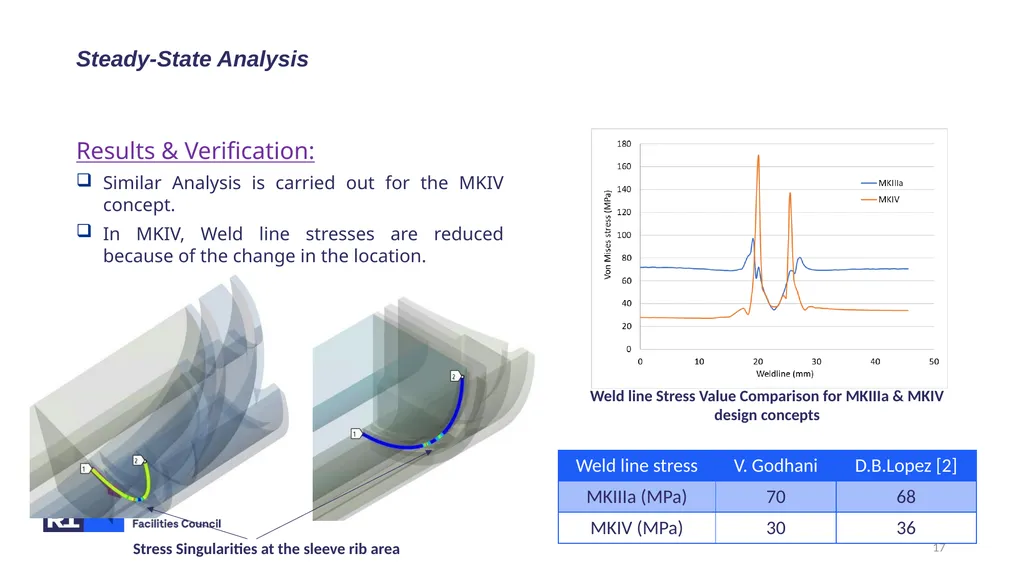
17 Weld line Stress Value Comparison for MKIIIa & MKIV design concepts Steady-State Analysis Results & Verification:
Similar Analysis is carried out for the MKIV concept.
In MKIV, Weld line stresses are reduced because of the change in the location. Stress Singularities at the sleeve rib area<br>