Jane Coyne Treating Tobacco Dependency Lead GM Jane Coyne 05.09.22 Insights from delivering a Smokefree Pregnancy Programme across Greater Manchester Project background Smoking in pregnancy is a major preventable risk factor for
"Jane Coyne Treating Tobacco Dependency Lead – GM" is the property of its rightful owner. Permission is granted to
download and print the materials on this website for personal, non-commercial use only, and to display it
on your personal computer provided you do not modify the materials and that you retain all copyright
notices contained in the materials. By downloading content from our website, you accept the terms of this
agreement.
Presentation Transcript
01
Jane Coyne Treating Tobacco Dependency Lead – GM Jane Coyne
05.09.22 Insights from delivering a Smokefree Pregnancy Programme across
Greater Manchester<br>
02
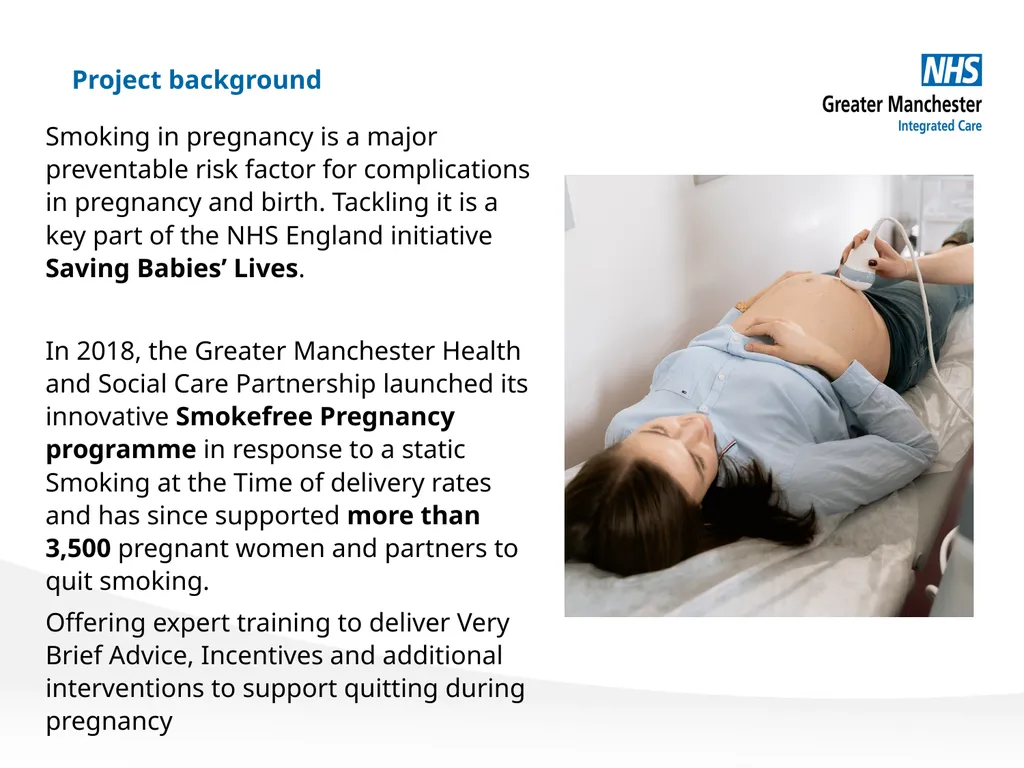
Project background Smoking in pregnancy is a major preventable risk factor for complications in pregnancy and birth. Tackling it is a key part of the NHS England initiative Saving Babies’ Lives.
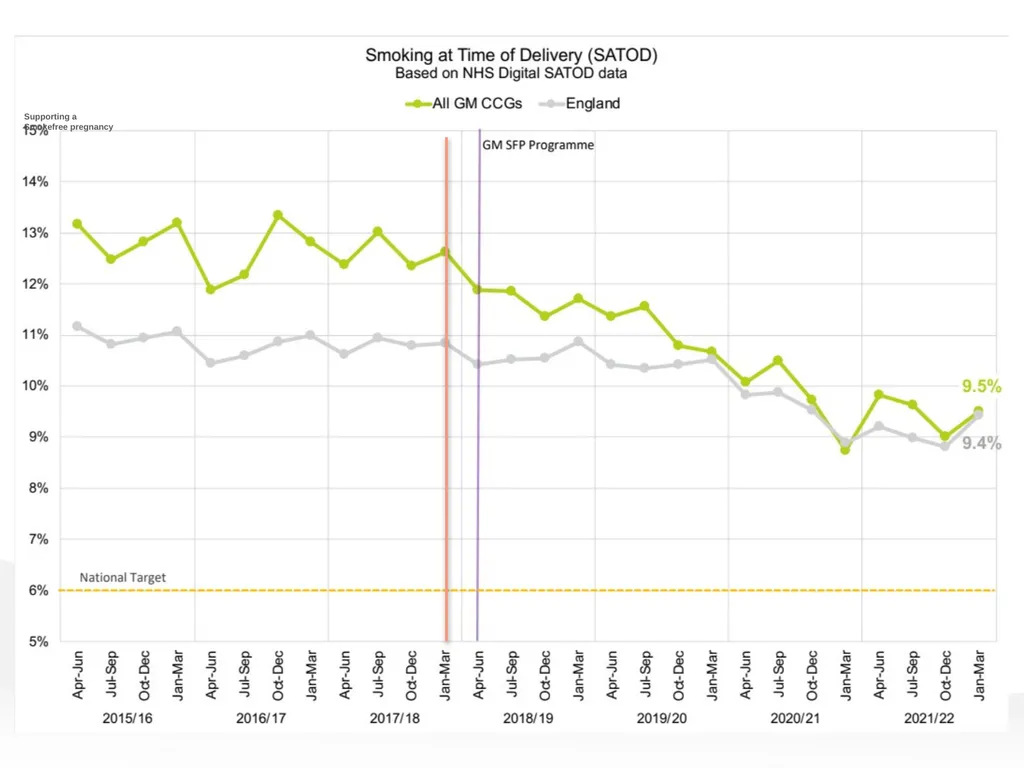
In 2018, the Greater Manchester Health and Social Care Partnership launched its innovative Smokefree Pregnancy programme in response to a static Smoking at the Time of delivery rates and has since supported more than 3,500 pregnant women and partners to quit smoking.
Offering expert training to deliver Very Brief Advice, Incentives and additional interventions to support quitting during pregnancy<br>
03
Supporting a Smokefree pregnancy<br>
04
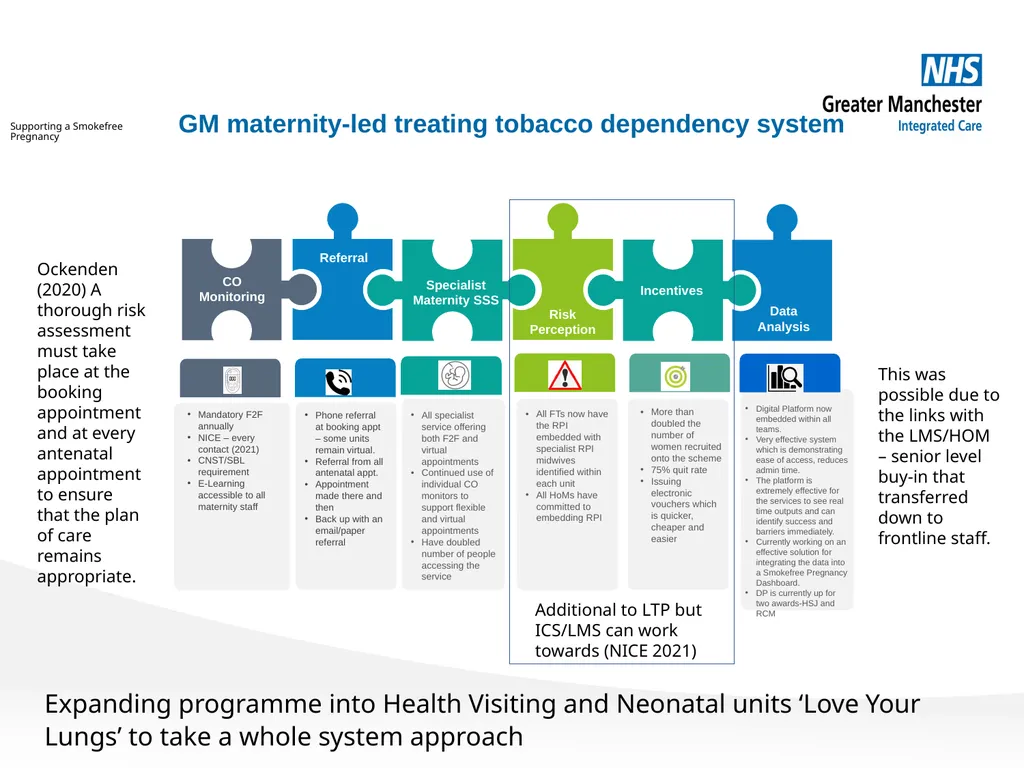
GM maternity-led treating tobacco dependency system Supporting a Smokefree Pregnancy Mandatory F2F annually
NICE – every contact (2021)
CNST/SBL requirement
E-Learning accessible to all maternity staff All FTs now have the RPI embedded with specialist RPI midwives identified within each unit
All HoMs have committed to embedding RPI All specialist service offering both F2F and virtual appointments
Continued use of individual CO monitors to support flexible and virtual appointments
Have doubled number of people accessing the service Digital Platform now embedded within all teams.
Very effective system which is demonstrating ease of access, reduces admin time.
The platform is extremely effective for the services to see real time outputs and can identify success and barriers immediately.
Currently working on an effective solution for integrating the data into a Smokefree Pregnancy Dashboard.
DP is currently up for two awards-HSJ and RCM Phone referral at booking appt – some units remain virtual.
Referral from all antenatal appt.
Appointment made there and then
Back up with an email/paper referral More than doubled the number of women recruited onto the scheme
75% quit rate
Issuing electronic vouchers which is quicker, cheaper and easier Ockenden (2020) A thorough risk assessment must take place at the booking appointment and at every antenatal appointment to ensure that the plan of care remains appropriate. This was possible due to the links with the LMS/HOM – senior level buy-in that transferred down to frontline staff. Additional to LTP but ICS/LMS can work towards (NICE 2021) Expanding programme into Health Visiting and Neonatal units ‘Love Your Lungs’ to take a whole system approach<br>
05
‘Smoking during pregnancy is a particularly demonised and stigmatised activity. This stigma is not always related to the level of risk to the foetus, and instead can be seen as a moral judgement about women. We urgently need to move from individualised neo-liberal discourses about the failure of individual smokers, to a more socio-ecological view which avoids victim blaming’.Ref*
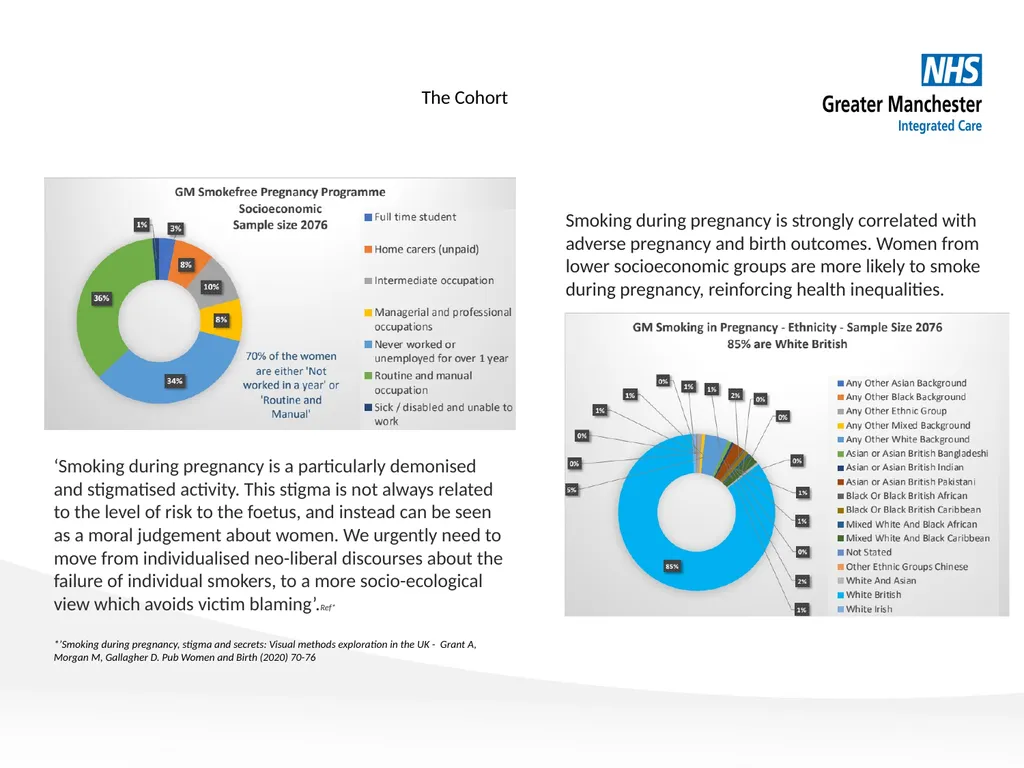
*’Smoking during pregnancy, stigma and secrets: Visual methods exploration in the UK - Grant A, Morgan M, Gallagher D. Pub Women and Birth (2020) 70-76 Smoking during pregnancy is strongly correlated with adverse pregnancy and birth outcomes. Women from lower socioeconomic groups are more likely to smoke during pregnancy, reinforcing health inequalities. The Cohort<br>
06
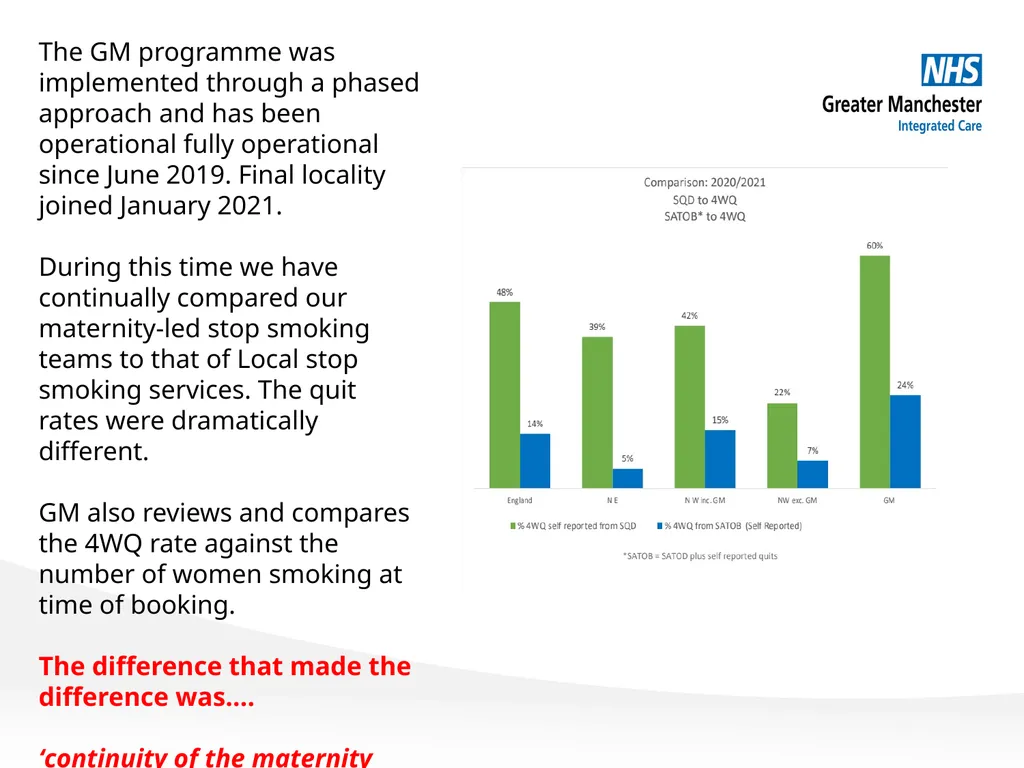
The GM programme was implemented through a phased approach and has been operational fully operational since June 2019. Final locality joined January 2021.
During this time we have continually compared our maternity-led stop smoking teams to that of Local stop smoking services. The quit rates were dramatically different.
GM also reviews and compares the 4WQ rate against the number of women smoking at time of booking.
The difference that made the difference was….
‘continuity of the maternity support worker’<br>
07
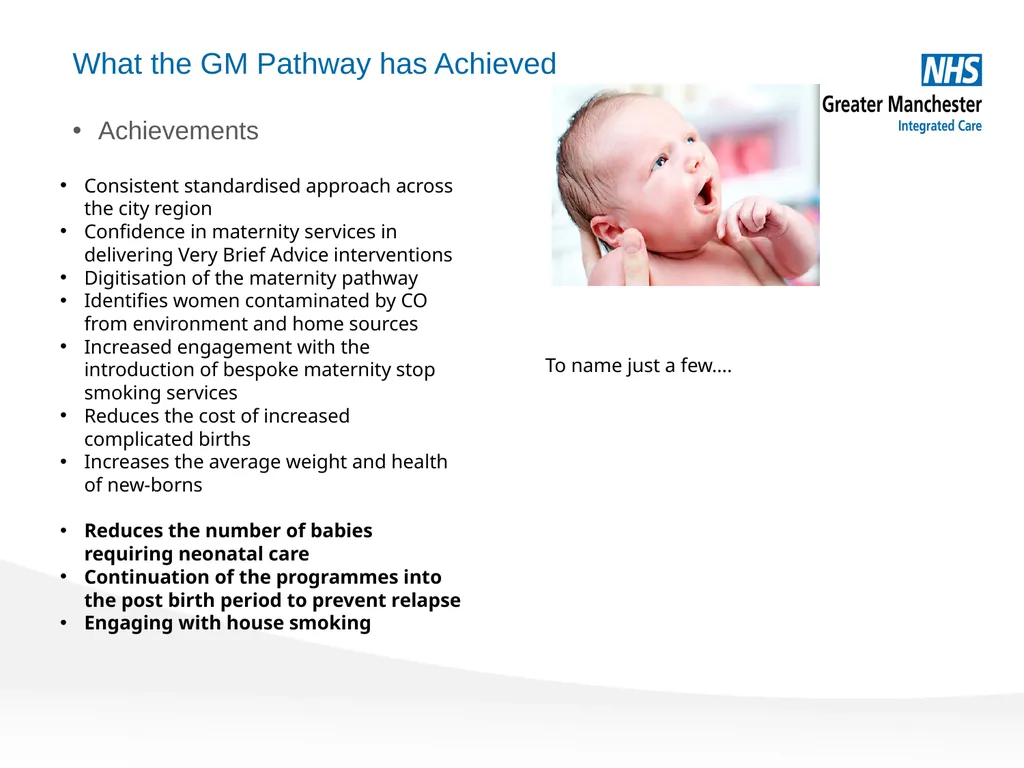
Achievements What the GM Pathway has Achieved Consistent standardised approach across the city region
Confidence in maternity services in delivering Very Brief Advice interventions
Digitisation of the maternity pathway
Identifies women contaminated by CO from environment and home sources
Increased engagement with the introduction of bespoke maternity stop smoking services
Reduces the cost of increased complicated births
Increases the average weight and health of new-borns
Reduces the number of babies requiring neonatal care
Continuation of the programmes into the post birth period to prevent relapse
Engaging with house smoking To name just a few….<br>
08
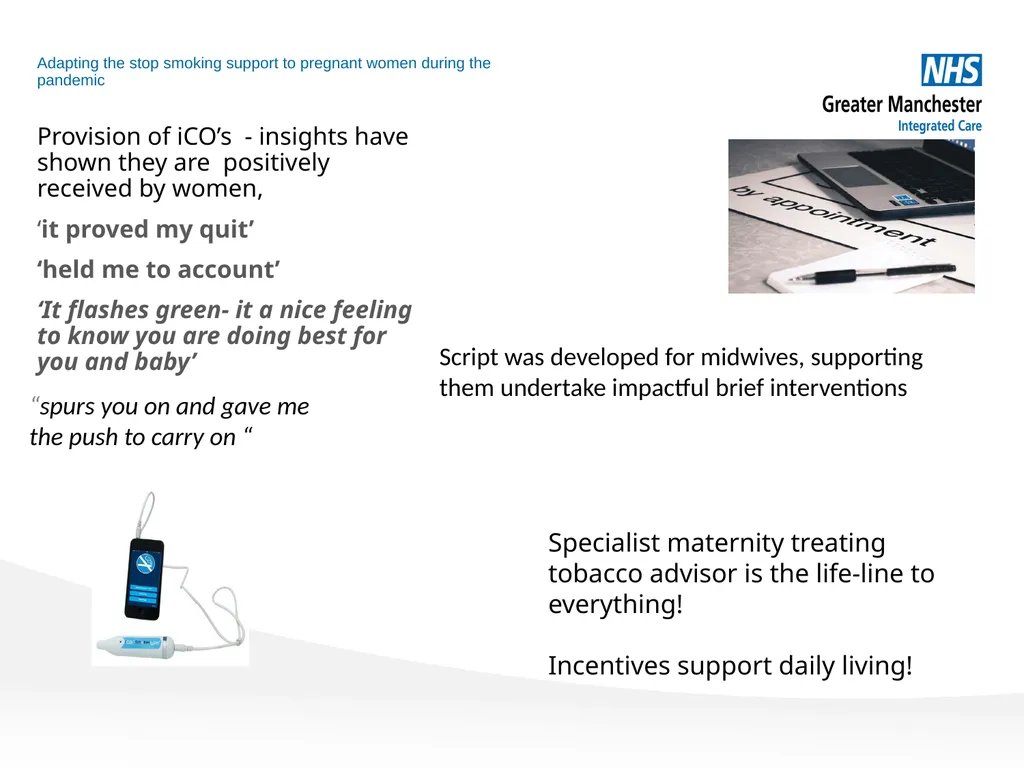
Provision of iCO’s - insights have shown they are positively received by women,
‘it proved my quit’
‘held me to account’
‘It flashes green- it a nice feeling to know you are doing best for you and baby’ Adapting the stop smoking support to pregnant women during the pandemic Specialist maternity treating tobacco advisor is the life-line to everything!
Incentives support daily living! Script was developed for midwives, supporting them undertake impactful brief interventions “spurs you on and gave me the push to carry on “<br>
09
Senior leadership and professional vision at regional level is essential to help providers to push through the discomfort of change
Whole system approach – reducing inequalities
Robust training is essential to increase midwifery confidence in challenging conversations
Opt-out, timely referral is key
Responsive stop smoking support
Tackling household smoking prevents relapse
Shared learning with the system and other regions Lessons learnt<br>