Jessica Gullbrand Cold Plate Work Stream Lead Advanced Cooling Solutions OCP Cold Plate Work Session ACS Cold Plate Focus Focus group working on ACS Cold Plate Requirements Technology Cooling System (TCS) fluid loop - Cooling loop from CDU
"Jessica Gullbrand Cold Plate Work Stream Lead" is the property of its rightful owner. Permission is granted to
download and print the materials on this website for personal, non-commercial use only, and to display it
on your personal computer provided you do not modify the materials and that you retain all copyright
notices contained in the materials. By downloading content from our website, you accept the terms of this
agreement.
Presentation Transcript
01
Jessica Gullbrand
Cold Plate Work Stream Lead
Advanced Cooling Solutions OCP Cold Plate Work Session<br>
02
ACS Cold Plate Focus Focus group working on ACS Cold Plate Requirements
Technology Cooling System (TCS) fluid loop
- Cooling loop from CDU through rack manifold and IT equipment and back
Provide information/education, classification, and minimal requirement for OCP
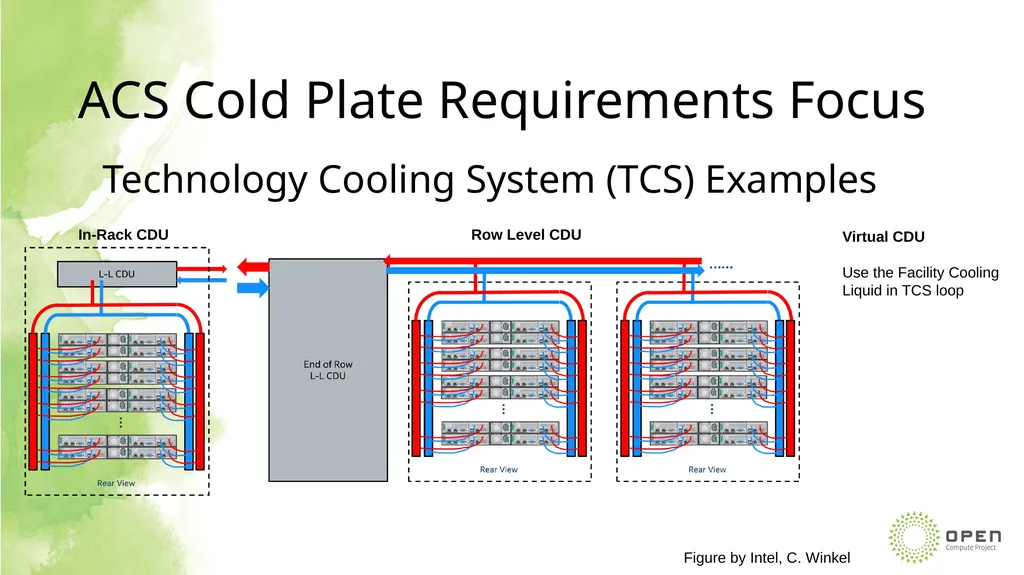
Technology Cooling System (TCS) Examples ACS Cold Plate Requirements Focus Figure by Intel, C. Winkel In-Rack CDU Row Level CDU Virtual CDU
Use the Facility Cooling
Liquid in TCS loop<br>
04
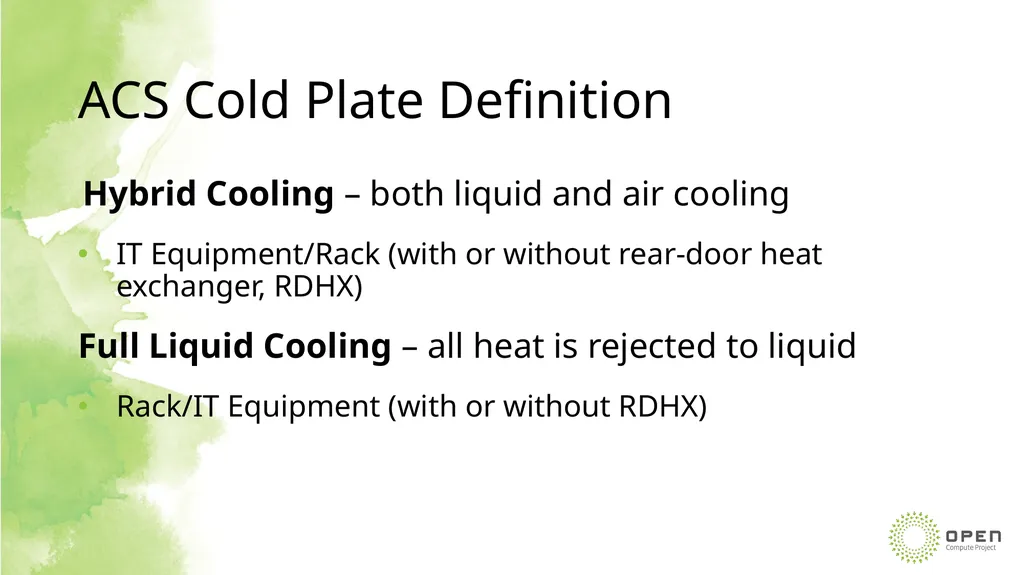
Hybrid Cooling – both liquid and air cooling
IT Equipment/Rack (with or without rear-door heat exchanger, RDHX)
Full Liquid Cooling – all heat is rejected to liquid
Rack/IT Equipment (with or without RDHX) ACS Cold Plate Definition<br>
05
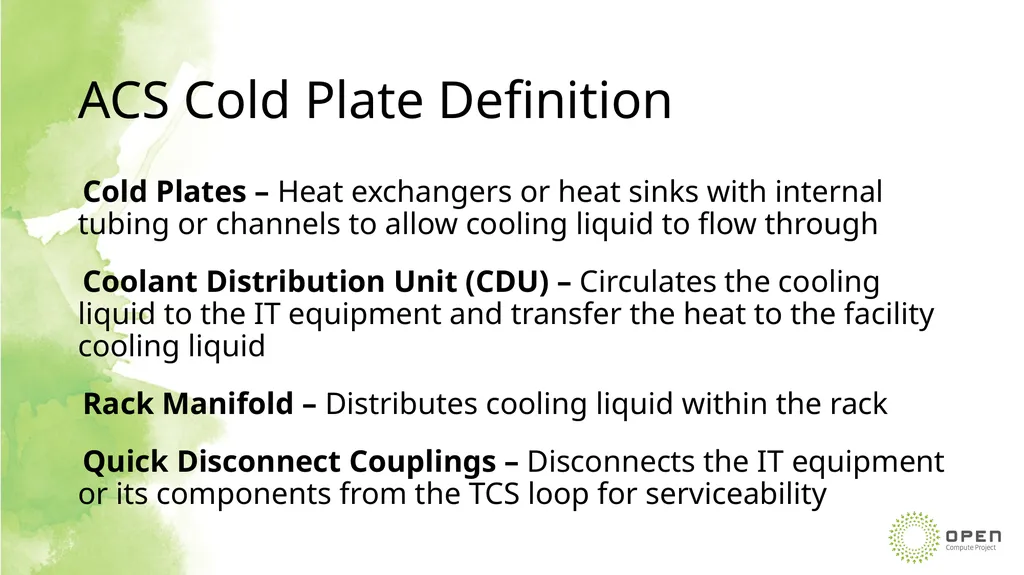
Cold Plates – Heat exchangers or heat sinks with internal tubing or channels to allow cooling liquid to flow through
Coolant Distribution Unit (CDU) – Circulates the cooling liquid to the IT equipment and transfer the heat to the facility cooling liquid
Rack Manifold – Distributes cooling liquid within the rack
Quick Disconnect Couplings – Disconnects the IT equipment or its components from the TCS loop for serviceability ACS Cold Plate Definition<br>
06
Cooling Liquid Considerations Cooling Liquids Included (Single- and Two-Phase Liquids):
Water with additives
Glycol based liquids
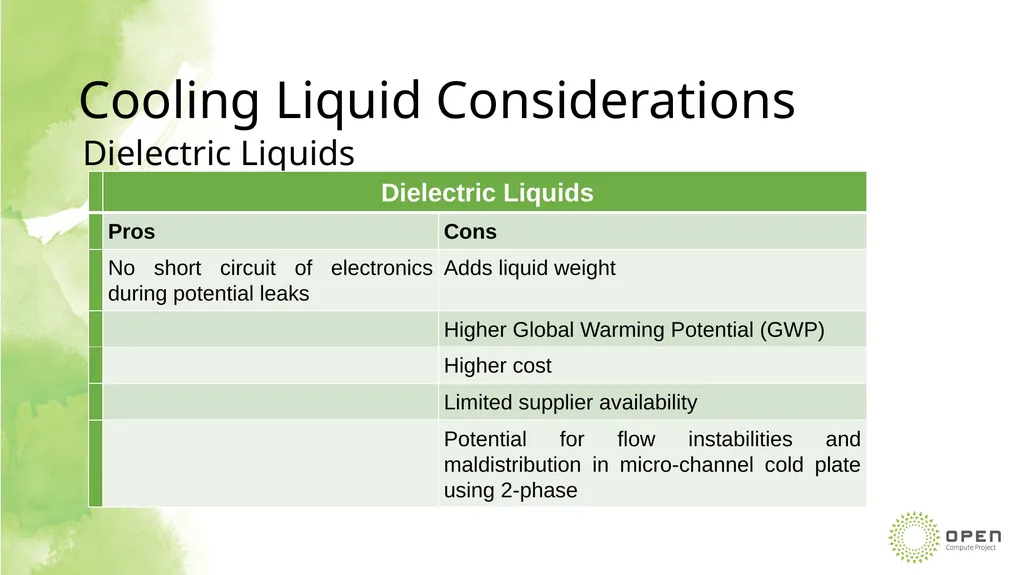
Dielectric liquids
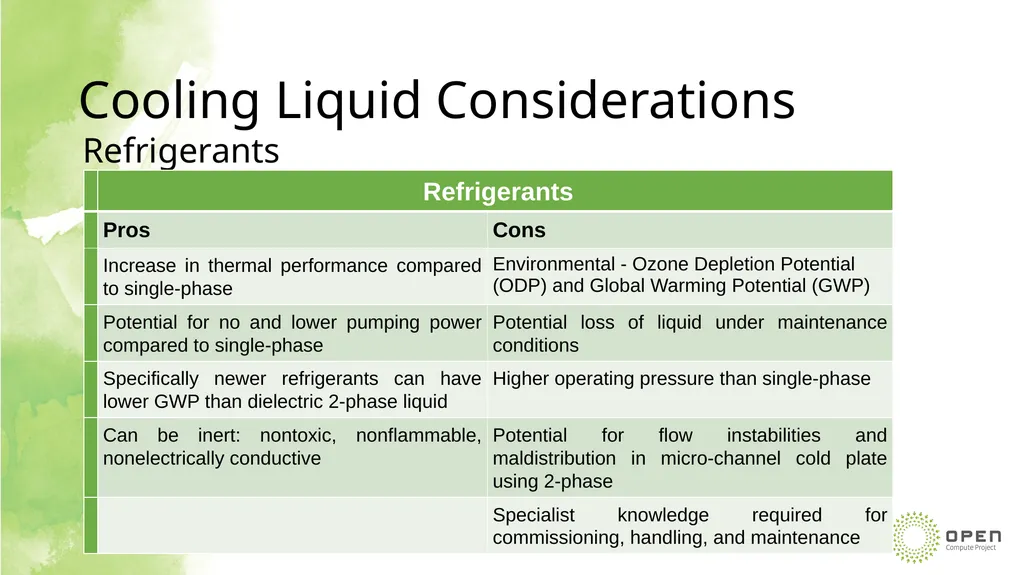
Refrigerants
Material compatibility required between wetted materials and cooling liquid
What cooling liquids are covered/considered in DCF?<br>
07
Pressure Safety Requirements
The liquid cooling loop, its ingredients, and connections must be tested to the highest pressure of the safety standards:
The IEC 60950-1 For EU and US, this standard is outgoing and is expected to be withdrawn on December 20, 2020 in favor of the IEC 62368-1 standard.
The IEC 62368-1 is the new safety standard requiring leak tests at 3x under normal operating pressure and 2x under abnormal and single fault conditions
ASME B31.3 “Process Piping” (2018) requires leak test at the 1.5x design pressure for interconnecting piping
What pressure requirements are being considered by DCF?
Standards valid on facility level? On TCS level? Liquid Cooling Requirements<br>
08
IT Equipment Classifications
Hybrid Basic: CPU/GPU cold plates
Hybrid Intermediate: CPU/GPU & DIMMs cold plates
Hybrid Advanced: CPU/GPU & DIMMs & Additional (specify) cold plates
Full Liquid: cold plates on nearly all components Liquid Cooling Classifications<br>
09
Liquid Rack Classifications
Hybrid Liquid Cooled Ready Rack without RDHX*
Hybrid Liquid Cooled Ready Rack with RDHX*
Full Liquid Rack Cooling without RDHX*
Full Liquid Rack Cooling with RDHX*
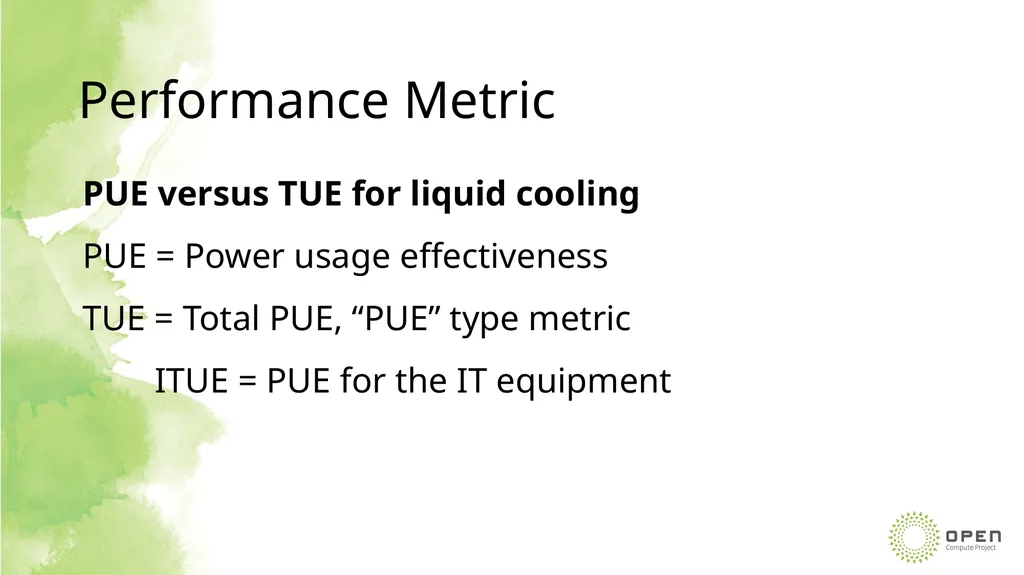
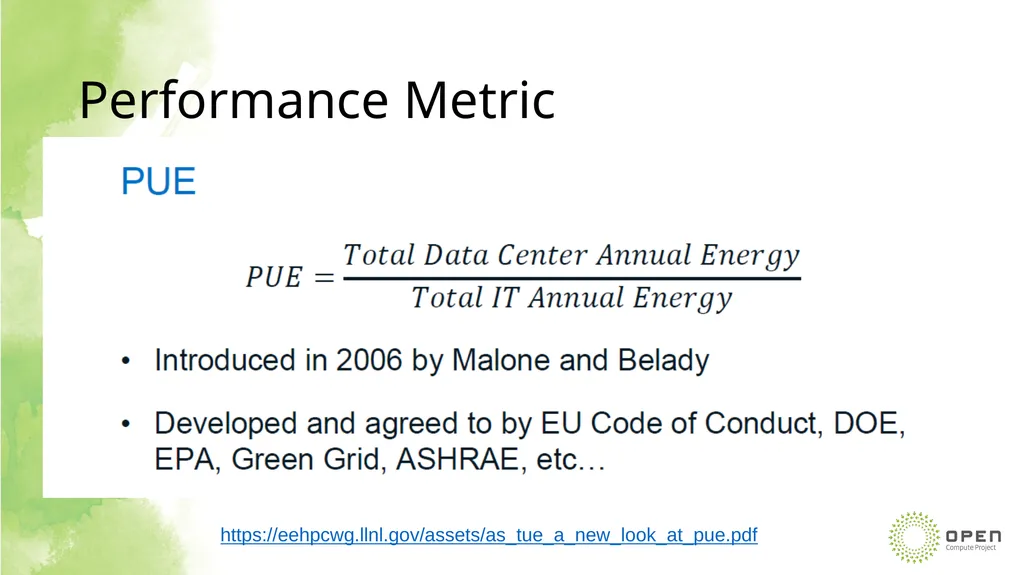
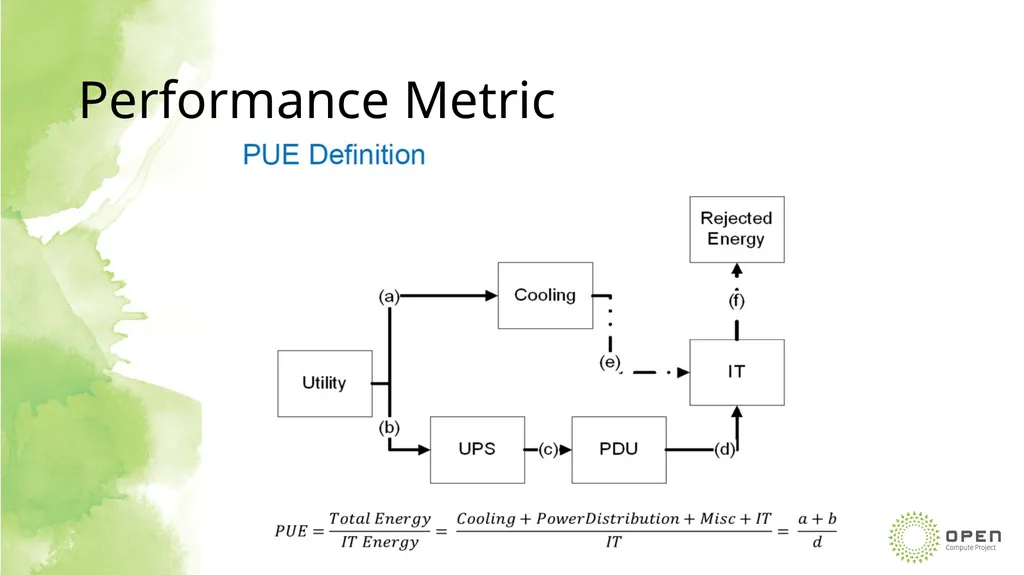
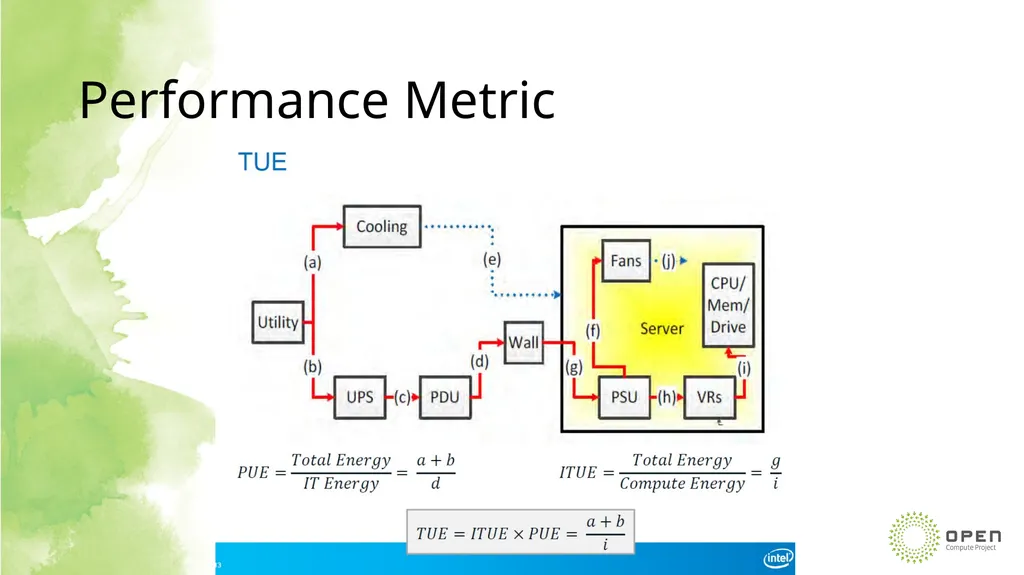
PUE versus TUE for liquid cooling
PUE = Power usage effectiveness
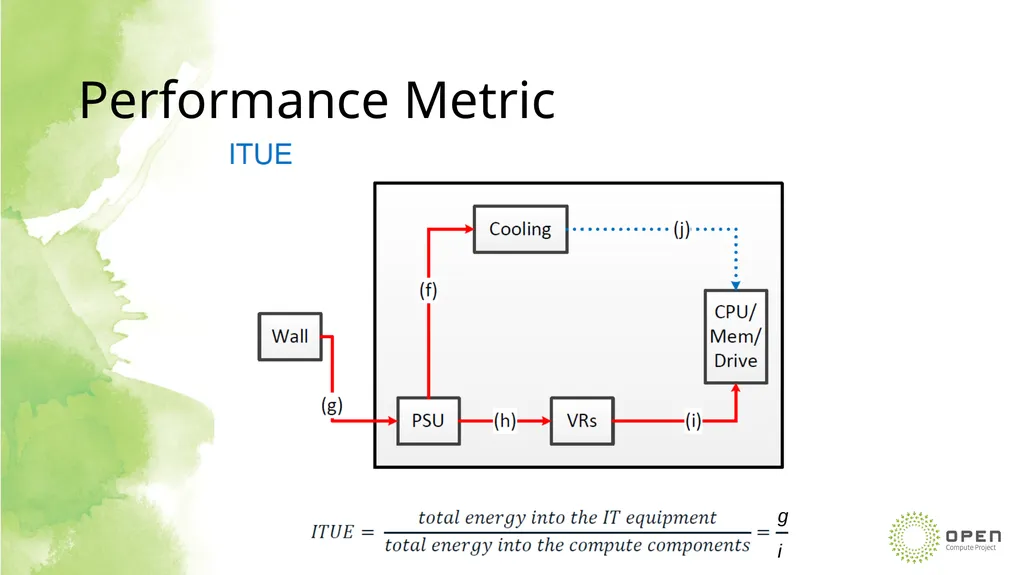
TUE = Total PUE, “PUE” type metric
ITUE = PUE for the IT equipment Performance Metric<br>
Purpose: Generate an open specification and supporting documents focusing on standardization and definitions of liquid cooled solutions without preventing innovation
Note: Cold Plate work stream is focusing on liquid cooled solutions using cold plates ACS Cold Plate Purpose<br>
22
Certification Markings
Each liquid cooled technology needs to comply with all certification regulations, which are valid for the geographic location where the liquid cooled system is used. Different regions have different requirements.
Examples:
UL and FCC markings in the US
CE certification in Europe Liquid Cooling Requirements<br>
23
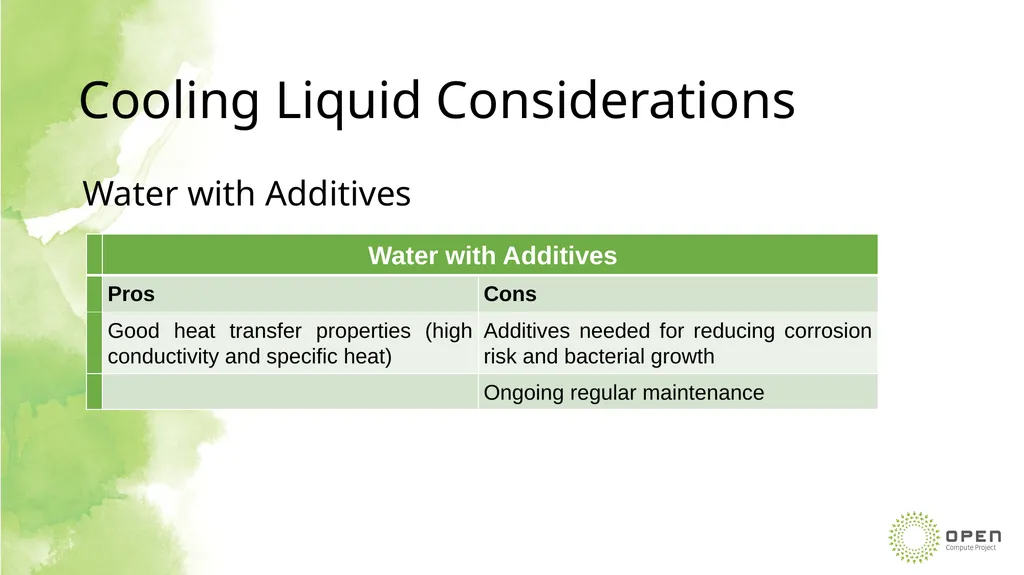
Water with Additives Cooling Liquid Considerations<br>
24
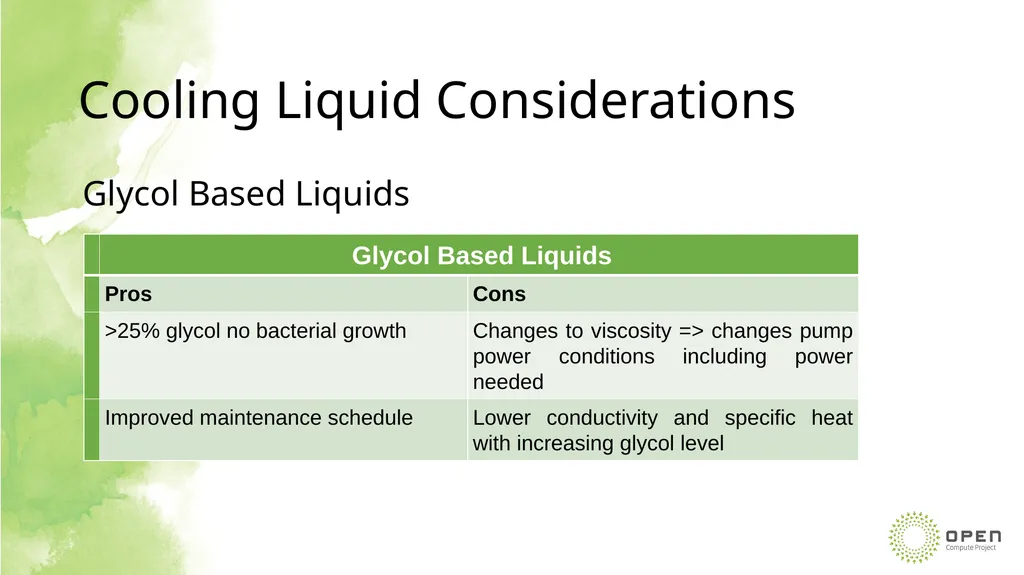
Glycol Based Liquids Cooling Liquid Considerations<br>