
John is now standing at the point marked with a


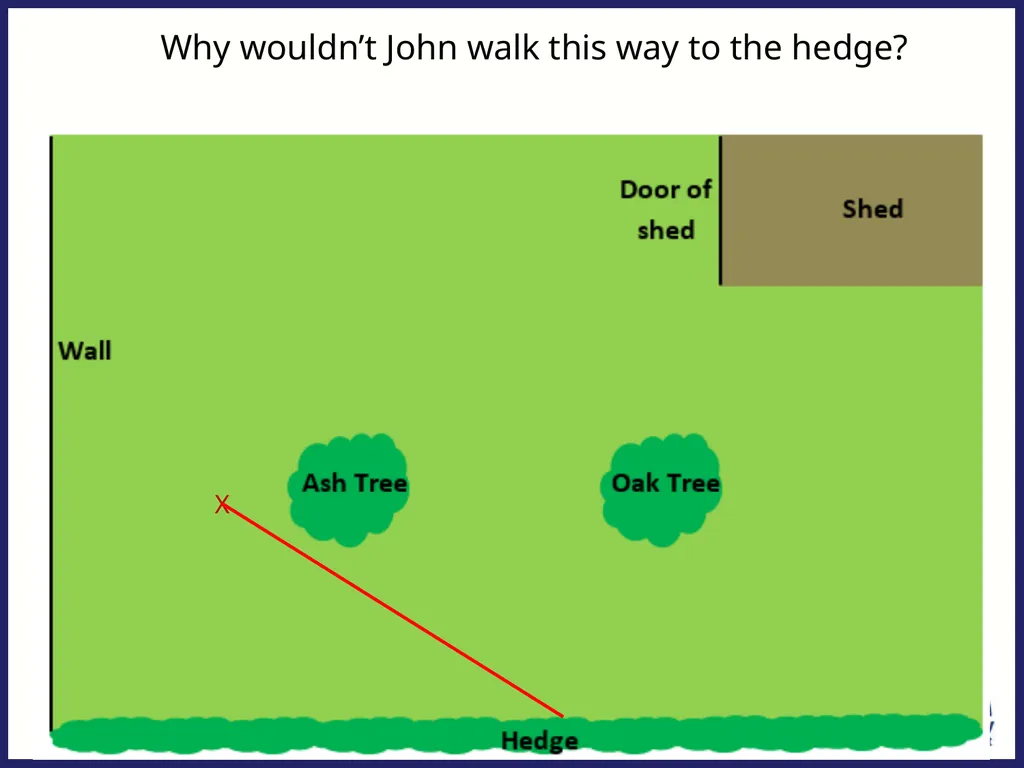
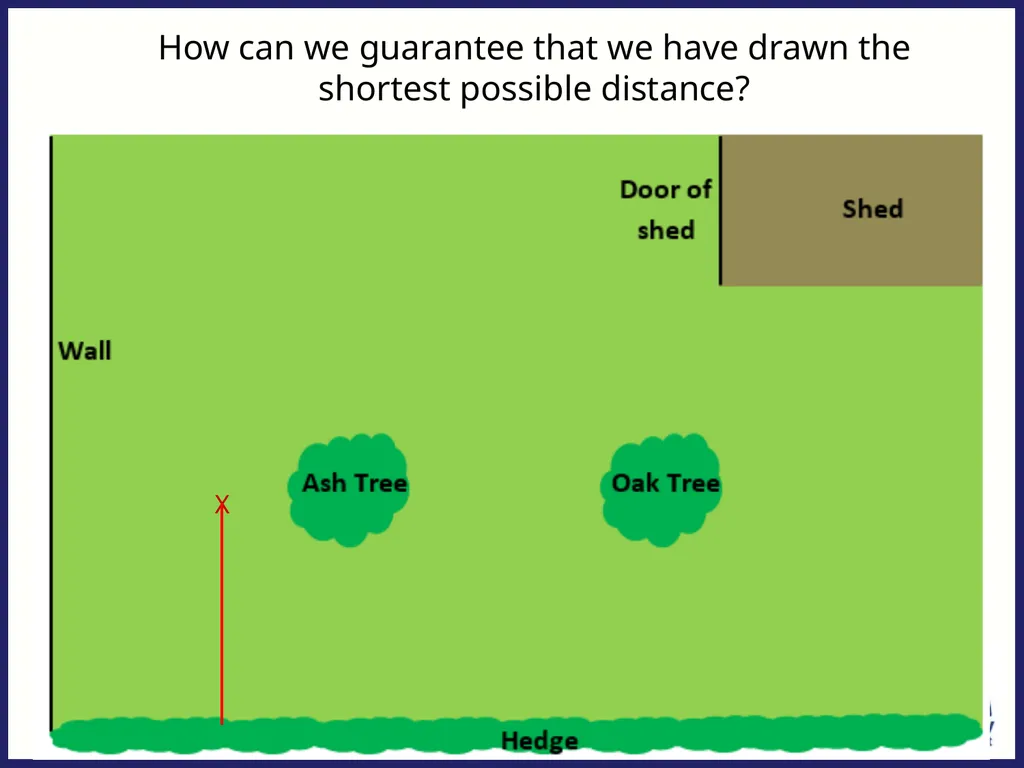
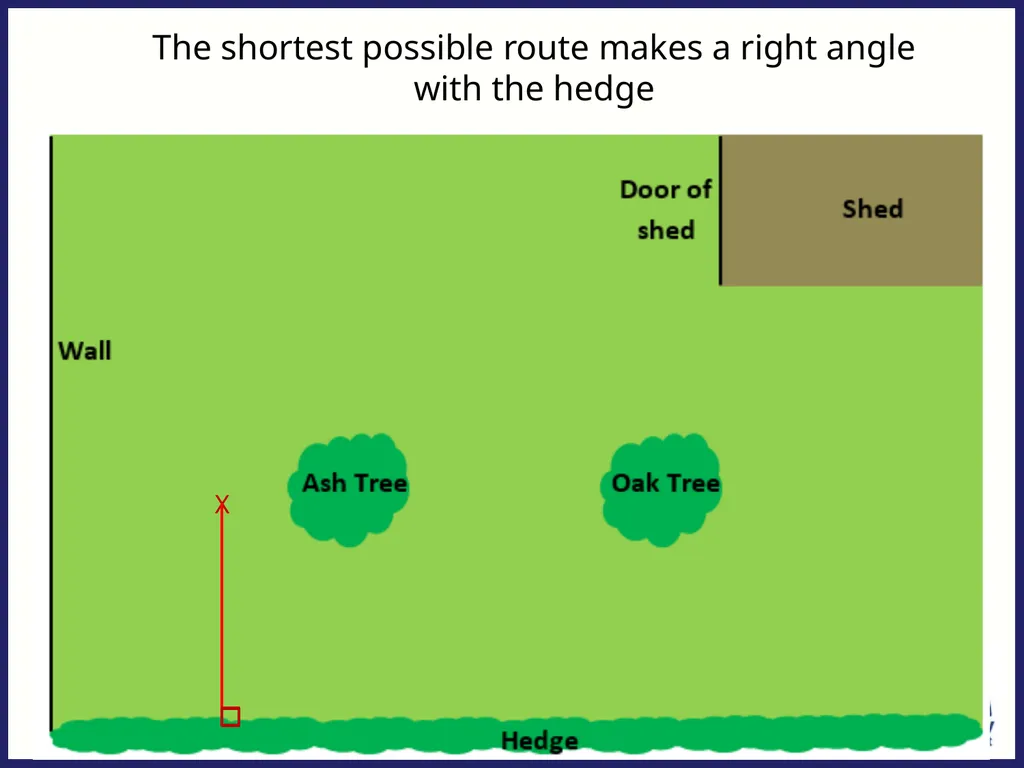
Description: John is now standing at the point marked with a red cross. He wants to walk the shortest possible distance to the hedge. Where should John walk? X Why wouldnt John walk this way to the hedge? X How can we guarantee that we have drawn the
Related Topics
Download Presentation
"John is now standing at the point marked with a" is the property of its rightful owner. Permission is granted to download and print the materials on this website for personal, non-commercial use only, and to display it on your personal computer provided you do not modify the materials and that you retain all copyright notices contained in the materials. By downloading content from our website, you accept the terms of this agreement.
Presentation Transcript
slide1. John is now standing at the point marked with a red cross.
He wants to walk the shortest possible distance to the hedge.
Where should John walk? X<br>
slide2. Why wouldn’t John walk this way to the hedge? X<br>
slide3. How can we guarantee that we have drawn the shortest possible distance? X<br>
slide4. The shortest possible route makes a right angle with the hedge X<br>
slide5. This type of construction is referred as a perpendicular from a point.<br>
slide6. When constructing a perpendicular from a point
the new path is the
shortest possible distance
from the point to the line<br>
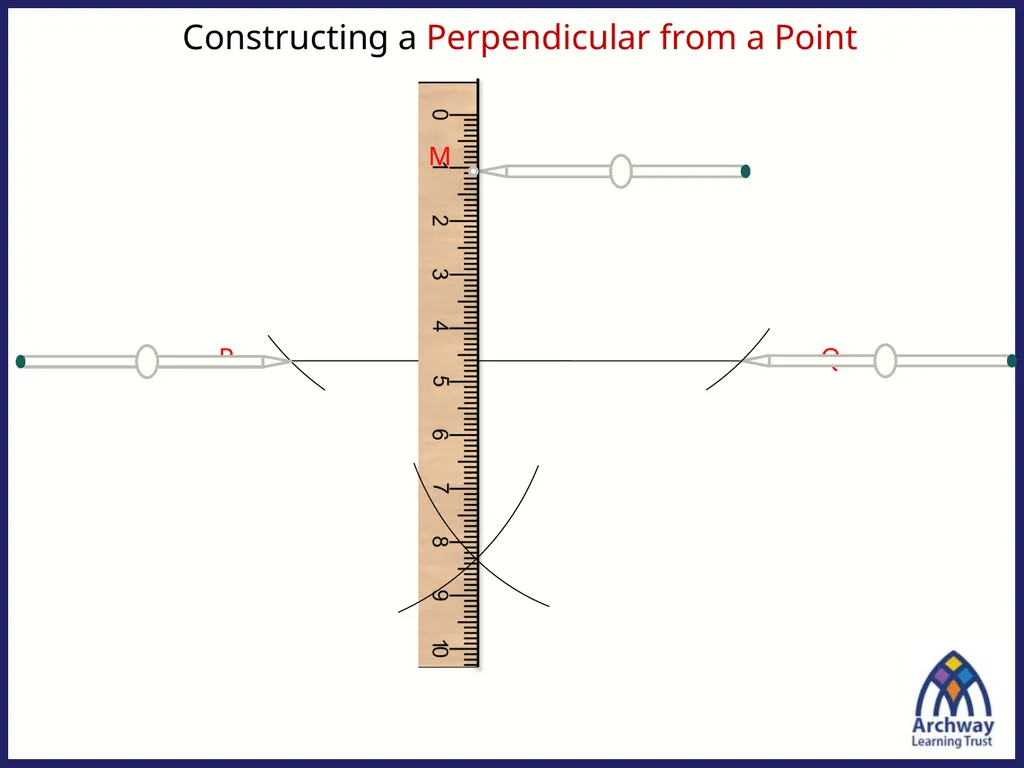
slide7. M Constructing a Perpendicular from a Point<br>
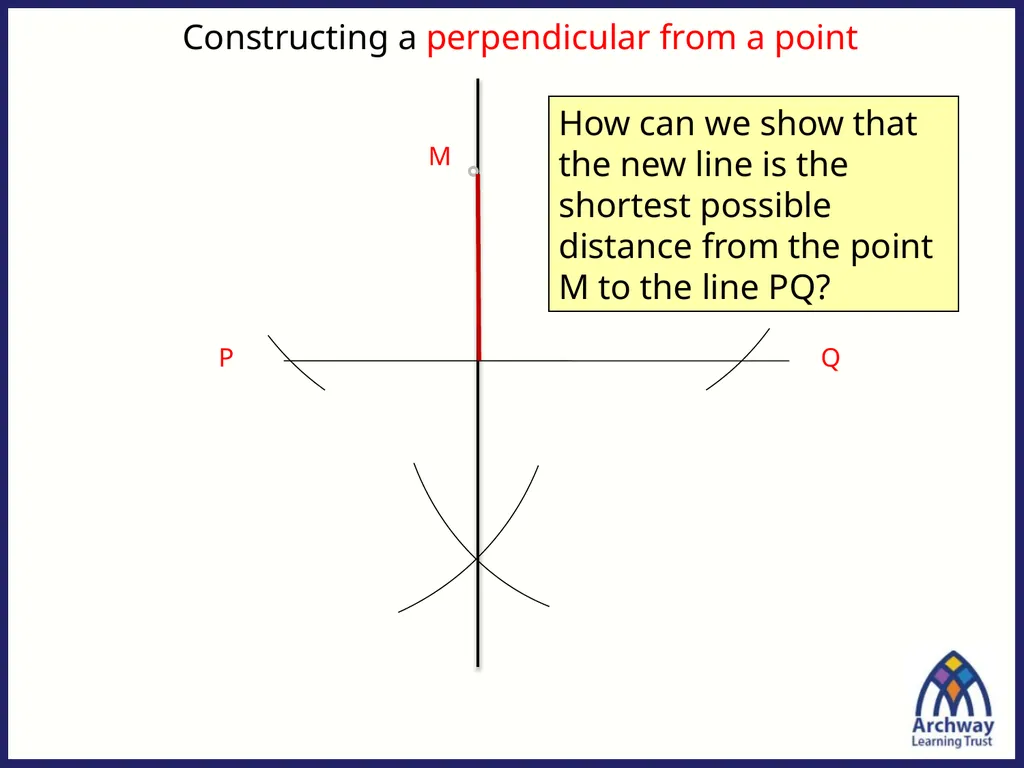
slide8. M Constructing a perpendicular from a point How can we show that the new line is the shortest possible distance from the point M to the line PQ?<br>
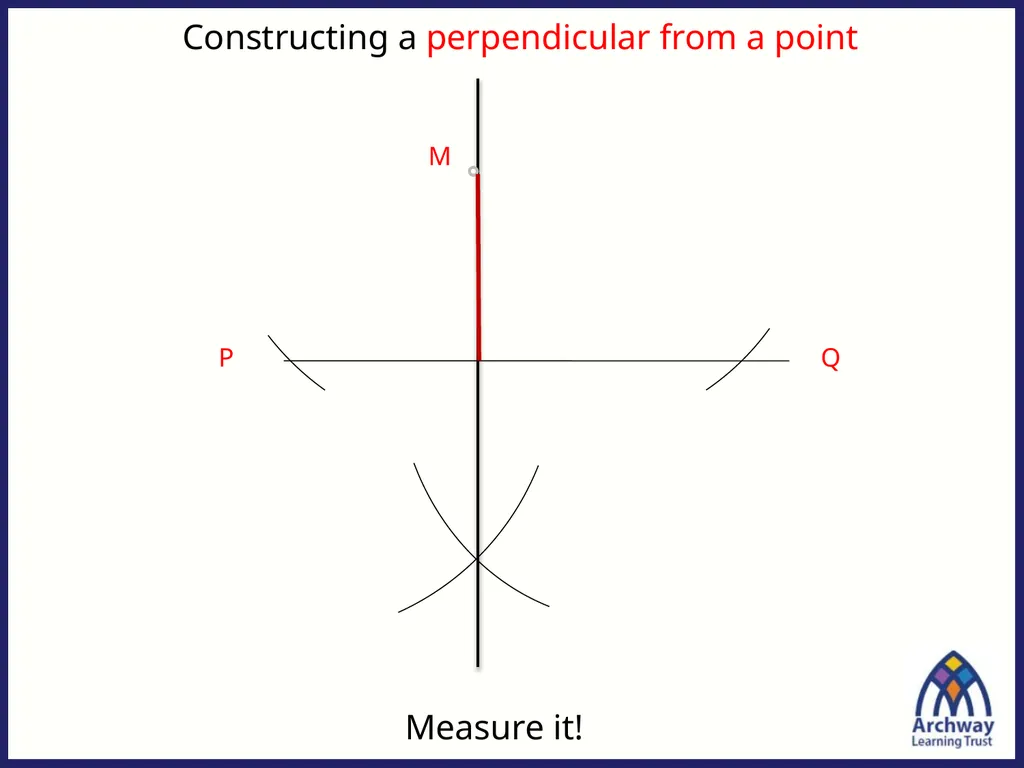
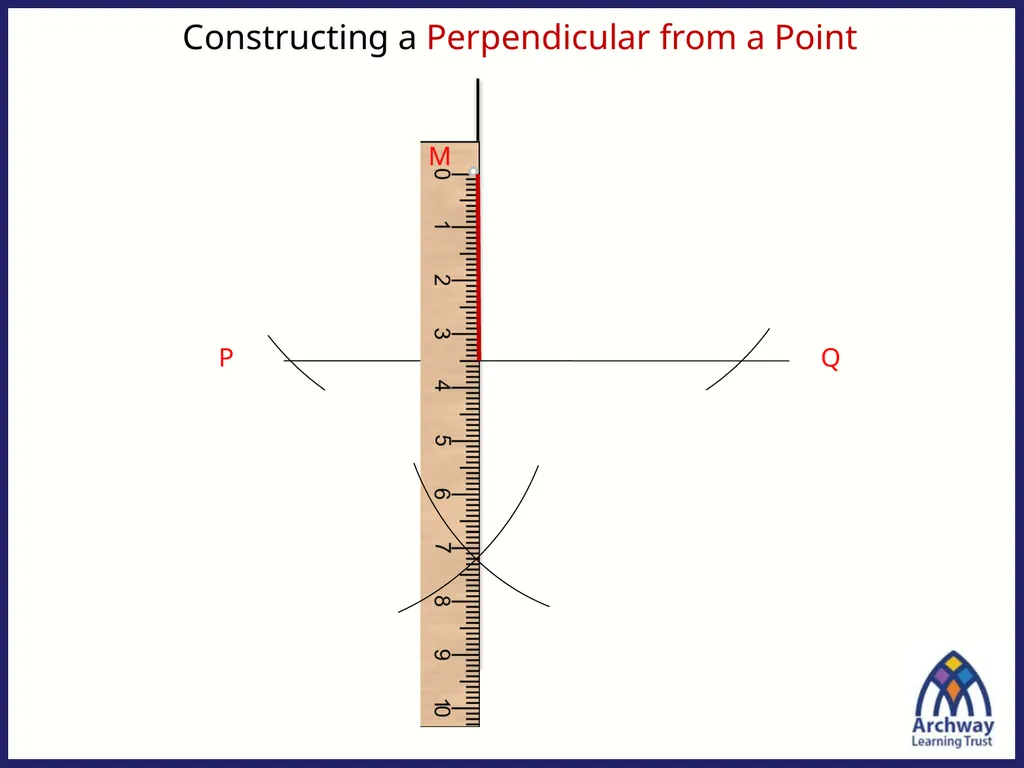
slide9. M Measure it! Constructing a perpendicular from a point<br>
slide10. M Constructing a Perpendicular from a Point<br>
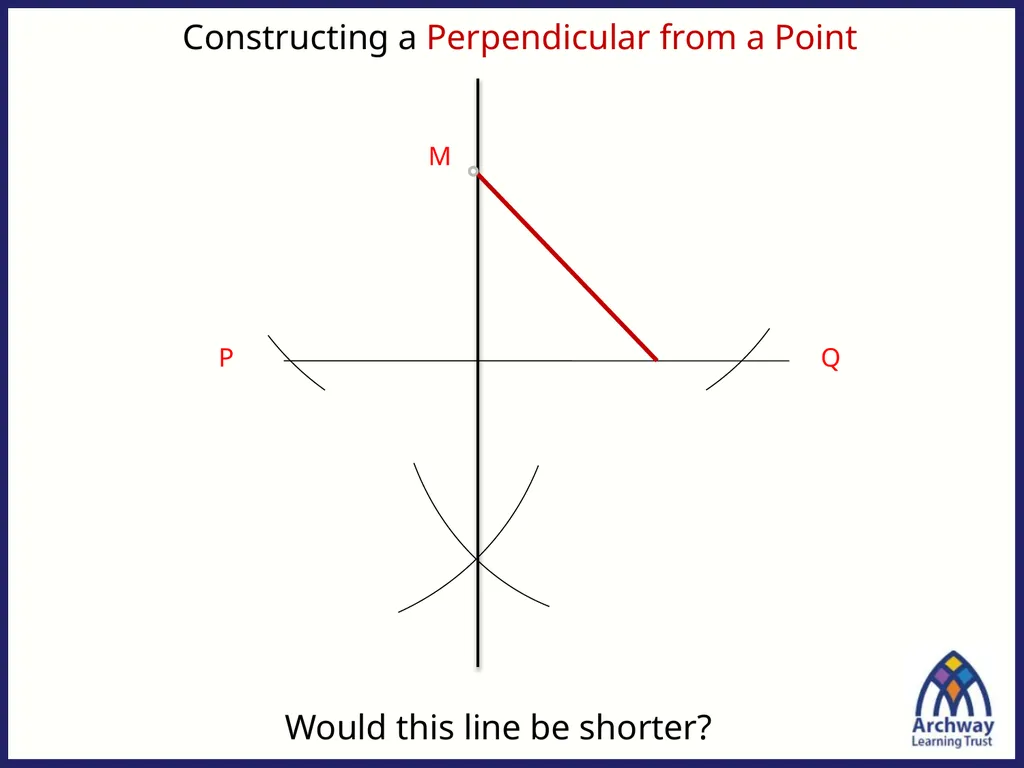
slide11. M Constructing a Perpendicular from a Point Would this line be shorter?<br>
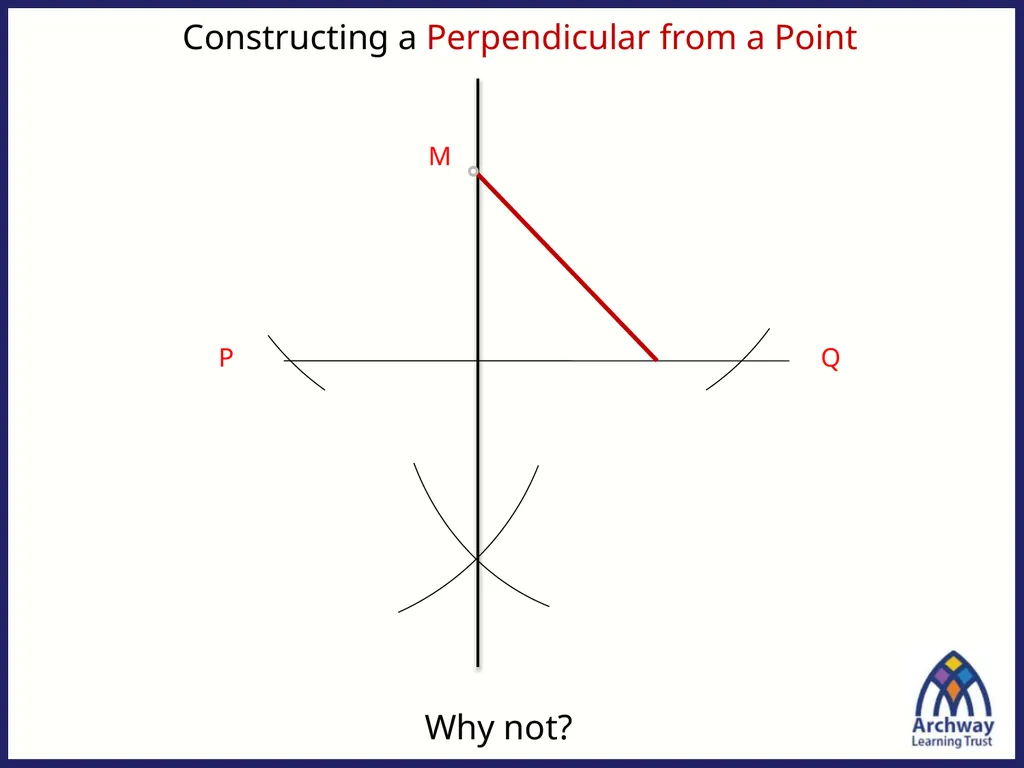
slide12. M Constructing a Perpendicular from a Point Why not?<br>
slide13. Construct the perpendicular from each of the given points on the worksheet.
Complete your constructions on the worksheet
Leave in your construction lines The Perpendicular From a Point<br>
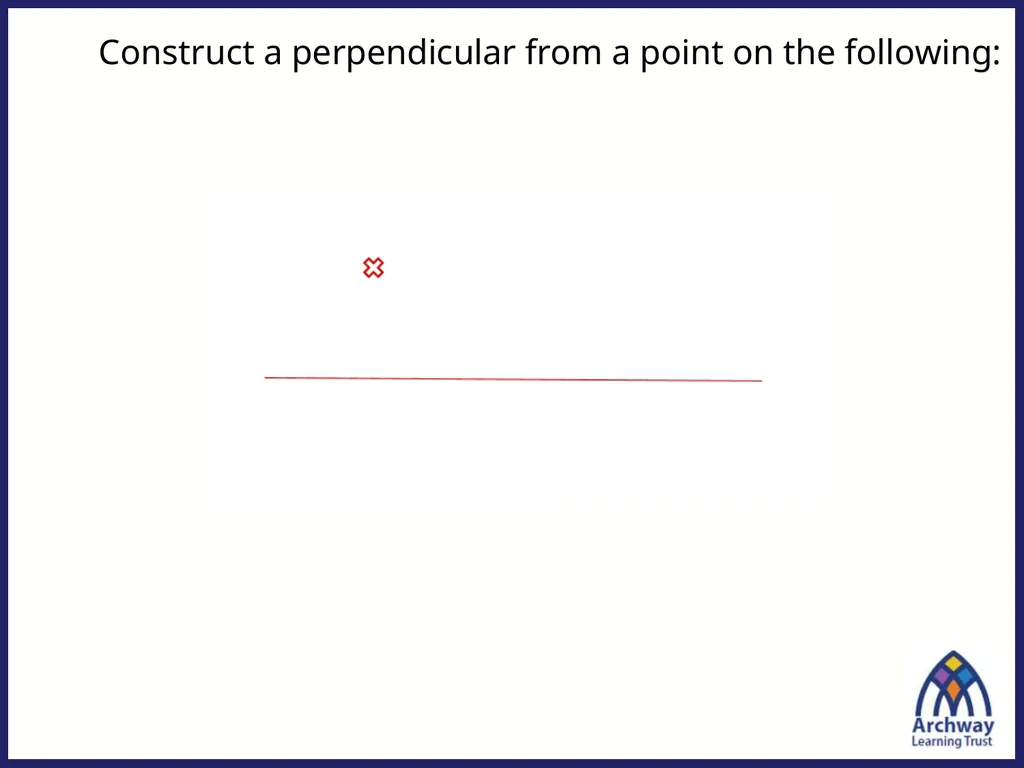
slide14. Construct a perpendicular from a point on the following:<br>
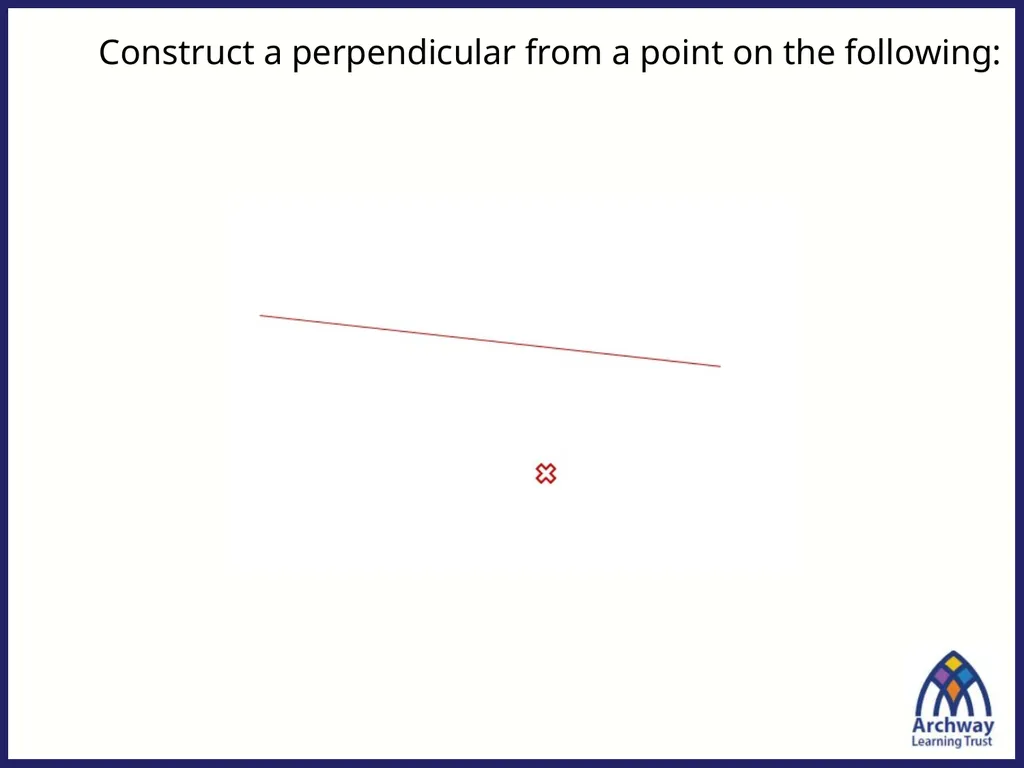
slide15. Construct a perpendicular from a point on the following:<br>
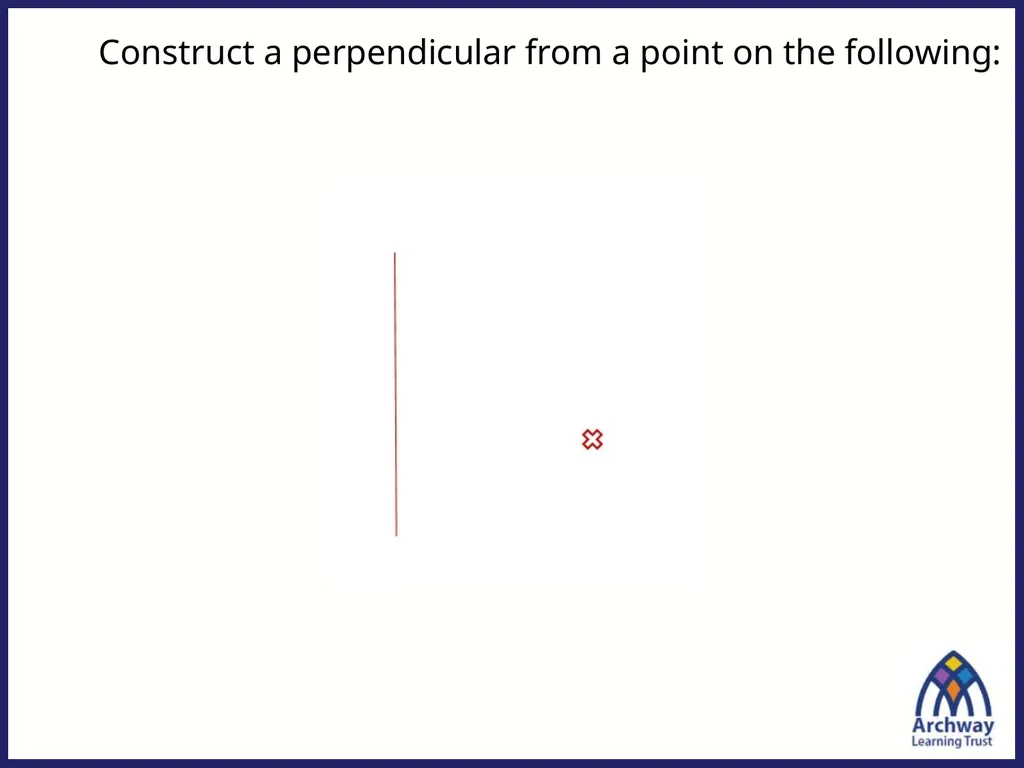
slide16. Construct a perpendicular from a point on the following:<br>
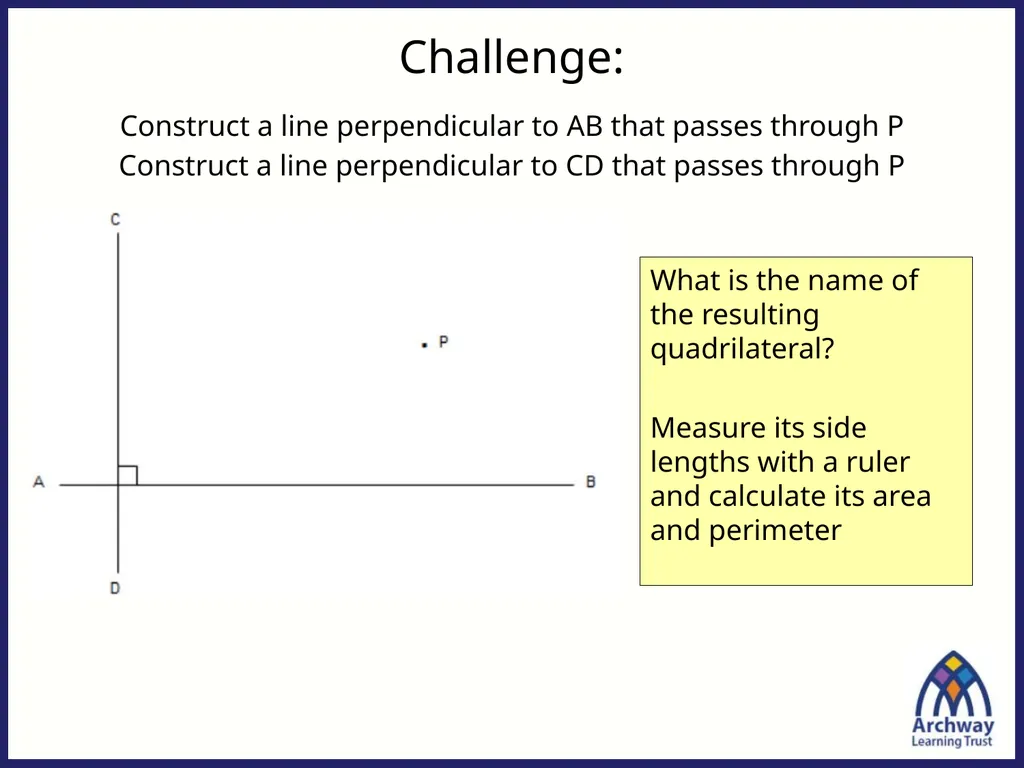
slide17. Challenge: Construct a line perpendicular to AB that passes through P
Construct a line perpendicular to CD that passes through P What is the name of the resulting quadrilateral?
Measure its side lengths with a ruler and calculate its area and perimeter<br>
He wants to walk the shortest possible distance to the hedge.
Where should John walk? X<br>
slide2. Why wouldn’t John walk this way to the hedge? X<br>
slide3. How can we guarantee that we have drawn the shortest possible distance? X<br>
slide4. The shortest possible route makes a right angle with the hedge X<br>
slide5. This type of construction is referred as a perpendicular from a point.<br>
slide6. When constructing a perpendicular from a point
the new path is the
shortest possible distance
from the point to the line<br>
slide7. M Constructing a Perpendicular from a Point<br>
slide8. M Constructing a perpendicular from a point How can we show that the new line is the shortest possible distance from the point M to the line PQ?<br>
slide9. M Measure it! Constructing a perpendicular from a point<br>
slide10. M Constructing a Perpendicular from a Point<br>
slide11. M Constructing a Perpendicular from a Point Would this line be shorter?<br>
slide12. M Constructing a Perpendicular from a Point Why not?<br>
slide13. Construct the perpendicular from each of the given points on the worksheet.
Complete your constructions on the worksheet
Leave in your construction lines The Perpendicular From a Point<br>
slide14. Construct a perpendicular from a point on the following:<br>
slide15. Construct a perpendicular from a point on the following:<br>
slide16. Construct a perpendicular from a point on the following:<br>
slide17. Challenge: Construct a line perpendicular to AB that passes through P
Construct a line perpendicular to CD that passes through P What is the name of the resulting quadrilateral?
Measure its side lengths with a ruler and calculate its area and perimeter<br>