John is standing at the point marked with a red cross. He wants to walk so that he is always the same distance away from the hedge and the wall. Where should John walk? X John is standing at the point marked with a red cross. He wants to
Related Topics
Share
Embed code
Download this presentation From Below
"John is standing at the point marked with a red" is the property of its rightful owner. Permission is granted to
download and print the materials on this website for personal, non-commercial use only, and to display it
on your personal computer provided you do not modify the materials and that you retain all copyright
notices contained in the materials. By downloading content from our website, you accept the terms of this
agreement.
Presentation Transcript
01
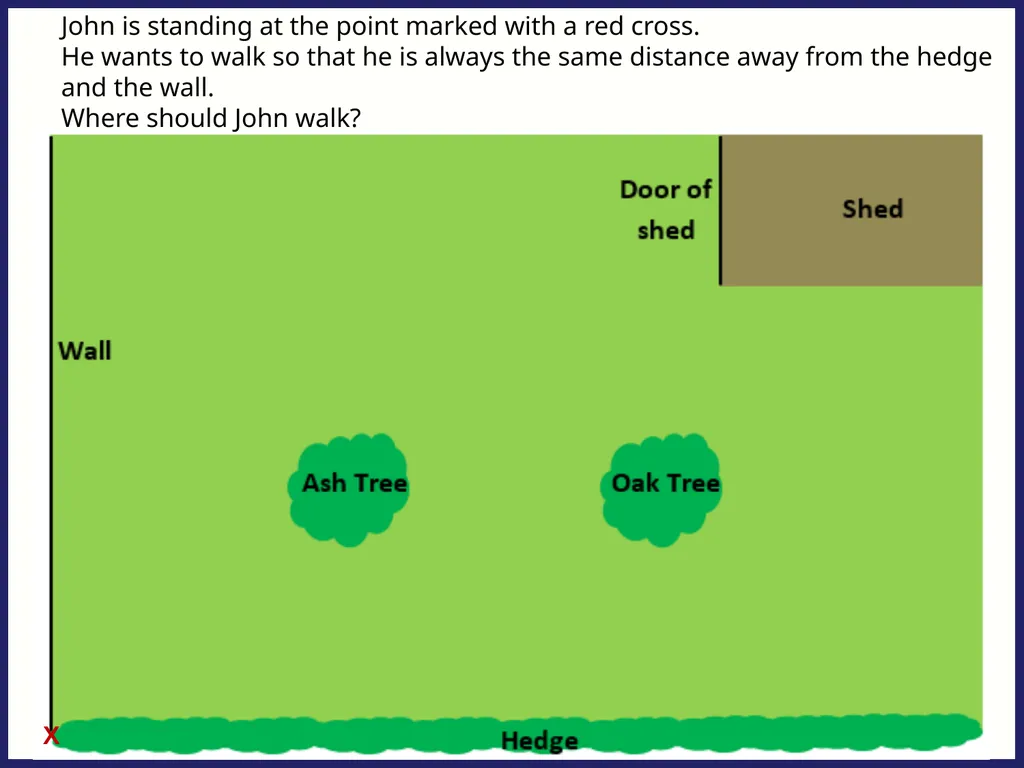
John is standing at the point marked with a red cross.
He wants to walk so that he is always the same distance away from the hedge and the wall.
Where should John walk? X<br>
02
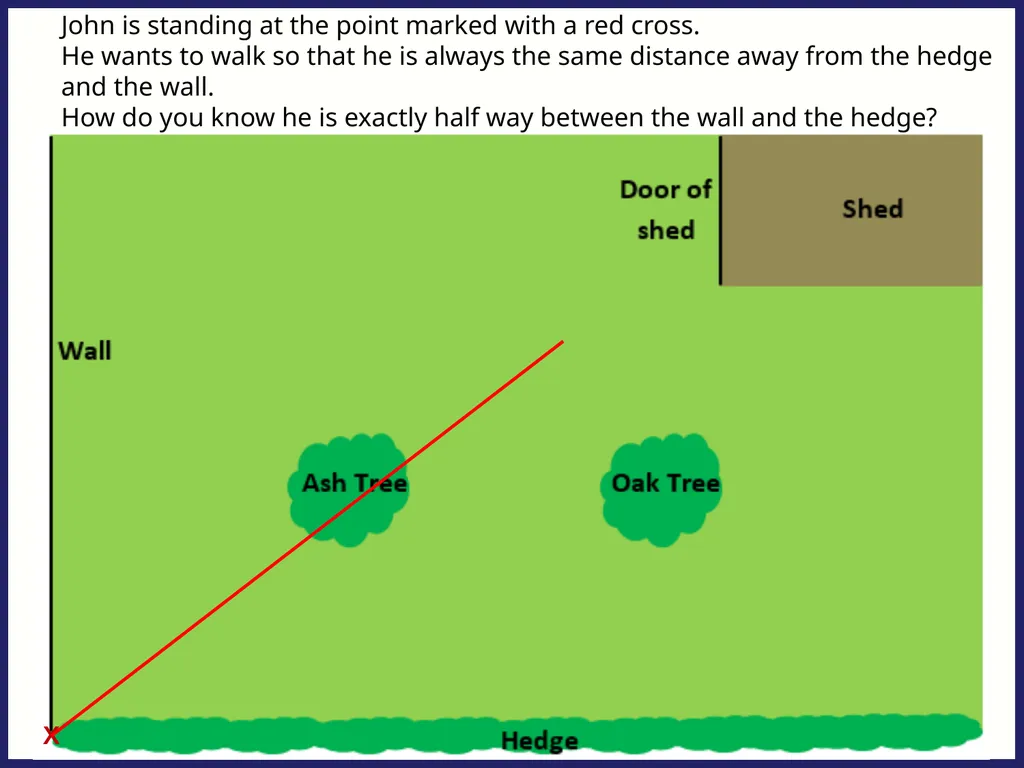
John is standing at the point marked with a red cross.
He wants to walk so that he is always the same distance away from the hedge and the wall.
How do you know he is exactly half way between the wall and the hedge? X<br>
03
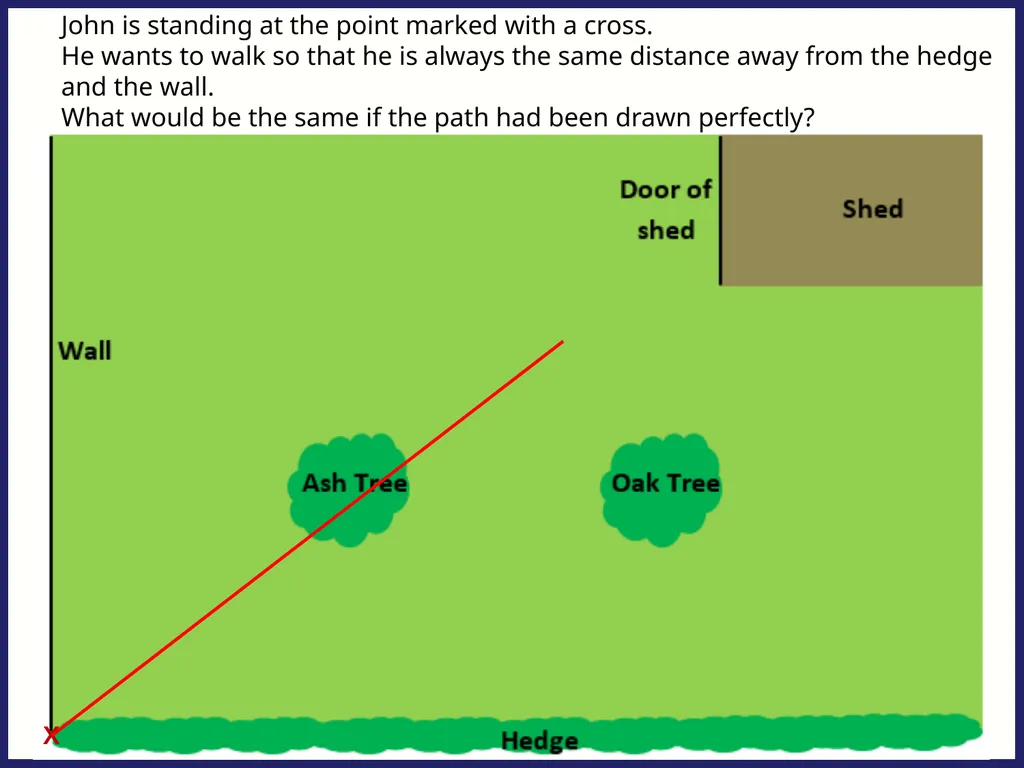
John is standing at the point marked with a cross.
He wants to walk so that he is always the same distance away from the hedge and the wall.
What would be the same if the path had been drawn perfectly? X<br>
04
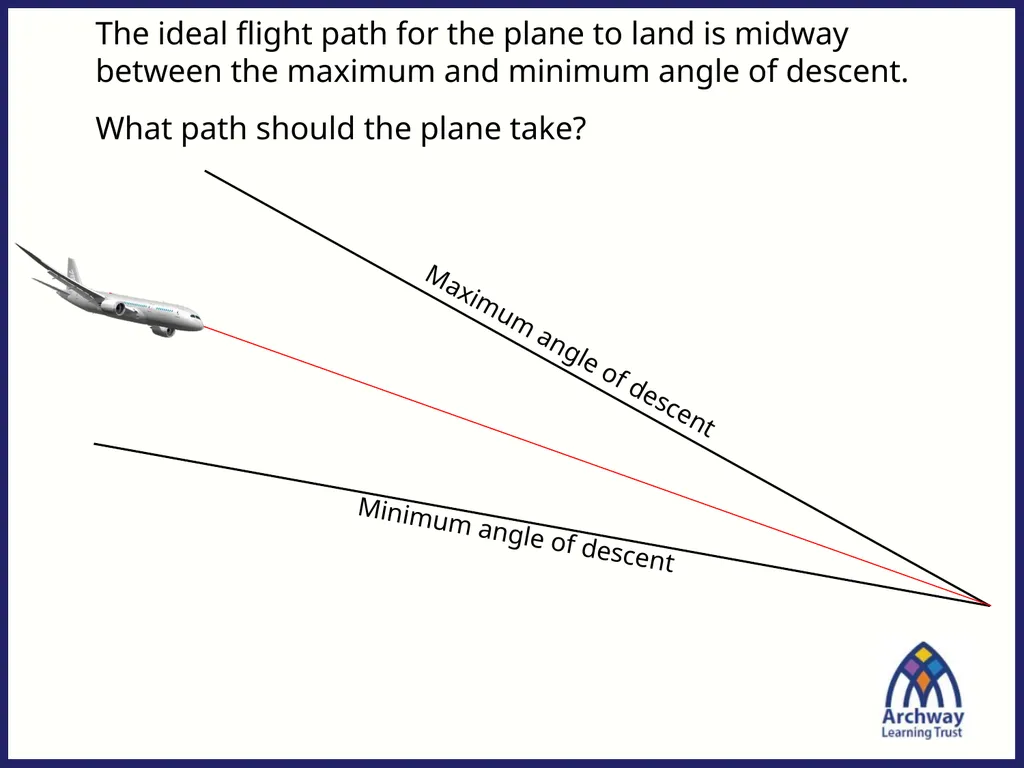
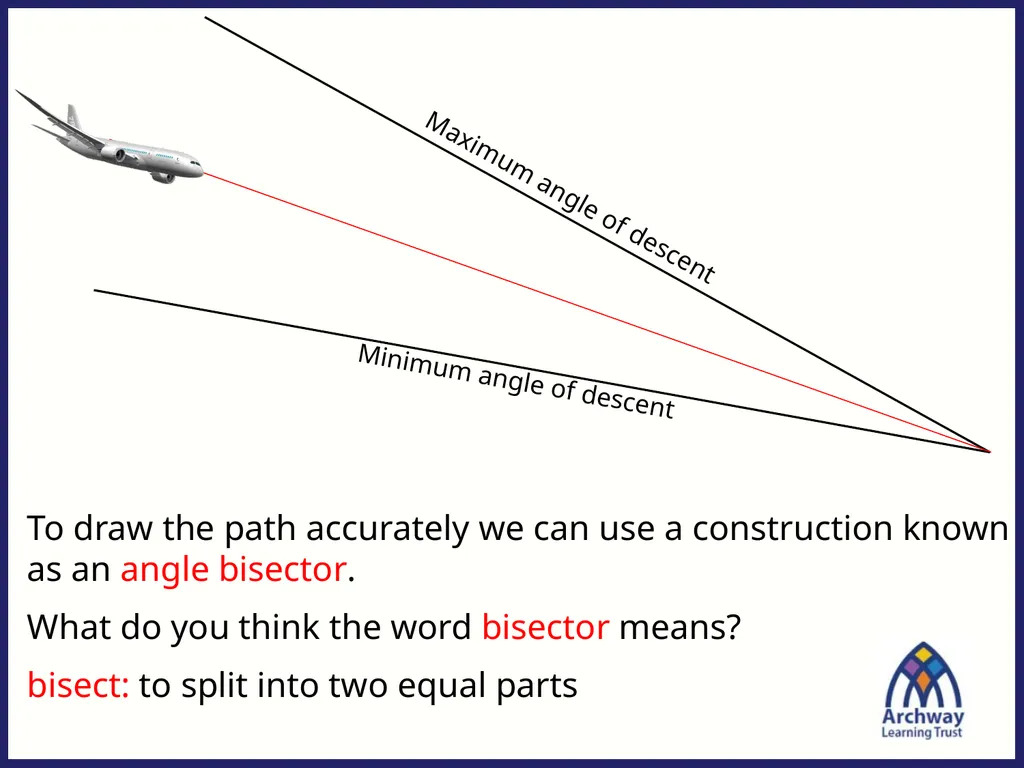
Maximum angle of descent Minimum angle of descent The ideal flight path for the plane to land is midway between the maximum and minimum angle of descent.
What path should the plane take?<br>
05
Maximum angle of descent Minimum angle of descent To draw the path accurately we can use a construction known as an angle bisector.
What do you think the word bisector means?
bisect: to split into two equal parts<br>
06
Please use exemplar sheet for students to complete the missing gaps and complete a worked example<br>
07
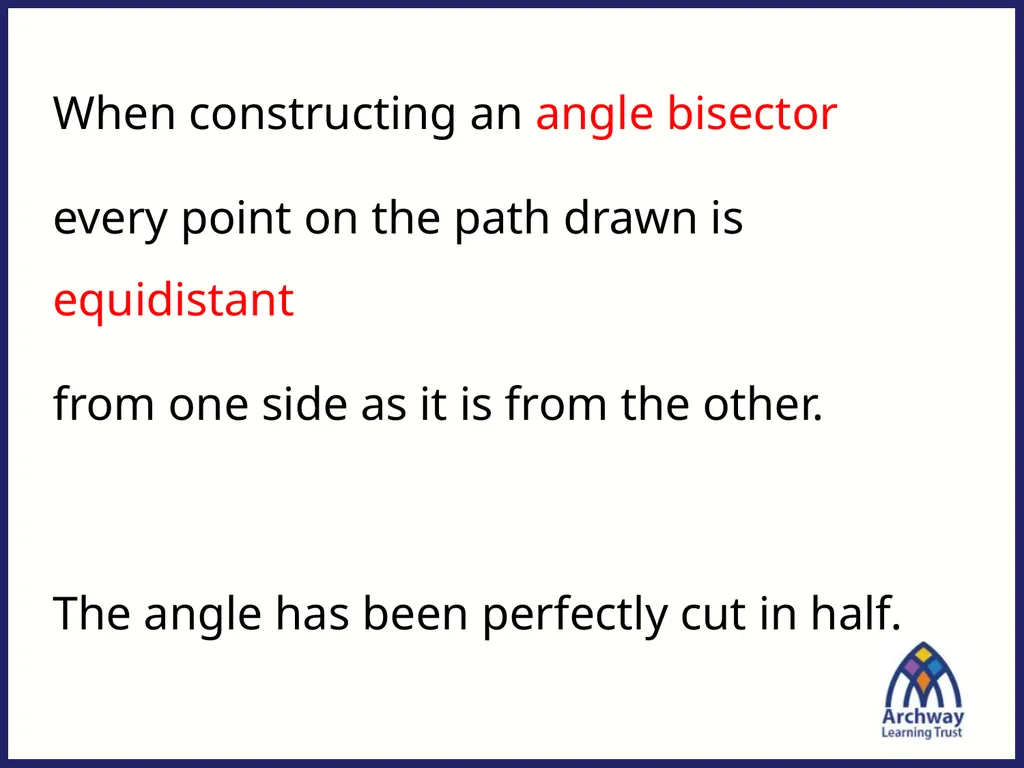
When constructing an angle bisector
every point on the path drawn is equidistant
from one side as it is from the other.
The angle has been perfectly cut in half.<br>
08
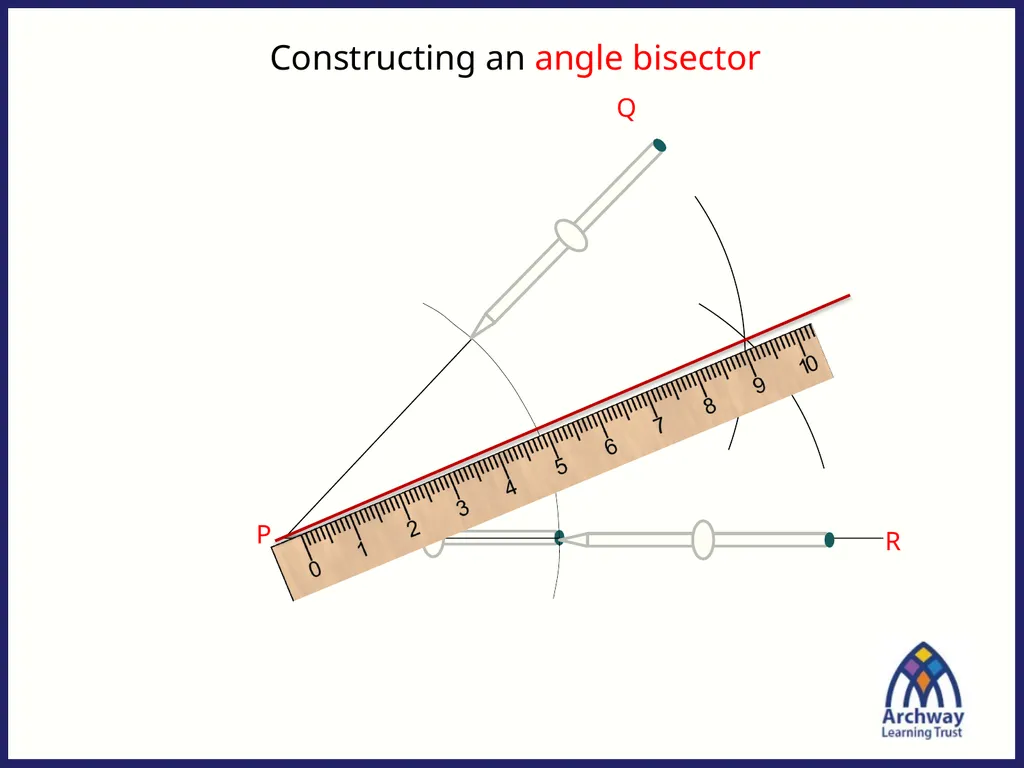
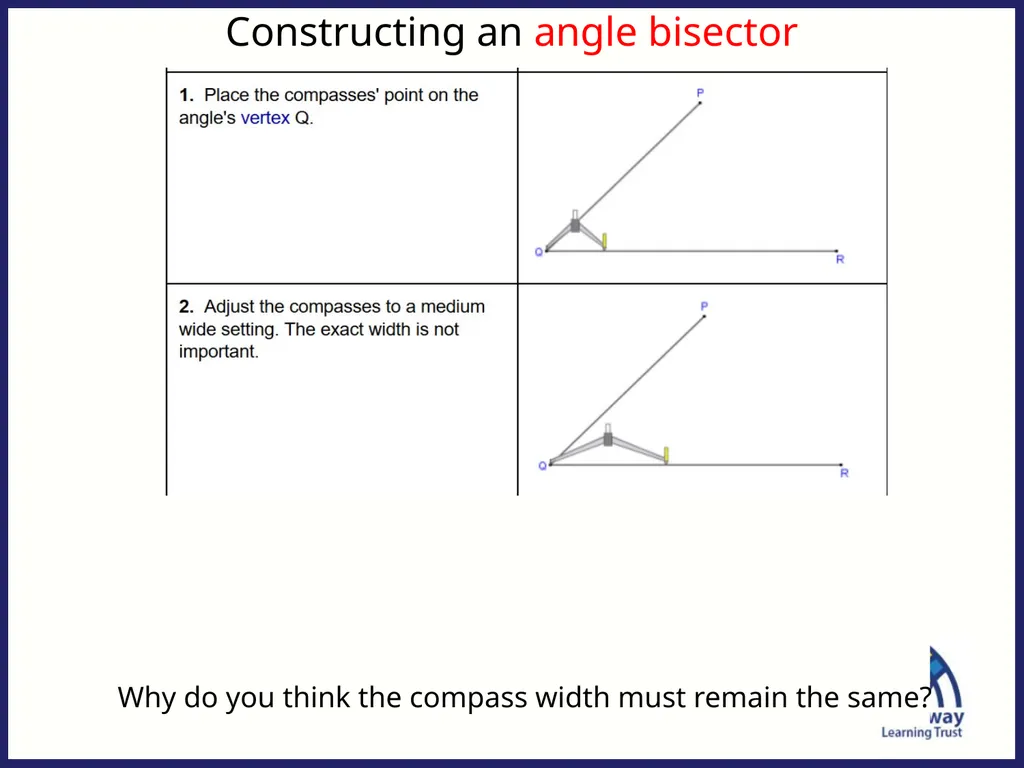
P R Q Constructing an angle bisector<br>
09
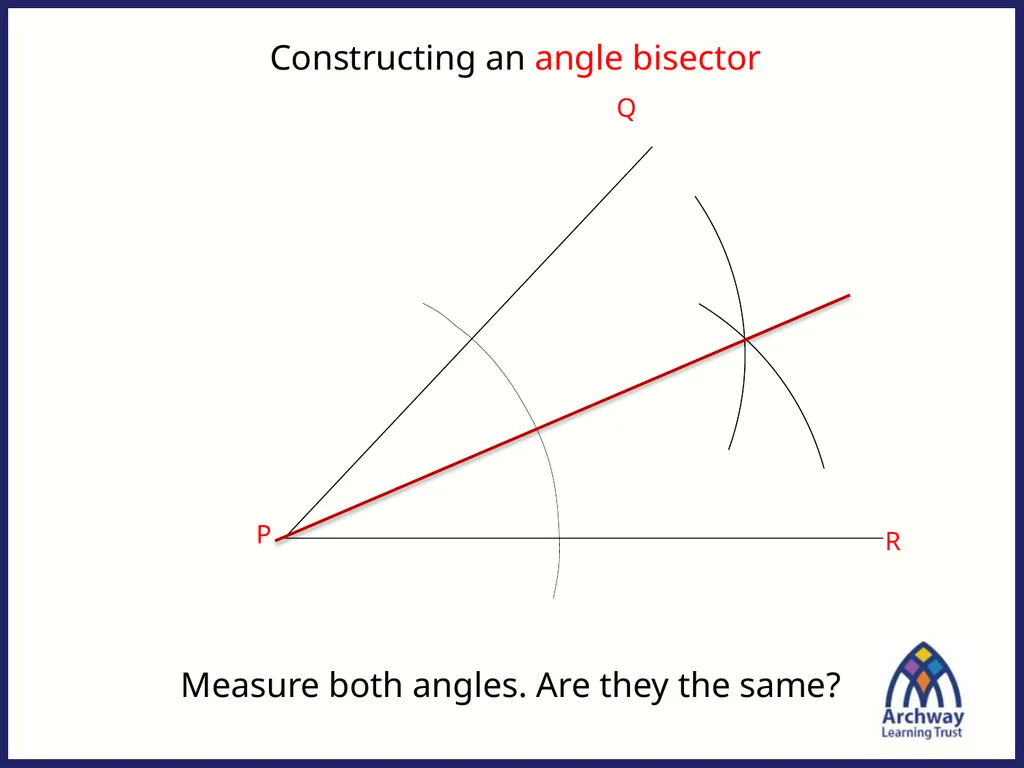
P R Q Constructing an angle bisector Measure both angles. Are they the same?<br>
10
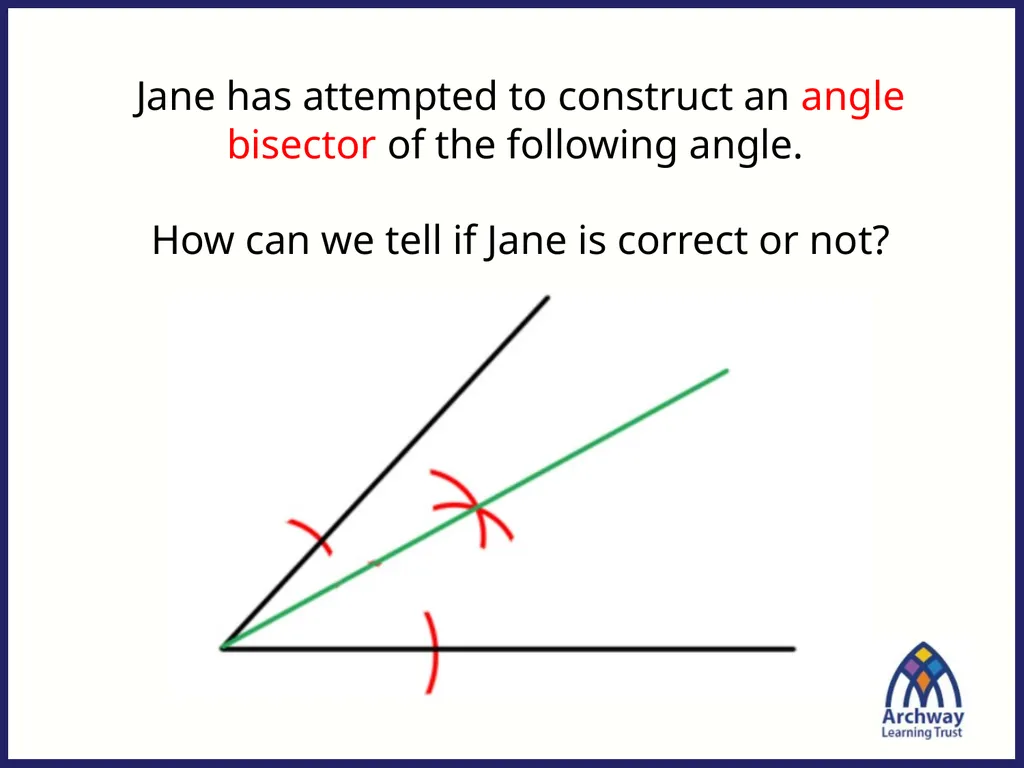
Jane has attempted to construct an angle bisector of the following angle. How can we tell if Jane is correct or not?<br>
11
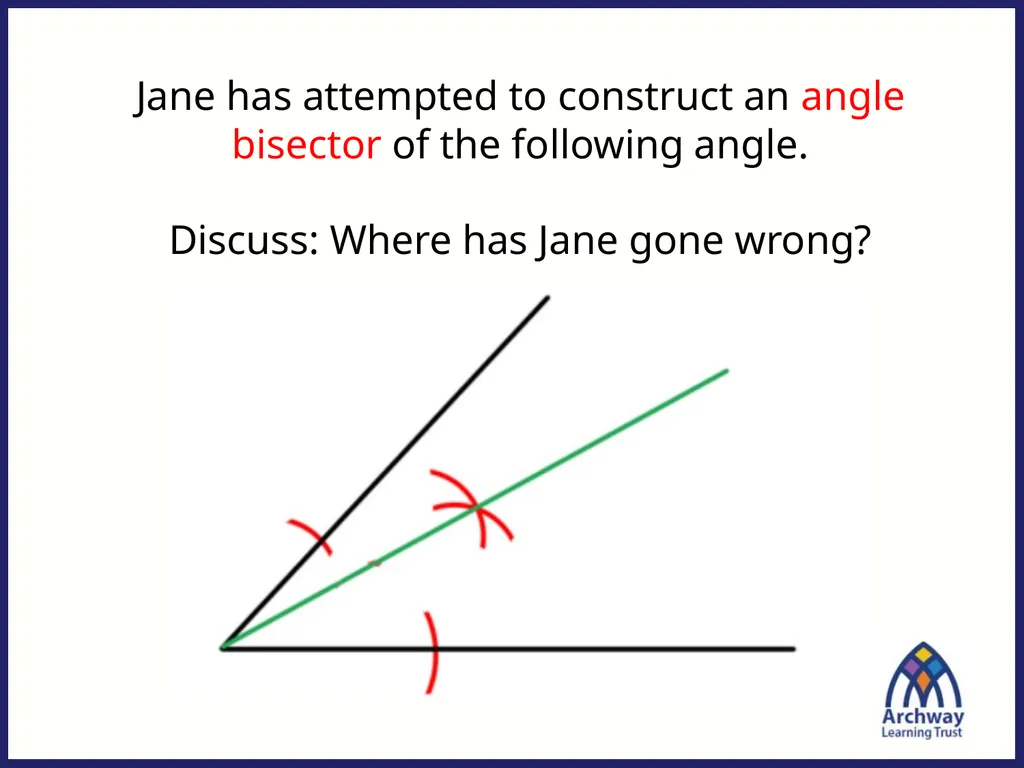
Jane has attempted to construct an angle bisector of the following angle. Discuss: Where has Jane gone wrong?<br>
12
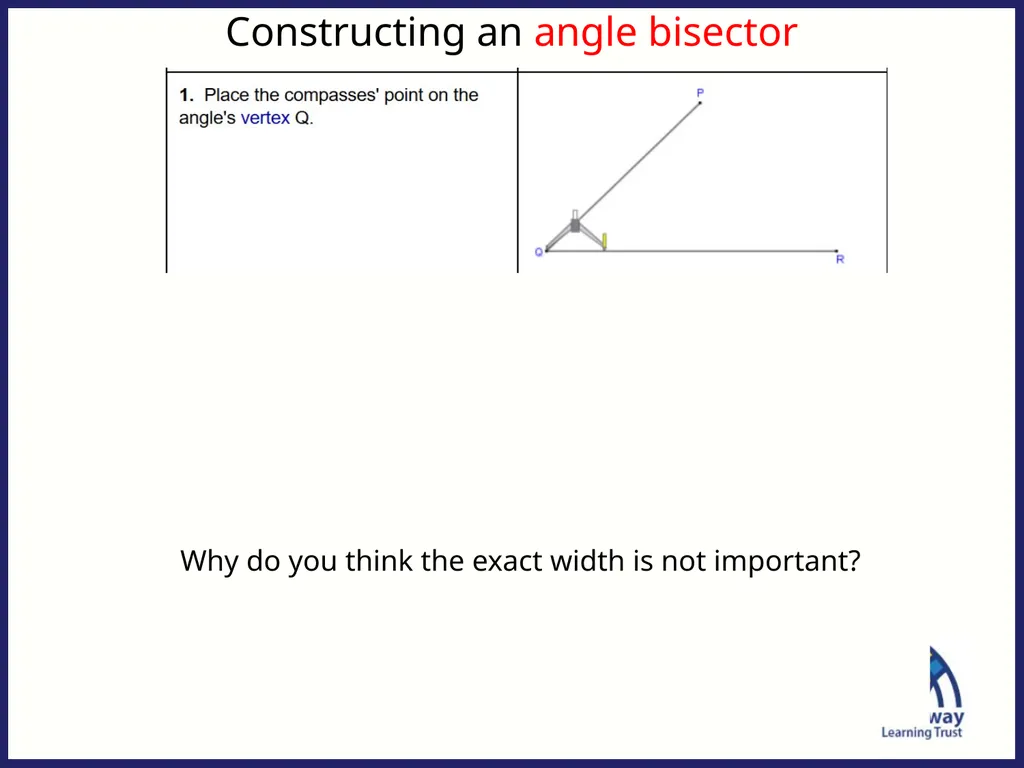
Constructing an angle bisector Why do you think the exact width is not important?<br>
13
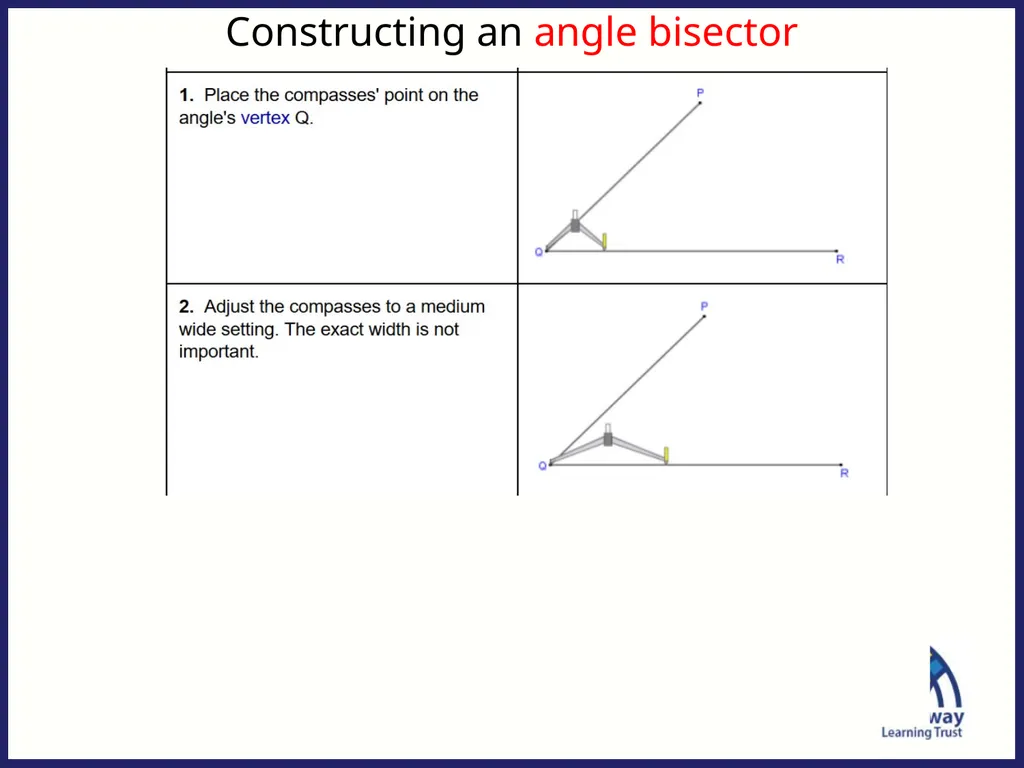
Constructing an angle bisector<br>
14
Why do you think the compass width must remain the same? Constructing an angle bisector<br>
15
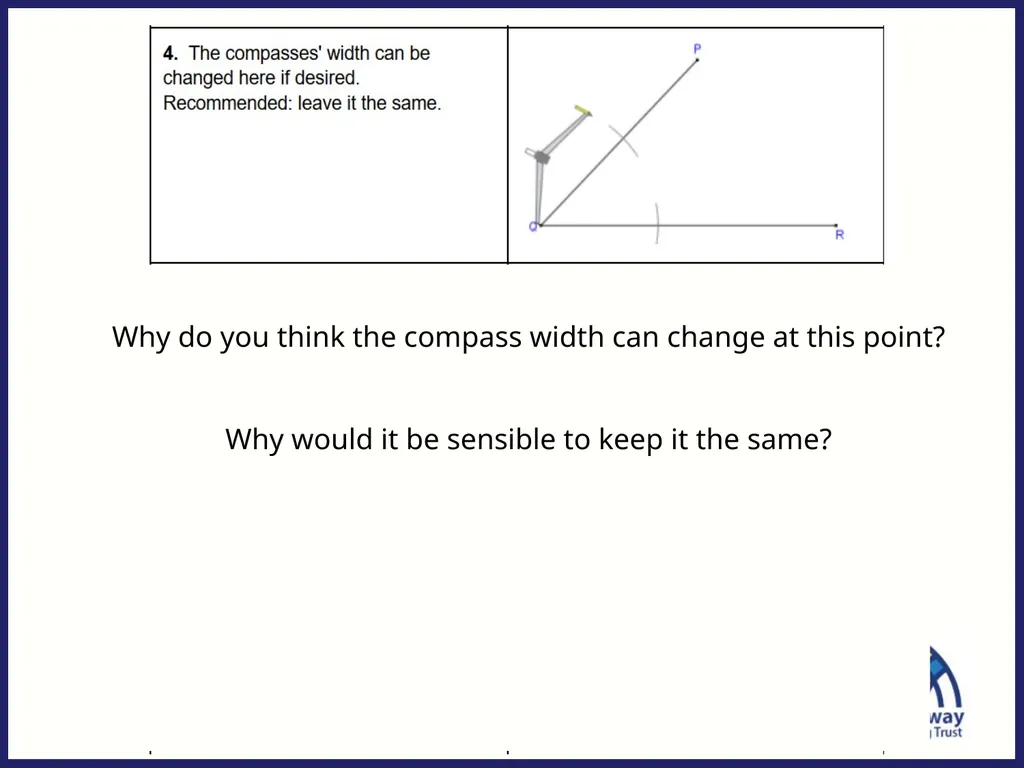
Why do you think the compass width can change at this point?
Why would it be sensible to keep it the same?<br>
16
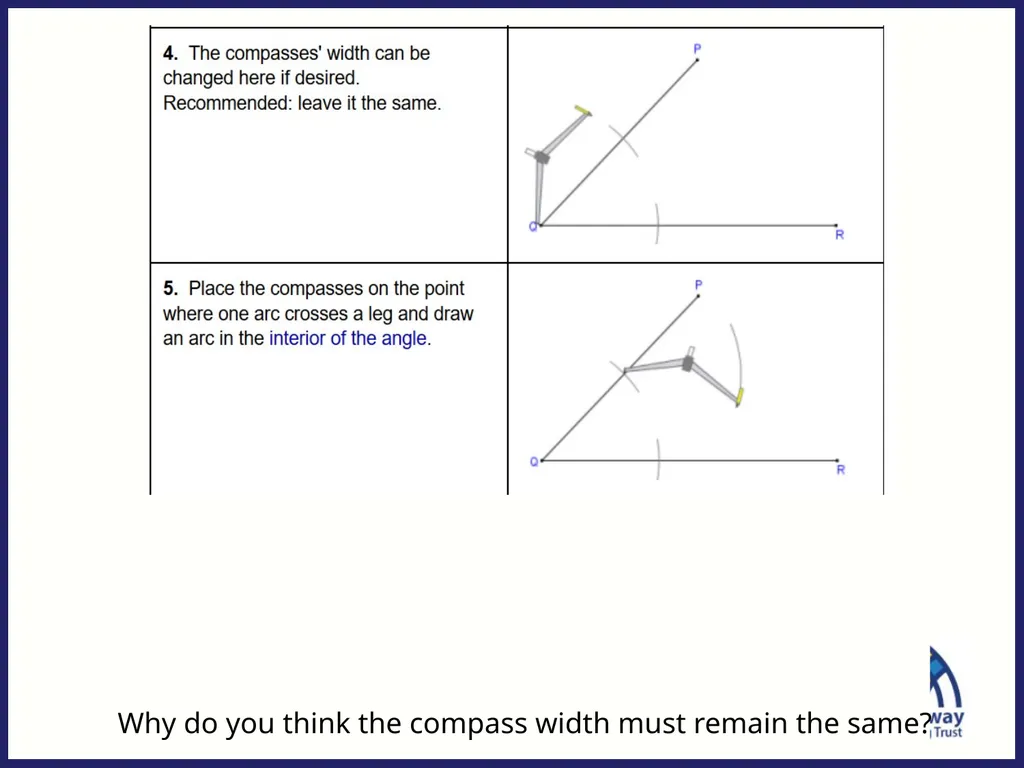
Why do you think the compass width must remain the same?<br>
17
Bisect each of the angles on the worksheet.
You must leave in your construction lines Angle Bisector<br>
18
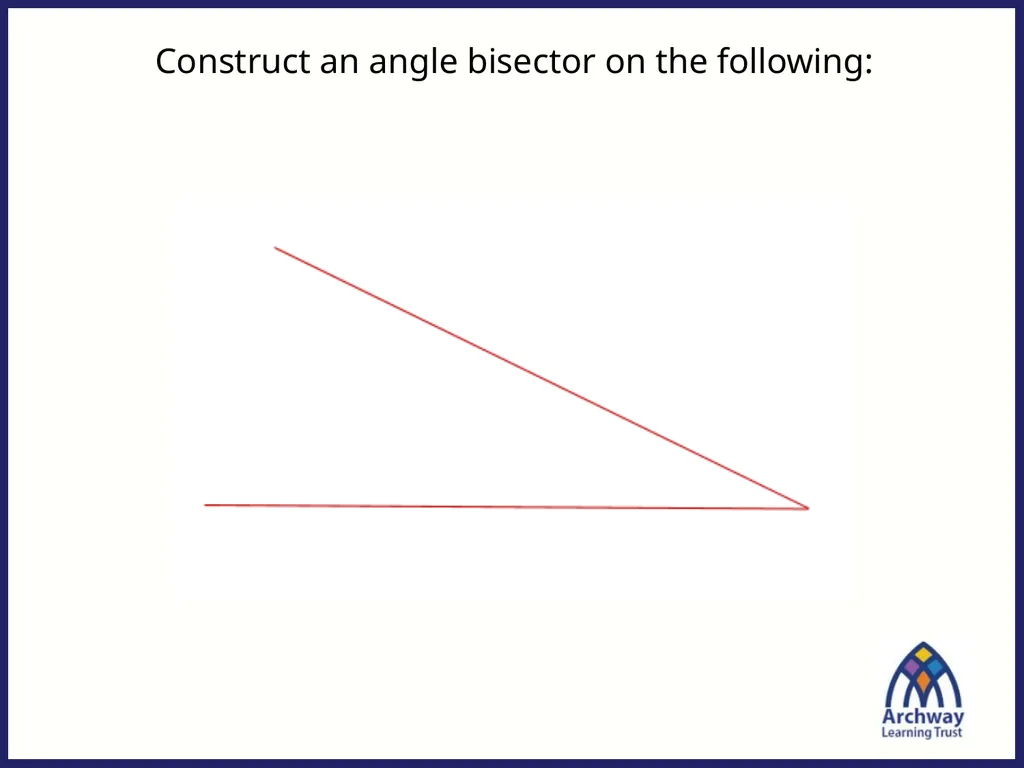
Construct an angle bisector on the following:<br>
19
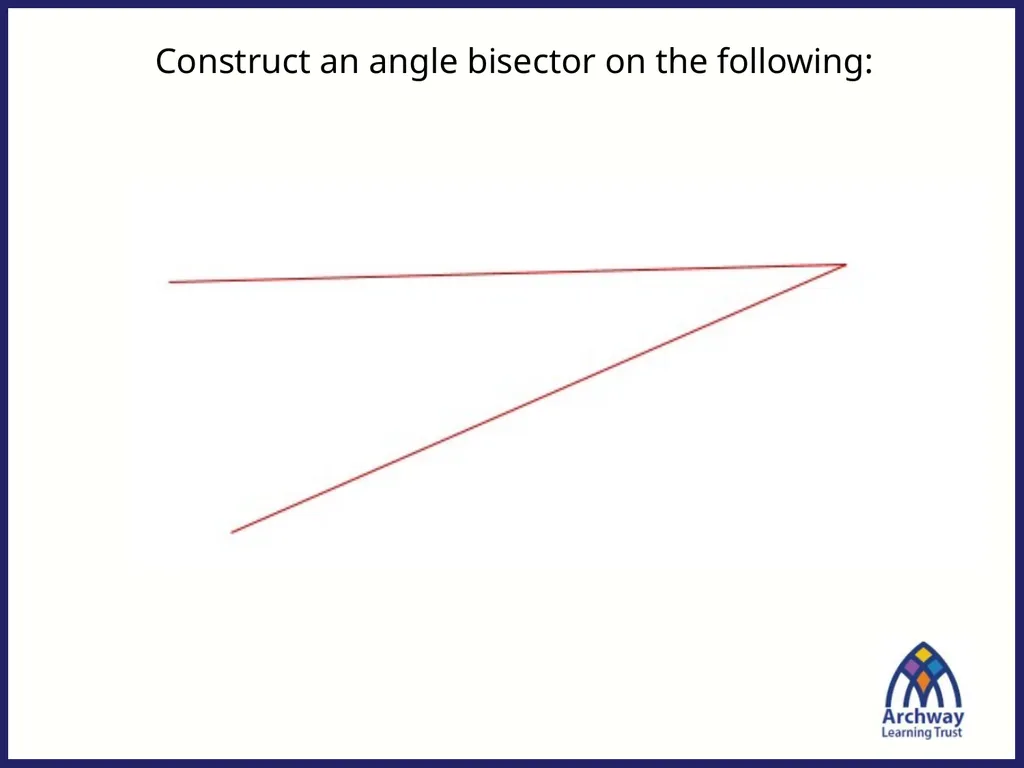
Construct an angle bisector on the following:<br>
20
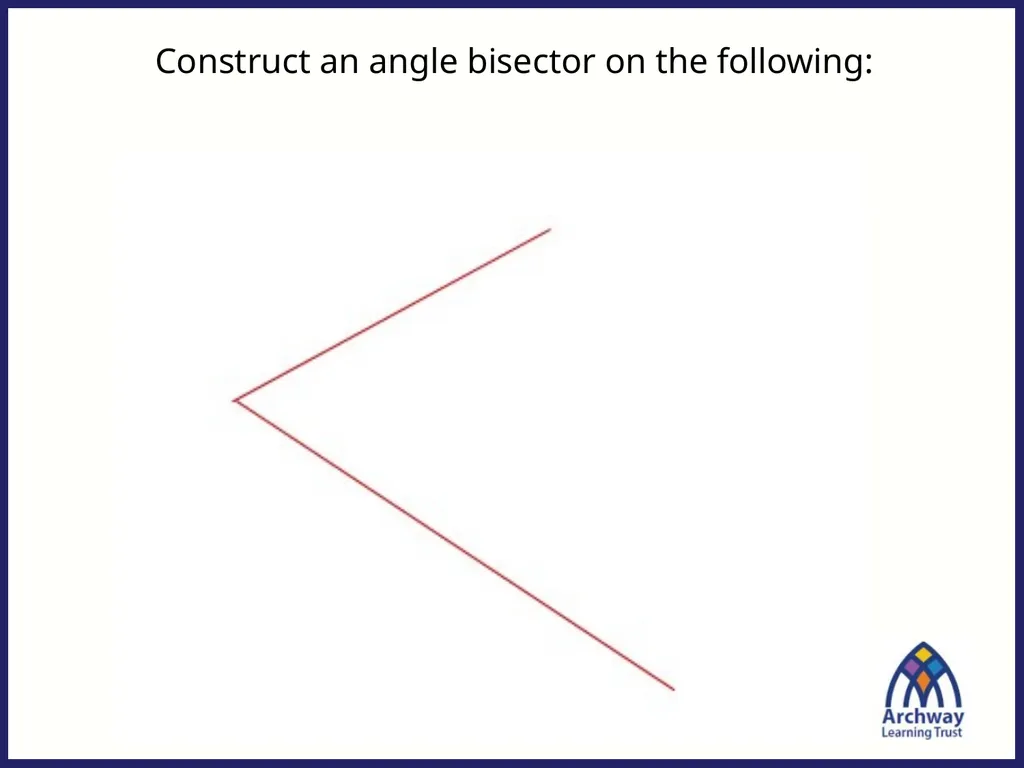
Construct an angle bisector on the following:<br>
21
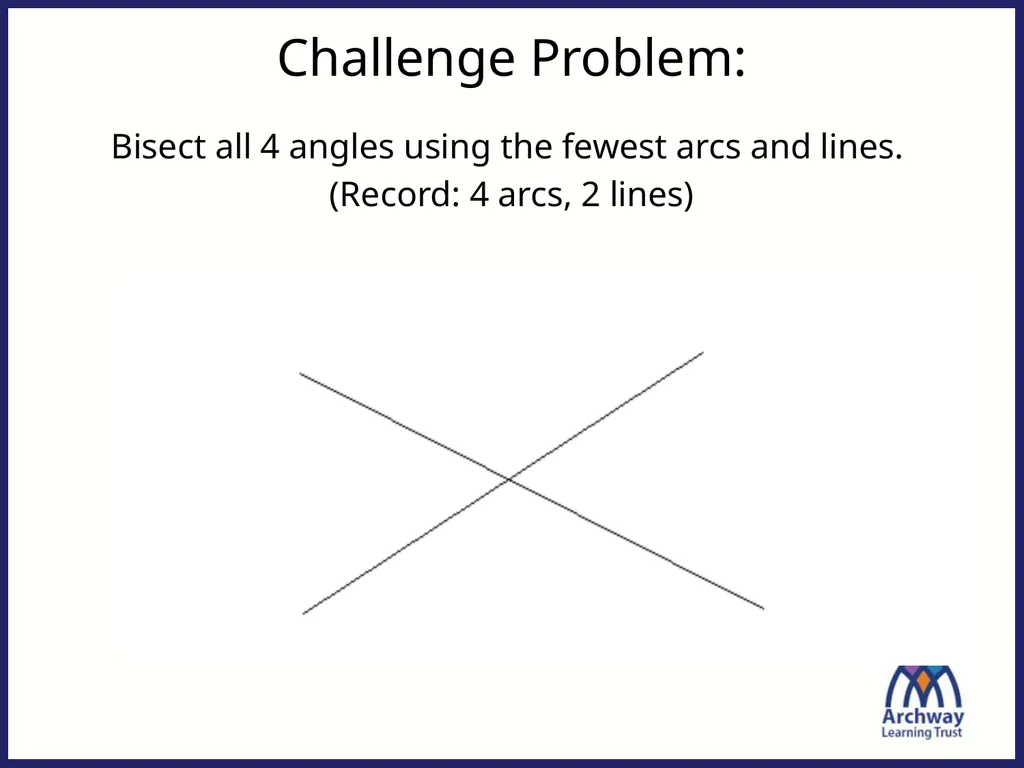
Challenge Problem: Bisect all 4 angles using the fewest arcs and lines.
(Record: 4 arcs, 2 lines)<br>
22
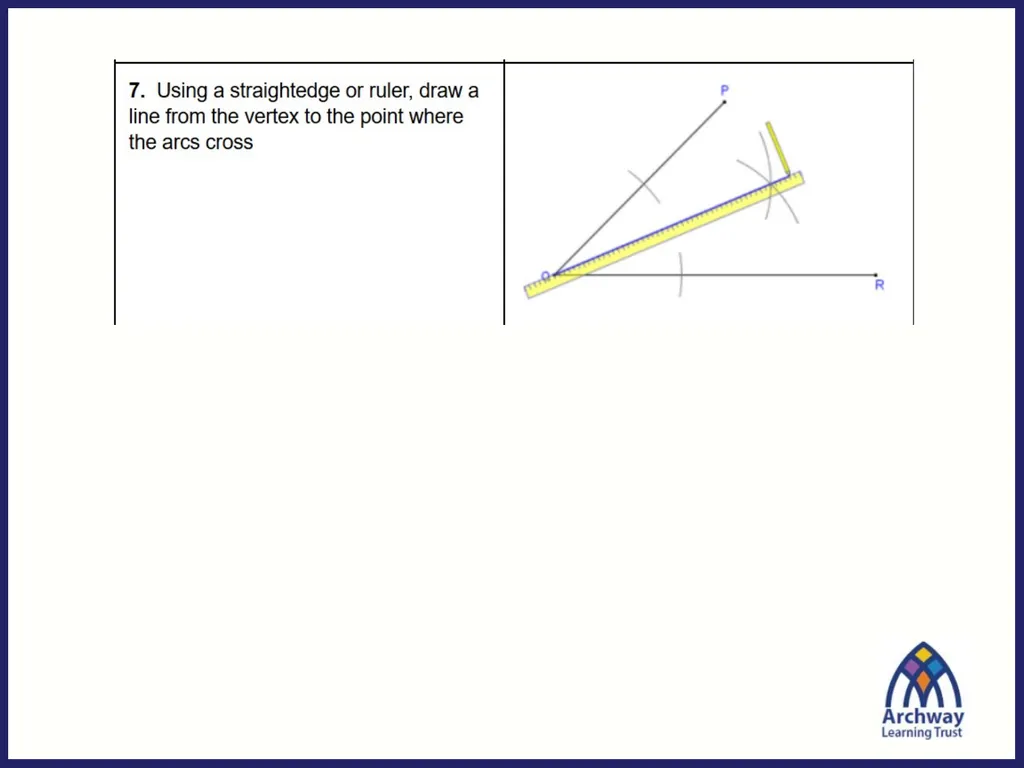
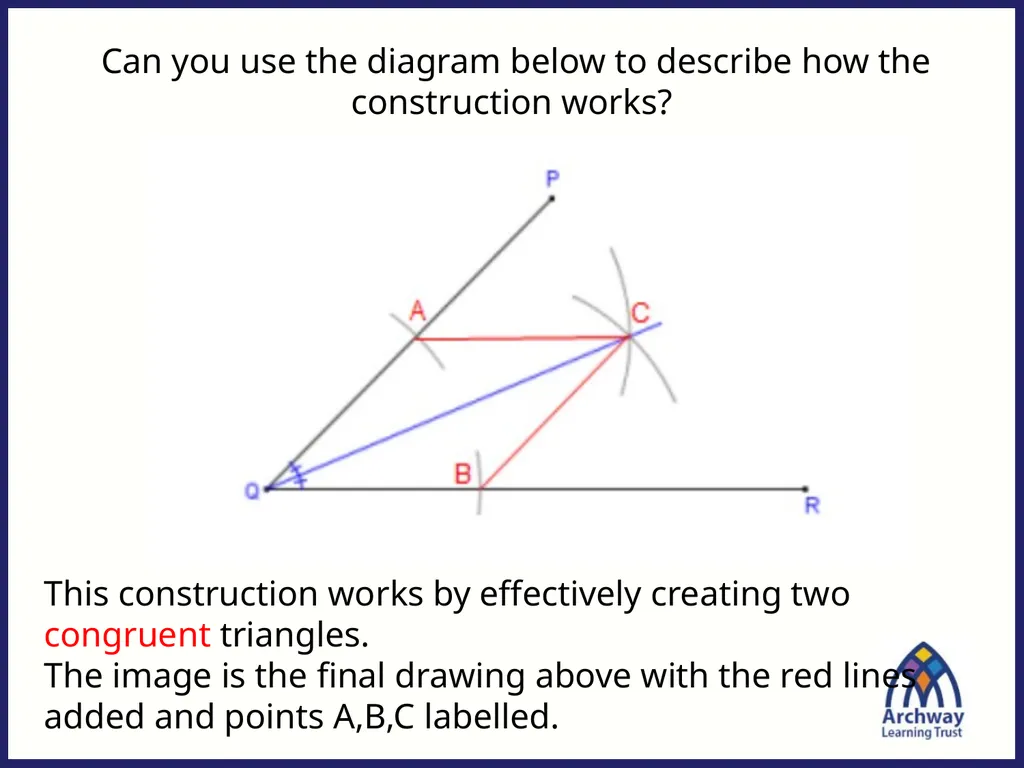
Can you use the diagram below to describe how the construction works?
This construction works by effectively creating two congruent triangles.
The image is the final drawing above with the red lines added and points A,B,C labelled.<br>
23
Now using the point of intersection as centre, draw the largest possible circle that does not leave the triangle Draw a triangle and construct the angle bisector of each corner You should find that the bisectors intersect at a single point inside the triangle! You should find that the circle touches all three sides of the triangle Can you explain why this happens?! This works with any triangle… Challenge Problem:<br>