Joint SDN NFV Optimization SDNRG IETF-93 Presented by: Yaakov (J) Stein Tel Aviv University team Boaz Patt-Shamir Guy Even Research funded under the Neptune consortium Recap: rich communications services Traditional communications
"Joint SDN & NFV Optimization SDNRG @ IETF-93" is the property of its rightful owner. Permission is granted to
download and print the materials on this website for personal, non-commercial use only, and to display it
on your personal computer provided you do not modify the materials and that you retain all copyright
notices contained in the materials. By downloading content from our website, you accept the terms of this
agreement.
Presentation Transcript
01
Joint SDN & NFV Optimization SDNRG @ IETF-93 Presented by:
Yaakov (J) Stein Tel Aviv University team
Boaz Patt-Shamir
Guy Even Research funded under the Neptune consortium<br>
02
Recap: rich communications services Traditional communications services are pure connectivity services
transport data from A to B
with constraints (e.g., minimum bandwidth, maximal delay)
with maximal efficiency (minimum cost, maximized revenue)
Modern communications services are richer
combining connectivity and network functionalities
e.g., firewall, NAT, load balancing, CDN, parental control, ...
We deal with a service provider that
maintains a network of communications and computational resources
maintains an inventory of VNFs
dynamically sets up and tears down services
charges based on
service requirements
time between set-up and tear-down
The service provider employs an orchestrator to maximize profits
(profit is the difference between revenue and expenses)<br>
03
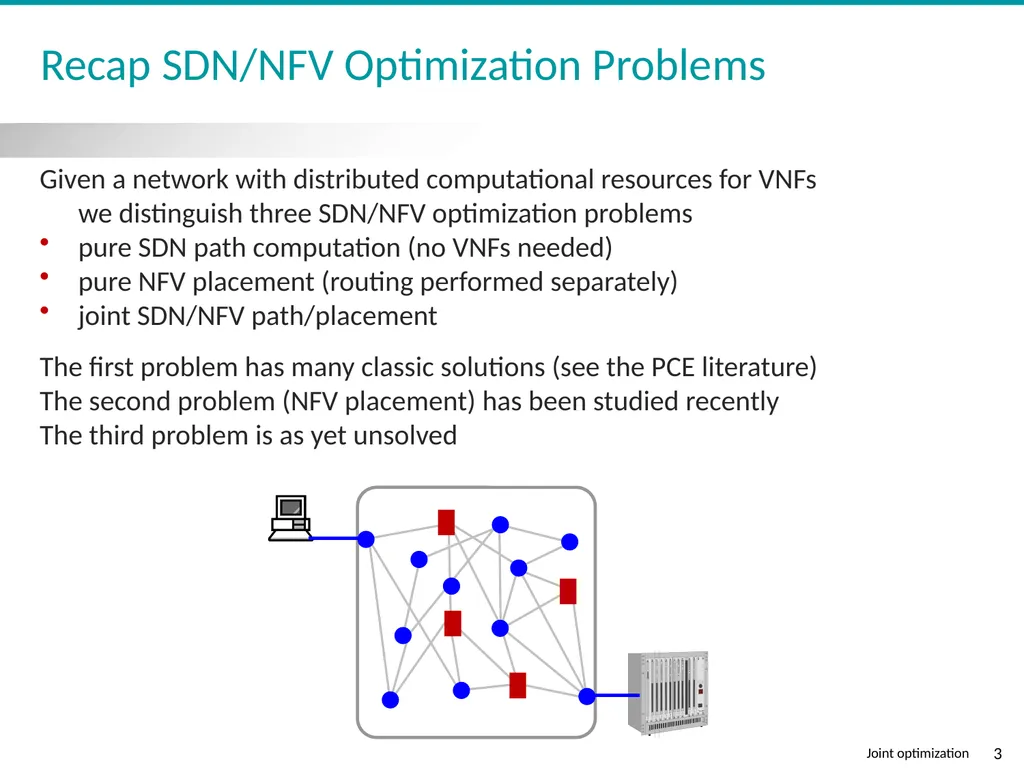
Recap SDN/NFV Optimization Problems Given a network with distributed computational resources for VNFs
we distinguish three SDN/NFV optimization problems
pure SDN path computation (no VNFs needed)
pure NFV placement (routing performed separately)
joint SDN/NFV path/placement
The first problem has many classic solutions (see the PCE literature)
The second problem (NFV placement) has been studied recently
The third problem is as yet unsolved<br>
04
On-line optimization A batch (off-line) algorithm receives the list of all services to be set up
and simultaneously finds all the allocations for a clean network
We require an on-line algorithm
that services requests of unknown duration as they come in
We do not allow pre-emption or re-optimization of service already set-up
The on-line case is harder since we don’t know ahead of time
whether it is worthwhile to use up resources for a given request
and risk having to deny some later request that may be more profitable
Simple example
first request requires 100% of a resource and pays x
later requests require some of that resource and together pay y>>x
How do we know whether to accept or deny the first request ?
if we accept, we lose y-x if later requests do arrive
if we deny and later requests never arrive, we lose x<br>
05
Formal definition of the joint problem Known
full network topology graph
link and node current resource loading information
places where computational resources are available
resource availability
other SDN or NFV criteria and constraints
Service request definition
traffic ingress and egress points
service data-rate and delay requirements
sequence of VNF(s) to be installed
Note: we do not yet support partial ordering of VNFs other than by exhaustively testing every possible order
computational (including memory, storage, etc.) requirements
service set-up or tear-down ?
Find
the optimal path and VNF placement(s)<br>
06
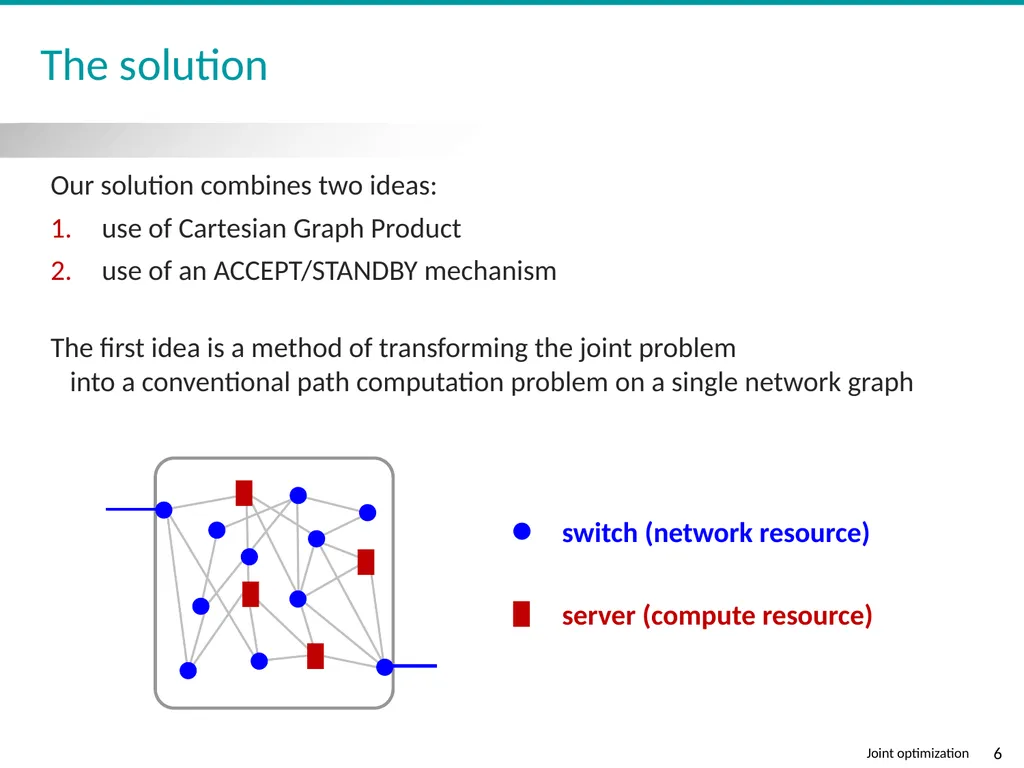
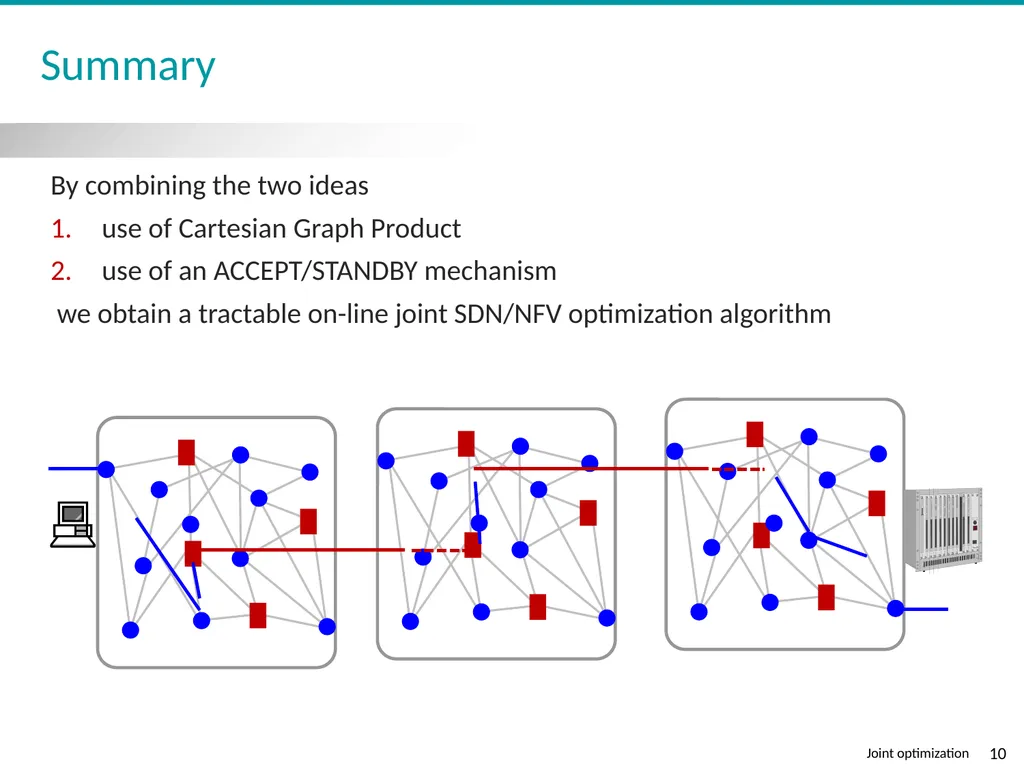
The solution Our solution combines two ideas:
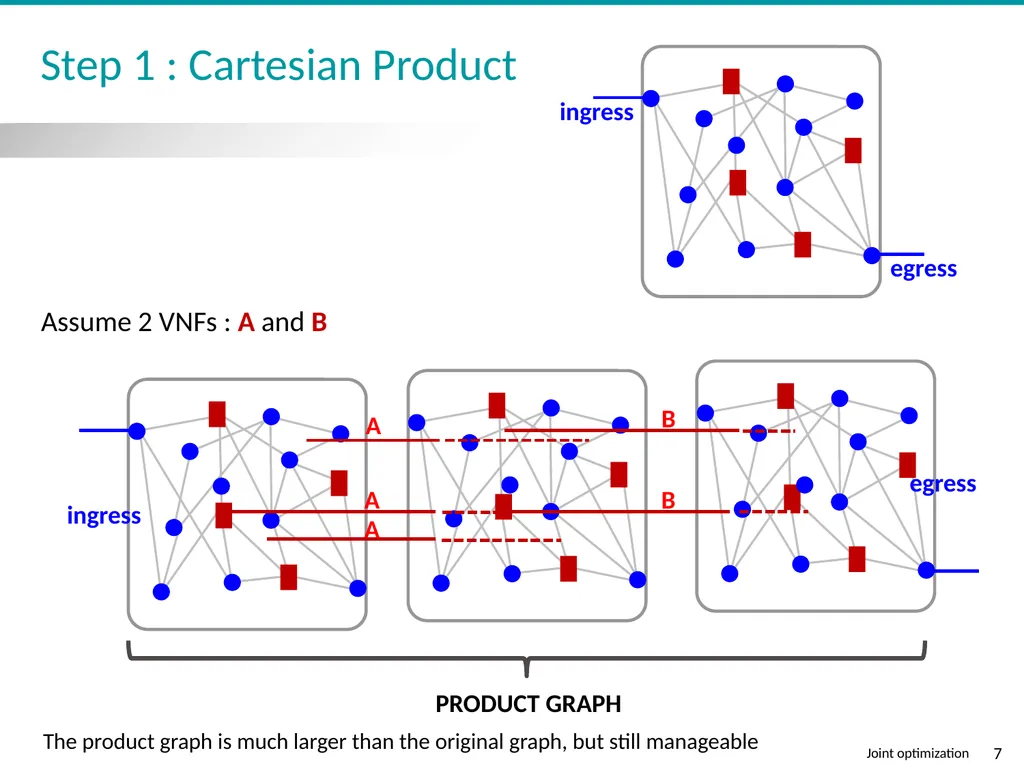
use of Cartesian Graph Product
use of an ACCEPT/STANDBY mechanism
The first idea is a method of transforming the joint problem
into a conventional path computation problem on a single network graph<br>
07
Step 1 : Cartesian Product PRODUCT GRAPH The product graph is much larger than the original graph, but still manageable<br>
08
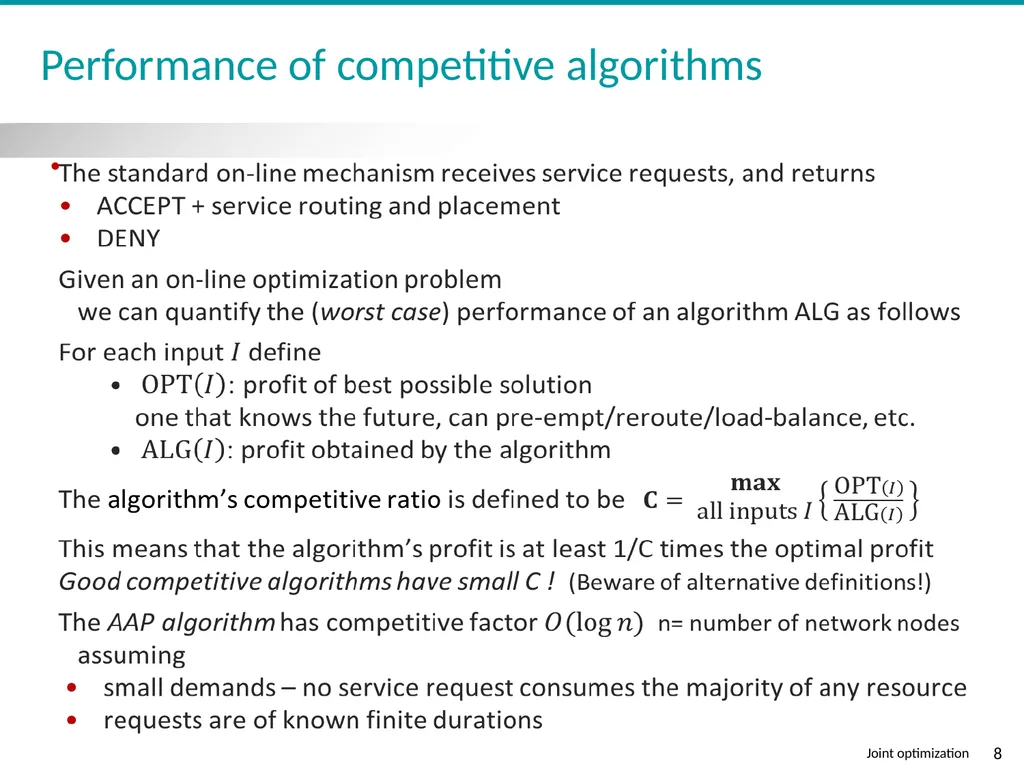
Performance of competitive algorithms<br>
09
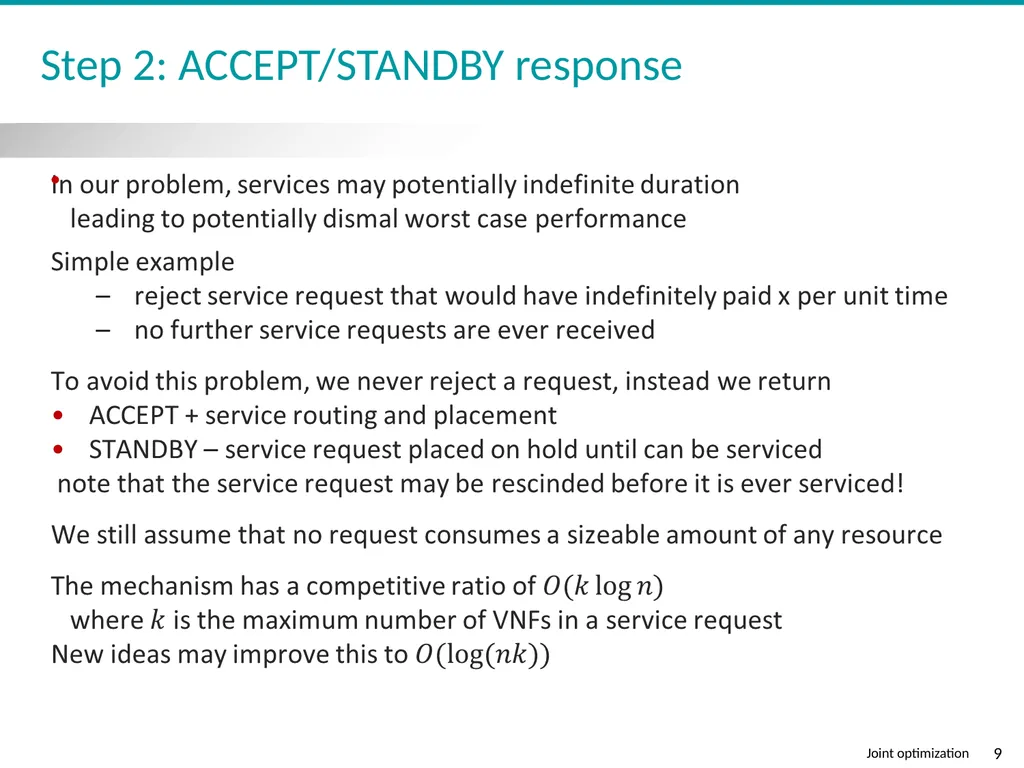
Step 2: ACCEPT/STANDBY response<br>
10
Summary By combining the two ideas
use of Cartesian Graph Product
use of an ACCEPT/STANDBY mechanism
we obtain a tractable on-line joint SDN/NFV optimization algorithm<br>