Journalists in online media: Perspectives from the
Description: Journalists in online media: Perspectives from the BRICS countries Svetlana Pasti, University of Tampere IAMCR 2014, Hyderabad India, 15-19 July Journalism Research Education (JRE) BRICS countries Brazil 26 states 194 mill Russia 83
Related Topics
Download Presentation
"Journalists in online media: Perspectives from the" is the property of its rightful owner. Permission is granted to download and print the materials on this website for personal, non-commercial use only, and to display it on your personal computer provided you do not modify the materials and that you retain all copyright notices contained in the materials. By downloading content from our website, you accept the terms of this agreement.
Presentation Transcript
slide1. Journalists in online media: Perspectives from the BRICS countries Svetlana Pasti, University of Tampere
IAMCR 2014, Hyderabad India, 15-19 July
Journalism Research & Education (JRE)<br>
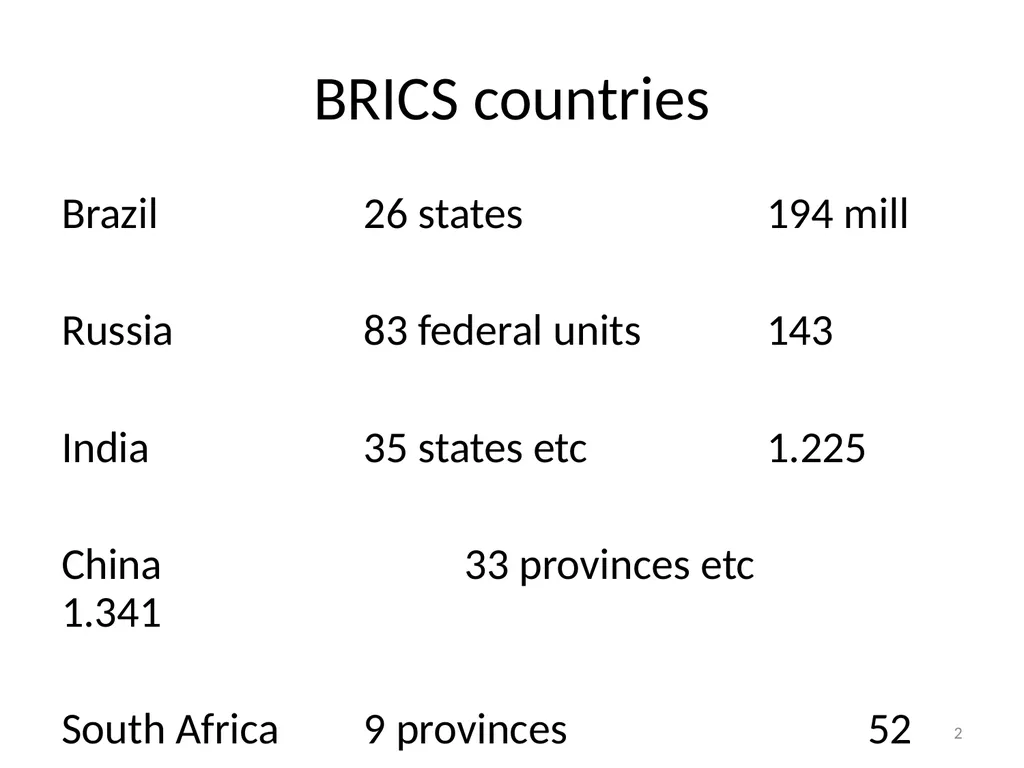
slide2. BRICS countries Brazil 26 states 194 mill
Russia 83 federal units 143
India 35 states etc 1.225
China 33 provinces etc 1.341
South Africa 9 provinces 52 2<br>
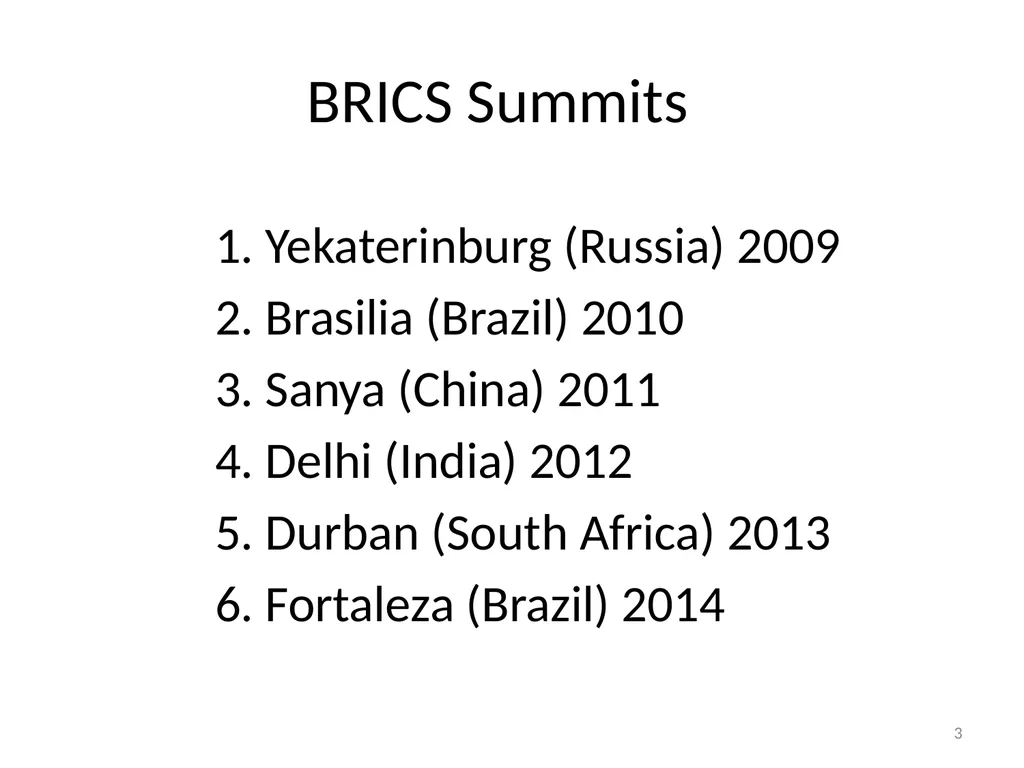
slide3. BRICS Summits 1. Yekaterinburg (Russia) 2009
2. Brasilia (Brazil) 2010
3. Sanya (China) 2011
4. Delhi (India) 2012
5. Durban (South Africa) 2013
6. Fortaleza (Brazil) 2014 3<br>
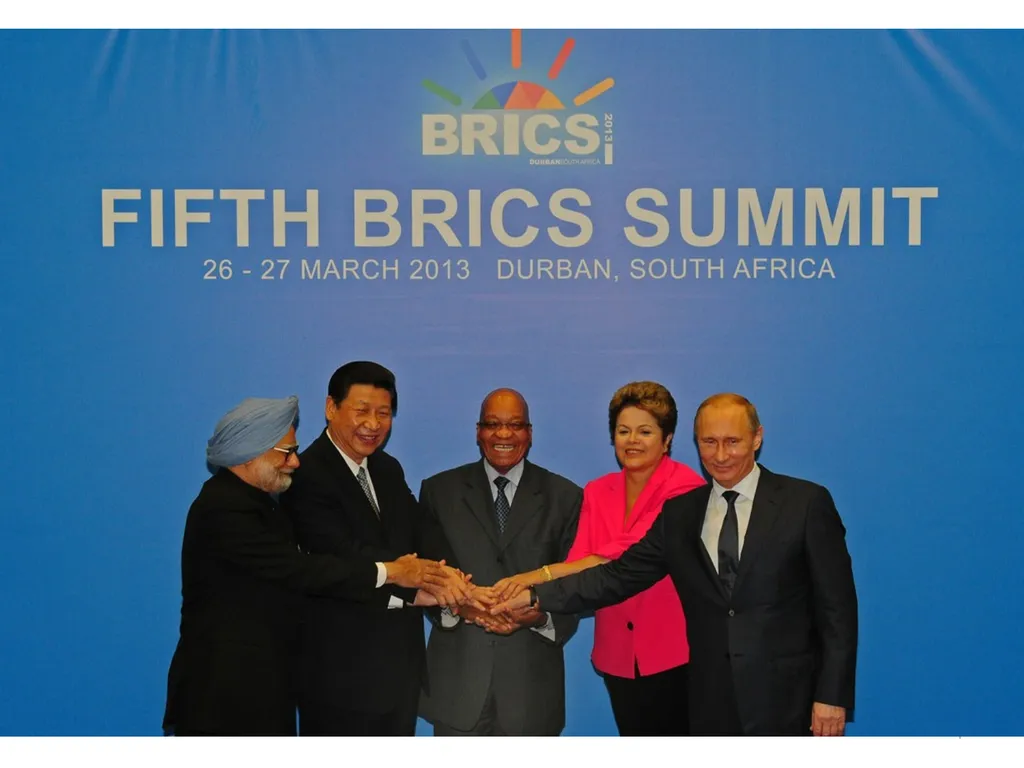
slide4. http://farm9.staticflickr.com/8405/8612243595_5461abde09_b.jpg 4<br>
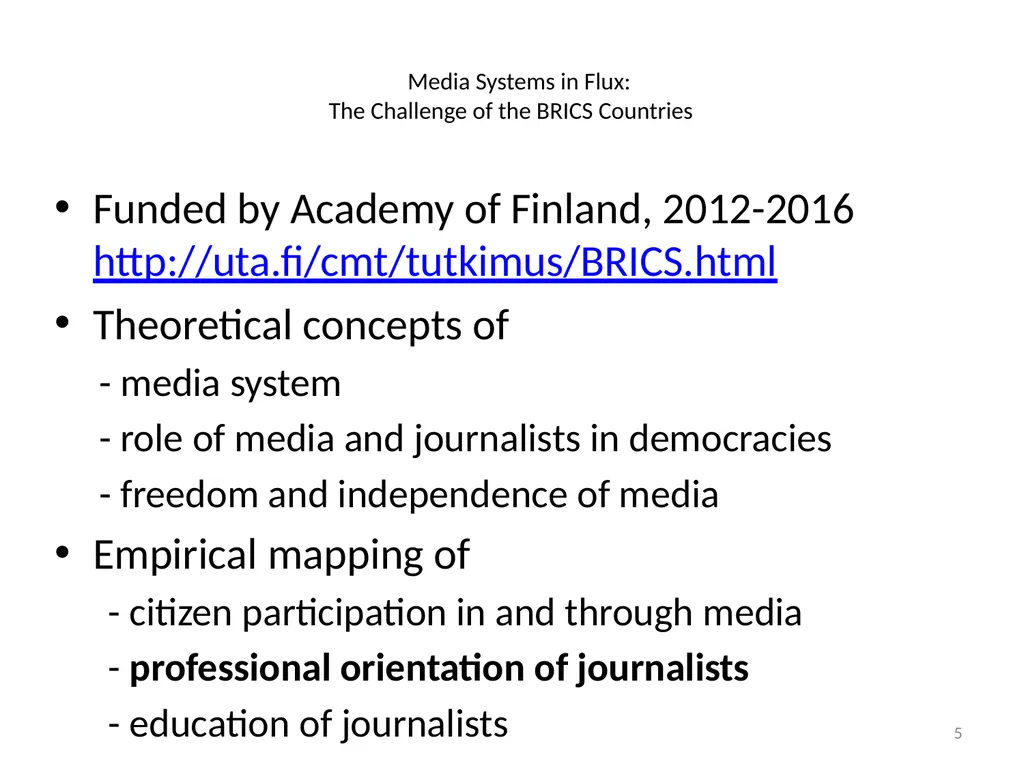
slide5. Media Systems in Flux: The Challenge of the BRICS Countries Funded by Academy of Finland, 2012-2016 http://uta.fi/cmt/tutkimus/BRICS.html
Theoretical concepts of
- media system
- role of media and journalists in democracies
- freedom and independence of media
Empirical mapping of
- citizen participation in and through media
- professional orientation of journalists
- education of journalists 5<br>
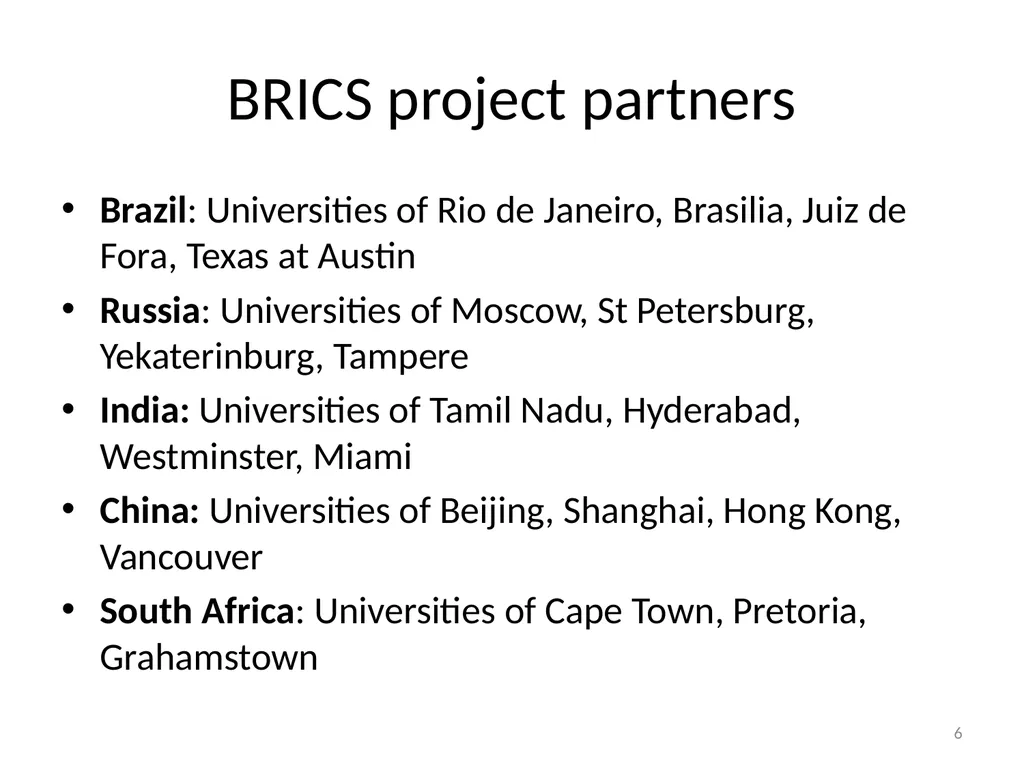
slide6. BRICS project partners Brazil: Universities of Rio de Janeiro, Brasilia, Juiz de Fora, Texas at Austin
Russia: Universities of Moscow, St Petersburg, Yekaterinburg, Tampere
India: Universities of Tamil Nadu, Hyderabad, Westminster, Miami
China: Universities of Beijing, Shanghai, Hong Kong, Vancouver
South Africa: Universities of Cape Town, Pretoria, Grahamstown 6<br>
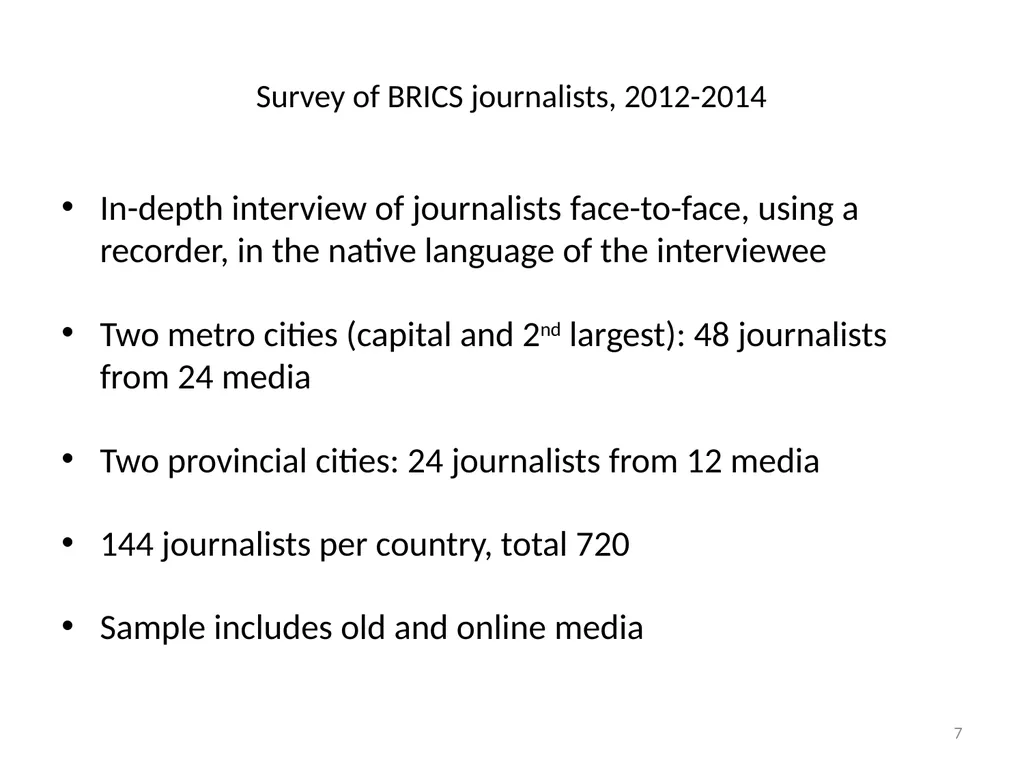
slide7. Survey of BRICS journalists, 2012-2014 In-depth interview of journalists face-to-face, using a recorder, in the native language of the interviewee
Two metro cities (capital and 2nd largest): 48 journalists from 24 media
Two provincial cities: 24 journalists from 12 media
144 journalists per country, total 720
Sample includes old and online media 7<br>
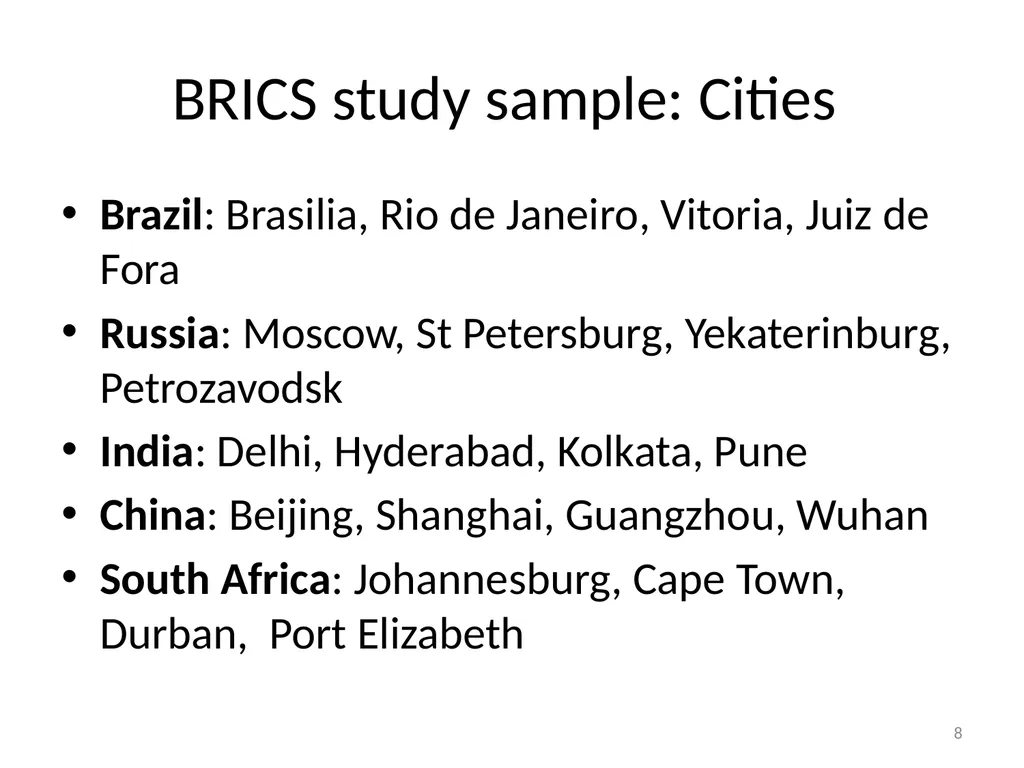
slide8. BRICS study sample: Cities Brazil: Brasilia, Rio de Janeiro, Vitoria, Juiz de Fora
Russia: Moscow, St Petersburg, Yekaterinburg, Petrozavodsk
India: Delhi, Hyderabad, Kolkata, Pune
China: Beijing, Shanghai, Guangzhou, Wuhan
South Africa: Johannesburg, Cape Town, Durban, Port Elizabeth 8<br>
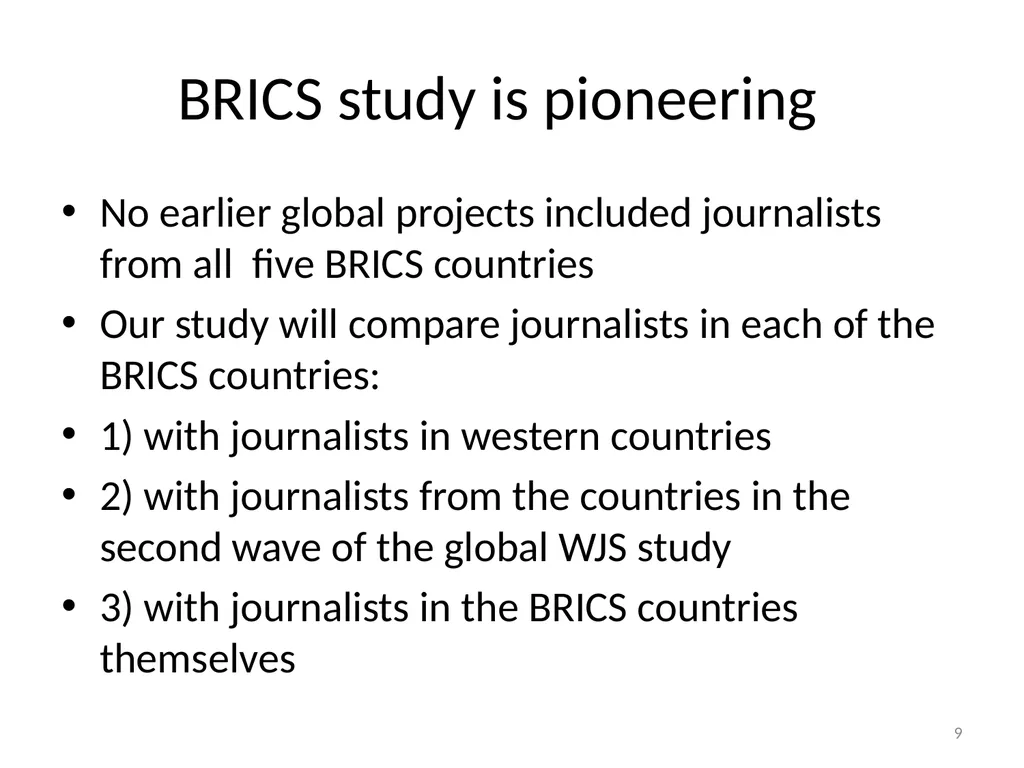
slide9. BRICS study is pioneering No earlier global projects included journalists from all five BRICS countries
Our study will compare journalists in each of the BRICS countries:
1) with journalists in western countries
2) with journalists from the countries in the second wave of the global WJS study
3) with journalists in the BRICS countries themselves 9<br>
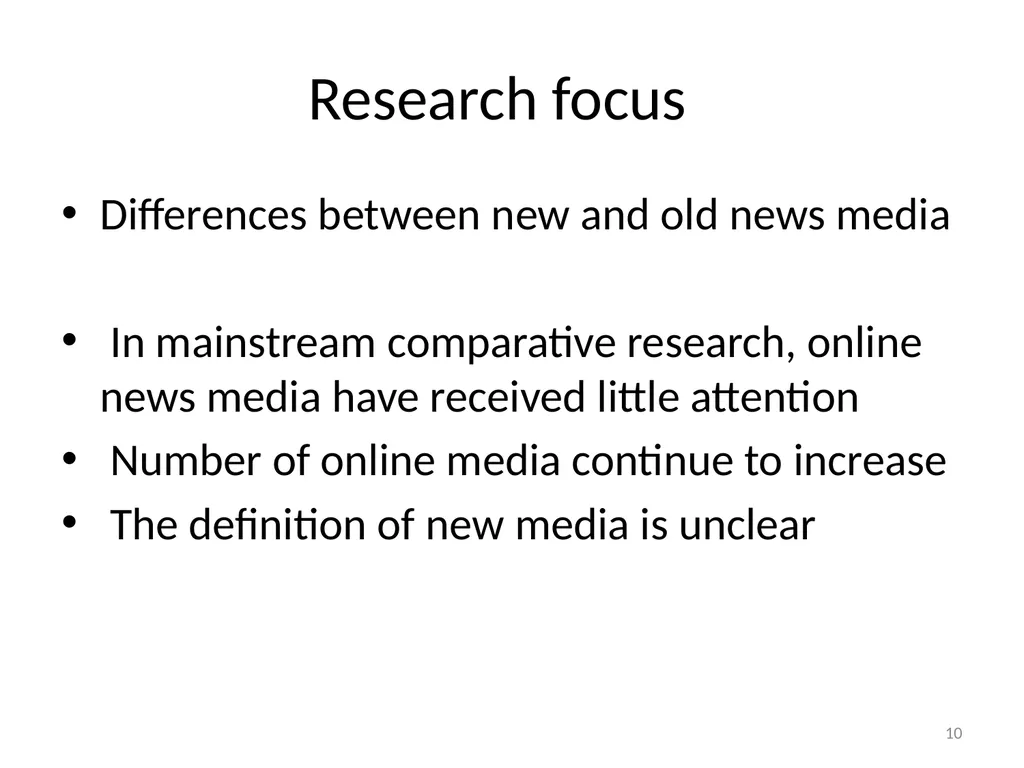
slide10. Research focus Differences between new and old news media
In mainstream comparative research, online news media have received little attention
Number of online media continue to increase
The definition of new media is unclear 10<br>
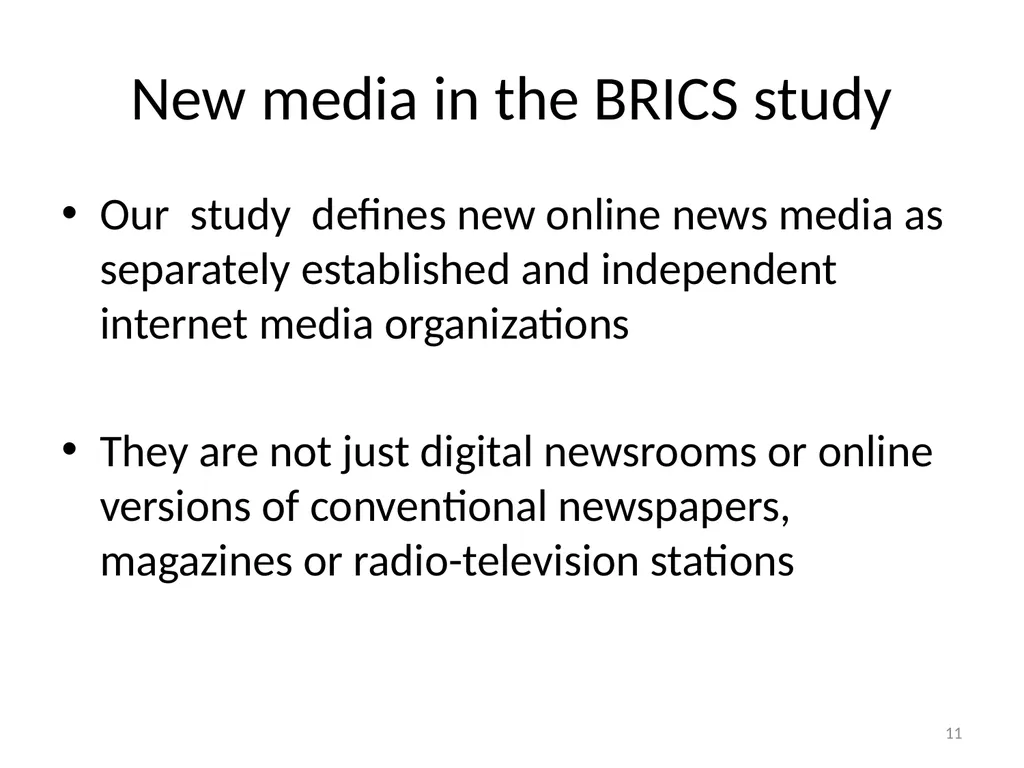
slide11. New media in the BRICS study Our study defines new online news media as separately established and independent internet media organizations
They are not just digital newsrooms or online versions of conventional newspapers, magazines or radio-television stations 11<br>
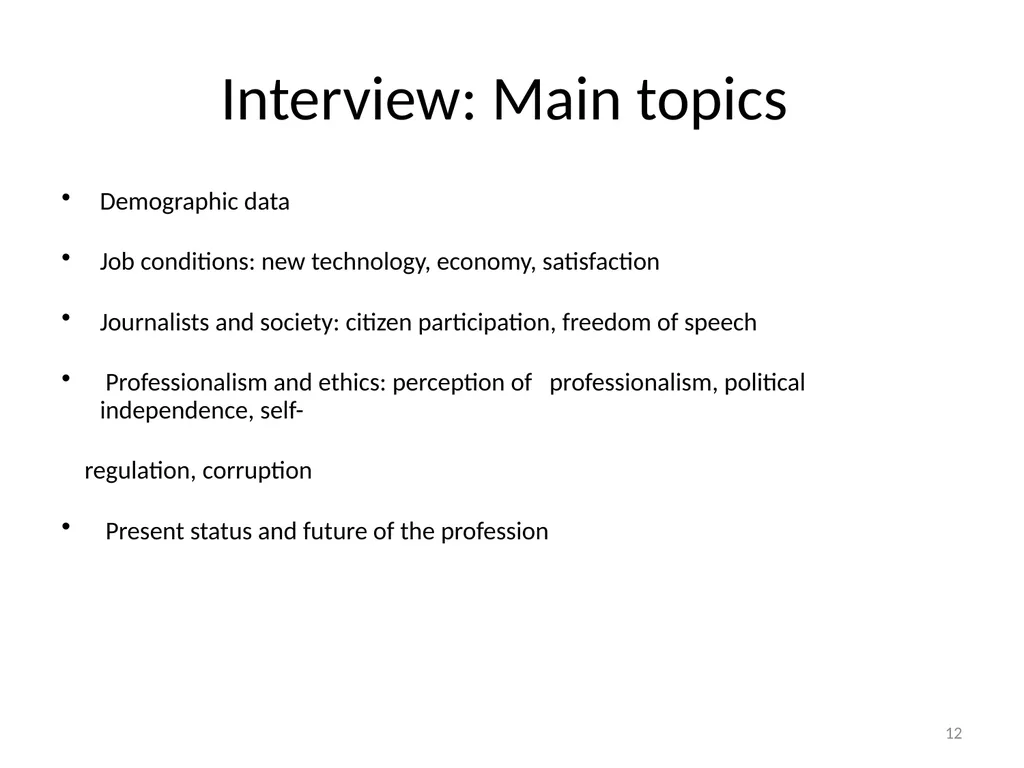
slide12. Interview: Main topics Demographic data
Job conditions: new technology, economy, satisfaction
Journalists and society: citizen participation, freedom of speech
 Professionalism and ethics: perception of professionalism, political independence, self-
regulation, corruption
Present status and future of the profession 12<br>
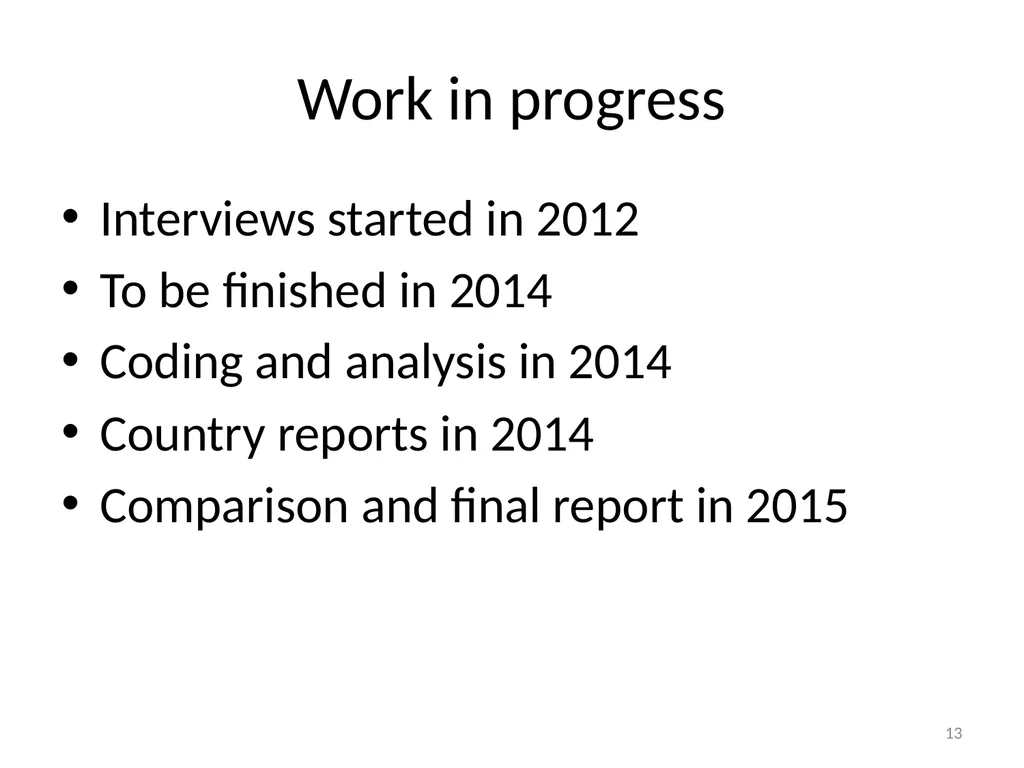
slide13. Work in progress Interviews started in 2012
To be finished in 2014
Coding and analysis in 2014
Country reports in 2014
Comparison and final report in 2015 13<br>
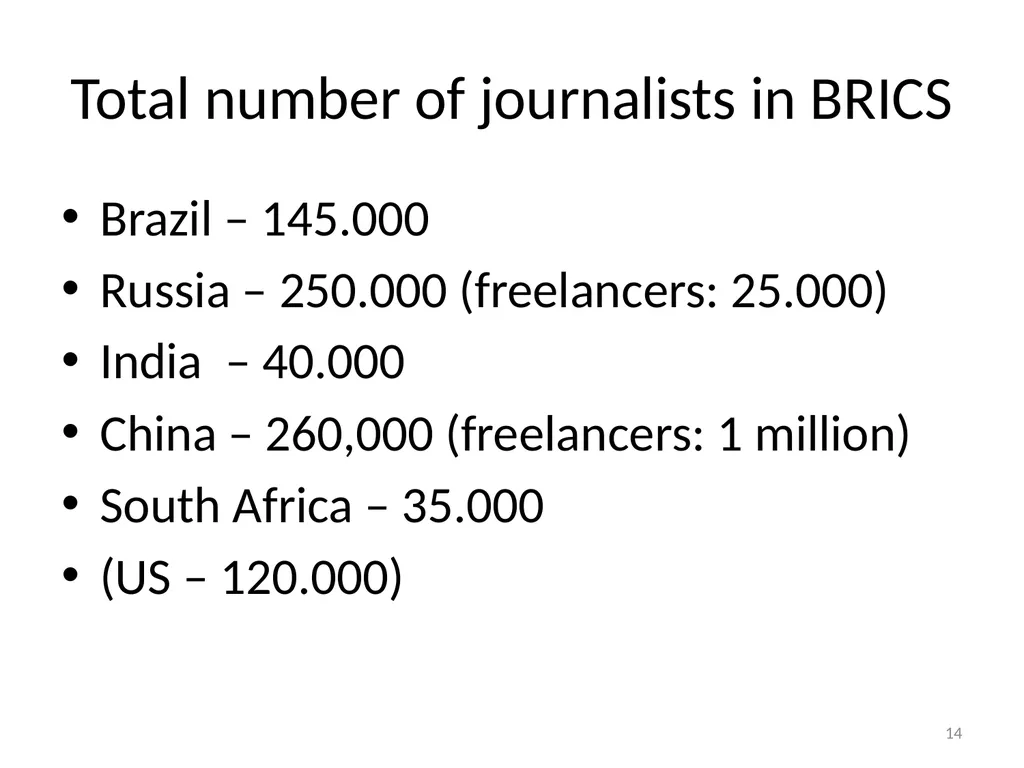
slide14. Total number of journalists in BRICS Brazil – 145.000
Russia – 250.000 (freelancers: 25.000)
India – 40.000
China – 260,000 (freelancers: 1 million)
South Africa – 35.000
(US – 120.000) 14<br>
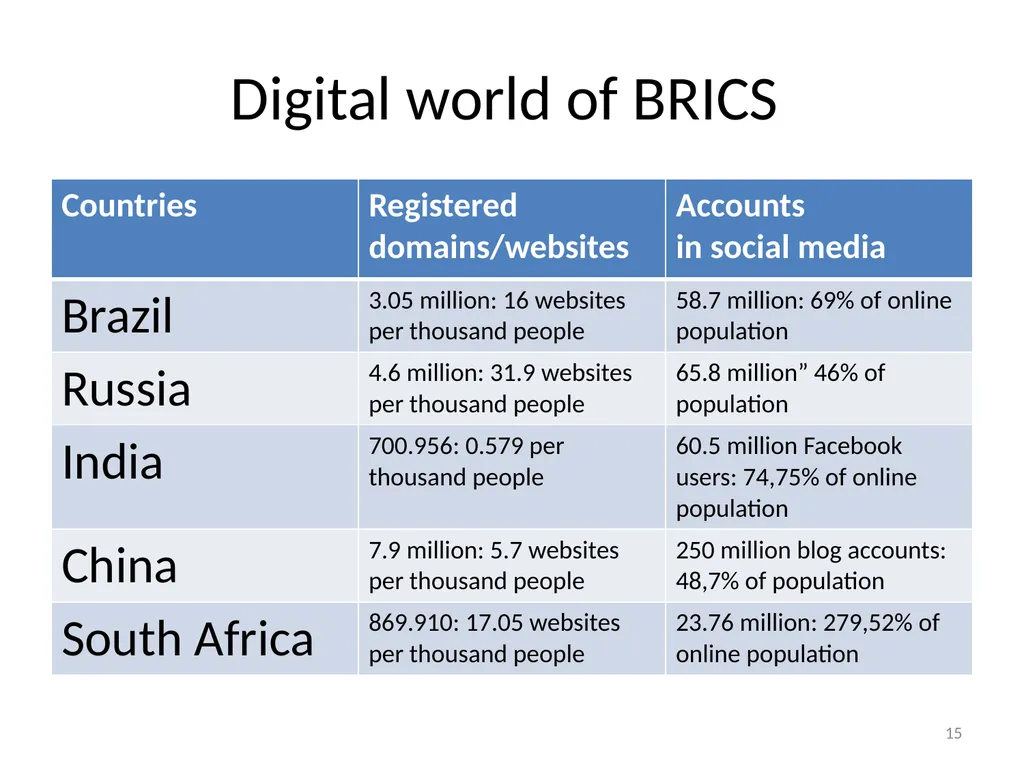
slide15. Digital world of BRICS 15<br>
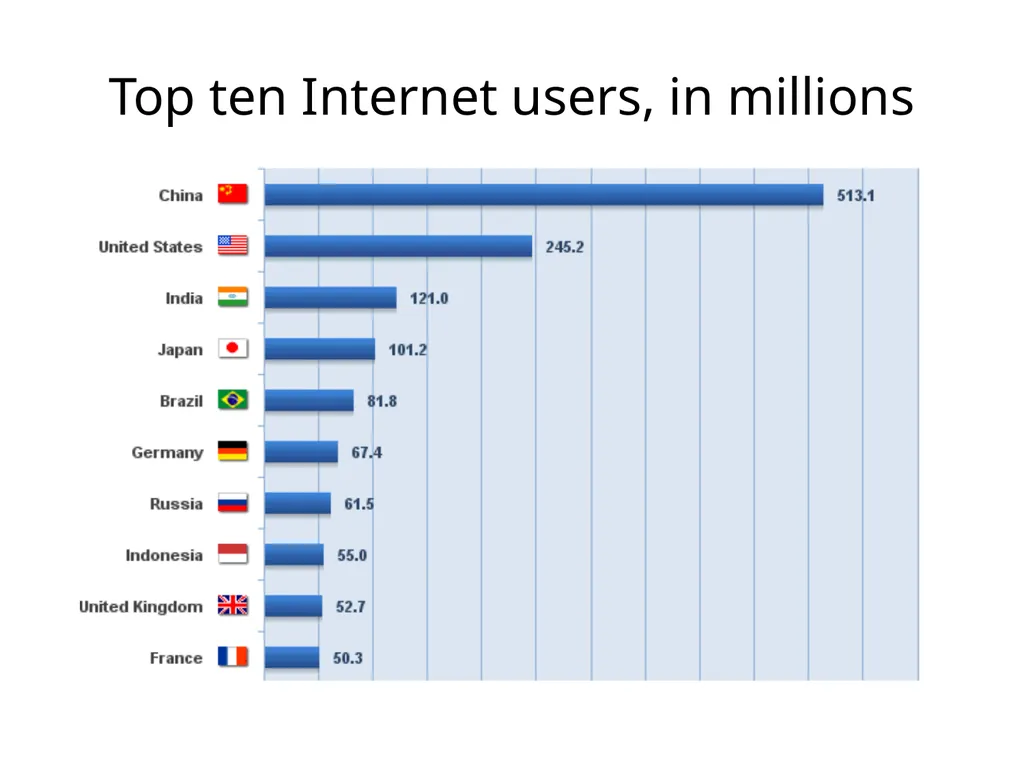
slide16. Top ten Internet users, in millions<br>
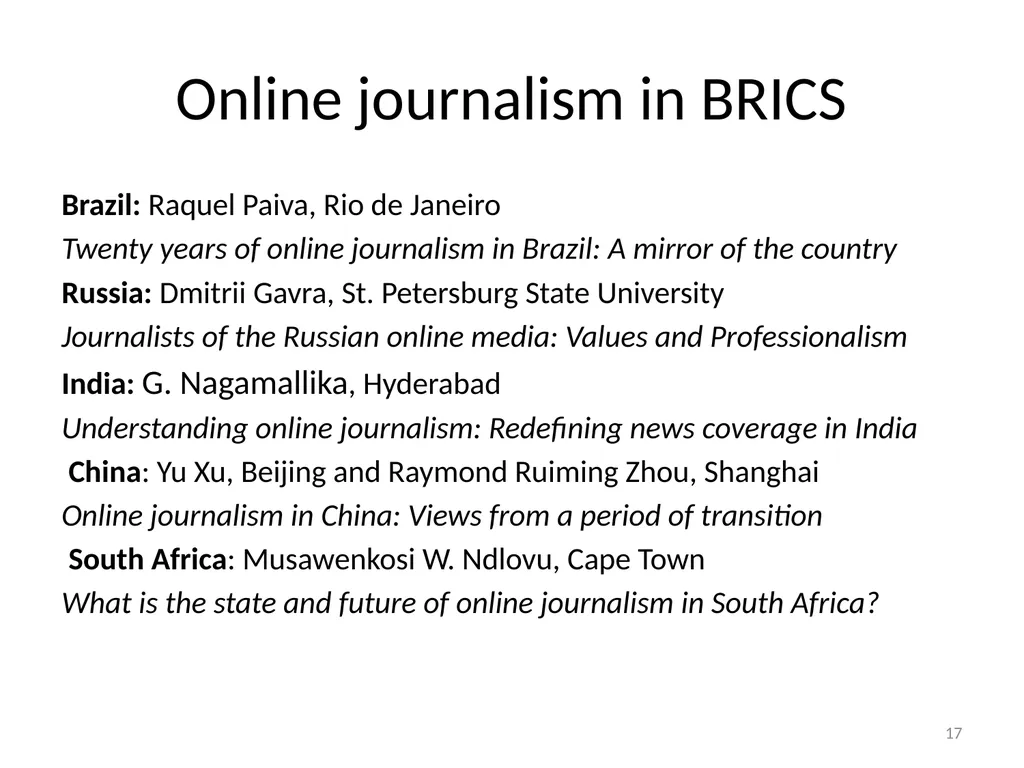
slide17. Online journalism in BRICS Brazil: Raquel Paiva, Rio de Janeiro
Twenty years of online journalism in Brazil: A mirror of the country
Russia: Dmitrii Gavra, St. Petersburg State University
Journalists of the Russian online media: Values and Professionalism
India: G. Nagamallika, Hyderabad
Understanding online journalism: Redefining news coverage in India
 China: Yu Xu, Beijing and Raymond Ruiming Zhou, Shanghai
Online journalism in China: Views from a period of transition
 South Africa: Musawenkosi W. Ndlovu, Cape Town
What is the state and future of online journalism in South Africa? 17<br>
slide18. Thanks for your attention! Svetlana.Pasti@uta.fi
http://www.uta.fi/cmt/en/contact/staff/svetlanapasti/index.html 18<br>

IAMCR 2014, Hyderabad India, 15-19 July
Journalism Research & Education (JRE)<br>
slide2. BRICS countries Brazil 26 states 194 mill
Russia 83 federal units 143
India 35 states etc 1.225
China 33 provinces etc 1.341
South Africa 9 provinces 52 2<br>
slide3. BRICS Summits 1. Yekaterinburg (Russia) 2009
2. Brasilia (Brazil) 2010
3. Sanya (China) 2011
4. Delhi (India) 2012
5. Durban (South Africa) 2013
6. Fortaleza (Brazil) 2014 3<br>
slide4. http://farm9.staticflickr.com/8405/8612243595_5461abde09_b.jpg 4<br>
slide5. Media Systems in Flux: The Challenge of the BRICS Countries Funded by Academy of Finland, 2012-2016 http://uta.fi/cmt/tutkimus/BRICS.html
Theoretical concepts of
- media system
- role of media and journalists in democracies
- freedom and independence of media
Empirical mapping of
- citizen participation in and through media
- professional orientation of journalists
- education of journalists 5<br>
slide6. BRICS project partners Brazil: Universities of Rio de Janeiro, Brasilia, Juiz de Fora, Texas at Austin
Russia: Universities of Moscow, St Petersburg, Yekaterinburg, Tampere
India: Universities of Tamil Nadu, Hyderabad, Westminster, Miami
China: Universities of Beijing, Shanghai, Hong Kong, Vancouver
South Africa: Universities of Cape Town, Pretoria, Grahamstown 6<br>
slide7. Survey of BRICS journalists, 2012-2014 In-depth interview of journalists face-to-face, using a recorder, in the native language of the interviewee
Two metro cities (capital and 2nd largest): 48 journalists from 24 media
Two provincial cities: 24 journalists from 12 media
144 journalists per country, total 720
Sample includes old and online media 7<br>
slide8. BRICS study sample: Cities Brazil: Brasilia, Rio de Janeiro, Vitoria, Juiz de Fora
Russia: Moscow, St Petersburg, Yekaterinburg, Petrozavodsk
India: Delhi, Hyderabad, Kolkata, Pune
China: Beijing, Shanghai, Guangzhou, Wuhan
South Africa: Johannesburg, Cape Town, Durban, Port Elizabeth 8<br>
slide9. BRICS study is pioneering No earlier global projects included journalists from all five BRICS countries
Our study will compare journalists in each of the BRICS countries:
1) with journalists in western countries
2) with journalists from the countries in the second wave of the global WJS study
3) with journalists in the BRICS countries themselves 9<br>
slide10. Research focus Differences between new and old news media
In mainstream comparative research, online news media have received little attention
Number of online media continue to increase
The definition of new media is unclear 10<br>
slide11. New media in the BRICS study Our study defines new online news media as separately established and independent internet media organizations
They are not just digital newsrooms or online versions of conventional newspapers, magazines or radio-television stations 11<br>
slide12. Interview: Main topics Demographic data
Job conditions: new technology, economy, satisfaction
Journalists and society: citizen participation, freedom of speech
 Professionalism and ethics: perception of professionalism, political independence, self-
regulation, corruption
Present status and future of the profession 12<br>
slide13. Work in progress Interviews started in 2012
To be finished in 2014
Coding and analysis in 2014
Country reports in 2014
Comparison and final report in 2015 13<br>
slide14. Total number of journalists in BRICS Brazil – 145.000
Russia – 250.000 (freelancers: 25.000)
India – 40.000
China – 260,000 (freelancers: 1 million)
South Africa – 35.000
(US – 120.000) 14<br>
slide15. Digital world of BRICS 15<br>
slide16. Top ten Internet users, in millions<br>
slide17. Online journalism in BRICS Brazil: Raquel Paiva, Rio de Janeiro
Twenty years of online journalism in Brazil: A mirror of the country
Russia: Dmitrii Gavra, St. Petersburg State University
Journalists of the Russian online media: Values and Professionalism
India: G. Nagamallika, Hyderabad
Understanding online journalism: Redefining news coverage in India
 China: Yu Xu, Beijing and Raymond Ruiming Zhou, Shanghai
Online journalism in China: Views from a period of transition
 South Africa: Musawenkosi W. Ndlovu, Cape Town
What is the state and future of online journalism in South Africa? 17<br>
slide18. Thanks for your attention! Svetlana.Pasti@uta.fi
http://www.uta.fi/cmt/en/contact/staff/svetlanapasti/index.html 18<br>