
Judges 19 שֹׁפְטִים יט Judges 19:1 וַיְהִי֙
GB
Published · 35 slides · 0 views

1 / 1
Description
Judges 19 שפטים יט Judges 19:1 ויהי בימים ההם ומלך אין בישראל ויהי איש לוי גר בירכתי הראפרים ויקחלו אשה פילגש מבית לחם יהודה Judges 19:1 Judges
Related Topics
Share
Embed code
Download this presentation From Below
"Judges 19 שֹׁפְטִים יט Judges 19:1 וַיְהִי֙" is the property of its rightful owner. Permission is granted to download and print the materials on this website for personal, non-commercial use only, and to display it on your personal computer provided you do not modify the materials and that you retain all copyright notices contained in the materials. By downloading content from our website, you accept the terms of this agreement.
Presentation Transcript
01
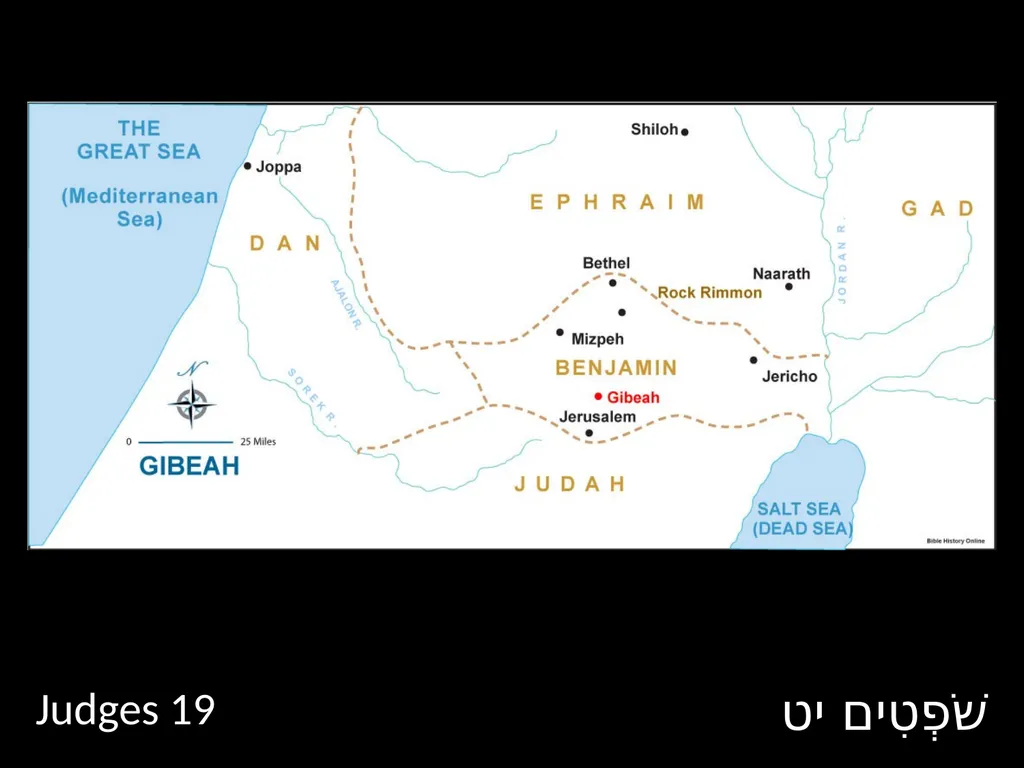
Judges 19 שֹׁפְטִים יט<br>
02
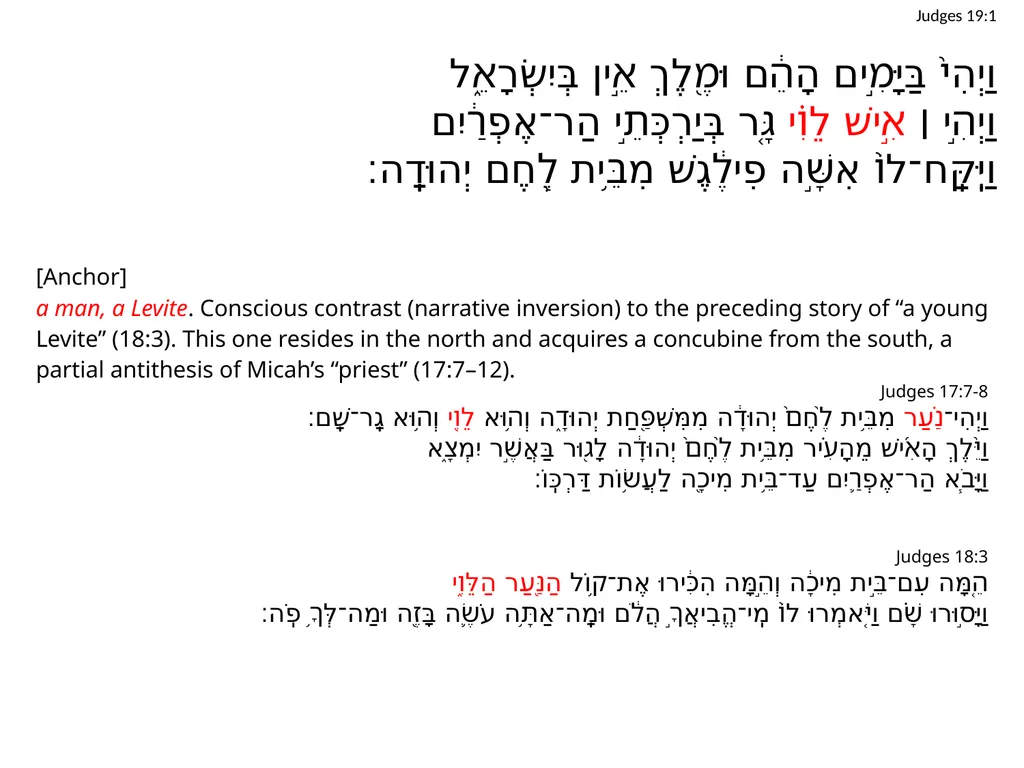
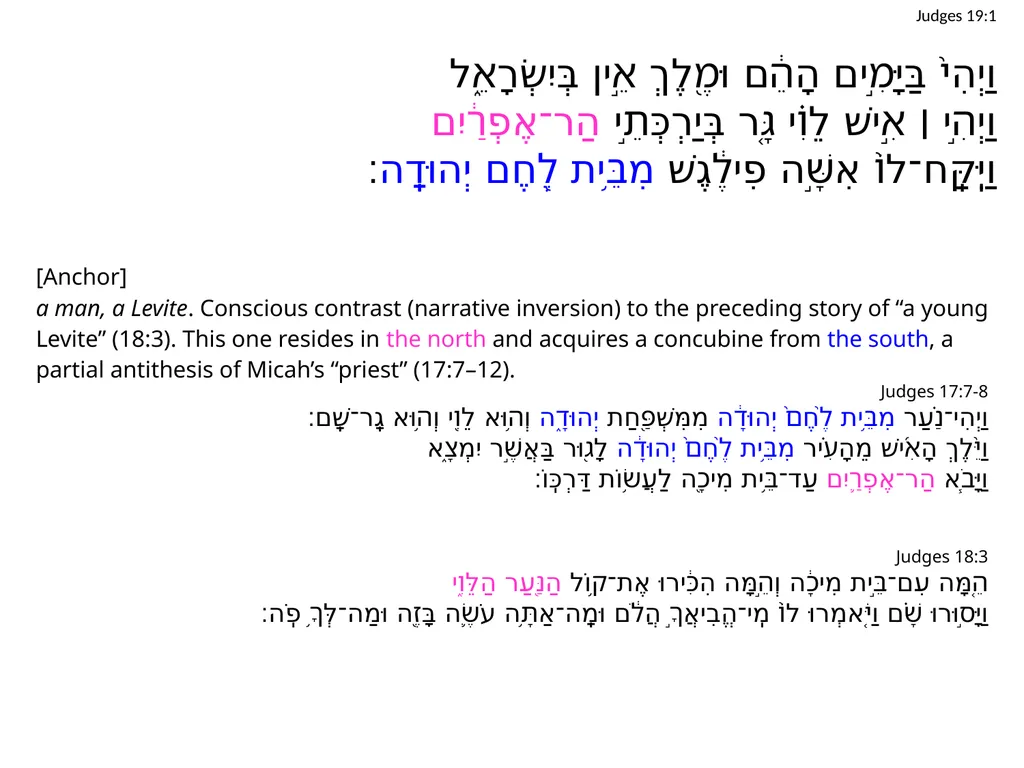
Judges 19:1 וַיְהִי֙ בַּיָּמִ֣ים הָהֵ֔ם וּמֶ֖לֶךְ אֵ֣ין בְּיִשְׂרָאֵ֑ל
וַיְהִ֣י ׀ אִ֣ישׁ לֵוִ֗י גָּ֚ר בְּיַרְכְּתֵ֣י הַר־אֶפְרַ֔יִם
וַיִּֽקַּֽח־לוֹ֙ אִשָּׁ֣ה פִילֶ֔גֶשׁ מִבֵּ֥ית לֶ֖חֶם יְהוּדָֽה׃<br>
וַיְהִ֣י ׀ אִ֣ישׁ לֵוִ֗י גָּ֚ר בְּיַרְכְּתֵ֣י הַר־אֶפְרַ֔יִם
וַיִּֽקַּֽח־לוֹ֙ אִשָּׁ֣ה פִילֶ֔גֶשׁ מִבֵּ֥ית לֶ֖חֶם יְהוּדָֽה׃<br>
03
Judges 19:1 Judges 18:3
הֵ֚מָּה עִם־בֵּ֣ית מִיכָ֔ה וְהֵ֣מָּה הִכִּ֔ירוּ אֶת־ק֥וֹל הַנַּ֖עַר הַלֵּוִ֑י
וַיָּס֣וּרוּ שָׁ֗ם וַיֹּ֤אמְרוּ לוֹ֙ מִֽי־הֱבִיאֲךָ֣ הֲלֹ֔ם וּמָֽה־אַתָּ֥ה עֹשֶׂ֛ה בָּזֶ֖ה וּמַה־לְּךָ֥ פֹֽה׃ Judges 17:7-8
וַיְהִי־נַ֗עַר מִבֵּ֥ית לֶ֙חֶם֙ יְהוּדָ֔ה מִמִּשְׁפַּ֖חַת יְהוּדָ֑ה וְה֥וּא לֵוִ֖י וְה֥וּא גָֽר־שָֽׁם׃
וַיֵּ֙לֶךְ הָאִ֜ישׁ מֵהָעִ֗יר מִבֵּ֥ית לֶ֙חֶם֙ יְהוּדָ֔ה לָג֖וּר בַּאֲשֶׁ֣ר יִמְצָ֑א
וַיָּבֹ֧א הַר־אֶפְרַ֛יִם עַד־בֵּ֥ית מִיכָ֖ה לַעֲשׂ֥וֹת דַּרְכּֽוֹ׃ וַיְהִי֙ בַּיָּמִ֣ים הָהֵ֔ם וּמֶ֖לֶךְ אֵ֣ין בְּיִשְׂרָאֵ֑ל
וַיְהִ֣י ׀ אִ֣ישׁ לֵוִ֗י גָּ֚ר בְּיַרְכְּתֵ֣י הַר־אֶפְרַ֔יִם
וַיִּֽקַּֽח־לוֹ֙ אִשָּׁ֣ה פִילֶ֔גֶשׁ מִבֵּ֥ית לֶ֖חֶם יְהוּדָֽה׃<br>
הֵ֚מָּה עִם־בֵּ֣ית מִיכָ֔ה וְהֵ֣מָּה הִכִּ֔ירוּ אֶת־ק֥וֹל הַנַּ֖עַר הַלֵּוִ֑י
וַיָּס֣וּרוּ שָׁ֗ם וַיֹּ֤אמְרוּ לוֹ֙ מִֽי־הֱבִיאֲךָ֣ הֲלֹ֔ם וּמָֽה־אַתָּ֥ה עֹשֶׂ֛ה בָּזֶ֖ה וּמַה־לְּךָ֥ פֹֽה׃ Judges 17:7-8
וַיְהִי־נַ֗עַר מִבֵּ֥ית לֶ֙חֶם֙ יְהוּדָ֔ה מִמִּשְׁפַּ֖חַת יְהוּדָ֑ה וְה֥וּא לֵוִ֖י וְה֥וּא גָֽר־שָֽׁם׃
וַיֵּ֙לֶךְ הָאִ֜ישׁ מֵהָעִ֗יר מִבֵּ֥ית לֶ֙חֶם֙ יְהוּדָ֔ה לָג֖וּר בַּאֲשֶׁ֣ר יִמְצָ֑א
וַיָּבֹ֧א הַר־אֶפְרַ֛יִם עַד־בֵּ֥ית מִיכָ֖ה לַעֲשׂ֥וֹת דַּרְכּֽוֹ׃ וַיְהִי֙ בַּיָּמִ֣ים הָהֵ֔ם וּמֶ֖לֶךְ אֵ֣ין בְּיִשְׂרָאֵ֑ל
וַיְהִ֣י ׀ אִ֣ישׁ לֵוִ֗י גָּ֚ר בְּיַרְכְּתֵ֣י הַר־אֶפְרַ֔יִם
וַיִּֽקַּֽח־לוֹ֙ אִשָּׁ֣ה פִילֶ֔גֶשׁ מִבֵּ֥ית לֶ֖חֶם יְהוּדָֽה׃<br>
04
Judges 19:1 Judges 18:3
הֵ֚מָּה עִם־בֵּ֣ית מִיכָ֔ה וְהֵ֣מָּה הִכִּ֔ירוּ אֶת־ק֥וֹל הַנַּ֖עַר הַלֵּוִ֑י
וַיָּס֣וּרוּ שָׁ֗ם וַיֹּ֤אמְרוּ לוֹ֙ מִֽי־הֱבִיאֲךָ֣ הֲלֹ֔ם וּמָֽה־אַתָּ֥ה עֹשֶׂ֛ה בָּזֶ֖ה וּמַה־לְּךָ֥ פֹֽה׃ Judges 17:7-8
וַיְהִי־נַ֗עַר מִבֵּ֥ית לֶ֙חֶם֙ יְהוּדָ֔ה מִמִּשְׁפַּ֖חַת יְהוּדָ֑ה וְה֥וּא לֵוִ֖י וְה֥וּא גָֽר־שָֽׁם׃
וַיֵּ֙לֶךְ הָאִ֜ישׁ מֵהָעִ֗יר מִבֵּ֥ית לֶ֙חֶם֙ יְהוּדָ֔ה לָג֖וּר בַּאֲשֶׁ֣ר יִמְצָ֑א
וַיָּבֹ֧א הַר־אֶפְרַ֛יִם עַד־בֵּ֥ית מִיכָ֖ה לַעֲשׂ֥וֹת דַּרְכּֽוֹ׃ וַיְהִי֙ בַּיָּמִ֣ים הָהֵ֔ם וּמֶ֖לֶךְ אֵ֣ין בְּיִשְׂרָאֵ֑ל
וַיְהִ֣י ׀ אִ֣ישׁ לֵוִ֗י גָּ֚ר בְּיַרְכְּתֵ֣י הַר־אֶפְרַ֔יִם
וַיִּֽקַּֽח־לוֹ֙ אִשָּׁ֣ה פִילֶ֔גֶשׁ מִבֵּ֥ית לֶ֖חֶם יְהוּדָֽה׃<br>
הֵ֚מָּה עִם־בֵּ֣ית מִיכָ֔ה וְהֵ֣מָּה הִכִּ֔ירוּ אֶת־ק֥וֹל הַנַּ֖עַר הַלֵּוִ֑י
וַיָּס֣וּרוּ שָׁ֗ם וַיֹּ֤אמְרוּ לוֹ֙ מִֽי־הֱבִיאֲךָ֣ הֲלֹ֔ם וּמָֽה־אַתָּ֥ה עֹשֶׂ֛ה בָּזֶ֖ה וּמַה־לְּךָ֥ פֹֽה׃ Judges 17:7-8
וַיְהִי־נַ֗עַר מִבֵּ֥ית לֶ֙חֶם֙ יְהוּדָ֔ה מִמִּשְׁפַּ֖חַת יְהוּדָ֑ה וְה֥וּא לֵוִ֖י וְה֥וּא גָֽר־שָֽׁם׃
וַיֵּ֙לֶךְ הָאִ֜ישׁ מֵהָעִ֗יר מִבֵּ֥ית לֶ֙חֶם֙ יְהוּדָ֔ה לָג֖וּר בַּאֲשֶׁ֣ר יִמְצָ֑א
וַיָּבֹ֧א הַר־אֶפְרַ֛יִם עַד־בֵּ֥ית מִיכָ֖ה לַעֲשׂ֥וֹת דַּרְכּֽוֹ׃ וַיְהִי֙ בַּיָּמִ֣ים הָהֵ֔ם וּמֶ֖לֶךְ אֵ֣ין בְּיִשְׂרָאֵ֑ל
וַיְהִ֣י ׀ אִ֣ישׁ לֵוִ֗י גָּ֚ר בְּיַרְכְּתֵ֣י הַר־אֶפְרַ֔יִם
וַיִּֽקַּֽח־לוֹ֙ אִשָּׁ֣ה פִילֶ֔גֶשׁ מִבֵּ֥ית לֶ֖חֶם יְהוּדָֽה׃<br>
05
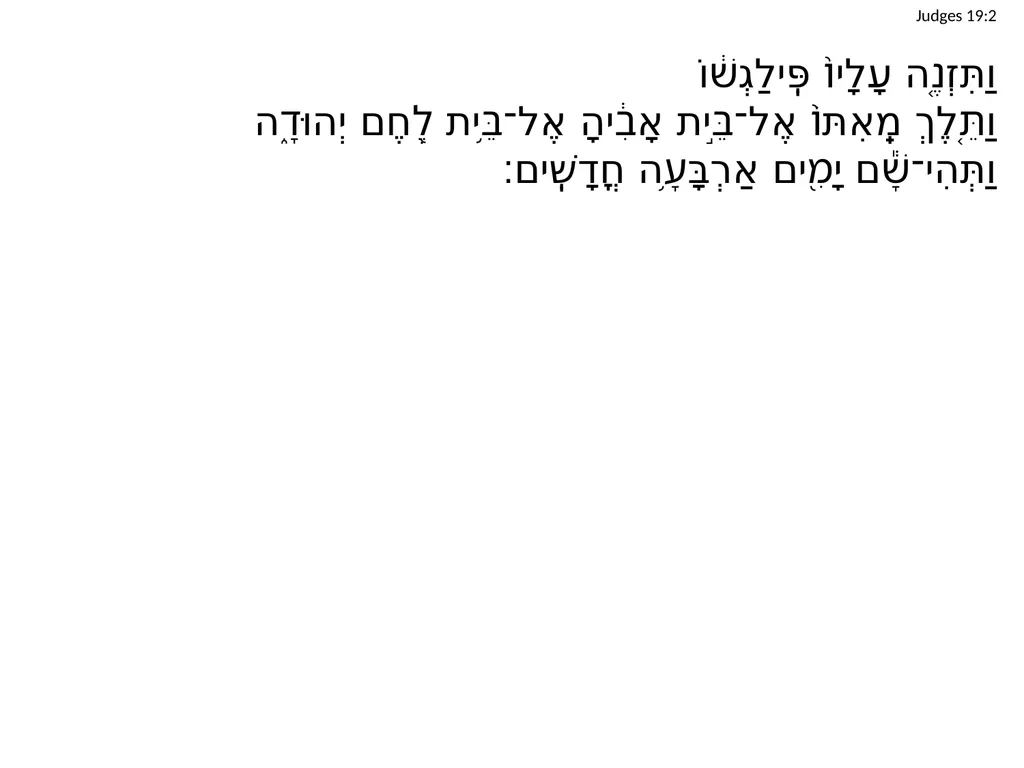
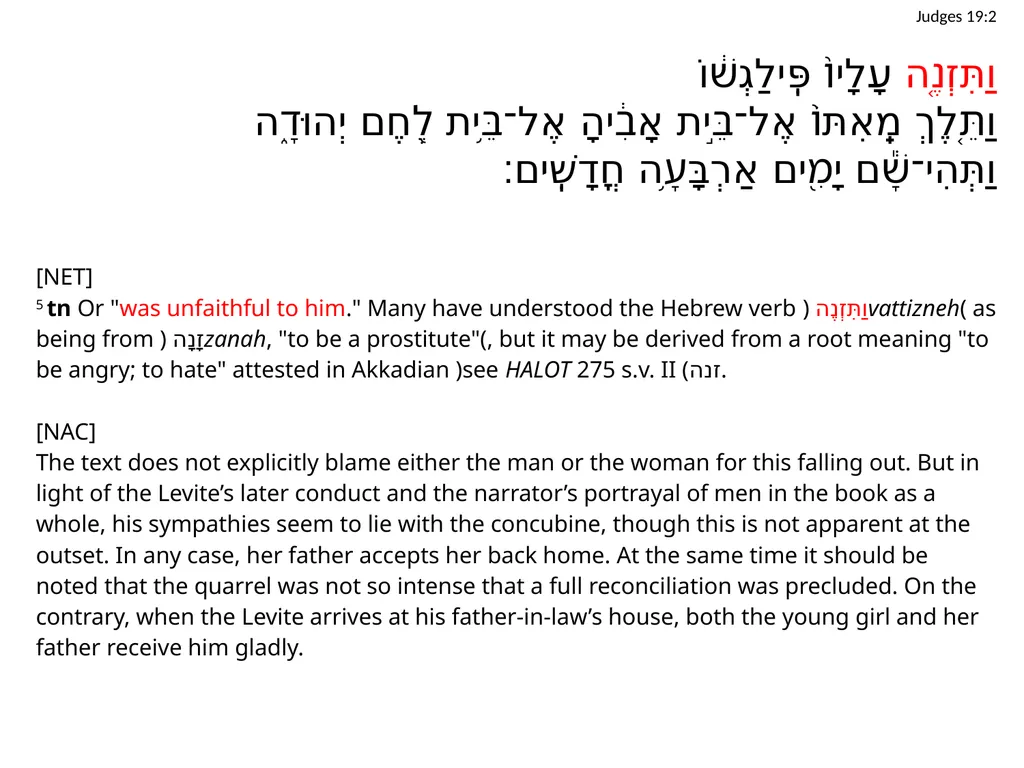
Judges 19:2 וַתִּזְנֶ֤ה עָלָיו֙ פִּֽילַגְשׁ֔וֹ
וַתֵּ֤לֶךְ מֵֽאִתּוֹ֙ אֶל־בֵּ֣ית אָבִ֔יהָ אֶל־בֵּ֥ית לֶ֖חֶם יְהוּדָ֑ה
וַתְּהִי־שָׁ֕ם יָמִ֖ים אַרְבָּעָ֥ה חֳדָשִֽׁים׃<br>
וַתֵּ֤לֶךְ מֵֽאִתּוֹ֙ אֶל־בֵּ֣ית אָבִ֔יהָ אֶל־בֵּ֥ית לֶ֖חֶם יְהוּדָ֑ה
וַתְּהִי־שָׁ֕ם יָמִ֖ים אַרְבָּעָ֥ה חֳדָשִֽׁים׃<br>
06
Judges 19:2 וַתִּזְנֶ֤ה עָלָיו֙ פִּֽילַגְשׁ֔וֹ
וַתֵּ֤לֶךְ מֵֽאִתּוֹ֙ אֶל־בֵּ֣ית אָבִ֔יהָ אֶל־בֵּ֥ית לֶ֖חֶם יְהוּדָ֑ה
וַתְּהִי־שָׁ֕ם יָמִ֖ים אַרְבָּעָ֥ה חֳדָשִֽׁים׃<br>
וַתֵּ֤לֶךְ מֵֽאִתּוֹ֙ אֶל־בֵּ֣ית אָבִ֔יהָ אֶל־בֵּ֥ית לֶ֖חֶם יְהוּדָ֑ה
וַתְּהִי־שָׁ֕ם יָמִ֖ים אַרְבָּעָ֥ה חֳדָשִֽׁים׃<br>
07
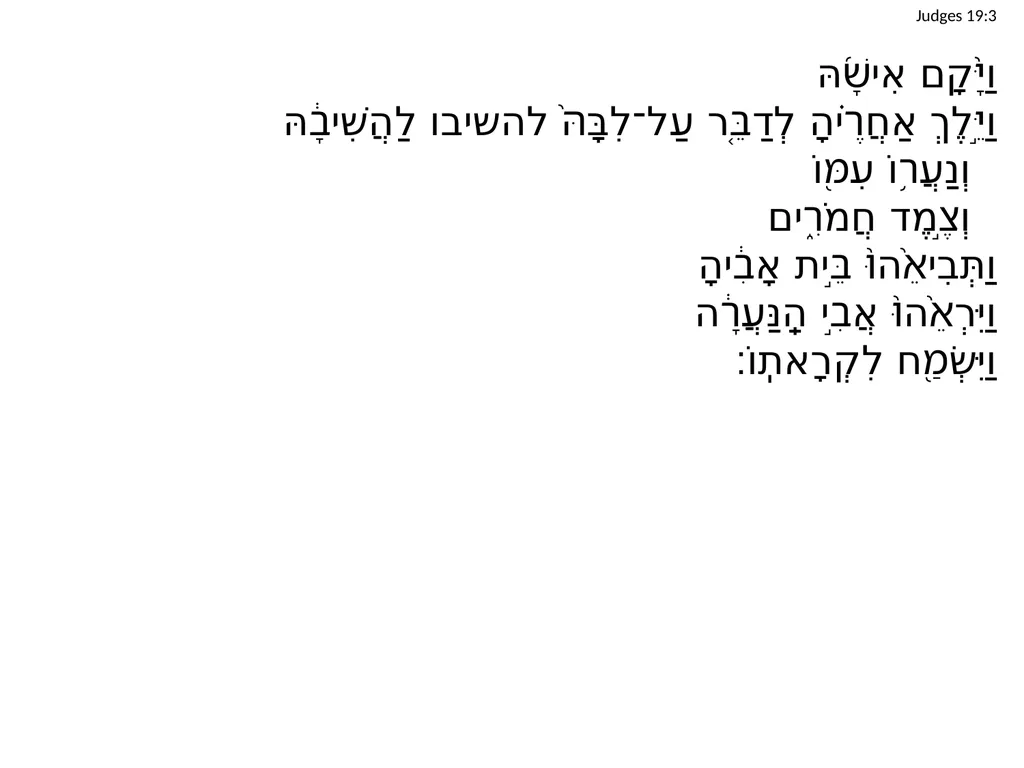
Judges 19:3 וַיָּ֨קָם אִישָׁ֜הּ
וַיֵּ֣לֶךְ אַחֲרֶ֗יהָ לְדַבֵּ֤ר עַל־לִבָּהּ֙ להשיבו לַהֲשִׁיבָ֔הּ
וְנַעֲר֥וֹ עִמּ֖וֹ
וְצֶ֣מֶד חֲמֹרִ֑ים
וַתְּבִיאֵ֙הוּ֙ בֵּ֣ית אָבִ֔יהָ
וַיִּרְאֵ֙הוּ֙ אֲבִ֣י הַֽנַּעֲרָ֔ה
וַיִּשְׂמַ֖ח לִקְרָאתֽוֹ׃<br>
וַיֵּ֣לֶךְ אַחֲרֶ֗יהָ לְדַבֵּ֤ר עַל־לִבָּהּ֙ להשיבו לַהֲשִׁיבָ֔הּ
וְנַעֲר֥וֹ עִמּ֖וֹ
וְצֶ֣מֶד חֲמֹרִ֑ים
וַתְּבִיאֵ֙הוּ֙ בֵּ֣ית אָבִ֔יהָ
וַיִּרְאֵ֙הוּ֙ אֲבִ֣י הַֽנַּעֲרָ֔ה
וַיִּשְׂמַ֖ח לִקְרָאתֽוֹ׃<br>
08
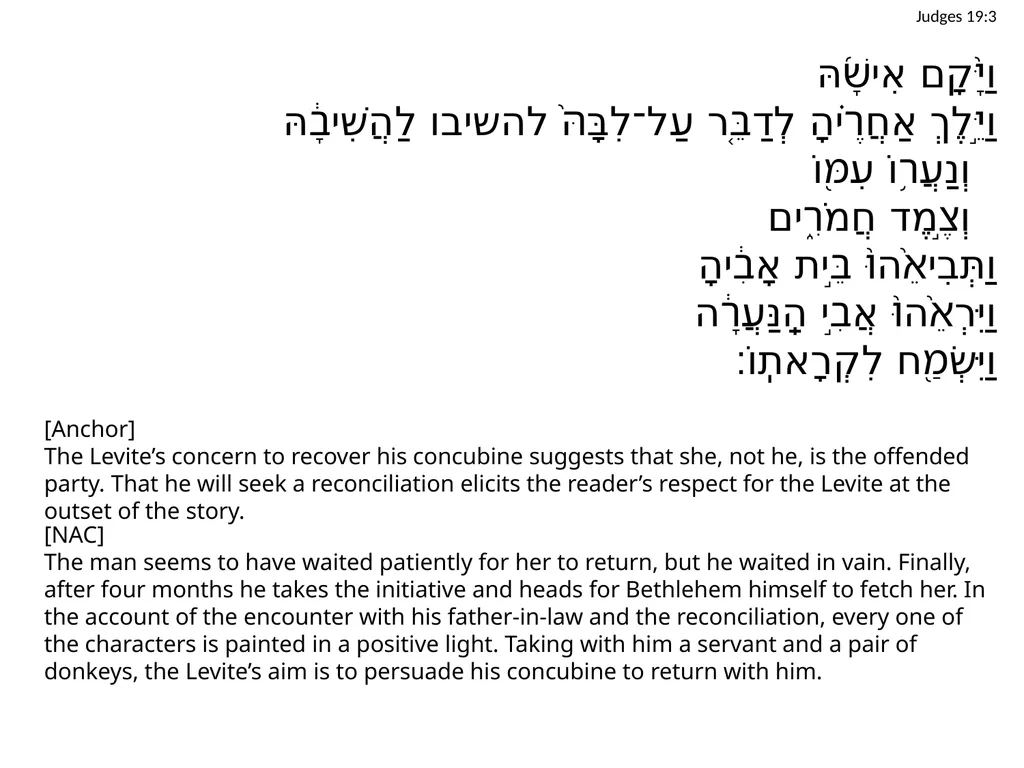
Judges 19:3 וַיָּ֨קָם אִישָׁ֜הּ
וַיֵּ֣לֶךְ אַחֲרֶ֗יהָ לְדַבֵּ֤ר עַל־לִבָּהּ֙ להשיבו לַהֲשִׁיבָ֔הּ
וְנַעֲר֥וֹ עִמּ֖וֹ
וְצֶ֣מֶד חֲמֹרִ֑ים
וַתְּבִיאֵ֙הוּ֙ בֵּ֣ית אָבִ֔יהָ
וַיִּרְאֵ֙הוּ֙ אֲבִ֣י הַֽנַּעֲרָ֔ה
וַיִּשְׂמַ֖ח לִקְרָאתֽוֹ׃ [Anchor]
The Levite’s concern to recover his concubine suggests that she, not he, is the offended party. That he will seek a reconciliation elicits the reader’s respect for the Levite at the outset of the story. [NAC]
The man seems to have waited patiently for her to return, but he waited in vain. Finally, after four months he takes the initiative and heads for Bethlehem himself to fetch her. In the account of the encounter with his father-in-law and the reconciliation, every one of the characters is painted in a positive light. Taking with him a servant and a pair of donkeys, the Levite’s aim is to persuade his concubine to return with him.<br>
וַיֵּ֣לֶךְ אַחֲרֶ֗יהָ לְדַבֵּ֤ר עַל־לִבָּהּ֙ להשיבו לַהֲשִׁיבָ֔הּ
וְנַעֲר֥וֹ עִמּ֖וֹ
וְצֶ֣מֶד חֲמֹרִ֑ים
וַתְּבִיאֵ֙הוּ֙ בֵּ֣ית אָבִ֔יהָ
וַיִּרְאֵ֙הוּ֙ אֲבִ֣י הַֽנַּעֲרָ֔ה
וַיִּשְׂמַ֖ח לִקְרָאתֽוֹ׃ [Anchor]
The Levite’s concern to recover his concubine suggests that she, not he, is the offended party. That he will seek a reconciliation elicits the reader’s respect for the Levite at the outset of the story. [NAC]
The man seems to have waited patiently for her to return, but he waited in vain. Finally, after four months he takes the initiative and heads for Bethlehem himself to fetch her. In the account of the encounter with his father-in-law and the reconciliation, every one of the characters is painted in a positive light. Taking with him a servant and a pair of donkeys, the Levite’s aim is to persuade his concubine to return with him.<br>
09
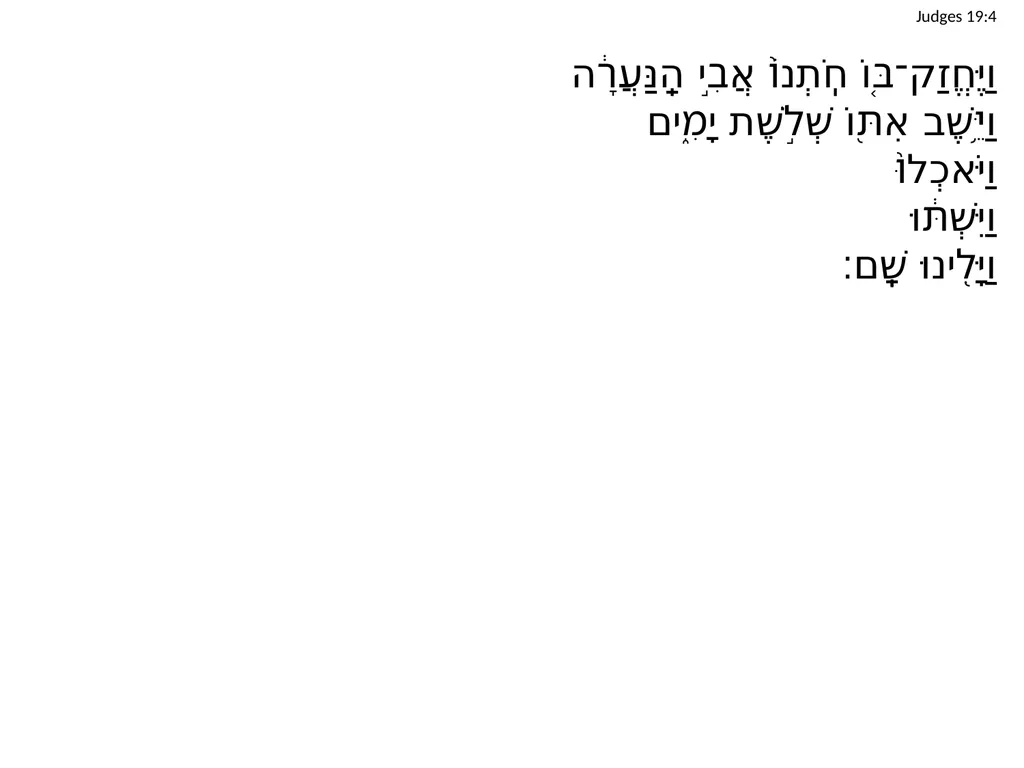
Judges 19:4 וַיֶּחֱזַק־בּ֤וֹ חֹֽתְנוֹ֙ אֲבִ֣י הַֽנַּעֲרָ֔ה
וַיֵּ֥שֶׁב אִתּ֖וֹ שְׁלֹ֣שֶׁת יָמִ֑ים
וַיֹּאכְלוּ֙
וַיִּשְׁתּ֔וּ
וַיָּלִ֖ינוּ שָֽׁם׃<br>
וַיֵּ֥שֶׁב אִתּ֖וֹ שְׁלֹ֣שֶׁת יָמִ֑ים
וַיֹּאכְלוּ֙
וַיִּשְׁתּ֔וּ
וַיָּלִ֖ינוּ שָֽׁם׃<br>
10
Judges 19:4 וַיֶּחֱזַק־בּ֤וֹ חֹֽתְנוֹ֙ אֲבִ֣י הַֽנַּעֲרָ֔ה
וַיֵּ֥שֶׁב אִתּ֖וֹ שְׁלֹ֣שֶׁת יָמִ֑ים
וַיֹּאכְלוּ֙
וַיִּשְׁתּ֔וּ
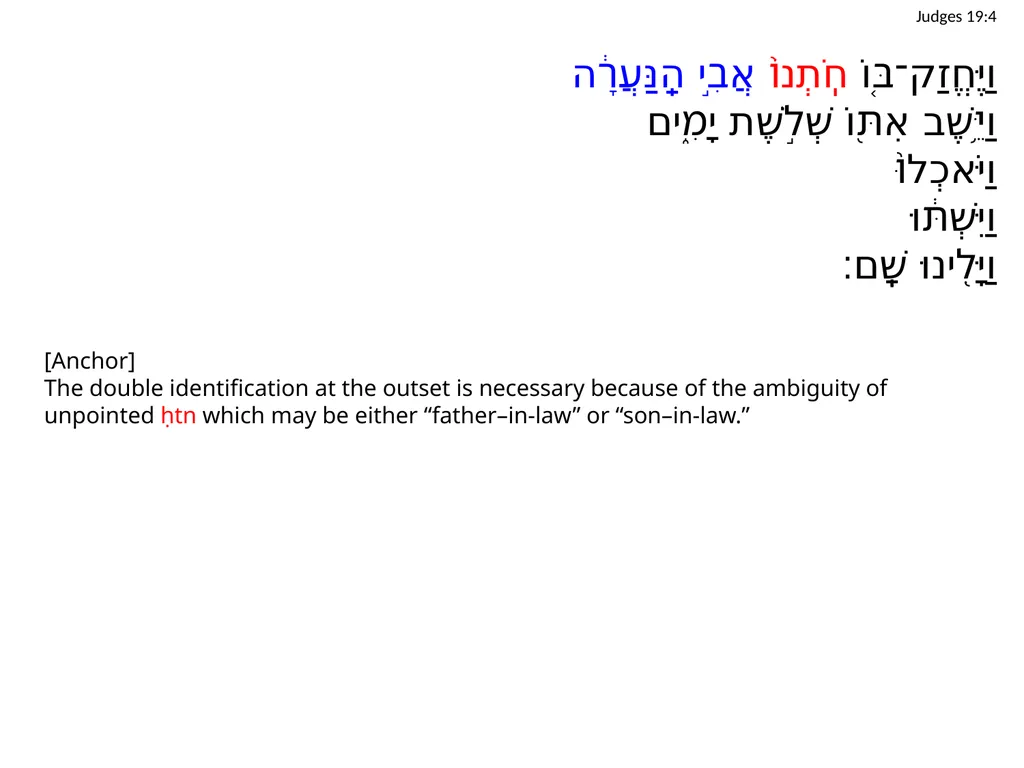
וַיָּלִ֖ינוּ שָֽׁם׃ [Anchor]
The double identification at the outset is necessary because of the ambiguity of unpointed ḥtn which may be either “father–in-law” or “son–in-law.”<br>
וַיֵּ֥שֶׁב אִתּ֖וֹ שְׁלֹ֣שֶׁת יָמִ֑ים
וַיֹּאכְלוּ֙
וַיִּשְׁתּ֔וּ
וַיָּלִ֖ינוּ שָֽׁם׃ [Anchor]
The double identification at the outset is necessary because of the ambiguity of unpointed ḥtn which may be either “father–in-law” or “son–in-law.”<br>
11
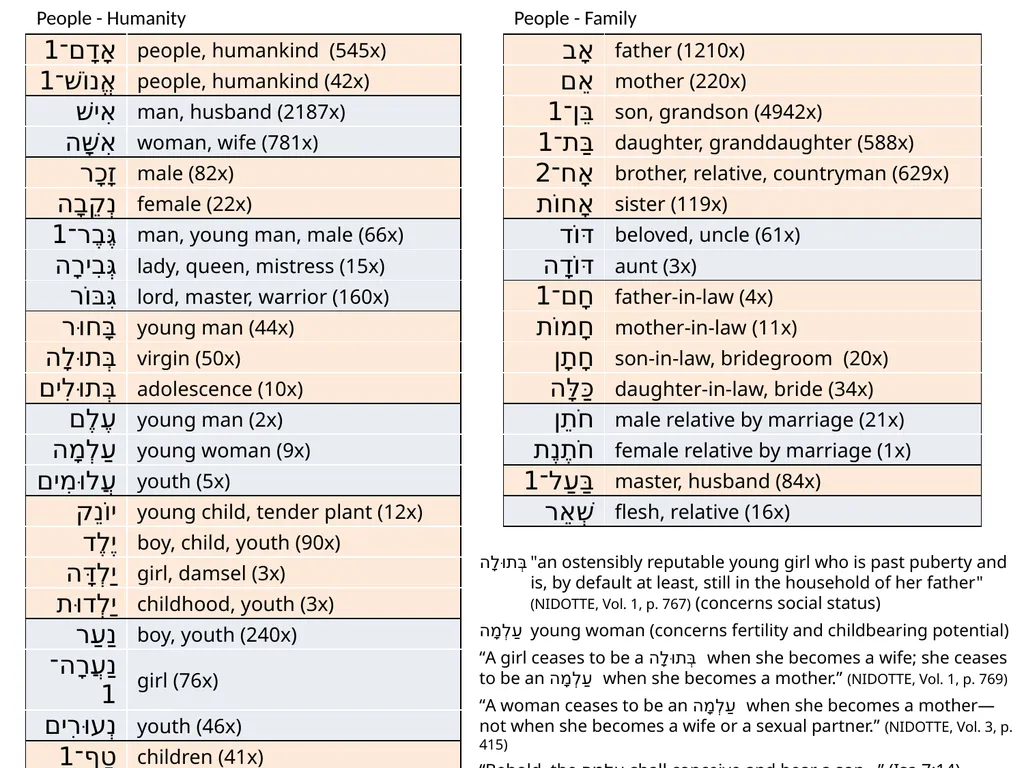
People - Humanity People - Family בְּתוּלָה "an ostensibly reputable young girl who is past puberty and is, by default at least, still in the household of her father" (NIDOTTE, Vol. 1, p. 767) (concerns social status)
עַלְמָה young woman (concerns fertility and childbearing potential)
“A girl ceases to be a בְּתוּלָה when she becomes a wife; she ceases to be an עַלְמָה when she becomes a mother.” (NIDOTTE, Vol. 1, p. 769)
“A woman ceases to be an עַלְמָה when she becomes a mother—not when she becomes a wife or a sexual partner.” (NIDOTTE, Vol. 3, p. 415)
“Behold, the עַלְמָה shall conceive and bear a son…” (Isa 7:14)<br>
עַלְמָה young woman (concerns fertility and childbearing potential)
“A girl ceases to be a בְּתוּלָה when she becomes a wife; she ceases to be an עַלְמָה when she becomes a mother.” (NIDOTTE, Vol. 1, p. 769)
“A woman ceases to be an עַלְמָה when she becomes a mother—not when she becomes a wife or a sexual partner.” (NIDOTTE, Vol. 3, p. 415)
“Behold, the עַלְמָה shall conceive and bear a son…” (Isa 7:14)<br>
12
Judges 19:4 וַיֶּחֱזַק־בּ֤וֹ חֹֽתְנוֹ֙ אֲבִ֣י הַֽנַּעֲרָ֔ה
וַיֵּ֥שֶׁב אִתּ֖וֹ שְׁלֹ֣שֶׁת יָמִ֑ים
וַיֹּאכְלוּ֙
וַיִּשְׁתּ֔וּ
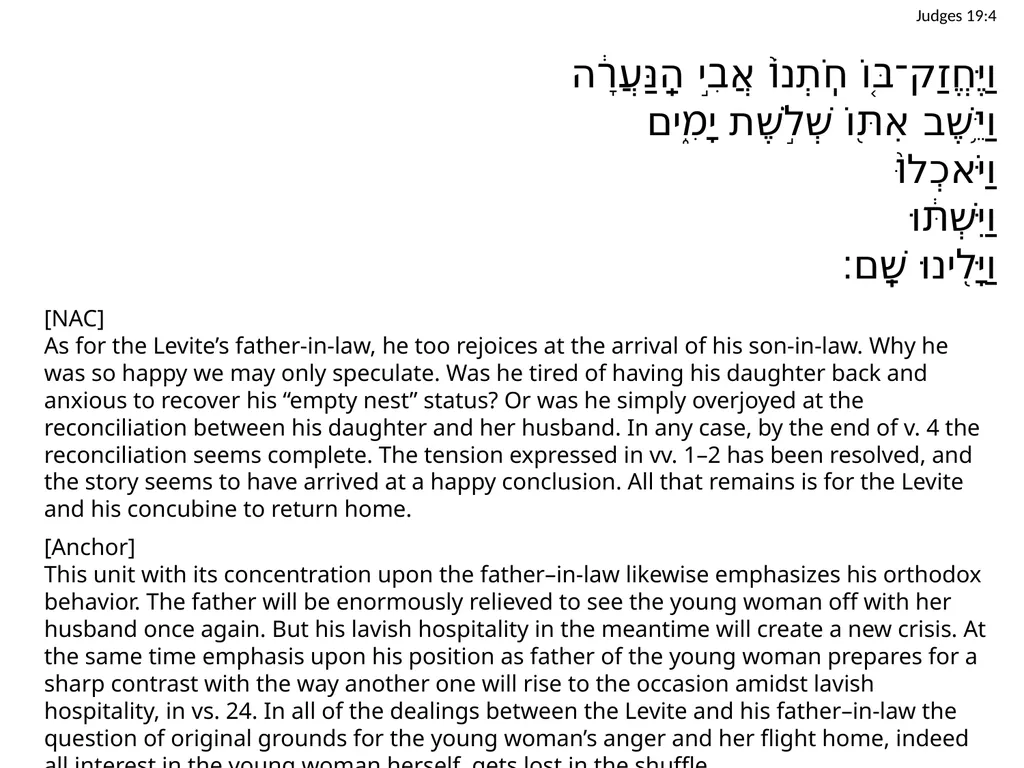
וַיָּלִ֖ינוּ שָֽׁם׃ [Anchor]
This unit with its concentration upon the father–in-law likewise emphasizes his orthodox behavior. The father will be enormously relieved to see the young woman off with her husband once again. But his lavish hospitality in the meantime will create a new crisis. At the same time emphasis upon his position as father of the young woman prepares for a sharp contrast with the way another one will rise to the occasion amidst lavish hospitality, in vs. 24. In all of the dealings between the Levite and his father–in-law the question of original grounds for the young woman’s anger and her flight home, indeed all interest in the young woman herself, gets lost in the shuffle. [NAC]
As for the Levite’s father-in-law, he too rejoices at the arrival of his son-in-law. Why he was so happy we may only speculate. Was he tired of having his daughter back and anxious to recover his “empty nest” status? Or was he simply overjoyed at the reconciliation between his daughter and her husband. In any case, by the end of v. 4 the reconciliation seems complete. The tension expressed in vv. 1–2 has been resolved, and the story seems to have arrived at a happy conclusion. All that remains is for the Levite and his concubine to return home.<br>
וַיֵּ֥שֶׁב אִתּ֖וֹ שְׁלֹ֣שֶׁת יָמִ֑ים
וַיֹּאכְלוּ֙
וַיִּשְׁתּ֔וּ
וַיָּלִ֖ינוּ שָֽׁם׃ [Anchor]
This unit with its concentration upon the father–in-law likewise emphasizes his orthodox behavior. The father will be enormously relieved to see the young woman off with her husband once again. But his lavish hospitality in the meantime will create a new crisis. At the same time emphasis upon his position as father of the young woman prepares for a sharp contrast with the way another one will rise to the occasion amidst lavish hospitality, in vs. 24. In all of the dealings between the Levite and his father–in-law the question of original grounds for the young woman’s anger and her flight home, indeed all interest in the young woman herself, gets lost in the shuffle. [NAC]
As for the Levite’s father-in-law, he too rejoices at the arrival of his son-in-law. Why he was so happy we may only speculate. Was he tired of having his daughter back and anxious to recover his “empty nest” status? Or was he simply overjoyed at the reconciliation between his daughter and her husband. In any case, by the end of v. 4 the reconciliation seems complete. The tension expressed in vv. 1–2 has been resolved, and the story seems to have arrived at a happy conclusion. All that remains is for the Levite and his concubine to return home.<br>
13
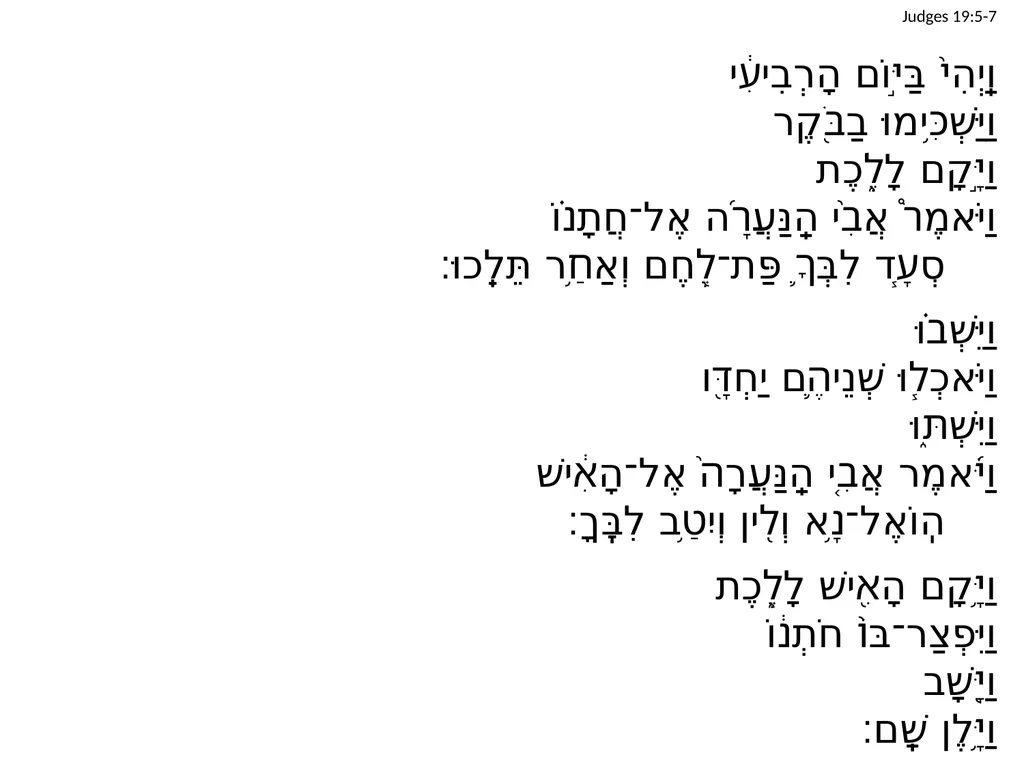
Judges 19:5-7 וַֽיְהִי֙ בַּיּ֣וֹם הָרְבִיעִ֔י
וַיַּשְׁכִּ֥ימוּ בַבֹּ֖קֶר
וַיָּ֣קָם לָלֶ֑כֶת
וַיֹּאמֶר֩ אֲבִ֨י הַֽנַּעֲרָ֜ה אֶל־חֲתָנ֗וֹ
סְעָ֧ד לִבְּךָ֛ פַּת־לֶ֖חֶם וְאַחַ֥ר תֵּלֵֽכוּ׃
וַיֵּשְׁב֗וּ
וַיֹּאכְל֧וּ שְׁנֵיהֶ֛ם יַחְדָּ֖ו
וַיִּשְׁתּ֑וּ
וַיֹּ֜אמֶר אֲבִ֤י הַֽנַּעֲרָה֙ אֶל־הָאִ֔ישׁ
הֽוֹאֶל־נָ֥א וְלִ֖ין וְיִטַ֥ב לִבֶּֽךָ׃
וַיָּ֥קָם הָאִ֖ישׁ לָלֶ֑כֶת
וַיִּפְצַר־בּוֹ֙ חֹתְנ֔וֹ
וַיָּ֖שָׁב
וַיָּ֥לֶן שָֽׁם׃<br>
וַיַּשְׁכִּ֥ימוּ בַבֹּ֖קֶר
וַיָּ֣קָם לָלֶ֑כֶת
וַיֹּאמֶר֩ אֲבִ֨י הַֽנַּעֲרָ֜ה אֶל־חֲתָנ֗וֹ
סְעָ֧ד לִבְּךָ֛ פַּת־לֶ֖חֶם וְאַחַ֥ר תֵּלֵֽכוּ׃
וַיֵּשְׁב֗וּ
וַיֹּאכְל֧וּ שְׁנֵיהֶ֛ם יַחְדָּ֖ו
וַיִּשְׁתּ֑וּ
וַיֹּ֜אמֶר אֲבִ֤י הַֽנַּעֲרָה֙ אֶל־הָאִ֔ישׁ
הֽוֹאֶל־נָ֥א וְלִ֖ין וְיִטַ֥ב לִבֶּֽךָ׃
וַיָּ֥קָם הָאִ֖ישׁ לָלֶ֑כֶת
וַיִּפְצַר־בּוֹ֙ חֹתְנ֔וֹ
וַיָּ֖שָׁב
וַיָּ֥לֶן שָֽׁם׃<br>
14
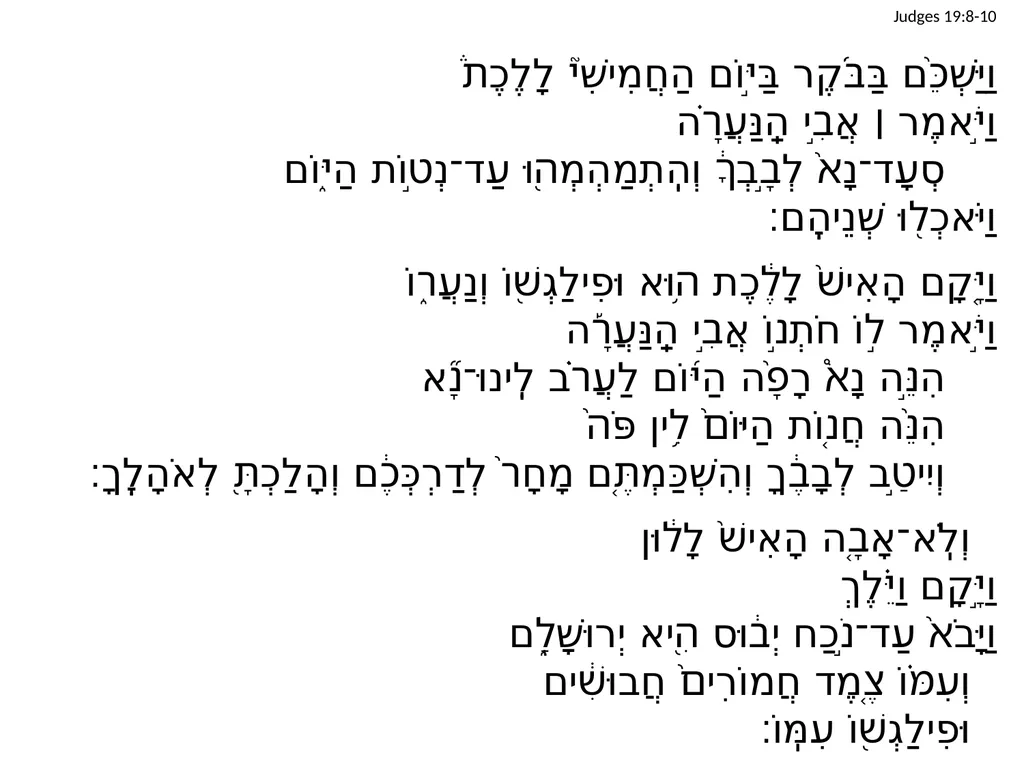
Judges 19:8-10 וַיַּשְׁכֵּ֨ם בַּבֹּ֜קֶר בַּיּ֣וֹם הַחֲמִישִׁי֮ לָלֶכֶת֒
וַיֹּ֣אמֶר ׀ אֲבִ֣י הַֽנַּעֲרָ֗ה
סְעָד־נָא֙ לְבָ֣בְךָ֔ וְהִֽתְמַהְמְה֖וּ עַד־נְט֣וֹת הַיּ֑וֹם
וַיֹּאכְל֖וּ שְׁנֵיהֶֽם׃
וַיָּ֤קָם הָאִישׁ֙ לָלֶ֔כֶת ה֥וּא וּפִילַגְשׁ֖וֹ וְנַעֲר֑וֹ
וַיֹּ֣אמֶר ל֣וֹ חֹתְנ֣וֹ אֲבִ֣י הַֽנַּעֲרָ֡ה
הִנֵּ֣ה נָא֩ רָפָ֨ה הַיּ֜וֹם לַעֲרֹ֗ב לִֽינוּ־נָ֞א
הִנֵּ֨ה חֲנ֤וֹת הַיּוֹם֙ לִ֥ין פֹּה֙
וְיִיטַ֣ב לְבָבֶ֔ךָ וְהִשְׁכַּמְתֶּ֤ם מָחָר֙ לְדַרְכְּכֶ֔ם וְהָלַכְתָּ֖ לְאֹהָלֶֽךָ׃
וְלֹֽא־אָבָ֤ה הָאִישׁ֙ לָל֔וּן
וַיָּ֣קָם וַיֵּ֗לֶךְ
וַיָּבֹא֙ עַד־נֹ֣כַח יְב֔וּס הִ֖יא יְרוּשָׁלִָ֑ם
וְעִמּ֗וֹ צֶ֤מֶד חֲמוֹרִים֙ חֲבוּשִׁ֔ים
וּפִילַגְשׁ֖וֹ עִמּֽוֹ׃<br>
וַיֹּ֣אמֶר ׀ אֲבִ֣י הַֽנַּעֲרָ֗ה
סְעָד־נָא֙ לְבָ֣בְךָ֔ וְהִֽתְמַהְמְה֖וּ עַד־נְט֣וֹת הַיּ֑וֹם
וַיֹּאכְל֖וּ שְׁנֵיהֶֽם׃
וַיָּ֤קָם הָאִישׁ֙ לָלֶ֔כֶת ה֥וּא וּפִילַגְשׁ֖וֹ וְנַעֲר֑וֹ
וַיֹּ֣אמֶר ל֣וֹ חֹתְנ֣וֹ אֲבִ֣י הַֽנַּעֲרָ֡ה
הִנֵּ֣ה נָא֩ רָפָ֨ה הַיּ֜וֹם לַעֲרֹ֗ב לִֽינוּ־נָ֞א
הִנֵּ֨ה חֲנ֤וֹת הַיּוֹם֙ לִ֥ין פֹּה֙
וְיִיטַ֣ב לְבָבֶ֔ךָ וְהִשְׁכַּמְתֶּ֤ם מָחָר֙ לְדַרְכְּכֶ֔ם וְהָלַכְתָּ֖ לְאֹהָלֶֽךָ׃
וְלֹֽא־אָבָ֤ה הָאִישׁ֙ לָל֔וּן
וַיָּ֣קָם וַיֵּ֗לֶךְ
וַיָּבֹא֙ עַד־נֹ֣כַח יְב֔וּס הִ֖יא יְרוּשָׁלִָ֑ם
וְעִמּ֗וֹ צֶ֤מֶד חֲמוֹרִים֙ חֲבוּשִׁ֔ים
וּפִילַגְשׁ֖וֹ עִמּֽוֹ׃<br>
15
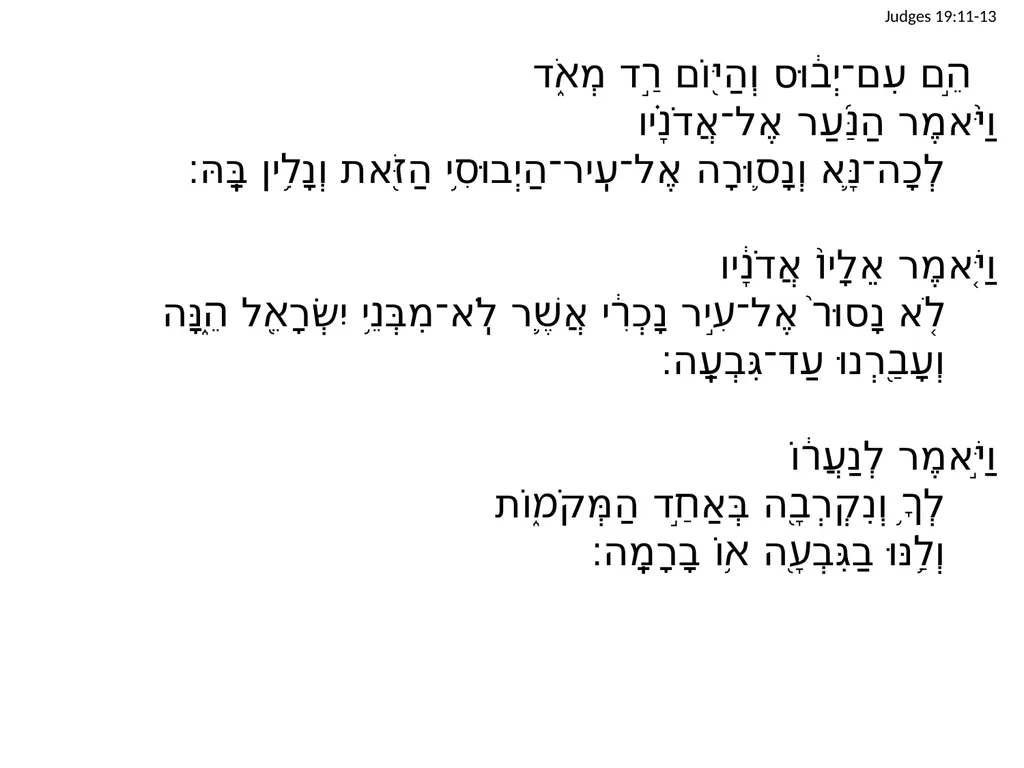
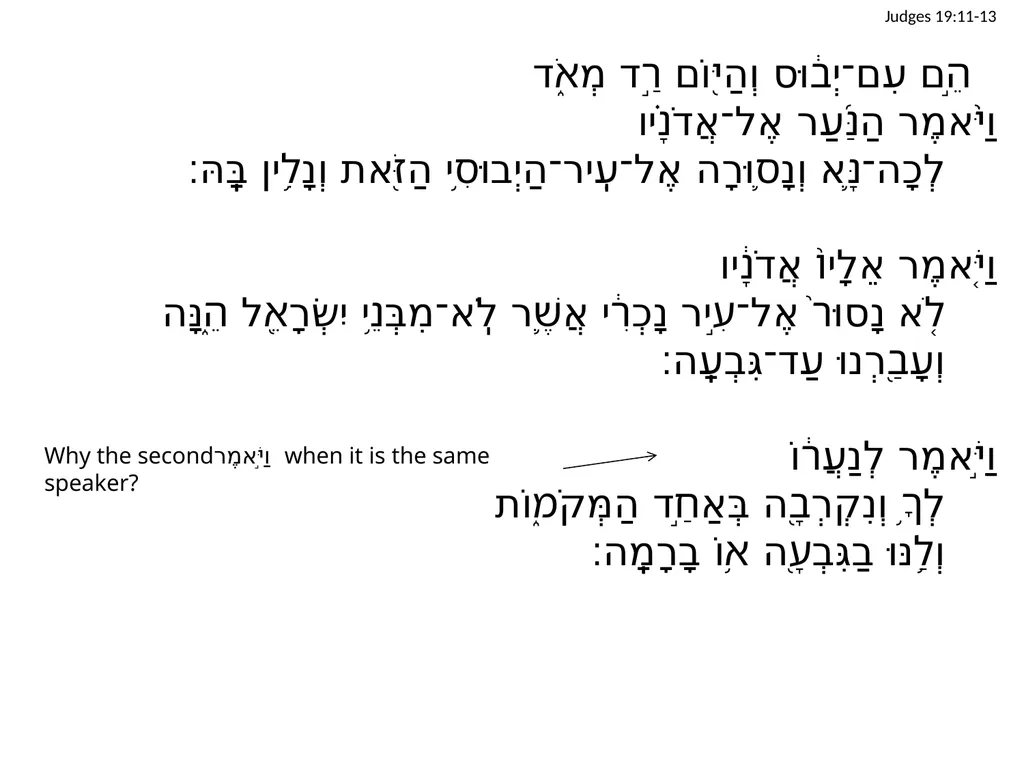
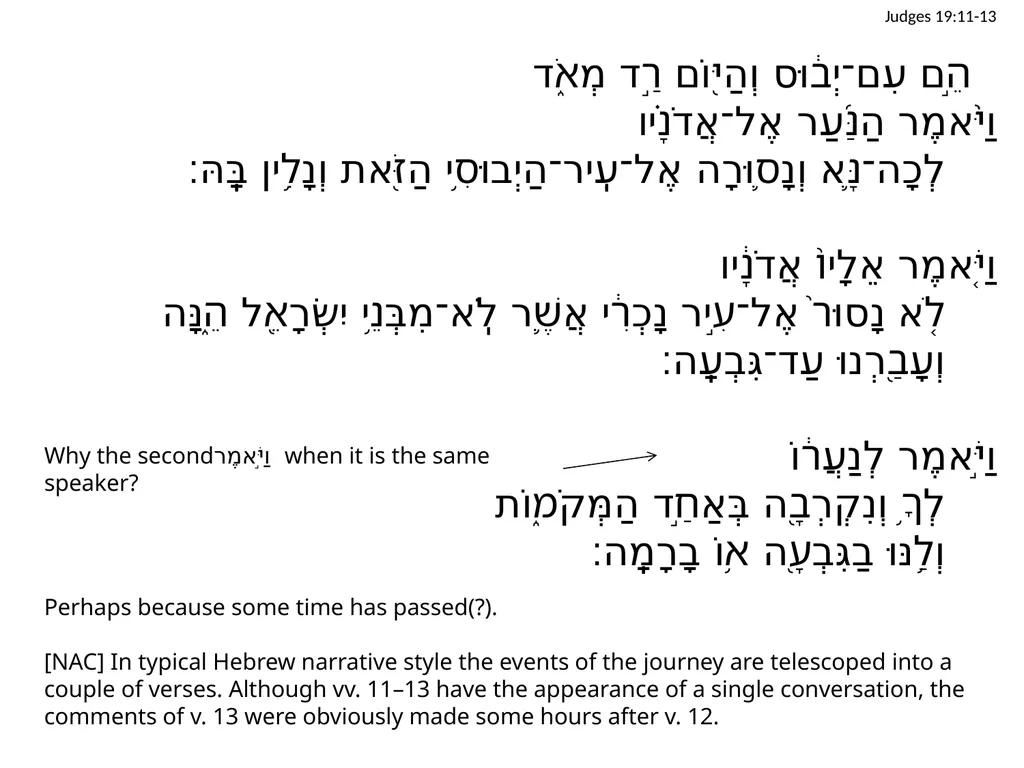
Judges 19:11-13 הֵ֣ם עִם־יְב֔וּס וְהַיּ֖וֹם רַ֣ד מְאֹ֑ד
וַיֹּ֨אמֶר הַנַּ֜עַר אֶל־אֲדֹנָ֗יו
לְכָה־נָּ֛א וְנָס֛וּרָה אֶל־עִֽיר־הַיְבוּסִ֥י הַזֹּ֖את וְנָלִ֥ין בָּֽהּ׃
וַיֹּ֤אמֶר אֵלָיו֙ אֲדֹנָ֔יו
לֹ֤א נָסוּר֙ אֶל־עִ֣יר נָכְרִ֔י אֲשֶׁ֛ר לֹֽא־מִבְּנֵ֥י יִשְׂרָאֵ֖ל הֵ֑נָּה
וְעָבַ֖רְנוּ עַד־גִּבְעָֽה׃
וַיֹּ֣אמֶר לְנַעֲר֔וֹ
לְךָ֥ וְנִקְרְבָ֖ה בְּאַחַ֣ד הַמְּקֹמ֑וֹת
וְלַ֥נּוּ בַגִּבְעָ֖ה א֥וֹ בָרָמָֽה׃<br>
וַיֹּ֨אמֶר הַנַּ֜עַר אֶל־אֲדֹנָ֗יו
לְכָה־נָּ֛א וְנָס֛וּרָה אֶל־עִֽיר־הַיְבוּסִ֥י הַזֹּ֖את וְנָלִ֥ין בָּֽהּ׃
וַיֹּ֤אמֶר אֵלָיו֙ אֲדֹנָ֔יו
לֹ֤א נָסוּר֙ אֶל־עִ֣יר נָכְרִ֔י אֲשֶׁ֛ר לֹֽא־מִבְּנֵ֥י יִשְׂרָאֵ֖ל הֵ֑נָּה
וְעָבַ֖רְנוּ עַד־גִּבְעָֽה׃
וַיֹּ֣אמֶר לְנַעֲר֔וֹ
לְךָ֥ וְנִקְרְבָ֖ה בְּאַחַ֣ד הַמְּקֹמ֑וֹת
וְלַ֥נּוּ בַגִּבְעָ֖ה א֥וֹ בָרָמָֽה׃<br>
16
Judges 19:11-13 הֵ֣ם עִם־יְב֔וּס וְהַיּ֖וֹם רַ֣ד מְאֹ֑ד
וַיֹּ֨אמֶר הַנַּ֜עַר אֶל־אֲדֹנָ֗יו
לְכָה־נָּ֛א וְנָס֛וּרָה אֶל־עִֽיר־הַיְבוּסִ֥י הַזֹּ֖את וְנָלִ֥ין בָּֽהּ׃
וַיֹּ֤אמֶר אֵלָיו֙ אֲדֹנָ֔יו
לֹ֤א נָסוּר֙ אֶל־עִ֣יר נָכְרִ֔י אֲשֶׁ֛ר לֹֽא־מִבְּנֵ֥י יִשְׂרָאֵ֖ל הֵ֑נָּה
וְעָבַ֖רְנוּ עַד־גִּבְעָֽה׃
וַיֹּ֣אמֶר לְנַעֲר֔וֹ
לְךָ֥ וְנִקְרְבָ֖ה בְּאַחַ֣ד הַמְּקֹמ֑וֹת
וְלַ֥נּוּ בַגִּבְעָ֖ה א֥וֹ בָרָמָֽה׃ Why the secondוַיֹּ֣אמֶר when it is the same speaker?<br>
וַיֹּ֨אמֶר הַנַּ֜עַר אֶל־אֲדֹנָ֗יו
לְכָה־נָּ֛א וְנָס֛וּרָה אֶל־עִֽיר־הַיְבוּסִ֥י הַזֹּ֖את וְנָלִ֥ין בָּֽהּ׃
וַיֹּ֤אמֶר אֵלָיו֙ אֲדֹנָ֔יו
לֹ֤א נָסוּר֙ אֶל־עִ֣יר נָכְרִ֔י אֲשֶׁ֛ר לֹֽא־מִבְּנֵ֥י יִשְׂרָאֵ֖ל הֵ֑נָּה
וְעָבַ֖רְנוּ עַד־גִּבְעָֽה׃
וַיֹּ֣אמֶר לְנַעֲר֔וֹ
לְךָ֥ וְנִקְרְבָ֖ה בְּאַחַ֣ד הַמְּקֹמ֑וֹת
וְלַ֥נּוּ בַגִּבְעָ֖ה א֥וֹ בָרָמָֽה׃ Why the secondוַיֹּ֣אמֶר when it is the same speaker?<br>
17
Judges 19:11-13 הֵ֣ם עִם־יְב֔וּס וְהַיּ֖וֹם רַ֣ד מְאֹ֑ד
וַיֹּ֨אמֶר הַנַּ֜עַר אֶל־אֲדֹנָ֗יו
לְכָה־נָּ֛א וְנָס֛וּרָה אֶל־עִֽיר־הַיְבוּסִ֥י הַזֹּ֖את וְנָלִ֥ין בָּֽהּ׃
וַיֹּ֤אמֶר אֵלָיו֙ אֲדֹנָ֔יו
לֹ֤א נָסוּר֙ אֶל־עִ֣יר נָכְרִ֔י אֲשֶׁ֛ר לֹֽא־מִבְּנֵ֥י יִשְׂרָאֵ֖ל הֵ֑נָּה
וְעָבַ֖רְנוּ עַד־גִּבְעָֽה׃
וַיֹּ֣אמֶר לְנַעֲר֔וֹ
לְךָ֥ וְנִקְרְבָ֖ה בְּאַחַ֣ד הַמְּקֹמ֑וֹת
וְלַ֥נּוּ בַגִּבְעָ֖ה א֥וֹ בָרָמָֽה׃ Why the secondוַיֹּ֣אמֶר when it is the same speaker? Perhaps because some time has passed(?).
[NAC] In typical Hebrew narrative style the events of the journey are telescoped into a couple of verses. Although vv. 11–13 have the appearance of a single conversation, the comments of v. 13 were obviously made some hours after v. 12.<br>
וַיֹּ֨אמֶר הַנַּ֜עַר אֶל־אֲדֹנָ֗יו
לְכָה־נָּ֛א וְנָס֛וּרָה אֶל־עִֽיר־הַיְבוּסִ֥י הַזֹּ֖את וְנָלִ֥ין בָּֽהּ׃
וַיֹּ֤אמֶר אֵלָיו֙ אֲדֹנָ֔יו
לֹ֤א נָסוּר֙ אֶל־עִ֣יר נָכְרִ֔י אֲשֶׁ֛ר לֹֽא־מִבְּנֵ֥י יִשְׂרָאֵ֖ל הֵ֑נָּה
וְעָבַ֖רְנוּ עַד־גִּבְעָֽה׃
וַיֹּ֣אמֶר לְנַעֲר֔וֹ
לְךָ֥ וְנִקְרְבָ֖ה בְּאַחַ֣ד הַמְּקֹמ֑וֹת
וְלַ֥נּוּ בַגִּבְעָ֖ה א֥וֹ בָרָמָֽה׃ Why the secondוַיֹּ֣אמֶר when it is the same speaker? Perhaps because some time has passed(?).
[NAC] In typical Hebrew narrative style the events of the journey are telescoped into a couple of verses. Although vv. 11–13 have the appearance of a single conversation, the comments of v. 13 were obviously made some hours after v. 12.<br>
18
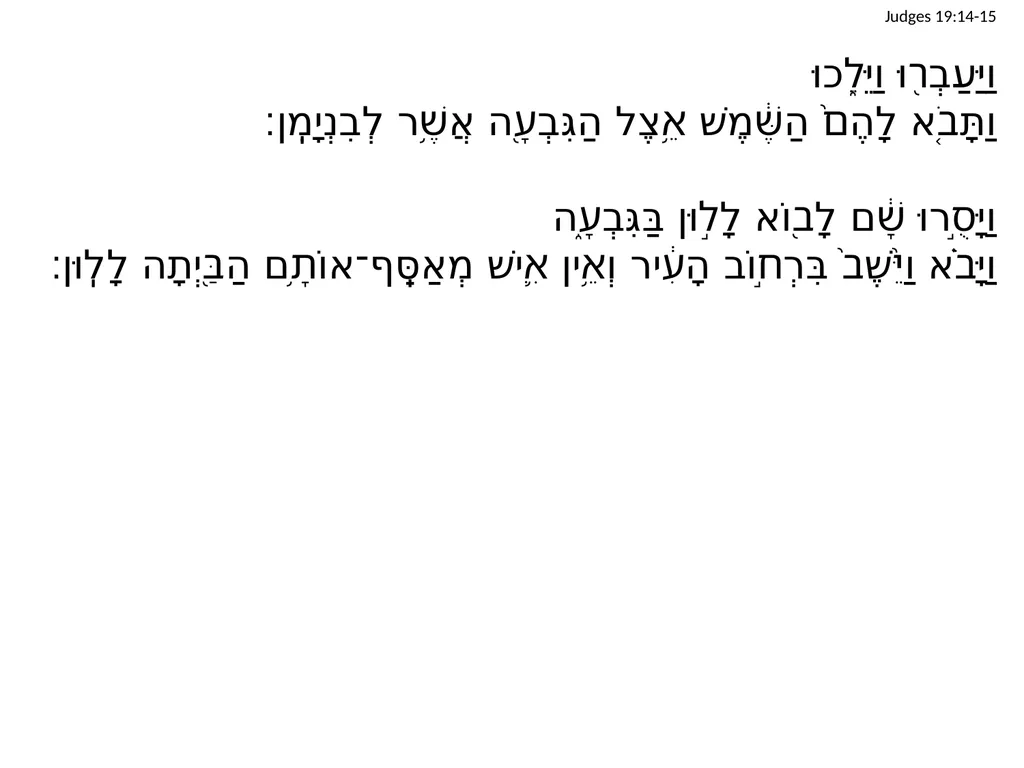
Judges 19:14-15 וַיַּעַבְר֖וּ וַיֵּלֵ֑כוּ
וַתָּבֹ֤א לָהֶם֙ הַשֶּׁ֔מֶשׁ אֵ֥צֶל הַגִּבְעָ֖ה אֲשֶׁ֥ר לְבִנְיָמִֽן׃
וַיָּסֻ֣רוּ שָׁ֔ם לָב֖וֹא לָל֣וּן בַּגִּבְעָ֑ה
וַיָּבֹ֗א וַיֵּ֙שֶׁב֙ בִּרְח֣וֹב הָעִ֔יר וְאֵ֥ין אִ֛ישׁ מְאַסֵּֽף־אוֹתָ֥ם הַבַּ֖יְתָה לָלֽוּן׃<br>
וַתָּבֹ֤א לָהֶם֙ הַשֶּׁ֔מֶשׁ אֵ֥צֶל הַגִּבְעָ֖ה אֲשֶׁ֥ר לְבִנְיָמִֽן׃
וַיָּסֻ֣רוּ שָׁ֔ם לָב֖וֹא לָל֣וּן בַּגִּבְעָ֑ה
וַיָּבֹ֗א וַיֵּ֙שֶׁב֙ בִּרְח֣וֹב הָעִ֔יר וְאֵ֥ין אִ֛ישׁ מְאַסֵּֽף־אוֹתָ֥ם הַבַּ֖יְתָה לָלֽוּן׃<br>
19
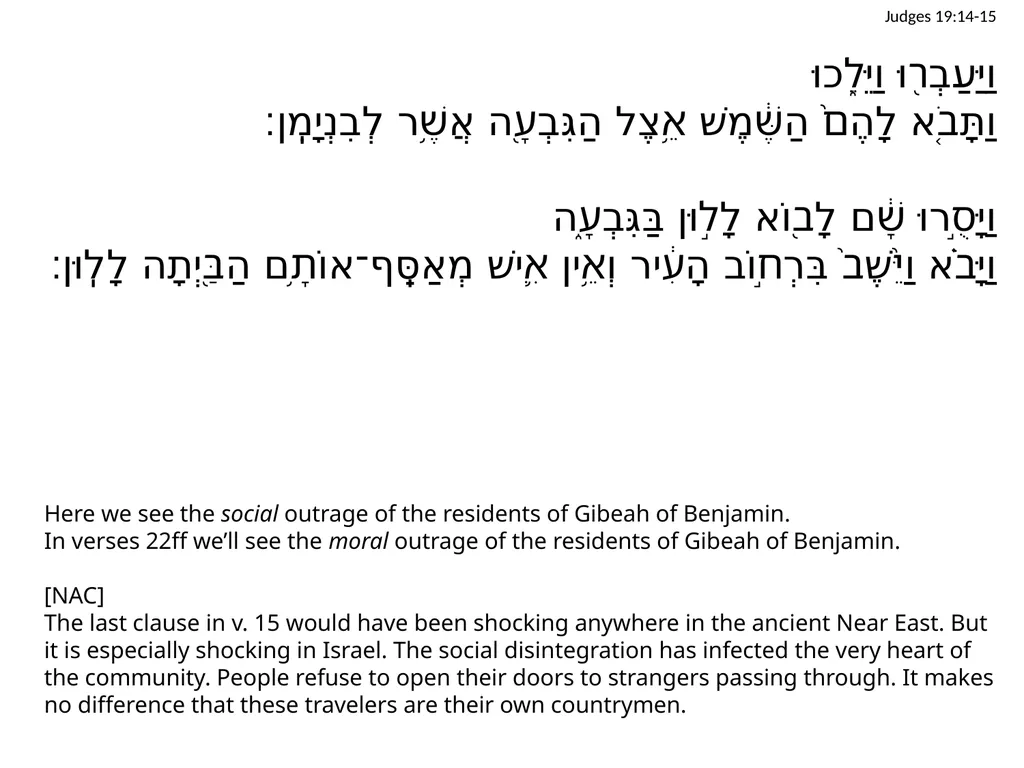
Judges 19:14-15 וַיַּעַבְר֖וּ וַיֵּלֵ֑כוּ
וַתָּבֹ֤א לָהֶם֙ הַשֶּׁ֔מֶשׁ אֵ֥צֶל הַגִּבְעָ֖ה אֲשֶׁ֥ר לְבִנְיָמִֽן׃
וַיָּסֻ֣רוּ שָׁ֔ם לָב֖וֹא לָל֣וּן בַּגִּבְעָ֑ה
וַיָּבֹ֗א וַיֵּ֙שֶׁב֙ בִּרְח֣וֹב הָעִ֔יר וְאֵ֥ין אִ֛ישׁ מְאַסֵּֽף־אוֹתָ֥ם הַבַּ֖יְתָה לָלֽוּן׃ Here we see the social outrage of the residents of Gibeah of Benjamin.
In verses 22ff we’ll see the moral outrage of the residents of Gibeah of Benjamin.
[NAC]
The last clause in v. 15 would have been shocking anywhere in the ancient Near East. But it is especially shocking in Israel. The social disintegration has infected the very heart of the community. People refuse to open their doors to strangers passing through. It makes no difference that these travelers are their own countrymen.<br>
וַתָּבֹ֤א לָהֶם֙ הַשֶּׁ֔מֶשׁ אֵ֥צֶל הַגִּבְעָ֖ה אֲשֶׁ֥ר לְבִנְיָמִֽן׃
וַיָּסֻ֣רוּ שָׁ֔ם לָב֖וֹא לָל֣וּן בַּגִּבְעָ֑ה
וַיָּבֹ֗א וַיֵּ֙שֶׁב֙ בִּרְח֣וֹב הָעִ֔יר וְאֵ֥ין אִ֛ישׁ מְאַסֵּֽף־אוֹתָ֥ם הַבַּ֖יְתָה לָלֽוּן׃ Here we see the social outrage of the residents of Gibeah of Benjamin.
In verses 22ff we’ll see the moral outrage of the residents of Gibeah of Benjamin.
[NAC]
The last clause in v. 15 would have been shocking anywhere in the ancient Near East. But it is especially shocking in Israel. The social disintegration has infected the very heart of the community. People refuse to open their doors to strangers passing through. It makes no difference that these travelers are their own countrymen.<br>
20
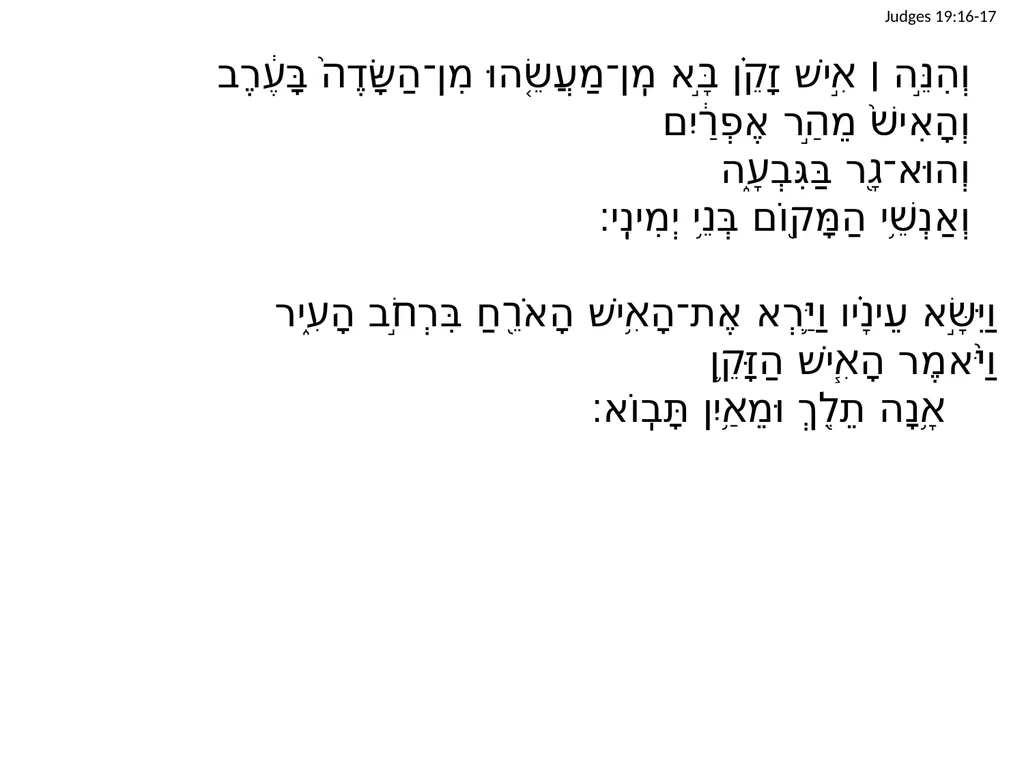
Judges 19:16-17 וְהִנֵּ֣ה ׀ אִ֣ישׁ זָקֵ֗ן בָּ֣א מִֽן־מַעֲשֵׂ֤הוּ מִן־הַשָּׂדֶה֙ בָּעֶ֔רֶב
וְהָאִישׁ֙ מֵהַ֣ר אֶפְרַ֔יִם
וְהוּא־גָ֖ר בַּגִּבְעָ֑ה
וְאַנְשֵׁ֥י הַמָּק֖וֹם בְּנֵ֥י יְמִינִֽי׃
וַיִּשָּׂ֣א עֵינָ֗יו וַיַּ֛רְא אֶת־הָאִ֥ישׁ הָאֹרֵ֖חַ בִּרְחֹ֣ב הָעִ֑יר
וַיֹּ֨אמֶר הָאִ֧ישׁ הַזָּקֵ֛ן
אָ֥נָה תֵלֵ֖ךְ וּמֵאַ֥יִן תָּבֽוֹא׃<br>
וְהָאִישׁ֙ מֵהַ֣ר אֶפְרַ֔יִם
וְהוּא־גָ֖ר בַּגִּבְעָ֑ה
וְאַנְשֵׁ֥י הַמָּק֖וֹם בְּנֵ֥י יְמִינִֽי׃
וַיִּשָּׂ֣א עֵינָ֗יו וַיַּ֛רְא אֶת־הָאִ֥ישׁ הָאֹרֵ֖חַ בִּרְחֹ֣ב הָעִ֑יר
וַיֹּ֨אמֶר הָאִ֧ישׁ הַזָּקֵ֛ן
אָ֥נָה תֵלֵ֖ךְ וּמֵאַ֥יִן תָּבֽוֹא׃<br>
21
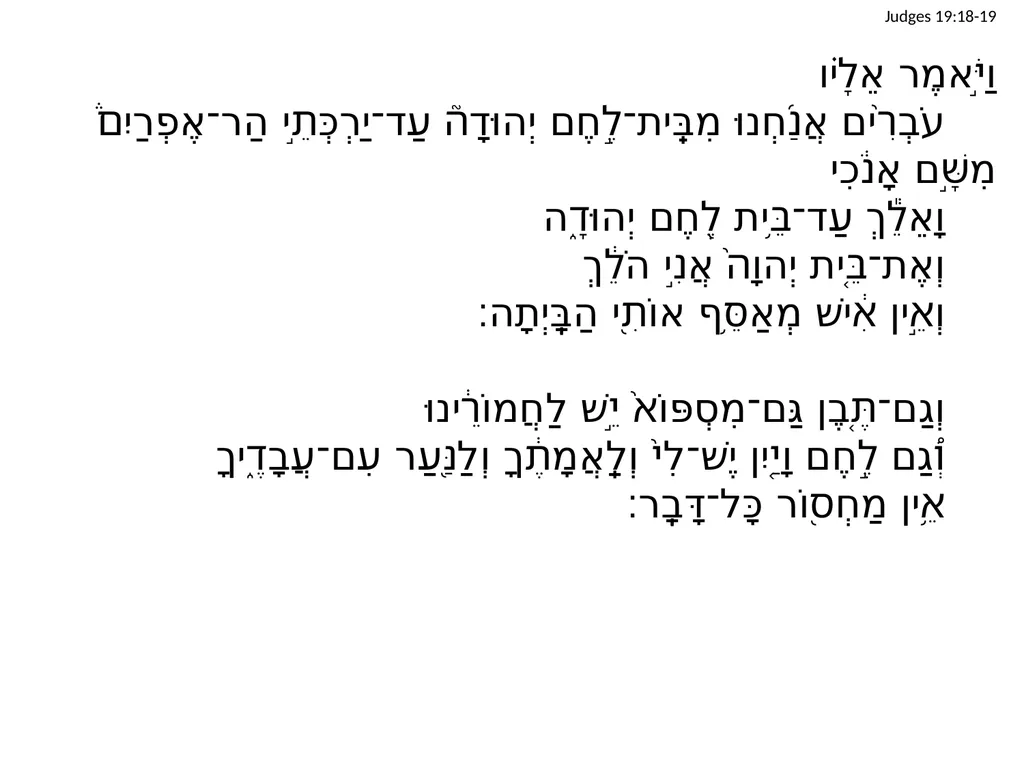
Judges 19:18-19 וַיֹּ֣אמֶר אֵלָ֗יו
עֹבְרִ֨ים אֲנַ֜חְנוּ מִבֵּֽית־לֶ֣חֶם יְהוּדָה֮ עַד־יַרְכְּתֵ֣י הַר־אֶפְרַיִם֒ מִשָּׁ֣ם אָנֹ֔כִי
וָאֵלֵ֕ךְ עַד־בֵּ֥ית לֶ֖חֶם יְהוּדָ֑ה
וְאֶת־בֵּ֤ית יְהוָה֙ אֲנִ֣י הֹלֵ֔ךְ
וְאֵ֣ין אִ֔ישׁ מְאַסֵּ֥ף אוֹתִ֖י הַבָּֽיְתָה׃
וְגַם־תֶּ֤בֶן גַּם־מִסְפּוֹא֙ יֵ֣שׁ לַחֲמוֹרֵ֔ינוּ
וְ֠גַם לֶ֣חֶם וָיַ֤יִן יֶשׁ־לִי֙ וְלַֽאֲמָתֶ֔ךָ וְלַנַּ֖עַר עִם־עֲבָדֶ֑יךָ
אֵ֥ין מַחְס֖וֹר כָּל־דָּבָֽר׃<br>
עֹבְרִ֨ים אֲנַ֜חְנוּ מִבֵּֽית־לֶ֣חֶם יְהוּדָה֮ עַד־יַרְכְּתֵ֣י הַר־אֶפְרַיִם֒ מִשָּׁ֣ם אָנֹ֔כִי
וָאֵלֵ֕ךְ עַד־בֵּ֥ית לֶ֖חֶם יְהוּדָ֑ה
וְאֶת־בֵּ֤ית יְהוָה֙ אֲנִ֣י הֹלֵ֔ךְ
וְאֵ֣ין אִ֔ישׁ מְאַסֵּ֥ף אוֹתִ֖י הַבָּֽיְתָה׃
וְגַם־תֶּ֤בֶן גַּם־מִסְפּוֹא֙ יֵ֣שׁ לַחֲמוֹרֵ֔ינוּ
וְ֠גַם לֶ֣חֶם וָיַ֤יִן יֶשׁ־לִי֙ וְלַֽאֲמָתֶ֔ךָ וְלַנַּ֖עַר עִם־עֲבָדֶ֑יךָ
אֵ֥ין מַחְס֖וֹר כָּל־דָּבָֽר׃<br>
22
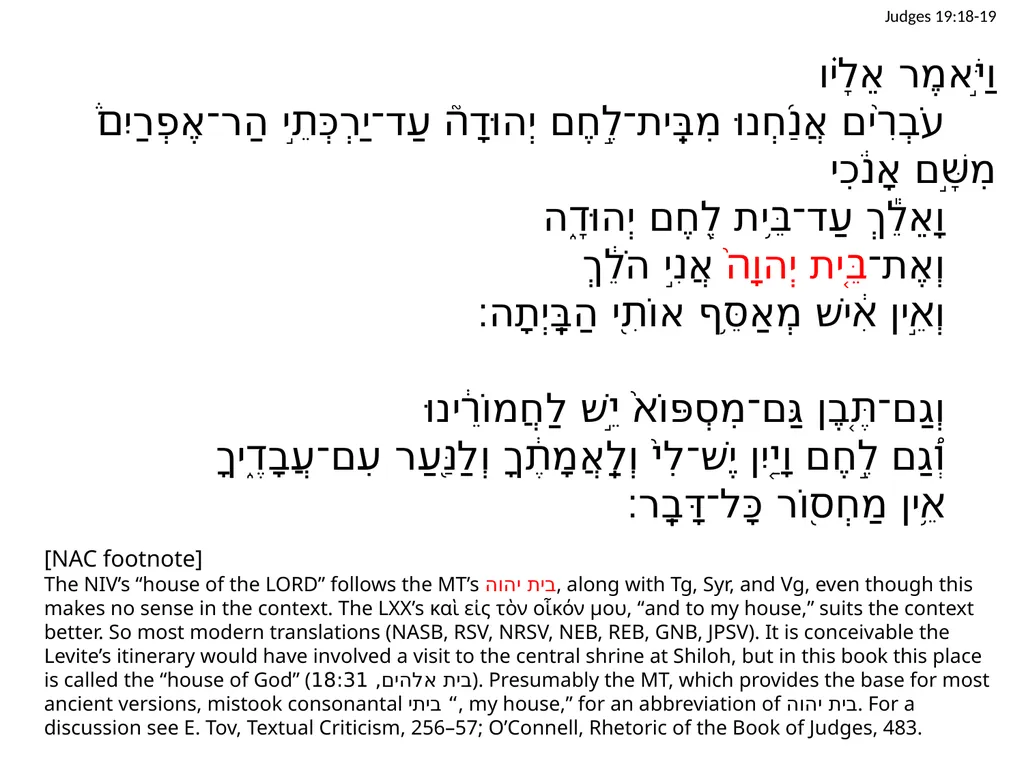
Judges 19:18-19 וַיֹּ֣אמֶר אֵלָ֗יו
עֹבְרִ֨ים אֲנַ֜חְנוּ מִבֵּֽית־לֶ֣חֶם יְהוּדָה֮ עַד־יַרְכְּתֵ֣י הַר־אֶפְרַיִם֒ מִשָּׁ֣ם אָנֹ֔כִי
וָאֵלֵ֕ךְ עַד־בֵּ֥ית לֶ֖חֶם יְהוּדָ֑ה
וְאֶת־בֵּ֤ית יְהוָה֙ אֲנִ֣י הֹלֵ֔ךְ
וְאֵ֣ין אִ֔ישׁ מְאַסֵּ֥ף אוֹתִ֖י הַבָּֽיְתָה׃
וְגַם־תֶּ֤בֶן גַּם־מִסְפּוֹא֙ יֵ֣שׁ לַחֲמוֹרֵ֔ינוּ
וְ֠גַם לֶ֣חֶם וָיַ֤יִן יֶשׁ־לִי֙ וְלַֽאֲמָתֶ֔ךָ וְלַנַּ֖עַר עִם־עֲבָדֶ֑יךָ
אֵ֥ין מַחְס֖וֹר כָּל־דָּבָֽר׃ [NAC footnote]
The NIV’s “house of the LORD” follows the MT’s בית יהוה, along with Tg, Syr, and Vg, even though this makes no sense in the context. The LXX’s καὶ εἰς τὸν οἷκόν μου, “and to my house,” suits the context better. So most modern translations (NASB, RSV, NRSV, NEB, REB, GNB, JPSV). It is conceivable the Levite’s itinerary would have involved a visit to the central shrine at Shiloh, but in this book this place is called the “house of God” (בית אלהים, 18:31). Presumably the MT, which provides the base for most ancient versions, mistook consonantal ביתי “, my house,” for an abbreviation of בית יהוה. For a discussion see E. Tov, Textual Criticism, 256–57; O’Connell, Rhetoric of the Book of Judges, 483.<br>
עֹבְרִ֨ים אֲנַ֜חְנוּ מִבֵּֽית־לֶ֣חֶם יְהוּדָה֮ עַד־יַרְכְּתֵ֣י הַר־אֶפְרַיִם֒ מִשָּׁ֣ם אָנֹ֔כִי
וָאֵלֵ֕ךְ עַד־בֵּ֥ית לֶ֖חֶם יְהוּדָ֑ה
וְאֶת־בֵּ֤ית יְהוָה֙ אֲנִ֣י הֹלֵ֔ךְ
וְאֵ֣ין אִ֔ישׁ מְאַסֵּ֥ף אוֹתִ֖י הַבָּֽיְתָה׃
וְגַם־תֶּ֤בֶן גַּם־מִסְפּוֹא֙ יֵ֣שׁ לַחֲמוֹרֵ֔ינוּ
וְ֠גַם לֶ֣חֶם וָיַ֤יִן יֶשׁ־לִי֙ וְלַֽאֲמָתֶ֔ךָ וְלַנַּ֖עַר עִם־עֲבָדֶ֑יךָ
אֵ֥ין מַחְס֖וֹר כָּל־דָּבָֽר׃ [NAC footnote]
The NIV’s “house of the LORD” follows the MT’s בית יהוה, along with Tg, Syr, and Vg, even though this makes no sense in the context. The LXX’s καὶ εἰς τὸν οἷκόν μου, “and to my house,” suits the context better. So most modern translations (NASB, RSV, NRSV, NEB, REB, GNB, JPSV). It is conceivable the Levite’s itinerary would have involved a visit to the central shrine at Shiloh, but in this book this place is called the “house of God” (בית אלהים, 18:31). Presumably the MT, which provides the base for most ancient versions, mistook consonantal ביתי “, my house,” for an abbreviation of בית יהוה. For a discussion see E. Tov, Textual Criticism, 256–57; O’Connell, Rhetoric of the Book of Judges, 483.<br>
23
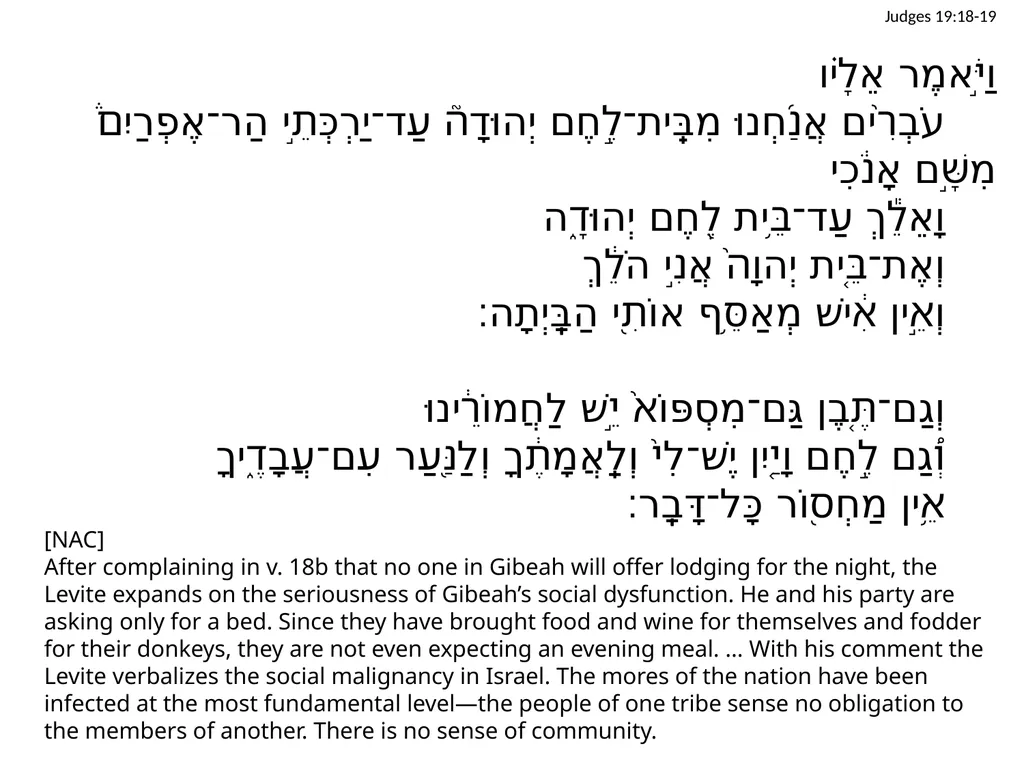
Judges 19:18-19 וַיֹּ֣אמֶר אֵלָ֗יו
עֹבְרִ֨ים אֲנַ֜חְנוּ מִבֵּֽית־לֶ֣חֶם יְהוּדָה֮ עַד־יַרְכְּתֵ֣י הַר־אֶפְרַיִם֒ מִשָּׁ֣ם אָנֹ֔כִי
וָאֵלֵ֕ךְ עַד־בֵּ֥ית לֶ֖חֶם יְהוּדָ֑ה
וְאֶת־בֵּ֤ית יְהוָה֙ אֲנִ֣י הֹלֵ֔ךְ
וְאֵ֣ין אִ֔ישׁ מְאַסֵּ֥ף אוֹתִ֖י הַבָּֽיְתָה׃
וְגַם־תֶּ֤בֶן גַּם־מִסְפּוֹא֙ יֵ֣שׁ לַחֲמוֹרֵ֔ינוּ
וְ֠גַם לֶ֣חֶם וָיַ֤יִן יֶשׁ־לִי֙ וְלַֽאֲמָתֶ֔ךָ וְלַנַּ֖עַר עִם־עֲבָדֶ֑יךָ
אֵ֥ין מַחְס֖וֹר כָּל־דָּבָֽר׃ [NAC]
After complaining in v. 18b that no one in Gibeah will offer lodging for the night, the Levite expands on the seriousness of Gibeah’s social dysfunction. He and his party are asking only for a bed. Since they have brought food and wine for themselves and fodder for their donkeys, they are not even expecting an evening meal. … With his comment the Levite verbalizes the social malignancy in Israel. The mores of the nation have been infected at the most fundamental level—the people of one tribe sense no obligation to the members of another. There is no sense of community.<br>
עֹבְרִ֨ים אֲנַ֜חְנוּ מִבֵּֽית־לֶ֣חֶם יְהוּדָה֮ עַד־יַרְכְּתֵ֣י הַר־אֶפְרַיִם֒ מִשָּׁ֣ם אָנֹ֔כִי
וָאֵלֵ֕ךְ עַד־בֵּ֥ית לֶ֖חֶם יְהוּדָ֑ה
וְאֶת־בֵּ֤ית יְהוָה֙ אֲנִ֣י הֹלֵ֔ךְ
וְאֵ֣ין אִ֔ישׁ מְאַסֵּ֥ף אוֹתִ֖י הַבָּֽיְתָה׃
וְגַם־תֶּ֤בֶן גַּם־מִסְפּוֹא֙ יֵ֣שׁ לַחֲמוֹרֵ֔ינוּ
וְ֠גַם לֶ֣חֶם וָיַ֤יִן יֶשׁ־לִי֙ וְלַֽאֲמָתֶ֔ךָ וְלַנַּ֖עַר עִם־עֲבָדֶ֑יךָ
אֵ֥ין מַחְס֖וֹר כָּל־דָּבָֽר׃ [NAC]
After complaining in v. 18b that no one in Gibeah will offer lodging for the night, the Levite expands on the seriousness of Gibeah’s social dysfunction. He and his party are asking only for a bed. Since they have brought food and wine for themselves and fodder for their donkeys, they are not even expecting an evening meal. … With his comment the Levite verbalizes the social malignancy in Israel. The mores of the nation have been infected at the most fundamental level—the people of one tribe sense no obligation to the members of another. There is no sense of community.<br>
24
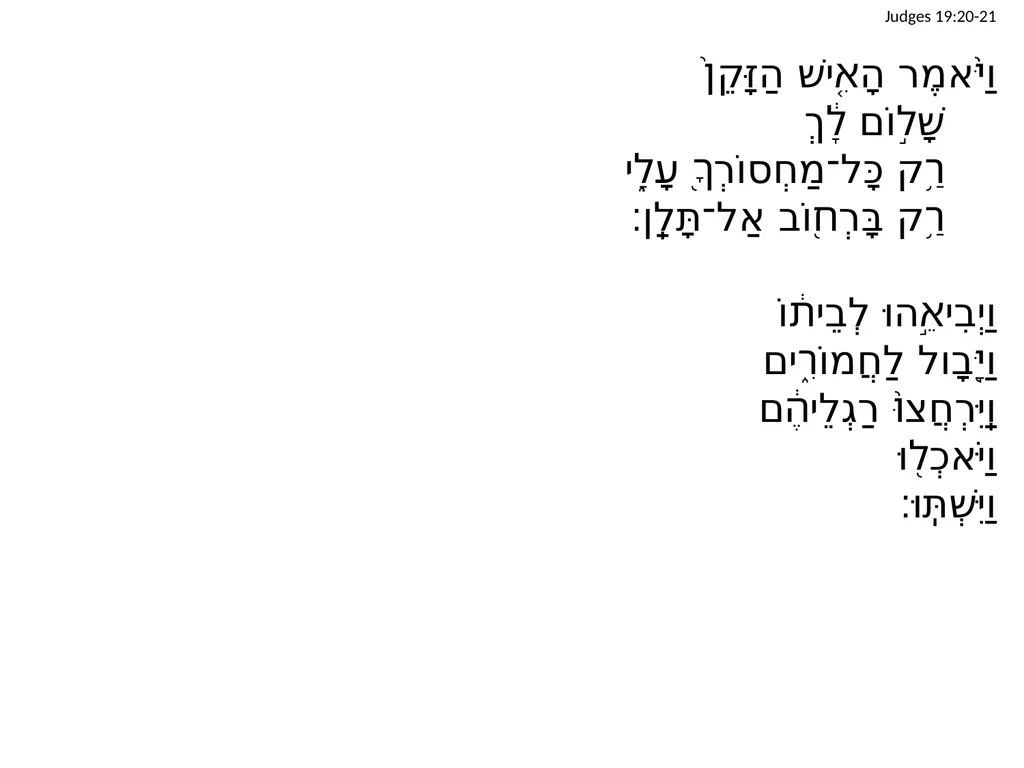
Judges 19:20-21 וַיֹּ֨אמֶר הָאִ֤ישׁ הַזָּקֵן֙
שָׁל֣וֹם לָ֔ךְ
רַ֥ק כָּל־מַחְסוֹרְךָ֖ עָלָ֑י
רַ֥ק בָּרְח֖וֹב אַל־תָּלַֽן׃
וַיְבִיאֵ֣הוּ לְבֵית֔וֹ
וַיָּ֖בָול לַחֲמוֹרִ֑ים
וַֽיִּרְחֲצוּ֙ רַגְלֵיהֶ֔ם
וַיֹּאכְל֖וּ
וַיִּשְׁתּֽוּ׃<br>
שָׁל֣וֹם לָ֔ךְ
רַ֥ק כָּל־מַחְסוֹרְךָ֖ עָלָ֑י
רַ֥ק בָּרְח֖וֹב אַל־תָּלַֽן׃
וַיְבִיאֵ֣הוּ לְבֵית֔וֹ
וַיָּ֖בָול לַחֲמוֹרִ֑ים
וַֽיִּרְחֲצוּ֙ רַגְלֵיהֶ֔ם
וַיֹּאכְל֖וּ
וַיִּשְׁתּֽוּ׃<br>
25
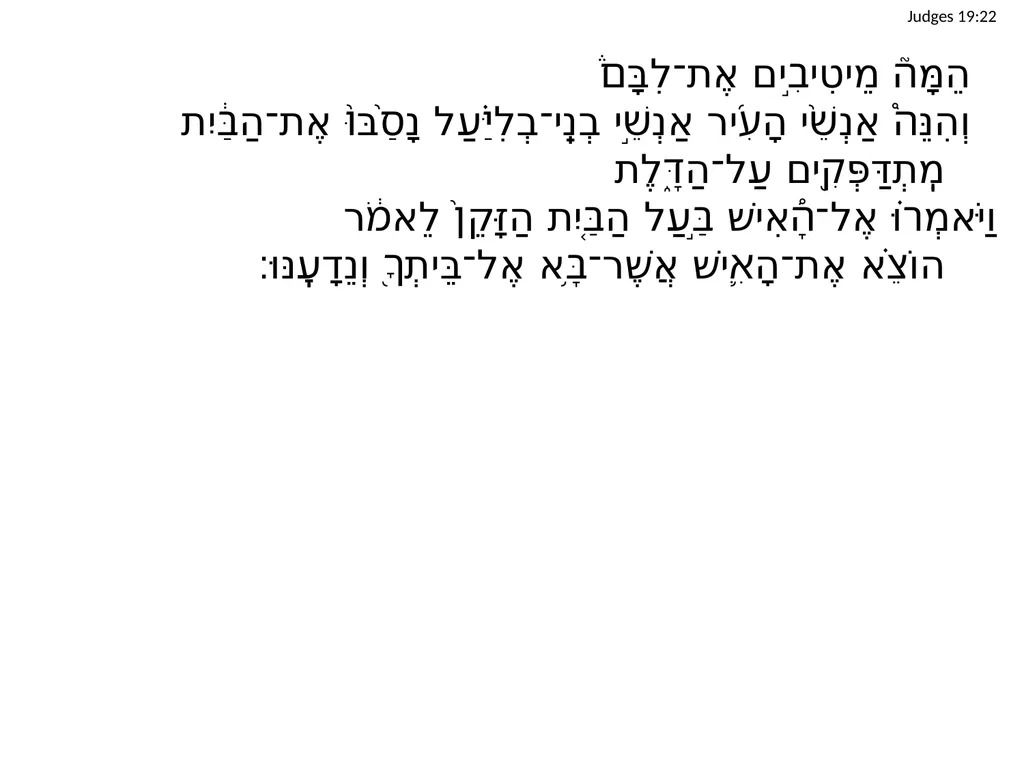
Judges 19:22 הֵמָּה֮ מֵיטִיבִ֣ים אֶת־לִבָּם֒
וְהִנֵּה֩ אַנְשֵׁ֨י הָעִ֜יר אַנְשֵׁ֣י בְנֵֽי־בְלִיַּ֗עַל נָסַ֙בּוּ֙ אֶת־הַבַּ֔יִת
מִֽתְדַּפְּקִ֖ים עַל־הַדָּ֑לֶת
וַיֹּאמְר֗וּ אֶל־הָ֠אִישׁ בַּ֣עַל הַבַּ֤יִת הַזָּקֵן֙ לֵאמֹ֔ר
הוֹצֵ֗א אֶת־הָאִ֛ישׁ אֲשֶׁר־בָּ֥א אֶל־בֵּיתְךָ֖ וְנֵדָעֶֽנּוּ׃<br>
וְהִנֵּה֩ אַנְשֵׁ֨י הָעִ֜יר אַנְשֵׁ֣י בְנֵֽי־בְלִיַּ֗עַל נָסַ֙בּוּ֙ אֶת־הַבַּ֔יִת
מִֽתְדַּפְּקִ֖ים עַל־הַדָּ֑לֶת
וַיֹּאמְר֗וּ אֶל־הָ֠אִישׁ בַּ֣עַל הַבַּ֤יִת הַזָּקֵן֙ לֵאמֹ֔ר
הוֹצֵ֗א אֶת־הָאִ֛ישׁ אֲשֶׁר־בָּ֥א אֶל־בֵּיתְךָ֖ וְנֵדָעֶֽנּוּ׃<br>
26
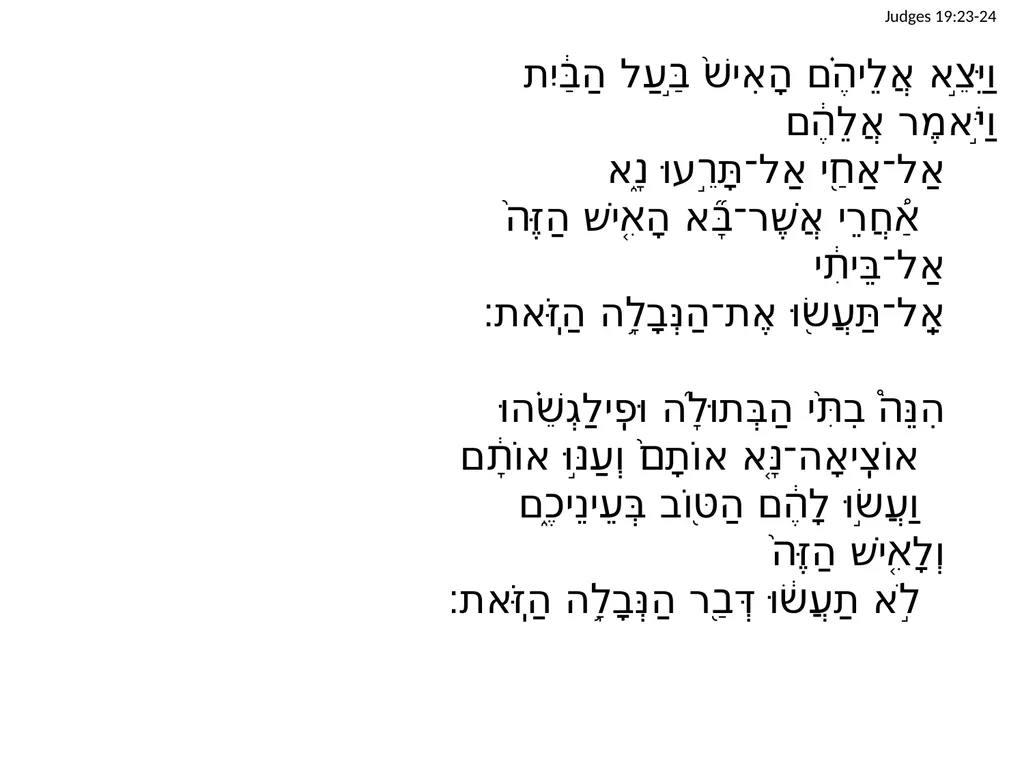
Judges 19:23-24 וַיֵּצֵ֣א אֲלֵיהֶ֗ם הָאִישׁ֙ בַּ֣עַל הַבַּ֔יִת
וַיֹּ֣אמֶר אֲלֵהֶ֔ם
אַל־אַחַ֖י אַל־תָּרֵ֣עוּ נָ֑א
אַ֠חֲרֵי אֲשֶׁר־בָּ֞א הָאִ֤ישׁ הַזֶּה֙
אַל־בֵּיתִ֔י
אַֽל־תַּעֲשׂ֖וּ אֶת־הַנְּבָלָ֥ה הַזֹּֽאת׃
הִנֵּה֩ בִתִּ֨י הַבְּתוּלָ֜ה וּפִֽילַגְשֵׁ֗הוּ
אוֹצִֽיאָה־נָּ֤א אוֹתָם֙ וְעַנּ֣וּ אוֹתָ֔ם
וַעֲשׂ֣וּ לָהֶ֔ם הַטּ֖וֹב בְּעֵינֵיכֶ֑ם
וְלָאִ֤ישׁ הַזֶּה֙
לֹ֣א תַעֲשׂ֔וּ דְּבַ֖ר הַנְּבָלָ֥ה הַזֹּֽאת׃<br>
וַיֹּ֣אמֶר אֲלֵהֶ֔ם
אַל־אַחַ֖י אַל־תָּרֵ֣עוּ נָ֑א
אַ֠חֲרֵי אֲשֶׁר־בָּ֞א הָאִ֤ישׁ הַזֶּה֙
אַל־בֵּיתִ֔י
אַֽל־תַּעֲשׂ֖וּ אֶת־הַנְּבָלָ֥ה הַזֹּֽאת׃
הִנֵּה֩ בִתִּ֨י הַבְּתוּלָ֜ה וּפִֽילַגְשֵׁ֗הוּ
אוֹצִֽיאָה־נָּ֤א אוֹתָם֙ וְעַנּ֣וּ אוֹתָ֔ם
וַעֲשׂ֣וּ לָהֶ֔ם הַטּ֖וֹב בְּעֵינֵיכֶ֑ם
וְלָאִ֤ישׁ הַזֶּה֙
לֹ֣א תַעֲשׂ֔וּ דְּבַ֖ר הַנְּבָלָ֥ה הַזֹּֽאת׃<br>
27
הֵמָּה֮ מֵיטִיבִ֣ים אֶת־לִבָּם֒
וְהִנֵּה֩ אַנְשֵׁ֨י הָעִ֜יר אַנְשֵׁ֣י בְנֵֽי־בְלִיַּ֗עַל
נָסַ֙בּוּ֙ אֶת־הַבַּ֔יִת
מִֽתְדַּפְּקִ֖ים עַל־הַדָּ֑לֶת
וַיֹּאמְר֗וּ אֶל־הָ֠אִישׁ בַּ֣עַל הַבַּ֤יִת הַזָּקֵן֙ לֵאמֹ֔ר
הוֹצֵ֗א אֶת־הָאִ֛ישׁ אֲשֶׁר־בָּ֥א אֶל־בֵּיתְךָ֖
וְנֵדָעֶֽנּוּ׃
וַיֵּצֵ֣א אֲלֵיהֶ֗ם הָאִישׁ֙ בַּ֣עַל הַבַּ֔יִת
וַיֹּ֣אמֶר אֲלֵהֶ֔ם
אַל־אַחַ֖י אַל־תָּרֵ֣עוּ נָ֑א
אַ֠חֲרֵי אֲשֶׁר־בָּ֞א הָאִ֤ישׁ הַזֶּה֙ אַל־בֵּיתִ֔י
אַֽל־תַּעֲשׂ֖וּ אֶת־הַנְּבָלָ֥ה הַזֹּֽאת׃
הִנֵּה֩ בִתִּ֨י הַבְּתוּלָ֜ה וּפִֽילַגְשֵׁ֗הוּ
אוֹצִֽיאָה־נָּ֤א אוֹתָם֙ וְעַנּ֣וּ אוֹתָ֔ם
וַעֲשׂ֣וּ לָהֶ֔ם הַטּ֖וֹב בְּעֵינֵיכֶ֑ם
וְלָאִ֤ישׁ הַזֶּה֙
לֹ֣א תַעֲשׂ֔וּ דְּבַ֖ר הַנְּבָלָ֥ה הַזֹּֽאת׃ טֶרֶם֮ יִשְׁכָּבוּ֒
וְאַנְשֵׁ֙י הָעִ֜יר אַנְשֵׁ֤י סְדֹם֙
נָסַ֣בּוּ עַל־הַבַּ֔יִת
מִנַּ֖עַר וְעַד־זָקֵ֑ן כָּל־הָעָ֖ם מִקָּצֶֽה׃
וַיִּקְרְא֤וּ אֶל־לוֹט֙ וַיֹּ֣אמְרוּ ל֔וֹ
אַיֵּ֧ה הָאֲנָשִׁ֛ים אֲשֶׁר־בָּ֥אוּ אֵלֶ֖יךָ הַלָּ֑יְלָה
הוֹצִיאֵ֣ם אֵלֵ֔ינוּ
וְנֵדְעָ֖ה אֹתָֽם׃
וַיֵּצֵ֧א אֲלֵהֶ֛ם ל֖וֹט הַפֶּ֑תְחָה וְהַדֶּ֖לֶת סָגַ֥ר אַחֲרָֽיו׃
וַיֹּאמַ֑ר
אַל־נָ֥א אַחַ֖י תָּרֵֽעוּ׃
הִנֵּה־נָ֙א לִ֜י שְׁתֵּ֣י בָנ֗וֹת אֲשֶׁ֤ר לֹֽא־יָדְעוּ֙ אִ֔ישׁ אוֹצִֽיאָה־נָּ֤א אֶתְהֶן֙ אֲלֵיכֶ֔ם
וַעֲשׂ֣וּ לָהֶ֔ן כַּטּ֖וֹב בְּעֵינֵיכֶ֑ם
רַ֠ק לָֽאֲנָשִׁ֤ים הָאֵל֙
אַל־תַּעֲשׂ֣וּ דָבָ֔ר
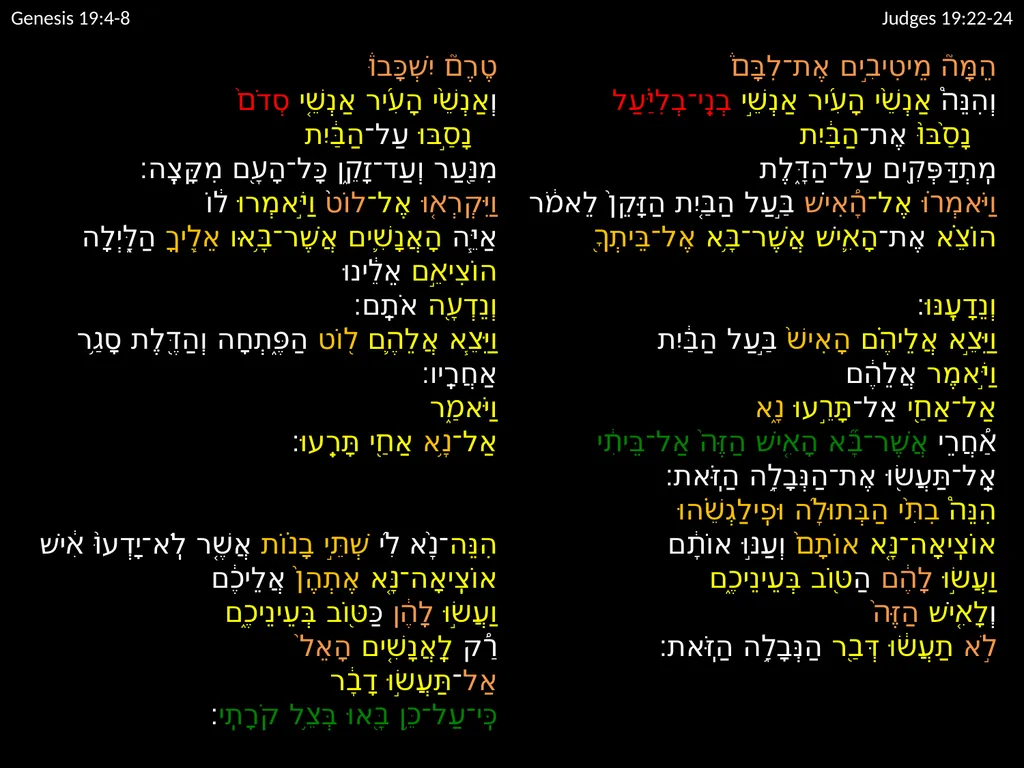
כִּֽי־עַל־כֵּ֥ן בָּ֖אוּ בְּצֵ֥ל קֹרָתִֽי׃ Genesis 19:4-8 Judges 19:22-24<br>
וְהִנֵּה֩ אַנְשֵׁ֨י הָעִ֜יר אַנְשֵׁ֣י בְנֵֽי־בְלִיַּ֗עַל
נָסַ֙בּוּ֙ אֶת־הַבַּ֔יִת
מִֽתְדַּפְּקִ֖ים עַל־הַדָּ֑לֶת
וַיֹּאמְר֗וּ אֶל־הָ֠אִישׁ בַּ֣עַל הַבַּ֤יִת הַזָּקֵן֙ לֵאמֹ֔ר
הוֹצֵ֗א אֶת־הָאִ֛ישׁ אֲשֶׁר־בָּ֥א אֶל־בֵּיתְךָ֖
וְנֵדָעֶֽנּוּ׃
וַיֵּצֵ֣א אֲלֵיהֶ֗ם הָאִישׁ֙ בַּ֣עַל הַבַּ֔יִת
וַיֹּ֣אמֶר אֲלֵהֶ֔ם
אַל־אַחַ֖י אַל־תָּרֵ֣עוּ נָ֑א
אַ֠חֲרֵי אֲשֶׁר־בָּ֞א הָאִ֤ישׁ הַזֶּה֙ אַל־בֵּיתִ֔י
אַֽל־תַּעֲשׂ֖וּ אֶת־הַנְּבָלָ֥ה הַזֹּֽאת׃
הִנֵּה֩ בִתִּ֨י הַבְּתוּלָ֜ה וּפִֽילַגְשֵׁ֗הוּ
אוֹצִֽיאָה־נָּ֤א אוֹתָם֙ וְעַנּ֣וּ אוֹתָ֔ם
וַעֲשׂ֣וּ לָהֶ֔ם הַטּ֖וֹב בְּעֵינֵיכֶ֑ם
וְלָאִ֤ישׁ הַזֶּה֙
לֹ֣א תַעֲשׂ֔וּ דְּבַ֖ר הַנְּבָלָ֥ה הַזֹּֽאת׃ טֶרֶם֮ יִשְׁכָּבוּ֒
וְאַנְשֵׁ֙י הָעִ֜יר אַנְשֵׁ֤י סְדֹם֙
נָסַ֣בּוּ עַל־הַבַּ֔יִת
מִנַּ֖עַר וְעַד־זָקֵ֑ן כָּל־הָעָ֖ם מִקָּצֶֽה׃
וַיִּקְרְא֤וּ אֶל־לוֹט֙ וַיֹּ֣אמְרוּ ל֔וֹ
אַיֵּ֧ה הָאֲנָשִׁ֛ים אֲשֶׁר־בָּ֥אוּ אֵלֶ֖יךָ הַלָּ֑יְלָה
הוֹצִיאֵ֣ם אֵלֵ֔ינוּ
וְנֵדְעָ֖ה אֹתָֽם׃
וַיֵּצֵ֧א אֲלֵהֶ֛ם ל֖וֹט הַפֶּ֑תְחָה וְהַדֶּ֖לֶת סָגַ֥ר אַחֲרָֽיו׃
וַיֹּאמַ֑ר
אַל־נָ֥א אַחַ֖י תָּרֵֽעוּ׃
הִנֵּה־נָ֙א לִ֜י שְׁתֵּ֣י בָנ֗וֹת אֲשֶׁ֤ר לֹֽא־יָדְעוּ֙ אִ֔ישׁ אוֹצִֽיאָה־נָּ֤א אֶתְהֶן֙ אֲלֵיכֶ֔ם
וַעֲשׂ֣וּ לָהֶ֔ן כַּטּ֖וֹב בְּעֵינֵיכֶ֑ם
רַ֠ק לָֽאֲנָשִׁ֤ים הָאֵל֙
אַל־תַּעֲשׂ֣וּ דָבָ֔ר
כִּֽי־עַל־כֵּ֥ן בָּ֖אוּ בְּצֵ֥ל קֹרָתִֽי׃ Genesis 19:4-8 Judges 19:22-24<br>
28
הֵמָּה֮ מֵיטִיבִ֣ים אֶת־לִבָּם֒
וְהִנֵּה֩ אַנְשֵׁ֨י הָעִ֜יר אַנְשֵׁ֣י בְנֵֽי־בְלִיַּ֗עַל
נָסַ֙בּוּ֙ אֶת־הַבַּ֔יִת
מִֽתְדַּפְּקִ֖ים עַל־הַדָּ֑לֶת
וַיֹּאמְר֗וּ אֶל־הָ֠אִישׁ בַּ֣עַל הַבַּ֤יִת הַזָּקֵן֙ לֵאמֹ֔ר
הוֹצֵ֗א אֶת־הָאִ֛ישׁ אֲשֶׁר־בָּ֥א אֶל־בֵּיתְךָ֖
וְנֵדָעֶֽנּוּ׃
וַיֵּצֵ֣א אֲלֵיהֶ֗ם הָאִישׁ֙ בַּ֣עַל הַבַּ֔יִת
וַיֹּ֣אמֶר אֲלֵהֶ֔ם
אַל־אַחַ֖י אַל־תָּרֵ֣עוּ נָ֑א
אַ֠חֲרֵי אֲשֶׁר־בָּ֞א הָאִ֤ישׁ הַזֶּה֙ אַל־בֵּיתִ֔י
אַֽל־תַּעֲשׂ֖וּ אֶת־הַנְּבָלָ֥ה הַזֹּֽאת׃
הִנֵּה֩ בִתִּ֨י הַבְּתוּלָ֜ה וּפִֽילַגְשֵׁ֗הוּ
אוֹצִֽיאָה־נָּ֤א אוֹתָם֙ וְעַנּ֣וּ אוֹתָ֔ם
וַעֲשׂ֣וּ לָהֶ֔ם הַטּ֖וֹב בְּעֵינֵיכֶ֑ם
וְלָאִ֤ישׁ הַזֶּה֙
לֹ֣א תַעֲשׂ֔וּ דְּבַ֖ר הַנְּבָלָ֥ה הַזֹּֽאת׃ טֶרֶם֮ יִשְׁכָּבוּ֒
וְאַנְשֵׁ֙י הָעִ֜יר אַנְשֵׁ֤י סְדֹם֙
נָסַ֣בּוּ עַל־הַבַּ֔יִת
מִנַּ֖עַר וְעַד־זָקֵ֑ן כָּל־הָעָ֖ם מִקָּצֶֽה׃
וַיִּקְרְא֤וּ אֶל־לוֹט֙ וַיֹּ֣אמְרוּ ל֔וֹ
אַיֵּ֧ה הָאֲנָשִׁ֛ים אֲשֶׁר־בָּ֥אוּ אֵלֶ֖יךָ הַלָּ֑יְלָה
הוֹצִיאֵ֣ם אֵלֵ֔ינוּ
וְנֵדְעָ֖ה אֹתָֽם׃
וַיֵּצֵ֧א אֲלֵהֶ֛ם ל֖וֹט הַפֶּ֑תְחָה וְהַדֶּ֖לֶת סָגַ֥ר אַחֲרָֽיו׃
וַיֹּאמַ֑ר
אַל־נָ֥א אַחַ֖י תָּרֵֽעוּ׃
הִנֵּה־נָ֙א לִ֜י שְׁתֵּ֣י בָנ֗וֹת אֲשֶׁ֤ר לֹֽא־יָדְעוּ֙ אִ֔ישׁ אוֹצִֽיאָה־נָּ֤א אֶתְהֶן֙ אֲלֵיכֶ֔ם
וַעֲשׂ֣וּ לָהֶ֔ן כַּטּ֖וֹב בְּעֵינֵיכֶ֑ם
רַ֠ק לָֽאֲנָשִׁ֤ים הָאֵל֙
אַל־תַּעֲשׂ֣וּ דָבָ֔ר
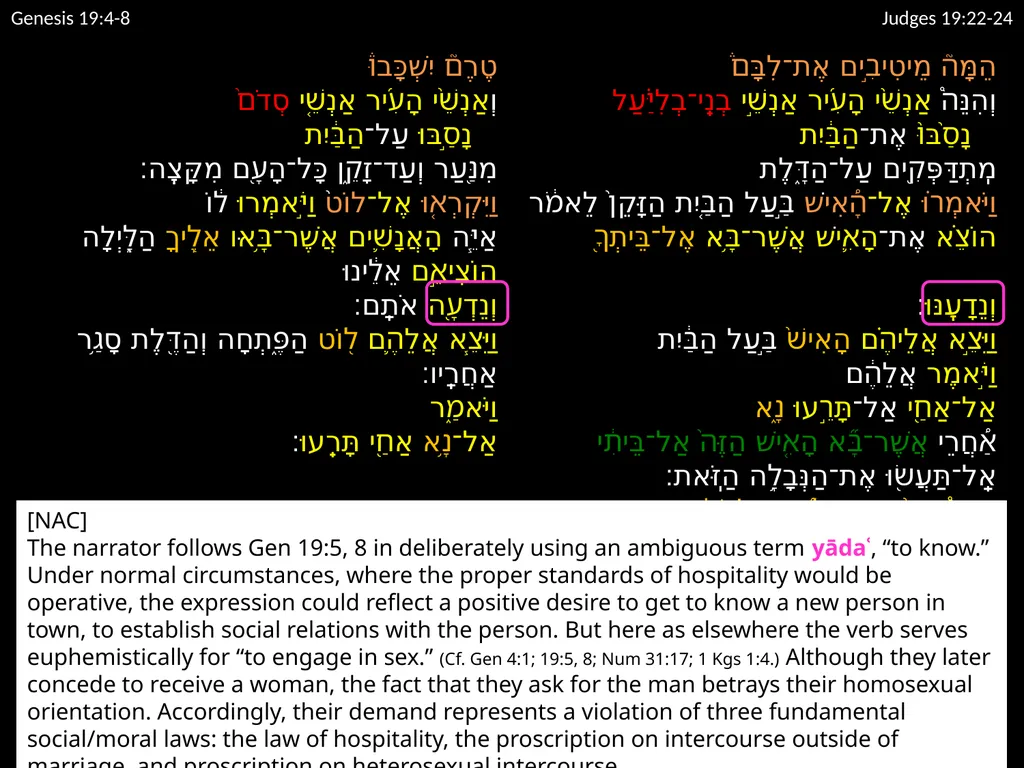
כִּֽי־עַל־כֵּ֥ן בָּ֖אוּ בְּצֵ֥ל קֹרָתִֽי׃ Genesis 19:4-8 Judges 19:22-24 [NAC]
The narrator follows Gen 19:5, 8 in deliberately using an ambiguous term yādaʿ, “to know.” Under normal circumstances, where the proper standards of hospitality would be operative, the expression could reflect a positive desire to get to know a new person in town, to establish social relations with the person. But here as elsewhere the verb serves euphemistically for “to engage in sex.” (Cf. Gen 4:1; 19:5, 8; Num 31:17; 1 Kgs 1:4.) Although they later concede to receive a woman, the fact that they ask for the man betrays their homosexual orientation. Accordingly, their demand represents a violation of three fundamental social/moral laws: the law of hospitality, the proscription on intercourse outside of marriage, and proscription on heterosexual intercourse.<br>
וְהִנֵּה֩ אַנְשֵׁ֨י הָעִ֜יר אַנְשֵׁ֣י בְנֵֽי־בְלִיַּ֗עַל
נָסַ֙בּוּ֙ אֶת־הַבַּ֔יִת
מִֽתְדַּפְּקִ֖ים עַל־הַדָּ֑לֶת
וַיֹּאמְר֗וּ אֶל־הָ֠אִישׁ בַּ֣עַל הַבַּ֤יִת הַזָּקֵן֙ לֵאמֹ֔ר
הוֹצֵ֗א אֶת־הָאִ֛ישׁ אֲשֶׁר־בָּ֥א אֶל־בֵּיתְךָ֖
וְנֵדָעֶֽנּוּ׃
וַיֵּצֵ֣א אֲלֵיהֶ֗ם הָאִישׁ֙ בַּ֣עַל הַבַּ֔יִת
וַיֹּ֣אמֶר אֲלֵהֶ֔ם
אַל־אַחַ֖י אַל־תָּרֵ֣עוּ נָ֑א
אַ֠חֲרֵי אֲשֶׁר־בָּ֞א הָאִ֤ישׁ הַזֶּה֙ אַל־בֵּיתִ֔י
אַֽל־תַּעֲשׂ֖וּ אֶת־הַנְּבָלָ֥ה הַזֹּֽאת׃
הִנֵּה֩ בִתִּ֨י הַבְּתוּלָ֜ה וּפִֽילַגְשֵׁ֗הוּ
אוֹצִֽיאָה־נָּ֤א אוֹתָם֙ וְעַנּ֣וּ אוֹתָ֔ם
וַעֲשׂ֣וּ לָהֶ֔ם הַטּ֖וֹב בְּעֵינֵיכֶ֑ם
וְלָאִ֤ישׁ הַזֶּה֙
לֹ֣א תַעֲשׂ֔וּ דְּבַ֖ר הַנְּבָלָ֥ה הַזֹּֽאת׃ טֶרֶם֮ יִשְׁכָּבוּ֒
וְאַנְשֵׁ֙י הָעִ֜יר אַנְשֵׁ֤י סְדֹם֙
נָסַ֣בּוּ עַל־הַבַּ֔יִת
מִנַּ֖עַר וְעַד־זָקֵ֑ן כָּל־הָעָ֖ם מִקָּצֶֽה׃
וַיִּקְרְא֤וּ אֶל־לוֹט֙ וַיֹּ֣אמְרוּ ל֔וֹ
אַיֵּ֧ה הָאֲנָשִׁ֛ים אֲשֶׁר־בָּ֥אוּ אֵלֶ֖יךָ הַלָּ֑יְלָה
הוֹצִיאֵ֣ם אֵלֵ֔ינוּ
וְנֵדְעָ֖ה אֹתָֽם׃
וַיֵּצֵ֧א אֲלֵהֶ֛ם ל֖וֹט הַפֶּ֑תְחָה וְהַדֶּ֖לֶת סָגַ֥ר אַחֲרָֽיו׃
וַיֹּאמַ֑ר
אַל־נָ֥א אַחַ֖י תָּרֵֽעוּ׃
הִנֵּה־נָ֙א לִ֜י שְׁתֵּ֣י בָנ֗וֹת אֲשֶׁ֤ר לֹֽא־יָדְעוּ֙ אִ֔ישׁ אוֹצִֽיאָה־נָּ֤א אֶתְהֶן֙ אֲלֵיכֶ֔ם
וַעֲשׂ֣וּ לָהֶ֔ן כַּטּ֖וֹב בְּעֵינֵיכֶ֑ם
רַ֠ק לָֽאֲנָשִׁ֤ים הָאֵל֙
אַל־תַּעֲשׂ֣וּ דָבָ֔ר
כִּֽי־עַל־כֵּ֥ן בָּ֖אוּ בְּצֵ֥ל קֹרָתִֽי׃ Genesis 19:4-8 Judges 19:22-24 [NAC]
The narrator follows Gen 19:5, 8 in deliberately using an ambiguous term yādaʿ, “to know.” Under normal circumstances, where the proper standards of hospitality would be operative, the expression could reflect a positive desire to get to know a new person in town, to establish social relations with the person. But here as elsewhere the verb serves euphemistically for “to engage in sex.” (Cf. Gen 4:1; 19:5, 8; Num 31:17; 1 Kgs 1:4.) Although they later concede to receive a woman, the fact that they ask for the man betrays their homosexual orientation. Accordingly, their demand represents a violation of three fundamental social/moral laws: the law of hospitality, the proscription on intercourse outside of marriage, and proscription on heterosexual intercourse.<br>
29
[NAC]
There are actually two dimensions to the crime intended by the men of Gibeah.
First, their action is nĕbālâ because it violates sexual norms. These men have come to commit a perverse homosexual act.243
Second, their action is nĕbālâ because it violates customary norms of hospitality.244
243 The disposition of the Torah toward male homosexual acts is explicitly declared in Lev 18:22; 20:13. In the sight of God this is a capital crime to be punished by execution.
244 Cf. the application of the word to the violation of the customs of holy war (Josh 7:15) and to paying tribute (1 Sam 25:25).<br>
There are actually two dimensions to the crime intended by the men of Gibeah.
First, their action is nĕbālâ because it violates sexual norms. These men have come to commit a perverse homosexual act.243
Second, their action is nĕbālâ because it violates customary norms of hospitality.244
243 The disposition of the Torah toward male homosexual acts is explicitly declared in Lev 18:22; 20:13. In the sight of God this is a capital crime to be punished by execution.
244 Cf. the application of the word to the violation of the customs of holy war (Josh 7:15) and to paying tribute (1 Sam 25:25).<br>
30
[NAC]
As intimated earlier, the narrator places great emphasis on the timing of events in this chapter. The stage for this tragic sequence of incidents was set in v. 10, when the Levite had finally extricated himself from his father-in-law. But he had no idea how dark the coming night would be. The narrator keeps the reader’s attention on the timing of episodes with repeated chronological references that beat ominously throughout the narrative. (1) When “the day had withered/collapses to setting” and at “the decline of the day,” the Levite decides to leave (v. 9). (2) “When the day had gone down,” he was faced with the reality that he would not make it home, hence the need to find a place to spend the night (v. 11). (3) Refusing to seek the hospitality of the Jebusites, “as the sun was setting” the Levite and his companions arrive at the outskirts of Gibeah, which should provide a safe haven (v. 14). (4) “At evening” the old man who would be his host arrives and invites them to his house (v. 16). (5) The plot reaches its nadir when the wicked men of the city rape and torture the Levite’s concubine “all night” (v. 25). (6) The addition of “until the morning” in v. 25b invites the reader to await a new day, but this is a ruse. The horrors have not yet ceased. (7) “At dawn” (haššāḥar) the mob discards her (v. 25c). (8) “At the turn of the morning” the pitiful victim collapses on the doorstep of the host’s house (v. 26a). (9) There she remains “until the light” (v. 26b).
With these chronological notes the narrator has given his verdict on the spiritual and moral state of Israel. The light of the knowledge of Yahweh and “doing what is right in his [Yahweh’s] eyes” have been eclipsed by the depravity of the human soul expressed in “doing what is good in one’s own eyes.”
Block, D. I. (1999). Judges, Ruth (Vol. 6, pp. 539–540). Nashville: Broadman & Holman Publishers.<br>
As intimated earlier, the narrator places great emphasis on the timing of events in this chapter. The stage for this tragic sequence of incidents was set in v. 10, when the Levite had finally extricated himself from his father-in-law. But he had no idea how dark the coming night would be. The narrator keeps the reader’s attention on the timing of episodes with repeated chronological references that beat ominously throughout the narrative. (1) When “the day had withered/collapses to setting” and at “the decline of the day,” the Levite decides to leave (v. 9). (2) “When the day had gone down,” he was faced with the reality that he would not make it home, hence the need to find a place to spend the night (v. 11). (3) Refusing to seek the hospitality of the Jebusites, “as the sun was setting” the Levite and his companions arrive at the outskirts of Gibeah, which should provide a safe haven (v. 14). (4) “At evening” the old man who would be his host arrives and invites them to his house (v. 16). (5) The plot reaches its nadir when the wicked men of the city rape and torture the Levite’s concubine “all night” (v. 25). (6) The addition of “until the morning” in v. 25b invites the reader to await a new day, but this is a ruse. The horrors have not yet ceased. (7) “At dawn” (haššāḥar) the mob discards her (v. 25c). (8) “At the turn of the morning” the pitiful victim collapses on the doorstep of the host’s house (v. 26a). (9) There she remains “until the light” (v. 26b).
With these chronological notes the narrator has given his verdict on the spiritual and moral state of Israel. The light of the knowledge of Yahweh and “doing what is right in his [Yahweh’s] eyes” have been eclipsed by the depravity of the human soul expressed in “doing what is good in one’s own eyes.”
Block, D. I. (1999). Judges, Ruth (Vol. 6, pp. 539–540). Nashville: Broadman & Holman Publishers.<br>
31
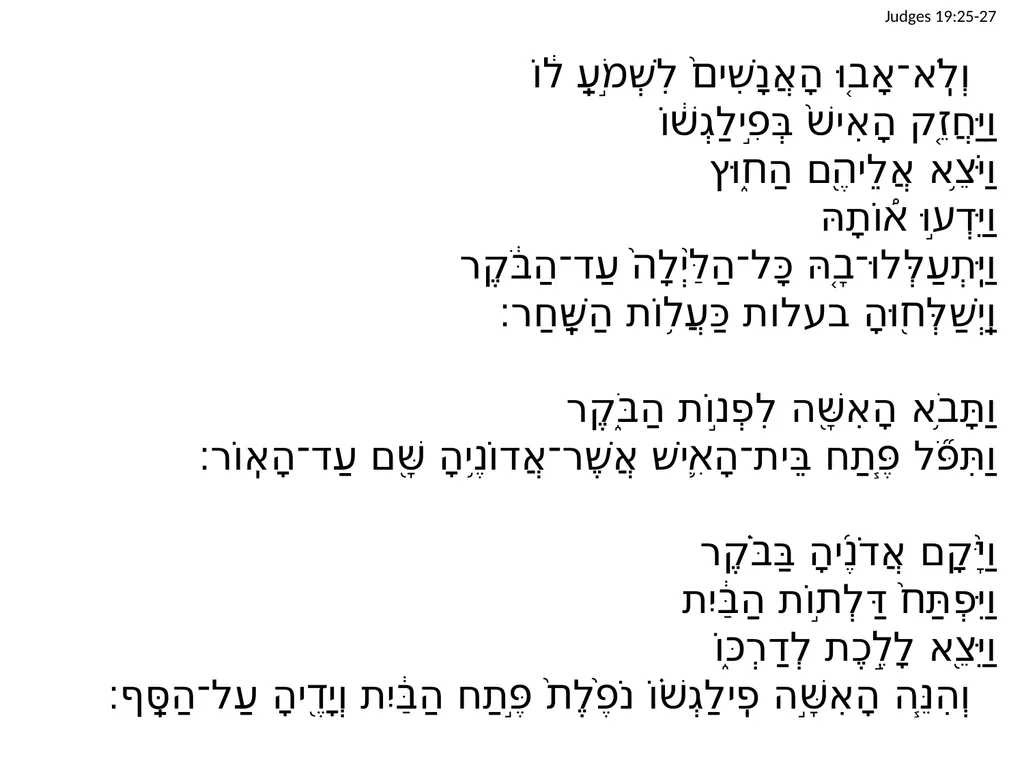
Judges 19:25-27 וְלֹֽא־אָב֤וּ הָאֲנָשִׁים֙ לִשְׁמֹ֣עַֽ ל֔וֹ
וַיַּחֲזֵ֤ק הָאִישׁ֙ בְּפִ֣ילַגְשׁ֔וֹ
וַיֹּצֵ֥א אֲלֵיהֶ֖ם הַח֑וּץ
וַיֵּדְע֣וּ א֠וֹתָהּ
וַיִּֽתְעַלְּלוּ־בָ֤הּ כָּל־הַלַּ֙יְלָה֙ עַד־הַבֹּ֔קֶר
וַֽיְשַׁלְּח֖וּהָ בעלות כַּעֲל֥וֹת הַשָּֽׁחַר׃
וַתָּבֹ֥א הָאִשָּׁ֖ה לִפְנ֣וֹת הַבֹּ֑קֶר
וַתִּפֹּ֞ל פֶּ֧תַח בֵּית־הָאִ֛ישׁ אֲשֶׁר־אֲדוֹנֶ֥יהָ שָּׁ֖ם עַד־הָאֽוֹר׃
וַיָּ֨קָם אֲדֹנֶ֜יהָ בַּבֹּ֗קֶר
וַיִּפְתַּח֙ דַּלְת֣וֹת הַבַּ֔יִת
וַיֵּצֵ֖א לָלֶ֣כֶת לְדַרְכּ֑וֹ
וְהִנֵּ֧ה הָאִשָּׁ֣ה פִֽילַגְשׁ֗וֹ נֹפֶ֙לֶת֙ פֶּ֣תַח הַבַּ֔יִת וְיָדֶ֖יהָ עַל־הַסַּֽף׃<br>
וַיַּחֲזֵ֤ק הָאִישׁ֙ בְּפִ֣ילַגְשׁ֔וֹ
וַיֹּצֵ֥א אֲלֵיהֶ֖ם הַח֑וּץ
וַיֵּדְע֣וּ א֠וֹתָהּ
וַיִּֽתְעַלְּלוּ־בָ֤הּ כָּל־הַלַּ֙יְלָה֙ עַד־הַבֹּ֔קֶר
וַֽיְשַׁלְּח֖וּהָ בעלות כַּעֲל֥וֹת הַשָּֽׁחַר׃
וַתָּבֹ֥א הָאִשָּׁ֖ה לִפְנ֣וֹת הַבֹּ֑קֶר
וַתִּפֹּ֞ל פֶּ֧תַח בֵּית־הָאִ֛ישׁ אֲשֶׁר־אֲדוֹנֶ֥יהָ שָּׁ֖ם עַד־הָאֽוֹר׃
וַיָּ֨קָם אֲדֹנֶ֜יהָ בַּבֹּ֗קֶר
וַיִּפְתַּח֙ דַּלְת֣וֹת הַבַּ֔יִת
וַיֵּצֵ֖א לָלֶ֣כֶת לְדַרְכּ֑וֹ
וְהִנֵּ֧ה הָאִשָּׁ֣ה פִֽילַגְשׁ֗וֹ נֹפֶ֙לֶת֙ פֶּ֣תַח הַבַּ֔יִת וְיָדֶ֖יהָ עַל־הַסַּֽף׃<br>
32
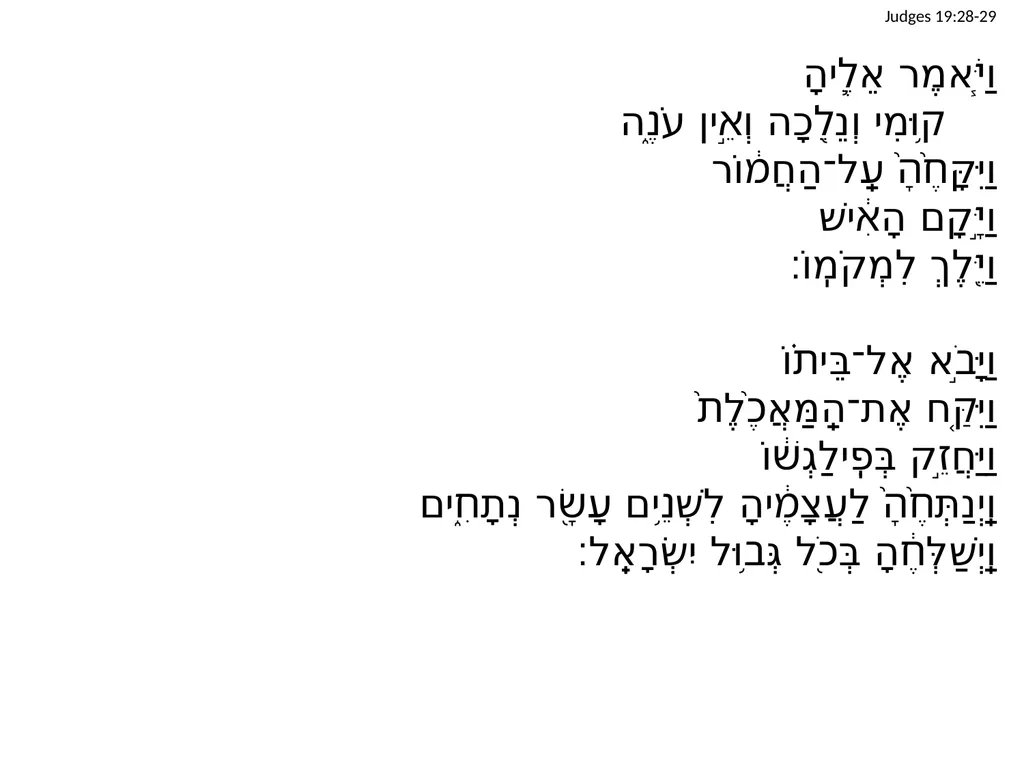
Judges 19:28-29 וַיֹּ֧אמֶר אֵלֶ֛יהָ
ק֥וּמִי וְנֵלֵ֖כָה וְאֵ֣ין עֹנֶ֑ה
וַיִּקָּחֶ֙הָ֙ עַֽל־הַחֲמ֔וֹר
וַיָּ֣קָם הָאִ֔ישׁ
וַיֵּ֖לֶךְ לִמְקֹמֽוֹ׃
וַיָּבֹ֣א אֶל־בֵּית֗וֹ
וַיִּקַּ֤ח אֶת־הַֽמַּאֲכֶ֙לֶת֙
וַיַּחֲזֵ֣ק בְּפִֽילַגְשׁ֔וֹ
וַֽיְנַתְּחֶ֙הָ֙ לַעֲצָמֶ֔יהָ לִשְׁנֵ֥ים עָשָׂ֖ר נְתָחִ֑ים
וַֽיְשַׁלְּחֶ֔הָ בְּכֹ֖ל גְּב֥וּל יִשְׂרָאֵֽל׃<br>
ק֥וּמִי וְנֵלֵ֖כָה וְאֵ֣ין עֹנֶ֑ה
וַיִּקָּחֶ֙הָ֙ עַֽל־הַחֲמ֔וֹר
וַיָּ֣קָם הָאִ֔ישׁ
וַיֵּ֖לֶךְ לִמְקֹמֽוֹ׃
וַיָּבֹ֣א אֶל־בֵּית֗וֹ
וַיִּקַּ֤ח אֶת־הַֽמַּאֲכֶ֙לֶת֙
וַיַּחֲזֵ֣ק בְּפִֽילַגְשׁ֔וֹ
וַֽיְנַתְּחֶ֙הָ֙ לַעֲצָמֶ֔יהָ לִשְׁנֵ֥ים עָשָׂ֖ר נְתָחִ֑ים
וַֽיְשַׁלְּחֶ֔הָ בְּכֹ֖ל גְּב֥וּל יִשְׂרָאֵֽל׃<br>
33
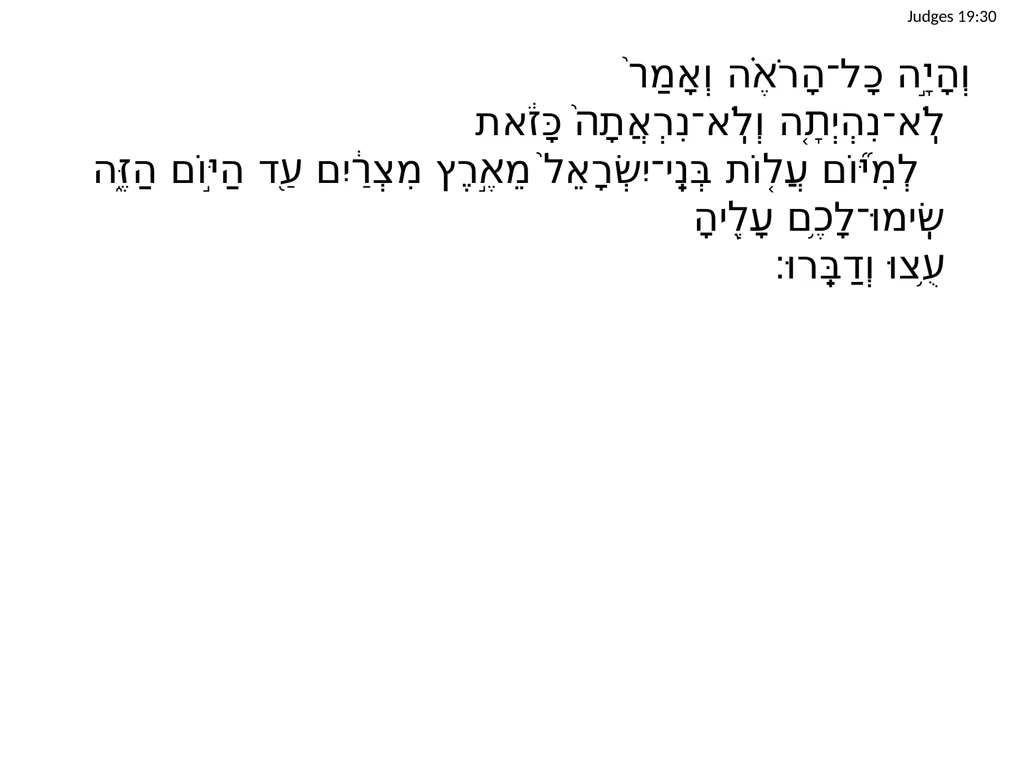
Judges 19:30 וְהָיָ֣ה כָל־הָרֹאֶ֗ה וְאָמַר֙
לֹֽא־נִהְיְתָ֤ה וְלֹֽא־נִרְאֲתָה֙ כָּזֹ֔את
לְמִיּ֞וֹם עֲל֤וֹת בְּנֵֽי־יִשְׂרָאֵל֙ מֵאֶ֣רֶץ מִצְרַ֔יִם עַ֖ד הַיּ֣וֹם הַזֶּ֑ה
שִֽׂימוּ־לָכֶ֥ם עָלֶ֖יהָ
עֻ֥צוּ וְדַבֵּֽרוּ׃<br>
לֹֽא־נִהְיְתָ֤ה וְלֹֽא־נִרְאֲתָה֙ כָּזֹ֔את
לְמִיּ֞וֹם עֲל֤וֹת בְּנֵֽי־יִשְׂרָאֵל֙ מֵאֶ֣רֶץ מִצְרַ֔יִם עַ֖ד הַיּ֣וֹם הַזֶּ֑ה
שִֽׂימוּ־לָכֶ֥ם עָלֶ֖יהָ
עֻ֥צוּ וְדַבֵּֽרוּ׃<br>
34
Judges 19:30 וְהָיָ֣ה כָל־הָרֹאֶ֗ה וְאָמַר֙
לֹֽא־נִהְיְתָ֤ה וְלֹֽא־נִרְאֲתָה֙ כָּזֹ֔את
לְמִיּ֞וֹם עֲל֤וֹת בְּנֵֽי־יִשְׂרָאֵל֙ מֵאֶ֣רֶץ מִצְרַ֔יִם עַ֖ד הַיּ֣וֹם הַזֶּ֑ה
שִֽׂימוּ־לָכֶ֥ם עָלֶ֖יהָ
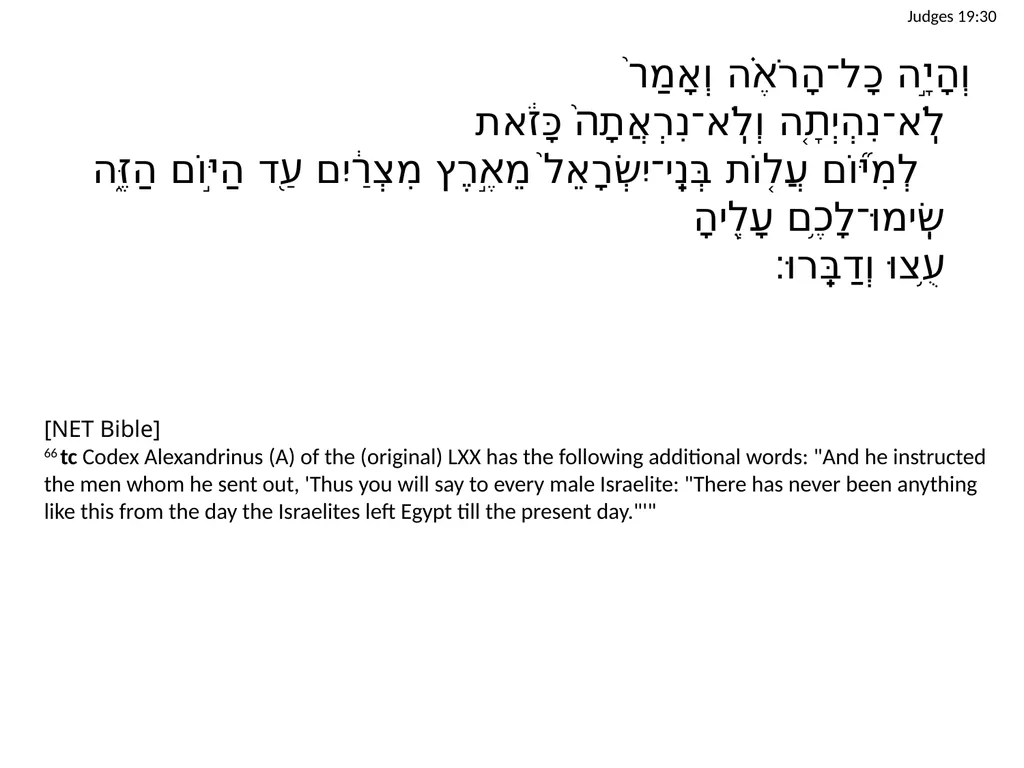
עֻ֥צוּ וְדַבֵּֽרוּ׃ [NET Bible]
66 tc Codex Alexandrinus (A) of the (original) LXX has the following additional words: "And he instructed the men whom he sent out, 'Thus you will say to every male Israelite: "There has never been anything like this from the day the Israelites left Egypt till the present day."'"<br>
לֹֽא־נִהְיְתָ֤ה וְלֹֽא־נִרְאֲתָה֙ כָּזֹ֔את
לְמִיּ֞וֹם עֲל֤וֹת בְּנֵֽי־יִשְׂרָאֵל֙ מֵאֶ֣רֶץ מִצְרַ֔יִם עַ֖ד הַיּ֣וֹם הַזֶּ֑ה
שִֽׂימוּ־לָכֶ֥ם עָלֶ֖יהָ
עֻ֥צוּ וְדַבֵּֽרוּ׃ [NET Bible]
66 tc Codex Alexandrinus (A) of the (original) LXX has the following additional words: "And he instructed the men whom he sent out, 'Thus you will say to every male Israelite: "There has never been anything like this from the day the Israelites left Egypt till the present day."'"<br>
35
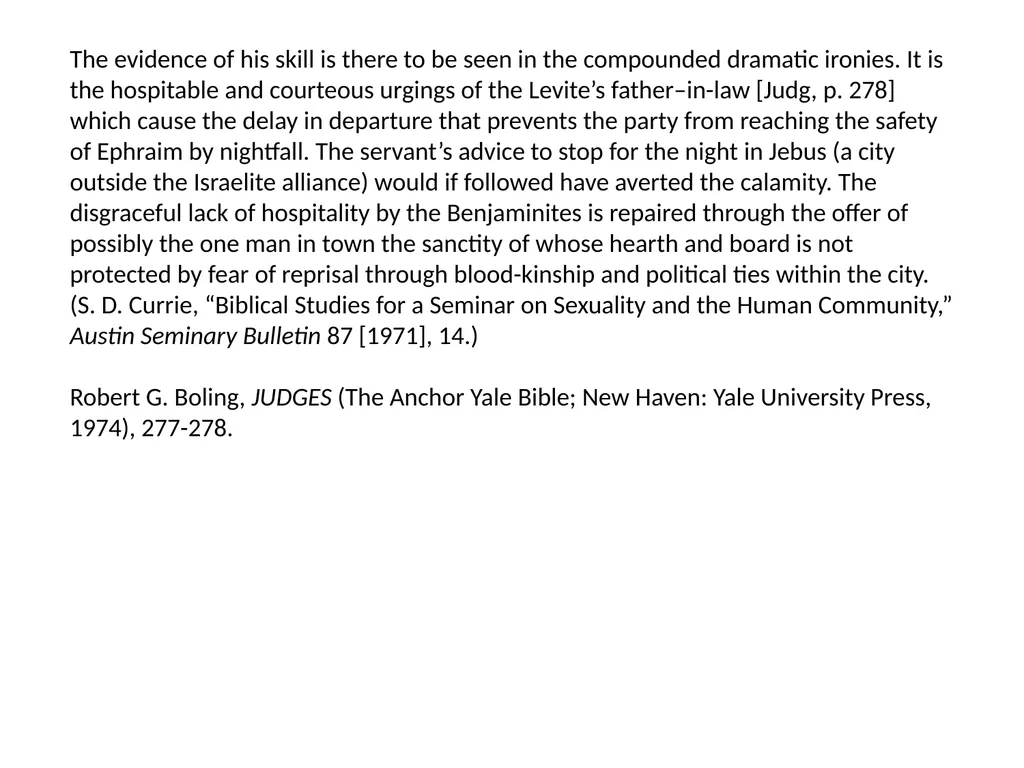
The evidence of his skill is there to be seen in the compounded dramatic ironies. It is the hospitable and courteous urgings of the Levite’s father–in-law [Judg, p. 278] which cause the delay in departure that prevents the party from reaching the safety of Ephraim by nightfall. The servant’s advice to stop for the night in Jebus (a city outside the Israelite alliance) would if followed have averted the calamity. The disgraceful lack of hospitality by the Benjaminites is repaired through the offer of possibly the one man in town the sanctity of whose hearth and board is not protected by fear of reprisal through blood-kinship and political ties within the city.
(S. D. Currie, “Biblical Studies for a Seminar on Sexuality and the Human Community,” Austin Seminary Bulletin 87 [1971], 14.)
Robert G. Boling, JUDGES (The Anchor Yale Bible; New Haven: Yale University Press, 1974), 277-278.<br>
(S. D. Currie, “Biblical Studies for a Seminar on Sexuality and the Human Community,” Austin Seminary Bulletin 87 [1971], 14.)
Robert G. Boling, JUDGES (The Anchor Yale Bible; New Haven: Yale University Press, 1974), 277-278.<br>