July 2017 Lesson 2: Acute Hepatitis C Virus Infection Core Competency 3: Screening, Testing, Diagnosis, and Clinical Evaluation of HCV Infection among PLWH Lesson Objectives By the end of this lesson, the learner will be able to: Define
"July 2017 Lesson 2: Acute Hepatitis C Virus" is the property of its rightful owner. Permission is granted to
download and print the materials on this website for personal, non-commercial use only, and to display it
on your personal computer provided you do not modify the materials and that you retain all copyright
notices contained in the materials. By downloading content from our website, you accept the terms of this
agreement.
Presentation Transcript
01
July 2017 Lesson 2: Acute Hepatitis C Virus Infection Core Competency 3: Screening, Testing, Diagnosis, and Clinical Evaluation of HCV Infection among PLWH<br>
02
Lesson Objectives By the end of this lesson, the learner will be able to:
Define acute HCV
Describe the epidemiology of acute HCV
Understand the natural history of acute HCV
Recognize clinical manifestations of acute HCV
Screen and diagnose acute HCV
Evaluate acute HCV, including taking a history, performing a physical examination, and ordering laboratory and imaging studies
Understand considerations for treatment of acute HCV 2<br>
03
Definition of Acute HCV Infection1-4 6-month time frame after HCV infection
Not defined by presence of symptoms
Laboratory-based diagnosis
Positive (detectable) HCV RNA with a negative HCV antibody
Positive HCV antibody with a documented negative HCV antibody in the past 12 months
Non-official clinically based diagnosis
Fluctuating ALT levels without another cause
Low HCV RNA or fluctuating HCV RNA levels
Subsequent spontaneous clearance of HCV 3<br>
04
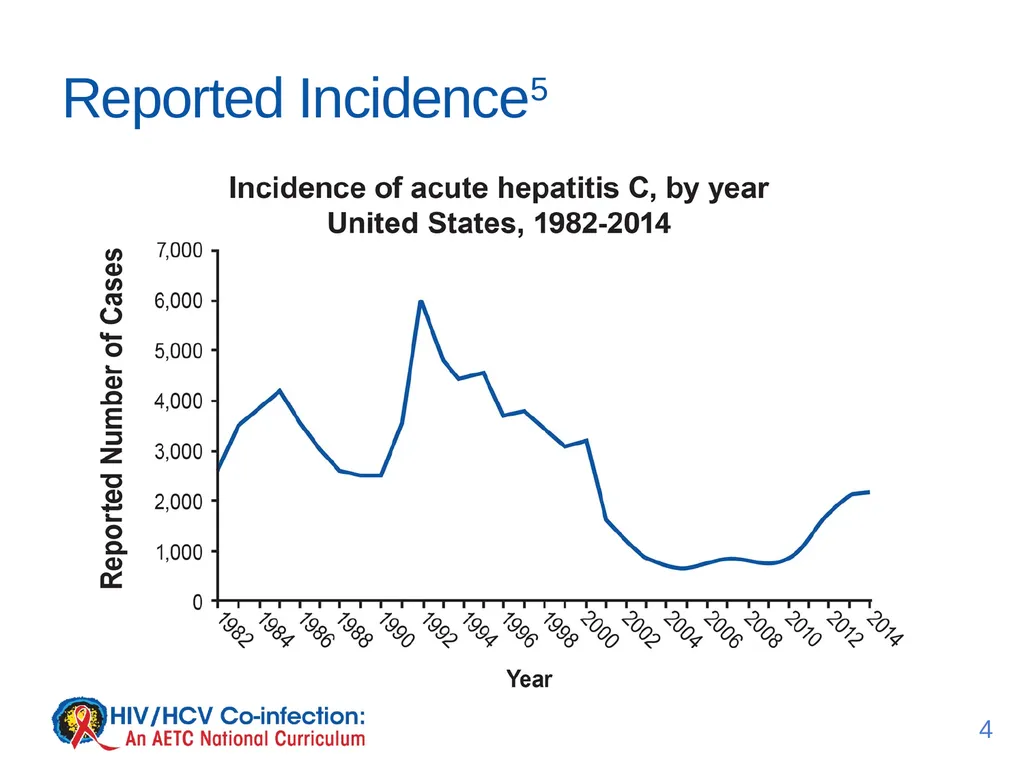
Reported Incidence5 4<br>
05
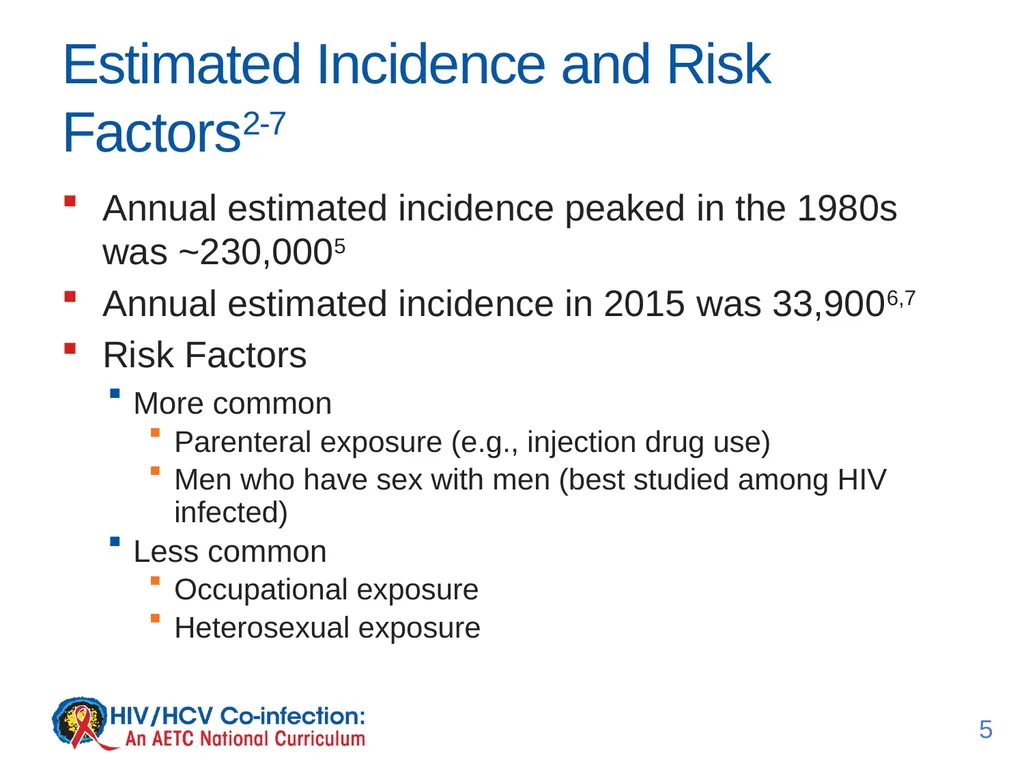
Estimated Incidence and Risk Factors2-7 Annual estimated incidence peaked in the 1980s was ~230,0005
Annual estimated incidence in 2015 was 33,9006,7
Risk Factors
More common
Parenteral exposure (e.g., injection drug use)
Men who have sex with men (best studied among HIV infected)
Less common
Occupational exposure
Heterosexual exposure 5<br>
06
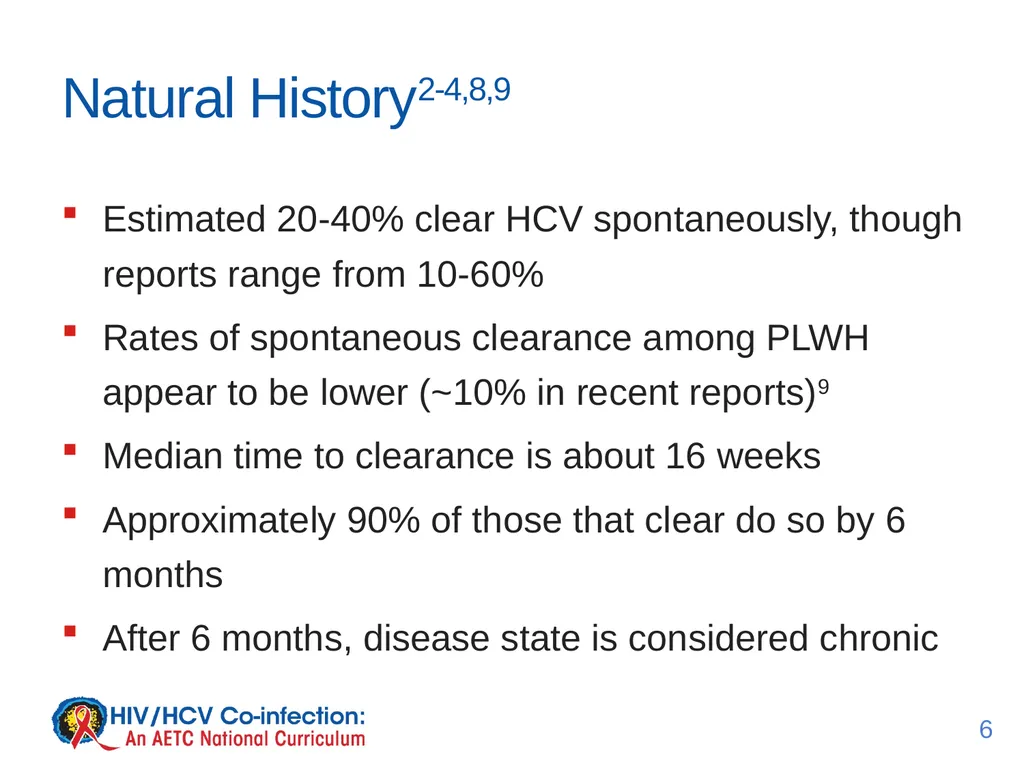
Natural History2-4,8,9 Estimated 20-40% clear HCV spontaneously, though reports range from 10-60%
Rates of spontaneous clearance among PLWH appear to be lower (~10% in recent reports)9
Median time to clearance is about 16 weeks
Approximately 90% of those that clear do so by 6 months
After 6 months, disease state is considered chronic 6<br>
07
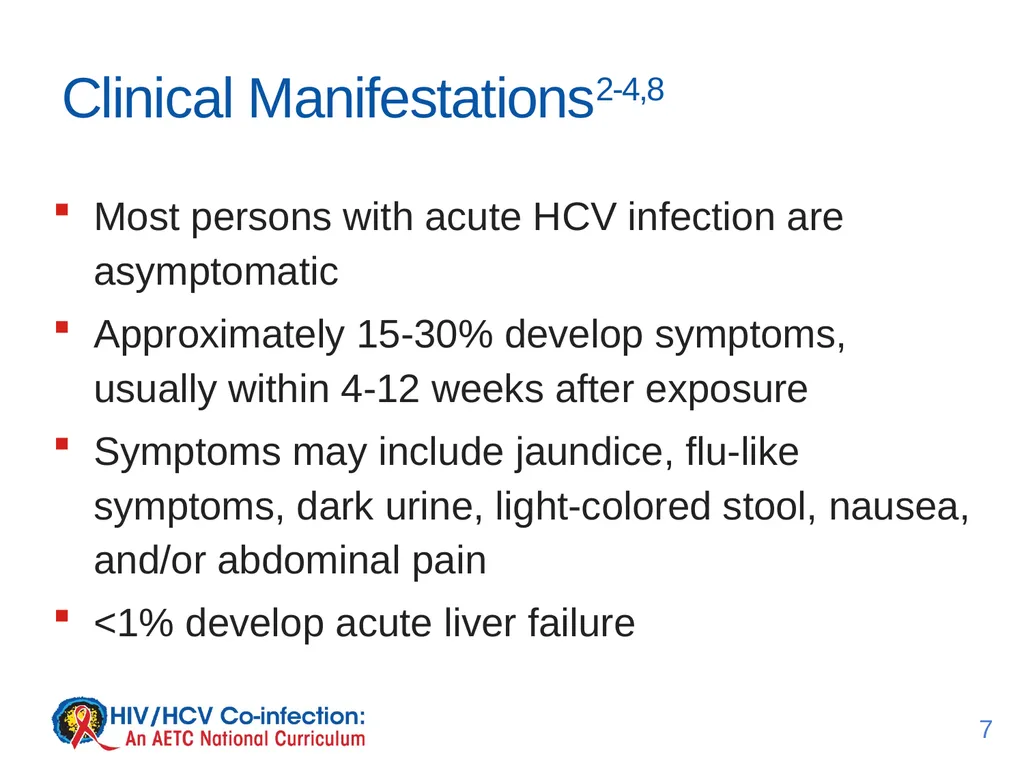
Clinical Manifestations2-4,8 Most persons with acute HCV infection are asymptomatic
Approximately 15-30% develop symptoms, usually within 4-12 weeks after exposure
Symptoms may include jaundice, flu-like symptoms, dark urine, light-colored stool, nausea, and/or abdominal pain
<1% develop acute liver failure 7<br>
08
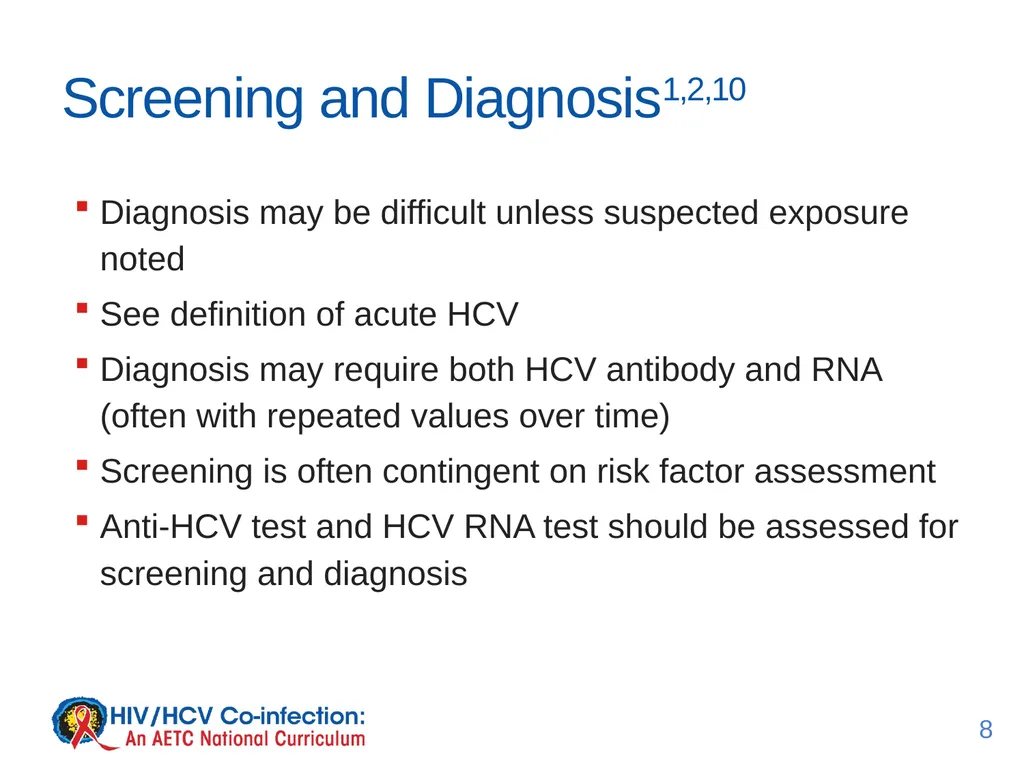
Screening and Diagnosis1,2,10 Diagnosis may be difficult unless suspected exposure noted
See definition of acute HCV
Diagnosis may require both HCV antibody and RNA (often with repeated values over time)
Screening is often contingent on risk factor assessment
Anti-HCV test and HCV RNA test should be assessed for screening and diagnosis 8<br>
09
Clinical Evaluation Specific to Acute HCV11,12 Check ALT, HCV RNA every 2-4 weeks after infection if early treatment is considered (i.e., after 12-16 weeks of monitoring)
Check ALT, HCV RNA at least once 4-6 months after infection
If a patient spontaneously clears infection, no treatment or further care recommended
Negative HCV RNA documented once is not sufficient to identify spontaneous clearance
If a person has detectable HCV RNA beyond 6 months, HCV infection is considered chronic 9<br>
10
Treatment of Acute HCV11,12 Treatment selection is the same as for chronic HCV based on current clinical evidence
Historically, treatment of acute HCV had higher efficacy than treatment of chronic HCV
Some providers opt to wait to treat once chronic infection defined
Optimal treatment approach is being evaluated in clinical trials 10<br>
11
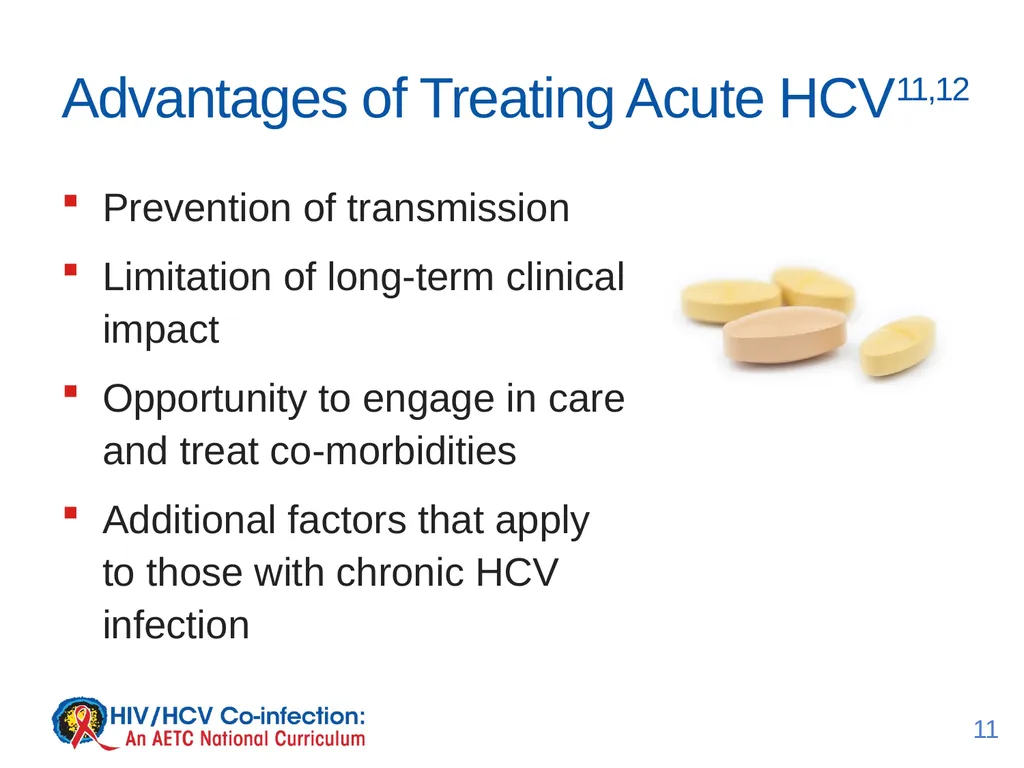
Advantages of Treating Acute HCV11,12 Prevention of transmission
Limitation of long-term clinical impact
Opportunity to engage in care and treat co-morbidities
Additional factors that apply to those with chronic HCV infection 11<br>
12
Resources AASLD and IDSA. HCV Guidance: Recommendations for Testing, Managing, and Treating HCV.
http://hcvguidelines.org
CDC and University of Washington. Hepatitis C Online. Online training modules and resource library covers topics including screening, diagnosis, evaluation, staging, treatment, management of complications and comorbidities. Free CME/CEUs.
http://www.hepatitis.uw.edu 12<br>
13
References AASLD-IDSA. HCV testing and linkage to care. Recommendations for testing, managing, and treating hepatitis C.
Fox RK. Diagnosis of acute HCV infection. Hepatitis C Online.
Kamal SM. Acute hepatitis C: a systematic review. Am J Gastroenterol. 2008 May;103(5):1283-97.
Sharma SA, Feld JJ. Acute hepatitis C: management in the rapidly evolving world of HCV. Curr Gastroenterol Rep. 2014 Feb;16(2):371.
Center for Disease Control. Surveillance for Viral Hepatitis -- United States, 2014.
Center for Disease Control. Surveillance for Viral Hepatitis -- United States, 2015.
Campbell CA, Canary L, Smith N, Teshale E, Ryerson B, Ward J. State HCV Incidence and policies related to HCV preventive and treatment services for persons who inject drugs -- United States, 2015-2016. MMWR Morb Mortal Wkly Rep. 2017 May 12;66(18):465-469.
Thornton K. Natural history of hepatitis C infection. Hepatitis C Online.
Steininger K, Boyd A, Dupke S, et al. HIV-positive men who have sex with men are at high risk of development of significant liver fibrosis after an episode of acute hepatitis C. J Viral Hepat. 2017 Apr 25. [Epub ahead of print].
Spach DH. Hepatitis C diagnostic testing. Hepatitis C Online.
AASLD-IDSA.. Management of acute HCV infection. Recommendations for testing, managing, and treating hepatitis C.
Fox RK, Spach DH. Treatment of acute hepatitis C infection. Hepatitis C Online. 13<br>
14
Authors and Funders This presentation was prepared by Cody Chastain, MD (Southeast AETC) for the AETC National Coordinating Resource Center in July 2017.
This presentation is part of a curriculum developed by the AETC Program for the project: Jurisdictional Approach to Curing Hepatitis C among HIV/HCV Co-infected People of Color (HRSA 16-189), funded by the Secretary's Minority AIDS Initiative through the Health Resources and Services Administration HIV/AIDS Bureau. 14<br>
15
Disclaimer and Permissions Users are cautioned that because of the rapidly changing medical field, information could become out of date quickly.
You may use or present this slide set and other material in its entirely or incorporate into another presentation if you credit the author and/or source of the materials.
The complete HIV/HCV Co-infection: An AETC National Curriculum is available at: https://aidsetc.org/hivhcv 15<br>