Key SEA framing issues Power demand and power trade development in the LMB and GMS SEA Team Purpose This presentation aims to illustrate the changing character of the demand for power within the LMB and where the mainstream dams fit within
"Key SEA framing issues Power demand and power" is the property of its rightful owner. Permission is granted to
download and print the materials on this website for personal, non-commercial use only, and to display it
on your personal computer provided you do not modify the materials and that you retain all copyright
notices contained in the materials. By downloading content from our website, you accept the terms of this
agreement.
Presentation Transcript
01
Key SEA framing issues Power demand and power trade development in the LMB and GMS
SEA Team<br>
02
Purpose This presentation aims to illustrate the changing character of the demand for power within the LMB and where the mainstream dams fit within the mix of electricity generation<br>
03
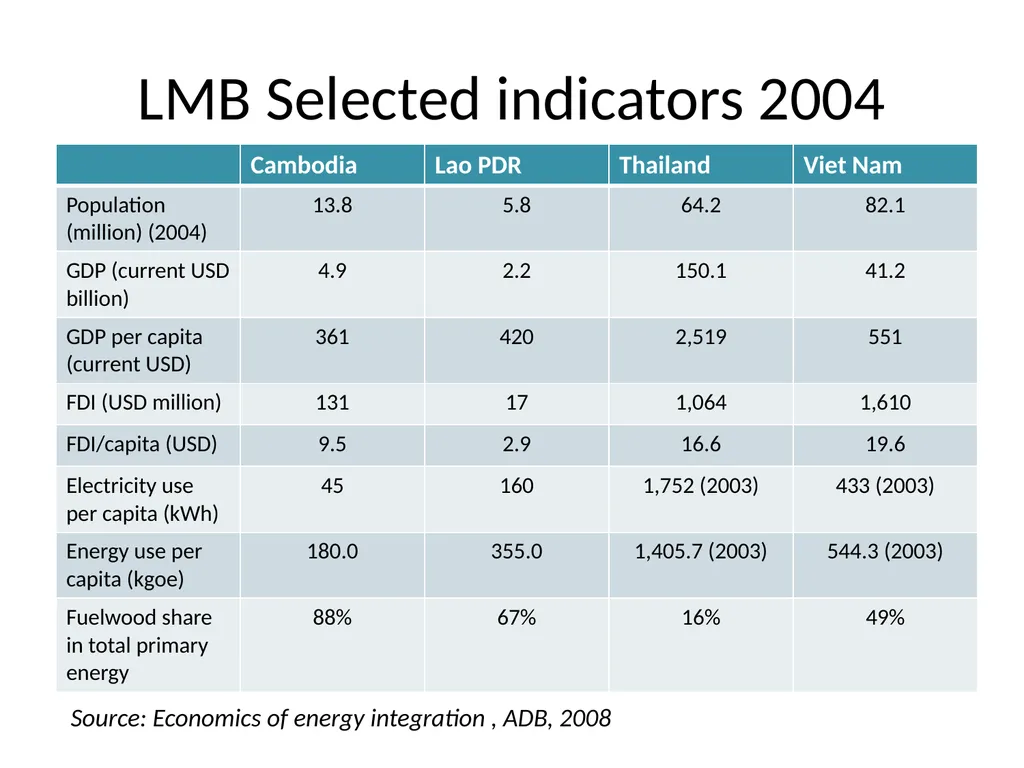
LMB Selected indicators 2004 Source: Economics of energy integration , ADB, 2008<br>
04
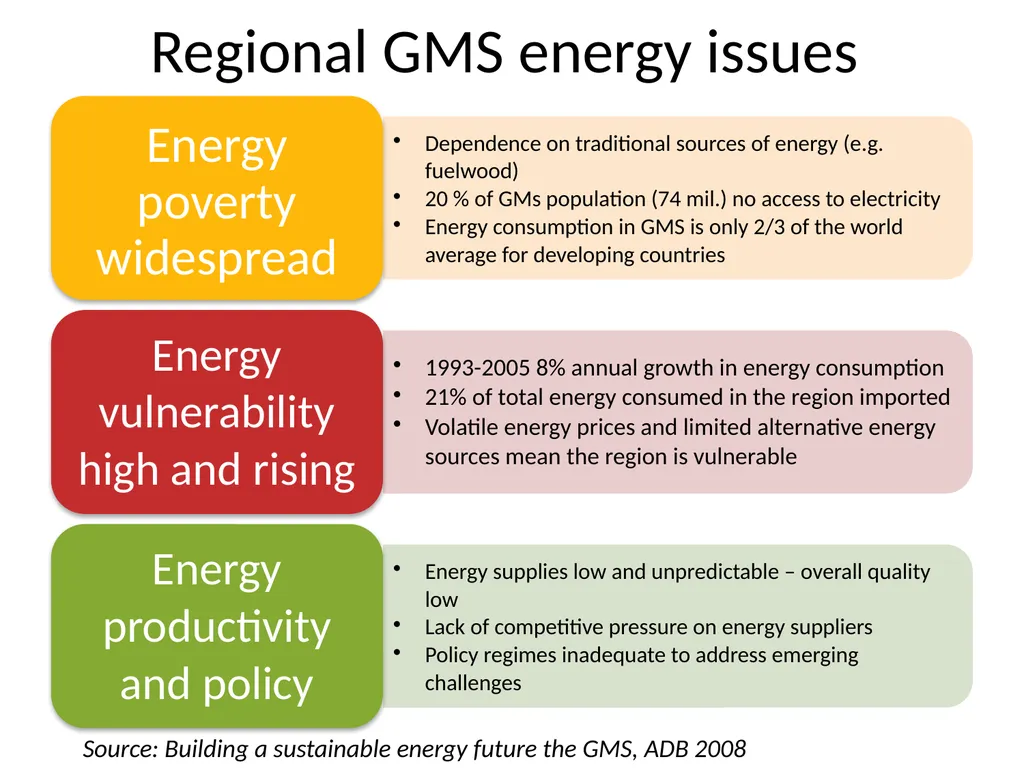
Regional GMS energy issues Source: Building a sustainable energy future the GMS, ADB 2008<br>
05
High economic growth in the LMB 1985-2005 Source: Building a sustainable energy future the GMS, ADB 2008<br>
06
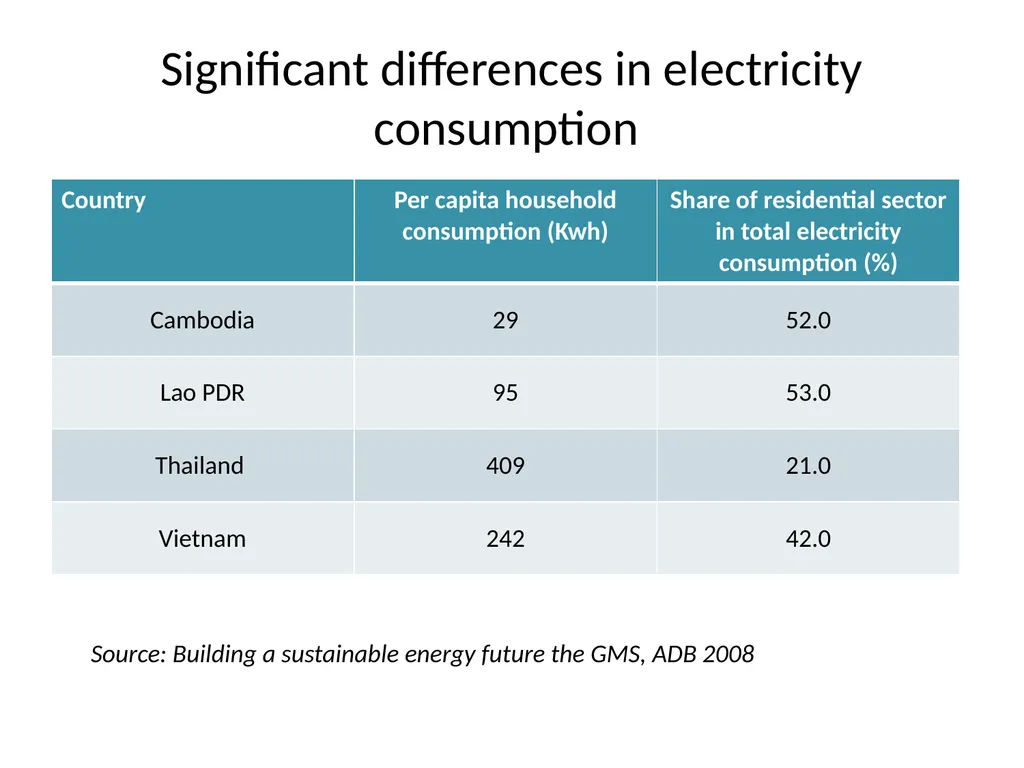
Significant differences in electricity consumption Source: Building a sustainable energy future the GMS, ADB 2008<br>
07
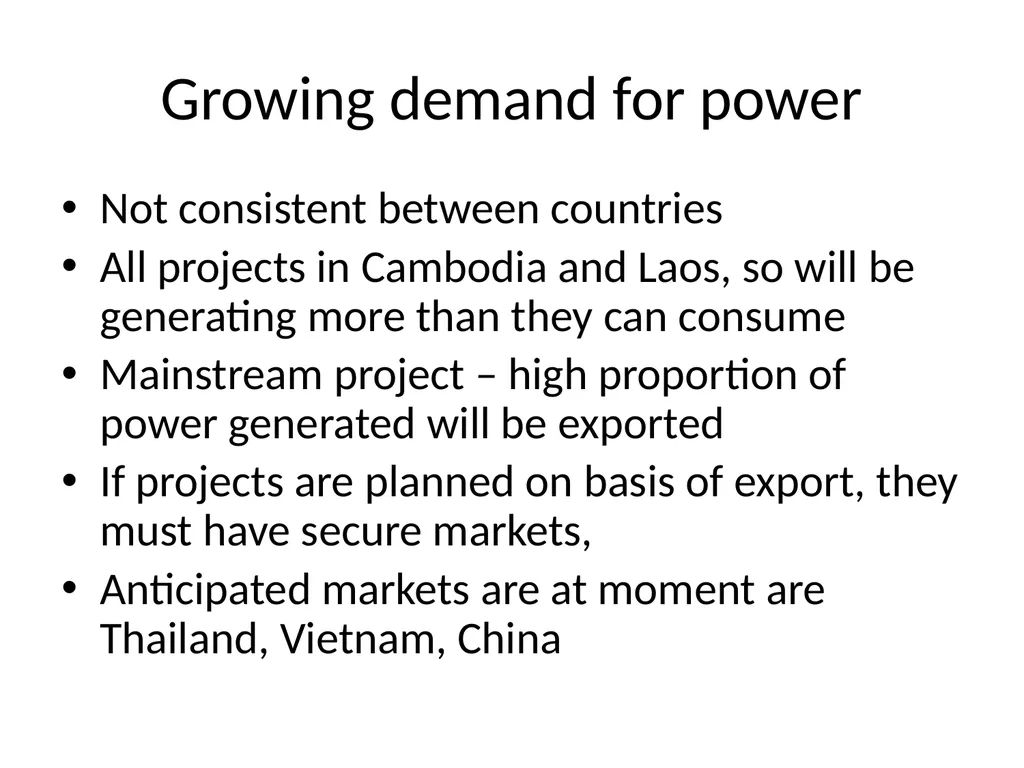
Growing demand for power Not consistent between countries
All projects in Cambodia and Laos, so will be generating more than they can consume
Mainstream project – high proportion of power generated will be exported
If projects are planned on basis of export, they must have secure markets,
Anticipated markets are at moment are Thailand, Vietnam, China<br>
08
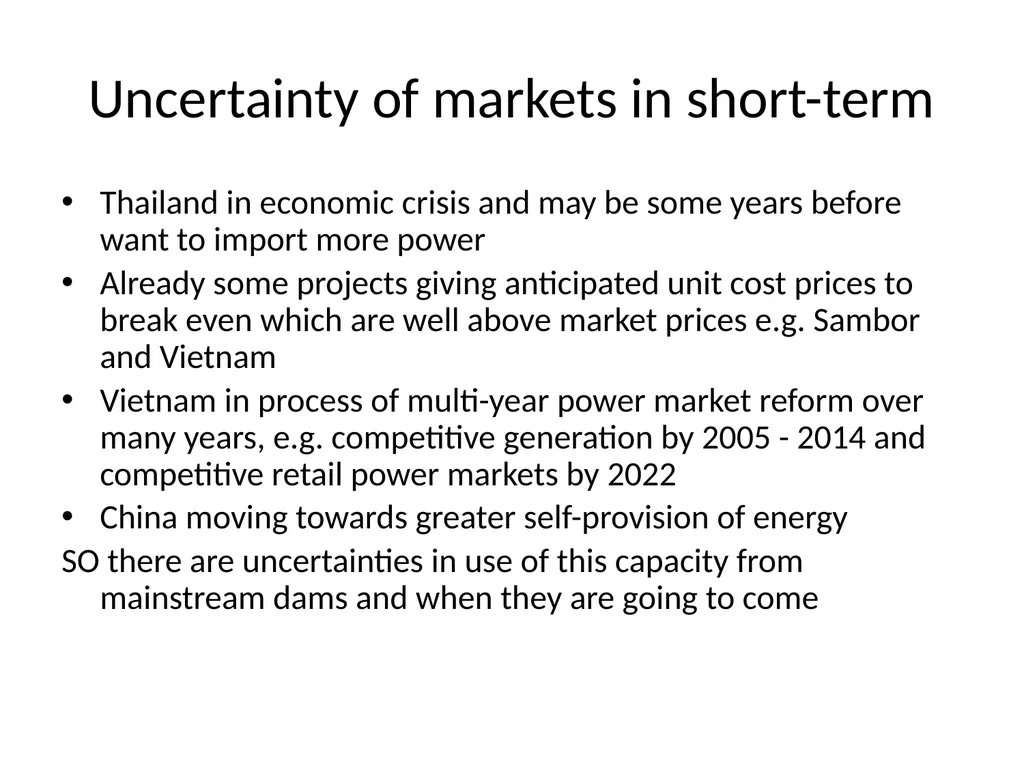
Uncertainty of markets in short-term Thailand in economic crisis and may be some years before want to import more power
Already some projects giving anticipated unit cost prices to break even which are well above market prices e.g. Sambor and Vietnam
Vietnam in process of multi-year power market reform over many years, e.g. competitive generation by 2005 - 2014 and competitive retail power markets by 2022
China moving towards greater self-provision of energy
SO there are uncertainties in use of this capacity from mainstream dams and when they are going to come<br>
09
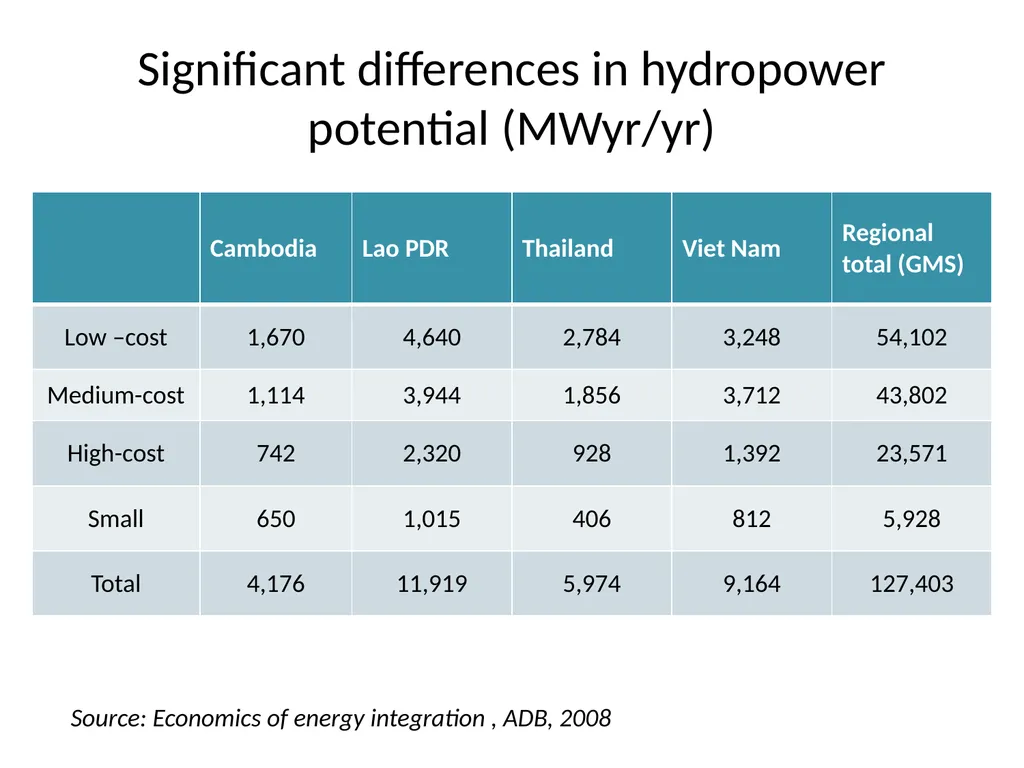
Significant differences in hydropower potential (MWyr/yr) Source: Economics of energy integration , ADB, 2008<br>
10
Limited power trade flows between LMB countries in 2005 (GWh) Source: Economics of energy integration , ADB, 2008<br>
11
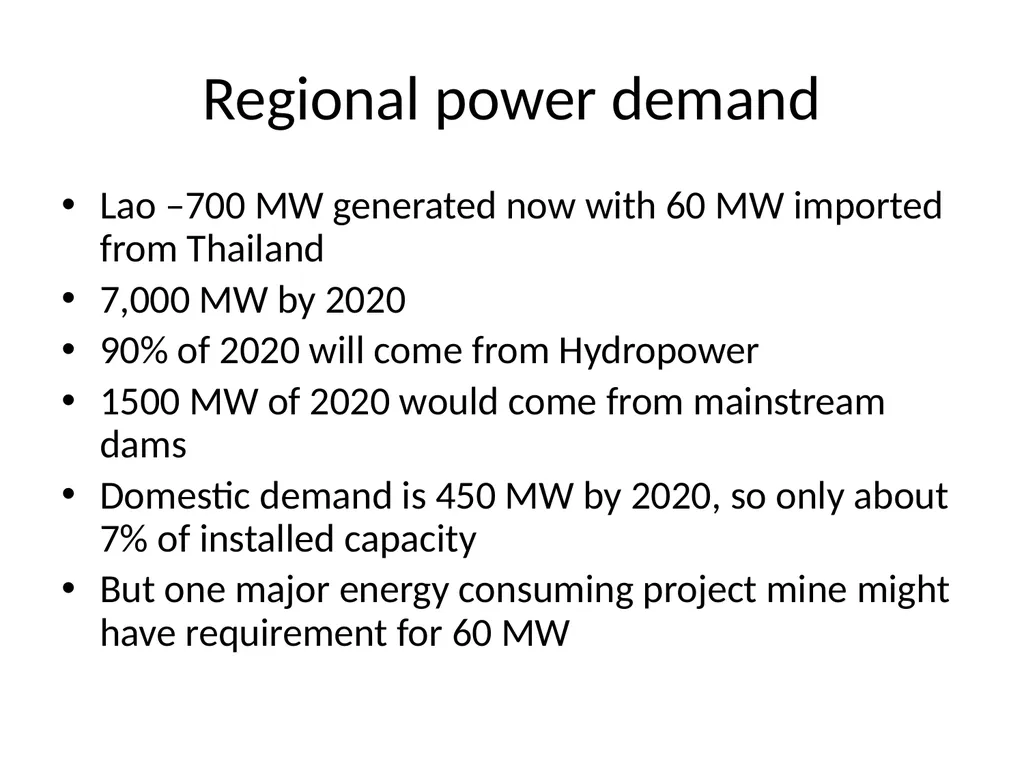
Regional power demand Lao –700 MW generated now with 60 MW imported from Thailand
7,000 MW by 2020
90% of 2020 will come from Hydropower
1500 MW of 2020 would come from mainstream dams
Domestic demand is 450 MW by 2020, so only about 7% of installed capacity
But one major energy consuming project mine might have requirement for 60 MW<br>
12
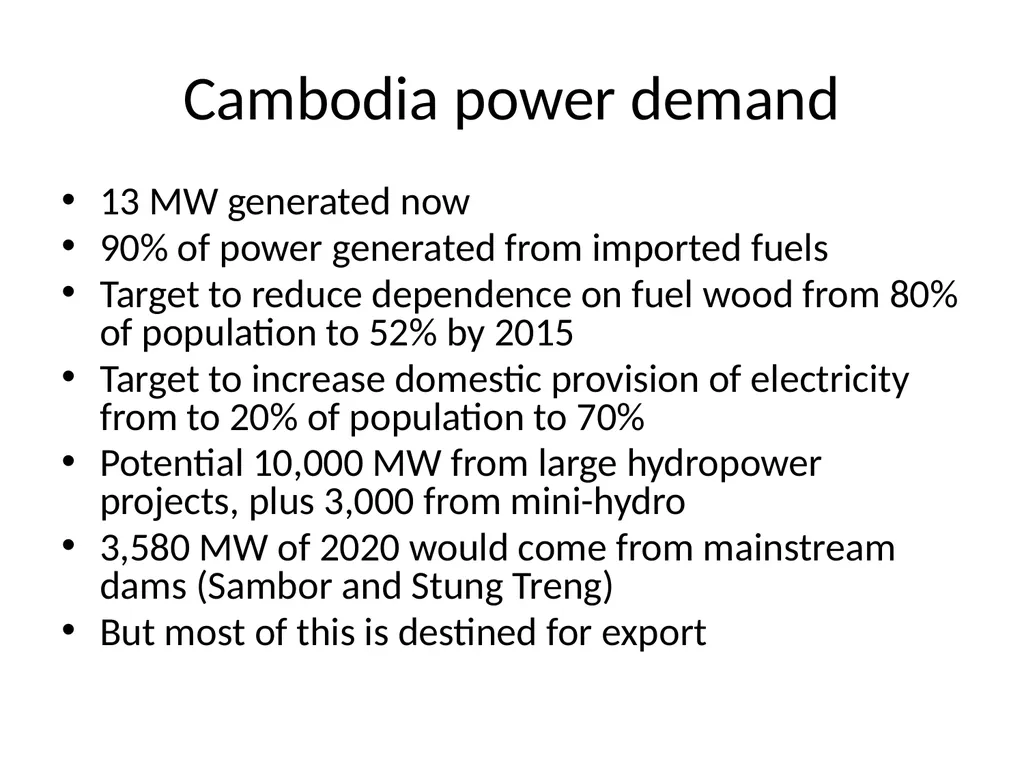
Cambodia power demand 13 MW generated now
90% of power generated from imported fuels
Target to reduce dependence on fuel wood from 80% of population to 52% by 2015
Target to increase domestic provision of electricity from to 20% of population to 70%
Potential 10,000 MW from large hydropower projects, plus 3,000 from mini-hydro
3,580 MW of 2020 would come from mainstream dams (Sambor and Stung Treng)
But most of this is destined for export<br>
13
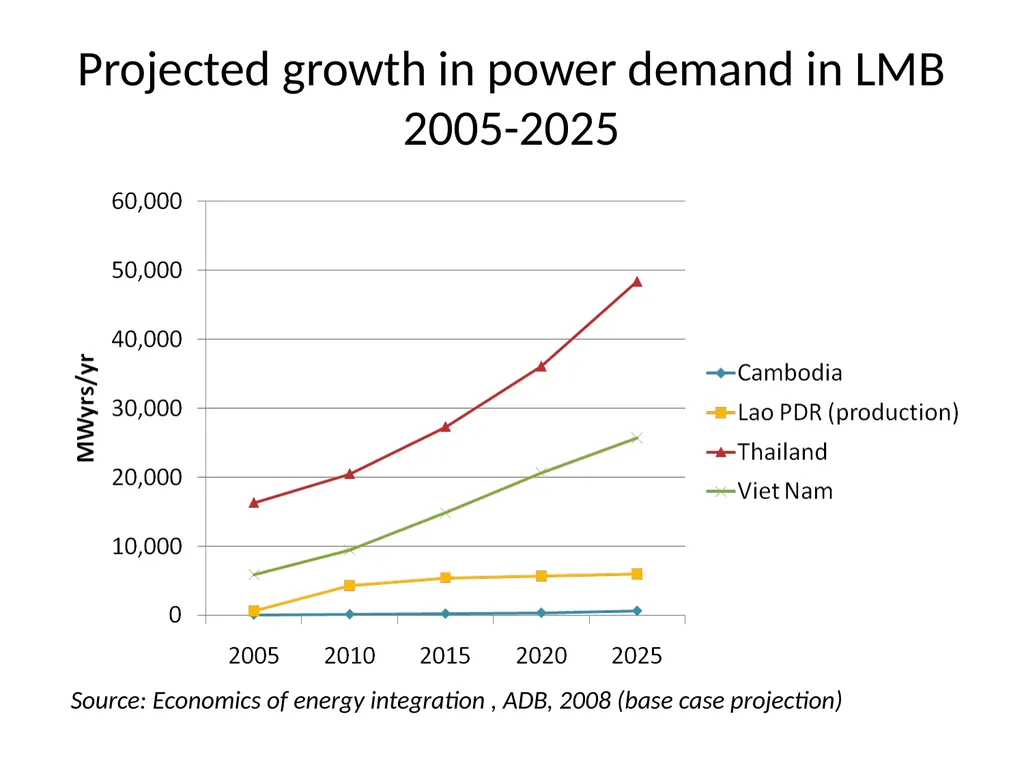
Projected growth in power demand in LMB 2005-2025 Source: Economics of energy integration , ADB, 2008 (base case projection)<br>
14
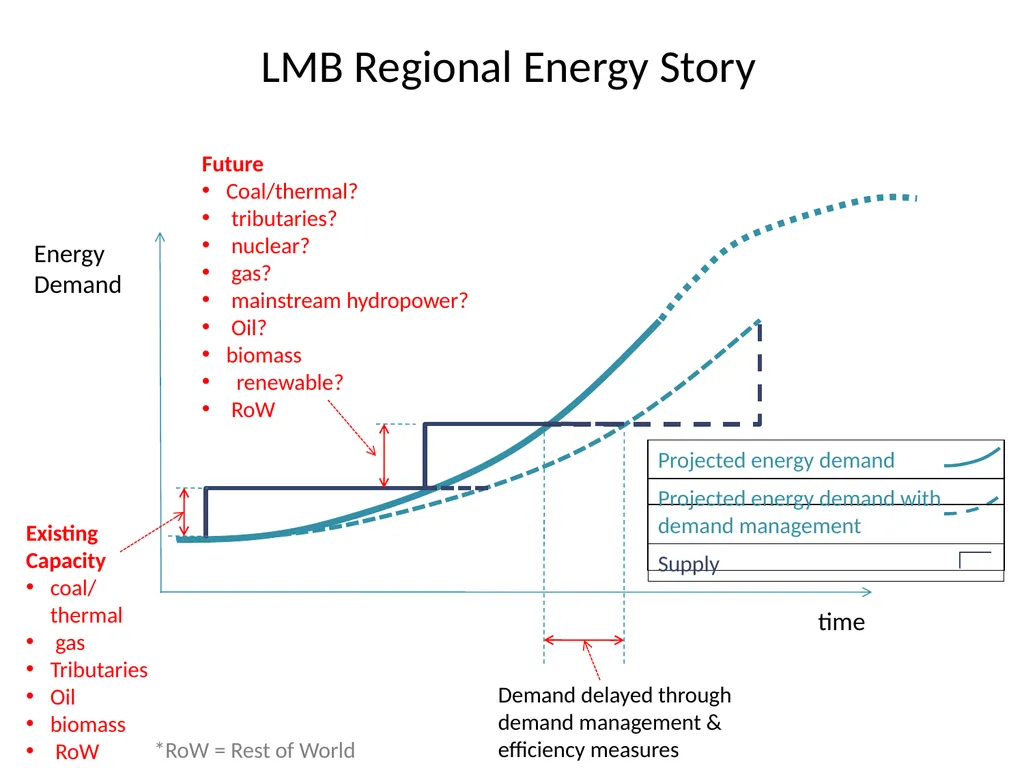
LMB Regional Energy Story time Energy Demand Demand delayed through demand management & efficiency measures Future
Coal/thermal?
tributaries?
nuclear?
gas?
mainstream hydropower?
Oil?
biomass
renewable?
RoW Existing Capacity
coal/thermal
gas
Tributaries
Oil
biomass
RoW *RoW = Rest of World<br>
15
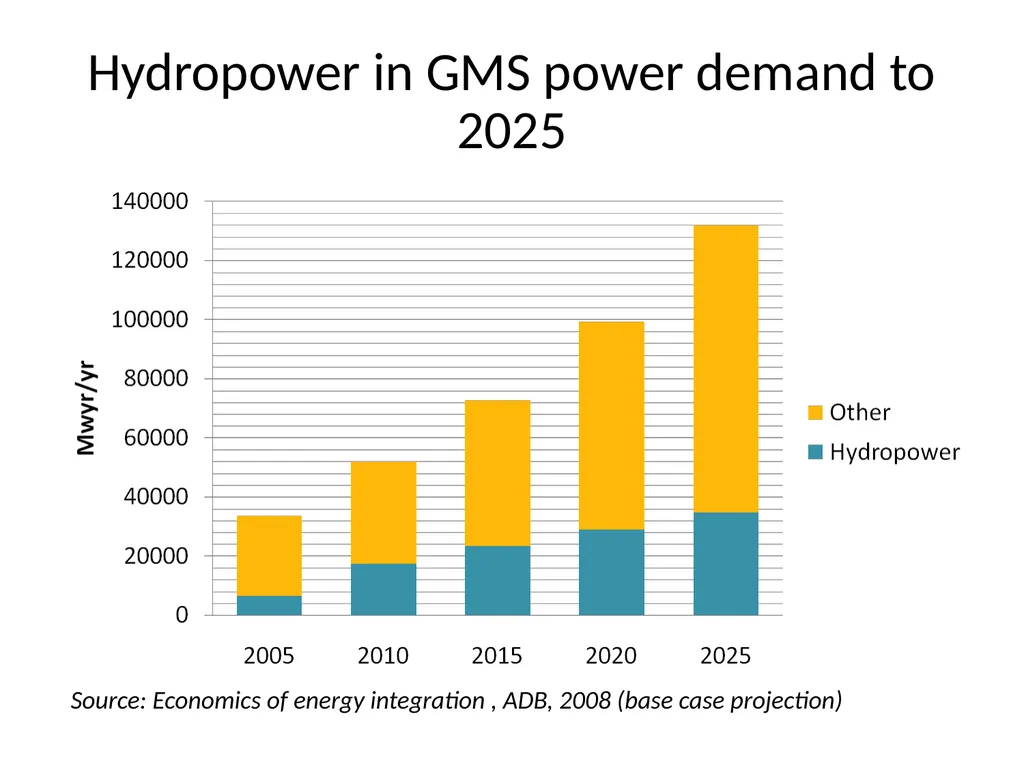
Hydropower in GMS power demand to 2025 Source: Economics of energy integration , ADB, 2008 (base case projection)<br>
16
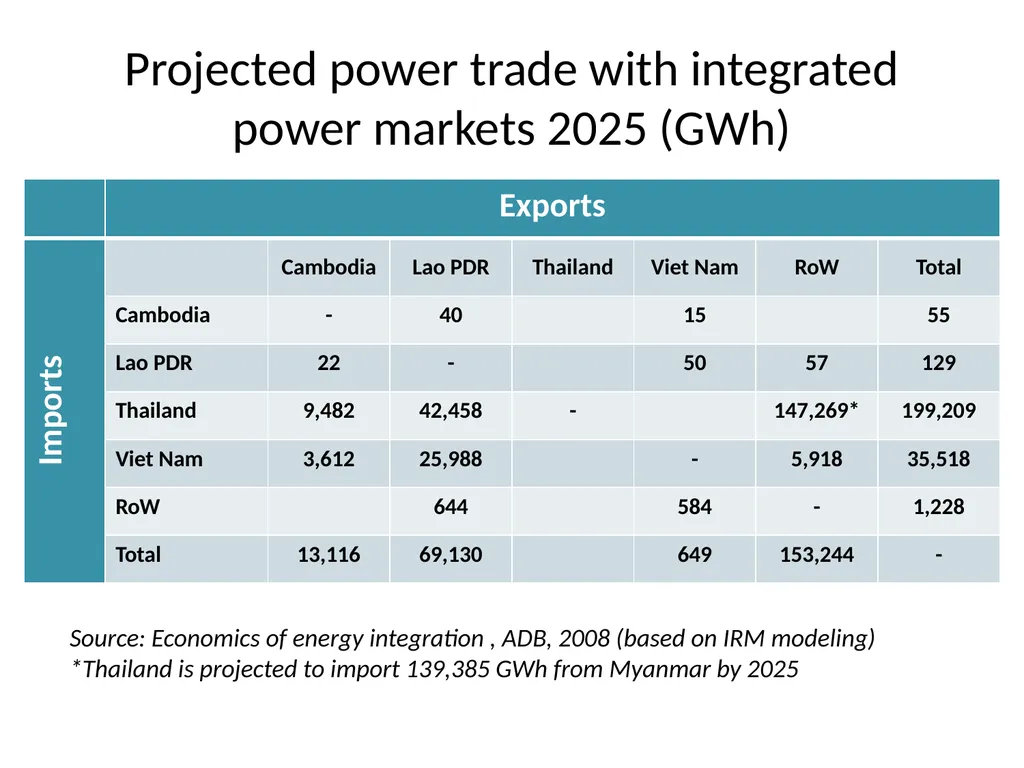
Projected power trade with integrated power markets 2025 (GWh) Source: Economics of energy integration , ADB, 2008 (based on IRM modeling)
*Thailand is projected to import 139,385 GWh from Myanmar by 2025<br>
17
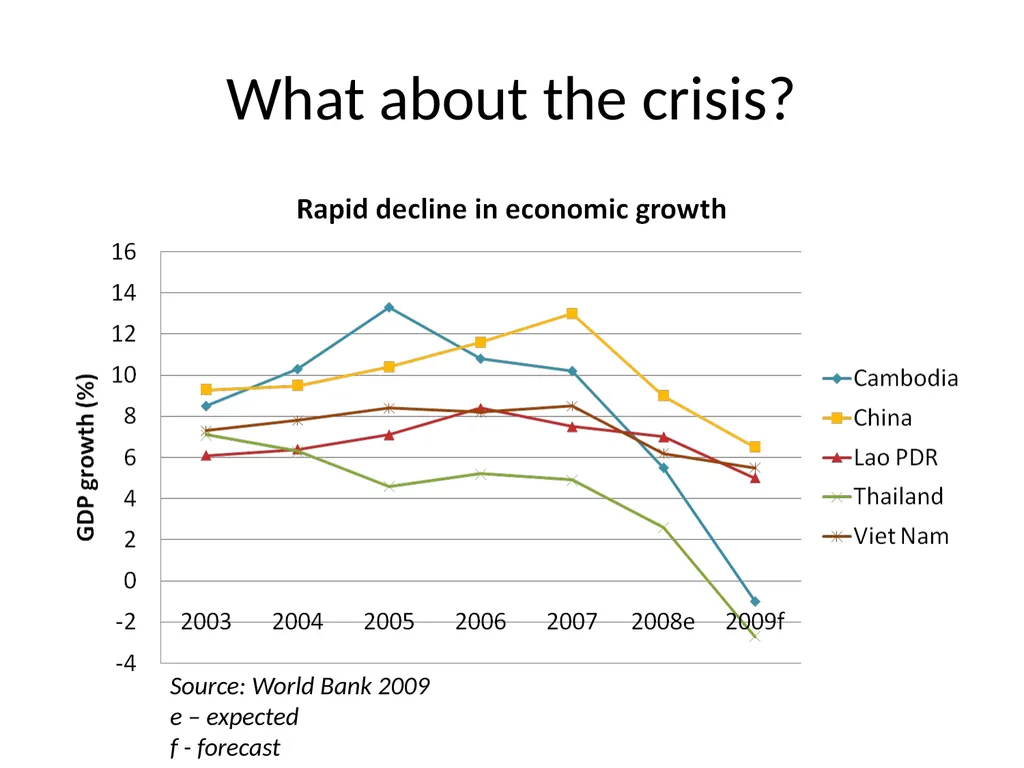
What about the crisis? Source: World Bank 2009
e – expected
f - forecast<br>
18
Changing economic environment?<br>
19
Mainstream dams Provide 11.5% of installed capacity by 2020
9.3% of power produced in the LMB by 2020
60 GW hrs annually of the 644 GWhrs per annum in LMB by 2020
Conditions of BOT, 25 – 30 year handover in which government would have the capacity to manage, but there would be major maintenance and replacements costs<br>