Kill Zone Sai Krishna Kamepalli Raghuram Rajan Luigi Zingales Motivation Kill Zone: Venture capitalists are reluctant to fund investments in a space that is proximate to large digital platforms. The Kill Zone is a real thing. The scale of
"Kill Zone Sai Krishna Kamepalli Raghuram Rajan" is the property of its rightful owner. Permission is granted to
download and print the materials on this website for personal, non-commercial use only, and to display it
on your personal computer provided you do not modify the materials and that you retain all copyright
notices contained in the materials. By downloading content from our website, you accept the terms of this
agreement.
Presentation Transcript
01
Kill Zone Sai Krishna Kamepalli
Raghuram Rajan Luigi Zingales<br>
02
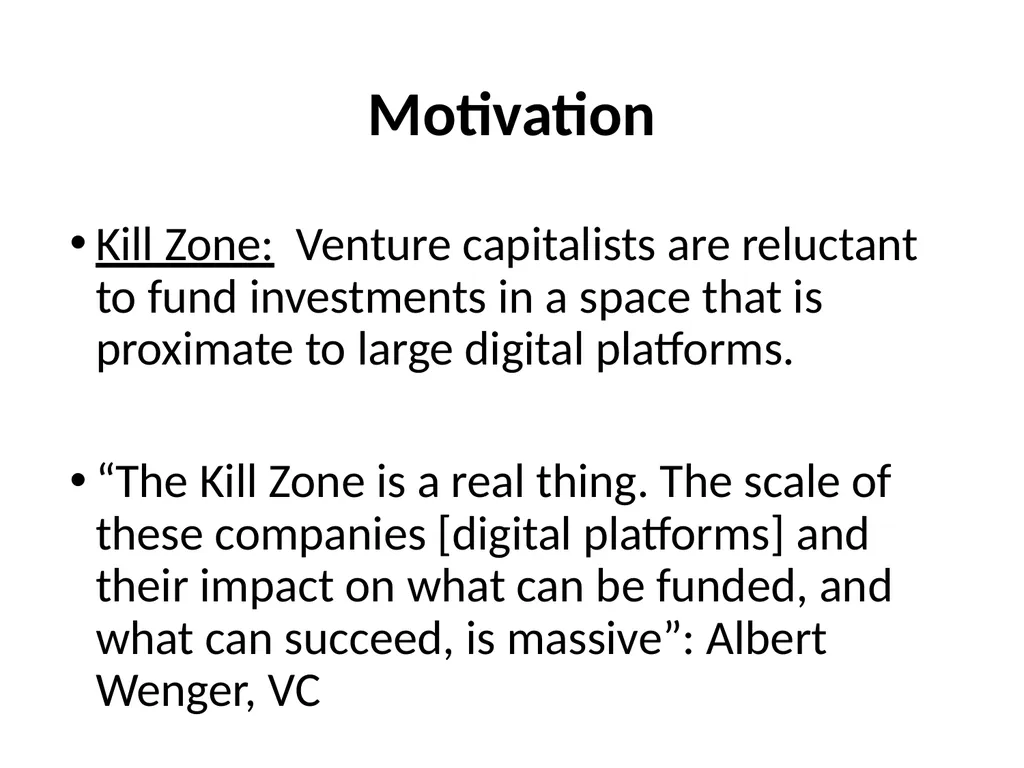
Motivation Kill Zone: Venture capitalists are reluctant to fund investments in a space that is proximate to large digital platforms.
“The Kill Zone is a real thing. The scale of these companies [digital platforms] and their impact on what can be funded, and what can succeed, is massive”: Albert Wenger, VC<br>
03
Wait a minute! The prospect of being acquired should spur, not stifle, innovation and investment.
What do the data say?<br>
04
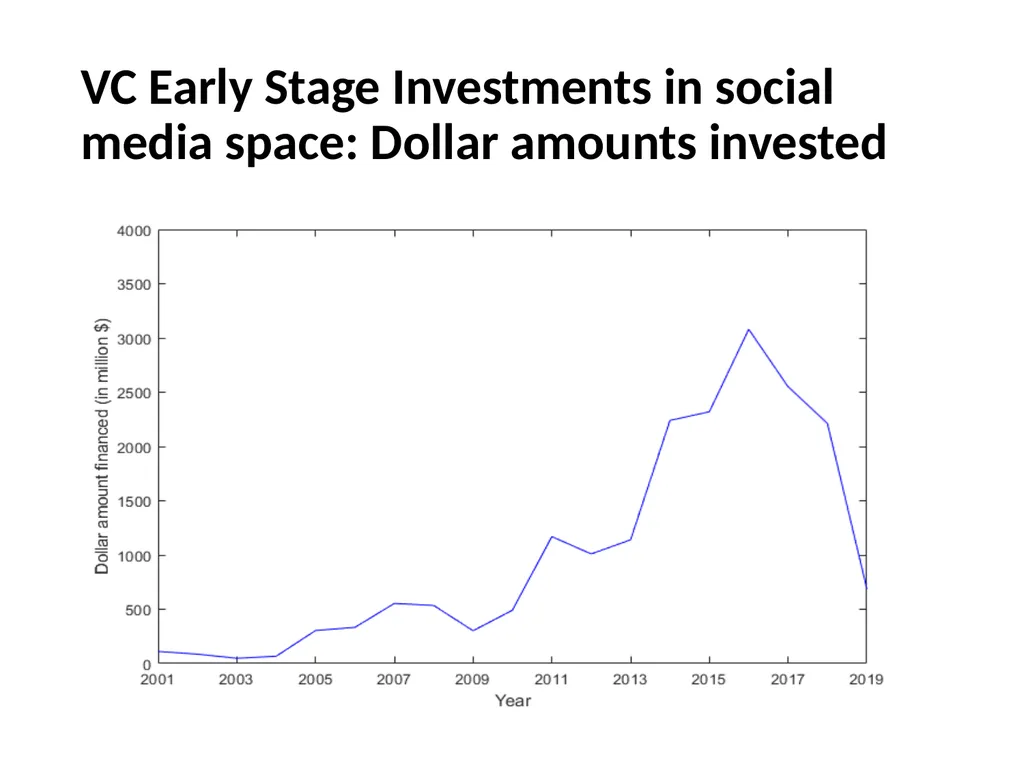
VC Early Stage Investments in social media space: Dollar amounts invested<br>
05
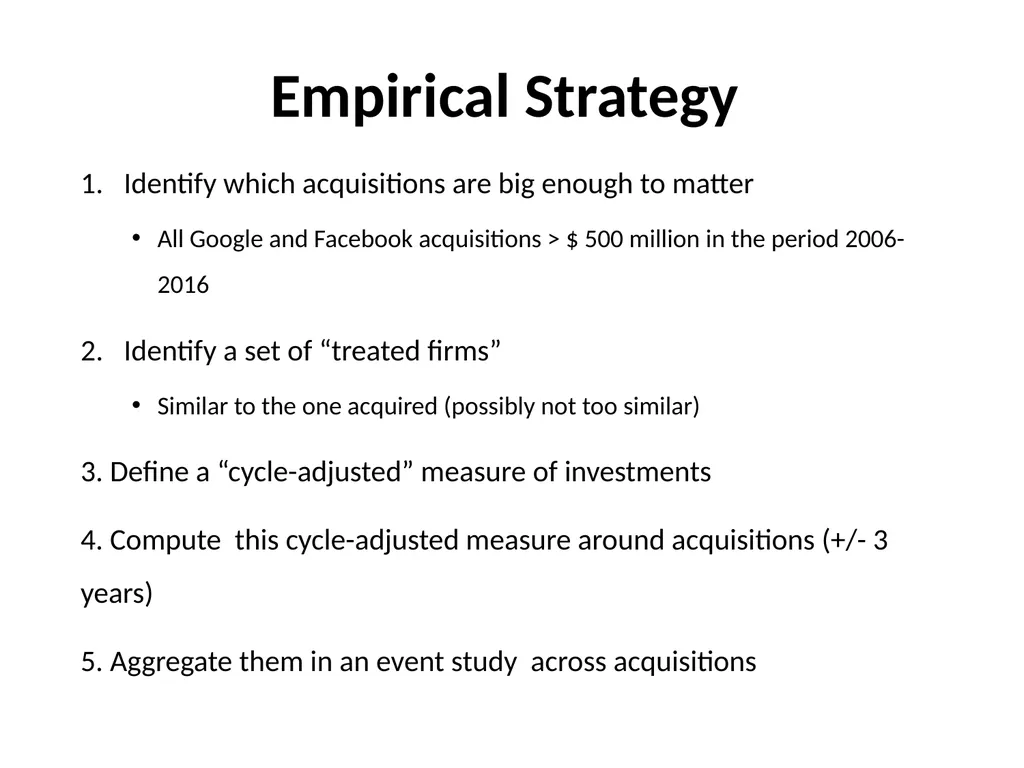
Empirical Strategy Identify which acquisitions are big enough to matter
All Google and Facebook acquisitions > $ 500 million in the period 2006-2016
Identify a set of “treated firms”
Similar to the one acquired (possibly not too similar)
3. Define a “cycle-adjusted” measure of investments
4. Compute this cycle-adjusted measure around acquisitions (+/- 3 years)
5. Aggregate them in an event study across acquisitions<br>
06
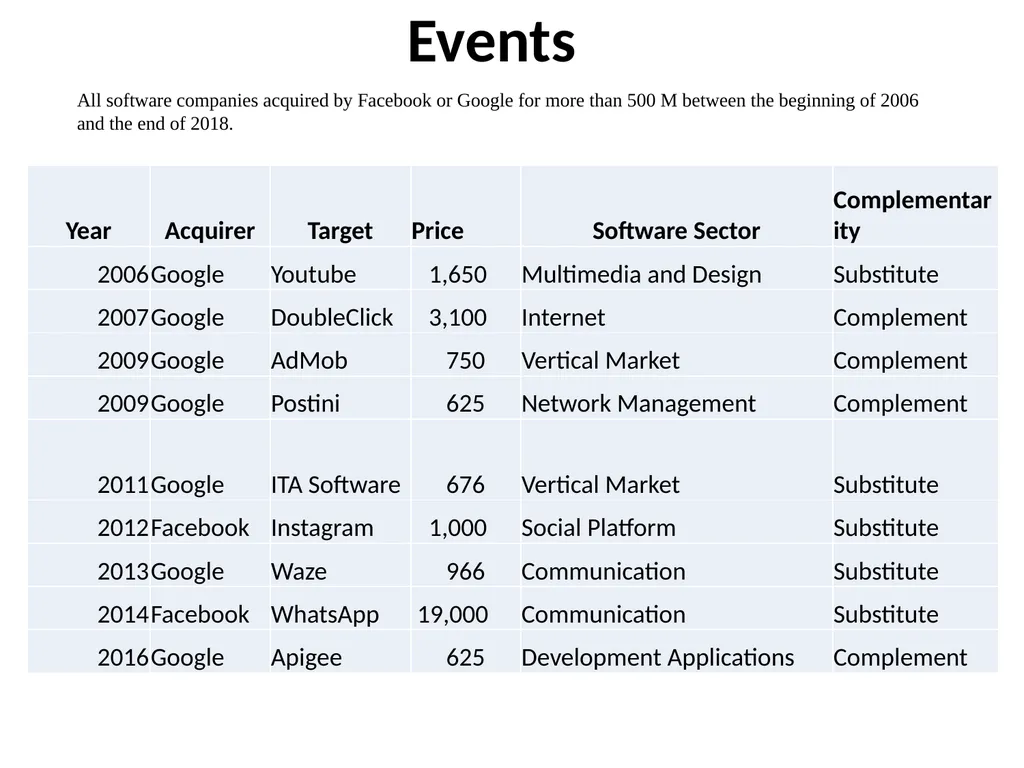
Events All software companies acquired by Facebook or Google for more than 500 M between the beginning of 2006 and the end of 2018.<br>
07
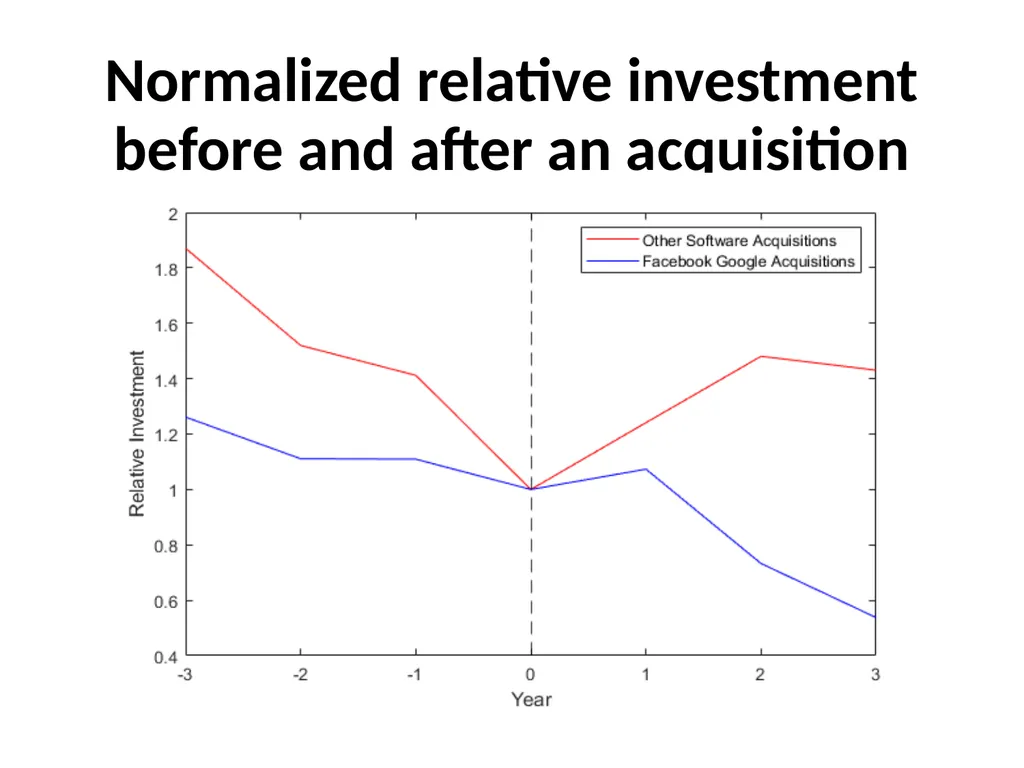
Normalized relative investment before and after an acquisition<br>
08
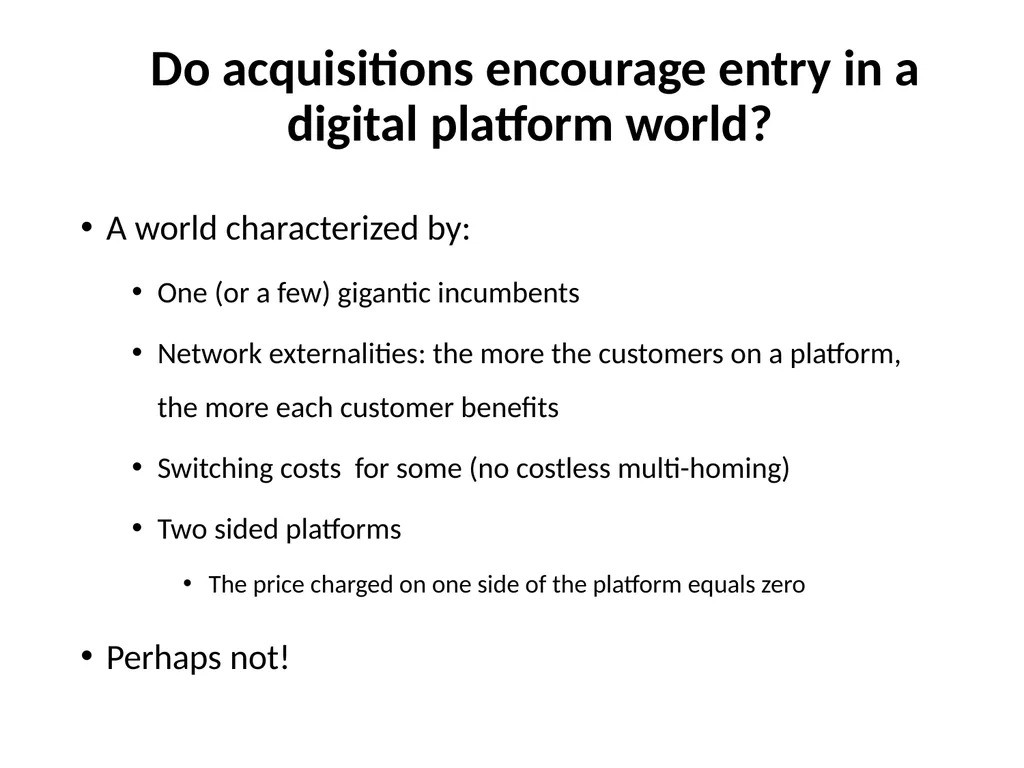
Do acquisitions encourage entry in a digital platform world? A world characterized by:
One (or a few) gigantic incumbents
Network externalities: the more the customers on a platform, the more each customer benefits
Switching costs for some (no costless multi-homing)
Two sided platforms
The price charged on one side of the platform equals zero
Perhaps not!<br>
09
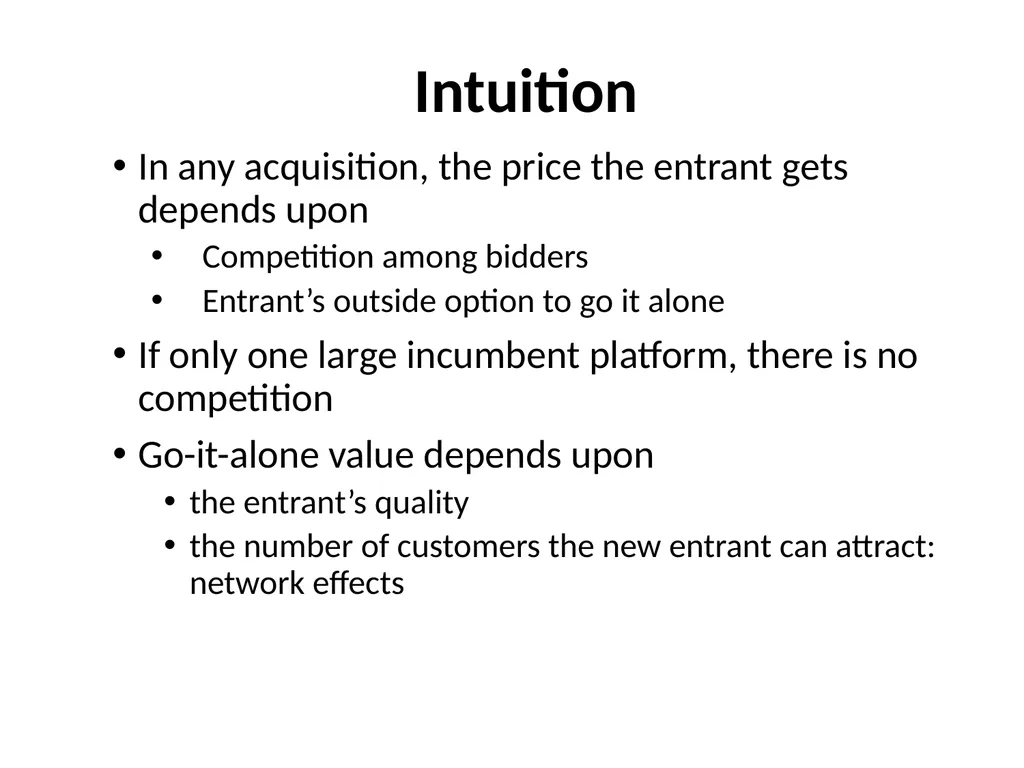
Intuition In any acquisition, the price the entrant gets depends upon
Competition among bidders
Entrant’s outside option to go it alone
If only one large incumbent platform, there is no competition
Go-it-alone value depends upon
the entrant’s quality
the number of customers the new entrant can attract: network effects<br>
10
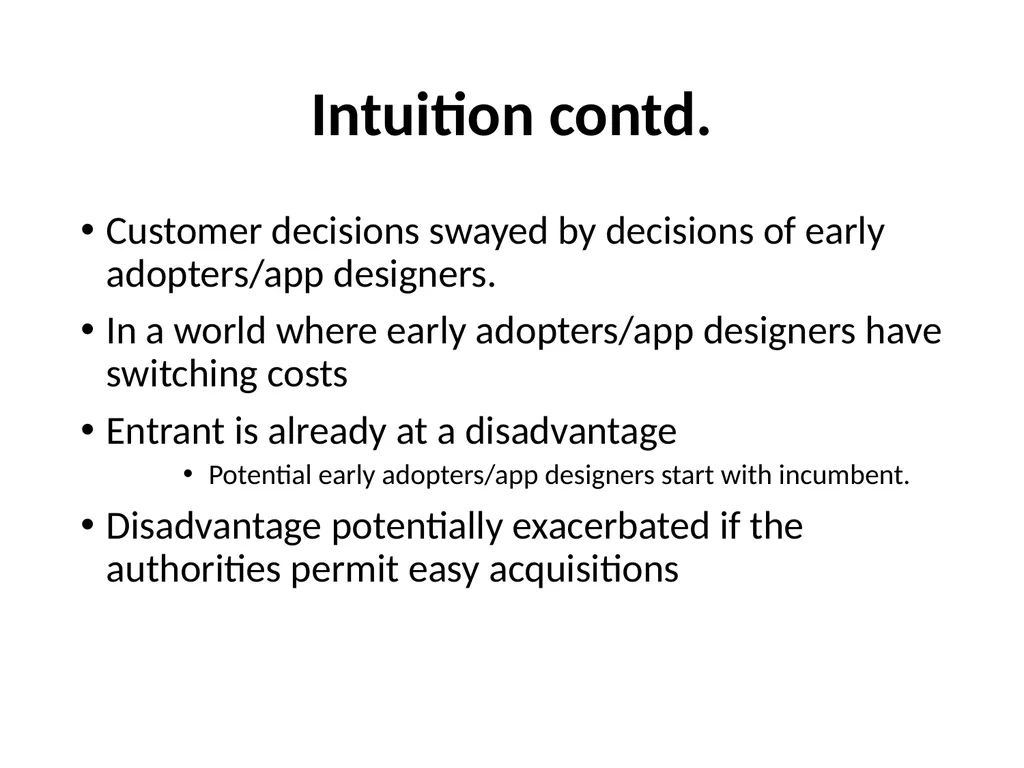
Intuition contd. Customer decisions swayed by decisions of early adopters/app designers.
In a world where early adopters/app designers have switching costs
Entrant is already at a disadvantage
Potential early adopters/app designers start with incumbent.
Disadvantage potentially exacerbated if the authorities permit easy acquisitions<br>
11
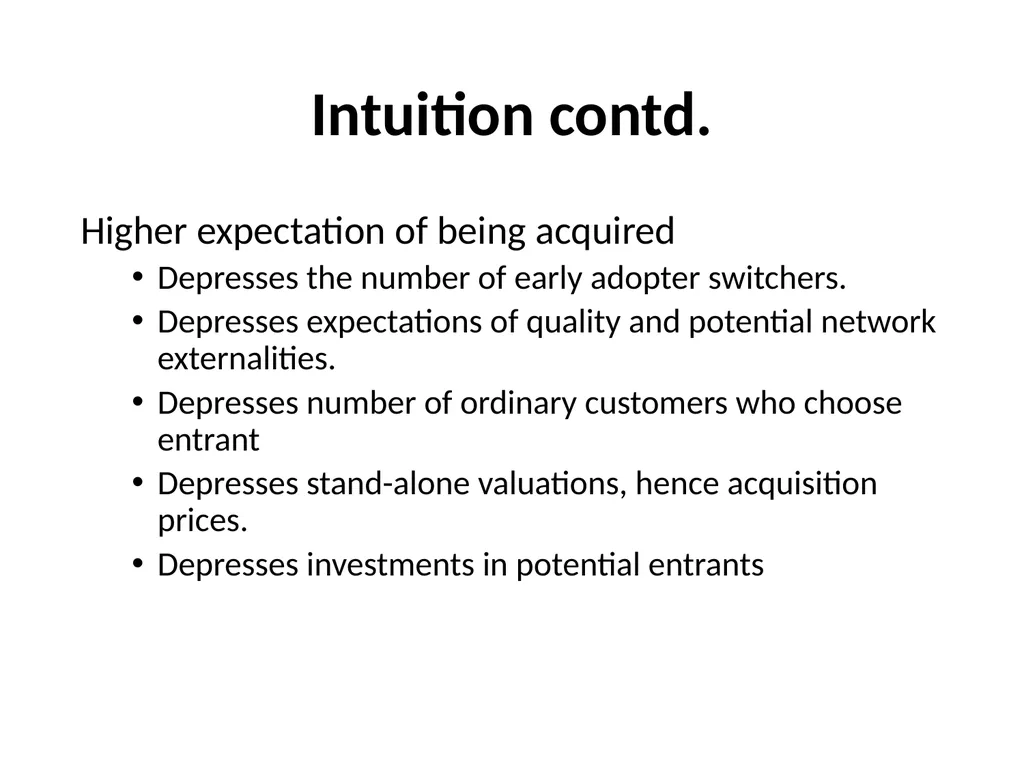
Intuition contd. Higher expectation of being acquired
Depresses the number of early adopter switchers.
Depresses expectations of quality and potential network externalities.
Depresses number of ordinary customers who choose entrant
Depresses stand-alone valuations, hence acquisition prices.
Depresses investments in potential entrants<br>
12
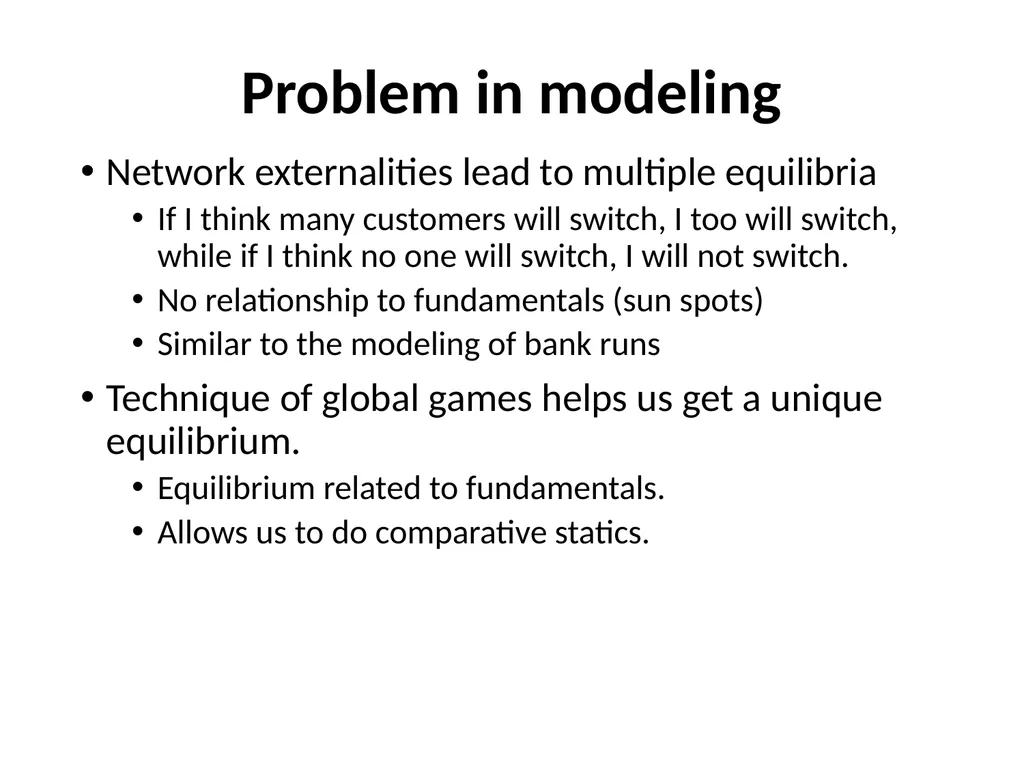
Problem in modeling Network externalities lead to multiple equilibria
If I think many customers will switch, I too will switch, while if I think no one will switch, I will not switch.
No relationship to fundamentals (sun spots)
Similar to the modeling of bank runs
Technique of global games helps us get a unique equilibrium.
Equilibrium related to fundamentals.
Allows us to do comparative statics.<br>
13
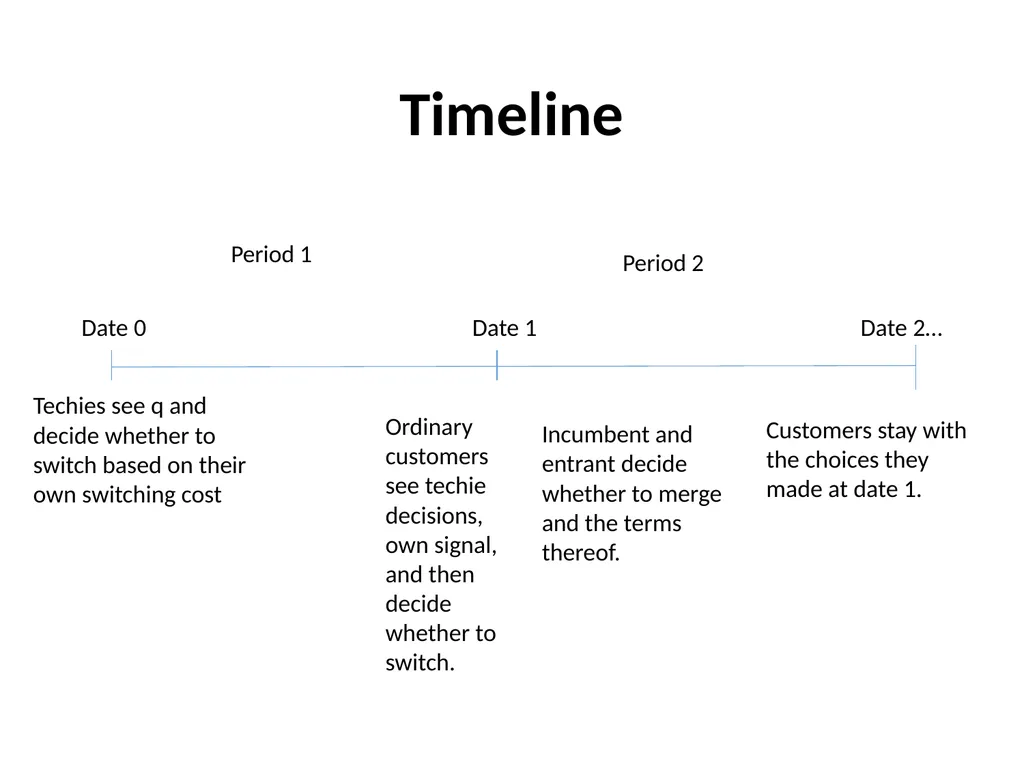
Techies see q and decide whether to switch based on their own switching cost Incumbent and entrant decide whether to merge and the terms thereof. Date 0 Date 1 Date 2… Customers stay with the choices they made at date 1. Period 1 Ordinary customers see techie decisions, own signal, and then decide whether to switch. Timeline Period 2<br>
14
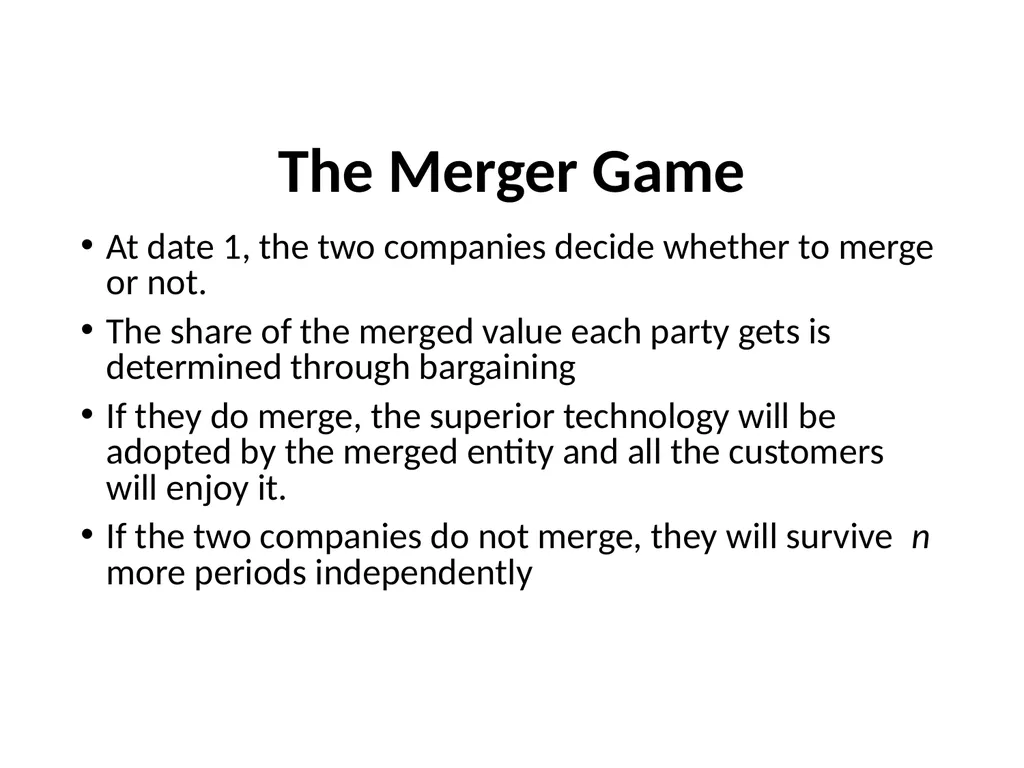
The Merger Game At date 1, the two companies decide whether to merge or not.
The share of the merged value each party gets is determined through bargaining
If they do merge, the superior technology will be adopted by the merged entity and all the customers will enjoy it.
If the two companies do not merge, they will survive n more periods independently<br>
15
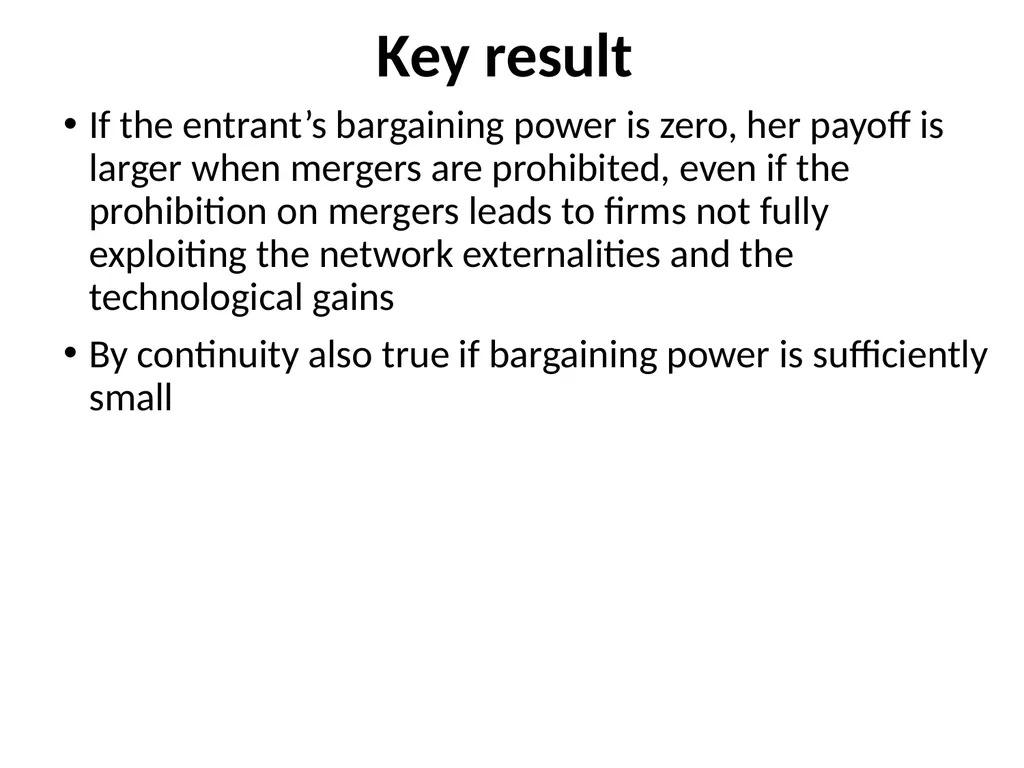
Key result If the entrant’s bargaining power is zero, her payoff is larger when mergers are prohibited, even if the prohibition on mergers leads to firms not fully exploiting the network externalities and the technological gains
By continuity also true if bargaining power is sufficiently small<br>
16
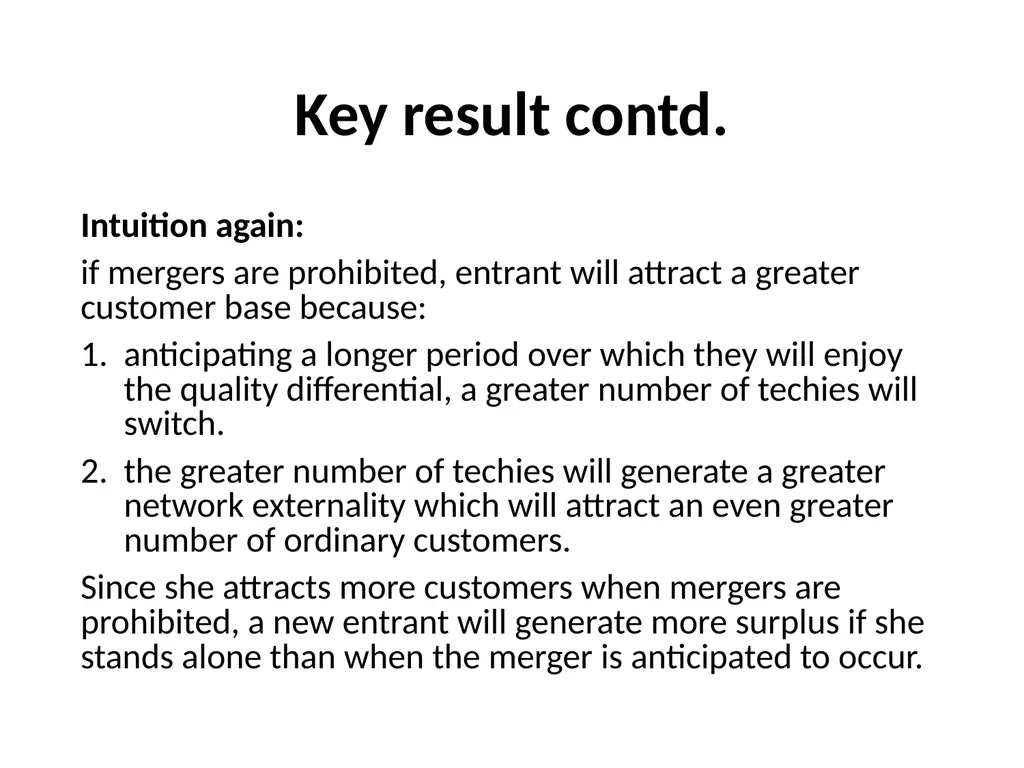
Key result contd. Intuition again:
if mergers are prohibited, entrant will attract a greater customer base because:
anticipating a longer period over which they will enjoy the quality differential, a greater number of techies will switch.
the greater number of techies will generate a greater network externality which will attract an even greater number of ordinary customers.
Since she attracts more customers when mergers are prohibited, a new entrant will generate more surplus if she stands alone than when the merger is anticipated to occur.<br>
17
What Wenger says is not inconsistent with theory
The data suggest it might even be plausible
Different history of digital platforms in the United States, China, and the EU.
EU entrants had to contend from the beginning with US incumbents, who built extensive networks in Europe early on.
By contrast, Chinese entrants did not have the same problem.
India and Tik Tok
Less clear what authorities should do<br>
18
Policy? Prohibiting mergers has problems both in theory and in practice
Theory: it prevents the industry from realizing ex post efficiencies.
Practice: how you define the boundaries of the prohibition
A case-by-case approach will inevitably lead to approving all acquisitions
However, the regulatory authorities can affect switching costs.
Mandate a common standard and interoperability.
All competitors realize common network externalities.<br>
19
Conclusions We construct a simple model that rationalizes the existence of “kill zones”
It depends upon the interaction of 3 frictions
network externalities
switching costs
lack of price competition (zero lower bound)
Limited evidence is consistent
Not obvious how to address the problem
mandated interoperability could help.
The most important message:
Twentieth century economic intuitions do not always translate to twenty first century economic problems<br>