
Knowledge, awareness, feasibility, and
Description: Knowledge, awareness, feasibility, and acceptability of long-acting Cabotegravir for HIV prevention: results from the SEARCH Dynamic Choice HIV prevention trial. Welcome to the prevention choice agenda! Elijah Kakande, Infectious Diseases
Related Topics
Download Presentation
"Knowledge, awareness, feasibility, and" is the property of its rightful owner. Permission is granted to download and print the materials on this website for personal, non-commercial use only, and to display it on your personal computer provided you do not modify the materials and that you retain all copyright notices contained in the materials. By downloading content from our website, you accept the terms of this agreement.
Presentation Transcript
slide1. Knowledge, awareness, feasibility, and acceptability of long-acting Cabotegravir for HIV prevention: results from the SEARCH Dynamic Choice HIV prevention trial. Welcome to the prevention choice agenda! Elijah Kakande, Infectious Diseases Research Collaboration, SEARCH consortium No financial relationships to disclose.<br>
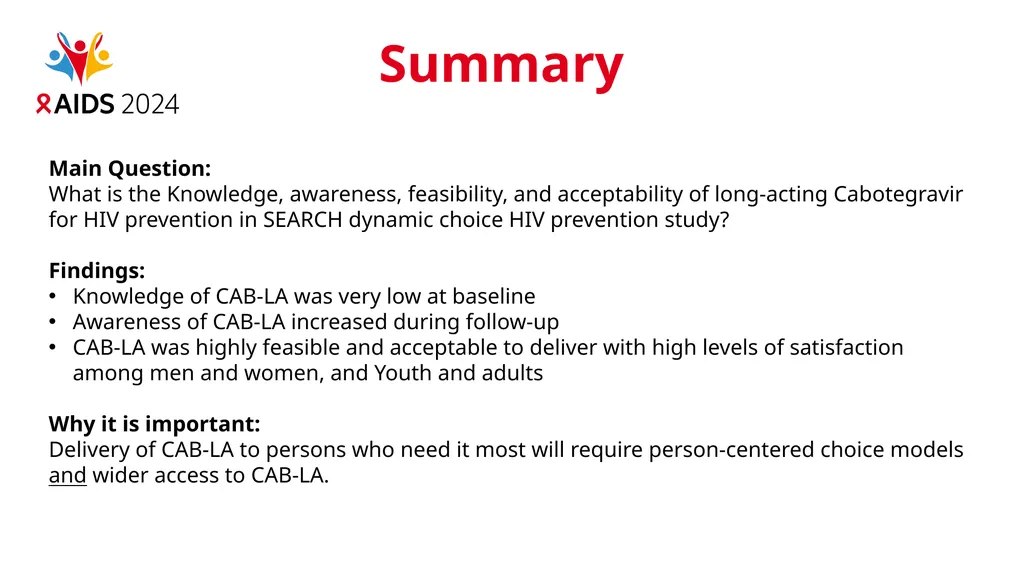
slide2. Main Question:
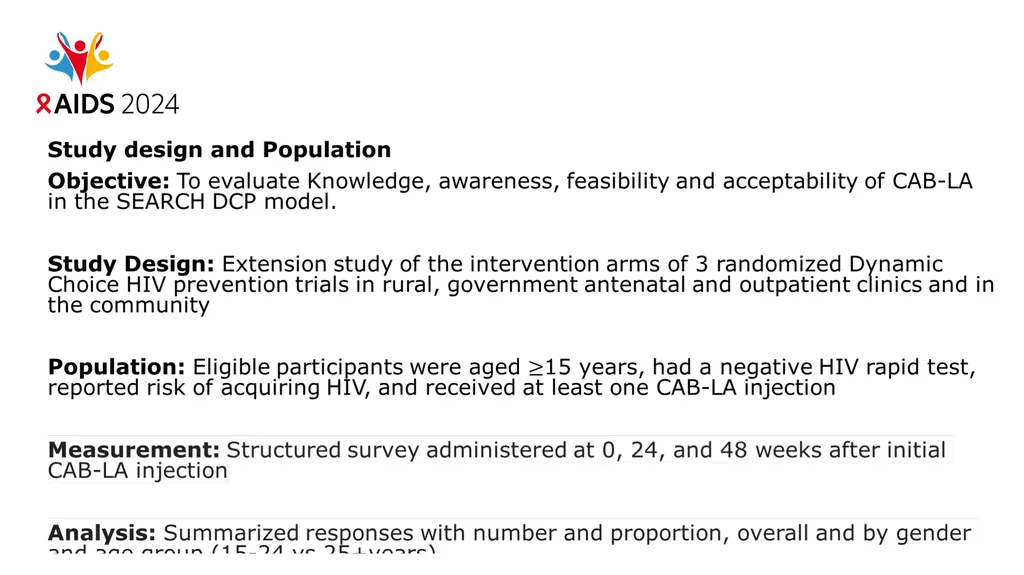
What is the Knowledge, awareness, feasibility, and acceptability of long-acting Cabotegravir for HIV prevention in SEARCH dynamic choice HIV prevention study?
Findings:
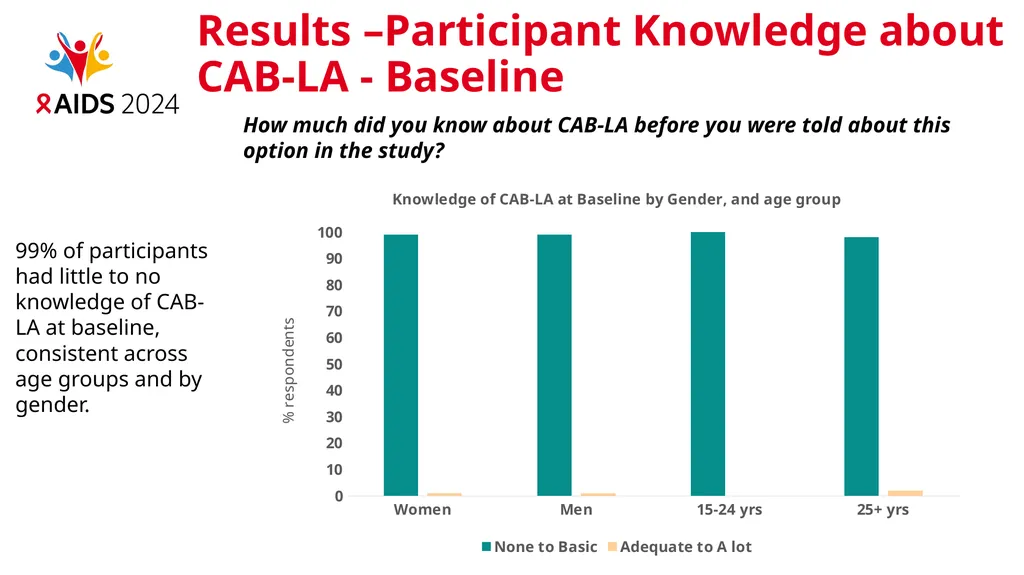
Knowledge of CAB-LA was very low at baseline
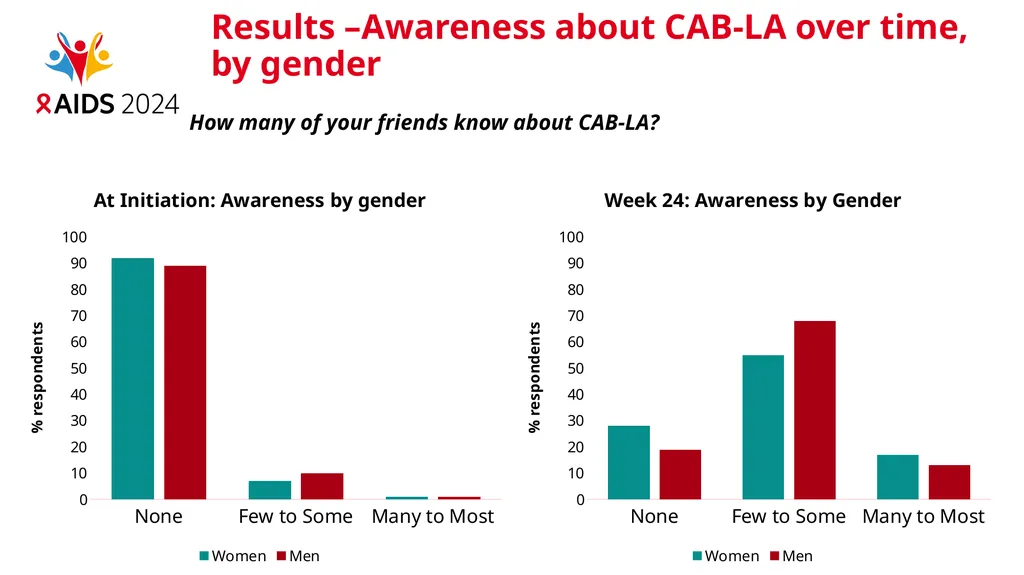
Awareness of CAB-LA increased during follow-up
CAB-LA was highly feasible and acceptable to deliver with high levels of satisfaction among men and women, and Youth and adults
Why it is important:
Delivery of CAB-LA to persons who need it most will require person-centered choice models and wider access to CAB-LA. Summary<br>
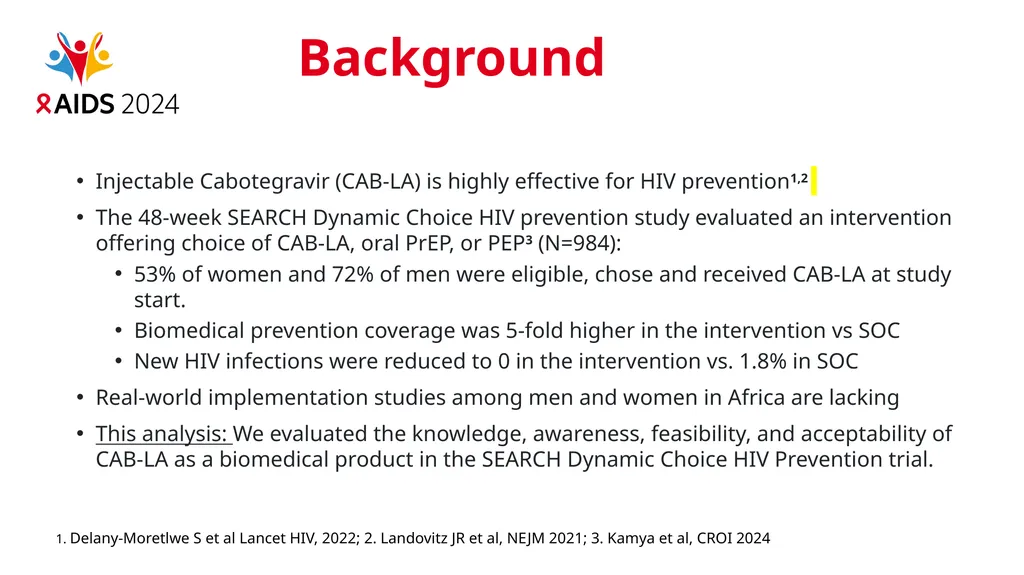
slide3. Background Injectable Cabotegravir (CAB-LA) is highly effective for HIV prevention1,2
The 48-week SEARCH Dynamic Choice HIV prevention study evaluated an intervention offering choice of CAB-LA, oral PrEP, or PEP3 (N=984):
53% of women and 72% of men were eligible, chose and received CAB-LA at study start.
Biomedical prevention coverage was 5-fold higher in the intervention vs SOC
New HIV infections were reduced to 0 in the intervention vs. 1.8% in SOC
Real-world implementation studies among men and women in Africa are lacking
This analysis: We evaluated the knowledge, awareness, feasibility, and acceptability of CAB-LA as a biomedical product in the SEARCH Dynamic Choice HIV Prevention trial. 1. Delany-Moretlwe S et al Lancet HIV, 2022; 2. Landovitz JR et al, NEJM 2021; 3. Kamya et al, CROI 2024<br>
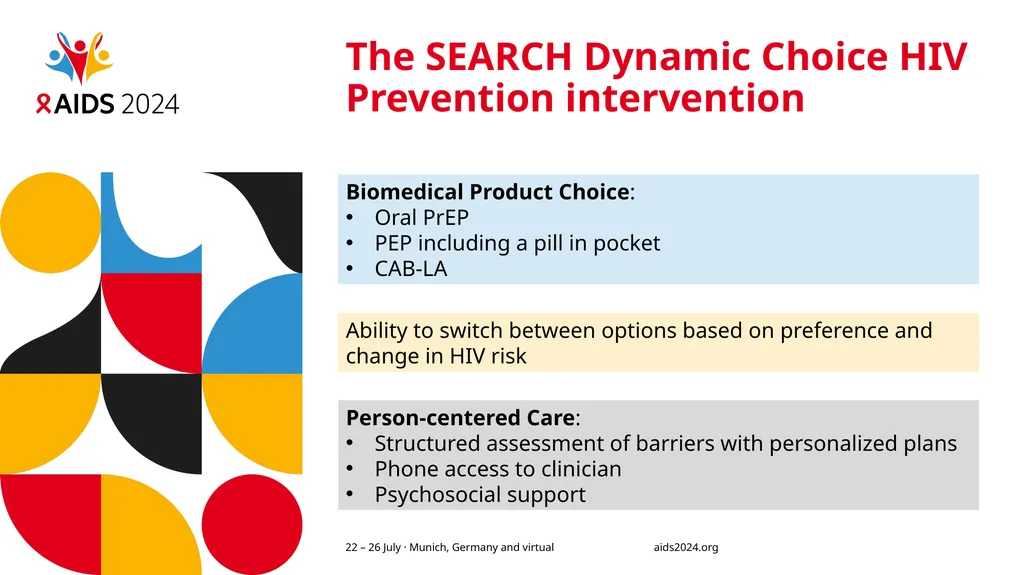
slide4. The SEARCH Dynamic Choice HIV Prevention intervention Person-centered Care:
Structured assessment of barriers with personalized plans
Phone access to clinician
Psychosocial support Biomedical Product Choice:
Oral PrEP
PEP including a pill in pocket
CAB-LA Ability to switch between options based on preference and change in HIV risk<br>
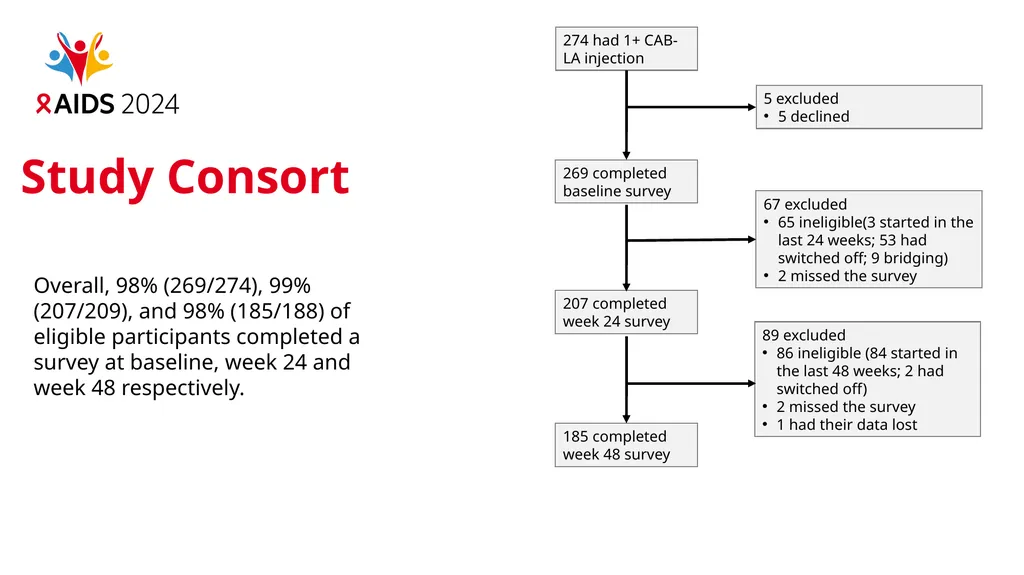
slide6. Study Consort Overall, 98% (269/274), 99% (207/209), and 98% (185/188) of eligible participants completed a survey at baseline, week 24 and week 48 respectively. 274 had 1+ CAB-LA injection 269 completed baseline survey 5 excluded
5 declined 207 completed week 24 survey 67 excluded
65 ineligible(3 started in the last 24 weeks; 53 had switched off; 9 bridging)
2 missed the survey 185 completed week 48 survey 89 excluded
86 ineligible (84 started in the last 48 weeks; 2 had switched off)
2 missed the survey
1 had their data lost<br>
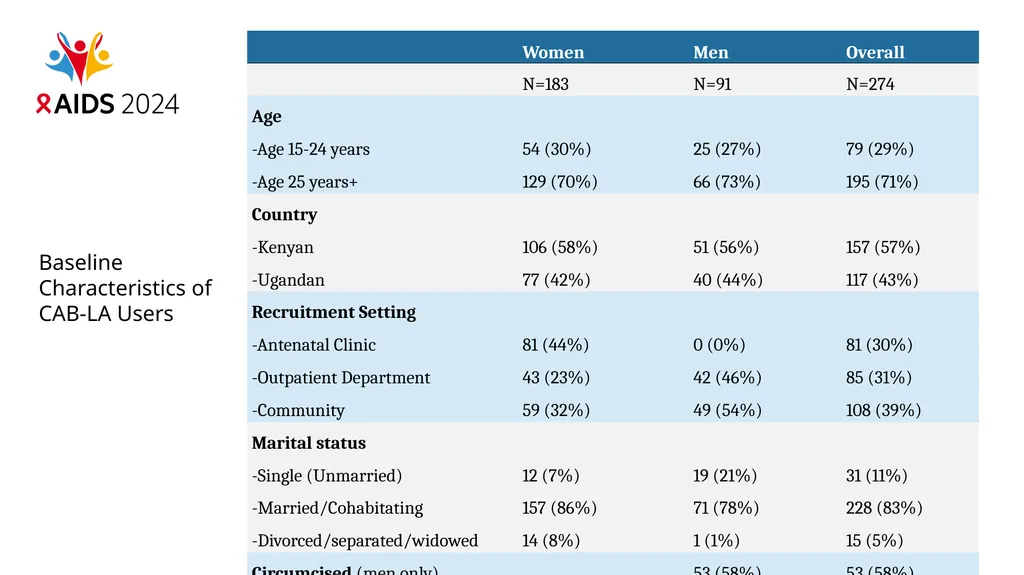
slide7. Baseline Characteristics of CAB-LA Users<br>
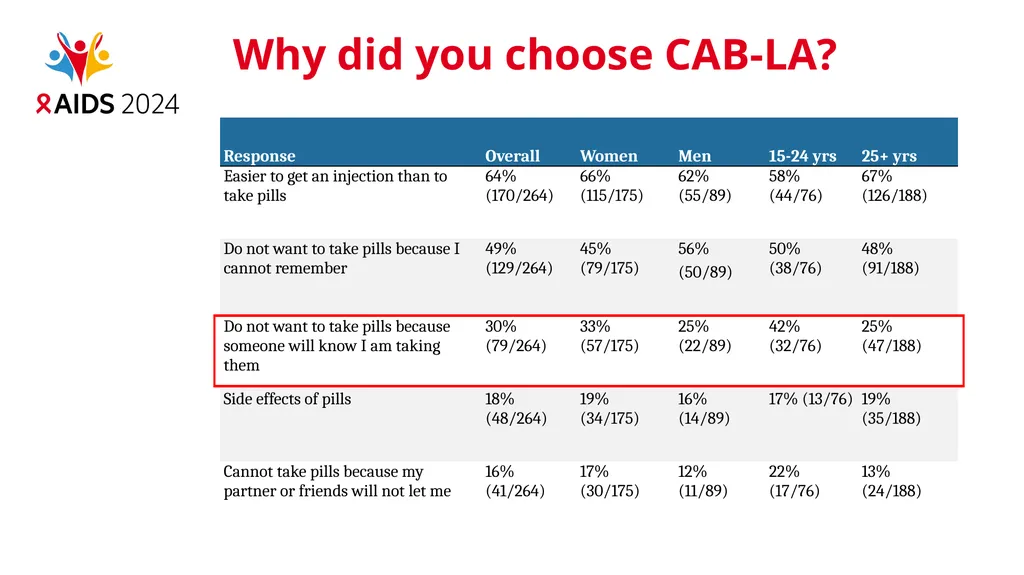
slide8. Why did you choose CAB-LA?<br>
slide9. Results –Participant Knowledge about CAB-LA - Baseline 99% of participants had little to no knowledge of CAB-LA at baseline, consistent across age groups and by gender. How much did you know about CAB-LA before you were told about this option in the study?<br>
slide10. How many of your friends know about CAB-LA? Results –Awareness about CAB-LA over time, by gender<br>
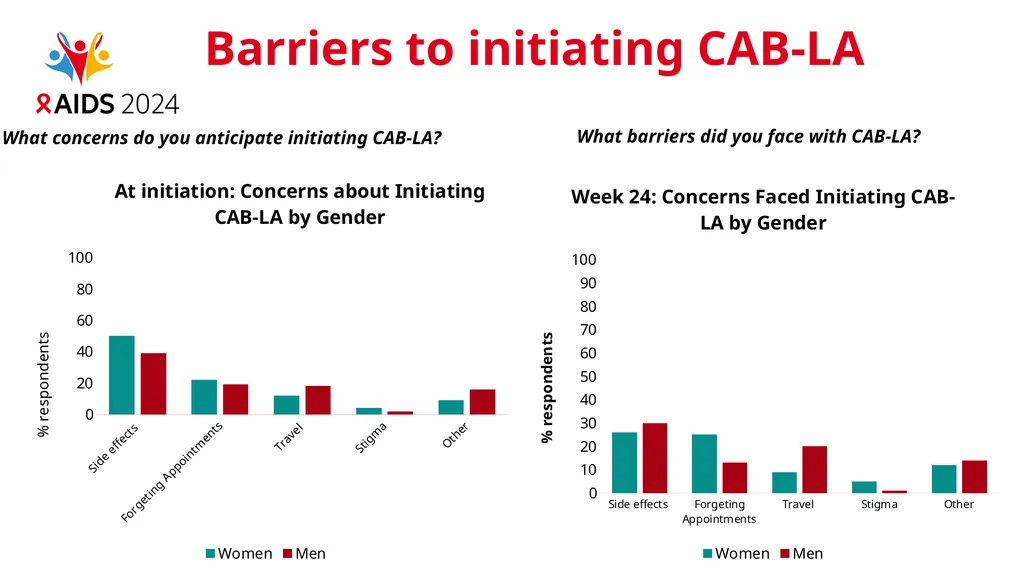
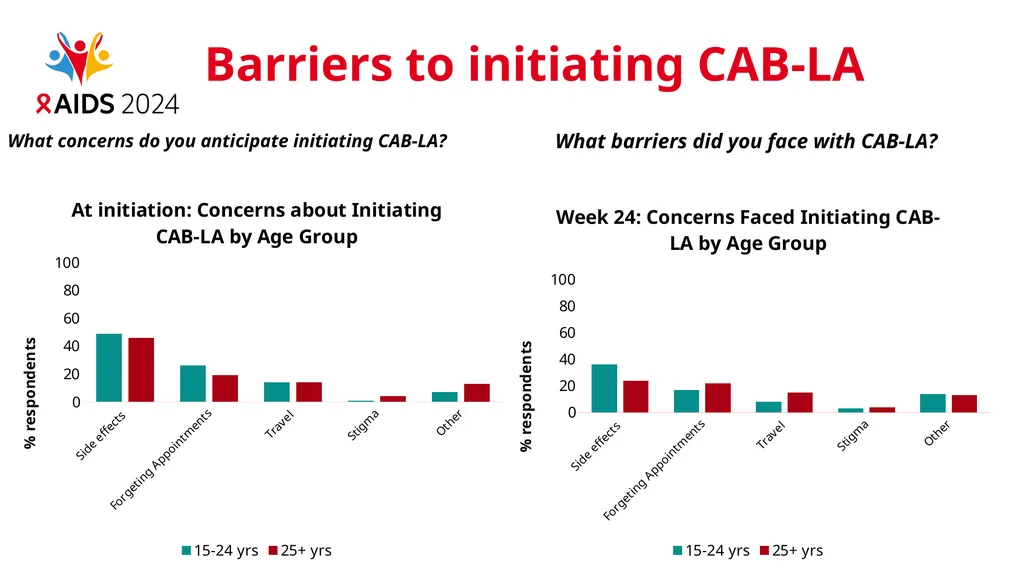
slide11. Barriers to initiating CAB-LA What concerns do you anticipate initiating CAB-LA? What barriers did you face with CAB-LA?<br>
slide12. Barriers to initiating CAB-LA What concerns do you anticipate initiating CAB-LA? What barriers did you face with CAB-LA?<br>
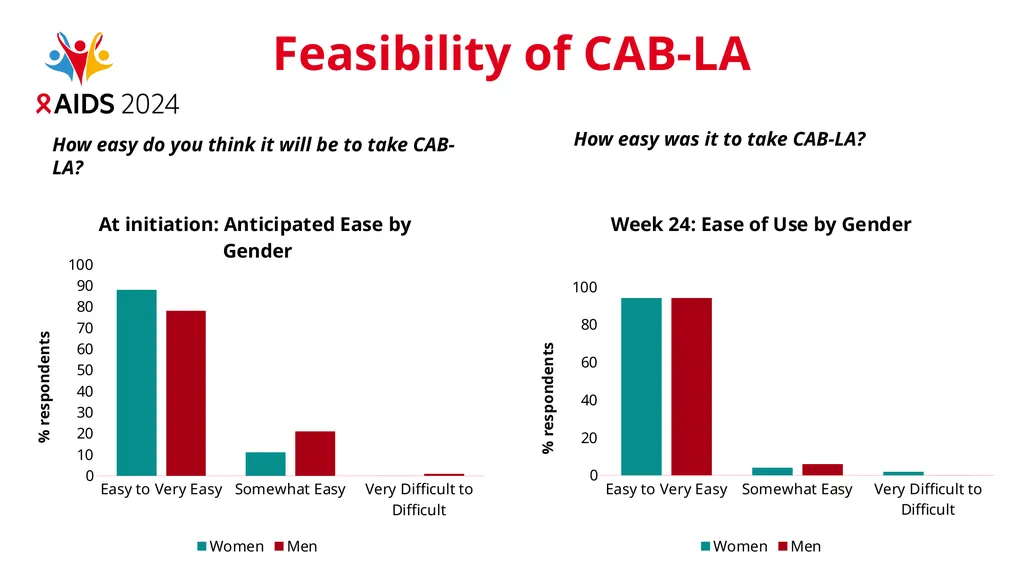
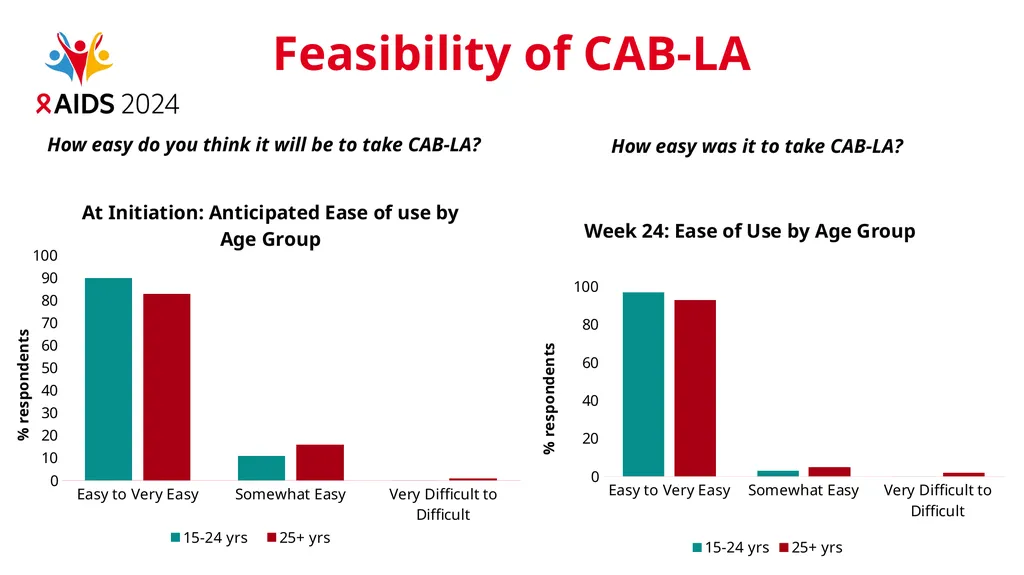
slide13. Feasibility of CAB-LA How easy do you think it will be to take CAB-LA? How easy was it to take CAB-LA?<br>
slide14. Feasibility of CAB-LA How easy do you think it will be to take CAB-LA? How easy was it to take CAB-LA?<br>
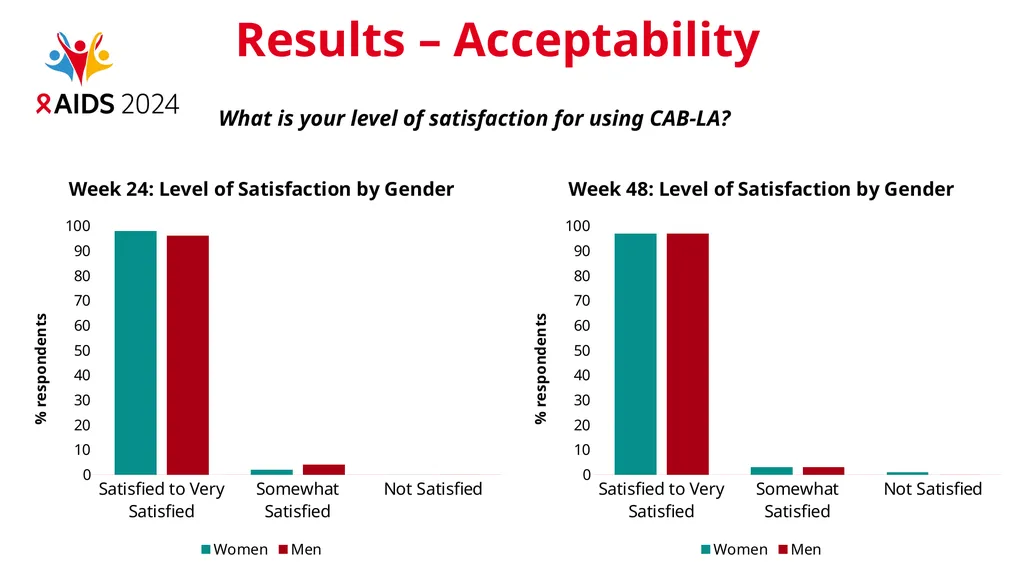
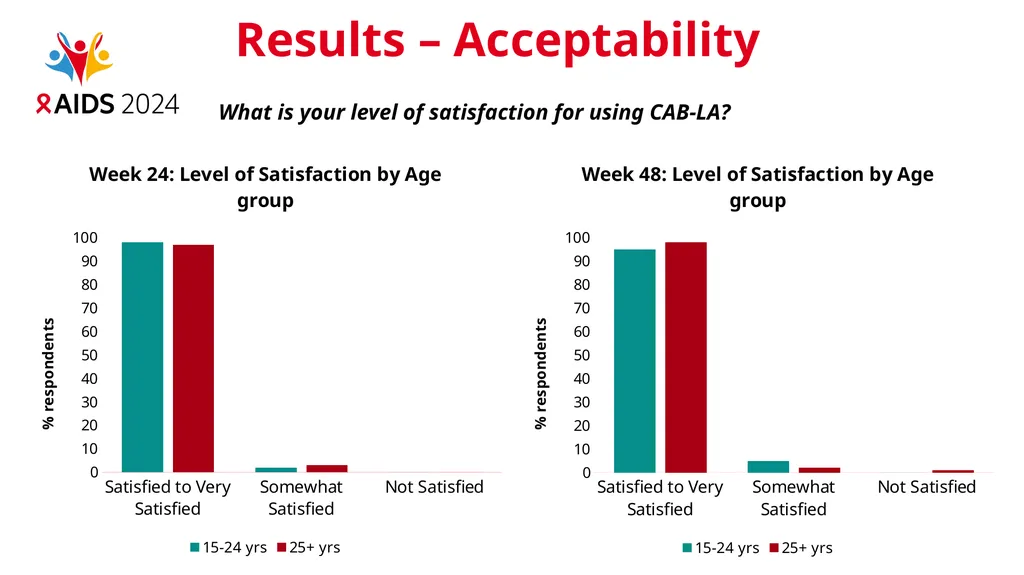
slide15. Results – Acceptability What is your level of satisfaction for using CAB-LA?<br>
slide16. What is your level of satisfaction for using CAB-LA? Results – Acceptability<br>
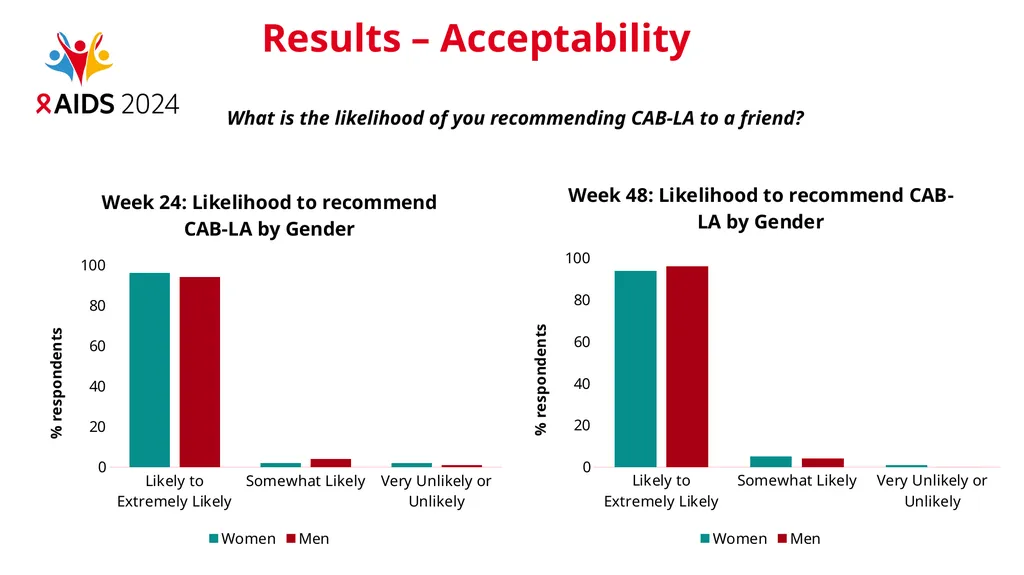
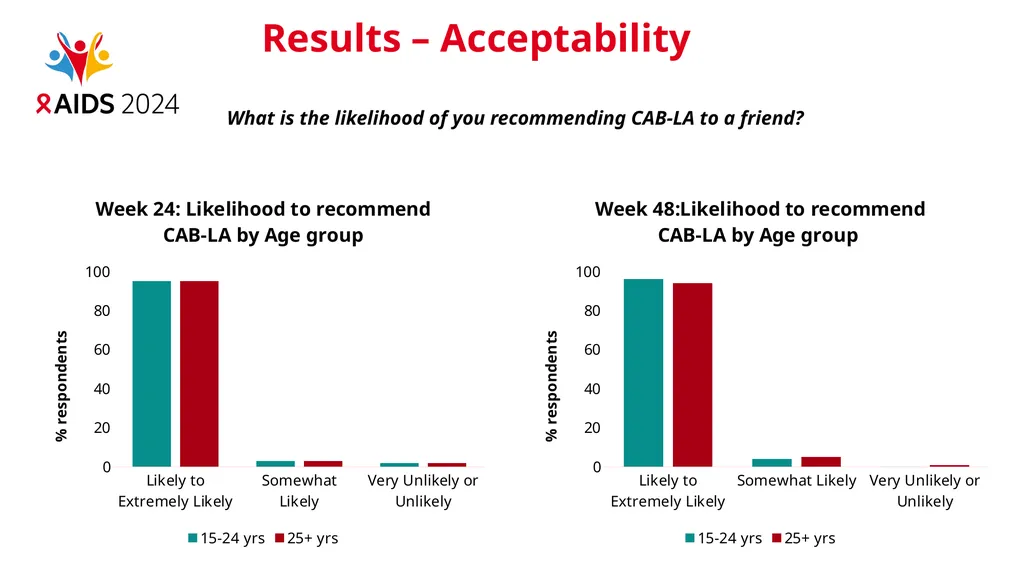
slide17. Results – Acceptability What is the likelihood of you recommending CAB-LA to a friend?<br>
slide18. Results – Acceptability What is the likelihood of you recommending CAB-LA to a friend?<br>
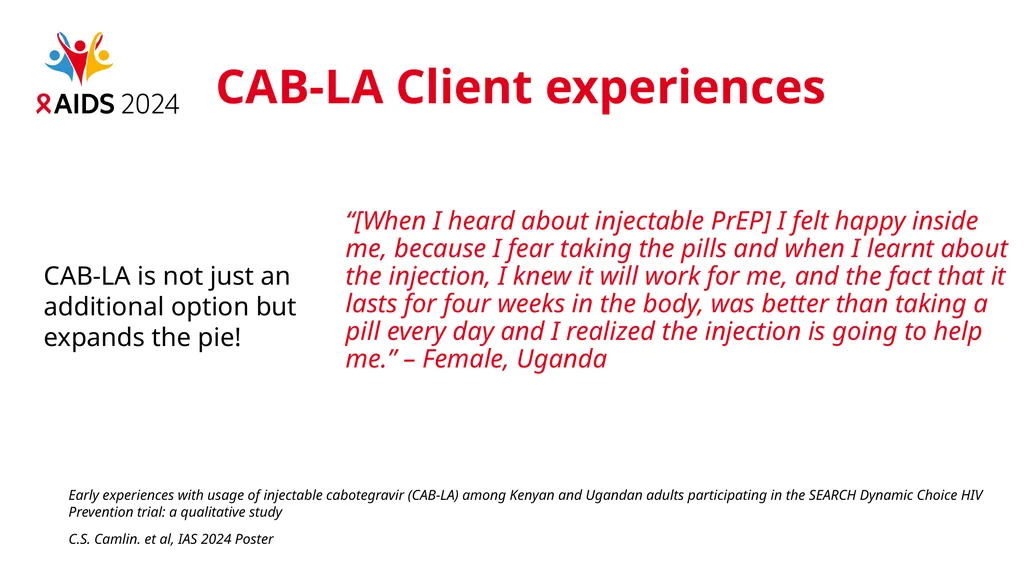
slide19. CAB-LA Client experiences CAB-LA is not just an additional option but expands the pie! “[When I heard about injectable PrEP] I felt happy inside me, because I fear taking the pills and when I learnt about the injection, I knew it will work for me, and the fact that it lasts for four weeks in the body, was better than taking a pill every day and I realized the injection is going to help me.” – Female, Uganda Early experiences with usage of injectable cabotegravir (CAB-LA) among Kenyan and Ugandan adults participating in the SEARCH Dynamic Choice HIV Prevention trial: a qualitative study
C.S. Camlin. et al, IAS 2024 Poster<br>
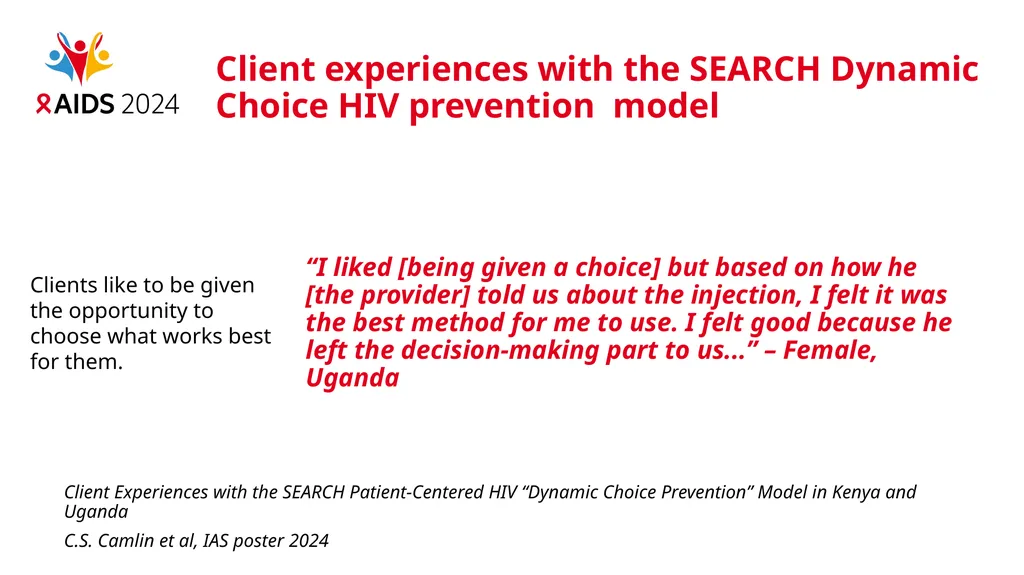
slide20. Client experiences with the SEARCH Dynamic Choice HIV prevention model Clients like to be given the opportunity to choose what works best for them. “I liked [being given a choice] but based on how he [the provider] told us about the injection, I felt it was the best method for me to use. I felt good because he left the decision-making part to us...” – Female, Uganda Client Experiences with the SEARCH Patient-Centered HIV “Dynamic Choice Prevention” Model in Kenya and Uganda
C.S. Camlin et al, IAS poster 2024<br>
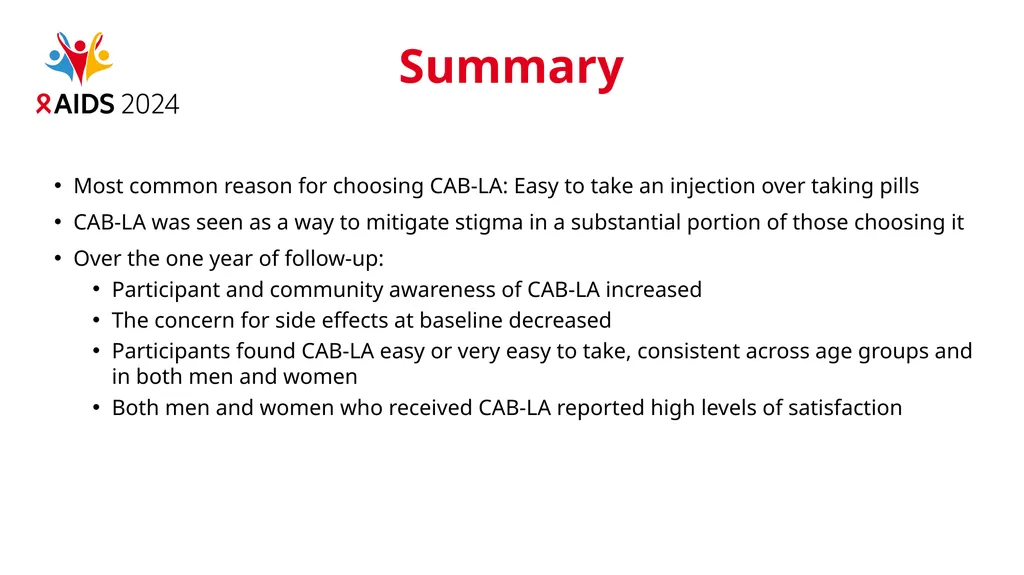
slide21. Most common reason for choosing CAB-LA: Easy to take an injection over taking pills
CAB-LA was seen as a way to mitigate stigma in a substantial portion of those choosing it
Over the one year of follow-up:
Participant and community awareness of CAB-LA increased
The concern for side effects at baseline decreased
Participants found CAB-LA easy or very easy to take, consistent across age groups and in both men and women
Both men and women who received CAB-LA reported high levels of satisfaction Summary<br>
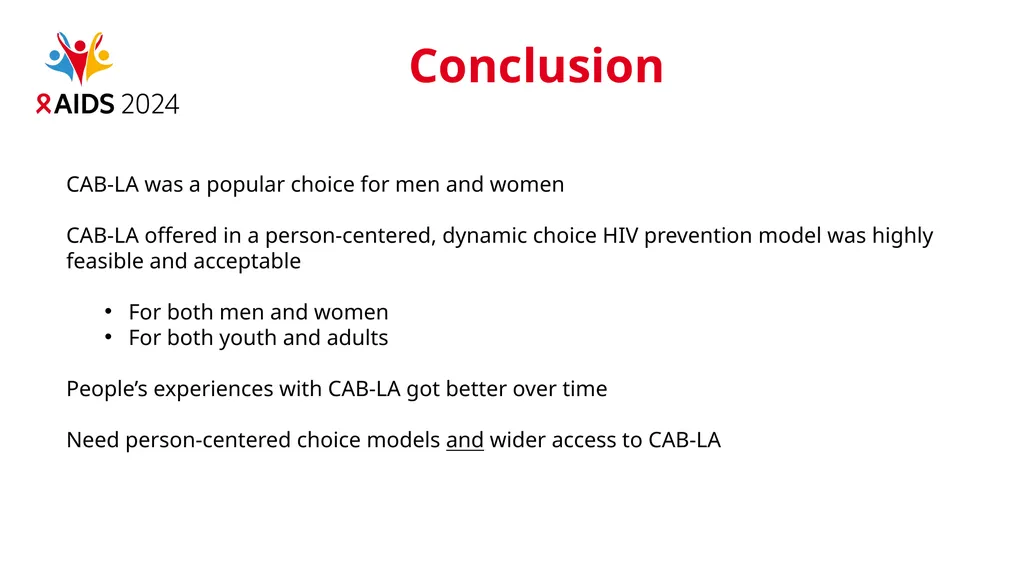
slide22. Conclusion CAB-LA was a popular choice for men and women
CAB-LA offered in a person-centered, dynamic choice HIV prevention model was highly feasible and acceptable
For both men and women
For both youth and adults
People’s experiences with CAB-LA got better over time
Need person-centered choice models and wider access to CAB-LA<br>
slide23. Department of Medicine, Makerere University, Kampala
Moses R. Kamya
Kenya Medical Research Institute
James Ayieko
Marilyn Nyabuti
Erick Wafula
University of California San Francisco
Diane Havlir
Gabriel Chamie
Catherine A. Koss
John Schrom, Nicole Sutter
National Institute of Allergies and Infectious Diseases
Melanie Bacon, Joana Roe, Carlie Williams, Carl Dieffenbach
ViiV Healthcare
Alex Rinehart, Maggie Czarnogorski Study Participants and Communities
Republic of Kenya Ministry of Health, Republic of Uganda Ministry of Health
Diane Havlir, Moses Kamya, Maya Petersen – Co-PIs
SEARCH study team
University of California Berkeley
Maya Petersen
Laura Balzer
Josh Schwab
Infectious Diseases Research Collaboration, Uganda
Jane Kabami
Elijah Kakande
Helen Sunday
Geoff Lavoy (U01AI150510); NIAID;NHLBI;NIAAA, NIMH Acknowledgements<br>
slide2. Main Question:
What is the Knowledge, awareness, feasibility, and acceptability of long-acting Cabotegravir for HIV prevention in SEARCH dynamic choice HIV prevention study?
Findings:
Knowledge of CAB-LA was very low at baseline
Awareness of CAB-LA increased during follow-up
CAB-LA was highly feasible and acceptable to deliver with high levels of satisfaction among men and women, and Youth and adults
Why it is important:
Delivery of CAB-LA to persons who need it most will require person-centered choice models and wider access to CAB-LA. Summary<br>
slide3. Background Injectable Cabotegravir (CAB-LA) is highly effective for HIV prevention1,2
The 48-week SEARCH Dynamic Choice HIV prevention study evaluated an intervention offering choice of CAB-LA, oral PrEP, or PEP3 (N=984):
53% of women and 72% of men were eligible, chose and received CAB-LA at study start.
Biomedical prevention coverage was 5-fold higher in the intervention vs SOC
New HIV infections were reduced to 0 in the intervention vs. 1.8% in SOC
Real-world implementation studies among men and women in Africa are lacking
This analysis: We evaluated the knowledge, awareness, feasibility, and acceptability of CAB-LA as a biomedical product in the SEARCH Dynamic Choice HIV Prevention trial. 1. Delany-Moretlwe S et al Lancet HIV, 2022; 2. Landovitz JR et al, NEJM 2021; 3. Kamya et al, CROI 2024<br>
slide4. The SEARCH Dynamic Choice HIV Prevention intervention Person-centered Care:
Structured assessment of barriers with personalized plans
Phone access to clinician
Psychosocial support Biomedical Product Choice:
Oral PrEP
PEP including a pill in pocket
CAB-LA Ability to switch between options based on preference and change in HIV risk<br>
slide6. Study Consort Overall, 98% (269/274), 99% (207/209), and 98% (185/188) of eligible participants completed a survey at baseline, week 24 and week 48 respectively. 274 had 1+ CAB-LA injection 269 completed baseline survey 5 excluded
5 declined 207 completed week 24 survey 67 excluded
65 ineligible(3 started in the last 24 weeks; 53 had switched off; 9 bridging)
2 missed the survey 185 completed week 48 survey 89 excluded
86 ineligible (84 started in the last 48 weeks; 2 had switched off)
2 missed the survey
1 had their data lost<br>
slide7. Baseline Characteristics of CAB-LA Users<br>
slide8. Why did you choose CAB-LA?<br>
slide9. Results –Participant Knowledge about CAB-LA - Baseline 99% of participants had little to no knowledge of CAB-LA at baseline, consistent across age groups and by gender. How much did you know about CAB-LA before you were told about this option in the study?<br>
slide10. How many of your friends know about CAB-LA? Results –Awareness about CAB-LA over time, by gender<br>
slide11. Barriers to initiating CAB-LA What concerns do you anticipate initiating CAB-LA? What barriers did you face with CAB-LA?<br>
slide12. Barriers to initiating CAB-LA What concerns do you anticipate initiating CAB-LA? What barriers did you face with CAB-LA?<br>
slide13. Feasibility of CAB-LA How easy do you think it will be to take CAB-LA? How easy was it to take CAB-LA?<br>
slide14. Feasibility of CAB-LA How easy do you think it will be to take CAB-LA? How easy was it to take CAB-LA?<br>
slide15. Results – Acceptability What is your level of satisfaction for using CAB-LA?<br>
slide16. What is your level of satisfaction for using CAB-LA? Results – Acceptability<br>
slide17. Results – Acceptability What is the likelihood of you recommending CAB-LA to a friend?<br>
slide18. Results – Acceptability What is the likelihood of you recommending CAB-LA to a friend?<br>
slide19. CAB-LA Client experiences CAB-LA is not just an additional option but expands the pie! “[When I heard about injectable PrEP] I felt happy inside me, because I fear taking the pills and when I learnt about the injection, I knew it will work for me, and the fact that it lasts for four weeks in the body, was better than taking a pill every day and I realized the injection is going to help me.” – Female, Uganda Early experiences with usage of injectable cabotegravir (CAB-LA) among Kenyan and Ugandan adults participating in the SEARCH Dynamic Choice HIV Prevention trial: a qualitative study
C.S. Camlin. et al, IAS 2024 Poster<br>
slide20. Client experiences with the SEARCH Dynamic Choice HIV prevention model Clients like to be given the opportunity to choose what works best for them. “I liked [being given a choice] but based on how he [the provider] told us about the injection, I felt it was the best method for me to use. I felt good because he left the decision-making part to us...” – Female, Uganda Client Experiences with the SEARCH Patient-Centered HIV “Dynamic Choice Prevention” Model in Kenya and Uganda
C.S. Camlin et al, IAS poster 2024<br>
slide21. Most common reason for choosing CAB-LA: Easy to take an injection over taking pills
CAB-LA was seen as a way to mitigate stigma in a substantial portion of those choosing it
Over the one year of follow-up:
Participant and community awareness of CAB-LA increased
The concern for side effects at baseline decreased
Participants found CAB-LA easy or very easy to take, consistent across age groups and in both men and women
Both men and women who received CAB-LA reported high levels of satisfaction Summary<br>
slide22. Conclusion CAB-LA was a popular choice for men and women
CAB-LA offered in a person-centered, dynamic choice HIV prevention model was highly feasible and acceptable
For both men and women
For both youth and adults
People’s experiences with CAB-LA got better over time
Need person-centered choice models and wider access to CAB-LA<br>
slide23. Department of Medicine, Makerere University, Kampala
Moses R. Kamya
Kenya Medical Research Institute
James Ayieko
Marilyn Nyabuti
Erick Wafula
University of California San Francisco
Diane Havlir
Gabriel Chamie
Catherine A. Koss
John Schrom, Nicole Sutter
National Institute of Allergies and Infectious Diseases
Melanie Bacon, Joana Roe, Carlie Williams, Carl Dieffenbach
ViiV Healthcare
Alex Rinehart, Maggie Czarnogorski Study Participants and Communities
Republic of Kenya Ministry of Health, Republic of Uganda Ministry of Health
Diane Havlir, Moses Kamya, Maya Petersen – Co-PIs
SEARCH study team
University of California Berkeley
Maya Petersen
Laura Balzer
Josh Schwab
Infectious Diseases Research Collaboration, Uganda
Jane Kabami
Elijah Kakande
Helen Sunday
Geoff Lavoy (U01AI150510); NIAID;NHLBI;NIAAA, NIMH Acknowledgements<br>