
Language Pedagogy If we know how children learn or


Description: Language Pedagogy If we know how children learn or we ourselves (as adults) learn...What will happen? We can close down all schools. How many animals are there? Engaging Learning with Language Learners work with work in language. HOW
Related Topics
Download Presentation
"Language Pedagogy If we know how children learn or" is the property of its rightful owner. Permission is granted to download and print the materials on this website for personal, non-commercial use only, and to display it on your personal computer provided you do not modify the materials and that you retain all copyright notices contained in the materials. By downloading content from our website, you accept the terms of this agreement.
Presentation Transcript
slide1. Language Pedagogy If we know how children learn or we ourselves (as adults) learn...What will happen? We can close down all schools.<br>
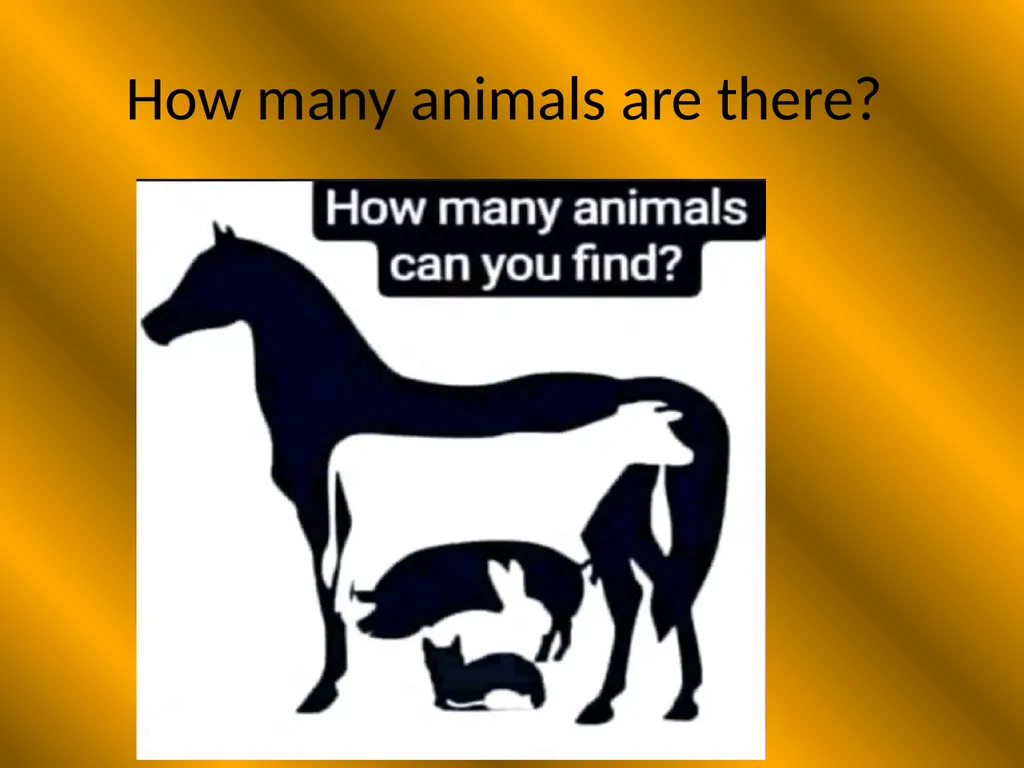
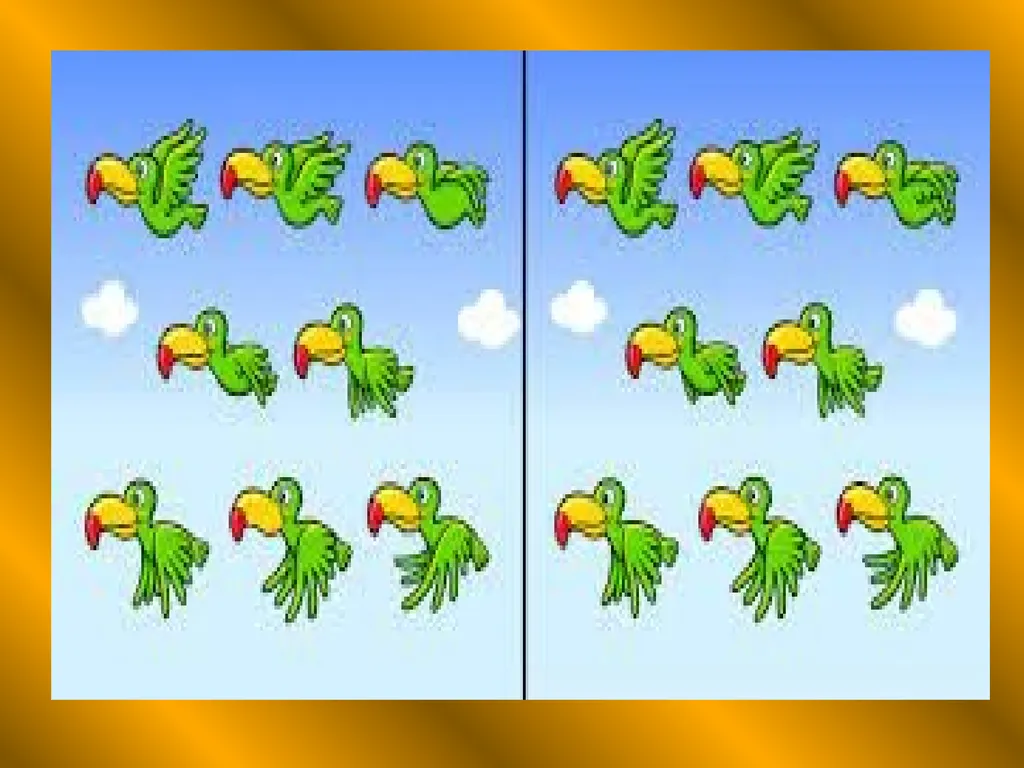
slide3. How many animals are there?<br>
slide8. Engaging Learning with Language Learners ‘work with’ & ‘work in’ language.
HOW & why?
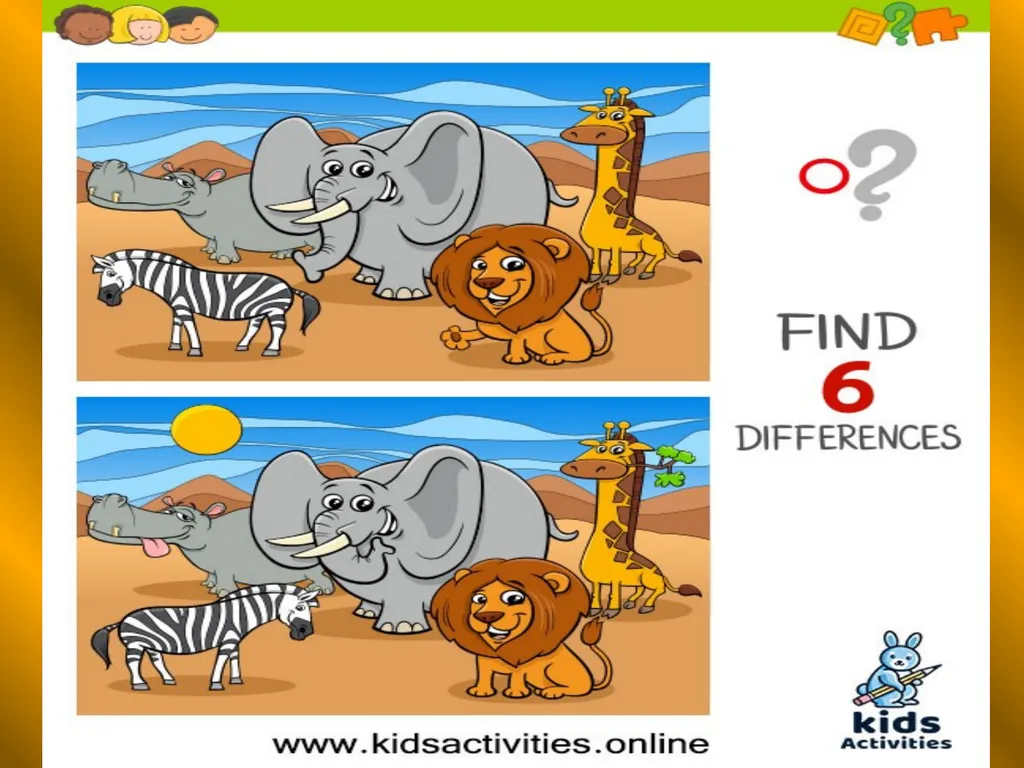
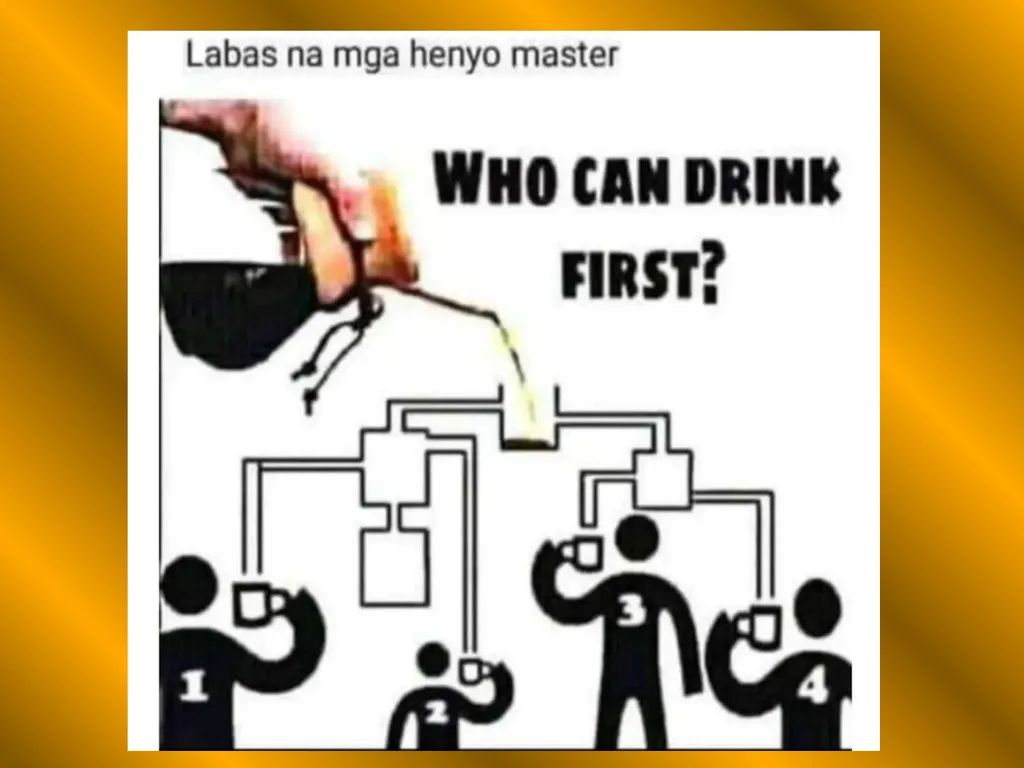
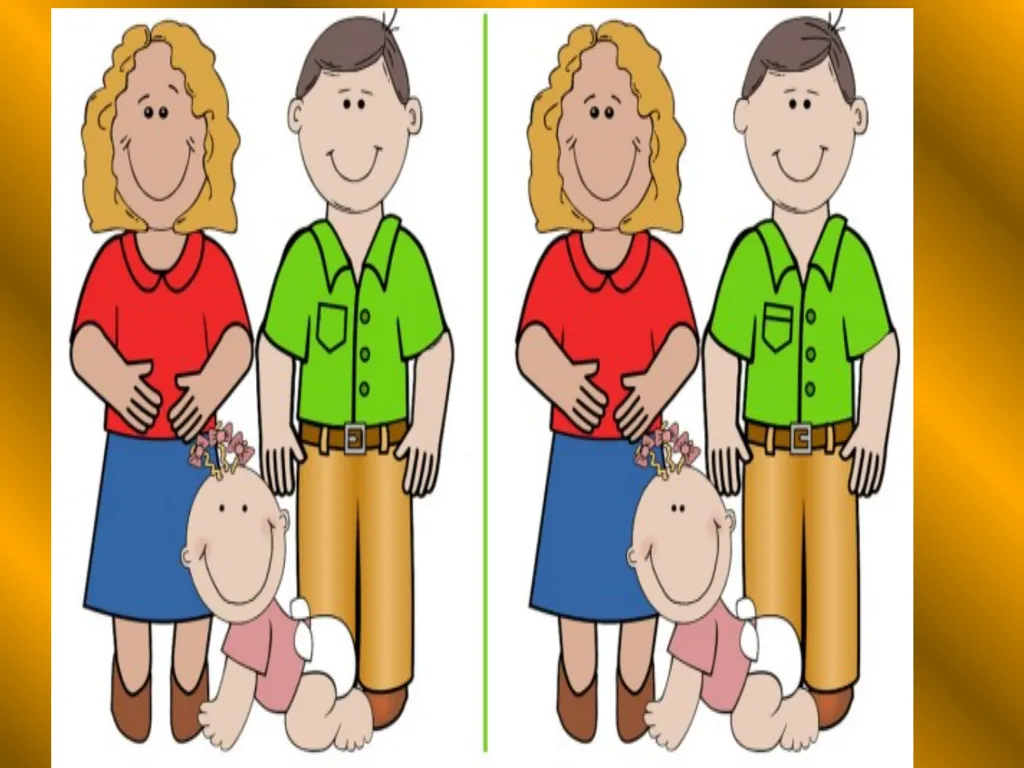
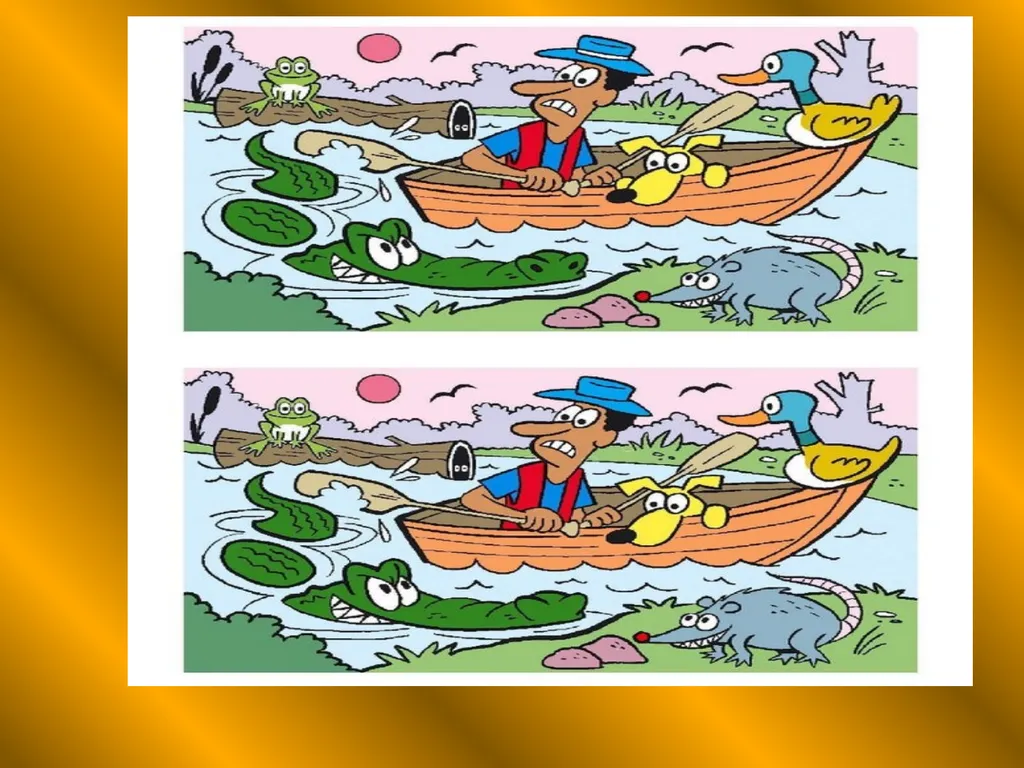
What did you do when you found the difference in the picture
How is language learning different from content learning?
Language learning involves: ……….<br>
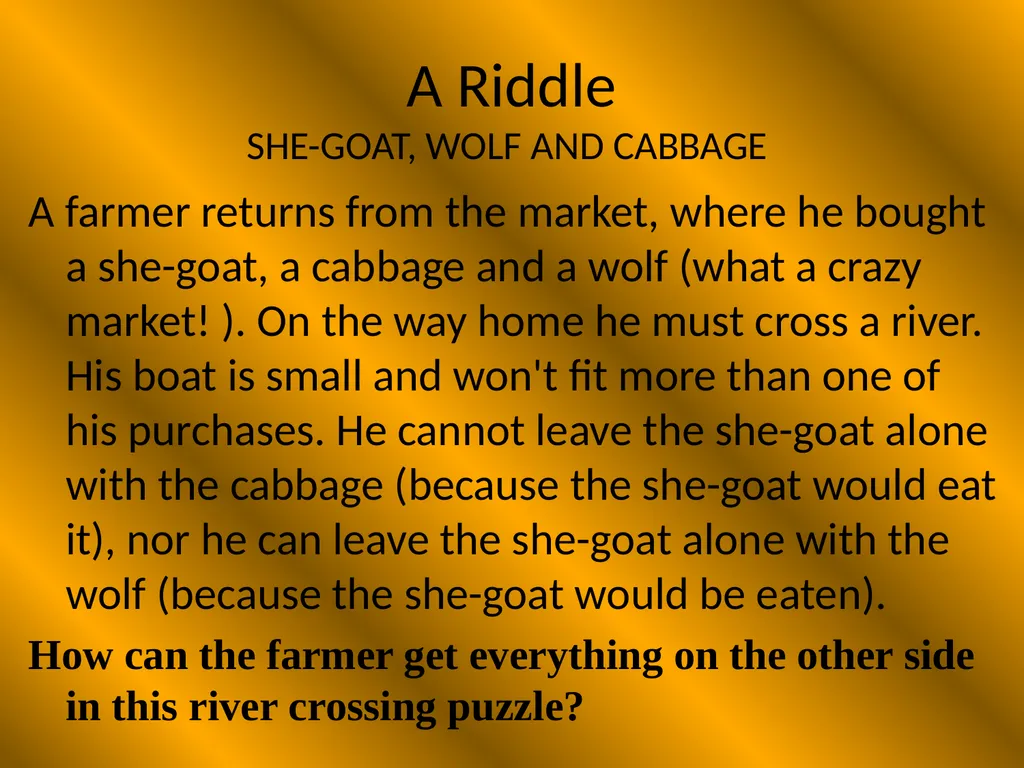
slide9. A Riddle SHE-GOAT, WOLF AND CABBAGE A farmer returns from the market, where he bought a she-goat, a cabbage and a wolf (what a crazy market! ). On the way home he must cross a river. His boat is small and won't fit more than one of his purchases. He cannot leave the she-goat alone with the cabbage (because the she-goat would eat it), nor he can leave the she-goat alone with the wolf (because the she-goat would be eaten).
How can the farmer get everything on the other side in this river crossing puzzle?<br>
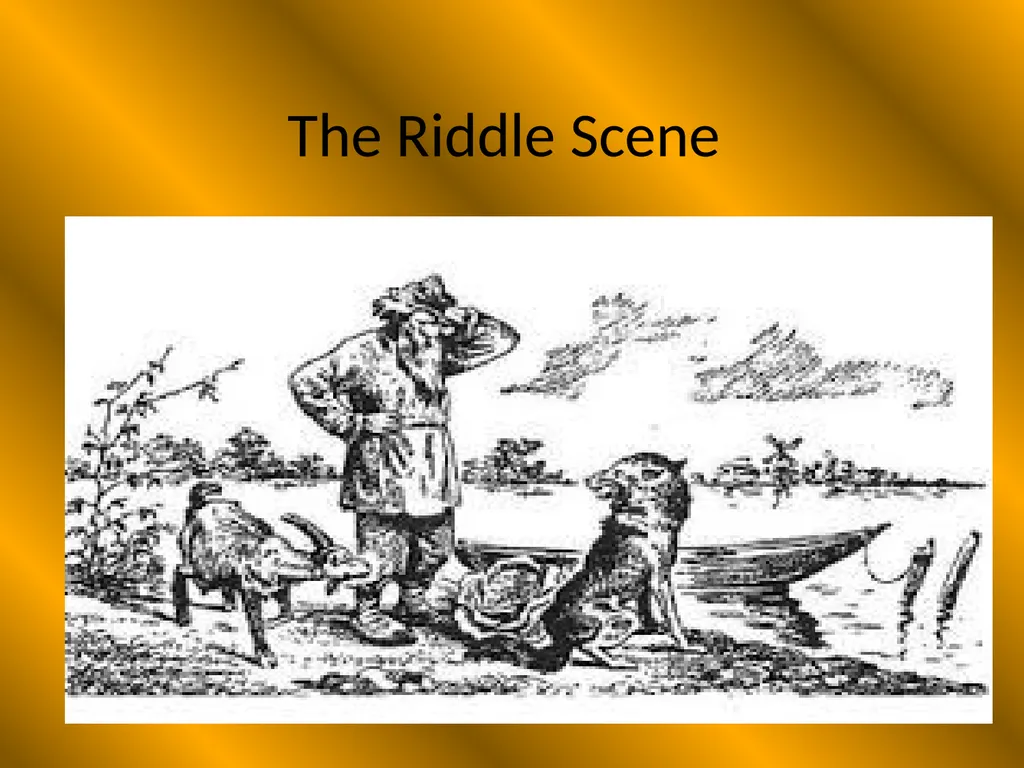
slide10. The Riddle Scene<br>
slide11. You may try this way. Frist trip
Second trip Third trip
Fourth trip<br>
slide12. Riddle: HUMANS AND MONKEYS Three humans, one big monkey and two small monkeys are to cross a river.
Only humans and the big monkey can row the boat.
At all times, the number of humans on either side of the river must be greater or equal to the number of monkeys on that side. (Or else the humans will be assaulted by the monkeys!)
The boat only has room for 2 (monkeys or humans).
Monkeys can jump out of the boat when it's banked.<br>
slide13. Riddle: DARKNESS PHOBIA One family wants to get through a tunnel. Dad can make it in 1 minute, mama in 2 minutes, son in 4 and daughter in 5 minutes. Unfortunately, not more than two persons can go through the narrow tunnel at one time, moving at the speed of the slower one. Can they all make it to the other side if they have a torch that lasts only 12 minutes and they are afraid of the dark?<br>
slide14. SPEECH RECEPTION CHILDREN HAVE REMARKABLE AUDITORY ABILITIES
One day old babies: Mothers speaking normally and abnormally, and a stranger- they responded to mother’s normal voice.
They turn towards the source sound in days of birth.
To know human and non-human voice with in weeks
Discriminate certain consonants /pa/ and /ba/ around four weeks<br>
slide15. Speech comprehension.. Two to four months: respond to meaning of different tones of voice, such as angry, soothing or playful voices
From six months: recognise some utterances relate to particular situations like Bye-bye clap, recognise names of individuals, family names, some number (orally).
By the end of the year: several words are recognised.<br>
slide16. How it happens? Conversational pressure
Babies are learning how people use language for ‘pragmatic’ purposes.
With in one year: language are given to them / exposed to them EMOTIVE / smiling
Change in conversational style
Melodic utterances<br>
slide17. Cognitivism & Associationism Chomsky
EVERY CHILD IS BORN WITH LAD (Language Acquisition Device)
So every language has grammar
Universal grammar (noun, verb, adjective and then a structure)<br>
slide18. INPUT HYPOTHESIS/ CRITICAL PERIOD Krashen (1985) based on Chomsky’s ideas developed i+1 (second language contexts)
INPUT is essential
But not sufficient
INERACTION (Long, 1989)
Is that enough
OUTPUT (Swain, 1991)<br>
slide19. Can learning happen in vacuum? Need context
Child’s world, experiences
Connecting with previous knowledge
Working memory
Motivation
External factors<br>
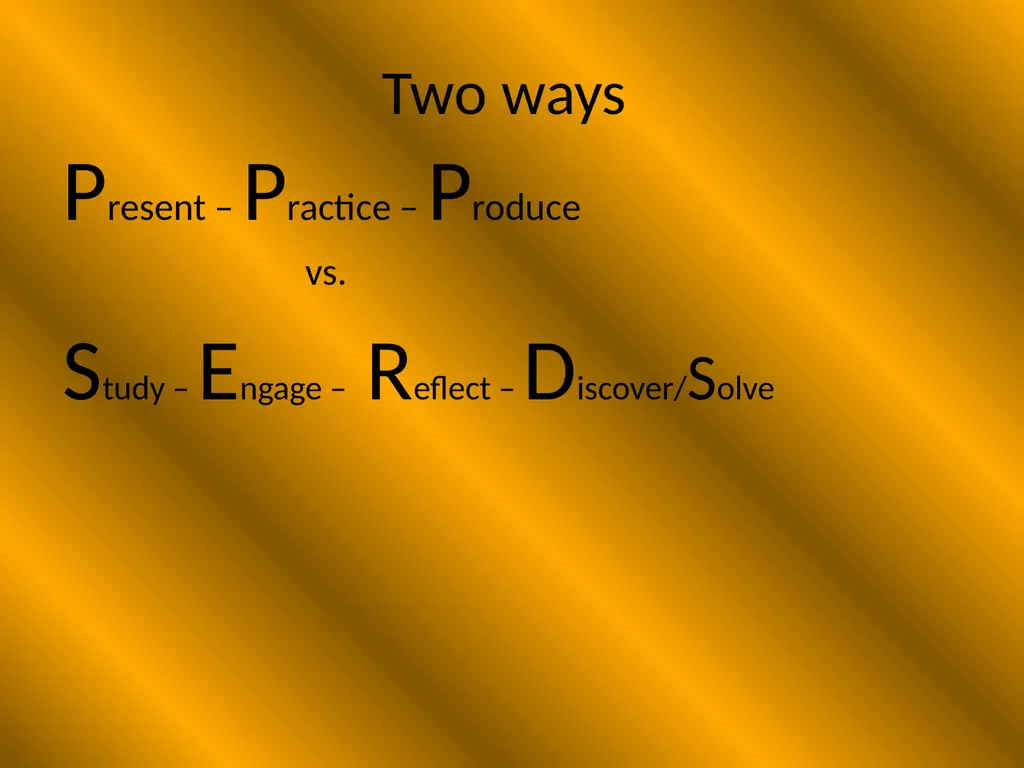
slide20. Two ways Present – Practice – Produce
vs.
Study – Engage – Reflect – Discover/Solve<br>
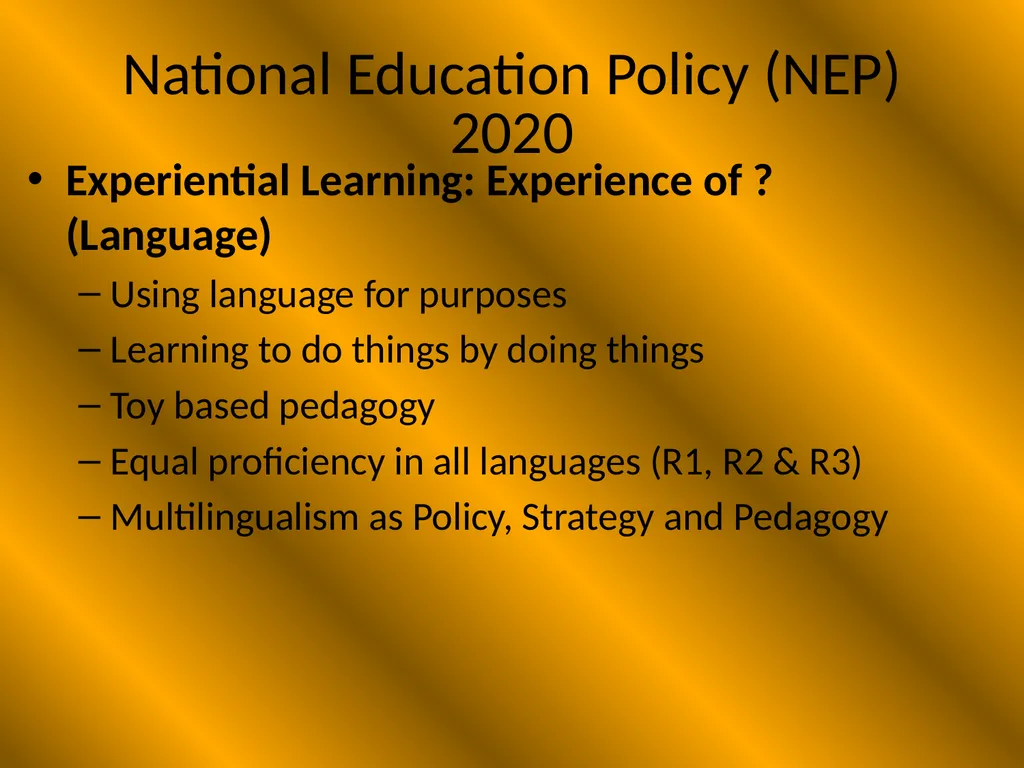
slide21. National Education Policy (NEP) 2020 Experiential Learning: Experience of ? (Language)
Using language for purposes
Learning to do things by doing things
Toy based pedagogy
Equal proficiency in all languages (R1, R2 & R3)
Multilingualism as Policy, Strategy and Pedagogy<br>
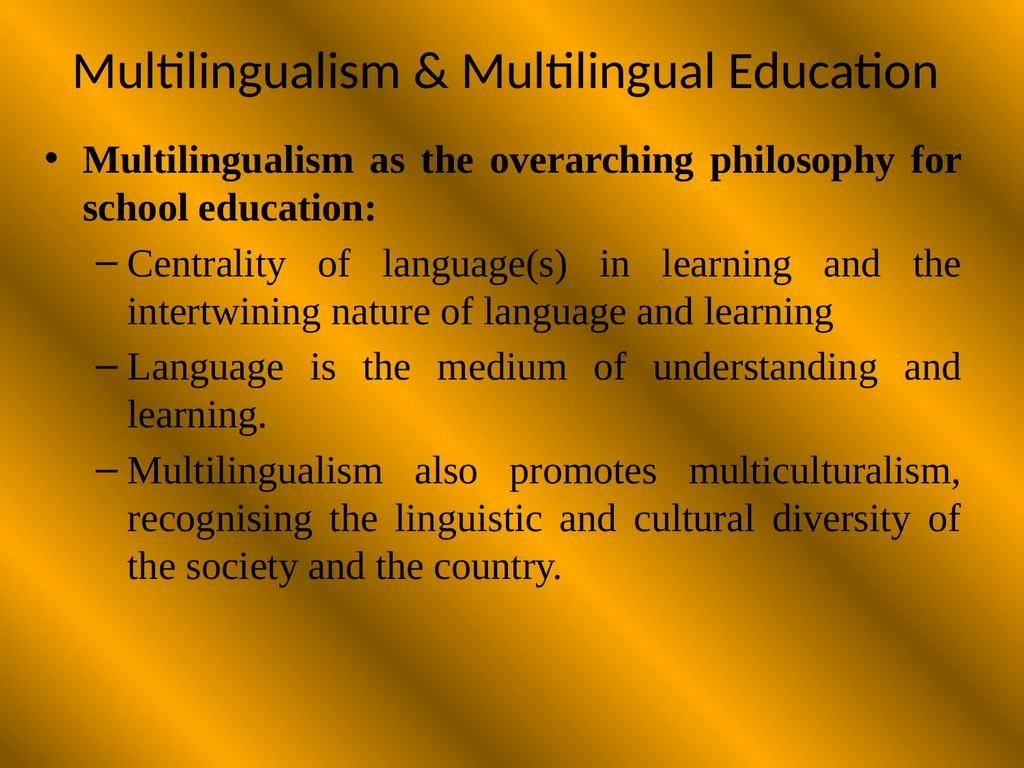
slide22. Multilingualism & Multilingual Education Multilingualism as the overarching philosophy for school education:
Centrality of language(s) in learning and the intertwining nature of language and learning
Language is the medium of understanding and learning.
Multilingualism also promotes multiculturalism, recognising the linguistic and cultural diversity of the society and the country.<br>
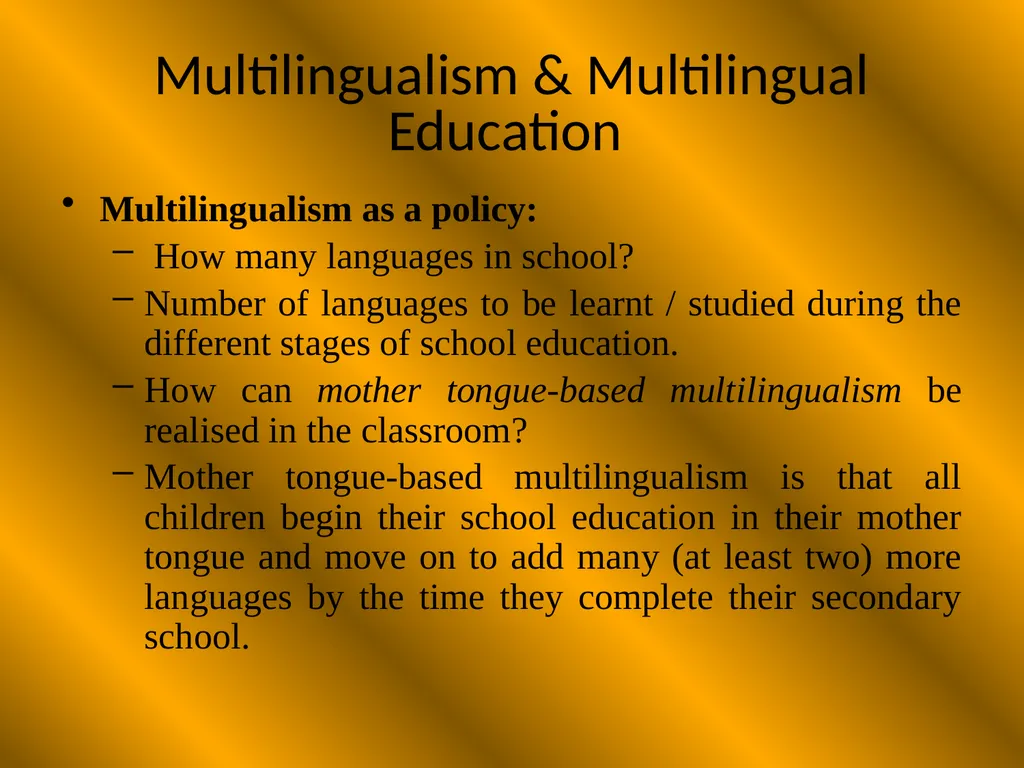
slide23. Multilingualism & Multilingual Education Multilingualism as a policy:
How many languages in school?
Number of languages to be learnt / studied during the different stages of school education.
How can mother tongue-based multilingualism be realised in the classroom?
Mother tongue-based multilingualism is that all children begin their school education in their mother tongue and move on to add many (at least two) more languages by the time they complete their secondary school.<br>
slide24. Multilingual Education Multilingualism as pedagogy:
How to make use of the languages of learners in processes of teaching-learning of languages and content subjects? (Strategies like code switching, code mixing, code meshing (Canagaraja, 2013)
Bilingualism, Translanguaging (Garcia, 2009; García and Li,2015).
Multilingualism as a resource:
Language plays a role in the cognitive development of children and the development of attitudes and value, socialisation and so on. Children make use of the language / knowledge as a resource in them (say, previous knowledge or abilities, mother tongue / first language) to learn new knowledge / language.<br>
slide25. Multilingualism as a resource Learners use their language repertoire (underlying linguistic abilities in general as also the abilities of the already known language) to learn other aspects of the same language or a new language. Another process is skill transfer from one language / first language to second and other languages.
Five types of transfers across languages: transfer of (a) Conceptual Elements/Understanding, (b) Metacognitive and Metalinguistic Strategies, (c) Pragmatic Aspects of Language Use, (d) Specific Linguistic Elements, and (e) Phonological Awareness. (Cummins (2009))<br>
slide26. Listen to the sentences and write down<br>
slide27. Where were you yesterday?
How old are you?
All that glitters is not gold.
Play while you play and work while you work.
Talk less and work more.
Where there is a will and there is a way.<br>
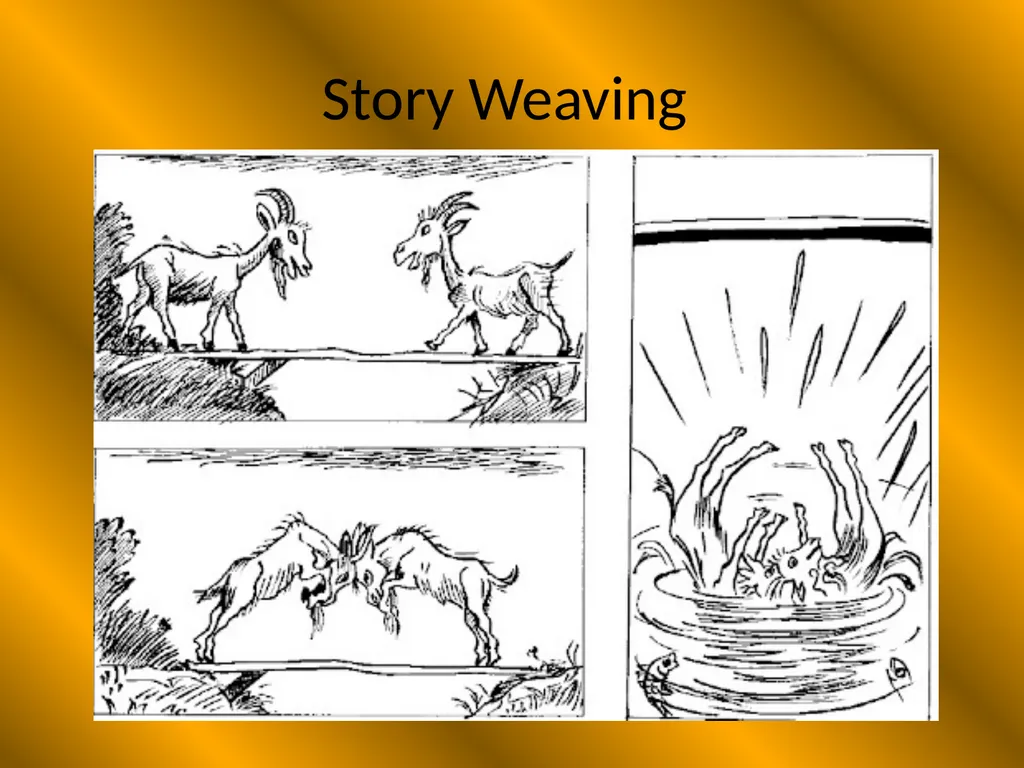
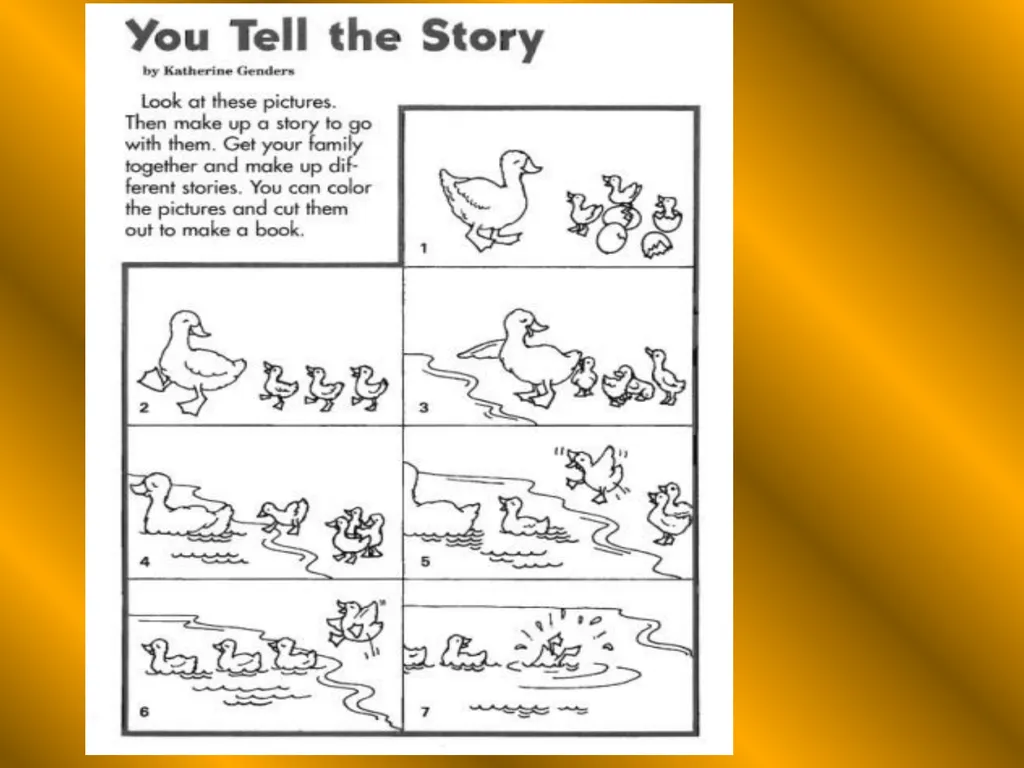
slide28. Story Weaving<br>
slide29. Story Weaving<br>
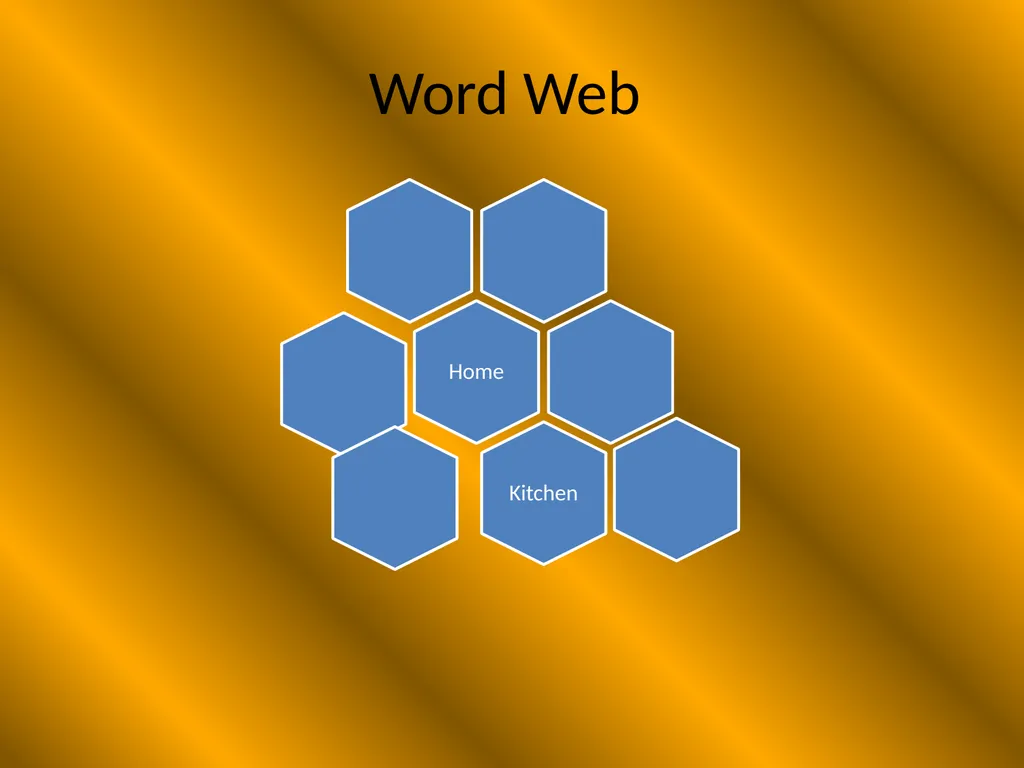
slide30. Word Web<br>
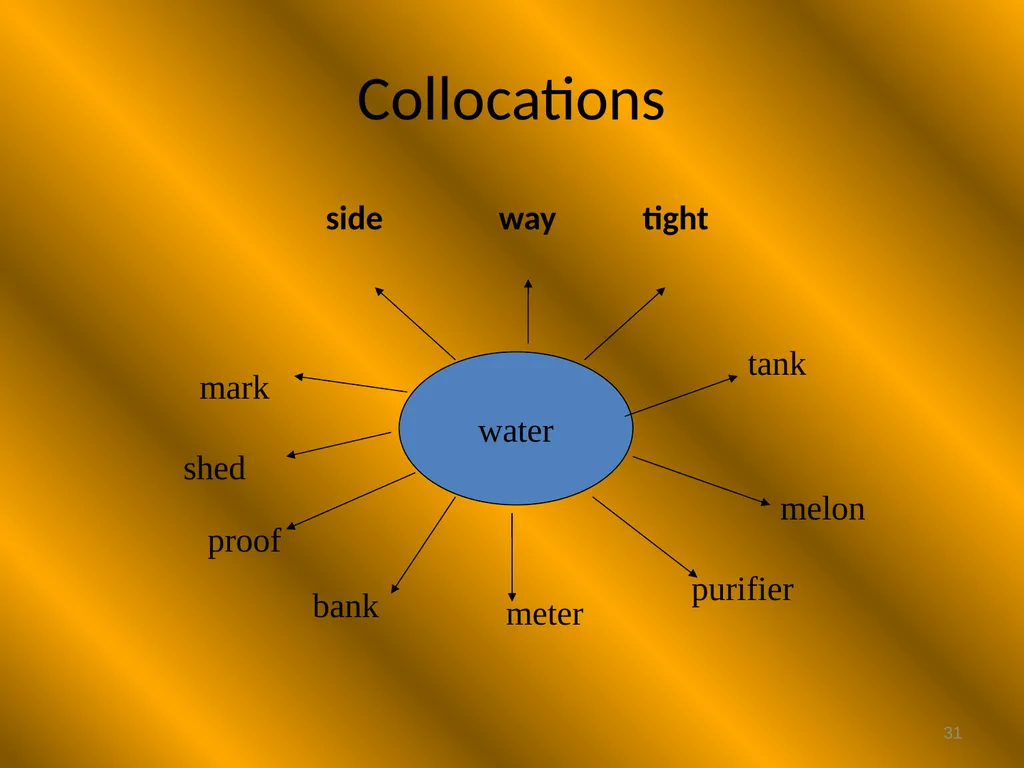
slide31. 31 Collocations side way tight water tank melon meter bank purifier mark shed proof<br>
slide32. Collocations<br>
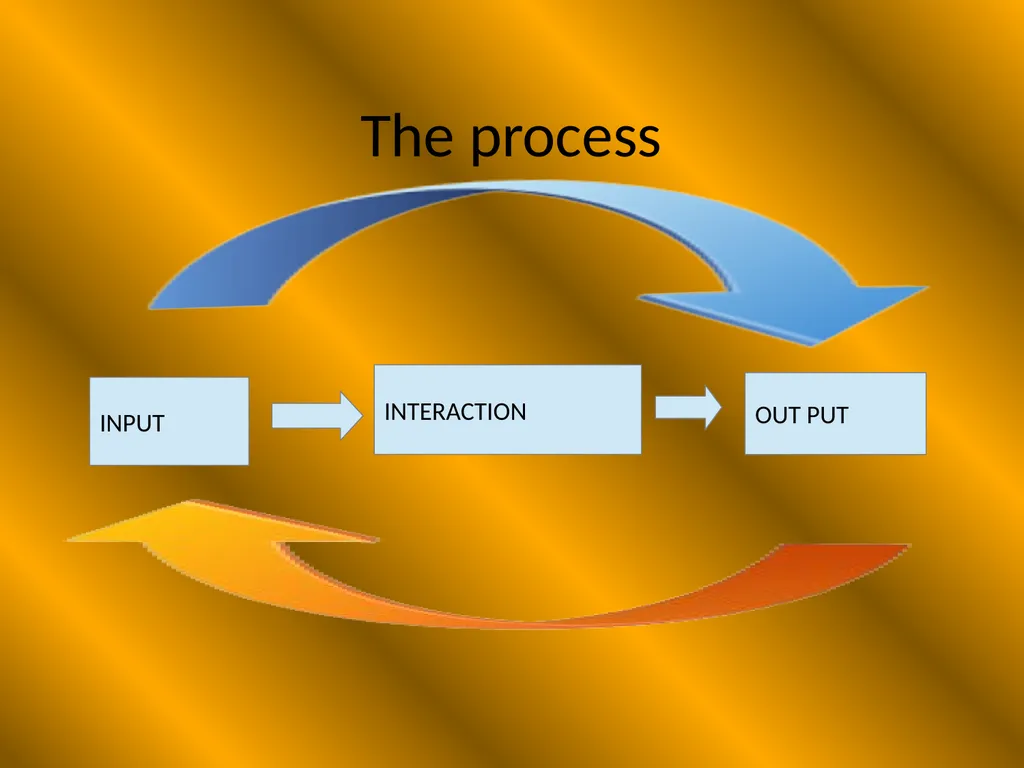
slide33. The process INPUT INTERACTION OUT PUT<br>
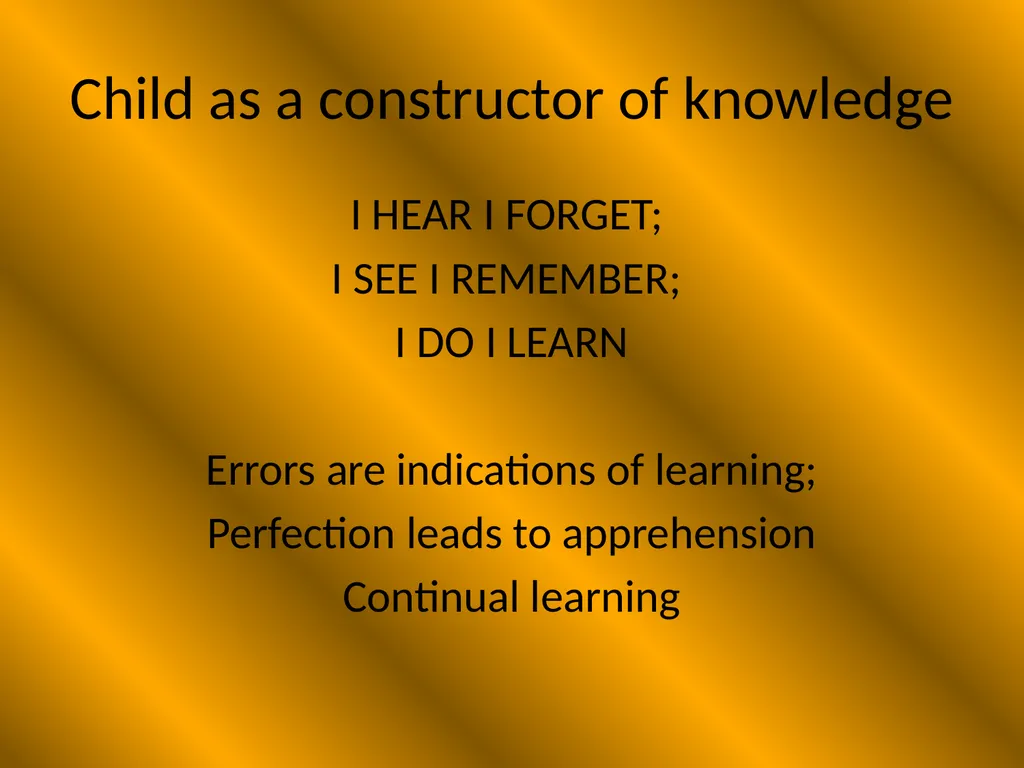
slide34. Child as a constructor of knowledge I HEAR I FORGET;
I SEE I REMEMBER;
I DO I LEARN
Errors are indications of learning;
Perfection leads to apprehension
Continual learning<br>
slide35. Thanks
Email: rama_meganathan@yahoo.com<br>
slide3. How many animals are there?<br>
slide8. Engaging Learning with Language Learners ‘work with’ & ‘work in’ language.
HOW & why?
What did you do when you found the difference in the picture
How is language learning different from content learning?
Language learning involves: ……….<br>
slide9. A Riddle SHE-GOAT, WOLF AND CABBAGE A farmer returns from the market, where he bought a she-goat, a cabbage and a wolf (what a crazy market! ). On the way home he must cross a river. His boat is small and won't fit more than one of his purchases. He cannot leave the she-goat alone with the cabbage (because the she-goat would eat it), nor he can leave the she-goat alone with the wolf (because the she-goat would be eaten).
How can the farmer get everything on the other side in this river crossing puzzle?<br>
slide10. The Riddle Scene<br>
slide11. You may try this way. Frist trip
Second trip Third trip
Fourth trip<br>
slide12. Riddle: HUMANS AND MONKEYS Three humans, one big monkey and two small monkeys are to cross a river.
Only humans and the big monkey can row the boat.
At all times, the number of humans on either side of the river must be greater or equal to the number of monkeys on that side. (Or else the humans will be assaulted by the monkeys!)
The boat only has room for 2 (monkeys or humans).
Monkeys can jump out of the boat when it's banked.<br>
slide13. Riddle: DARKNESS PHOBIA One family wants to get through a tunnel. Dad can make it in 1 minute, mama in 2 minutes, son in 4 and daughter in 5 minutes. Unfortunately, not more than two persons can go through the narrow tunnel at one time, moving at the speed of the slower one. Can they all make it to the other side if they have a torch that lasts only 12 minutes and they are afraid of the dark?<br>
slide14. SPEECH RECEPTION CHILDREN HAVE REMARKABLE AUDITORY ABILITIES
One day old babies: Mothers speaking normally and abnormally, and a stranger- they responded to mother’s normal voice.
They turn towards the source sound in days of birth.
To know human and non-human voice with in weeks
Discriminate certain consonants /pa/ and /ba/ around four weeks<br>
slide15. Speech comprehension.. Two to four months: respond to meaning of different tones of voice, such as angry, soothing or playful voices
From six months: recognise some utterances relate to particular situations like Bye-bye clap, recognise names of individuals, family names, some number (orally).
By the end of the year: several words are recognised.<br>
slide16. How it happens? Conversational pressure
Babies are learning how people use language for ‘pragmatic’ purposes.
With in one year: language are given to them / exposed to them EMOTIVE / smiling
Change in conversational style
Melodic utterances<br>
slide17. Cognitivism & Associationism Chomsky
EVERY CHILD IS BORN WITH LAD (Language Acquisition Device)
So every language has grammar
Universal grammar (noun, verb, adjective and then a structure)<br>
slide18. INPUT HYPOTHESIS/ CRITICAL PERIOD Krashen (1985) based on Chomsky’s ideas developed i+1 (second language contexts)
INPUT is essential
But not sufficient
INERACTION (Long, 1989)
Is that enough
OUTPUT (Swain, 1991)<br>
slide19. Can learning happen in vacuum? Need context
Child’s world, experiences
Connecting with previous knowledge
Working memory
Motivation
External factors<br>
slide20. Two ways Present – Practice – Produce
vs.
Study – Engage – Reflect – Discover/Solve<br>
slide21. National Education Policy (NEP) 2020 Experiential Learning: Experience of ? (Language)
Using language for purposes
Learning to do things by doing things
Toy based pedagogy
Equal proficiency in all languages (R1, R2 & R3)
Multilingualism as Policy, Strategy and Pedagogy<br>
slide22. Multilingualism & Multilingual Education Multilingualism as the overarching philosophy for school education:
Centrality of language(s) in learning and the intertwining nature of language and learning
Language is the medium of understanding and learning.
Multilingualism also promotes multiculturalism, recognising the linguistic and cultural diversity of the society and the country.<br>
slide23. Multilingualism & Multilingual Education Multilingualism as a policy:
How many languages in school?
Number of languages to be learnt / studied during the different stages of school education.
How can mother tongue-based multilingualism be realised in the classroom?
Mother tongue-based multilingualism is that all children begin their school education in their mother tongue and move on to add many (at least two) more languages by the time they complete their secondary school.<br>
slide24. Multilingual Education Multilingualism as pedagogy:
How to make use of the languages of learners in processes of teaching-learning of languages and content subjects? (Strategies like code switching, code mixing, code meshing (Canagaraja, 2013)
Bilingualism, Translanguaging (Garcia, 2009; García and Li,2015).
Multilingualism as a resource:
Language plays a role in the cognitive development of children and the development of attitudes and value, socialisation and so on. Children make use of the language / knowledge as a resource in them (say, previous knowledge or abilities, mother tongue / first language) to learn new knowledge / language.<br>
slide25. Multilingualism as a resource Learners use their language repertoire (underlying linguistic abilities in general as also the abilities of the already known language) to learn other aspects of the same language or a new language. Another process is skill transfer from one language / first language to second and other languages.
Five types of transfers across languages: transfer of (a) Conceptual Elements/Understanding, (b) Metacognitive and Metalinguistic Strategies, (c) Pragmatic Aspects of Language Use, (d) Specific Linguistic Elements, and (e) Phonological Awareness. (Cummins (2009))<br>
slide26. Listen to the sentences and write down<br>
slide27. Where were you yesterday?
How old are you?
All that glitters is not gold.
Play while you play and work while you work.
Talk less and work more.
Where there is a will and there is a way.<br>
slide28. Story Weaving<br>
slide29. Story Weaving<br>
slide30. Word Web<br>
slide31. 31 Collocations side way tight water tank melon meter bank purifier mark shed proof<br>
slide32. Collocations<br>
slide33. The process INPUT INTERACTION OUT PUT<br>
slide34. Child as a constructor of knowledge I HEAR I FORGET;
I SEE I REMEMBER;
I DO I LEARN
Errors are indications of learning;
Perfection leads to apprehension
Continual learning<br>
slide35. Thanks
Email: rama_meganathan@yahoo.com<br>