Lead Identification and Optimization UNIVERSITY EDUCATION AND TECHNOLOGY CELL CENTRE OF DISTANCE AND ONLINE EDUCATION KVV By Mr. Ranjit Jadhav Assistant Professor, Krishna Institute of Pharmacy, Karad Drug Discovery Objectives ADME and
"Lead Identification and Optimization UNIVERSITY" is the property of its rightful owner. Permission is granted to
download and print the materials on this website for personal, non-commercial use only, and to display it
on your personal computer provided you do not modify the materials and that you retain all copyright
notices contained in the materials. By downloading content from our website, you accept the terms of this
agreement.
Presentation Transcript
01
Lead Identification and Optimization UNIVERSITY EDUCATION AND TECHNOLOGY CELL &
CENTRE OF DISTANCE AND ONLINE EDUCATION KVV By
Mr. Ranjit Jadhav
Assistant Professor,
Krishna Institute of Pharmacy, Karad<br>
02
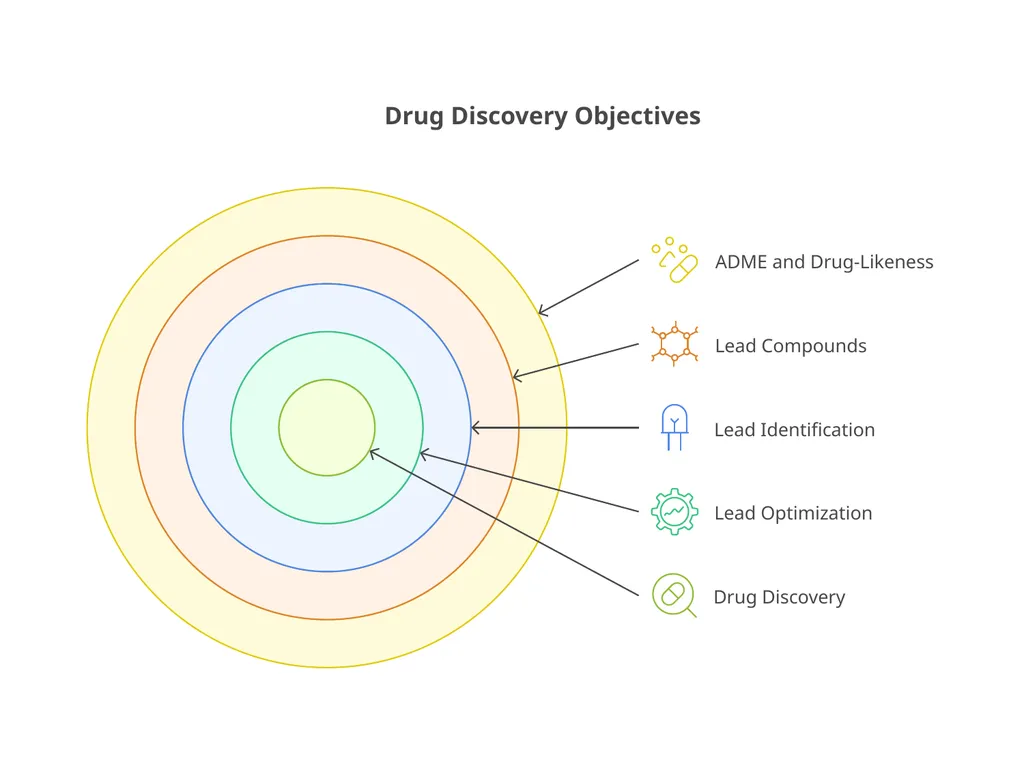
Drug Discovery Objectives ADME and Drug-Likeness Lead Compounds Lead Identification Lead Optimization Drug Discovery<br>
03
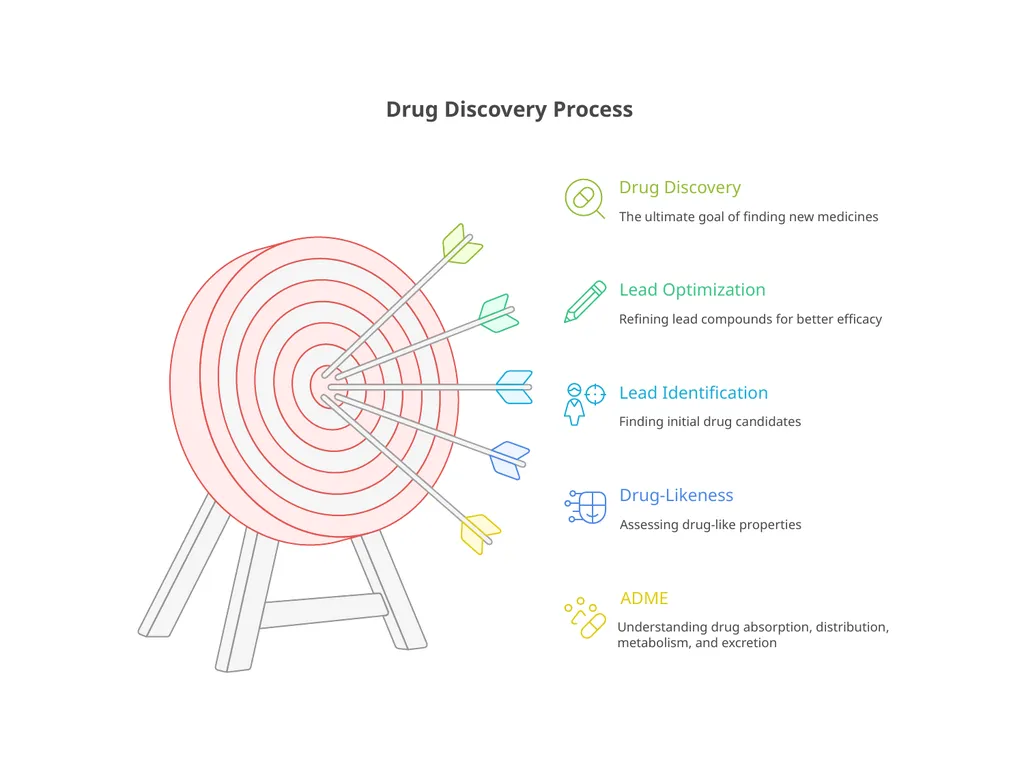
The ultimate goal of finding new medicines Drug Discovery Drug Discovery Process Lead Optimization Refining lead compounds for better efficacy Understanding drug absorption, distribution,
metabolism, and excretion Lead Identification Finding initial drug candidates Drug-Likeness Assessing drug-like properties ADME<br>
04
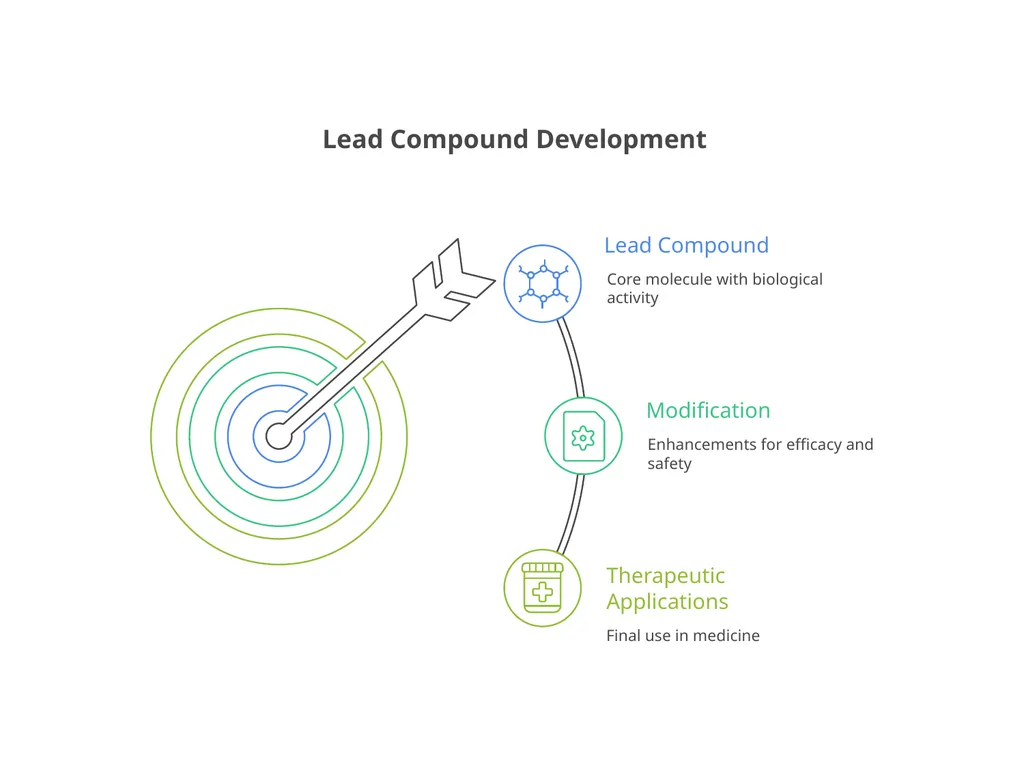
Lead Compound Development Lead Compound Core molecule with biological
activity Modification Enhancements for efficacy and
safety Therapeutic
Applications Final use in medicine<br>
05
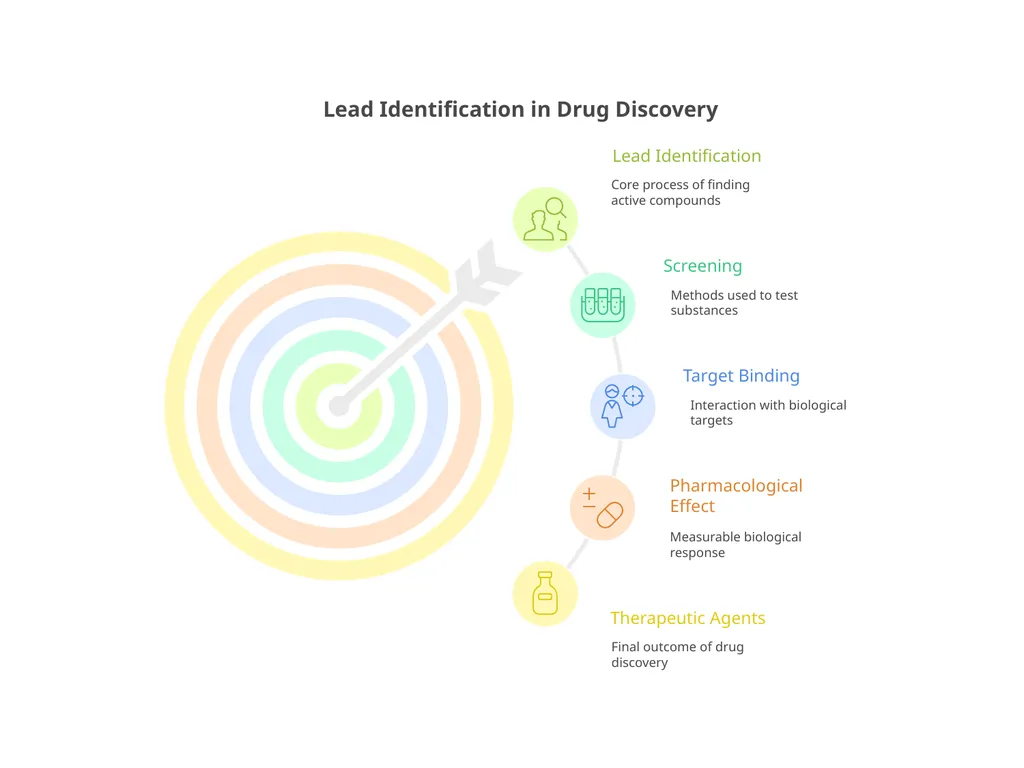
Final outcome of drug
discovery Lead Identification Screening Lead Identification in Drug Discovery Methods used to test
substances Target Binding Interaction with biological
targets Pharmacological
Effect Measurable biological
response Therapeutic Agents Core process of finding
active compounds<br>
06
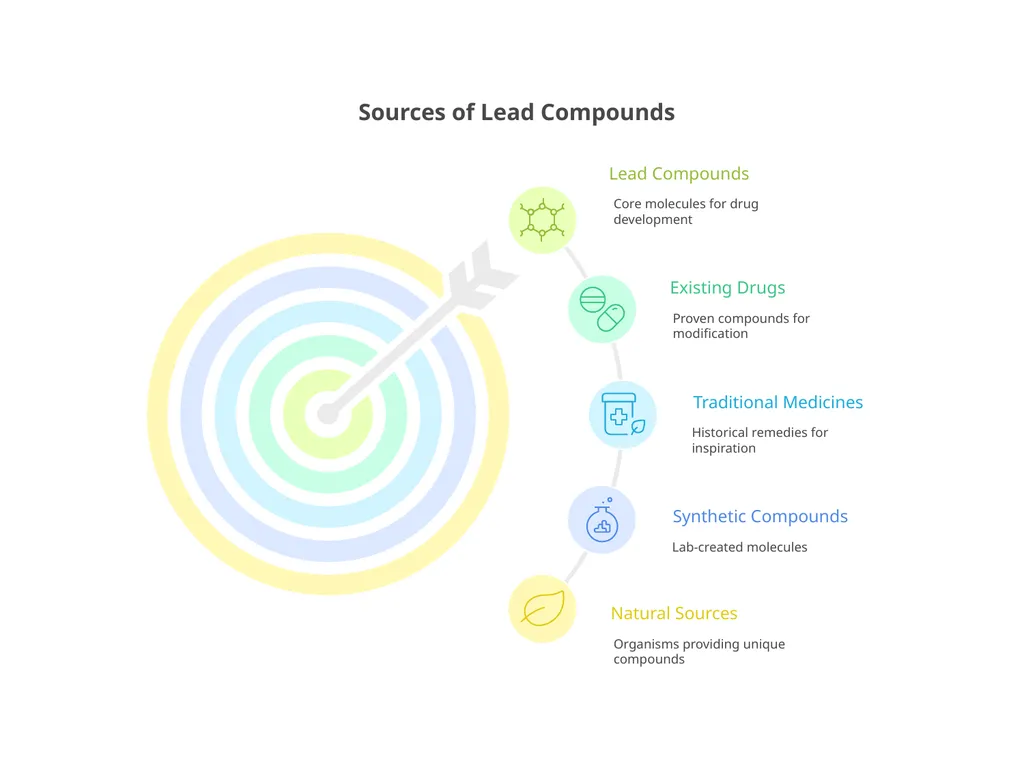
Core molecules for drug
development Lead Compounds Existing Drugs Sources of Lead Compounds Proven compounds for
modification Traditional Medicines Historical remedies for
inspiration Organisms providing unique
compounds Lab-created molecules Natural Sources Synthetic Compounds<br>
07
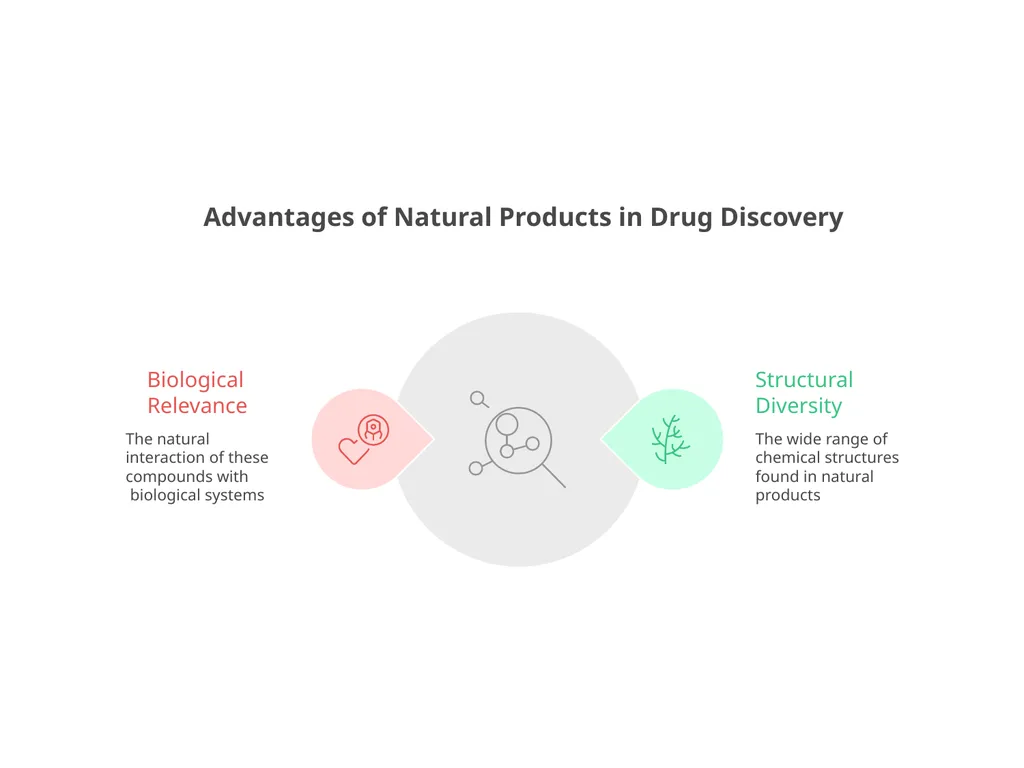
Advantages of Natural Products in Drug Discovery Biological
Relevance Structural
Diversity The natural
interaction of these
compounds with
biological systems The wide range of
chemical structures
found in natural
products<br>
08
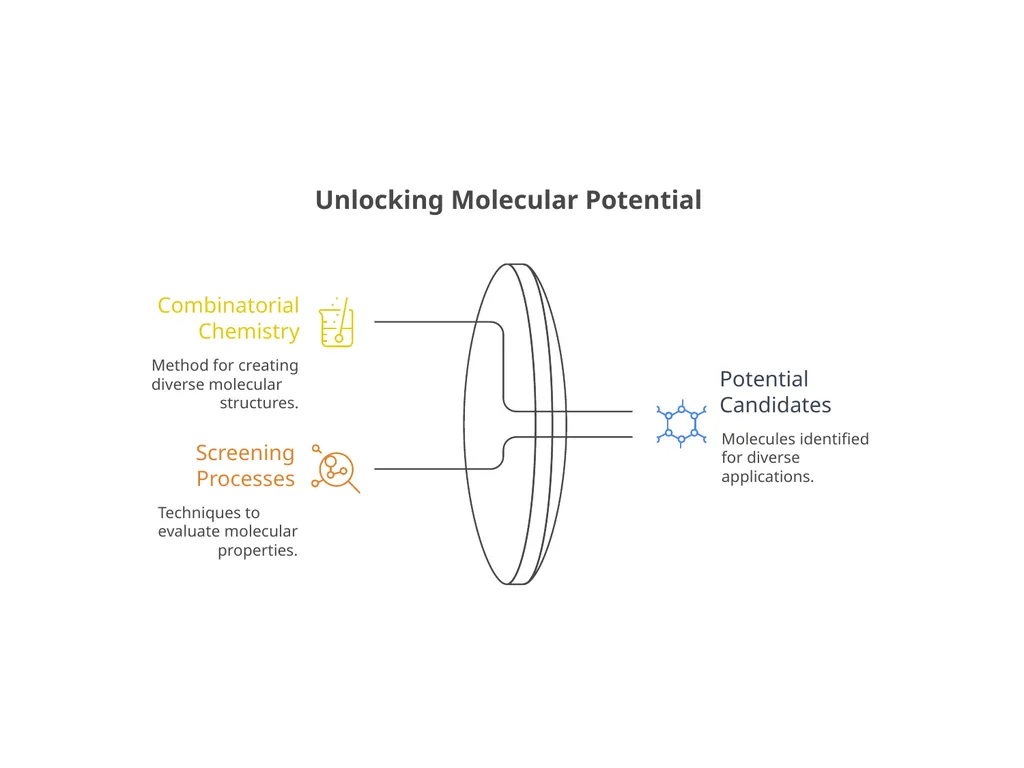
Unlocking Molecular Potential Combinatorial
Chemistry Method for creating
diverse molecular
structures. Potential
Candidates Screening
Processes Molecules identified
for diverse
applications. Techniques to
evaluate molecular
properties.<br>
09
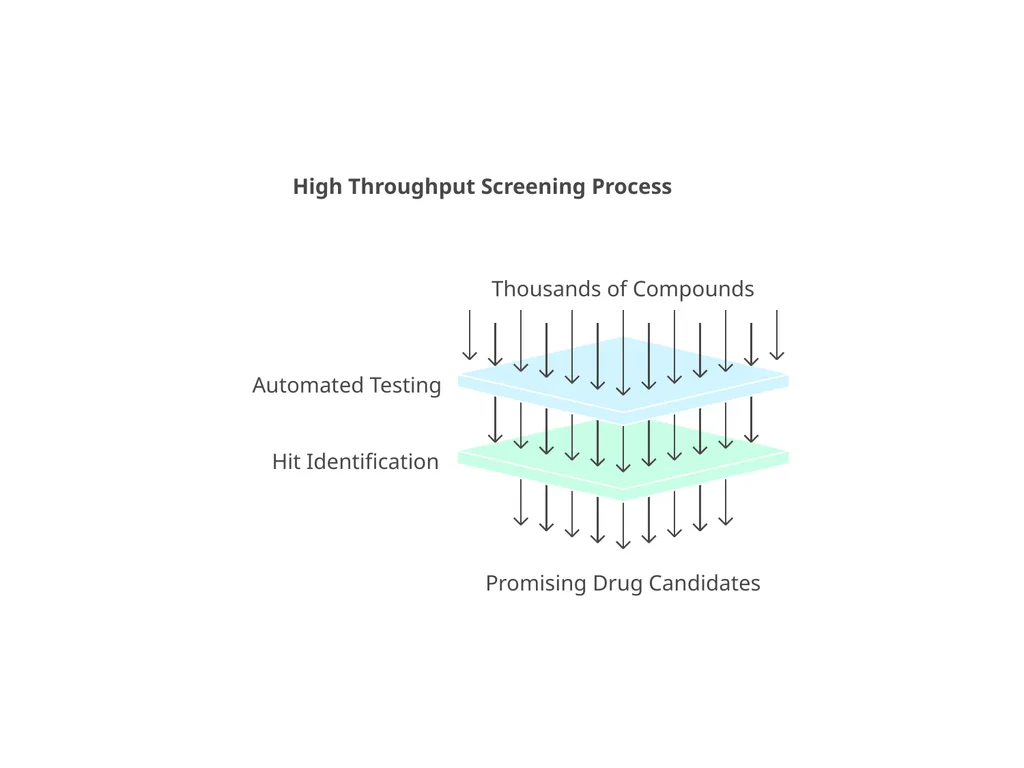
Hit Identification Promising Drug Candidates High Throughput Screening Process Thousands of Compounds Automated Testing<br>
10
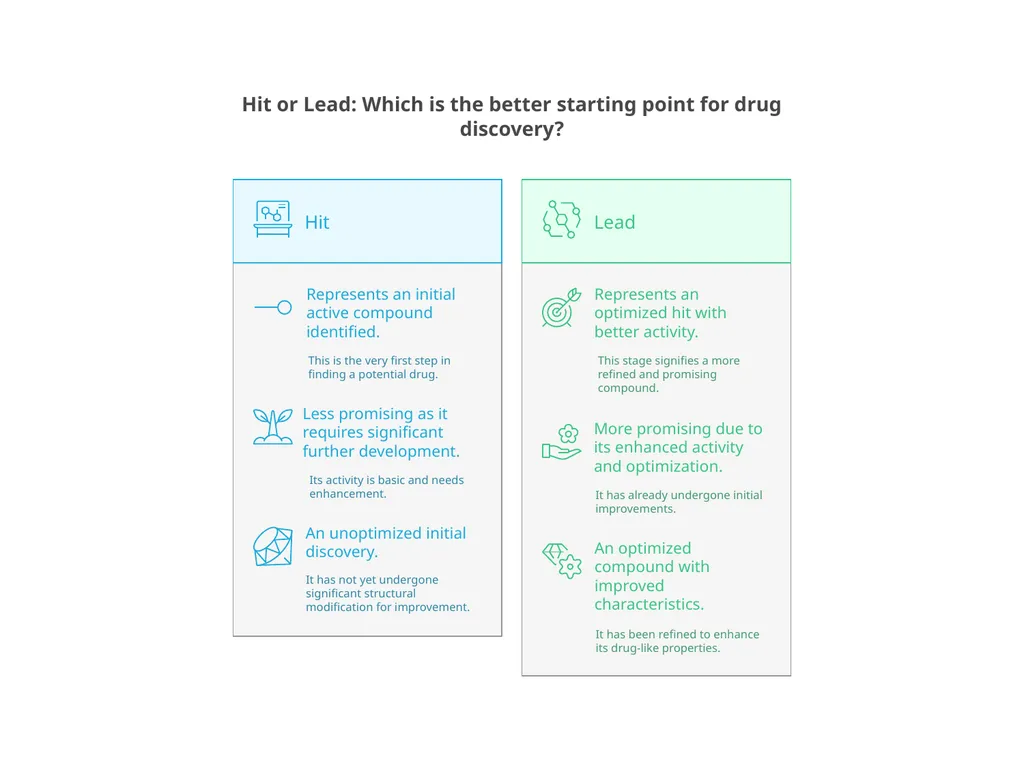
Hit Lead Hit or Lead: Which is the better starting point for drug
discovery? Represents an initial
active compound
identified. Represents an
optimized hit with
better activity. This is the very first step in
finding a potential drug. This stage signifies a more
refined and promising
compound. Less promising as it
requires significant
further development. More promising due to
its enhanced activity
and optimization. Its activity is basic and needs
enhancement. It has already undergone initial
improvements. An unoptimized initial
discovery. An optimized
compound with
improved
characteristics. It has not yet undergone
significant structural
modification for improvement. It has been refined to enhance
its drug-like properties.<br>
11
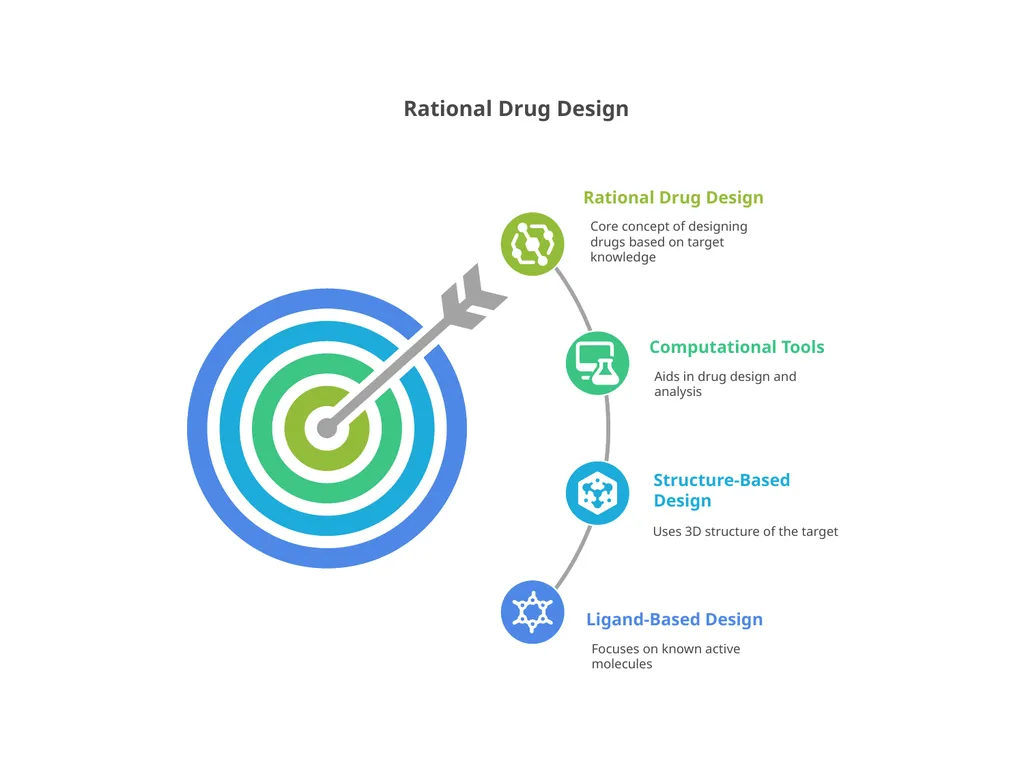
Rational Drug Design Rational Drug Design Core concept of designing
drugs based on target
knowledge Computational Tools Aids in drug design and
analysis Structure-Based
Design Uses 3D structure of the target Ligand-Based Design Focuses on known active
molecules<br>
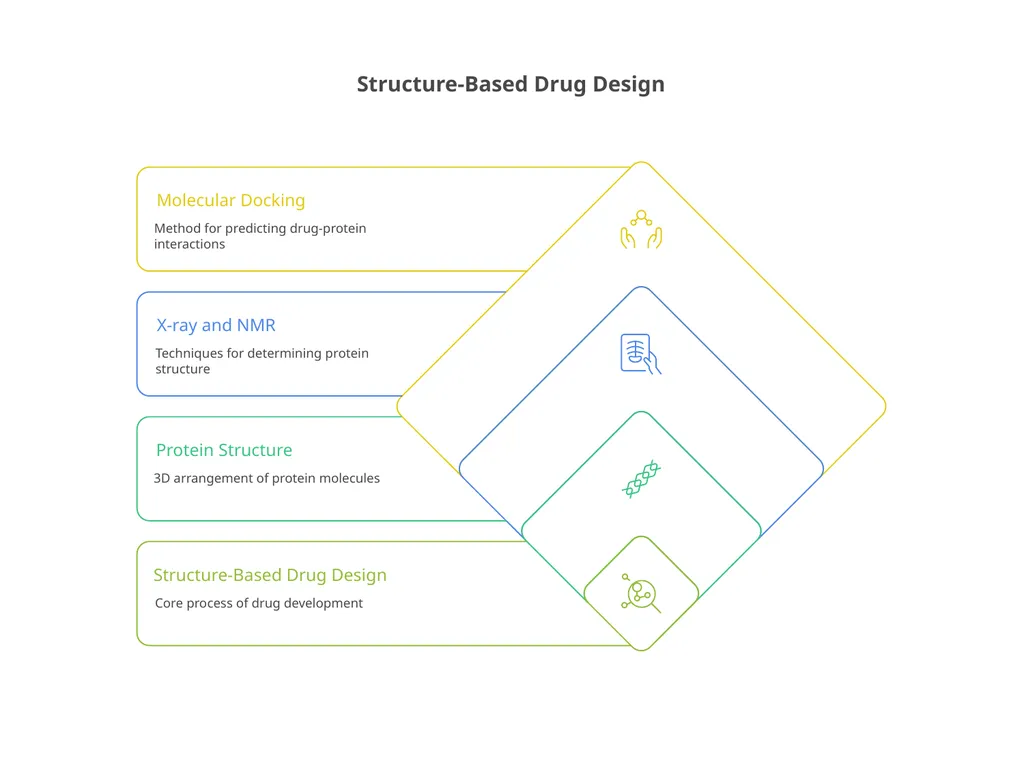
12
Structure-Based Drug Design Molecular Docking Method for predicting drug-protein
interactions X-ray and NMR Techniques for determining protein
structure Protein Structure 3D arrangement of protein molecules Structure-Based Drug Design Core process of drug development<br>
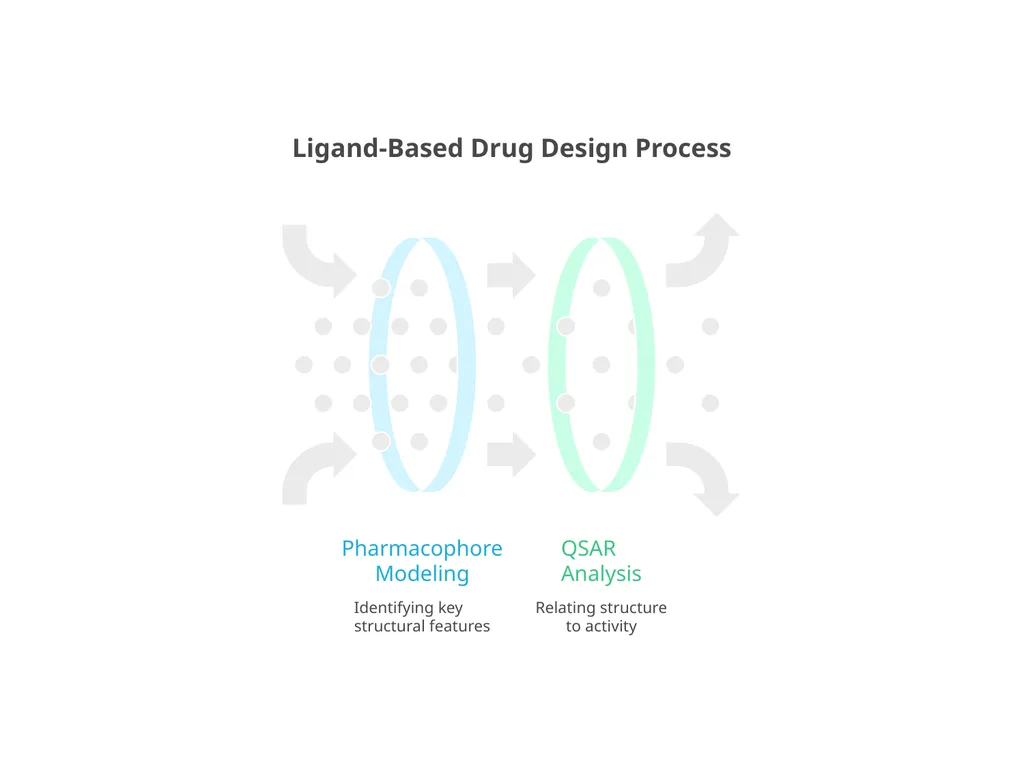
13
Ligand-Based Drug Design Process Pharmacophore
Modeling QSAR
Analysis Identifying key
structural features Relating structure
to activity<br>
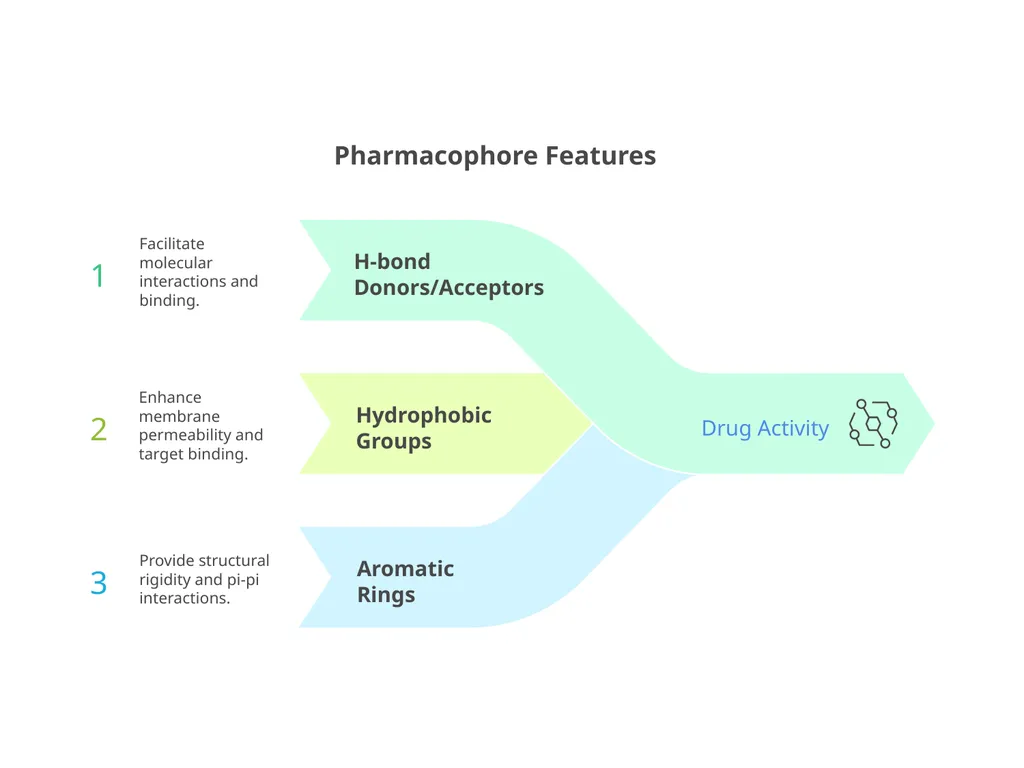
14
Pharmacophore Features 1 Facilitate
molecular
interactions and
binding. H-bond
Donors/Acceptors 2 Enhance
membrane
permeability and
target binding. Hydrophobic
Groups Drug Activity 3 Provide structural
rigidity and pi-pi
interactions. Aromatic
Rings<br>
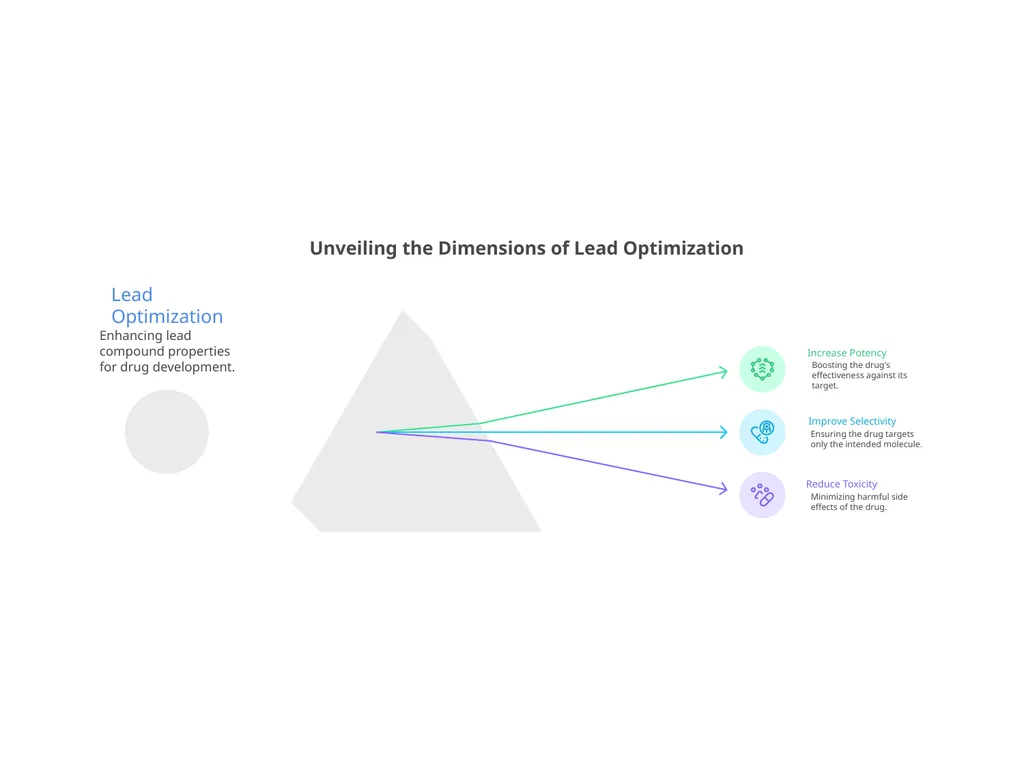
15
Unveiling the Dimensions of Lead Optimization Lead
Optimization Enhancing lead
compound properties
for drug development. Increase Potency Boosting the drug's
effectiveness against its
target. Improve Selectivity Ensuring the drug targets
only the intended molecule. Reduce Toxicity Minimizing harmful side
effects of the drug.<br>
16
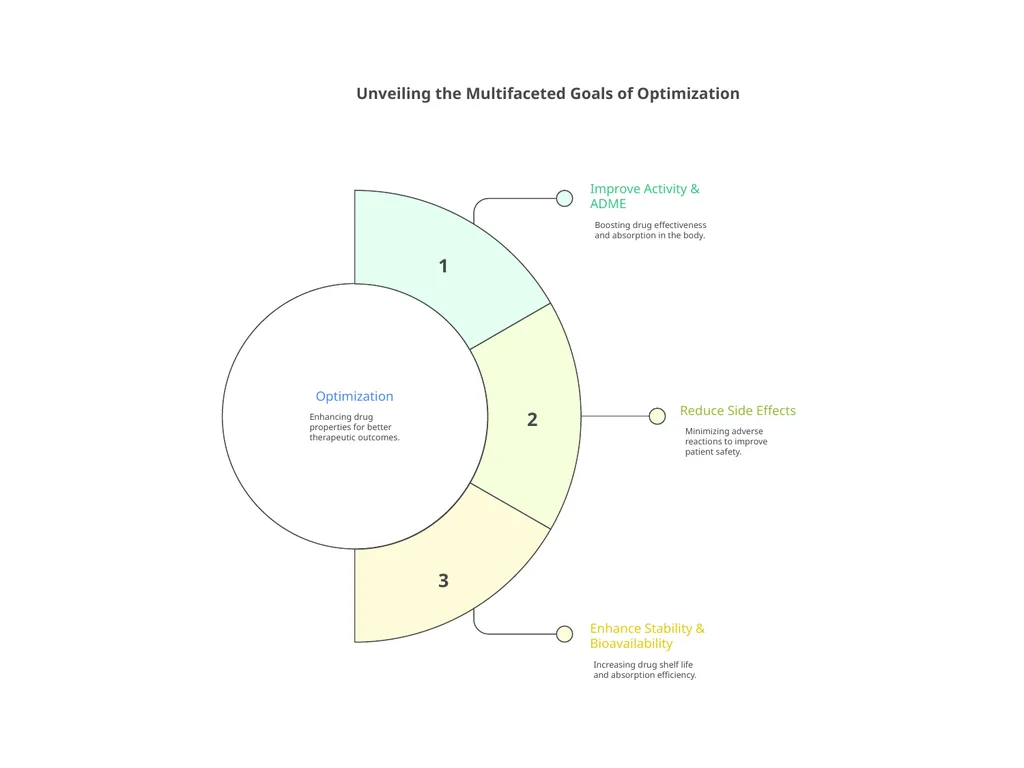
Unveiling the Multifaceted Goals of Optimization Improve Activity &
ADME Boosting drug effectiveness
and absorption in the body. 1 Optimization 2 Reduce Side Effects Enhancing drug
properties for better
therapeutic outcomes. Minimizing adverse
reactions to improve
patient safety. 3 Enhance Stability &
Bioavailability Increasing drug shelf life
and absorption efficiency.<br>
17
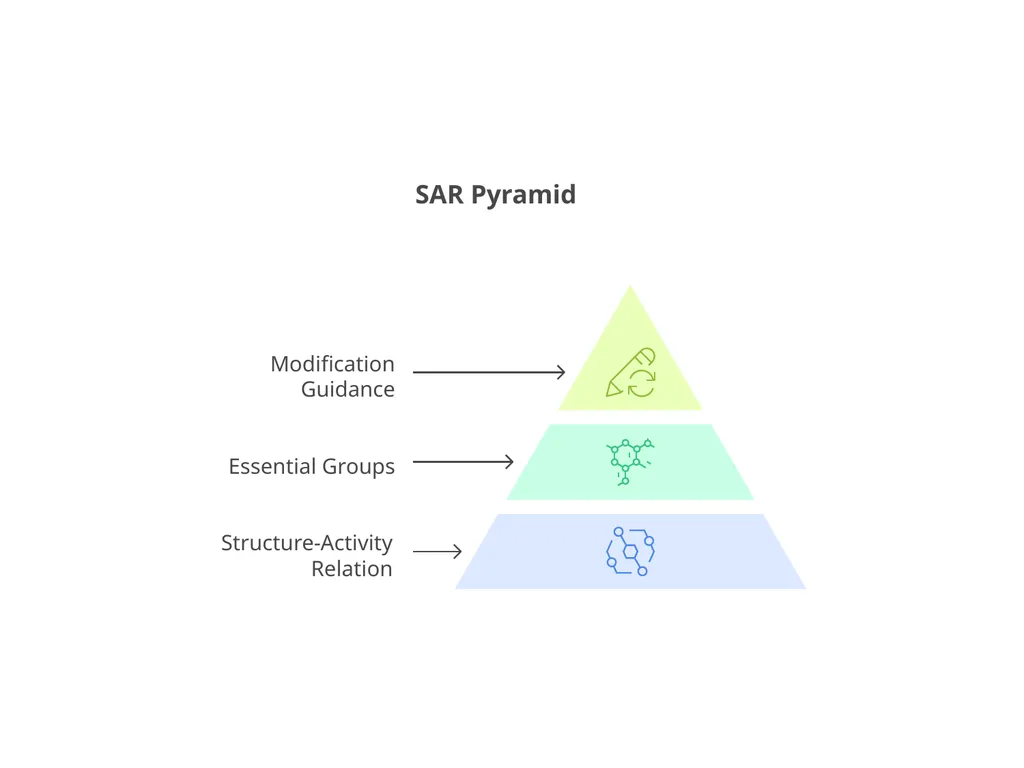
SAR Pyramid Modification
Guidance Essential Groups Structure-Activity
Relation<br>
18
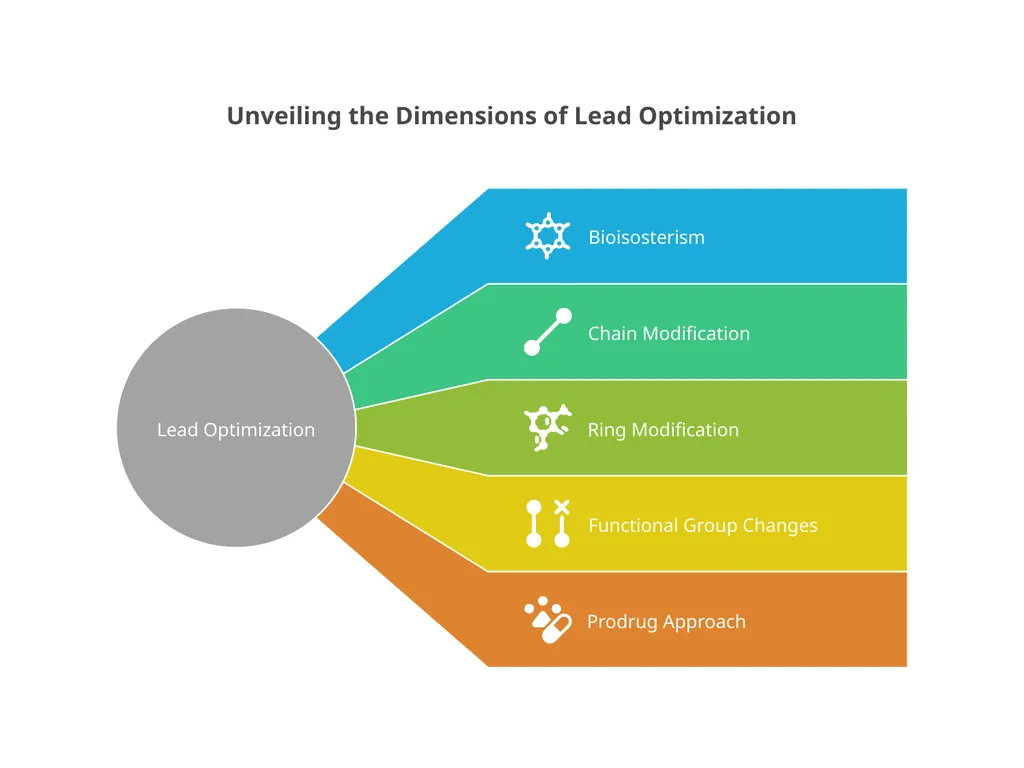
Unveiling the Dimensions of Lead Optimization Bioisosterism Chain Modification Lead Optimization Ring Modification Functional Group Changes Prodrug Approach<br>
19
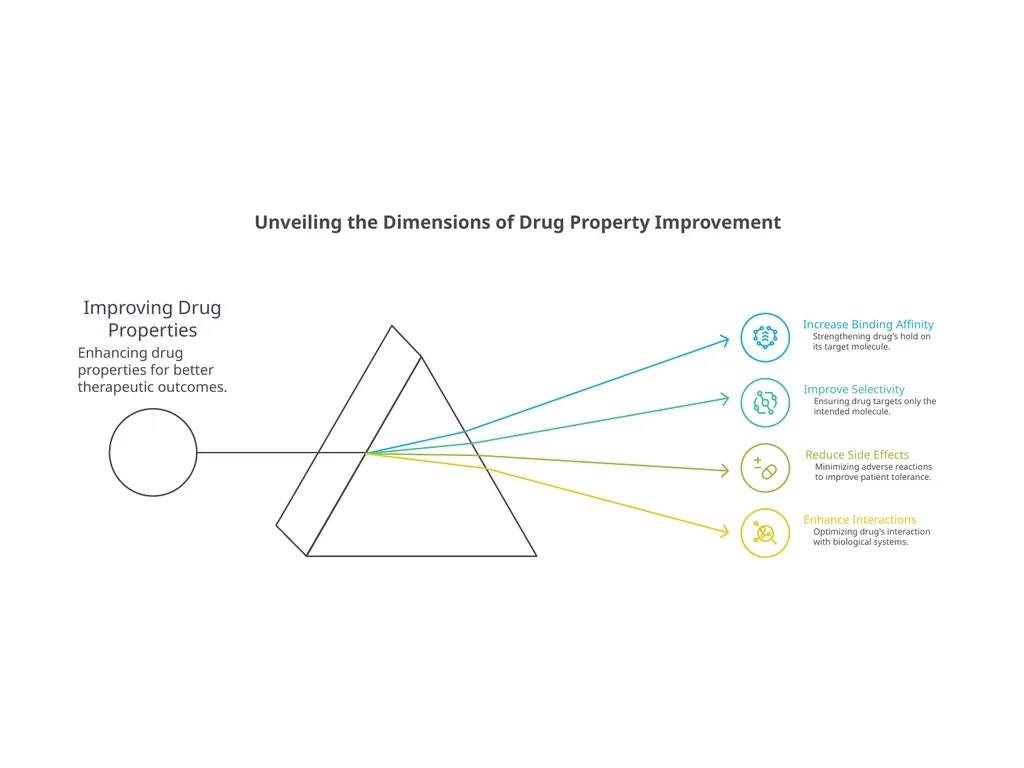
Enhancing drug
properties for better
therapeutic outcomes. Strengthening drug's hold on
its target molecule. Increase Binding Affinity Improve Selectivity Ensuring drug targets only the
intended molecule. Improving Drug
Properties Unveiling the Dimensions of Drug Property Improvement Reduce Side Effects Minimizing adverse reactions
to improve patient tolerance. Optimizing drug's interaction
with biological systems. Enhance Interactions<br>
20
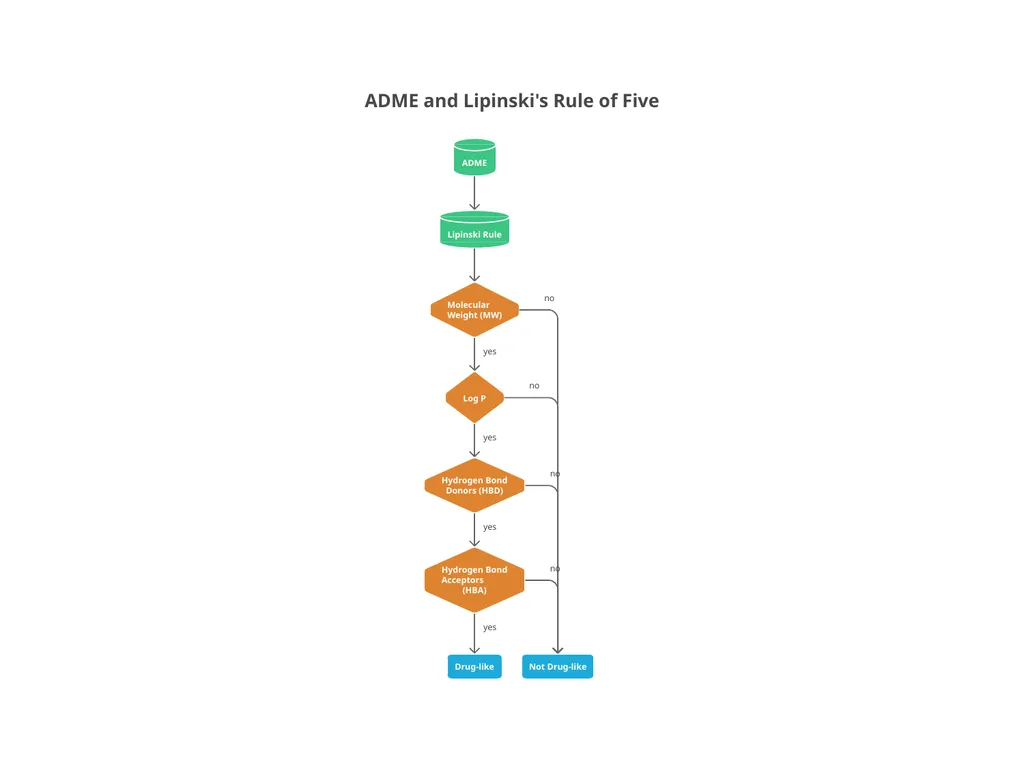
yes Log P no Hydrogen Bond
Donors (HBD) no yes yes Molecular
Weight (MW) no Hydrogen Bond
Acceptors
(HBA) no Lipinski Rule yes ADME Drug-like ADME and Lipinski's Rule of Five Not Drug-like<br>
21
Thanks for support and guidance:
Prof. (Dr) Namdeo R. Jadhav
Dean, Krishna Institute of Pharmacy,
Krishna Vishwa Vidyapeeth, Karad
Dr. M. V. Ghorpade
Registrar,
Krishna Vishwa Vidyapeeth, Karad<br>