
LEADERSHIP AND PRODUCTIVITY . INTRODUCTION


Description: LEADERSHIP AND PRODUCTIVITY . INTRODUCTION Leadership is a quality that can be defined, however its definition differs from person to person. It is a quality that generates success, however success means different things to different
Related Topics
Download Presentation
"LEADERSHIP AND PRODUCTIVITY . INTRODUCTION" is the property of its rightful owner. Permission is granted to download and print the materials on this website for personal, non-commercial use only, and to display it on your personal computer provided you do not modify the materials and that you retain all copyright notices contained in the materials. By downloading content from our website, you accept the terms of this agreement.
Presentation Transcript
slide1. LEADERSHIP AND PRODUCTIVITY .<br>
slide2. INTRODUCTION Leadership is a quality that can be defined, however its definition differs from person to person. It is a quality that generates success, however success means different things to different people. Despite the variability in perceptions of leadership we all have leaders who have made a difference in our life and inspired us in one way or another. The benefit of having such variability in our perception of leadership is that each person on Earth has the capability of being a leader in some way. It is time to discover what kind of leader you are. It is time to exceed your potential, find your passion, take action, and make a difference<br>
slide3. The aim of this paper is to acquaint participants with the concept of leadership and its responsibilities. AIM<br>
slide4. OBJECTIVES At the end of this paper, participants should be able to:
-Define who a leader is.
-Explain how leaders evolve
-List types of leadership style.
-Enumerate the qualities of a good leader.
-Explain how Leadership affects productivity.<br>
slide5. WHO IS A LEADER? . A Leader is someone who influences and motivates others (followers) towards achieving common purposes and objectives<br>
slide6. What is Leadership? Field Marshal Bernard Montgomery: “Leadership is the capacity and will to rally men and women to a common purpose and the character which inspires confidence.”
Dwight Eisenhower: “Leadership is the art of getting someone else to do something you want done because he wants to do it.
Harry Truman: “A leader is a man who has the ability to get other people to do what they don’t want to do, and like it.”<br>
slide7. According to Jack Welsh (former CEO, General Electric) he says, as a leader, I have three (3) responsibilities;
Finding the right people
Allocating the resources
Sharing the ideas quickly
Also, Chester Bernard (1938) says, a leader’s responsibility is to maintain the organization’s values and to generate commitment.<br>
slide8. HOW LEADERS EVOLVE: CHARISMATIC: Possession of some personality traits may lead people naturally into leadership roles. Martin Luther King, Obama.
SITUATIONAL: A crisis of important event may cause a person to rise to the occasion. This brings out extraordinary leadership qualities in an ordinary person e.g. Nelson Mandela.
TRANSFORMATIONAL: People can choose to become leaders by learning leadership traits. To be tutored to become a leader.<br>
slide9. LEADERSHIP MOTIVATION The desire to help others
The sense of being needed
Feeling accomplished when goal is achieved
Gaining the respect of others
Self-growth and understanding<br>
slide10. STYLES / TYPES OF LEADERSHIP LAISSEZ-FAIR
DEMOCRATIC
BEUREUCRATIC
AUTOCRATIC
NOTES:
Choice of effective leadership style depends on situations.
A leader must use his sense of judgment
Leadership is scientific in nature and requires mastery<br>
slide11. TIPS IN CHOOSING THE MOST EFFECTIVE LEADERSHIP APPROACH Consider skill levels and experience of your followers
Consider whether the work involved is a routine or requires new and creative skills.
Consider the organizational environment (this can be either stable or radically changing, conservative or adventurous)
Consider your own preferred or natural style<br>
slide12. QUALITIES AND ATTRIBUTES OF A LEADER 21 leadership qualities by
John C. Maxwell
CHARACTER
CHARISMA
COMMITMENT
COMMUNICATION
COMPETENCE
COURAGE
DISCERNMENT
FOCUS
GENEROSITY<br>
slide13. QUALITIES AND ATTRIBUTES OF A LEADER (C0NTD) INITIATIVE
LISTENING
PASSION
POSITIVE ATTITUDE
PROBLEM SOLVING
RELATIONSHIP
RESPONSIBILITY
SECURITY
SELF DISCIPLINE
SERVANTHOOD
TEACHABILITY
VISION<br>
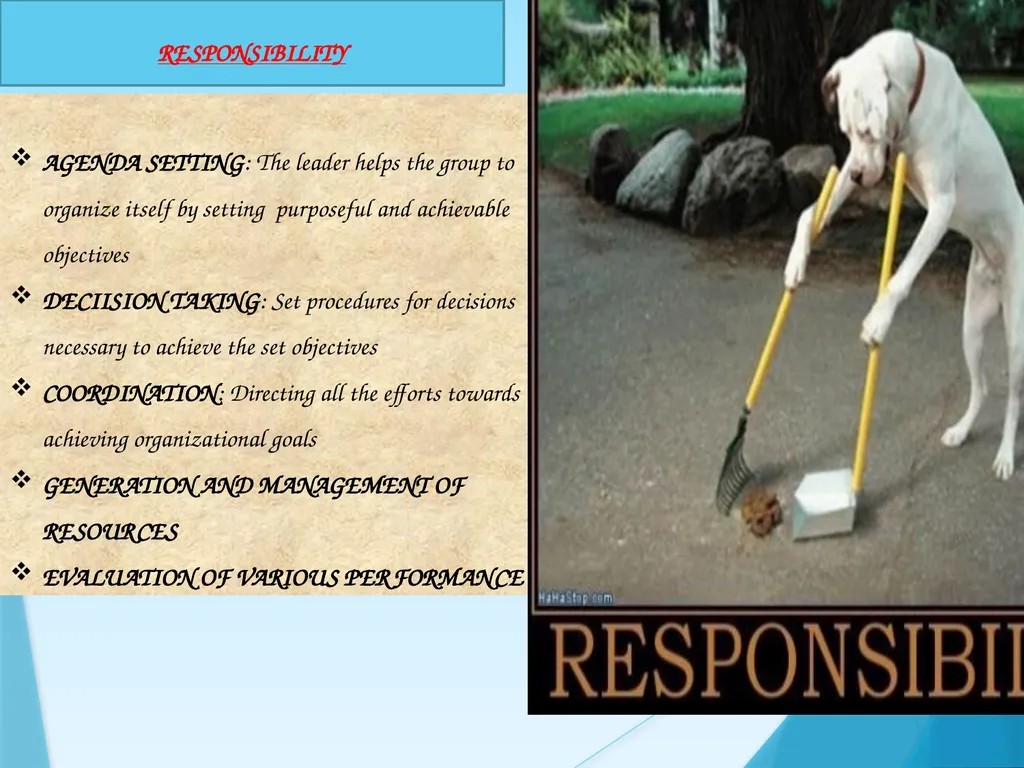
slide14. AGENDA SETTING: The leader helps the group to organize itself by setting purposeful and achievable objectives
DECIISION TAKING: Set procedures for decisions necessary to achieve the set objectives
COORDINATION: Directing all the efforts towards achieving organizational goals
GENERATION AND MANAGEMENT OF RESOURCES
EVALUATION OF VARIOUS PERFORMANCE RESPONSIBILITY<br>
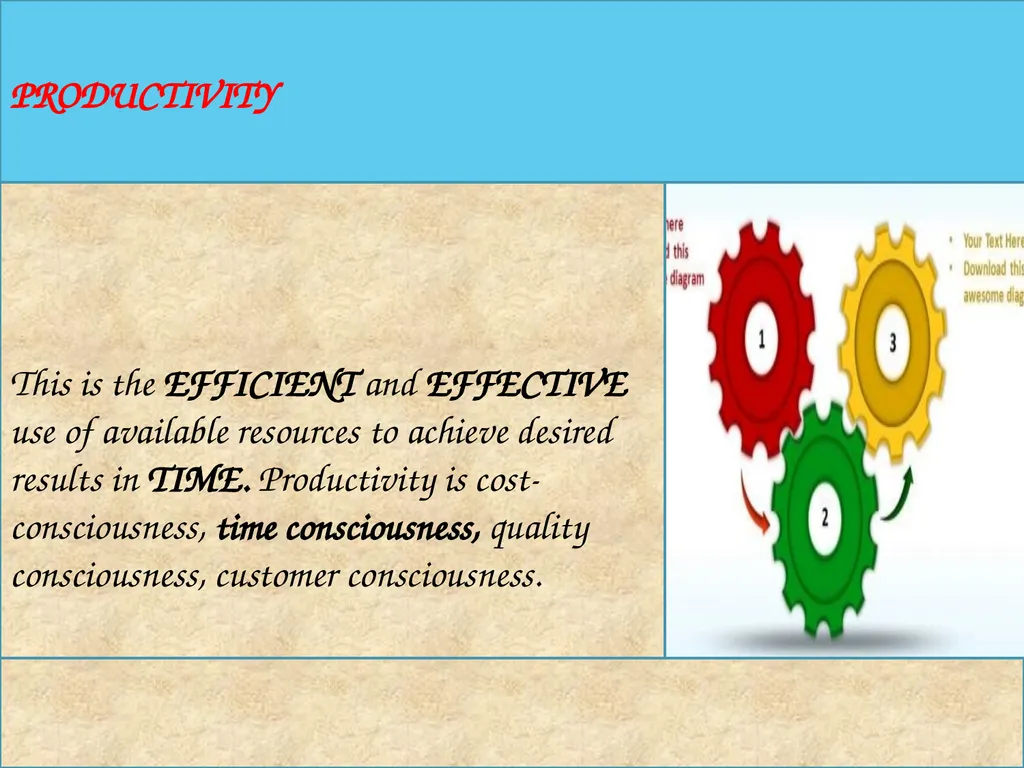
slide15. This is the EFFICIENT and EFFECTIVE use of available resources to achieve desired results in TIME. Productivity is cost-consciousness, time consciousness, quality consciousness, customer consciousness. PRODUCTIVITY<br>
slide16. PRODUCTIVITY IMPROVEMENT Productivity improvements are planned interventions designed to make the process better and operations of organizations smooth with a view to increasing: performance, revenue, profit, employment and improved standard of living for its workers or the populace. It entails improving efficiency, effectiveness and quality of work life.
Productivity Improvement can only come about through the efficient and effective management of input factors of production, that is, human resources (management and labour), capital (physical and financial assets), and technology.<br>
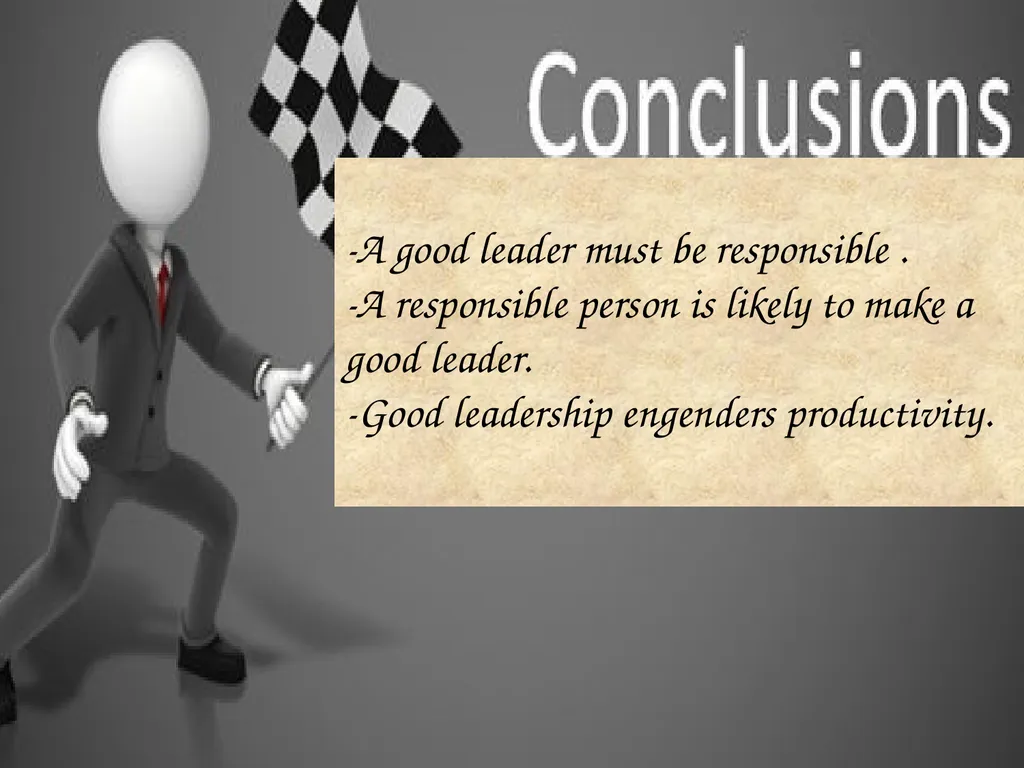
slide17. -A good leader must be responsible .
-A responsible person is likely to make a good leader.
-Good leadership engenders productivity.<br>
slide18. THANK YOU FOR LISTENING<br>
slide2. INTRODUCTION Leadership is a quality that can be defined, however its definition differs from person to person. It is a quality that generates success, however success means different things to different people. Despite the variability in perceptions of leadership we all have leaders who have made a difference in our life and inspired us in one way or another. The benefit of having such variability in our perception of leadership is that each person on Earth has the capability of being a leader in some way. It is time to discover what kind of leader you are. It is time to exceed your potential, find your passion, take action, and make a difference<br>
slide3. The aim of this paper is to acquaint participants with the concept of leadership and its responsibilities. AIM<br>
slide4. OBJECTIVES At the end of this paper, participants should be able to:
-Define who a leader is.
-Explain how leaders evolve
-List types of leadership style.
-Enumerate the qualities of a good leader.
-Explain how Leadership affects productivity.<br>
slide5. WHO IS A LEADER? . A Leader is someone who influences and motivates others (followers) towards achieving common purposes and objectives<br>
slide6. What is Leadership? Field Marshal Bernard Montgomery: “Leadership is the capacity and will to rally men and women to a common purpose and the character which inspires confidence.”
Dwight Eisenhower: “Leadership is the art of getting someone else to do something you want done because he wants to do it.
Harry Truman: “A leader is a man who has the ability to get other people to do what they don’t want to do, and like it.”<br>
slide7. According to Jack Welsh (former CEO, General Electric) he says, as a leader, I have three (3) responsibilities;
Finding the right people
Allocating the resources
Sharing the ideas quickly
Also, Chester Bernard (1938) says, a leader’s responsibility is to maintain the organization’s values and to generate commitment.<br>
slide8. HOW LEADERS EVOLVE: CHARISMATIC: Possession of some personality traits may lead people naturally into leadership roles. Martin Luther King, Obama.
SITUATIONAL: A crisis of important event may cause a person to rise to the occasion. This brings out extraordinary leadership qualities in an ordinary person e.g. Nelson Mandela.
TRANSFORMATIONAL: People can choose to become leaders by learning leadership traits. To be tutored to become a leader.<br>
slide9. LEADERSHIP MOTIVATION The desire to help others
The sense of being needed
Feeling accomplished when goal is achieved
Gaining the respect of others
Self-growth and understanding<br>
slide10. STYLES / TYPES OF LEADERSHIP LAISSEZ-FAIR
DEMOCRATIC
BEUREUCRATIC
AUTOCRATIC
NOTES:
Choice of effective leadership style depends on situations.
A leader must use his sense of judgment
Leadership is scientific in nature and requires mastery<br>
slide11. TIPS IN CHOOSING THE MOST EFFECTIVE LEADERSHIP APPROACH Consider skill levels and experience of your followers
Consider whether the work involved is a routine or requires new and creative skills.
Consider the organizational environment (this can be either stable or radically changing, conservative or adventurous)
Consider your own preferred or natural style<br>
slide12. QUALITIES AND ATTRIBUTES OF A LEADER 21 leadership qualities by
John C. Maxwell
CHARACTER
CHARISMA
COMMITMENT
COMMUNICATION
COMPETENCE
COURAGE
DISCERNMENT
FOCUS
GENEROSITY<br>
slide13. QUALITIES AND ATTRIBUTES OF A LEADER (C0NTD) INITIATIVE
LISTENING
PASSION
POSITIVE ATTITUDE
PROBLEM SOLVING
RELATIONSHIP
RESPONSIBILITY
SECURITY
SELF DISCIPLINE
SERVANTHOOD
TEACHABILITY
VISION<br>
slide14. AGENDA SETTING: The leader helps the group to organize itself by setting purposeful and achievable objectives
DECIISION TAKING: Set procedures for decisions necessary to achieve the set objectives
COORDINATION: Directing all the efforts towards achieving organizational goals
GENERATION AND MANAGEMENT OF RESOURCES
EVALUATION OF VARIOUS PERFORMANCE RESPONSIBILITY<br>
slide15. This is the EFFICIENT and EFFECTIVE use of available resources to achieve desired results in TIME. Productivity is cost-consciousness, time consciousness, quality consciousness, customer consciousness. PRODUCTIVITY<br>
slide16. PRODUCTIVITY IMPROVEMENT Productivity improvements are planned interventions designed to make the process better and operations of organizations smooth with a view to increasing: performance, revenue, profit, employment and improved standard of living for its workers or the populace. It entails improving efficiency, effectiveness and quality of work life.
Productivity Improvement can only come about through the efficient and effective management of input factors of production, that is, human resources (management and labour), capital (physical and financial assets), and technology.<br>
slide17. -A good leader must be responsible .
-A responsible person is likely to make a good leader.
-Good leadership engenders productivity.<br>
slide18. THANK YOU FOR LISTENING<br>