Lecture 1: Limits, Derivatives, the Product Rule,
Description: Lecture 1: Limits, Derivatives, the Product Rule, the Quotient Rule, and the Chain Rule Part I: Limits and Continuity Objectives Corresponding sections in Simmons: 2.5, 2.6 What is a limit? Why are limits useful? x 0 1 2 3 4 -1 -2 -3 -4 0 1
Related Topics
Download Presentation
"Lecture 1: Limits, Derivatives, the Product Rule," is the property of its rightful owner. Permission is granted to download and print the materials on this website for personal, non-commercial use only, and to display it on your personal computer provided you do not modify the materials and that you retain all copyright notices contained in the materials. By downloading content from our website, you accept the terms of this agreement.
Presentation Transcript
slide1. Lecture 1: Limits, Derivatives, the Product Rule, the Quotient Rule, and the Chain Rule<br>
slide2. Part I: Limits and Continuity<br>
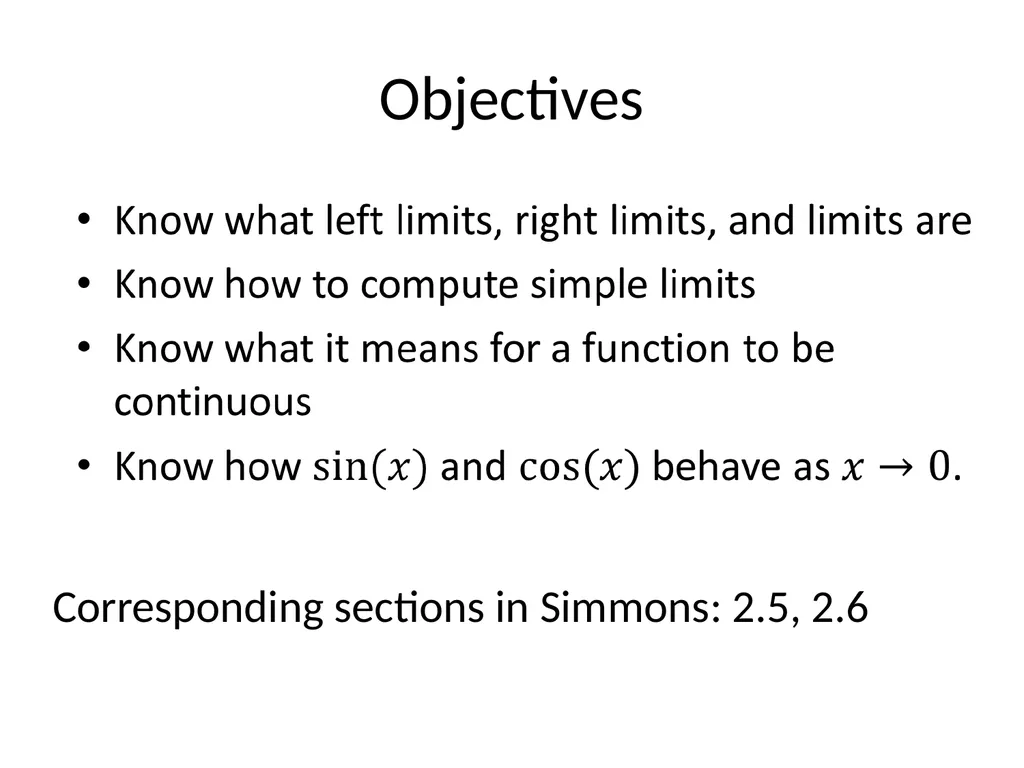
slide3. Objectives Corresponding sections in Simmons: 2.5, 2.6<br>
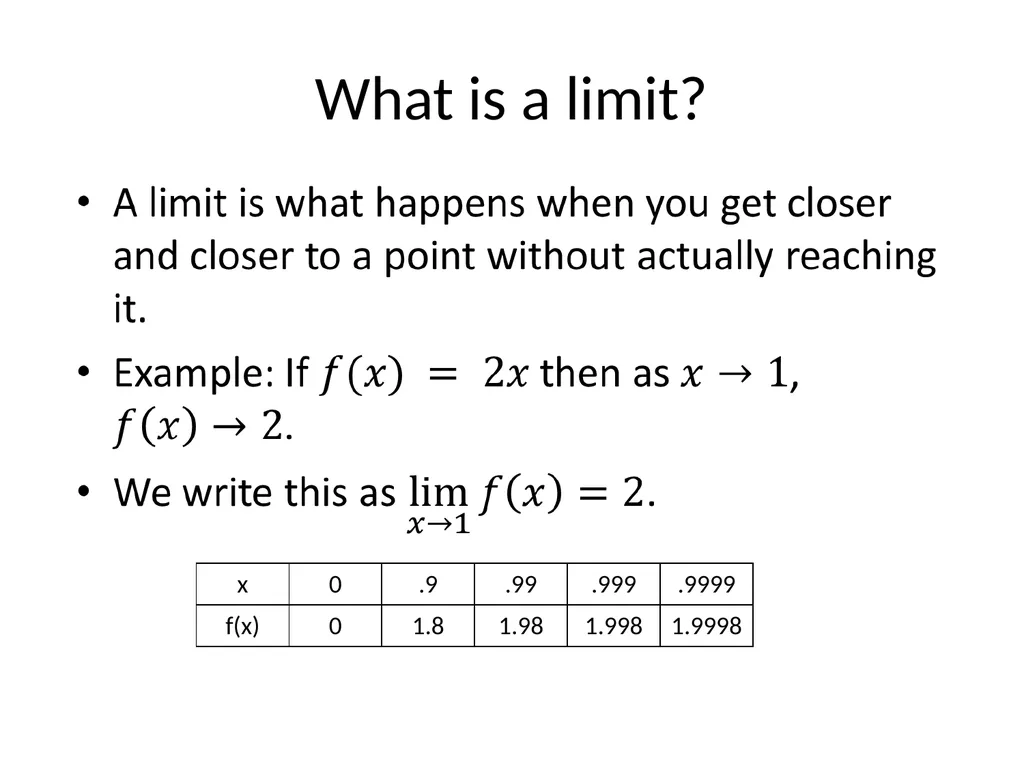
slide4. What is a limit?<br>
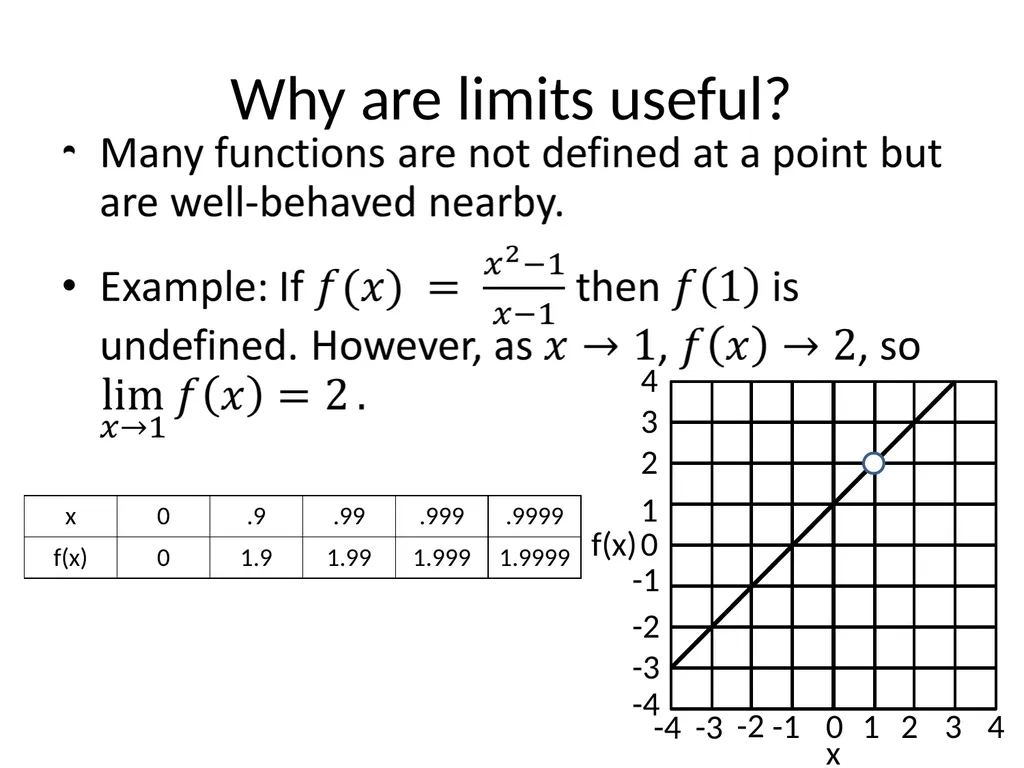
slide5. Why are limits useful? x 0 1 2 3 4 -1 -2 -3 -4 0 1 2 3 4 -1 -2 -3 -4 f(x)<br>
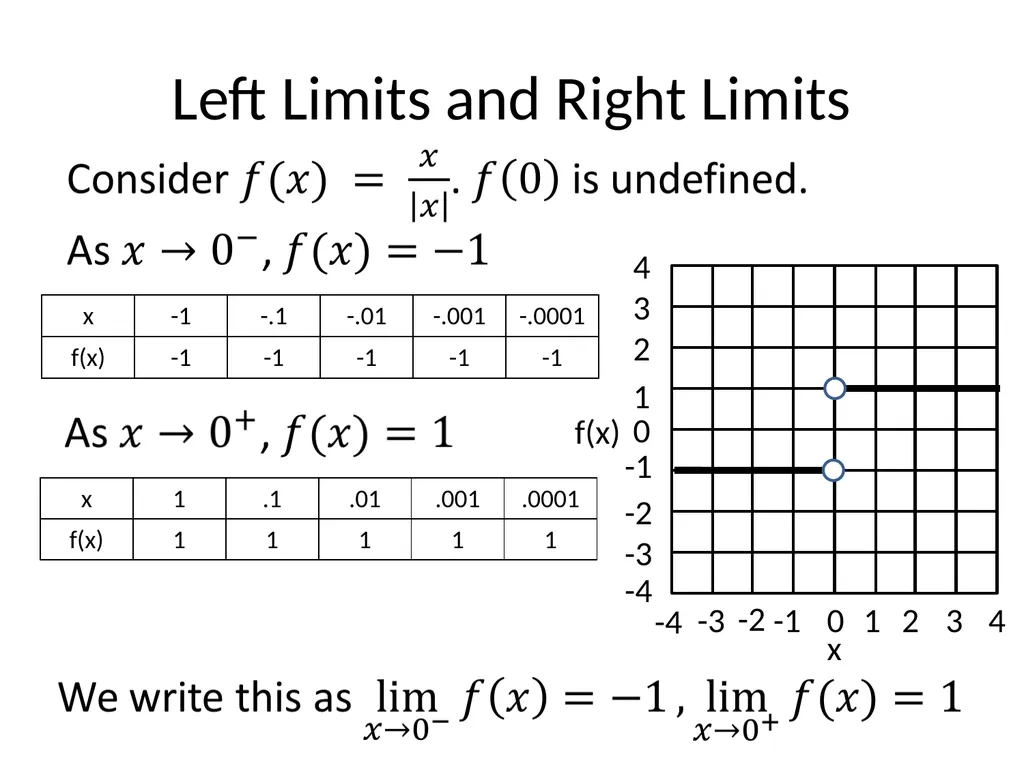
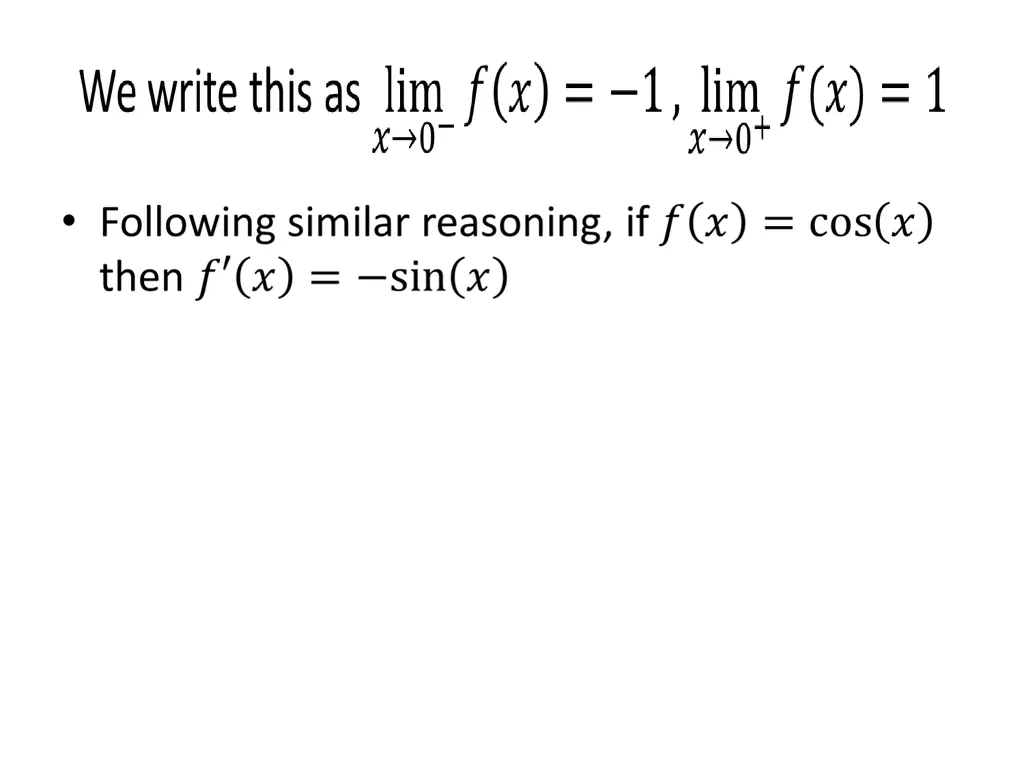
slide6. Left Limits and Right Limits x 0 1 2 3 4 -1 -2 -3 -4 0 1 2 3 4 -1 -2 -3 -4 f(x)<br>
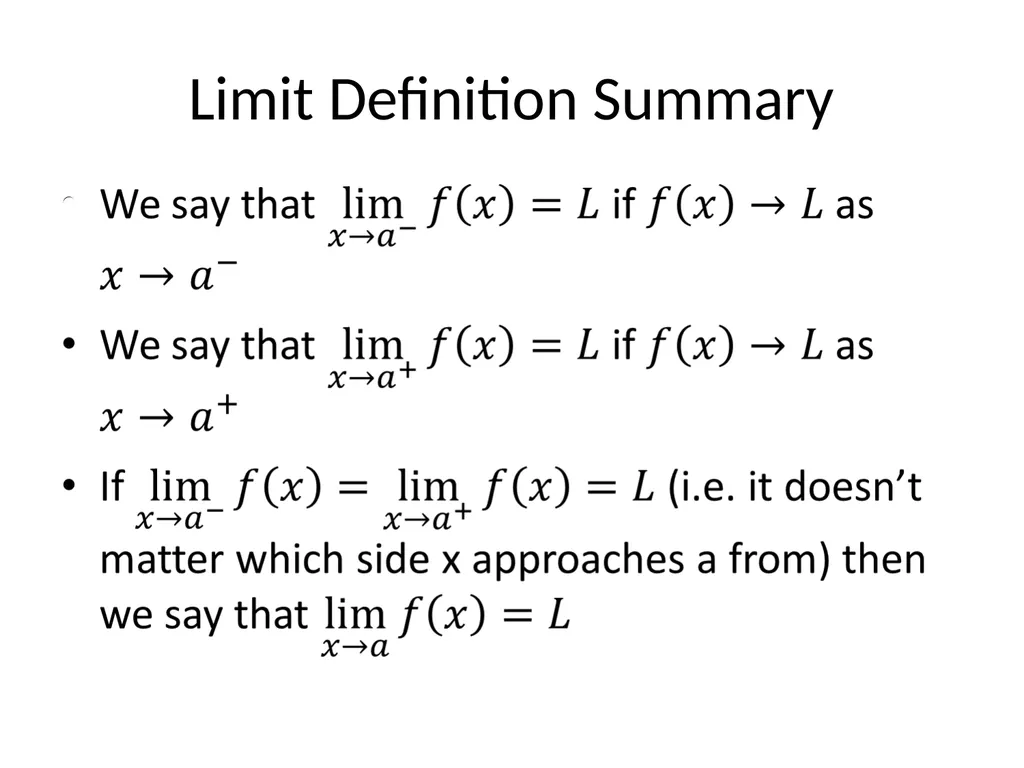
slide7. Limit Definition Summary<br>
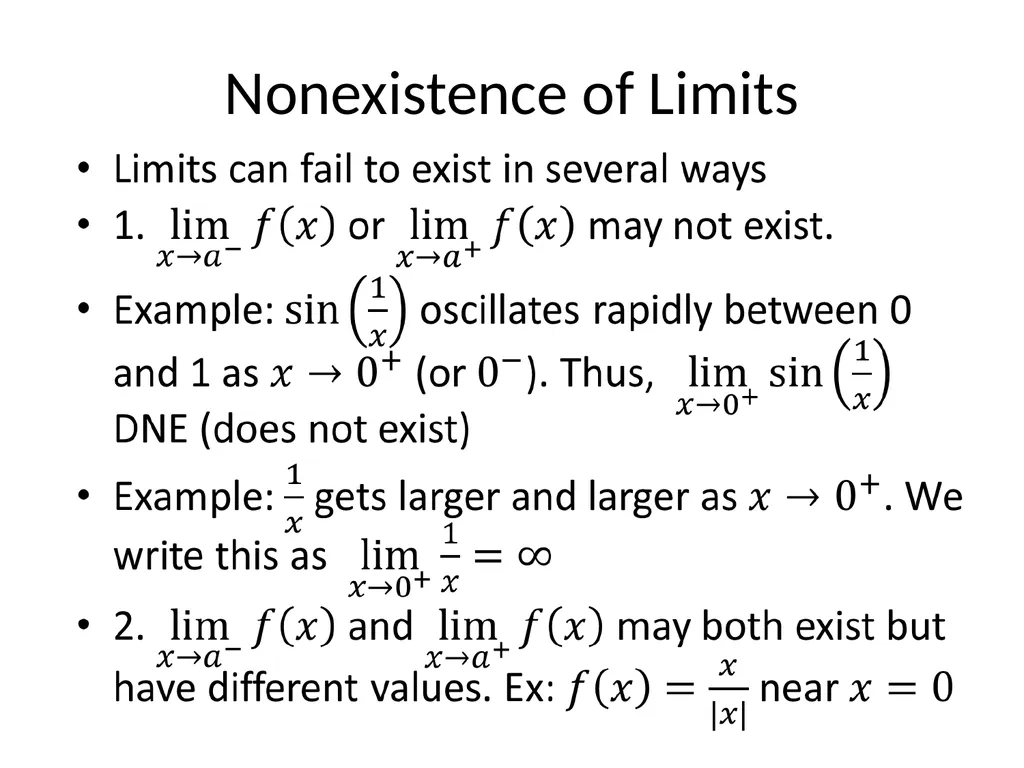
slide8. Nonexistence of Limits<br>
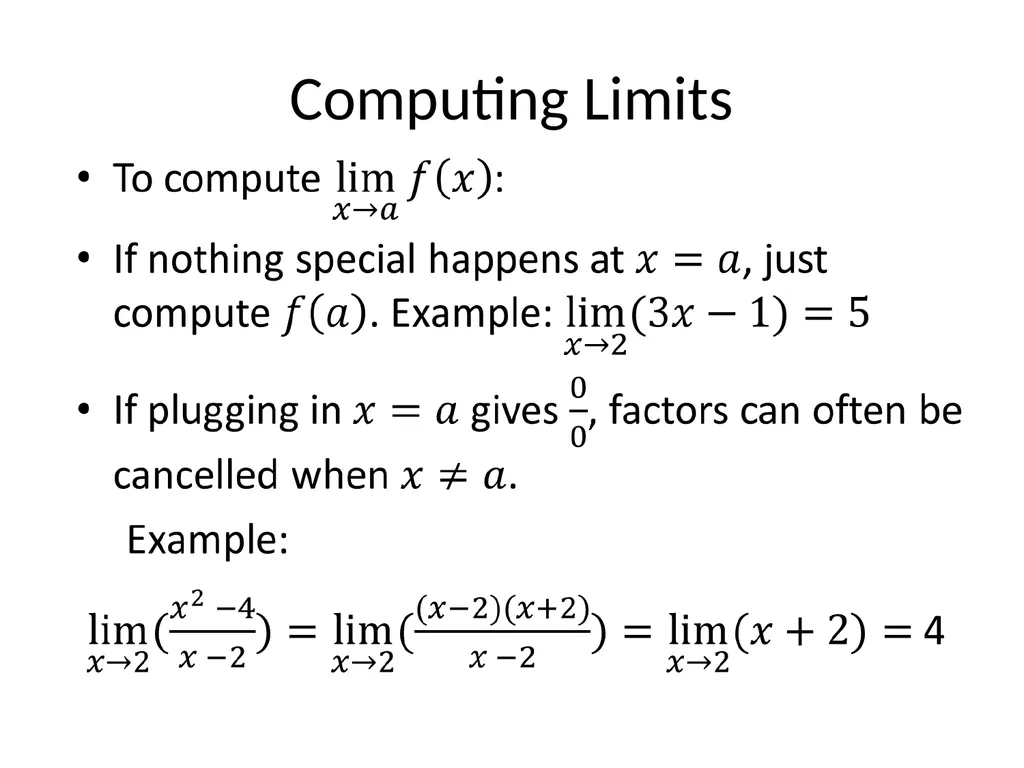
slide9. Computing Limits<br>
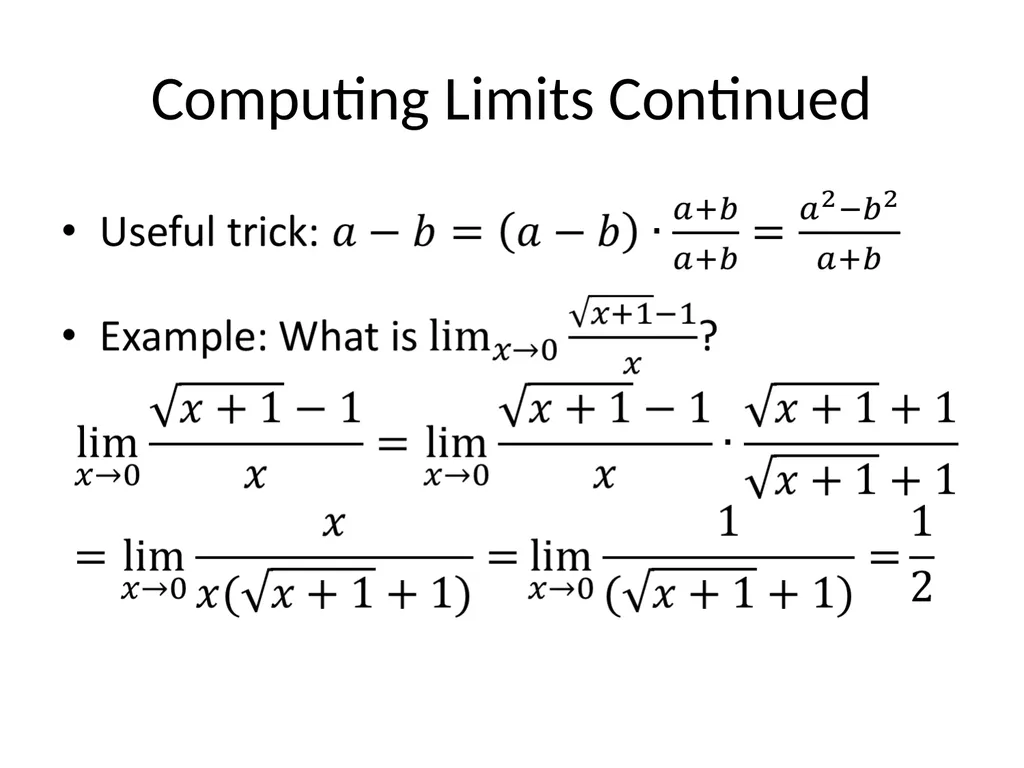
slide10. Computing Limits Continued<br>
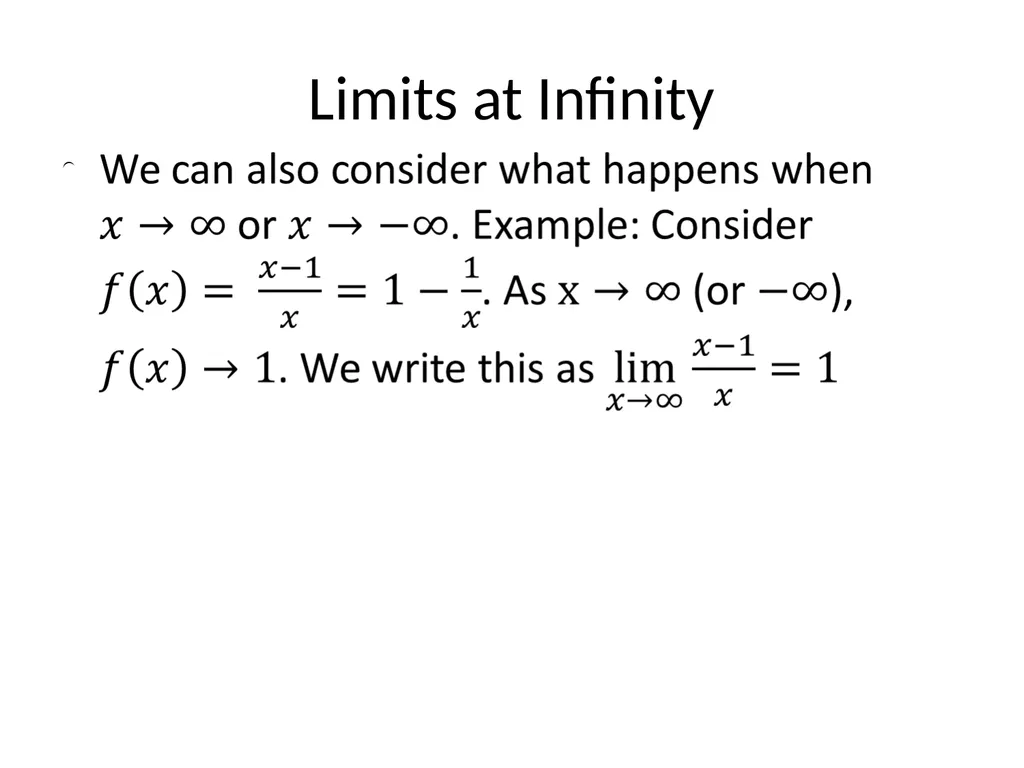
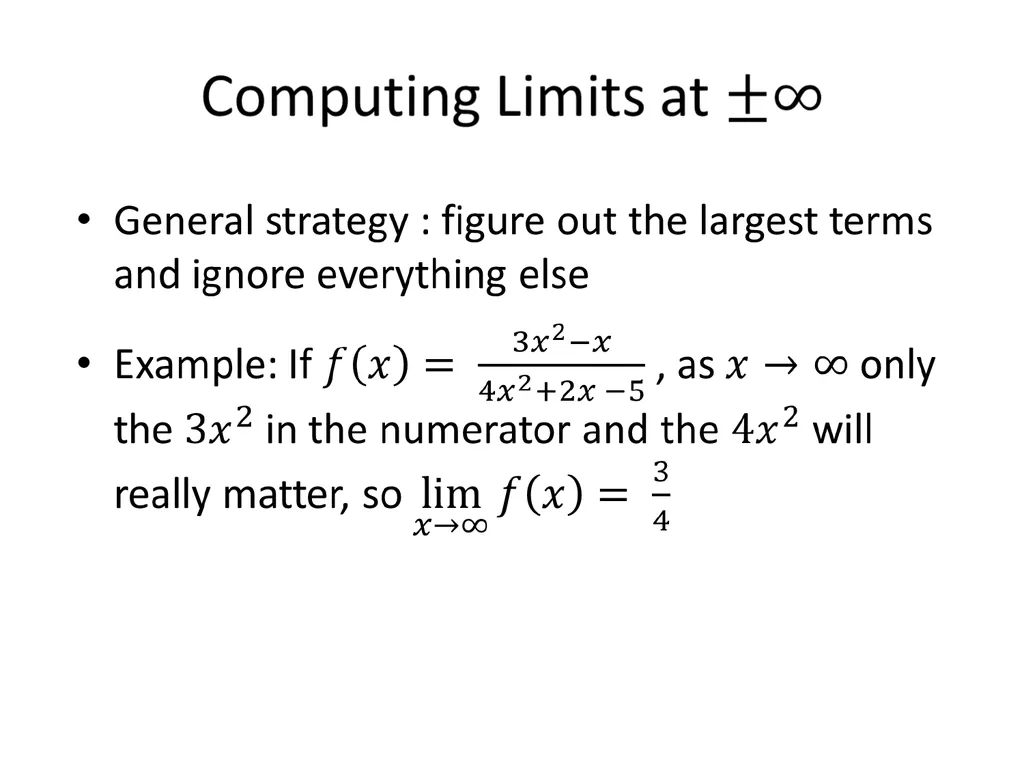
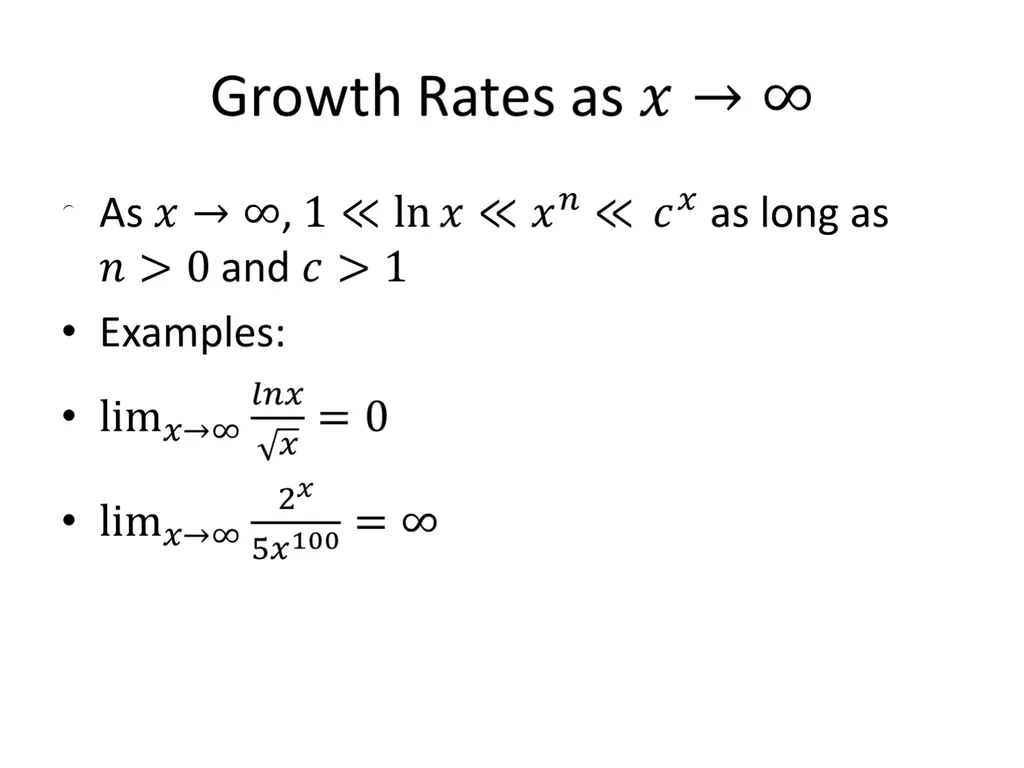
slide11. Limits at Infinity<br>
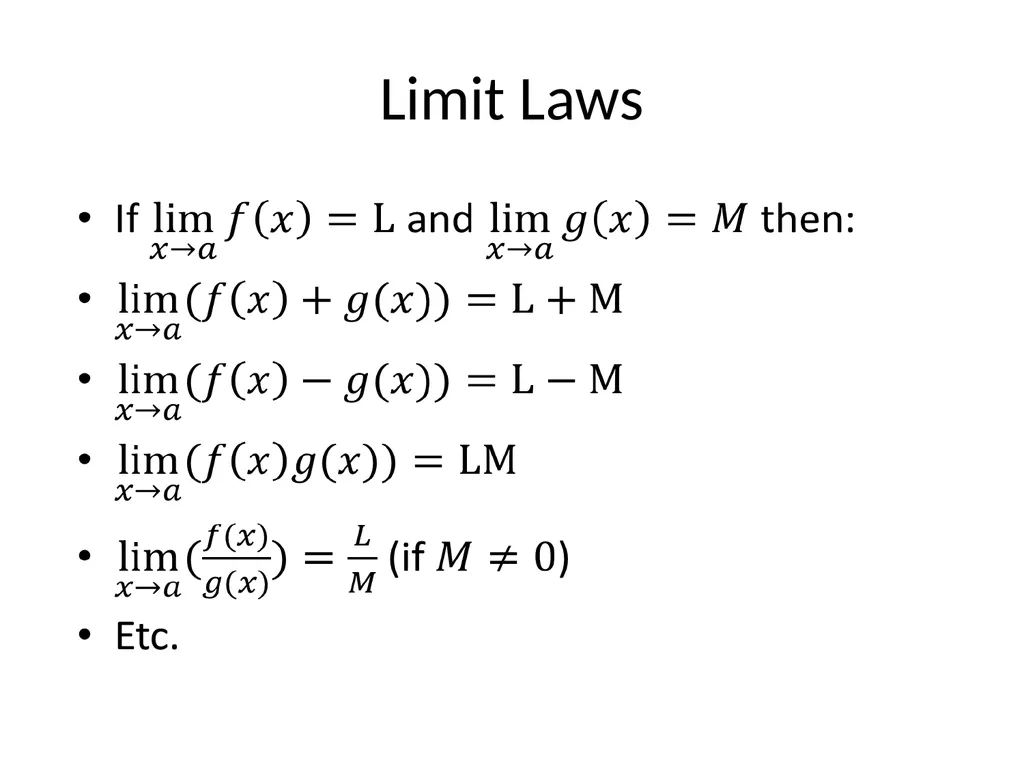
slide14. Limit Laws<br>
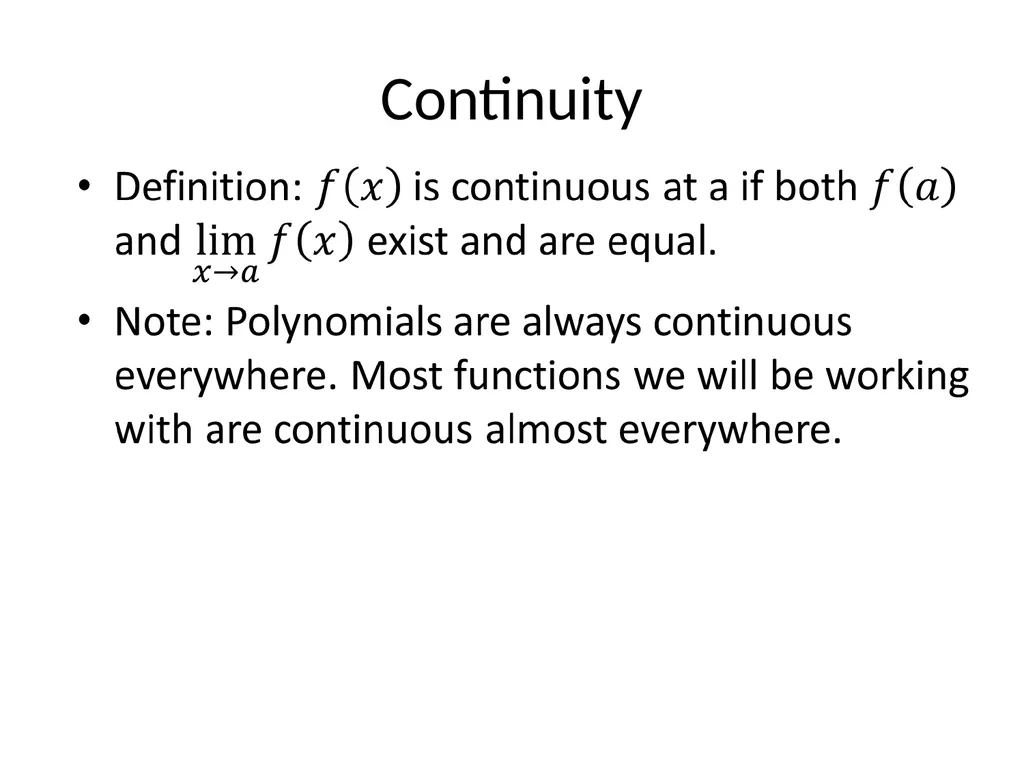
slide15. Continuity<br>
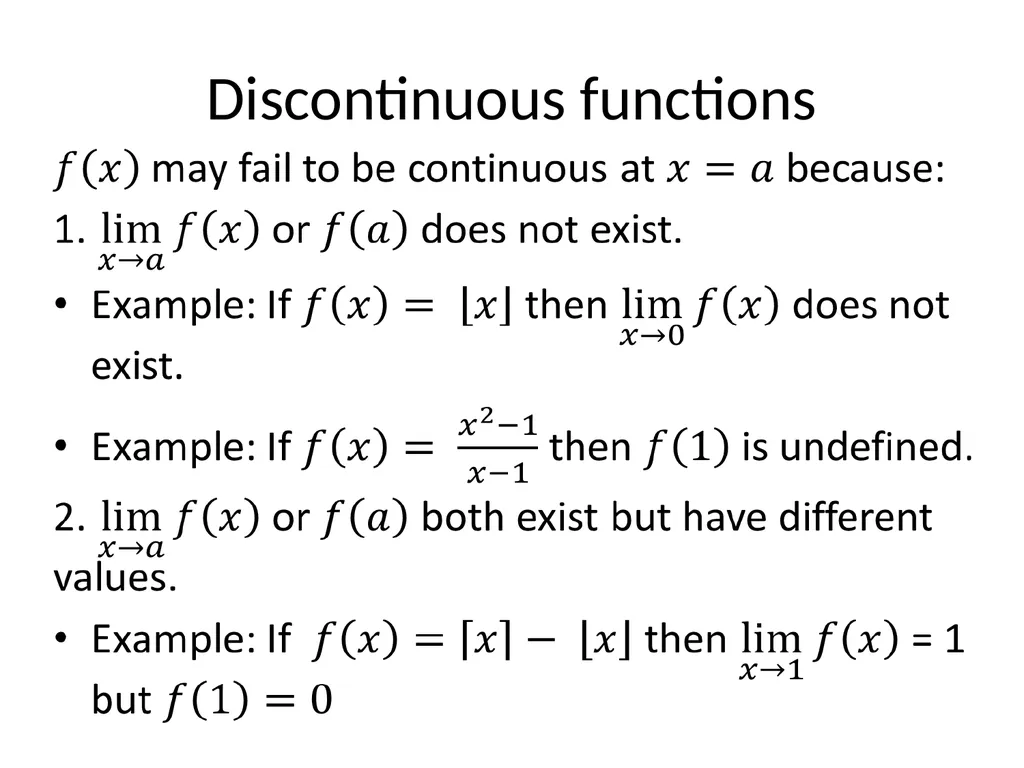
slide16. Discontinuous functions<br>
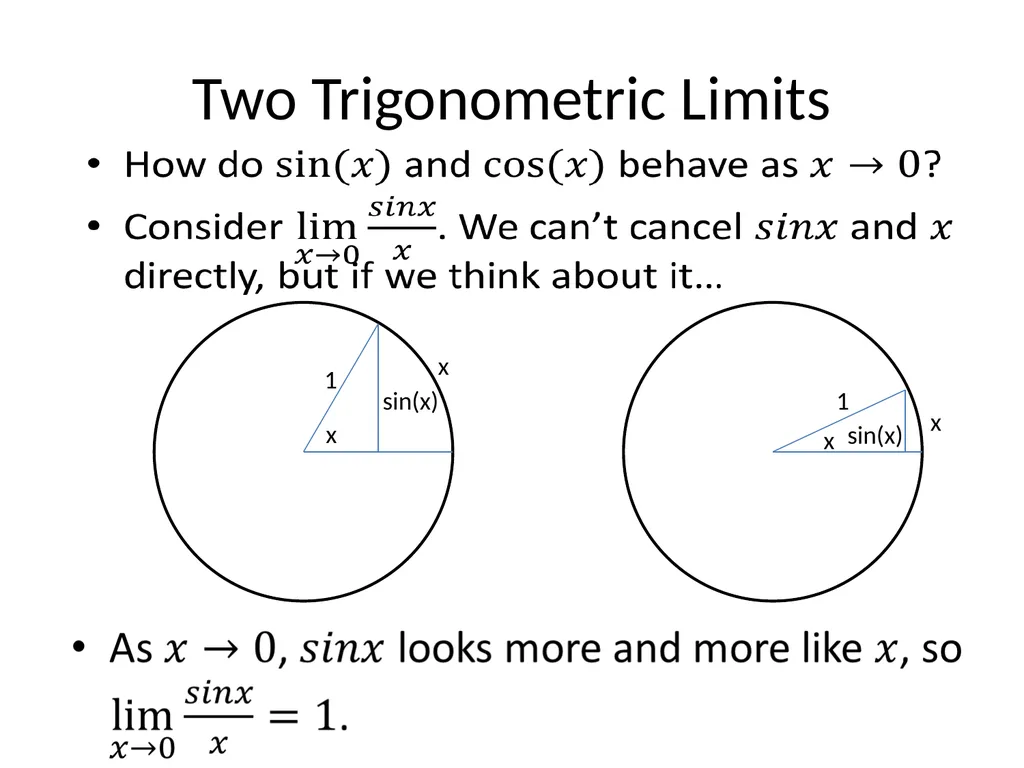
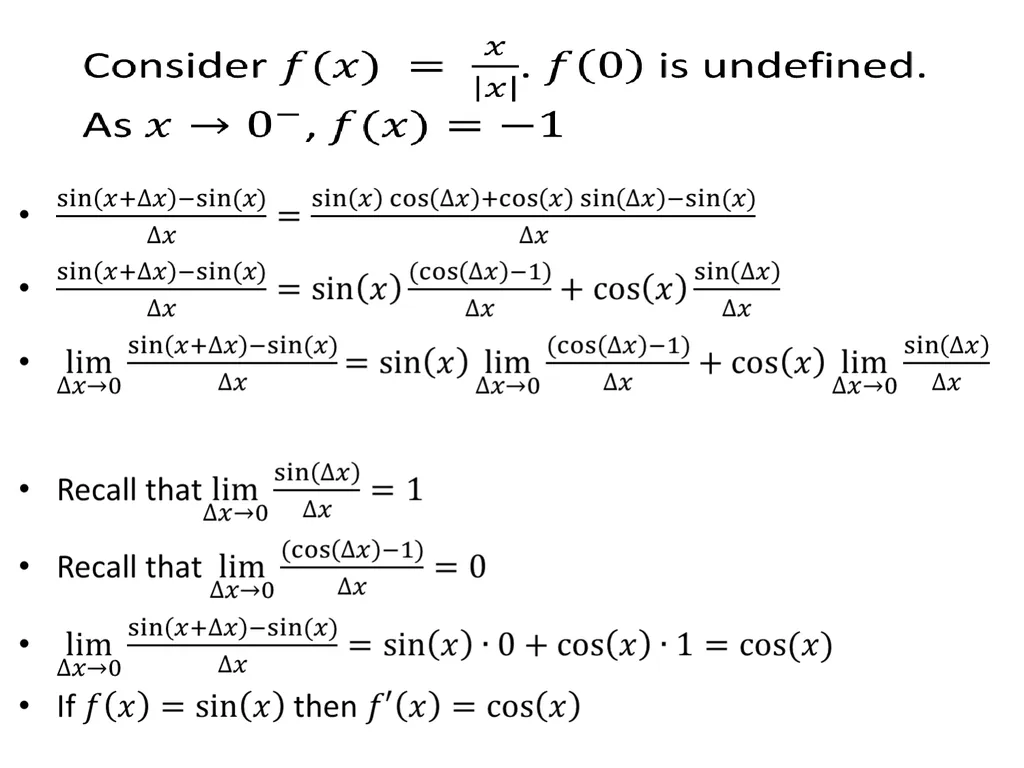
slide17. Two Trigonometric Limits x x x x sin(x) sin(x) 1 1<br>
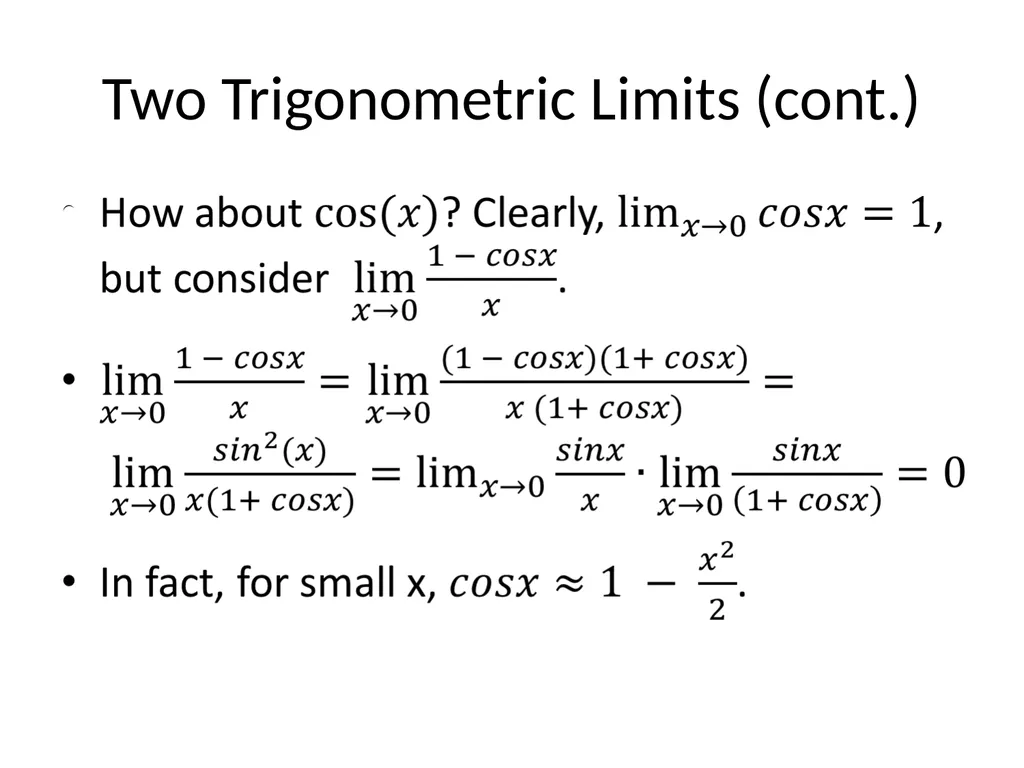
slide18. Two Trigonometric Limits (cont.)<br>
slide19. Part II: Derivatives<br>
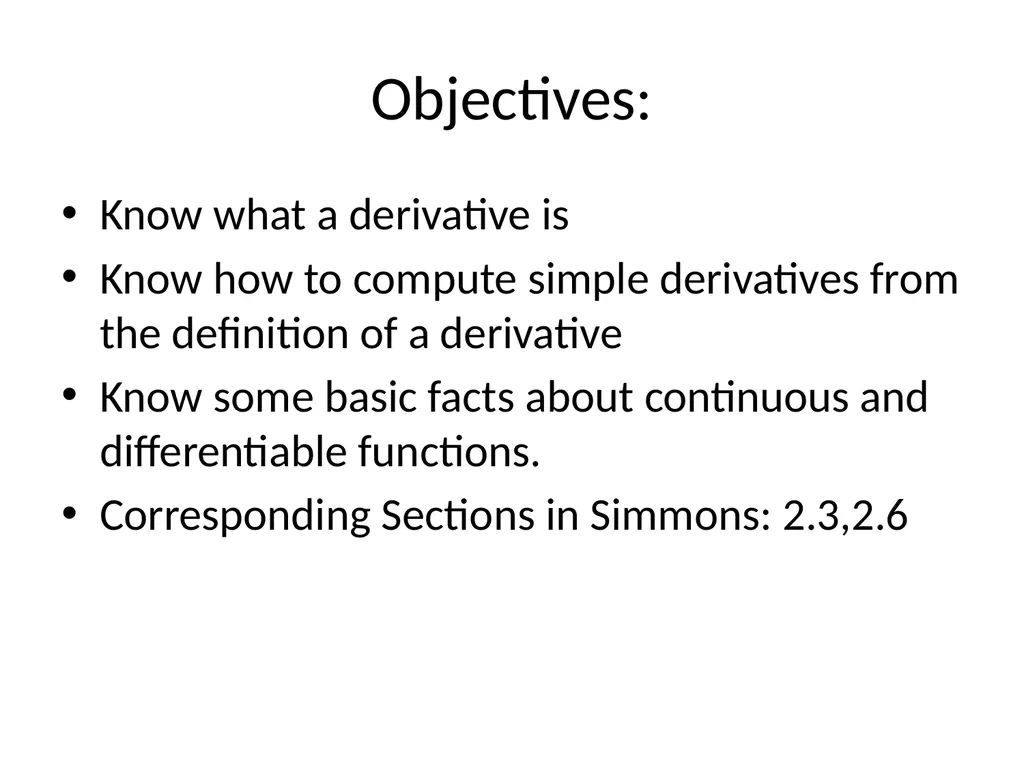
slide20. Objectives: Know what a derivative is
Know how to compute simple derivatives from the definition of a derivative
Know some basic facts about continuous and differentiable functions.
Corresponding Sections in Simmons: 2.3,2.6<br>
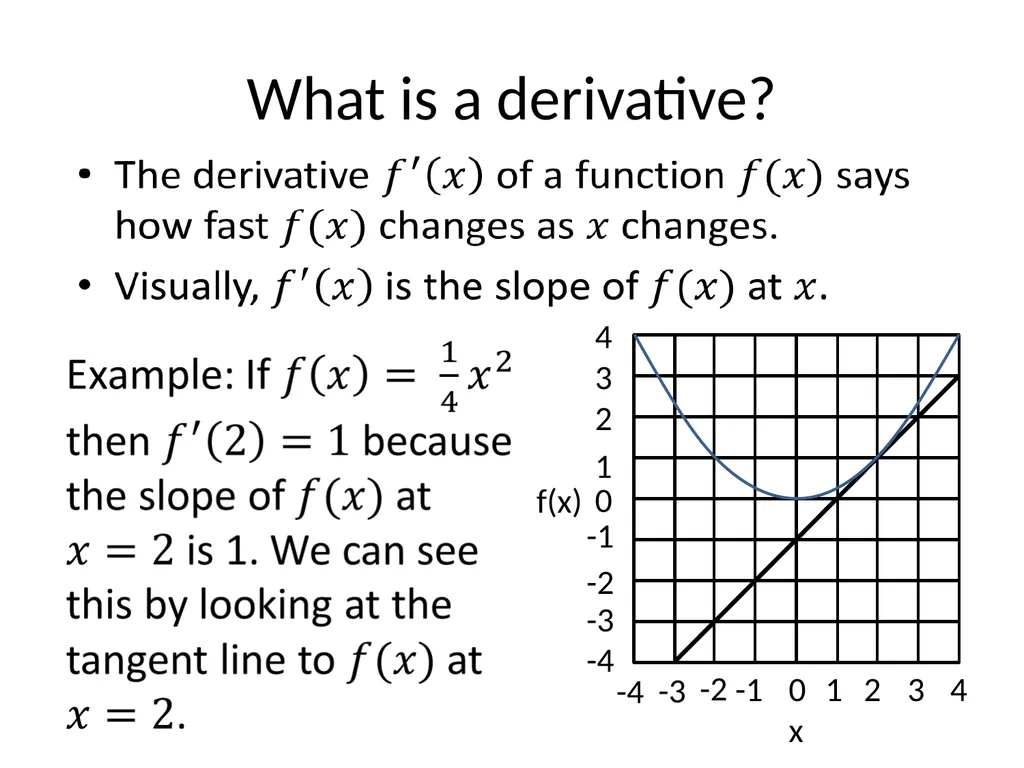
slide21. What is a derivative? x 0 1 2 3 4 -1 -2 -3 -4 0 1 2 3 4 -1 -2 -3 -4 f(x)<br>
slide22. Why are derivatives useful? Tells us how quickly something is changing.
In physics: velocity is the derivative of position and acceleration is the derivative of velocity (with respect to time).
Optimization: Derivatives are crucial for finding the minimum or maximum of functions.
And much much more.<br>
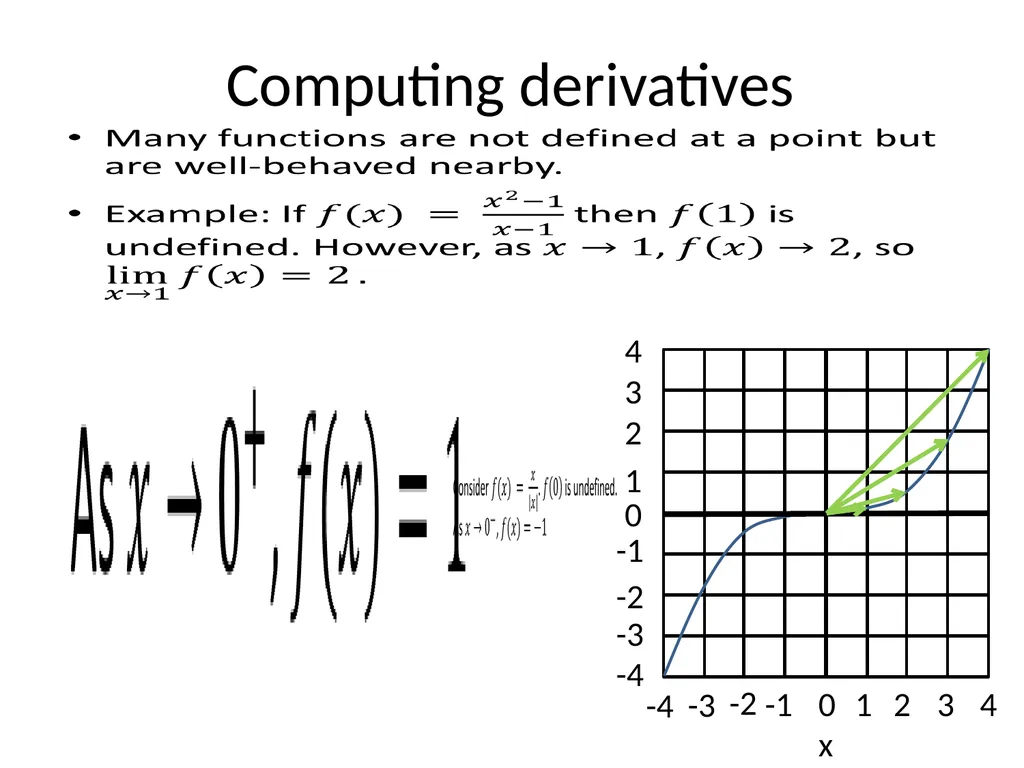
slide23. Computing derivatives x 0 1 2 3 4 -1 -2 -3 -4 0 1 2 3 4 -1 -2 -3 -4<br>
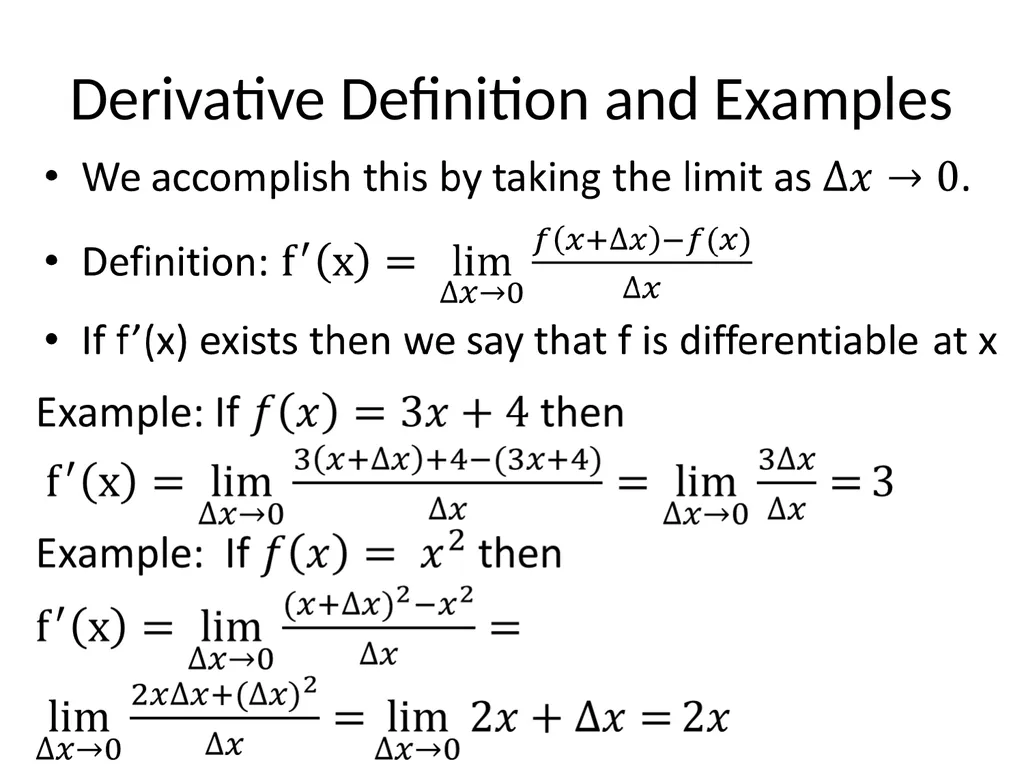
slide24. Derivative Definition and Examples<br>
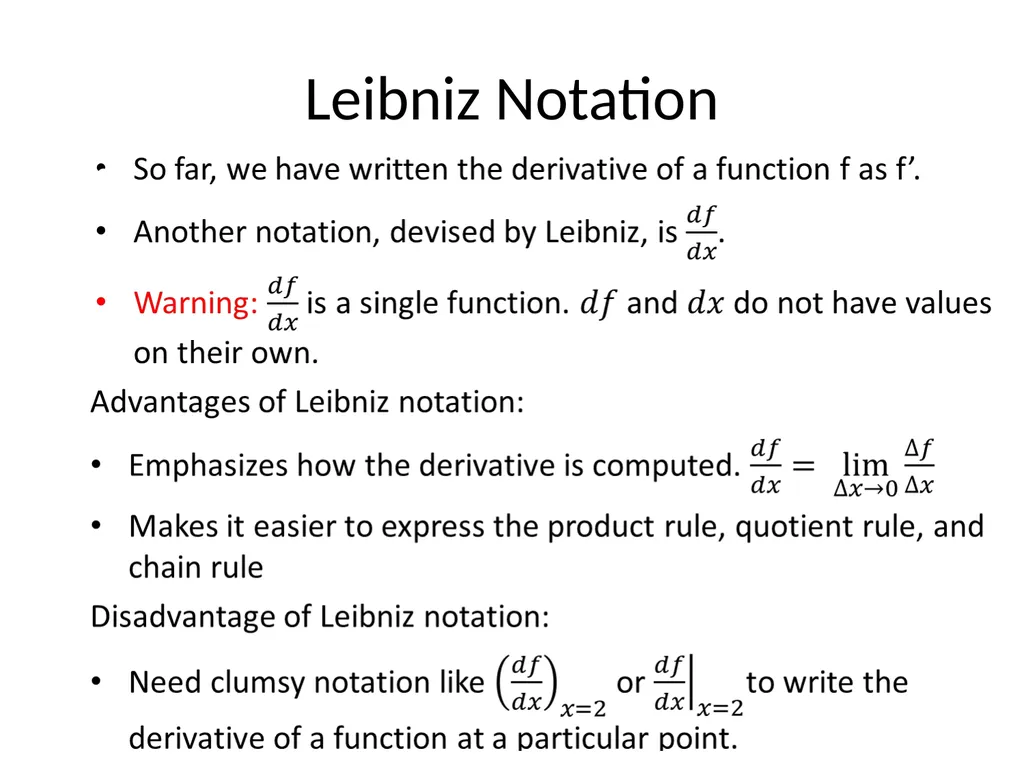
slide25. Leibniz Notation<br>
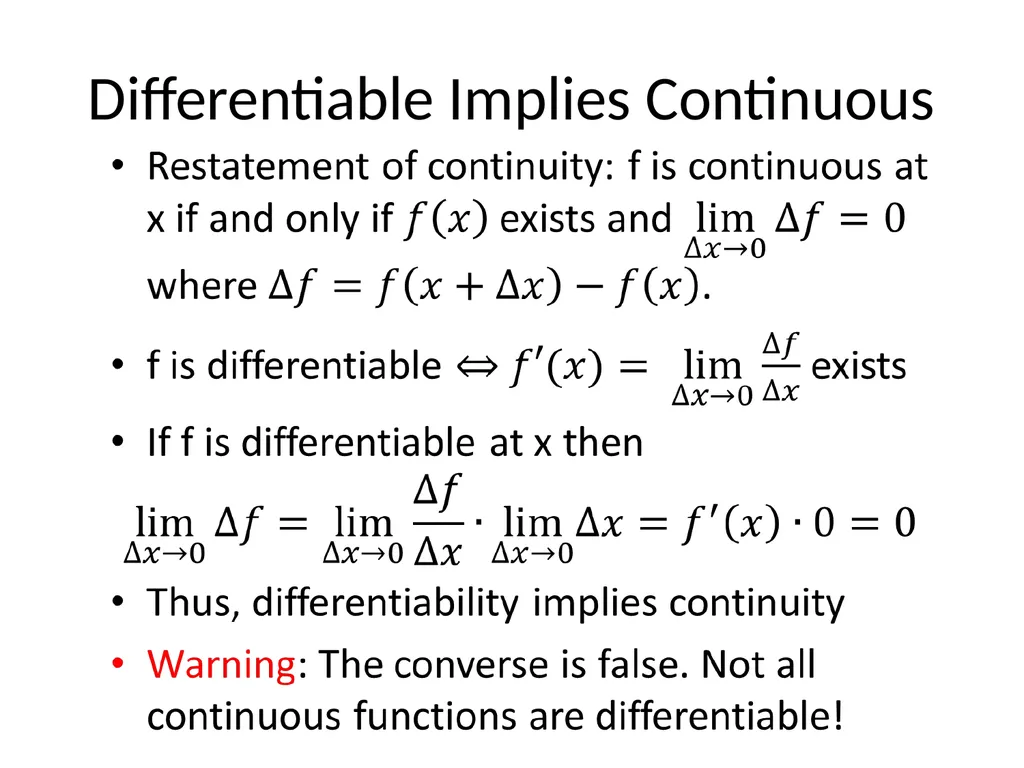
slide26. Differentiable Implies Continuous<br>
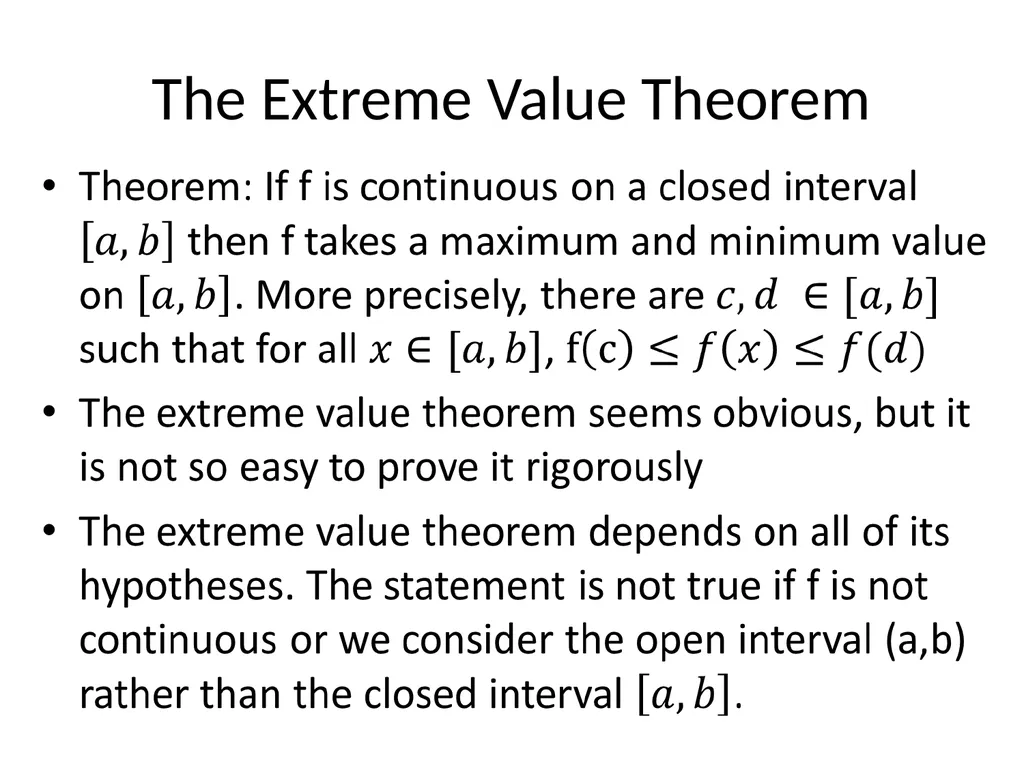
slide27. The Extreme Value Theorem<br>
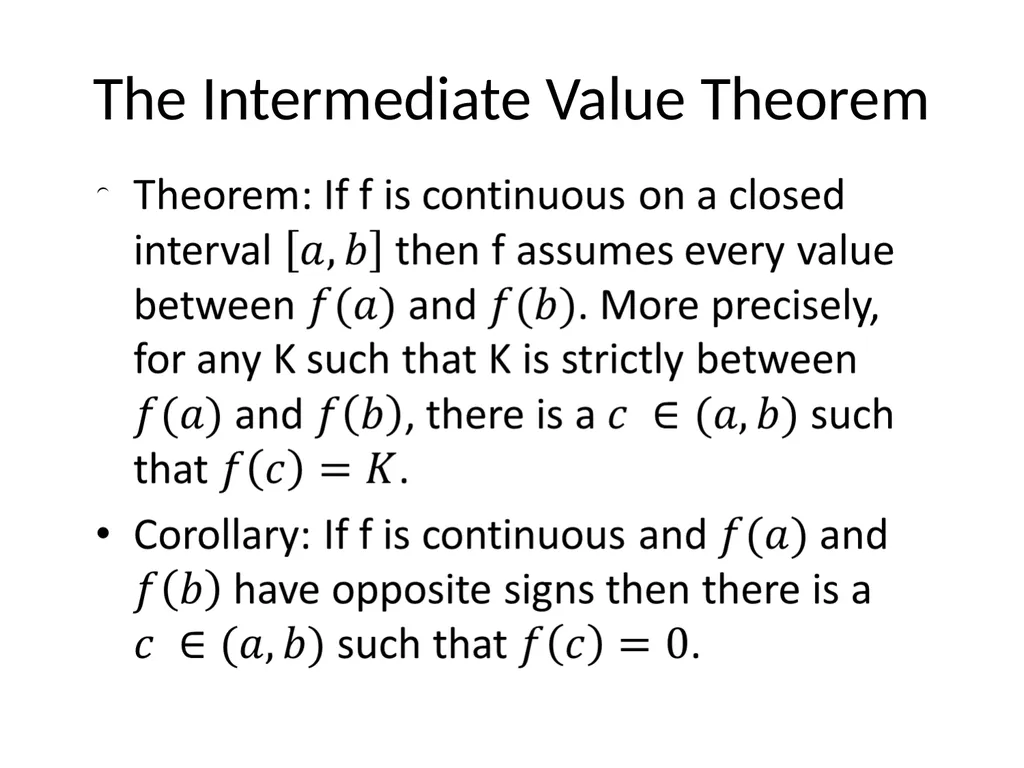
slide28. The Intermediate Value Theorem<br>
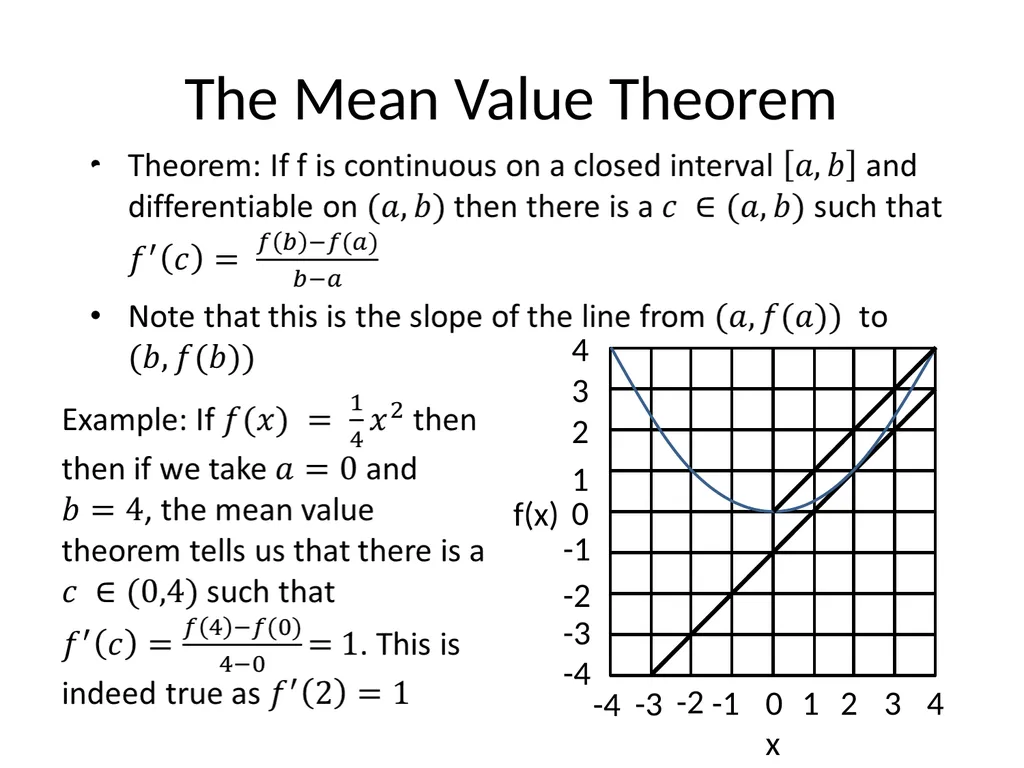
slide29. The Mean Value Theorem x 0 1 2 3 4 -1 -2 -3 -4 0 1 2 3 4 -1 -2 -3 -4 f(x)<br>
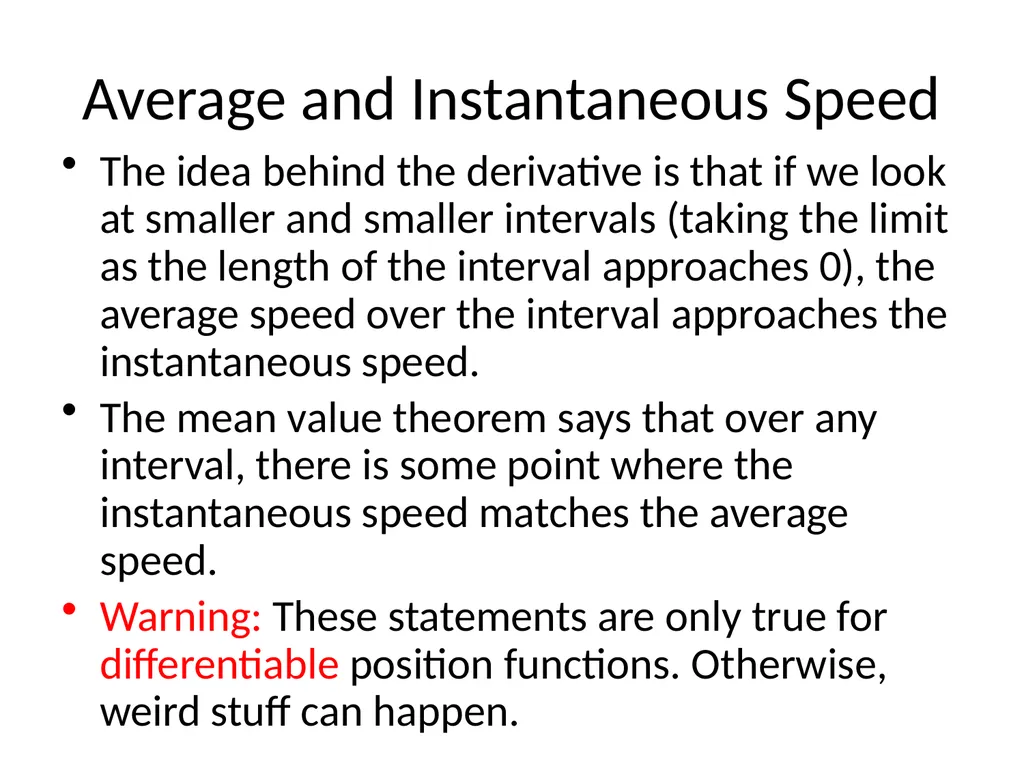
slide30. Average and Instantaneous Speed The idea behind the derivative is that if we look at smaller and smaller intervals (taking the limit as the length of the interval approaches 0), the average speed over the interval approaches the instantaneous speed.
The mean value theorem says that over any interval, there is some point where the instantaneous speed matches the average speed.
Warning: These statements are only true for differentiable position functions. Otherwise, weird stuff can happen.<br>
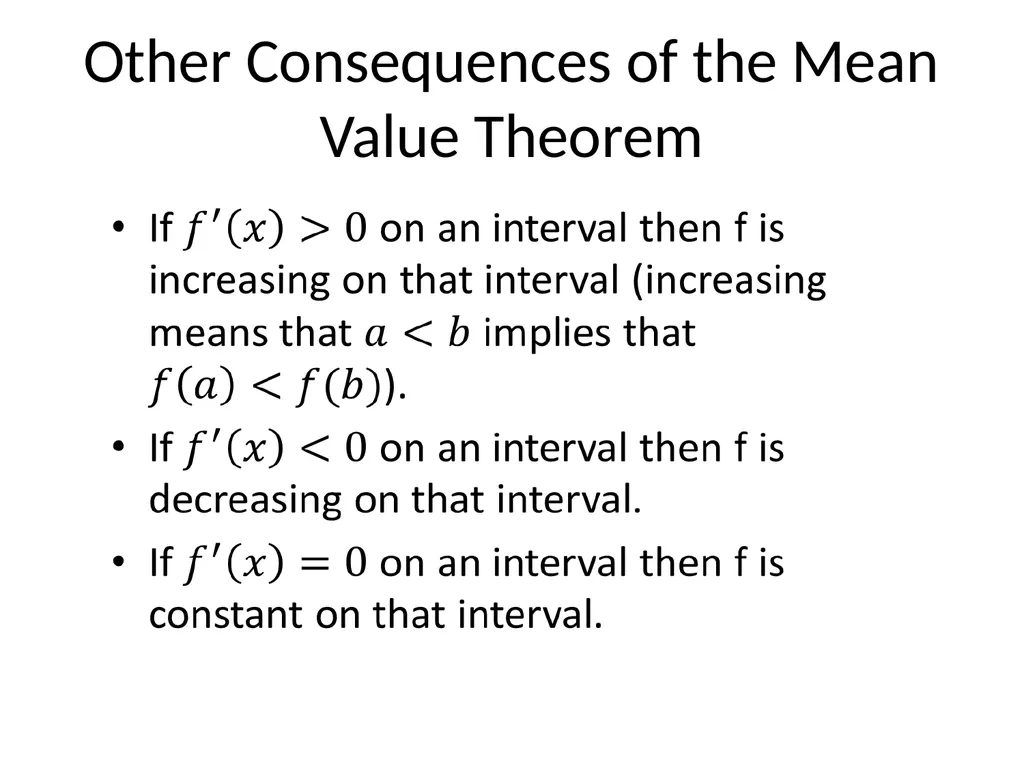
slide31. Other Consequences of the Mean Value Theorem<br>
slide32. Part III: Rules for Derivatives<br>
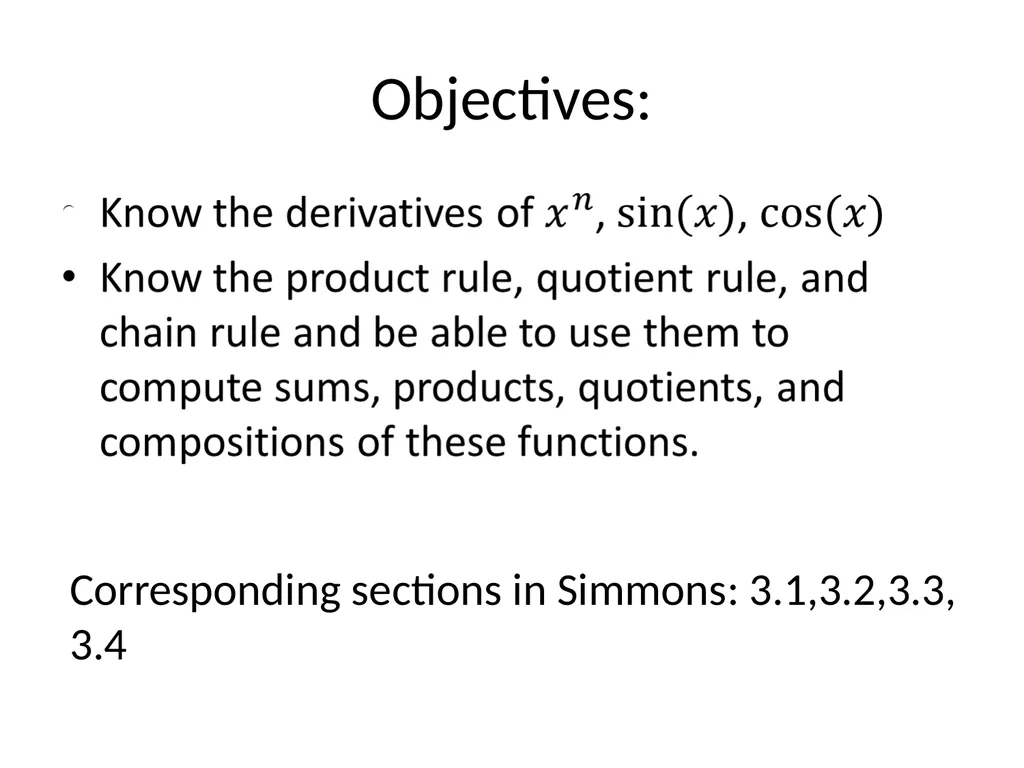
slide33. Objectives: Corresponding sections in Simmons: 3.1,3.2,3.3, 3.4<br>
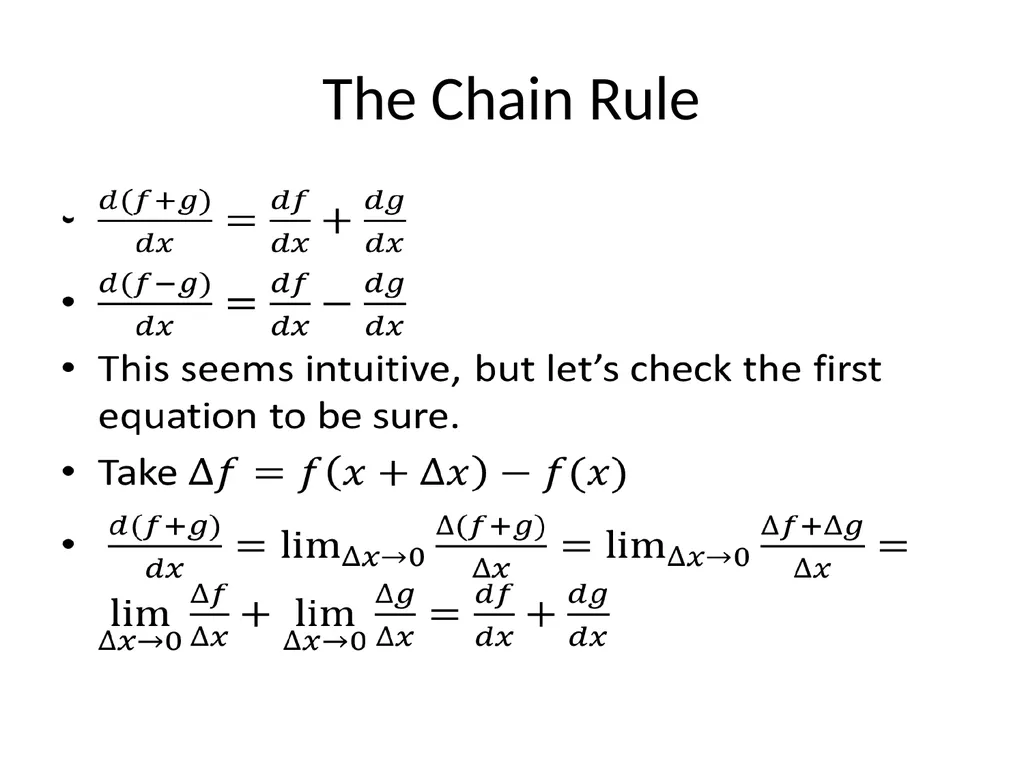
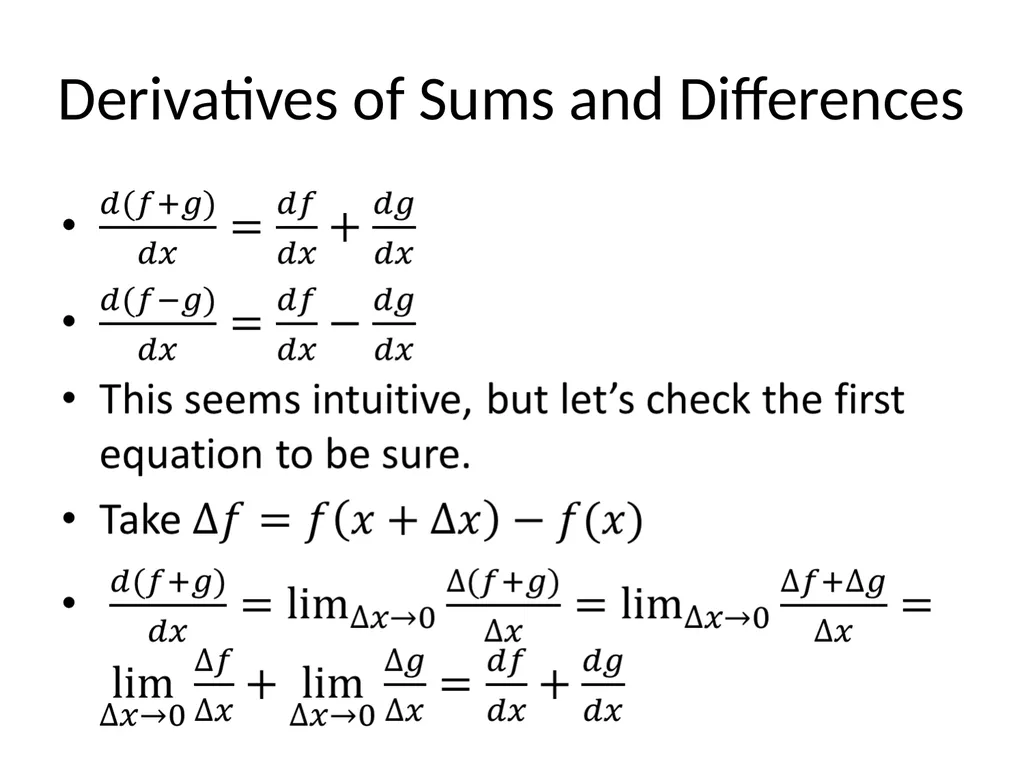
slide37. Derivatives of Sums and Differences<br>
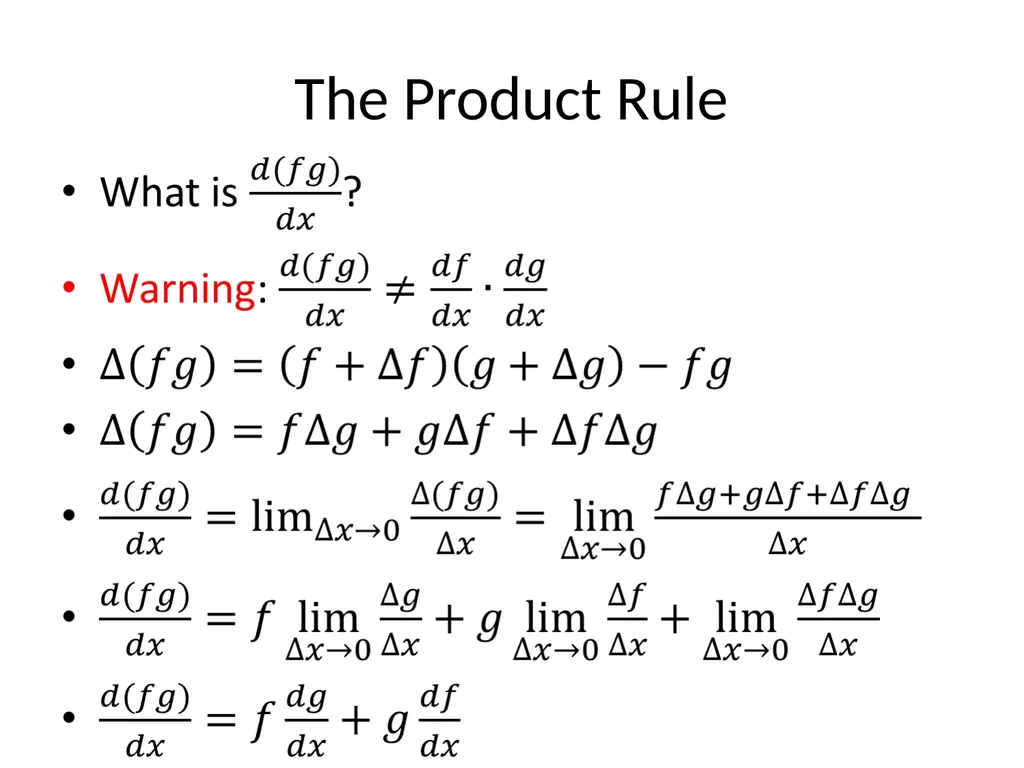
slide38. The Product Rule<br>
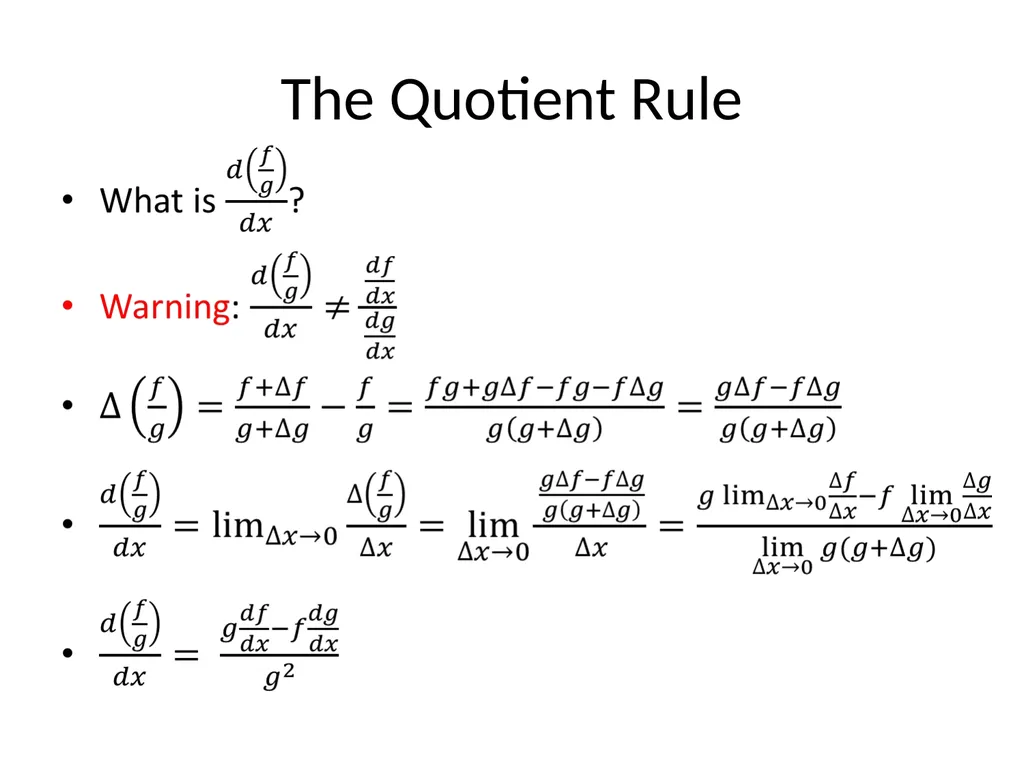
slide39. The Quotient Rule<br>
slide40. The Chain Rule<br>
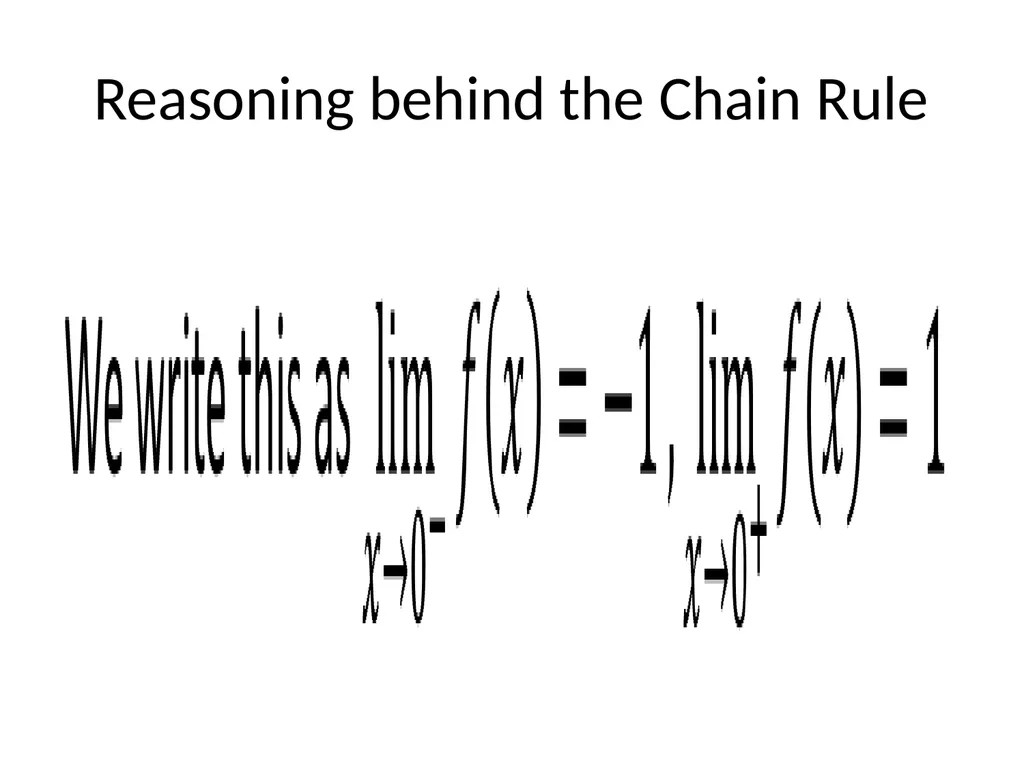
slide41. Reasoning behind the Chain Rule<br>
slide2. Part I: Limits and Continuity<br>
slide3. Objectives Corresponding sections in Simmons: 2.5, 2.6<br>
slide4. What is a limit?<br>
slide5. Why are limits useful? x 0 1 2 3 4 -1 -2 -3 -4 0 1 2 3 4 -1 -2 -3 -4 f(x)<br>
slide6. Left Limits and Right Limits x 0 1 2 3 4 -1 -2 -3 -4 0 1 2 3 4 -1 -2 -3 -4 f(x)<br>
slide7. Limit Definition Summary<br>
slide8. Nonexistence of Limits<br>
slide9. Computing Limits<br>
slide10. Computing Limits Continued<br>
slide11. Limits at Infinity<br>
slide14. Limit Laws<br>
slide15. Continuity<br>
slide16. Discontinuous functions<br>
slide17. Two Trigonometric Limits x x x x sin(x) sin(x) 1 1<br>
slide18. Two Trigonometric Limits (cont.)<br>
slide19. Part II: Derivatives<br>
slide20. Objectives: Know what a derivative is
Know how to compute simple derivatives from the definition of a derivative
Know some basic facts about continuous and differentiable functions.
Corresponding Sections in Simmons: 2.3,2.6<br>
slide21. What is a derivative? x 0 1 2 3 4 -1 -2 -3 -4 0 1 2 3 4 -1 -2 -3 -4 f(x)<br>
slide22. Why are derivatives useful? Tells us how quickly something is changing.
In physics: velocity is the derivative of position and acceleration is the derivative of velocity (with respect to time).
Optimization: Derivatives are crucial for finding the minimum or maximum of functions.
And much much more.<br>
slide23. Computing derivatives x 0 1 2 3 4 -1 -2 -3 -4 0 1 2 3 4 -1 -2 -3 -4<br>
slide24. Derivative Definition and Examples<br>
slide25. Leibniz Notation<br>
slide26. Differentiable Implies Continuous<br>
slide27. The Extreme Value Theorem<br>
slide28. The Intermediate Value Theorem<br>
slide29. The Mean Value Theorem x 0 1 2 3 4 -1 -2 -3 -4 0 1 2 3 4 -1 -2 -3 -4 f(x)<br>
slide30. Average and Instantaneous Speed The idea behind the derivative is that if we look at smaller and smaller intervals (taking the limit as the length of the interval approaches 0), the average speed over the interval approaches the instantaneous speed.
The mean value theorem says that over any interval, there is some point where the instantaneous speed matches the average speed.
Warning: These statements are only true for differentiable position functions. Otherwise, weird stuff can happen.<br>
slide31. Other Consequences of the Mean Value Theorem<br>
slide32. Part III: Rules for Derivatives<br>
slide33. Objectives: Corresponding sections in Simmons: 3.1,3.2,3.3, 3.4<br>
slide37. Derivatives of Sums and Differences<br>
slide38. The Product Rule<br>
slide39. The Quotient Rule<br>
slide40. The Chain Rule<br>
slide41. Reasoning behind the Chain Rule<br>