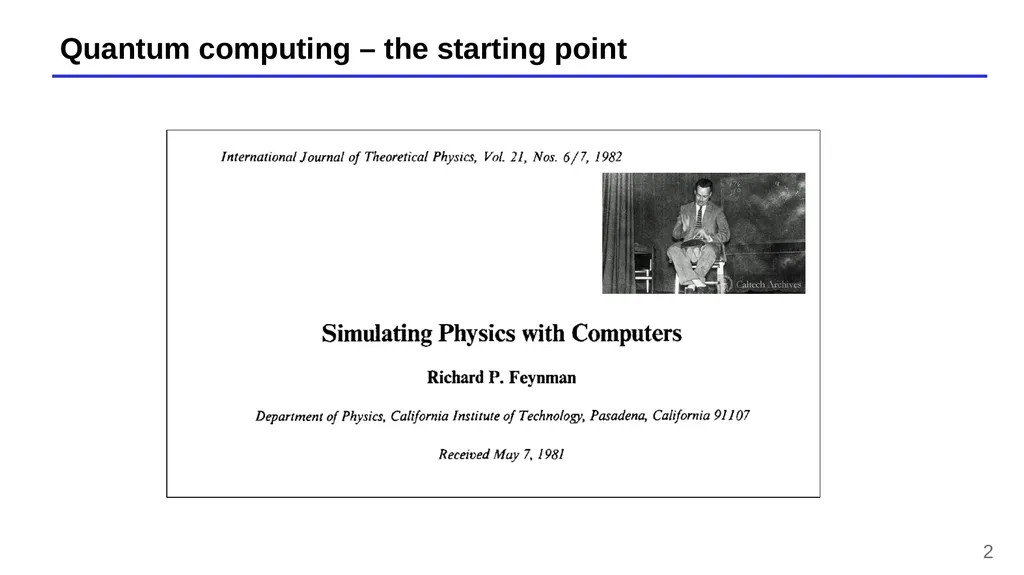
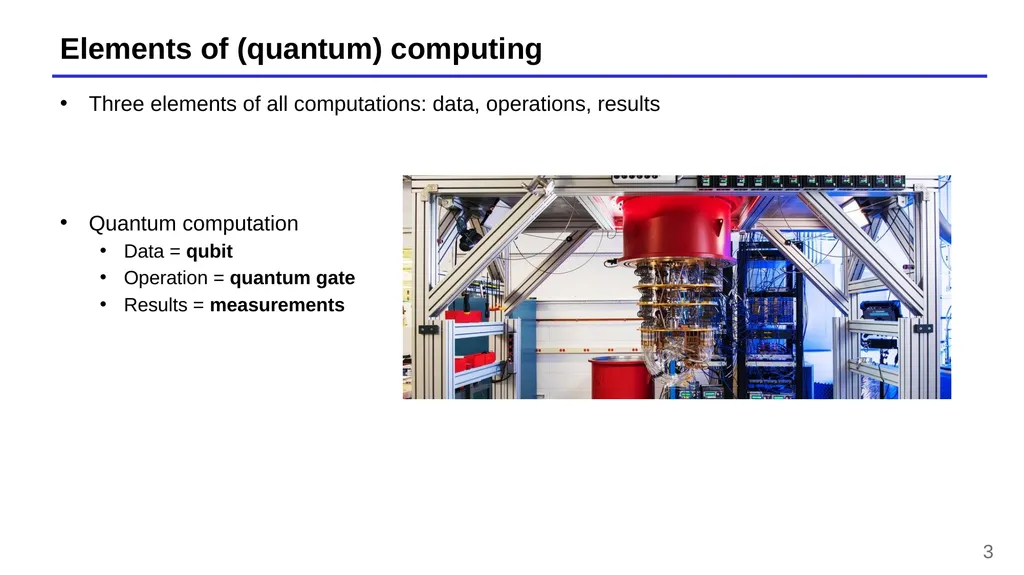
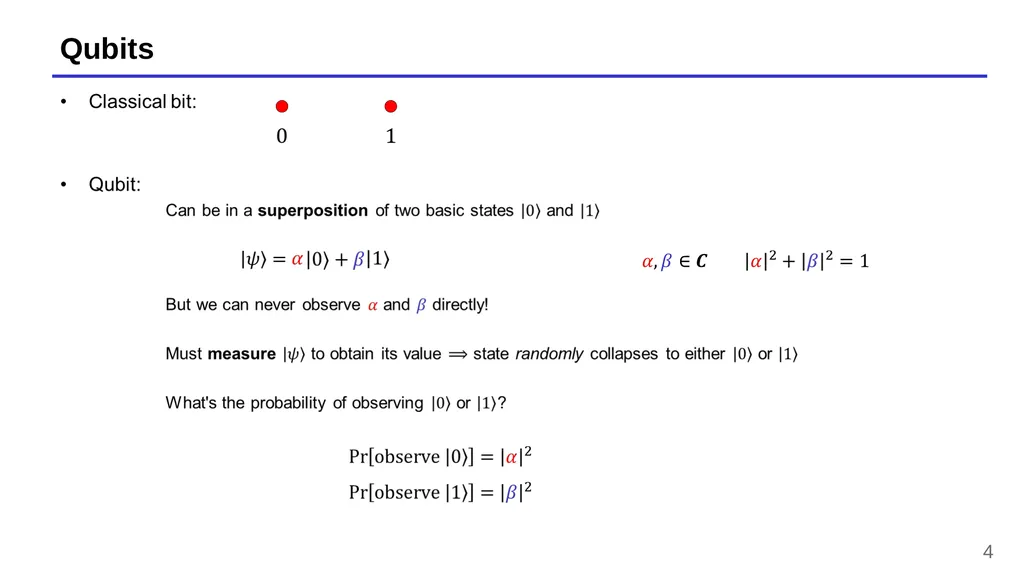
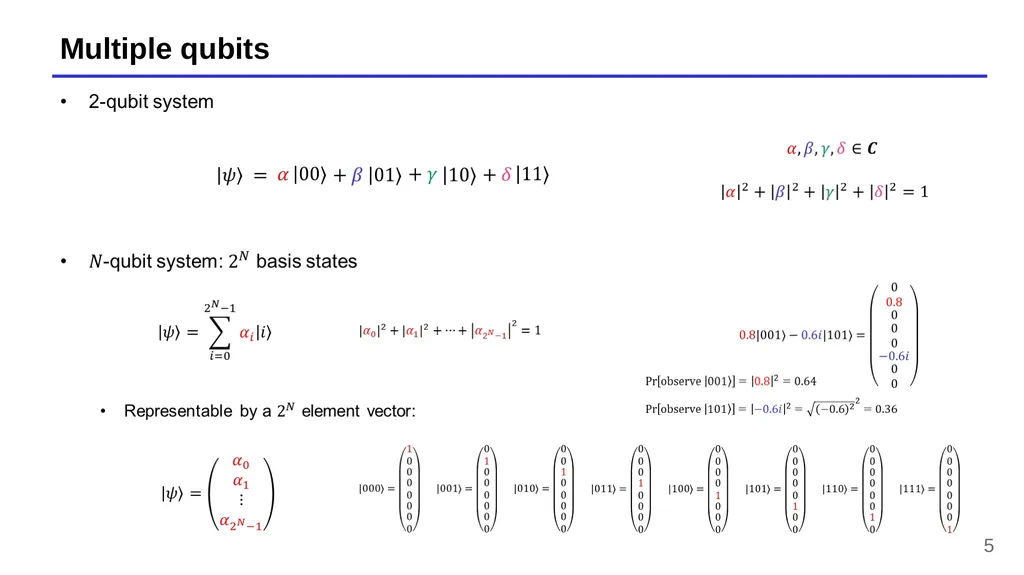
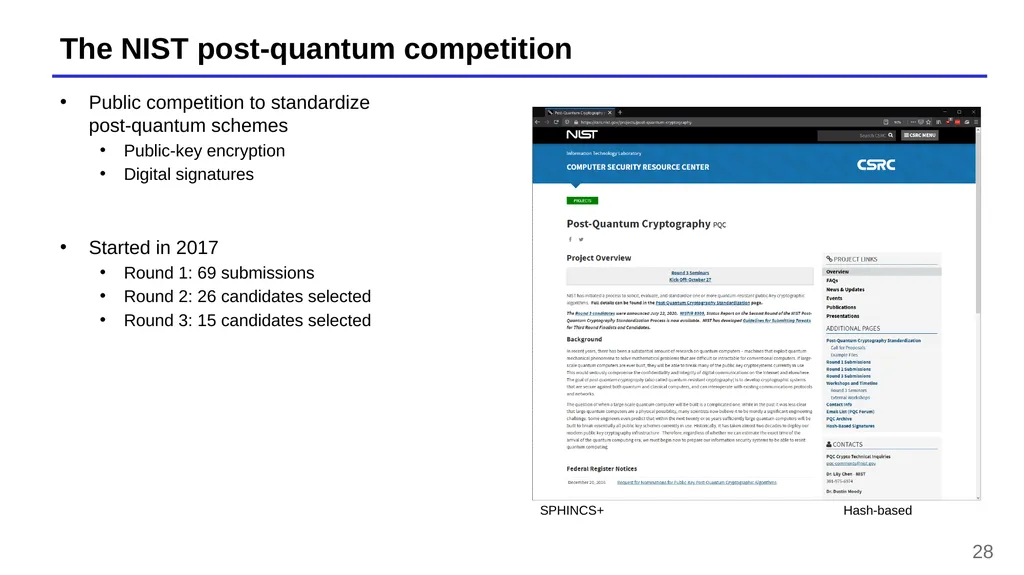
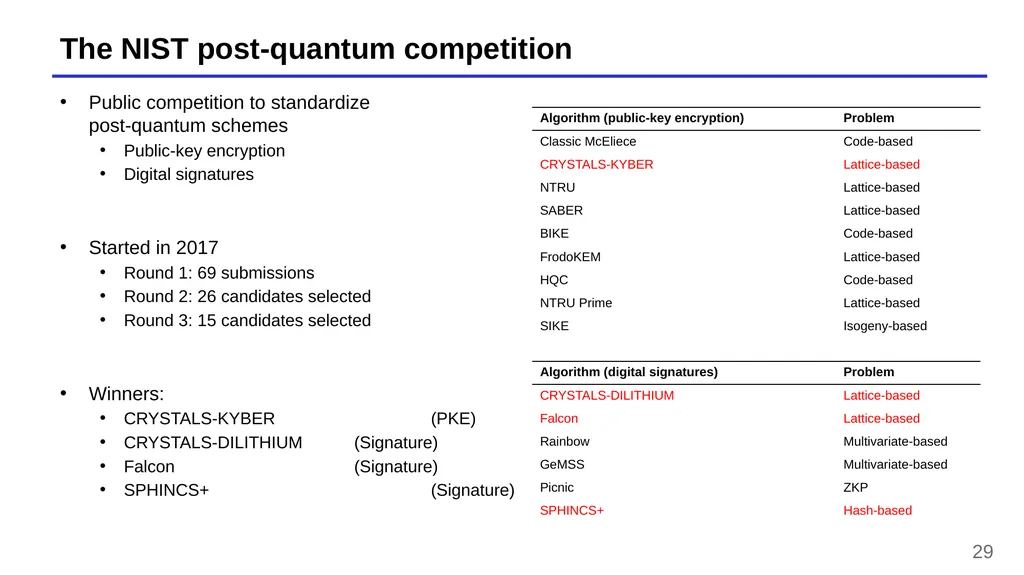
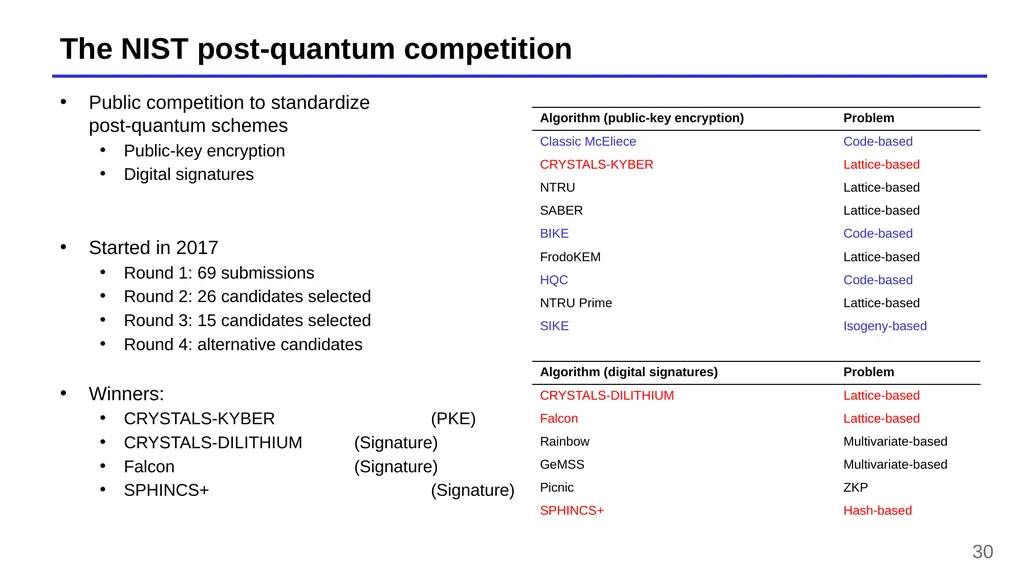
Lecture 13 Quantum computers, Shors algorithm, post-quantum cryptography TEK4500 16.11.2022 Håkon Jacobsen hakon.jacobsenits.uio.no Quantum computing the starting point 2 Elements of (quantum) computing Three elements of all
"Lecture 13 – Quantum computers, Shor’s algorithm," is the property of its rightful owner. Permission is granted to
download and print the materials on this website for personal, non-commercial use only, and to display it
on your personal computer provided you do not modify the materials and that you retain all copyright
notices contained in the materials. By downloading content from our website, you accept the terms of this
agreement.
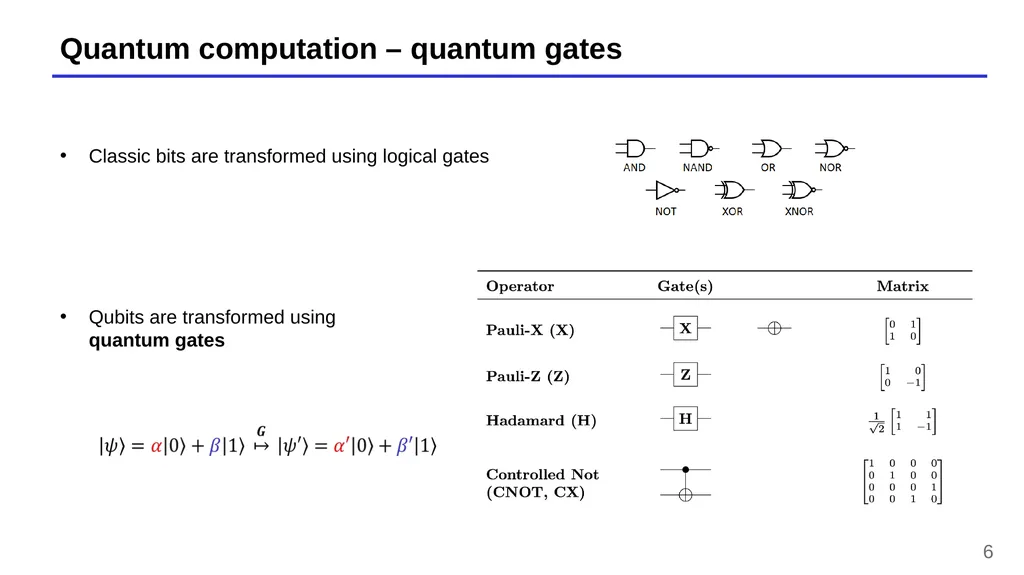
Quantum computation – quantum gates Classic bits are transformed using logical gates
Qubits are transformed using quantum gates 6<br>
07
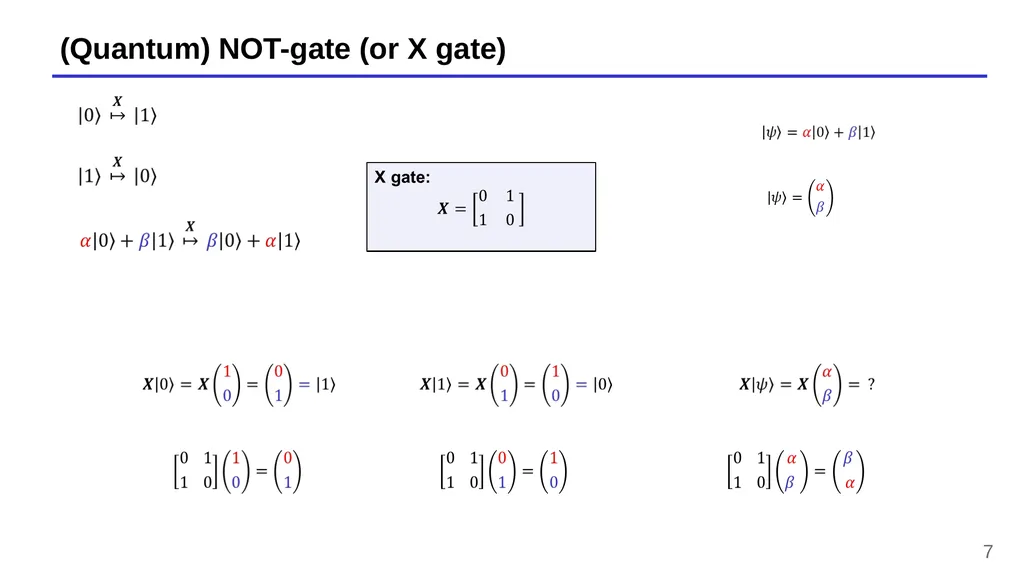
(Quantum) NOT-gate (or X gate) 7<br>
08
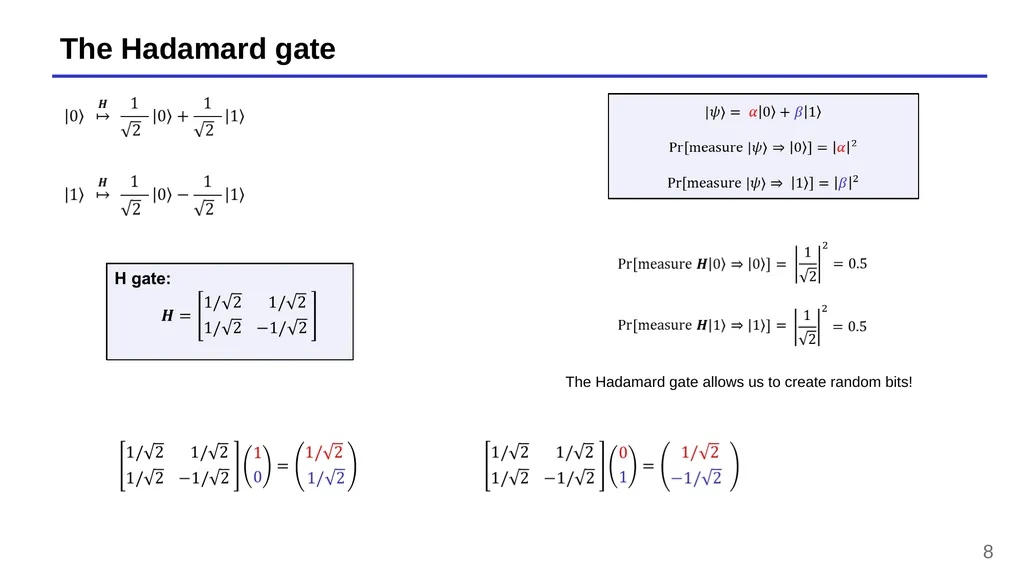
The Hadamard gate 8 The Hadamard gate allows us to create random bits!<br>
09
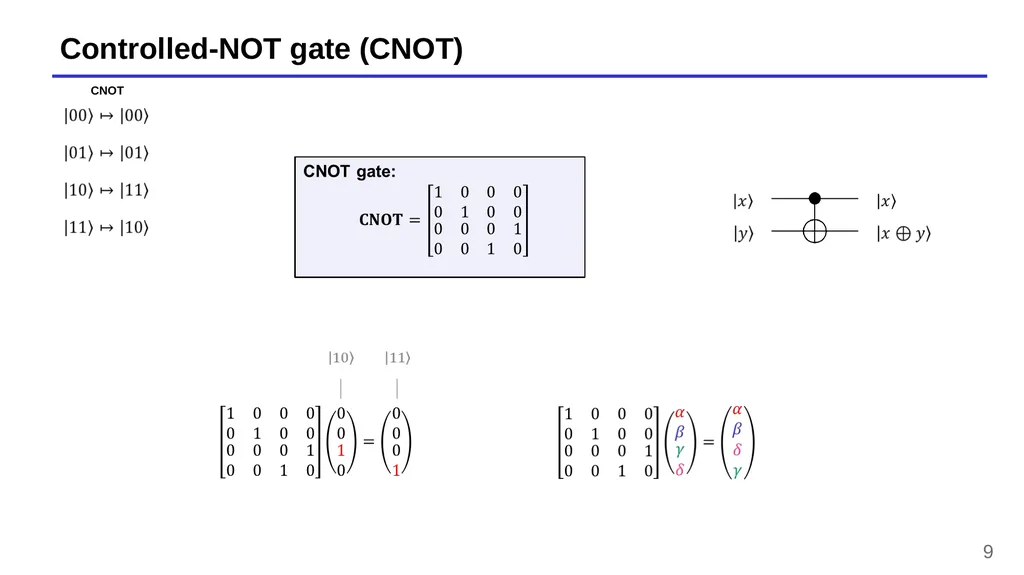
Controlled-NOT gate (CNOT) 9 CNOT<br>
10
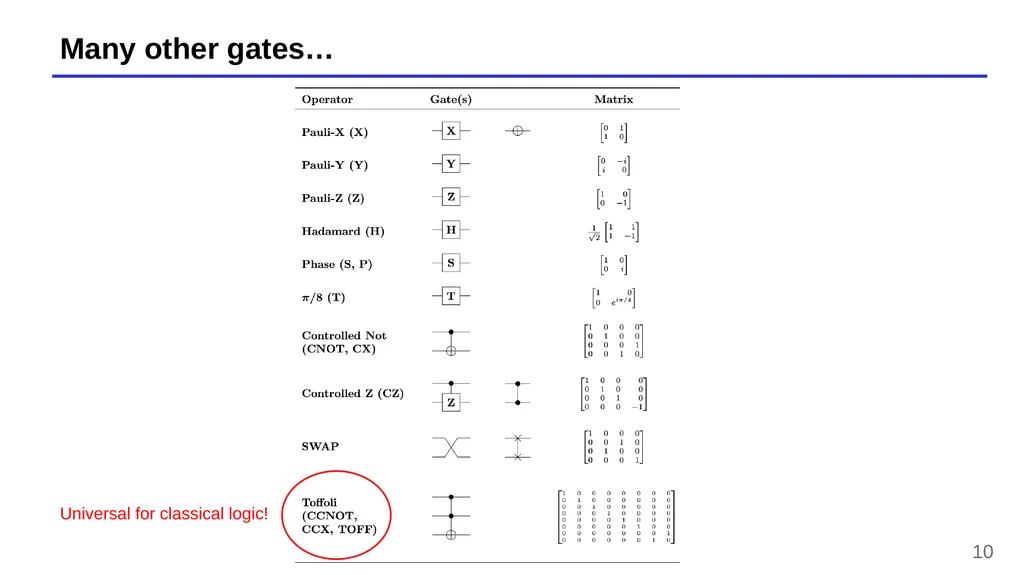
Many other gates… 10 Universal for classical logic!<br>
11
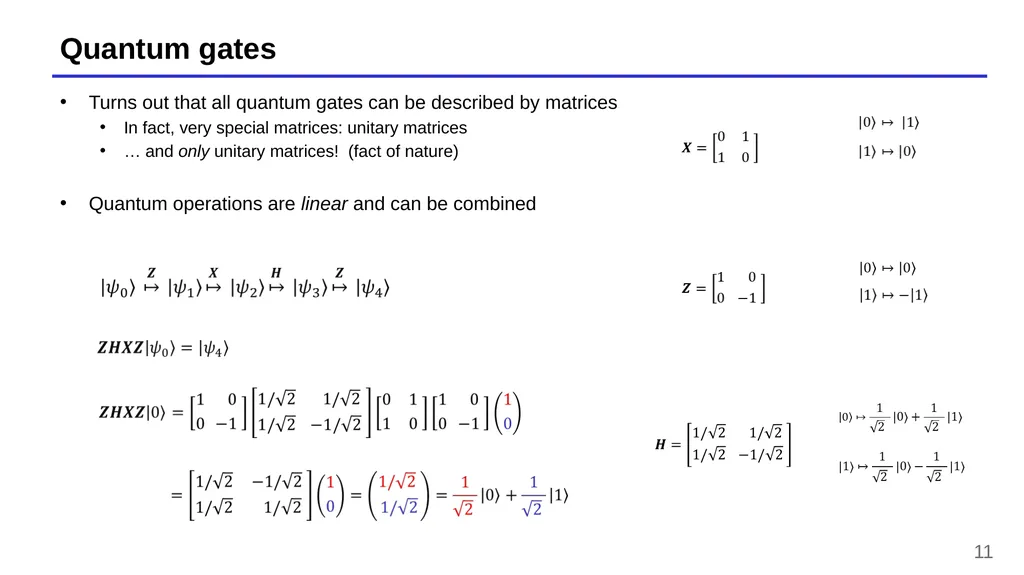
Quantum gates Turns out that all quantum gates can be described by matrices
In fact, very special matrices: unitary matrices
… and only unitary matrices! (fact of nature)
Quantum operations are linear and can be combined 11<br>
12
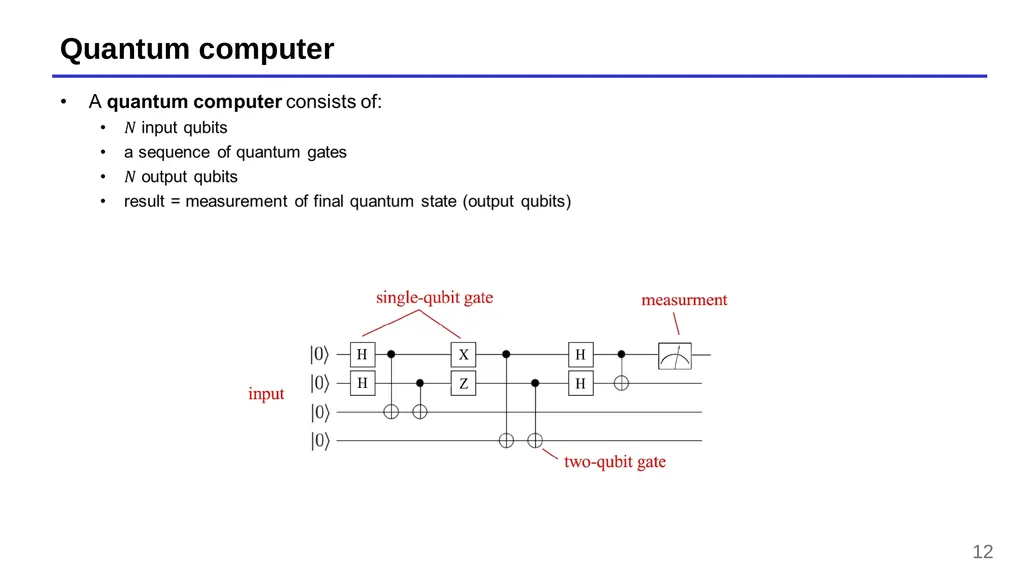
Quantum computer 12<br>
13
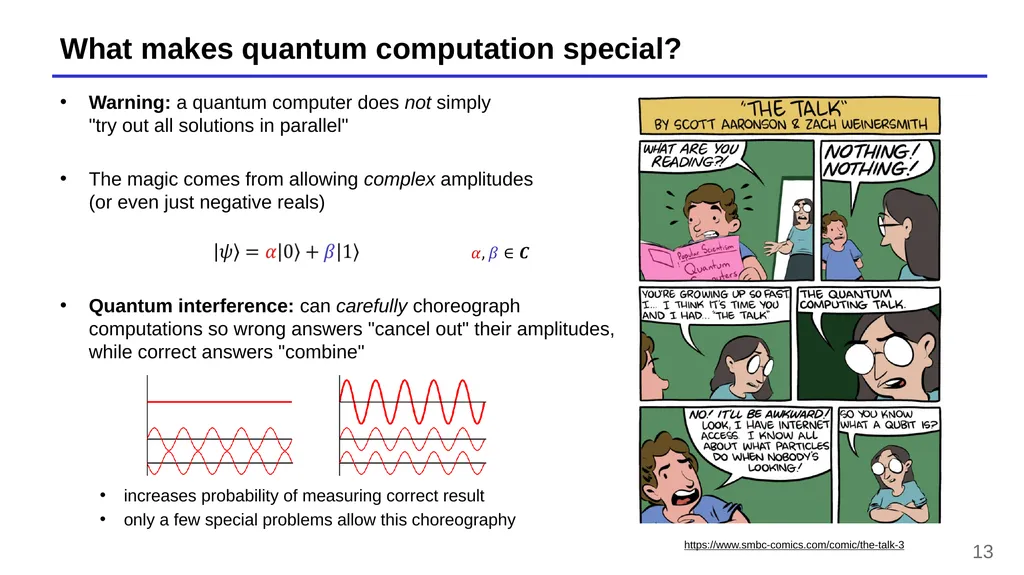
What makes quantum computation special? Warning: a quantum computer does not simply "try out all solutions in parallel"
The magic comes from allowing complex amplitudes (or even just negative reals)
Quantum interference: can carefully choreograph computations so wrong answers "cancel out" their amplitudes, while correct answers "combine"
increases probability of measuring correct result
only a few special problems allow this choreography 13 https://www.smbc-comics.com/comic/the-talk-3<br>
14
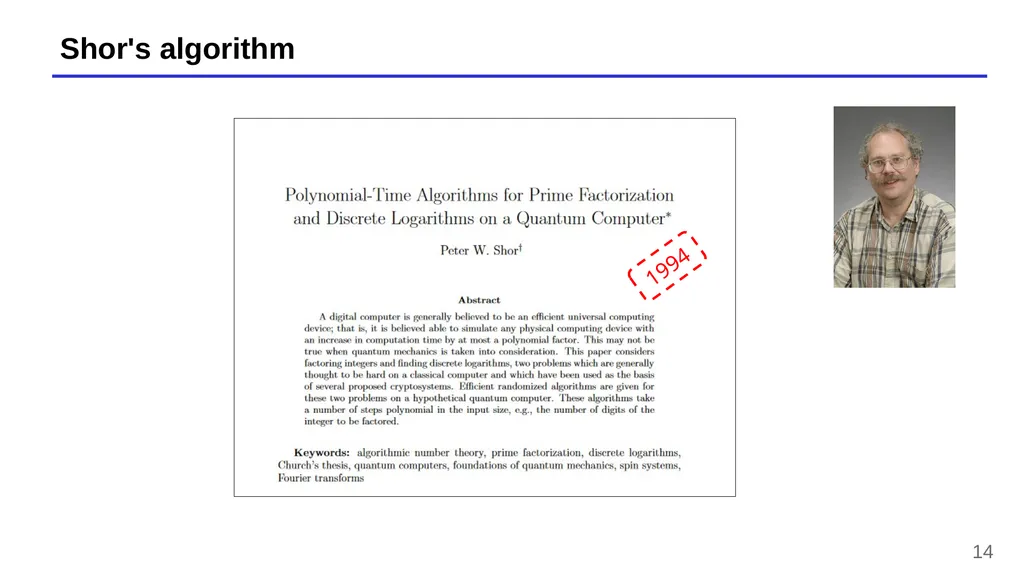
Shor's algorithm 14 1994<br>
15
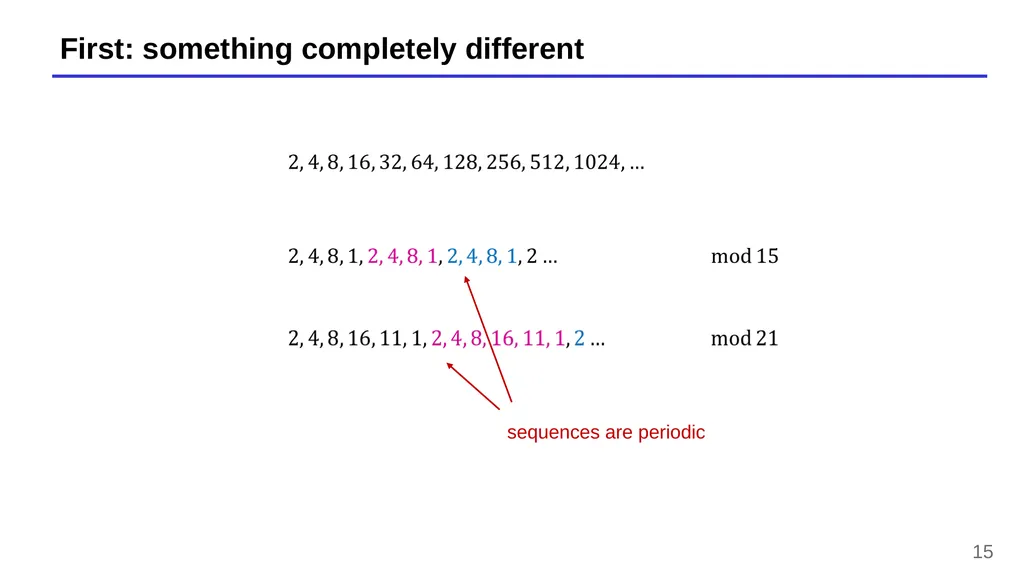
First: something completely different 15 sequences are periodic<br>
16
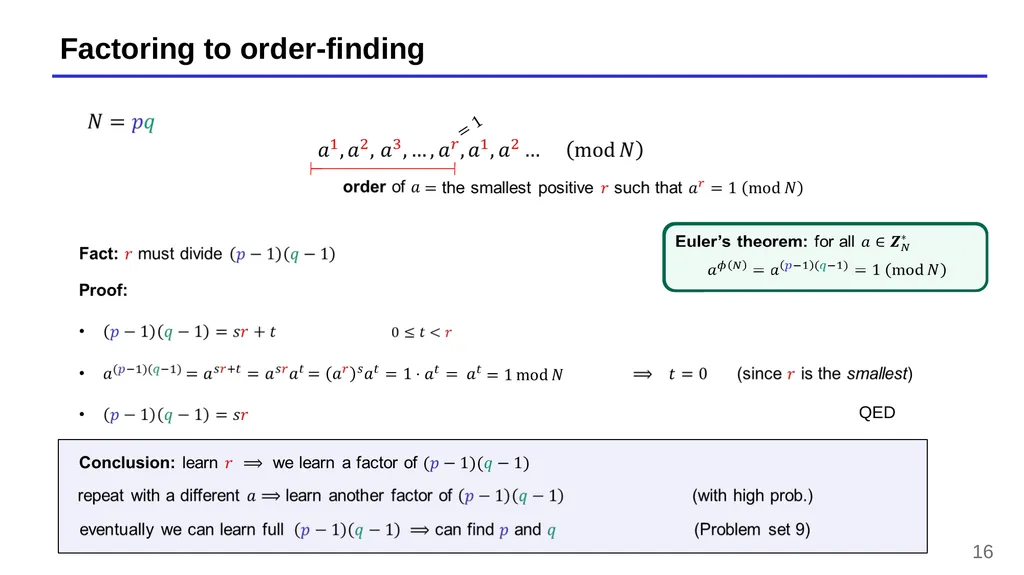
Factoring to order-finding 16 QED<br>
17
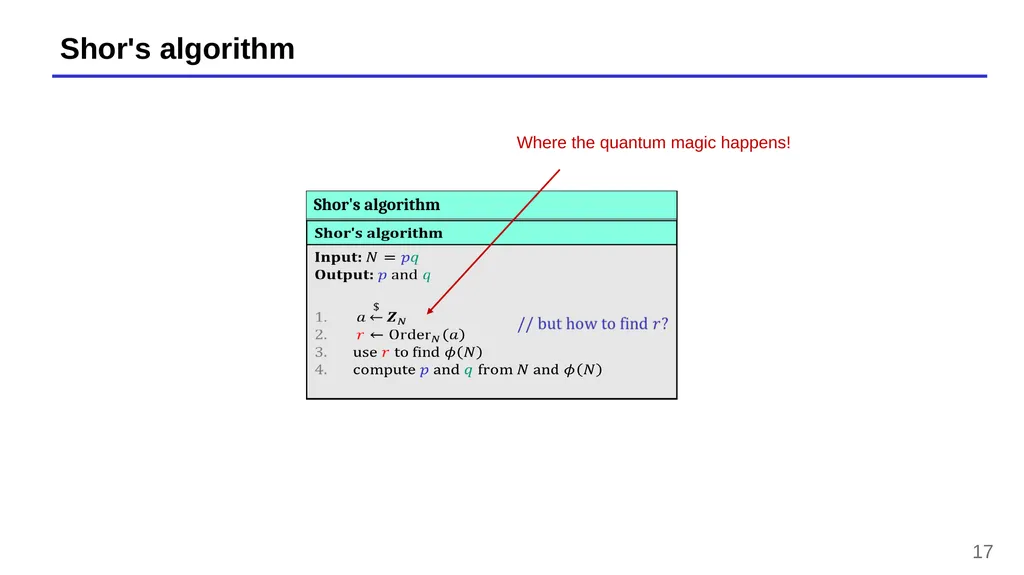
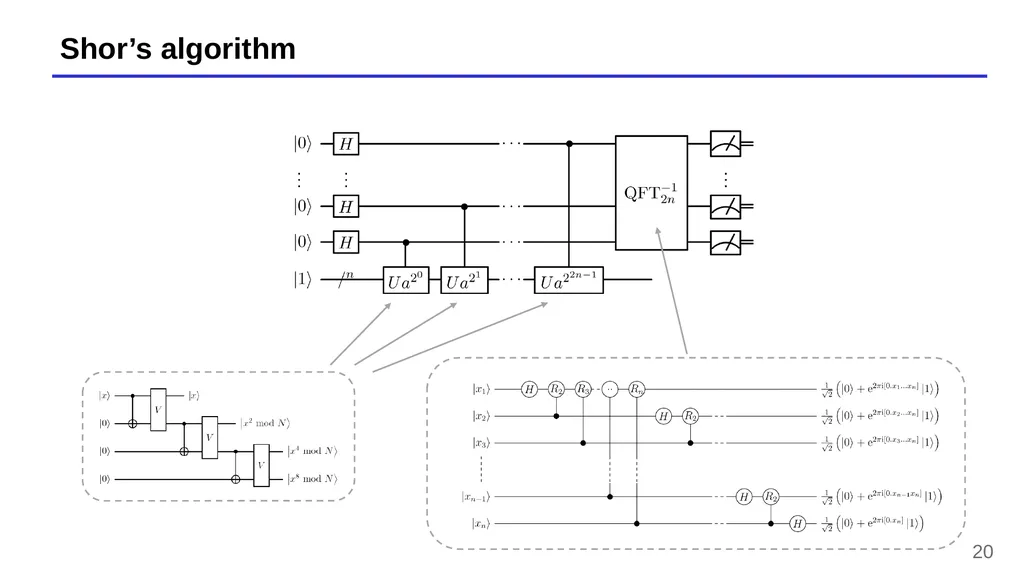
Shor's algorithm 17 Where the quantum magic happens!<br>
18
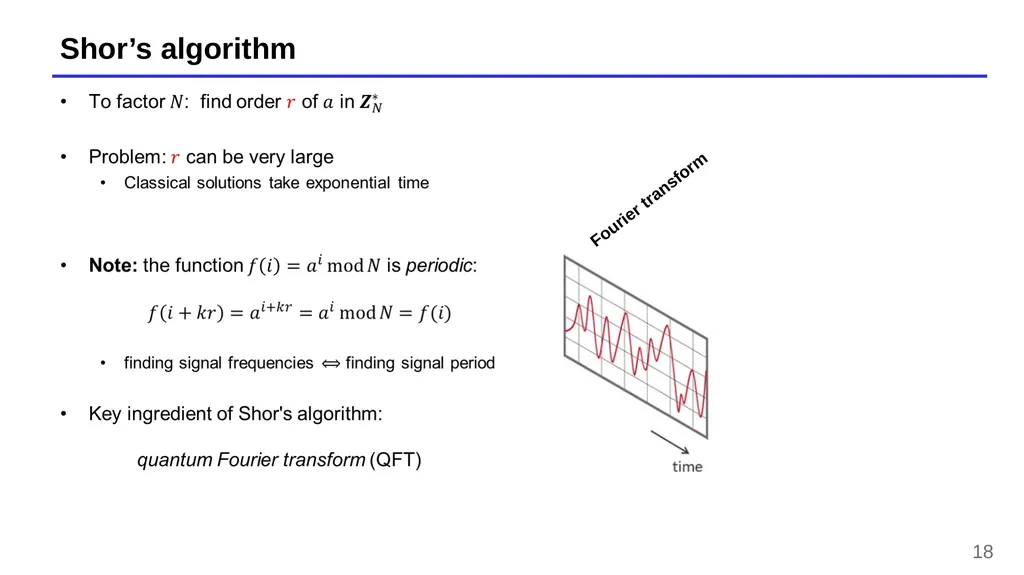
Shor’s algorithm 18 Fourier transform<br>
19
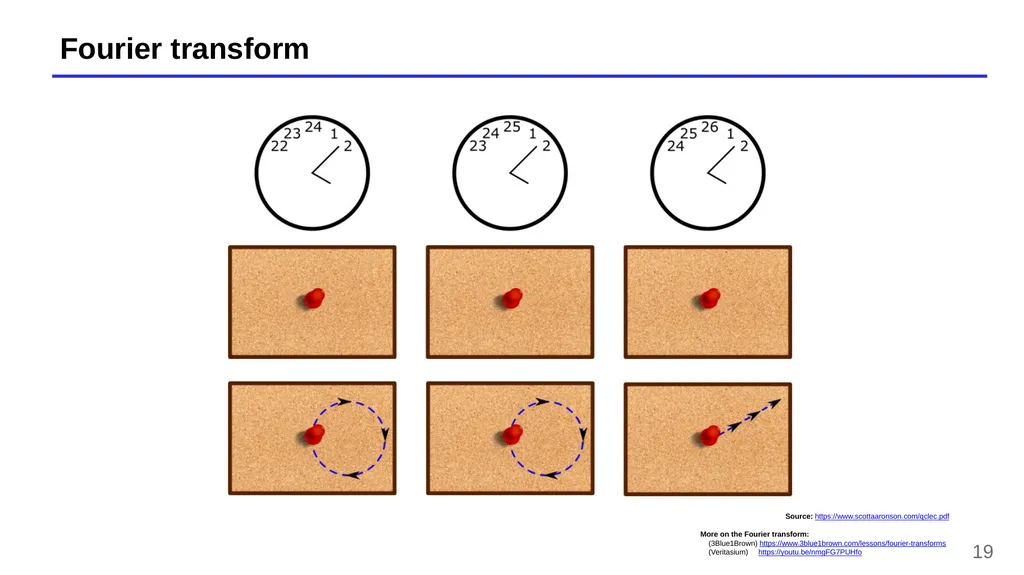
Fourier transform 19 Source: https://www.scottaaronson.com/qclec.pdf More on the Fourier transform:
(3Blue1Brown) https://www.3blue1brown.com/lessons/fourier-transforms (Veritasium) https://youtu.be/nmgFG7PUHfo<br>
20
Shor’s algorithm 20<br>
21
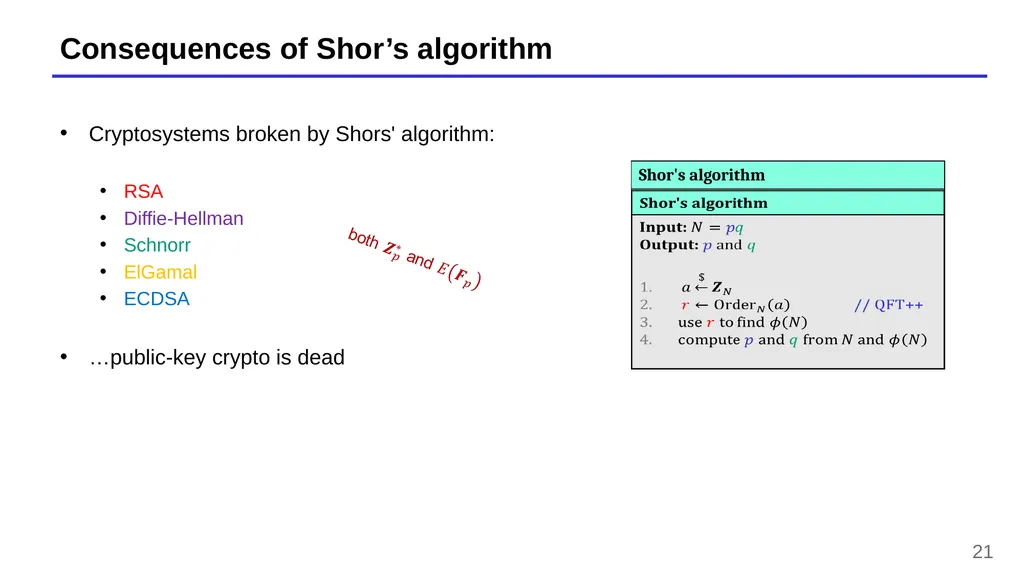
Consequences of Shor’s algorithm Cryptosystems broken by Shors' algorithm:
RSA
Diffie-Hellman
Schnorr
ElGamal
ECDSA
…public-key crypto is dead 21<br>
22
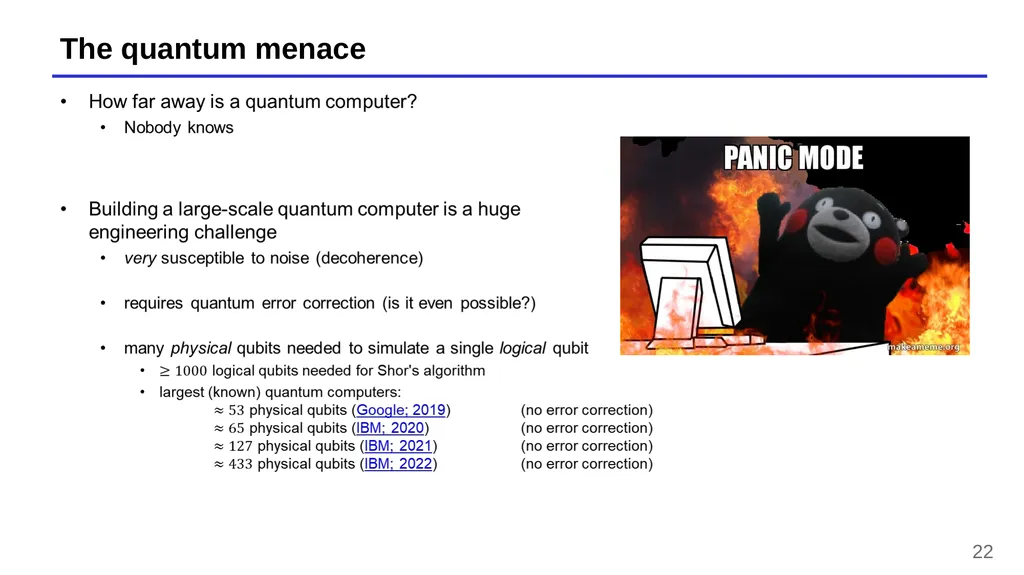
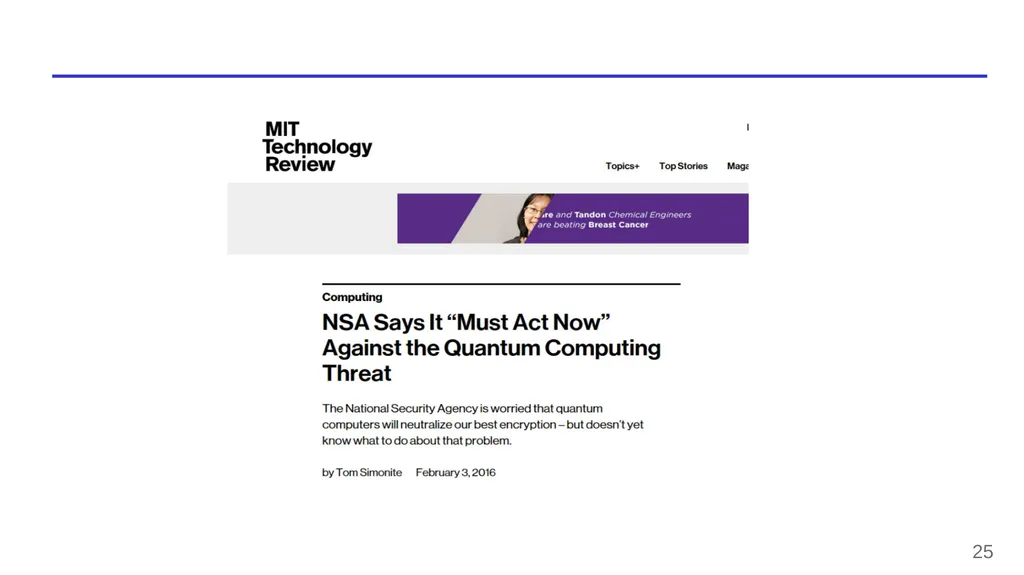
The quantum menace 22<br>
23
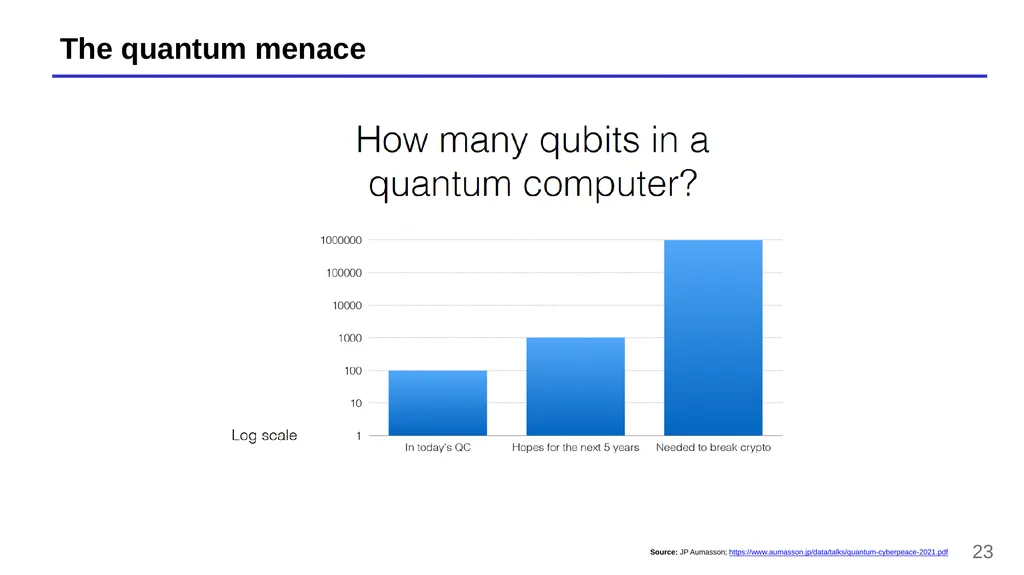
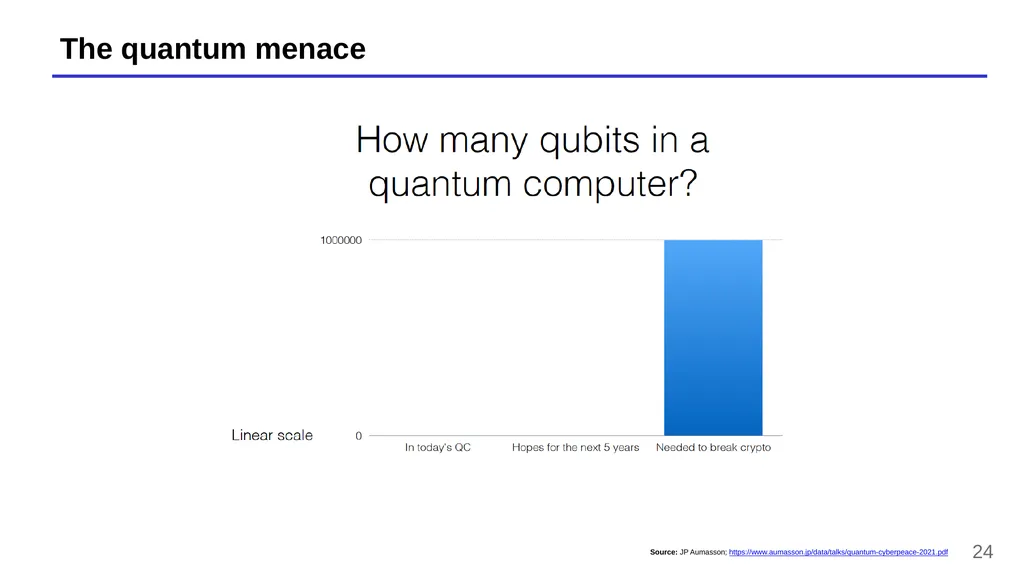
The quantum menace 23 Source: JP Aumasson; https://www.aumasson.jp/data/talks/quantum-cyberpeace-2021.pdf<br>
24
The quantum menace 24 Source: JP Aumasson; https://www.aumasson.jp/data/talks/quantum-cyberpeace-2021.pdf<br>
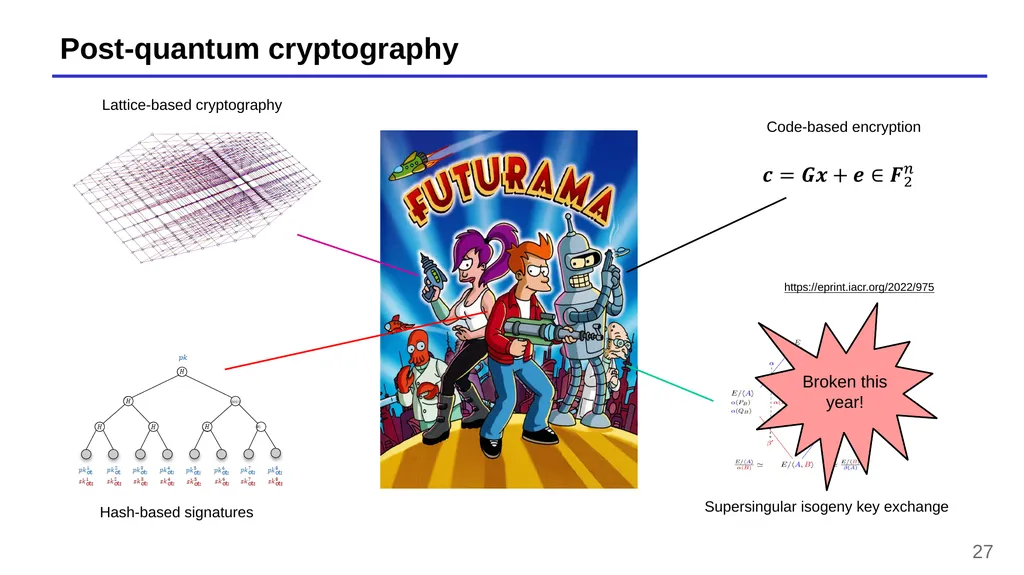
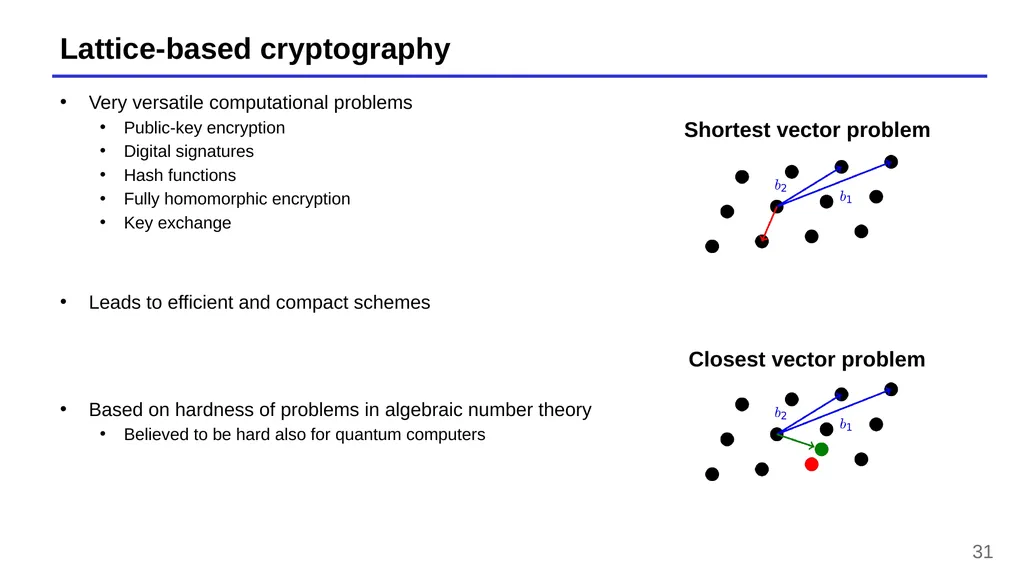
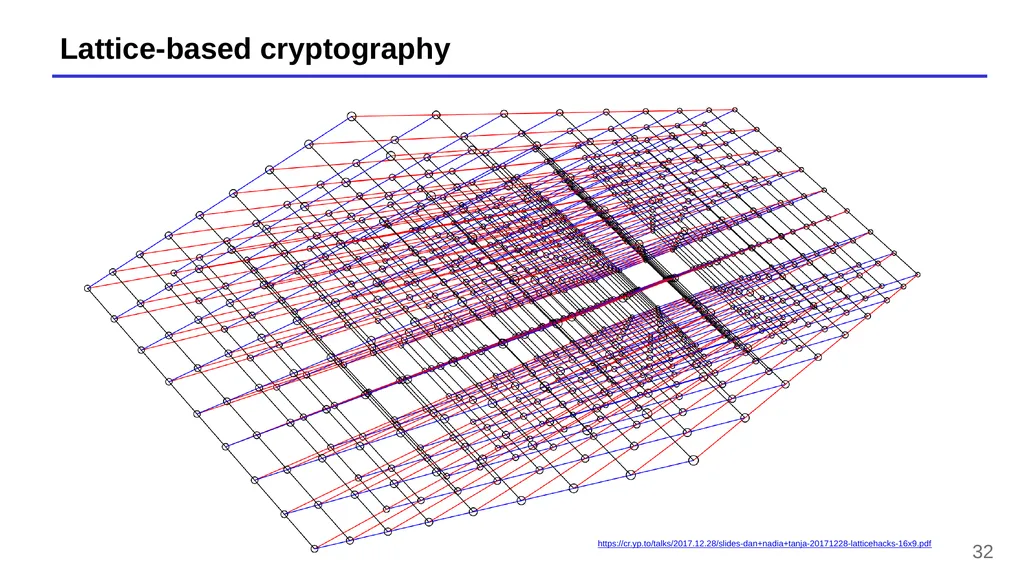
Lattice-based cryptography Very versatile computational problems
Public-key encryption
Digital signatures
Hash functions
Fully homomorphic encryption
Key exchange
Leads to efficient and compact schemes
Based on hardness of problems in algebraic number theory
Believed to be hard also for quantum computers 31 Shortest vector problem Closest vector problem<br>