04
Why No Growth Before the�Industrial Revolution? Despotism: Those that grew rich got attacked by �poorer neighbors
Lack of freedom: Slavery and serfdom widespread. �Cage of norms impedes occupational freedom.
Vested interests favoring status quo: Powerful forces working against innovation and change
Population dynamics: Higher wages lead to population growth, which pushed down wages 4<br>
05
Malthus’ Idea In 1798, Thomas Malthus published an essay titled �An Essay on the Principle of Population
Argued that sustained growth in real wages was impossible �in the long run
If real wages increased, this would lead to an increase in population that would only stop when wages had been bid down to subsistence 5<br>
06
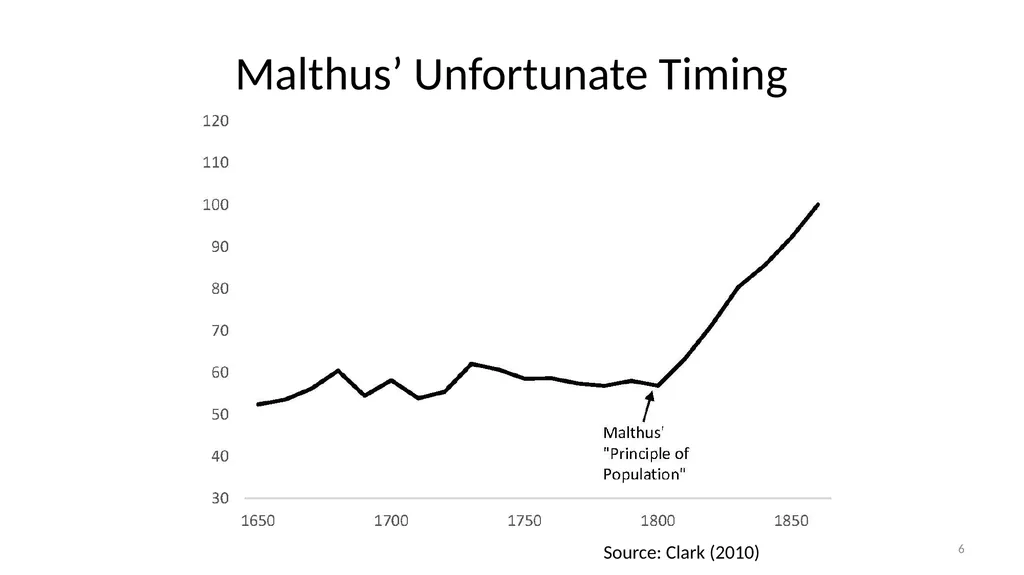
Malthus’ Unfortunate Timing 6 Source: Clark (2010)<br>
07
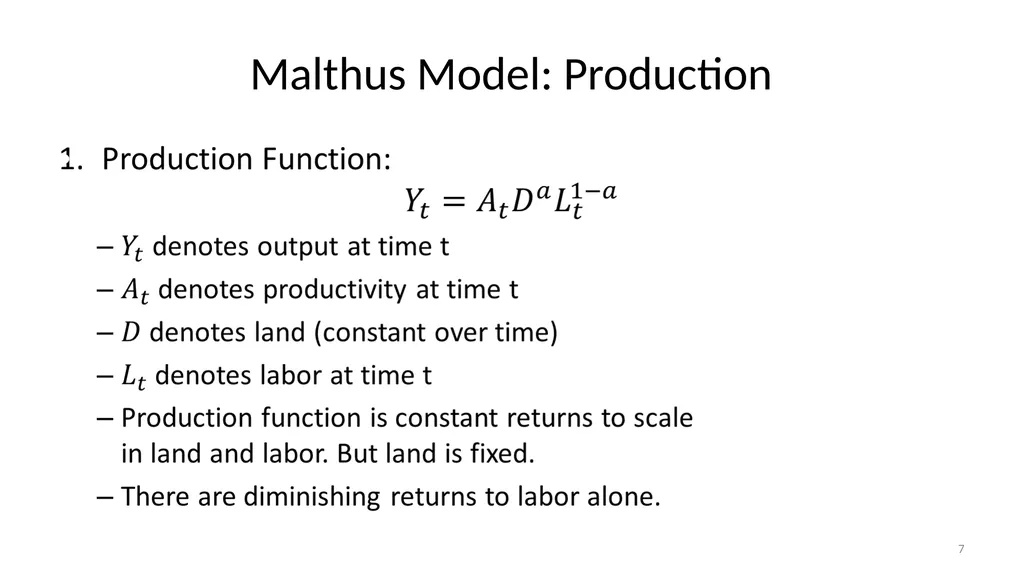
Malthus Model: Production 7<br>
08
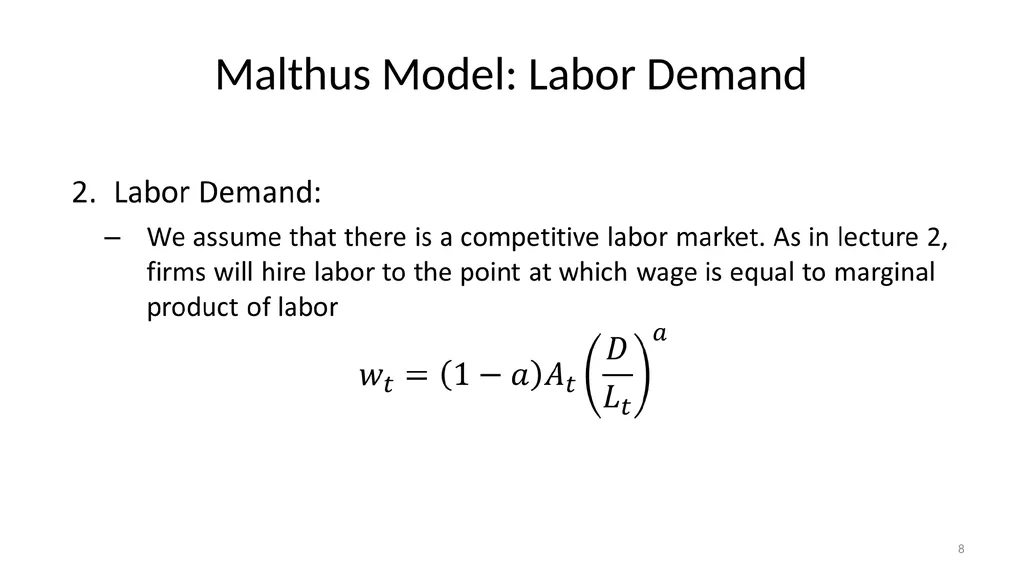
Malthus Model: Labor Demand 8<br>
09
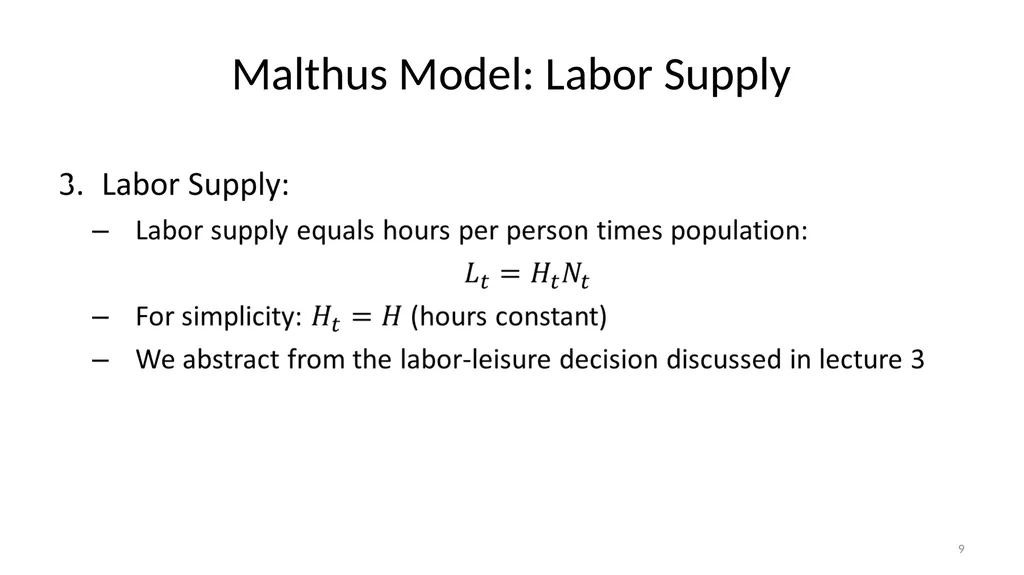
Malthus Model: Labor Supply 9<br>
10
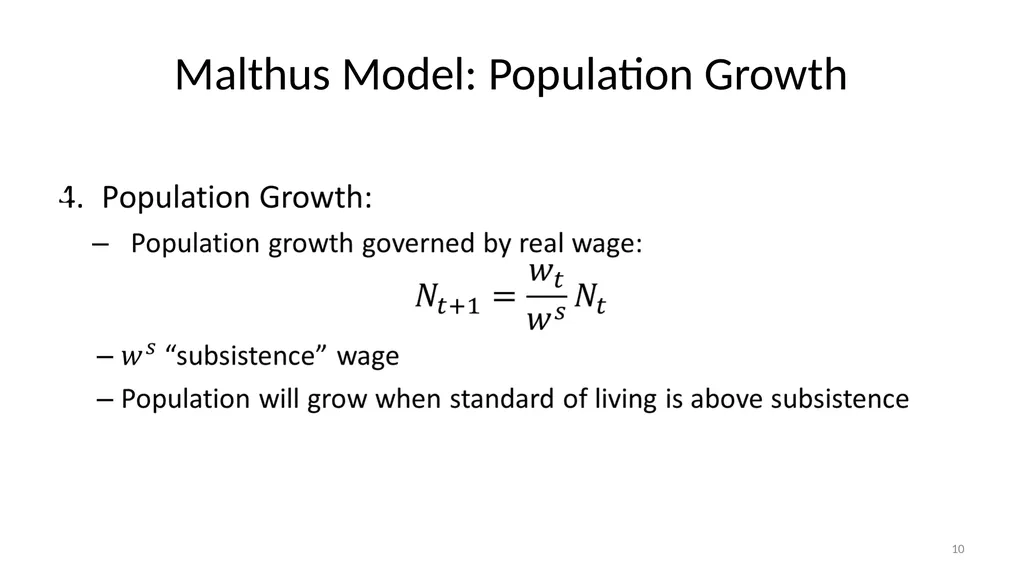
Malthus Model: Population Growth 10<br>
11
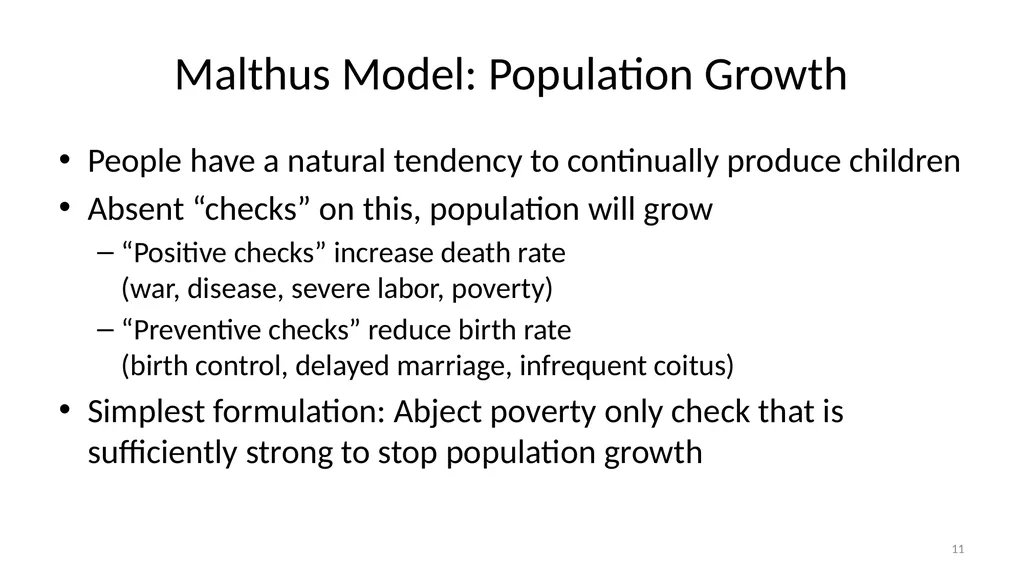
Malthus Model: Population Growth People have a natural tendency to continually produce children
Absent “checks” on this, population will grow
“Positive checks” increase death rate �(war, disease, severe labor, poverty)
“Preventive checks” reduce birth rate�(birth control, delayed marriage, infrequent coitus)
Simplest formulation: Abject poverty only check that is sufficiently strong to stop population growth 11<br>
12
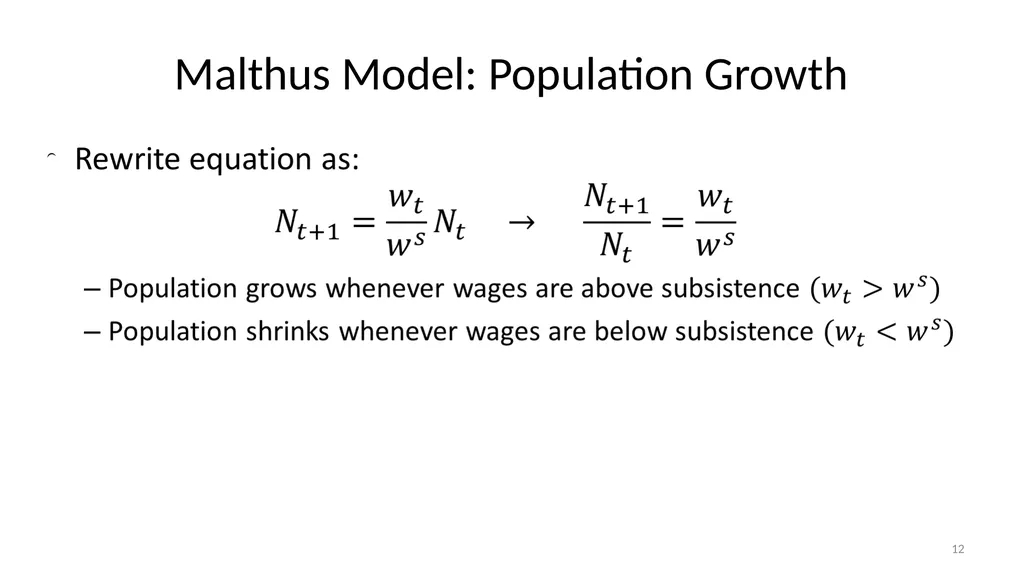
Malthus Model: Population Growth 12<br>
13
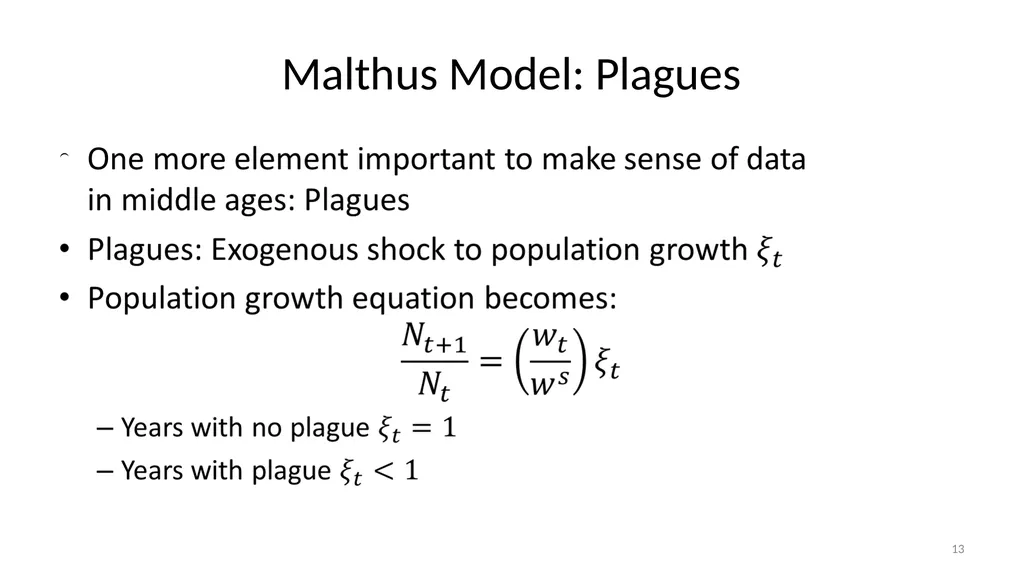
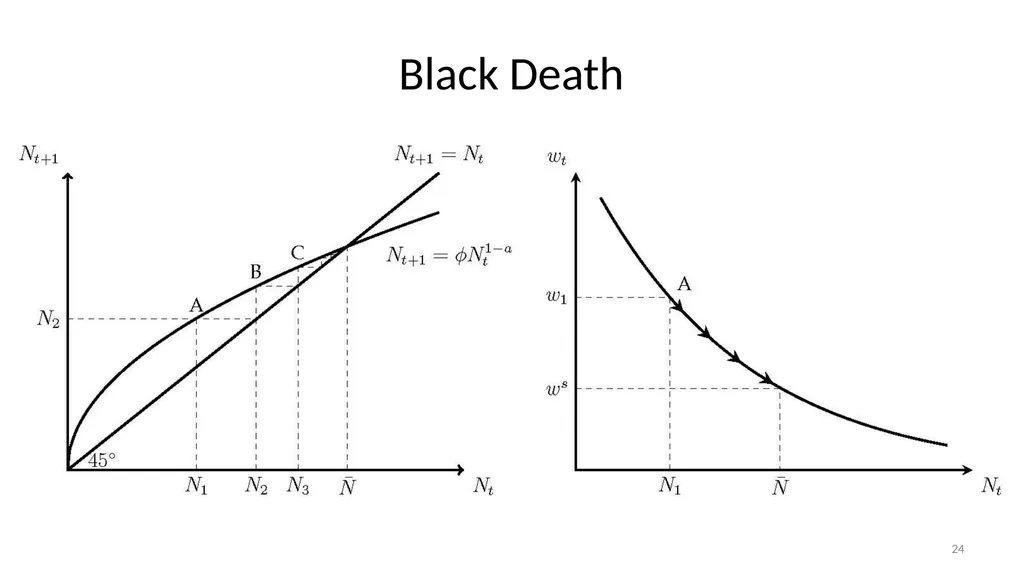
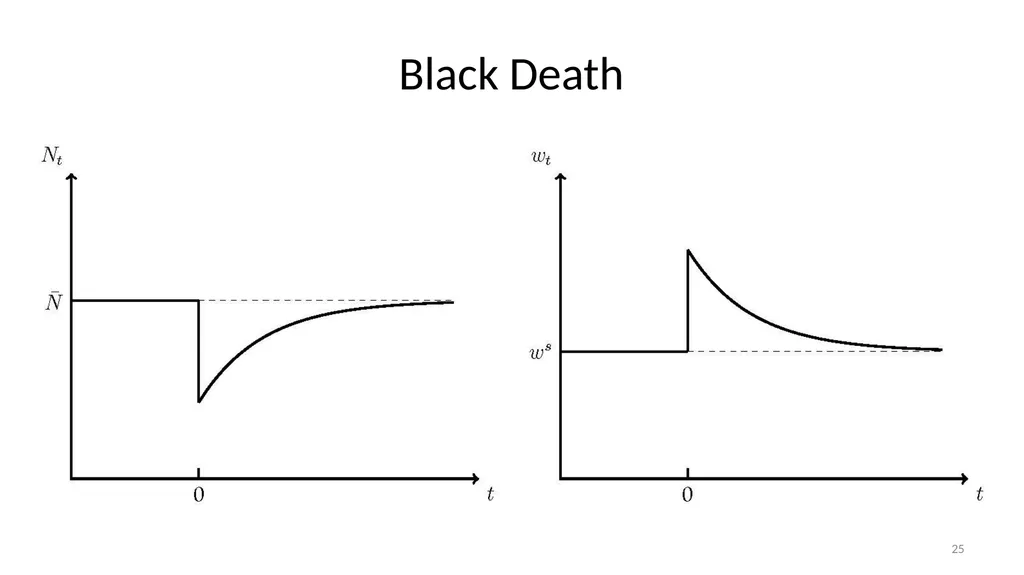
Malthus Model: Plagues 13<br>
14
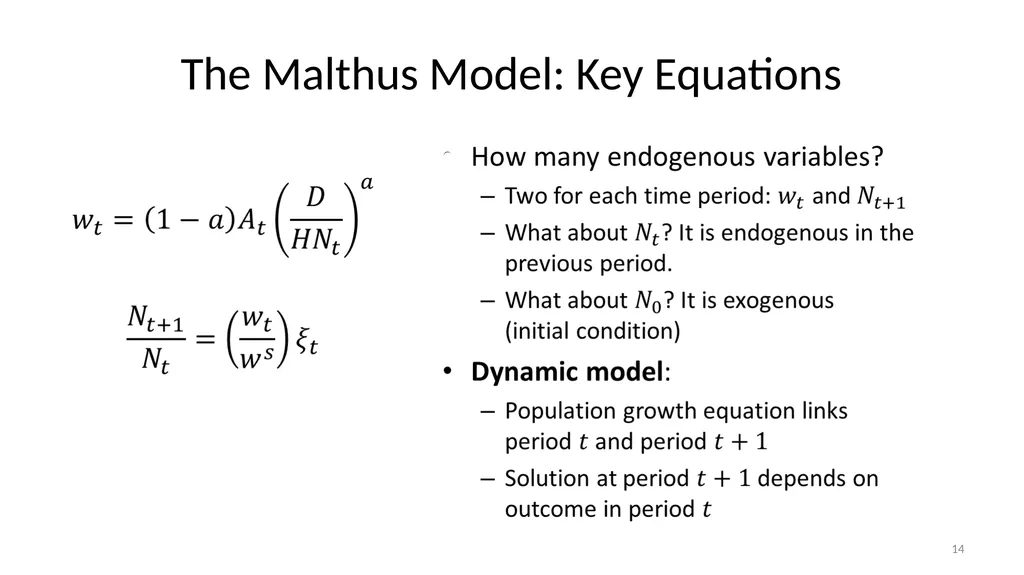
The Malthus Model: Key Equations 14<br>
15
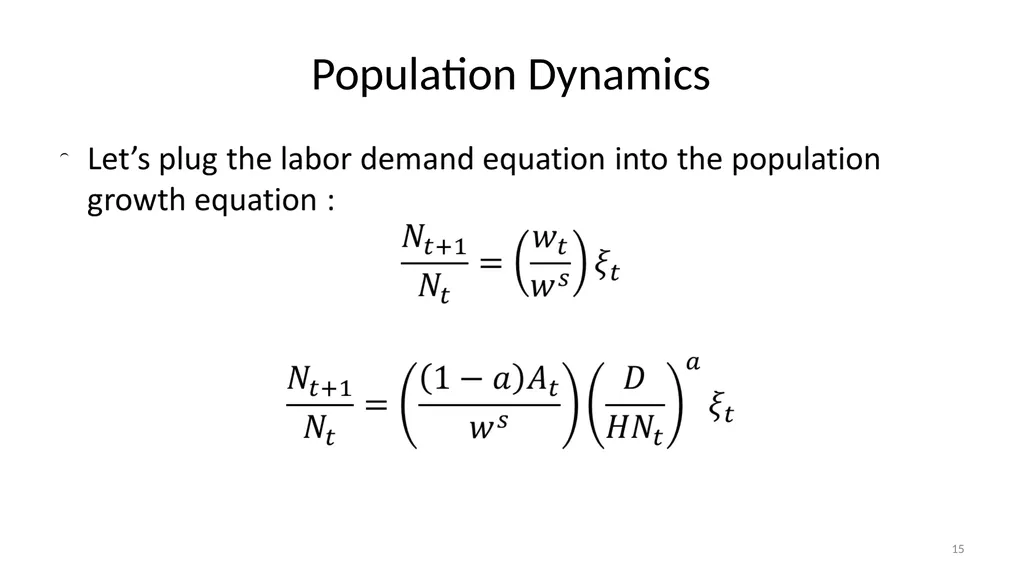
Population Dynamics 15<br>
16
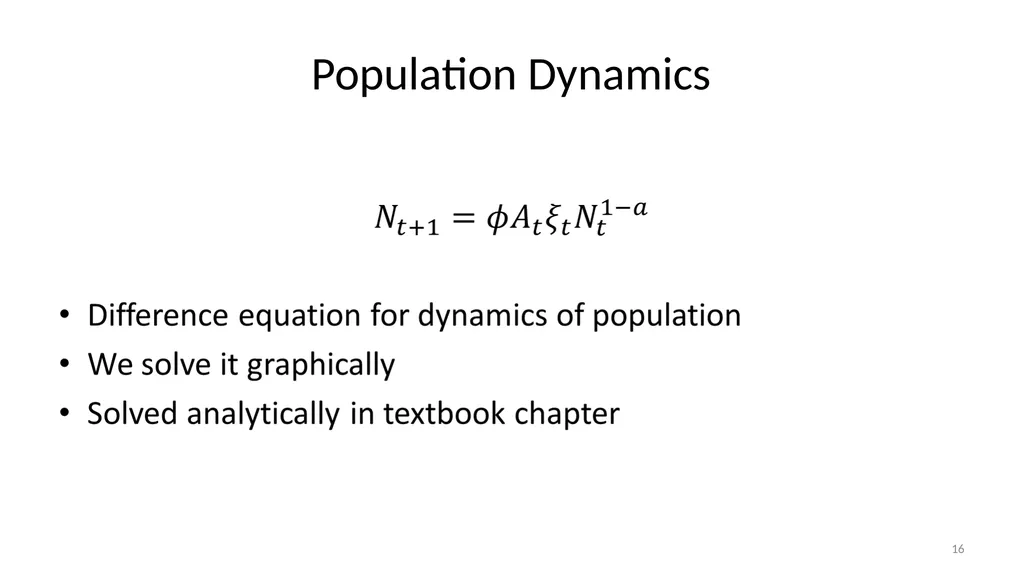
Population Dynamics 16<br>
17
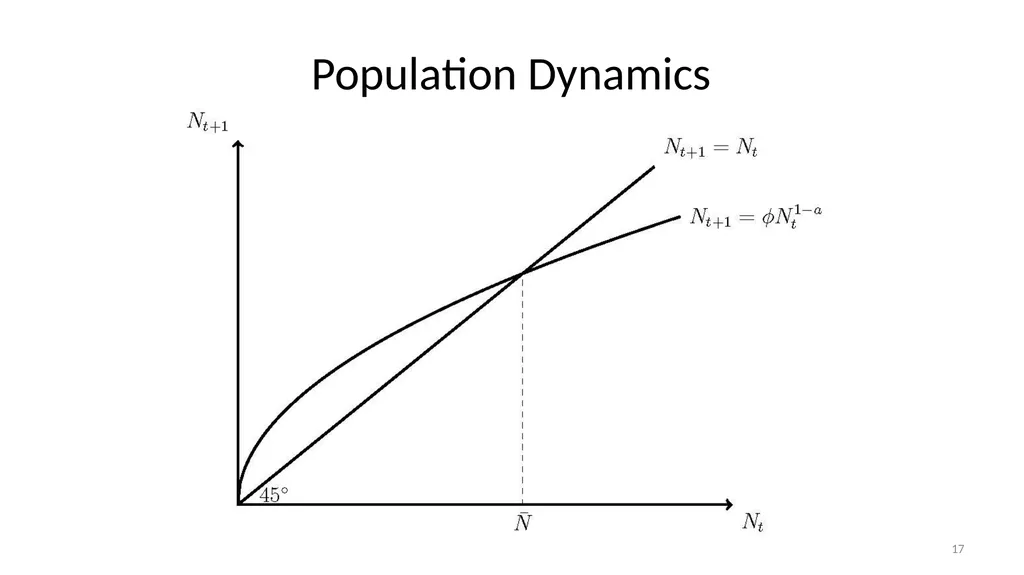
Population Dynamics 17<br>
18
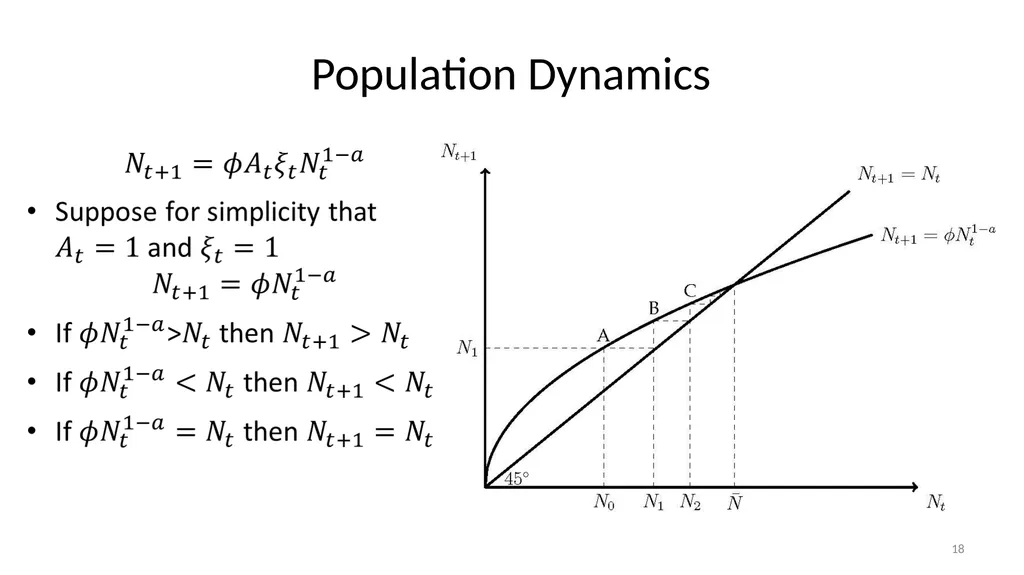
Population Dynamics 18<br>
19
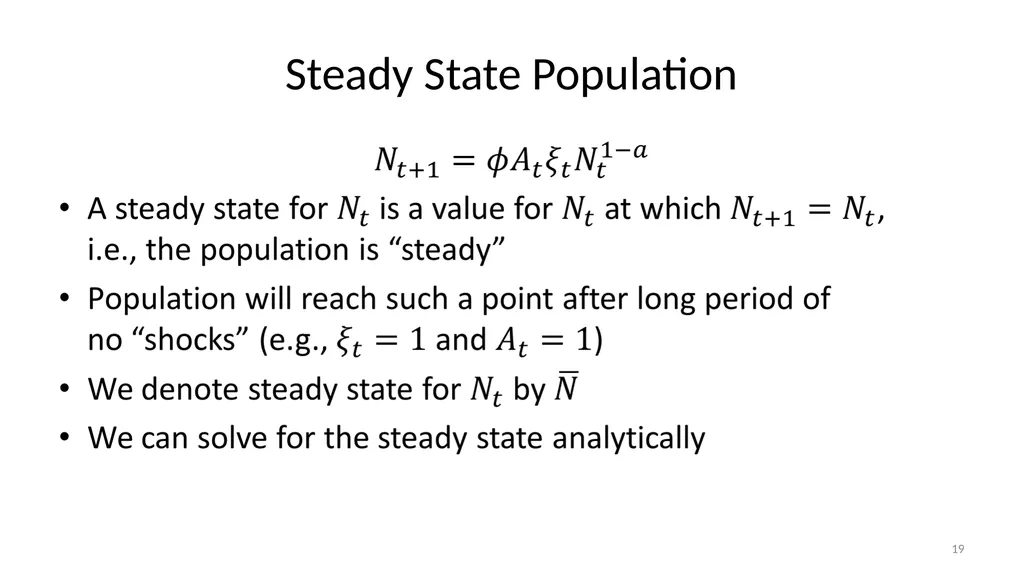
Steady State Population 19<br>
20
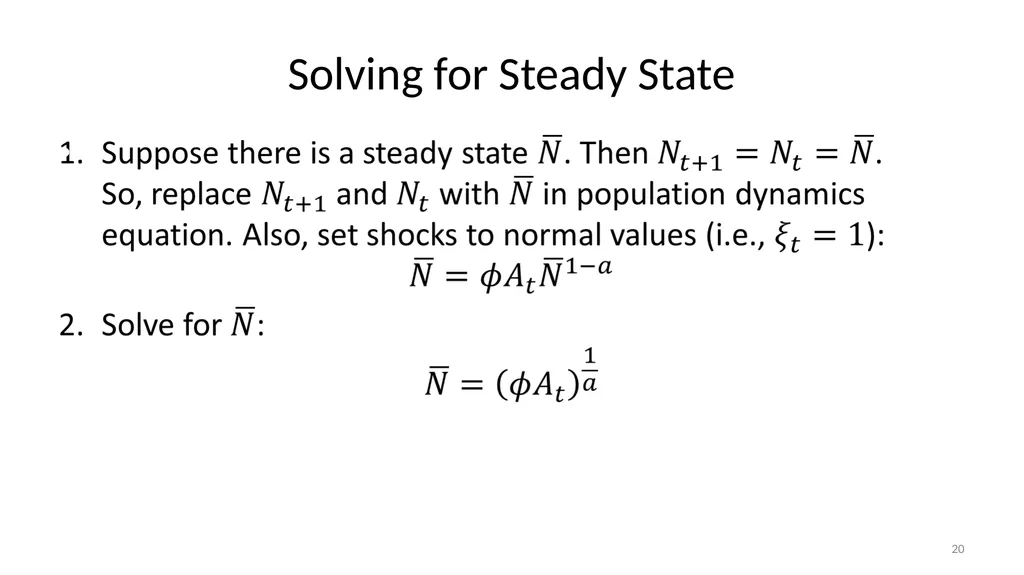
Solving for Steady State 20<br>
21
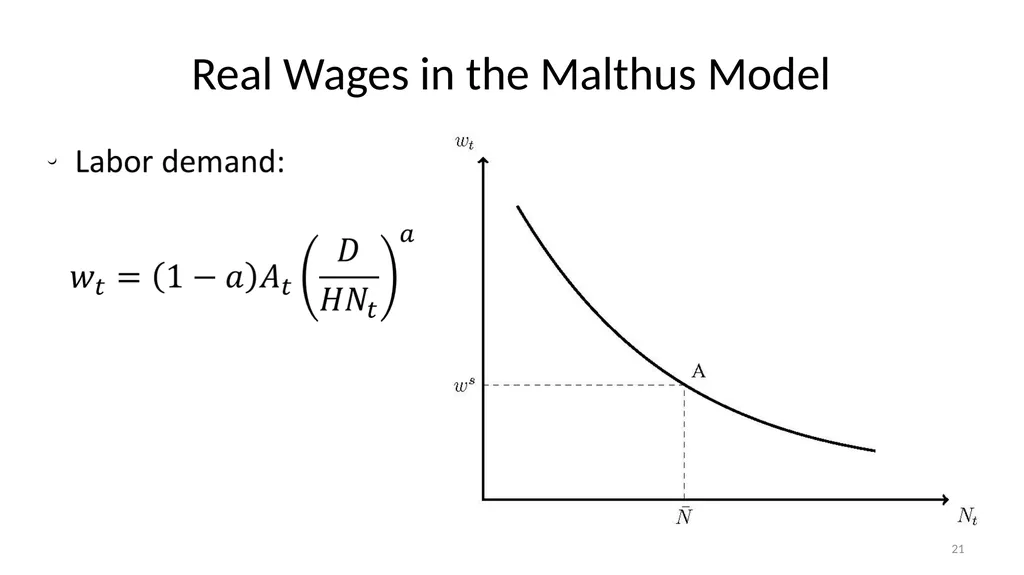
Real Wages in the Malthus Model 21<br>
22
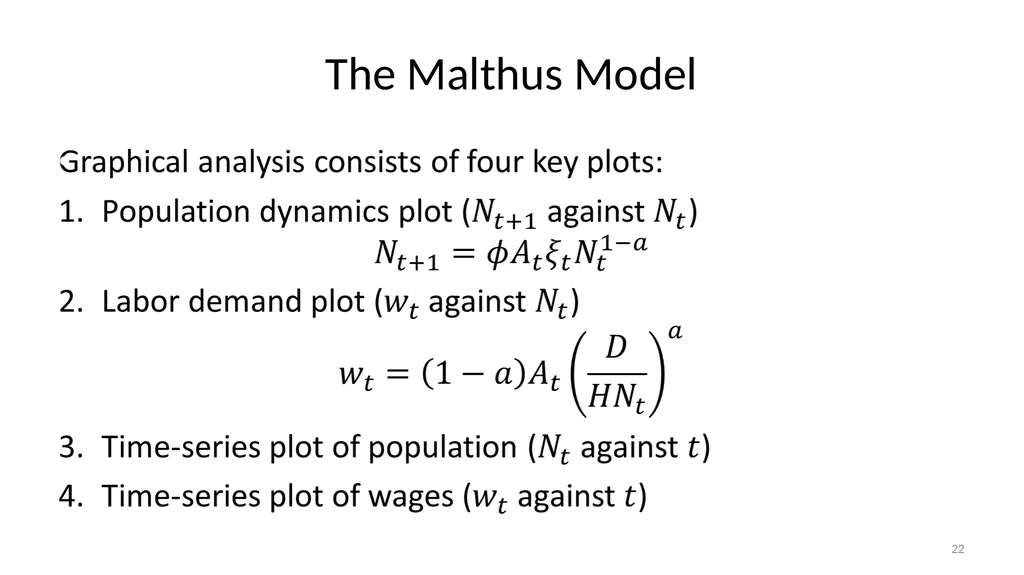
The Malthus Model 22<br>
23
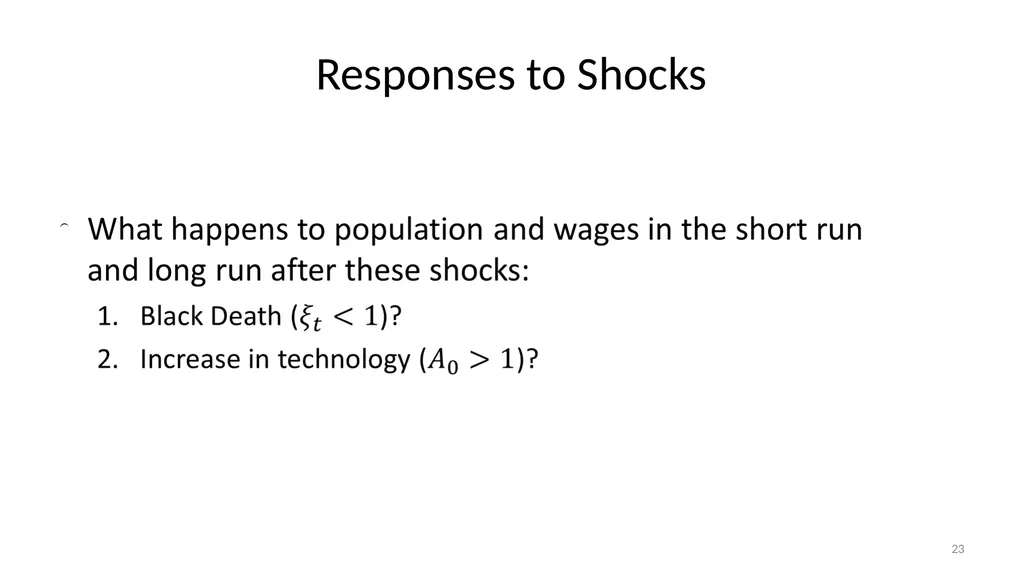
Responses to Shocks 23<br>
26
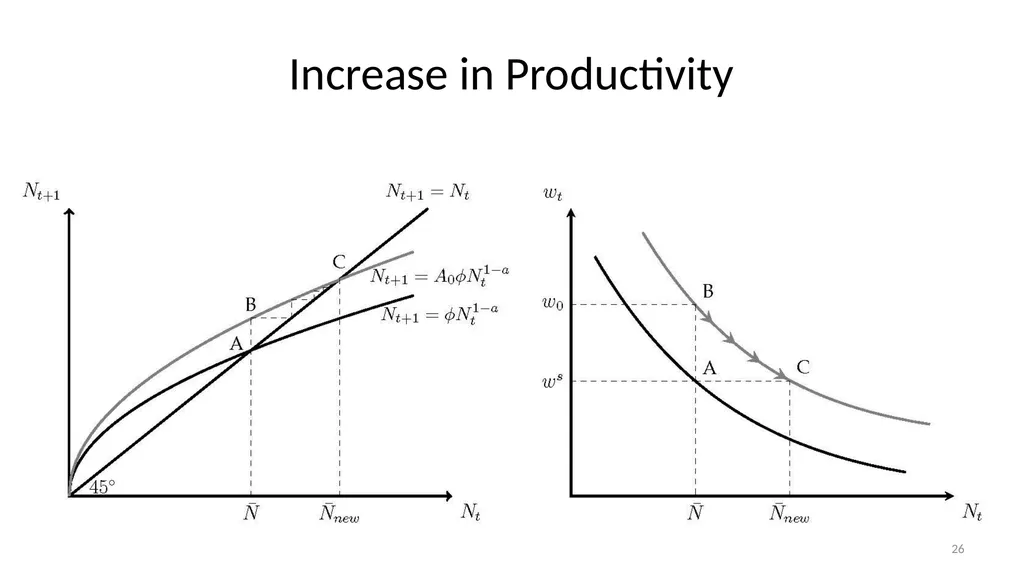
Increase in Productivity 26<br>
27
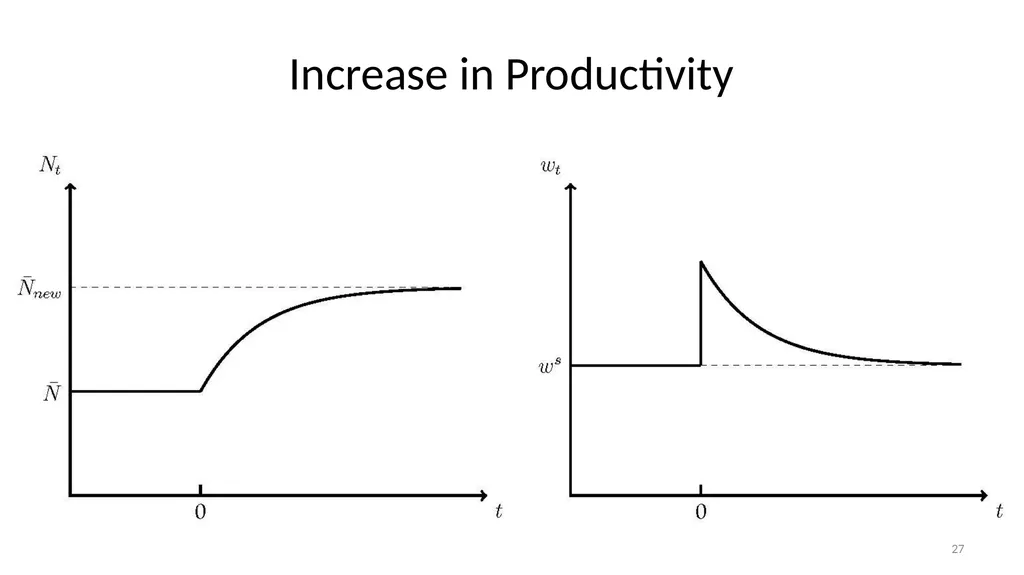
Increase in Productivity 27<br>
28
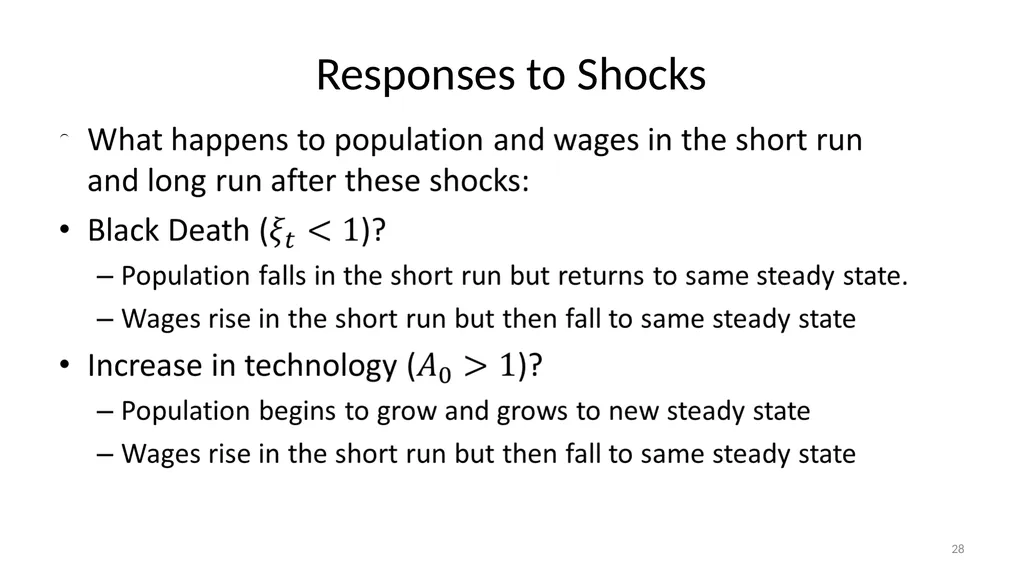
Responses to Shocks 28<br>
29
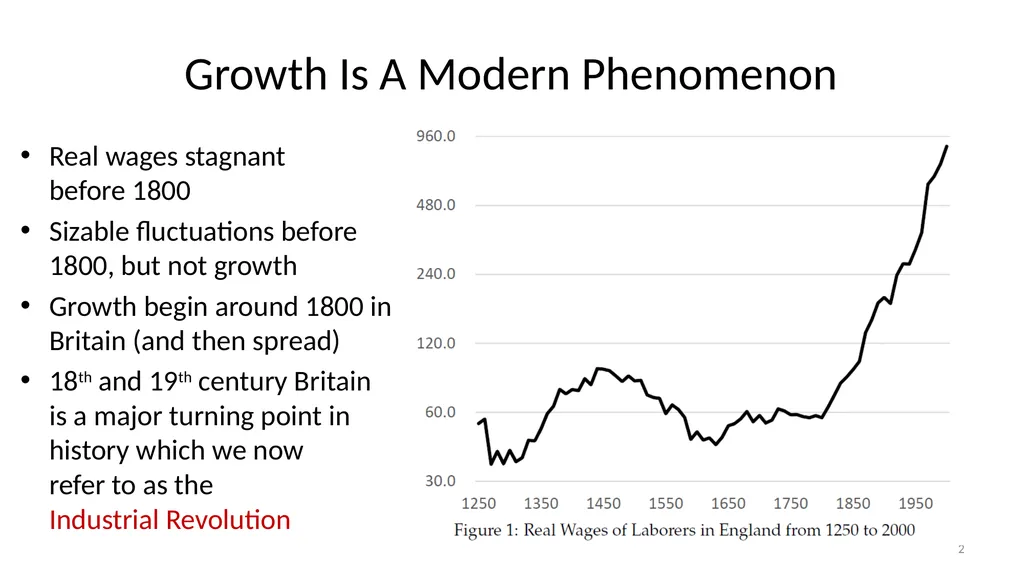
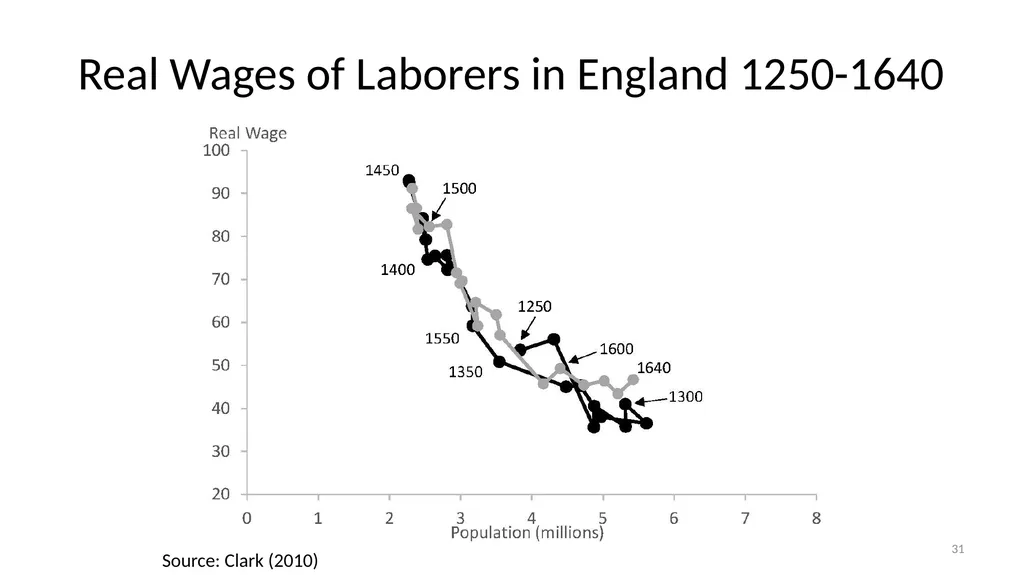
Wages in England 1250-1860 29 Can we use the Malthus model to make sense of the evolution of real wages in England from 1250 onward?
Two striking facts:
No growth (same in 1750 as in 1250)
Big rise (1300-1450) and then fall (1450 to 1640)
Malthus model suggests that evolution of the population may help us understand changes �in real wages<br>
30
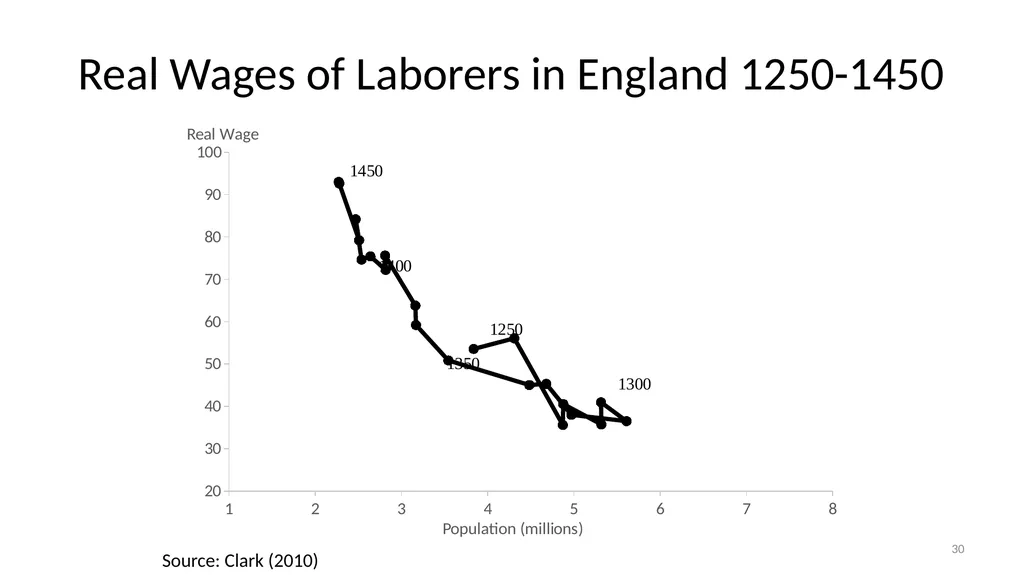
Real Wages of Laborers in England 1250-1450 30 Source: Clark (2010)<br>
31
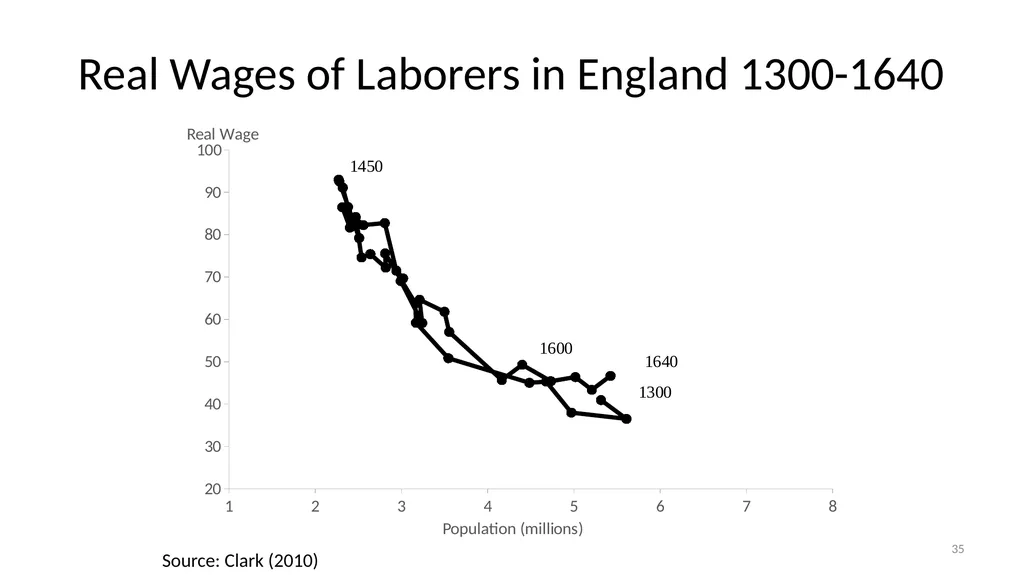
Real Wages of Laborers in England 1250-1640 31 Source: Clark (2010)<br>
32
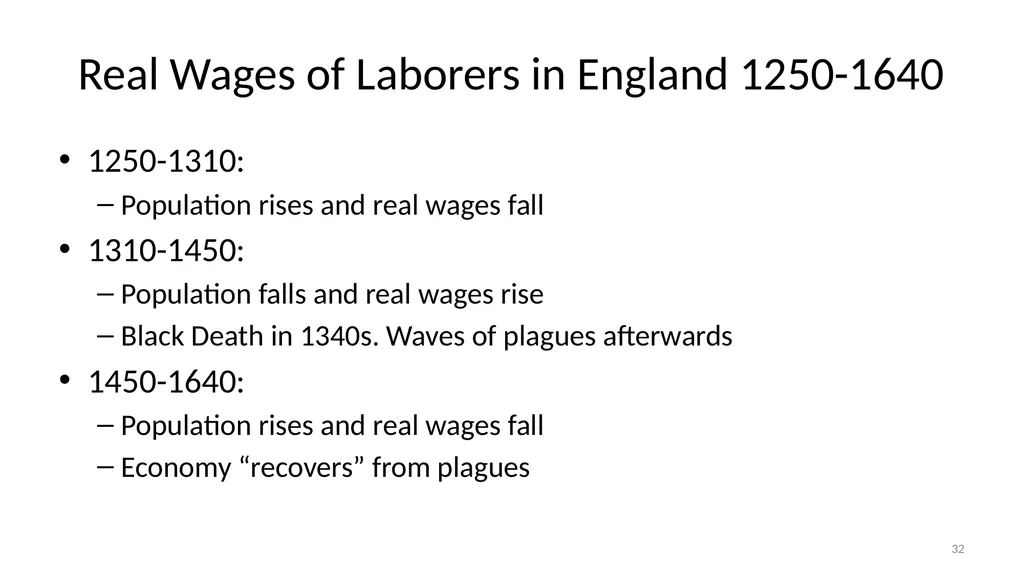
Real Wages of Laborers in England 1250-1640 1250-1310:
Population rises and real wages fall
1310-1450:
Population falls and real wages rise
Black Death in 1340s. Waves of plagues afterwards
1450-1640:
Population rises and real wages fall
Economy “recovers” from plagues 32<br>
33
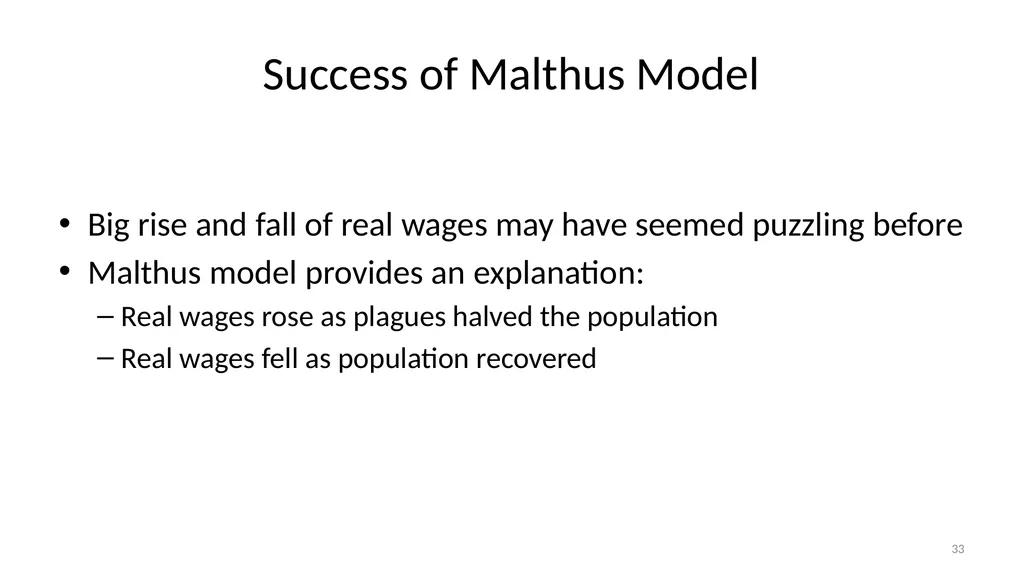
Success of Malthus Model Big rise and fall of real wages may have seemed puzzling before
Malthus model provides an explanation:
Real wages rose as plagues halved the population
Real wages fell as population recovered 33<br>
34
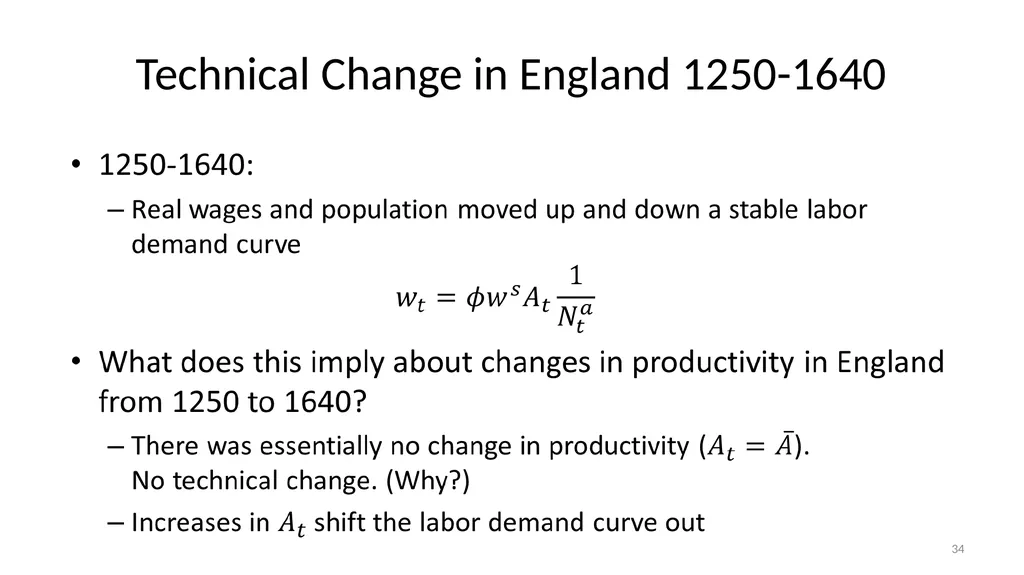
Technical Change in England 1250-1640 34<br>
35
Real Wages of Laborers in England 1300-1640 35 Source: Clark (2010)<br>
36
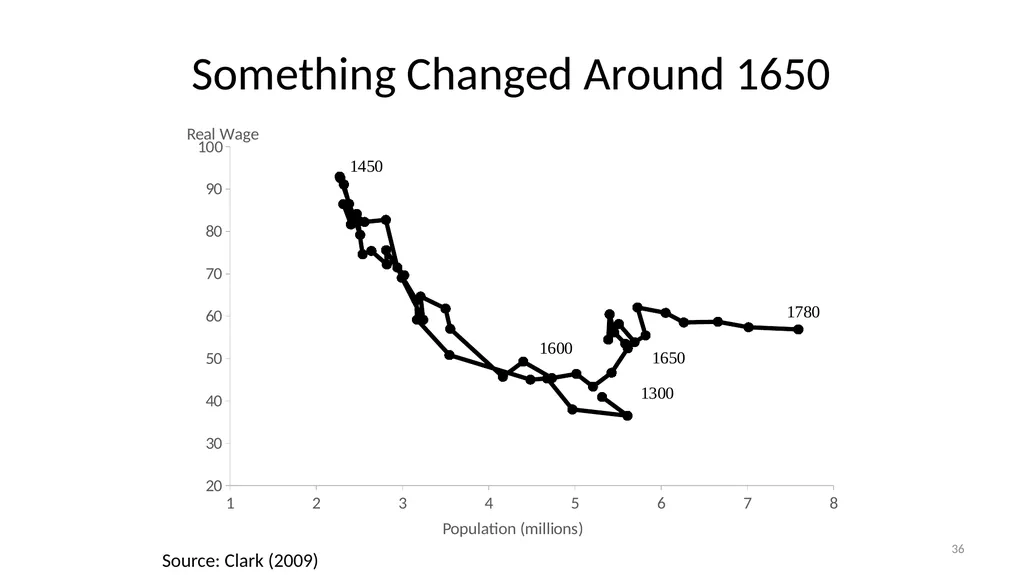
Something Changed Around 1650 36 Source: Clark (2009)<br>
37
Something Changed Around 1650 37<br>
38
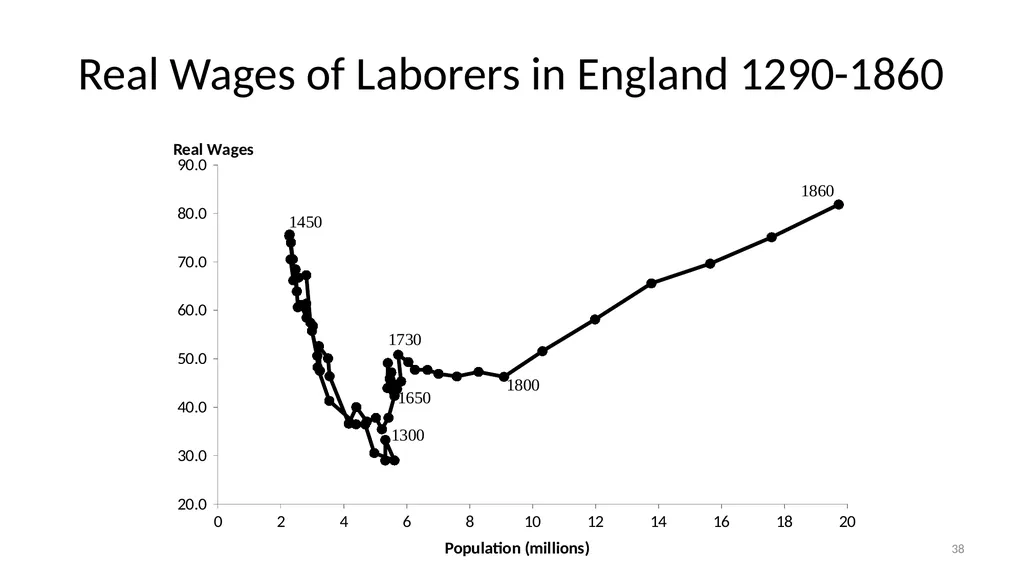
Real Wages of Laborers in England 1290-1860 38<br>
39
Malthus’ Unfortunate Timing Malthus sometimes get a bad rap
Prediction that wages were doomed to stay at subsistence turned out to be wrong after his writing
But his theory was arguably correct for all of history up until his writing!!
What changed after 1800? 39<br>
40
Why Is World No Longer Malthusian? Technological growth overwhelmed Malthusian forces
Population forces Malthus emphasized are slow
Fast enough technology growth my overwhelm them
Land less important in production
Existence of a fix factor of production (land) important for �logic of Malthus model
Land became much less important after 1800 due to �invention of the steam engine
Land no longer needed to produce energy 40<br>
41
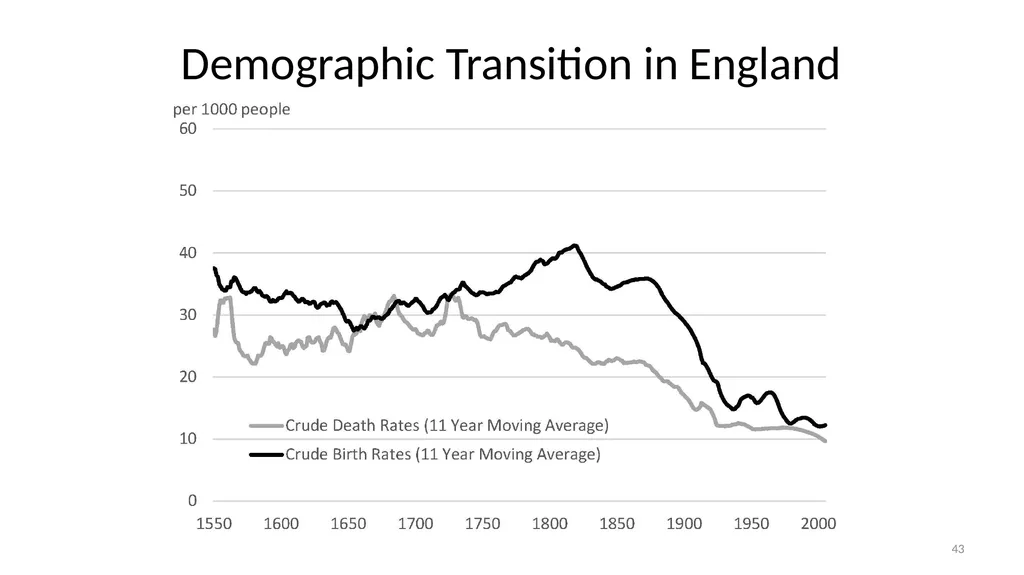
Why is World No Long Malthusian? Demographic Transition
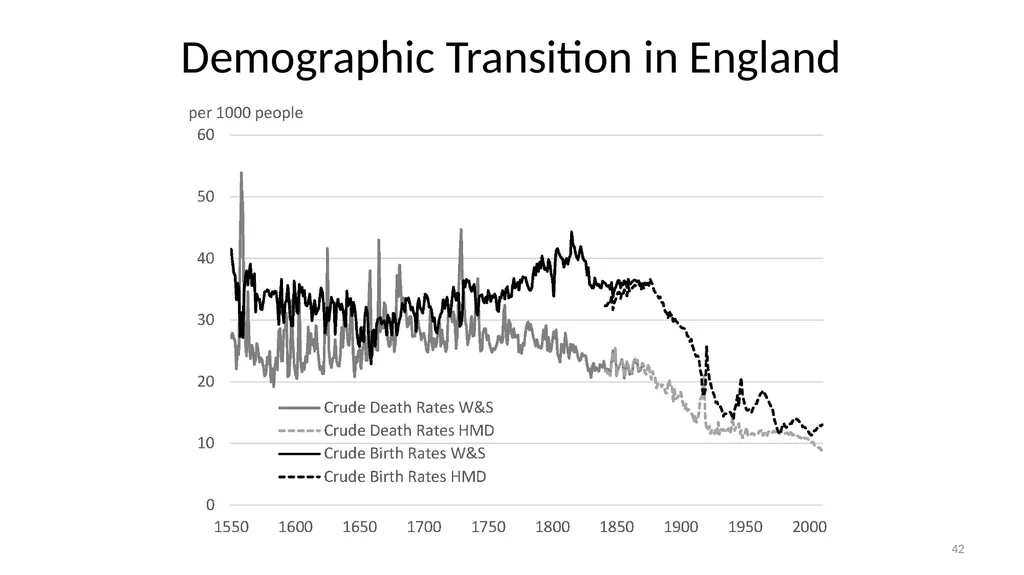
Data on birth rates and death rates support Malthus’ model �quite well up until 1825
After 1825, relationship between birth rates and real wages assumed by Malthus breaks down (and particularly after 1880) 41<br>
42
Demographic Transition in England 42<br>
43
Demographic Transition in England 43<br>
44
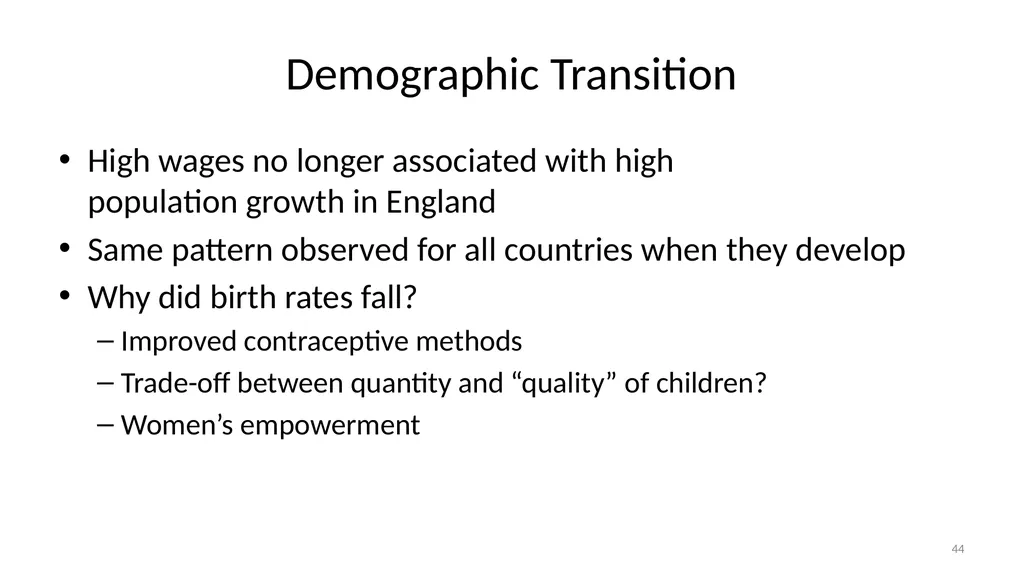
Demographic Transition High wages no longer associated with high �population growth in England
Same pattern observed for all countries when they develop
Why did birth rates fall?
Improved contraceptive methods
Trade-off between quantity and “quality” of children?
Women’s empowerment 44<br>