Lecture No:01 Topic: Power System Network Representation Course: Power System Analysis Presented by Dr M.S.Giridhar Professor, Department of EEE Lakireddy Bali Reddy College of Engineering (Autonomous) Developed by Jawaharlal Nehru
"Lecture No:01 Topic: Power System Network" is the property of its rightful owner. Permission is granted to
download and print the materials on this website for personal, non-commercial use only, and to display it
on your personal computer provided you do not modify the materials and that you retain all copyright
notices contained in the materials. By downloading content from our website, you accept the terms of this
agreement.
Presentation Transcript
01
Lecture No:01 Topic: Power System Network Representation Course: Power System Analysis Presented by
Dr M.S.Giridhar
Professor, Department of EEE
Lakireddy Bali Reddy College of Engineering (Autonomous) Developed by
Jawaharlal Nehru Technological University Kakinada
www.jntuk.edu.in<br>
02
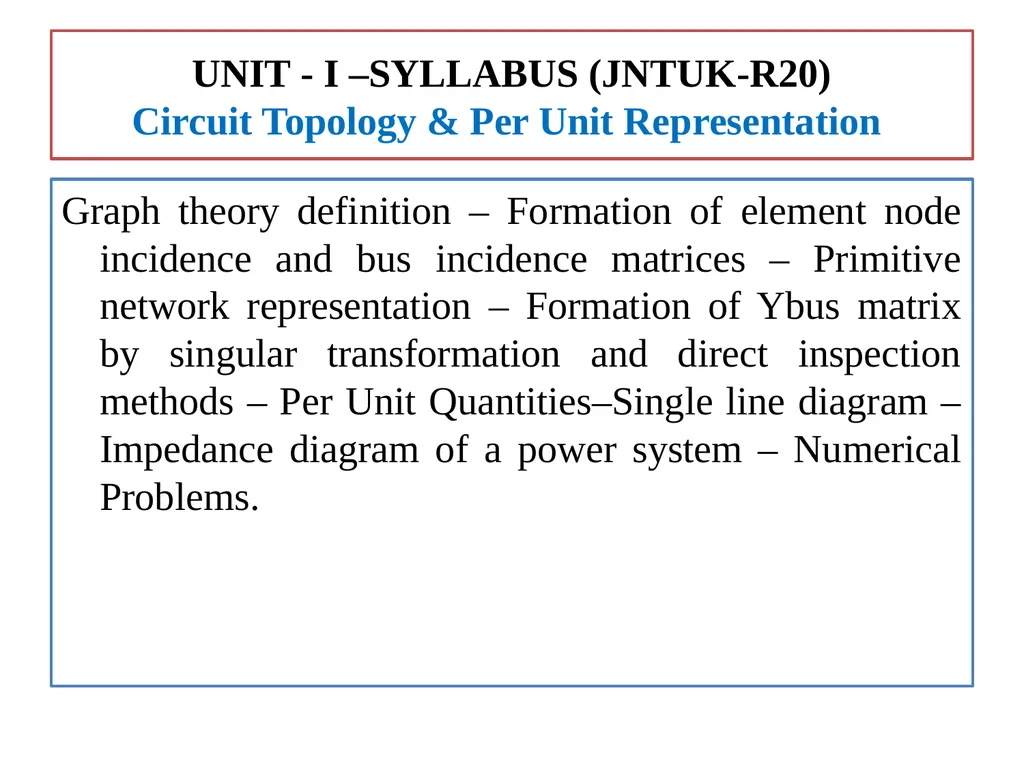
UNIT - I –SYLLABUS (JNTUK-R20) Circuit Topology & Per Unit Representation Graph theory definition – Formation of element node incidence and bus incidence matrices – Primitive network representation – Formation of Ybus matrix by singular transformation and direct inspection methods – Per Unit Quantities–Single line diagram – Impedance diagram of a power system – Numerical Problems.<br>
03
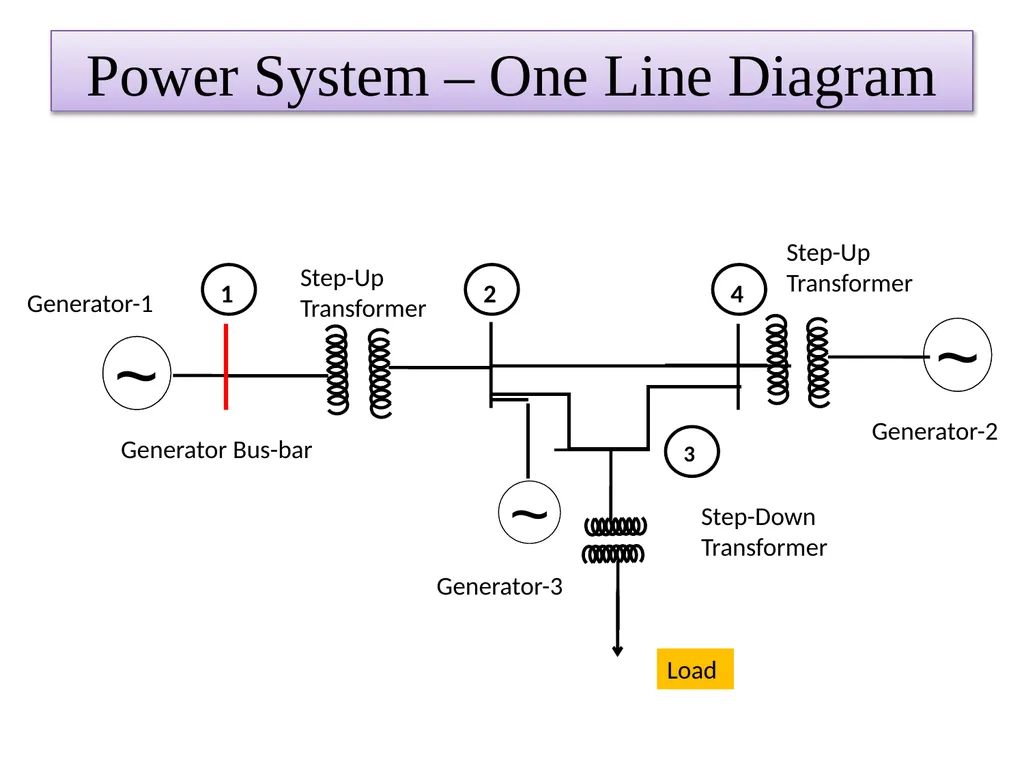
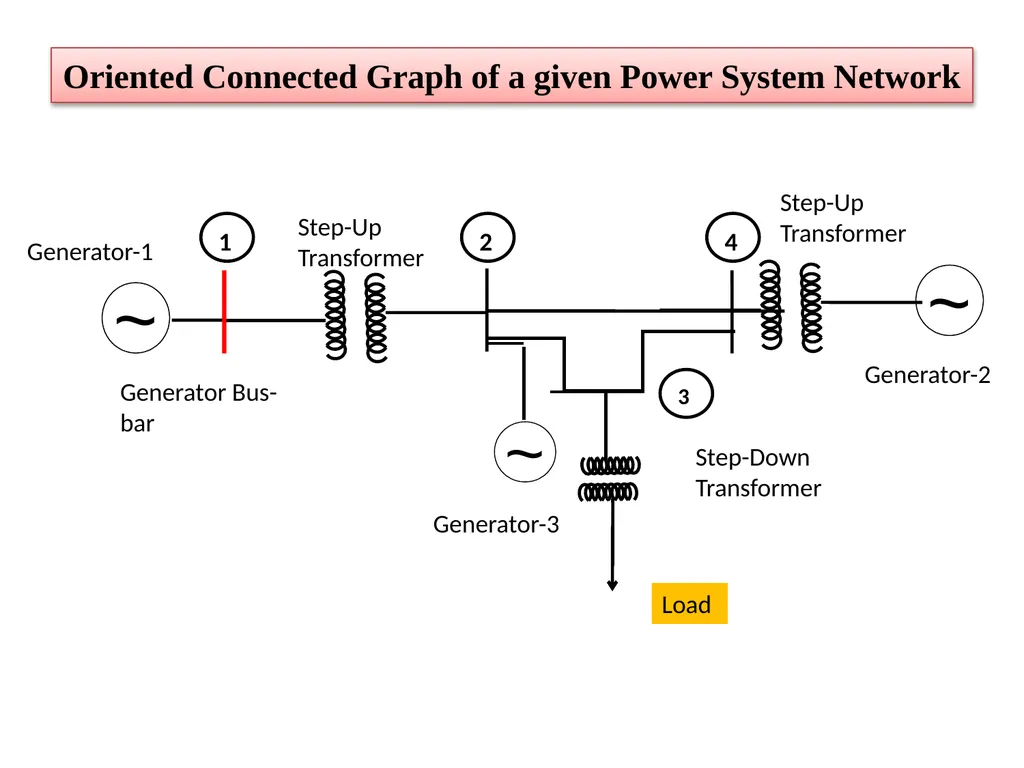
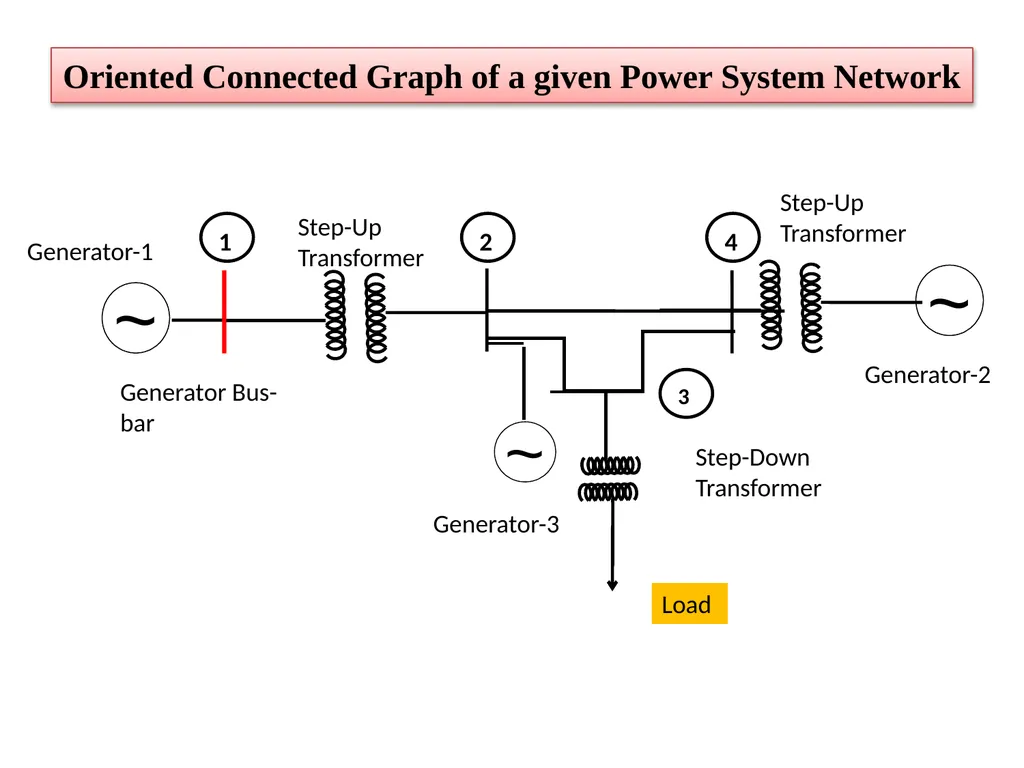
Power System – One Line Diagram<br>
04
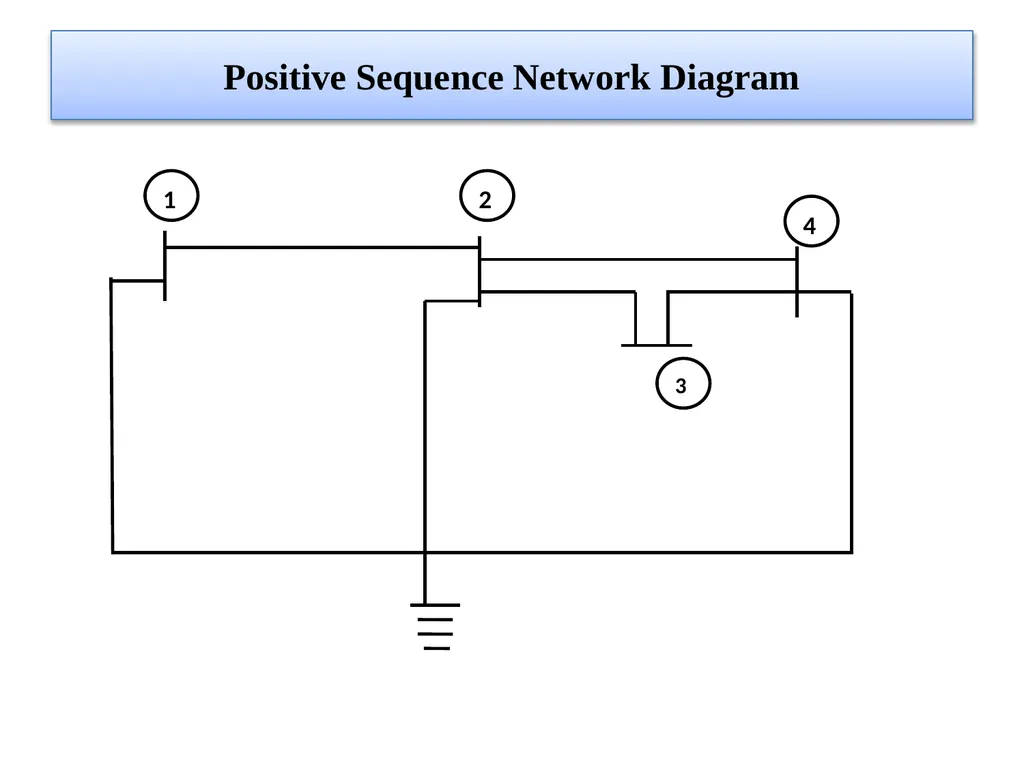
Positive Sequence Network Diagram<br>
05
Oriented Connected Graph of a given Power System Network<br>
06
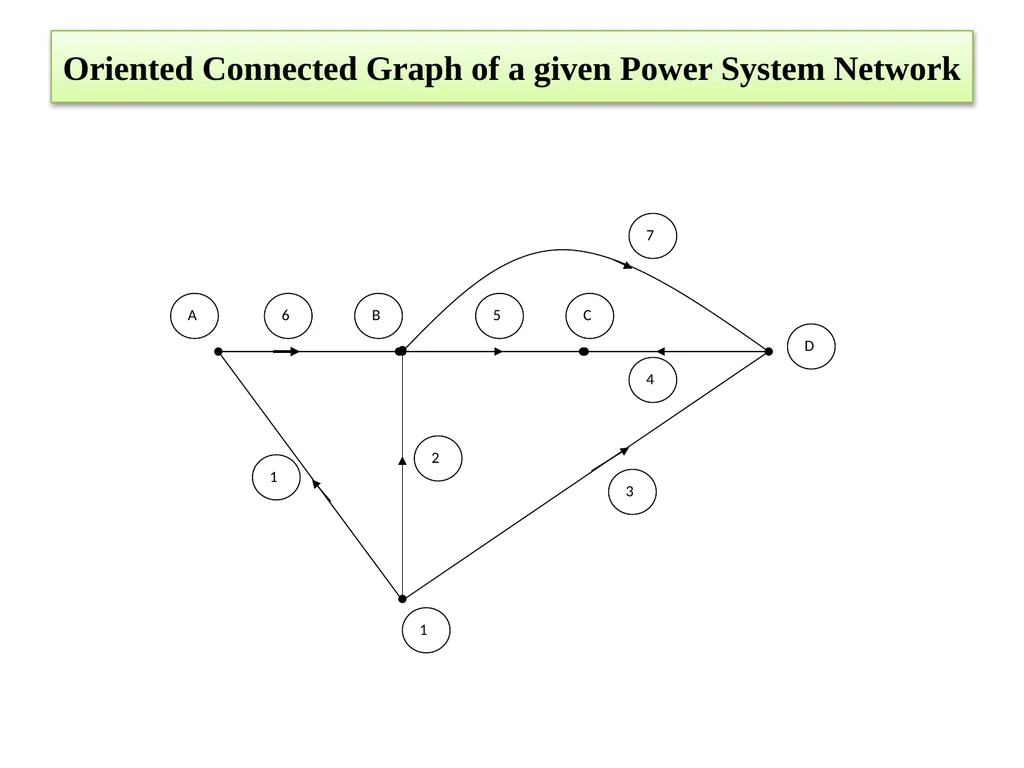
Oriented Connected Graph of a given Power System Network<br>
07
Graph Theory - Definitions GRAPHS: A graph shows the geometrical interconnection of the elements of a network.
SUB-GRAPH: A sub-graph is any subset of elements of the graph.
PATH: A path is a sub-graph of connected elements with no more than two elements connected to any one node.
Note: A graph is connected if and only if there is a path between every pair of nodes. If each element of the connected graph is assigned a direction it is then oriented.<br>
08
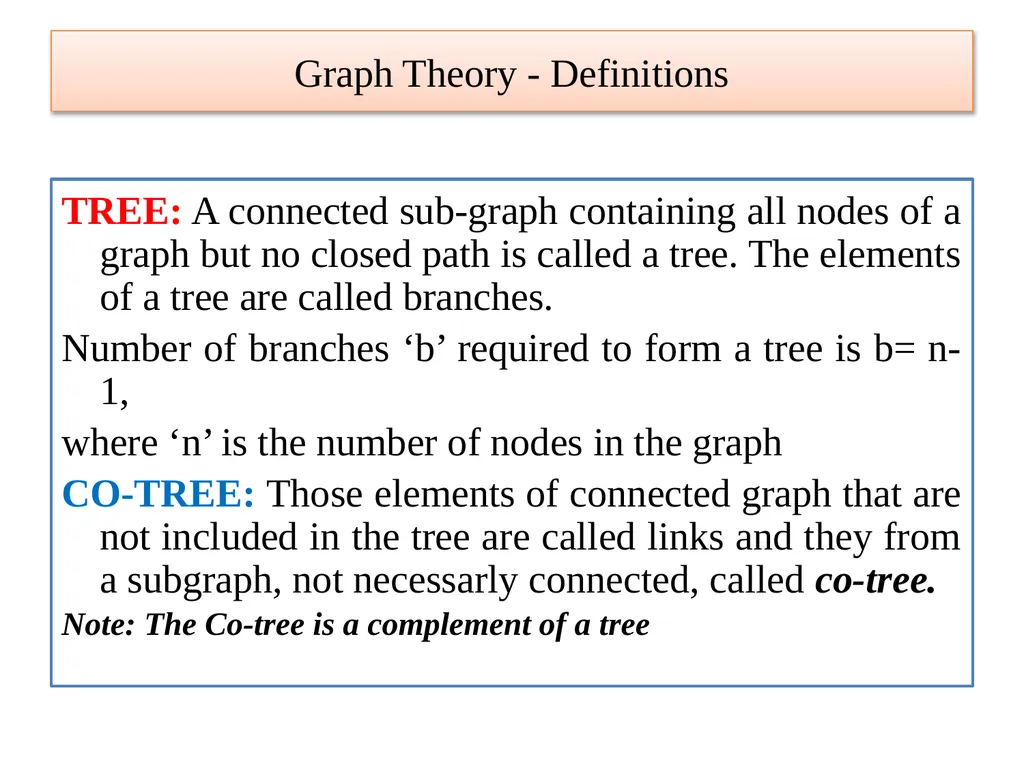
TREE: A connected sub-graph containing all nodes of a graph but no closed path is called a tree. The elements of a tree are called branches.
Number of branches ‘b’ required to form a tree is b= n-1,
where ‘n’ is the number of nodes in the graph
CO-TREE: Those elements of connected graph that are not included in the tree are called links and they from a subgraph, not necessarly connected, called co-tree.
Note: The Co-tree is a complement of a tree Graph Theory - Definitions<br>
09
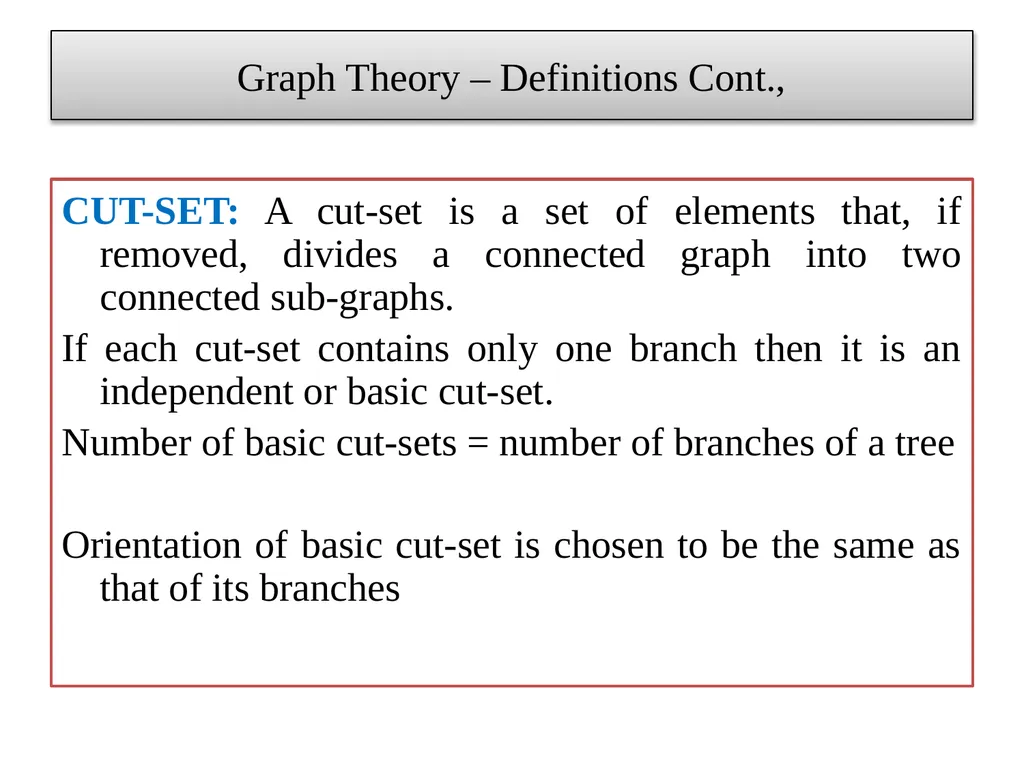
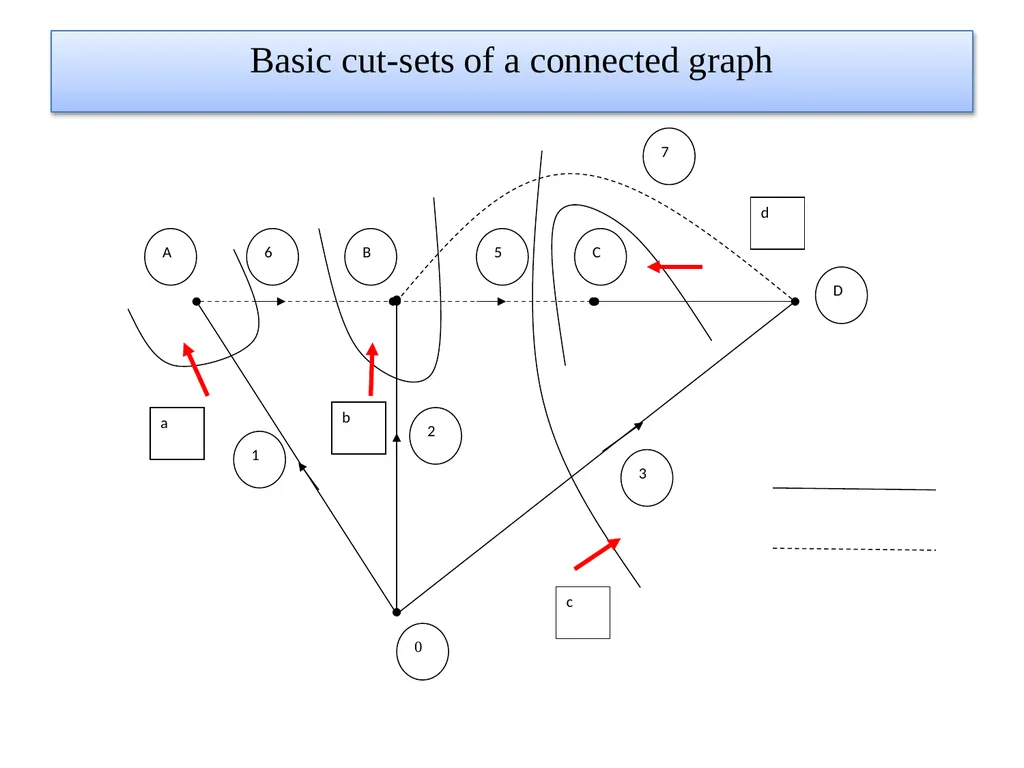
Graph Theory – Definitions Cont., CUT-SET: A cut-set is a set of elements that, if removed, divides a connected graph into two connected sub-graphs.
If each cut-set contains only one branch then it is an independent or basic cut-set.
Number of basic cut-sets = number of branches of a tree
Orientation of basic cut-set is chosen to be the same as that of its branches<br>
10
Oriented Connected Graph of a given Power System Network<br>
11
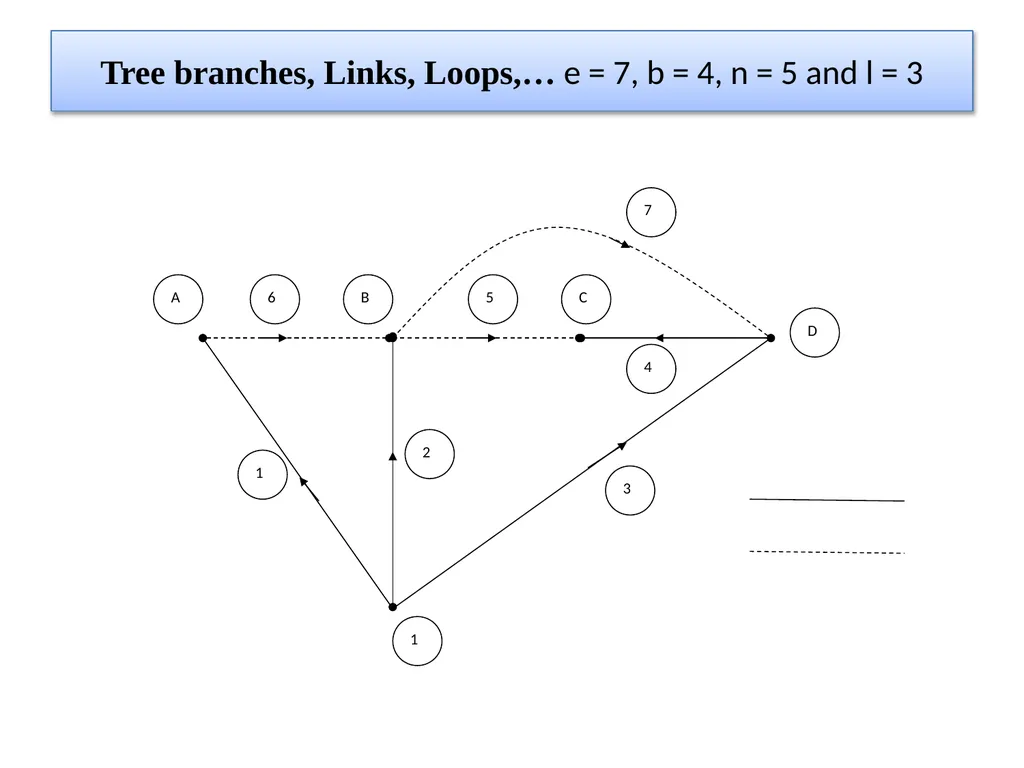
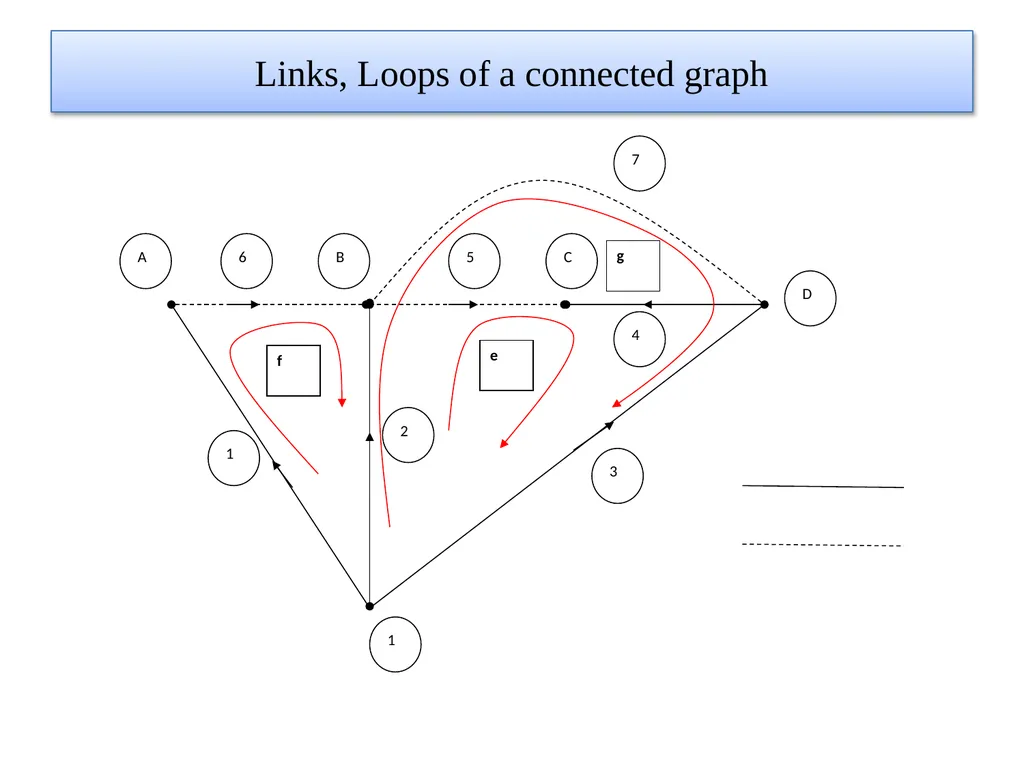
Tree branches, Links, Loops,… e = 7, b = 4, n = 5 and l = 3<br>
12
Basic cut-sets of a connected graph<br>
13
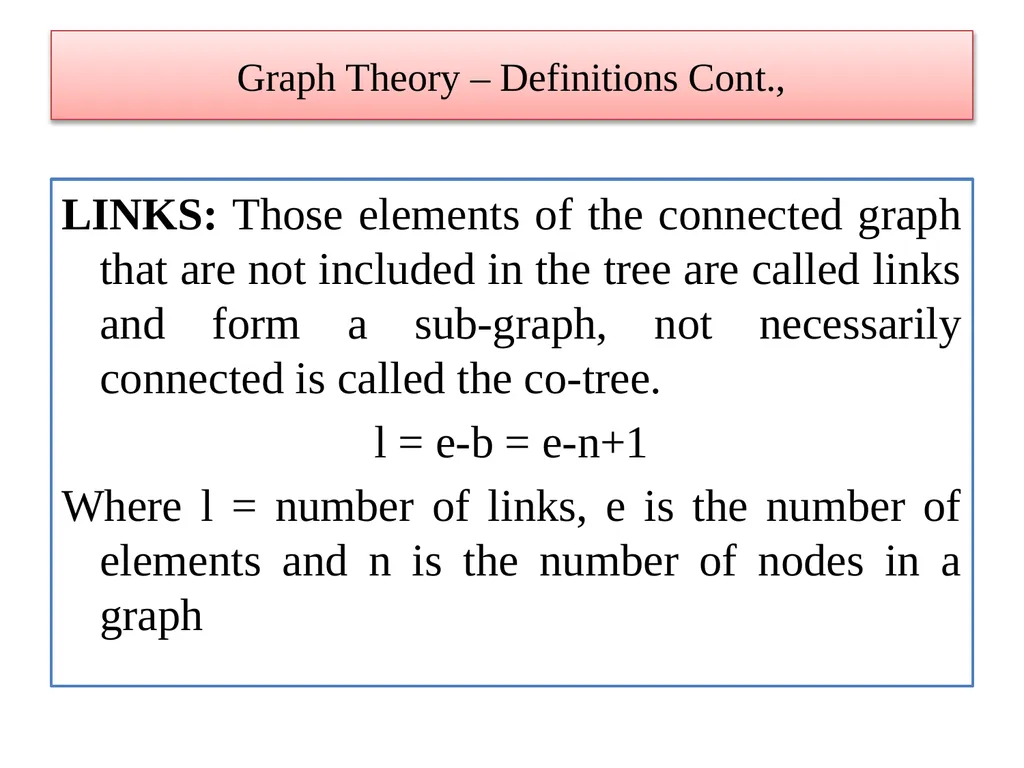
LINKS: Those elements of the connected graph that are not included in the tree are called links and form a sub-graph, not necessarily connected is called the co-tree.
l = e-b = e-n+1
Where l = number of links, e is the number of elements and n is the number of nodes in a graph Graph Theory – Definitions Cont.,<br>
14
Links, Loops of a connected graph<br>
15
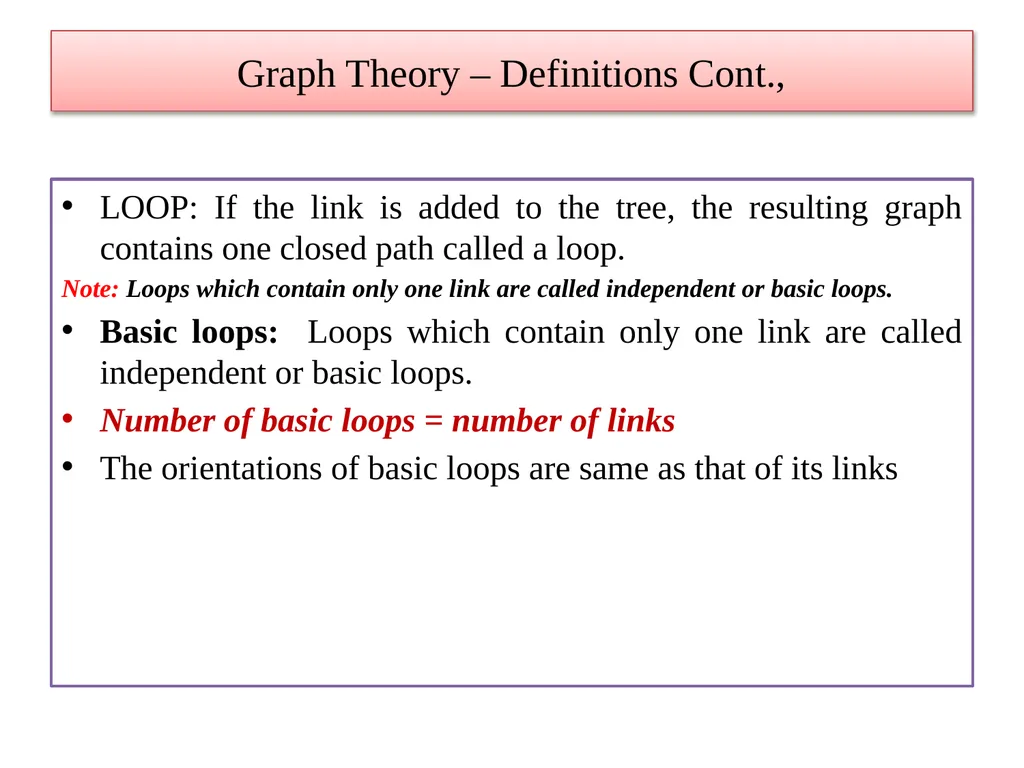
Graph Theory – Definitions Cont., LOOP: If the link is added to the tree, the resulting graph contains one closed path called a loop.
Note: Loops which contain only one link are called independent or basic loops.
Basic loops: Loops which contain only one link are called independent or basic loops.
Number of basic loops = number of links
The orientations of basic loops are same as that of its links<br>