04
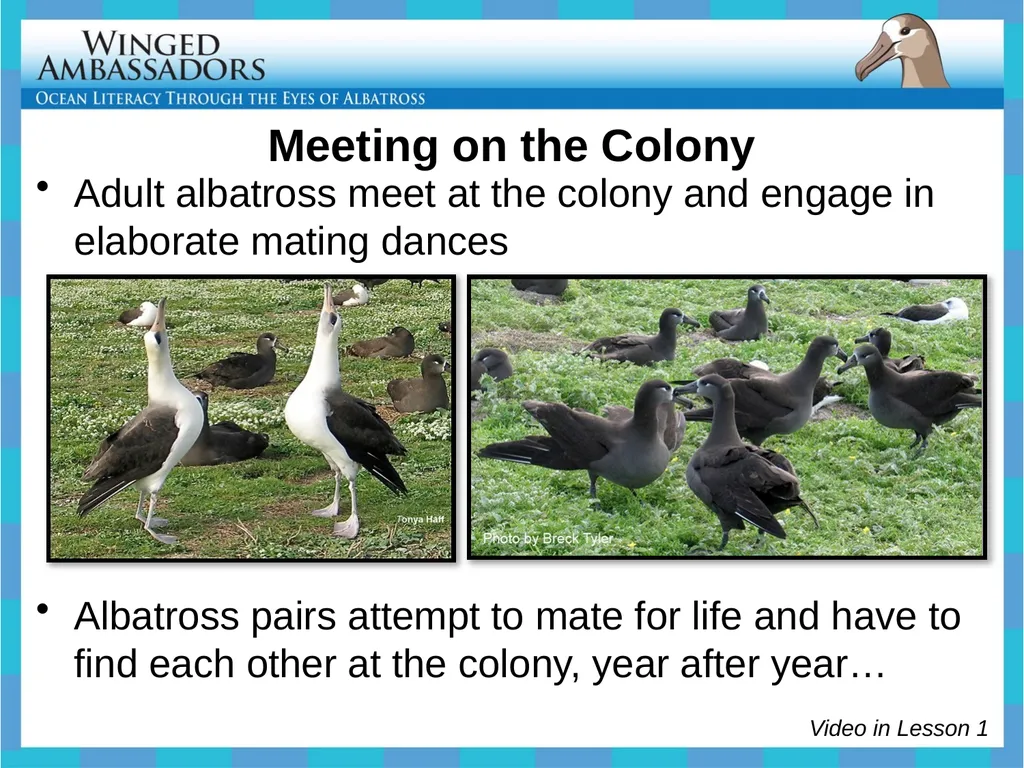
Meeting on the Colony Adult albatross meet at the colony and engage in elaborate mating dances
Albatross pairs attempt to mate for life and have to find each other at the colony, year after year… Video in Lesson 1<br>
05
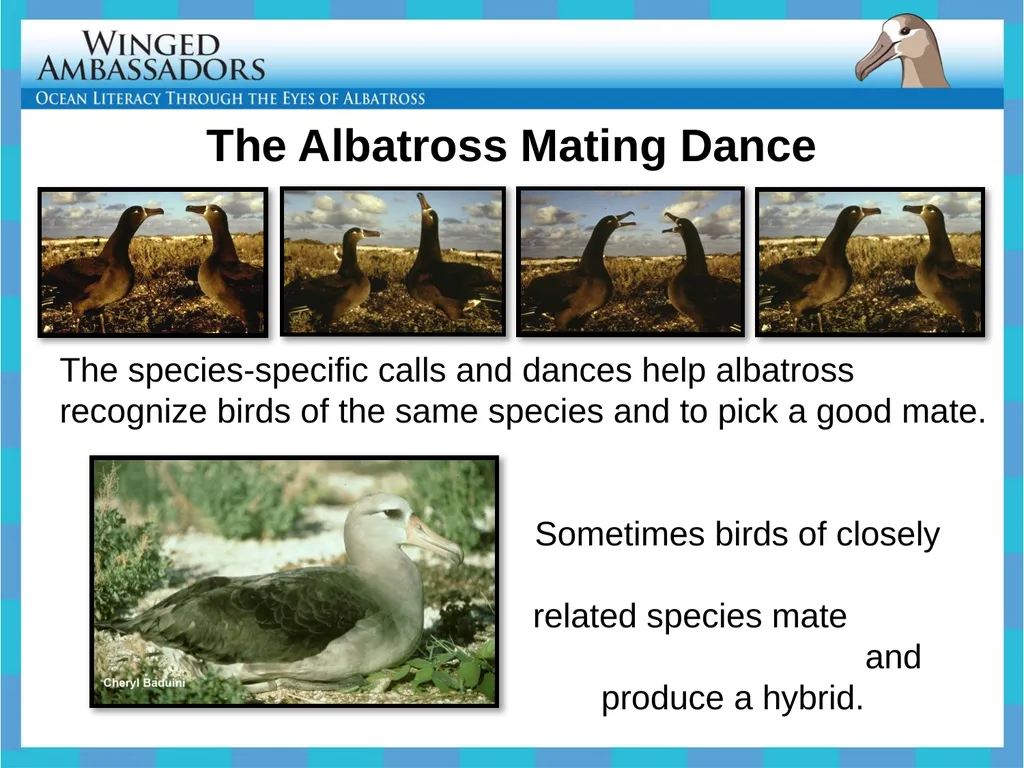
The Albatross Mating Dance The species-specific calls and dances help albatross recognize birds of the same species and to pick a good mate. Sometimes birds of closely related species mate and produce a hybrid.<br>
06
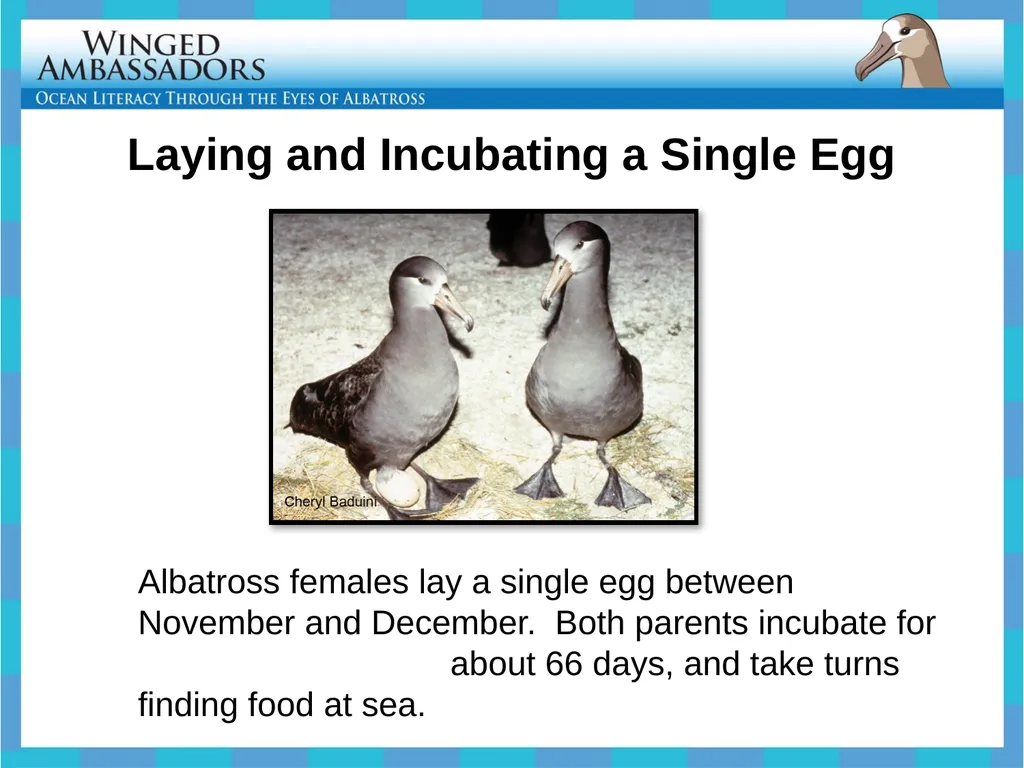
Laying and Incubating a Single Egg Albatross females lay a single egg between November and December. Both parents incubate for about 66 days, and take turns finding food at sea.<br>
07
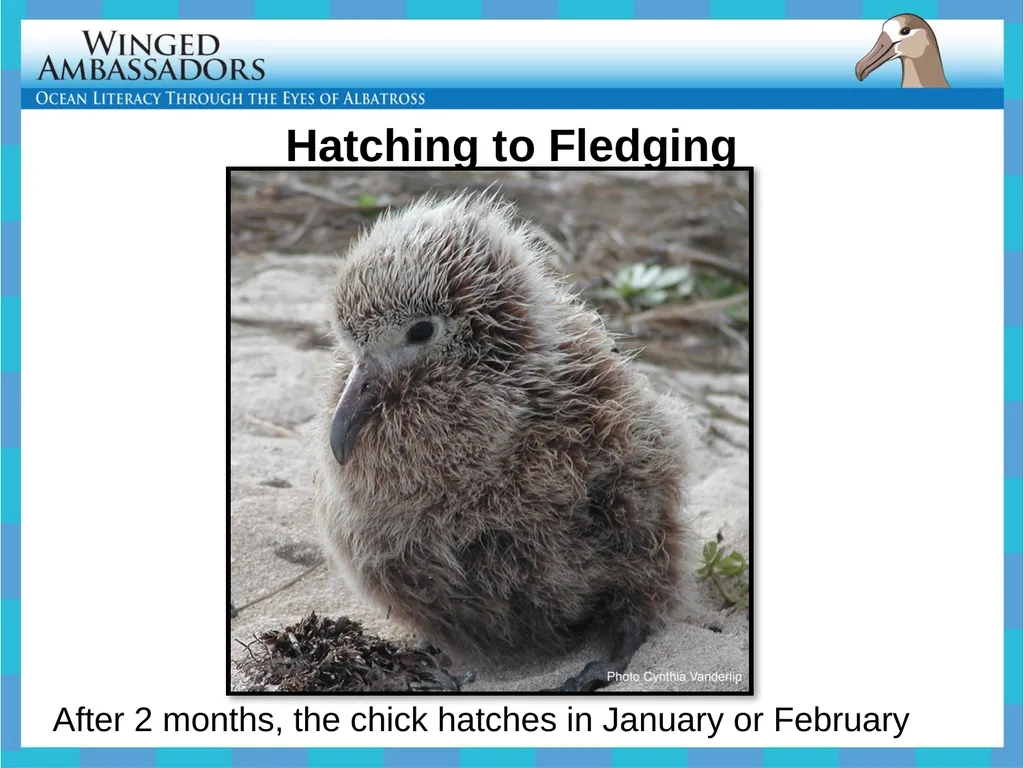
Hatching to Fledging After 2 months, the chick hatches in January or February<br>
08
Foraging Far Away to Feed the Chick The albatross parents feed the chick for 6 months
They “go to work” as far away as California and Alaska 8<br>
09
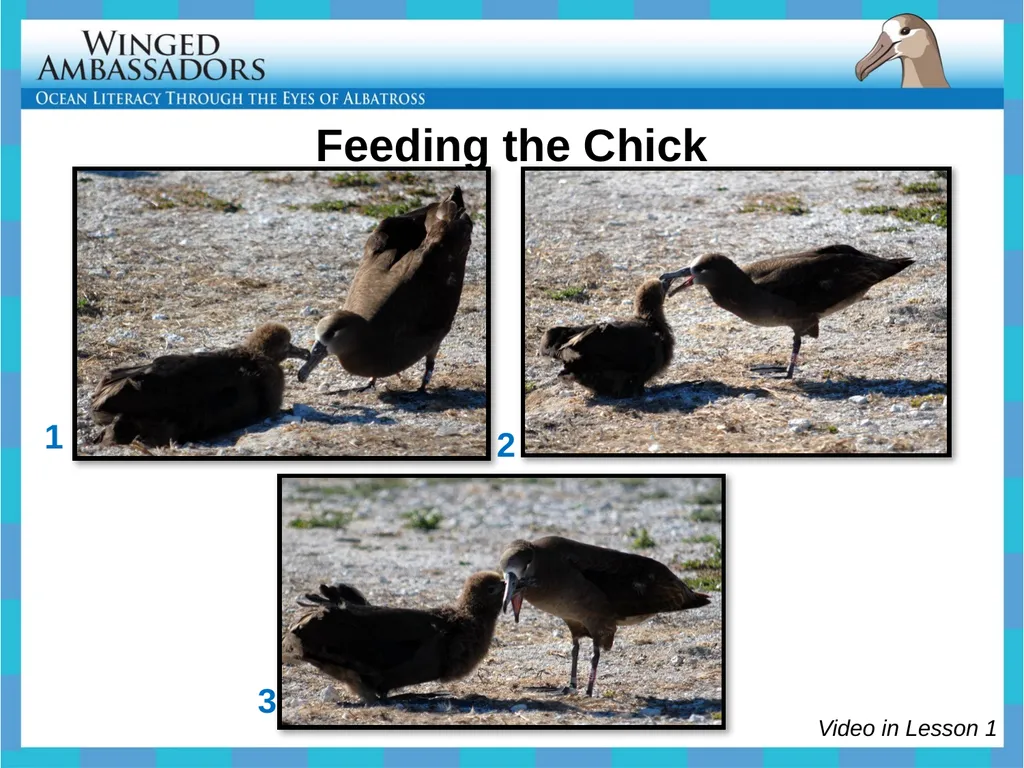
Feeding the Chick 2 1 3 Video in Lesson 1<br>
10
2
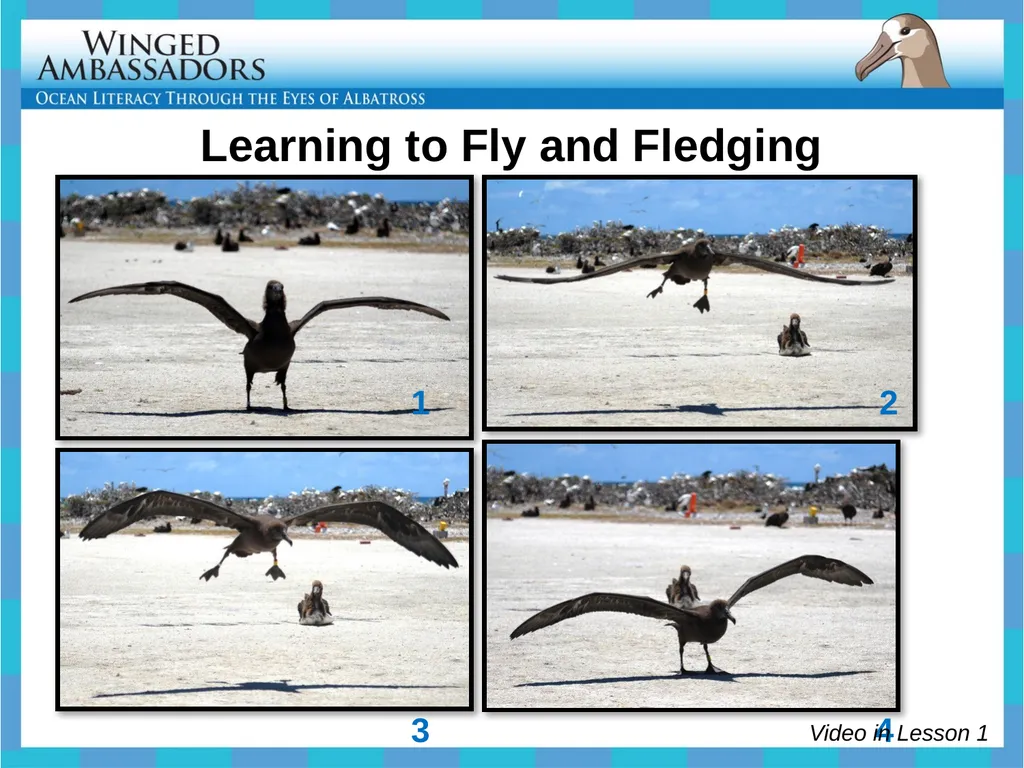
3 4 Learning to Fly and Fledging Video in Lesson 1<br>
11
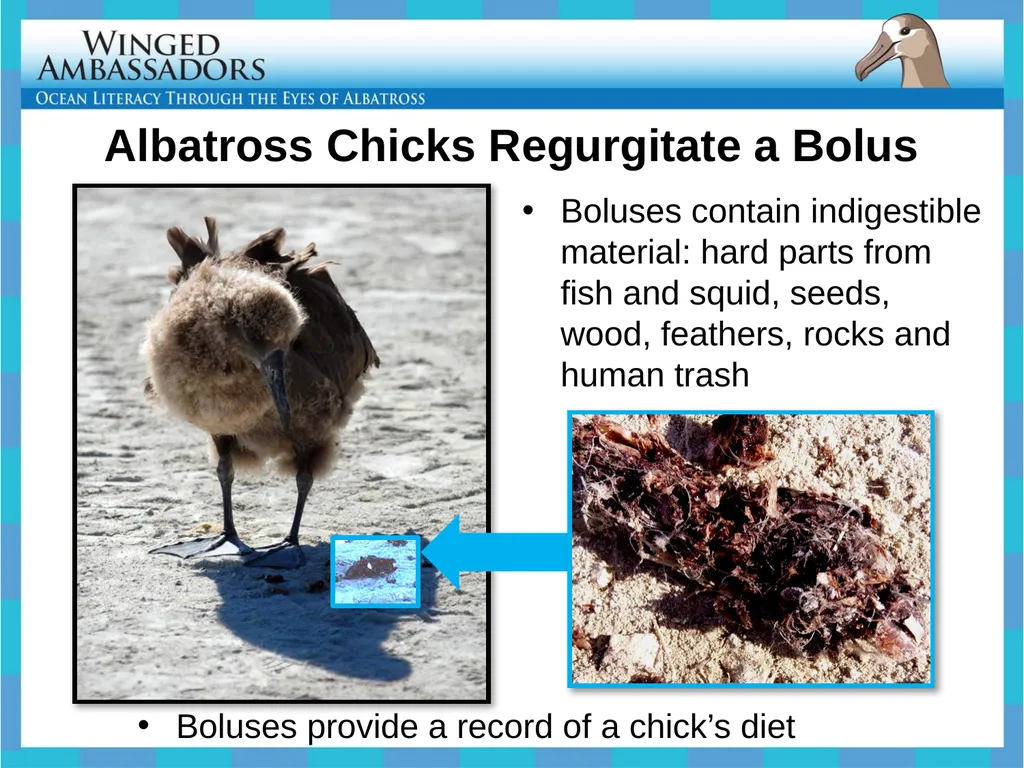
Albatross Chicks Regurgitate a Bolus Boluses contain indigestible material: hard parts from fish and squid, seeds, wood, feathers, rocks and human trash Boluses provide a record of a chick’s diet<br>
12
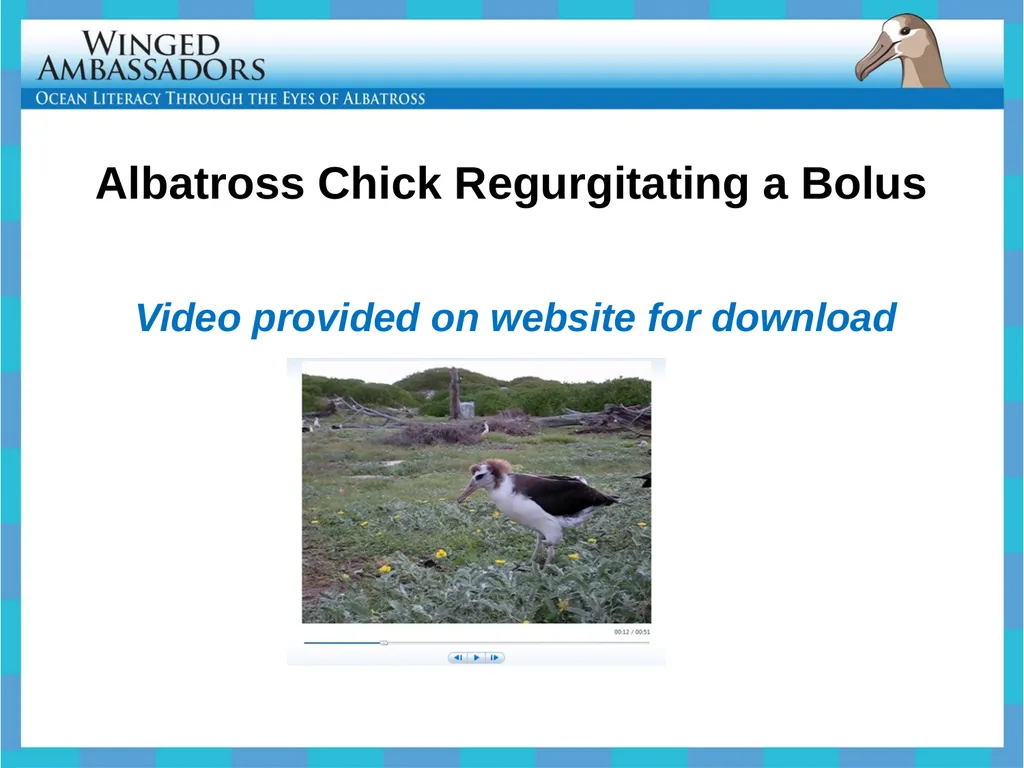
Video provided on website for download Albatross Chick Regurgitating a Bolus<br>
13
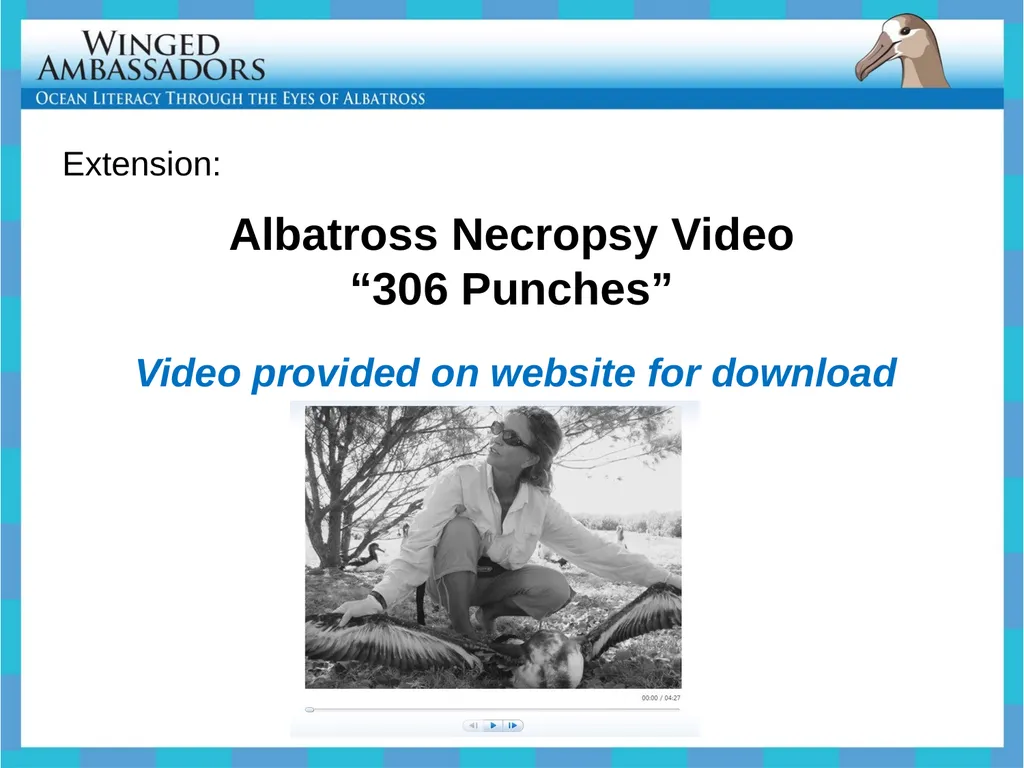
Video provided on website for download Albatross Necropsy Video�“306 Punches” Extension:<br>
14
Explore Albatross Boluses<br>
15
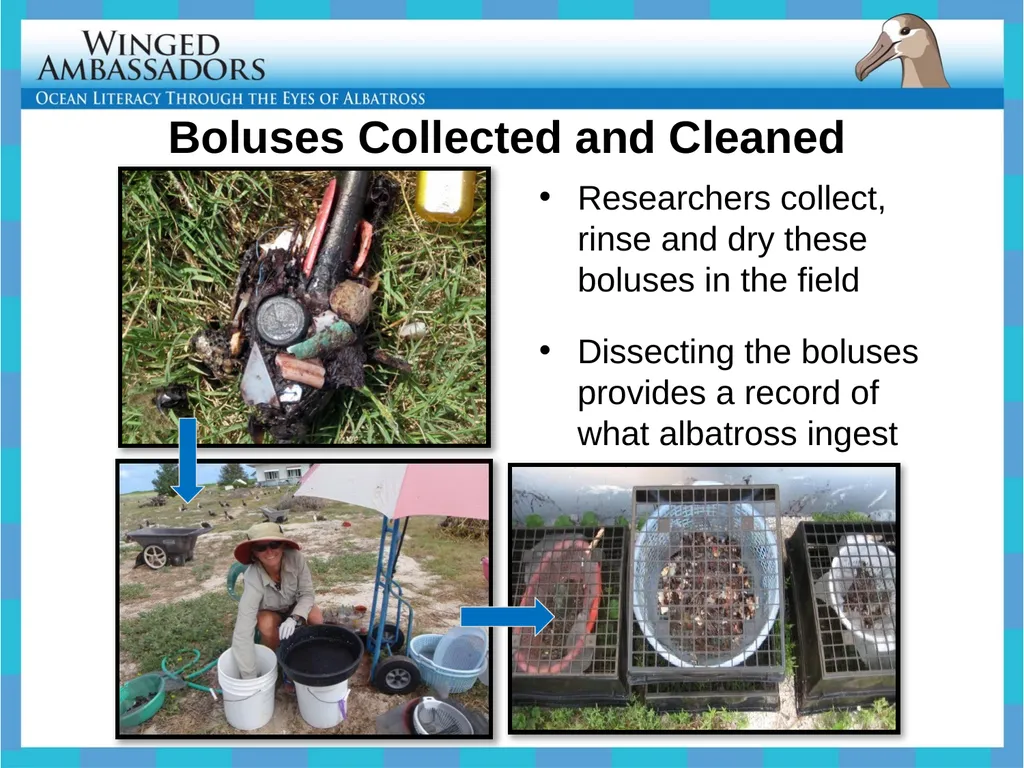
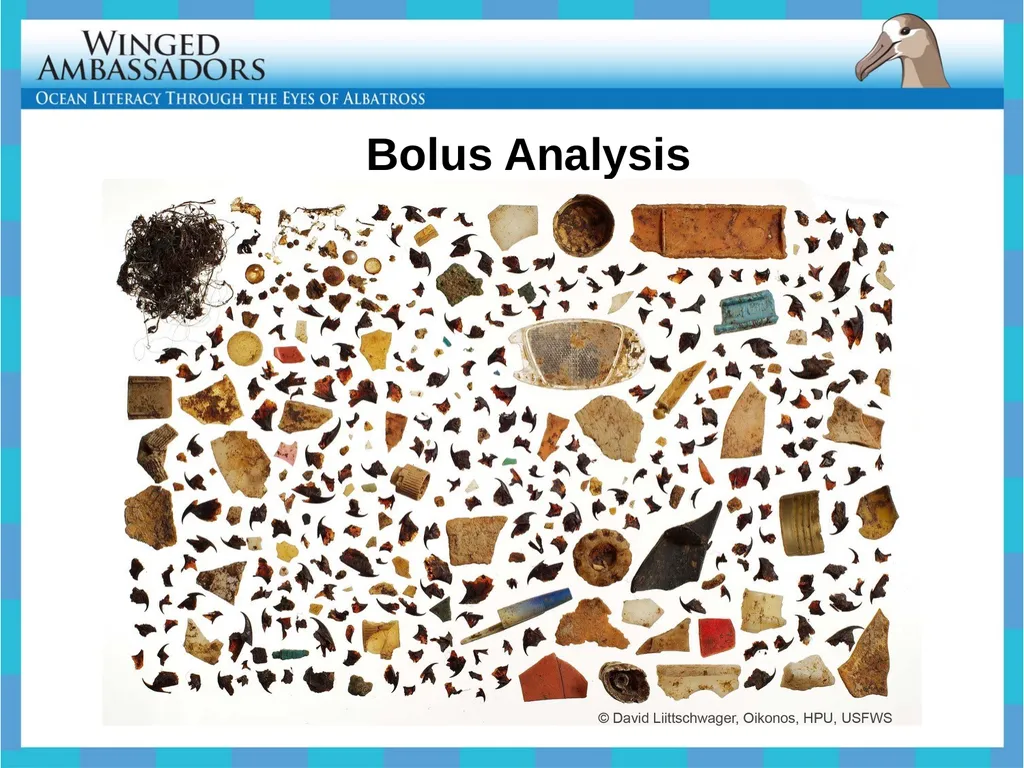
Boluses Collected and Cleaned Dissecting the boluses provides a record of what albatross ingest Researchers collect, rinse and dry these boluses in the field<br>
16
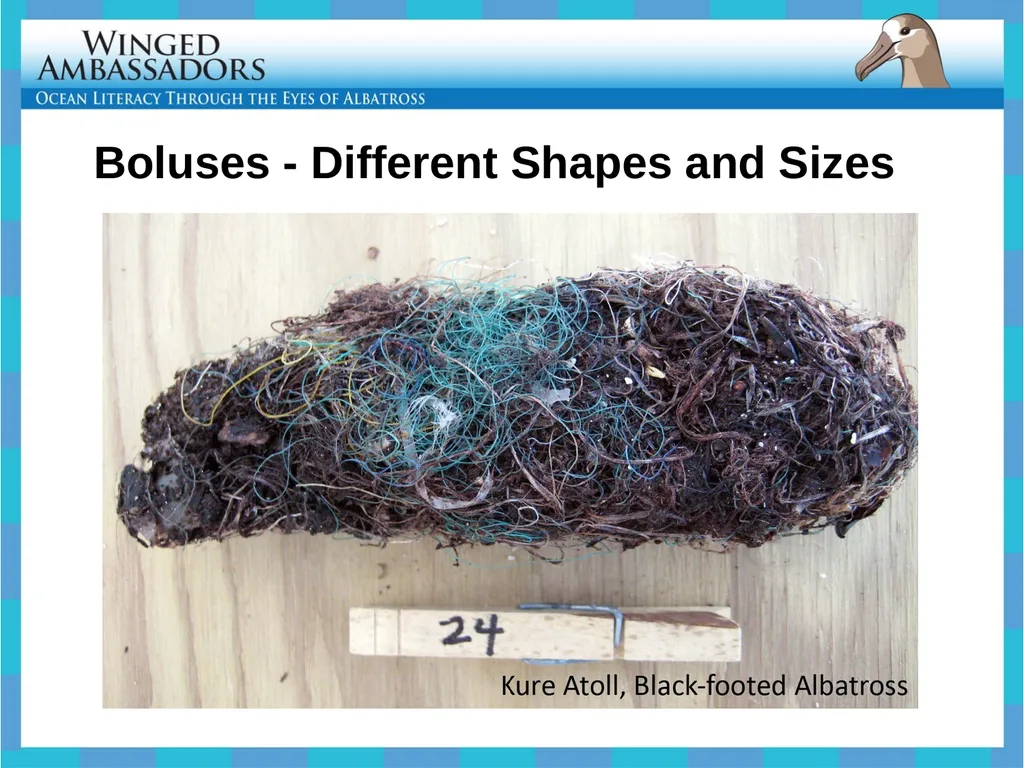
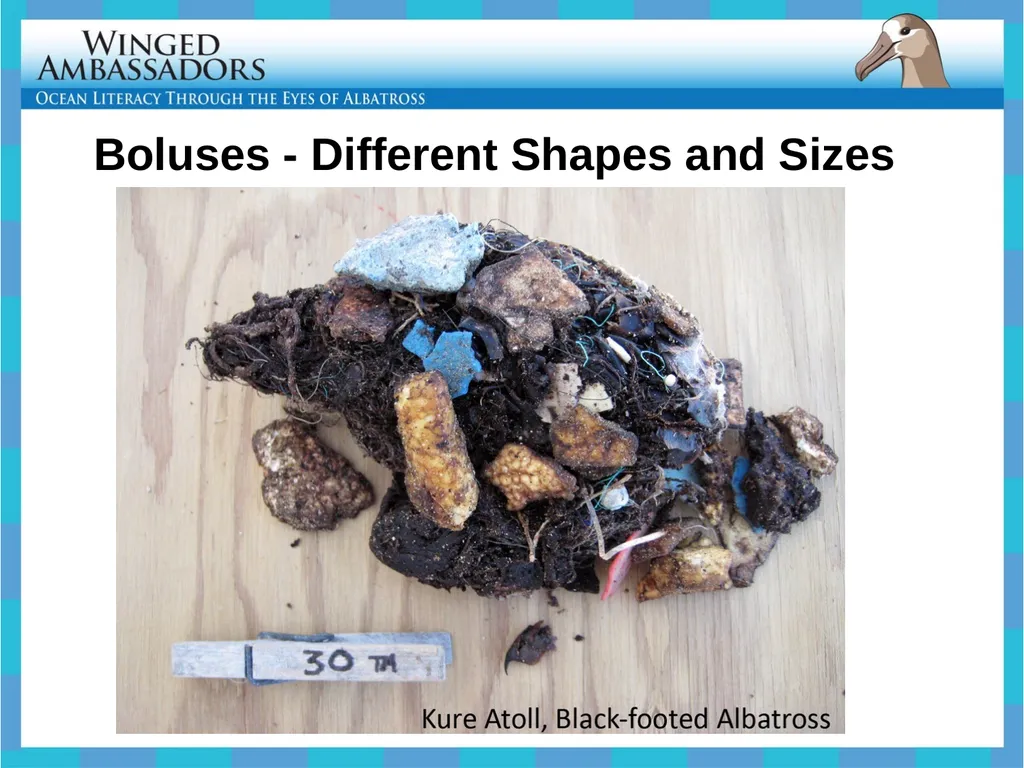
Boluses - Different Shapes and Sizes<br>
17
Boluses - Different Shapes and Sizes<br>
18
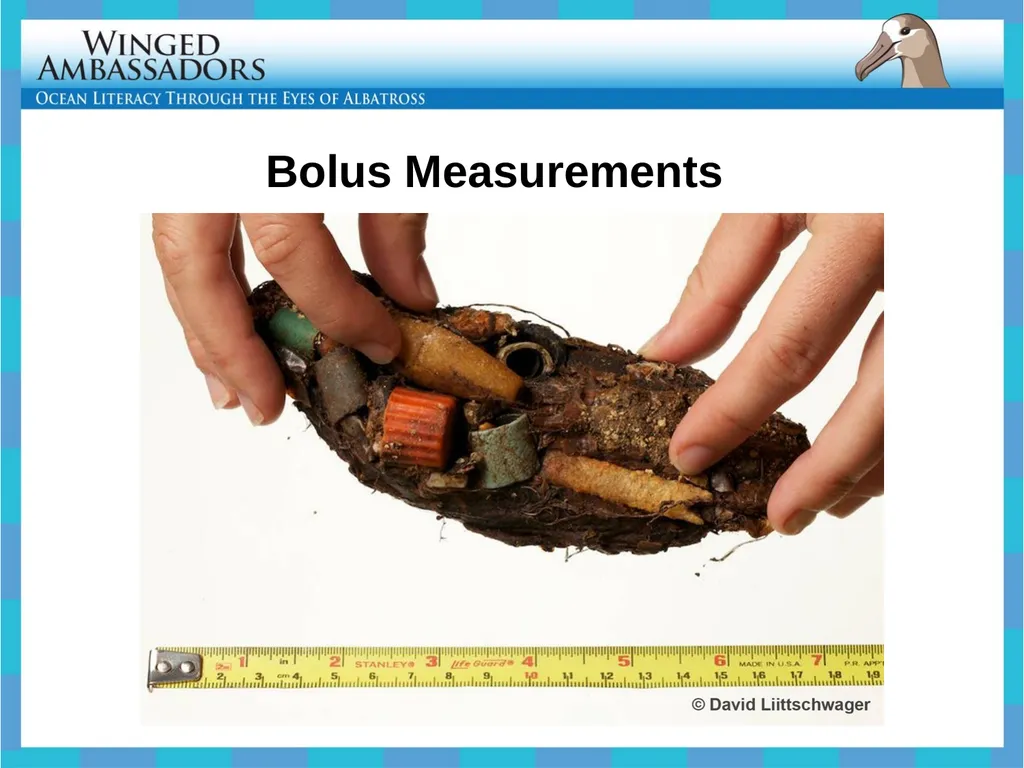
Bolus Measurements<br>
21
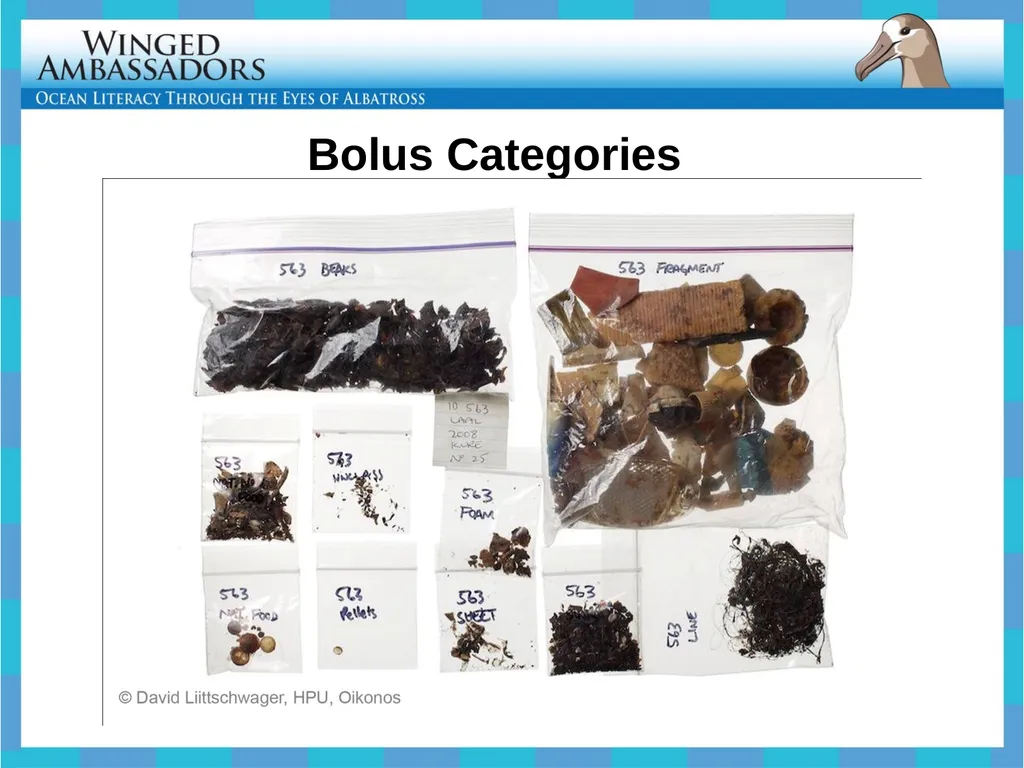
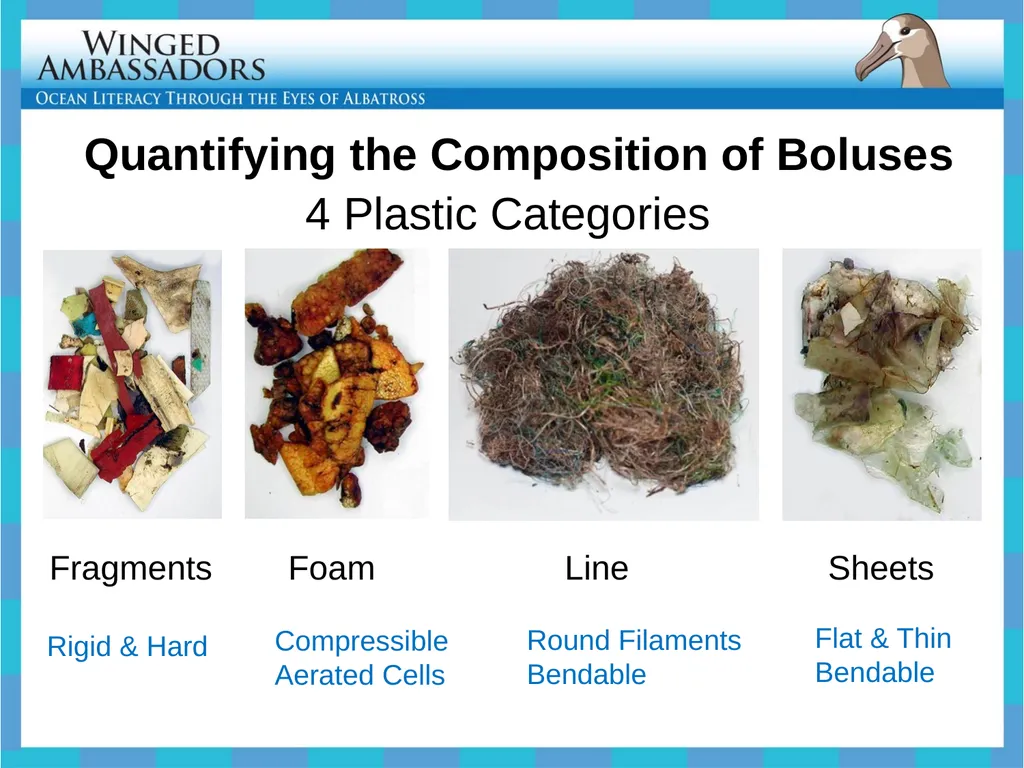
Quantifying the Composition of Boluses 4 Plastic Categories
Fragments Foam Line Sheets Rigid & Hard Compressible
Aerated Cells Round Filaments
Bendable Flat & Thin
Bendable<br>
22
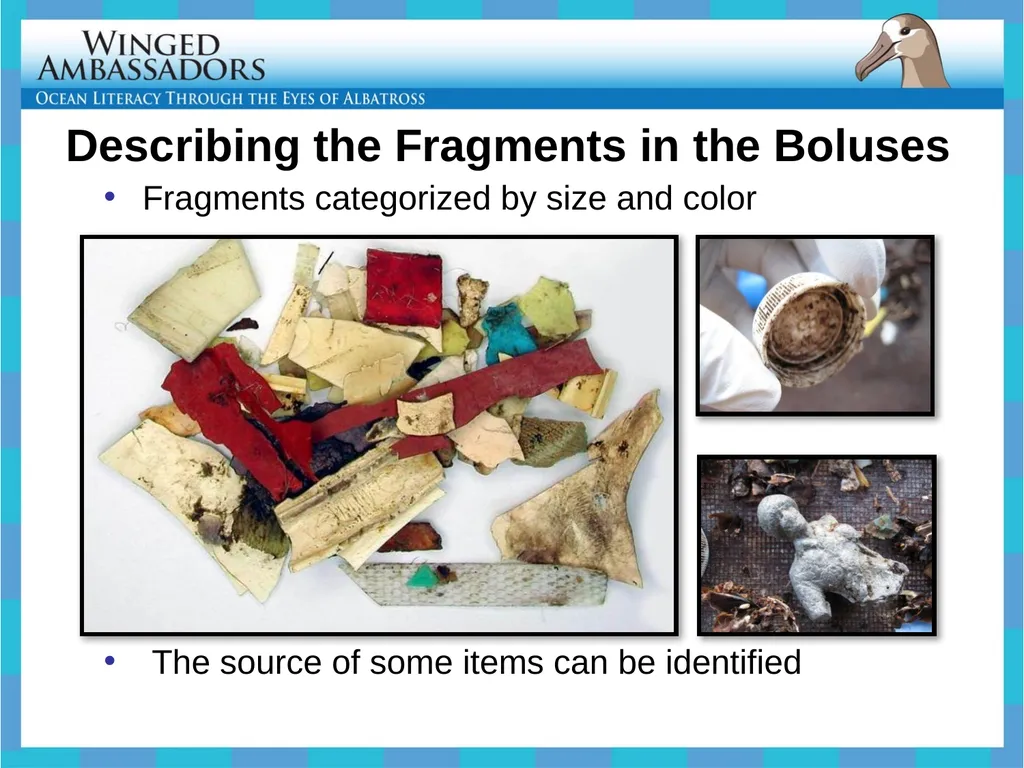
Describing the Fragments in the Boluses Fragments categorized by size and color
The source of some items can be identified<br>
23
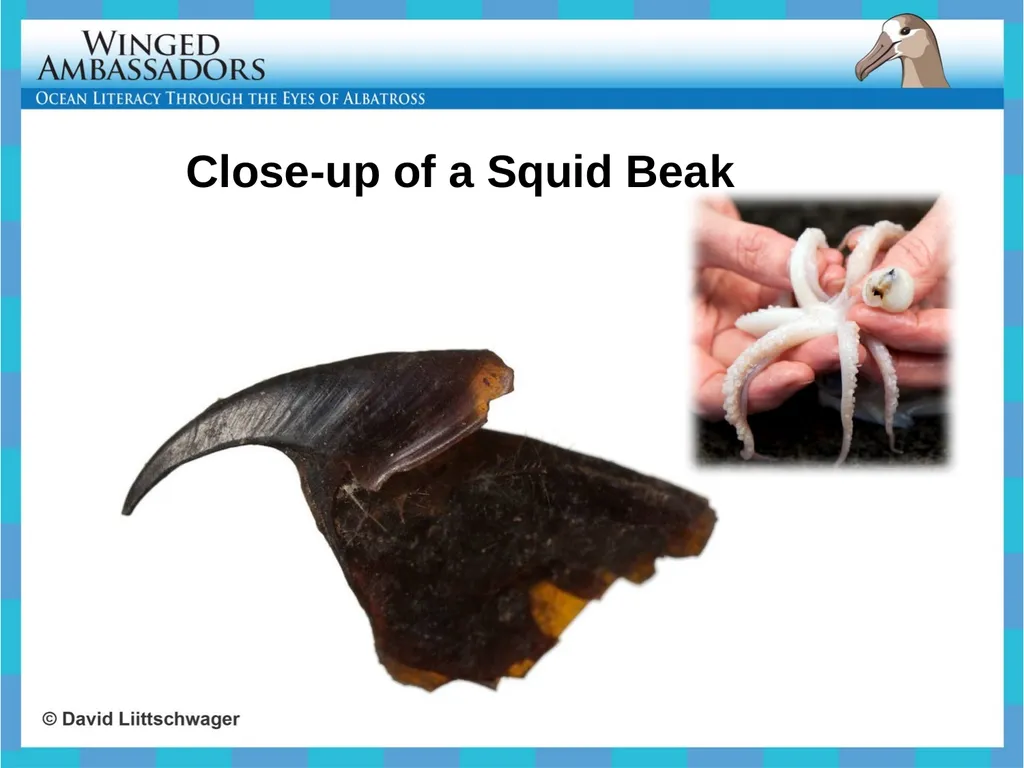
Close-up of a Squid Beak<br>
25
Explain Class Data Comparisons<br>
26
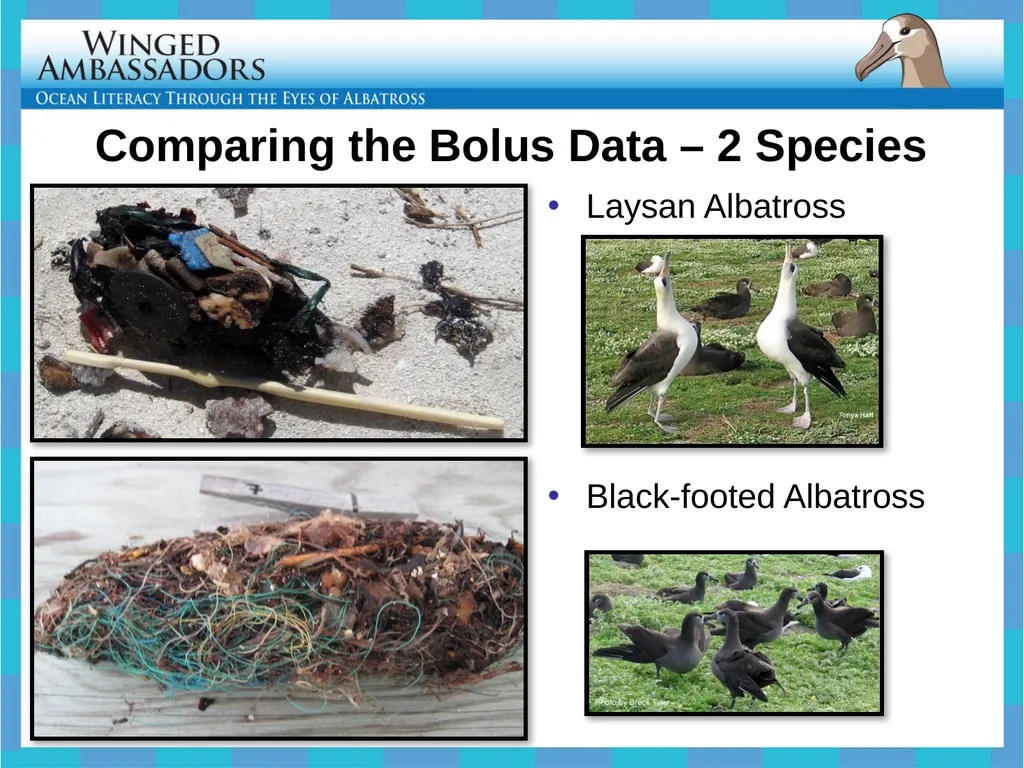
Comparing the Bolus Data – 2 Species Laysan Albatross
Black-footed Albatross<br>
27
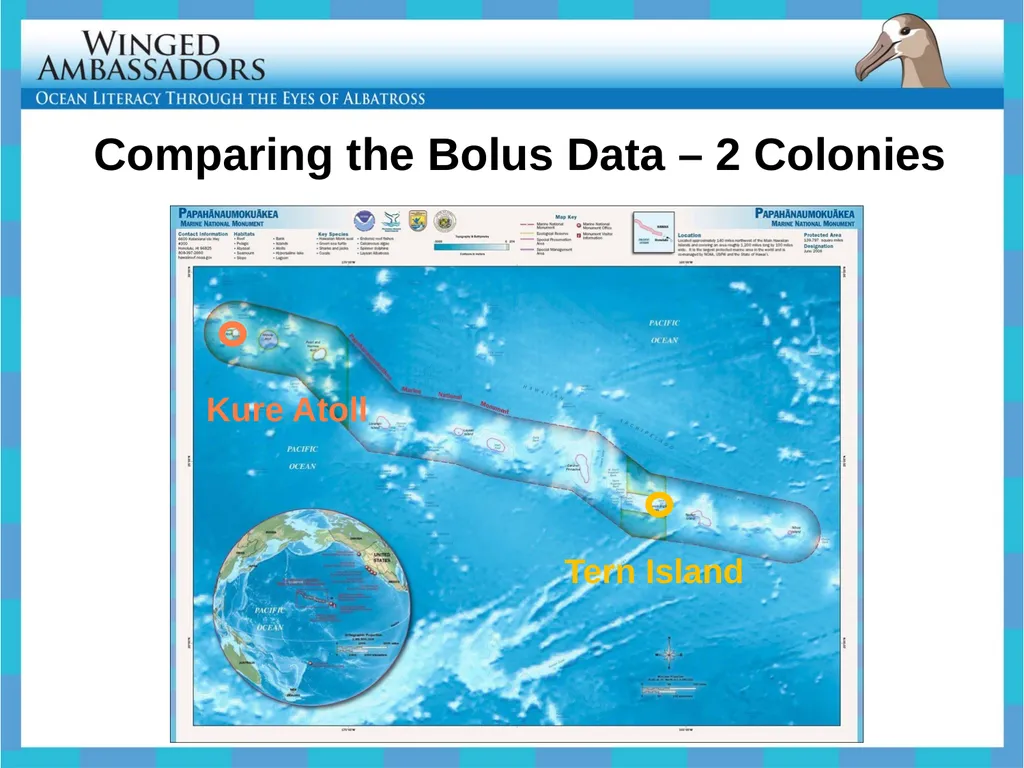
Comparing the Bolus Data – 2 Colonies<br>
28
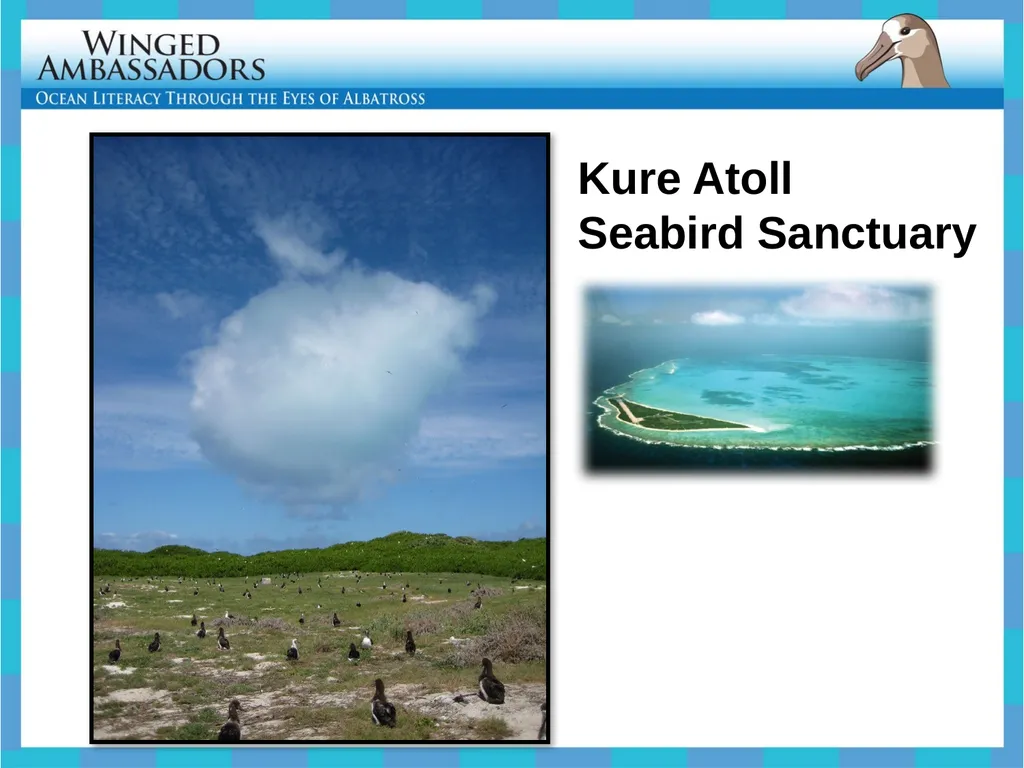
Kure Atoll
Seabird Sanctuary<br>
29
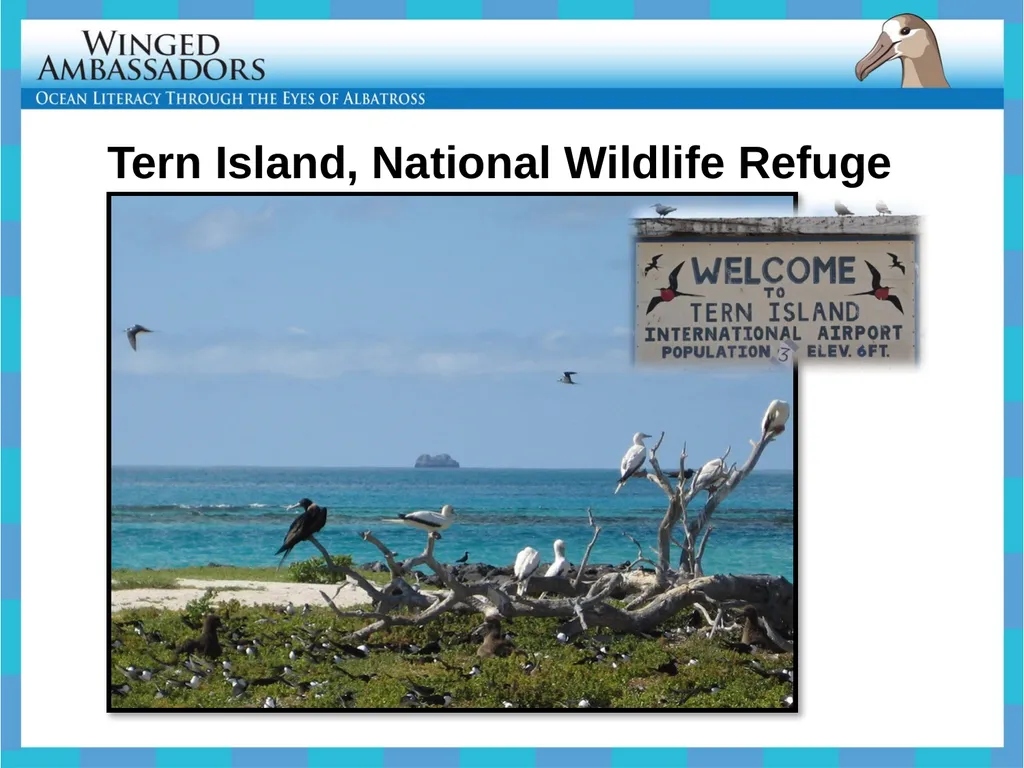
Tern Island, National Wildlife Refuge<br>
30
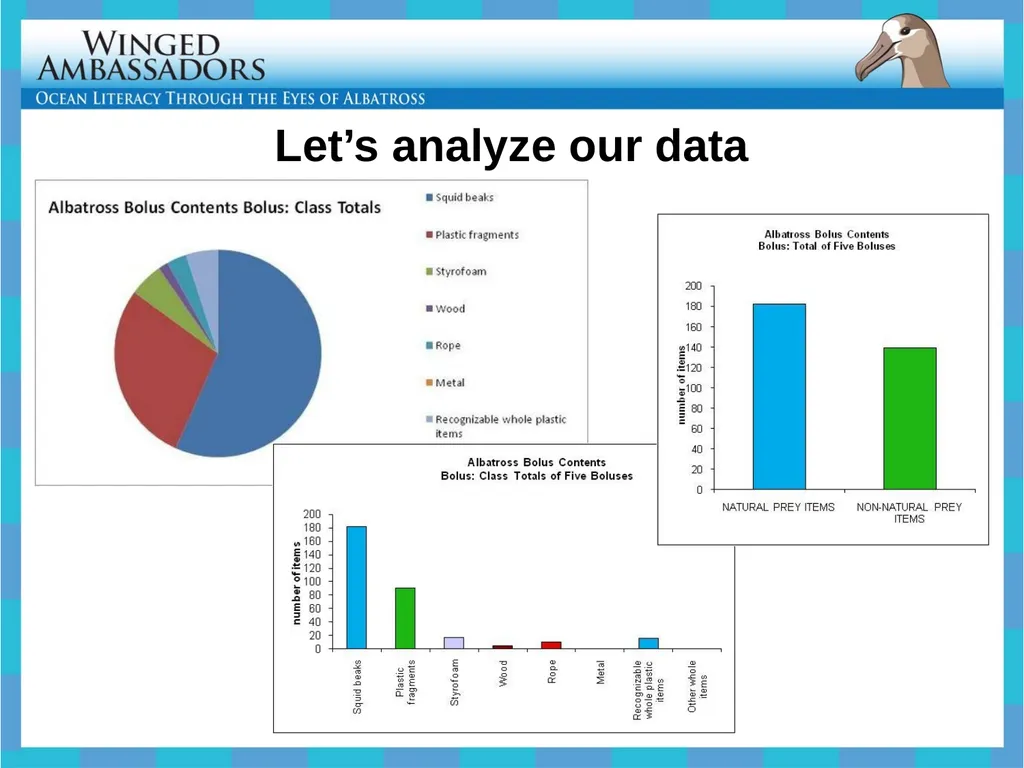
Let’s analyze our data<br>
31
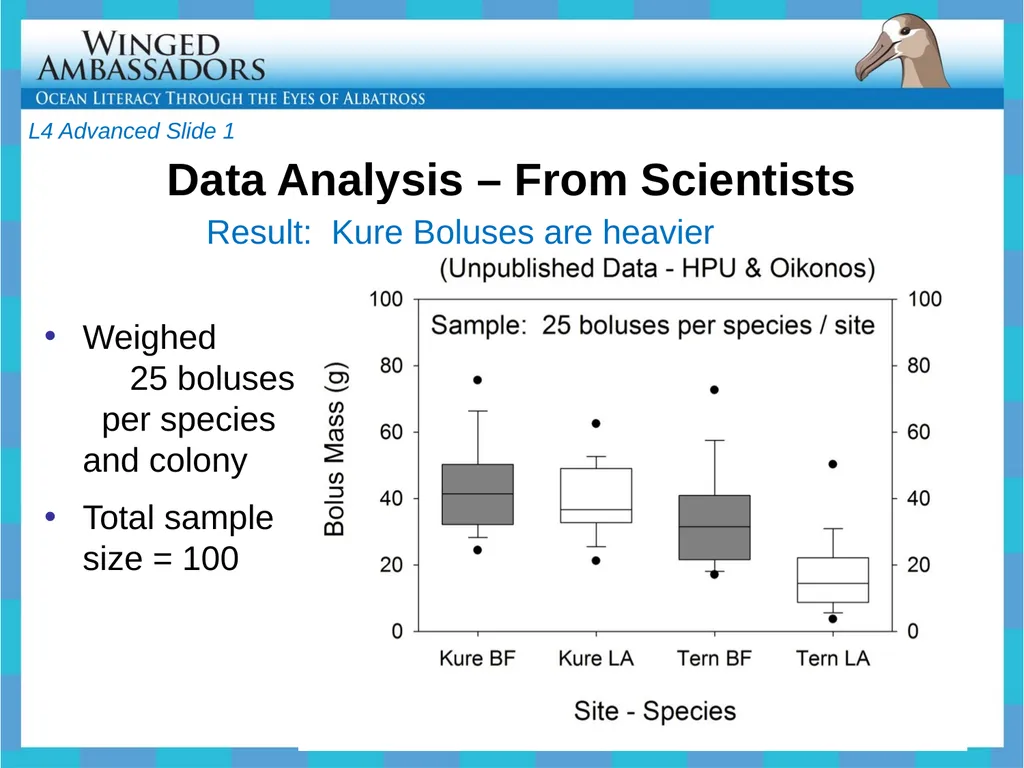
Data Analysis – From Scientists Weighed 25 boluses per species and colony
Total sample size = 100 Result: Kure Boluses are heavier L4 Advanced Slide 1<br>
32
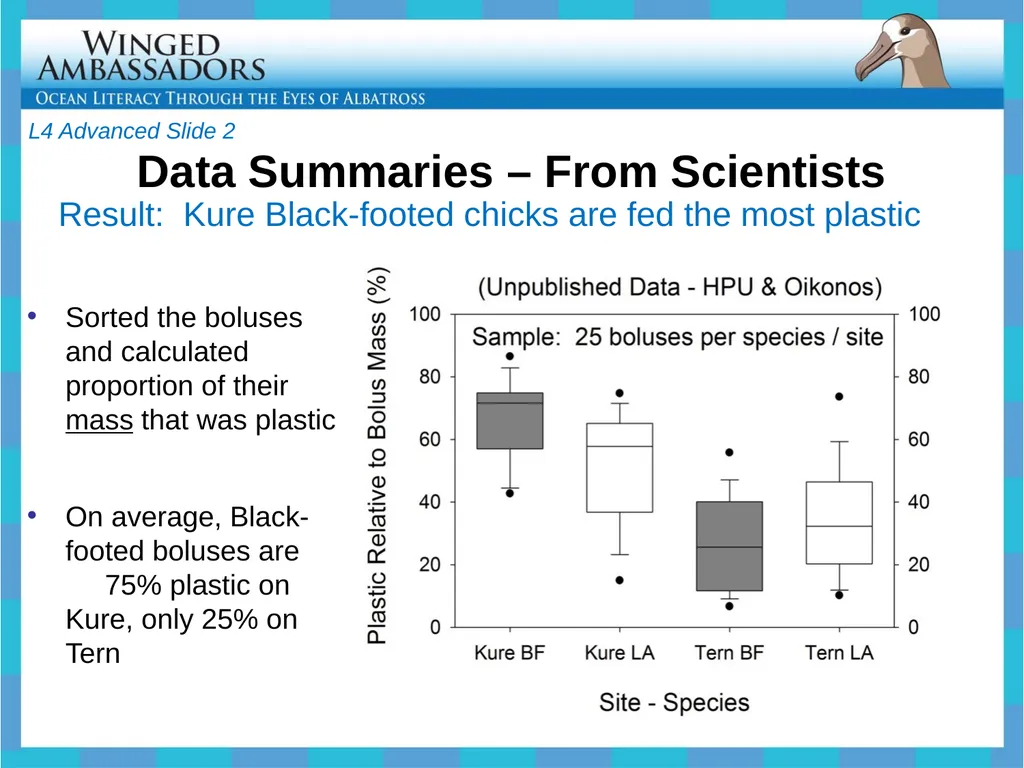
Data Summaries – From Scientists Result: Kure Black-footed chicks are fed the most plastic Sorted the boluses and calculated proportion of their mass that was plastic
On average, Black-footed boluses are 75% plastic on Kure, only 25% on Tern L4 Advanced Slide 2<br>
33
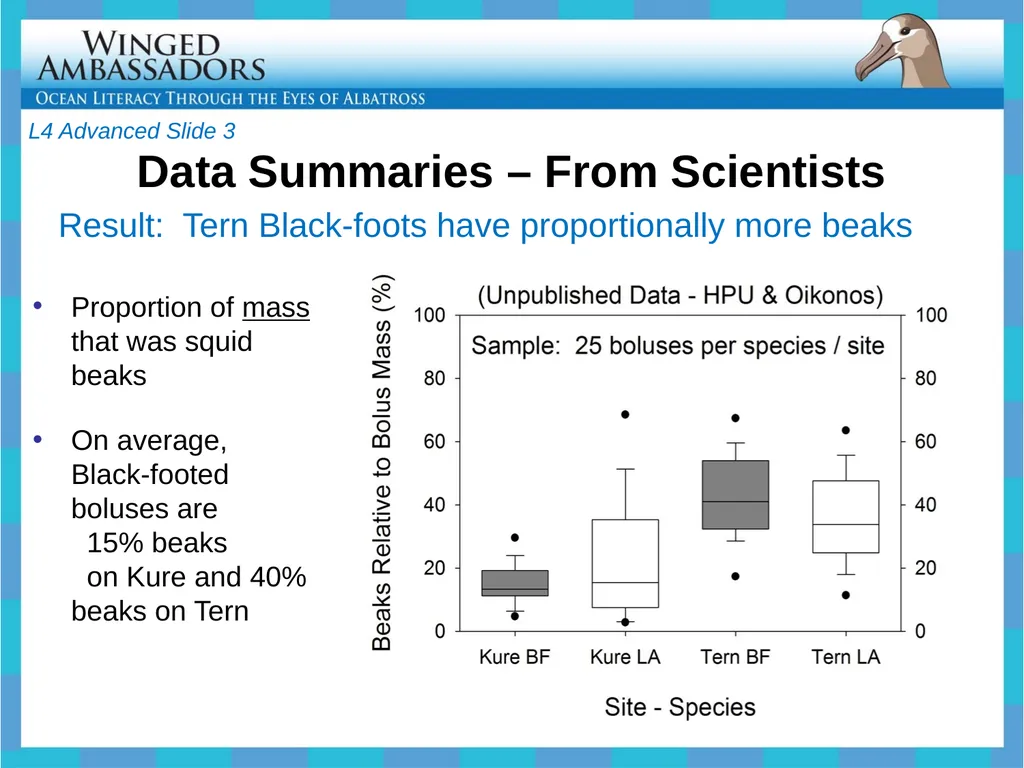
Data Summaries – From Scientists Result: Tern Black-foots have proportionally more beaks Proportion of mass that was squid beaks
On average, Black-footed boluses are 15% beaks on Kure and 40% beaks on Tern L4 Advanced Slide 3<br>
34
Elaborate Marine Debris<br>
35
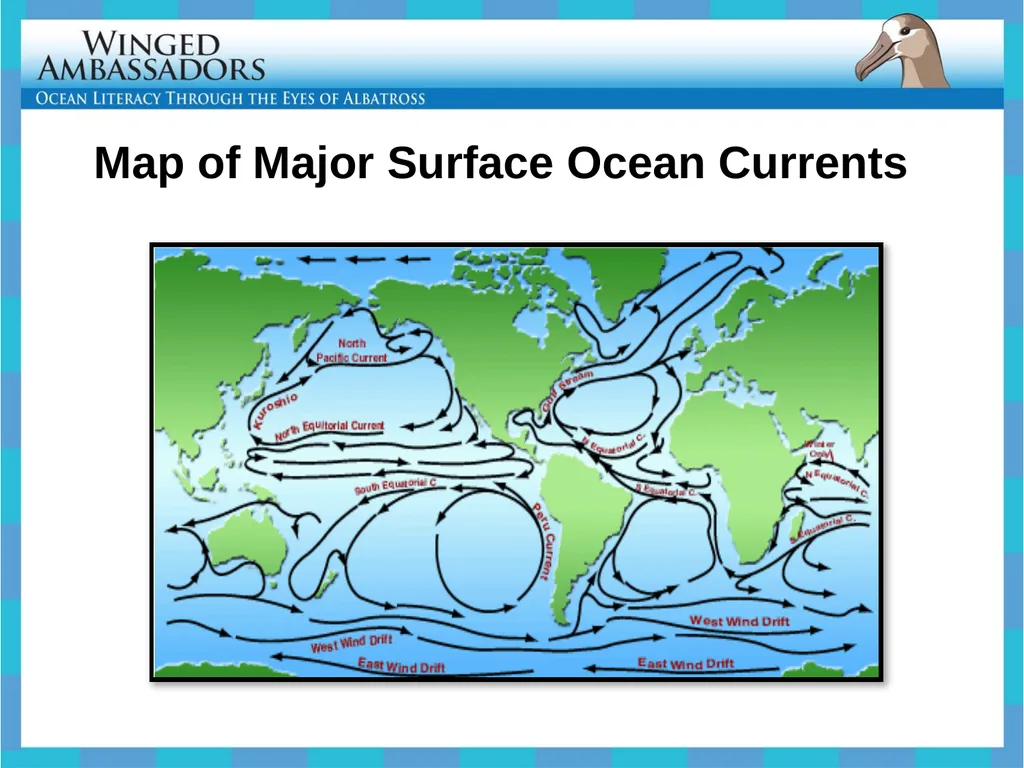
Map of Major Surface Ocean Currents<br>
36
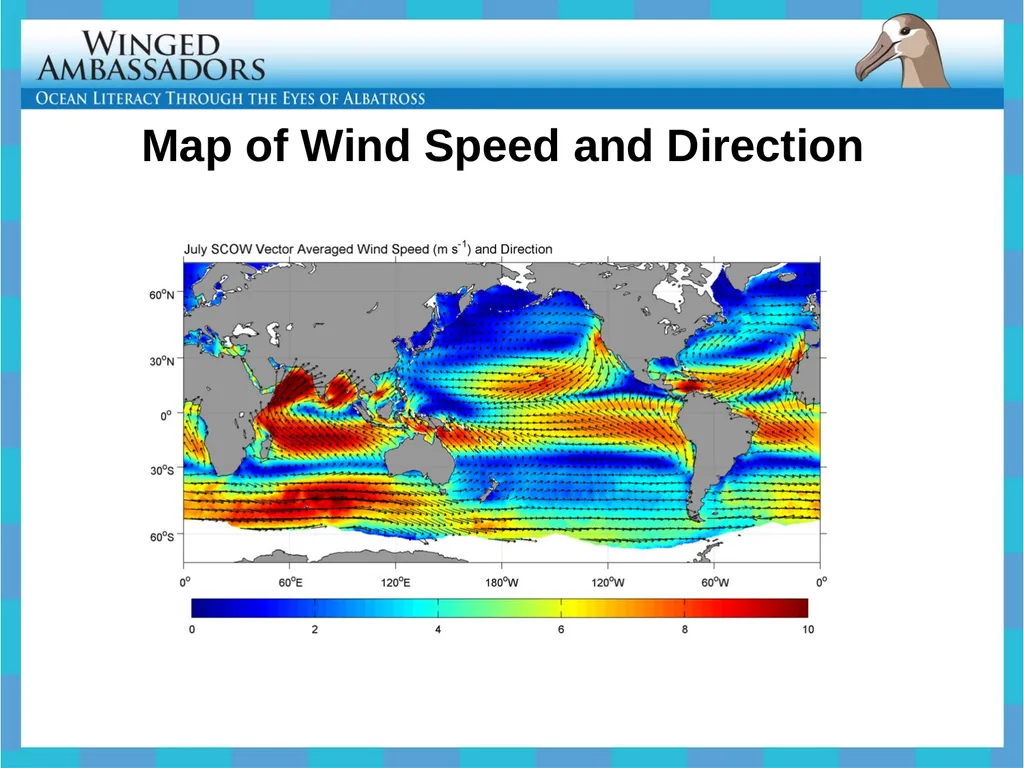
Map of Wind Speed and Direction<br>
37
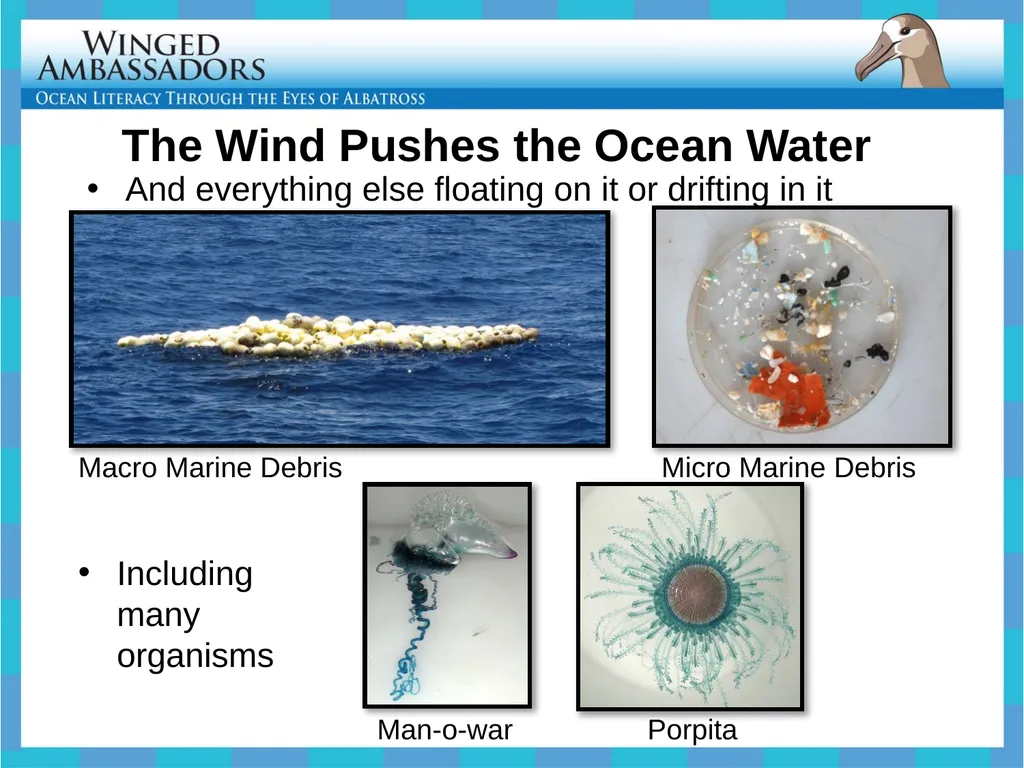
The Wind Pushes the Ocean Water And everything else floating on it or drifting in it Man-o-war Porpita Including many organisms Macro Marine Debris Micro Marine Debris<br>
38
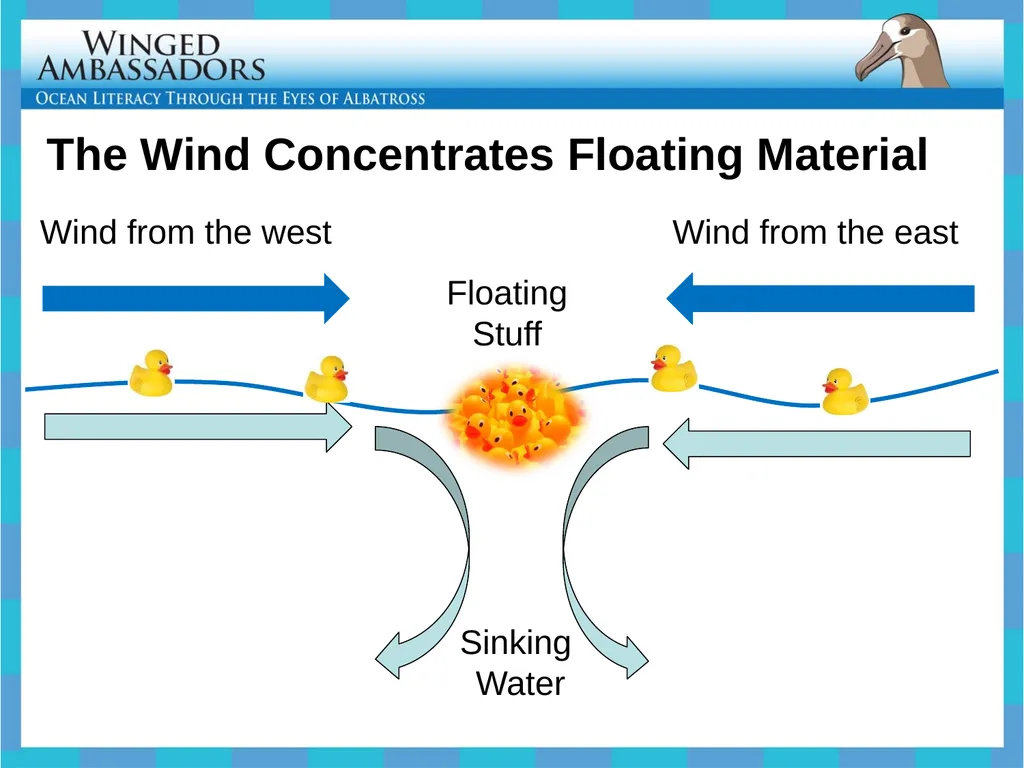
The Wind Concentrates Floating Material Wind from the west Wind from the east Sinking
Water Floating
Stuff<br>
39
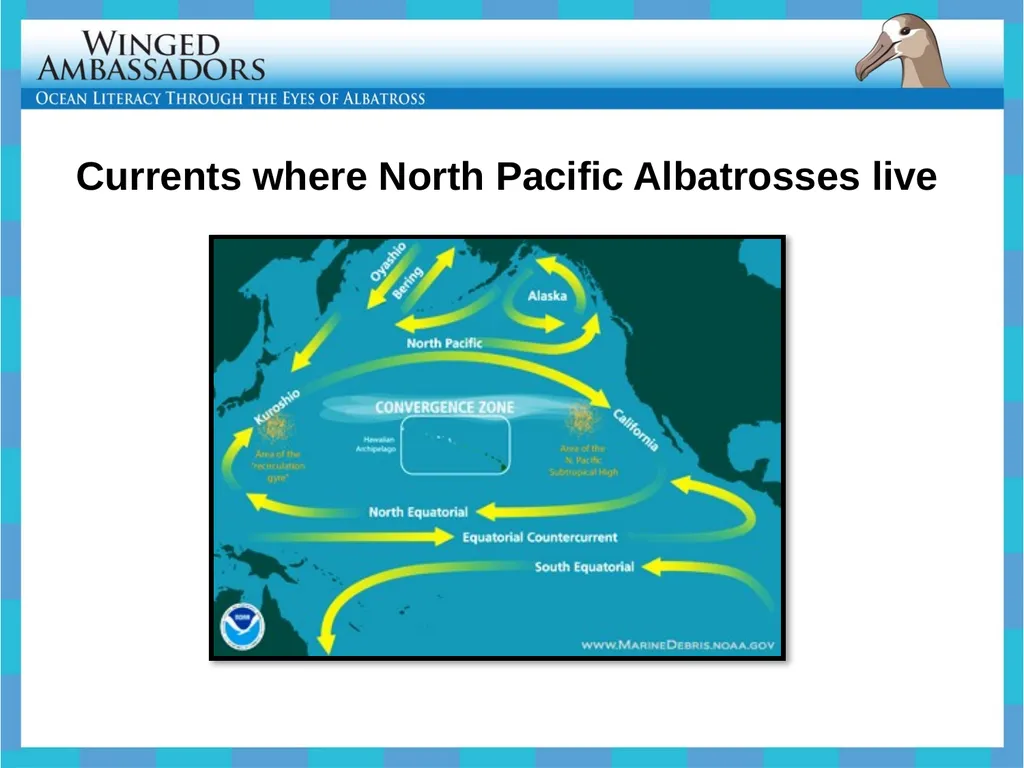
Currents where North Pacific Albatrosses live<br>
40
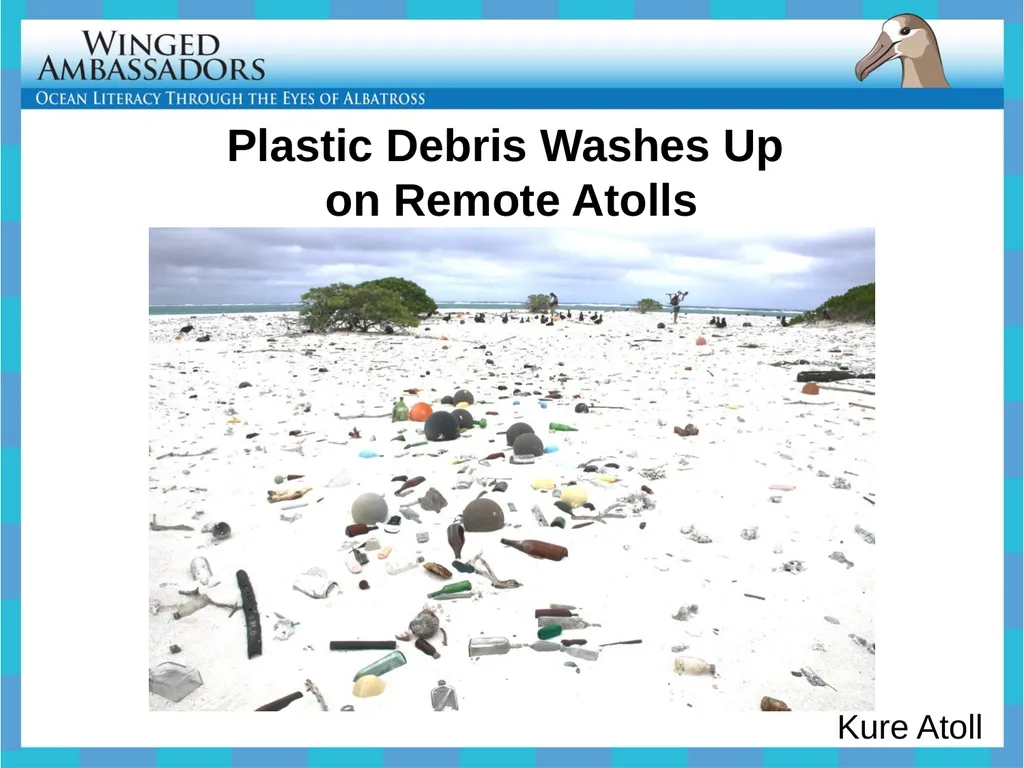
Plastic Debris Washes Up �on Remote Atolls Kure Atoll<br>
41
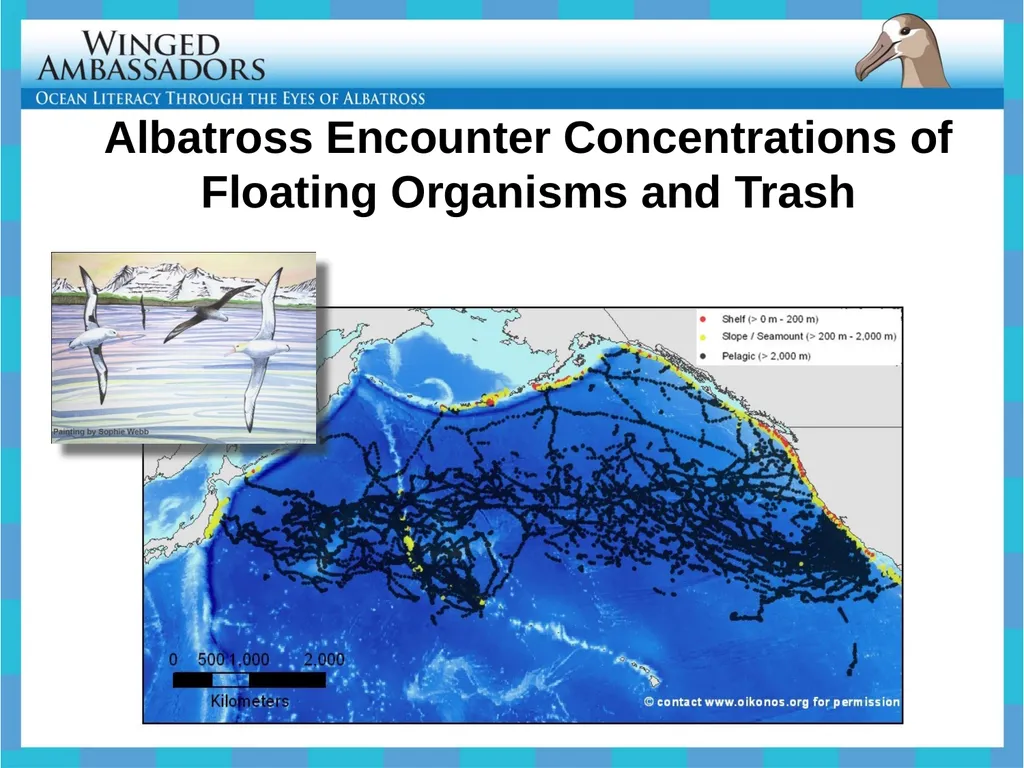
Albatross Encounter Concentrations of Floating Organisms and Trash<br>
42
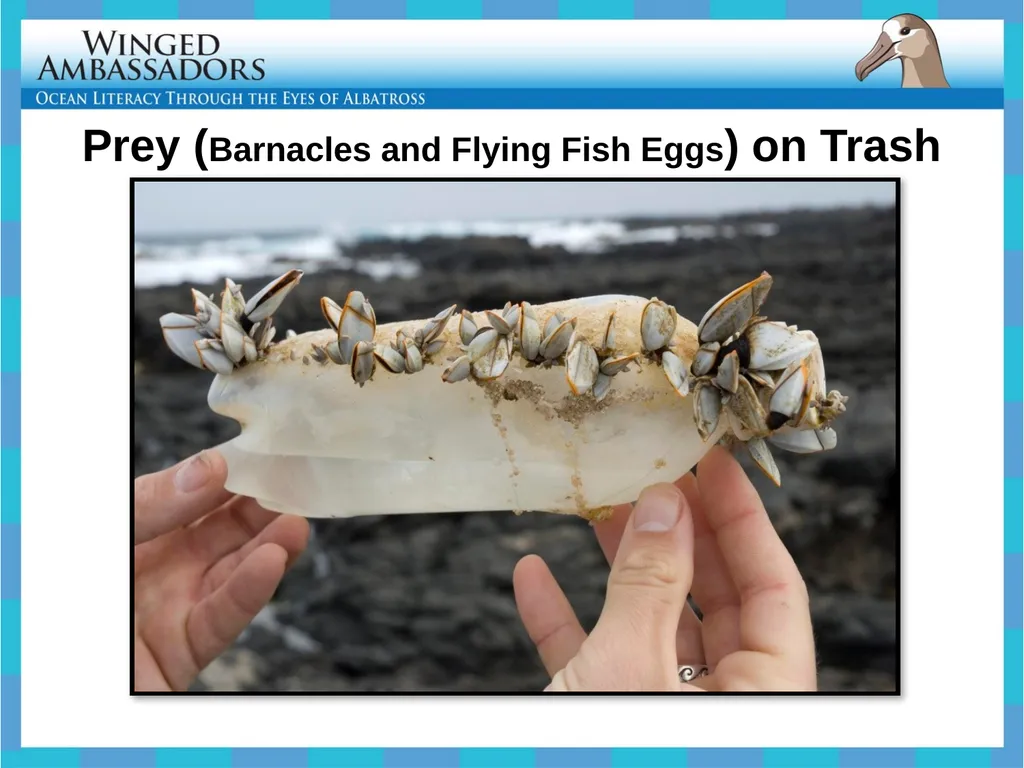
Prey (Barnacles and Flying Fish Eggs) on Trash<br>
43
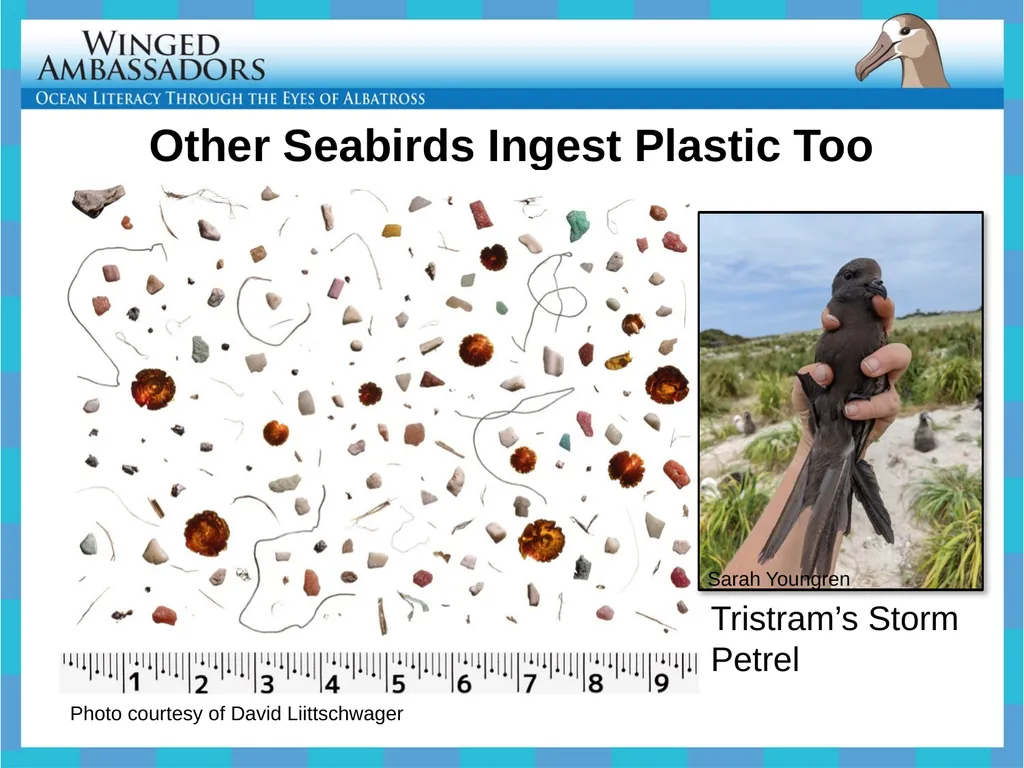
Other Seabirds Ingest Plastic Too Photo courtesy of David Liittschwager Sarah Youngren Tristram’s Storm
Petrel<br>
44
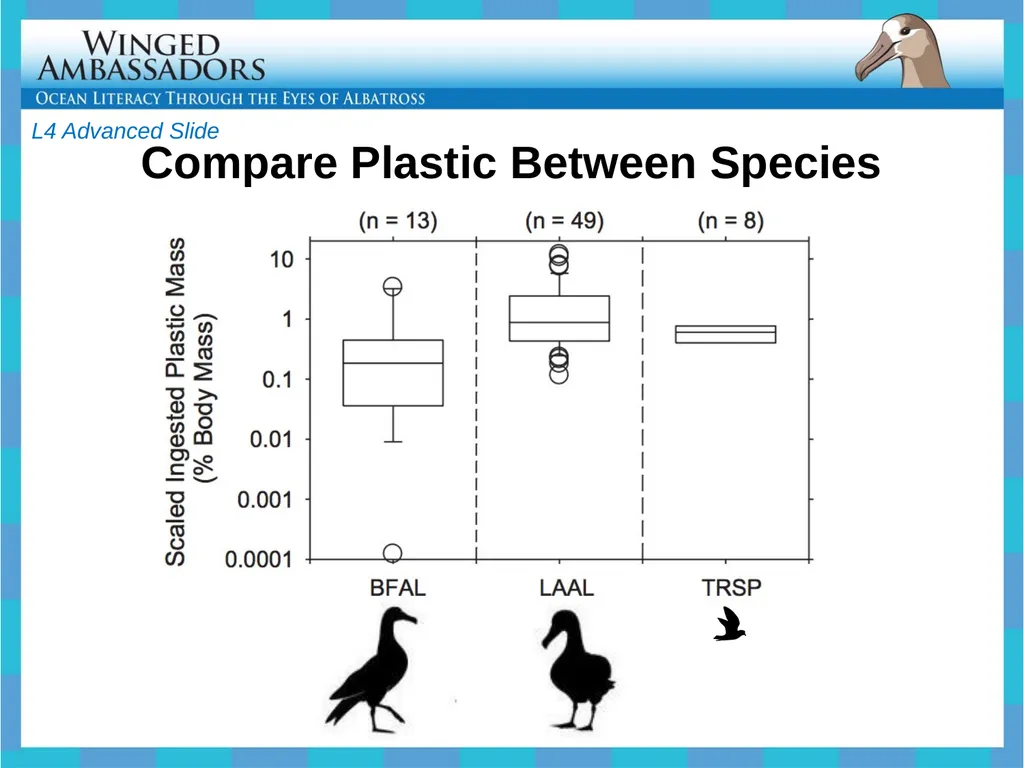
Compare Plastic Between Species L4 Advanced Slide<br>
45
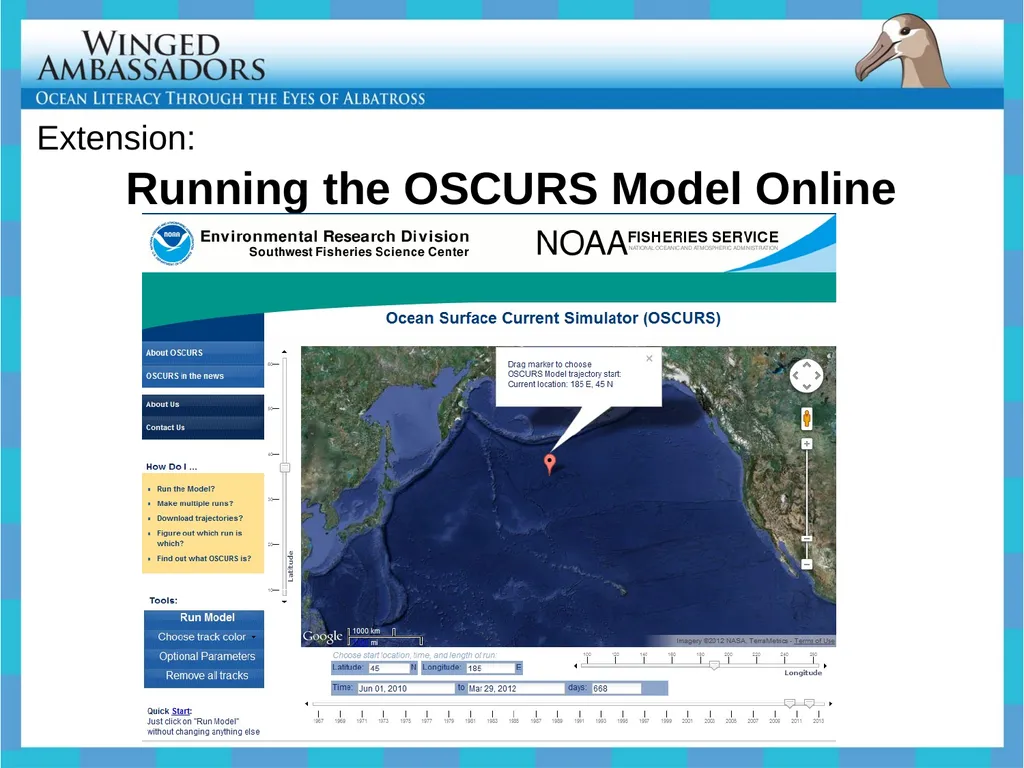
Running the OSCURS Model Online Extension:<br>
46
Use Agreement This presentation was developed for Cordell Bank National Marine Sanctuary and Papahānaumokuākea Marine National Monument by Meghan Marrero of Mercy College and Oikonos - Ecosystem Knowledge.
�Teachers, educators, researchers and students may incorporate these materials into their lesson plans, presentations, and worksheets in hard copy and digital format for internal educational use only, not into any publication for external distribution. ��All photos, art, video and data have been contributed free of charge to create this product for educational use. Content may be copyrighted and/or owned by individuals and entities other than, and in addition to, NOAA and Oikonos. Credits for all the media are embedded or included, please retain credits when reproducing.��No organization or person (whether an educational body or not) may incorporate this material into any media for promotional or commercial purpose whatsoever. ��Please contact Oikonos or NOAA to request further use of any images, art, video, data or text included in this presentation – we will contact contributing authors.
Contact: WingedAmbassadors@oikonos.org�All resources for this curriculum are available at :
www.cordellbank.noaa/gov/education/teachers.html
www.papahanaumokuakea.gov/education/wa.html�www.oikonos.org/education<br>
47
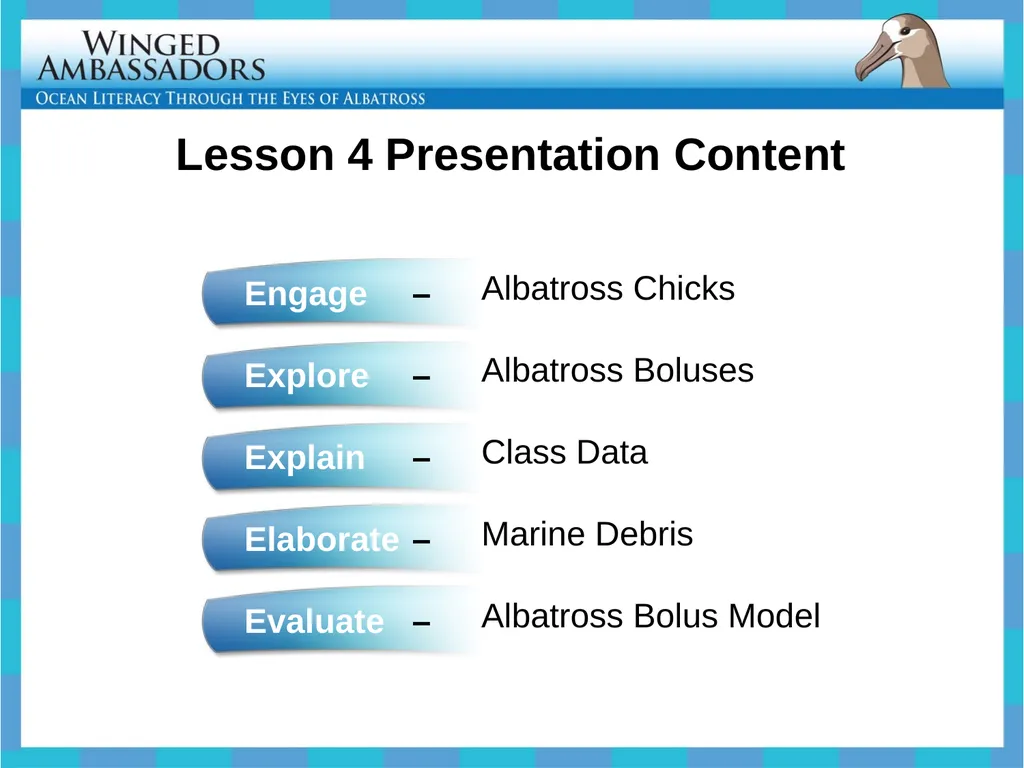
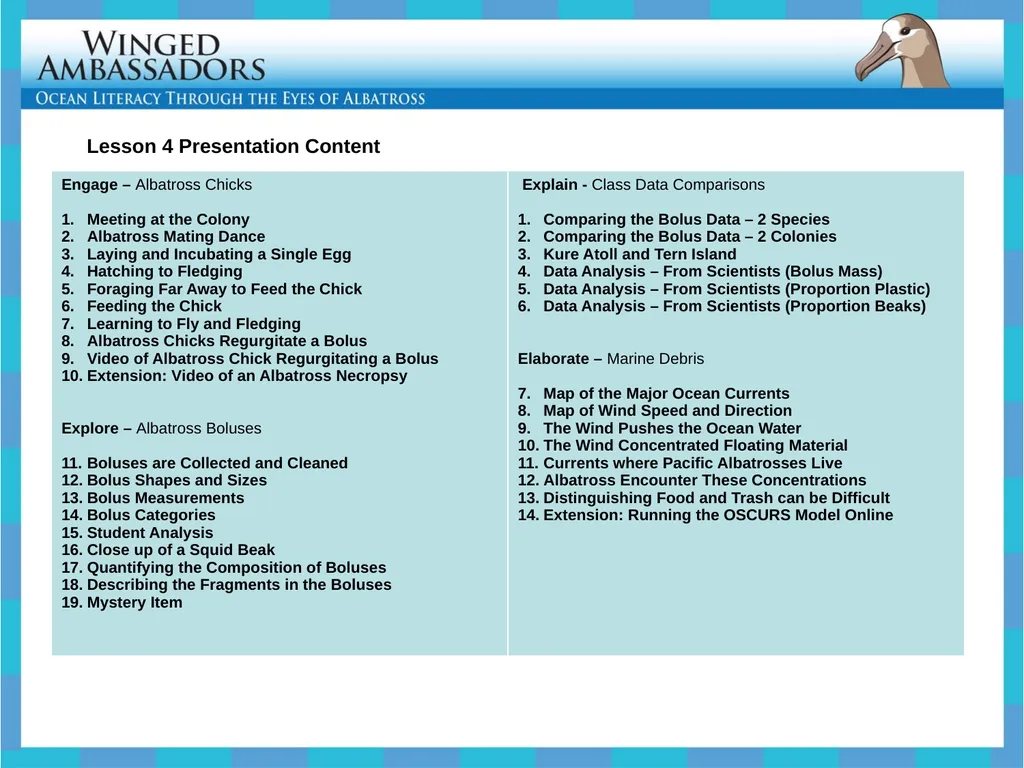
Lesson 4 Presentation Content<br>