Lesson 6 Work Understanding Questions Lesson 06 Work Understanding Questions ESOL in Context for Work and Study Lesson 6 Understanding Questions Where is this? Lesson 6 Understanding Questions In any language you 1 Ask Questions 2
"Lesson 6 Work Understanding Questions Lesson 06" is the property of its rightful owner. Permission is granted to
download and print the materials on this website for personal, non-commercial use only, and to display it
on your personal computer provided you do not modify the materials and that you retain all copyright
notices contained in the materials. By downloading content from our website, you accept the terms of this
agreement.
Presentation Transcript
01
Lesson 6 Work Understanding Questions Lesson
06 Work
Understanding Questions<br>
02
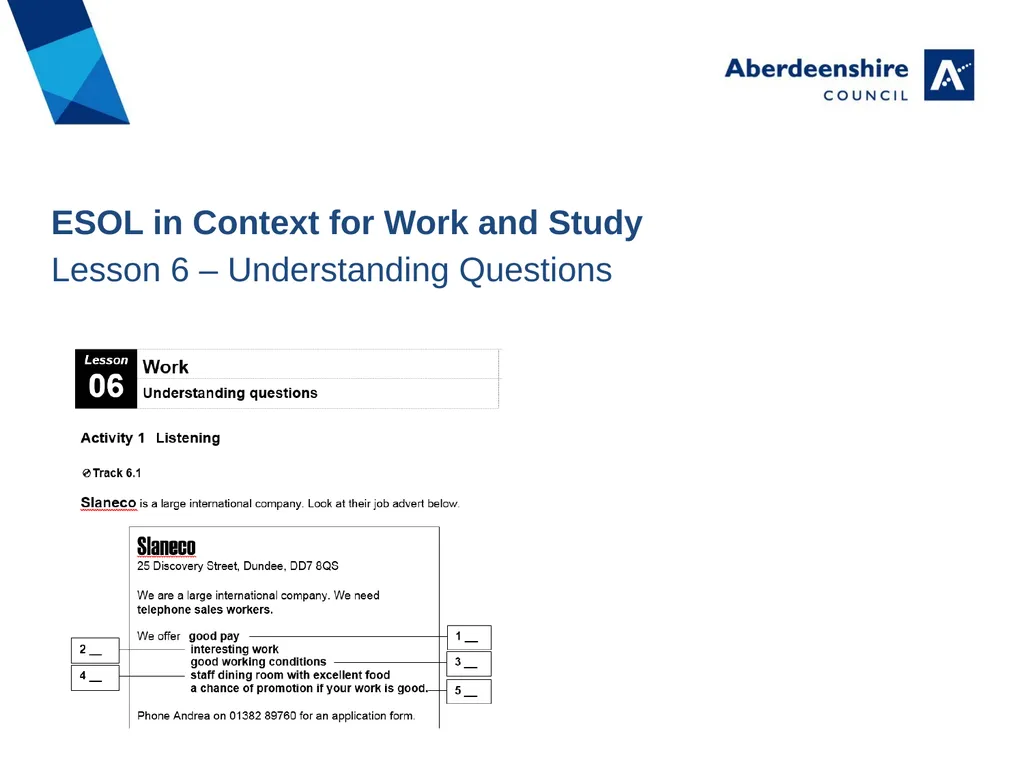
ESOL in Context for Work and Study Lesson 6 – Understanding Questions<br>
03
Where is this?<br>
04
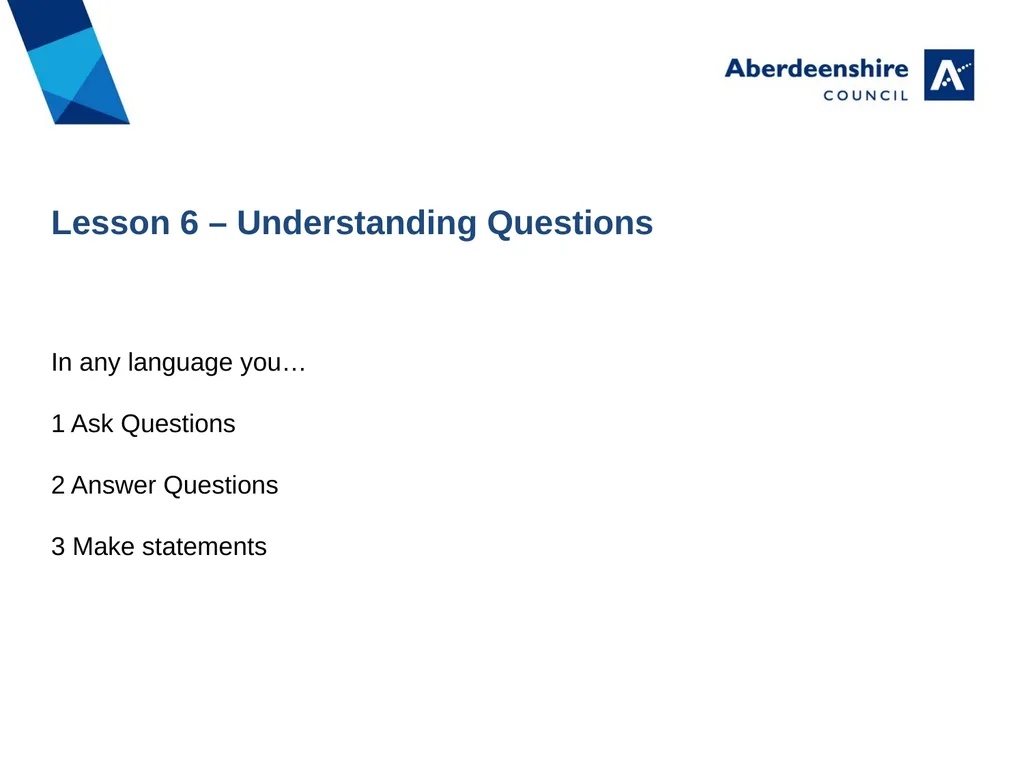
Lesson 6 – Understanding Questions In any language you…
1 Ask Questions
2 Answer Questions
3 Make statements<br>
05
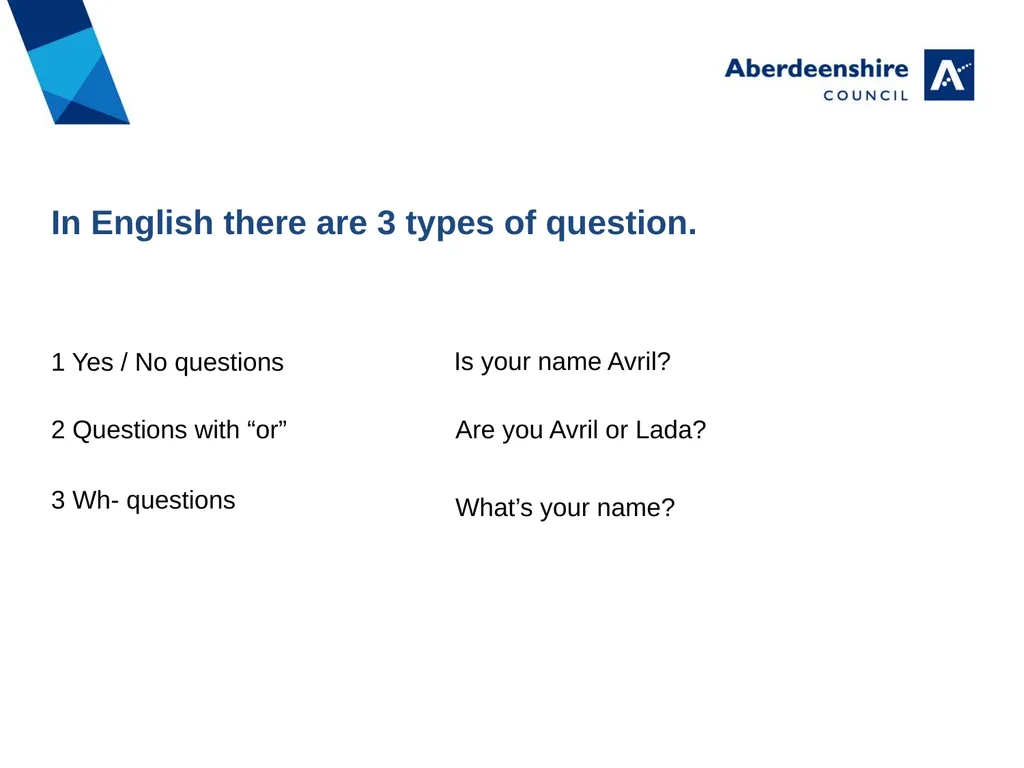
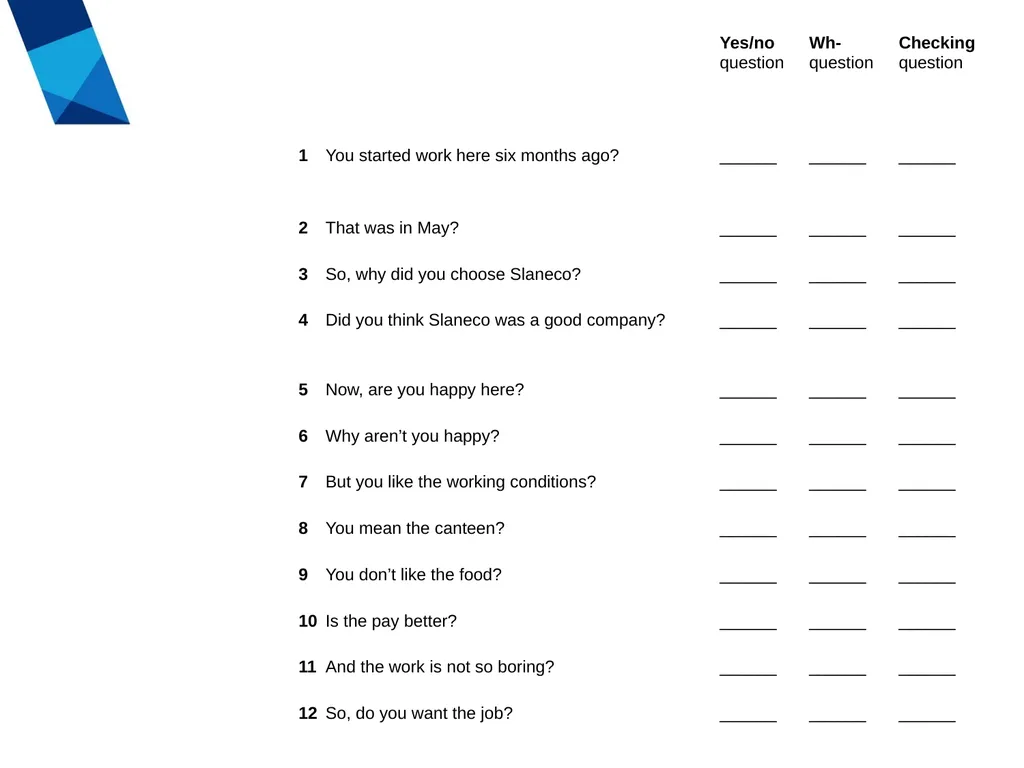
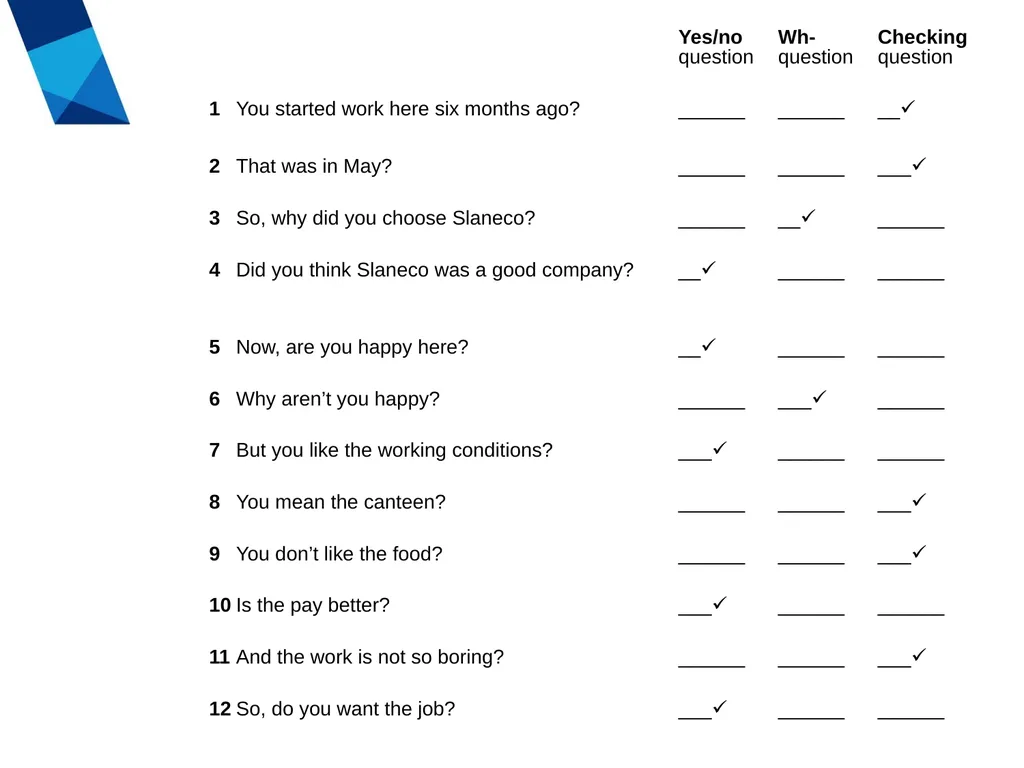
In English there are 3 types of question. 1 Yes / No questions 2 Questions with “or” 3 Wh- questions Is your name Avril? Are you Avril or Lada? What’s your name?<br>
06
Ask me a yes/ no question.<br>
07
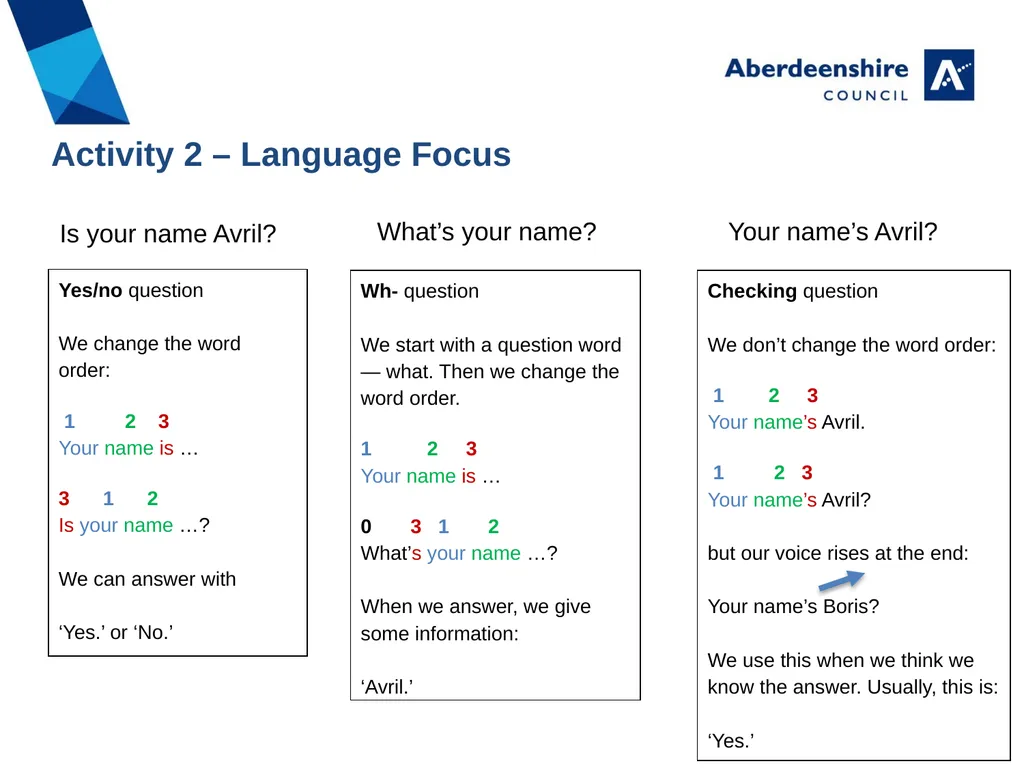
Activity 2 – Language Focus Yes/no question
We change the word order:
1 2 3
Your name is …
3 1 2
Is your name …?
We can answer with
‘Yes.’ or ‘No.’ Is your name Avril? Wh- question
We start with a question word — what. Then we change the word order.
1 2 3
Your name is …
0 3 1 2
What’s your name …?
When we answer, we give some information:
‘Avril.’ Checking question
We don’t change the word order:
1 2 3
Your name’s Avril.
1 2 3
Your name’s Avril?
but our voice rises at the end:
Your name’s Boris?
We use this when we think we know the answer. Usually, this is:
‘Yes.’ What’s your name? Your name’s Avril?<br>
08
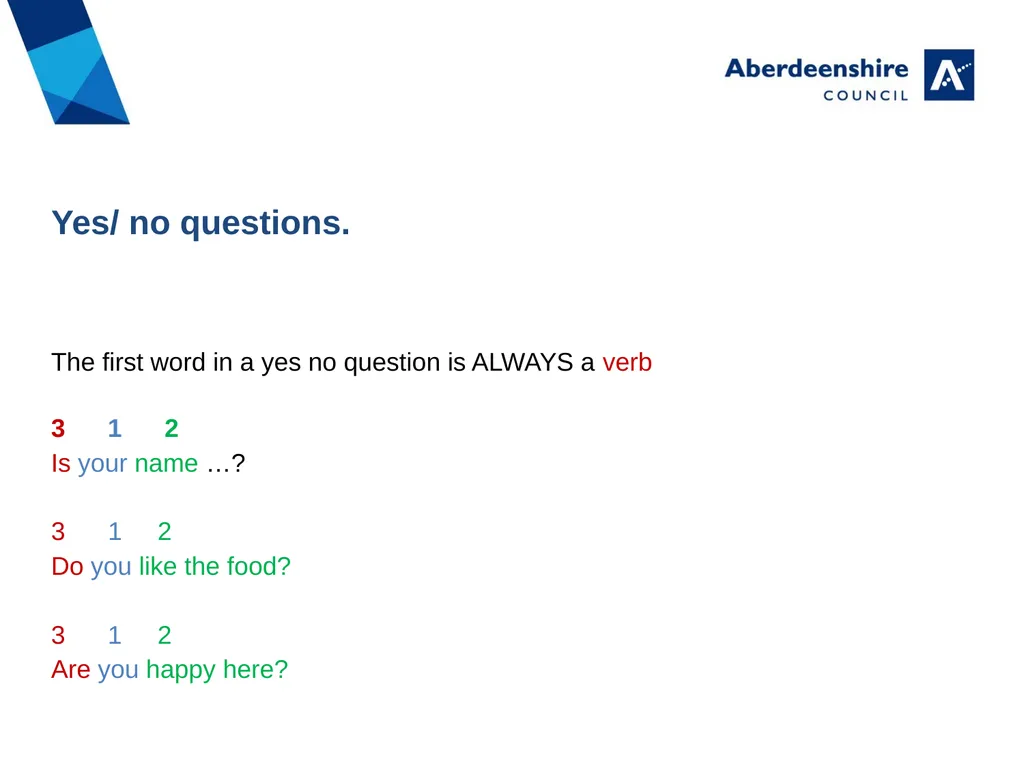
Yes/ no questions. The first word in a yes no question is ALWAYS a verb
3 1 2
Is your name …?
3 1 2
Do you like the food?
3 1 2
Are you happy here?<br>
09
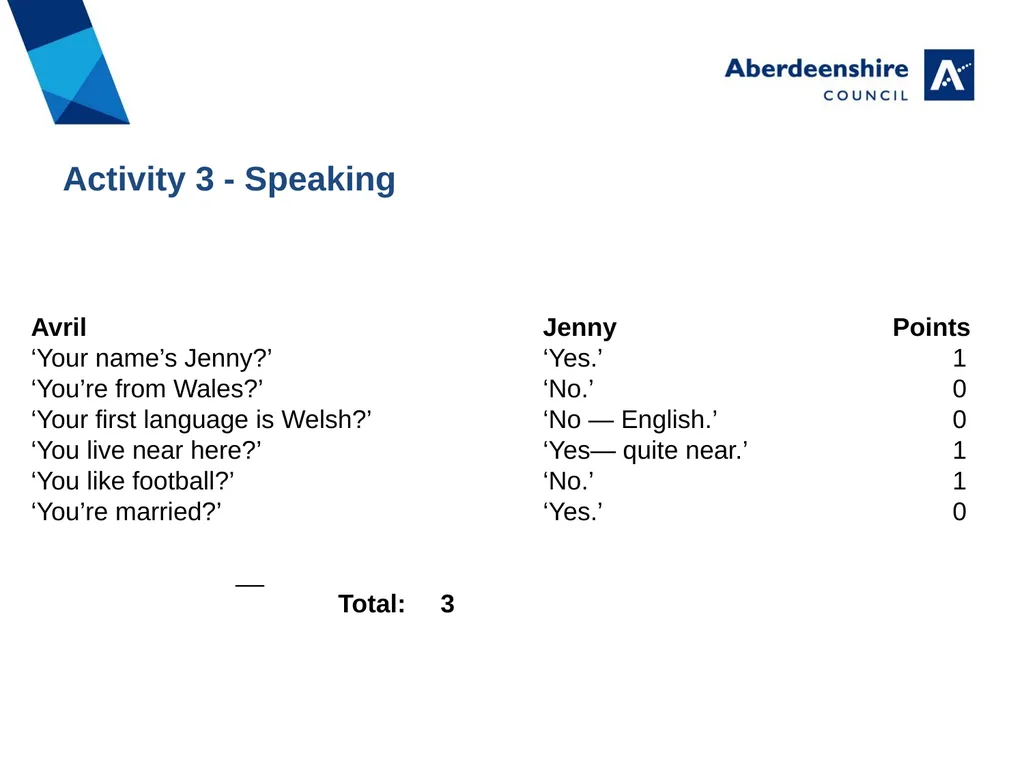
Activity 3 - Speaking Avril Jenny Points
‘Your name’s Jenny?’ ‘Yes.’ 1
‘You’re from Wales?’ ‘No.’ 0
‘Your first language is Welsh?’ ‘No — English.’ 0
‘You live near here?’ ‘Yes— quite near.’ 1
‘You like football?’ ‘No.’ 1
‘You’re married?’ ‘Yes.’ 0
__ Total: 3<br>
10
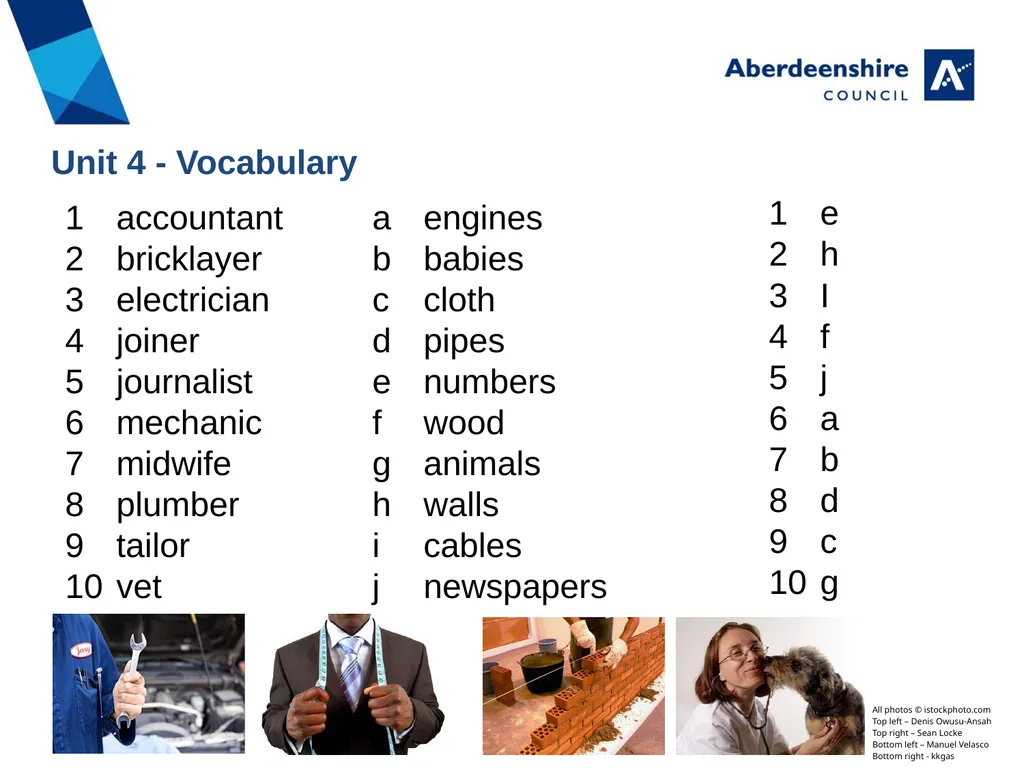
Unit 4 - Vocabulary 1 accountant a engines
2 bricklayer b babies
3 electrician c cloth
4 joiner d pipes
5 journalist e numbers
6 mechanic f wood
7 midwife g animals
8 plumber h walls
9 tailor i cables
10 vet j newspapers 1 e
h
I
f
j
a
b
d
c
g<br>
11
Activity 5 - Writing Think about the interview with Boris in the listening activity.
There were some good things about the job — a nice desk and a comfortable chair — and some bad things — the pay, the food in the canteen, etc.
Now think about your work, in school, college or employment.
Write about the good things and the bad things. Write around 50 words. / <br>
12
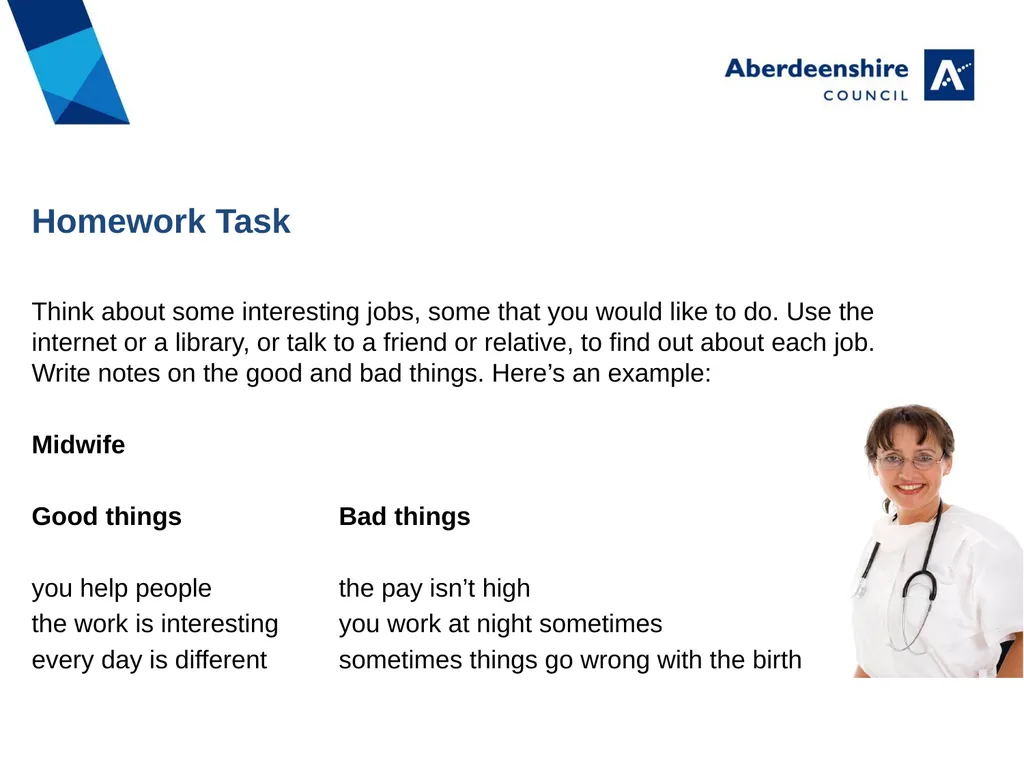
Homework Task Think about some interesting jobs, some that you would like to do. Use the internet or a library, or talk to a friend or relative, to find out about each job. Write notes on the good and bad things. Here’s an example:
Midwife
Good things Bad things
you help people the pay isn’t high
the work is interesting you work at night sometimes
every day is different sometimes things go wrong with the birth<br>