
Level 6 Public Health Practitioner (L6 PHP)

Description: Level 6 Public Health Practitioner (L6 PHP) Apprenticeship London employer toolkit for recruiting apprentices London Workforce Development Team Purpose of this document Family of public health apprenticeships What is a Public Health
Related Topics
Download Presentation
"Level 6 Public Health Practitioner (L6 PHP)" is the property of its rightful owner. Permission is granted to download and print the materials on this website for personal, non-commercial use only, and to display it on your personal computer provided you do not modify the materials and that you retain all copyright notices contained in the materials. By downloading content from our website, you accept the terms of this agreement.
Presentation Transcript
slide1. Level 6 Public Health Practitioner (L6 PHP) Apprenticeship London employer toolkit for recruiting apprentices London Workforce Development Team<br>
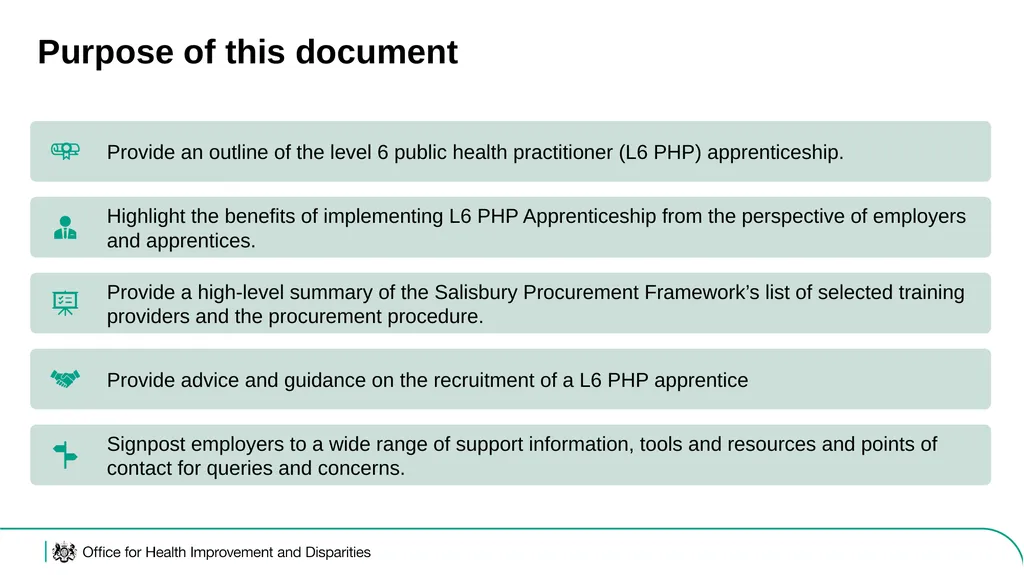
slide2. Purpose of this document<br>
slide3. Family of public health apprenticeships<br>
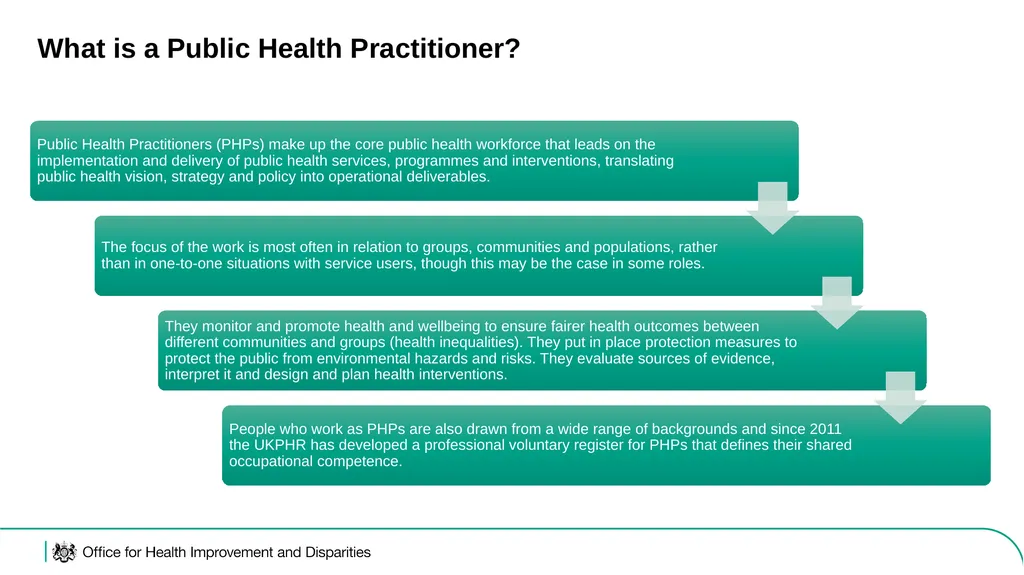
slide4. What is a Public Health Practitioner?<br>
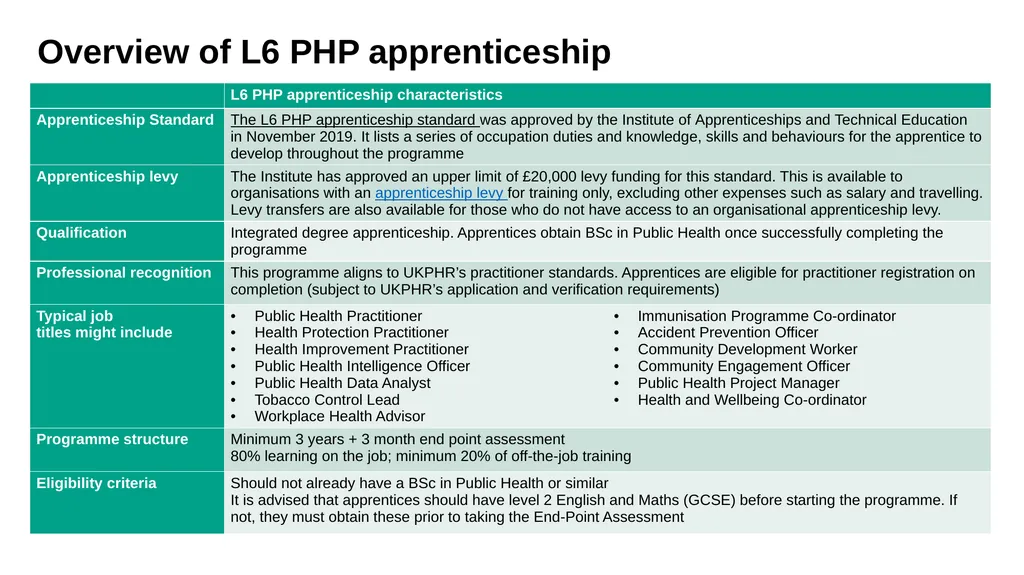
slide5. Overview of L6 PHP apprenticeship<br>
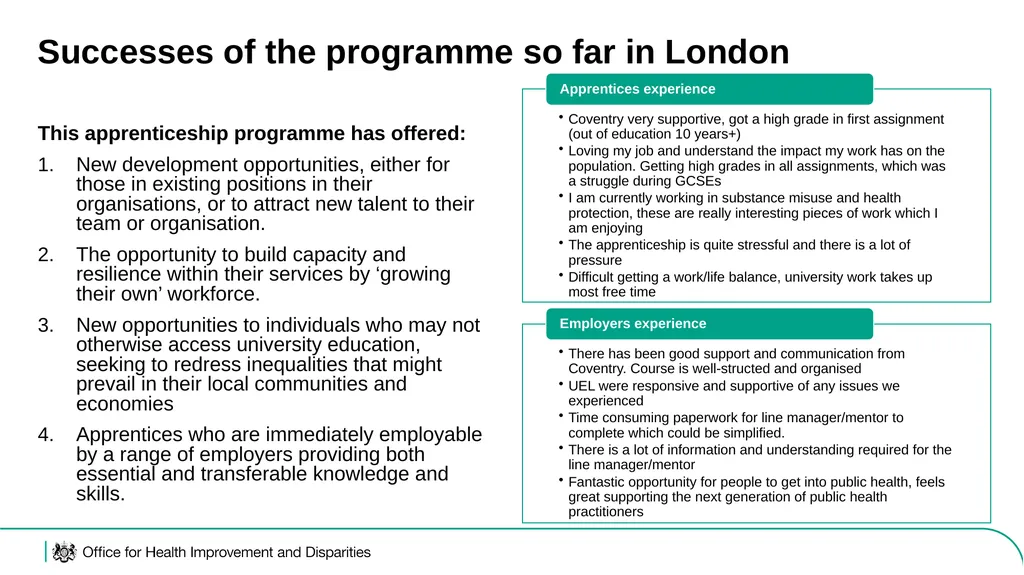
slide6. Successes of the programme so far in London This apprenticeship programme has offered:
New development opportunities, either for those in existing positions in their organisations, or to attract new talent to their team or organisation.
The opportunity to build capacity and resilience within their services by ‘growing their own’ workforce.
New opportunities to individuals who may not otherwise access university education, seeking to redress inequalities that might prevail in their local communities and economies
Apprentices who are immediately employable by a range of employers providing both essential and transferable knowledge and skills.<br>
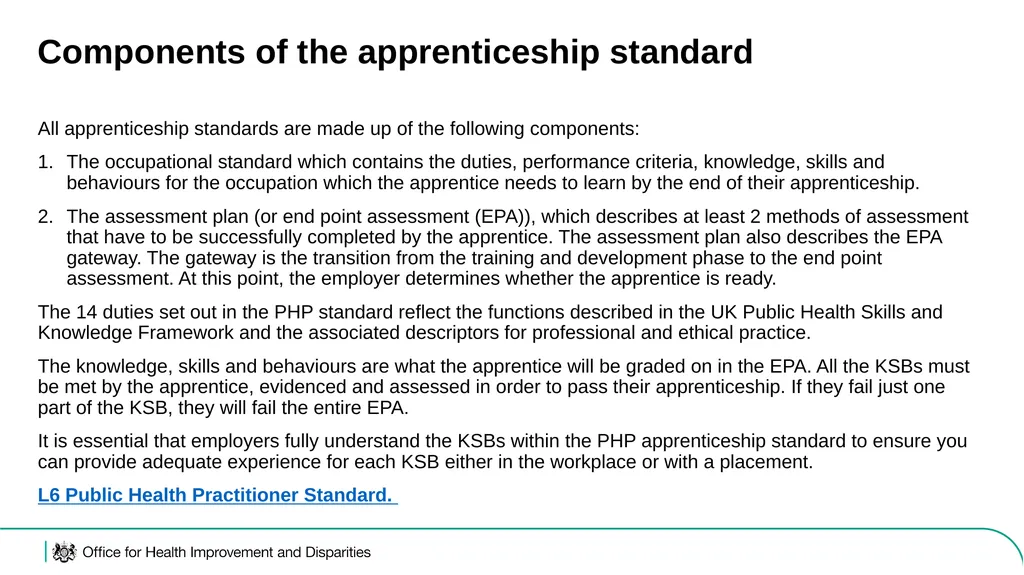
slide7. Components of the apprenticeship standard All apprenticeship standards are made up of the following components:
The occupational standard which contains the duties, performance criteria, knowledge, skills and behaviours for the occupation which the apprentice needs to learn by the end of their apprenticeship.
The assessment plan (or end point assessment (EPA)), which describes at least 2 methods of assessment that have to be successfully completed by the apprentice. The assessment plan also describes the EPA gateway. The gateway is the transition from the training and development phase to the end point assessment. At this point, the employer determines whether the apprentice is ready.
The 14 duties set out in the PHP standard reflect the functions described in the UK Public Health Skills and Knowledge Framework and the associated descriptors for professional and ethical practice.
The knowledge, skills and behaviours are what the apprentice will be graded on in the EPA. All the KSBs must be met by the apprentice, evidenced and assessed in order to pass their apprenticeship. If they fail just one part of the KSB, they will fail the entire EPA.
It is essential that employers fully understand the KSBs within the PHP apprenticeship standard to ensure you can provide adequate experience for each KSB either in the workplace or with a placement.
L6 Public Health Practitioner Standard.<br>
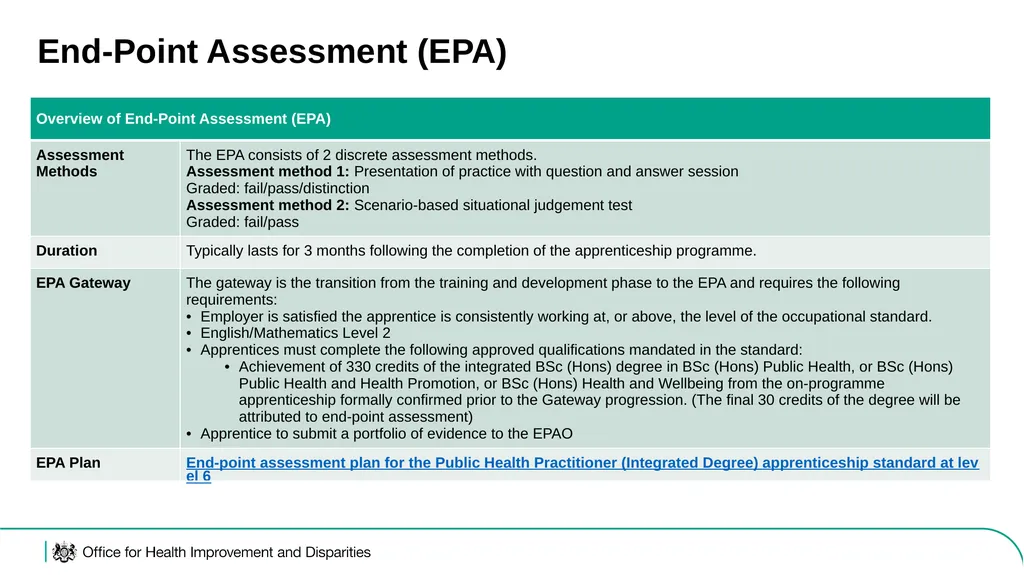
slide8. End-Point Assessment (EPA)<br>
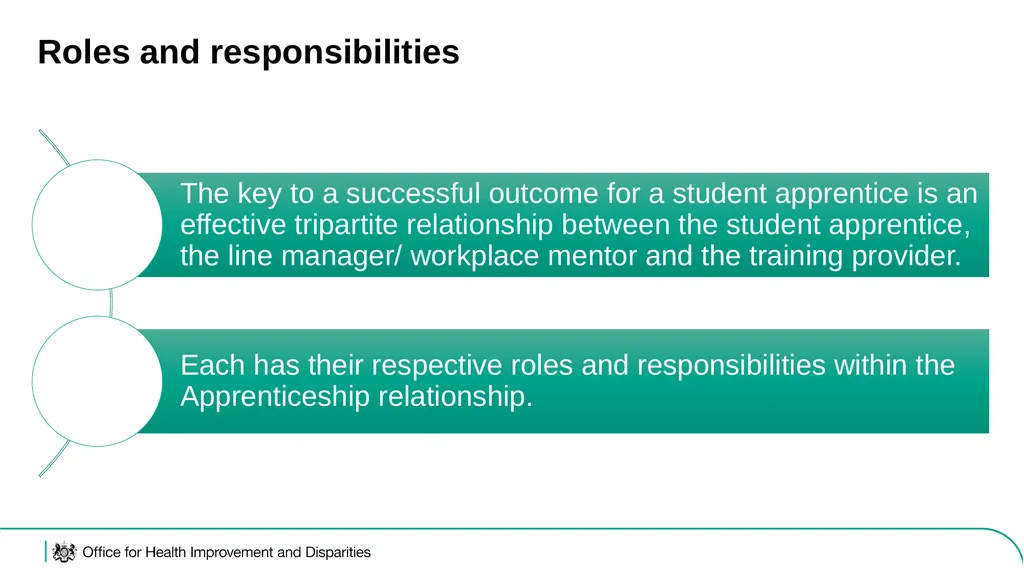
slide9. Roles and responsibilities<br>
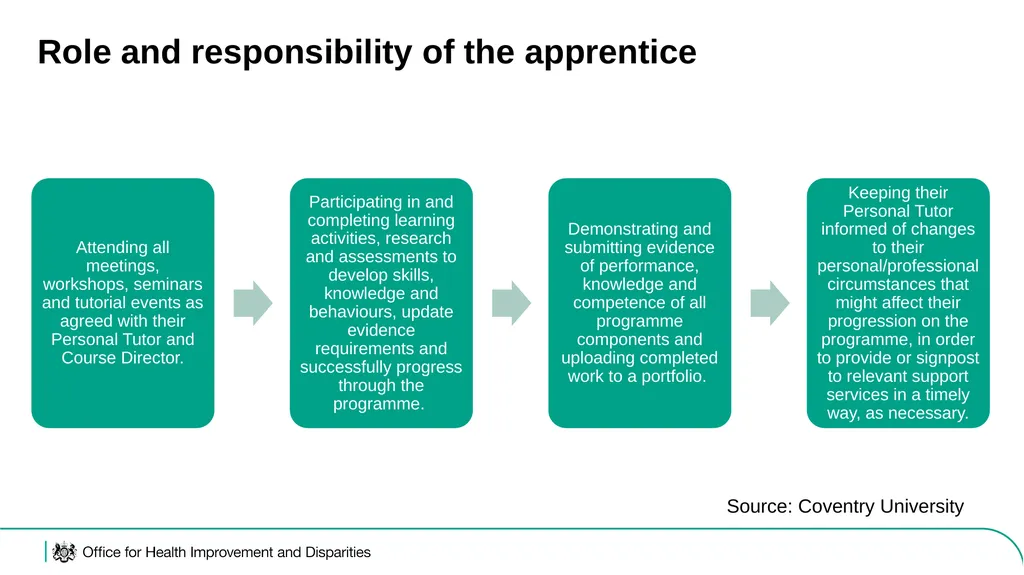
slide10. Role and responsibility of the apprentice Source: Coventry University<br>
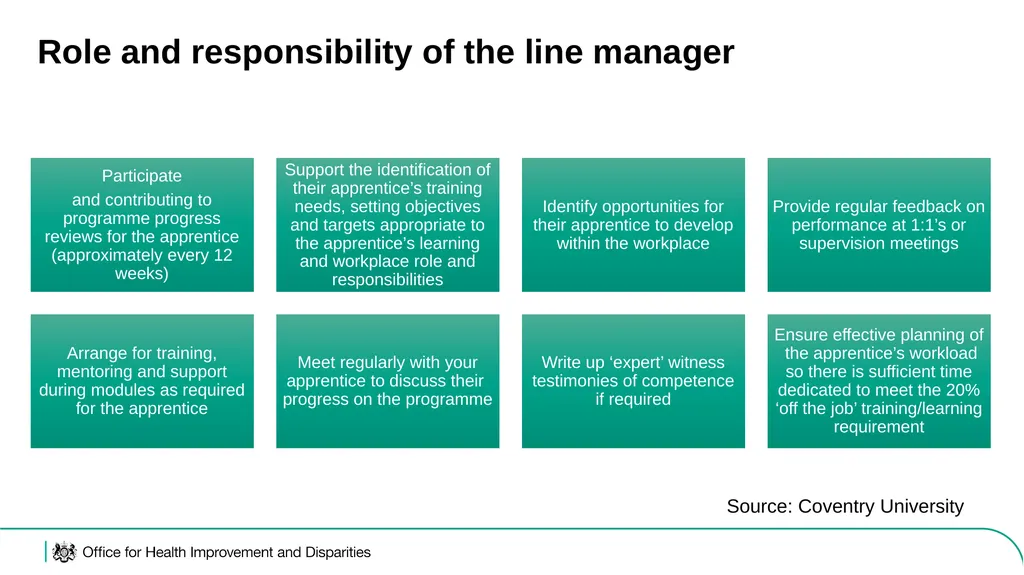
slide11. Role and responsibility of the line manager Source: Coventry University<br>
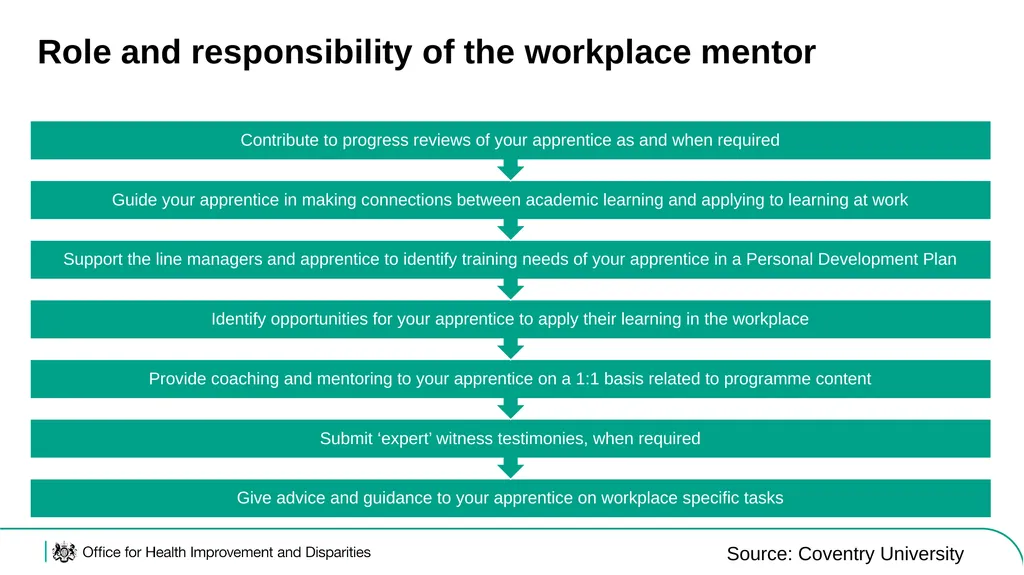
slide12. Role and responsibility of the workplace mentor Source: Coventry University<br>
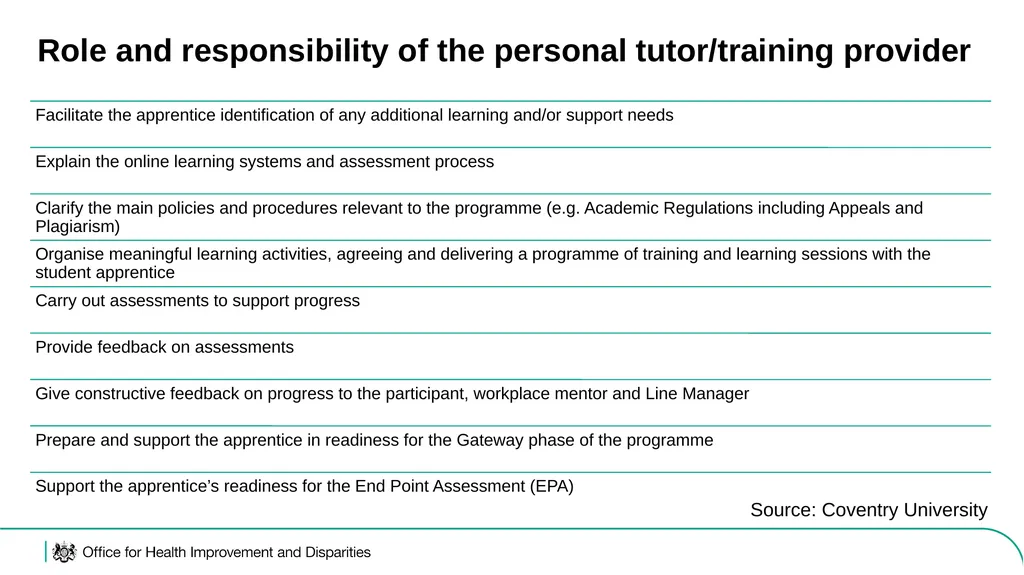
slide13. Role and responsibility of the personal tutor/training provider Source: Coventry University<br>
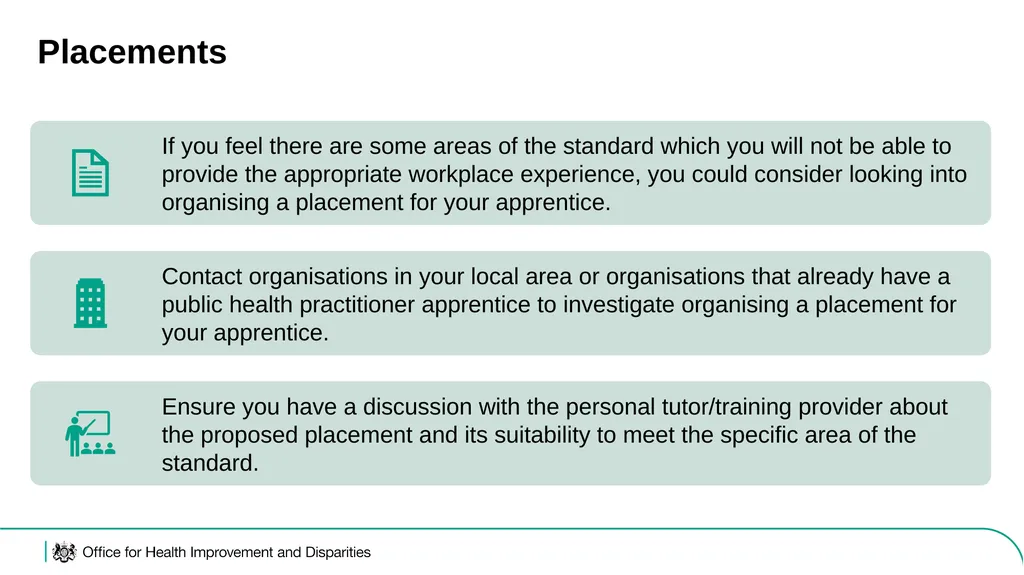
slide14. Placements<br>
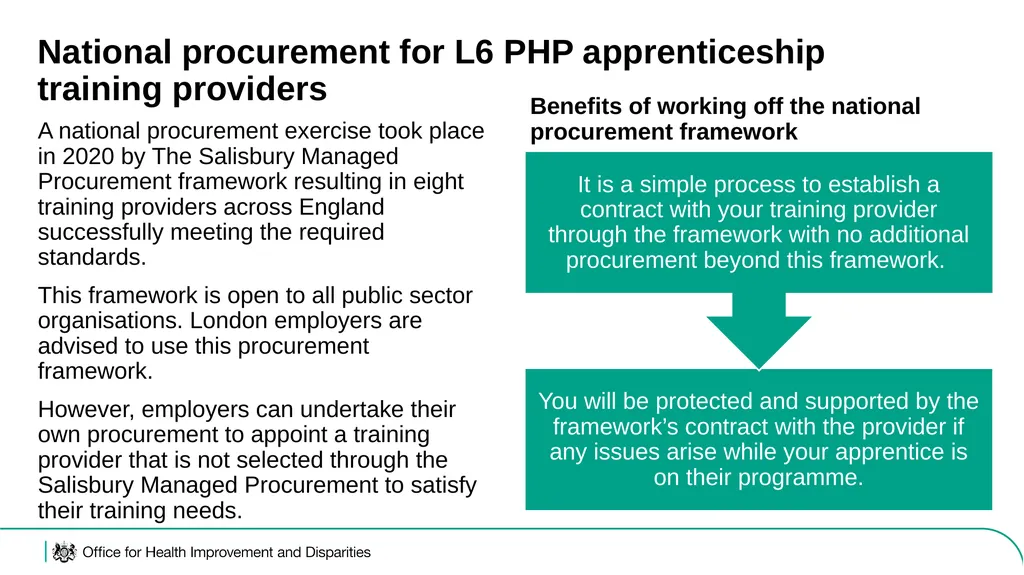
slide15. National procurement for L6 PHP apprenticeship training providers A national procurement exercise took place in 2020 by The Salisbury Managed Procurement framework resulting in eight training providers across England successfully meeting the required standards.
This framework is open to all public sector organisations. London employers are advised to use this procurement framework.
However, employers can undertake their own procurement to appoint a training provider that is not selected through the Salisbury Managed Procurement to satisfy their training needs. Benefits of working off the national procurement framework<br>
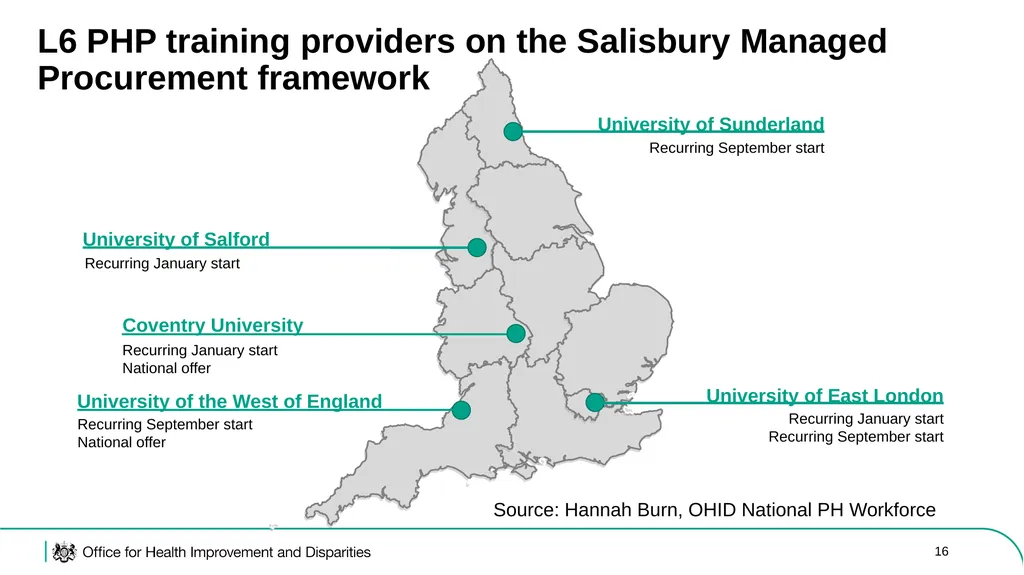
slide16. L6 PHP training providers on the Salisbury Managed Procurement framework 16 Source: Hannah Burn, OHID National PH Workforce<br>
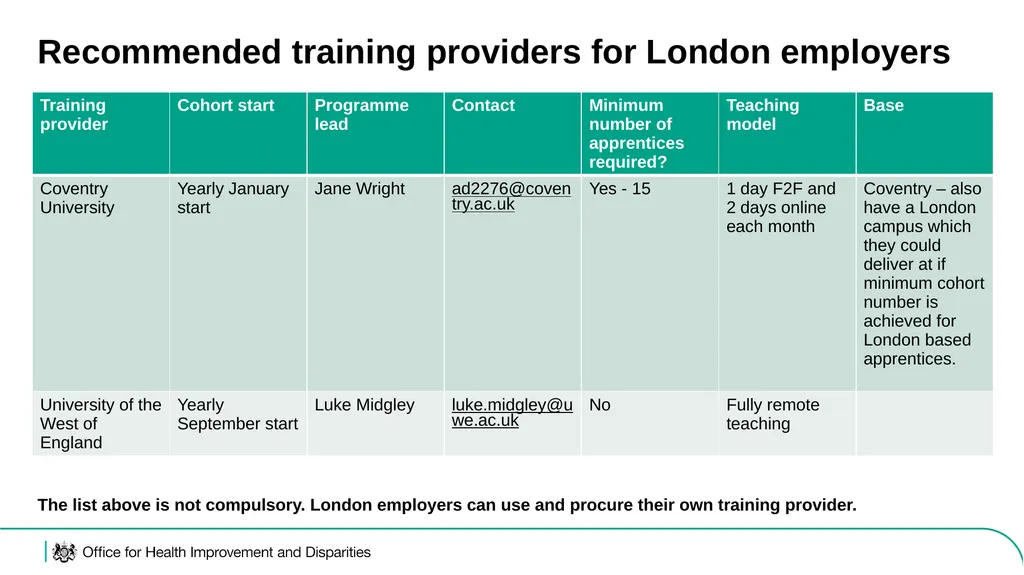
slide17. Recommended training providers for London employers The list above is not compulsory. London employers can use and procure their own training provider.<br>
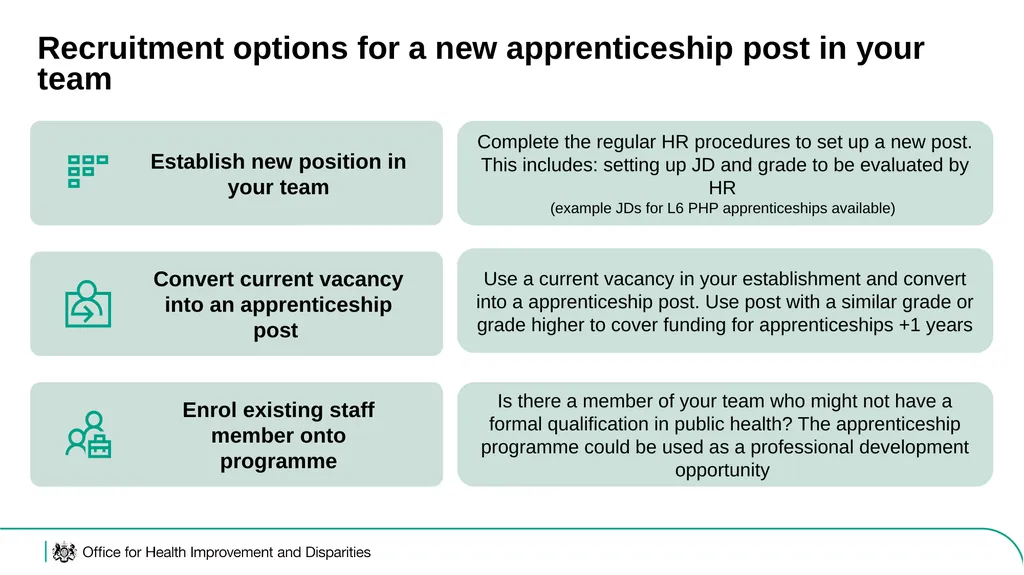
slide18. Recruitment options for a new apprenticeship post in your team Complete the regular HR procedures to set up a new post. This includes: setting up JD and grade to be evaluated by HR
(example JDs for L6 PHP apprenticeships available) Use a current vacancy in your establishment and convert into a apprenticeship post. Use post with a similar grade or grade higher to cover funding for apprenticeships +1 years Is there a member of your team who might not have a formal qualification in public health? The apprenticeship programme could be used as a professional development opportunity<br>
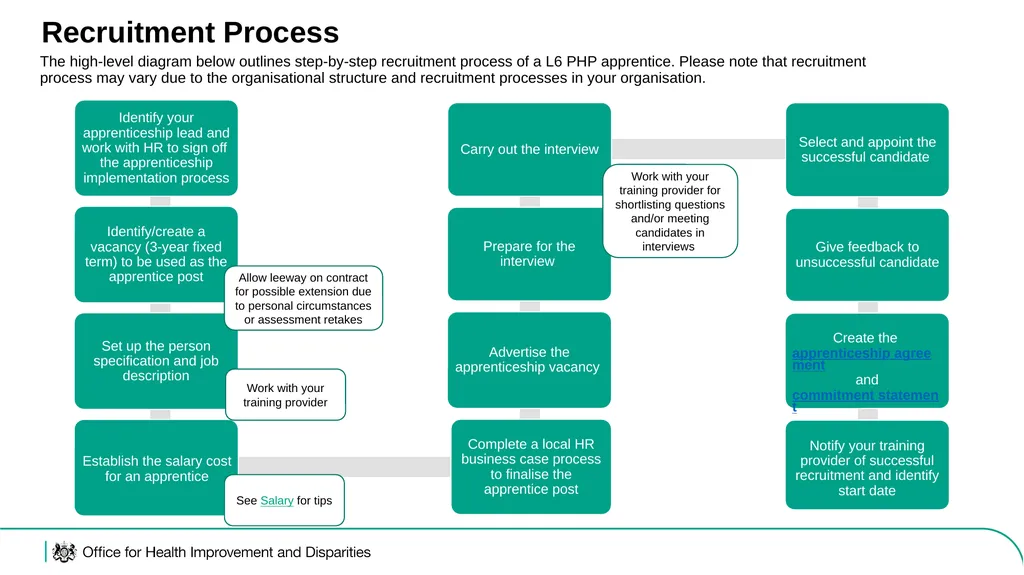
slide19. Recruitment Process The high-level diagram below outlines step-by-step recruitment process of a L6 PHP apprentice. Please note that recruitment process may vary due to the organisational structure and recruitment processes in your organisation.<br>
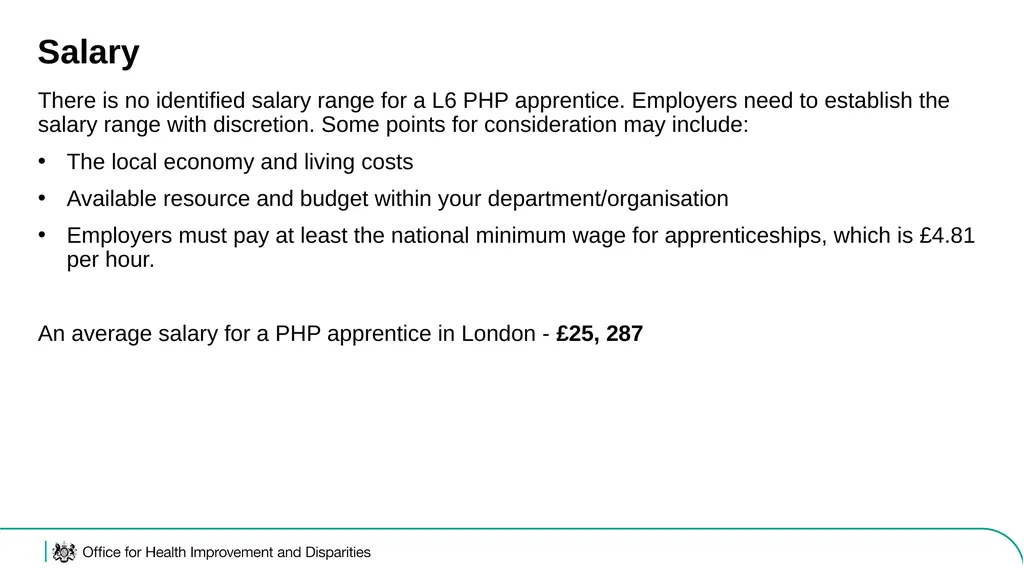
slide20. Salary There is no identified salary range for a L6 PHP apprentice. Employers need to establish the salary range with discretion. Some points for consideration may include:
The local economy and living costs
Available resource and budget within your department/organisation
Employers must pay at least the national minimum wage for apprenticeships, which is £4.81 per hour.
An average salary for a PHP apprentice in London - £25, 287<br>
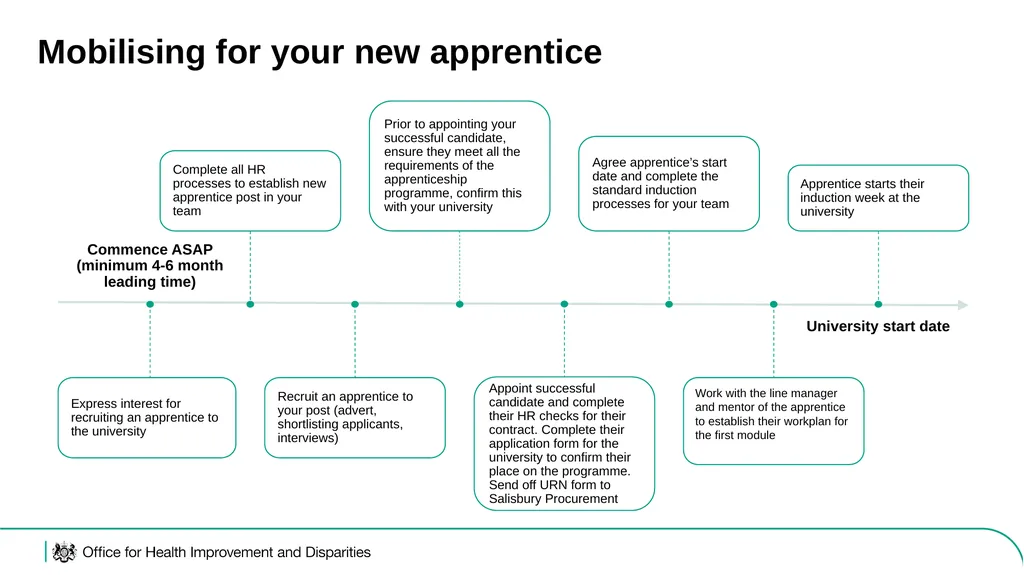
slide21. Mobilising for your new apprentice Commence ASAP (minimum 4-6 month leading time)<br>
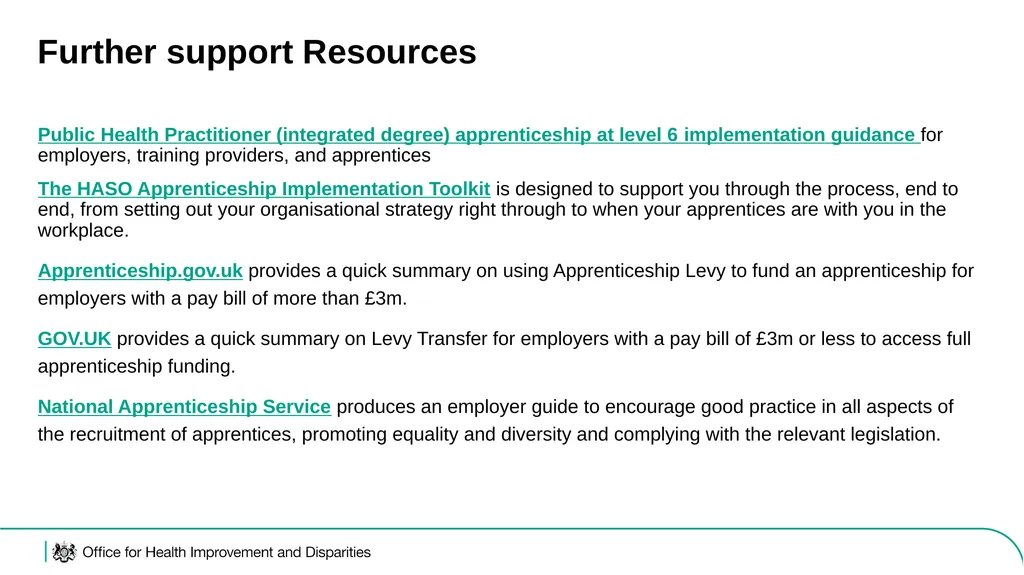
slide22. Further support Resources Public Health Practitioner (integrated degree) apprenticeship at level 6 implementation guidance for employers, training providers, and apprentices
The HASO Apprenticeship Implementation Toolkit is designed to support you through the process, end to end, from setting out your organisational strategy right through to when your apprentices are with you in the workplace.
Apprenticeship.gov.uk provides a quick summary on using Apprenticeship Levy to fund an apprenticeship for employers with a pay bill of more than £3m.
GOV.UK provides a quick summary on Levy Transfer for employers with a pay bill of £3m or less to access full apprenticeship funding.
National Apprenticeship Service produces an employer guide to encourage good practice in all aspects of the recruitment of apprentices, promoting equality and diversity and complying with the relevant legislation.<br>
slide23. Points of Contact For apprenticeship/apprenticeship levy enquiries:
Jennie Stone - London Regional Apprenticeship Relationship Manager, NHSE
jennifer.stone@hee.nhs.uk
For enquiries about procurement of training providers:
Simon Dennis - Strategic Commercial Manager, Salisbury NHS Foundation Trust
simon.dennis@nhs.net
For general enquiries
OHID London Workforce Development Team
ohidlondonworkforce@dhsc.gov.uk<br>
slide2. Purpose of this document<br>
slide3. Family of public health apprenticeships<br>
slide4. What is a Public Health Practitioner?<br>
slide5. Overview of L6 PHP apprenticeship<br>
slide6. Successes of the programme so far in London This apprenticeship programme has offered:
New development opportunities, either for those in existing positions in their organisations, or to attract new talent to their team or organisation.
The opportunity to build capacity and resilience within their services by ‘growing their own’ workforce.
New opportunities to individuals who may not otherwise access university education, seeking to redress inequalities that might prevail in their local communities and economies
Apprentices who are immediately employable by a range of employers providing both essential and transferable knowledge and skills.<br>
slide7. Components of the apprenticeship standard All apprenticeship standards are made up of the following components:
The occupational standard which contains the duties, performance criteria, knowledge, skills and behaviours for the occupation which the apprentice needs to learn by the end of their apprenticeship.
The assessment plan (or end point assessment (EPA)), which describes at least 2 methods of assessment that have to be successfully completed by the apprentice. The assessment plan also describes the EPA gateway. The gateway is the transition from the training and development phase to the end point assessment. At this point, the employer determines whether the apprentice is ready.
The 14 duties set out in the PHP standard reflect the functions described in the UK Public Health Skills and Knowledge Framework and the associated descriptors for professional and ethical practice.
The knowledge, skills and behaviours are what the apprentice will be graded on in the EPA. All the KSBs must be met by the apprentice, evidenced and assessed in order to pass their apprenticeship. If they fail just one part of the KSB, they will fail the entire EPA.
It is essential that employers fully understand the KSBs within the PHP apprenticeship standard to ensure you can provide adequate experience for each KSB either in the workplace or with a placement.
L6 Public Health Practitioner Standard.<br>
slide8. End-Point Assessment (EPA)<br>
slide9. Roles and responsibilities<br>
slide10. Role and responsibility of the apprentice Source: Coventry University<br>
slide11. Role and responsibility of the line manager Source: Coventry University<br>
slide12. Role and responsibility of the workplace mentor Source: Coventry University<br>
slide13. Role and responsibility of the personal tutor/training provider Source: Coventry University<br>
slide14. Placements<br>
slide15. National procurement for L6 PHP apprenticeship training providers A national procurement exercise took place in 2020 by The Salisbury Managed Procurement framework resulting in eight training providers across England successfully meeting the required standards.
This framework is open to all public sector organisations. London employers are advised to use this procurement framework.
However, employers can undertake their own procurement to appoint a training provider that is not selected through the Salisbury Managed Procurement to satisfy their training needs. Benefits of working off the national procurement framework<br>
slide16. L6 PHP training providers on the Salisbury Managed Procurement framework 16 Source: Hannah Burn, OHID National PH Workforce<br>
slide17. Recommended training providers for London employers The list above is not compulsory. London employers can use and procure their own training provider.<br>
slide18. Recruitment options for a new apprenticeship post in your team Complete the regular HR procedures to set up a new post. This includes: setting up JD and grade to be evaluated by HR
(example JDs for L6 PHP apprenticeships available) Use a current vacancy in your establishment and convert into a apprenticeship post. Use post with a similar grade or grade higher to cover funding for apprenticeships +1 years Is there a member of your team who might not have a formal qualification in public health? The apprenticeship programme could be used as a professional development opportunity<br>
slide19. Recruitment Process The high-level diagram below outlines step-by-step recruitment process of a L6 PHP apprentice. Please note that recruitment process may vary due to the organisational structure and recruitment processes in your organisation.<br>
slide20. Salary There is no identified salary range for a L6 PHP apprentice. Employers need to establish the salary range with discretion. Some points for consideration may include:
The local economy and living costs
Available resource and budget within your department/organisation
Employers must pay at least the national minimum wage for apprenticeships, which is £4.81 per hour.
An average salary for a PHP apprentice in London - £25, 287<br>
slide21. Mobilising for your new apprentice Commence ASAP (minimum 4-6 month leading time)<br>
slide22. Further support Resources Public Health Practitioner (integrated degree) apprenticeship at level 6 implementation guidance for employers, training providers, and apprentices
The HASO Apprenticeship Implementation Toolkit is designed to support you through the process, end to end, from setting out your organisational strategy right through to when your apprentices are with you in the workplace.
Apprenticeship.gov.uk provides a quick summary on using Apprenticeship Levy to fund an apprenticeship for employers with a pay bill of more than £3m.
GOV.UK provides a quick summary on Levy Transfer for employers with a pay bill of £3m or less to access full apprenticeship funding.
National Apprenticeship Service produces an employer guide to encourage good practice in all aspects of the recruitment of apprentices, promoting equality and diversity and complying with the relevant legislation.<br>
slide23. Points of Contact For apprenticeship/apprenticeship levy enquiries:
Jennie Stone - London Regional Apprenticeship Relationship Manager, NHSE
jennifer.stone@hee.nhs.uk
For enquiries about procurement of training providers:
Simon Dennis - Strategic Commercial Manager, Salisbury NHS Foundation Trust
simon.dennis@nhs.net
For general enquiries
OHID London Workforce Development Team
ohidlondonworkforce@dhsc.gov.uk<br>