
Life Skills Education Please read the article on

Description: Life Skills Education Please read the article on this topic first. This power point presentation is a summary of the article. DR SHILPA TOSHNIWAL MD(Pediatrics), PGCAP,CAPEP Talk to Teens Clinic LILAVATI HOSPITAL, Anjar and Adipur KUTCH DR
Related Topics
Download Presentation
"Life Skills Education Please read the article on" is the property of its rightful owner. Permission is granted to download and print the materials on this website for personal, non-commercial use only, and to display it on your personal computer provided you do not modify the materials and that you retain all copyright notices contained in the materials. By downloading content from our website, you accept the terms of this agreement.
Presentation Transcript
slide1. Life Skills Education Please read the article on this topic first.
This power point presentation is a summary of the article. DR SHILPA TOSHNIWAL
MD(Pediatrics),
PGCAP,CAPEP
Talk to Teens Clinic
LILAVATI HOSPITAL,
Anjar and Adipur
KUTCH DR SONIA BHATT
MD(Pediatrics),
PGCAP Professor & Head
Dept. of Pediatrics
F H Medical college AGRA<br>
slide2. What are LIFE SKILLS ? Life skills are abilities for adaptive and positive behaviours that enable an individual to deal effectively with the demands and challenges of everyday life.
Life skills are abilities that facilitate the physical, mental and emotional well being of an individual.(WHO)
ADAPTIVITY and POSITIVITY are the important qualities that life skills impart.<br>
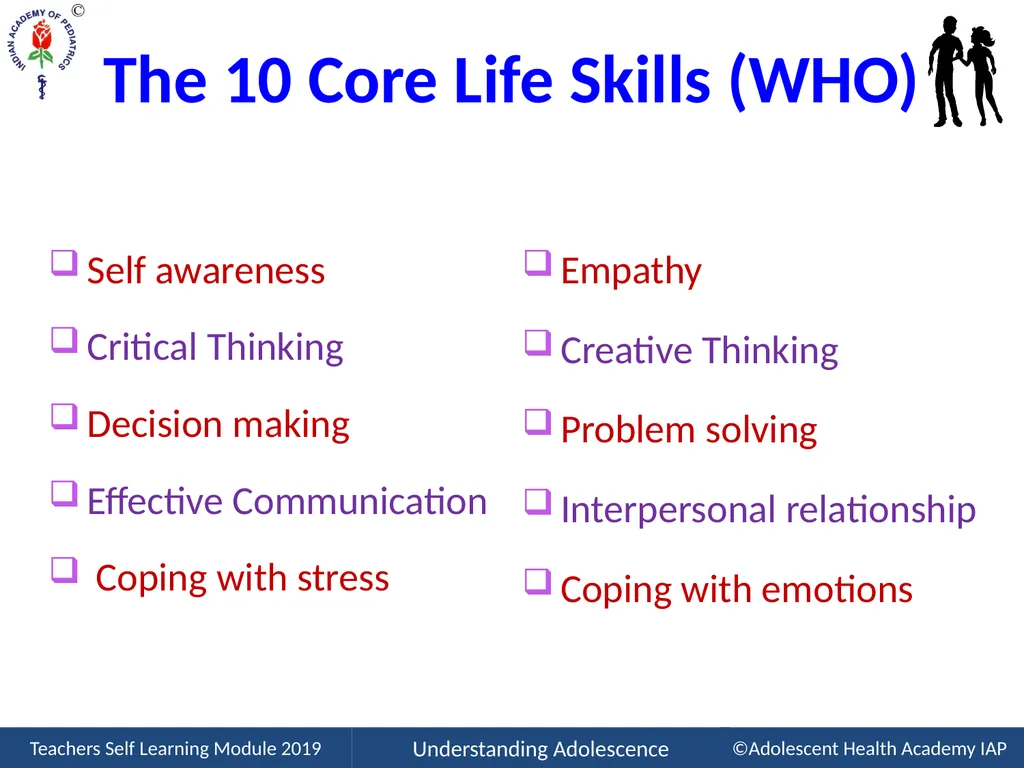
slide3. The 10 Core Life Skills (WHO) Self awareness
Critical Thinking
Decision making
Effective Communication
Coping with stress Empathy
Creative Thinking
Problem solving
Interpersonal relationship
Coping with emotions<br>
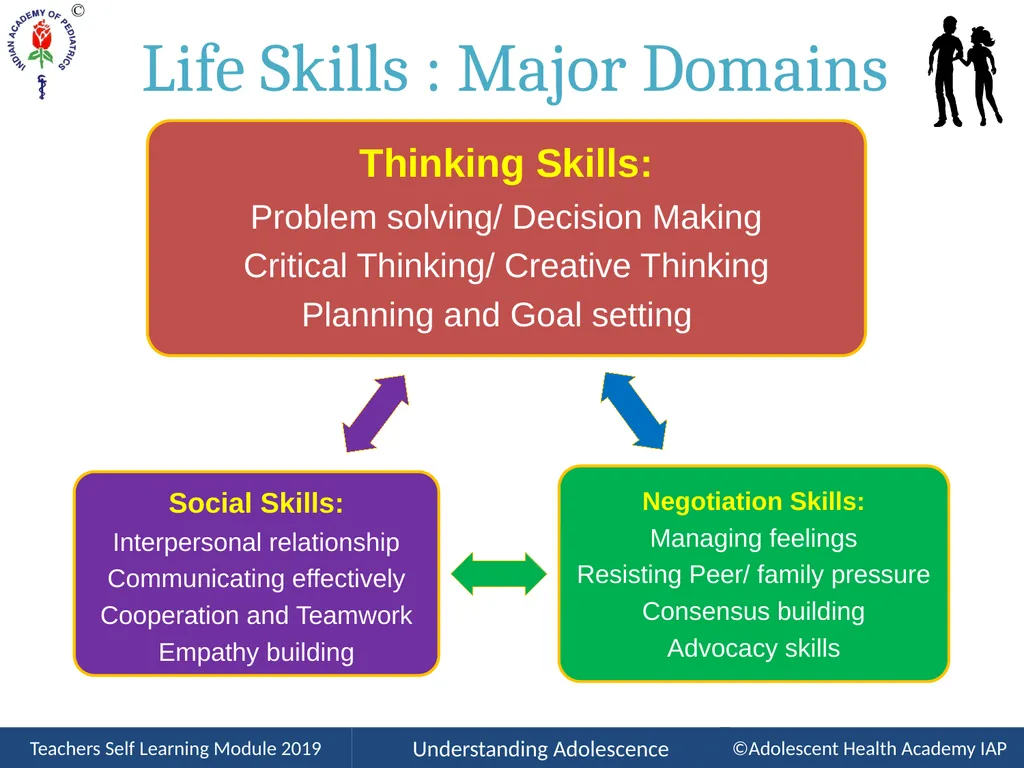
slide4. Life Skills : Major Domains<br>
slide5. How does training in Life Skills benefit young people? Helps them to develop self-confidence
Helps to deal with significant life changes and challenges, such as bullying and discrimination
Gives them a voice: at school, in their community and in society at large
Enables them to make a positive contribution by developing the expertise and experience
Enables them to understand their responsibilities
Prepares them for the challenges and opportunities of adult and working life.<br>
slide6. Why Life Skills Education in schools Children learn social behaviour in school
Easy access to children and adolescents
Experienced teachers and infrastrucure available
Parents and students respect teachers
Evaluation of the programme is possible<br>
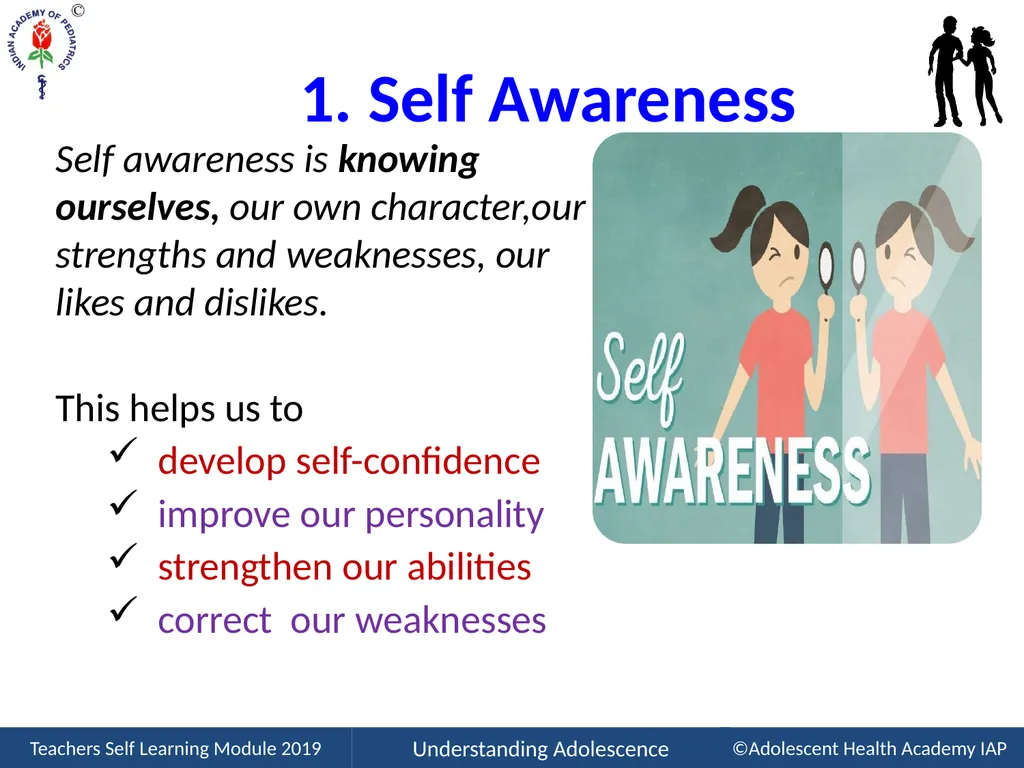
slide7. 1. Self Awareness Self awareness is knowing ourselves, our own character,our strengths and weaknesses, our likes and dislikes.
This helps us to
develop self-confidence
improve our personality
strengthen our abilities
correct our weaknesses<br>
slide8. Self Esteem Self-esteem is high when we
respect ourselves,
despite our limitations,
resonating that,
‘Each one of us is unique’ It is the “good” a person views, values and feels about oneself .<br>
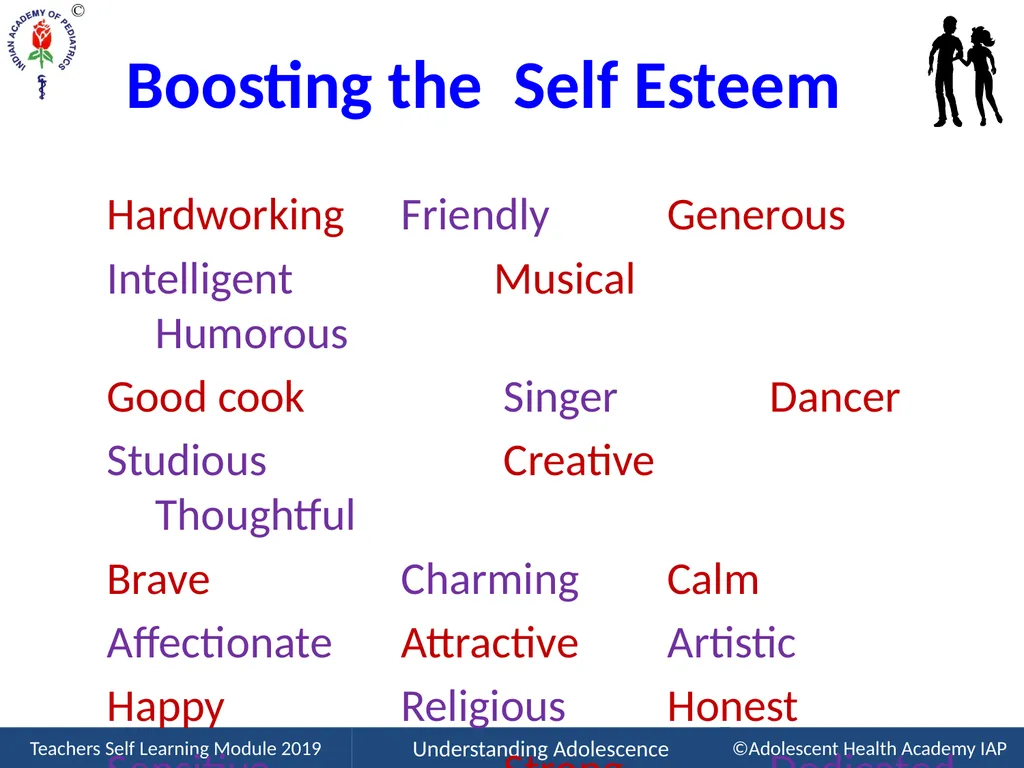
slide9. Boosting the Self Esteem Hardworking Friendly Generous
Intelligent Musical Humorous
Good cook Singer Dancer
Studious Creative Thoughtful
Brave Charming Calm
Affectionate Attractive Artistic
Happy Religious Honest
Sensitive Strong Dedicated<br>
slide10. Tips for teachers to raise Self Esteem Teachers play an important role in
building self esteem 1. Never insult a student.
2. Never hit him or yell at him.
3. Do not make nasty or sarcastic comments.
4. Make it clear that it his behaviour that is unacceptable, not him.
5. Appreciate his effort, not the results.<br>
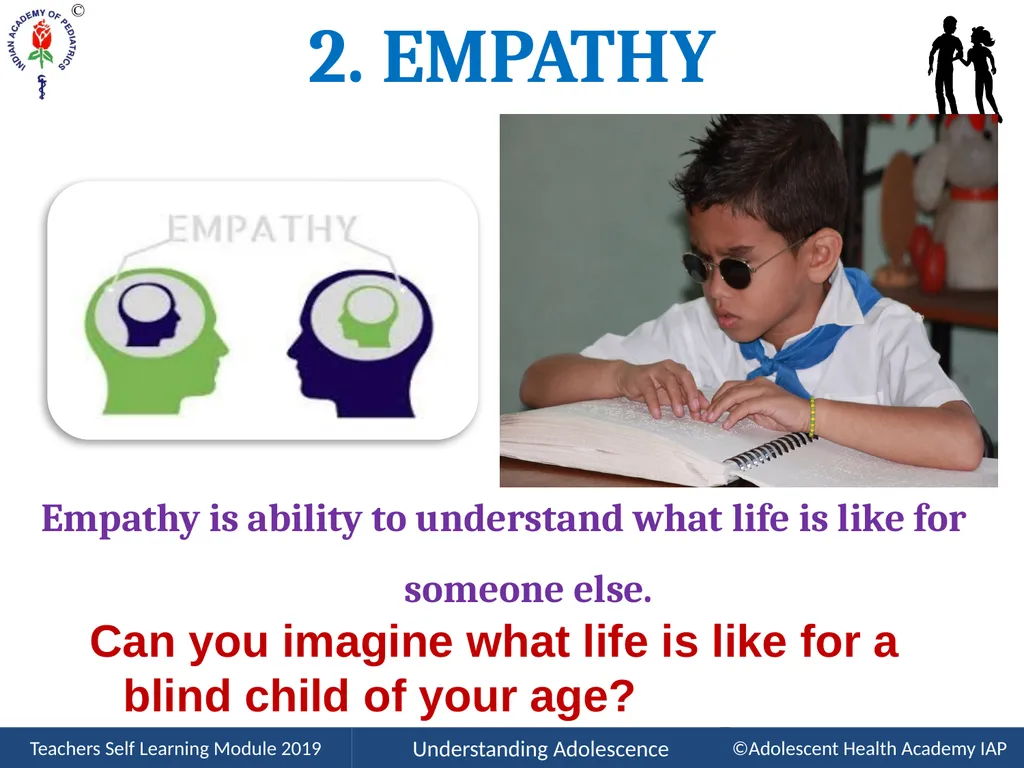
slide11. 2. EMPATHY Empathy is ability to understand what life is like for someone else. Can you imagine what life is like for a blind child of your age?<br>
slide12. Teachers’ Empathy for students 1. Try to understand the student’s perspective.
2. Don't be judgmental. Your perspective of life is different from his.
3. Be curious and show genuine interest in your students.
4. Challenge your own prejudices. Just because you believe in something, doesn't mean it's true.
5. Use empathetic language e.g.
“I can understand how you might be feeling”
6. Be compassionate.<br>
slide13. 3. Critical Thinking Critical thinking is the ability
to analyse information and experiences
in a scientific and unprejudiced manner.
It is the ability to think
LOGICALLY, not EMOTIONALLY.<br>
slide14. Right or Wrong ? FRIENDS
“Drinking alcohol is a sign of independence”
MEDIA (Ads and movies)
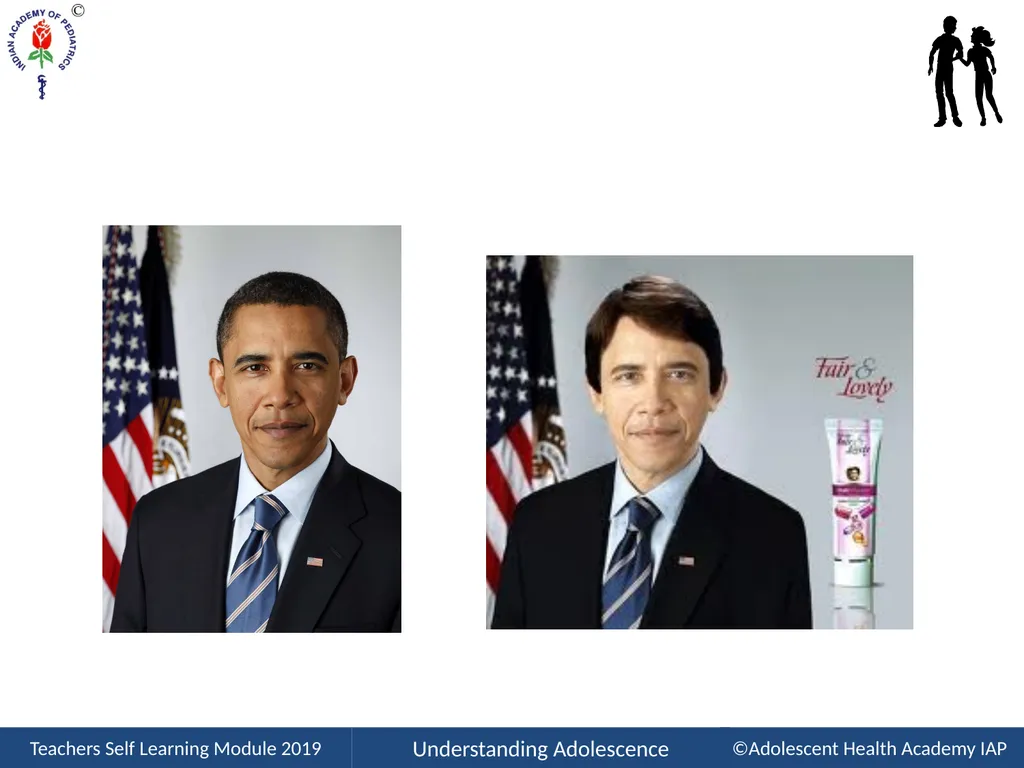
“Face creams will make you fair and lovely”
“Girls like aggressive boys”
FAMILY / TRADITION
“Only men should drive cars”
“Cooking is a girl’s job”<br>
slide16. 4. Creative Thinking Creative thinking means looking beyond our experience, coming up with new ideas, and planning and implementing them.
It gives a chance to make mistakes and learn from them 4. CREATIVE THINKING<br>
slide17. 5. Decision Making Decision-making is the process of identifying and choosing alternatives based on our values and preferences.
It helps students to:
plan their studies (and future job)
choose friends (and a marriage partner)
decide on life style, food habits, hobbies
decide goals, priorities and values<br>
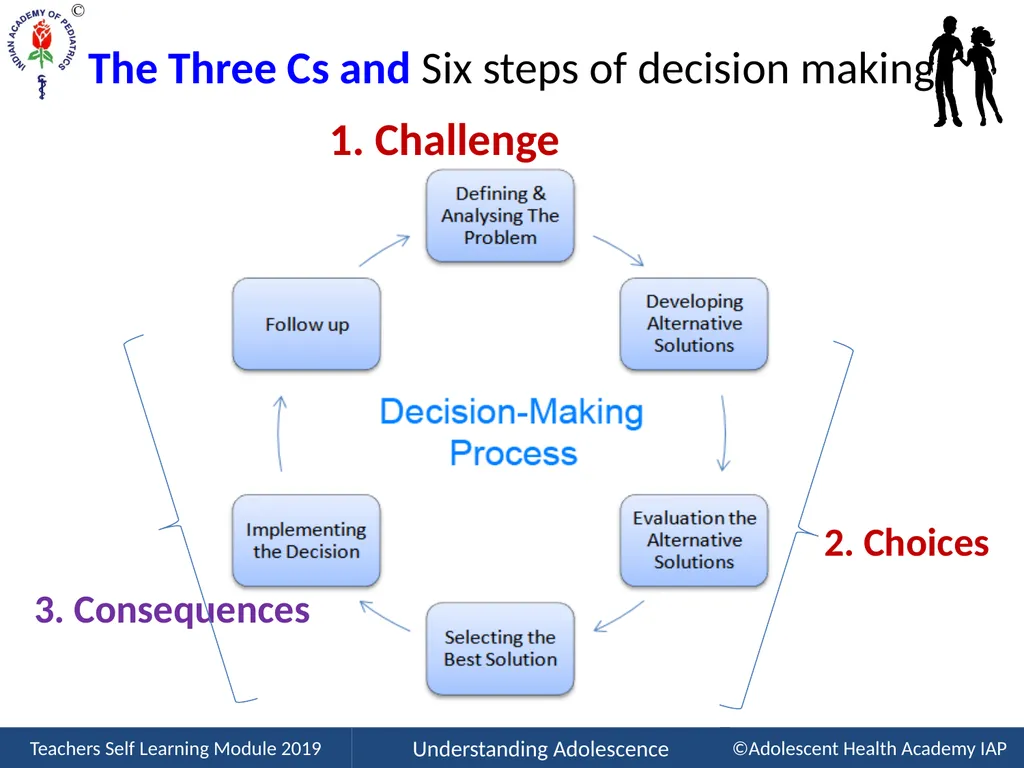
slide18. The Three Cs and Six steps of decision making 1. Challenge 2. Choices 3. Consequences<br>
slide19. Bad Decisions “Whatever happens, let it happen”{ not being involved, shrugging shoulders}
“Whatever I feel like at the moment”: {not giving a thorough thought, being impulsive}<br>
slide20. 6. Problem Solving Problem-solving consists of searching, in an orderly manner, for solutions to problems.
What is the problem?
What are its causes and consequences?
Think of all possible solutions
Decide on the best solution
Implement it
Confirm that is working
If not, start all over again<br>
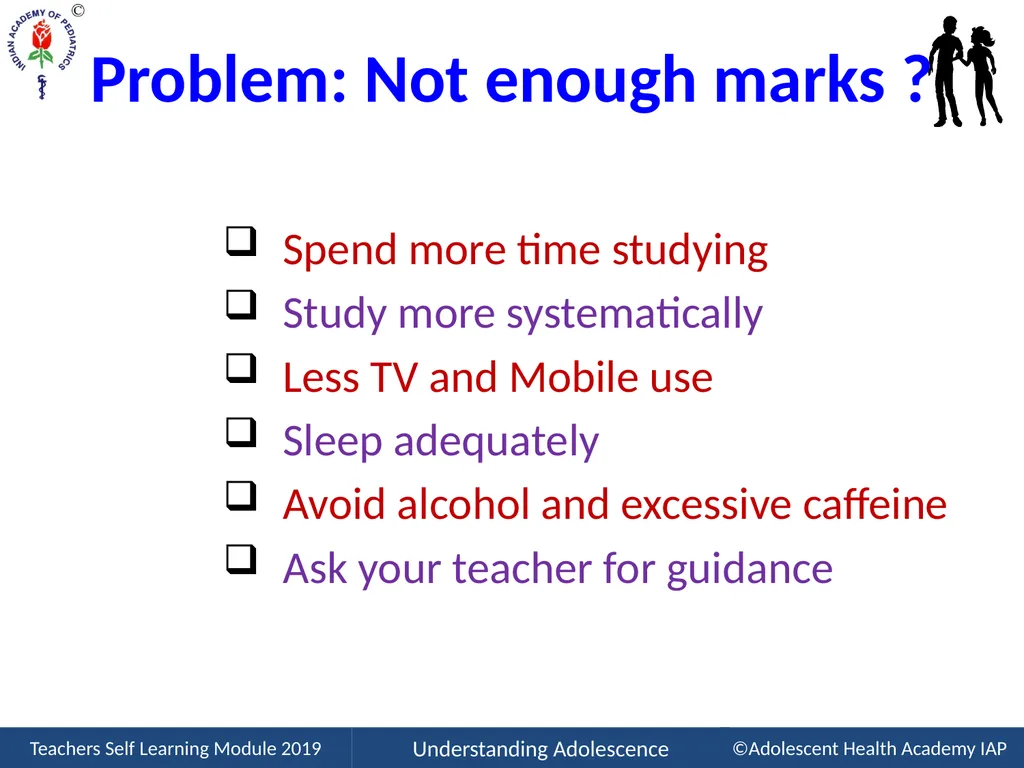
slide21. Problem: Not enough marks ? Spend more time studying
Study more systematically
Less TV and Mobile use
Sleep adequately
Avoid alcohol and excessive caffeine
Ask your teacher for guidance<br>
slide22. 7. Effective Communication Effective Communication is the capacity to express ourselves clearly and effectively
To put forwards our ideas and opinions
To express our needs, desires, and fears
To ask someone for help when needed<br>
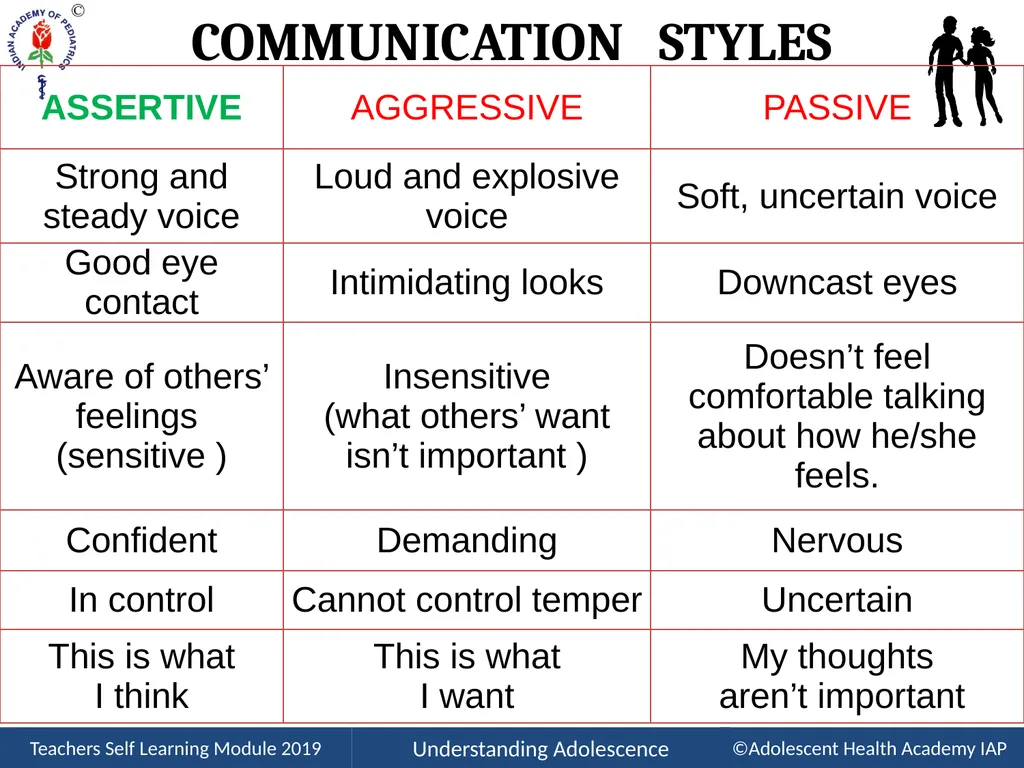
slide23. COMMUNICATION STYLES<br>
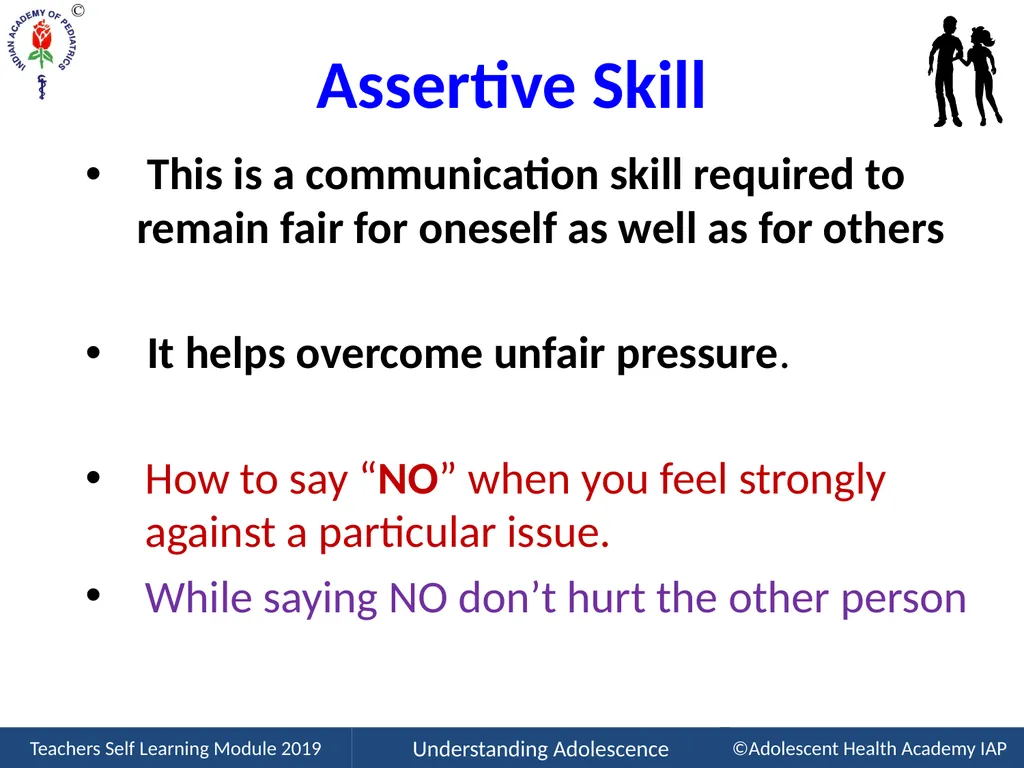
slide24. Assertive Skill This is a communication skill required to remain fair for oneself as well as for others
It helps overcome unfair pressure.
How to say “NO” when you feel strongly against a particular issue.
While saying NO don’t hurt the other person<br>
slide25. How to be a good listener Active Listening
Appropriate Body language
Eye contact, friendly smile, an open posture
Listen carefully
Pay close attention to feelings
Re-phrase and confirm; make sure, you understand the speaker
Avoid interrupting<br>
slide26. How to Disagree Think well before replying; then state your opinion clearly but gently
Allow the other person to reply without interruption
Choose your words and tone carefully
Offer advice only when the other person is calm
Criticise only his opinion, not him<br>
slide27. Non verbal communication “I have been called to the Principal’s office”
Tone and body language tell us a lot
Say it: Proudly
Say it: Anxiously
Say it: Angrily<br>
slide28. How To Say “NO” Say “No” politely, softly, with a smile.
Say “No” again, more firmly.
Postpone: “let me think about it…”
Suggest an alternative activity.
Talk about your own feelings.
Walk away.
Tell an adult about it.<br>
slide29. 8. Interpersonal Skills Interpersonal relationships are the strong bonds we develop with family, friends, teachers and in professional circle.
For adolescents, they help
To be respected in family/society/school
To have strong friendship
To have good relationships with members of the other sex
To end a relationship if it is not working<br>
slide30. Interpersonal Skills with peers
Pay your friend a compliment whenever possible.
Make positive comments about him to others.
Do not insult or hurt him.
Do not make negative comments about him to others.
Forget old quarrels.
With teachers
Look at teachers as your resources
And value their presence in your life<br>
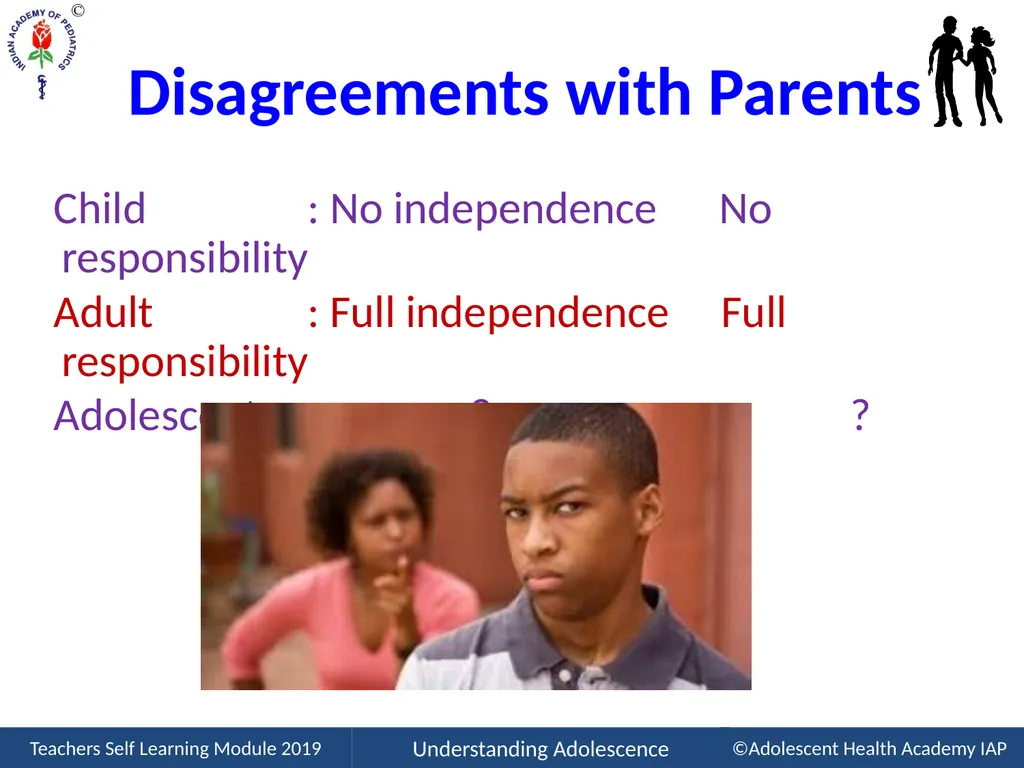
slide31. Disagreements with Parents Child : No independence No responsibility
Adult : Full independence Full responsibility
Adolescent: ? ?<br>
slide32. 9. Coping With Stress Stress is the wear and tear we experience as we adjust to our continually changing environment.
Causes of stress in adolescents: S T U D I E S !
The physical and emotional changes of adolescence
Relationship problems with friends and family
Financial or health problems in the family
Separation or divorce of parents
Taking on too many activities<br>
slide33. Always looking anxious or depressed
Restless in class, decreased attention and concentration
Fall in academic performance
Excessively tired or sleepy in the class
Substantial loss or gain of weight.
Loss of interest in hobbies Signs of Distress<br>
slide34. Effective time management
Schedule sleep and study time
Healthy Lifestyle: exercise, balanced diet, avoid excess caffeine, do yoga
Avoid drugs, alcohol, sedatives, stimulants etc for coping
Judicious use of media
Time for family, friends and hobbies
Daily prayer
Don’t hesitate to take help when needed COPING WITH STRESS<br>
slide35. 10. COPING WITH EMOTIONS It means remaining calm amidst bouts of emotions
Positive (feel good) emotions: happiness, joy, interest, excitement, gratitude, love and contentment): if too high, increase vulnerability of high risk behaviour
Negative(difficult and painful) emotions (sadness, anger, loneliness, jealousy, fear): increase vulnerability of self harm
– dealing with emotions:
1. IDENTIFY THE EMOTION
2. Realize how they can affect us
3. TAKE Appropriate ACTIONs to contain them<br>
slide36. Managing Anger Catch the point when you realize you are getting angry
Count backwards from 100.
Leave the scene
Do something else: drink/splash water
Use a punching bag/pillow for venting
Catharsis by writing, not by yelling
Think before you speak
State clearly that “I become upset when you…………….”
.<br>
slide37. Suicidal Thoughts Talk it out with
Parents
Teachers
Uncles, Aunts, Grandparents
Siblings, Cousins, Friends?
A loving Teacher is a good Counsellor
If someone talks about suicide –
HE MEANS IT!<br>
slide38. Tips for Life Skill Educators Create the basic rules ensuring everyone’s participation
The coordinator is a facilitator and not a preacher
Encourage suggestions and ideas
Activity based learning is the best
Be yourself a role model of the life skills<br>
slide39. Ways of imparting LSE • Active: emphasises learning by doing
• Interactive: uses discussion and debate, brainstorming
• Relevant: focuses on real-life issues facing young people and society , role plays
• Critical: encourages young people to think for themselves
• Collaborative: includes group work and collaborative learning , games
• Participative: gives young people a say in their own learning.<br>
slide40. Key Messages The various life skills work best in conjunction
Many life skills are required to manage a particular situation effectively
One particular skill may be effectively utilised in diverse situations
The appropriate combination of life skills at a given moment is an art.
Adolescent learn their life skills from parents/teachers/significant others who act as role models<br>
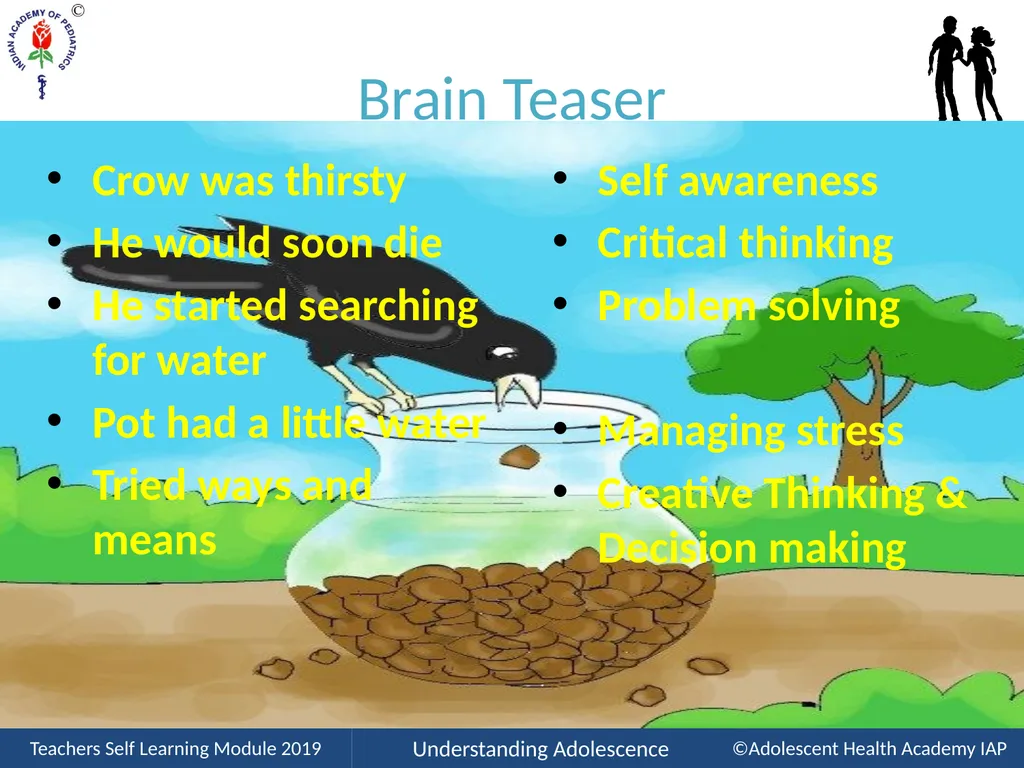
slide41. Brain Teaser Crow was thirsty
He would soon die
He started searching for water
Pot had a little water
Tried ways and means Self awareness
Critical thinking
Problem solving
Managing stress
Creative Thinking & Decision making<br>
slide42. Thank you<br>
This power point presentation is a summary of the article. DR SHILPA TOSHNIWAL
MD(Pediatrics),
PGCAP,CAPEP
Talk to Teens Clinic
LILAVATI HOSPITAL,
Anjar and Adipur
KUTCH DR SONIA BHATT
MD(Pediatrics),
PGCAP Professor & Head
Dept. of Pediatrics
F H Medical college AGRA<br>
slide2. What are LIFE SKILLS ? Life skills are abilities for adaptive and positive behaviours that enable an individual to deal effectively with the demands and challenges of everyday life.
Life skills are abilities that facilitate the physical, mental and emotional well being of an individual.(WHO)
ADAPTIVITY and POSITIVITY are the important qualities that life skills impart.<br>
slide3. The 10 Core Life Skills (WHO) Self awareness
Critical Thinking
Decision making
Effective Communication
Coping with stress Empathy
Creative Thinking
Problem solving
Interpersonal relationship
Coping with emotions<br>
slide4. Life Skills : Major Domains<br>
slide5. How does training in Life Skills benefit young people? Helps them to develop self-confidence
Helps to deal with significant life changes and challenges, such as bullying and discrimination
Gives them a voice: at school, in their community and in society at large
Enables them to make a positive contribution by developing the expertise and experience
Enables them to understand their responsibilities
Prepares them for the challenges and opportunities of adult and working life.<br>
slide6. Why Life Skills Education in schools Children learn social behaviour in school
Easy access to children and adolescents
Experienced teachers and infrastrucure available
Parents and students respect teachers
Evaluation of the programme is possible<br>
slide7. 1. Self Awareness Self awareness is knowing ourselves, our own character,our strengths and weaknesses, our likes and dislikes.
This helps us to
develop self-confidence
improve our personality
strengthen our abilities
correct our weaknesses<br>
slide8. Self Esteem Self-esteem is high when we
respect ourselves,
despite our limitations,
resonating that,
‘Each one of us is unique’ It is the “good” a person views, values and feels about oneself .<br>
slide9. Boosting the Self Esteem Hardworking Friendly Generous
Intelligent Musical Humorous
Good cook Singer Dancer
Studious Creative Thoughtful
Brave Charming Calm
Affectionate Attractive Artistic
Happy Religious Honest
Sensitive Strong Dedicated<br>
slide10. Tips for teachers to raise Self Esteem Teachers play an important role in
building self esteem 1. Never insult a student.
2. Never hit him or yell at him.
3. Do not make nasty or sarcastic comments.
4. Make it clear that it his behaviour that is unacceptable, not him.
5. Appreciate his effort, not the results.<br>
slide11. 2. EMPATHY Empathy is ability to understand what life is like for someone else. Can you imagine what life is like for a blind child of your age?<br>
slide12. Teachers’ Empathy for students 1. Try to understand the student’s perspective.
2. Don't be judgmental. Your perspective of life is different from his.
3. Be curious and show genuine interest in your students.
4. Challenge your own prejudices. Just because you believe in something, doesn't mean it's true.
5. Use empathetic language e.g.
“I can understand how you might be feeling”
6. Be compassionate.<br>
slide13. 3. Critical Thinking Critical thinking is the ability
to analyse information and experiences
in a scientific and unprejudiced manner.
It is the ability to think
LOGICALLY, not EMOTIONALLY.<br>
slide14. Right or Wrong ? FRIENDS
“Drinking alcohol is a sign of independence”
MEDIA (Ads and movies)
“Face creams will make you fair and lovely”
“Girls like aggressive boys”
FAMILY / TRADITION
“Only men should drive cars”
“Cooking is a girl’s job”<br>
slide16. 4. Creative Thinking Creative thinking means looking beyond our experience, coming up with new ideas, and planning and implementing them.
It gives a chance to make mistakes and learn from them 4. CREATIVE THINKING<br>
slide17. 5. Decision Making Decision-making is the process of identifying and choosing alternatives based on our values and preferences.
It helps students to:
plan their studies (and future job)
choose friends (and a marriage partner)
decide on life style, food habits, hobbies
decide goals, priorities and values<br>
slide18. The Three Cs and Six steps of decision making 1. Challenge 2. Choices 3. Consequences<br>
slide19. Bad Decisions “Whatever happens, let it happen”{ not being involved, shrugging shoulders}
“Whatever I feel like at the moment”: {not giving a thorough thought, being impulsive}<br>
slide20. 6. Problem Solving Problem-solving consists of searching, in an orderly manner, for solutions to problems.
What is the problem?
What are its causes and consequences?
Think of all possible solutions
Decide on the best solution
Implement it
Confirm that is working
If not, start all over again<br>
slide21. Problem: Not enough marks ? Spend more time studying
Study more systematically
Less TV and Mobile use
Sleep adequately
Avoid alcohol and excessive caffeine
Ask your teacher for guidance<br>
slide22. 7. Effective Communication Effective Communication is the capacity to express ourselves clearly and effectively
To put forwards our ideas and opinions
To express our needs, desires, and fears
To ask someone for help when needed<br>
slide23. COMMUNICATION STYLES<br>
slide24. Assertive Skill This is a communication skill required to remain fair for oneself as well as for others
It helps overcome unfair pressure.
How to say “NO” when you feel strongly against a particular issue.
While saying NO don’t hurt the other person<br>
slide25. How to be a good listener Active Listening
Appropriate Body language
Eye contact, friendly smile, an open posture
Listen carefully
Pay close attention to feelings
Re-phrase and confirm; make sure, you understand the speaker
Avoid interrupting<br>
slide26. How to Disagree Think well before replying; then state your opinion clearly but gently
Allow the other person to reply without interruption
Choose your words and tone carefully
Offer advice only when the other person is calm
Criticise only his opinion, not him<br>
slide27. Non verbal communication “I have been called to the Principal’s office”
Tone and body language tell us a lot
Say it: Proudly
Say it: Anxiously
Say it: Angrily<br>
slide28. How To Say “NO” Say “No” politely, softly, with a smile.
Say “No” again, more firmly.
Postpone: “let me think about it…”
Suggest an alternative activity.
Talk about your own feelings.
Walk away.
Tell an adult about it.<br>
slide29. 8. Interpersonal Skills Interpersonal relationships are the strong bonds we develop with family, friends, teachers and in professional circle.
For adolescents, they help
To be respected in family/society/school
To have strong friendship
To have good relationships with members of the other sex
To end a relationship if it is not working<br>
slide30. Interpersonal Skills with peers
Pay your friend a compliment whenever possible.
Make positive comments about him to others.
Do not insult or hurt him.
Do not make negative comments about him to others.
Forget old quarrels.
With teachers
Look at teachers as your resources
And value their presence in your life<br>
slide31. Disagreements with Parents Child : No independence No responsibility
Adult : Full independence Full responsibility
Adolescent: ? ?<br>
slide32. 9. Coping With Stress Stress is the wear and tear we experience as we adjust to our continually changing environment.
Causes of stress in adolescents: S T U D I E S !
The physical and emotional changes of adolescence
Relationship problems with friends and family
Financial or health problems in the family
Separation or divorce of parents
Taking on too many activities<br>
slide33. Always looking anxious or depressed
Restless in class, decreased attention and concentration
Fall in academic performance
Excessively tired or sleepy in the class
Substantial loss or gain of weight.
Loss of interest in hobbies Signs of Distress<br>
slide34. Effective time management
Schedule sleep and study time
Healthy Lifestyle: exercise, balanced diet, avoid excess caffeine, do yoga
Avoid drugs, alcohol, sedatives, stimulants etc for coping
Judicious use of media
Time for family, friends and hobbies
Daily prayer
Don’t hesitate to take help when needed COPING WITH STRESS<br>
slide35. 10. COPING WITH EMOTIONS It means remaining calm amidst bouts of emotions
Positive (feel good) emotions: happiness, joy, interest, excitement, gratitude, love and contentment): if too high, increase vulnerability of high risk behaviour
Negative(difficult and painful) emotions (sadness, anger, loneliness, jealousy, fear): increase vulnerability of self harm
– dealing with emotions:
1. IDENTIFY THE EMOTION
2. Realize how they can affect us
3. TAKE Appropriate ACTIONs to contain them<br>
slide36. Managing Anger Catch the point when you realize you are getting angry
Count backwards from 100.
Leave the scene
Do something else: drink/splash water
Use a punching bag/pillow for venting
Catharsis by writing, not by yelling
Think before you speak
State clearly that “I become upset when you…………….”
.<br>
slide37. Suicidal Thoughts Talk it out with
Parents
Teachers
Uncles, Aunts, Grandparents
Siblings, Cousins, Friends?
A loving Teacher is a good Counsellor
If someone talks about suicide –
HE MEANS IT!<br>
slide38. Tips for Life Skill Educators Create the basic rules ensuring everyone’s participation
The coordinator is a facilitator and not a preacher
Encourage suggestions and ideas
Activity based learning is the best
Be yourself a role model of the life skills<br>
slide39. Ways of imparting LSE • Active: emphasises learning by doing
• Interactive: uses discussion and debate, brainstorming
• Relevant: focuses on real-life issues facing young people and society , role plays
• Critical: encourages young people to think for themselves
• Collaborative: includes group work and collaborative learning , games
• Participative: gives young people a say in their own learning.<br>
slide40. Key Messages The various life skills work best in conjunction
Many life skills are required to manage a particular situation effectively
One particular skill may be effectively utilised in diverse situations
The appropriate combination of life skills at a given moment is an art.
Adolescent learn their life skills from parents/teachers/significant others who act as role models<br>
slide41. Brain Teaser Crow was thirsty
He would soon die
He started searching for water
Pot had a little water
Tried ways and means Self awareness
Critical thinking
Problem solving
Managing stress
Creative Thinking & Decision making<br>
slide42. Thank you<br>