
Lifestyle Medicine: Exercise Professionals in
CB
Published · 42 slides · 0 views

1 / 1


Description
Lifestyle Medicine: Exercise Professionals in Training Contributors Author: Elizabeth Pegg Frates, MD Assistant Professor, Part Time, Harvard Medical School (HMS) Faculty, Psych E 1037-Introduction to Lifestyle Medicine Harvard Extension
Related Topics
Share
Embed code
Download this presentation From Below
"Lifestyle Medicine: Exercise Professionals in" is the property of its rightful owner. Permission is granted to download and print the materials on this website for personal, non-commercial use only, and to display it on your personal computer provided you do not modify the materials and that you retain all copyright notices contained in the materials. By downloading content from our website, you accept the terms of this agreement.
Presentation Transcript
01
Lifestyle Medicine:
Exercise Professionals in Training<br>
02
Contributors Author:
Elizabeth Pegg Frates, MD
Assistant Professor, Part Time, Harvard Medical School (HMS)
Faculty, Psych E 1037-Introduction to Lifestyle Medicine
Harvard Extension School
Founder and Faculty Advisor, Lifestyle Medicine Interest Group at HMS
Board Liaison for Professionals in Training (PiT),
American College of Lifestyle Medicine (ACLM)
Editors:
Jonathan Bonnet, MD, CAQSM Kate Simeon
Past ACLM Board Member Teaching Assistant
Past ACLM PiT Co-President Harvard Extension School
jbonnet@hsph.Harvard.edu Pysch E 1037-
Introduction to Lifestyle Medicine<br>
Elizabeth Pegg Frates, MD
Assistant Professor, Part Time, Harvard Medical School (HMS)
Faculty, Psych E 1037-Introduction to Lifestyle Medicine
Harvard Extension School
Founder and Faculty Advisor, Lifestyle Medicine Interest Group at HMS
Board Liaison for Professionals in Training (PiT),
American College of Lifestyle Medicine (ACLM)
Editors:
Jonathan Bonnet, MD, CAQSM Kate Simeon
Past ACLM Board Member Teaching Assistant
Past ACLM PiT Co-President Harvard Extension School
jbonnet@hsph.Harvard.edu Pysch E 1037-
Introduction to Lifestyle Medicine<br>
03
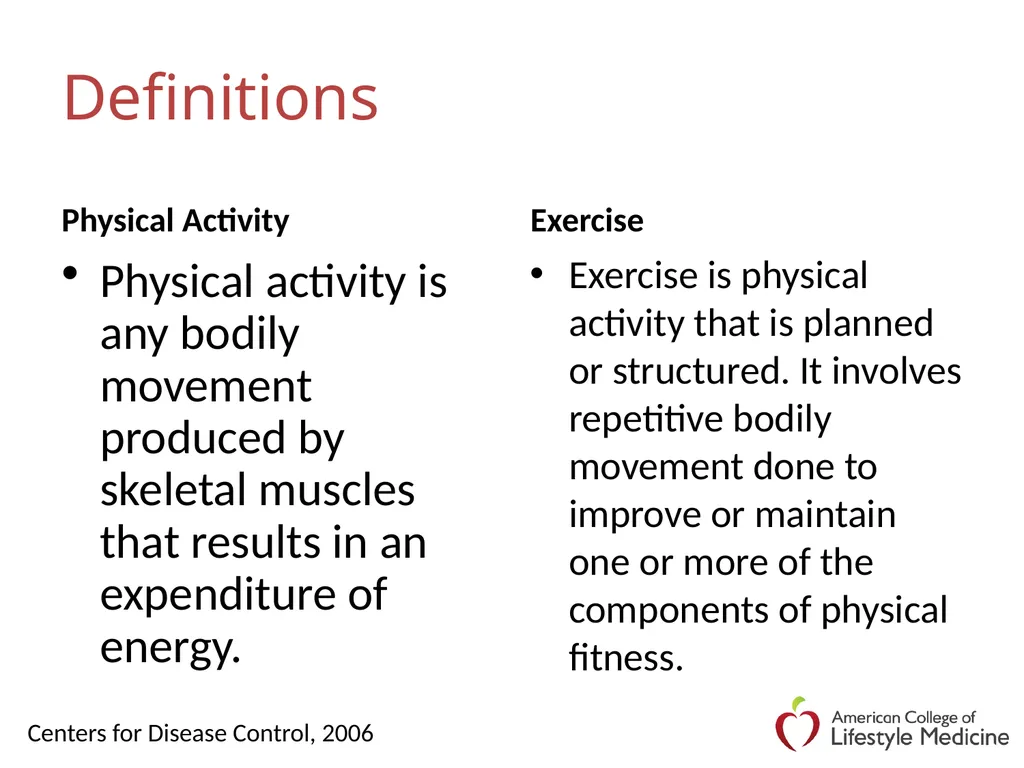
Definitions Physical Activity Physical activity is any bodily movement produced by skeletal muscles that results in an expenditure of energy. Exercise Exercise is physical activity that is planned or structured. It involves repetitive bodily movement done to improve or maintain one or more of the components of physical fitness. Centers for Disease Control, 2006<br>
04
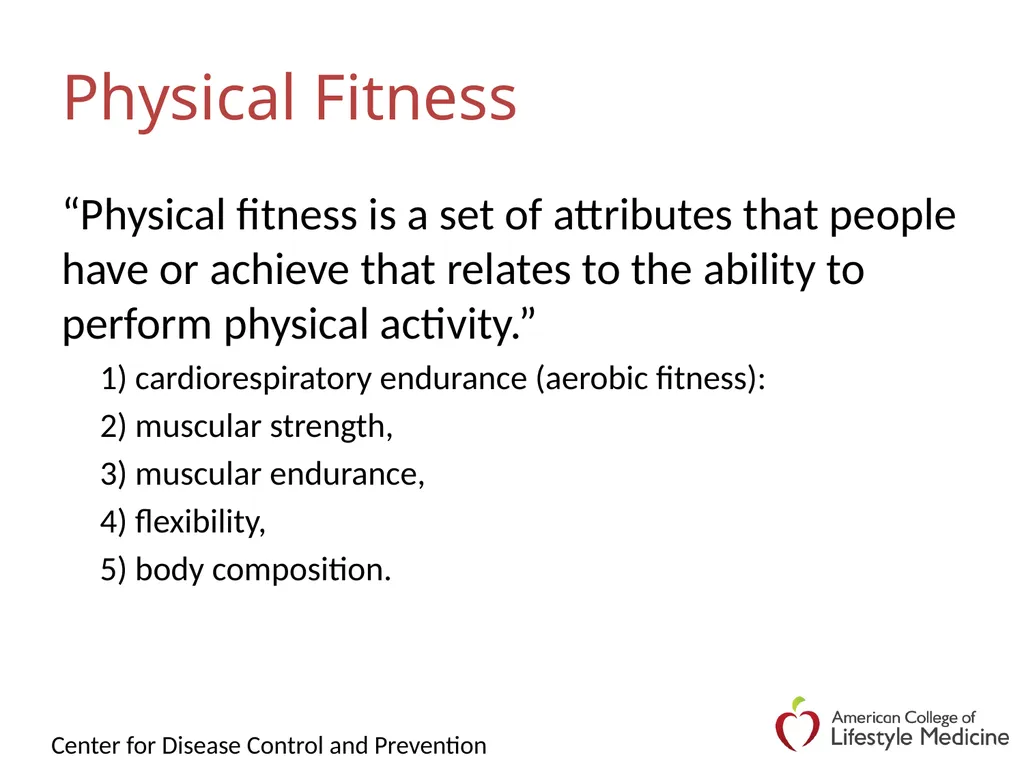
Physical Fitness “Physical fitness is a set of attributes that people have or achieve that relates to the ability to perform physical activity.”
1) cardiorespiratory endurance (aerobic fitness):
2) muscular strength,
3) muscular endurance,
4) flexibility,
5) body composition. Center for Disease Control and Prevention<br>
1) cardiorespiratory endurance (aerobic fitness):
2) muscular strength,
3) muscular endurance,
4) flexibility,
5) body composition. Center for Disease Control and Prevention<br>
05
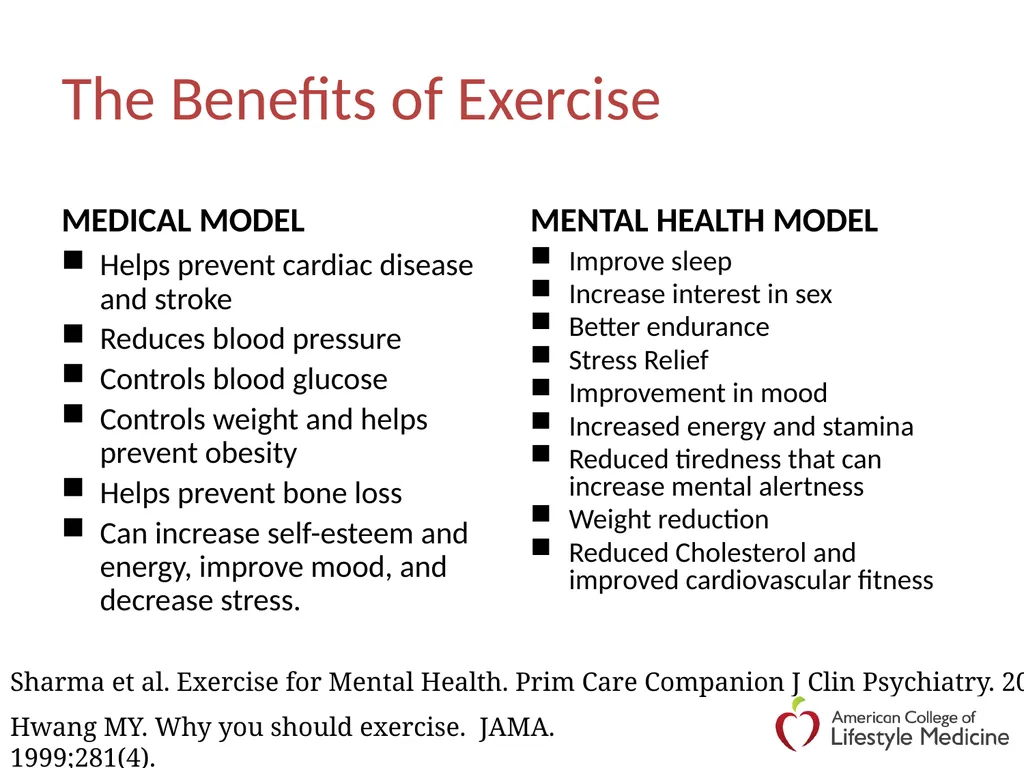
The Benefits of Exercise MEDICAL MODEL Helps prevent cardiac disease and stroke
Reduces blood pressure
Controls blood glucose
Controls weight and helps prevent obesity
Helps prevent bone loss
Can increase self-esteem and energy, improve mood, and decrease stress. MENTAL HEALTH MODEL Improve sleep
Increase interest in sex
Better endurance
Stress Relief
Improvement in mood
Increased energy and stamina
Reduced tiredness that can increase mental alertness
Weight reduction
Reduced Cholesterol and improved cardiovascular fitness Hwang MY. Why you should exercise. JAMA. 1999;281(4). Sharma et al. Exercise for Mental Health. Prim Care Companion J Clin Psychiatry. 2006;8(2):106.<br>
Reduces blood pressure
Controls blood glucose
Controls weight and helps prevent obesity
Helps prevent bone loss
Can increase self-esteem and energy, improve mood, and decrease stress. MENTAL HEALTH MODEL Improve sleep
Increase interest in sex
Better endurance
Stress Relief
Improvement in mood
Increased energy and stamina
Reduced tiredness that can increase mental alertness
Weight reduction
Reduced Cholesterol and improved cardiovascular fitness Hwang MY. Why you should exercise. JAMA. 1999;281(4). Sharma et al. Exercise for Mental Health. Prim Care Companion J Clin Psychiatry. 2006;8(2):106.<br>
06
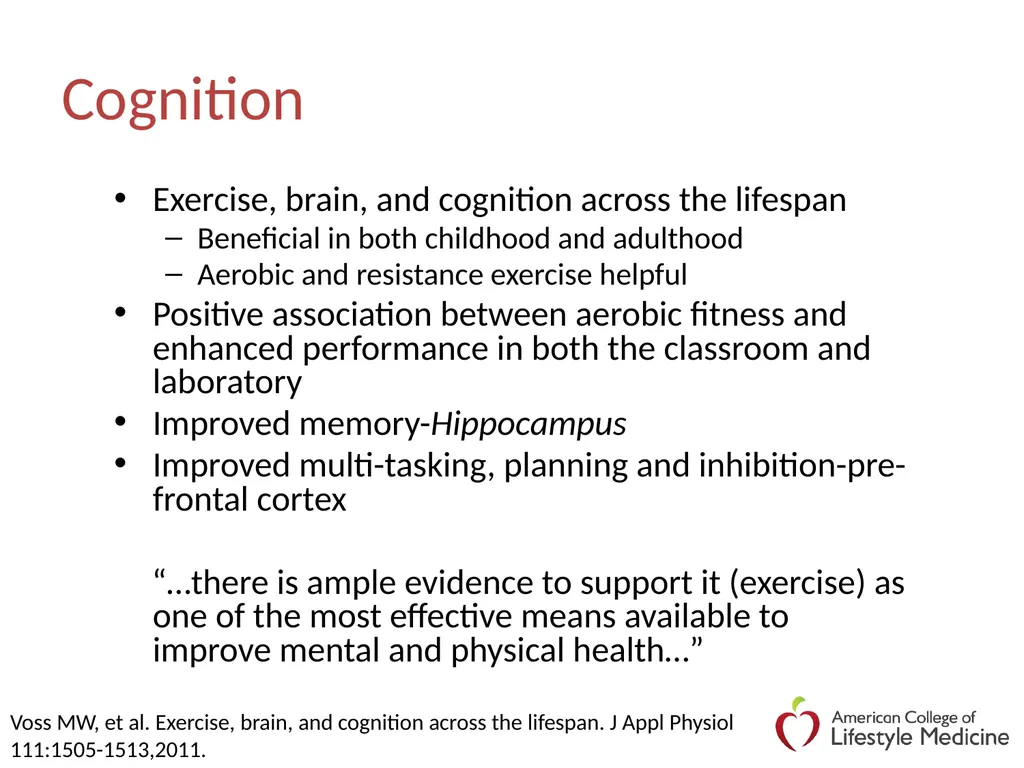
Cognition Exercise, brain, and cognition across the lifespan
Beneficial in both childhood and adulthood
Aerobic and resistance exercise helpful
Positive association between aerobic fitness and enhanced performance in both the classroom and laboratory
Improved memory-Hippocampus
Improved multi-tasking, planning and inhibition-pre-frontal cortex
“…there is ample evidence to support it (exercise) as one of the most effective means available to improve mental and physical health…” Voss MW, et al. Exercise, brain, and cognition across the lifespan. J Appl Physiol 111:1505-1513,2011.<br>
Beneficial in both childhood and adulthood
Aerobic and resistance exercise helpful
Positive association between aerobic fitness and enhanced performance in both the classroom and laboratory
Improved memory-Hippocampus
Improved multi-tasking, planning and inhibition-pre-frontal cortex
“…there is ample evidence to support it (exercise) as one of the most effective means available to improve mental and physical health…” Voss MW, et al. Exercise, brain, and cognition across the lifespan. J Appl Physiol 111:1505-1513,2011.<br>
07
This sounds great!
Where do I start?<br>
08
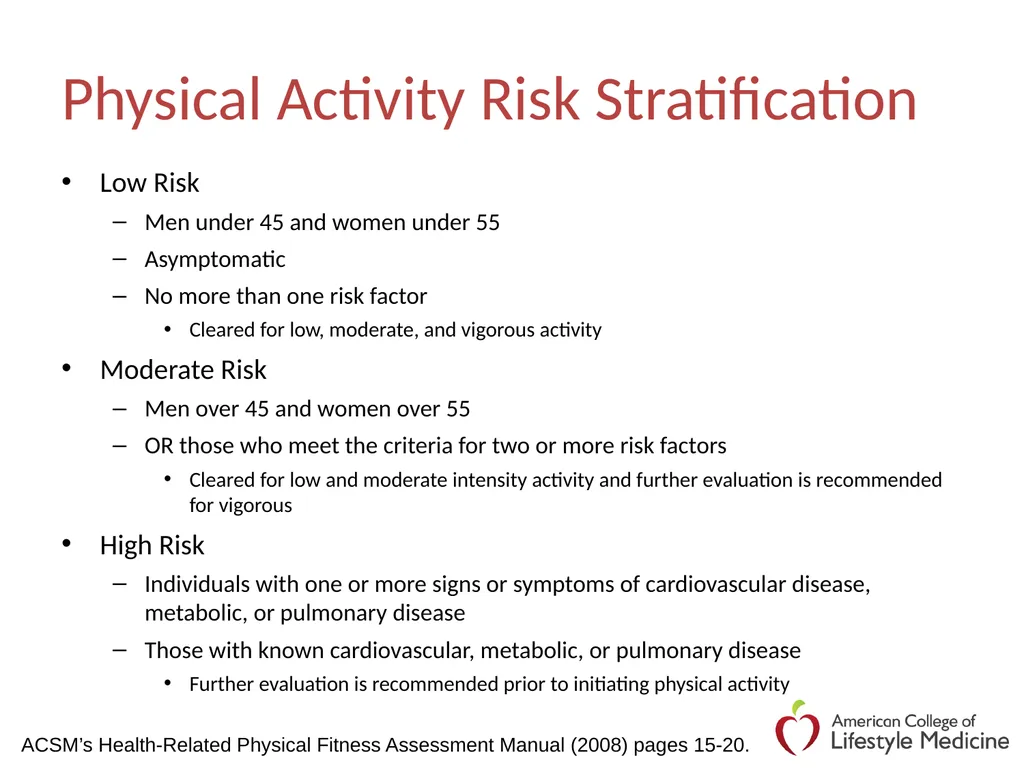
Physical Activity Risk Stratification Low Risk
Men under 45 and women under 55
Asymptomatic
No more than one risk factor
Cleared for low, moderate, and vigorous activity
Moderate Risk
Men over 45 and women over 55
OR those who meet the criteria for two or more risk factors
Cleared for low and moderate intensity activity and further evaluation is recommended for vigorous
High Risk
Individuals with one or more signs or symptoms of cardiovascular disease, metabolic, or pulmonary disease
Those with known cardiovascular, metabolic, or pulmonary disease
Further evaluation is recommended prior to initiating physical activity ACSM’s Health-Related Physical Fitness Assessment Manual (2008) pages 15-20.<br>
Men under 45 and women under 55
Asymptomatic
No more than one risk factor
Cleared for low, moderate, and vigorous activity
Moderate Risk
Men over 45 and women over 55
OR those who meet the criteria for two or more risk factors
Cleared for low and moderate intensity activity and further evaluation is recommended for vigorous
High Risk
Individuals with one or more signs or symptoms of cardiovascular disease, metabolic, or pulmonary disease
Those with known cardiovascular, metabolic, or pulmonary disease
Further evaluation is recommended prior to initiating physical activity ACSM’s Health-Related Physical Fitness Assessment Manual (2008) pages 15-20.<br>
09
Risk Factors ACSM’s Guide to Exercise Testing and Prescription (2009)
Family History
Current Cigarette Smoking
Obesity
Hypertension
Hypercholesterolemia
Pre-diabetes<br>
Family History
Current Cigarette Smoking
Obesity
Hypertension
Hypercholesterolemia
Pre-diabetes<br>
10
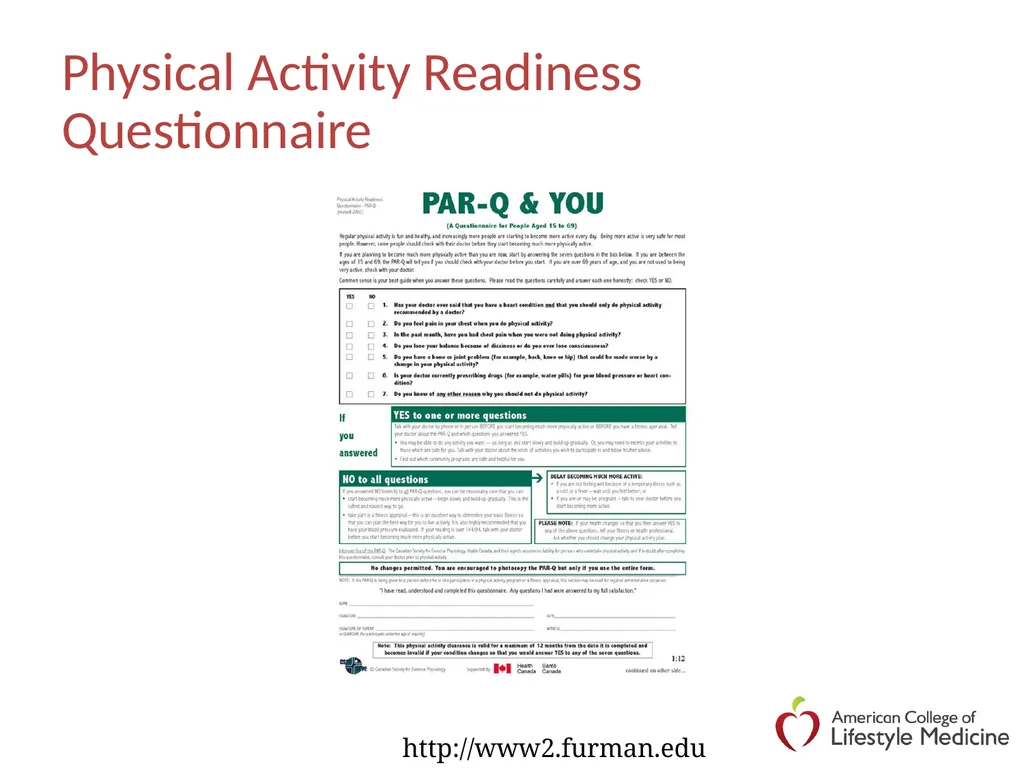
Physical Activity Readiness Questionnaire http://www2.furman.edu<br>
11
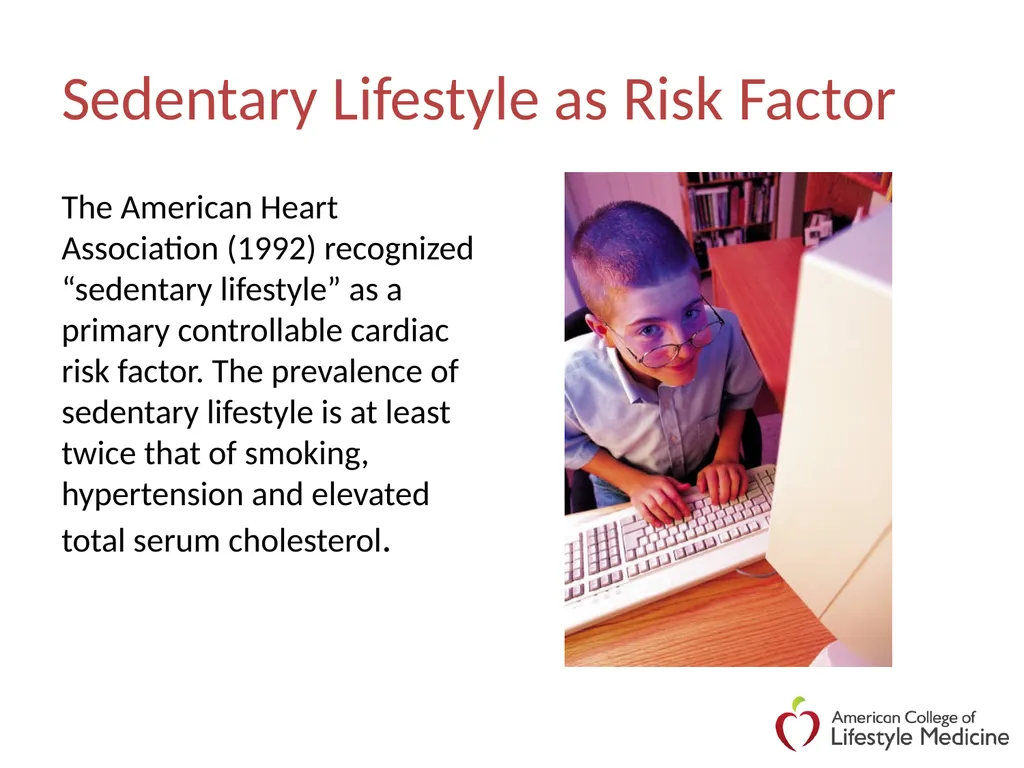
Sedentary Lifestyle as Risk Factor The American Heart Association (1992) recognized “sedentary lifestyle” as a primary controllable cardiac risk factor. The prevalence of sedentary lifestyle is at least twice that of smoking, hypertension and elevated total serum cholesterol.<br>
12
Risks of Sedentary Behavior - Reduced functional capacity
- Osteoporosis
- Obesity
- Anxiety and depression
- Hypertension
- Cardiovascular disease
- Colon cancer
Thromboembolic stroke
Breast cancer
Type 2 Diabetes KESANIEMI et al. Med. Sci. Sport Exerc. 33(6 Suppl):S531–S538, 2001<br>
- Osteoporosis
- Obesity
- Anxiety and depression
- Hypertension
- Cardiovascular disease
- Colon cancer
Thromboembolic stroke
Breast cancer
Type 2 Diabetes KESANIEMI et al. Med. Sci. Sport Exerc. 33(6 Suppl):S531–S538, 2001<br>
13
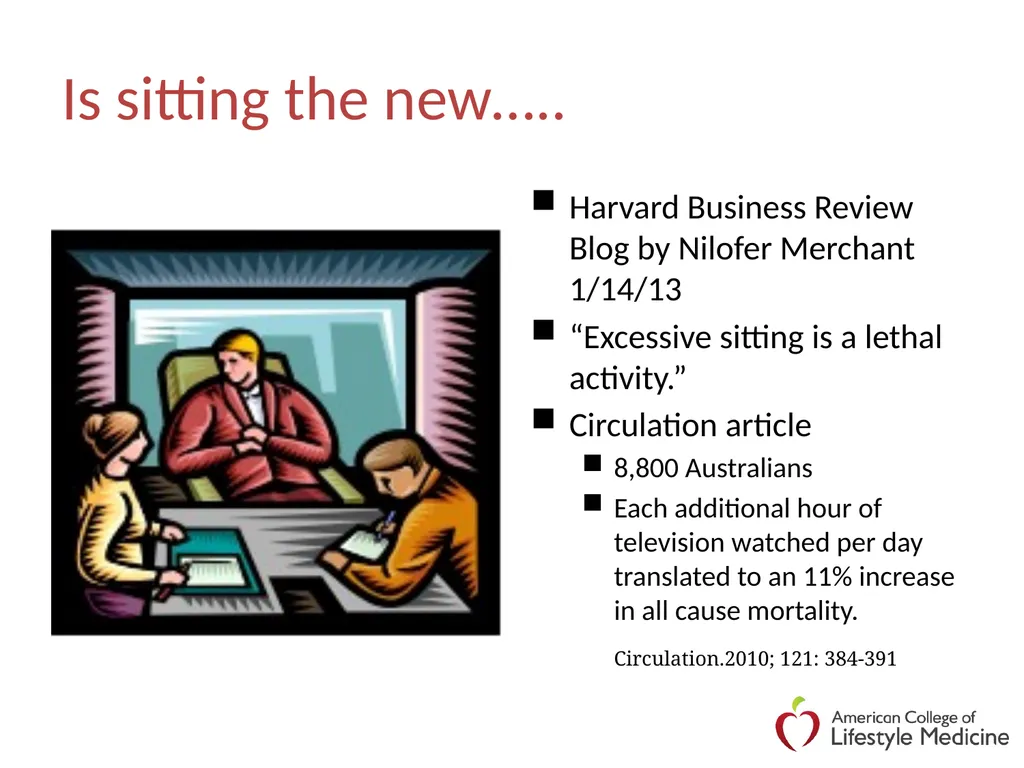
Is sitting the new….. Harvard Business Review Blog by Nilofer Merchant 1/14/13
“Excessive sitting is a lethal activity.”
Circulation article
8,800 Australians
Each additional hour of television watched per day translated to an 11% increase in all cause mortality. Circulation.2010; 121: 384-391<br>
“Excessive sitting is a lethal activity.”
Circulation article
8,800 Australians
Each additional hour of television watched per day translated to an 11% increase in all cause mortality. Circulation.2010; 121: 384-391<br>
14
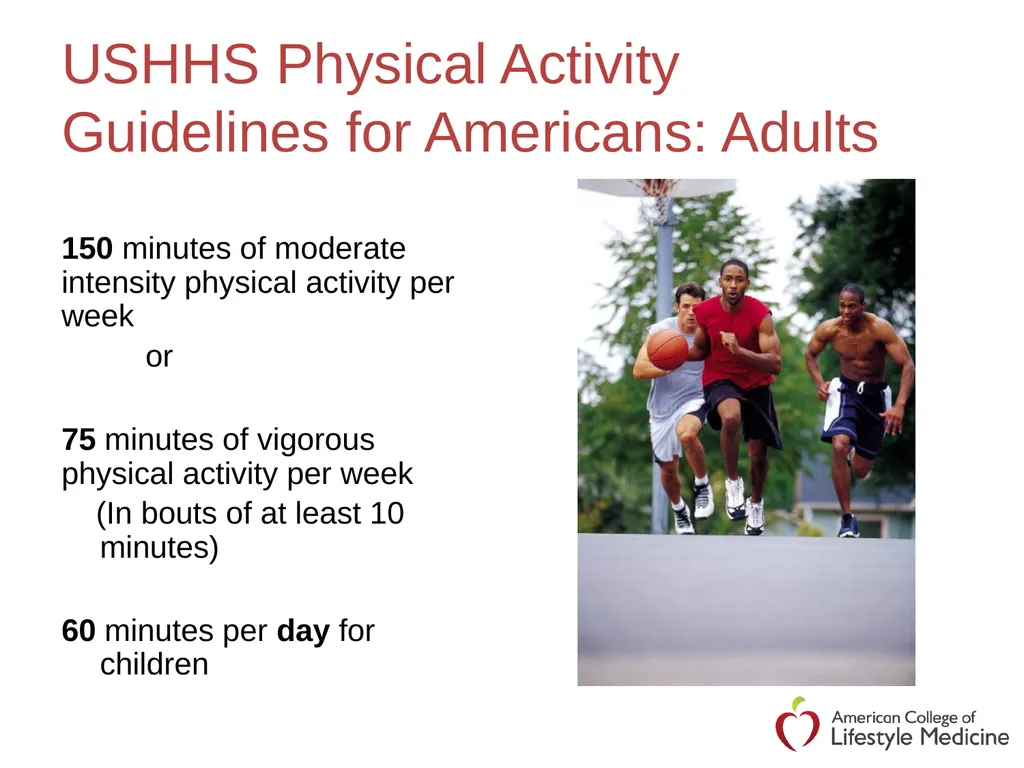
USHHS Physical Activity Guidelines for Americans: Adults 150 minutes of moderate intensity physical activity per week
or
75 minutes of vigorous physical activity per week
(In bouts of at least 10 minutes)
60 minutes per day for children<br>
or
75 minutes of vigorous physical activity per week
(In bouts of at least 10 minutes)
60 minutes per day for children<br>
15
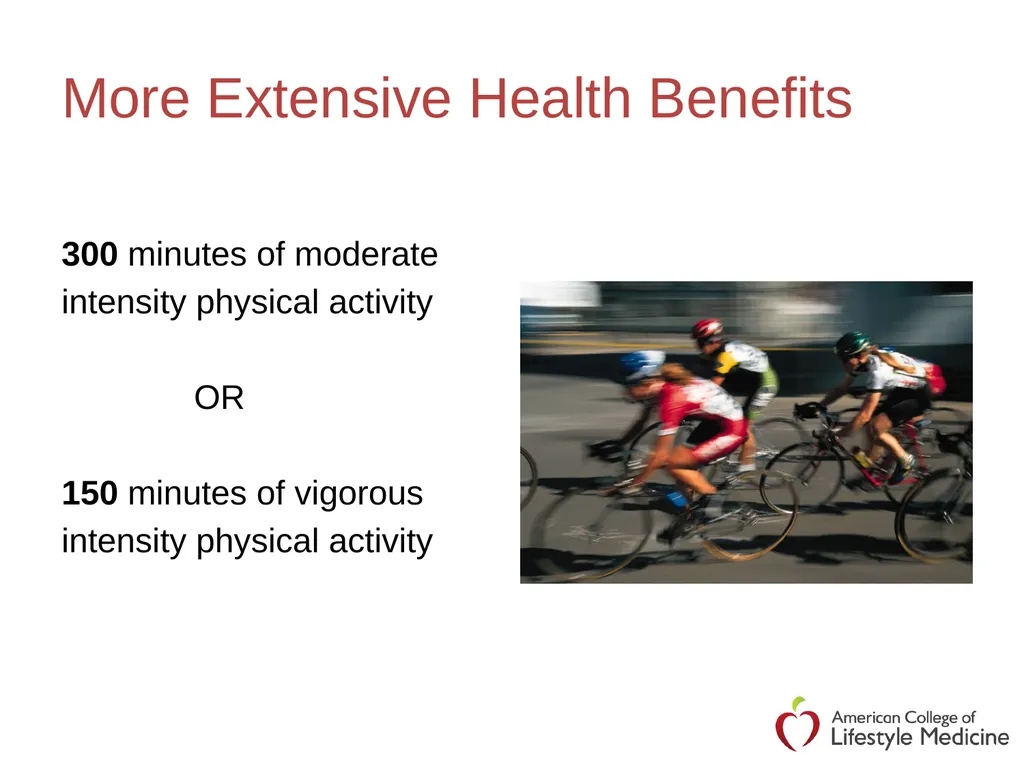
More Extensive Health Benefits 300 minutes of moderate
intensity physical activity
OR
150 minutes of vigorous
intensity physical activity<br>
intensity physical activity
OR
150 minutes of vigorous
intensity physical activity<br>
16
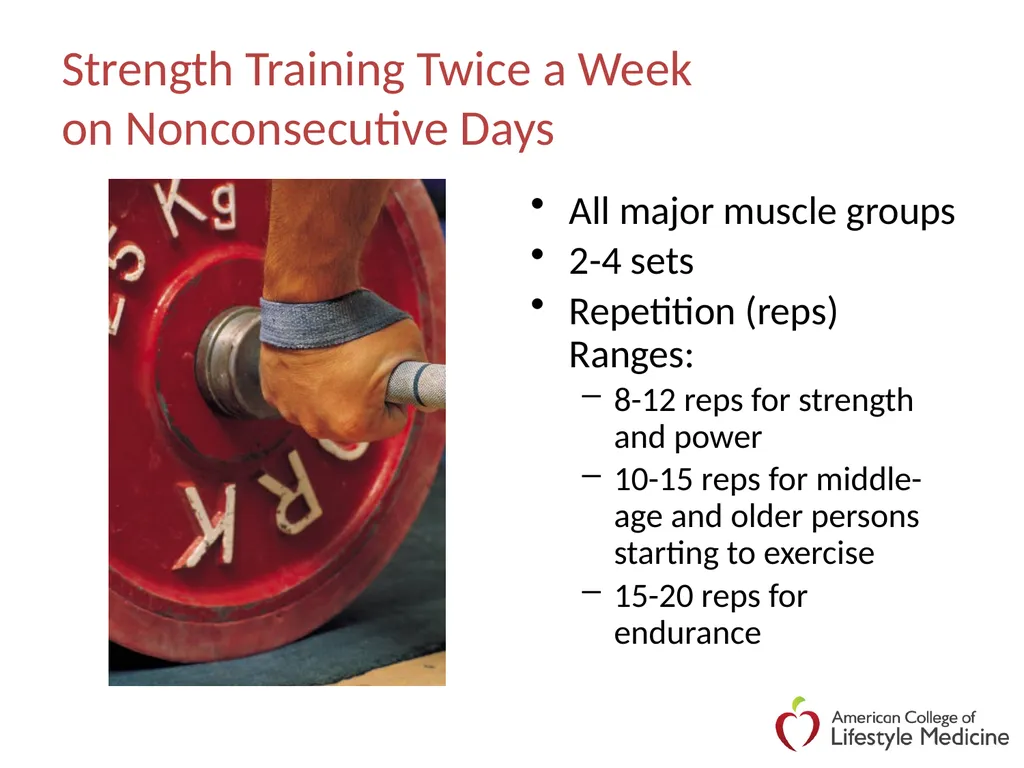
Strength Training Twice a Week
on Nonconsecutive Days All major muscle groups
2-4 sets
Repetition (reps) Ranges:
8-12 reps for strength and power
10-15 reps for middle-age and older persons starting to exercise
15-20 reps for endurance<br>
2-4 sets
Repetition (reps) Ranges:
8-12 reps for strength and power
10-15 reps for middle-age and older persons starting to exercise
15-20 reps for endurance<br>
17
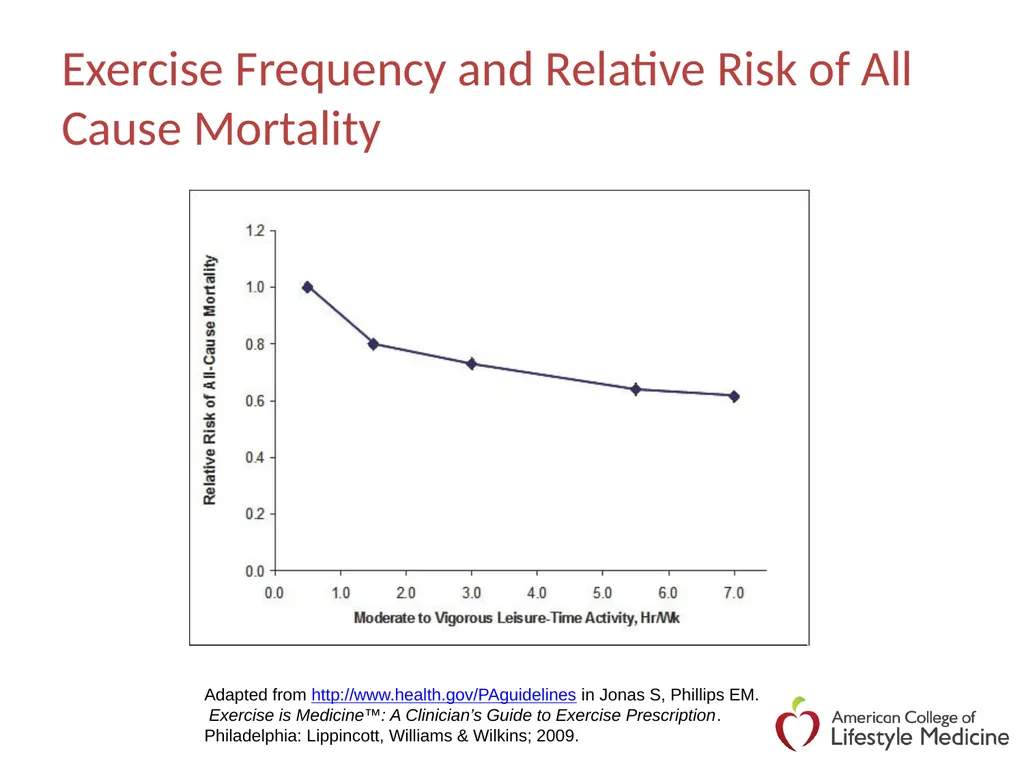
Exercise Frequency and Relative Risk of All Cause Mortality Adapted from http://www.health.gov/PAguidelines in Jonas S, Phillips EM.
Exercise is Medicine™: A Clinician’s Guide to Exercise Prescription.
Philadelphia: Lippincott, Williams & Wilkins; 2009.<br>
Exercise is Medicine™: A Clinician’s Guide to Exercise Prescription.
Philadelphia: Lippincott, Williams & Wilkins; 2009.<br>
18
American Academy of Pediatrics Recommendations Strength training programs for preadolescents and adolescents can be safe and effective if proper resistance training techniques and safety precautions are followed.
Preadolescents and adolescents should avoid competitive weight lifting, power lifting, body building, and maximal lifts until they reach physical and skeletal maturity.
Before beginning a formal strength training program, a medical evaluation should be performed by a pediatrician.<br>
Preadolescents and adolescents should avoid competitive weight lifting, power lifting, body building, and maximal lifts until they reach physical and skeletal maturity.
Before beginning a formal strength training program, a medical evaluation should be performed by a pediatrician.<br>
19
Flexibility - At least two or three days each week to improve range of motion.
- Each stretch should be held for 10-30 seconds to the point of tightness or slight discomfort.
- Repeat each stretch two to four times, accumulating 60 seconds per stretch.
- Static, dynamic, ballistic and PNF (proprioceptive neuromuscular facilitation) stretches are all effective.
- Flexibility exercise is most effective when the muscle is warm. Try light aerobic activity or a hot bath to warm the muscles before stretching. From ACSM at acsm.org<br>
- Each stretch should be held for 10-30 seconds to the point of tightness or slight discomfort.
- Repeat each stretch two to four times, accumulating 60 seconds per stretch.
- Static, dynamic, ballistic and PNF (proprioceptive neuromuscular facilitation) stretches are all effective.
- Flexibility exercise is most effective when the muscle is warm. Try light aerobic activity or a hot bath to warm the muscles before stretching. From ACSM at acsm.org<br>
20
Exercise Progression Start low and go slow
“Gradual progression of exercise time, frequency and intensity is recommended for best adherence and least injury risk.” (ACSM) To Lose Weight:
30-60 minutes of moderate intensity physical activity a day
Frequent activity over long periods of time at low intensity will bring benefits for weight loss and health. To Maintain Weight Loss
60-90 minutes of moderate intensity physical activity per day<br>
“Gradual progression of exercise time, frequency and intensity is recommended for best adherence and least injury risk.” (ACSM) To Lose Weight:
30-60 minutes of moderate intensity physical activity a day
Frequent activity over long periods of time at low intensity will bring benefits for weight loss and health. To Maintain Weight Loss
60-90 minutes of moderate intensity physical activity per day<br>
21
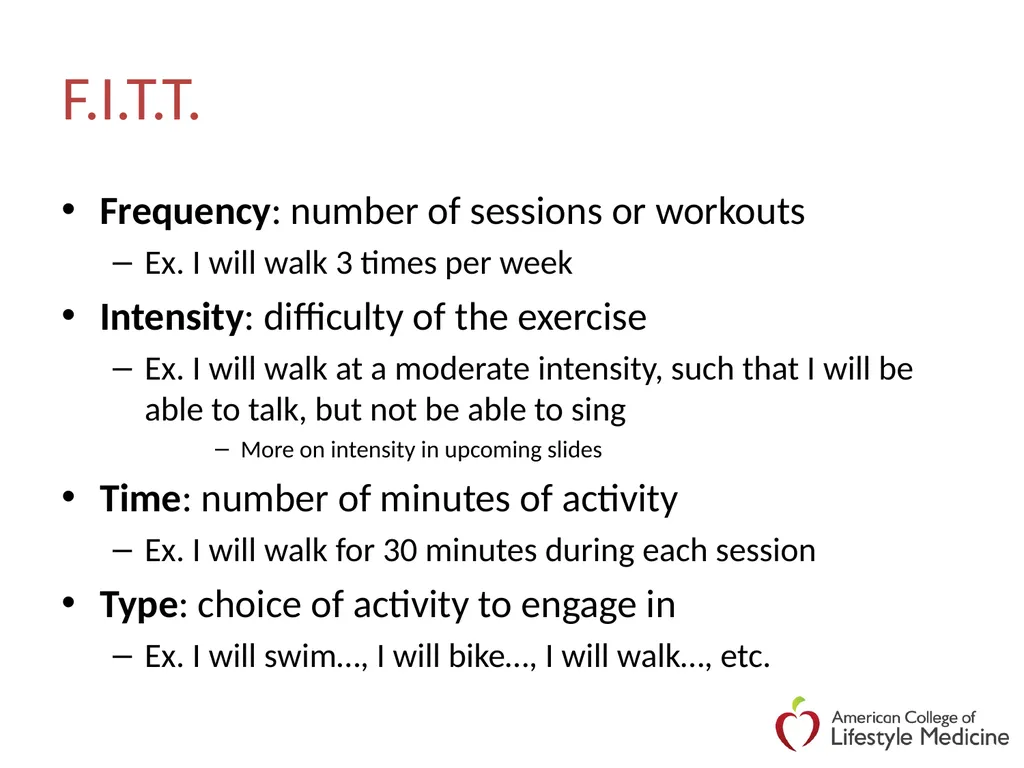
There are four parts of the exercise prescription… F: Frequency- how often?
I: Intensity- how hard?
T: Time- how long?
T: Type- what?<br>
I: Intensity- how hard?
T: Time- how long?
T: Type- what?<br>
22
F.I.T.T. Frequency: number of sessions or workouts
Ex. I will walk 3 times per week
Intensity: difficulty of the exercise
Ex. I will walk at a moderate intensity, such that I will be able to talk, but not be able to sing
More on intensity in upcoming slides
Time: number of minutes of activity
Ex. I will walk for 30 minutes during each session
Type: choice of activity to engage in
Ex. I will swim…, I will bike…, I will walk…, etc.<br>
Ex. I will walk 3 times per week
Intensity: difficulty of the exercise
Ex. I will walk at a moderate intensity, such that I will be able to talk, but not be able to sing
More on intensity in upcoming slides
Time: number of minutes of activity
Ex. I will walk for 30 minutes during each session
Type: choice of activity to engage in
Ex. I will swim…, I will bike…, I will walk…, etc.<br>
23
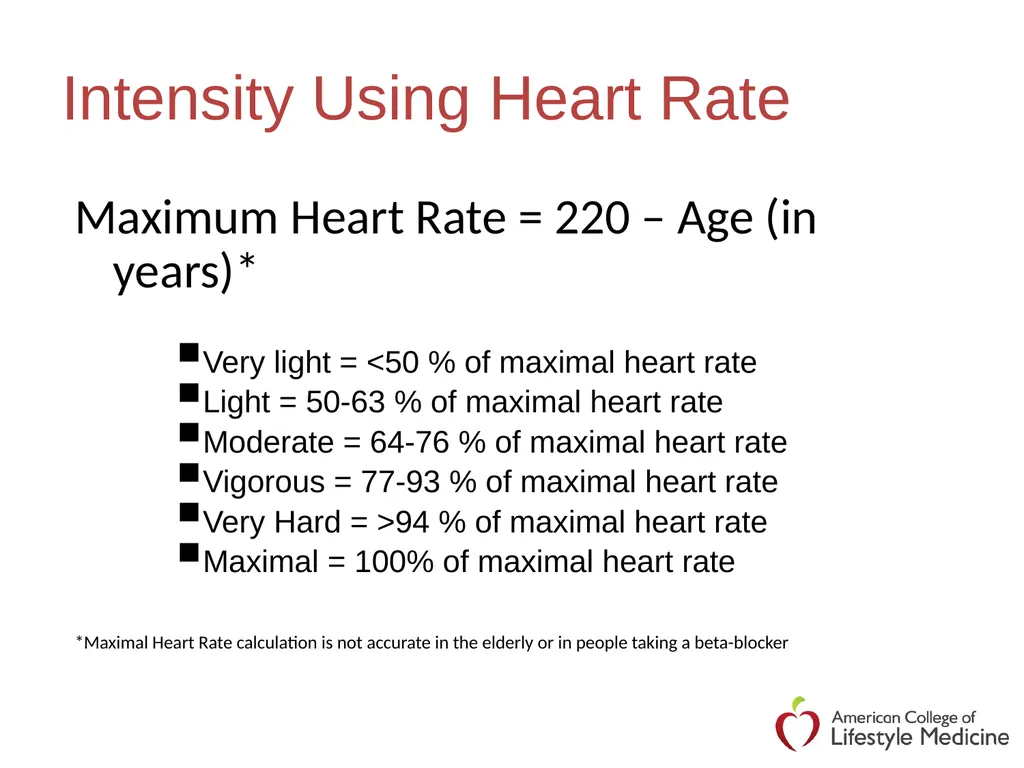
Intensity Using Heart Rate Maximum Heart Rate = 220 – Age (in years)*
Very light = <50 % of maximal heart rate
Light = 50-63 % of maximal heart rate
Moderate = 64-76 % of maximal heart rate
Vigorous = 77-93 % of maximal heart rate
Very Hard = >94 % of maximal heart rate
Maximal = 100% of maximal heart rate
*Maximal Heart Rate calculation is not accurate in the elderly or in people taking a beta-blocker<br>
Very light = <50 % of maximal heart rate
Light = 50-63 % of maximal heart rate
Moderate = 64-76 % of maximal heart rate
Vigorous = 77-93 % of maximal heart rate
Very Hard = >94 % of maximal heart rate
Maximal = 100% of maximal heart rate
*Maximal Heart Rate calculation is not accurate in the elderly or in people taking a beta-blocker<br>
24
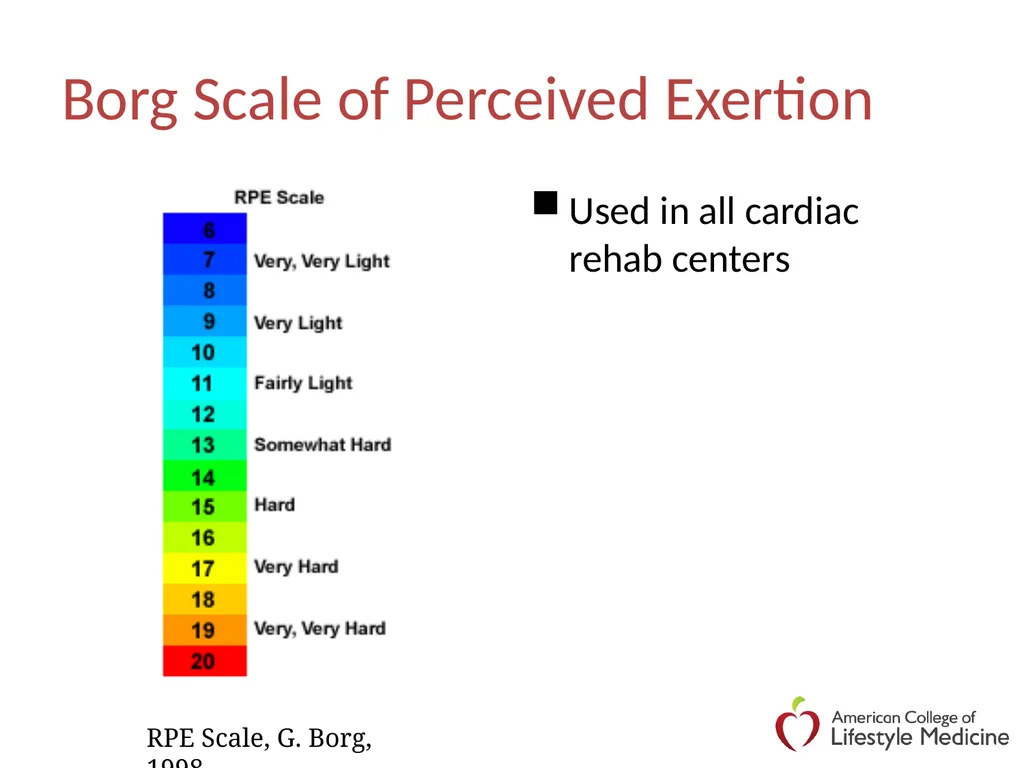
Borg Scale of Perceived Exertion Used in all cardiac rehab centers RPE Scale, G. Borg, 1998<br>
25
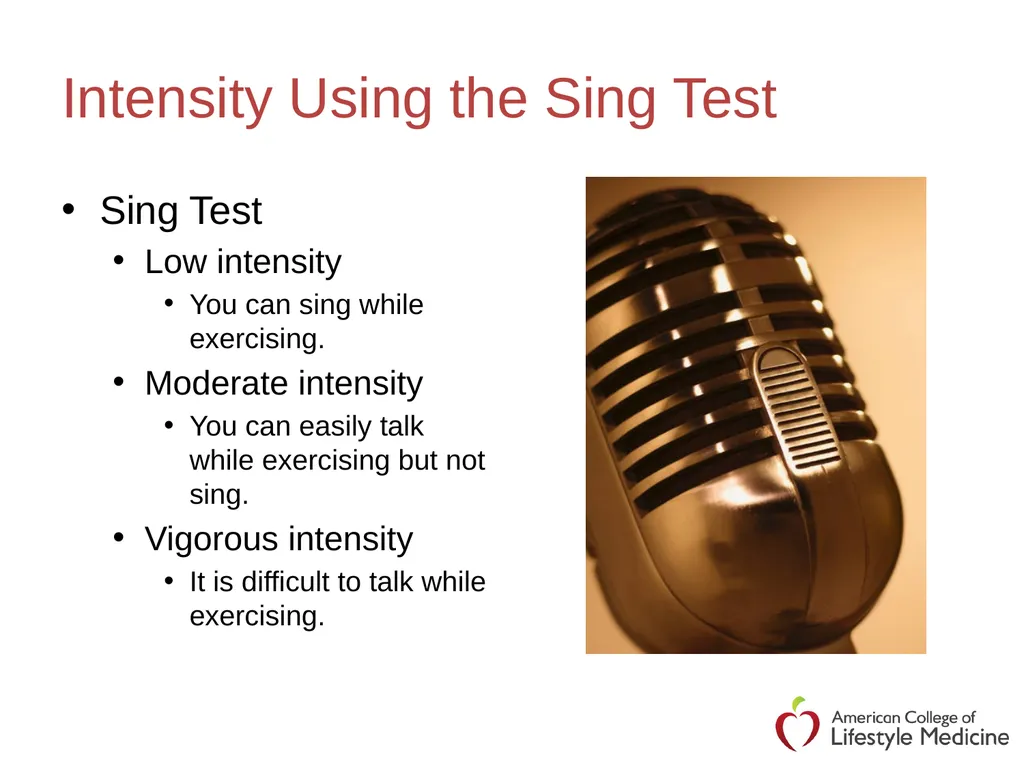
Intensity Using the Sing Test Sing Test
Low intensity
You can sing while exercising.
Moderate intensity
You can easily talk while exercising but not sing.
Vigorous intensity
It is difficult to talk while exercising.<br>
Low intensity
You can sing while exercising.
Moderate intensity
You can easily talk while exercising but not sing.
Vigorous intensity
It is difficult to talk while exercising.<br>
26
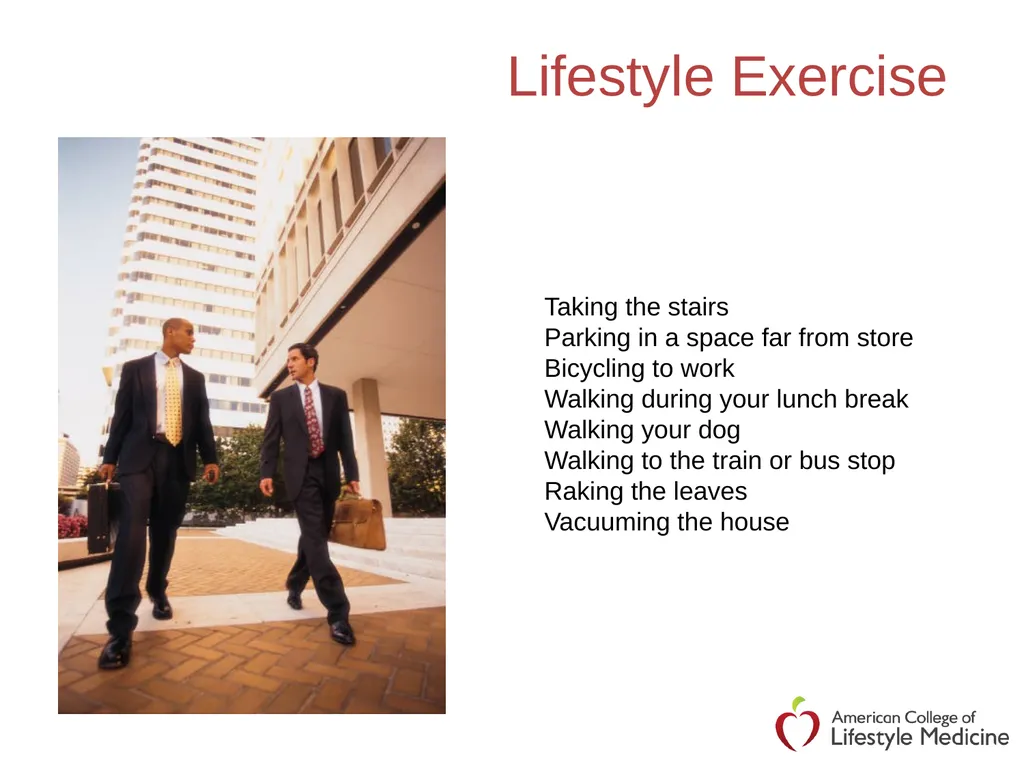
Lifestyle Exercise Taking the stairs
Parking in a space far from store
Bicycling to work
Walking during your lunch break
Walking your dog
Walking to the train or bus stop
Raking the leaves
Vacuuming the house<br>
Parking in a space far from store
Bicycling to work
Walking during your lunch break
Walking your dog
Walking to the train or bus stop
Raking the leaves
Vacuuming the house<br>
27
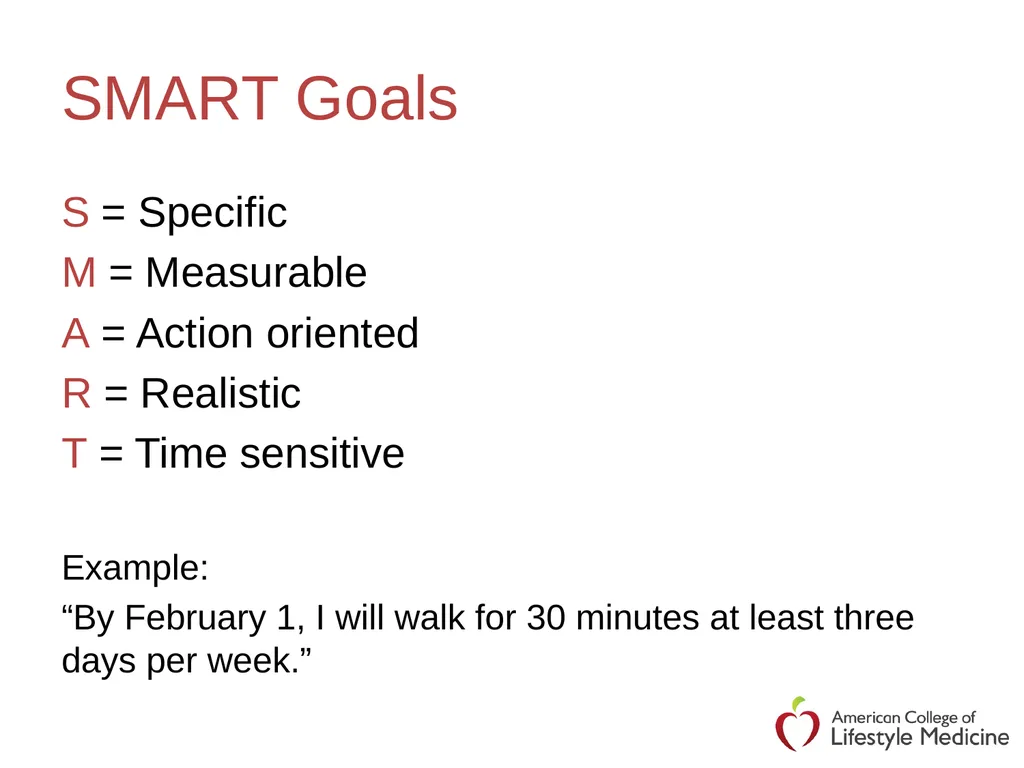
SMART Goals S = Specific
M = Measurable
A = Action oriented
R = Realistic
T = Time sensitive
Example:
“By February 1, I will walk for 30 minutes at least three days per week.”<br>
M = Measurable
A = Action oriented
R = Realistic
T = Time sensitive
Example:
“By February 1, I will walk for 30 minutes at least three days per week.”<br>
28
What are the aerobic physical activity guidelines for adults? 90 minutes of vigorous exercise per week
150 minutes of moderate intensity exercise per week
150 minutes of vigorous intensity exercise per week
150 minutes of vigorous intensity exercise per day<br>
150 minutes of moderate intensity exercise per week
150 minutes of vigorous intensity exercise per week
150 minutes of vigorous intensity exercise per day<br>
29
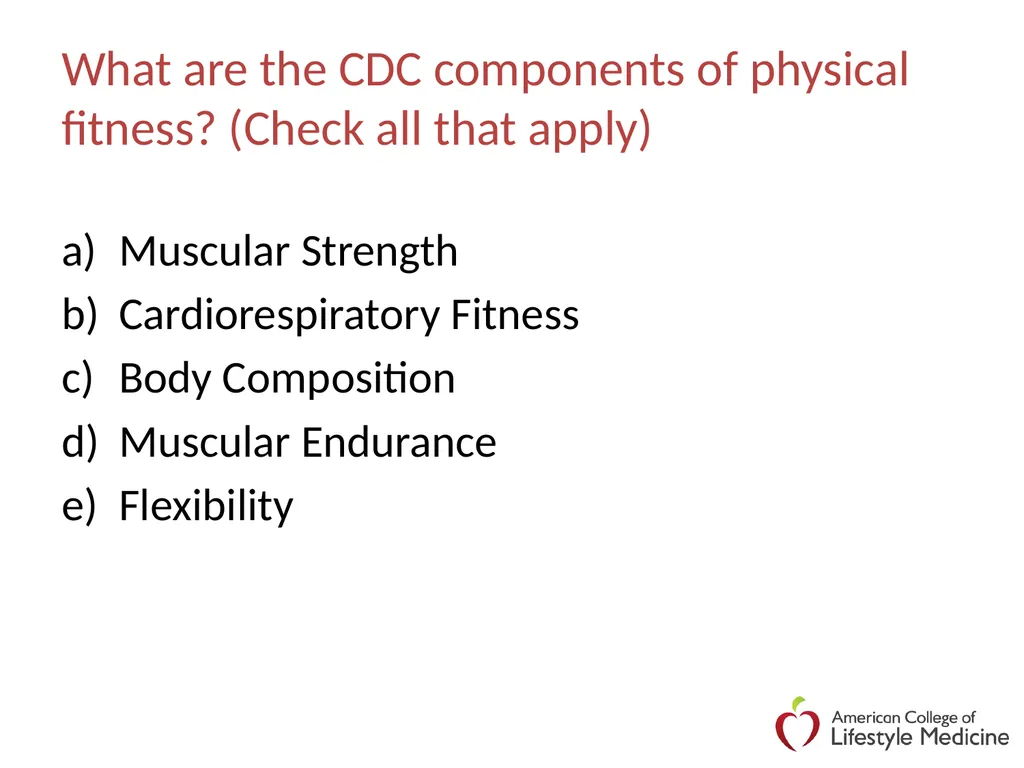
What are the CDC components of physical fitness? (Check all that apply) Muscular Strength
Cardiorespiratory Fitness
Body Composition
Muscular Endurance
Flexibility<br>
Cardiorespiratory Fitness
Body Composition
Muscular Endurance
Flexibility<br>
30
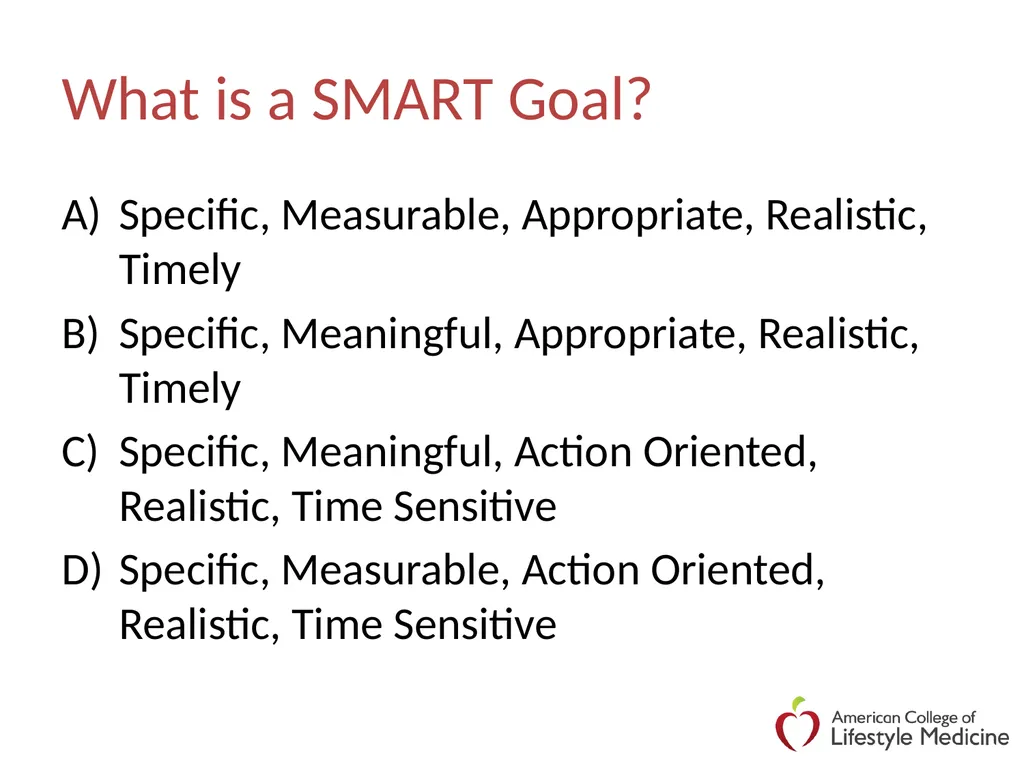
What is a SMART Goal? Specific, Measurable, Appropriate, Realistic, Timely
Specific, Meaningful, Appropriate, Realistic, Timely
Specific, Meaningful, Action Oriented, Realistic, Time Sensitive
Specific, Measurable, Action Oriented, Realistic, Time Sensitive<br>
Specific, Meaningful, Appropriate, Realistic, Timely
Specific, Meaningful, Action Oriented, Realistic, Time Sensitive
Specific, Measurable, Action Oriented, Realistic, Time Sensitive<br>
31
Is this a SMART Goal or Not? “I want to lose 20 pounds by Spring Break.”<br>
32
Is this a SMART Goal or Not? “I will go for a 60 minute walk after dinner at least 3 days per week by March 1st.”<br>
33
Become Part of the LM Movement! Join the American College of Lifestyle Medicine (ACLM) and connect with others passionate about LM!
Plus, tons of additional membership benefits!
For trainees, we encourage you to become a Professional in Training (PiT) member and get involved in spreading LM to campuses nationwide!
Lifestyle Medicine Interest Group (LMIG) Starter Kit and Introductory Video available online www.lifestylemedicine.org<br>
Plus, tons of additional membership benefits!
For trainees, we encourage you to become a Professional in Training (PiT) member and get involved in spreading LM to campuses nationwide!
Lifestyle Medicine Interest Group (LMIG) Starter Kit and Introductory Video available online www.lifestylemedicine.org<br>
34
Interested in Diving Deeper into LM and Advancing the Field? There is a special award for Professionals in Training.
The Donald Anderson Pegg Award for innovative research and inspiring projects in LM.
Please go to the ACLM website for further information.
Teams of students can apply and attendings/mentors are encouraged to get involved, as well. www.lifestylemedicine.org<br>
The Donald Anderson Pegg Award for innovative research and inspiring projects in LM.
Please go to the ACLM website for further information.
Teams of students can apply and attendings/mentors are encouraged to get involved, as well. www.lifestylemedicine.org<br>
35
Join Us! The Lifestyle Medicine Conferences are a great way to get connected with other healthcare professionals that are passionate about improving the lives of others through lifestyle medicine!
Come connect with colleagues and hear from LM visionaries to learn about current, evidence-based LM practices.
LMConference.org<br>
Come connect with colleagues and hear from LM visionaries to learn about current, evidence-based LM practices.
LMConference.org<br>
36
Special thanks… …to the American College of Lifestyle Medicine and to ACLM’s Professionals in Training (PiT) for their support.<br>
37
References 1. American College of Sports Medicine. ACSM’s guidelines for exercise testing and prescription. 7th Edition. Philadelphia: Lippincott, Williams and Wilkins; 2006.
2. AHA Scientific Statement. Exercise and Acute Cardiovascular Events. Circulation 2007; 115: 2358-2368.
3.Frank E, Breyan J, Elon L. Physician disclosure of healthy personal behaviors improves credibility and ability to motivate. Arch Fam Med 2000;9:287-90.
4. Abramson S, Stein J, Schaufele M, Frates E, Rogan S. Personal exercise habits and counseling practices of primary care physicians: a national survey. Clin J Sport Med 2000;10:40-8.
5. US Health and Human Services 2008 Physical Activity Guidelines for Americans. Be Active Healthy and Happy. www.health.gov/paguidelines (accessed November 5, 2008)
6. Physical Activity and Health: A Report from the Surgeon General. http://www.cdc.gov/nccdphp/sgr/pdf/prerep.pdf (accessed December 31, 2008)<br>
2. AHA Scientific Statement. Exercise and Acute Cardiovascular Events. Circulation 2007; 115: 2358-2368.
3.Frank E, Breyan J, Elon L. Physician disclosure of healthy personal behaviors improves credibility and ability to motivate. Arch Fam Med 2000;9:287-90.
4. Abramson S, Stein J, Schaufele M, Frates E, Rogan S. Personal exercise habits and counseling practices of primary care physicians: a national survey. Clin J Sport Med 2000;10:40-8.
5. US Health and Human Services 2008 Physical Activity Guidelines for Americans. Be Active Healthy and Happy. www.health.gov/paguidelines (accessed November 5, 2008)
6. Physical Activity and Health: A Report from the Surgeon General. http://www.cdc.gov/nccdphp/sgr/pdf/prerep.pdf (accessed December 31, 2008)<br>
38
References Continued 7. Haskell WL, Lee I-M, Pate RR, Powell KE, Blair SN, Franklin BA, Macera CA, Heath GW, Thompson PD, Bauman A. Physical activity and public health. Updated recommendation for adults from the American College of Sports Medicine and the American Heart Association. Circulation 2007;116:1081-93.
8. American College of Sports Medicine. The ACSM’s resource manual for guidelines for exercise testing and prescription. 5th ed. Philadelphia: Lippincott Williams and Wilkins; 2006.
9. Mayer J, Mernitz H. Exercise and the Older Patients: Prescribing Guidelines. American Family Physician; 2006:71: Issue 3.
10. Kesaniemi YK, Danforth E Jr, Jensen MD, et al. Dose response issues concerning physical activity and health: an evidence-based symposium. Med Sci Sports Exerc 2001; 33:S351-8.
11. American College of Sports Medicine, ACSM’s Advanced Exercise and Physiology. Lippincott, Williams and Wilkins; 2006.<br>
8. American College of Sports Medicine. The ACSM’s resource manual for guidelines for exercise testing and prescription. 5th ed. Philadelphia: Lippincott Williams and Wilkins; 2006.
9. Mayer J, Mernitz H. Exercise and the Older Patients: Prescribing Guidelines. American Family Physician; 2006:71: Issue 3.
10. Kesaniemi YK, Danforth E Jr, Jensen MD, et al. Dose response issues concerning physical activity and health: an evidence-based symposium. Med Sci Sports Exerc 2001; 33:S351-8.
11. American College of Sports Medicine, ACSM’s Advanced Exercise and Physiology. Lippincott, Williams and Wilkins; 2006.<br>
39
References Continued 12. Cress ME,et al. Best Practices Statement, Physical Activity Programs and Behavior Counseling in Older Adult Populations. Med Sci Sports Exerc 2004;36:1997-2003
13. American College of Sports Medicine. ACSM’s Health Related Physical Fitness Assessment Manual, Second Edition. Philadelphia: Lippincott Williams and Wilkins; 2008.
14. American College of Sports Medicine. ACSM’s guidelines for exercise testing and prescription. 5th Edition. Philadelphia: Williams and Wilkins; 1995.
15. Rainville J, Hartigan E, Martinez E, Limke J, Jouve CA, Finno M. Exercise as a treatment for chronic low back pain. Spine J 2004;4:106-15.
16. Gibbons et al. ACC/ AHA Guideline Update for Exercise Testing. Circulation 2002; 106:1883-92.<br>
13. American College of Sports Medicine. ACSM’s Health Related Physical Fitness Assessment Manual, Second Edition. Philadelphia: Lippincott Williams and Wilkins; 2008.
14. American College of Sports Medicine. ACSM’s guidelines for exercise testing and prescription. 5th Edition. Philadelphia: Williams and Wilkins; 1995.
15. Rainville J, Hartigan E, Martinez E, Limke J, Jouve CA, Finno M. Exercise as a treatment for chronic low back pain. Spine J 2004;4:106-15.
16. Gibbons et al. ACC/ AHA Guideline Update for Exercise Testing. Circulation 2002; 106:1883-92.<br>
40
Resources Exercise is Medicine©
www.exerciseismedicine.org
Institute of Lifestyle Medicine
www.instituteoflifestylemedicine.org
American College of Sports Medicine
www.acsm.org<br>
www.exerciseismedicine.org
Institute of Lifestyle Medicine
www.instituteoflifestylemedicine.org
American College of Sports Medicine
www.acsm.org<br>
41
Resources Physical Activity Guidelines, U.S. Department of Health and Human Services (HHS)
www.health.gov/paguidelines
Choose MyPlate.gov USDA
https://www.choosemyplate.gov/physical-activity<br>
www.health.gov/paguidelines
Choose MyPlate.gov USDA
https://www.choosemyplate.gov/physical-activity<br>
42
Resources AHA: www.americanheart.org
NIH: www.nhlbi.nih.gov/health
CDC: www.cdc.gov/NCCDPHP/DNPA<br>
NIH: www.nhlbi.nih.gov/health
CDC: www.cdc.gov/NCCDPHP/DNPA<br>