Literacy in Physical Education 29th May 2012 Waingels College Aims To explain the role of literacy in PE Demonstrate and share ideas to support the impact of literacy in PE Recognise supportive strategies for EAL students Ability to
"Literacy in Physical Education 29th May 2012" is the property of its rightful owner. Permission is granted to
download and print the materials on this website for personal, non-commercial use only, and to display it
on your personal computer provided you do not modify the materials and that you retain all copyright
notices contained in the materials. By downloading content from our website, you accept the terms of this
agreement.
Presentation Transcript
01
Literacy in Physical Education 29th May 2012
Waingels College<br>
02
Aims To explain the role of literacy in PE
Demonstrate and share ideas to support the impact of literacy in PE
Recognise supportive strategies for EAL students<br>
03
Ability to understand all forms of communication
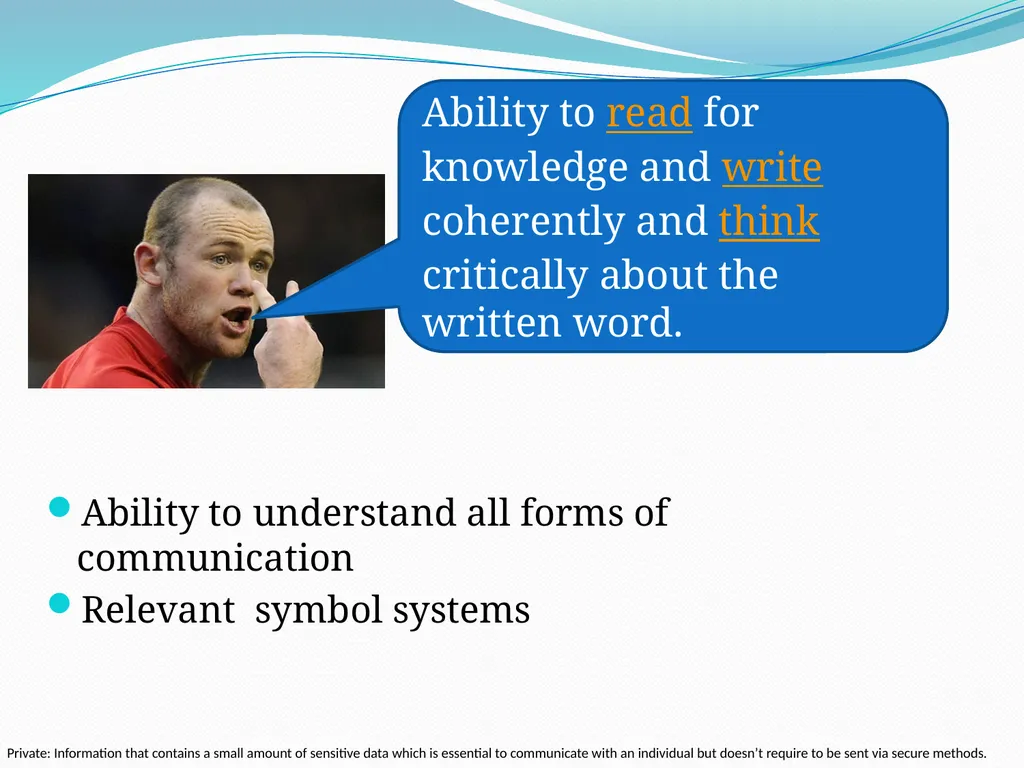
Relevant symbol systems Ability to read for knowledge and write coherently and think critically about the written word.<br>
04
Big picture……? 5 A*-C’s
Core Subjects
Increase of EAL students
KS4 & 5 transition
Cross-curricular links
Thinking and Learning skills (Bloom’s Taxonomy)
Showing the links more explicitly
Future jobs<br>
05
So why Physical Education? Reflect
State
Explore
Create
Describe
Explain
Analyse
Evaluate<br>
06
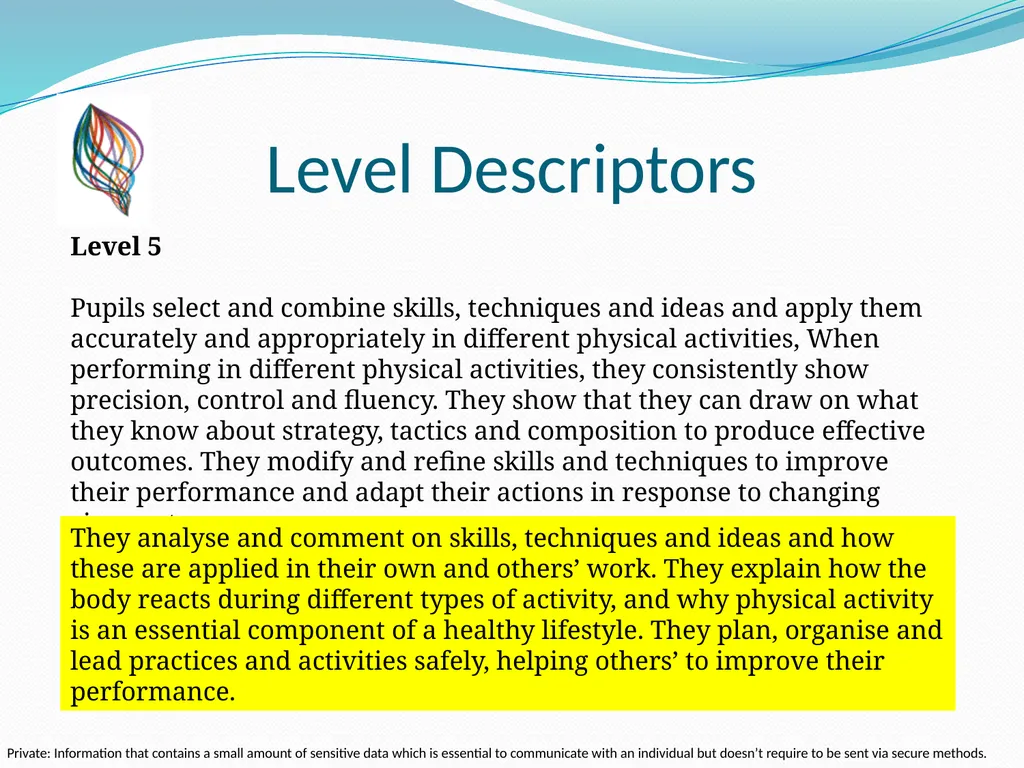
Level Descriptors Level 5
Pupils select and combine skills, techniques and ideas and apply them accurately and appropriately in different physical activities, When performing in different physical activities, they consistently show precision, control and fluency. They show that they can draw on what they know about strategy, tactics and composition to produce effective outcomes. They modify and refine skills and techniques to improve their performance and adapt their actions in response to changing circumstances. They analyse and comment on skills, techniques and ideas and how these are applied in their own and others’ work. They explain how the body reacts during different types of activity, and why physical activity is an essential component of a healthy lifestyle. They plan, organise and lead practices and activities safely, helping others’ to improve their performance.<br>
07
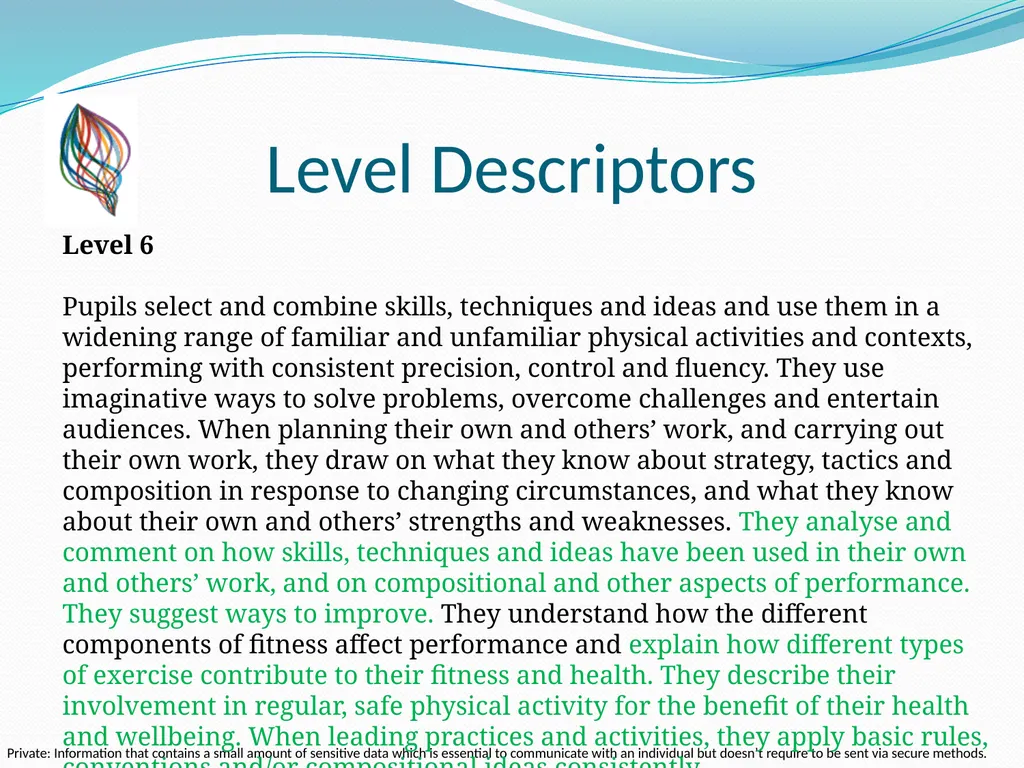
Level 6
Pupils select and combine skills, techniques and ideas and use them in a widening range of familiar and unfamiliar physical activities and contexts, performing with consistent precision, control and fluency. They use imaginative ways to solve problems, overcome challenges and entertain audiences. When planning their own and others’ work, and carrying out their own work, they draw on what they know about strategy, tactics and composition in response to changing circumstances, and what they know about their own and others’ strengths and weaknesses. They analyse and comment on how skills, techniques and ideas have been used in their own and others’ work, and on compositional and other aspects of performance. They suggest ways to improve. They understand how the different components of fitness affect performance and explain how different types of exercise contribute to their fitness and health. They describe their involvement in regular, safe physical activity for the benefit of their health and wellbeing. When leading practices and activities, they apply basic rules, conventions and/or compositional ideas consistently. Level Descriptors<br>
08
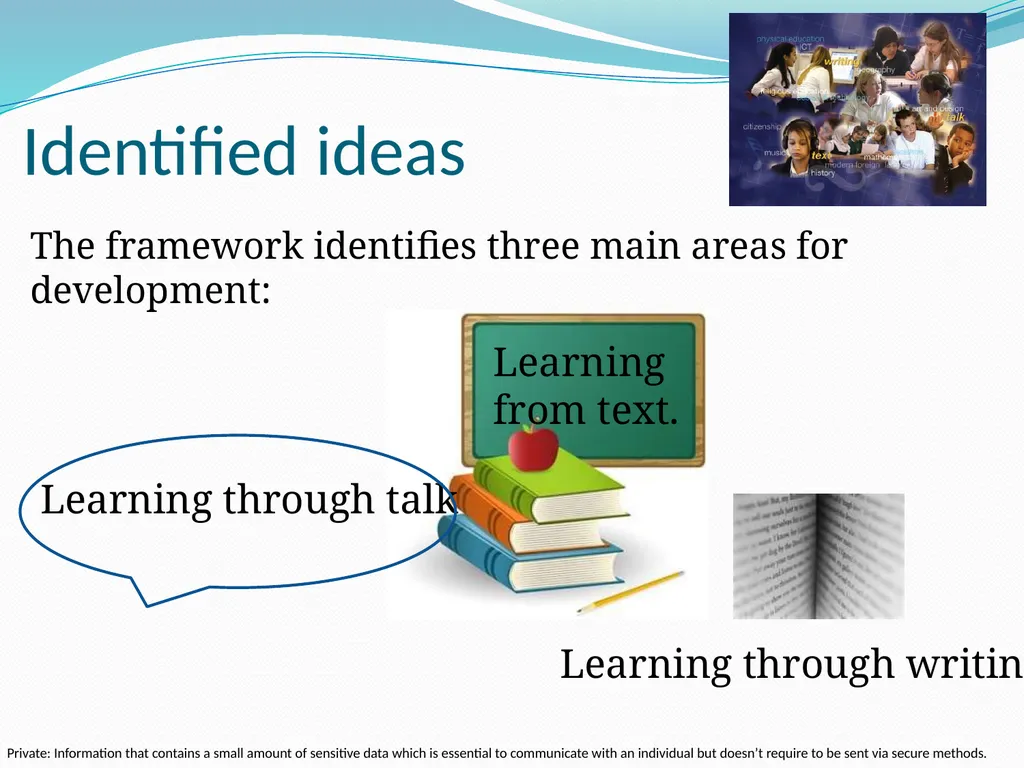
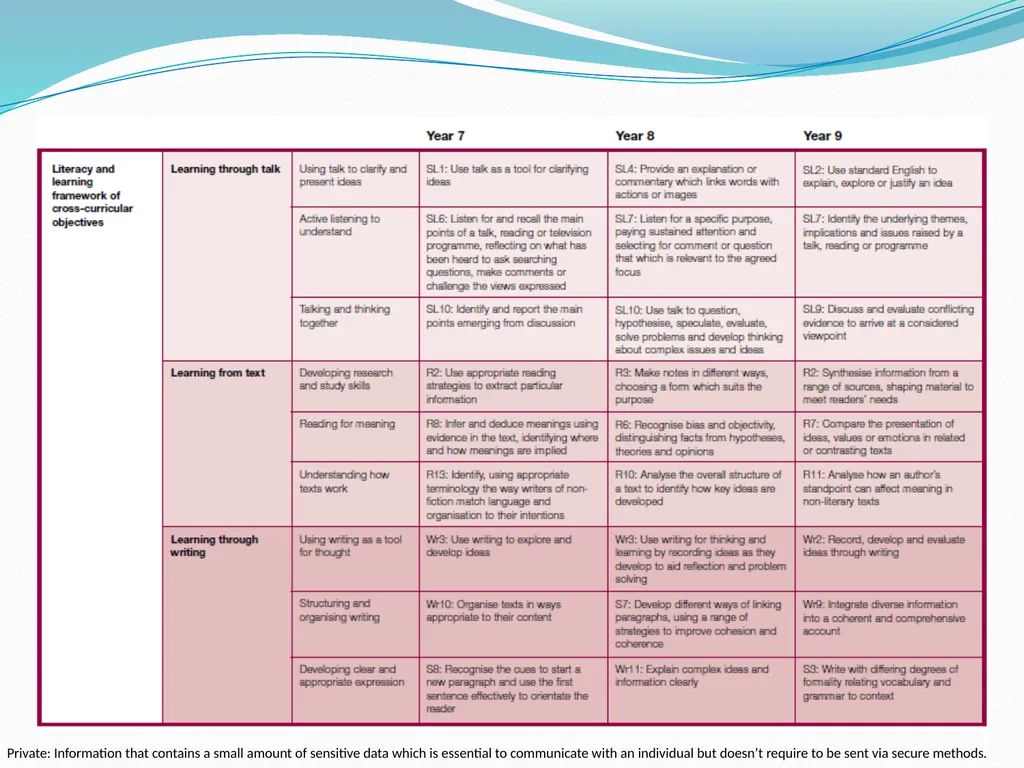
Identified ideas The framework identifies three main areas for development:
Learning through talk Learning from text. Learning through writing<br>