
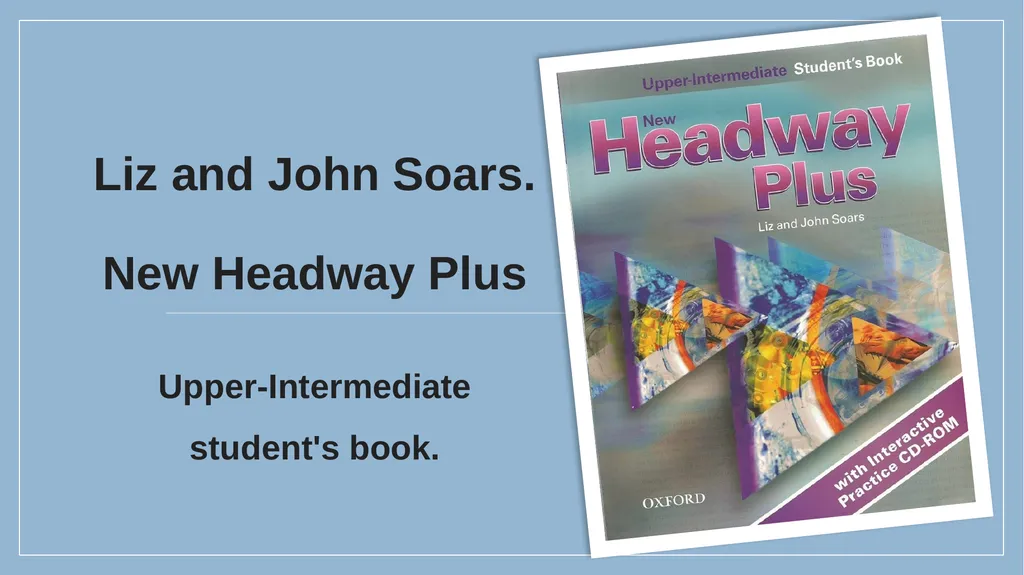
Liz and John Soars. New Headway Plus


Description: Liz and John Soars. New Headway Plus Upper-Intermediate students book. UNIT 1 1.1 The tense system There are three classes of verbs in English: (auxiliary verbs, modal verbs, and main verbs). 1.1 The tense system 1. Auxiliary verbs The
Related Topics
Download Presentation
"Liz and John Soars. New Headway Plus" is the property of its rightful owner. Permission is granted to download and print the materials on this website for personal, non-commercial use only, and to display it on your personal computer provided you do not modify the materials and that you retain all copyright notices contained in the materials. By downloading content from our website, you accept the terms of this agreement.
Presentation Transcript
slide1. Liz and John Soars.
New Headway Plus
Upper-Intermediate student's book.<br>
slide2. UNIT 1<br>
slide3. 1.1 The tense system There are three classes of verbs in English:
(auxiliary verbs, modal verbs, and main verbs).<br>
slide4. 1.1 The tense system 1. Auxiliary verbs
The auxiliary verbs are be, do, and have.<br>
slide5. 1.1 The tense system Be
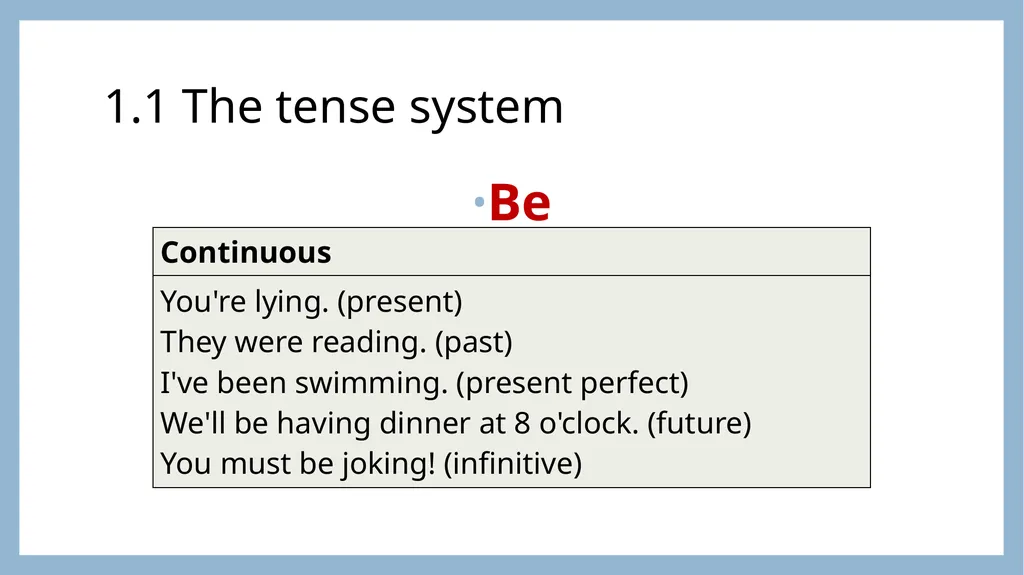
1. Be is used with verb + ing to make continuous verb forms.<br>
slide6. 1.1 The tense system Be<br>
slide7. 1.1 The tense system Be
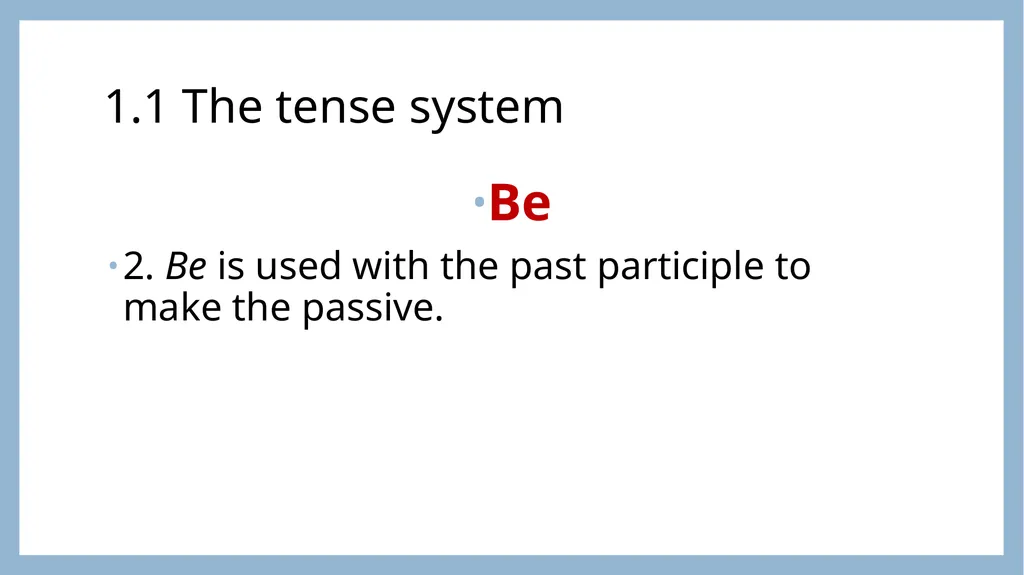
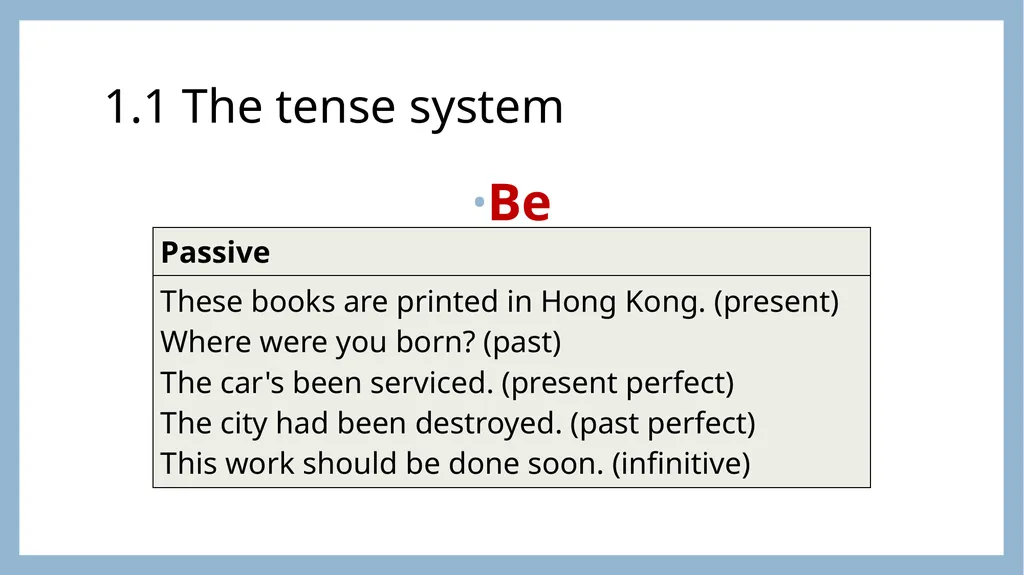
2. Be is used with the past participle to make the passive.<br>
slide8. 1.1 The tense system Be<br>
slide9. 1.1 The tense system Do
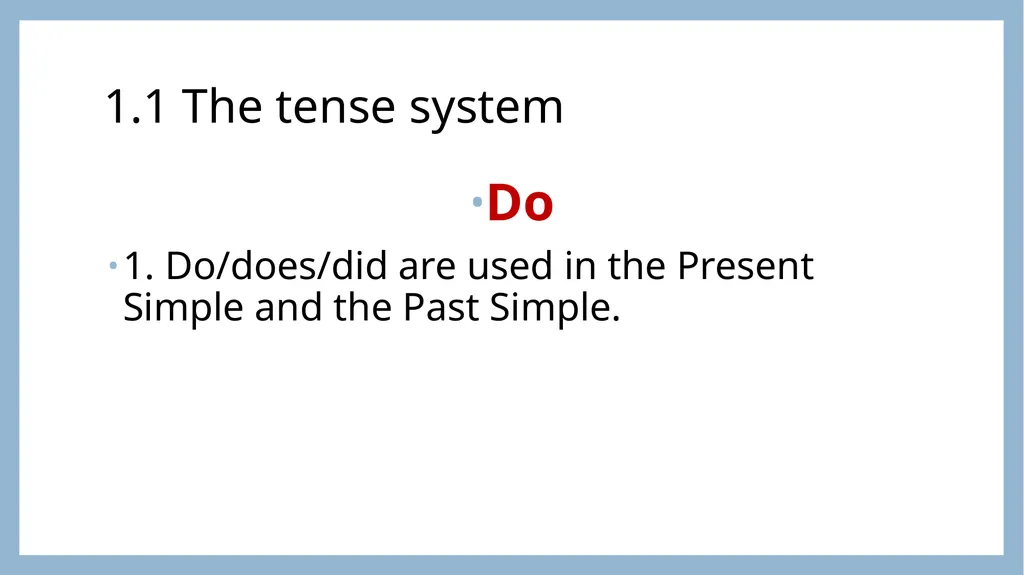
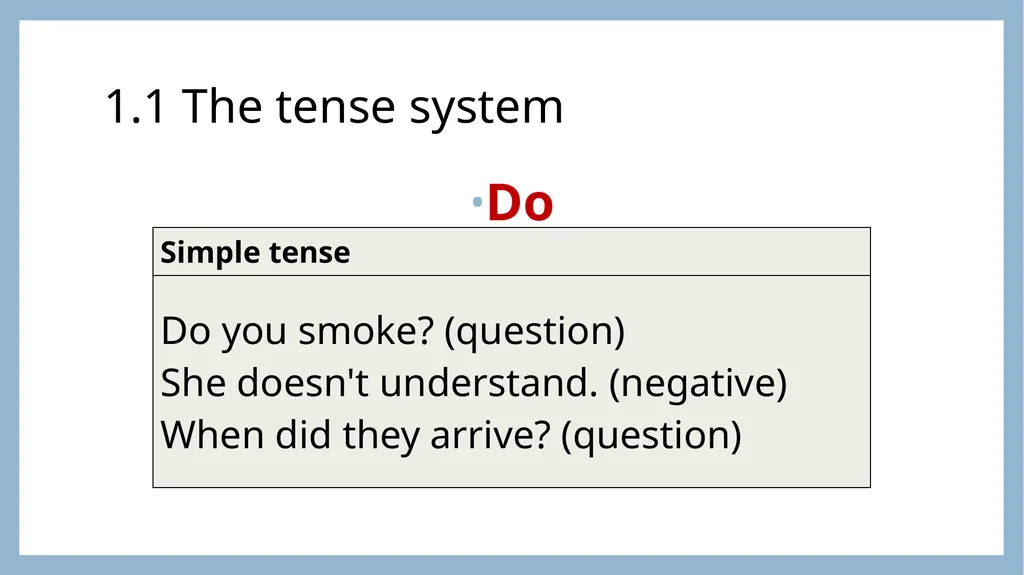
1. Do/does/did are used in the Present Simple and the Past Simple.<br>
slide10. 1.1 The tense system Do<br>
slide11. 1.1 The tense system Do
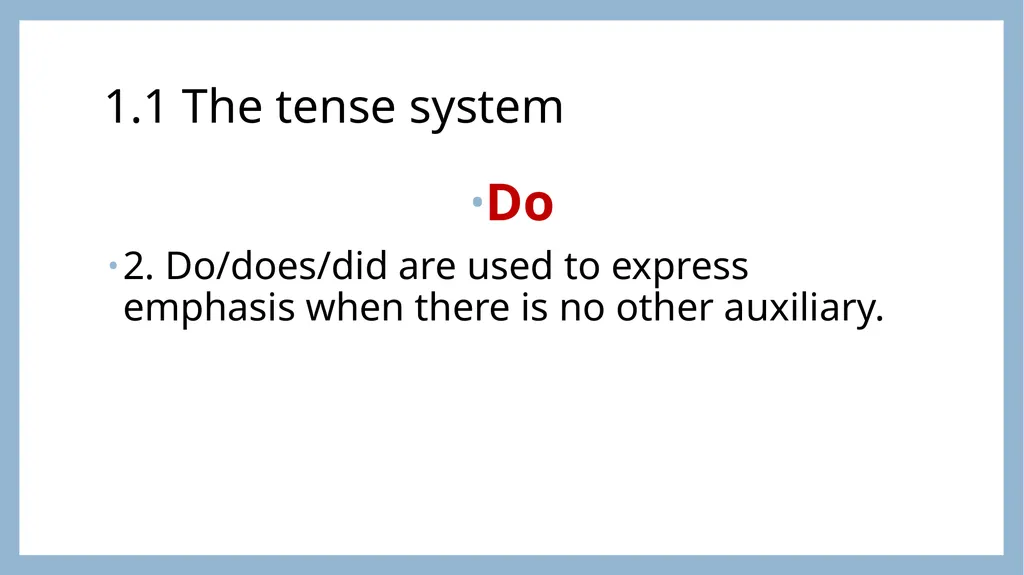
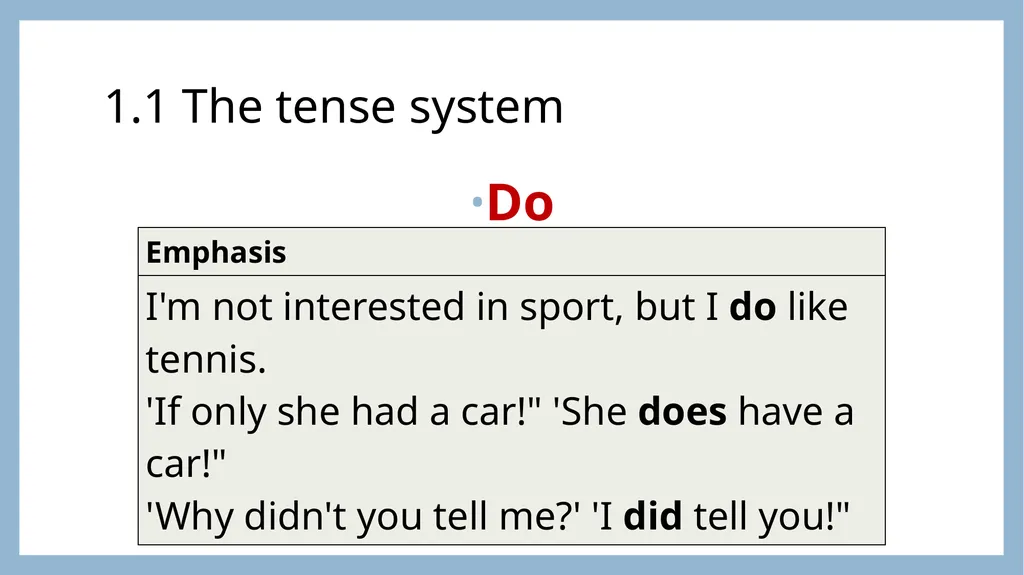
2. Do/does/did are used to express emphasis when there is no other auxiliary.<br>
slide12. 1.1 The tense system Do<br>
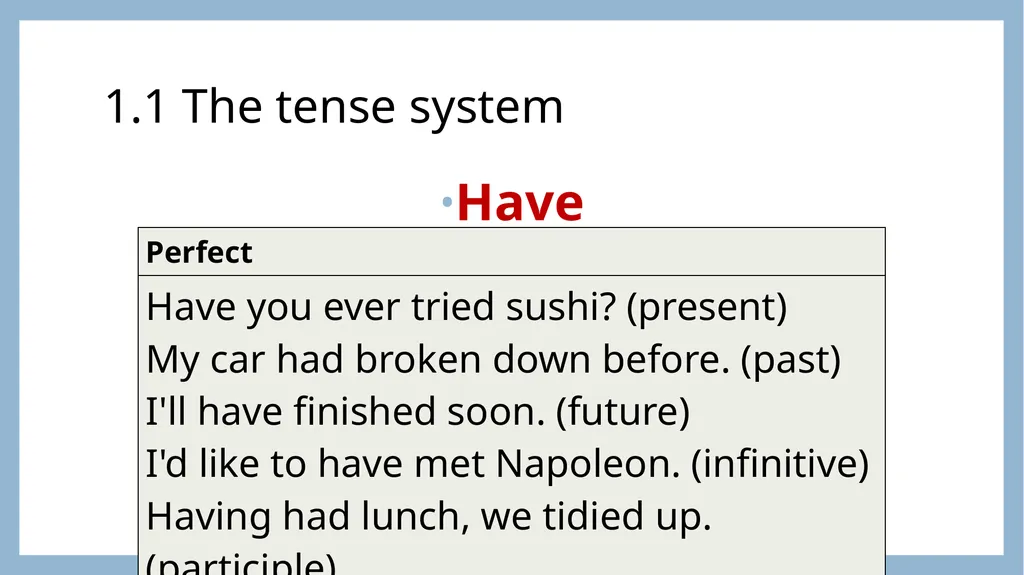
slide13. 1.1 The tense system Have
Have is used with the past participle to make perfect verb forms.<br>
slide14. 1.1 The tense system Have<br>
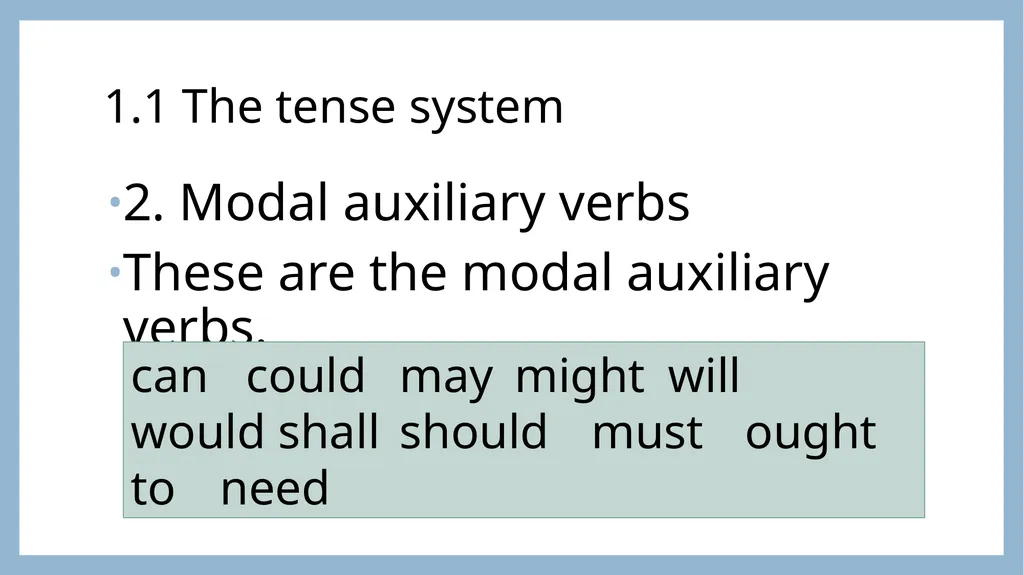
slide15. 1.1 The tense system 2. Modal auxiliary verbs
These are the modal auxiliary verbs. can could may might will would shall should must ought to need<br>
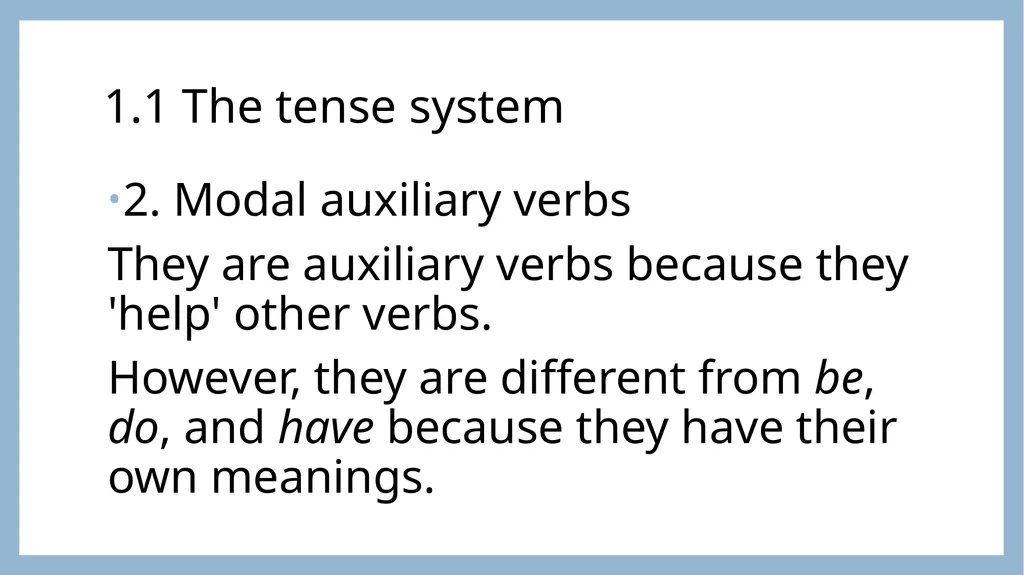
slide16. 1.1 The tense system 2. Modal auxiliary verbs
They are auxiliary verbs because they 'help' other verbs.
However, they are different from be, do, and have because they have their own meanings.<br>
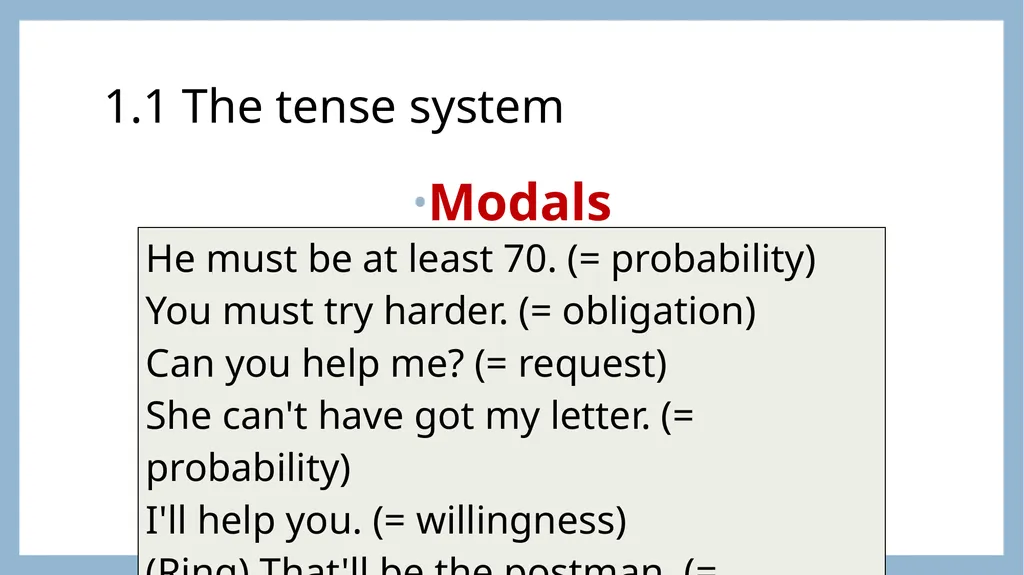
slide17. 1.1 The tense system Modals<br>
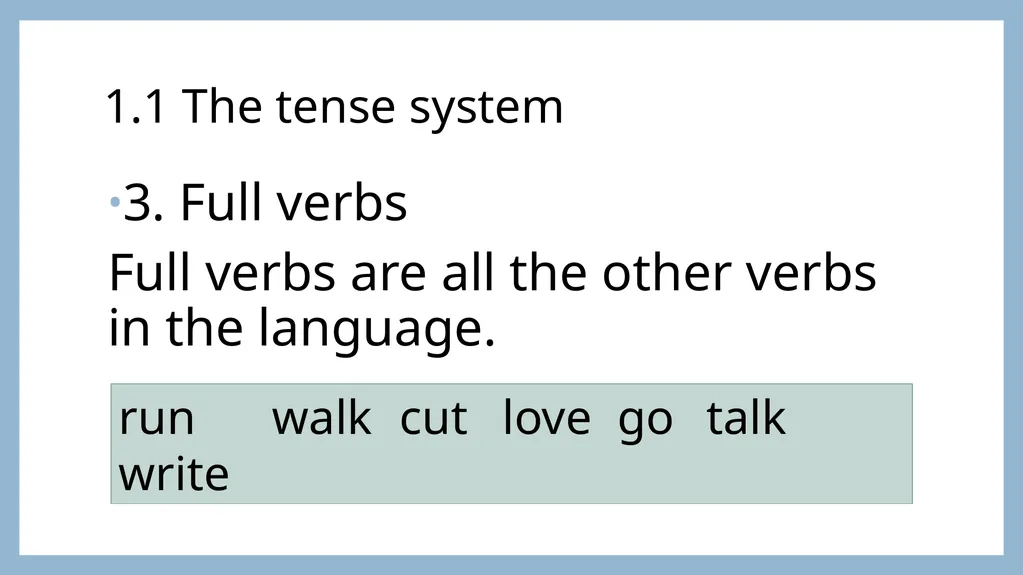
slide18. 1.1 The tense system 3. Full verbs
Full verbs are all the other verbs in the language. run walk cut love go talk write<br>
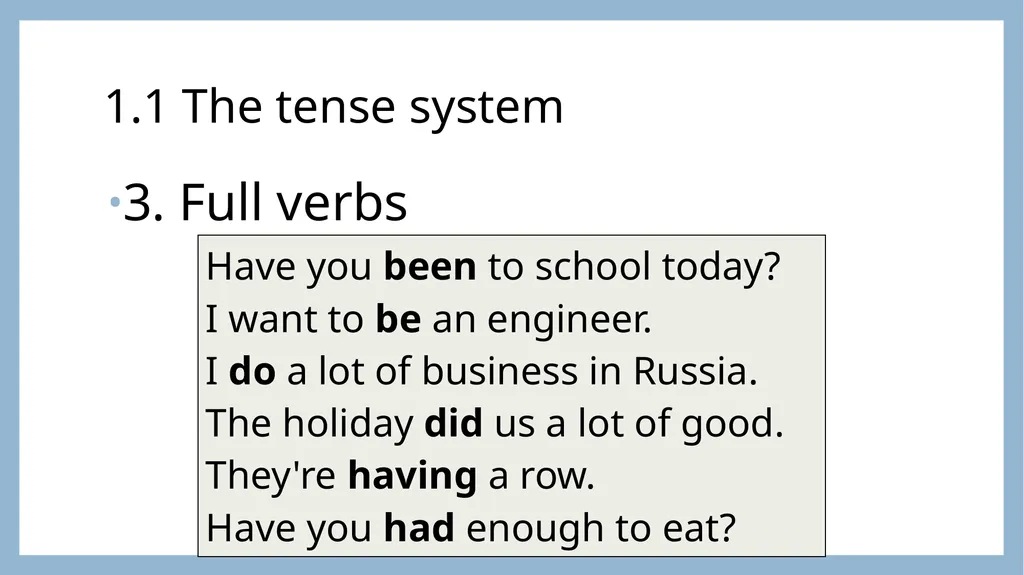
slide19. 1.1 The tense system 3. Full verbs
The verbs be, do, and have can also be used as full verbs with their own meanings.<br>
slide20. 1.1 The tense system 3. Full verbs<br>
slide21. 1.2 English tense usage English tenses have two elements of meaning:
time and aspect.<br>
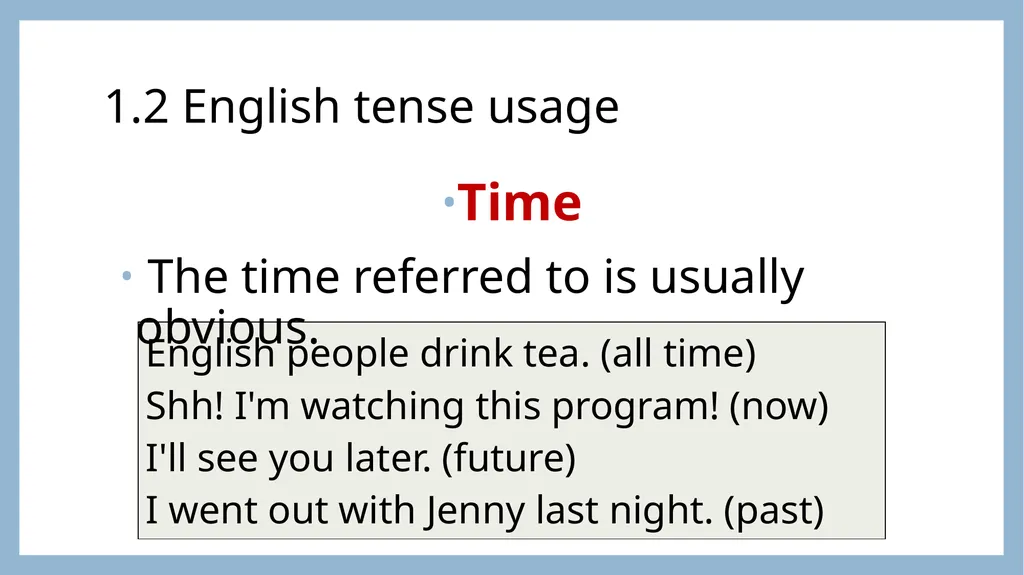
slide22. 1.2 English tense usage Time The time referred to is usually obvious.<br>
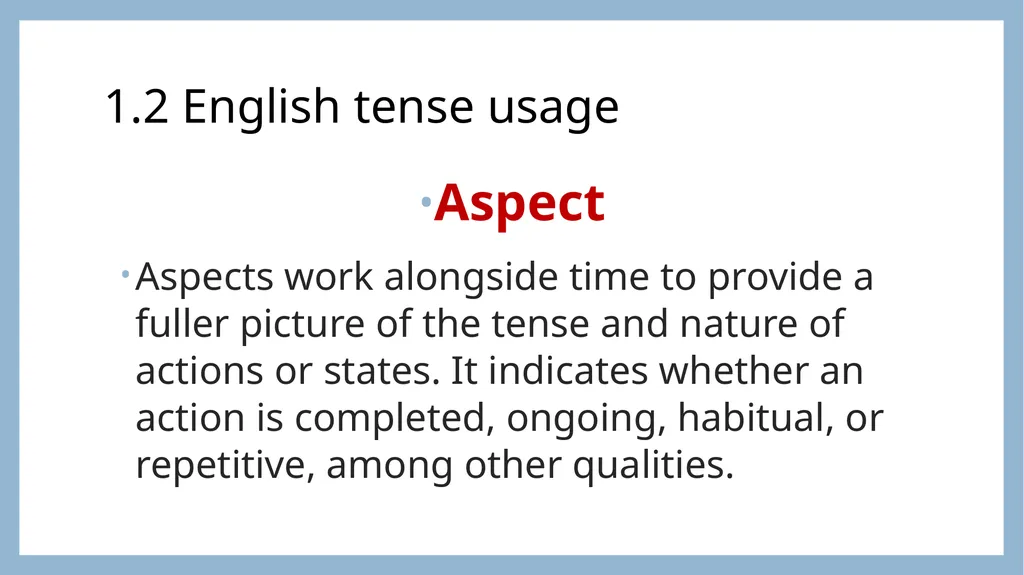
slide23. 1.2 English tense usage Aspect Aspects work alongside time to provide a fuller picture of the tense and nature of actions or states. It indicates whether an action is completed, ongoing, habitual, or repetitive, among other qualities.<br>
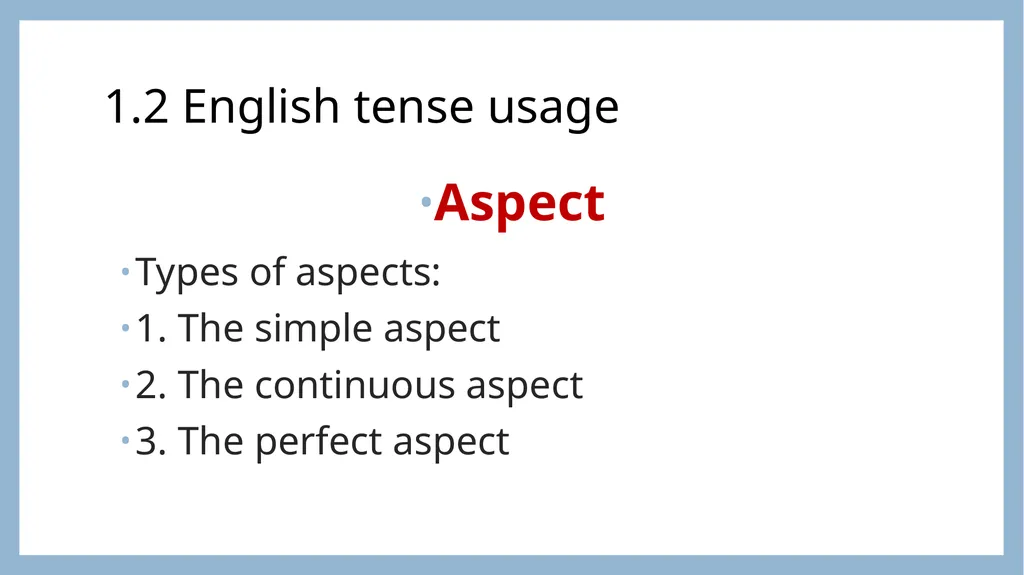
slide24. 1.2 English tense usage Aspect Types of aspects:
1. The simple aspect
2. The continuous aspect
3. The perfect aspect<br>
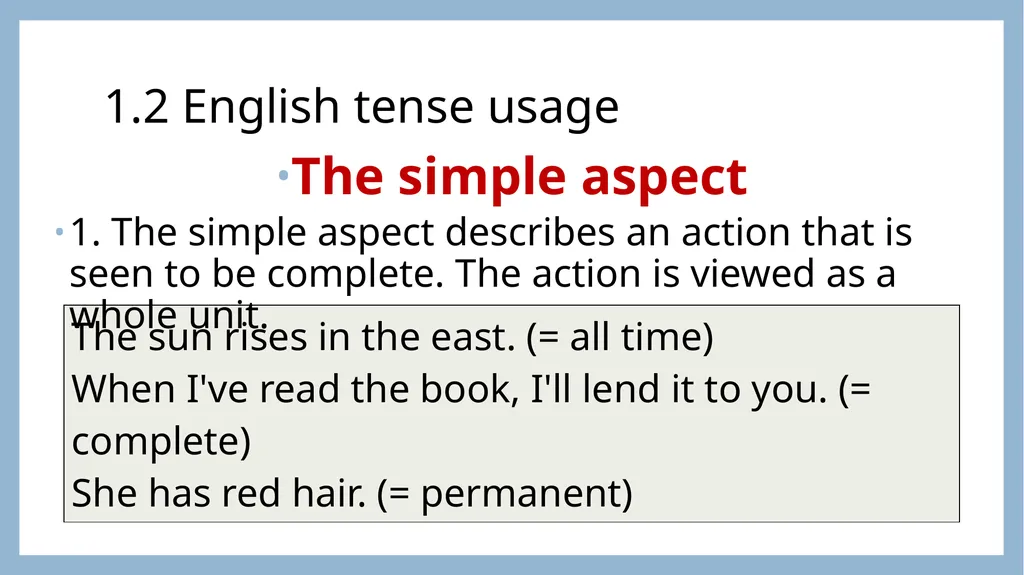
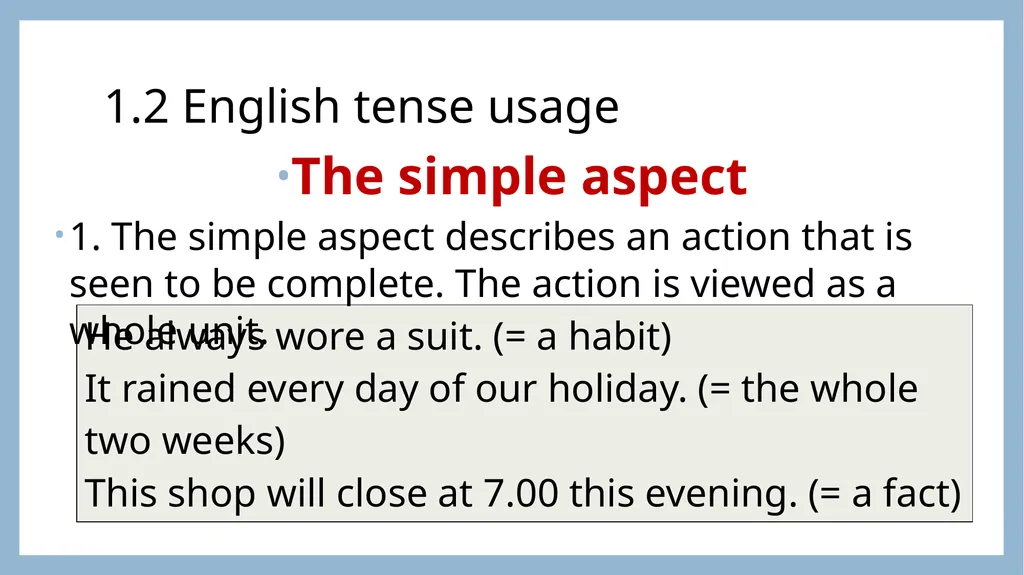
slide25. 1.2 English tense usage The simple aspect 1. The simple aspect describes an action that is seen to be complete. The action is viewed as a whole unit.<br>
slide26. 1.2 English tense usage The simple aspect 1. The simple aspect describes an action that is seen to be complete. The action is viewed as a whole unit.<br>
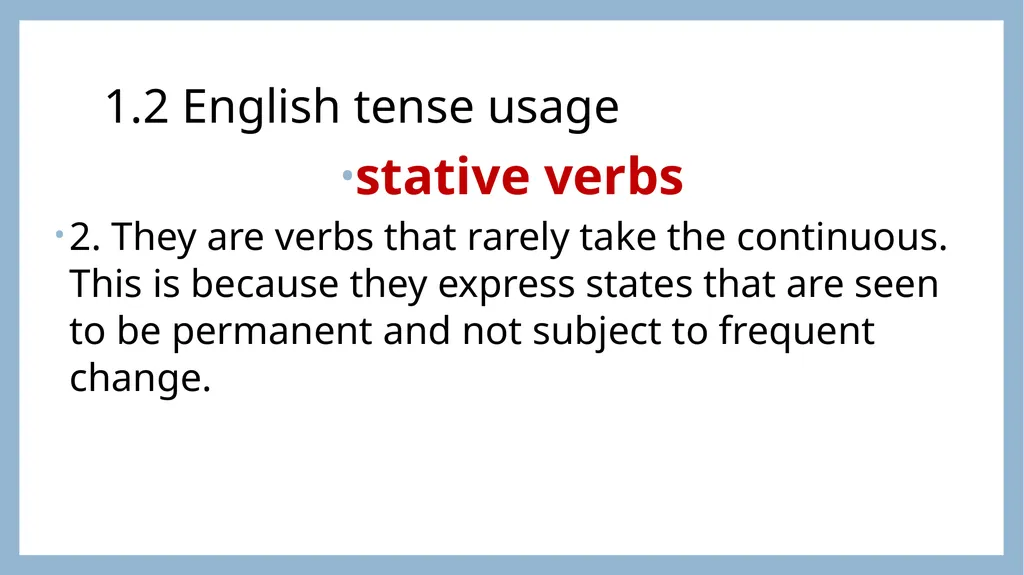
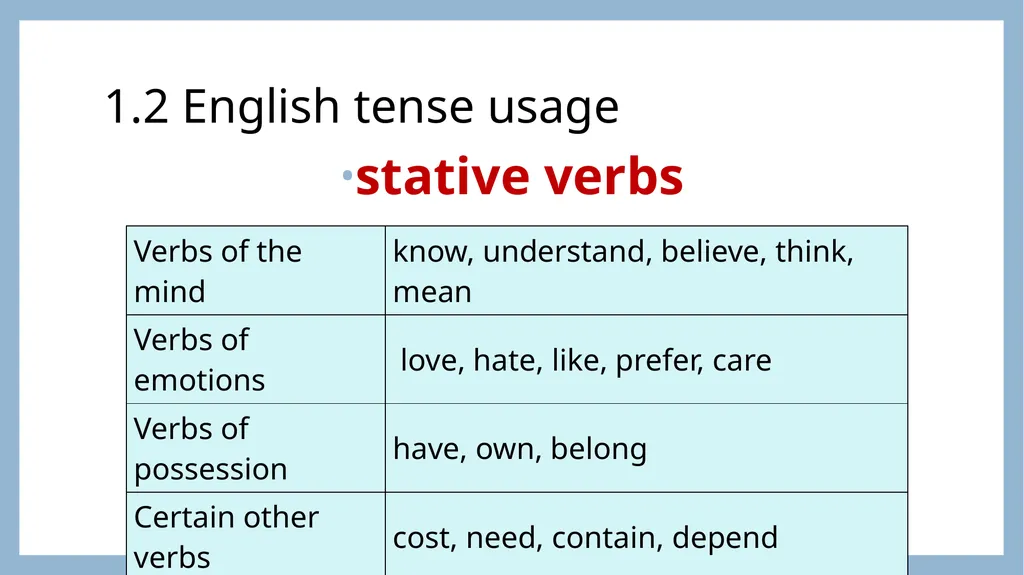
slide27. 1.2 English tense usage stative verbs 2. They are verbs that rarely take the continuous. This is because they express states that are seen to be permanent and not subject to frequent change.<br>
slide28. 1.2 English tense usage stative verbs<br>
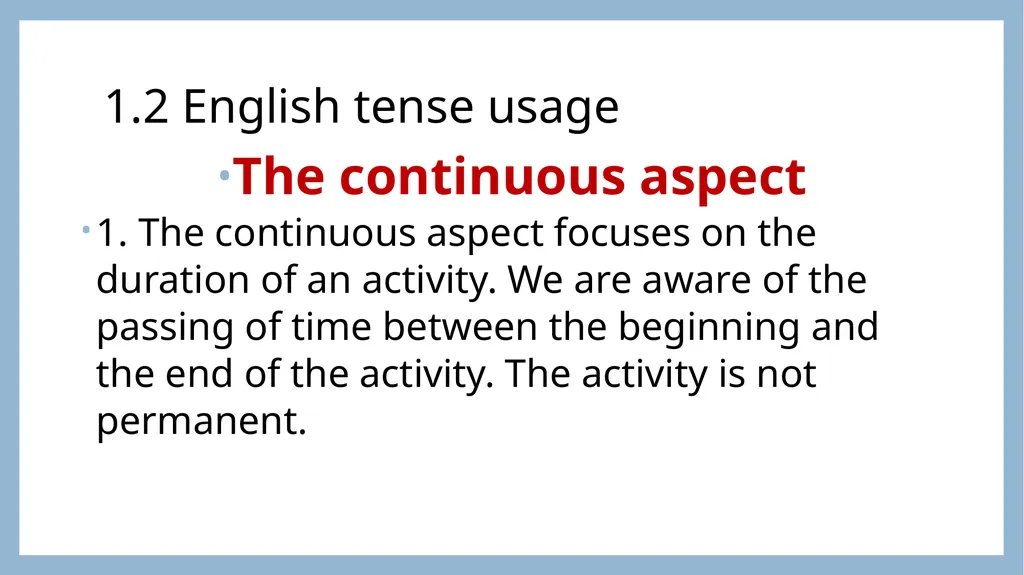
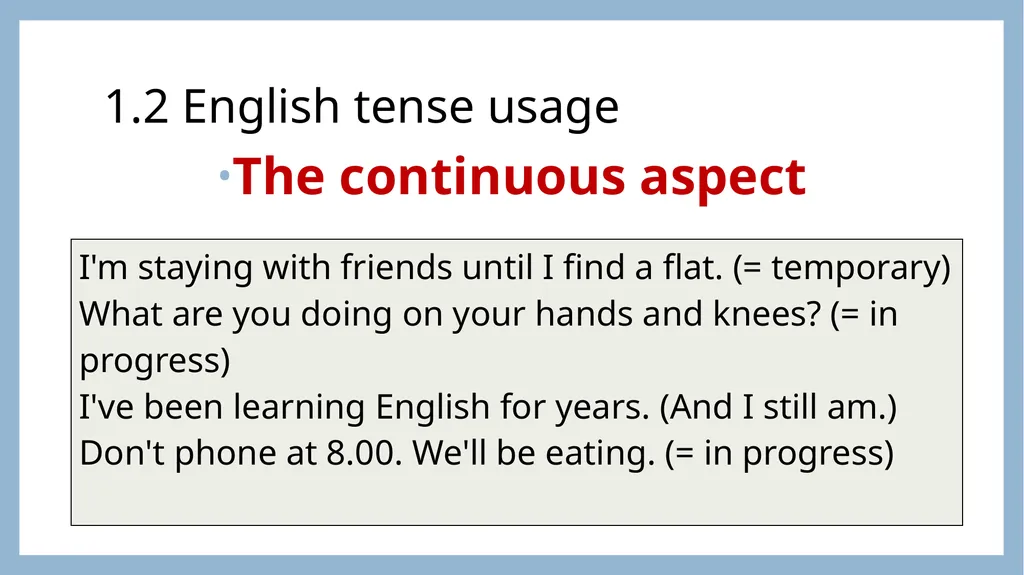
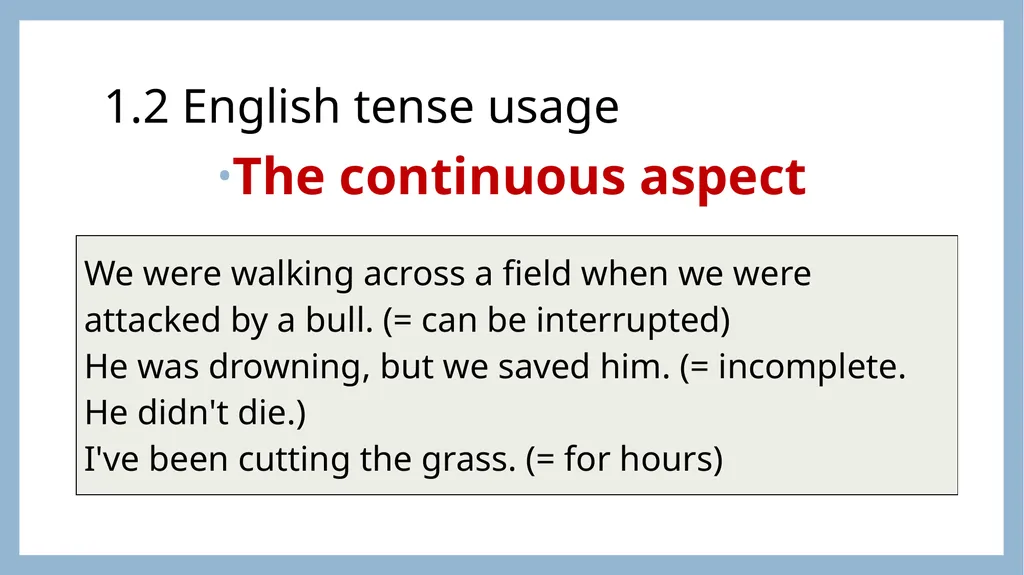
slide29. 1.2 English tense usage The continuous aspect 1. The continuous aspect focuses on the duration of an activity. We are aware of the passing of time between the beginning and the end of the activity. The activity is not permanent.<br>
slide30. 1.2 English tense usage The continuous aspect<br>
slide31. 1.2 English tense usage The continuous aspect<br>
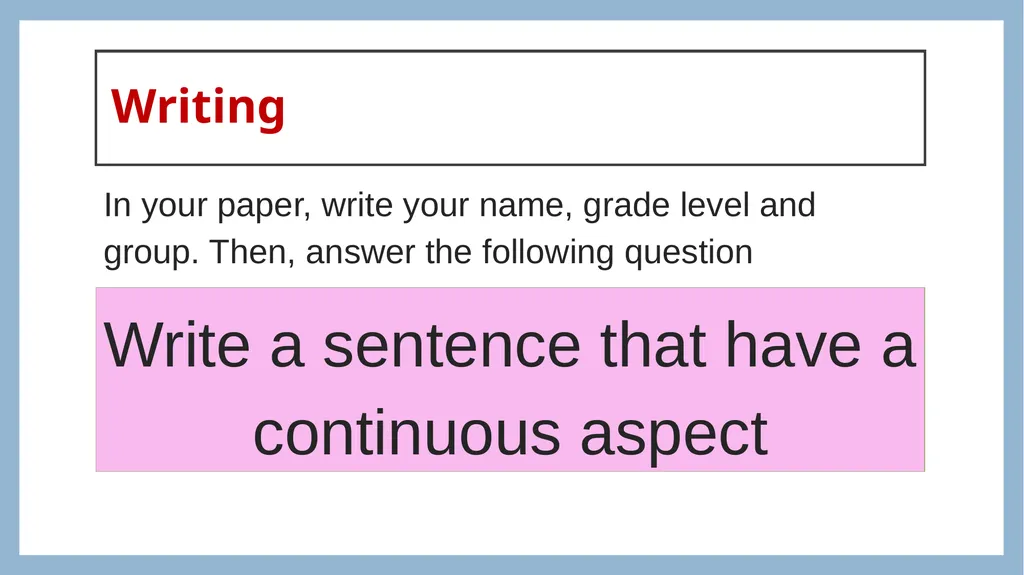
slide32. Writing In your paper, write your name, grade level and group. Then, answer the following question Write a sentence that have a continuous aspect<br>
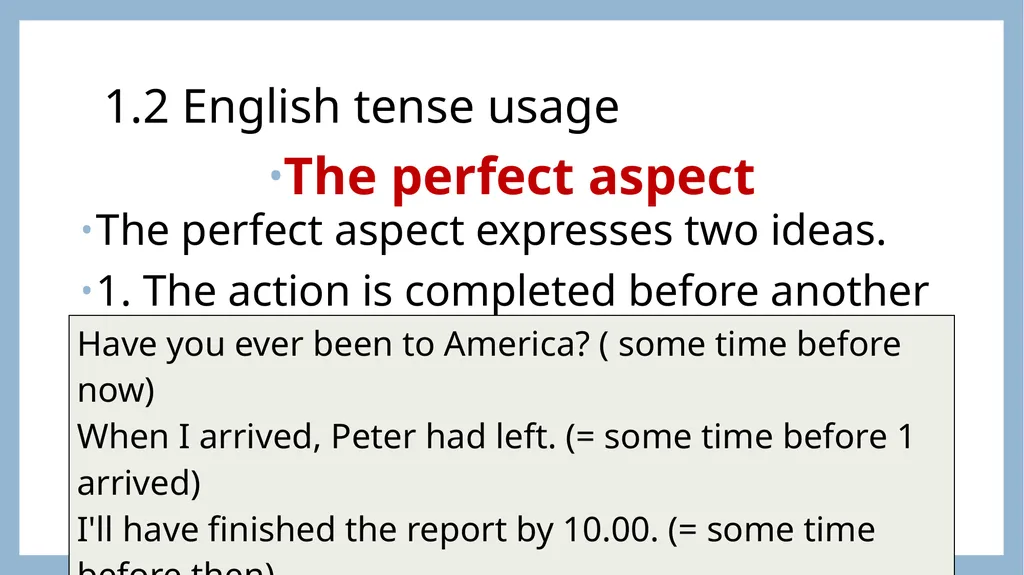
slide33. 1.2 English tense usage The perfect aspect The perfect aspect expresses two ideas.
1. The action is completed before another time.<br>
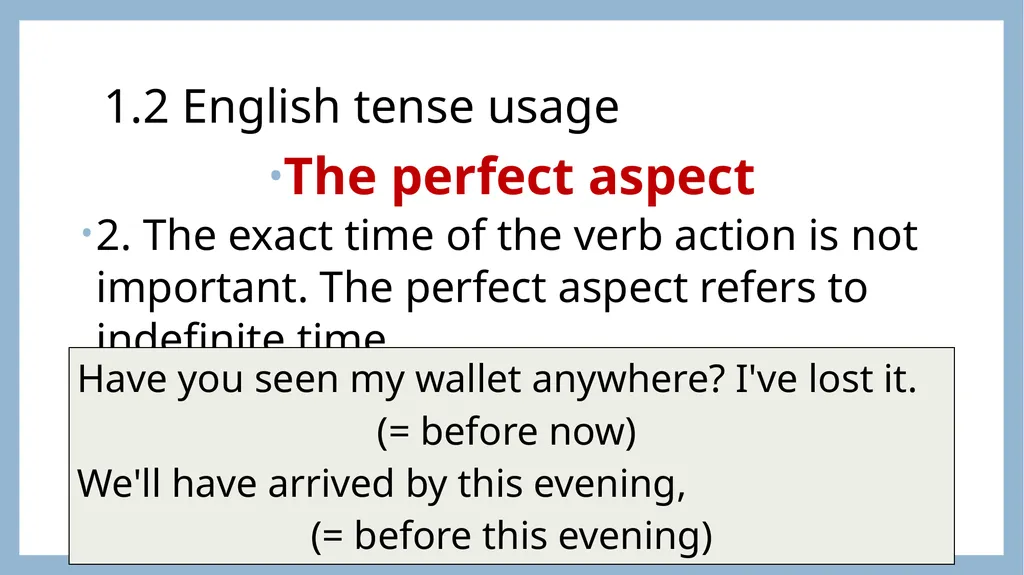
slide34. 1.2 English tense usage The perfect aspect 2. The exact time of the verb action is not important. The perfect aspect refers to indefinite time.<br>
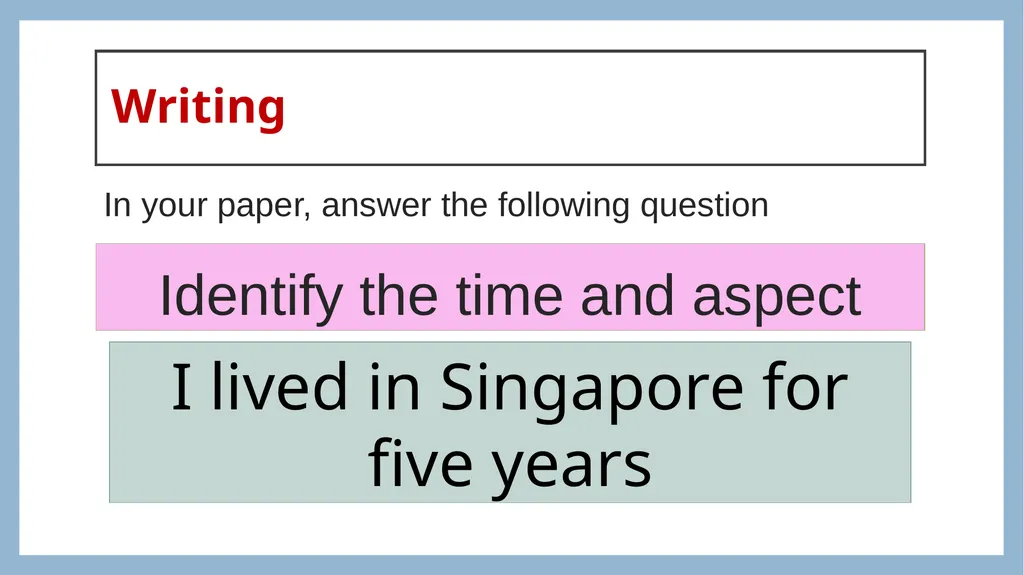
slide35. Writing In your paper, answer the following question Identify the time and aspect I lived in Singapore for five years<br>
New Headway Plus
Upper-Intermediate student's book.<br>
slide2. UNIT 1<br>
slide3. 1.1 The tense system There are three classes of verbs in English:
(auxiliary verbs, modal verbs, and main verbs).<br>
slide4. 1.1 The tense system 1. Auxiliary verbs
The auxiliary verbs are be, do, and have.<br>
slide5. 1.1 The tense system Be
1. Be is used with verb + ing to make continuous verb forms.<br>
slide6. 1.1 The tense system Be<br>
slide7. 1.1 The tense system Be
2. Be is used with the past participle to make the passive.<br>
slide8. 1.1 The tense system Be<br>
slide9. 1.1 The tense system Do
1. Do/does/did are used in the Present Simple and the Past Simple.<br>
slide10. 1.1 The tense system Do<br>
slide11. 1.1 The tense system Do
2. Do/does/did are used to express emphasis when there is no other auxiliary.<br>
slide12. 1.1 The tense system Do<br>
slide13. 1.1 The tense system Have
Have is used with the past participle to make perfect verb forms.<br>
slide14. 1.1 The tense system Have<br>
slide15. 1.1 The tense system 2. Modal auxiliary verbs
These are the modal auxiliary verbs. can could may might will would shall should must ought to need<br>
slide16. 1.1 The tense system 2. Modal auxiliary verbs
They are auxiliary verbs because they 'help' other verbs.
However, they are different from be, do, and have because they have their own meanings.<br>
slide17. 1.1 The tense system Modals<br>
slide18. 1.1 The tense system 3. Full verbs
Full verbs are all the other verbs in the language. run walk cut love go talk write<br>
slide19. 1.1 The tense system 3. Full verbs
The verbs be, do, and have can also be used as full verbs with their own meanings.<br>
slide20. 1.1 The tense system 3. Full verbs<br>
slide21. 1.2 English tense usage English tenses have two elements of meaning:
time and aspect.<br>
slide22. 1.2 English tense usage Time The time referred to is usually obvious.<br>
slide23. 1.2 English tense usage Aspect Aspects work alongside time to provide a fuller picture of the tense and nature of actions or states. It indicates whether an action is completed, ongoing, habitual, or repetitive, among other qualities.<br>
slide24. 1.2 English tense usage Aspect Types of aspects:
1. The simple aspect
2. The continuous aspect
3. The perfect aspect<br>
slide25. 1.2 English tense usage The simple aspect 1. The simple aspect describes an action that is seen to be complete. The action is viewed as a whole unit.<br>
slide26. 1.2 English tense usage The simple aspect 1. The simple aspect describes an action that is seen to be complete. The action is viewed as a whole unit.<br>
slide27. 1.2 English tense usage stative verbs 2. They are verbs that rarely take the continuous. This is because they express states that are seen to be permanent and not subject to frequent change.<br>
slide28. 1.2 English tense usage stative verbs<br>
slide29. 1.2 English tense usage The continuous aspect 1. The continuous aspect focuses on the duration of an activity. We are aware of the passing of time between the beginning and the end of the activity. The activity is not permanent.<br>
slide30. 1.2 English tense usage The continuous aspect<br>
slide31. 1.2 English tense usage The continuous aspect<br>
slide32. Writing In your paper, write your name, grade level and group. Then, answer the following question Write a sentence that have a continuous aspect<br>
slide33. 1.2 English tense usage The perfect aspect The perfect aspect expresses two ideas.
1. The action is completed before another time.<br>
slide34. 1.2 English tense usage The perfect aspect 2. The exact time of the verb action is not important. The perfect aspect refers to indefinite time.<br>
slide35. Writing In your paper, answer the following question Identify the time and aspect I lived in Singapore for five years<br>