
Locking in crisis-driven innovation: A guide to
Description: Locking in crisis-driven innovation: A guide to inventorying our Covid-19 improvements AUDIT GUIDE Produced by the Global Forum for Health Care Innovators PublishedJune 2020 10 min read Executive summary Table of contents Area 1:
Related Topics
Download Presentation
"Locking in crisis-driven innovation: A guide to" is the property of its rightful owner. Permission is granted to download and print the materials on this website for personal, non-commercial use only, and to display it on your personal computer provided you do not modify the materials and that you retain all copyright notices contained in the materials. By downloading content from our website, you accept the terms of this agreement.
Presentation Transcript
slide1. Locking in crisis-driven innovation: A guide to inventorying our Covid-19 improvements AUDIT GUIDE Produced by the Global Forum for Health Care Innovators
Published—June 2020 ▪ 10 min read<br>
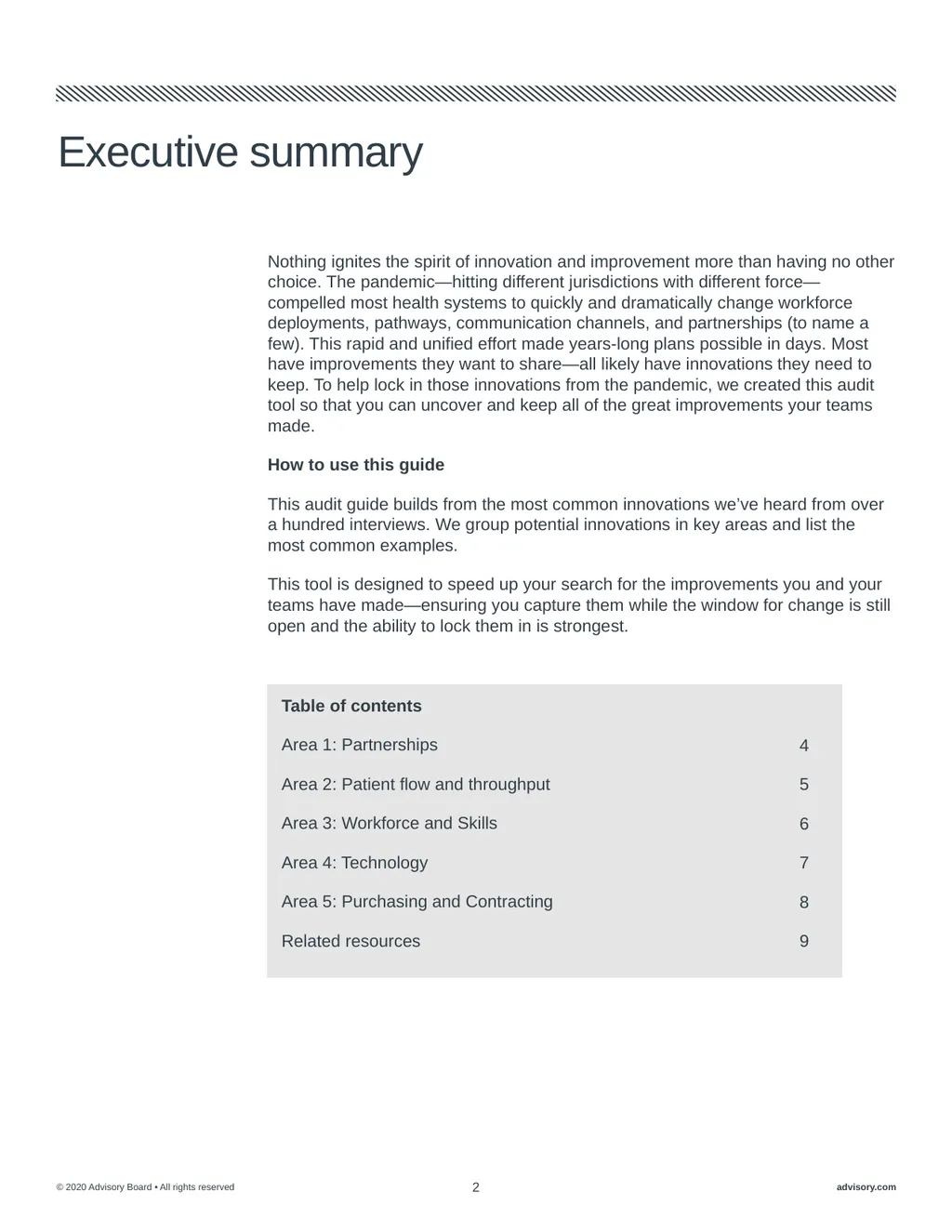
slide2. Executive summary Table of contents
Area 1: Partnerships
Area 2: Patient flow and throughput
Area 3: Workforce and Skills
Area 4: Technology
Area 5: Purchasing and Contracting
Related resources Nothing ignites the spirit of innovation and improvement more than having no other choice. The pandemic—hitting different jurisdictions with different force—compelled most health systems to quickly and dramatically change workforce deployments, pathways, communication channels, and partnerships (to name a few). This rapid and unified effort made years-long plans possible in days. Most have improvements they want to share—all likely have innovations they need to keep. To help lock in those innovations from the pandemic, we created this audit tool so that you can uncover and keep all of the great improvements your teams made.
How to use this guide
This audit guide builds from the most common innovations we’ve heard from over a hundred interviews. We group potential innovations in key areas and list the most common examples.
This tool is designed to speed up your search for the improvements you and your teams have made—ensuring you capture them while the window for change is still open and the ability to lock them in is strongest. 4
5
6
7
8
9<br>
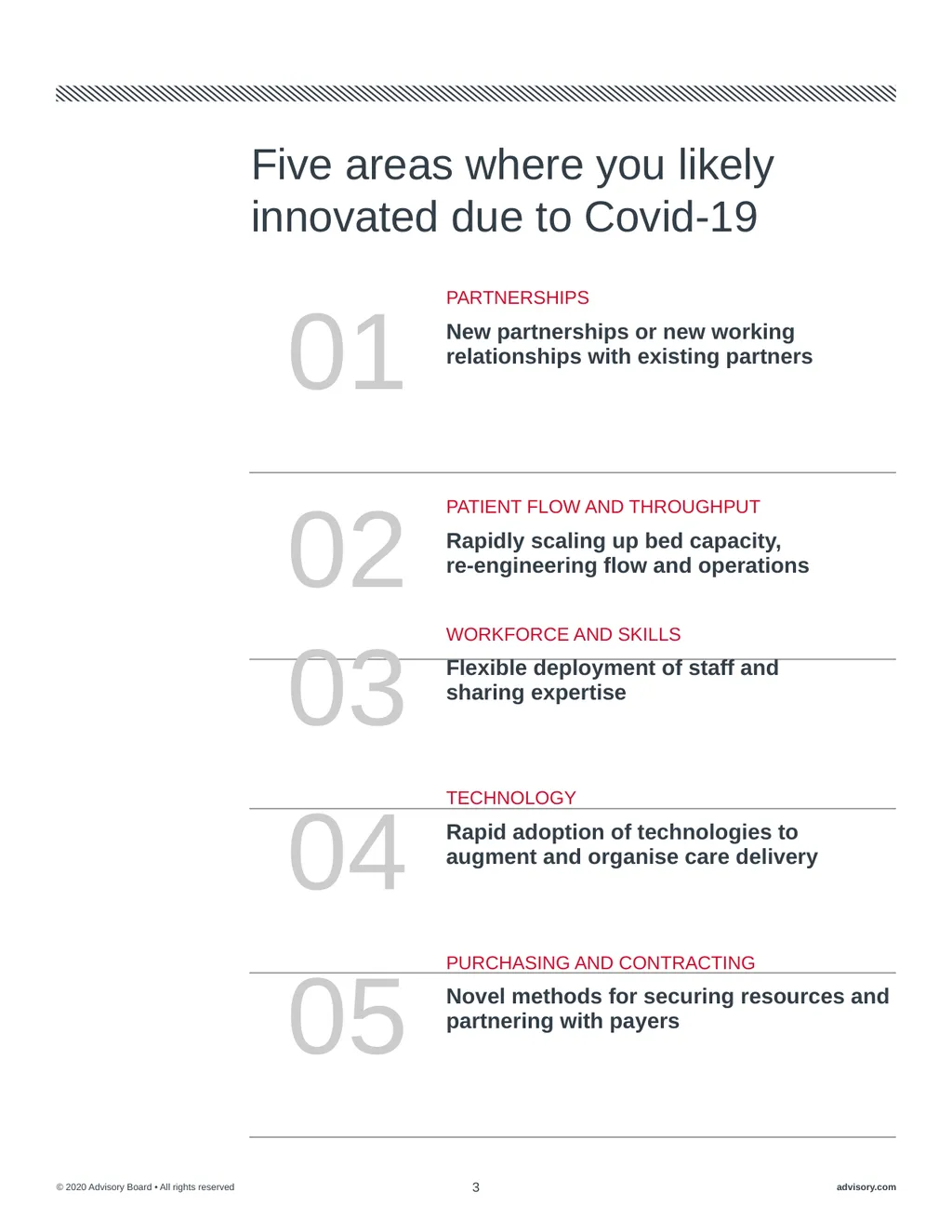
slide3. Five areas where you likely innovated due to Covid-19<br>
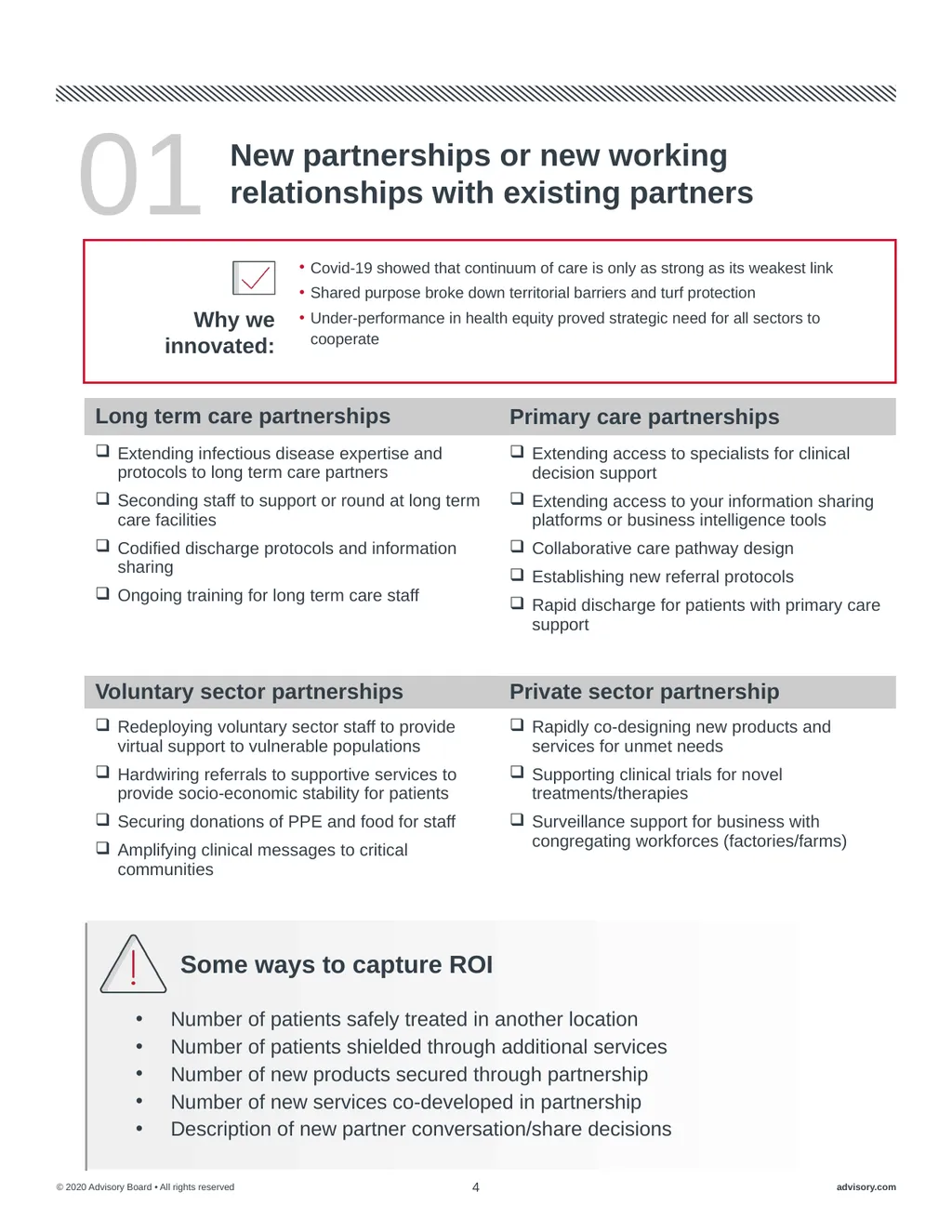
slide4. Some ways to capture ROI Number of patients safely treated in another location
Number of patients shielded through additional services
Number of new products secured through partnership
Number of new services co-developed in partnership
Description of new partner conversation/share decisions New partnerships or new working relationships with existing partners 01 Covid-19 showed that continuum of care is only as strong as its weakest link
Shared purpose broke down territorial barriers and turf protection
Under-performance in health equity proved strategic need for all sectors to cooperate Why we innovated:<br>
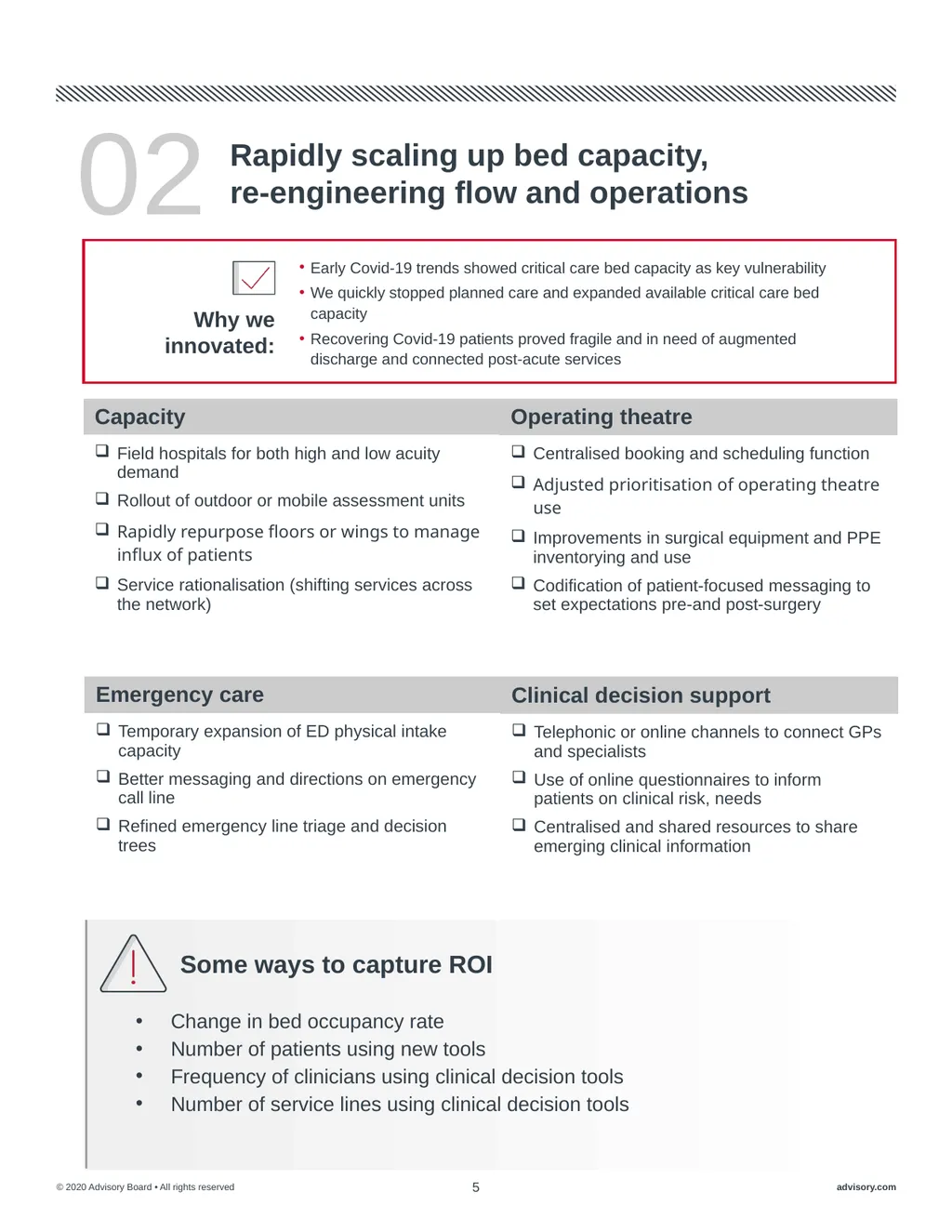
slide5. Rapidly scaling up bed capacity, re-engineering flow and operations 02 Early Covid-19 trends showed critical care bed capacity as key vulnerability
We quickly stopped planned care and expanded available critical care bed capacity
Recovering Covid-19 patients proved fragile and in need of augmented discharge and connected post-acute services Why we innovated: Some ways to capture ROI Change in bed occupancy rate
Number of patients using new tools
Frequency of clinicians using clinical decision tools
Number of service lines using clinical decision tools<br>
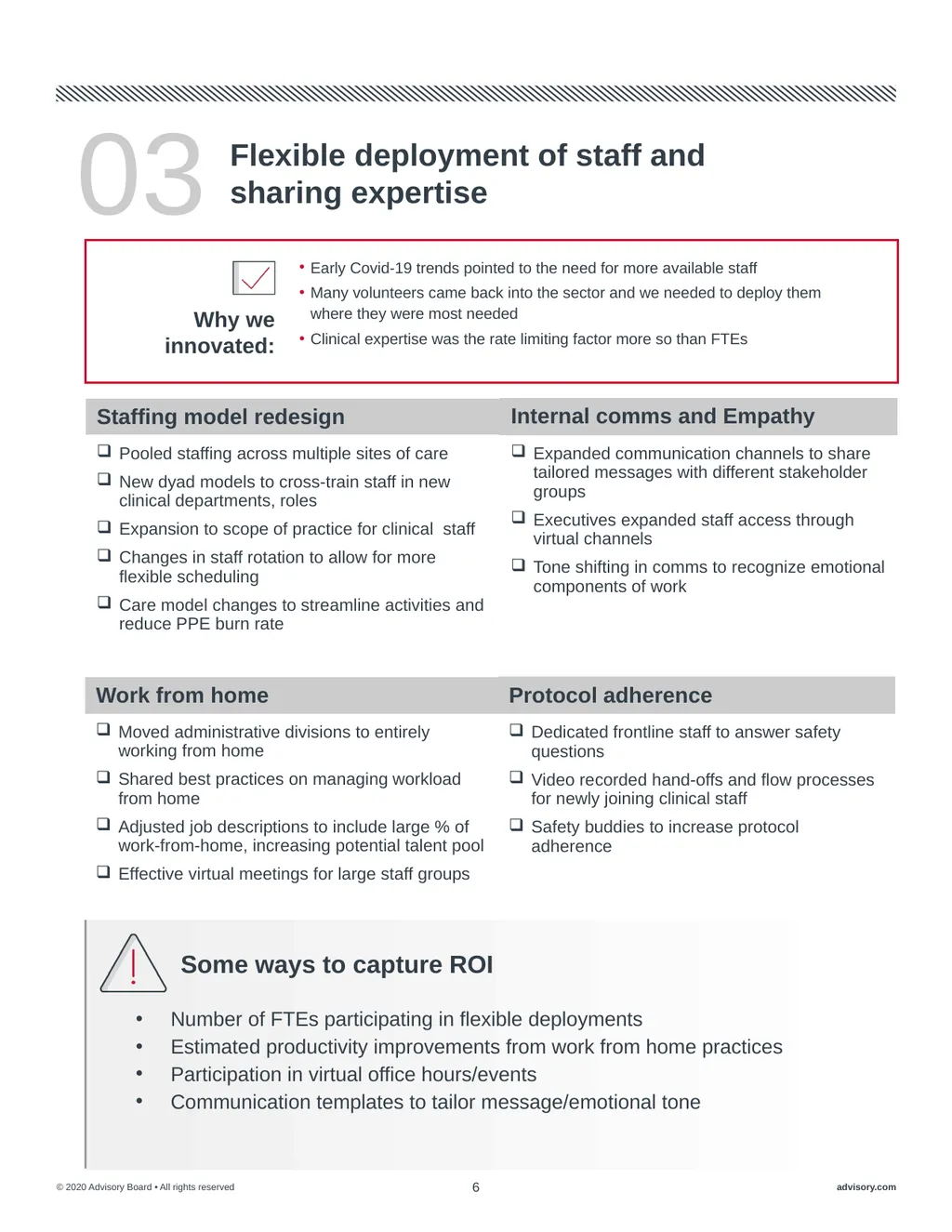
slide6. Flexible deployment of staff and sharing expertise 03 Early Covid-19 trends pointed to the need for more available staff
Many volunteers came back into the sector and we needed to deploy them where they were most needed
Clinical expertise was the rate limiting factor more so than FTEs Why we innovated: Some ways to capture ROI Number of FTEs participating in flexible deployments
Estimated productivity improvements from work from home practices
Participation in virtual office hours/events
Communication templates to tailor message/emotional tone<br>
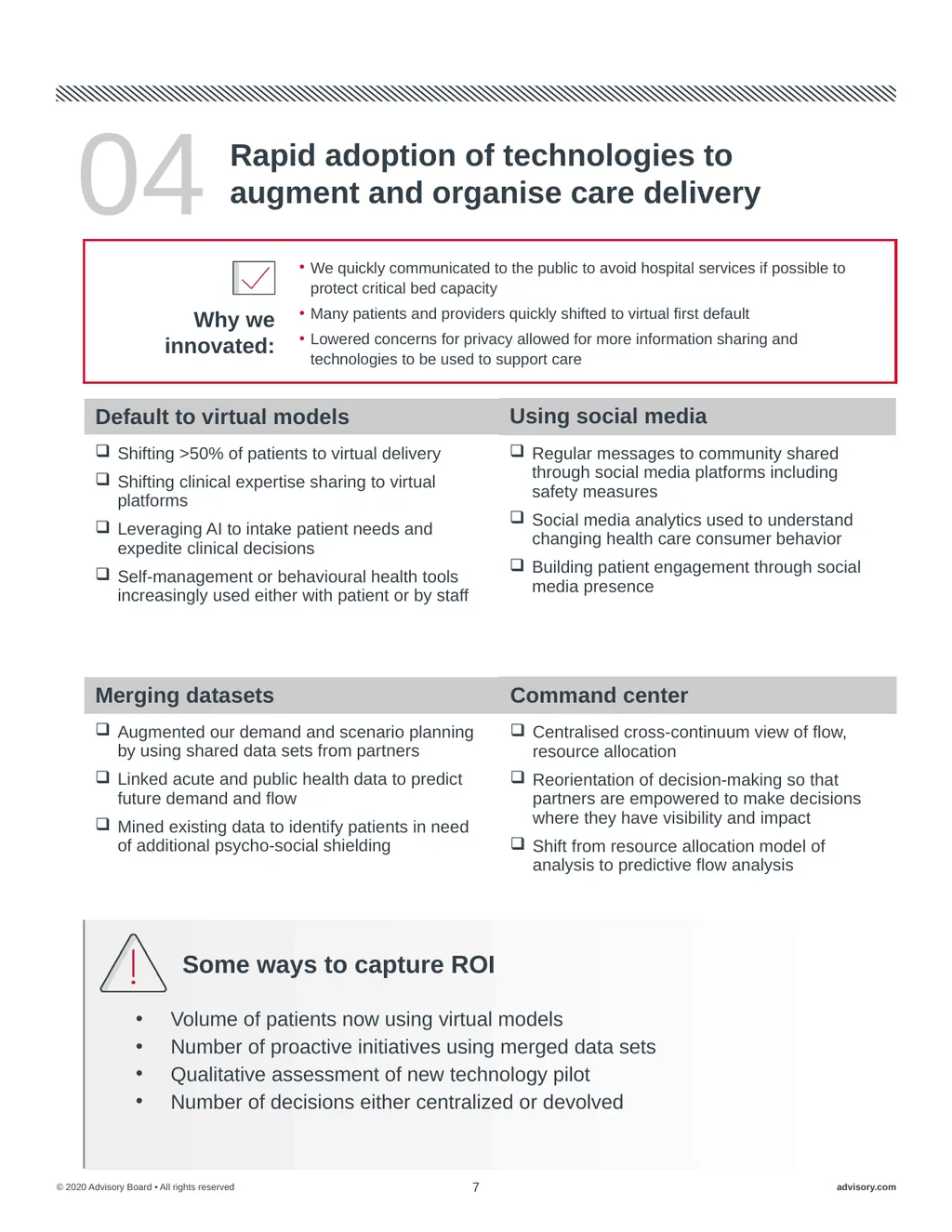
slide7. Rapid adoption of technologies to augment and organise care delivery 04 We quickly communicated to the public to avoid hospital services if possible to protect critical bed capacity
Many patients and providers quickly shifted to virtual first default
Lowered concerns for privacy allowed for more information sharing and technologies to be used to support care Why we innovated: Some ways to capture ROI Volume of patients now using virtual models
Number of proactive initiatives using merged data sets
Qualitative assessment of new technology pilot
Number of decisions either centralized or devolved<br>
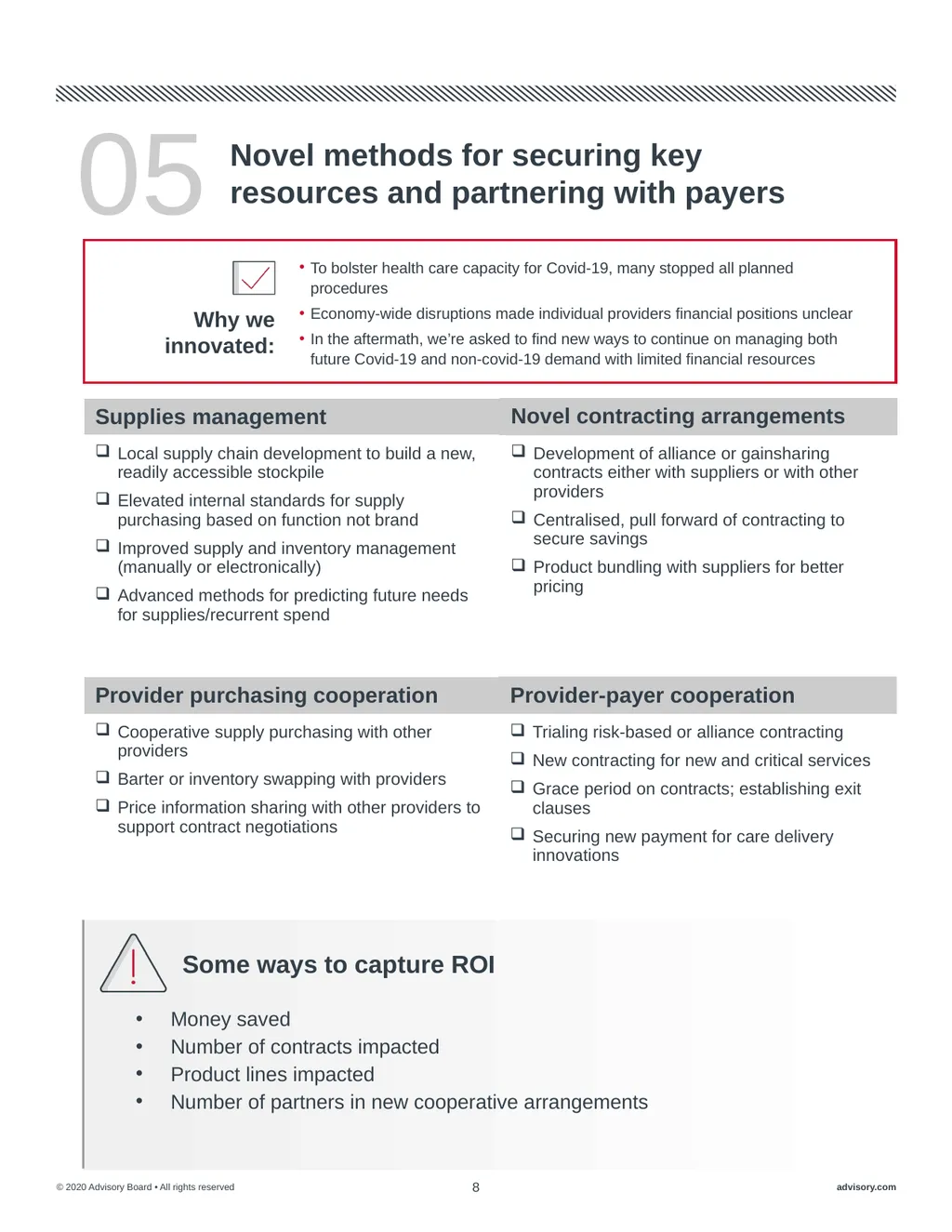
slide8. Novel methods for securing key resources and partnering with payers 05 To bolster health care capacity for Covid-19, many stopped all planned procedures
Economy-wide disruptions made individual providers financial positions unclear
In the aftermath, we’re asked to find new ways to continue on managing both future Covid-19 and non-covid-19 demand with limited financial resources Why we innovated: Some ways to capture ROI Money saved
Number of contracts impacted
Product lines impacted
Number of partners in new cooperative arrangements<br>
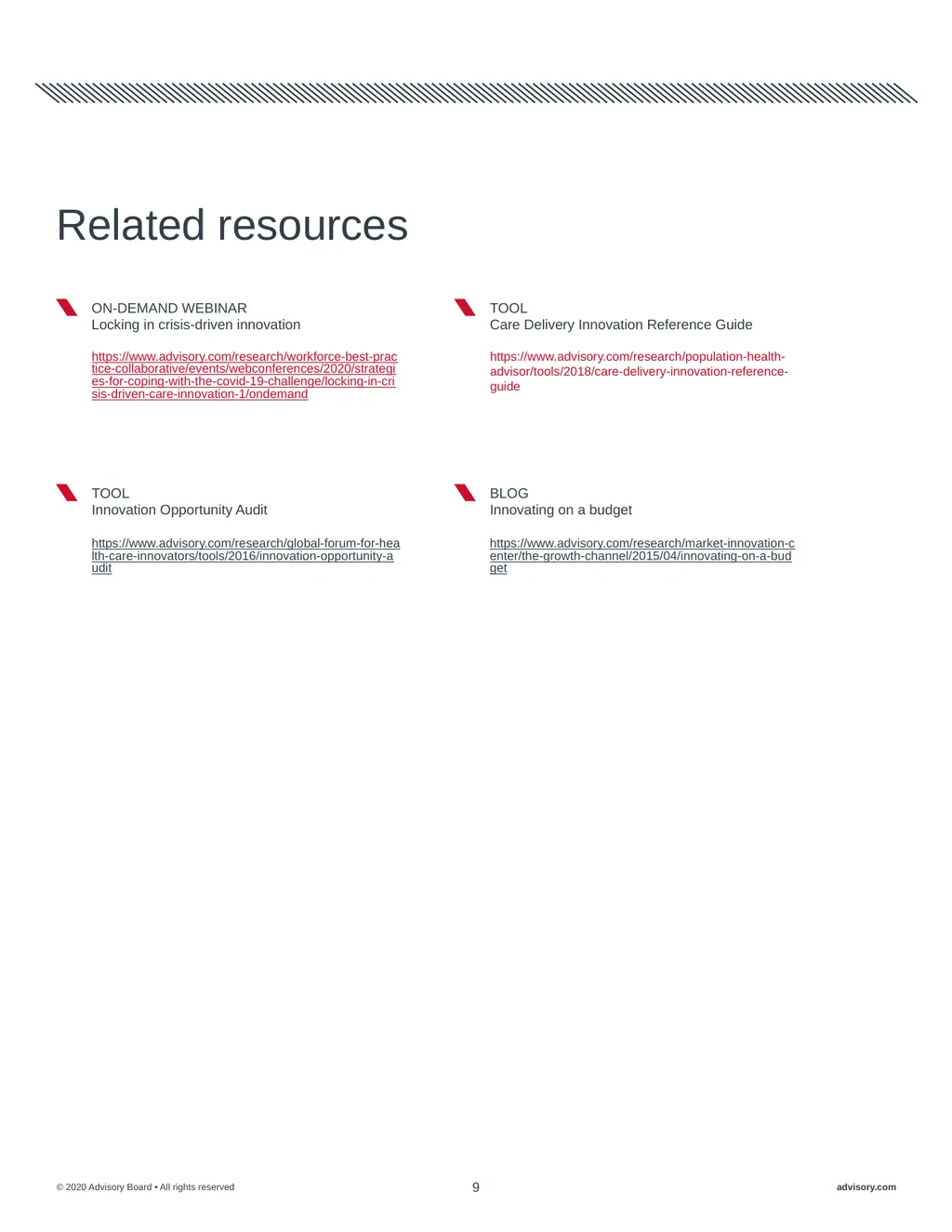
slide9. Related resources<br>
slide10. Health Care Advisory Board Research Team Alex Polyak
Asya Igmen
Paul Trigonoplos
Rachel Zuckerman
Rebecca Soistmann Program Leadership Vidal Seegobin
seegobiv@advisory.com<br>
Published—June 2020 ▪ 10 min read<br>
slide2. Executive summary Table of contents
Area 1: Partnerships
Area 2: Patient flow and throughput
Area 3: Workforce and Skills
Area 4: Technology
Area 5: Purchasing and Contracting
Related resources Nothing ignites the spirit of innovation and improvement more than having no other choice. The pandemic—hitting different jurisdictions with different force—compelled most health systems to quickly and dramatically change workforce deployments, pathways, communication channels, and partnerships (to name a few). This rapid and unified effort made years-long plans possible in days. Most have improvements they want to share—all likely have innovations they need to keep. To help lock in those innovations from the pandemic, we created this audit tool so that you can uncover and keep all of the great improvements your teams made.
How to use this guide
This audit guide builds from the most common innovations we’ve heard from over a hundred interviews. We group potential innovations in key areas and list the most common examples.
This tool is designed to speed up your search for the improvements you and your teams have made—ensuring you capture them while the window for change is still open and the ability to lock them in is strongest. 4
5
6
7
8
9<br>
slide3. Five areas where you likely innovated due to Covid-19<br>
slide4. Some ways to capture ROI Number of patients safely treated in another location
Number of patients shielded through additional services
Number of new products secured through partnership
Number of new services co-developed in partnership
Description of new partner conversation/share decisions New partnerships or new working relationships with existing partners 01 Covid-19 showed that continuum of care is only as strong as its weakest link
Shared purpose broke down territorial barriers and turf protection
Under-performance in health equity proved strategic need for all sectors to cooperate Why we innovated:<br>
slide5. Rapidly scaling up bed capacity, re-engineering flow and operations 02 Early Covid-19 trends showed critical care bed capacity as key vulnerability
We quickly stopped planned care and expanded available critical care bed capacity
Recovering Covid-19 patients proved fragile and in need of augmented discharge and connected post-acute services Why we innovated: Some ways to capture ROI Change in bed occupancy rate
Number of patients using new tools
Frequency of clinicians using clinical decision tools
Number of service lines using clinical decision tools<br>
slide6. Flexible deployment of staff and sharing expertise 03 Early Covid-19 trends pointed to the need for more available staff
Many volunteers came back into the sector and we needed to deploy them where they were most needed
Clinical expertise was the rate limiting factor more so than FTEs Why we innovated: Some ways to capture ROI Number of FTEs participating in flexible deployments
Estimated productivity improvements from work from home practices
Participation in virtual office hours/events
Communication templates to tailor message/emotional tone<br>
slide7. Rapid adoption of technologies to augment and organise care delivery 04 We quickly communicated to the public to avoid hospital services if possible to protect critical bed capacity
Many patients and providers quickly shifted to virtual first default
Lowered concerns for privacy allowed for more information sharing and technologies to be used to support care Why we innovated: Some ways to capture ROI Volume of patients now using virtual models
Number of proactive initiatives using merged data sets
Qualitative assessment of new technology pilot
Number of decisions either centralized or devolved<br>
slide8. Novel methods for securing key resources and partnering with payers 05 To bolster health care capacity for Covid-19, many stopped all planned procedures
Economy-wide disruptions made individual providers financial positions unclear
In the aftermath, we’re asked to find new ways to continue on managing both future Covid-19 and non-covid-19 demand with limited financial resources Why we innovated: Some ways to capture ROI Money saved
Number of contracts impacted
Product lines impacted
Number of partners in new cooperative arrangements<br>
slide9. Related resources<br>
slide10. Health Care Advisory Board Research Team Alex Polyak
Asya Igmen
Paul Trigonoplos
Rachel Zuckerman
Rebecca Soistmann Program Leadership Vidal Seegobin
seegobiv@advisory.com<br>