
Low-intervention clinical trials/ flexible safety




Description: Low-intervention clinical trials flexible safety reporting Tarec Christoffer El-Galaly, Professor, MD, DMSc Aarhus University Hospital and Aarhus University MSP member for European Hematology Association (EHA) Flexible safety reporting
Related Topics
Download Presentation
"Low-intervention clinical trials/ flexible safety" is the property of its rightful owner. Permission is granted to download and print the materials on this website for personal, non-commercial use only, and to display it on your personal computer provided you do not modify the materials and that you retain all copyright notices contained in the materials. By downloading content from our website, you accept the terms of this agreement.
Presentation Transcript
slide1. Low-intervention clinical trials/
flexible safety reporting Tarec Christoffer El-Galaly, Professor, MD, DMSc
Aarhus University Hospital and Aarhus University
MSP member for European Hematology Association (EHA)<br>
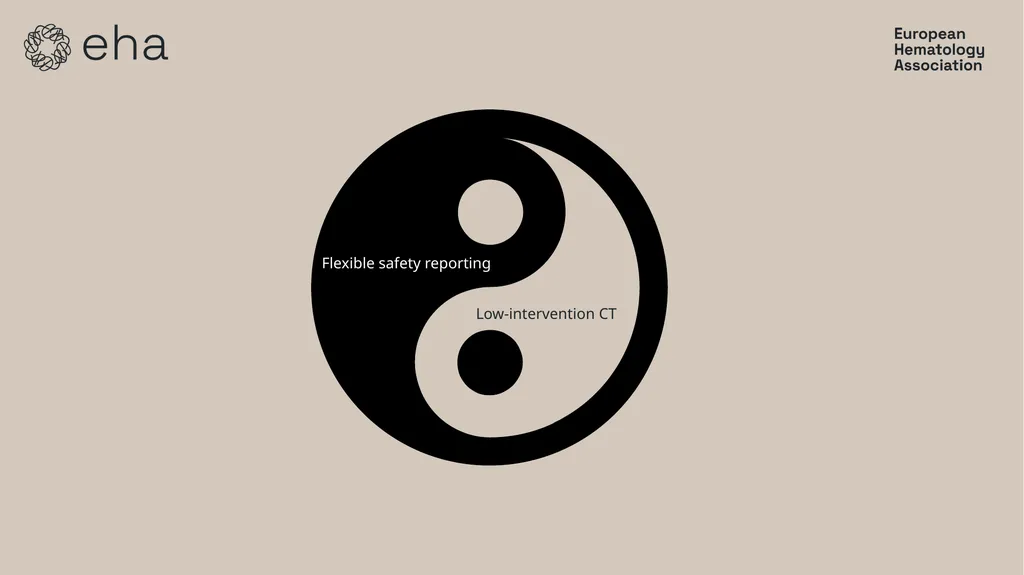
slide2. Flexible safety reporting Low-intervention CT<br>
slide3. CTR is no barrier to flexible safety reporting CTR already opens for flexible safety reporting in current wording
ICH: Good clinical practice to collect fit for purpose data – not too little, not too much Solution: Harmonized EU implementation of CTR
Advertise and explain investigators how/when<br>
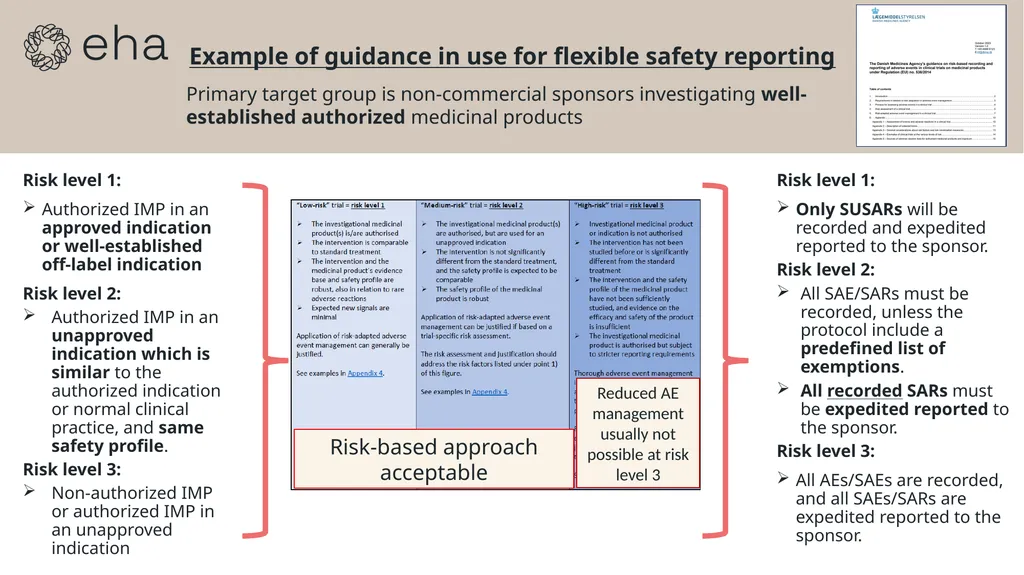
slide4. Primary target group is non-commercial sponsors investigating well-established authorized medicinal products Risk-based approach acceptable Reduced AE management usually not possible at risk level 3 Risk level 1:
Authorized IMP in an approved indication or well-established off-label indication
Risk level 2:
Authorized IMP in an unapproved indication which is similar to the authorized indication or normal clinical practice, and same safety profile.
Risk level 3:
Non-authorized IMP or authorized IMP in an unapproved indication Risk level 1:
Only SUSARs will be recorded and expedited reported to the sponsor.
Risk level 2:
All SAE/SARs must be recorded, unless the protocol include a predefined list of exemptions.
All recorded SARs must be expedited reported to the sponsor.
Risk level 3:
All AEs/SAEs are recorded, and all SAEs/SARs are expedited reported to the sponsor. Example of guidance in use for flexible safety reporting<br>
slide5. Reduced costs of clinical trials Reduced work-load for investigators/nurses Better reporting of clinical safety issues More evidence/better treatments -> At a minimum risk<br>
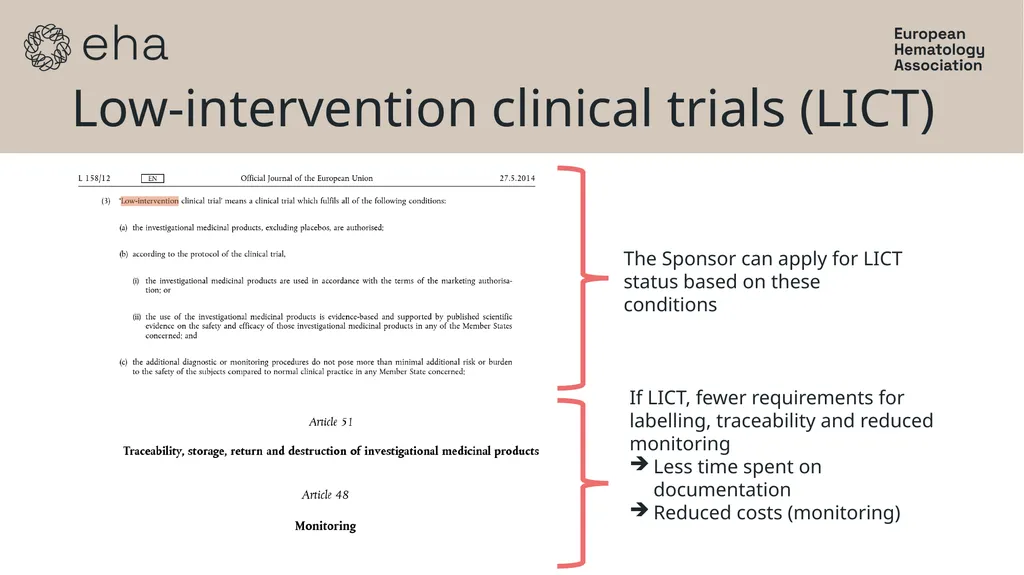
slide6. Low-intervention clinical trials (LICT) The Sponsor can apply for LICT status based on these conditions If LICT, fewer requirements for labelling, traceability and reduced monitoring
Less time spent on documentation
Reduced costs (monitoring)<br>
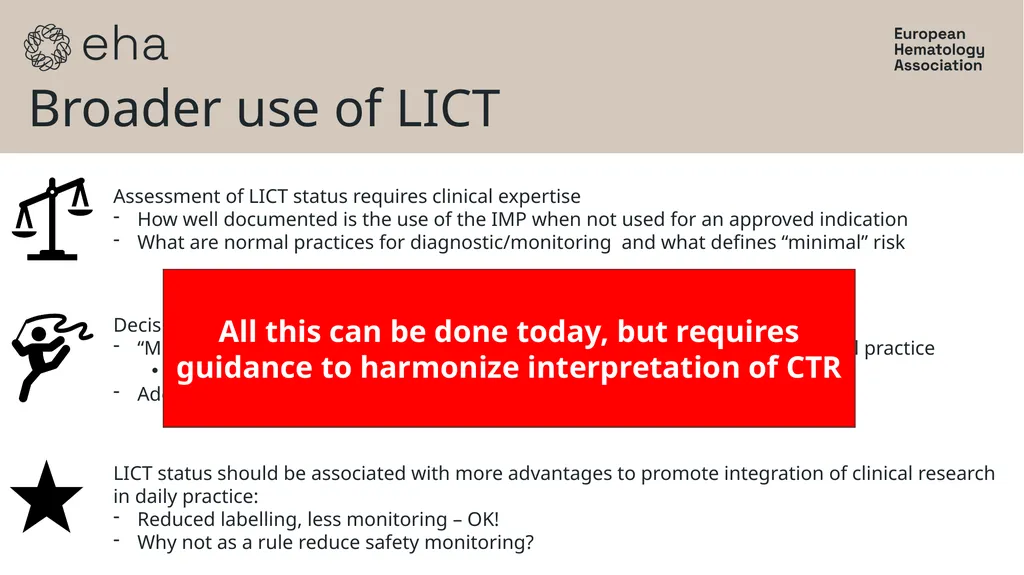
slide7. Broader use of LICT Assessment of LICT status requires clinical expertise
How well documented is the use of the IMP when not used for an approved indication
What are normal practices for diagnostic/monitoring and what defines “minimal” risk Decisions about LICT status requires flexibility
“Minimal risk” should be relative to risks that patients face during normal clinical practice
A liver biopsy may be acceptable in cancer but not in migraine headache
Additional scans in a cancer trial should not necessarily preclude LICT LICT status should be associated with more advantages to promote integration of clinical research in daily practice:
Reduced labelling, less monitoring – OK!
Why not as a rule reduce safety monitoring? All this can be done today, but requires guidance to harmonize interpretation of CTR<br>
slide8. Reducing Bureaucracy in Clinical Trials (RBinCT) The assessment of minimal burden should be based on routine procedures typically used for the specific disease and its treatment. Coalition Recommendations on Low-Intervention Clinical Trials - Classification: In cases of disagreement between the applicant and the authority evaluating the Clinical Trial Application (CTA), medical societies—composed of disease-specific experts—should be consulted. Coalition Recommendations on Low-Intervention Clinical Trials – Safety reporting: Only serious unexpected suspected adverse reactions (SUSARs) should be reported immediately Serious adverse events (SAEs) should be reported on an annual basis Non-serious adverse events should be reported only if of special interest or directly related to the study objectives<br>
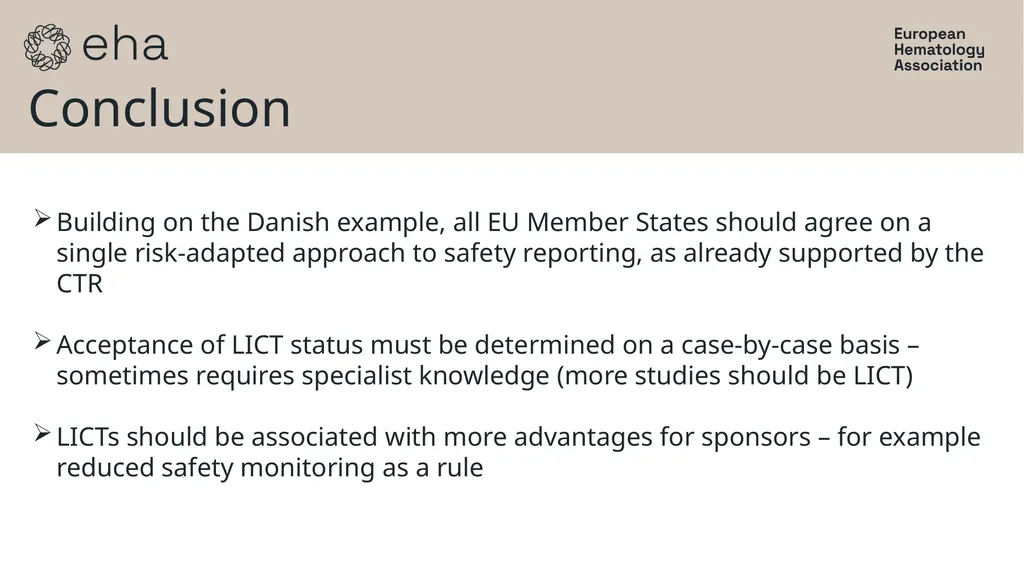
slide9. Conclusion Building on the Danish example, all EU Member States should agree on a single risk-adapted approach to safety reporting, as already supported by the CTR
Acceptance of LICT status must be determined on a case-by-case basis – sometimes requires specialist knowledge (more studies should be LICT)
LICTs should be associated with more advantages for sponsors – for example reduced safety monitoring as a rule<br>
Aarhus University Hospital and Aarhus University
MSP member for European Hematology Association (EHA)<br>
slide2. Flexible safety reporting Low-intervention CT<br>
slide3. CTR is no barrier to flexible safety reporting CTR already opens for flexible safety reporting in current wording
ICH: Good clinical practice to collect fit for purpose data – not too little, not too much Solution: Harmonized EU implementation of CTR
Advertise and explain investigators how/when<br>
slide4. Primary target group is non-commercial sponsors investigating well-established authorized medicinal products Risk-based approach acceptable Reduced AE management usually not possible at risk level 3 Risk level 1:
Authorized IMP in an approved indication or well-established off-label indication
Risk level 2:
Authorized IMP in an unapproved indication which is similar to the authorized indication or normal clinical practice, and same safety profile.
Risk level 3:
Non-authorized IMP or authorized IMP in an unapproved indication Risk level 1:
Only SUSARs will be recorded and expedited reported to the sponsor.
Risk level 2:
All SAE/SARs must be recorded, unless the protocol include a predefined list of exemptions.
All recorded SARs must be expedited reported to the sponsor.
Risk level 3:
All AEs/SAEs are recorded, and all SAEs/SARs are expedited reported to the sponsor. Example of guidance in use for flexible safety reporting<br>
slide5. Reduced costs of clinical trials Reduced work-load for investigators/nurses Better reporting of clinical safety issues More evidence/better treatments -> At a minimum risk<br>
slide6. Low-intervention clinical trials (LICT) The Sponsor can apply for LICT status based on these conditions If LICT, fewer requirements for labelling, traceability and reduced monitoring
Less time spent on documentation
Reduced costs (monitoring)<br>
slide7. Broader use of LICT Assessment of LICT status requires clinical expertise
How well documented is the use of the IMP when not used for an approved indication
What are normal practices for diagnostic/monitoring and what defines “minimal” risk Decisions about LICT status requires flexibility
“Minimal risk” should be relative to risks that patients face during normal clinical practice
A liver biopsy may be acceptable in cancer but not in migraine headache
Additional scans in a cancer trial should not necessarily preclude LICT LICT status should be associated with more advantages to promote integration of clinical research in daily practice:
Reduced labelling, less monitoring – OK!
Why not as a rule reduce safety monitoring? All this can be done today, but requires guidance to harmonize interpretation of CTR<br>
slide8. Reducing Bureaucracy in Clinical Trials (RBinCT) The assessment of minimal burden should be based on routine procedures typically used for the specific disease and its treatment. Coalition Recommendations on Low-Intervention Clinical Trials - Classification: In cases of disagreement between the applicant and the authority evaluating the Clinical Trial Application (CTA), medical societies—composed of disease-specific experts—should be consulted. Coalition Recommendations on Low-Intervention Clinical Trials – Safety reporting: Only serious unexpected suspected adverse reactions (SUSARs) should be reported immediately Serious adverse events (SAEs) should be reported on an annual basis Non-serious adverse events should be reported only if of special interest or directly related to the study objectives<br>
slide9. Conclusion Building on the Danish example, all EU Member States should agree on a single risk-adapted approach to safety reporting, as already supported by the CTR
Acceptance of LICT status must be determined on a case-by-case basis – sometimes requires specialist knowledge (more studies should be LICT)
LICTs should be associated with more advantages for sponsors – for example reduced safety monitoring as a rule<br>